Month: September 2023

  • New COVID-19 vaccine available in New York starting September 15 : Hochul

    New COVID-19 vaccine available in New York starting September 15 : Hochul

    ALBANY, NY (TIP): The newest COVID-19 vaccine will be made available in New York starting Friday, September 15, as the state sees a slight increase in case numbers and hospitalizations now three-and-and-half years after the pandemic began, Gov. Kathy Hochul announced Wednesday, September 13.
    “I know everyone wants to be done with COVID, but COVID is not done with us,” Hochul said at a briefing in New York City. Advisers to the Centers for Disease Control and Prevention on Tuesday endorsed the new shots for everyone 6 months of age and older. These newest shots replace combination vaccines that mixed protection against the original coronavirus strain and even older omicron variants. Like earlier versions, they’re expected to be most protective against severe illness, hospitalization and death, rather than mild infection.

    “It is literally a new vaccine. It is not a booster shot. It is not an enhancer. It is a new vaccine designed to attack the new variants,” Hochul said. The new vaccine will be available at doctors’ offices, pharmacies and other health care providers on Friday. “I’m calling on New Yorkers once again as we have many many times to take the right precautions and we can handle this. There’s no need to be careless. We have the tools we need,” Hochul said.

    The governor said she is also reinforcing that nursing homes are required to make the new vaccine available for their residents and are responsible for stockpiling COVID-19 test kits, masks and PPE.

    “The whole idea of dealing with this is to be pre-emptive,” Hochul said.

    The state last week said it is also making rapid test kits and masks available to school districts and Boards of Cooperative Educational Services (BOCES) if they request them as the new academic year gets underway.

    “It’s our job to make sure that every school district has what they need to continue safe in-person learning,” she said. “In-person learning because we’re still dealing with the fallout of what happened when children were disconnected from their normal environment, the effect it had on them emotionally, the effect it had on them academically, and they’re still far behind.” As of now, New York is seeing a seven-day average of 14 COVID-19 cases per 100,000 people, higher than it was over the summer but still well below peak levels in the winters of 2021 and 2022. “This is not the bad old days. At all. We don’t anticipate getting there. But shame on us if we don’t see the warnings,” Hochul said. The governor said the current numbers do not “raise the red flag” for any potential return to certain pandemic-era restrictions at this time.

  • Ex-NYC Buildings chief Eric Ulrich Took $150K In Bribes, Faces 5 Indictments: DA

    Ex-NYC Buildings chief Eric Ulrich Took $150K In Bribes, Faces 5 Indictments: DA

    NEW YORK CITY (TIP): New York City’s former buildings boss faces five separate indictments that accuse him of taking more than $150,000 in bribes, including a painting by Salvador Dalí’s last living apprentice.

    Eric Ulrich, 38, abused his power in every public service position he held — from City Council member to Mayor Eric Adams’ senior adviser and, finally, to Department of Buildings Commissioner — to “line his pockets,” said Manhattan District Attorney Alvin Bragg.

    Ulrich surrendered to Manhattan prosecutors Wednesday, September 13, with a copy of Bill O’Reilly’s book, “Killing Jesus: A History,” in tow, the New York Times reported. “We allege that Eric Ulrich accepted or solicited more than $150,000 worth of bribes in less than two years by monetizing each elected and appointed role he held in New York City government,” Bragg said in a statement. The quintet of indictments against Ulrich and six of his alleged associates is notable not just for its sweeping accusations of public corruption, but also because many of those charged have alleged ties to the mayor or to organized crime. A mayor’s office spokesperson said City Hall will continue to let the investigation run its course and to assist the district attorney.

    “And, while we do not discuss private conversations, to avoid speculation, the mayor has not received any requests from the Manhattan DA surrounding this matter and has never spoken to Mr. Ulrich about this investigation,” the spokesperson said in a statement. Ulrich and his co-defendants, Joseph Livreri, 55, Anthony Livreri, 51, and Michael Mazzio, 54, all hosted a 2021 fundraiser for Adams, the Times reported.

    And the Livreri brothers and Mazzio have suspected connections to organized crime, according to the Times report. Prosecutors said Ulrich, who resigned his buildings commissioner role in November amid a criminal gambling probe, used his government positions to benefit the Livreri brothers and Mazzio by, among other actions:

    Speeding up an inspection at the Liveri’s “Aldo’s Pizza” after they were closed because of multiple health violations. Helped remove a vacate order for the “Fortunato Brothers Bakery” after the business was shut down after a fire. Helped resolve licensing issues with Mazzio’s towing company by, in part, trying to influence the appointment of a Department of Consumer and Workers Protection commissioner.
    Landed a policy analyst job in the Department of Correction for Mazzio’s daughter, which included a roughly $20,000 raise. Gave them all access to high-ranking New York City government officials through invites to exclusive events and dinners.
    Ulrich in turn received cash for gambling at casinos and 89th Street Café, documents state. He also received a nearly $10,000 premium season ticket package to the New York Mets. The documents state that Ulrich also received a beachfront Rockaway Park luxury building discounted at a $100,000 value from co-defendant Mark Caller, 51, CEO of Marcal Group real estate development, for helping with zoning changes and inspections.

    One bribe came in the form of fine art, specifically a painting by Francisco Poblet, who is the last surviving apprentice of Salvador Dalí, the documents state.

  • Indian American legislator Jenifer Rajkumar pushes for work permits to asylum seekers in NY

    Indian American legislator Jenifer Rajkumar pushes for work permits to asylum seekers in NY

    NEW YORK (TIP) : In another bid to address New York City’s migrant crisis, Indian American legislator Jenifer Rajkumar has introduced a bill in the New York assembly to permit asylum seekers to work in the State.
    Her bill will allow asylum seekers to be self-sufficient, lift the financial and logistical burden facing New York City, and bring much-needed talent to the workforce, she stated in a press release.
    Rajkumar’s bill ensures New York State does everything in its power to help New York City manage one of the greatest humanitarian crises it has ever faced, it said.
    Over 110,000 asylum seekers have arrived in New York City eager to work, but cannot for at least six months under federal law, the release stated noting, “Unable to earn a living, asylum seekers turn to New York City for shelter, at a cost projected to be $12 billion by 2025.”
    Rajkumar’s bill also addresses the labor shortage in New York State. There are 460,000 job openings in New York State, and over 120,000 fewer people in the labor force since 2019, according to the release.
    Noting that businesses throughout New York State report difficulty finding employees and an eagerness to hire asylum seekers, the release stated Rajkumar’s bill will add all working age asylum seekers to the talent pool.
    “In the absence of Federal action to issue work permits, the State must lead and issue the work permits on its own. It is time for the State to take ownership over the migrant crisis,” Rajkumar said.
    “There are tens of thousands of asylum seekers asking to work, employers eager to hire them, and a wall of red tape coming between them. The time has come to tear down this wall of red tape and issue work permits to the asylum seekers,” she said.
    “In so doing, we can end the migrant crisis,” Rajkumar said. “My bill is common sense: people legally allowed to live in our country should be able to work.”
    Granting work authorization holds widespread support from people across the political spectrum, the release said citing a Siena poll that found that 59 percent of New Yorkers support expedited work authorization.
    A bipartisan group in Congress has introduced a bill granting work authorization for asylum seekers after 30 days. Over 100 business leaders in New York released an open letter to President Joe Biden urging him to expedite work authorization.
    There is historical and legal precedent for local action in the absence of Federal leadership, Rajkumar said, noting a panel of legal scholars convened by UCLA concluded that states can hire undocumented immigrants.
    As Mayor of San Francisco, Gavin Newsom issued same-sex marriage licenses before its legalization at the Federal level, the release noted.
    New York State also waived certification requirements for employing healthcare workers at the height of the Covid-19 pandemic, it said. “Moreover, granting work authorization at the State level will drive the Federal government to do the same.”
    Rajkumar, the release stated, has been leading a call for State and Federal leadership to address New York City’s migrant crisis. She unveiled a package of bills last week creating a Statewide Coordinator of Asylum Seeker Services to implement a Statewide response to the crisis, and prohibiting counties from issuing unconstitutional bans on admitting migrants.
    Governor Kathy Hochul thereafter said she would consider calling a special session of the State Legislature.
    Rajkumar also led a Citywide coalition of 54 elected officials from all five boroughs that called on Biden to declare a State of Emergency for New York State, expedite work authorization, increase funding for New York City, and implement a decompression strategy at the border.

  • Lotus webmag holds event on Kashmir Shaivism with Virendra Qazi

    Lotus webmag holds event on Kashmir Shaivism with Virendra Qazi

    By Team@Lotus

    While introducing Virendra Qazi, Dr Nirmal Mattoo also spoke eruditely about Kashmir Shaivism. (Photo : Courtesy The Indian Panorama)

    HICKSVILLE, NY (TIP): ALotusInTheMud.com organized its first public event on September 10 where Shri Virendra Qazi expounded on Kashmir Shaivism. About 70 prominent people from Long Island were edified at the session held at the Arya Samaj of Long Island arranged by Parveen Chopra, founder editor of the Lotus webmag.

    Qazi ji is a top expert and practitioner of Kashmir Shaivism, which has been garnering attention even from global spiritual gurus. He said its central teaching is, ‘I am Shiva’. “So, know that God resides in all of you and you can realize the Divine in this very life.”

    He defined Kashmir Shaivism as a universal spiritual philosophy that accepts all elements of life in totality and teaches a path of realization through divine grace. The grace or shaktipat is in us all to a lesser or greater degree. He advised people to make humility, love, and compassion their second nature. “That will give you tremendous blessings.” He concluded with a brief meditation to give a taste of the follow-up experience sessions he conducts over two days. In his introduction, Dr Nirmal Mattoo said Qazi ji has been explaining Kashmir Shaivism to laypeople for three decades and had served in leadership roles in the Steel Authority of India. Dr Mattoo, the force behind the Center for India Studies at Stony Brook University, chairman of Indo-American Arts Council, and co-founder of Atlantic Dialysis Management Services, also gave an erudite introduction to Kashmir Shaivism.

    Mrs Hema Qazi’s devotional songs acted as a prelude to Virendra Qazi’s discourse. (Photo : Courtesy The Indian Panorama)

    Mohan Wanchoo, Chairman & CEO at EC Infosystems and philanthropist, thanked Qazi ji for “enlightening us about Kashmir Shaivism and I am sure all in the audience here benefitted as we were almost like drinking from a firehose of his pearls of wisdom.”

    Qazi’s discourse was preceded by Mrs Hema Qazi rendering devotional songs in Kashmiri and Hindi. She was greeted by Kavita Wanchoo.

    Prof Indrajit Singh Saluja, editor-publisher of The Indian Panorama, introduced Parveen Chopra as an editor whose passion for spiritual journalism inspired him to start Lotus magazine.

    Parveen Chopra reported that ALotusInTheMud.com, launched in January, has been growing its audience at a fast clip. He added that Lotus was at the Parliament of the World’s Religions in Chicago in August to cover it.

    Prominent attendees at the event included Dr Buddhadev Manvar, Sunil Hali, Arvind Vora, Arish Sahani, Nilima Madan, and Atul Kumria. Refreshments were arranged by Renu Chopra. The event was supported by Dr Mattoo and Mohan Wanchoo and promoted by The South Asian Times as well as other media outlets. Based in New Delhi, Qazi ji has been holding similar events in many cities in the USA and Canada during his current tour.

    Ashok Vyas, program director for ITV Gold, produced the video recording of the event for his Heramba Studio. Here is the link to watch the video on the YouTube channel of Lotus: https://www.youtube.com/watch?v=hCqXZtrBtrM

    Prof Indrajit Singh Saluja introduced Parveen Chopra ( seated on the left) and extended a word of welcome. (Photo : Courtesy The Indian Panorama)
    (Clockwise from bottom left) Parveen Chopra, Renu Chopra, Hema Qazi, Virendra Qazi, Mohan Wanchoo, a guest, and Ashok Vyas.(Photo : Courtesy The Indian Panorama)
    The event drew a full hall at Arya Samaj temple in Hicksville.(Photo : Courtesy The Indian Panorama)
  • Shilpa Shetty makes shocking revelation of not getting tag of ‘actor’

    Shilpa Shetty is currently busy with the promotions of her upcoming film ‘Sukhee’, and she’s one of the most successful mothers in Bollywood. On to the series of new events, Shilpa recently appeared on a podcast show and spoke about never getting an actor’s tag in Bollywood and how none of the bigger banners offered her films. Shilpa enjoys a huge fan following on social media, with over 30 million followers on Instagram. The actress is married to businessman Raj Kundra and often gives a sneak peek into her luxurious lifestyle on the platform while giving a glimpse of her cute kids – Viaan and Samisha.

    In an interview, Shilpa spoke about never getting an actor’s tag in the industry and said, “I never got the tag of an actor. I always got relegated or rather typecast into being just a glamorous actor, which is also a great niche to have because today I can proudly say that I can do this (pointing towards the poster of her upcoming film Sukhee), but can you become glamorous? Being glamorous is aspirational and it’s ok as long as you can carve your niche. I can say proudly that I picked from whatever was offered to me and I survived.”

  • 2 army officers, DSP killed in encounter in J&K

    2 army officers, DSP killed in encounter in J&K

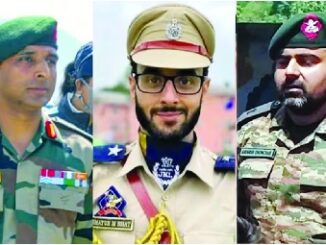
    Colonel Manpreet Singh, the commanding officer of 19 Rashtriya Rifles, DSP Humayun Muzamil Bhat and Major Aashish Dhonchak, who were killed in the encounter with terrorists. Srinagar  (TIP)- Two decorated army officers — a colonel and a major — and a deputy superintendent of police were killed on Wednesday, September 13,  in an encounter with terrorists in Jammu and Kashmir’s Anantnag district, with a burst of gunfire ending the relative calm in the valley where terror attacks had significantly declined and were at their lowest during the last five years, officials aware of the matter said. The officers killed in action were identified as Colonel Manpreet Singh, the commanding officer of 19 Rashtriya Rifles, Major Aashish Dhonchak, also from the same battalion, and DSP Humayun Muzamil Bhat, who was recently posted to the area, the officials said, asking not to be named.

    The last time a commanding officer was killed in action in Jammu and Kashmir was three years ago when Colonel Ashutosh Sharma (along with Major Anuj Sood, two army jawans and a sub inspector) fell to terrorists’ bullets in Kashmir’s Handwara area. The army and the police launched a joint operation on Tuesday night after receiving intelligence about terrorist movement and their likely hideout in Anantnag’s Garol, a forested area, Hindustan Times has learnt. The combat-ready teams, consisting of counterterror specialists, came under heavy automatic fire when they were closing in on the unspecified number of well-trained terrorists, resulting in serious injuries to the officers, said one of the officials cited above.

    The three men later succumbed to their injuries at the army’s base hospital in Srinagar. The possibility of the anti-terror squads being lured into the area has not been ruled out, the officials said, adding that a group of up to four terrorists were involved in the attack.

    There was no official update on the operation from the army except a post on X (formerly Twitter) on Wednesday afternoon.

    “Op Garol, #Anantnag. Based on specific intelligence on presence of terrorists a Joint Operation was launched by #IndianArmy & @JmuKmrPolice on the intervening night of 12-13 Sep in Area Garol, Anantnag. Contact established and firefight ensued. Two Army personnel and one J&K Police personnel injured. Operation in progress,” the Srinagar-based Chinar Corps wrote on X.

    Both Singh and Dhonchak were from the Sikh Light Infantry, had earned their spurs in the valley and were decorated with Sena Medal for their heroism in counterterror operations. While Singh, then a lieutenant colonel with the same battalion, was awarded the medal on Independence Day 2021, Dhonchak’s bravery was acknowledged with a Sena Medal only a few weeks ago, on August 15.

    It is not uncommon for commanding officers of counterterrorism units to direct operations from the ground. Several of them have been killed in action in Jammu and Kashmir while leading their men from the front and keeping them out of harm’s way. After the three officers were injured, the army and police rushed reinforcements to the encounter site located in the forest belt of Kokernag in Anantnag and the entire area was sealed off, said a second official. Lieutenant General Rajiv Ghai, General Officer Commanding, HQs 15 Corps (Chinar Corps), J&K director general of police Dilbag Singh and additional director general of police Vijay Kumar also rushed to the encounter site. The incident comes at a time when calm was steadily returning to the valley, according to data tabled by the government in Parliament.

    Jammu and Kashmir recorded only 30 “terrorist-initiated incidents” till July 31 this year, compared to 125 last year, 129 in 2021, 126 in 2020, 153 in 2019 and 228 in 2018, the data shows. Similarly, there were 24 encounters/counterterror operations till July 31 this year, compared to 117 last year, 100 in 2021, 118 in 2020, 102 in 2019 and 189 in 2018. While 11 security personnel were killed till July 31 this year, the figure stood at 32, 42, 63,80 and 91 in the previous five years.

    The attack comes a month after three soldiers — Havildar Babulal Haritwal, Signalman Vala Mahipalsinh Pravinsinh and Rifleman Waseem Sarwar were killed in an encounter in Kulgam’s Halan forest. That operation was also launched after specific inputs were received about the presence of terrorists in the area. The terrorists, believed to be foreigners, are still at large.                Source: HT

  • INDIA out to destroy Sanatan, push us back into slavery: PM Modi

    INDIA out to destroy Sanatan, push us back into slavery: PM Modi

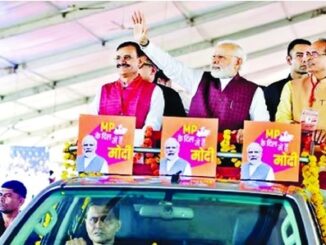
    Jakarta (TIP)- Prime Minister Narendra Modi on Thursday, September 14,  waded into the Sanatan Dharma row, slamming the opposition “INDIA” bloc for what he described as “their pledge to destroy the Sanatan faith that has united Indians through centuries”.

    At two separate events in election-bound Madhya Pradesh and Chhattisgarh, the PM, in a blistering attack on the Opposition, urged people to unite and defeat their “nefarious designs”, saying: “Ghamandia (arrogant) alliance wants to push us back into slavery.” This is the first time the PM has spoken on the issue that has snowballed into a major controversy ever since Udhayanidhi Stalin of the DMK, an INDIA bloc party, compared Sanatan Dharma with “HIV, Covid and malaria” a few days ago.

    “Today, Bharat is displaying its capacity to unite the world, but some parties are busy dividing the society. They have formed an INDI Alliance, which some also call Ghamandia. Their leader is unknown but at a recent meeting in Mumbai they have finalised the strategy and hidden agenda, which is to attack the culture of India, the faith of its people, to destroy ideas, ideals and traditions that have bound us together for thousands of years,” said the PM. Citing Sanatan ideology as the inspiration behind Ahilya Bai Holkar’s social work and warrior queen Rani Lakshmibai’s courage in the face of British assaults, the PM said even Mahatma Gandhi considered Sanatan ideology eternal and his last words were Hey Ram. “But this Ghamandia alliance wants to finish Sanatan ideology… shatter Sanatan faith which inspired Lokmanya Tilak to link Ganesh puja with the freedom struggle,” the PM said days after he signalled Union Cabinet and BJP colleagues to go out all guns blazing against the INDIA bloc on the issue.

    The PM was speaking first at Madhya Pradesh’s Bina, where he launched development projects worth Rs 50,700 crore, and later at Raigarh’s Kondatarai in Chhattisgarh, where he dedicated Rs 6,350 worth of rail projects to the state.

    The PM, while tearing into the Opposition, cautioned people, saying: “They want to demolish your faith… the very ideology that kept us together for thousands of years. Every Sanatani, every Indian will have to stay alert. Ghamandia alliance wants to push India back into a thousand year slavery but we have to defeat their designs with our unity.”

    The PM also took the occasion to stress the successful conduct of G20 and asked people whether or not they felt proud at India’s rising global stature after the event. Underlining what he called “Modi ki guarantee”, the PM sought to contrast the Congress as a “corrupt party” vis-à-vis the BJP, which, he said, “was devoted to politics of national and public service”.

    The PM listed a range of government schemes even as he cautioned people about “the conspiracy against their faith” and spoke of how the country was moving forward, “casting away the last vestiges of slavery”. The searing attack comes at a time when the BJP is directly pitted against the grand old party in poll-bound Chhattisgarh, Rajasthan (Congress ruled) and MP (BJP ruled). While the BJP had lost Chhattisgarh to the Congress after 15 years in 2018, in MP, it faces anti-incumbency this year due to Chief Minister Shivraj Singh Chouhan being in the chair since 2005. In Rajasthan, governments mostly alternate.

    Source: TNS

  • 4 bills in government’s ‘tentative list’ for Parliament’s special session

    4 bills in government’s ‘tentative list’ for Parliament’s special session

    New Delhi (TIP)- The Centre on Wednesday, Sept 13,  released a ‘tentative list’ of the agenda for Parliament’s special session from September 18 to 22. The tentative agenda included two bills -The Advocates (Amendment) Bill, 2023, The Press and Registeration of Periodicals Bill, 2023 – to be taken up in the Lok Sabha.

    They were passed in the Rajya Sabha on August 3.

    On the other hand, Rajya Sabha MPs are set to discuss The Post Office Bill, 2023 and The Chief Election Commissioner and other Election Commissioners (Appointment, Conditions of Service and Term of Office) Bill, 2023. These two bills were introduced in the Rajya Sabha on August 10. Although there were speculations about the government proposing a ‘One Nation, One Election’ bill, there was no mention of it in the tentative list shared by the Centre.

    Ahead of the special session, there was also speculation about the government bringing a resolution to rename India as Bharat.

    Apart from formal parliamentary business, a discussion will be held on the subject ‘Parliamentary Journey of 75 years starting from Samvidhan Sabha – Achievements, Experiences, Memories and Learnings”, as per the government’s notice.

    ALL-PARTY MEETING BEFORE SPECIAL SESSION

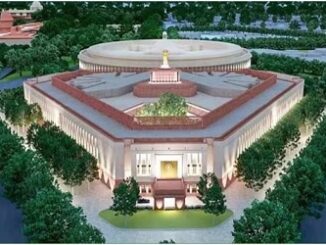
    The government has called an all-party meeting on September 17, a day before the special session of Parliament begins. Union Parliamentary Affairs Minister Pralhad Joshi said that invitations had been sent through e-mail to all leaders of opposition parties to attend the meeting. The special session of Parliament, from September 18 to 22, was announced by the Pralhad Joshi on August 31. At the time, the agenda for it was under wraps, triggering speculation and criticism from the Opposition. According to officials, the session will begin in the old Parliament building and shift to the new structure the next day. The shift to the new Parliament building will coincide with Ganesh Chaturthi on September 19, considered auspicious to make new beginnings.

    Source: India Today

  • Opposition’s INDIA bloc to shun 14 news anchors

    The Opposition’s INDIA bloc on Thursday, September 14,  announced a boycott of 14 anchors from eight mainstream news channels — News18, Bharat Express, Aaj Tak, Times Now, Republic Bharat, India Today, Bharat24 and India TV — and made the list public.

    The decision to shun certain news anchors was taken at the first meeting of the coordination committee of the India National Democratic Inclusive Alliance (INDIA) bloc held in New Delhi. In a post on X today, Congress leader Pawan Khera, a member of the INDIA sub-committee on media, said 14 anchors had been identified in whose shows INDIA parties would not send their representatives. Hitting back, BJP president JP Nadda said the Emergency-era mindset was still alive among these parties. “These days, the INDI Alliance is doing only two things: bashing Sanatan Sanskriti and bullying the media by filing FIRs, threatening individual journalists, making lists in true Nazi style of whom to target.

  • Mobile internet suspended in Nuh after MLA’s arrest fearing tension

    Mobile internet has been suspended in Haryana’s Nuh district from Friday, Sept 15,  10am to Saturday 11.59pm apprehending tension in the district. The district administration imposed Section 144 in Nuh and requested people to offer their Friday prayers at their homes. The suspension of the mobile internet comes because of the emergent situation, the order said. Hours before, Congress MLA Mamman Khan was arrested by the Haryana police for his alleged involvement in Nuh violence that took place on July 31. The internet suspension order said there is an apprehension of tension, annoyance, agitation, damage of public and private property and disturbance of public peace and tranquillity in the district. Misusing the internet services, there could be a disruption of public utilities and law and order, the order said. “In order to stop the spread of misinformation and rumours through various social media platforms such as WhatsApp, Facebook, Twitter etc, on mobile phones and SMA, for facilation and mobilisation of mobs or agitators and demonstrators who can cause serious loss of life and damage to public and private properties by indulging in arson, vandalism and other type of violent activities,” the order read.

    Late on Sept 14  night, the SIT of Nuh Police arrested Mamman Kgan in connection with the July 31 violence that affected several districts of Haryana including Gurugram, after a VHP procession was attacked by Muslims.

  • SC upholds omission of meat from midday meals in Lakshadweep

    The Supreme Court (SC) on Thursday, Sept 14,  upheld Lakshadweep administration’s decision to exclude meat products from the midday meal menu for schoolchildren, saying courts can’t decide on what food should be consumed. “It’s not the court’s domain as to what food should be eaten by children of a particular region. There is no scope of interference by courts of law on that count. Policy decisions would not come within the purview of judicial review,” a Bench led by Justice Aniruddha Bose said, dismissing a petition challenging the Lakshadweep administration’s decision. The Kerala High Court had on June 22, 2021, stayed the operation of two orders of the Lakshadweep administration to close down dairy farms and remove meat products from the menu for midday meals. A Division Bench of the high court had in September 2021 dismissed the PIL filed by advocate Ajmal Ahmed, who alleged that when Praful Khoda Patel took charge as the island’s administrator his top priority was to close down the farms run by the animal husbandry department and to “attack” the food habits of the islanders.

  • Nipah: Kerala tests hundreds after fifth case

    The southern Indian state of Kerala shut some schools, offices and public transport on Wednesday in a race to stop the spread of the rare and deadly Nipah virus, which has killed two people. Two adults and a child were still infected in hospital, and more than 700 people were being tested for the virus, spread via contact with the bodily fluids of infected bats, pigs or people, a state health official said.n The state government on Wednesday , Sept 13, evening said at least 706 people, including 153 health workers, were undergoing tests to check the spread of the virus. Results were awaited. “More people could be tested …I solation facilities will be provided,” Pinarayi Vijayan, chief minister of Kerala, said in a statement. He asked people to avoid public gatherings in the Kozhikode district for the next 10 days.

    Two infected people have died since Aug. 30 in Kerala’s fourth outbreak of the virus since 2018, forcing authorities to declare containment zones in at least eight Kozhikode villages. “We are focusing on tracing contacts of infected persons early and isolating anyone with symptoms,” state Health Minister Veena George told reporters. She said the virus detected in Kerala was the same as one found earlier in Bangladesh, a strain that spreads from human to human with a high mortality rate but has a history of being less infectious.

  • United Nations: Committed to maintaining international peace

    United Nations (UN), international organization established on October 24, 1945. The United Nations (UN) was the second multipurpose international organization established in the 20th century that was worldwide in scope and membership. Its predecessor, the League of Nations, was created by the Treaty of Versailles in 1919 and disbanded in 1946. Headquartered in New York City, the UN also has regional offices in Geneva, Vienna, and Nairobi. Its official languages are Arabic, Chinese, English, French, Russian, and Spanish.

    According to its Charter, the UN aims to save succeeding generations from the scourge of war,…to reaffirm faith in fundamental human rights,…to establish conditions under which justice and respect for the obligations arising from treaties and other sources of international law can be maintained, and to promote social progress and better standards of life in larger freedom.

    In addition to maintaining peace and security, other important objectives include developing friendly relations among countries based on respect for the principles of equal rights and self-determination of peoples; achieving worldwide cooperation to solve international economic, social, cultural, and humanitarian problems; respecting and promoting human rights; and serving as a centre where countries can coordinate their actions and activities toward these various ends.

    The UN formed a continuum with the League of Nations in general purpose, structure, and functions; many of the UN’s principal organs and related agencies were adopted from similar structures established earlier in the century. In some respects, however, the UN constituted a very different organization, especially with regard to its objective of maintaining international peace and security and its commitment to economic and social development.

    Changes in the nature of international relations resulted in modifications in the responsibilities of the UN and its decision-making apparatus. Cold War tensions between the United States and the Soviet Union deeply affected the UN’s security functions during its first 45 years. Extensive post-World War II decolonization in Africa, Asia, and the Middle East increased the volume and nature of political, economic, and social issues that confronted the organization. The Cold War’s end in 1991 brought renewed attention and appeals to the UN. Amid an increasingly volatile geopolitical climate, there were new challenges to established practices and functions, especially in the areas of conflict resolution and humanitarian assistance. At the beginning of the 21st century, the UN and its programs and affiliated agencies struggled to address humanitarian crises and civil wars, unprecedented refugee flows, the devastation caused by the spread of AIDS, global financial disruptions, international terrorism, and the disparities in wealth between the world’s richest and poorest peoples.

    History and development

    Despite the problems encountered by the League of Nations in arbitrating conflict and ensuring international peace and security prior to World War II, the major Allied powers agreed during the war to establish a new global organization to help manage international affairs. This agreement was first articulated when U.S. President Franklin D. Roosevelt and British Prime Minister Winston Churchill signed the Atlantic Charter in August 1941. The name United Nations was originally used to denote the countries allied against Germany, Italy, and Japan. On January 1, 1942, 26 countries signed the Declaration by United Nations, which set forth the war aims of the Allied powers.

    The United States, the United Kingdom, and the Soviet Union took the lead in designing the new organization and determining its decision-making structure and functions. Initially, the “Big Three” states and their respective leaders (Roosevelt, Churchill, and Soviet premier Joseph Stalin) were hindered by disagreements on issues that foreshadowed the Cold War. The Soviet Union demanded individual membership and voting rights for its constituent republics, and Britain wanted assurances that its colonies would not be placed under UN control. There also was disagreement over the voting system to be adopted in the Security Council, an issue that became famous as the “veto problem.”

    The first major step toward the formation of the United Nations was taken August 21–October 7, 1944, at the Dumbarton Oaks Conference, a meeting of the diplomatic experts of the Big Three powers plus China (a group often designated the “Big Four”) held at Dumbarton Oaks, an estate in Washington, D.C. Although the four countries agreed on the general purpose, structure, and function of a new world organization, the conference ended amid continuing disagreement over membership and voting. At the Yalta Conference, a meeting of the Big Three in a Crimean resort city in February 1945, Roosevelt, Churchill, and Stalin laid the basis for charter provisions delimiting the authority of the Security Council. Moreover, they reached a tentative accord on the number of Soviet republics to be granted independent memberships in the UN. Finally, the three leaders agreed that the new organization would include a trusteeship system to succeed the League of Nations mandate system.

    The Dumbarton Oaks proposals, with modifications from the Yalta Conference, formed the basis of negotiations at the United Nations Conference on International Organization (UNCIO), which convened in San Francisco on April 25, 1945, and produced the final Charter of the United Nations. The San Francisco conference was attended by representatives of 50 countries from all geographic areas of the world: 9 from Europe, 21 from the Americas, 7 from the Middle East, 2 from East Asia, and 3 from Africa, as well as 1 each from the Ukrainian Soviet Socialist Republic and the Belorussian Soviet Socialist Republic (in addition to the Soviet Union itself) and 5 from British Commonwealth countries. Poland, which was not present at the conference, was permitted to become an original member of the UN. Security Council veto power (among the permanent members) was affirmed, though any member of the General Assembly was able to raise issues for discussion. Other political issues resolved by compromise were the role of the organization in the promotion of economic and social welfare; the status of colonial areas and the distribution of trusteeships; the status of regional and defense arrangements; and Great Power dominance versus the equality of states. The UN Charter was unanimously adopted and signed on June 26 and promulgated on October 24, 1945.

    Organization and administration Principles and membership

    The purposes, principles, and organization of the United Nations are outlined in the Charter. The essential principles underlying the purposes and functions of the organization are listed in Article 2 and include the following: the UN is based on the sovereign equality of its members; disputes are to be settled by peaceful means; members are to refrain from the threat or use of force in contravention of the purposes of the UN; each member must assist the organization in any enforcement actions it takes under the Charter; and states that are not members of the organization are required to act in accordance with these principles insofar as it is necessary to maintain international peace and security. Article 2 also stipulates a basic long-standing norm that the organization shall not intervene in matters considered within the domestic jurisdiction of any state. Although this was a major limitation on UN action, over time the line between international and domestic jurisdiction has become blurred.

    New members are admitted to the UN on the recommendation of the Security Council and by a two-thirds vote of the General Assembly. Often, however, the admittance of new members has engendered controversy. Given Cold War divisions between East and West, the requirement that the Security Council’s five permanent members (sometimes known collectively as the P-5)—China, France, the Soviet Union (whose seat and membership were assumed by Russia in 1991), the United Kingdom, and the United States—concur on the admission of new members at times posed serious obstacles. By 1950 only 9 of 31 applicants had been admitted to the organization. In 1955 the 10th Assembly proposed a package deal that, after modification by the Security Council, resulted in the admission of 16 new states (4 eastern European communist states and 12 noncommunist countries). The most contentious application for membership was that of the communist People’s Republic of China, which was placed before the General Assembly and blocked by the United States at every session from 1950 to 1971. Finally, in 1971, in an effort to improve its relationship with mainland China, the United States refrained from blocking the Assembly’s vote to admit the People’s Republic and to expel the Republic of China (Taiwan); there were 76 votes in favour of expulsion, 35 votes opposed, and 17 abstentions. As a result, the Republic of China’s membership and permanent Security Council seat were given to the People’s Republic.

    Controversy also arose over the issue of “divided” states, including the Federal Republic of Germany (West Germany) and the German Democratic Republic (East Germany), North and South Korea, and North and South Vietnam. The two German states were admitted as members in 1973; these two seats were reduced to one after the country’s reunification in October 1990. Vietnam was admitted in 1977, after the defeat of South Vietnam and the reunification of the country in 1975. The two Koreas were admitted separately in 1991.

    Following worldwide decolonization from 1955 to 1960, 40 new members were admitted, and by the end of the 1970s there were about 150 members of the UN. Another significant increase occurred after 1989–90, when many former Soviet republics gained their independence. By the early 21st century the UN comprised nearly 190 member states.

    Principal organs

    The United Nations has six principal organs: the General Assembly, the Security Council, the Economic and Social Council, the Trusteeship Council, the International Court of Justice, and the Secretariat.

    General Assembly

    The only body in which all UN members are represented, the General Assembly exercises deliberative, supervisory, financial, and elective functions relating to any matter within the scope of the UN Charter. Its primary role, however, is to discuss issues and make recommendations, though it has no power to enforce its resolutions or to compel state action. Other functions include admitting new members; selecting members of the Economic and Social Council, the nonpermanent members of the Security Council, and the Trusteeship Council; supervising the activities of the other UN organs, from which the Assembly receives reports; and participating in the election of judges to the International Court of Justice and the selection of the secretary-general. Decisions usually are reached by a simple majority vote. On important questions, however—such as the admission of new members, budgetary matters, and peace and security issues—a two-thirds majority is required.

    The Assembly convenes annually and in special sessions, electing a new president each year from among five regional groups of states. At the beginning of each regular session, the Assembly also holds a general debate, in which all members may participate and raise any issue of international concern. Most work, however, is delegated to six main committees: (1) Disarmament and International Security, (2) Economic and Financial, (3) Social, Humanitarian, and Cultural, (4) Special Political and Decolonization, (5) Administrative and Budgetary, and (6) Legal.

    The General Assembly has debated issues that other organs of the UN have either overlooked or avoided, including decolonization, the independence of Namibia, apartheid in South Africa, terrorism, and the AIDS epidemic. The number of resolutions passed by the Assembly each year has climbed to more than 350, and many resolutions are adopted without opposition. Nevertheless, there have been sharp disagreements among members on several issues, such as those relating to the Cold War, the Arab-Israeli conflict, and human rights. The General Assembly has drawn public attention to major issues, thereby forcing member governments to develop positions on them, and it has helped to organize ad hoc bodies and conferences to deal with important global problems.

    Security Council

    The UN Charter assigns to the Security Council primary responsibility for the maintenance of international peace and security. The Security Council originally consisted of 11 members—five permanent and six nonpermanent—elected by the General Assembly for two-year terms. From the beginning, nonpermanent members of the Security Council were elected to give representation to certain regions or groups of states. As membership increased, however, this practice ran into difficulty. An amendment to the UN Charter in 1965 increased the council’s membership to 15, including the original five permanent members plus 10 nonpermanent members. Among the permanent members, the People’s Republic of China replaced the Republic of China (Taiwan) in 1971, and the Russian Federation succeeded the Soviet Union in 1991. After the unification of Germany, debate over the council’s composition again arose, and Germany, India, and Japan each applied for permanent council seats.

    The nonpermanent members are chosen to achieve equitable regional representation, five members coming from Africa or Asia, one from eastern Europe, two from Latin America, and two from western Europe or other areas. Five of the 10 nonpermanent members are elected each year by the General Assembly for two-year terms, and five retire each year. The presidency is held by each member in rotation for a period of one month. Each Security Council member is entitled to one vote. On all “procedural” matters—the definition of which is sometimes in dispute—decisions by the council are made by an affirmative vote of any nine of its members. Substantive matters, such as the investigation of a dispute or the application of sanctions, also require nine affirmative votes, including those of the five permanent members holding veto power. In practice, however, a permanent member may abstain without impairing the validity of the decision. A vote on whether a matter is procedural or substantive is itself a substantive question. Because the Security Council is required to function continuously, each member is represented at all times at the UN’s headquarters in New York City. Any country—even if it is not a member of the UN—may bring a dispute to which it is a party to the attention of the Security Council. When there is a complaint, the council first explores the possibility of a peaceful resolution. International peacekeeping forces may be authorized to keep warring parties apart pending further negotiations. If the council finds that there is a real threat to the peace, a breach of the peace, or an act of aggression (as defined by Article 39 of the UN Charter), it may call upon UN members to apply diplomatic or economic sanctions. If these methods prove inadequate, the UN Charter allows the Security Council to take military action against the offending country.

    Headquarters

    The General Assembly decided during the second part of its first session in London to locate its permanent headquarters in New York. John D. Rockefeller, Jr., donated land for a building site in Manhattan. Temporary headquarters were established at Lake Success on Long Island, New York. The permanent Secretariat building was completed and occupied in 1951–52. The building providing accommodations for the General Assembly and the councils was completed and occupied in 1952.

    The UN flag, adopted in 1947, consists of the official emblem of the organization (a circular world map, as seen from the North Pole, surrounded by a wreath of olive branches) in white centred on a light blue background. The Assembly designated October 24 as United Nations Day.


    Opening of the 78th Session of the UN General Assembly

    The 78th session of the United Nations General Assembly commenced with Dennis Francis taking on the role of General Assembly President. In his opening remarks, he emphasized the importance of addressing the numerous global challenges currently confronting the world.

    Key Themes and Initiatives

    for UNGA 78

    The 78th session of the General Assembly, themed ‘Rebuilding trust and reigniting global solidarity: Accelerating action on the 2030 Agenda and its Sustainable Development Goals towards peace, prosperity, progress, and sustainability for all,’ focuses on several critical areas.

    Challenges to Peace

    The session acknowledges the challenges posed by climate change, conflict, and poverty to achieving global peace.

    Geopolitical Divides

    Geopolitical divisions have made it challenging for many countries to pursue positive societal changes. The session welcomes initiatives aimed at greater transparency and accountability, including the UNGA’s Security Council veto initiative.

    Prosperity and Development

    Ensuring prosperity, particularly in regions with development deficits, is a priority. This involves enhanced financing, technology, debt sustainability, and capacity building.

    Key Workstreams

    The session identifies critical workstreams, including the implementation of the Addis Ababa Action Agenda (AAAA) and the Doha Programme of Action for Least Developed Countries (LDCs). It also highlights forthcoming events like the SIDS4 conference in 2024 and the Third UN Conference on Landlocked Developing Countries (LLDCs) in Rwanda in 2024.

    Secretary-General’s Call to Action

    UN Secretary-General Antonio Guterres, represented by his deputy, Amina Mohammed, delivered a message emphasizing the critical juncture the world finds itself in. He acknowledged the existence of profound global challenges but urged a proactive approach rather than succumbing to pessimism.

    Key points from Guterres’s message

    –              Action for Peace and Human Rights: Guterres stressed the necessity of taking action to promote peace and protect human rights worldwide.

    –              Sustainable Development Goals (SDGs) and Climate Change: He highlighted the imperative of rescuing the SDGs and addressing the existential threat posed by climate change.

    –              Economic Opportunity: Guterres emphasized the need to create jobs and economic opportunities, particularly for women and young people.

    –              Technology and Artificial Intelligence: He called for responsible use of evolving technologies, such as artificial intelligence, to benefit humanity rather than harm it.

    –              Inclusivity: Guterres stressed the importance of leaving no one behind and creating a world of hope and promise for all.

  • Two Indian-origin authors shortlisted for British Academy Book Prize

    Two Indian-origin authors shortlisted for British Academy Book Prize

    LONDON (TIP): Two authors of Indian heritage, UK-based Nandini Das and US-based Kris Manjapra, are among six worldwide writers on the shortlist unveiled here on Tuesday, September 12,  for the 2023 British Academy Book Prize for Global Cultural Understanding, a leading international non-fiction prize worth GBP 25,000. India-born Nandini Das is in the running for ‘Courting India: England, Mughal India and the Origins of Empire’ and Caribbean-born Manjapra of mixed African and Indian parentage has been shortlisted for ‘Black Ghost of Empire: The Long Death of Slavery and the Failure of Emancipation’.

    The prize, now in its 11th year, is open to authors of any nationality based anywhere in the world and working in any language provided the nominated work is available in English and published in the UK. It celebrates research-based works of non-fiction that have made an outstanding contribution to the public understanding of world cultures and the ways in which they interconnect.

    “We were greatly impressed by the exceptional quality of writing in this year’s shortlist and the ability of the authors to unearth extraordinary new discoveries and to find new perspectives on old perceptions,” said Professor Charles Tripp, Fellow of the British Academy and chair of the 2023 jury.

    Das, in her 40s, is Professor of Early Modern Literature and Culture in the English faculty at the University of Oxford. She was brought up in India and studied at Jadavpur University in Kolkata before moving to England for further study. Her shortlisted work has been praised by the judges as a “ground-breaking” debut.

    “This beautifully written book tells the story of England’s first diplomatic mission to India in the early 1600s, through a combination of biography and historical narrative, alternating microscopic details with broader panoramas,” the judges note.

    “As we learn how the Mughals and English understood and misunderstood each other, we appreciate how Das’s shifting perspective reveals important insights into global connections and changing power dynamics in this pivotal period of world history,” they said.

    Manjapra, also in his 40s, grew up in Canada and is now Stearns Trustee Professor of History and Global Studies at Northeastern University in Boston, Massachusetts. His shortlisted work examines the slow, drawn-out death of slavery and the failure of emancipation. “Written with restrained passion, this is a detailed and disturbing account of the false dawn of emancipation that accompanied the formal abolition of slavery in the 19th century,” read the judges’ comments.

    “Set against the enormity of the transatlantic slave trade and the myths surrounding its ending, this book gives life and memory to the enslaved, identifies the forces that built new systems of servitude in the aftermath of slavery, and argues forcefully against the disavowal of these ghosts in our social order,” they said.

    The other writers on the 2023 shortlist include France-based Daniel Foliard for ‘The Violence of Colonial Photography’, exploring the role of photography in the history of British and French imperialism; Spain-based Irene Vallejo ‘Papyrus: The Invention of Books in the Ancient World’ which chronicles literary culture in the ancient world; UK-based journalist Tania Branigan for ‘Red Memory’, unearthing rarely-heard stories from China; and US-based anthropologist Dimitris Xygalatas for ‘Ritual: How Seemingly Senseless Acts Make Life Worth Living’. The winner of the GBP 25,000 prize will be announced at an awards ceremony in London on October 31, when each of the shortlisted writers will receive GBP 1,000.

    The 2023 judging panel for the British Academy Book Prize for Global Cultural Understanding is made up of Professor Madawi Al-Rasheed FBA, Visiting Professor at the Middle East Centre at the London School of Economics; Professor Rebecca Earle, food historian and Professor of History at the University of Warwick; Fatima Manji, award-winning broadcaster; and Professor Gary Younge Hon, the award-winning author, broadcaster and Professor of Sociology at the University of Manchester.


  • Indian American Staffer Asha Armstrong becomes aide to House Minority Leader

    Indian American Staffer Asha Armstrong becomes aide to House Minority Leader

    WASHINGTON, D.C. (TIP): Asha Armstrong, a young Indian American, has been hired as a cloakroom assistant, who among other things alerts lawmakers when votes are coming up, for Democratic House Minority Leader Hakeem Jeffries. “I am happy to share that I am the new House Democratic Cloakroom Assistant for the Office of the Democratic Leader,” she wrote in a LinkedIn post.

    Armstrong, who previously was a scheduler and legislative aide for Rep Jerry Nadler (D-NY), then chairman, House Judiciary Committee added that she’s “grateful” for her time in Nadler’s office and is “looking forward to taking this next step.”

    The cloakrooms are off the House and Senate chambers’ floor, providing members “the ability to converse, relax, discuss legislative strategy, or prepare for Floor business,” according to the House Democratic Cloakroom website.

    Each party has its own cloakroom. The duties of cloakroom attendants include “alerting lawmakers when votes are coming up, telling them whether the chamber will be open on a snow day and working with pages to deliver messages,” according to a media report.

    According to her LinkedIn profile, Armstrong began her Washington career as an intern in the Washington, DC office of Indian American Rep Ami Bera (D-CA). Before working for Rep. Naddler, she also interned with Rep John Garamendi (D-CA). Prior to that, she worked as an intern in California with the state’s Democratic Party and the state Senate, as well as with the legal department of Molina Healthcare. A Political Science and Government student at American University, she was a member of Alpha Chi Omega and Member of Pi Sigma Alpha, National Political Science Honor Society.

    A Minor in Communications + Concentration in American Government, Armstrong also studied abroad in Madrid, Spain from August 2019 – December 2019, focusing on the history and current climate of Mediterranean politics.

    She was also co-creator and head of Cleats for Feats, a non-profit organization targeting low-income adolescents participating in sporting activities offered through nonprofit organizations such as the Boys and Girls Clubs of Greater Sacramento.

  • Indian American CEO Raj Subramaniam wins top Asian Americans in Business Award

    Indian American CEO Raj Subramaniam wins top Asian Americans in Business Award

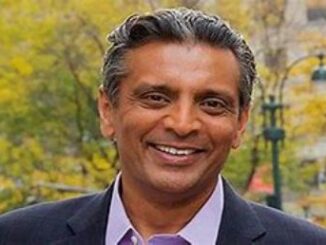
    WASHINGTON, D.C. (TIP): : Raj Subramaniam, President and Chief Executive Officer and a member of the Board of Directors of FedEx Corporation, has won The Asian American Business Development Center’s (AABDC) Pinnacle Award for 2023.

    He will be honored at the 2023 Outstanding 50 Asian Americans in Business black-tie dinner gala, which is marking its 22nd. year of recognizing excellence in corporate professionals and entrepreneurs, at Cipriani Wall Street on Sep 21.

    AABDC has to date conferred the premier award to over 1,000 Asian Americans corporate executives and entrepreneurs, representing scores of industries nationwide. Its highest honor the Pinnacle Award, which has recognized a roster of C-Suite leaders at the helm of major brands, will be given to “Raj Subramaniam, who is responsible for providing strategic direction for FedEx, one of the world’s largest transportation companies,” according to a press release.

    In addition, AABDC will honor the legacy of Sir Ivan Menezes, CEO of Diageo, who passed away on June 5, 2023, with a special Ivan Lifetime Achievement Award. Born in Pune, India, Ivan was one of Britain’s longest serving and most respected FTSE Chief Executives, transforming Diageo into the world’s leading premium drinks company and which accounts for 10% of the UK’s total food and drinks exports. Each year, the Outstanding 50 award committee identifies and selects outstanding leaders who have built a successful business or who have distinguished themselves in their community.

    Of those, the committee also identifies a top Pinnacle Award recipient who has reached the acme of his/her professional career and is widely acknowledged as a leader in their industry.

    “Our Outstanding 50 Business Committee carefully considers whom to add to our roster of distinguished Pinnacle Award winners, who serve to inspire the Asian American professional community as living role models and examples of excellence in leadership,” said John Wang, President and Founder of AABDC. “Raj Subramaniam of FedEx certainly meets and exceeds our criteria, and he has earned our admiration and appreciation for helming one of the most critical segments of the economy – the logistics and supply chains that keep our lives and businesses humming,” he said.

    “This year, we are also privileged to be honoring the impactful life of Ivan Menezes, who left a lasting imprint on Diageo, and who exemplified an Asian American business success story.”

    “During a year when Diversity, Equity and Inclusion policies are being challenged, we hope that our awards tradition demonstrates that diverse workforces produce great talent,” Wang added.

    Last year, the Pinnacle award honored two Asian American female CEOs — Reshma Kewalramani, President, and CEO, of biotech company Vertex Pharmaceuticals, and Rose Lee, President and CEO, Cornerstone Building Brands Inc, the largest manufacturer of exterior building products in North America. The prominent event typically draws over 600 leading business, political and civic leaders to pay tribute to the outstanding entrepreneurs and corporate executives in the Asian American business community from across the United States. Raj Subramaniam has more than 30 years of industry experience at FedEx. His international leadership experience, keen business insights, and focus on globalization have contributed to the success of FedEx and provide a blueprint as the company revolutionizes the transportation and logistics industry, the release noted.

    “Subramaniam is responsible for spearheading the current global transformation of FedEx, which includes revitalizing the company’s operating strategy, profitably growing the e-commerce business, and harnessing the power of global supply chain data to drive the company’s digital transformation,” it stated.

  • Supreme Court of India  amicus curiae supports banning for life convicted politicians from elections

    Supreme Court of India  amicus curiae supports banning for life convicted politicians from elections

    NEW DELHI (TIP): Noting that parliamentarians and legislators represent the sovereign will of the people, a Supreme Court-appointed amicus curiae has suggested that those convicted of an offence involving moral turpitude should be permanently disqualified from contesting elections. Senior counsel and amicus curiae Vijay Hansaria has suggested that limiting the period of disqualification to contest elections after conviction to six years is manifestly arbitrary and violates Article 14 of the Constitution. He has suggested permanent disqualification of such convicts instead of a six-year ban.

    In his 19th report submitted to the top court, senior counsel and amicus curiae Vijay Hansaria said the present law which limited the disqualification of convicted lawmakers to only six years was “manifestly arbitrary”. Hansaria is assisting the top court in deciding a PIL filed by Delhi BJP leader Ashwini Kumar Upadhyay in 2016 seeking setting up of special courts to expeditiously decide criminal cases against lawmakers and to debar convicted persons from the legislature, executive and judiciary for life.

    “There is no nexus that a person can make law to disqualify another person from holding a statutory office, but the person making the law would incur the disqualification only for a limited period. The lawmakers are required to be much more sacrosanct and inviolable than the persons holding office under such law.

    “Parliamentarians and legislators represent the sovereign will of the people and once found to have committed an offence involving moral turpitude, (they) are liable to be permanently disqualified from holding the office. Limiting the period of disqualification is a flagrant violation of the equality clause enriched in Article 14 of the Constitution,” the amicus curiae submitted.

    Under the existing election law in Section 8(3) of the Representation of the People Act, 1951, a person convicted of any offence and sentenced to imprisonment for not less than two years (other than those referred to in sub-section (1) or sub-section (2) of Section 8) gets disqualified from the date of such conviction and continued to be disqualified for a further period of six years since his/her release.

    In a landmark verdict in ‘Lily Thomas v Union of India (2013)’, the Supreme Court declared unconstitutional Section 8(4) of the Act which protected a convicted lawmaker from immediate disqualification if he/she filed an appeal within three months from the date of verdict. “There is no nexus for limiting the disqualification for a period of six years since the release of the convict with the object of disqualifying him from becoming a member of the legislature. The provisions of sub-sections (1), (2) and (3) of Section 8 to the extent they provide that shall continue to be disqualified for a further period of six years since his release is manifestly arbitrary and violative of Article 14 (right to equality) of the Constitution,” Hansaria submitted.

    “The issue of validity of Section 8 of the RP Act, 1951, may be considered independently of the issue of expeditious disposal of cases by the Special Court MP/MLA,” he submitted.

    Pointing out that the statutory authorities constituted under various laws provide for permanent disqualification and/or removal from holding such statutory office upon conviction of an offence involving moral turpitude, Hansaria submitted that if statutory authorities can’t comprise convicted persons, it’s manifestly arbitrary that such convicted persons can occupy the supreme legislative bodies after the expiry of a certain period of conviction.

    A person was eligible to contest election after six years of the release even if convicted for heinous offences such as rape or for dealing with drugs or being involved in terrorist activities or having indulged in corruption, he pointed out.

    “It is submitted that as per the Service Rules applicable to the Central government and state government employees, a person convicted for any offence involving moral turpitude is liable to be dismissed from service,” Hansaria submitted.

    Out of the 763 sitting MPs analyzed by  poll rights body ADR, 306 (40%) sitting MPs have declared criminal cases against them and 194 (25%) sitting MPs have declared serious criminal cases including cases related to murder, attempt to murder, kidnapping, crimes against women, etc.

    (Source: TNS)


  • US President Biden’s son Hunter indicted on gun charges in US special counsel probe

    US President Biden’s son Hunter indicted on gun charges in US special counsel probe

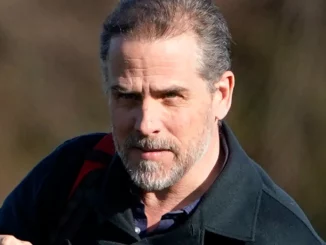
    WASHINGTON, D.C. (TIP): US President Joe Biden’s son Hunter Biden was criminally charged on Thursday,  September 14, after efforts to reach a plea deal failed, leading to the first ever prosecution of a sitting president’s child, says a Reuter report.

    The indictment filed on Thursday, September 14, in  US District Court in Delaware with three criminal counts related to gun possession. The indictment brought by recently elevated US Special Counsel David Weiss comes after a deal for Hunter Biden, 53, to plead guilty to two misdemeanor tax charges and enroll in a programme to avoid prosecution on a gun-related charge collapsed in a stunning turn in a July hearing.

    The charges ensure that courtroom drama will play an outsized role in the 2024 US presidential campaign as Biden, 80, seeks re-election in a likely rematch with his Republican predecessor Donald Trump, 77, who faces four upcoming criminal trials.

    Weiss was elevated to special counsel status in August after investigating Hunter Biden’s business dealings for years as the US attorney in the Democratic president’s home state of Delaware. Weiss was originally nominated by Trump.

    The younger Biden for years has been the focus of unrelenting attacks by Trump and his Republican allies who have accused him of wrongdoing relating to Ukraine and China, among other matters. Hunter Biden has worked as a lobbyist, lawyer, investment banker and artist, and has publicly detailed his struggles with substance abuse.

    Committees in the Republican-led US House of Representatives for months have been probing the Hunter Biden’s foreign business dealings. Some party hardliners are pushing for an impeachment inquiry into President Biden.

    While Republican lawmakers have collected testimony that Joe Biden at times joined calls with his son’s business associates, they have yet to produce evidence that the president personally benefited.

    Hunter Biden disclosed in December 2020 that Weiss’s office was investigating his tax affairs. He has denied wrongdoing.

    While most U.S. attorneys appointed by Trump were asked to step down when Biden took office in January 2021, as is routine, the Justice Department asked Weiss to stay on.

    The Justice Department’s inquiry has itself come under scrutiny from Republicans after whistle-blowers from the Internal Revenue Service assigned to the investigation told Congress that the department slow-walked the probe and limited Weiss’ ability to bring charges. Weiss has denied the claims. Hunter Biden never held a position in the White House or on his father’s campaign. The president has said he has not discussed foreign business dealings with his son and has said his Justice Department would have independence in any investigation of a member of his family.

    Trump and other Republicans have alleged what they called conflicts of interest from Hunter Biden’s position on the board of the Ukrainian energy company Burisma at the time his father was vice president to Democratic President Barack Obama. Trump in a July 2020 phone call with Ukraine’s president asked him to have his government open an investigation into Joe and Hunter Biden in the lead-up to that year’s US presidential election.

    The Democratic-led House of Representatives later voted to impeach Trump on charges of abuse of power and obstruction of Congress stemming from these efforts, though the Senate ultimately voted to keep Trump in office.

    Trump during the 2020 election campaign called for China to investigate Hunter Biden’s involvement in a fund that sought to raise Chinese capital. Trump accused Hunter Biden of using his position of influence to secure China’s financial backing for his investments, though never provided evidence to support this claim. Hunter Biden has denied wrongdoing.

    Hunter Biden described in a 2021 memoir dealing with substance abuse issues in his life including crack cocaine use and alcoholism. He was discharged from the US Navy reserve in 2014 after, sources said at the time, testing positive for cocaine.

    The Weiss inquiry initially examined potential violations of tax and money laundering laws in foreign business dealings, principally in China, sources told Reuters. The investigation headed by Weiss began as early as 2018, according to US media reports.

    Hunter Biden initially agreed to plead guilty to charges that he failed to pay more than $100,000 in income taxes in 2017 and 2018. The deal collapsed after a federal judge questioned whether the agreement would bar prosecutors from bringing charges on other issues.

    The president has two surviving children, Hunter Biden and daughter Ashley Biden. His son Beau Biden died in 2015 of cancer and his daughter Naomi Biden died as an infant after a car accident that also killed Joe Biden’s first wife.

    Hunter Biden appears to be the first child of a sitting president to be indicted, according to Aaron Crawford, who specializes in presidential history at the University of Tennessee.

    Crawford said the family of several presidents were ensnared in scandals, including George H.W. Bush’s son Neil, who directed a failed savings and loan, and Richard Nixon’s brother Don, who was rescued from business failures by wealthy businessman Howard Hughes.

  • India seeks prompt action as outrage over student’s death in US grows

    India seeks prompt action as outrage over student’s death in US grows

    NEW DELHI/NEW YORK (TIP): India on Thursday, September 14,  sought prompt action against American cops responsible for the death of Jaahnavi Kandula in Seattle in January as outrage grew over her demise and the subsequent shocking camera footage showing a cop laughing at the tragedy.

    The Biden administration on Thursday, September 14,  assured speedy investigation after India’s Ambassador to the US,  Taranjit Singh Sandhu,  strongly raised the issue at the highest level in Washington.

    Kandula, 23, was hit by a speeding police patrol car on 911 duty being driven by officer Kevin Dave on January 23. The Seattle media have reported that Dave was driving at over 119 kph when he caused the accident that flung Kandula 100 feet, injuring her fatally. She was rushed to the hospital but succumbed to injuries.

    The offensive video that has sparked outrage records another cop Daniel Auderer tasked to investigate the accident spot laughing about the fatal crash and saying there was no need for a probe as the deceased was a “regular person whose life had limited value”.

    Auderer is further heard saying “just write a check”. Back in India, Kandula’s family released a statement saying, “It is truly disturbing and saddening to hear insensitive comments made by a Seattle police department officer regarding Jaahnavi’s death. Jaahnavi is a beloved daughter and beyond any dollar value for her mother and family. We firmly believe every human life is invaluable and should not be belittled especially during a tragic loss.” Kandula’s family also questioned the delayed release of body camera footage. The Seattle police department released the footage on Monday citing recognition for public concern and need for transparency. Kandula was a student at Northeastern University and was to graduate this December. She was hit while crossing a street.

    The Indian Consulate in San Francisco had on Wednesday, September 13,  termed as “deeply troubling” the reports on the handling of Kandula’s death. “We have taken up the matter strongly with local authorities in Seattle and Washington state as well as senior officials in Washington DC,” the Consulate said.

    (With inputs from TNS)

  • Federal Judge Again Declares DACA Program Unlawful

    Federal Judge Again Declares DACA Program Unlawful

    A Texas judge has struck down the revised DACA program, reigniting the debate over its legality and leaving hundreds of thousands of “Dreamers” in limbo.

    AUSTIN, TX (TIP): A federal judge in Texas on Wednesday, September 13,  declared the revised version of the Deferred Action for Childhood Arrivals (DACA) program illegal, The Epoch Times reported. U.S. District Judge Andrew Hanen’s ruling reiterated that the Obama-era federal policy is unlawful and should have come from Congress. DACA provides hundreds of thousands of illegal immigrants brought to the United States as children with a two-year renewable shield from deportation.

    “The remaining provisions of the original injunction are to remain in place and are to be applicable to Final Rule DACA,” Judge Hanen wrote. The ruling blocks the federal government from accepting new DACA applications but maintains the program for existing recipients during the appeals process. The ruling does not mandate immediate action against current DACA beneficiaries.

    Texas and eight other states have been actively opposing DACA. Their central argument is that the Obama administration exceeded its authority by creating DACA in 2012, bypassing Congress. They have contended that President Joe Biden also overstepped his authority when he renewed it in 2022, bypassing Congress.

    The nine Republican-led states also asked the court to phase out the program over two years, calling the Biden administration’s revised version “substantively unlawful” for the same reasons as the original Obama-era DACA Memorandum.

    “The Court should declare it unlawful and unconstitutional, vacate it in its entirety, and permanently enjoin its implementation (with a prudent transition for existing DACA recipients),” their lawsuit, filed earlier this year, stated.

    Around 800,000 individuals are believed to be recipients of DACA, with two-thirds of those enrolled in the program thought to be aged between 21 to 30, having lived and worked in the United States for most of their lives after illegally entering as young children.

    The plaintiff states in the case also contend that they bear substantial costs, including hundreds of millions of dollars for health care and education, when immigrants are allowed to remain in the country without legal status.

    In 2021, Judge Hanen, an appointee of President George W. Bush, declared the program illegal, citing its lack of compliance with required public notice and comment periods. This decision was upheld by the Fifth Circuit Court of Appeals in 2022.

    Attempting to address the judge’s concerns, President Biden announced the renewal of the DACA program in August 2022, making it a federal regulation. It came into effect in October, subject to public comments in a formal rule-making process, replacing former President Barack Obama’s 2012 memo that initially established DACA.

    At the time, Secretary of Homeland Security Alejandro Mayorkas said the administration was “taking another step to do everything in our power to preserve and fortify DACA.”

    Mr. Mayorkas said that the United States has “been enriched” by the young people on the DACA program, referred to as “Dreamers,” contending that they “have known no country other than the United States as their own.”

    The plaintiff states, meanwhile, argued that President Biden overstepped his constitutional authority by renewing DACA without getting approval from Congress.

    Judge Hanen agreed, maintaining in his ruling on Wednesday that the revised version of DACA is unconstitutional and that the policy should come from Congress.

    The judge’s ruling is expected to be appealed to the U.S. Supreme Court.

    The DACA program has been overseen for the last decade by a Department of Homeland Security (DHS) memorandum that established it under President Obama who described the action as a “temporary, stopgap, measure.”


    The Trump administration’s attempts to terminate DACA in 2017 were thwarted by the courts.


    The nine states that filed the lawsuit are Alabama, Arkansas, Kansas, Louisiana, Mississippi, Nebraska, South Carolina, Texas, and West Virginia.

  • Challenge for INDIA to craft a narrative

    Challenge for INDIA to craft a narrative

    Parties well aware that a third term for Modi could wipe them off the national political landscape

    Indeed, this year’s Assembly polls will shed light on where INDIA stands vis-a-vis the BJP on a host of issues.

    “However, the biggest challenge for INDIA is to craft a narrative. At every step in the march towards electioneering, the BJP has stumped the Opposition by drawing upon various manifestations of the Hindutva discourse that are loaded with the potential to polarize the polity. If Rahul Gandhi strove to answer the BJP’s provocation by drawing a distinction between the Hindu religion and the political Hindutva espoused by the Sangh, the Congress’s ally, the DMK — a valuable INDIA constituent — took the debate to another level, questioning the basic tenets of Hinduism. On his ongoing European tour, where he has met parliamentarians and academics, Rahul described the Opposition’s battle against the BJP as a “fight for the soul of India” and maintained that based on his reading and understanding of Hindu religious texts, nowhere did the faith advocate terrorizing and harming people weaker than the oppressor. “So, this idea, the word Hindu nationalism, this is a wrong word,” he stated.”

    By Radhika Ramaseshan

    The Union Government’s grandiose mission to reaffirm India’s primacy in the global order gained momentum with Chandrayaan-3’s insertion into the lunar orbit and successfully culminated in the G20 summit last week in New Delhi before Prime Minister Narendra Modi handed over the presidency baton to Brazilian President Luiz Inacio Lula da Silva. This year’s Assembly polls will shed light on where INDIA stands vis-a-vis the BJP on a host of issues.

    The overwhelming ‘Vishwaguru’ honorific was affixed to Modi in 2022 itself, before the Uttar Pradesh elections. Among the themes then running through the BJP’s campaign was a depiction of the PM as a world leader whose ‘strong’ mediation in the Russia-Ukraine conflict thwarted the outbreak of the third World War. The claim gained currency in the political chatter heard even in UP’s boondocks. The success of the G20 summit — with its key takeaways being the please-all New Delhi Declaration which refused to condemn Russia’s invasion of Ukraine, the announcement of an ambitious economic corridor connecting Europe, West Asia and India, and the induction of the African Union — is bound to enhance Modi’s larger-than-life persona in the run-up to this year’s state polls and the 2024 Lok Sabha battle.

    Where does the build-up leave the Indian National Developmental Inclusive Alliance (INDIA), encompassing as it does a wide swath of the Opposition, the Congress included, that has banded together for sheer survival? The parties in the alliance are cognizant of the possibility that a third term for a Modi-led BJP could wipe them off the national political landscape.

    Hope, even in slivers, sometimes comes from unexpected quarters. On the day the summit began with the expected fanfare and extravaganza, the results of seven bypolls across six states were announced. These were the first to be held after INDIA’s formation. While the bloc’s leaders did not go as far as to claim that the outcome would be a referendum on the coalition, INDIA constituents won four seats, including Ghosi (Uttar Pradesh) and Dumri (Jharkhand). Ghosi was held by the Samajwadi Party since 2022, but a by-election was necessitated when its legislator Dara Singh Chauhan resigned and joined the BJP. The SP retained the seat with a huge margin (for an Assembly byelection) of over 40,000 that was brought about not by a carefully wrought caste equation but by the pooling of votes of all representative castes and Muslims. Even Dalits voted for the SP possibly because the BSP had not put up a candidate. BSP chief Mayawati’s directive to her voters was to go for NOTA but few, if any, heeded her order.

    What did the bypolls portend for the Opposition bloc? Akhilesh Yadav, the SP president, who lost the 2014 and 2019 Lok Sabha polls, apparently realized the criticality of putting up a joint front against the BJP because he did not appropriate the credit for the Ghosi victory. “It is a victory for positive politics and a defeat for negative communal politics. It is Bharat starting towards INDIA’s victory,” he said. This despite the marginal role the Congress played in the by-election. INDIA stands as a durable coalition in Jharkhand, helmed by the Jharkhand Mukti Morcha, unlike its neighbor Bihar, where Chief Minister and JD(U) chief Nitish Kumar’s subjective reactions to events and developments cause unwanted conjectures about his intent. In Maharashtra, NCP chief Sharad Pawar’s periodic meetings with his supposedly estranged nephew Ajit Pawar (now the deputy CM in a BJP-forged coalition government) prompted the Congress and the Uddhav Thackeray-helmed Shiv Sena faction to pencil a ‘Plan-BJP’ without the NCP.

    The existing political dynamics rule out a non-BJP alliance in West Bengal and Kerala, while the Left Front might be forced to seek the Congress’s hand in Tripura, where it has been steadily marginalized by the BJP.

    However, the biggest challenge for INDIA is to craft a narrative. At every step in the march towards electioneering, the BJP has stumped the Opposition by drawing upon various manifestations of the Hindutva discourse that are loaded with the potential to polarize the polity. If Rahul Gandhi strove to answer the BJP’s provocation by drawing a distinction between the Hindu religion and the political Hindutva espoused by the Sangh, the Congress’s ally, the DMK — a valuable INDIA constituent — took the debate to another level, questioning the basic tenets of Hinduism. On his ongoing European tour, where he has met parliamentarians and academics, Rahul described the Opposition’s battle against the BJP as a “fight for the soul of India” and maintained that based on his reading and understanding of Hindu religious texts, nowhere did the faith advocate terrorizing and harming people weaker than the oppressor. “So, this idea, the word Hindu nationalism, this is a wrong word,” he stated.

    DMK scion Udhayanidhi Stalin’s remarks against Sanatan Dharma were rooted in the Dravidian ideology, which was founded on the premise of weeding out Brahminism that was equated with Hinduism and Sanatan Dharma. While Stalin junior’s speech, delivered at a ‘Sanatan abolition’ conclave in Chennai, served the DMK’s political intent, it put the Congress in a quandary after the BJP demanded answers and clarifications from its leaders. Some took a safe middle path and steered clear of giving a straight reply, while former CM Kamal Nath, who unabashedly advocates Hindutva in his fight to wrest Madhya Pradesh from the BJP, repudiated Udhayanidhi.

    Indeed, this year’s Assembly polls will shed light on where INDIA stands vis-a-vis the BJP on a host of issues.

    (The author is a senior journalist)

  • India-led G20 makes headway on sustainable development

    India-led G20 makes headway on sustainable development

    Demonstrating concrete action on climate change, a Global Alliance for Biofuels was announced by India.

    “For India, the wording on global net zero is a reclamation of significant policy space in the climate domain along with a clear recognition of its view that not just countries but the people — the poorest and most vulnerable — should not be forgotten in multilateral negotiations. Recognizing the need for action on fossil fuels, the declaration underlined action on inefficient fossil fuel subsidies that encourage wasteful consumption and the need to expand cleaner technologies, including small modular nuclear reactors, triple renewal energy capacity globally and green hydrogen. Furthermore, demonstrating concrete action on climate change, a Global Alliance for Biofuels was announced by India.”

    By Manjeev Puri

    India  has emerged as a shining star in the global firmament with the success of the G20 summit, demonstrating its ability to become a bridge between the developed and the developing worlds and also a voice of the Global South. The leadership of Prime Minister Narendra Modi and the deft diplomacy of India’s Sherpa Amitabh Kant as well as the External Affairs Ministry team have earned high praise, and rightly so.

    For many, the big achievement was bringing the G20 to a consensus on the Delhi Declaration, especially on the contentious matter of the Ukraine war on which the group faltered in Bali last year. India began by suggesting a completely new text that recalled the Bali Declaration but dropped condemnation of Russia. In a smart move, India co-opted other emerging powers — Brazil, South Africa and Indonesia — and their combined efforts forged a ‘deal’ that Russia could live with and the West found expedient to accept.

    True, the Ukrainians have aired their disappointment, but that is really addressed to their Western supporters, who will have to explain their G20 stance to their people and opposition parties. Basically, though, for them (the West), the continued relevance of the G20 was an imperative, more so as the Chinese gave an impression of undermining the grouping by the absence of their President. Moreover, the West, and indeed most of the world, clearly recognizes India by itself as very important — both as a huge and growing market, including for defense equipment, and as a bulwark against Chinese hegemony, especially in the Indo-Pacific.

    With the ‘resolution’ on Ukraine in place, it was prudent for the Chinese to lift reservations on India-suggested ideas such as LiFE (Lifestyle for Environment), women-led development, digital public infrastructure, etc., given that the Delhi Declaration sought to push the agenda of the Global South. The inclusion of the African Union as a member of the G20, at India’s instance, led to a changed approach, along with the fact that accelerating progress on Sustainable Development Goals, where the world is well behind the target, was a major objective of the declaration.

    While focusing on the Delhi Declaration’s pronouncements on sustainable development, climate change and energy, it needs to be highlighted that the G20 is about impacting rule-making by the relevant de jure body, be it the UN, the UN Framework Convention on Climate Change (UNFCCC), WTO or the IMF/World Bank. And this has been done in a major manner in Delhi and should raise optimism among activists who point to the fact that no large-scale funds have been specifically committed for climate action, including the loss and damage fund, or even resolving debt issues.

    Monies, obviously, are the key resource. Therefore, perhaps, most important is the commitment to reorient multilateral development banks (MDBs) to poverty eradication and prosperity in a sustainable world. Actions as per this template should tackle capital adequacy at the MDBs and help them move private flows in a significantly enhanced manner to developing countries through de-risking. Indeed, a major outcome of the proposal by Prime Minister Modi of a virtual G20 event in November-end could be a report on MDB reforms by a high-level expert group co-led by Prof Larry Summers of the US and NK Singh of India. All of this was also underscored in a declaration involving India, the US, Brazil and South Africa — along with World Bank President Ajay Banga — issued on the sidelines of the G20 summit.

    The declaration itself center-staged the huge sums required for climate action, moving the needle from billions to trillions of dollars. Specifically, it noted “the need for $5.8-5.9 trillion in the pre-2030 period required for developing countries as well as the need for $4 trillion per year for clean energy technologies by 2030” for net-zero emissions by 2050.

    Secondly, it has forced the developed world to set a New Collective Quantified Goal, which is ambitious, transparent and trackable, for its assistance to developing countries (recall $100 billion a year pledged in Copenhagen, 2009, which is still to be realized) and double the collective provision for adaptation finance. Of course, it would have been good had a push been given in Delhi for the setting of a global goal for adaptation at COP28 in Dubai in November-December this year.

    Net zero (GHG emissions) has been an objective of the global community since the UNFCCC meeting in Glasgow in 2021. Interestingly, the Delhi Declaration is unambiguous that this is a global goal and that the mid-century global goal does not imply peaking in all countries within a similar timeframe. Hopefully, this will push the developed countries to recognize that they need to achieve this milestone well before 2050 as a show of intent and their commitment towards the Paris Agreement’s principle of equity and common but differentiated responsibilities (CBDR) and respective capabilities.

    For India, the wording on global net zero is a reclamation of significant policy space in the climate domain along with a clear recognition of its view that not just countries but the people — the poorest and most vulnerable — should not be forgotten in multilateral negotiations. Recognizing the need for action on fossil fuels, the declaration underlined action on inefficient fossil fuel subsidies that encourage wasteful consumption and the need to expand cleaner technologies, including small modular nuclear reactors, triple renewal energy capacity globally and green hydrogen. Furthermore, demonstrating concrete action on climate change, a Global Alliance for Biofuels was announced by India.

    (The author is a former Ambassador and Distinguished Fellow, TERI)

  • The G-20 should abolish itself

    The G-20 should abolish itself

    Eliminating G-20 meetings would free up the leaders’ time to focus on real issues, not diplomatic niceties

    “Consider what gave real impetus to the annual G-20 process, the 2008 financial crisis. In November 2009, with his history a little shaky, incoming European Council President Herman Van Rompuy (a former Belgian prime minister) proclaimed 2009 to be “the first year of global governance, with the establishment of the G-20 in the middle of the financial crisis. The climate conference in Copenhagen is another step toward the global management of our planet.” One can only imagine how many Americans remain unaware of the G-20’s role in global governance, much less agree that there should be global governance or a G-20 role in it.”

    By John R. Bolton

    The annual Group of 20 festivities, this year in India, are now concluded. It is appropriate to ask exactly what these gatherings accomplish. For the process-obsessed, every international meeting among heads of state or diplomats is positive, regardless of whether anything concrete is achieved. The G-20 exemplifies this misconception. Mountains of final communiqués, joint statements and outcome documents have contributed to global deforestation but little else.

    Moreover, leaders’ summits are preceded by endless cabinet-level meetings: foreign ministers, treasury ministers and environmental ministers, all producing rivers of deathless prose. Who remembers, though, the ringing declarations of last year’s G-20 gathering in Bali, much less those of previous years?

    Consider what gave real impetus to the annual G-20 process, the 2008 financial crisis. In November 2009, with his history a little shaky, incoming European Council President Herman Van Rompuy (a former Belgian prime minister) proclaimed 2009 to be “the first year of global governance, with the establishment of the G-20 in the middle of the financial crisis. The climate conference in Copenhagen is another step toward the global management of our planet.” One can only imagine how many Americans remain unaware of the G-20’s role in global governance, much less agree that there should be global governance or a G-20 role in it.

    Van Rompuy’s job helps explain the global-governance mind-set, which infects the G-20 and other international “institutions.” The European Council consists of European Union heads of state or government. Its presidency once rotated every six months among the members, until the Treaty of Lisbon created a 30-month presidential term, renewable once. Van Rompuy was the first president so elected, making him in E.U. eyes equivalent to the president of the United States. Fancy that. No wonder he was qualified to speak of global governance.

    Many originally saw the G-20 as a broader alternative to the global West’s Group of Seven, comprising the world’s largest industrial democracies. The G-7 itself has had its ups and downs. For example, it became a G-8 by adding Russia, but Moscow’s inconvenient 2014 Ukraine invasion resulted in its expulsion. It was the G-7’s weak response in 2014 and later, reflecting the West’s collective failure to punish Russia, that undoubtedly emboldened Moscow to invade Ukraine even further last year. The attack galvanized the G-7, surprisingly, more than anything in several decades.

    By contrast even to the G-7 herd of cats, the G-20 has been feckless. Because the group includes Russia and China, its final joint statement in India contained only an anodyne comment on Russia’s unprovoked aggression against Ukraine, even weaker than its 2022 statement. Every G-20 member holds veto power over a consensus leaders’ statement, so it should be no surprise that nothing much happened this weekend in New Delhi, as in the United Nations Security Council, where Russia and China also hold veto power.

    When asked to justify the G-20, supporters invariably say it provides a useful platform for members to confer bilaterally outside the larger meeting. It is true the G-20 enables this diplomatic version of speed dating, but so do any number of other forums, not least the U.N. General Assembly’s opening next week in New York. The real question is whether endless rounds of brief encounters have any measurable utility.

    President Biden’s Friday meeting with Indian Prime Minister Narendra Modi derived nothing from being attached to a G-20 gathering. The meeting could have important consequences, as could Biden’s announcement of new rail and shipping connections among India, the Middle East and Europe. But it could just as easily have taken place, and perhaps with even greater media coverage, during a stand-alone visit by the U.S. president. Biden’s second stop on this trip, Vietnam, was also strategically correct — and was enhanced by his not being surrounded in Hanoi by a small mob of other world leaders.

    Many observers correctly noted that the absences in India of Russia’s Vladimir Putin and China’s Xi Jinping gave Biden a solo opportunity to make America’s case on key issues. But there is substantial reason to think China and Russia simply don’t value the G-20 as much as other forums. Putin hasn’t attended since the 2019 G-20 in Japan (2020 being a virtual summit for all because of the pandemic). Xi skipped 2021 (beaming in only by video) as well as this year. If the G-20 were so important, it is inexplicable that Xi chose not to make even a brief appearance, especially in India, where his absence is being taken as a slap in the face.

    It takes nothing away from India, and its extensive preparations for this G-20, to emphasize how evanescent these meetings are. In international affairs, pretending is not a sound basis for policy. Eliminating G-20 meetings would free up the leaders’ time to focus on real issues, not diplomatic niceties.

    (John R. Bolton served as national security adviser under President Donald Trump and is the author of “The Room Where It Happened: A White House Memoir.”)

    (First published in Washington Post)

  • Leadership Void Hobbles School Bus Safety Program Rollout

    By Arnold W. Drucker

    As our children continue their 2023-24 studies, so too does the daily jockeying to make sure they have a safe and reliable way to get to school every day. Many are driven to school; others walk; and the remainder rely upon school bus transportation. Regrettably, as it pertains to that latter form of transportation, many school buses serving our County currently lack a major safety tool – stop-arm cameras that ensure motorists who illegally pass buses are held accountable.

    As a cosponsor of the 2019 legislation that cleared the way for a stop-arm camera program here in Nassau County, I am frustrated by the laissez-faire approach the Blakeman administration has taken to getting school districts to sign up for a program that is expressly designed to promote public safety and protect our children. What makes it especially disappointing is that school districts like Jericho – which have cameras installed on all its buses – can’t use this potentially life-saving technology until the Town and the vendor sign a contract.

    After the administration of former County Executive Laura Curran correctly spearheaded the program – the rollout of which was complicated by the COVID-19 pandemic in 2020 – County Executive Blakeman has seen fit to punt the project to the towns and cities. In recent remarks to the Newsday editorial board, his spokesman cited “pluses and minuses” to the initiative as the rationale.

    What downsides could there possibly be? Irritating a motorist with a hefty ticket for making a selfish and unlawful decision to pass a school bus filled with potentially dozens of youngsters? That’s the point of threatening a $250 fine – it deters unacceptable behavior and makes our roads safer for all of us. In the interest of fairness, rigorous safeguards must be in place to prevent and correct erroneous tickets.

    Data from neighboring Suffolk’s countywide stop-arm camera program show that this uniform, countywide approach is working. In its first year of full implementation in 2021, Suffolk County’s program issued more than 118,000 tickets. The next year, the number of tickets dropped by 40 percent, according to data. Experts say that’s because the vast number of first-time offenders learn their lesson and don’t do it again.

    That’s exactly what we want to have happen here in Nassau County. However, because of the disjointed approach the Blakeman administration has settled upon, it’s every town for themselves. As programs like Jericho’s remain in limbo, the patchwork quilt of enforcement diminishes the deterrence effect. If the Blakeman administration continued with a unified, countywide approach like Suffolks, perhaps we would have had more leverage with the vendor to get this done more expeditiously. Nevertheless, the Town of Oyster Bay says it is hoping for a January 2024 launch, and I will be closely monitoring this situation to make sure that happens.

    While we wait for this crucial program to shift out of neutral in several key communities within our County, the onus is upon all of us to make the best of this flawed landscape. We can accomplish that by ensuring that every Nassau County school district is equipped and ready to flip the switch to turn on their cameras as soon as the necessary approvals are secured. If your school district remains on the fence, I encourage you to engage with your local leaders and urge them to take this common-sense step to protect our children.

    (Arnold W. Drucker, of Plainview, has represented Nassau County’s 16th Legislative District since 2016)

  • Limits of identity: On facilitating peace in Manipur

    Civil society should strive to be non-partisan to aid peace in Manipur

    One of the most disconcerting features of the ongoing ethnic strife in Manipur remains the inability of civil society representatives to rise above their “ethnic” affiliations and work towards peace. This is exemplified by the acts of the Meira Paibi, an amorphous organization of Meitei women, who have in the past mobilized against armed forces and police excesses, alcoholism, drug addiction and sexual violence in the State. During the conflict that has raged on since early May, however, the Meira Paibi has been working towards disrupting the operations of the Assam Rifles in their attempt to maintain peace, especially in the foothills. These areas, called “buffer zones”, were created to ensure that there is no further escalation of violence between arms-wielding people of the two ethnic communities, but there have been violent attacks with the armed forces unable to act on time because of disruptions, allegedly, by the Meira Paibi, among others. Clearly, the situation has been brought to a boil by the looting of weapons by both Kuki-Zo and Meitei groups and their use in the strife. But the inability of the State government and its police and the Union government-deployed armed forces in maintaining peace has also been due to civil society groups supporting those engaging in violence.

    Some Meira Paibi representatives had, in a press conference in New Delhi on Wednesday, claimed that they do not recognize the buffer zones, calling them “unconstitutional”. The presence of armed forces in peacekeeping is not an ideal solution in most circumstances. But with the ethnicization of law enforcement, aided by a State government that seems to have lost its legitimacy of power across ethnic divides, leading to demands for a separate administration by Kuki-Zo representatives, the armed forces’ presence and the need for buffer zones to maintain a semblance of peace have become essential in Manipur. Civil society groups such as the Meira Paibi can rise above their narrow ethnic identities to press for justice for women affected in the conflict and thus build solidarity networks that will aid the process of reconciliation and peace-building. Sadly, that does not seem to be the case today. Civil society organizations have whipped up the frenzy of ethnic hatred, partially due to the recurring trauma from the violence, as much as cynical political representatives have. And this has meant that the cycle of violence has endured. History suggests that a breakthrough can only be achieved through non-partisan leadership and civic dialogue among civil society and political representatives. As things stand, for that to happen there needs to be a credible alternative to the current leadership in the State.

    (The Hindu)