
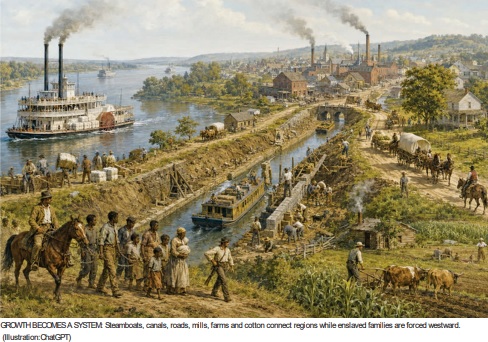

Steamboats made upriver commerce faster and cheaper. The National Road linked the Potomac region to the Ohio Valley. The Erie Canal, completed in 1825, joined the Great Lakes to the Hudson River and made New York City the nation’s dominant commercial port. Turnpikes, canals and expanding postal routes accelerated movement of goods, information and people. Northern workshops and early factories increased production. The Lowell system later recruited young women to textile mills, offering wages and community while imposing exhausting schedules and strict discipline. Western farms supplied food to eastern cities; eastern merchants financed settlement and trade. A continental market took shape.
COTTON AND FORCED MIGRATION
Cotton became the nation’s leading export. Its expansion across the Deep South depended upon enslaved labor and the forced movement of hundreds of thousands of African Americans through the domestic slave trade. Families were separated and sold south and west. Northern shipping, insurance, banking and manufacturing also profited from slave-grown cotton. Slavery was not isolated from national growth; it was embedded within it.
The same networks that carried opportunity and invention also carried cotton produced by bondage and people sold against their will.”



Be the first to comment