
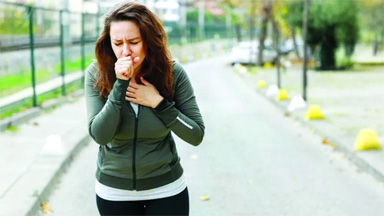

A new study led by researchers at University College London (UCL) shows that chronic exposure to toxic air can significantly diminish the health benefits of regular physical activity. The study analysed data from more than 1.5 million adults tracked for more than a decade in countries including the UK, Taiwan, China, Denmark and the United States. The team found that the protective effect of regular exercise on people’s risk of dying over a specific period – from any cause and from cancer and heart disease specifically – appeared to be reduced, but not eliminated, for those who lived in high pollution areas.
The researchers looked at levels of fine particulate matter – tiny particles known as PM2.5s with a diameter of less than 2.5 micrometres across. These particles are so small they can get stuck in the lungs and enter the bloodstream.
The health benefits of exercise significantly weakened where the yearly average level of PM2.5s was 25 micrograms per cubic metre (mg/m³) or higher, the team found. Nearly half (46%) of the world’s population live in areas exceeding this threshold.
The lead researcher, Professor Po-Wen Ku of National Chung Hsing University, Taiwan, said, “Our findings emphasise that exercise remains beneficial even in polluted environments. However, improving air quality can greatly enhance these health gains.”
Co-author Professor Andrew Steptoe, from UCL’s Department of Behavioural Science & Health, said: “Our study shows that toxic air can to some extent block the benefits of exercise, although not eliminate them. The findings are further evidence of the damage that fine particle pollution can do to our health.
“We believe clean air and physical activity are both important for healthy ageing and so we encourage greater efforts to curb health-harming pollution levels.” For the study, the research team looked at data from seven existing studies, including three that were unpublished, combining the summary statistics from each study into one overall analysis. For three of these studies, they re-analysed the raw data at the level of individual participants.



Be the first to comment