
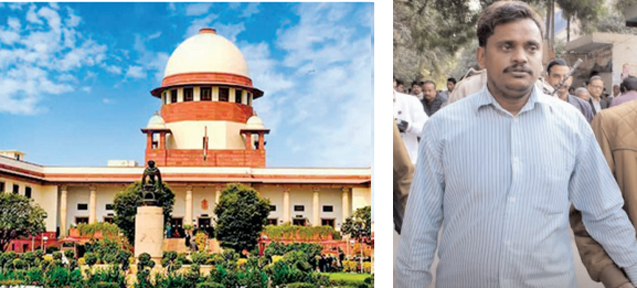

The year 2025 proved to be a landmark one for the Supreme Court of India. As the nation grappled with social change, governance debates, and questions of constitutional authority, the apex court delivered a series of rulings that left an enduring imprint on Indian law, politics, and society. From clarifying the powers of the President and Governors, to advancing women’s representation in legal institutions, to reinforcing fundamental rights, the Court’s judgments reflected a careful balancing of tradition, equity, and constitutional principles.
Presidential Reference on Assent Powers: Upholding Institutional Independence
In November, the Supreme Court issued its advisory opinion on a Presidential Reference regarding the powers of the President and Governors to grant assent to bills passed by state legislatures. The Court clarified that no fixed timeline can be imposed on the President or Governors for assenting to legislation, holding that the concept of “deemed assent” was incompatible with the Constitution’s basic structure.
The judgment was a strong reaffirmation of the separation of powers, ensuring that constitutional authorities retain independent discretion without being coerced by deadlines or political pressure. Legal analysts hailed this opinion as an important milestone in safeguarding federal balance and the deliberative processes of democracy.
Women’s Reservation in State Bar Councils: Advancing Gender Equity
Another socially transformative ruling came in the form of a mandate for 30 percent representation of women in State Bar Councils. The Court ordered that 20 percent of seats be filled through elections, with 10 percent through co-option by existing council members.
This judgment addressed the stark under-representation of women in legal governing bodies, and was widely celebrated as a progressive step toward substantive equality. Advocates argued that it would not only empower female legal professionals but also reshape decision-making and policy formulation in India’s legal institutions.
Balancing Culture and Environment: Firecracker Regulations
Ahead of Diwali, the Court modified earlier restrictions on firecrackers in the Delhi-NCR region, allowing licenced traders to sell NEERI-certified “green crackers” under regulated conditions. This ruling demonstrated the Court’s nuanced approach, balancing environmental concerns with cultural and religious practices, and underscored its role as a mediator between social values and ecological responsibility.
Tribunal Reforms Act: Protecting Judicial Independence
In a pivotal judgment on administrative law, the Supreme Court struck down key provisions of the Tribunal Reforms (Rationalisation and Conditions of Service) Act, 2021, reiterating that tribunals must remain insulated from executive interference. By safeguarding the impartiality of adjudicatory bodies outside regular courts, the Court reinforced a core tenet of constitutional governance: that justice institutions must operate free from undue influence to maintain public trust.
Criminal Justice: Upholding the Standard of Proof
The apex court also delivered a critical criminal law judgment in the Nithari serial killings case. Reversing the conviction of Surendra Koli, the Court underscored that suspicion cannot replace proof beyond reasonable doubt. The ruling reaffirmed that convictions must be anchored in solid evidence, not expediency or public sentiment, emphasizing the judiciary’s role as a guardian of fair trial and due process.
Judicial Service Eligibility: Emphasizing Practical Experience
In 2025, the Court reinstated the requirement of three years of practical legal practice for candidates seeking judicial service, emphasizing that courtroom experience is essential for competent adjudication. This decision reinforced professional standards in the judiciary and highlighted the importance of experience in administering justice effectively.
Animal Welfare and Public Safety: Stray Dog Sterilization
Demonstrating sensitivity to public health and animal welfare, the Court directed that sterilized, vaccinated, and dewormed stray dogs should be returned to their locality, rather than confined indefinitely in shelters. Exceptions applied to aggressive or rabies-suspected animals. This judgment reflected a balanced approach to rights, safety, and humane treatment.
2025 in Retrospect: Constitutional Rights, Social Justice, and Judicial Oversight
Taken together, the Supreme Court’s 2025 judgments reflect a judiciary conscious of its constitutional mandate, social responsibilities, and role in governance. Whether clarifying presidential powers, promoting gender equality, or protecting fundamental rights, the Court consistently reinforced principles of democracy, fairness, and institutional integrity.
Legal scholars have described the year’s rulings as a demonstration of judicial foresight-where courts did not merely interpret law, but actively shaped the contours of governance, justice, and social equity.
2025 will be remembered as a year when the Supreme Court not only clarified legal ambiguities but also advanced the cause of social justice, gender equity, and constitutional safeguards, reaffirming its position as the guardian of India’s democratic framework.


Be the first to comment