
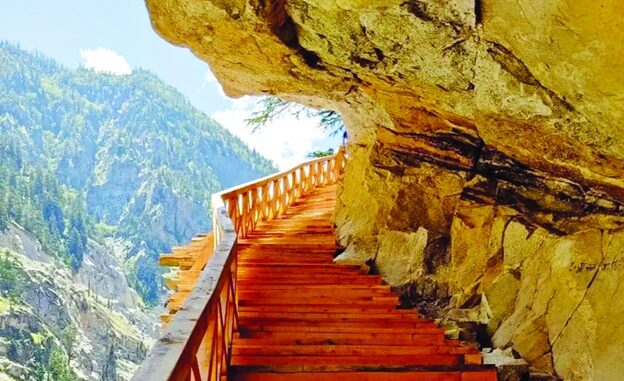

Tucked away in the northernmost reaches of Uttarakhand, close to the Indo-China border, lies a place so stark, silent, and spellbinding that it feels almost unreal. Nelong Valley, often called the “Ladakh of Uttarakhand,” is not a destination you stumble upon—it is one you are granted access to. Remote, restricted, and remarkably untouched, this high-altitude valley offers a rare glimpse into a Himalayan world where nature still rules with quiet authority.
Far removed from the crowded hill stations and pilgrimage trails, Nelong Valley is a journey into isolation, raw beauty, and history layered with geopolitics.
A Valley Carved by Time and Wind
Located at an altitude of around 11,000 feet, Nelong Valley sits within the Gangotri National Park, just a few kilometres from the India-China border. The landscape here is dramatically different from the lush green images usually associated with Uttarakhand. Instead, visitors are greeted by barren mountains, deep gorges, wind-sculpted rocks, and wide open skies—a terrain that mirrors the cold desert geography of Ladakh and Spiti.
The valley was formed over centuries by the Jadh Ganga river, a tributary of the Bhagirathi. The river cuts through steep cliffs, creating a dramatic topography that feels both harsh and hypnotic.
A Land Once Closed to the World
For decades, Nelong Valley remained completely inaccessible to civilians due to its strategic importance. After the 1962 Indo-China war, the region was sealed off, turning it into a military zone. Only recently has the Indian government allowed limited civilian access, and that too under strict regulations.
Even today, visitors need special permits, and the number of tourists allowed each day is restricted—one of the many reasons Nelong remains blissfully untouched.
The Forgotten Villages of the Jadhs
Scattered across the valley are the remains of ancient villages once inhabited by the Jadh tribe, a trans-Himalayan community with strong cultural and trade links to Tibet. Before 1962, the Jadhs regularly crossed into Tibet for trade, exchanging grains, salt, wool, and livestock.
Abandoned stone houses, broken walls, and silent pathways tell stories of lives abruptly interrupted by geopolitics. Walking through these villages feels like stepping into a paused moment in history—where time stopped, but memories linger.
Wildlife in a Fragile Ecosystem
Nelong Valley lies within a protected ecological zone and is home to rare Himalayan wildlife. If you’re lucky and observant, you may spot snow leopards, Himalayan blue sheep (bharal), musk deer, Himalayan foxes, and a variety of high-altitude birds.
Vegetation is sparse but resilient—juniper shrubs, alpine grasses, and medicinal plants manage to survive in the harsh climate. The ecosystem here is delicate, which is why tourism is carefully controlled.
The Journey: As Thrilling as the Destination
Reaching Nelong Valley is an adventure in itself. The route passes through Gangotri, one of the Char Dham pilgrimage sites, before winding upward into increasingly rugged terrain. The road is narrow, dramatic, and flanked by steep cliffs and plunging valleys.
There are no hotels or shops inside the valley. Visitors must return to Gangotri the same day, making the experience feel fleeting—like a privilege borrowed from nature rather than consumed.
Silence That Speaks Volumes
What truly sets Nelong Valley apart is its silence. There is no network connectivity, no tourist chatter, no honking vehicles. The wind, the river far below, and the occasional cry of a bird are the only sounds that exist.
In an age of constant noise and digital distraction, Nelong offers something rare: stillness. It is a place that invites introspection, where the vastness of the landscape humbles the human presence.
How to reach
Nelong valley welcomes visitors in the months of May till November, however owing to security reasons the place is prohibited for camping. You can reach Nelong valley from all the way through Bhairon Ghati from where you can easily hire a cab. This beautiful valley is well connected by road from Haridwar, Dehradun and Rishikesh. Every traveler should know that there is no proper accommodation and restaurants in Nelong valley. However, you can book hotels in Bhairon Ghati, Gangotri, Harsil and Dharali. However, Nelong valley do not have a flight, bus or train connectivity but is well connected with road so that you can easily hire cab or taxi or also can self drive to reach this adventurous valley.
– Reaching By Bus: The nearest bus station, which is well connected with buses to other cities is Reckong Peo Bus Stand. Harsil Bus Stand is a local bus stop with limited bus frequency.
– Reaching By Train: Nearest major railway station to reach Nelong valley is Dehradun Railway Station. There is also one local train station too but with limited railway connectivity, i.e. Harrawala Railway Station.
– Reaching By Air: Nearest major international airport to reach Nelong valley is Chandigarh Airport. There is also a small airport too with limited flight routes, i.e. Jolly Grant Airport.
Points to remember
Nelong valley is now open for public and is the perfect place to visit for adventure seekers and mountain lovers. This picturesque valley of Uttrakhand is a part of Gangotri National Park and is also an abode to many rare animals like snow leopard and musk deer. There are several points which you should keep in mind before planning a trip to Nelong valley:
Nelong valley is located at a distance of about 315 km from the main city of Dehradun. First of all, you have to reach Bhairavghati which is about 100 km from Uttarkashi and then it will take a 25 km ride to reach the mesmerizing valley. Just remember that private vehicles are not permissible here; thus you have to take a forest department vehicle.
Forest department is very much strict in terms of permission to visit Nelong valley. Only registered operators are permitted to take tourists into the valley and that too upto Nelong and beyond that you cannot go in any case.
To enter the valley only six forest department vehicles are allowed in one day with four people each. Surely it will change in some times as government is trying up hard to promote Nelong valley tourism. Before entering you will need a permit which should be taken from the sub-divisional magistrate. You will also require a fitness certificate to enter the valley. The entry of foreigners is not allowed owing to its strategic location.
Night stay is not permitted in the valley as you can find out accommodation options in Bhairavghati. There are numerous budget hotels which offer comfortable stay to tourist. There is also a semi-government guest house there that offers comfortable stay to its guest.
At the time of packing for your Nelong valley trip don’t forget to pack sports shoes and woolens, alleys carry a power bank with you along with sunglasses and first aid box.
There are many nearby attractions in Nelong valley where you can enjoy at your best. One of the best Nelong valley attractions is Padang Temple which is located at about 3500 ft and is devoted to Kaal Bhairav. Don’t miss out to seek blessings at the famous Gangotri Temple and exploring many other scenic destinations.


Hi there! This post couldn’t be written any better! Reading through this post reminds me of my previous room mate! He always kept talking about this. I will forward this article to him. Pretty sure he will have a good read. Thank you for sharing!
The 1RM Calculator helps gauge progress without testing true maxes. b3f0a043.