
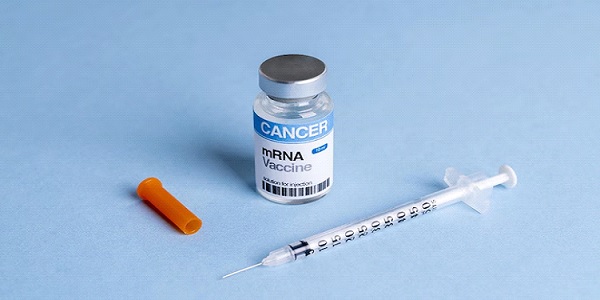

A small but striking set of new clinical data is offering cautious hope in one of cancer care’s toughest frontiers: pancreatic cancer.Researchers reported this week that nearly 90 percent of patients who mounted an immune response to an experimental vaccine were still alive four to six years after treatment – an outcome that stands in sharp contrast to the disease’s typically grim prognosis.
The experimental vaccine is autogene cevumeran, a therapeutic mRNA cancer vaccine being developed and researched by BioNTech and Genentech, a member of the Switzerland-based pharma giant Roche Group, along with scientists from New York-based Memorial Sloan Kettering Cancer Centre.
The surgeon-scientist, Dr Vinod Balachandran, who led the study, presented the follow-up findings at the 2026 annual Meeting of the American Association for Cancer Research.
Pancreatic cancer is notoriously difficult to detect early and treat effectively. With a five-year survival rate of about 13 percent, it remains one of the deadliest cancers worldwide.
According to global estimates, more than 5 lakh new cases are diagnosed each year, with over 4 lakh deaths annually. In India alone, the disease accounts for over 13,000 new cases and nearly as many deaths each year. Against this backdrop, even incremental advances are closely watched; and now a signal of durable survival, though preliminary, is drawing attention.
A NEW APPROACH
The therapy at the center of this optimism is an experimental mRNA-based vaccine being studied by scientists at the premier US-based cancer research institute. Unlike traditional vaccines that prevent disease, this one is designed to treat existing cancer by training the immune system to recognise and attack tumour cells.
The approach builds on the same underlying technology used in some COVID-19 vaccines, but with a highly personalised twist. After a patient’s tumour is surgically removed, researchers analyse its genetic mutations and design a bespoke vaccine tailored to those specific cancer markers.
The goal is to prompt the body’s T cells, responsible for immunity, to identify and destroy any remaining cancer cells that might otherwise trigger a relapse.
In the early-stage trial, not all patients responded to the vaccine. But among those who did – in 8 out of 16 – meaning their immune systems generated a robust T-cell response – the outcomes were notably better. Nearly 88 percent of these responders – 7 out of 8 – were alive years later, a result that researchers describe as encouraging, though still preliminary.
Experts caution that the findings come from a small cohort and require validation in larger, randomised trials. Still, the durability of the response is what stands out. Pancreatic cancer is particularly aggressive, and recurrence after surgery is common. A therapy that meaningfully delays or prevents relapse could significantly change survival patterns.
The biology of pancreatic cancer has long made it resistant to many forms of treatment, including immunotherapy approaches that have transformed care in other cancers.
Tumours often create a dense, protective microenvironment that shields them from immune attack. This has been one of the biggest obstacles to harnessing the immune system against the disease.
The vaccine strategy attempts to overcome this by priming the immune system in a highly targeted way. By focusing on neoantigens – mutations unique to an individual’s tumor – the therapy aims to bypass some of the tumours defences and generate a more precise immune assault. Source: India Today



Be the first to comment