
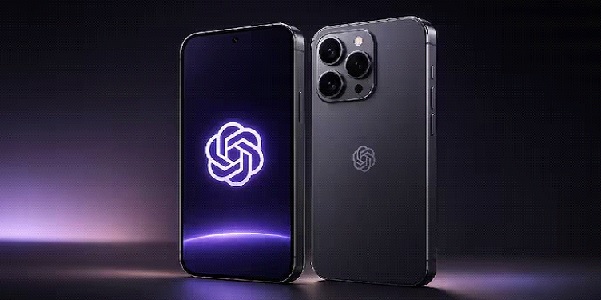

There have been speculations for quite some time that OpenAI is working on hardware products. Now, a recent report has provided some hints at an upcoming OpenAI device. In an X article, analyst Ming-Chi Kuo has suggested that the AI company is working with MediaTek and Qualcomm to develop smartphone processors. As per the analyst, the company has also partnered with Luxshare as the exclusive system co-design and manufacturing partner, with mass production expected to begin in 2028. The move signals OpenAI’s growing interest in hardware, particularly as it looks to optimise devices for AI-native experiences rather than traditional app-based usage.
Smartphones have been stagnant for the last few years. There have been changes with each new iteration of smartphones, but they are not that significant, but OpenAI wants to change that now. As per Ming-Chi Kuo, at the center of OpenAI’s effort is the idea of an AI agent-led smartphone. Instead of navigating through multiple apps, users would rely on AI to complete tasks, which will fulfil users’ needs directly.
It will also shift how users think about smartphones — not as collections of apps, but as systems designed to execute user intent. In this model, AI becomes the primary interface, reshaping user interaction.
Ming-Chi Kuo said there are several reasons driving OpenAI’s push into smartphones.
First, controlling both the operating system and hardware would allow the company to deliver a fully integrated AI agent experience. Second, smartphones uniquely capture the user’s real-time state, making them the most valuable device for contextual AI inference. Third, smartphones are expected to remain the largest-scale device category for the foreseeable future.
Together, these factors make the smartphone a critical platform for deploying advanced AI systems at scale.
Ming-Chi Kuo says OpenAI’s advantages lie in its strong consumer brand, years of accumulated user data, and leading AI models. With smartphone hardware already highly mature, the company can rely on existing supply chains while focusing on differentiation through AI.
On the business model side, OpenAI could bundle subscriptions with hardware and build a new AI agent ecosystem involving developers, potentially reshaping how software is distributed and monetised on mobile devices.
Ming-Chi Kuo hints that the envisioned device would rely on a tightly integrated mix of on-device and cloud-based AI.



1 Trackback / Pingback