
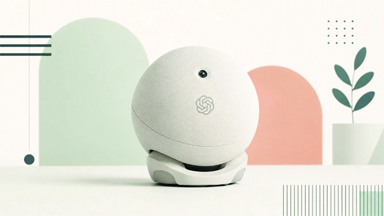

OpenAI wants to enter the consumer hardware business. The AI startup has been working on hardware devices for some time now, with former Apple designer Jony Ive. While rumours in the past indicated that the first OpenAI device will be a speaker, a new report has given us some idea about what it might look like – a portable smart speaker without a display.
As per a report from Bloomberg, OpenAI is working on a portable, screenless smart speaker as its first hardware device. The speaker is said to be designed as your AI companion at home.
While the speaker will be the first OpenAI device built in-house, the company did showcase the Codex Micro last month. Codex Micro is a Codex-branded input device built in partnership with accessories company Work Louder.
It is believed that the OpenAI speaker will have a portable formfactor, which will make it easier for users to move it around the house. The report says that instead of having it plugged-in to operate, it can come with a rechargeable battery, adding to the portability factor.
The speaker is not expected to come with a speaker, though it will likely come with a camera and other sensors.
OpenAI may also use mechanical elements for the speaker, which can move on their own, giving it a more lifelike presence.
The report indicates that internally, OpenAI is pitching the device as a humanlike AI companion for home. While it is still in development, it is believed that the speaker will have close ChatGPT integration.
As is the case with most smart speakers, you can expect the OpenAI device to be able to control your smart home appliances, and play media. However, the report indicates that the speaker will likely support a more advanced version of ChatGPT-Live that was launched earlier this month.
ChatGPT-Live is OpenAI’s most advanced voice model which the AI startup says can talk more like a human compared to older versions. If the report is accurate, we can expect even better voice capabilities from the speaker. The rumoured camera and other sensors in the speaker will also help it understand surroundings and context, likely to provide more accurate replies based on the situation.


Be the first to comment