
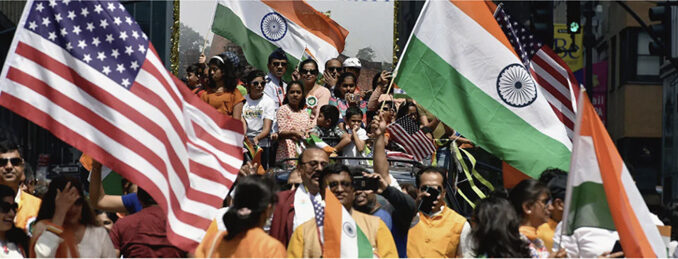

The relationship between India and the United States has evolved from a diplomatic partnership into one of the most consequential human and economic corridors in the modern world. At the heart of this enduring bond lies the dynamic Indian diaspora—a community defined by academic excellence, entrepreneurial drive, civic contributions, and deep-rooted cultural ties. As both nations navigate economic transformations, technological shifts, and evolving policy frameworks, key areas such as immigration, higher education, employment opportunities, and diaspora connectivity through the Overseas Citizen of India (OCI) scheme remain critical focal points for millions of families on both sides of the globe.
Hope, Reality, and Reform
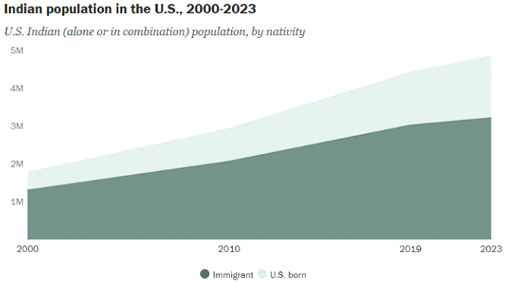 For decades, skilled immigration has served as the bedrock of the Indian-American success story. Today, however, the pathway to long-term residency in the United States presents a nuanced picture of high demand met by structural administrative bottlenecks.
The employment-based green card backlog—particularly for high-skilled professionals from India holding EB-2 and EB-3 visas—remains a central topic of discussion across the diaspora. Decades-long waiting periods have highlighted the urgent need for comprehensive legislative reforms, such as per-country cap adjustments and protection for aging-out dependents.
Simultaneously, administrative modernization efforts have offered welcome relief. The introduction and expansion of domestic H-1B visa renewals within the United States marked a major operational shift, saving thousands of professionals from disruptive international travel and lengthy consular appointments abroad. While regulatory scrutiny around non-immigrant work visas remains thorough, the demand for Indian talent in fields like artificial intelligence, healthcare, and advanced engineering continues to drive bilateral labor mobility.
Higher Education – New Pitfalls
Higher education remains one of the strongest bridges connecting India and the United States. Indian students represent one of the largest international student populations in American universities, filling classrooms, research labs, and innovation centers across the nation.
Pursuing higher education in the US is no longer viewed merely as a step toward earning a degree; it is an immersive experience in global research, industry cross-collaboration, and professional development. STEM (Science, Technology, Engineering, and Mathematics) disciplines continue to attract the majority of Indian scholars, supported by the 36-month Optional Practical Training (OPT) provision. OPT allows international graduates to gain vital hands-on professional experience in the US workforce following graduation.
However, the educational corridor is also adapting to changing economics. With rising tuition costs, evolving visa interview protocols, and shifting post-graduation employment prospects, Indian families are approaching US higher education with greater strategic planning. American institutions, recognizing the invaluable academic and financial contributions of Indian students, are increasingly establishing regional outreach centers, university partnerships, and joint-degree programs directly in India, fostering a two-way flow of academic exchange.
The US Job Scenario
The employment landscape for foreign professionals in the United States has undergone significant recalibration. Following periods of tech industry restructuring and broader corporate realignment, job seekers face a market that prioritizes specialized expertise over general expansion.
For Indian professionals on H-1B visas or OPT, the job market demands resilience and strategic adaptability. Key industry trends shaping the employment horizon include:
- Rise of Next-Gen Technologies: Rapid advancements in artificial intelligence, cloud architecture, cybersecurity, and clean energy have created targeted hiring demands, favoring professionals with niche technical skill sets.
- Employer Sponsorship Scrutiny: Companies are increasingly rigorous regarding visa sponsorship compliance, favoring candidates with immediate applicability and long-term legal strategy.
- Global Capability Centers (GCCs): As remote work tools and global operations mature, many US enterprises are expanding their operational hubs in Indian metros like Bengaluru, Hyderabad, and Pune. This shift provides skilled talent with high-impact career opportunities within multinational firms without requiring immediate physical relocation to the US.
In tandem with corporate careers, Indian-American entrepreneurship is reaching new heights. From venture-capital-backed tech startups to small businesses strengthening local US economies, the diaspora continues to transform from a community of skilled workers into a community of job creators and industry leaders.
OCI: Seamless Ties with the Homeland
As the Indian diaspora deepens its roots in the United States, maintaining seamless legal, economic, and cultural connections with India remains paramount. The Overseas Citizen of India (OCI) scheme—which grants lifelong entry and residency rights to eligible individuals of Indian origin—serves as the vital link enabling this global connectivity.
Recent administrative updates have focused on streamlining OCI services while enhancing security and compliance:
- Digital Modernization and e-OCI: The transition toward digital OCI documentation and streamlined online management through dedicated government portals has reduced processing friction, allowing cardholders to manage their credentials with greater ease.
- Passport Particulars Updates: OCI cardholders must update their new passport details online after acquiring a new foreign passport. Updating these details within three months of receiving a new passport ensures compliance and avoids administrative penalties or travel disruptions.
- Eased Residency Requirements: Bureau of Immigration guidelines have simplified the application process for eligible foreign nationals applying for OCI status within India, eliminating previous long-term local stay preconditions.
- Digital Arrival Procedures: In step with global digital border management, India’s mandatory digital e-Arrival Card system replaces traditional paper forms for incoming international travelers, ensuring faster immigration clearance at major airports.
These procedural refinements reflect a mutual commitment: India continues to honor and welcome its global family, while OCI holders contribute back through investment, philanthropy, tourism, and knowledge exchange.
Looking Ahead
The India-US strategic partnership is often discussed in terms of trade balances, defense agreements, and diplomatic summits. Yet, its true strength resides in the millions of individual stories—the graduate student stepping onto a US campus, the software engineer solving complex global challenges, the entrepreneur launching a venture, and the family returning to India on an OCI card to reconnect with their roots.
As policy environments evolve, staying informed through verified channels and planning proactively will remain essential for community members navigating visas, academic journeys, career transitions, or consular matters. The Indian diaspora has consistently demonstrated that adaptability and ambition are its defining traits. In an interconnected world, the bridge between India and the United States stands stronger than ever, built on a foundation of shared values, mutual respect, and unlimited human potential.



Be the first to comment