
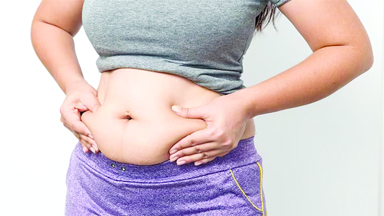

Losing weight can be difficult, but keeping the weight off may be even harder. Many people notice that their face, arms and legs become slimmer during weight loss, while stubborn fat around the waist appears to take much longer to disappear. Now, a study published in Nature has offered a possible biological explanation for why the body can resist long-term weight loss.
Researchers found that fat tissue can retain an “obesity memory” even after significant weight loss. This memory appears to be linked to changes in gene activity and epigenetics, which can influence how cells behave without changing the DNA sequence itself.
The researchers studied fat tissue from people with obesity before and after substantial weight loss. They also carried out experiments in mice to understand what happens inside fat cells after weight is lost.
In the human samples, the researchers found that several changes in gene activity caused by obesity remained even after major weight loss. The changes were particularly noticeable in fat cells, along with some other cells present in adipose tissue.
The team then looked more closely at the mice. They found that obesity caused lasting changes in the epigenome of fat cells. These changes affected pathways involved in metabolism, inflammation and fat cell function. Even after the mice lost weight, some of these changes remained.
WHY WEIGHT CAN COME BACK
The researchers found that mice that had previously been obese regained weight more quickly when they were exposed to a high-fat diet again. This suggests that the changes left behind in fat cells may make the body more prepared to store energy and regain weight.
Scientists describe this as an “obesogenic memory”. It does not mean that fat cells literally remember past events like the brain does. Instead, previous obesity may cause molecular changes that influence how fat cells respond later.
DOES THIS EXPLAIN STUBBORN BELLY FAT?
Not completely. The study does not show that belly fat alone has a special memory or that abdominal fat cannot be lost.
Where the body stores and loses fat depends on several factors, including genetics, hormones, age, sex, diet and physical activity. Abdominal fat can also include different types of fat, including subcutaneous fat under the skin and visceral fat around internal organs.
The study does, however, provide an important clue about why maintaining weight loss can be difficult. It suggests that changes caused by obesity may persist inside fat tissue even after a person becomes significantly leaner.



Be the first to comment