
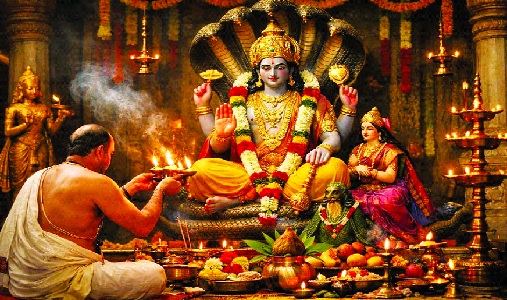

Among the many Ekadashi observances in the Hindu calendar, Indira Ekadashi holds a special place because of its association with ancestors, devotion and the belief that sincere prayers and spiritual discipline can benefit departed family members. Observed during the waning phase of the Moon in the month of Ashwin, the day falls during Pitru Paksha, the traditional period dedicated to remembering and honoring ancestors.
For devotees, Indira Ekadashi is not simply a day of fasting. It is an opportunity to turn inward, practise self-restraint, remember one’s lineage and offer prayers for the peace of departed souls.
Why Indira Ekadashi is significant
Ekadashi, the 11th lunar day of each fortnight, is traditionally associated with spiritual discipline and devotion to Lord Vishnu. Devotees observe fasting, prayer, meditation and the chanting of Vishnu’s names as part of the day’s observance.
Indira Ekadashi is particularly significant because it occurs during Pitru Paksha. Devotees believe that prayers, charity and religious observances performed on this day can help bring spiritual merit to ancestors.
The observance therefore combines two important themes of Hindu tradition: devotion to Vishnu and reverence for one’s forefathers.
The story of King Indrasena
The significance of Indira Ekadashi is described in the Brahma Vaivarta Purana, where Lord Krishna narrates the observance to King Yudhishthira.
According to the traditional story, King Indrasena of Mahishmati was a righteous and prosperous ruler devoted to Lord Vishnu. One day, the sage Narada visited him and told him that the king’s deceased father was suffering in the realm of Yama because of past deeds.
Narada advised the king to observe Indira Ekadashi with sincerity and devotion. He explained that the merit earned through the observance could be offered for the spiritual benefit of his father.
The king followed the prescribed rituals, observed the fast and performed acts of charity and devotion. According to the legend, his father was freed from his suffering and attained a higher spiritual state.
The story forms the heart of Indira Ekadashi’s religious significance: devotion and remembrance can become acts of love extending beyond generations.
How devotees observe the day
The observance traditionally begins with purification and a resolve to follow the Ekadashi fast. Devotees wake early, bathe and offer prayers to Lord Vishnu.
A typical puja may include an image or idol of Vishnu, flowers, incense, lamps and offerings of fruits. Devotees may recite Vishnu prayers, chant his names or listen to passages associated with Ekadashi.
Fasting practices vary. Some devotees observe a complete fast, while others consume water, fruits, milk or permitted fasting foods. Those unable to undertake a strict fast may follow a simpler form of dietary restraint.
The emphasis is traditionally placed not merely on avoiding food but on discipline of the body, speech and mind.
A day for remembering ancestors
Because Indira Ekadashi falls during Pitru Paksha, remembrance of ancestors is an important part of the observance.
Families may offer prayers for departed relatives and perform charitable acts in their memory. Food, clothing or other necessities may be donated to those in need. In Hindu tradition, such acts are seen as expressions of gratitude towards previous generations.
The deeper message is one of continuity. Every generation inherits something from those who came before it – not only family ties, but values, traditions, memories and responsibilities.
The spiritual meaning of fasting
Fasting has a deeper purpose in many Hindu traditions. By temporarily reducing attention to physical consumption, devotees seek to create more space for prayer, contemplation and self-discipline.
Indira Ekadashi encourages devotees to look beyond material concerns and reflect on impermanence, gratitude and the consequences of one’s actions.
The observance also reminds devotees that spirituality is not limited to personal well-being. It can involve remembering those who came before us and cultivating compassion towards others.
Charity and compassion
Charity is traditionally regarded as an important element of Ekadashi observance. Giving food, clothing or other useful items to people in need is considered a meaningful way of expressing devotion.
The practice also shifts the focus of the festival from ritual alone to compassion. A prayer becomes more meaningful when accompanied by an act of kindness.
The message of Indira Ekadashi
At its heart, Indira Ekadashi is a festival of faith, remembrance and responsibility. Its story connects an individual’s devotion with the well-being of ancestors, while its observances encourage self-control, prayer and generosity. For families observing Pitru Paksha, the day offers a particularly poignant opportunity to pause and remember loved ones who have passed away. Whether expressed through fasting, prayer, charity or quiet remembrance, the observance carries a simple spiritual message: gratitude for those who came before us can become a source of compassion and spiritual reflection in the present.


Be the first to comment