
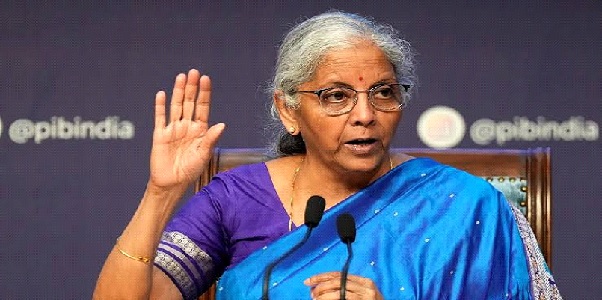

New Delhi (TIP): The Goods and Services Tax (GST) Council on Thursday, Oct 8, approved process reforms to complete GST 2.0, including revoking arrest powers of tax officials, dropping tax notices below Rs 10,000, including pending ones, speeding up refunds and allowing input tax credit on employee health and life insurance, Union finance minister Nirmala Sitharaman said.
After rate rationalisation — when the Council in September 2025 cut the slabs to two, from 5%, 12%, 18% and 28% — the Council turned to process reforms to help businesses and taxpayers. “Pehle daron mein rahat, ab prakriyaon mein aasani (after relief in rates, now ease in processes),” the finance minister said in Hindi, after the 57th GST Council meeting concluded in New Delhi.
Prime Minister Narendra Modi welcomed the reforms, saying that they were “in line” with the government’s “constant efforts to make GST more efficient, transparent and citizen-friendly” .
“The Council’s recommendations on removal of arrest provisions, greater decriminalisation and simpler procedures will have a very positive impact,” he posted on X.
Sitharaman said process reforms were taken up after GST 2.0 stabilised following the rate rationalisation of September 2025. A year after the two-rate structure (5% and 18%) was introduced, taxable supply is up 25.8%, from ?40.19 lakh crore a month to ?50.58 lakh crore, according to official data. Gross monthly GST collections now hover around ?2 lakh crore, registering double-digit growth on an annualised basis.
Outlining some key decisions of the Council, Sitharaman said automatic registration within three working days was already available to low-risk and other eligible applicants, and the Council has now decided to accept routine changes in registration particulars automatically, such as the address of an additional place of business. Cancellation of registration by the taxpayer will also be easier, she said.
Sitharaman said the 57th GST Council did not consider any rate changes as it had completed that task last year. She announced that the Council will take up rate changes only once a year, and any changes will take effect from April 1, a reform meant to ensure tax certainty and predictability. The Union finance minister chairs the Council, the apex decision-making body for the indirect tax, and finance ministers of states and Union territories are its members. By convention, its decisions are unanimous.
The Council has also made refunds faster. Taxpayers will get acknowledgement in 10 days instead of 15, with deemed acknowledgement where no response is issued, she said. Based on a risk assessment, the system will sanction 90% of the amount claimed within three working days of acknowledgement, down from seven. “It will enhance working capital for businesses,” the FM said.
The Council recommended allowing input tax credit (ITC) on more business expenses, including employee health and life insurance and telecom towers.
Refunds under the inverted duty structure, where inputs are taxed at a higher rate than output, will also cover input services, for credit availed from November 1, 2026, she said. For a smooth rollout, phased refunds of tax paid on plant and machinery will cover eligible credit availed from April 1, 2027, she added. Source: HT



Be the first to comment