
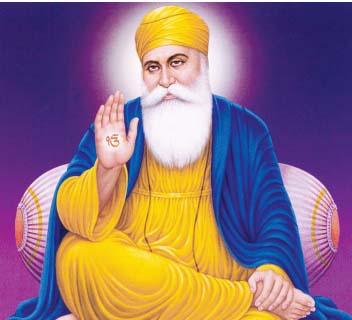

From the historic Gurdwaras of South Asia to vibrant Sikh communities across five continents, the teachings of Guru Nanak Dev Ji continue to unite people through faith, service, equality and a shared commitment to humanity
The message of Guru Nanak Dev Ji began in the villages and towns of the Punjab region, but its influence was never confined to one geographical area. His teachings challenged social divisions, questioned religious intolerance and presented a vision of humanity united by the belief in one Creator.
Centuries later, Sikh communities can be found across the world, from South Asia and Southeast Asia to Europe, North America, Africa and Australia. Their places of worship, community kitchens, educational institutions and humanitarian initiatives have carried the principles associated with Guru Nanak Dev Ji into different societies and cultures.
The global presence of Sikhs is the result of centuries of migration, enterprise, military service, education and community building. Yet, despite differences in language, nationality and local customs, the teachings of the Gurus provide a common spiritual foundation.
For Sikhs living outside Punjab, the Gurdwara has become more than a place of worship. It is a centre for preserving religious identity, teaching younger generations, celebrating festivals, providing humanitarian assistance and building relationships with wider communities.
At the heart of this global presence remains the message of Guru Nanak Dev Ji: recognise the oneness of humanity, earn honestly, share with others and serve without discrimination.
The foundations of a universal community
Guru Nanak Dev Ji’s travels across different regions were an early expression of the universal nature of his message.
He engaged with people from different religious traditions and social backgrounds, demonstrating that spiritual understanding could not be restricted by geographical boundaries or inherited identities.
His settlement at Kartarpur created a community in which people gathered for prayer, worked honestly and shared their resources.
The principles of Sangat, Pangat and Langar provided a model of collective life that could be followed wherever Sikhs settled.
The subsequent Gurus strengthened this community and developed institutions that helped preserve and spread the Sikh faith.
The creation of the Khalsa by Guru Gobind Singh Ji in 1699 further shaped Sikh collective identity through a commitment to discipline, courage, equality and service.
These foundations enabled Sikh communities to maintain their religious traditions even as they moved into new geographical and cultural environments.
The movement beyond Punjab
The spread of Sikh communities beyond Punjab took place over several centuries.
Trade, military service, employment and political developments encouraged Sikhs to travel to different parts of the Indian subcontinent and beyond.
During the 19th and early 20th centuries, migration expanded considerably, with Sikh workers, soldiers, traders and farmers travelling to regions under British colonial influence.
Many settled in Southeast Asia, East Africa, North America and other parts of the British Empire.
These early migrants often faced difficult working conditions, racial discrimination and restrictions on immigration. Yet they established community institutions that helped preserve their identity and support future generations.
Gurdwaras became important centres of religious and social life. They provided places for prayer, collective meals, education and community assistance.
The Sikh diaspora gradually developed into a network of communities connected through shared religious practices and a common heritage.
Southeast Asia: A long-standing Sikh presence
Sikh communities have a significant history in several Southeast Asian countries, including Malaysia, Singapore, Thailand and Indonesia.
Migration during the colonial period brought Sikh soldiers, policemen, security personnel, traders and workers to the region.
Over time, these communities established Gurdwaras and cultural institutions that preserved their religious traditions.
In Singapore and Malaysia, Sikh Gurdwaras continue to serve as important centres of worship and community activity.
They organise religious programmes, Punjabi language classes, youth activities and humanitarian initiatives.
The region also demonstrates how Sikh identity can be maintained while becoming part of a multicultural society.
East Africa: Communities built through enterprise and service
East Africa has a particularly important place in the history of Sikh migration.
Sikhs travelled to Kenya, Uganda and Tanzania during the colonial period, working in railway construction, trade, public services and business.
The construction of the Uganda Railway in the late 19th and early 20th centuries brought a large number of workers from the Indian subcontinent to East Africa. Among them were Sikhs, many of whom later settled in the region.
Over time, Sikh communities established businesses, educational initiatives, religious institutions and charitable organisations.
Nairobi, Mombasa and other cities developed active Sikh congregations.
The history of Sikhs in East Africa is also marked by resilience. Political changes, economic uncertainty and migration challenges led some families to relocate to the United Kingdom, Canada and other countries.
Nevertheless, Sikh institutions in the region continue to preserve an important part of the community’s history.
The United Kingdom: A prominent centre of Sikh life
The United Kingdom is home to one of the most established Sikh diaspora communities in the world.
Sikhs began arriving in significant numbers during the 19th and early 20th centuries, with migration increasing after the Second World War.
Many early migrants worked in manufacturing, transport and other industries that required labour. Subsequent generations entered education, medicine, law, business, politics, public service and the arts.
Today, Gurdwaras are present across the country, with major Sikh communities in London, Birmingham, Wolverhampton, Leicester, Coventry and other cities.
One of the most recognisable centres is Gurdwara Sri Guru Singh Sabha Southall in west London, which serves a large congregation and is an important part of the area’s Sikh cultural identity.
The British Sikh community has also contributed to public life through charitable work, political participation, education and interfaith engagement.
Vaisakhi processions and Nagar Kirtans attract large gatherings and provide opportunities for the wider public to learn about Sikh beliefs and traditions.
Canada: A major centre of the Sikh diaspora
Canada has one of the largest Sikh populations outside India.
Sikh migration to Canada began in the late 19th and early 20th centuries. Early migrants faced discriminatory immigration policies and racial barriers, but they continued to establish community institutions.
The Komagata Maru incident of 1914 remains a painful chapter in this history. A ship carrying passengers, many of them Sikhs from Punjab, was prevented from allowing most of its passengers to enter Canada because of restrictive immigration rules.
The incident became an important symbol of the discrimination faced by South Asian migrants.
Over the decades, immigration reforms and changing economic opportunities helped the Sikh community grow.
Today, Sikh Canadians are active in business, politics, education, public service, sports and cultural life. British Columbia and Ontario have particularly prominent Sikh communities.
Gurdwaras in cities such as Vancouver, Surrey, Brampton and Toronto serve as centres of worship, Langar, education and humanitarian service.
Canada’s Sikh community has also contributed to public discussions on multiculturalism, religious freedom and representation.
The United States: From early pioneers to new generations
Sikh migration to the United States also has a long history.
Some of the earliest Sikh migrants arrived in the early 20th century, settling in California and other parts of the country.
Many worked in agriculture, forestry, mills and other industries. They faced racial discrimination and legal restrictions, but gradually established permanent communities.
The Gurdwara Sahib Stockton, founded in 1912 in California, is widely recognised as one of the earliest Sikh places of worship in the United States.
It became an important centre for the community and also played a role in the history of the Ghadar movement, which sought India’s independence from British rule.
Today, Sikh Americans contribute to a wide range of professions, including technology, medicine, business, education, public service and the military.
Gurdwaras across the country organise Langar, religious education, blood donation drives and community welfare programmes.
Australia and New Zealand: Growing communities
Australia and New Zealand have also witnessed the growth of Sikh communities over the past century.
Sikh migrants have contributed to agriculture, transport, business, education, healthcare and other sectors.
In Australia, cities such as Melbourne, Sydney, Brisbane, Perth and Adelaide have active Sikh congregations.
Gurdwaras serve as centres of religious instruction, cultural preservation and humanitarian service.
The community organises Nagar Kirtans, Vaisakhi celebrations, Punjabi language classes and programmes to introduce younger generations to Sikh history.
In New Zealand, Sikh communities have similarly developed Gurdwaras and charitable initiatives, becoming part of the country’s multicultural landscape.
Langar: A universal language of service
One of the most visible ways in which Sikh communities connect with wider society is through Langar.
The community kitchen is an expression of Guru Nanak Dev Ji’s teaching that people should share their resources and recognise the dignity of every individual.
Across the world, Gurdwaras serve free meals to visitors, irrespective of religion, caste, nationality or economic status.
The practice becomes particularly visible during emergencies.
Sikh volunteers have organised food distribution during natural disasters, provided meals to people affected by conflict and supported vulnerable communities during public health crises.
The tradition of Langar has also inspired independent humanitarian initiatives.
Organisations such as Khalsa Aid have undertaken relief work in different parts of the world, assisting people affected by conflict, natural disasters and humanitarian emergencies.
Such initiatives demonstrate how the Sikh understanding of Seva can extend beyond the immediate religious community.
Preserving identity among younger generations
For the global Sikh diaspora, one of the continuing challenges is ensuring that younger generations remain connected with their religious and cultural heritage.
Children born and raised outside India often grow up speaking languages different from those spoken by their parents and grandparents.
Gurdwaras and community organisations therefore play an important role in teaching Punjabi, explaining Sikh history, organising religious classes and celebrating Gurpurabs.
Youth camps, music programmes, sports activities and volunteer projects provide opportunities for young people to connect with their heritage.
Digital platforms have also transformed access to Sikh teachings. Gurbani, historical lectures, online Kirtan and educational resources are now available to people across the world.
However, preserving identity is not simply about maintaining language or customs. It also involves understanding the values that give Sikh tradition its meaning.
For younger generations, the teachings of Guru Nanak Dev Ji offer a way to connect their heritage with the wider responsibilities of citizenship and humanity.
The global Gurdwara: A centre of faith and community
The Gurdwara remains the most important institution in Sikh community life.
It is a place where the Guru’s Bani is recited, Kirtan is performed and the congregation gathers for prayer.
But its role extends much further.
Many Gurdwaras organise food distribution, educational support, healthcare camps, assistance for new migrants and programmes for elderly people.
They also serve as spaces for interfaith interaction, where people from different backgrounds can learn about Sikh beliefs and experience Langar.
This combination of spirituality and social service reflects the vision established by Guru Nanak Dev Ji at Kartarpur.
A message that belongs to the world
The global Sikh community is diverse in language, occupation and national identity, but its spiritual foundation remains connected with the teachings of the Gurus.
Guru Nanak Dev Ji’s message of oneness has crossed borders because it speaks to universal human concerns.
His teachings do not ask people to abandon their identities. They encourage them to recognise the dignity of others and build societies based on mutual respect.
The 557th Parkash Purab is therefore an occasion not only for Sikhs in Punjab or India but for communities across the world.
Wherever a Gurdwara opens its doors, wherever a Langar serves a hungry visitor and wherever a volunteer helps someone in need, the spirit of Guru Nanak Dev Ji continues to find expression.
From the villages of Punjab to cities across five continents, the message remains unchanged: the world is one family, and serving humanity is among the highest expressions of faith.


Be the first to comment