Tag: Australia

  • BCCI to create digital injury monitoring system

    BCCI to create digital injury monitoring system

    NEW DELHI (TIP): The Indian cricket board (BCCI), which has long been looking for ways to minimize strain-related injuries to its players – especially the faster bowlers – has plans to devise a digital system that will revolve around the concept of injury prevention.

    The idea was proposed at a recent workshop for physios headed by renowned physiotherapists from Australia Patrick Farhart, along with Andrew Leipus, at the National Cricket Academy (NCA). Apart from the creation of a digital database to monitor injuries, the system will also try to identify the threshold workload which will allow a player to remain injury free. This system is already under implementation in Australia and South Africa.

    “The board has put more emphasis on preventing injuries rather than just rehabilitation. That’s why Farhart has come up with this system where there will be a digital bank in which each player’s workload is entered,” a BCCI official told TOI, adding: “He has discussed ways of tracking a player’s workload and understanding when a player may break down. There are different parameters for batsmen and bowlers but the key is to keep monitoring the faster bowlers.

    The board won’t have to depend entirely on local physios who are with state teams.”

    According to sources, there will be a core group of 15 physios operating across the country who will be punching in the workload of players. The digital database is also intended to be a tool to aid the selection process. “It doesn’t matter which state team a player represents. Suppose a player from Assam is picked for a national camp or an India ‘A’ camp at the NCA, the selectors and coaches can punch his name in the system and they will get all the details about the concerned player. This can also help in gauging how much workload a player can sustain if picked for an international tour,” sources said.

    India’s fast bowlers have a long history of breaking down in the middle of a series. If the Farhart-Leipus system is executed properly, this problem can be minimized to a fair extent.”There is a spike against the name of each bowler. Once there is a rise, a possible injury can be traced a good three weeks before it aggravates. Accordingly, workload can be regulated,” the source said.

  • Djokovic, Murray have history on minds in Paris

    Djokovic, Murray have history on minds in Paris

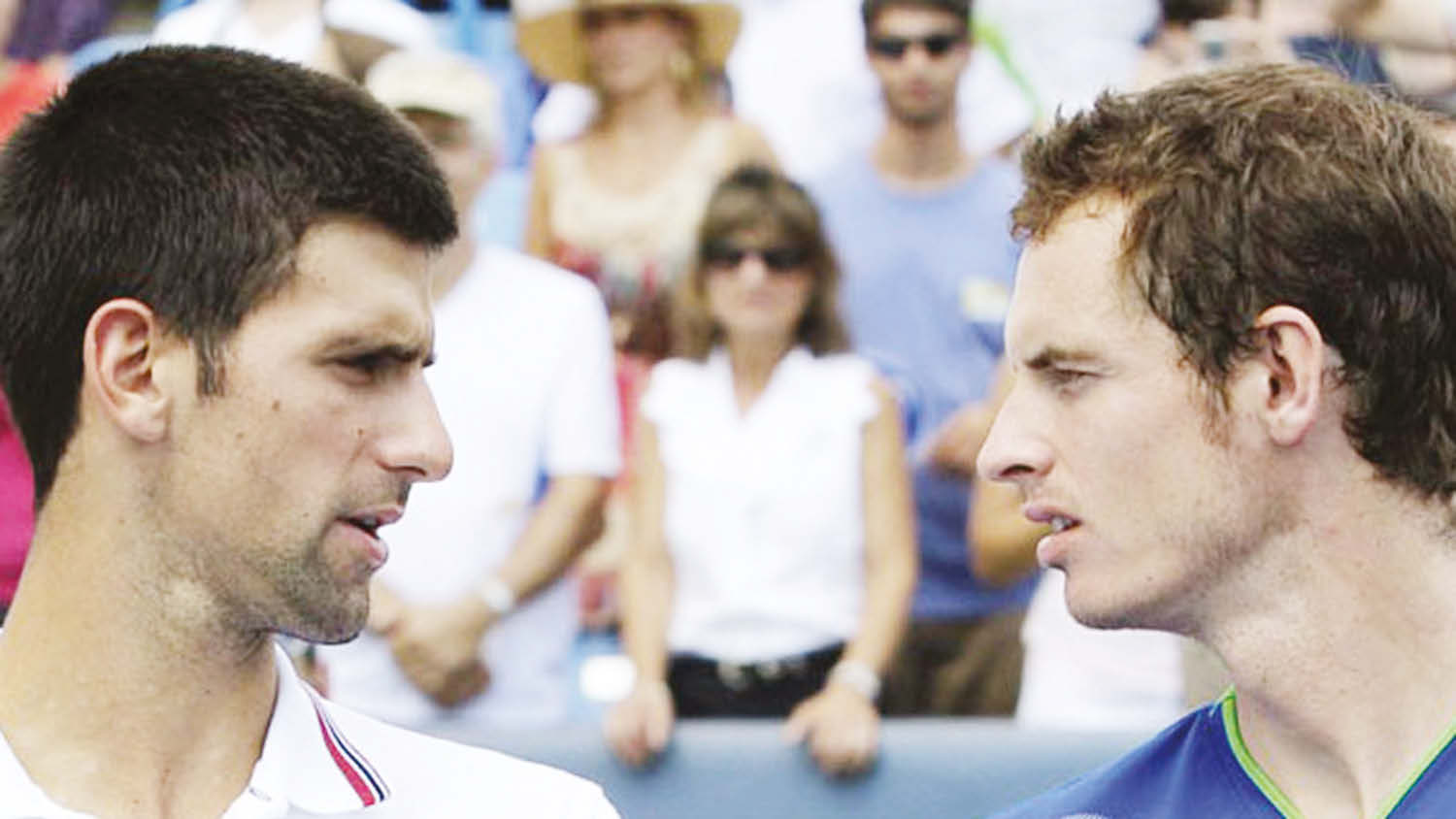
    PARIS (TIP): Novak Djokovic faces young gun Dominic Thiem in the French Open semi-finals june 3 while Andy Murray tackles defending champion Stan Wawrinka looking to become the first British man in the final for 79 years.

    World number one Djokovic, a three-time runner-up, is still seeking a maiden Roland Garros crown to secure a career Grand Slam. The 29-year-old top seed, who already holds the Wimbledon, US and Australian Open titles, will start as overwhelming favourite.

    He has defeated Thiem in straight sets in their only two career meetings. Djokovic will be playing in his 30th Grand Slam semi-final and eighth in Paris. Austrian 13th seed Thiem is into his first at the majors as he finally realises the potential which was spotted during his days when he used to lift tree-trunks to beef up his physique.

    “I’m sure he’s very motivated to show himself and others that he deserves to be at the top and compete for the biggest titles,” said Djokovic. “He plays with a lot of speed, with a lot of power. I’m sure he’s going to give it all in semis. But I have something to fight for, as well.”

    Thiem is one of a generation of players long-tipped to succeed the likes of Djokovic, Murray, Roger Federer and Rafael Nadal. Djokovic won the first of his 11 majors at Australia in 2008 as a 20-year-old. Thiem, 22, has yet to make the breakthrough to a final at the Slams. But he is one of the in-form players in 2016 with his 41 match wins second only to Djokovic’s 42.

    He also has a season-best 25 wins on clay, a run which included a victory over Federer in Rome and the title in Nice.

    “It’s going to be unbelievably tough against Novak,” said Thiem. “He’s on a different level than all the other players, but still I’m in good shape and the match starts at 0-0.”

    Murray also has history on his mind as he aims to be the first British man since Bunny Austin in 1937 to reach the final. The world number two is in the habit of shrugging off the weight of expectations with his 2012 US Open and 2013 Wimbledon triumphs.

    “I think at this stage of my career to do things that I have never done before is nice,” said three-time semi-finalist Murray who is two matches away from becoming the first British man to win in Paris since Fred Perry in 1935.

    Murray’s Paris campaign was almost scuppered at the first hurdle when he had to fight back from two sets down to defeat 37-year-old Radek Stepanek. He then needed another five sets to beat French wildcard Mathias Bourgue, the world 164. Since then, Murray has been relatively untroubled, seeing off big-servers Ivo Karlovic and John Isner in straight sets before defeating home hope Richard Gasquet from a set down.

    He has even seen the torrential rain act in his favour. Having played his last-16 match against Isner on Sunday, he didn’t return to the courts until Wednesday to face Gasquet before enjoying a free Thursday. In comparison, Djokovic played his last-16 round over two days on Tuesday and Wednesday and beat Tomas Berdych in his delayed quarter-final on Thursday.

    Murray won’t under-estimate Wawrinka who stunned Djokovic in last year’s final. The 31-year-old Swiss is the oldest semi-finalist in Paris since Jimmy Connors in 1985. Murray leads their head-to-head 8-7 but Wawrinka has won their last three meetings.

  • Pope’s record on paedophile priests tarnishes three-year report card

    Pope’s record on paedophile priests tarnishes three-year report card

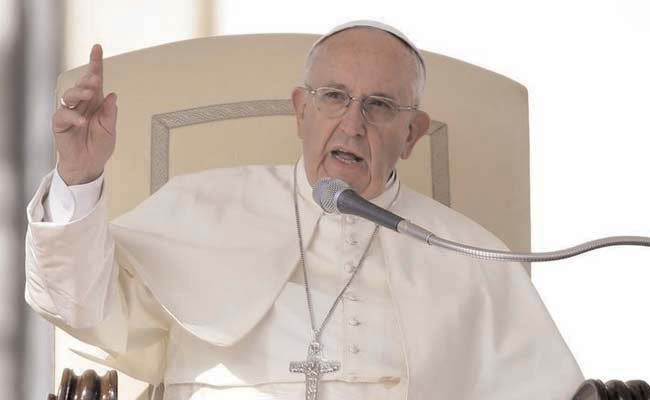
    VATICAN CITY (TIP): Many words, little action – three years after Pope Francis’s election, victims of priest sex abuse are bitter and disappointed, accusing the Church of having failed to punish guilty clerics and end a culture of complacency on the issue.

    The recent Australian Royal Commission hearings of Vatican number three George Pell and a preliminary criminal probe into accusations that Lyon’s archbishop, Philippe Barbarin, covered up for a paedophile priest has put the question of Church complicity in abuse back at the top of the Vatican agenda.

    Francis came to power promising a crackdown on cover-ups and a zero tolerance approach to abuse itself.

    But victims still feel they are not been listened to, that bishops are still failing to hand criminal priests over to the appropriate authorities and that a conspiracy of silence remains the order of the day, right up to the top of the Vatican hierarchy.

    The growing discontent with Francis’s record on ridding the Church of the taint of paedophilia is in sharp contrast with how he has performed in other areas.

    As he prepares to celebrate Sunday’s third anniversary of his election, the Argentinian pontiff boasts genuine star status around the world thanks to his charismatic, simple style, his defence of the world’s poor and efforts to reform the Church and bring it closer to ordinary believers. But despite an encouraging start, Francis has failed to definitively draw a line under decades of abuse which ruined the lives of tens of thousands of young Catholics and badly tarnished the standing of the Church in the eyes of believers and broader society.

    Francis has made it clear bishops who cover up for abusers have no place in the Church and has put in place legal structures enabling paedophile priests to be tried under Vatican law. He also established his own advisory panel on the issue.

    But the panel is now disintegrating with one prominent member, Peter Saunders, recently telling AFP he felt betrayed by Francis and that he had been tricked into taking part in what he described as a whitewashing exercise.

    Francis won plaudits for meeting with victims in Rome and in Philadelphia during last year’s visit to the United States. But more recently he has come under fire for declining to repeat the gesture in Mexico or for the group that travelled from Australia to listen to Pell give evidence to the Royal Commission.

    With the Oscar-winning film “Spotlight” further increasing public awareness of the abuse issue, “there is a real risk of this issue becoming the thorn in the foot of this papacy,” said Marco Politi, one of Francis’s biographers and a leading Vatican expert.

    Politi said the “decisive test” of whether the Vatican hierarchy was serious about addressing the problem was whether Church authorities were truly willing to hand priests over to the criminal authorities. “Outside of cases where the judicial system gives them no option, the majority of bishoprics don’t want to talk about that.”

    Ignazio Ingrao, Vatican correspondent for Italian weekly Panorama, said many local dioceses remained “incapable of moving beyond the secrecy mentality and the reflex of burying scandals.” He also noted that the Vatican’s ability to handle cases brought to its attention was severely compromised by staff shortages.

    “I don’t doubt Francis’s desire to create a zero tolerance culture,” he added. “He has made it clear that the religious authorities must cooperate with civilian ones.”

    Direct to the point of bluntness on other issues, Francis seems to have a “gut-level hesitation” when it comes to tackling the abuse issue, possibly fuelled by a belief that it is something he does not fully understand, suggested American Vatican expert John Allen in a column for www.cruxnow.com.

    Andrea Tornielli, who writes for the website Vatican Insider and knows Francis well, says he does not detect any reticence to speak about the subject or when it comes to sanctioning offenders.

    “The pope has spoken unequivocally, referring to diabolic sacrifices. He is trying to change the mentality,” Tornielli told AFP. “One can very well understand the criticism levelled at him by victims and those close to them. But the most important task he has to accomplish is to create the conditions so that cover-ups do not happen ever again.”

  • ‘Life Mantras’ by Sahara’s Jailed Boss Subrata Roy tops in Nielsen BookScan

    ‘Life Mantras’ by Sahara’s Jailed Boss Subrata Roy tops in Nielsen BookScan

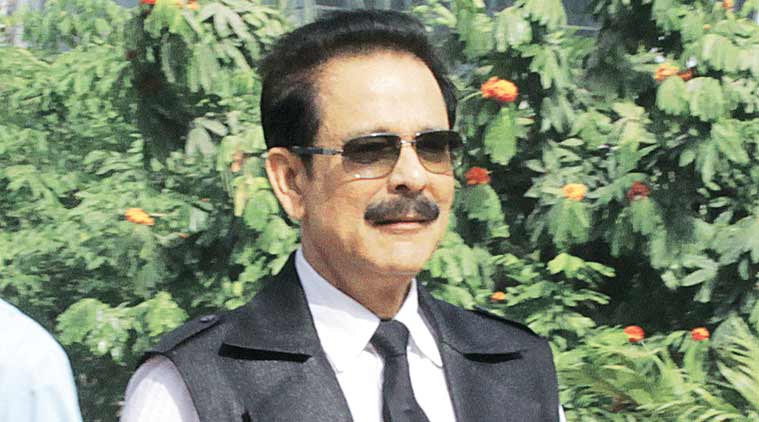
    NEW DELHI: ‘Life Mantras’ a book by Sahara Group chief Subrata Roy has topped the non-fiction category of Nielsen BookScan.

    According to Nielsen best-seller list, the recently unveiled book brought out by Rupa Publication, has topped the non-fiction book list this week, pushing into second spot the popular Manorama Yearbook 2016.

    The Nielsen BookScan service is the world’s largest continuous book sales tracking service operating in India, the UK, Ireland, Australia, US, South Africa, New Zealand, Italy, Brazil and Spain.

    It collects total transaction data at the point of sale directly from the tills and dispatch systems of all major book retailers. Nielsen BookScan collects data from online and offline booksellers, including Bookadda, Crosswords, Connexion, DC Books, Flipkart, Indiatimes, Infibeam, Landmark, Landmarketail, Capital Book Depot, Rediff, Odyssey, Pageturners, TV18 Homeshopping, WH Smith India, ebay, Mahindra
    Retail, Reliance Timeout, and Snapdeal etc.

    In his book, Roy puts forth the “various psychological and emotional aspects of life, vis-a-vis the basic instincts inherent in all human beings.”

    The book, is the first in the “Thoughts from Tihar” trilogy penned by Roy while in judicial custody in Tihar Jail in connection with a long-running investor refund case, running into thousands of crores of rupees, with the markets regulator Sebi.

    The forthcoming books of the said trilogy are “Think with Me – How to make our country ideal”, and “Reflections from Tihar – A book on Tihar Jail”.

  • BOEING GETS $440 MILLION ORDER FROM PAPUA NEW GUINEA CARRIER

    BOEING GETS $440 MILLION ORDER FROM PAPUA NEW GUINEA CARRIER

    SINGAPORE (TIP): US aircraft maker Boeing said on February 19 it had won a $440 million deal with Papua New Guinea’s flag carrier Air Niugini for four 737 MAX 8 planes.

    Announcing the deal along with Boeing at the final trade day of the Singapore Airshow, Air Niugini chairman Sir Frederick Reiher said the carrier needed the planes “urgently”.

    The airline currently has a domestic service, as well as flights to Australia, Singapore, Fiji, the Philippines, Solomon Islands, Hong Kong, Vanuatu and Japan. It is planning to fly to China in the near future.

    Dinesh Keskar, regional senior vice president for sales at Boeing Commercial Airplanes, said the aircraft had its first test flight in late January and was “performing exceptionally well”.

    Boeing’s 737 aircraft family competes with European rival Airbus’ A320 series in the single-aisle market where the planes are favoured for short to medium-haul routes because of their fuel efficiency.

    The Singapore show, considered the biggest in Asia and held every two years, has seen markedly fewer orders for aircraft this time around amid a global economic slowdown led by China that has impacted travel demand.

    On Wednesday, Airbus said it had won an $1.85 billion deal for the purchase of six A350-900s by Philippine Airlines (PAL), the flag carrier of one of Asia’s fastest-growing economies.

    Boeing also announced a commitment from China’s Okay Airways to buy 12 aircraft for $1.3 billion despite a weakening Chinese economy.

    The biggest deal announced at the show was from Vietnamese budget carrier VietJet Air, which said Thursday it had signed a $3.04 billion contract with US engine maker Pratt & Whitney. The engines will power the 63 Airbus A320neo and A321neo aircraft ordered by the carrier.

    Source: AFP

  • Indian-Origin Harinder Sidhu To Be New Australian High Commissioner To India

    Indian-Origin Harinder Sidhu To Be New Australian High Commissioner To India

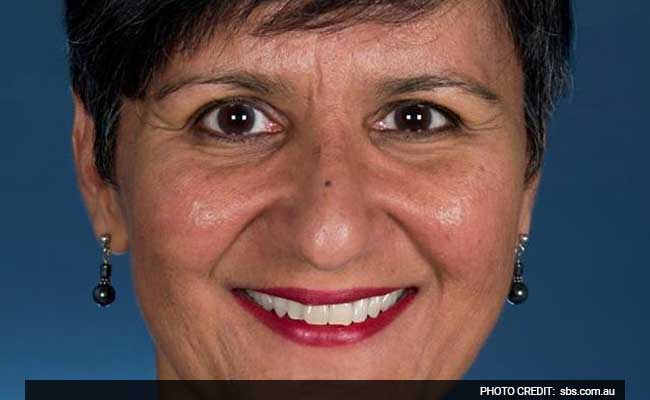
    MELBOURNE:  Australia today announced the appointment of Indian-origin Harinder Sidhu as the country’s next High Commissioner to India.

    Mr Sidhu who has an Indian background had migrated to Australia as a child with her family from Singapore and will replace the outgoing High Commissioner Patrick Suckling.

    Mr Sindhu, a senior career officer with the Department of Foreign Affairs and Trade, has been also serving as First Assistant Secretary of the Multilateral Policy Division.

    She has previously served overseas in Moscow and Damascus. “India is one of Australia’s closest and most significant partners in the Indo-Pacific region. It is our 10th largest trading partner and our two-way investment is worth over USD 20 billion,” Australian foreign affairs minister Julie Bishop said while announcing the new High Commissioner.

    Julie stressed that Australia would continue to push for the conclusion of a Comprehensive Economic Cooperation Agreement with India, designed to take “our economic relationship to a new level.”

    “Sidhu will also have non-resident accreditation to Bhutan. Australia and Bhutan enjoy a warm relationship, built on strong people-to-people links and growing cooperation on international education,” Julie said.

    Australia also has strong strategic and defence ties with India, conducting its first bilateral maritime exercises in 2015.

    There are also over 450,000 people of Indian descent currently residing in Australia driving our strong education, cultural and tourism links, Julie said.

    Mr Sidhu’s previous roles included First Assistant Secretary in the Department of Climate Change, Assistant Director-General in the Office of National Assessments and Senior Adviser in the Department of the Prime Minister and Cabinet.

    She holds a Bachelor of Laws and a Bachelor of Economics degrees from the University of Sydney.

  • NO PERMANENT POSITIONS FOR BCCI, ECB AND CA: ICC BOARD

    NO PERMANENT POSITIONS FOR BCCI, ECB AND CA: ICC BOARD

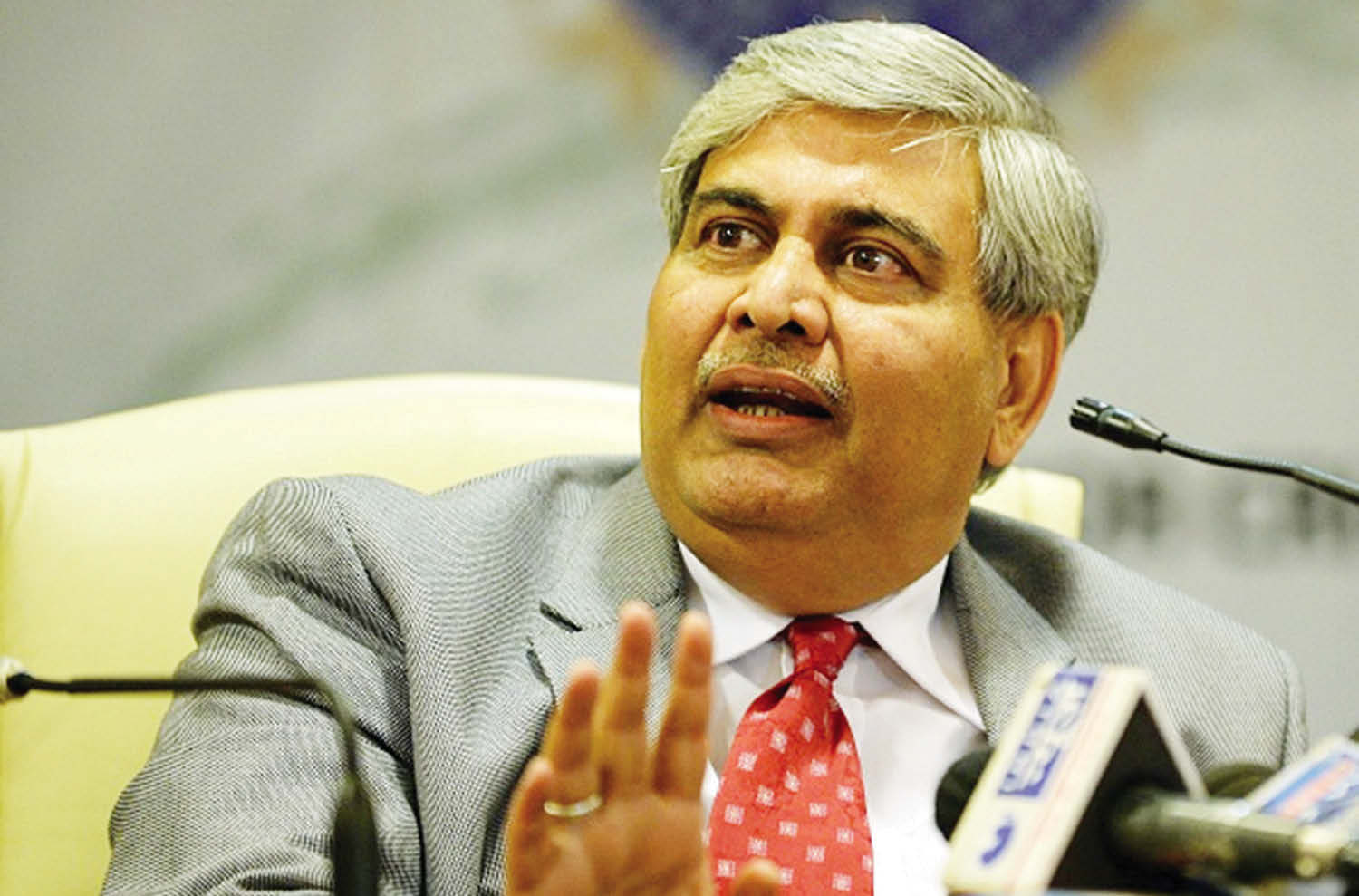
    DUBAI (TIP): The International Cricket Council is all set to scrap the controversial constitutional amendments, which gave executive clout and financial power to India, Australia and England, with its Shashank Manohar-led Board recommending complete overhaul of the current power structure on Thursday.

    In its first meeting of 2016 after Manohar took over as ICC Chairman, the world body’s Board agreed that the current system, put in place by controversial former head N Srinivasan, needed to be done away with.

    “As such, the Board unanimously agreed to propose to the Full Council that a new Chairman should be elected by the Board for a two-year term commencing at the June 2016 Board meeting through a secret balloting process overseen by the ICC’s independent Audit Committee Chairman,” the ICC said in a statement.

    “While in the office, the ICC Chairman will not be allowed to hold any post with any Member Board and may be re-elected at the expiry of the term with a maximum limit of three terms.”

    “To qualify to contest the election, it has been agreed that all nominees must be either a past or present ICC Board director and should have the support of at least two Full Member directors.”

    In fact the Manohar-led ICC suggested complete review of the constitutional changes made in 2014 by Srinivasan which gave enormous powers to the ‘Big Three’ with bulk of the revenue share going their way.

    “The Board agreed to approve changes to the terms of reference of the Finance & Commercial Affairs Committee and Executive Committee so as to remove the permanent positions for the nominees of the Board of Control for Cricket in India (BCCI), Cricket Australia (CA) and the England and Wales Cricket Board (ECB) on these committees, and to allow fair access to membership for all Full and Associate Member directors, with the sole criteria being the skill, competence and experience of the relevant director.

    “To that end, the present composition of the committees will be reviewed in their entirety in June 2016,” an ICC release stated.

    “Moreover, the Board has also agreed to carry out a complete review of the 2014 resolutions and constitutional changes with a view to establishing governance, finance, corporate and cricketing structures that are appropriate and effective for the strategic role and function of the ICC and all of its members,” the ICC said.

    “As part of this wide-ranging exercise, the ICC Board has directed that the ICC’s constitution be reviewed in its entirety and all members have been encouraged to provide feedback on this issue to ICC management during the next few weeks.”Manohar said the recommendations were aimed at making ICC operations more transparent.

    “The decisions taken clearly reflect that we collectively want to improve the governance in a transparent manner, not only of the ICC but also the Member Boards.”

    Manohar has constituted a five-member steering group, which, under his leadership, also includes the respective Chairmen of the ICC’s Governance Review Committee, Executive Committee, Finance & Commercial Affairs Committee and Associate/Affiliate Member group, and will be supported by various members of ICC management.

    The steering group will report on progress at the April 2016 meeting, with a view to putting forward any required changes to the meetings during the ICC Annual Conference week in June 2016.

    In a further attempt to improve the governance standards of, and transparency within member boards, the ICC Board agreed to reinstate a previous requirement that Full Members must submit their latest audited statements on an annual basis, as is already the case with all Associate and Affiliate Members.

    With an aim to improve relationships with the Members and cricket stakeholders from around the world, the Board decided that three of the four meetings of the year will take place in Member countries outside of the UAE. (PTI)

  • Trans-Pacific Partnership trade deal signed, but years of negotiations still to come

    Trans-Pacific Partnership trade deal signed, but years of negotiations still to come

    WELLINGTON (TIP): The Trans-Pacific Partnership, one of the world’s biggest multinational trade deals, was signed by 12 member nations on Thursday in New Zealand, but the massive trade pact will still require years of tough negotiations before it becomes a reality.

    The TPP, a deal which will cover 40 percent of the world economy, has already taken five years of negotiations to reach Thursday’s signing stage.

    The signing is “an important step” but the agreement “is still just a piece of paper, or rather over 16,000 pieces of paper until it actually comes into force,” said New Zealand Prime Minister John Key at the ceremony in Auckland.

    The TPP will now undergo a two-year ratification period in which at least six countries – that account for 85 percent of the combined gross domestic production of the 12 TPP nations -must approve the final text for the deal to be implemented.

    The 12 nations include Australia, Brunei, Canada, Chile, Japan, Malaysia, Mexico, New Zealand, Peru, Singapore, the United States and Vietnam.

    Given their size, both the United States and Japan would need to ratify the deal, which will set common standards on issues ranging from workers’ rights to intellectual property protection in 12 Pacific nations.

    Opposition from many US Democrats and some Republicans could mean a vote on the TPP is unlikely before President Barack Obama, a supporter of the TPP, leaves office early in 2017.

    US Trade Representative Michael Froman has said the current administration is doing everything in its power to move the deal and on Thursday told reporters he was confident the deal would get the necessary support in Congress.

    In Japan, the resignation of Economics Minister Akira Amari – Japan’s main TPP negotiator – may make it more difficult to sell the deal in Japan.


  • Australian churches to offer refuge to asylum seekers

    Australian churches to offer refuge to asylum seekers

    SYDNEY (TIP): Australian church leaders on february 4 said they would offer sanctuary to asylum seekers facing removal to a remote Pacific detention camp, vowing to defy the government’s harsh immigration rules.

    The asylum seekers, who were brought to Australia from Nauru mostly for medical reasons, number more than 260 and include 37 babies born in the country and 54 other children, advocates said.

    The Anglican dean of Brisbane, the Very Reverend Peter Catt, said the churches were reinventing the “ancient concept of sanctuary” by opening facilities such as St John’s Cathedral in Brisbane to the asylum seekers. Catt told the Australian Broadcasting Corporation the concept of sanctuary was not tested under law, “but my hunch is that if the authorities chose to enter the church and take people away, it would probably be a legal action”.

    He added: “So this is really a moral stand and it wouldn’t be a good look, I don’t think, for someone to enter a church and to drag people away.”

    Asylum seekers, including children, who try to reach Australia by boat are sent to off-shore detention centres in Papua New Guinea and Nauru, where they can be held indefinitely while refugee applications are processed. They are blocked from being resettled in Australia even if found to be genuine refugees. Many of the asylum seekers brought to Australia from Nauru are being held at Wickham Point, a secure facility near Darwin in northern Australia.

    The high court ruled Wednesday the detention of asylum seekers on Nauru did not breach domestic law, meaning the potential refugees could be returned there in the coming days.

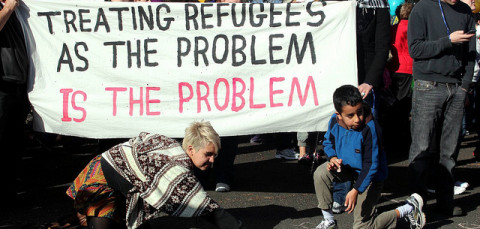
    Across Australia, thousands of people protested on Thursday against the possible off-shore transfer of the asylum seekers, carrying signs reading “(Prime Minister) Malcolm Turnbull #LetThemStay”. Australian Churches Refugee Taskforce’s Misha Coleman admitted it would be difficult to move the detained asylum seekers to the sanctuaries but said if they were, the cases would be managed “in a very sort of confidential way”.

    Immigration minister Peter Dutton said the churches had the right to their opinion but were not above Australian law. Prime Minister Malcolm Turnbull defended the tough measures on deterring asylum seekers, saying “one child in detention is one child too many”.

    He added: “Our goal is to reduce that (number of children in detention) to zero but the key element in doing so is ensuring that people do not get on people smugglers’ boats and put their lives at risk,” Turnbull told parliament in Canberra on February 4.

    (AP)

  • Australian accused of planning to pack kangaroo with bomb

    Australian accused of planning to pack kangaroo with bomb

    MELBOURNE (TIP): A teenage suspect discussed with a British accomplice packing a kangaroo with explosives before setting it loose on Australian police officers, prosecutors alleged on Thursday.

    Sevdet Ramadan Besim was ordered in the Melbourne Magistrates Court on Thursday to stand trial in the Victoria state Supreme Court on charges that he planned an Islamic State group-inspired terrorist attack at a Veterans’ Day ceremony that included targeting police officers in April last year.

    Besim, 19, pleaded not guilty to four charges relating to a plot to attack commemorative services in Melbourne or the neighboring city of Dandenong to mark ANZAC Day, the annual April 25 commemoration of the 1915 Gallipoli landings in Turkey. The campaign was the first major military action fought by the Australian and New Zealand Army Corps during World War I and hundreds of thousands attend commemoration services around Australia. Besim faces a potential life sentence in prison if convicted. (AP)

  • Djokovic beats Federer to reach Australian Open final

    Djokovic beats Federer to reach Australian Open final

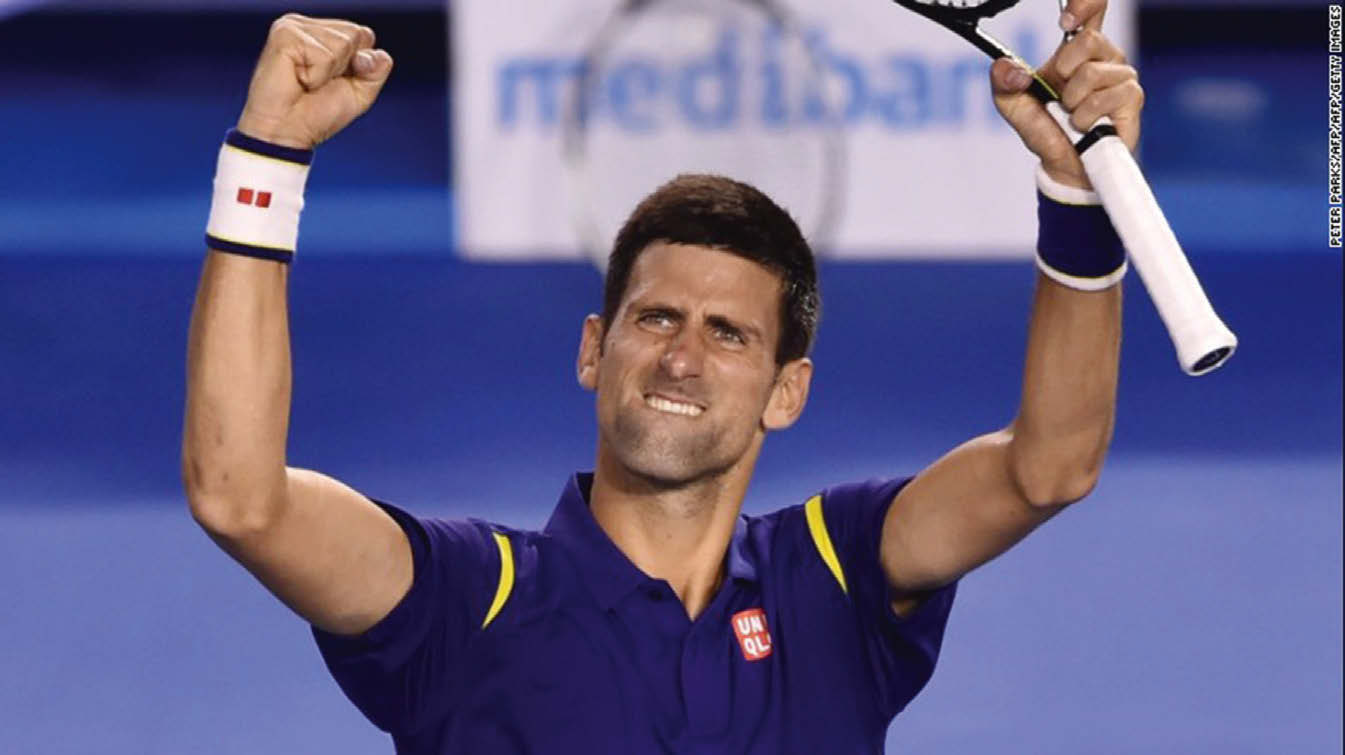
    MELBOURNE (TIP): Champion Novak Djokovic foiled a stirring fightback from Roger Federer to defeat the Swiss 6-1, 6-2, 3-6, 6-3 at the Australian Open on January 28 and charge into a fifth successive Grand Slam final.

    Storming to a two-set lead within an hour, Djokovic appeared destined to complete a stinging humiliation but the net-rushing Federer responded brilliantly in the third as a partisan crowd roared him on at a flood-lit Rod Laver Arena.

    In a fourth set rivened by tension, Djokovic took Federer’s serve in the eighth game, benefiting from a lucky netcord that gave him a crucial break point, and served out the match to love in two hours and 19 minutes.

    “Definitely I’ve played an unbelievable first two sets but that’s what is necessary against Roger,” Djokovic said courtside after setting up his sixth final at Melbourne Park against either Andy Murray or Milos Raonic.

    “I knew he was going to be aggressive and try to mix up his pace and come to the net.

    “I executed everything perfectly. A two-set lead is more comforting but it was a battle in the end.”

    Djokovic continued his Grand Slam mastery of the 34-year-old Swiss, having beaten him in six of their previous seven matches at the majors, including last year’s Wimbledon and U.S. Open finals. The head-to-head record between the pair has now also swung symbolically in Djokovic’s favour, with the Serb edging ahead 23-22 in their 45 matches. The record 15th Grand Slam encounter between the pair was billed as a blockbuster but threatened to be a one-sided rout.

    The 15,000 spectators barely had time to settle in their seats before Djokovic had sewn up the first set in 22 breathtaking minutes.

    Usually a thing of beauty, Federer’s backhand was a liability early on and he dropped serve for a second time with an unforced error after repeatedly coming off second best in the baseline rallies.

    Djokovic was bullet-proof and crunched a huge serve down the ‘T’ to clinch the first set and send the 17-time Grand Slam champion back to his chair frowning. The horror show quickly resumed for the Swiss, who was broken in the third game to love and again in the fifth. The set lasted scarcely 30 minutes.

    As the players returned to court, the crowd clamoured for a Federer comeback, and the Swiss rallied to pressure the Serb’s serve in an epic sixth game.

    Djokovic saved three break points but finally folded with a fourth as a net-rushing Federer forced a passing shot wide.

    Serving at 5-3 for the set, Federer’s wife Mirka could not watch as the Swiss battled to close it out but Djokovic fired a forehand long on the third set point to raise thunderous cheers from the terraces.

    A rain-break only raised the tension as the players waited for the roof to close and then resumed to doggedly hold serve.

    Trailing 4-3 on serve and under pressure, Federer made a desperate rush forward and Djokovic’s shot clipped the net, the deflection causing the ball to whistle past the Swiss’s racquet.

    Federer threw caution to the wind by attempting a second-serve serve-and-volley but Djokovic blasted a marvellous cross-court return to capture the decisive break.

    Closing out the match with a string of booming serves, Djokovic was left celebrating another memorable victory as he stood one win away from a record sixth title at Melbourne Park.

    (Reuters)

  • Sania-Dodig enter Australian Open mixed doubles semifinals

    Sania-Dodig enter Australian Open mixed doubles semifinals

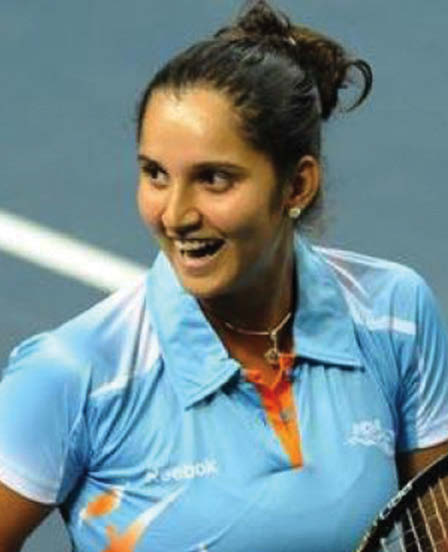
    MELBOURNE (TIP) : India’s tennis star Sania Mirza and her Croatian partner Ivan Dodig entered the mixed doubles semifinals at the Australian Open after posting straight-set win over defending champions Leander Paes and Martina Hingis on January 28. Sania and Dodig took exactly one hour and 10 minutes to get the better of Indo-Swiss pair of Paes and Hingis 7-6(1) 6-3 in the quarterfinal encounter.

    The top seeded Indo-Croat pair will next face fifth seeds Elena Vesnina and Bruno Soares for a spot in the summit clash.

    Sania and Dodig got off to a sluggish start but fought back brilliantly to take the first set in 44 minutes in a one-sided tie-breaker, where the Indo-Croat pair just blew away their opponents.

    The second set turned out to be much easier for Sania and Dodig as one break of serve was enough for them to walk away with the set and the match.

    Sania is also in contention in the women’s doubles event, where she reached the final partnering Hingis.

    The Indo-Swiss combination will take on Czech seventh seeds Andrea Hlavackova and Lucie Hradecka in the final to earn their eighth title on the trot.

    In fact, this will be Sania’s first women’s doubles final here. Her previous best here was in 2012 when she reached the semis with Russian Elena Vesnina

    (AP)

  • Economic crisis is not far away

    Economic crisis is not far away

    The next financial crisis is coming. It’s just a matter of time – and we haven’t finished fixing the flaws in the global system that were so brutally exposed by the last one.

    Massive monetary policy stimulus has rekindled growth in developed economies since the deep recession that followed the collapse of Lehman Brothers in 2008; but what the IMF calls the “handover” to a more sustainable recovery – without the extra prop of ultra-low borrowing costs – has so far failed to materialize.

    Meanwhile, the cheap money created to rescue the developed economies has flooded out into emerging markets, inflating asset bubbles, and encouraging companies and governments to take advantage of unusually low borrowing costs and load up on debt.

    “Balance sheets have become stretched thinner in many emerging market companies and banks. These firms have become more susceptible to financial stress,” the IMF says.

    Meanwhile, the failure to patch up the international financial system after the last crash, by ensuring that banks in emerging markets hold enough capital, and constraining risky borrowing, for example, means that a new Lehman Brothers-type shock could spark another global panic.

    VOLATILITY IN STOCKS AROUND THE WORLD

    Jan 13, 2016: Asian shares have tumbled after a heavy sell-off on Wall Street added to nervousness among investors.

    Japan’s Nikkei 225 was down more than 4% at one point – dropping below 17,000 for the first time since September – before closing down 2.7% at 17,240.95.

    US shares had fallen by more than 2% as oil prices continued to decline and worries grew over prospects for US company earnings.

    Weak economic data from Japan also dented investors’ confidence.

    Government data showed that core machinery orders fell 14.4% in November from the previous month.

    The orders were down for the first time in three months in the world’s third largest economy.

    Plunging oil prices

    Brent crude prices, meanwhile, fell 0.9% to $30.05 a barrel after earlier hitting a fresh 12-year low of $29.73.

    Bernard Aw, market strategist at trading firm IG, said oil prices would not see much recovery this year amid a supply glut.

    “Oil prices should continue to remain low, where a sustained pick-up is expected only in the third quarter of 2017,” he said in a note on Thursday.

    Australia’s S&P/ASX 200 share index ended 1.6% lower at 4,909.40, despite the release of better-than-expected employment data.

    The unemployment rate in the country was 5.8% in December, with fewer jobs lost than economists were expecting.

    The country lost 1,000 new jobs, as against expectations of 10,000.

    In South Korea, the benchmark Kospi index closed down 0.9% at 1,900.01 after its central bank kept interest rates unchanged for the seventh consecutive month.

    Hong Kong’s Hang Seng index ended the day down 0.6% at 19,817.41.

    Investors were spooked by Wednesday, Jan 13, sharp falls on Wall Street, when the Dow Jones and S&P 500 fell 2.2% and 2.5% respectively.

    There are fears that the continuing low crude price reflects a slowdown in some economies and could weigh on growth in emerging markets, many of which rely on oil revenues.

    Jan 13, Russia’s Prime Minister, Dmitry Medvedev, warned tumbling oil prices could force his country to revise its 2016 budget.

    He said that the country must be prepared for a “worst-case” economic scenario if the price continued to fall.

    Oil and gas projects worth $380bn have been postponed or cancelled since 2014 as companies slash costs to survive the oil price crash, including $170bn of projects planned between 2016 and 2020, according to a report from energy consultancy Wood Mackenzie.

    Mainland shares recover

    The Shanghai Composite index was the only bright spot in the region, reversing early losses to close up nearly 2% at 3,007.65.

    Regulators had announced late on Wednesday that they had stepped up monitoring share-selling by listed companies’ major shareholders.

    The securities commission also said that its transition to a US-style registration system for listings would be a gradual process and not lead to a surge in initial public offerings (IPOs).

    The announcement was the latest in a series of measures to support the market after heavy losses since last week.

    Elsewhere in the region, Indonesia’s Jakarta composite index closed down 0.5% at 4,513.18 points. The index had fallen more 1.7% earlier as multiple bomb blasts rocked the capital city on Thursday.

    Indonesia’s central bank continued its meeting throughout the attacks and cut its benchmark interest rate to 7.25%from 7.5%. The bank’s move is in an attempt to give its struggling economy a boost and comes despite a weakening currency.

    Jan 14, 2015: US stocks have closed higher, but European markets have continued to suffer from worries over oil prices and economic growth.

    The three main US indexes all gained between 1.4% and 2%, lifted in part by a 2% rise in the US oil price.

    Earlier in London, the FTSE 100 closed 0.7% down, while the main Frankfurt and Paris indexes fell 1.7%and 1.8% respectively.

    Those falls followed a heavy sell-off in some Asian markets.

    The pound hovered close to five-and-half-year lows against the dollar.

    Alongside the rise in the price of US West Texas Intermediate crude, Brent oil also rose in afternoon trading. The price was up 2.5% to $31.03 a barrel, having briefly drifted below $30 on Wednesday.

    The falls in European shares followed overnight losses in Asia. Japan’s Nikkeiindex closed down 2.7%, having dropped more than 4% at one point.

    Hong Kong’s Hang Seng eased off two-and-a-half-year lows to finish down 0.6%. The Shanghai Composite, which has endured torrid trading in recent months, was one of the few bright spots, rebounding nearly 2%.

  • Fortune Magazine apologizes to Hindus for cover depicting Bezos as Lord Vishnu

    Fortune Magazine apologizes to Hindus for cover depicting Bezos as Lord Vishnu

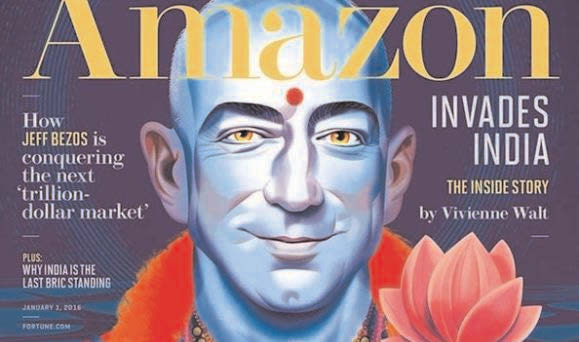
    NEW YORK (TIP): American business magazine Fortune has apologized for juxtaposing image of Amazon.com President Jeff Bezos as the likeness of Lord Vishnu over the cover of its January one international edition, which upset the Hindus.

    Hindu statesman Rajan Zed, who spearheaded the protest campaign on this issue saying that it trivialized their venerated deity, has thanked the Fortune and its editor Alan Murray for showing maturity and responsibility and understanding the feelings of the community.

    Statement from Murray, titled “Apology for Fortune’s January international edition cover” and posted at Fortune.com, says: “The cover of Fortune’s January 2016 international edition featured an illustration of Amazon CEO Jeff Bezos as a Hindu deity. Neither the artist nor the editors of Fortune had any intention of parodying a particular deity or of offending members of the Hindu faith. It is clear that we erred and for that, we apologize.”

    Zed, who is President of Universal Society of Hinduism, calling it an unnecessary dragging of a Hindu deity to prove their point of view, had urged Fortune to issue a formal apology.

    In a statement in Nevada today, Rajan Zed suggested Fortune and other media companies worldwide to send their senior executives and editors for training in religious and cultural sensitivity so that they had an understanding of the feelings of the customers and communities.

    Zed pointed out that Hindus understood that the purpose of Fortune in this case apparently was not to denigrate Hinduism, but casual flirting like this sometimes resulted in pillaging serious spiritual doctrines and revered symbols and hurting the devotees. Humor was a part and parcel of Hindu society, but there were certain convictions in every tradition, which were venerable and not meant to be taken lightly.

    Rajan Zed said that Lord Vishnu was a highly revered major deity in Hinduism meant to be worshipped in temples or home shrines and not to be used indecorously or thrown around loosely in reimagined versions for dramatic effects.

    How a mortal could be depicted as Lord Vishnu, who is the director of our destinies, Zed asked and added that inappropriate usage of Hinduism concepts and symbols for pushing selfish agenda or mercantile greed was not okay.

    Rajan Zed stressed that Hinduism was the oldest and third largest religion of the world with about one billion adherents and a rich philosophical thought and it should not be taken frivolously. No faith, larger or smaller, should be ridiculed at.

    Zed stated that Hindus welcomed media companies to immerse in Hinduism but taking it seriously and respectfully and not just for improper showing of Hindu symbols and concepts to advance their commercial or other agenda. Hindus were for free speech as much as anybody else if not more. But faith was something sacred and attempts at misusing it hurt the devotees. Media companies should be more sensitive while handling faith related subjects and sacred symbols.

    This Fortune cover page is headlined as “Amazon INVADES INDIA” (How JEFF BEZOS is conquering the next ‘trillion-dollar market’) and created by Sydney (Australia) based illustrator Nigel Buchanan; whose clients include The Wall Street Journal, MTV, The New York Times, etc. Interestingly, a Fortune article was headlined “Sacrilege”, when The Economist ran a cover in 2010 with an image of Steve Jobs with a halo.

    Lord Vishnu is “preserver” in the Hindu triad with Lord Brahma and Lord Shiva as the aspect of the Supreme. He has ten incarnations to establish dharma (divine law). Moksh (liberation) is the ultimate goal of Hinduism. There are about three million Hindus in USA.

  • EXODUS: EUROPE, ASIA, AND BEYOND

    EXODUS: EUROPE, ASIA, AND BEYOND

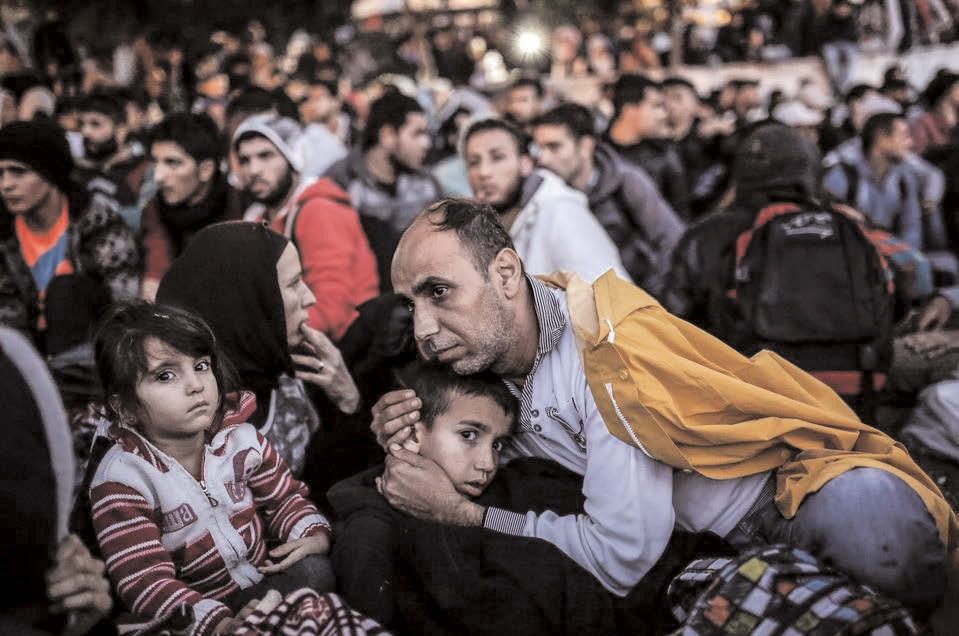
    As the battles raged in Syria and Iraq, millions of innocent civilians have sought refuge elsewhere to escape the dire straits in their home countries. Their prime destination: Europe. They came via planes, trains, ships, boats, cars, and for many, on foot: hundreds of thousands of displaced people fleeing a war no one asked for, leaving behind everything – their careers, property, families, their lives.

    Most of the world, at first, did not seem to notice the crisis. Not until the photo of a boy in a red shirt, lying lifeless, face down on the sands of a Turkish beach, came up in newspapers, websites, and social media.

    Three-year-old Syrian refugee Aylan Kurdi’s death shocked the world into consciousness, and spurred western governments to act on the worsening humanitarian crisis.

    By the end of 2015, more than one million migrants and refugees reached the continent, nearly 970,000 of which made the journey crossing the waters of the Mediterranean. It wasn’t only Syrians and Iraqis fleeing the mess in their home countries; there were also thousands escaping poverty and persecution, mainly from other Mideast and African states.

    Europe and other western countries scrambled to address the exodus, as the crisis became another test for the EU. Following a slew of emergency summits this year, EU leaders have acknowledged they were too slow to carry out a joint strategy to tackle Europe’s worst refugee crisis since World War II. Other countries have also stepped up, like Canada, which has already welcomed its first batch of Syrian refugees.

    Asia, in particular Southeast Asia, also had its own refugee crisis. Impoverished, persecuted, and with nowhere to go, Rohingya took to rickety boats in their bid to escape the quagmire they were in. The crisis came to a head around May, when thousands of these refugees, mainly from Myanmar’s Rakhine state, were left abandoned at sea, setting off a regional crisis. Horror stories of kidnap, coercion, and hunger emerged from the hundreds who staggered ashore or were eventually rescued by Thai, Indonesian, and Malaysian authorities after weeks at sea.

    Refugee exodus is seen as logical outcome of Syrian president's survival strategy.
    Refugee exodus is seen as logical outcome of Syrian president’s survival strategy.

    The crisis has ebbed somehow in the past few months, thanks to some action of regional governments involved, as well as due to the monsoon season. But with the monsoon ending, the crisis might again surge forward into the headlines – and a solution still seems far away.

    Tensions defused? The Iran nuclear deal

    The odds were stacked against it, but on July 14, weary foreign ministers from the US, Britain, France, China, Russia, Germany, the EU, and Iran announced to the world that a deal to curb Iran’s nuclear ambitions had been forged. It was a diplomatic victory for the parties involved, especially for Iran, which has been trying to shake off its long-time image as a pariah state.

    The ministers of foreign affairs of France, Germany, the European Union, Iran, the United Kingdom and the United States as well as Chinese and Russian diplomats announcing the framework for a Comprehensive agreement on the Iranian nuclear programme (Lausanne, 2 April 2015).
    The ministers of foreign affairs of France, Germany, the European Union, Iran, the United Kingdom and the United States as well as Chinese and Russian diplomats announcing the framework for a Comprehensive agreement on the Iranian nuclear programme (Lausanne, 2 April 2015).

    Under the deal, Iran pledged to slash the number of centrifuges – which enrich uranium – from around 19,000 to 6,104, of which 5,060 will still enrich. It also has to change the design of a new nuclear reactor being built and shrink its stock of low-enriched uranium, shipping it to Russia. In return, outside powers will end some of the international sanctions that have severely squeezed the Iranian economy.

    The road to the deal, however, wasn’t an easy one. For years, Iran has maintained that its nuclear program was for peaceful, civilian purposes, but a weary West always eyed it with suspicion. In the past few years, the two sides have see-sawed between coming close to a deal and coming close to conflict. The relative success of the deal was a result of months of non-stop negotiations, as well as the presence of a more moderate government in Tehran, led by President Hassan Rouhani.

    The question now: Will both sides honor the deal?

    Greek tragedyA country teetering on the brink of bankruptcy due to years of financial mismanagement. A hardline, leftist government. An economic bloc avoiding a region-wide collapse. These were the elements of a Greek tragedy that unfolded throughout the better part of 2015, as Greece and the European Union negotiated to save the Balkan nation from crashing out of the eurozone.

    Greek Meltdown Fed up with the hated “troika” – the European Commission, European Central Bank, and the International Monetary Fund -Greeks in January voted into power their first leftist government, led by Alexis Tsipras’ SYRIZA party. Tsipras came into power with the promise to lead the country out of the debt crisis. However, after months of intense, pressure-filled negotiations and despite voters saying “no” to a new deal, Greece caved in to its creditors’ demands and signed its latest bailout deal. The deal, worth 86 billion euros ($93 billion) to be spread out over a 3-year period, ultimately saved the country from crashing out of the eurozone, but it came with strict conditions.

    The fallout: Tsipras resigned August 20 after accepting the deal, reneging on a promise to stand its ground against the country’s creditors. A snap poll in September, however, saw Tsipras and his SYRIZA party hold on to power. Adding to Greece’s economic woes is the refugee crisis, with the country acting as migrants’ main gateway to the EU, straining the already burdened nation.

    Russia and China: Show of force

    From ISIS to Iran, Russia – long overshadowed by richer and more influential countries in the West – continued to assert itself as it seeks to revive its power and influence. From Ukraine to Syria, it has made its presence felt, mostly through its military. It has been steadily fortifying its army, building and expanding bases in the Arctic, growing its defense budget, and taunting its neighbors with its planes, submarines, and ships with clandestine – and in one case, deadly – side trips outside its territory.

    China: Show of force.
    China: Show of force.

    Russia has also been making inroads on the political front, participating in some of the year’s major diplomatic issues, such as the Iran nuclear deal. But the centerpiece in the past 12 months has been Syria, as President Vladimir Putin’s government seeks to keep and gain more influence in the Middle East.

    Meanwhile, China has also made aggressive moves economically, diplomatically, and militarily. As other world powers became stuck in other issues, bogged down by economic and political matters, the Middle Kingdom continued to expand its reach, primarily through billions of dollars in economic aid and infrastructure projects.

    Despite winning a lot of new friends, China has one major thorn on its side: its long-simmering maritime and territorial disputes with its Asian neighbors. The East and South China Seas have become sensitive spots in the region – particularly the Spratlys, where Beijing has been building artificial islands in its attempt to bolster its claims in the area. The waters are now being tested by militaries from other countries, including the US and Australia, with an increasing number of confrontations near the disputed “islands.” China also lost in round one of an arbitration case lodged by the Philippines at the global maritime tribunal.

  • Former Australia PM Tony Abbott says Islam must reform

    Former Australia PM Tony Abbott says Islam must reform

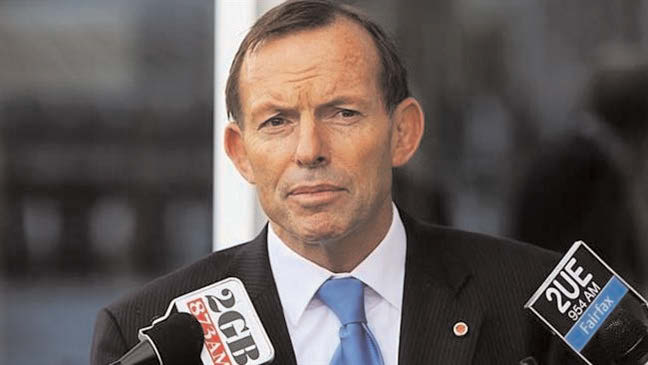
    SYDNEY (TIP): Former Australian Prime Minister Tony Abbott has sparked criticism by saying Islam has a “massive problem” and needs to reform.

    Writing in Australian media, Mr. Abbott said “not all cultures are equal” and the West should stop apologizing for defending its values.

    His letter, published in News Corps tabloids, cautioned against “demonizing” Muslims, but said the West “can’t remain in denial about the massive problem within Islam”.

    “Although most Muslims utterly reject terrorism, some are all too ready to justify ‘death to the infidel’,” he said.

    “Islam never had its own version of the Reformation and the Enlightenment or a consequent acceptance of pluralism and the separation of church and state.”

    Australia is involved in the US-led international military operation against Islamic State militants in Iraq and Syria, and is increasingly concerned about Australians fighting with or supporting the militants.Several raids have been carried out and officials say a number of plots have been disrupted. Last month, a teenage boy who police say had been radicalized shot dead a police worker in Sydney.

  • Teenager on Australia terror plot charge denied bail

    Teenager on Australia terror plot charge denied bail

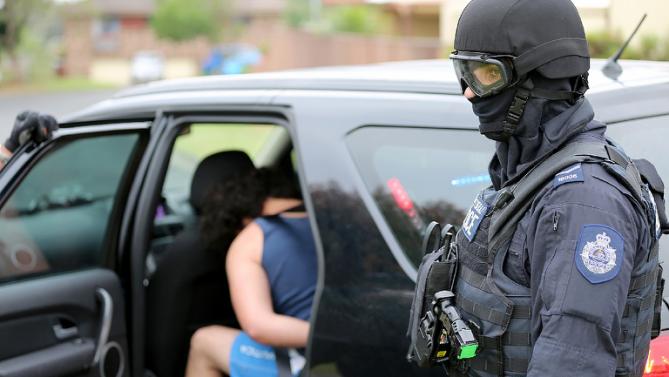
    SYDNEY (TIP): A 15-year-old charged over a terror plot used coded text messages to try and avoid detection, an Australian court heard as he was denied bail Dec 10 over fears he could commit serious crimes.

    The teenager, who under Australian law cannot be named, was remanded in custody at Parramatta Children’s Court in Sydney after he was arrested in police raids yesterday and charged with conspiracy to conduct an act in preparation for a terrorist act.

    The court was told the suspect had been under surveillance for more than a year and had previously been convicted on firearm charges.

    “There’s no doubt that if the risk were to materialise, the consequences for public safety would be extremely serious,” magistrate Elizabeth Ryan told the court in denying bail.

    The police prosecutor had alleged the boy used “banana” as a code word in text messages to describe a gun.

    The court was also shown photographs allegedly seized from the boy of an Islamic State (IS) fighter and of a beheading by the jihadist group.

    The teenager was also the subject of raids in 2013 and 2014, and his psychologist told the court he was suffering from anxiety and depression as a result of the police visits.

    “He sleeps in his parents’ bedroom because he’s afraid of being raided all the time,” the Sydney Morning Herald reported the psychologist as saying.

    “He can’t sleep and he has frequent nightmares. I have high concerns for his mental health.”

    Four other people were also charged yesterday stemming from evidence gathered during pre-dawn raids in Australia late last year in which 15 people were taken into custody and an alleged plan to kidnap and behead a member of the public was uncovered.

    Canberra has shown increasing concern over home-grown extremism as well as the flow of its citizens to conflict zones in the Middle East to join extremist groups such as IS.

    Some 120 Australians are estimated by the government to be in Iraq and Syria with another 160 actively backing extremist organisations at home through financing and recruitment.

    The government raised the terror alert level to high last year, introduced new national security laws and conducted several counter-terrorism raids.

    The latest raids came just days before the country marks the one-year anniversary of the 17-hour Sydney cafe siege where a gunman and two hostages were killed.

    They also came two months after a civilian police employee was shot in the head by another 15-year-old boy outside law enforcement headquarters in Sydney. The boy was killed in an exchange of gunfire with officers.

  • Indian spin trio enhances deadly home reputation

    Indian spin trio enhances deadly home reputation

    NAGPUR (TIP): While India have generally struggled to get 20 wickets abroad, they have had no such problems at home, where Ravichandran Ashwin and Co. have been doing a great job.

    Two years ago, Australia’s batting was destroyed by the Ashwin-Jadeja combine. A hapless West Indies were no match for the quality Indian attack and now South Africa, the No.1 Test side in the world, have lost their first away series in nine years.

    The best bowling attacks have personnel capable of hunting in pairs and applying relentless pressure from both ends. Although Ashwin and Co. have had plenty of help from the pitches, they have risen to the challenge of utilizing the conditions to their advantage.

    The trio of Ashwin, Jadeja and Amit Mishra have been proficient in judging the pitch, its pace and the amount of turn on offer and have bowled accordingly. When Hashim Amla and Faf du Plessis were batting on Friday, there were no freebies on offer -only 45 runs came off 31 overs in the second session.

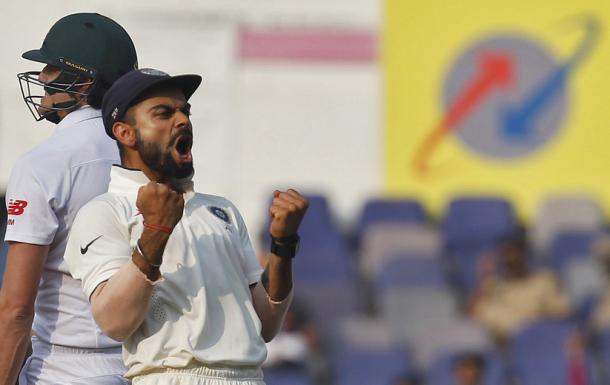
    By picking 47 out of 50 South African wickets in the series, they have stamped their authority and dominance. “It’s a big plus to have those quality spinners. Two out of the three are very, very consistent and Amit Mishra, for a leg-spinner, is very, very economical, which is not a regular sight,” said Indian captain Virat Kohli.

    The trio of Ashwin, Jadeja and Amit Mishra have been proficient in judging the pitch. (AFP Photo)

    “Mishra is someone who knows his bowling, he knows his variations and he knows where to pitch the ball. It’s a delight to have all three in the squad. All three bowling well in Indian conditions is an advantage and a big threat to the opposition. I am happy all three are in rhythm. I am really happy for Jadeja, because he is making a comeback,” Kohli said about the architects of India’s series win.

    As South Africa coach Russell Domingo pointed out, the consistency and accuracy of India’s spinners -as op posed to their South African counterparts -tilted the game in the host’s favour. “I think the Indian spinners have landed the ball more consistently than our spinners, and asked questions for a longer period of time.

    “We have landed the ball on good areas for two or three overs. They have landed the ball in good areas for eight or nine overs and that has been the difference.”

  • Fighting the Islamic State: Role of the P-5 Nations and India

    Fighting the Islamic State: Role of the P-5 Nations and India

    In the course of one week in November 2015, militants from Abu Bakr Al-Baghdadi’s self-proclaimed Islamic Caliphate – also called ISIS, ISIL and Daesh – struck multiple targets in Beirut, Paris and Mali. Earlier, on October 31, ISIS claimed to have brought down a Russian civilian aircraft flying from Sharm al-Sheikh to St. Petersburg.

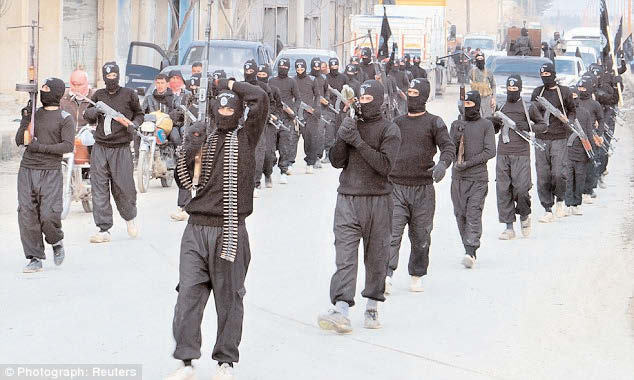
    The ISIS militia, numbering between 20,000 and 30,000, now controls approximately 300,000 square kilometre of territory straddling the Syria-Iraq border. Its brand of fundamentalist terrorism is gradually spreading beyond West Asia and the militia is slowly but surely gaining ground. In Africa, ISIS fighters and their associates have been active in Algeria, Lebanon, Libya, Mali, South Sudan and Tunisia in recent months. Boko Haram, the militant Islamist group in Nigeria, has pledged allegiance to ISIS.

    Fighting Back
    Recent acts of terrorism have steeled the resolve of the international community. Significant help is being provided to the government of Iraq by the US and its allies. The Peshmerga, forces of the Kurdistan Regional Government (KRG) which had captured oil-rich Kirkuk, have joined the fight against the ISIS and recaptured the Syrian (Kurdish) border town of Kobani.

    The US began launching air strikes against the ISIS militia about a year ago, while simultaneously arming anti-Assad forces like the Free Syrian Army with a view to bringing about a regime change in Syria. The US has been joined in this endeavour by Australia, Britain, Canada, Denmark, France and Netherlands as well as five Arab countries (Bahrain, Jordan, Saudi Arabia, Qatar and the United Arab Emirates). The air strikes have resulted in substantial collateral damage. It is being gradually realised that the ISIS militia cannot be defeated from the air alone.

    Putin’s Russia joined the fight on September 30, 2015 with the twin aims of defeating the ISIS and destroying anti-Assad forces. However, the initial air strikes launched by the Russian Air Force were directed mainly against the forces opposed to President Assad of Syria. Russian ground troops are also expected to join the fight soon. The Russians have also descended on Baghdad to establish a military intelligence coordination cell jointly with Iran, Iraq and Syria – a move that has not been appreciated by the Americans.

    In a rare show of unity after the Paris attacks, the United Nations Security Council passed a unanimous resolution stating that “The Islamic State in Iraq and the Levant constitutes a global and unprecedented threat to international peace and security,” and called upon all member states to join the fight against the ISIS.

    Diplomatic moves have been initiated to coordinate operations and work together for peace and stability in the region. The US and Russia agree that the objective of their interventions should be to end the civil war in Syria through a political deal and that both Iraq and Syria should retain their territorial integrity. They also agree that the ISIS extremists must be completely eliminated. Iran has agreed to join the negotiations to resolve the conflict in Syria. However, while the political objectives are similar, the methods being used to achieve them are different and are designed to extend the influence of each of the protagonists in the region.

    Implications for South Asia
    Al-Baghdadi has openly proclaimed the intention of ISIS to expand eastwards to establish the Islamic state of Khorasan that would include Afghanistan, the Central Asian Republics, eastern Iran and Pakistan. The final battle, Ghazwa-e-Hind – a term from Islamic mythology – will be fought to extend the caliphate to India. An ISIS branch has already been established in the Subcontinent. It is led by Muhsin al Fadhli and is based somewhere in Pakistan. Some factions of the Tehrik-i-Taliban Pakistan have declared their allegiance to al-Baghdadi. Afghanistan’s new National Security Adviser, Mohammad Hanif Atmar, has said that the presence of Daesh or the ISIS is growing and that the group poses a threat to Afghan security. And, some ISIS flags have been seen sporadically in Srinagar.

    Instability and major power rivalry in West Asia do not augur well for India’s national security and economic interests. Combined with the increase in force levels in the Indian Ocean, the heightened tensions in West Asia may ultimately lead to a spill-over of the conflict to adjacent areas. India now imports almost 75 per cent of the oil required to fuel its growing economy and most of it comes from the Gulf. The long-drawn conflicts of the last two decades of the 20th century had forced India to buy oil at far greater cost from distant markets, with no assurance of guaranteed supplies. The 1991 oil shock had almost completely wrecked India’s foreign exchange reserves. The situation could again become critical. Oil prices had shot up to USD 115 per barrel in June 2014, soon after the Caliphate was proclaimed, but have since stabilised around USD 50 to 60 per barrel.

    Since the early 1970s, Indian companies have been winning a large number of contracts to execute turnkey projects in West Asia. The conflict in the region has virtually sealed the prospects of any new contracts being agreed to. Also, payments for ongoing projects are not being made on schedule, leading to un-absorbable losses for Indian firms involved, and a dwindling foreign exchange income from the region.

    India also has a large Diaspora in West Asia. A large number of Indian workers continue to be employed in West Asia and their security is a major concern for the government. Some Indian nurses had been taken hostage by ISIS fighters, but were released unharmed. All of these together constitute important national interests, but cannot be classified as ‘vital’ interests. By definition, vital national interests must be defended by employing military force if necessary.

    US officials have been dropping broad hints to the effect that India should join the US and its allies in fighting ISIS as it poses a long-term threat to India as well. India had been invited to send an infantry division to fight alongside the US-led Coalition in Iraq in 2003. The Vajpayee government had wisely declined to get involved at that time as it was not a vital interest.

    It must also be noted that India has the world’s third largest Muslim population. Indian Muslims have remained detached from the ultra-radical ISIS and its aims and objectives, except for a handful of misguided youth who are reported to have signed up to fight. This could change if India sends armed forces to join the US-led coalition to fight the ISIS militia.

    Prime Minister Narendra Modi proposed at the G-20 summit in Antalya last week that the war against terrorism must isolate and contain the sponsors and supporters of terrorism. He clearly implied that India is willing to join the international coalition against the ISIS and other non-state actors. Besides contributing to the global war against terrorism, India’s participation would help to isolate the Pakistan Army and the ISI – the foremost state sponsors of terrorism.

    Direct Indian military intervention against the ISIS militia would depend on the manner in which the situation unfolds over the next one year. It could become necessary if ISIS is able to extend the area controlled by it to the Persian Gulf as that would affect the supply of oil and gas from the Persian Gulf to India – clearly a vital national interest. For the time being, India should cooperate closely with the international community by way of sharing information and intelligence and providing logistics support like port facilities if asked for. India should also provide full diplomatic support and work with the United Nations for evolving a consensual approach in the fight against the ISIS.

    A concerted international effort is needed to first contain and then comprehensively defeat the ISIS and stabilise Iraq and Syria, failing which the consequences will be disastrous not only for the region, but also for most of the rest of Asia and Europe. Helping the regional players to gradually eliminate the root causes of instability will not be an easy challenge for the international community to address. As an emerging power sharing a littoral with the region, India has an important role to play in acting as a catalyst for West Asian stability.


  • India steps up surveillance on ISIS propaganda: over 150 Indians under the scanner

    India steps up surveillance on ISIS propaganda: over 150 Indians under the scanner

    NEW DELHI (TIP) : Nearly 150 Indians are on the radar of intelligence agencies for actively following Islamic State propaganda and engaging on social media with pro-IS elements, according to government sources.

    A majority of those under surveillance are from the southern states, sources said.

    Though agencies are not planning any action or crackdown on the youth who may be showing a more-than-keen interest in pro-IS websites or social media posts, the tracking is meant to pre-empt the possibility of their becoming indoctrinated enough to join the IS. As and when those under surveillance show signs to radicalization, an intervention may be made to alert their families and facilitate their counseling, if need be.

    Online tracking of pro-IS websites, Twitter handles and Facebook accounts is a key part of India’s counter-IS strategy. Agencies, with the help of experts from the National Technical Research Organization (NTRO), track online traffic related to IS across the country, and constantly flag any unusual trend or activity.

    Sources in the security establishment told TOI that 23 Indians, including about a dozen from the diaspora, had joined the IS and traveled to Iraq-Syria for ‘jihad’. These include four youth from Kalyan, one of whom Areeb Majeed returned to India and is now in custody here, a Kashmiri based in Australia, a Singapore-based Indian, an Oman-based man and one person each from Karnataka and Telangana and a journalist from Kerala.

    Of the six Indian recruits believed to have got killed in IS territory are three Indian Mujahideen cadre including Bada Sajid and Sultan Ajmer Shah who joined the outfit from Pakistan, two from Maharashtra and one from Telangana.As many as 30 Indians, including a woman based in Delhi, have been prevented from joining the IS. Besides, around 8-10 Kerala-origin men and an alleged woman recruiter, Afsha Jabeen, were recently deported by the UAE after they were found to be in touch with active IS members.

    A senior government officer said there was threat of an Indian IS recruit indulging in a “lone wolf” attack here upon return from Iraq-Syria. “Unlike other countries that strip their citizens who join and fight for IS of their passports, we have no such plan. We’d rather let them return and intercept them here,” said the officer.

    In an advisory sent on Monday, the home ministry had warned of the possibility of an IS-sponsored terrorist action on Indian soil. “Though the IS has not been able to establish any significant presence in India, its success in radicalizing some youth, attracting certain sections of the local population or the Indian diaspora to physically participate in its activities or the possibility of piggy-backing on terrorist groups operating in India have opened up the possibility of IS-sponsored terrorist action on Indian territory,” said the advisory issued to all the states and Union Territories.

  • India, APEC and the US

    India, APEC and the US

    The major focus during the Asia Pacific Economic Cooperation (APEC) meeting in Manila, Philippines on November 18th and 19th would be on the Paris terror attacks though it is a trade promotion group that does not delve into security issues. The regional tensions in the South China Sea would be coming to some sort of attention indirectly despite Chinese efforts to block any discussion.  The issue of enlarging the membership and India’s pending membership application will most probably again be relegated to the background. Both China and the US will raise their pitch to sell their version of free trade blocks. China will try to sell its proposal for the Free Trade Area for Asia-Pacific (FTAAP) which excludes India and the US will do the same for the Trans-Pacific Partnership (TPP) which currently excludes China. Prime Minister Narendra Modi had raised the issue of Indian membership in the APEC with President Barack Obama in January 2015, when Obama visited India as the guest of honor for India’s Republic Day parade. President Obama expressed verbal support for India’s membership in the APEC at that time.


    The APEC was initially floated in 1989 by an Australian initiative and had 12 founding member economies: Australia, Brunei Darussalam, Canada, Indonesia, Japan, Korea, Malaysia, New Zealand, the Philippines, Singapore, Thailand and the United States. In 1991, China, Hong Kong, China and the Chinese Taipei (Taiwan) joined the APEC as a regional package. Mexico and Papua New Guinea followed in 1993. Chile was allowed to join the APEC in 1994.  Peru, Russia and Viet Nam joined the APEC in 1998, taking its full membership to 21 economies. The group acts with consensus in making decisions. APEC is more a trade promotion group and its recommendations are not binding on the member economies.


    The APEC’s mission statement reads: “Our primary goal is to support sustainable economic growth and prosperity in the Asia-Pacific region. We are united in our drive to build a dynamic and harmonious Asia-Pacific community by championing free and open trade and investment, promoting and accelerating regional economic integration, encouraging economic and technical cooperation, enhancing human security, and facilitating a favorable and sustainable business environment. Our initiatives turn policy goals into concrete results and agreements into tangible benefits.”


    The APEC put a moratorium on new memberships in 1997 for a period of 10 years though India’s membership application was pending. The moratorium was extended for another three years in 2007. However, for inexplicable reasons the APEC economies have not bothered to deal with the issue of further enlargement.  Especially India’s application for the membership has been pending with the APEC for last 20 years without approval. Every year since 2010, India has been looking expectantly for the APEC to consider India’s application for membership but nothing concrete has materialized owing to passive obstruction and stonewalling.


    Mainly, two arguments are used against India’s membership that India is not part of Asia-Pacific region and that India has proved to be an obstacle during negotiations in various international trade reforms/regimes. India had bargained tough during the Doha round and the Bali round of the WTO negotiations. Both these arguments are fallacious and self-serving. One fails to understand where countries like Thailand and Brunei have either land or sea borders with the Pacific Ocean? Or being a member of the ASEAN qualifies these two countries for the APEC membership! One also needs to ask a rhetoric question if India is an Asian country or not?  India is not located on the moon! Since the concept of Asia-Pacific has already been substituted by a larger strategic concept of the Indo-Pacific, there is no reason to continue to withhold India’s membership of the APEC on geographical grounds alone. Without India’s participation, there is no Indo-Pacific economy and hence no Asia-Pacific economy!


    India introduced market reforms initially in 1991 when China was allowed to join as a member. India has gradually introduced more market reforms & liberalization and that is the reason India applied for the membership of the APEC. It is true that Indian economy was largely socialistic prior to 1991 but so were China’s, Russia’s and Vietnam’s. Indian membership of the APEC would provide an incentive to continue further deeper economic liberalization. India has been a founding member of the WTO as well as of its previous incarnation of the GATT (General Agreement on Trade and Tariffs) since its inception. Interestingly, Russia is a part of the APEC since 1998 though it still does not qualify for the WTO membership as a market economy. China was allowed to join the WTO only in year 2000 despite being a member of the APEC since 1991. There seems to be some sort of unstated cooperation between both the US and China to continue to go slow on India’s membership of the APEC.

    A number of US based analysts have exhorted the US to champion India’s cause in the APEC for membership as a step toward eventual inclusion in the TPP.  Kevin Rudd, the former Australian PM and head of the CII-Asia Society Task Force  opined that the APEC misses much by not having India on board. Clarifying that APEC is not a free-trade body, Rudd said, “APEC is not a platform for market access negotiations, or a trade negotiating forum, but voluntary association of economies”. We, in India, can understand China’s reflexive and habitual pattern of opposition to India’s membership for any international arrangement with strategic implications because China is an adversary and a strategic threat. India does not perceive the US as an adversary in the post-cold war scenario. In fact, Pew Research on public opinion has consistently shown Indian public considering the US as one of the most  friendly nations.


    The US Deputy Assistant Secretary of State and Senior Official for the APEC Matt Matthews on November 2nd 2015 dampened cold water on India’s membership by categorically stating that it is not on the agenda of the APEC meeting in Manila in Philippines, on November 18 and 19. He further stated: “I do not believe there is any active consideration within APEC for expanded membership in the current time”. When reminded that President Obama had “supported” India’s desire for membership of the APEC during his 2015 visit to India on Republic Day, Matthews said the US had so far only welcomed “India’s interest” in joining the APEC. “It is important to be careful and accurate about describing President’s comment. President welcomed India’s interest in the APEC. That speaks for itself. We welcome India’s examination of APEC. We have not entered [into any] discussion about it. I do not believe India is formally pressing for actual membership now in APEC,” he said.


    India needs to hold the US to its words. The US must stop playing word games like China. The US expects too many unilateral concessions from India without delivering anything in return. The US, after signing the civil nuclear deal in 2005 and after ratifying the same in 2008, has not been able to shepherd India’s membership of the NSG, the MTCR, The Australia Group and the Wassenaar arrangement. The US has also made verbal promises to support India’s permanent membership of the UNSC. However, there is no concrete effort or will to make it implemented into reality despite a lot of rhetoric from the US. The proof of the US goodwill should reflect in active and actual support for India’s membership for the most benign of these international arrangements. Being an active member of the APEC will help India transform its domestic economy into full-fledged market economy. It will also prepare India for additional economic reforms so to obtain eventual membership of the RCEP or the TPP or the FTAAP.


    India and the US have had a legacy of trade disputes within the WTO. US trade representatives have invoked the Special 301 Priority Foreign Country designation for India. If the US continues to show a pattern of passive indifference and obstruction to India’s membership of the APEC while using the flowery rhetoric akin to China, India may have to utilize more aggressive marketing and trading strategies. Let it be known to everyone including the US that trade wars and denial of market access is as a detrimental as a hot war in the modern context. If you don’t support us, you are against us in our pursuit of market access. Since India and the US have now formalized an annual Strategic and Commercial dialogue, perhaps, the US performance in its active support to India’s membership of the APEC needs to be carefully monitored annually. Preferential trade access to Indian market for the US must be made contingent upon US behaviors towards India’s membership in the APEC and other free trade groups.

    To paraphrase and plagiarize Carla Anderson Hills, the former US trade representative: We (India) will be ready to open the APEC and other trade-blocks with a crowbar if necessary, but with a Namaste if possible!


    (The author is President, The Council for Strategic Affairs, New Delhi, India, an independent and privately funded Indian think-tank. He can be contacted at adityancsa@gmail.com)

  • Chhota Rajan in India After 27-Yr Hunt

    Chhota Rajan in India After 27-Yr Hunt

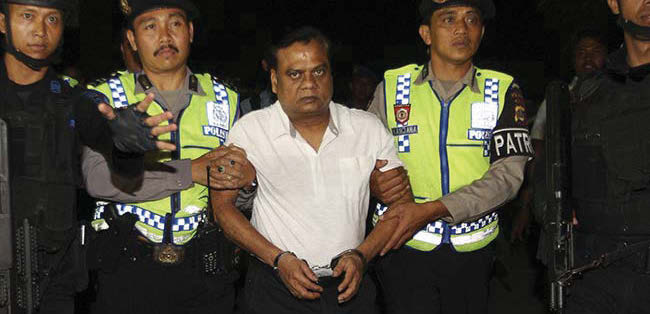
    NEW DELHI (TIP): Long-absconding underworld don Chhota Rajan was brought to Delhi early on Nov 6 morning from Indonesia by a joint team headed by CBI officials for facing trial in various criminal cases registered against him in Delhi and Mumbai.

    The 55-year-old gangster, who had been on the run for past 27 years, kissed the ground on his arrival in Delhi.

    Rajan, whose real name is Rajendra Sadashiv Nikalje, will be kept in the national capital where he will be questioned by sleuths of various investigating agencies as he has been making claims of having further evidence to nail India’s most wanted terrorist Dawood Ibrahim and his links with Pakistan’s snooping agency ISI.

    Immediately after his arrival here in an Indian Air Force Gulfstream-III aircraft from Indonesia’s Bali, Rajan, who is considered as a ‘friendly don’ as he reportedly tipped Indian security agencies about the movement of Dawood and his aides, was whisked away to an undisclosed location under tight security.

    Official cars with flashing lights accompanied by heavy-armed escort vans were seen leaving the Palam Technical Area at around 5:30am, as anxious camerapersons and photographers made unsuccessful attempts to get a glimpse of the underworld don, who was in one of those vehicles with tinted glasses.

    Rajan had told media in Bali that he was happy to return to his motherland and had rubbished reports that his arrest was orchestrated as he was facing threat from Dawood’s men.

    Ahead of his arrival in India, Maharashtra government made a surprise announcement of handing over all the cases related to the underworld don to the CBI as the agency had expertise in handling such cases. This move comes barely a few days after the state Chief Minister Devendra Fadnavis had been making claims that Rajan will be brought only to Mumbai.

    The Maharashtra government’s sudden U-turn raised many eyebrows within the police establishment in the megalopolis as the Chief Minister himself had ordered for creation of a special cell inside Aurthur Road prison with medial arrangement of dialysis being made. Rajan is on dialysis as his both kidneys are not working.

    Rajan, after his arrest, had expressed reservation over plans to lodge him in a Mumbai jail, fearing that his arch- rival and India’s most wanted terrorist Dawood Ibrahim may target him there.

    Till the formalities of CBI to take over the Maharashtra cases are completed, Rajan will be in the custody of special cell of Delhi Police which has six cases registered against him. Interestingly, CBI had told the Bombay high court, while hearing petitions filed by the family members of murdered rationalist Narendra Dabholkar, that it was severely understaffed and required officers from the Maharashtra Police to assist it in the probe.

    Rajan was arrested on the basis of an Interpol Red Corner notice at Bali airport on October 25 after he had arrived in the island city of Indonesia from Australia.

    India was keen that the deportation takes place at the earliest and had put in a request to Indonesian authorities immediately after his arrest, sources said.

    However, his deportation was deferred by a day as the international airport in Bali was shut down due to spewing of volcanic ash from a nearby mountain.

    Immediately after his flight took off, Indian ambassador to Indonesia Gurjit Singh tweeted: “#ChotaRajan deported successfully to India. Delay due to Bali airport closure ends. Thanks Indonesia for support.”

    Rajan is wanted in over 75 crimes ranging from murder, extortion to smuggling and drug trafficking.

    Mumbai Police has nearly 70 cases registered against Rajan, including 20 of murder, four cases under the Terrorist and Disruptive Activities (Prevention) Act, one under Prevention of Terrorism Act and over 20 cases under the stringent Maharashtra Control of Organised Crime Act.

    Delhi Police has six cases registered against Rajan, who was a close aide of fugitive underworld don Dawood at one point but split before the 1993 Mumbai blasts were conspired. In 2000, there was an attempt on Rajan’s life when Dawood’s men tracked him down to a hotel in Bangkok but he managed a dramatic escape by jumping from the first floor of the hotel.

    Rajan had fled India in 1988 for Dubai. NSG and special cell along with the para military. The details were finalized in a closed-door meeting on Tuesday.

    Rajendra Sadashiv Nikalje, known as Chotta Rajan, has been on Interpol’s most-wanted list for over two decades. Rajan, who has come back to India after 27 years, is wanted in over 75 crimes ranging from murder, extortion to smuggling and drug trafficking.

  • Why the Ban on Cow Slaughter is not just Anti-Farmer but Anti-Cow as well

    Why the Ban on Cow Slaughter is not just Anti-Farmer but Anti-Cow as well

    The recent killings of Mohammad Akhlaq, Noman and Zahid Ahmad Bhatt on the claim that they were slaughtering cows is not only an attack on the right to life, livelihood and diverse food cultures but an assault on the entire agrarian economy.

    The cynical fetishisation of cows by Hindutva politicians is not only profoundly anti-farmer but, paradoxically, also anti-cow.

    What these bigots fail to realize is that the cow will survive only if there are pro-active measures to support multiple-produce based cattle production systems, where animals have economic roles. The system must produce a combination of milk, beef, draught work, manure and hide, as has been the case in the rain-fed food farming agriculture systems of the sub-continent over the centuries.

    In meat production systems – whether meat from cattle, buffaloes, sheep, goat, pigs or poultry – it is the female which is reared carefully in large numbers to reproduce future generations, and the male that goes to slaughter. It is only the sick, old, infertile and non-lactating female that is sold for slaughter. In every society where beef consumption is not politicized, farmers known that eating the female bovine as a primary source of meat will compromise future production, and hence they are rarely consumed.

    On the other hand, the destiny of a male bovine is clear: it will either become a work animal (bullock), a breeding bull, or be sold for meat – which is the fate of the vast majority. In the end, the male bovine will reach a slaughterhouse. Villages earlier had a system of having one community breeding bull which roamed around servicing village cows that came to heat. Typically, 70% of a cattle herd or sheep/goat flock is female breeding stock; the rest comprises a couple of breeding males, and young male and female offspring.

    Indian cows do better in Brazil than India

    Today, rural indigenous cows are a rarity in India and community breeding bulls are history. Farmers no longer want to rear cattle, particularly cows. This trend is validated by an analysis of India’s livestock census: Between 2003 and 2012, the annual growth of young female bovines – a key indicator of future growth trends of animal populations -on a compound annual growth rate basis declined from 1. 51% to 0.94% in indigenous cattle and from 8.08% to 5.05% in crossbred cattle. On the other hand, it increased from 2.12% to 3.13% in young female buffaloes.

    Whilst India’s population of fine indigenous cattle breeds keeps decreasing year by year, Brazil’s cattle populations of Ongole, Kankrej and Gir breeds – imported from the Indian sub-continent nearly 200 years ago – keep increasing. We have laws to ‘protect’ cows, ban cow slaughter and ban the consumption of beef: the whole of the North-East, Kerala and West Bengal have no restrictions on cattle slaughter, nine states allow all cattle slaughter except cows, and the rest have a ban on all cattle slaughter. In Brazil, on the other hand, beef-based cattle production systems are the driving force behind its flourishing indigenous Indian cattle breed populations.

    Between 1997 and 2012, according to the government’s successive livestock censuses, India’s indigenous cattle population declined by over 15% from 178 million to 151 million, less than what we began with at the time of independence (155 million), when all cattle were indigenous breeds. Fifty years of sustained white revolution policy interventions to enhance milk production have actively advocated and financed replacement of indigenous cattle with high yielding breeds. Cross breeds like Jersey and Holstein Friesan now comprise some 21% of India’s cattle population. But even India’s total cattle population, including crossbreds has increased by a mere 23% (from 1951 to 2012) and stands at 190 million.

    In stark contrast, Brazil’s cattle population -comprising 80% pure Indian cattle breeds
    (Indicine) or Indian cattle breed crossed cattle – grew by 74% from 56 million in 1965 to 214 million today. The Gir, which is the favored dairy breed, comprises 10% of Brazil’s cattle population. The Ongole (or Nellore), which is the mainstay of beef production, makes up most of Brazil’s cattle population.The Ongole of India, however, is a threatened breed in its own homeland.

    While Brazil continues to have acres of lands for their cattle to graze, here in India we have successfully done away with common grazing lands where animals can be put to pasture. In the land of the Ongole, pre-2014 united Andhra Pradesh, permanent pastures and grazing lands declined by 78% from 1.17 million hectares in 1955-56 to 0.56 million hectares in 2009-10. The rate of decline was much faster in the post economic liberalization decades of 1990-2010 – a time of aggressive industrial growth and Hindutva influence.[1]

    As bullocks are displaced, less cows are reared

    In today’s India, cattle have been displaced from their productive role in agricultural livelihoods: tractors have replaced bullocks/draught animals that were used to plough, thresh, and anchor rural transportation. India’s population of work cattle or bullocks declined by 28% between 1997 and 2012. This has been the result of economic policies that have strived to industrialize, and “green” and “white” revolutionize our agriculture and livestock production.

    Chemical fertilizers have replaced manure. A shift from diverse food cropping systems of cultivation to mono-cropped production of commodity crops like cotton, sugarcane, and tobacco, or palm oil has depleted crop residues as a rich fodder source, and made bullock ploughing virtually redundant. The bullock is no longer needed to extract oil from oil seeds (in any case we now import 60% of our edible oil and even poor oil millers have closed shop), extract juice from sugarcane, pull water out of wells or be the main mode of rural transportation.

    Hence why should farmers keep indigenous bullocks? Or rear indigenous cows for that matter, which produce bullocks? Once animals stop having an economic value, they stop being reared. Simple.

    Lessons from a growing buffalo population

    Contrast the sorry state of India’s cattle with its thriving buffalo population. Our buffalo population has grown by 21% since 1997. Why? Very simple: buffaloes anchor milk and beef production in India. We are the 2nd largest exporters of buffalo beef in the world, with an annual export of nearly 2.4 million tons. Bovine meat contributes nearly 60% of total Indian meat production, as against small ruminants (15%), pigs (10%) and poultry
    (12%). Buffaloes survive well on limited, coarse, less nutritious crop residues, whilst cattle need more green fodder and green grass. This is evidence itself that given all other conducive input factors for the animal to be reared (primarily feed, fodder, water, ecological adaptability, knowledge, labor, health care and a remunerative livelihood), allowing the slaughter of an animal actually drives its numbers up. The same holds true for goat and sheep. Between 1997 and 2012, the sheep population increased overall by 13%, and goats by 10%, despite a 33-38% slaughter rate.

    In short, the secret to flourishing animal populations appears to be meat consumption.

    The highly industrialized beef producing nations of the world – the United States, Australia and New Zealand – produce beef by replacing large acres of land where food could be grown to feed human beings, with animal feed. Regrettably, in Latin America, large beef corporations are steadily converting huge tracts of natural prime Amazonian forests, home to indigenous peoples, into grazing lands: in short these systems are unsustainable, contributing hugely to carbon emissions.

    India’s beef production on the other hand, is one of the most sustainable and least ecologically damaging in the world. Beef is a by-product of buffalo rearing livelihood practices, and not its primary objective, which continue to be milk and milk products. Whilst male buffaloes end up in the slaughter houses, farmers also sell their infertile, old, diseased and non-lactating females. Our animals are not fed on predominantly grain-based concentrate diets, but on crop-residues, and natural vegetation.

    Allow slaughter to save the indigenous cow

    Threats to impose a nationwide ban on beef consumption and cattle slaughter also ignore the close relationship between those who eat beef and those who look after cattle. In India, cattle have always been relished and their meat is a critical source of nutrition for various communities – including Adivasis, Dalits, Christians, Muslims and several other castes (many of whom are too scared to admit they eat beef).

    A Dalit social activist asserts: “The Brahmins and other agraha (upper) castes who are cow worshippers have never in their lives ever grazed the animal, fed it, cleaned its dung or buried its carcass. For all that they have used our labor: we graze, we feed, we clean the sheds and dung, we bury the carcass, and we eat beef.”

    “The so-called upper castes visit our hamlets in search of beef, and are scared to publicly acknowledge their beef eating practices”, says an adivasi community leader from Telangana. “This year, Hindu families hired cows from us for the Godavari Pushkaralu, because there are no cows left in caste rural Indian villages, where people worship cows and shun beef ! We adivasis, on the other hand, eat beef, plough our fields with cattle, and farm with cattle manure; therefore we continue to own cows and cattle herds!”

    In this land of the holy cow, depleting grazing resources of common lands and forests, disappearing roles for indigenous cattle breeds in agriculture production as providers of milk, energy, manure and beef, policies to replace indigenous breeds with crossbreds, coupled with a ban on slaughter of cattle in several parts of India, have led to plummeting cattle populations and the cow fast becoming a creature of the past.

    There is only one conclusion to be drawn. If you really want to protect the cow, do not ban beef, cattle slaughter and the ecological culture that sustains the bovine economy.


    (The author has a Masters in Animal Breeding and Genetics from the University of California, Davis, USA. She is a trained veterinarian and works with the Food Sovereignty Alliance, India. He can be reached at Sagari.ramdas@gmail.com; foodsovereigntyalliance@gmail.com.)

    [1] Compendium of Area and Land Use Statistics of Andhra Pradesh 1955-56- 2004-05. Directorate of Economics and Statistics: An Outline of Agricultural Situation in Andhra Pradesh 2007-08. DES. Hyderabad.

  • Brazil mine mudslide kills at least 17

    RIO DE JANEIRO (TIP): A dam burst at a mining waste site in Brazil, unleashing a deluge of thick, red toxic mud that engulfed a village and killed at least 17 people, an official said.

    More than 50 more were injured in the disaster in southeastern Minas Gerais state on Thursday, said Adao Severino Junior, fire chief in the city of Mariana.

    The number of missing looks set to surpass 40 but this is not official yet, he added.

    Television footage showed a torrent of muck several hundred metres long that had swamped houses and ripped off their roofs.

    The mud reached the intact roofs of some houses, atop of which stranded people waited to be rescued. Some homes seemed to have been swept hundreds of meters by the rushing wall of mud.

    The village of Bento Rodrigues near the dam is practically buried, the fire chief said.

    “The situation is grim. It is dark. There is a lot of mud,” Severino said. “There is no way to survive under that material.”

    The nearby area is sparsely populated, mainly by people who work for the mining company.

    Civil defense teams have been dispatched but it hard to reach the affected area because of all the mud, Minas Gerais governor Fernando Pimentel said.

    The mining company Samarco, which operates the site, had yet to confirm whether there were fatalities or injured.

    Samarco is jointly owned by two mining giants, Vale of Brazil and BHP Billiton of Australia.

    “We flew over the area. All access roads are blocked by the stream of mining waste,” a police officer from the nearby town of Mariana told AFP. He did not give his name.

    The surface area of mud held back by the dam that gave way is equivalent to 10 football fields. Twenty-five people worked there, said local mining union leader Ronaldo Bentro said. He earlier gave the death toll as just one person.

    The dam broke about 4:20pm (local time) between the old colonial towns of Ouro Preto and Mariana, in a major mining region.

    Firefighters and other emergency teams rushed to the scene and residents were ordered to evacuate.

    Minas Gerais has been the main mining hub of Brazil since the 16th century. First came gold, then mining of iron ore, other minerals and semi-precious stones.
    (Source: AFP)

  • Australia to try out cloud passports

    Australia to try out cloud passports

    CANBERRA (TIP): Australia is looking at a trial of an innovation that would allow its citizens to travel overseas without a physical passport, foreign minister Julie Bishop said on Oct 29.

    Revealing the idea of a “cloud passport”, the foreign minister said it came about after lengthy discussion with some Australia’s best innovators.

    Earlier this year, the department of foreign affair and trade (DFAT) urged its staff in capital Canberra and around the world to put out ideas about how to modernise the portfolio in a best possible way.

    Staff submitted and voted on up to 392 pitches, in what was called the “DFAT ideas challenge” with the top 10 being presented to a panel of judges which included the foreign minister.

    Bishop said the cloud passport was the winning idea, with the panel of judges thinking that “it will go global”.

    Last year, 38,718 Australian passports were reported to have been stolen or be missing, up from 38,689 the previous year. Under a cloud-based system, a traveller’s biometrics data and identity would be stored digitally, allowing people to freely travel without the risk of a passport getting lost or being stolen while abroad.

    Bishop said a number of security requirements would have to be adhered to in order to safely store citizens’ personal data in a cloud, but a team – also involving representatives from New Zealand – was currently discussing a multinational trial of the cloud passports.