
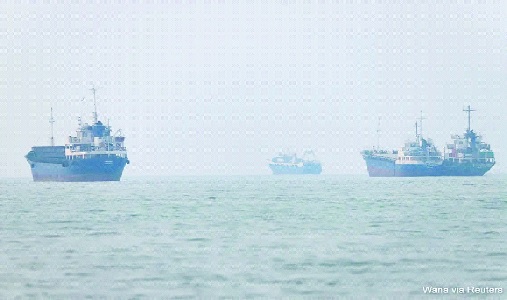

Beijing (TIP): China called for the unhindered flow of shipping through the Strait of Hormuz, comments that come as leading European powers are apparently accepting that vessels will have to pay fees to Iran and Oman.
“Resuming safe and unimpeded passage in the strait at an early date serves the interests of all parties,” Foreign Ministry spokesman Guo Jiakun said at a regular press briefing in Beijing on Friday, July 3.
“A proper settlement is needed to address disruption at the Strait of Hormuz, and the shared concerns in the international community need a proper response,” Guo added.
Bloomberg News reported earlier that people familiar with the thinking in Europe described the prospect of some sort of service fee in the aftermath of the US and Israeli war with Iran as a given.
Privately, some Gulf Arab officials hold the same view, though this is not necessarily the formal position of their governments, said the people, who asked not to be identified discussing private deliberations.
It is unclear what type or amount of fees any nation would be willing to accept. The US and Gulf Arab countries continue to insist Iran and Oman cannot impose charges of any kind for Hormuz. Their concerns include the risk it creates a precedent for other countries to impose fees on different waterways.
In March, Beijing called on parties to the fighting to ensure the safe passage of ships through the Strait of Hormuz.
As the world’s largest oil and gas importer, China is among the countries most exposed to tensions in the Middle East. The Asian nation depends on the wider Persian Gulf region for both oil and gas supplies, and cargoes of both require transit through the narrow Hormuz waterway.
Saudi supertankers exit Hormuz
Saudi Arabia is exporting the most crude from inside the Persian Gulf since the the Iran war blocked the Strait of Hormuz, as producers across the region boost shipments following an interim peace deal between Washington and Tehran.
Four supertankers hauling crude loaded at Saudi Arabia’s main export hub appeared in the Gulf of Oman on Thursday, ship-tracking shows. That’s the largest number of exits since the peace pact came into effect about two weeks ago. The ships, all owned by Saudi tanker giant Bahri, are part of a flotilla of vessels over 300 meters (1,000 feet) long that made their way into the Persian Gulf late last month. Together, they’re carrying about 8 million barrels loaded at the port of Ras Tanura, one of the world’s biggest crude-export facilities, the vessel-tracking data compiled by Bloomberg show.
It’s the latest evidence that OPEC’s top producer is ramping up oil exports since traffic began crossing the Hormuz in earnest after the US and Iran agreed to reopen the waterway while they negotiate an end to the war.



Be the first to comment