Tag: Congress

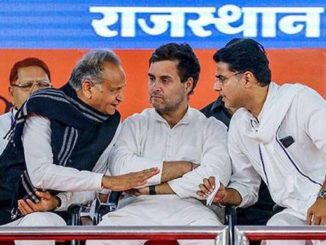
  • What Sachin Pilot fiasco teaches Congress

    What Sachin Pilot fiasco teaches Congress

    By George Abraham
    The RSS has powerful ideologues, ideology, and cadre, which fuels and propels the BJP.  Until the Congress party makes an earnest effort to create a new cadre of leadership from the grassroots who are truly committed to the dearly held values and principles of the party, those who parachuted to the top using their patronage and money will continue to be easy prey for BJP’s nefarious political games, says the author.

    History continues to repeat itself. It was Karnataka, then Madhya Pradesh and now Rajasthan that is embroiled in a power struggle that could delegitimize an election and undermine the will of the people. What is taking place in India’s political landscape before our very own eyes does not bode well either for democracy or the institutions that support it.

    Sachin Pilot undoubtedly was considered one of the future promises for the Congress party that is increasingly lacked any long-term vision or strategic planning. There is little doubt that the party is mired in the past without necessary grassroots support or needed financial resources. More and more, Smt. Sonia Gandhi, who has rescued the party from its dire straits in the ’90s, appears to be in a caretaker mode. The indecision of the Party hierarchy to fill the void created by the resignation of Rahul Gandhi as Party president has consequences far and beyond, and the Rajasthan crisis plainly points to that.

    Having said that, I am as confused and perplexed as anyone how a bright young man like Sachin Pilot who has become a Member of Parliament at the age of 26 and a Central Minister by 32 appeared to have walked away from a party that nurtured him and made it possible to scale these greater heights. When this crisis started, he held the positions of the PCC President as well as that of the Deputy Chief Minister of Rajasthan.  It is indeed a phenomenal rise for a young man at the age of 42, especially in a country where the patriarchy and age-old wisdom still holds the key to power and prestige.

    It says a lot more about this generation who have become narcissists in their thinking and self-indulging in their behavior.  When one decides to devote his/her lifetime in public service, it is a huge commitment that deserves appreciation and community support.  However, the objective is to ‘serve’ the people, without arrogance and rashness, who entrusts their confidence and vote them into powerful offices.  Mr. Sam Pitroda, who helped transform India’s Telcom sector, said recently, “Values, Character, and fundamentals matter the most in life and leadership. What do you believe in, defines you? Are you for posts and positions or selfless service to people?”

    Today, the number of young leaders in the Congress party lacks any devotion to the ideals that governed the party for a century or more. Even in the best of times, the party had its share of crisis. History is replete with fights by these erstwhile leaders on issues and winning or losing their arguments. However, those conflicts were ideological and often mirroring their deeply held beliefs and reflecting their passion for justice and fairness.

    However, What the Scindias and Pilots are fighting for? Are they advocating any policy differences or expressing concerns that the democracy itself is in peril under Modi-Shah duo or frustrated at the party’s lackadaisical approach to bring the issue into focus? Are they in rebellion because the Congress party has not provided adequate support for the cause of migrant laborers? Or the party has failed to highlight the rising unemployment among the youth? Or they are fleeing the party because it has drifted away from the cherished principles?

    It is none of the above! It is simply blind ambition, hunger for power and greed driving a section of the youth in the Congress party today. It is not difficult to see that these folks owe their rise in power and visibility to patronage.  Rahul Gandhi once said about Jyotiraditya Scindia that he could walk into his home any time of the day. Their proximity has indeed defined their places in the political landscape; however, they appear to have betrayed their trust for sheer opportunism.

    If we recollect, many of these young leaders quickly applauded Prime Minister Modi when Article 370 was revoked. There is a clear indication now that many of them are softening their stand towards the philosophy of Hindutva.  The BJP’s assault on secularism through the weaponization of Hindutva is paying off, as many of them are even reluctant to defend those core party principles. There is a slow drift towards ‘majoritarian thinking’, and any minority accommodation is increasingly seen in a negative light. That explains how easily they could transform their mindset switching to BJP.

    The RSS has powerful ideologues, ideology, and cadre, which fuels and propels the BJP.  Until the Congress party makes an earnest effort to create a new cadre of leadership from the grassroots who are truly committed to the dearly held values and principles of the party, those who parachuted to the top using their patronage and money will continue to be easy prey for BJP’s nefarious political games.

    (The author  is a former Chief Technology Officer, United Nations, and the Vice-Chairman of the Indian Overseas Congress, USA)

  • The BJP’s  hegemonic narrative

    The BJP’s hegemonic narrative

    By Zoya Hasan

    Since 2014, the BJP’s stated objective of a Congress-free India has seen attempts to unsettle and unseat Congress governments in several States. One of Prime Minister Narendra Modi’s first statements after taking over as the chairman of the BJP’s election campaign committee in 2013 was the declaration that getting rid of the Congress would be “the solution to all problems facing the country”. “The Congress party is a burden on this nation,” he said. Since coming to power in 2014, the BJP has been using various means, notably money power and the coercive power of state agencies, to achieve this goal by bringing down elected Congress governments in State after State.

    Ever since the colossal defeat of the Congress in the 2019 general election, there has been a ceaseless debate in the media and in political circles about the future of the Congress party. The defection of Jyotiraditya Scindia to the Bharatiya Janata Party (BJP) and the replication of a similar script by Congress leader Sachin Pilot has intensified this debate which centers around the leadership, organizational and ideological challenges confronting the Congress. After Rahul Gandhi’s resignation as Congress President in July 2019, the party has witnessed disintegration in States including Karnataka, Madhya Pradesh and Rajasthan. Several prominent leaders have quit the party and joined the BJP. Defections, splits and electoral decline are not new phenomena in the party’s long history, but the crisis the Congress faces in the wake of two massive defeats in the last two Lok Sabha elections is unprecedented and has clearly been aggravated by its inability to resolve the leadership issue.

    A clutch of young(ish) leaders close to Mr. Gandhi have resigned. These leaders have caught the media’s attention more than many others who have quit in the last one year. The narrative in sections of the media built around these rebellions is that the Congress mishandled the crisis and the concerns of these leaders regarding the party’s functioning. The dominant argument is that the Congress lacks inner party democracy and hence cannot keep young leaders in its fold. Sections of the mainstream media blame Mr. Gandhi for the crisis and want him to vacate space to make way for other leaders.

    Two important dimensions

    Big-ticket leaders leaving the Congress should be a matter of concern for the party. But to view Mr. Pilot’s rebellion in Rajasthan as only the result of failure of leadership and organizational politics misses two important dimensions of this crisis. Mr. Pilot was willing to sacrifice the government, of which he was the Deputy Chief Minister until a few days ago, because he has differences with Chief Minister Ashok Gehlot. Even though he says he is not joining the BJP, Mr. Pilot does not put much distance between himself and the party. Mr. Pilot made it clear that he was unwilling to settle for anything less than the chief ministership even though he has the support of just 18 MLAs. Mr. Pilot is heading a minority faction but making claims to the top job is a sign of the neoliberal times we live in where ambition trumps commitment to party and ideology.

    The narrative in sections of the media that younger leaders are not allowed to grow in the Congress is not evident from the career graphs of some of these leaders. They had been given top posts by the Congress. That they still chose to rebel is an aspect disregarded in the narrative built up around them. Many of them are exiting the Congress with alacrity because the party is out of power and is not in a position to offer the loaves and fishes of office to leaders waiting in the departure lounge. When the party was in power it could adjust and accommodate conflicting interests and ambitions in multiple ways but it is much harder to do so in Opposition. The BJP, on the other hand, is routinely able to attract disgruntled leaders to its side. Arguably, it has given in to Mr. Scindia’s huge demands in Madhya Pradesh to attract Mr. Pilot in Rajasthan. The bottom line is this: Mr. Pilot’s escapade into Haryana couldn’t have taken off without the BJP’s support. His jaunt to ITC’s Best Western can’t be passed off as a struggle for inner party democracy in the Congress.

    The second and more important dimension of the Rajasthan crisis is the concerted effort mounted by the ruling party to topple the Congress government in the State. The pursuit of this single-minded objective amid the pandemic has been given short shrift in the loud narrative of sections of the media. Since 2014, the BJP’s stated objective of a Congress-free India has seen attempts to unsettle and unseat Congress governments in several States. One of Prime Minister Narendra Modi’s first statements after taking over as the chairman of the BJP’s election campaign committee in 2013 was the declaration that getting rid of the Congress would be “the solution to all problems facing the country”. “The Congress party is a burden on this nation,” he said. Since coming to power in 2014, the BJP has been using various means, notably money power and the coercive power of state agencies, to achieve this goal by bringing down elected Congress governments in State after State.

    Hunt for power

    We have seen many States witnessing a change of guard. In 2016, in Arunachal Pradesh, the BJP backed the rebel Congress faction when deep cracks surfaced within the ruling party. The BJP lost the election but managed to replace the Congress government with its own in Karnataka (in 2019) and in Madhya Pradesh (in 2020). In 2019, the Congress emerged the single largest party in Goa, but the BJP was quick to cobble together a coalition and form a government. Now Rajasthan is on the cusp of change though the game is not over yet.

    In Goa, Karnataka and Madhya Pradesh, scores of Congress legislators were allegedly lured into deserting the Congress which enabled the BJP to gain power after losing in elections. These reports are in the realm of speculation but one thing is clear: the BJP is not short on resources for financing defections given its absolute power at the Centre. The Association of Democratic Reforms estimates that a whopping 95% of all electoral bond money before the 2019 election went to the BJP. The Congress received less than 10% of bond money. The loss of so many State governments further reduces the party’s financial power and the opportunity to generate funds.

    Although the BJP disclaims authorship of this long-running drama, Rajasthan’s political crisis has underlined once again its unscrupulous hunt for power. Given its enviable record in forming governments through political defections, the perception that a government with a clear majority is being deposed may not really matter to the party. However, it should matter to the media. But the media spotlight is not on the BJP’s dubious methods of destabilizing elected governments, but on the disarray in the Congress, which allows the BJP to get away even with constitutional transgressions. Thus far, the Congress has managed to save its government in Rajasthan. Regardless of the final outcome, an obvious conclusion to draw from this crisis would be that the Congress party has to put its house in order to stop further desertions and breakup. It has to bring an end to the unmitigated drift and elect a new president and begin the process of rebuilding the party.

    That so many in the media have seen Mr. Pilot’s unhappiness with the Congress as an example of a talented politician being forced to jump ship to the BJP shows that the BJP’s narrative is completely hegemonic. That so many in the political class (including Congress politicians) and the media are echoing the same line (as though it’s a party line), and are willing to overlook the majoritarian might of the BJP, the illegitimacy of the power grab, and the wholly unjustified attempt to dislodge an elected government betokens a debasement of politics and a disregard for democratic norms that should concern us all.

    (The author  is Professor Emerita, Centre for Political Studies, JNU)

  • Anupam Kher should be kicked out of BJP for using Guru Gobind Singh’s words to describe Sambit Patra: Bittu

    Anupam Kher should be kicked out of BJP for using Guru Gobind Singh’s words to describe Sambit Patra: Bittu

    NEW DELHI (TIP): Congress MP Ravneet Singh Bittu on Thursday, July 2.  strongly rebuked actor Anupam Kher for using the “sacred words of Guru Gobind Singh” to describe Bharatiya Janata Party spokesperson Sambit Patra.

    On Wednesday, Kher tweeted: “सवा लाख से एक भिडा दूँ !:) @sambitswaraj.”

    Kher’s tweet seemed to reference the fact that Patra was heavily criticized on social media after he posted a picture of a child sitting on his grandfather— who was shot dead in Kashmir on Wednesday, July 1—with the caption: “PULITZER LOVERS ??”

    Bittu called Kher’s tweet an attempt by RSS to dilute the “strong tenets of Sikhism.”

    He tweeted: “How dare @AnupamPKher use sacred words of Guru Gobind Singh ji to describe the spokesperson of BJP. It spoils the martial image of Sikhs. It is a bid of RSS to dilute strong tenets of Sikhism. PM Modi should tender immediate apology and kick out Kher and his wife from bjp.”

  • Madhya Pradesh Congress Government Falls as Chief Minister Kamal Nath Resigns Ahead of Floor Test

       Kamal Nath


    BHOPAL (TIP): Kamal Nath on Friday, March 20,  announced his decision to resign as Madhya Pradesh Chief Minister, thereby putting an end to the ongoing political drama and crisis in the state, thereby paving the way for the Opposition BJP to take over.

    Recounting the works and accomplishments of his government during its short tenure, while berating the BJP and turncoats for “engineering” the crisis, Nath said he would submit the resignation to the Governor shortly.

    Making the announcement minutes before the floor test, Nath said people of the state were watching the machinations and would pay back all those who helped topple the popular government elected by them.

    Who will be the next chief minister is on the mind of everyone.

    The BJP legislature party will make the decision in a meeting with observers from the Centre, party leaders say, dismissing speculation of “several claimants and differences and factionalism” in the party.

    Reports of senior state leader Shivraj Singh Chouhan’s “history of rivalry with Prime Minister Narendra Modi” is the main reason for the speculation.

    It is one of the reasons that while the most obvious name appears to be that of three-time chief minister Chouhan, names of other contenders like Gwalior-Chambal leader Narottam Mishra who, along with Chouhan, is among those the Congress has accused of “horse-trading” to dislodge the Kamal Nath government, are also doing the rounds.

    Apart from Chouhan and Mishra, others in the fray are Morena MP Narendra Singh Tomar, the Minister of Agriculture and Farmers Welfare and Minister of Rural Development in the Narendra Modi cabinet. Also being mentioned are Leader of Rajya Sabha Thawar Chand Gehlot, Union Minister of Social Justice and Empowerment Prahlad Singh Patel and Kailash Vijayvargiya, the fire spitting BJP old horse from Indore.

    (Source: PTI)


  • Maharashtra Mahabharat :  Devendra Phadnavis Announces his Resignation as Chief Minister

    Maharashtra Mahabharat : Devendra Phadnavis Announces his Resignation as Chief Minister

    MUMBAI(TIP):  The beleaguered Devendra Fadnavis announced at a press conference here on November 26 that he will submit his resignation to the Governor.

    Fadnavis in his statement said that the people of Maharashtra had given a clear mandate to BJP- Shiv Sena combine to form a government. But Shiv Sena claimed chief minister’s position with BJP on a rotational basis, something BJP had never agreed to. BJP made all efforts to have its old alliance partner to drop the demand but was stonewalled. Shiv Sena chose the parties it had always opposed.

    NCP offered BJP support to form a government and a claim of majority was submitted to the governor who invited Fadnavis to form the government.

    However, situation has changed.  “We do not have majority. We will sit in the opposition”, said Fadnavis.

    All eyes are now on Maharashtra Governor who is expected to accept the resignation of Fadnavis and invite the leader of the legislature party of Shiv Sena-NCP-Congress alliance to form a government.

    (It is a developing story)

  • Maharashtra Mahabharat:  Supreme Court Orders Floor Test on November 27

    Maharashtra Mahabharat: Supreme Court Orders Floor Test on November 27

    Sena, NCP, Congress hail apex court order; BJP says will prove majority

    Ajit Pawar resigns as deputy chief minister

    Ajit Pawar has resigned as deputy chief minister

    Developing story

    I.S. Saluja

    NEW DELHI / MUMBAI(TIP): The high drama over government formation in Maharashtra is full of surprises and interesting twists.  The efforts for a ghar vapasi of Ajit Pawar seem to be succeeding with Ajit Pawar resigning as deputy chief minister, November 26 afternoon.

    Earlier in the morning, Supreme Court of India delivered its verdict on petitions filed by Shiv Sena, NCP and Congress challenging Maharashtra Governor’s “arbitrary and unconstitutional” action in inviting Fadnavis to form a government and swearing him in as chief minister who does not command majority. The petitioners claimed that they had the numbers and demanded immediate floor test.

    The Supreme Court directed that the floor test for Chief Minister Devendra Fadnavis to prove his majority in the Maharashtra Assembly be conducted on Wednesday, November 27.

    It directed Governor Bhagat Singh Koshyari to ensure that all elected members of the House were sworn in on Wednesday itself.

    The apex court said the entire proceedings had to be telecast live. Voting in the Assembly would not be on the basis of secret ballot, it said.

    Fadnavis was sworn in as chief minister and NCP’s Ajit Pawar as his deputy by the governor at a hush-hush ceremony in Raj Bhavan on Saturday morning.

    In the 288-member House, the BJP will have to prove support of 145 MLAs to remain in power.

    The BJP and the Sena, which fought the last month’s Assembly polls in an alliance, secured a comfortable majority by winning 105 and 56 seats, respectively.

    The Sena, however, broke its three-decade-long ties with the BJP after the latter declined to share the chief minister’s post.

    The NCP and Congress won 54 and 44 seats, respectively.

    Welcoming the Supreme Court’s order calling for a floor test in the Maharashtra Assembly on Wednesday, the Shiv Sena, NCP and Congress on Tuesday said truth would win and asserted that the BJP would be defeated.

    On its part, the BJP said it respected the verdict and expressed confidence that it would prove majority on the floor of the House.

    NCP chief Sharad Pawar, whose nephew Ajit Pawar rebelled against the party last week and supported the BJP to form government in the state, hailed the apex court for upholding the constitutional principles.

    “I am grateful to Hon’ble SC for upholding democratic values and constitutional principles. It’s heartening that the Maharashtra Verdict came on the #ConstitutionDay, a Tribute to Bharatratna Dr Babasaheb Ambedkar!” Pawar tweeted after the ruling.

    Shiv Sena’s Rajya Sabha MP Sanjay Raut said truth could not be defeated.

    “Satyamev jayate” (truth shall prevail), Raut tweeted.

    “Satya pareshan ho sakta hai…parajit nahi ho sakta…Jai Hind!!” (Truth can get frustrated, but cannot get defeated), he said in another tweet.

    Sena leader Eknath Shinde said Chief Minister Devendra Fadnavis should resign as the Uddhav Thackeray’s party-led coalition had the support of “162 MLAs” to prove majority in the Maharashtra Assembly.

    He claimed that during the floor test, the ‘Maha Vikas Aghadi’ of the Sena, NCP and Congress would have the support of “170 legislators”.

    NCP chief spokesperson Nawab Malik also hailed the Supreme Court order.

    “Satyamev Jayate BJP ka khel khatm (Truth alone shall win, end of the BJP’s game),” Malik said on the micro-blogging site.

    Welcoming the ruling, the Congress said the Constitution is supreme in a democracy, “which is more powerful than money and muscle power”.

    Maharashtra BJP president Chandrakant Patil exuded confidence that his party would be able to prove majority on the floor of the House.

    “We respect the court order. We are ready to prove majority and we will show it,” Patil told reporters here.

    The BJP would hold a meeting of its senior leaders on Tuesday to work out a strategy ahead of the floor test, he said.

    (With inputs from agencies)

  • Maharashtra Government Formation: Sena approaches SC, calls Maharashtra Governor’s action arbitrary, malafide

    Maharashtra Government Formation: Sena approaches SC, calls Maharashtra Governor’s action arbitrary, malafide

    Dilip Patil replaces rebel Ajit Pawar as leader of NCP legislature party

    I.S. Saluja

    MUMBAI/NEW DELHI (TIP): Maharashtra government formation is presenting swift and interesting scenes. After the Maharashtra Governor Bhagat Singh Koshyari swore in Devendra Fadnavis as the chief minister on November 23 morning, the ShivSena challenged the Governor’s “arbitrary and malafide actions and decisions” in the Supreme Court.

    The party has filed a writ petition in the apex court against the state governor, a Sena functionary said here.

    Meanwhile, NCP leader Sharad Pawar held a meeting of NCP legislators in Mumbai. At the meeting, Dilip Patil was elected leader of the legislature party in place of the rebel Ajit Pawar who claimed support of 22 MLAs and was sworn in as Deputy Chief Minister in Phadnavis government.

    Addressing a press conference, Sharad Pawar, who was accompanied by Shiv Sena chief Uddhav Thackeray, said Chief Minister Devendra Fadnavis did not have the numbers to win the vote of confidence in the Maharashtra Assembly.

    Pawar also produced three MLAs of the NCP, who accused Ajit of luring them to the Raj Bhavan where they were paraded before Maharashtra Governor Bhagat Singh Koshiyari.

    “Ten to 11 MLAs had gone with Ajit Pawar to the Raj Bhavan this morning. Of them three are with me here and the others will soon follow,” Sharad Pawar said.

    He added that the MLAs who were still with Ajit Pawar knew that they stood to lose their membership of the state Assembly under the anti-defection law. “All the MLAs who went with Ajit Pawar are in touch with us,” Sharad Pawar said.

    The Maratha chieftain pointed out that as leader of the NCP legislature party, Ajit Pawar had a list of signatures of all the party MLAs. “I assume he has submitted the same list to the Governor. I will have to speak to the Governor and find out,” Pawar said.

    Three MLAs, who were taken to the Raj Bhavan by Ajit Pawar, showed up at Sharad Pawar’s press conference where they alleged that they were duped by the younger leader. “Ajit Pawar had called me to discuss something where I found some other MLAs. We were all suddenly taken to Raj Bhavan and before we could understand what was happening, the oath-taking ceremony was completed,” NCP MLA Rajendra Shingane told reporters. His testimony was backed by two other NCP MLAs, Sandip Kshirsagar and Sunil Bhusara, who said they were unwittingly taken to the Raj Bhavan for the oath-taking ceremony.

    The three leaders said they immediately came to Sharad Pawar as soon as they got out of Raj Bhavan.

    Addressing the media, Uddhav Thackeray said the BJP is practicing horse-trading. “Let them try luring any Shiv Sena MLA and they know what awaits them,” Thackeray said.

    Hitting out at Fadnavis, Thackeray said the CM did not respect democratic values. “…..from now on there is no need for election. Instead of saying ‘I will return’ some people should simply apply Fevicol to their chair and sit on it,” Thackeray said.

    Later in the day, senior BJP leader Sudhir Mungantiwar said Ajit Pawar gave the letter of support on behalf of all 54 NCP MLAs. “There is no need for a separate letter from each legislator. The letter from the leader of the Legislature Party is sufficient,” Mungantiwar told reporters.

    The month-long political impasse, after the October 24election results, ended dramatically with Devendra Fadnavis returning as the chief minister, backed by the Sharad Pawar-led NCP.

    NCP leader Ajit Pawar was sworn in as Deputy Chief Minister.

    Governor Bhagat Singh Koshyari administered the oath to the two in the morning ceremony, where only official media was present.

    “People had given us a clear mandate, but Shiv Sena tried to ally with other parties after results, after which President’s rule was imposed. Maharashtra needed a stable government, not a ‘khichadi’ govt,” Fadnavis said.

    Ajit Pawar, after taking oath as Deputy Chief Minister, said: “From result day on October 24, no party was able to form the government. Maharashtra was facing many problems, including farmer issues. So, we decided to form a stable government.”

    Sharad Pawar on Thursday, November 21 night had said there was a consensus among the NCP, Congress and Shiv Sena that Uddhav Thackeray should lead the new government.

    The political situation in Maharashtra is fluid and nobody can possibly predict the next scenario. However, one thing appears to be certain that given the fact that BJP is determined to have control of Maharashtra, it will go to any extent to remain in power now that Phadnavis is sworn in as chief minister. It may well be the repeat of Karnataka. Thanks to availability of huge funds and no accountability on sources of funding and spending, political parties will freely go in for horse trading, something which is an integral part of the political culture of India, as widespread corruption from top to bottom is. Reports are that each political party is securing its MLAs, keeping them in hiding, to prevent crossovers.

    (With inputs from PTI)