Tag: Democrats

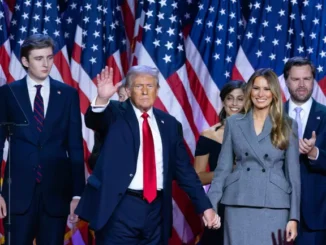
  • The Right-Wing Surge: Analyzing the Republican Triumph Over Democrats in the U.S. Presidential Election

    The Right-Wing Surge: Analyzing the Republican Triumph Over Democrats in the U.S. Presidential Election

    In this election, Trump’s victory can be seen as not merely a political win but a cultural one. His “America First” rhetoric, promise to protect religious liberties, and stance on issues like abortion and LGBTQ rights resonate strongly with the conservative Christian base. Additionally, his direct style and willingness to challenge established norms appeal to those who feel sidelined by the mainstream political establishment.

    By Prof. Indrajit S Saluja
    By Prof. Indrajit S Saluja

    The recent U.S. presidential election delivered an unexpected blow to the Democratic Party, with the Republicans securing a sweeping victory. Not only did they reclaim the presidency, but they also seized the Senate majority, consolidating power across branches and sending a shockwave through Democratic ranks. Many observers and Democrats alike are asking: how did this happen? While the incumbency factor might provide a surface-level explanation, as Trump’s loss to Biden previously demonstrated, the roots of this seismic shift go far deeper. Beyond simple cycles of political turnover, this victory signifies a profound shift towards right-wing ideology that is resonating globally.

    The Incumbency Cycle: An Incomplete Explanation

    On the surface, it’s easy to attribute this electoral result to the incumbency cycle. Since recent elections have shown a pattern where candidates challenging the incumbent party have a slight advantage, it seems plausible that the pendulum was bound to swing back to the Republicans. Trump’s previous loss to Biden and Hillary Clinton’s loss to Trump were often chalked up to this natural ebb and flow in American politics. However, viewing the result merely as an example of political rotation overlooks the deeper forces at play that have increasingly driven voters toward right-wing policies.

    The Rise of Right-Wing Ideologies: A Global Phenomenon

    To fully understand this shift, it’s essential to place it within a broader global trend. The rise of right-wing ideologies, often deeply intertwined with religious and nationalist values, has been gaining momentum across continents. This trend is not unique to the United States. Across Europe, the Middle East, and Asia, there has been a notable surge in right-wing movements, fueled by economic anxiety, a backlash against liberal values, and a growing preference for policies rooted in faith and tradition.

    Europe: In countries such as Hungary, Poland, and Italy, nationalist and conservative parties have gained traction by appealing to a sense of traditional values and resisting what they perceive as the encroachment of liberal, globalist ideals. Parties advocating stricter immigration policies, emphasizing Christian heritage, and promoting traditional family structures have achieved significant victories.

    Asia: India’s political landscape has similarly seen a strong right-wing shift, with Prime Minister Narendra Modi’s Bharatiya Janata Party (BJP) embracing Hindu nationalist rhetoric and policies. The appeal to Hindu fundamentalism has mobilized large portions of the population who view this as a reaffirmation of cultural identity in a rapidly globalizing world.

    The Middle East: In predominantly Islamic countries, conservative movements emphasizing fundamentalist interpretations of Islam have risen to prominence, with parties and factions often drawing support from citizens who see these ideals as foundational to their national and cultural identity.

    The global trend suggests that voters increasingly gravitate towards leaders and parties that promote cultural and religious heritage, sovereignty, and a promise to protect traditional values.

    The Role of Faith in U.S. Politics: The Trump Phenomenon

    One of the defining characteristics of Trump’s support base has been its alignment with Christian values, particularly among evangelical Christians and rural Americans. For this demographic, Trump represented a leader who not only defended but celebrated their identity and values, positioning himself as a bulwark against what many of his supporters view as an encroaching secular, liberal agenda.

    In this election, Trump’s victory can be seen as not merely a political win but a cultural one. His “America First” rhetoric, promise to protect religious liberties, and stance on issues like abortion and LGBTQ rights resonate strongly with the conservative Christian base. Additionally, his direct style and willingness to challenge established norms appeal to those who feel sidelined by the mainstream political establishment.

    The power of Trumpism lies in its commitment to consolidate power within the executive branch, focusing authority and decision-making with the president, and aligning policies with Christian values. Trump’s approach, often aggressive and polarizing, has garnered fierce loyalty among his followers, who view him as a defender of their faith and identity.

    The Wealthy and Feudal Elements in Right-Wing Politics

    Another dimension of Trumpism, and indeed of many right-wing movements globally, is the alignment with wealth and feudal or elite structures. Policies that favor the wealthy, reduce corporate taxes, and cut down on social welfare have been central to the Trump agenda. This is reflective of a broader trend within right-wing politics that favors a return to more hierarchical social structures, with limited intervention in wealth redistribution and a preference for private over public solutions.

    Historically, right-wing ideologies have often championed the cause of wealthy elites, as they are viewed as the protectors of national stability, economic growth, and cultural heritage. In the U.S., the Trump administration’s tax cuts for corporations, deregulation initiatives, and business-friendly policies align with this framework, positioning the wealthy and economically powerful as central to the nation’s strength.

    This pattern of elite-driven right-wing governance is visible across the world. Whether it is the oligarchs in Russia, the monarchy in Saudi Arabia, or the business-friendly policies in India, the fusion of right-wing ideology with wealth and elite structures is a notable global trend.

    Religion, Identity, and Nationalism: The Heart of Right-Wing Movements

    While wealth and elite influence play a significant role, the deeper driver of right-wing momentum globally is often the question of identity. Religion, for instance, serves as a powerful force in defining identity and mobilizing political support. Right-wing leaders, including Trump, Modi, and others, have tapped into a sense of national identity that is intrinsically tied to religious values, offering voters a sense of belonging and protection against perceived threats.

    In the U.S., Trump has successfully channeled this by presenting himself as a champion of “real” American values, often with an overt nod to Christian beliefs. His messaging resonates particularly in rural America, where communities often feel alienated from the urban, liberal policies emanating from Washington, D.C. Trump’s appeal is rooted in this idea of defending an American way of life that feels under siege, with religion and traditional values at its core.

    The Implications for American Democracy

    As right-wing forces continue to gain ground in the U.S., one of the pressing questions is what this means for the future of American democracy. Trump’s victory could signify a shift toward a governance style that centralizes power in the executive branch, challenging the traditional checks and balances of the American system. Additionally, the increasing sway of religious and nationalist elements could lead to policy changes that impact not only social issues but also the nature of American democracy itself.

    While Trump’s victory represents a triumph for his base, it also raises questions about inclusivity, tolerance, and the protection of minority rights within the American political system. Right-wing ideologies often prioritize majoritarian values, which can create tensions in a diverse democracy where inclusivity and equal representation are foundational principles.

    Looking Forward: A Global Movement with Local Consequences

    The Republican victory in the U.S. presidential election, therefore, is not an isolated phenomenon. It is part of a broader global movement that sees right-wing ideology gaining strength by tapping into cultural, religious, and nationalistic sentiments. This shift suggests that American democracy, much like other democratic systems worldwide, is entering a new phase, one where right-wing policies and values hold significant sway.

    As the U.S. navigates this new landscape, the world watches closely, aware that these changes reflect a global shift towards conservatism and right-wing governance. How the U.S. balances these forces with the principles of democracy, inclusivity, and tolerance will be a defining challenge in the years to come. The victory of Trumpism is not just a political win; it represents a broader ideological shift with far-reaching implications for the “greatest democracy in the world.”

    (The author is Chief Editor of The Indian Panorama. He can be reached at salujaindra@gmail.com)

  • Indian Diaspora and the U.S. Election 2020

    Indian Diaspora and the U.S. Election 2020

    “The importance of the Indian American vote in this upcoming election is another point of debate among election enthusiasts. Most Indian Americans live in major cities and states such as New York, New Jersey, California, Illinois, and Texas. Most of these States are solidly Blue States, and the Asian Indian votes will have little or no impact other than adding on to the popular vote totals.”

    When Barack Obama was sworn in as the 44th                                     

                                                                                                                                                                                                                                                                                                                      By George Abraham

    President of the United States in January 2009, it was widely believed it to be a new dawn for America. As the first black President of the country, voted in by a sizable number of white voters gave new hope to millions for a more peaceful and prosperous America in a newly realigned political landscape. However, we have witnessed a story of deteriorating race relations and a strong emergence of identity politics that has resulted in further polarization in the body politic. America ceased to be a melting pot. Ethnic politics mixed up with race and gender relations started to inflame passions on both sides of the aisle, often preventing the country from reaching any consensus on pressing economic and social issues.

    There is little doubt that Donald Trump cashed in on this division and disenchantment of the electorate, especially the white voters, and won the presidency in 2016. It was a historic victory that stunned the “political class” in the U.S. and globalists around the world.  However, there was more to his victory than a voter dissatisfaction with the outgoing Democratic Administration. Undoubtedly, Trump’s election is also viewed as a rebuke of technocratic policies, increased centralization of power in Washington, and unchecked immigration policies that were heavily favored by Democrats. It was an acrimonious campaign, vitriolic in tune, that  brought shame and scorn upon the candidacies of Trump and Democrat Hillary Clinton – one was described as Misogynist, Xenophobe, Sexist and Racist and the other as deeply Corrupt and Untrustworthy.

    Much has changed in terms of politics in 2020, and the U.S. today is a more deeply divided country where  ‘peaceful demonstrations’ are no longer peaceful and advocates of a new generation of leaders demanding transformational changes that would have been simply unthinkable just a few years ago. Nobody knows yet whether this is a passing phenomenon or whether America is truly ready for upending an economic and political system that has been the envy of the world and attracted millions of people from impoverished lands to make their dream come true.

    Asian Indians, as we are referred to here, account for roughly a little over one percent of the population in the U.S. It is one of the most successful immigrant groups that have called America their home. The median income of an Indian household is higher than any other ethnic group’s  in the country. There is no doubt that so-called ‘arranged marriages’ might have helped those income levels with two professional households that are quite common within the community. Moreover, it is believed that there are about  half a million or more undocumented Indian Citizens who have either overstayed their visas or came across the Mexican border with the help of ‘Coyotes’. All these groups constitute part of the growing Indian Diaspora in the U.S.

    Although the Indian Americans are mostly conservative in their social outlook and not necessarily cleansed of their caste affiliations or prejudicial minds, they tend to favor the Democratic party, which is very liberal and left-leaning when it comes to policies and governance. There may be several factors associated with such an attitude. The Democratic party is viewed positively by the community regarding issues such as Immigration and Social Benefits. The party is also perceived as a better guardian of minority rights and civil rights of all its citizens.  The H1B visa holders, not a voting bloc yet but supported by the rest of the Diaspora, are looking for a more favorable response for obtaining permanent residency from a Democratic leadership than a Republican one. It is much more about self-preservation than principles or value judgment.

    However, the second-generation Indians have been more open-minded and progressive in their lifestyles and their philosophy regarding issues of integration and assimilation to the culture and traditions of their native land.  They tend to embrace the Democratic Party’s values and its platform that is characterized as a big tent: the ideas of inclusion, equality, and equity. The younger women in this new generation also support Women’s Rights, including the right to abortion and equal pay for equal work. Also, many seem to have justifiable apprehensions on the possible rise of the Far-Right movements that could threaten their safety and their children’s economic stability.

    Therefore, there is little or no surprise that as the recent poll indicates that around 70% of the Asian Indians may cast their votes in favor of the Biden/Harris ticket. The addition of Kamala Harris to the ticket, an Asian Indian, though she prefers to call herself ‘black American’ for political reasons, seems to have boosted the Diaspora’s support to the Democratic ticket. Many perceive Ms. Harris’s rise to the ticket for the second most powerful position in the United States as a vindication of their faith in the Democratic party and its acceptance of them as an integral part of the society.

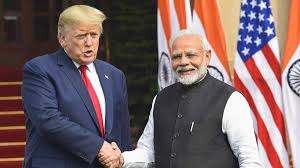
    Donald Trump is not a stranger when dealing with Indians, and his business undertakings in Pune and Gurgaon are clear evidence of that existing bond. During the 2016 election, there was a surge of support for him from the Indian Community spearheaded by Shalabh (Shalli) Kumar, who raised campaign funds and arranged a large gathering in New Jersey in honor of him. However, he seems to have withdrawn from the scene, but several groups associated with Sangh Parivar organizations are battling for Trump’s re-election. The idea of ultra-nationalism promoted by Trump and Modi appeared to have unified this minority segment of the Diaspora that may cast their vote for Donald Trump on November 3rd. Then again, there are independent-minded voters who may vote for Trump solely based on policy decisions on issues such as lower taxes, less regulations, law and order, less aggressive foreign policy and unnecessary foreign interventions resulting in costly wars.

    Indian Diaspora in the U.S. is a diverse community representing different regions, languages, cultures, and faith. According to the latest statistics, 51 percent of the Diaspora consists of Hindus, and the rest includes Muslims, Sikhs, Christians, Buddhists, and other faiths. Therefore, the effort by some Hindu Organizations in U.S. that are in the tank for Prime Minister Modi to paint a monolithic view of the Indian Diaspora for the election purposes to the American public is not only disingenuous but grossly misleading. The Trump-Modi friendship does not appear to be an important yardstick in the Indian American electorate’s decision-making process.

    The importance of the Indian American vote in this upcoming election is another point of debate among election enthusiasts. Most Indian Americans live in major cities and states such as New York, New Jersey, California, Illinois, and Texas. Most of these States are solidly Blue States, and the Asian Indian votes will have little or no impact other than adding on to the popular vote totals. Texas may remain in the Republican column this time around, although it may trend more towards Democratic Party in future elections as Demographics change. The participation record of the Indian American voter in the past elections has been spotty. Otherwise,  possibilities abound in States like Pennsylvania and Michigan.

    However, the more significant aspect of this election cycle is that a record number of Asian Indian candidates are running for elections nationwide. It is quite noteworthy that the community has essentially become an integral and visible part of the American political arena in the short span of a few decades.

     (The author is a former Chief Technology Officer of the United Nations)

  • Trump continues to be most unpredictable, as in 2016

    Trump continues to be most unpredictable, as in 2016

    By Ven Parameswaran

    Youth interest in voting has hit its lowest since 2000, GALLUP reports

    Does Ohio provide a model?

    The shy Trump vote is bigger this year…and who falls into this category should terrify Democrats.  I will say it again, folks.  The polling is skewed.  It is a mess.  Either we are right to be highly skeptical and Trump wins an Electoral College landslide, or the pollsters are right and Biden wins landslide.  Young Americans are not excited about this election at all.  They are not planning on voting.  Gallup is reporting the youth interest in voting this cycle has hit its lowest since 2000.  That is in keeping with the results from Democracy Institute’s Patrick Basham, whose polling data, which has been mentioned in The Washington Times and Forbes, suggests there will be one million fewer young people voting this cycle.   Hill-Harris X Research shows younger voters are consistently more likely to say they do not plan to vote.

    Basham spoke with Joseph Cotto about his new data.  Pollwatch had a good thread summarizing the interview.  Democracy Institute’s poll had a sample size of 1500 voters, where Trump leads Joe Biden by one point.  He also noted that the “shy Trump” vote is very much alive and will be bigger this time.  Suburban white women and urban black women are the two groups that are most likely to fall into the shy category for the 2020 cycle.  That latter part should shake Democrats to their core.  And as for Florida, a state that Biden must carry, it could already be out of his reach.  Basham notes Trump cannot fall asleep at the wheel, but things are becoming more comfortable for him in the Sunshine State.  And based on some recent polling from the state, it looks like the tide has shifted solidly in favor of Trump.

    The outcome of Election Day 2020 would seem to be a foregone conclusion if the latest national and battleground polls are any guide as to whether President trump will win in his reelection bid.

    However, the GALLUP poll has just released the results of a new survey that suggests President Trump might have a better shot than you would think.

    Most Americans responded positively to the survey question asking whether they feel better off now than they did four years ago.

    Trump’s odds of winning reelection seem to be growing slimmer by the day—though, it is worth remembering that we have also seen this movie play out before.  This is not the first time that Trump has been in this predicament.

    DOES OHIO PROVIDE A MODEL FOR PRESIDENTIAL VICTORY?

    No Republican has won the Presidency without winning Ohio. Franklin D Roosevelt in 1944, and John F Kennedy in 1960 won without winning Ohio.    President Trump won Ohio by 8 points in 2016.  He accomplished this in spite of stiff opposition from Republican Governor John Kasich.  So far, all indications are Trump will easily win Ohio.  Biden has been visiting Ohio but his reception has been poor.   If Trump wins Ohio like in 2016, it will influence his outcome in Michigan, Pennsylvania, Wisconsin, and Minnesota.

    POINT OF CAUTION IN READING POLLS SPONSORED BY THE MAINSTREAM MEDIA:   

    All these pollsters have been interviewing registered voters  — there are much more registered Democrats than Republicans.   Polling most likely voters may give a better clue.  The undecideds and third parties comprise 10% of final voters.

    (Ven Parameswaran, Chairman, Asian American Republican Committee (Founded 1988), lives in Scarsdale, NY. He can be reached at  vpwaren@gmail.com)


  • Trump says he supports larger coronavirus relief package

    WASHINGTON (TIP): U.S. President Donald Trump said on Thursday, Oct 15  he was willing to support a comprehensive COVID-19 coronavirus relief package larger than $1.8 trillion to make a deal with Democrats and get a bill passed.

    “I would,” he said during a telephone interview with Fox Business News. “Absolutely, I would. I would say more. I would go higher. Go big or go home.”

    He went on to say that he had directed Treasury Secretary Steven Mnuchin to make an offer over the $1.8 trillion package previously supported by the White House but said Mnuchin “hasn’t come home with the bacon.”

    Trump said he would not accept “goodies” in the Democrats’ proposal.

    House Democrats, led by Speaker Nancy Pelosi (D-CA), have been pushing for a $2.2 trillion package that would include funding for state and local governments, schools, and coronavirus testing and tracing, among other priorities.2

    Republicans in the Senate support a $500 billion bill that would not offer a wide a range of measures. Senate Majority Leader Mitch McConnell said the upper chamber would be working on the bill next week.

    REPUBLICANS

    Democrats demanding a ‘wish list’

    “(Democrats) say anything short of their multi-trillion-dollar wish list, jammed with non-COVID-related demands, is ‘piecemeal’ and not worth doing,” McConnell said in a statement. “Speaker Pelosi frequently says she feels ‘nothing’ is better than ‘something.’ And she has worked hard to ensure that nothing is what American families get.”

    DEMOCRATS

    Republicans have the wrong priorities

    “We want to have an agreement. Yet Republicans refuse to ensure that such an agreement puts #FamiliesFirst,” Pelosi said.

    (Agencies)

  • Comprehensive Relief Bill is back on Table

    Comprehensive Relief Bill is back on Table

    Trump: “We’re talking about airlines and we’re talking about a bigger deal than airlines. We’re talking about a deal with $1,200 per person, we’re talking about other things”.

    Prof. Indrajit S. Saluja

    WASHINGTON (TIP): The deal under discussion would include new $1,200 stimulus checks, renew enhanced unemployment benefits, and provide $75 billion for coronavirus testing and tracing, among other provisions. When talks broke off Tuesday, October 6, Democrats were pushing for language ensuring a wide-scale testing strategy. Pelosi said Thursday, October 8, they were still waiting to hear back on that and that she had reminded Mnuchin of that.

    And Trump said: “We’re talking about airlines and we’re talking about a bigger deal than airlines. We’re talking about a deal with $1,200 per person, we’re talking about other things, but it’s not anybody’s fault, they were trying to get things, and we were trying to get things and it wasn’t going anywhere, I shut it down. I don’t want to play games. And then we reopened, and I see the markets are doing well but I think we have a really good chance of doing something.”

    The labor market remains weak, with another 840,000 Americans filing for unemployment claims last week, more than six months after the coronavirus pandemic began in the United States.

    It remains highly uncertain that any deal can be reached, on airlines or anything else. Talks have been on again and off again for months, but ultimately Congress and the administration have been unable to strike a deal since the spring when they passed around $3 trillion in aid.

    Multiple programs approved at that time have since expired, including enhanced unemployment insurance for individuals.

    The Cares Act from March included a Payroll Support Program for airlines that expired Oct. 1. Democrats have been pushing an approximately $25 billion bill to renew the program, but it’s unclear if the administration supports the Democrats’ approach and Pelosi has now dropped the idea of advancing it on its own.

    The developments Thursday, October 8, were just the latest confusing events in days full of them. While hospitalized at Walter Reed over the weekend, Trump tweeted a demand for a new stimulus bill, only to abruptly pull out of talks on Tuesday, a day after getting released from the hospital.

    He began backtracking within hours as a number of Republicans in tough re-election races criticized his move and urged him to re-engage.

    Trump said Thursday, October 8, he was hopeful the talks would bear fruit even though he commented that Pelosi is “not my favorite person, she impeached me for no reason.”

    Both the Democrats and Republicans are acutely aware of the immediate need for an infusion of financial aid to individuals and companies to enable them to survive. They also fear, a failure to come up with an aid may damage them in the elections. No American would like to see the daily bread being denied.

    (With inputs from Agencies)

  • Indian American Puneet Ahluwalia to Run for Republican Nomination for Virginia Lt Governor

    Indian American Puneet Ahluwalia to Run for Republican Nomination for Virginia Lt Governor

    VIRGINIA (TIP): Indian American business consultant Puneet Ahluwalia is running for the Republican nomination for Lt. Governor of Virginia saying the state needs a new leadership to attract investment, jobs, growth and wealth.

    “Virginia is in trouble right now, and we’re running out of time as Democrats offer the same old tired promises,” stated the 55-year-old resident of McLean, just outside Washington DC announcing his run.

    ‘Virginia needs new ideas and a business environment that will attract investment, jobs, growth and wealth,” wrote Delhi-born Ahluwalia in a note to his supporters.

    “Virginia needs to support its hard-working and courageous police, protect 2nd Amendment rights, and stand up for law and order.”

    A Delhi Public School (DPS) alumnus, who immigrated to the US in 1990, Ahluwalia serves as a consultant to international businesses on client acquisition, marketing, and strategic affairs with The Livingston Group.

    “I am Pro-Life, Pro-Liberty, and Pro-Virginia First. We need to reopen our schools, reopen our economy, and get our lives back together.”

    “I wasn’t born an American, my wife and I are Americans by choice,” wrote Ahluwalia. “I am not a politician; I am a proud American living the American dream.”

    “My first job was delivering electronics to retail stores and since then I have built businesses and created jobs and opportunities for others,” he recalled.

    Ahluwalia, who has been active in the Republican Party politics for over two decades, also serves on the Northern Virginia Republican Business Forum.

    He accused the current Democrat leadership in the General Assembly of being “distracted by a far-left social and cultural agenda that simply doesn’t serve the interests of the vast majority of Virginia citizens.”

    “All they do is blame (President Donald) Trump, then fade into the background. That’s not leadership. It’s finger-pointing. No more excuses,” Ahluwalia wrote.

    “Progressive Democrats, who run most of our largest cities and counties, discourage job growth, deter small business start-ups, and restrict children to failing schools.”

    “Democrats continue policies that ensnare generation after generation of minorities that believe there is no hope. No wonder people are frustrated and angry,” Ahluwalia wrote.

    “I promise to bring a message of hope, growth, and opportunity to every person, every family, and every community in Virginia.”

    As immigrants, he and his wife Nadia chose to become Americans, for good reason, Ahluwalia wrote. “This is the greatest country in the history of the world, but we can’t take our prosperity, or our freedom, for granted.”

    “We must work every day to protect and preserve the unity and the values so many of our fellow Americans have sacrificed and bled to preserve.”

  • The curtain is down on another drama : On end of impeachment drama and acquittal of President Trump

    Curtains came down Feb 5 on “Drama Impeachment” of President Trump- the third US President to be impeached, bringing cheer and jubilation among Republicans and sighs of desperation among Democrats.

    The Democrats will not tire of accusing Senate Republicans of being blind to the failures and foibles of President Trump who they believe is a threat to America, and Republicans accusing Democrats of unethical conduct all along in harassing a performing President and finding faults with him where none existed.

    Now that the Drama is over, what do Americans expect of the Republicans and the Democrats?

    2020 is the election year. Obviously, another Drama to keep Americans engaged and amused will be unveiled.

    Trump and his Republicans have all the good tidings for Americans- a bouncing market, a growing economy, a healthy number of steady job creation, more secure borders, with the border wall in the South, a safer and more secure America, a restrictive immigration policy to keep away hordes of immigrants from entering the country and snatching away the jobs of “Americans” etc. Enough to satisfy Americans.

    Democrats , not controlling the levers of power despite of their Congressional majority are left with finding fault with Trump’s foreign policy which they term as erratic , and which they complain has been alienating the traditional partners and supporters of the US on world for a, leading to alienation of the country.

    Trump’s trade policies and military engagements abroad are some of the foreign policy issues which have often been criticized by Democrats. But Americans find the Trump policies have not worked against America and Americans. In respect of trade policies, America has been able to make more money as in the case of Trump’s insistence on NATO partners to cough up their fair share. Americans are impressed with billions of dollars coming to the US as a result of Trump’s policies.

    What more Democrats have to nail down Trump? “

    “Erratic foreign policy” card does not work with Americans who, like common people anywhere in the world, are more interested in having jobs, steady income, social and health benefits etc.to enjoy a comfortable living.

    How many Americans are bothered about America’s military engagements abroad? Knowing the history of America will help us a little. In its existence of 244 years, America has been engaged in wars for 224 years, with only a brief period of peace spanning 20 years. Americans are used to military engagements. They don’t find it unusual or alarming.

    Democrats have found this card failing.

    One issue that the Democrats thought will invite the ire of Americans against Trump was his character, and Democrats did indulge in his character assassination with a vengeance and unprecedented vigor, only to find it is a non -issue with most Americans. Democrats dropped it as a hot potato but only after getting some heat on the issue.

    The economic disparity between the top 10 percent and the bottom 90 percent does make many think about why it should be what it is. Income disparities are so pronounced that America’s top 10 percent now average more than nine times as much income as the bottom 90 percent, according to data analyzed by UC Berkeley economist Emmanuel Saez. They average over 39 times more income than the bottom 90 percent. The bottom 90 percent surely want a more equitable distribution of wealth. They surely want the benefits of the wealthy America to percolate down to them. But, again, Democrats themselves are divided among the right wing, the center, the left and the ultra-left when it comes to the method to achieve greater fairer distribution of wealth. Here again the Democrats are at a disadvantage.

    Immigration is another issue which is equally important for both the Republicans and the Democrats.

    President Trump wants a restrictive Immigration policy. No illegal entry. Refugees only selectively. Fewer immigrants to protect the jobs of Americans. He surely desires strongly to get rid of the 15 million odd undocumented and illegal immigrant population, which he could and would do, once Republicans have majority in both the Congress and the Senate. With Supreme Court securely tucked in his pocket, Trump has only to wait until the Republicans gain majority in both the Congress and the Senate when he strikes it big.

    What other issues are the Democrats left with?

    Guess?

    “Game over”.


  • Impeachment Hearing  Helped  President Trump Make Significant Political Gains in Electoral College States

    Impeachment Hearing Helped President Trump Make Significant Political Gains in Electoral College States

    By Ven Parmeswaran

    The Constitution has made the President of the United States Chief of the Executive Branch, Commander-in-Chief and the most powerful official in charge to protect and defend the United States.  Therefore, President of the USA, though not above the law, has every right to initiate and conduct foreign relations as he deems fit.   I have reviewed the history of American Presidents from Franklin D Roosevelt to Donald J Trump.  Whatever President Trump has done in respect of Ukraine has many precedents.  Every President has used foreign policy as a weapon and based on quid pro quo.  President Trump decided to suspend military aid to Pakistan to pressure them to withdraw their support of Taliban in Afghanistan and curb the home-grown terrorists of Pakistan such as Lashkar-e-Taiba and others.    Pakistan has not delivered and therefore is has been deprived of military aid.  I can cite many examples.  Trump is succeeding in trade negotiations because of quid pro quo. 

    Fortunately, for President Trump, the US economy is very robust with unemployment at 3.5%, 50 year low, wages are going up, and the minorities – blacks, Latinos, and the Asians all have a record employment.

    President Trump’s national average approval is now at 45%, a gain of 5%.  In electoral college States of Pennsylvania, Wisconsin, Michigan, Ohio he is scoring from 48% to 52%, again a significant gain.   This must be read with the national polls against impeachment at 51%.

    All the leading contenders for the Democratic Party Presidential race were beating President Trump before the impeachment hearings.  Now Trump is beating all of them including Joe Biden, Sanders, Warren and others by a margin of 5%.     Polls are changing fast daily in favor of President Trump because of impeachment.

    The question is -Why?

    The two articles for impeachment have no basis.  The Democrats have failed to marshal evidence. It is a political impeachment which is  strictly partisan.   Not a single Republican or Independent is in favor of impeachment.   Impeachment of Nixon and Clinton was bipartisan and provided tangible evidence.

    Another reason, the process has been called a sham because Adam Schiff, Chairman, Intelligence Committee held a secret proceeding and did not allow the Republicans to call witness or participate fairly giving equal time.   Whistle blower was misused by Adam Schiff.  He and or his staff had been consulting with the Whistleblower and concocting an artificial basis for impeachment.  Thus, Adam Schiff having first relied on the Whistleblower to start the impeachment has abandoned that source without giving any reasons.

    The Constitution has made the President of the United States Chief of the Executive Branch, Commander-in-Chief and the most powerful official in charge to protect and defend the United States.  Therefore, President of the USA, though not above the law, has every right to initiate and conduct foreign relations as he deems fit.   I have reviewed the history of American Presidents from Franklin D Roosevelt to Donald J Trump.  Whatever President Trump has done in respect of Ukraine has many precedents.  Every President has used foreign policy as a weapon and based on quid pro quo.  President Trump decided to suspend military aid to Pakistan to pressure them to withdraw their support of Taliban in Afghanistan and curb the home-grown terrorists of Pakistan such as Lashkar-e-Taiba and others.    Pakistan has not delivered and therefore is has been deprived of military aid.  I can cite many examples.  Trump is succeeding in trade negotiations because of quid pro quo.

    The Democrats and the holdovers from Obama administration have been leaking secrets to the media.  In the name of investigations, Trump administration has been forced to share secrets with the investigators and the Congress, who have been leaking to the media. Unlike the conventional Presidents, Trump has been slow in planting his own loyal political appointees as ambassadors . Adam Schiff has selected junior level bureaucrats disloyal to President Trump to give testimony.    These witnesses have no credibility.  Secondly, they testified in secret. There was no witness who had direct contact with Trump. In other words, Adam Schiff was manufacturing alleged abuses of Trump administration.

    Trump in his telephone communication with the Ukraine President was seeking a favor for the United States and not for himself personally.  He did not say “Do me a favor”.   Adam Schiff has twisted this and misquoted him.  Adam Schiff read a made up of Trump’s phone transcript.

    Before the United States extend military aid to Ukraine, President Trump has every right to investigate corruption in Ukraine to make sure our aid is not wasted.  In fact, Obama had delegated his V.P. to investigate corruption in Ukraine long before the 2016 election.  His son was given a job with a salary of almost a million dollars per year because of Biden’s official position as Vice President.  In 2016, Biden was not a candidate for election.  He started running for the Primaries in 2019 and nobody knows he would be a candidate.   Kamala Harris was running but she is no longer a candidate. Therefore, accusing Trump that he was trying to get dirt on Biden is wrong.    As soon as the hearings started in public, public opinion changed in favor of Trump.     Biden’s son himself has admitted on  TV  during an interview that he was able to get such a highly paid job because of his dad’s position.   So, Trump is trying to prove that Biden and his son are involved in the corruption in Ukraine.

    Ever since Trump became duly elected President, he has not been allowed to function and discharge the duties of the President of the United States.  He has been hampered 24/7 by the mainstream media orchestrating against him with the Democrats using the leaked information.   I have been an eyewitness to American history from President Eisenhower to present.  No President has had to go thru what President Trump has been subjected to from day 1 because of non -stop investigations.  When the Democrats failed to catch Trump in Mueller investigations they  resorted to political impeachment!

    PRESIDENT TRUMP HAS BEEN EMPEROR WITHOUT CLOTHES

    The Democrats and their mainstream media have succeeded in exposing the Presidency of the United States.  This has created a serious national security problem for President Trump.   American people and the voters cannot be fooled.   Now because of the public hearing, public opinion is favoring President Trump.    No head of the foreign governments will have confidence and trust in President Trump because of the fear that their communications would be leaked.   The Democrats have succeeded in arrest  of foreign policy making.    President Reagan ended 50- year cold war with the Soviet Union. Now the Democrats have forced Trump to start a cold war with Russia. Why?

    SPEAKER PELOSI COMPROMISES WITH PRESIDENT TRUMP BY GIVING SUPPORT FOR TRUMP’S USMCA TRADE PACT REPLACING NAFTA.  WHY?

    Nancy Pelosi is concerned that she may not be able to woo all the Democrats to vote for impeachment. Those new Democrats elected from Trump’s 2016 constituencies are not fully sold on the impeachment because it is 100% partisan and even some Democrats had voted against inquiries for impeachment.  To pacify them and curry their favor, it became politically expedient for Nancy Pelosi to compromise with Trump although it would help Trump politically.  Thus, politics has come to gutter level!     In as much as the national poll is going against impeachment, Nancy Pelosi is not sure today how the 2018 elected democrats would vote.

    If the present trend continues, it is possible that Trump’s approval rating will keep going up steadily and he could become a very formidable opponent in 2020.  The trials in the Senate chaired by Supreme Court Chief Justice Roberts will also result in giving Trump frost on his cake. Fortunately, for President Trump, the US economy is very robust with unemployment at 3.5%, 50 year low, wages are going up, and the minorities – blacks, Latinos, and the Asians all have a record employment.     The problem for the Democrats today is they have not yet been able to identify a winning candidate.   Hillary Clinton wants to run again because she claims she is more popular and superior to all the current candidates. There is so much uncertainty in the Democratic camp. But, surely, no such thing with Trump.

    (Ven Parameswaran, Scarsdale, N.Y. was President & CEO, First Asian Securities Corporation, NYC. His email: vpwaren@gmail.com)