Tag: Guest Comment

  • Manipur in a mess

    The PM’s direct intervention is a must to save Manipur

    Manipur has become a rather bad advertisement for a double-engine government. The left hand doesn’t seem to know what the right one is doing. Amid a fresh surge in violence, Chief Minister N Biren Singh has appealed to the Centre to take steps to protect the state’s territorial integrity. At the same time, he has demanded that the charge of the Unified Command — including the Central Armed Police Forces — be handed over to the state government. He is asking too much of the Centre, considering that his own handling of the situation since the Meitei-Kuki clashes broke out in May last year has left a lot to be desired. Despite his underwhelming performance, the ruling BJP has persisted with Biren. Even the outcome of the 2024 Lok Sabha elections — the Congress won both seats in Manipur, defeating the saffron party and the Naga People’s Front — has not triggered a much-needed shakeup.

    Both the Central and state governments have let things drift for far too long in the troubled northeastern state. Prime Minister Narendra Modi, who has been visiting one country after another, has not set foot in Manipur after February 22, 2022. That election-related trip took place just a couple of days before the Russia-Ukraine war began, and the PM has toured both nations in recent months. Defending the indefensible, Biren has stated that the PM did send Home Minister Amit Shah to the state and also spoke about Manipur in Parliament as well as in his 2023 Independence Day speech. But all that has certainly not proved enough to defuse tensions and reduce hostilities.

    The use of drones by militants to carry out bombings has caught the security forces off guard. They need to recalibrate their strategy to curb violence and restore the rule of law. Also, the Centre must be proactive about bringing the warring sides to the negotiating table. The PM’s direct intervention is a must to save Manipur.

    (Tribune, India)

  • Pro-Palestine protests: US must not silence dissent by students

    The crackdown on pro-Palestine protests at Columbia University and other campuses across the US is an assault on the fundamental principles of free speech and academic freedom. As hundreds of students face arrests, threats of expulsion and disciplinary action for voicing their solidarity with beleaguered Gazans, it is crucial to recognize that silencing dissent only deepens the wounds of injustice and undermines the values that the US claims to uphold. At the heart of these protests lies a demand for justice. Students are calling for their universities to divest from companies complicit in Israel’s oppression of Palestinians — a moral stance in response to the ongoing violence and human rights violations in Gaza.

    Instead of addressing the students’ grievances, the authorities have resorted to heavy-handed tactics, invoking charges of anti-Semitism to justify their actions. Condemning Israel’s excesses is not tantamount to anti-Semitism. It is a legitimate form of protest against injustice, rooted in the principles of human rights and international law. By conflating criticism of the Israeli government with hatred towards Jewish people, detractors are seeking to delegitimize dissent and shield Israel from accountability.

    The response from universities and law agencies is worrisome. The use of force to suppress demonstrations runs counter to the democratic values that institutions of learning should safeguard. Instead of fostering an environment where diverse perspectives can be freely expressed, these actions create a chilling effect, stifling debate and dissent. The UN High Commissioner for Human Rights has rightly expressed concern over the disproportionate response to these protests, emphasizing the importance of protecting freedom of expression. As the self-proclaimed leader of the free world, the US must not silence divergent voices; it must be a beacon of hope and ensure freedom as well as justice for all.
    (Tribune, India)

  • Concrete alliance: On the BRICS grouping and its expansion 

    BRICS found new purpose with its expansion, but also more contradictions

    If there was any doubt about the relevance of the BRICS grouping (Brazil-Russia-India-China-South Africa), which held its 15th Summit in Johannesburg this week, the massive global interest in its outcomes should have put those to rest. Ever since the grouping, set up as a coalition of emerging economies, said last year that it was open to new members, as many as 40 countries from the global south have evinced interest in joining, with at least 22 formal applications. The decision to more than double its membership overnight, from 5 to 11, by inducting four major middle eastern players, Egypt, Iran, Saudi Arabia and the United Arab Emirates, as well as Ethiopia and Argentina, from Africa and South America, respectively, is significant. The enthusiasm is obvious. BRICS has weathered several storms and is today seen, if not as any alternative, as a counter-narrative creator to the western-led G-7 club on diverse issues: from climate change commitments and UN reform to its rejection of unilateral western sanctions against Iran, Russia and Venezuela. By also creating the New Development Bank, which has funded nearly 100 projects so far, instituting a Contingent Reserve Arrangement, and other institutional mechanisms, the BRICS countries have also shown their ability to work on practical initiatives. While the grouping may not yet rival the wealth of the G-7, it does now rival its share of the global GDP (approximately 30% each), and represents a more equitable representation across 40% of the world’s population to the G-7 countries that make up just 10%. Once the new members join, six of 10 of the biggest global oil suppliers will be BRICS countries, giving BRICS a new heft in the field of energy.

    While the battle of proving its raison d’être may have been substantially won, the BRICS countries still fall short in showing a coherence of purpose, and are still mired by inner contradictions. The rivalry between India and China has no doubt slowed the grouping down and the induction of arch rivals Iran and Saudi Arabia-UAE, despite their recent détente, could well create similar issues for the group in the future. In addition, any overtly political, anti-western stance by BRICS will make India, and other countries in the grouping who walk a tightrope between the global powers, including Egypt, the UAE, Saudi Arabia and Brazil, uncomfortable. Russia’s invasion of Ukraine too has caused uneasiness, and BRICS members did not vote as a bloc on any of the UN votes; nor did any of the other members support Russia’s actions. Above all, any attempts by China to overpower the group with its strategic or economic vision will require a firm pushback if the foundational idea of BRICS, to assert the strategic autonomy of its members, is to be followed. Eventually it is the promise of shared prosperity and a more democratic model of global governance that attracts so many in the global south to the grouping, and will provide the mortar for an expanded line-up of BRICS countries.

    (The Hindu)


  • CAG audit findings

    Need to probe irregularities in health scheme

    A performance audit of the Ayushman Bharat-Pradhan Mantri Jan Arogya Yojana (AB-PMJAY) by the Comptroller and Auditor General of India (CAG) has detected glaring irregularities and deficiencies in the implementation of the Union Government’s flagship scheme, which was launched in 2018 with the aim of reducing the out-of-pocket medical expenditure of the poor and vulnerable sections of the population. As per the CAG report, tabled in Parliament last week, Rs 6.97   ( 69.7 million)  crore was paid for the treatment of 3,446 patients who had earlier been shown as deceased in the AB-PMJAY database. No less shocking is the fact that around 7.5 lakh beneficiaries under the scheme were linked to one mobile number, 9999999999. A total of 1,285 beneficiaries were linked to Aadhaar number 000000000000!

    After the damning report was tabled, the government informed the Lok Sabha on Friday, August 18, that 210 hospitals had been de-empaneled and the licenses of 188 others suspended due to their involvement in activities non-compliant with the guidelines issued by the National Health Authority (NHA) or the state health authority. The NHA’s National Anti-Fraud Unit is tasked with the detection, deterrence and prevention of fraud and abuse under AB-PMJAY, but its efficacy is under a cloud in view of the audit findings.

    The CAG report comes as an embarrassment for the BJP-led government, which has repeatedly reaffirmed its commitment to eradicating corruption. It’s apparent that fake or ineligible beneficiaries are undermining this premier welfare scheme, which caters to around 55 crore (550 million) people in the country. An in-depth investigation is the need of the hour to unearth the nexus between hospital staffers, middlemen and government officials. The loopholes must be plugged on priority, failing which the fight against corruption — summed up by PM Modi’s famous promise, ‘Na khaoonga na khaane doonga’ — would suffer a big jolt, and that too in the run-up to the high-stakes Lok Sabha elections.

    (Tribune, India)

  • Nuh trigger : Police inaction led to communal violence

    The communal violence that erupted during the Brijmandal Jalabhishek Yatra organized by the Vishwa Hindu Parishad in Haryana’s Nuh district on Monday could have been avoided, had the district administration promptly taken pre-emptive measures, such as close monitoring of the movements of the Hindu processionists and the Muslim mob that allegedly attacked them. According to Deputy CM Dushyant Chautala, the organizers did not provide complete information to the administration, particularly regarding the estimated number of participants. The police, with no due diligence, granted permission for the procession following a mere assurance that the participants would not carry weapons. The fact that armed processionists managed to enter a communally sensitive area — a locality whose residents predominantly belong to the Muslim community — underlines serious lapses on the part of the authorities. It’s obvious that the standard operating procedure (SOP) for such situations was given the go-by, which apparently made it easier for the waiting mob to launch an all-out attack.

    The inflammatory videos doing the rounds on social media on the yatra’s eve — with members of both communities making provocative remarks — should have alerted the administration to the possibility of a physical confrontation. With Bajrang Dal’s cow vigilante Monu Manesar, an accused in a lynching case, mobilizing people to throng temples in Mewat, trouble was just around the corner. No lessons were learnt from the clashes that had taken place in Bihar and West Bengal (March-April this year) and in Delhi and Madhya Pradesh (April 2022) during Ram Navami and Hanuman Jayanti celebrations.

    Earlier this year, the Citizens and Lawyers Initiative, a civil society group, had brought out a report titled ‘Routes of Wrath — Weaponizing Religious Processions’. It presented a case-by-case analysis of the genesis and spread of communal riots and how processions taken out on religious occasions had become a platform for inciting hatred and violence. Taking cognizance of such reports, the authorities must exercise caution while granting permission for processions; subsequently, it should be ensured that the SOP is strictly adhered to. Troublemakers of both communities should be detained well in advance to prevent the situation from spinning out of control.
    (Tribune, India)

  • Chip deal: Micron entry a boost for India’s plans

    American chipmaker Micron Technology investing up to $825 million in a new assembly and test facility in Gujarat fits well into the plans of both India and the US. Support from the Central and state governments would take the total investment in the facility to $2.75 billion, as Prime Minister Modi pushes his ambitious $10-billion incentive plan for chip manufacturing. For Washington, Micron’s decision is in sync with its policy to decrease the risks of doing business in China while integrating the US economy with that of India. Last month, Beijing barred Micron products, saying it had failed a security review, angering the Biden administration.The construction of the new facility is expected to begin soon and the first phase will be operational in late 2024. The unit will test and pack semiconductor chips, but not manufacture them. Still, Micron’s plant is a boost to the vision of making India a semiconductor base. US semiconductor toolmaker Applied Materials will also invest $400 million in a new engineering center. Lam Research plans to train 60,000 engineers. For decades, India had a relentless focus on software-related knowhow. The results are visible in an array of digital technologies. Cracking the hardware puzzle is a different ballgame. Subsidies alone will not result in relocation of chip supply chains. Larger clusters that can support manufacturing and sustain long-term operations as well as transfer of technology are key.

    The global chips market is expected to grow to $1 trillion by 2030. Resource-intensive, it requires highly-skilled workers and is already facing a competence gap. As India embarks on its silicon journey, semiconductor job openings are set to rise. With its talent pool, India needs to leverage the opportunity and find ways to provide hands-on and industry-relevant training to engineering students. Taiwan provides a cue. Its success is attributed to public-private partnerships that focus on training and certification.
    (Tribune, India)

  • Hathras mess

    Hathras mess

    Hounding of the victim’s family should stop

    The Uttar Pradesh government is stooping to new lows in its gross mishandling of the Hathras case. Even as the probe has been referred to the CBI, the state authorities are leaving no stone unturned to exert pressure on the victim’s family. The Special Investigation Team (SIT) has proposed a narco-polygraph test on the deceased Dalit woman’s kin to ascertain the truthfulness of their statements. Her outraged brother has rightly asserted that such a test should be conducted on the accused and the policemen who are trying to ‘twist the narrative’. The family members have also accused the District Magistrate of threatening them. The UP police, too, haven’t exactly covered themselves in glory. Citing a forensic report based on samples received over 10 days after the victim was hospitalized, the ADGP (Law and Order) jumped to the conclusion that there was no evidence of rape. He tried to pass off the case as a conspiracy to disturb communal harmony. Not surprisingly, the Hathras police have now lodged an FIR against unknown persons, invoking the sedition charge no less, for an attempt to trigger caste-based conflict.

    The Yogi Adityanath dispensation has gone all out to keep media persons away from the scene of the gruesome crime. In a vicious assault on the freedom of the Press, some journalists’ phones have been tapped and their conversations leaked. The obvious motive is to divert attention away from the instant case. The meeting held outside a former BJP MLA’s house in Hathras on Sunday, during which the accused were defended, and an FIR sought against the woman’s family, is another abhorrent ploy to turn the matter on its head.

    Influential accused can go to any extent to intimidate the victim and her family, as witnessed in the 2017 Unnao rape case. The girl survived a car crash in which two of her aunts lost their lives, and her father died in judicial custody after being framed for illegal possession of firearms. Justice did eventually prevail as former BJP legislator Kuldeep Sengar was convicted and jailed for life. Attempts to arm-twist the Hathras victim’s family should also not go unpunished.

    (Tribune, India)

  • Rajasthan slugfest: Need for impartial probe into horse-trading allegations

    Rajasthan slugfest: Need for impartial probe into horse-trading allegations

    What had initially appeared to be an intra-Congress tussle in Rajasthan has turned into a ‘Congress vs BJP’ slanging match after the emergence of audio clips in which Union minister Gajendra Singh Shekhawat is purportedly heard having a conversation with a Congress MLA and a BJP leader about toppling the Ashok Gehlot government. The state’s Special Operations Group has promptly registered a couple of FIRs on a complaint by the Congress. An impartial, time-bound inquiry is needed to verify the authenticity of the recordings and unearth the underlying conspiracy, irrespective of which political party is at fault, even as Shekhawat has denied that the clips have his voice. The development has provided ammunition to the Congress to accuse the ruling BJP at the Centre of horse-trading. The onus is on the NDA government to convince all and sundry that it has no hand in the goings-on in the border state.

    Attempts to subvert democracy and the electoral process have become far too common in recent years. Several states have witnessed post-poll machinations and short-lived governments, with the latest casualty being Madhya Pradesh. The Congress had wrested power from the BJP by winning the 2018 MP Assembly polls, but the latter turned the tables on the ruling party earlier this year with the help of some obliging MLAs. In Goa and Manipur, which produced hung Assemblies in 2017, the BJP formed the government despite having won fewer seats than the Congress. Last year, the long-drawn-out Karnataka ‘nataka’ and the Maharashtra muddle also amounted to a betrayal of the voters’ mandate.

    Whenever a government finds itself on shaky ground, the clamor for strengthening or reviewing the anti-defection law gets louder. Indeed, loopholes in this law enable unscrupulous elected representatives to switch loyalties as whopping sums of money allegedly change hands. With the power struggle in Rajasthan set to get uglier inside as well as outside the courts, the credibility of the parties concerned has come under sharp scrutiny. How the major players acquit themselves will demonstrate their respect, or lack of it, for democracy.

    (Tribune, India)


  • Failing students:  America’s visa curbs reek of coercion, bias

    Failing students: America’s visa curbs reek of coercion, bias

    Covid-19 has not only devastated lives and livelihoods across the globe, but also played havoc with the academic calendar. Amid the restrictions necessitated by the pandemic, educational institutions have been engaging with students through online classes — a ‘something is better than nothing’ option that factors in the current unfeasibility of in-person teaching. In a move betraying total disconnect with the situation on the ground, the Donald Trump administration has made it tougher for international students to stay and study in the US. America’s Immigration and Customs Enforcement agency has said that it would not allow holders of student visas to remain in the country if their institution goes fully online for the upcoming fall season. These students face the risk of deportation if they don’t shift to universities and colleges offering a blend of in-person and online coursework.

    The US State Department claims that this ‘temporary accommodation’ provides greater flexibility to foreign students, but it’s actually a coercive step that severely limits their choices and forces them to ‘take it or leave it’. The rash decision will particularly hit Indian and Chinese nationals as the two countries together account for about half of the over 11 lakh international students in the US. With India’s Foreign Secretary Harsh Vardhan Shringla promptly expressing concern over the development, the US is likely to find itself under increasing diplomatic pressure to do a rethink sooner than later.

    The Trump administration has chosen to play the ‘us versus they’ card months before the presidential elections. The divisive order, which has been challenged in a federal court by Harvard University and the Massachusetts Institute of Technology (MIT), could prove to be counterproductive in more ways than one. Slamming the door on a large group of foreigners would deprive America of a major money-spinner at a time when its economy is in the doldrums. With no sign of a let-up in the Covid crisis, US universities and colleges are justified in switching to the online mode, albeit as an ad hoc, stop-gap measure. Maintaining the standards of education matters; so does the safety of students and teachers. The challenge lies in striking a balance between the two considerations.

    (Tribune, India)

  • G7 expansion

    G7 expansion

    Trump’s proposal a recognition of India’s growing influence

    Keen on a bigger league of nations to corner China over the coronavirus crisis, US President Donald Trump wants India, Russia, Australia and South Korea on board the expanded Group of Seven (G7). Desperate to put his re-election campaign back on track, Trump is under immense pressure — domestically as well as internationally — to turn the screw on China for its alleged mishandling of the pandemic that has ravaged America. The fact that he has picked India among the potential entrants shows that New Delhi, with its ever-growing clout in the global arena, has a key role to play in the post-pandemic world order. With China resorting to muscle-flexing along the Line of Actual Control, the US sees India as a ‘natural’ ally. But India can’t expect long-term gains if it is included in this comity of nations solely for the purpose of isolating China. New Delhi should watch its own interests first and insist on a mutually beneficial as well as sustainable engagement. It is vital for India to be recognized as a significant force not only by the US but also by the other G7 members — UK, France, Germany, Italy, Canada and Japan.

    Trump’s wish to bring Russia back in the group is consistent with his repeated acknowledgement of Moscow’s global strategic importance and an inclination to shed the Cold War baggage. Russia had been expelled from the then G8 in 2014 after it annexed the Crimea region from Ukraine. With the territory still under Russian control, America will find it tough to build consensus within G7 on the country’s readmission. As Sino-Russian ties are skewed in China’s favor, Washington senses an opportunity to mend fences with Moscow and possibly gain the upper hand in the current global tussle for supremacy.

    Whether India and Russia become part of the group or not, the two traditional friends — who are also China’s neighbors — should strengthen their relationship. It’s a cause for concern that India and Russia are emerging as the new Covid-19 hotspots in the world. This development makes it all the more imperative for both nations to enhance cooperation and help each other weather the storm.

    (Tribune, India)

  • Daring the Dragon

    Daring the Dragon

    India must tone down rhetoric, build its capabilities silently

    Chinese President Xi Jinping’s call to the People’s Liberation Army on Tuesday to think about worst-case scenarios and to scale up battle preparedness has come at an inopportune moment during a face-off between China and India in Ladakh. Coming as it does from the highest Chinese authority, the message is a riddle, as is often the case with Chinese military-diplomatic signals. It appears more as provocative muscle flexing rather than a subtle attempt to make its neighbor strike a balance between its priorities, possibilities and vulnerabilities. The Chinese are clearly anxious about a new Cold War in the post-pandemic world and their foreign minister Wang Yi stated it in no uncertain terms, warning the US. In this context, any overture by India towards the US for a quasi-military alliance through the Quad will surely tilt the balance against China, militarily and economically.

    But instead of offering India reasons to remain equipoised, the Chinese are merely offending India by focusing on its vulnerabilities. Every small border skirmish gets magnified and overstated in Indian media, particularly in the toxic electronic media with its hyperventilating, super-nationalist anchors. So, even if China is attempting to thwart India’s border infrastructure construction in a benign stand-off, or it has grand plans to throttle India’s new economic aspirations, it has done it the wrong way. A public opinion is getting created, which will force the government to strike a strong, muscular pose.

    India, unfortunately, has not learnt from its own past follies or the history of its neighbor. The Chinese grew keeping their head low, turning the rhetoric down, avoiding bravado and working hard to get cats from all over to catch their mice, to quote Deng Xiaoping. So, instead of poking a creeping dragon with announcements that could be read as a statement of intent against Chinese imports, India ought to focus on building its economy. The government has so far done well to create capabilities on the LAC and to stand firm against Chinese incursions. India survived the last Cold War, despite being on the losing side; it should thrive during the next one with elastic diplomacy.

    (Tribune, India)

  • Covid-19 probe

    Covid-19 probe

    India poised to play key role in course correction

    The World Health Organisation (WHO) has been receiving more brickbats than bouquets for its handling of the Covid-19 pandemic. The UN health body finds itself caught in the crossfire between superpowers China and the US. China has called on the international community to increase political and financial support to the WHO, while the US has threatened to permanently freeze the flow of funds and pull out of the organization if it fails to demonstrate its ‘independence’ from China in a month. Even as the number of coronavirus cases has crossed 50 lakh globally and the death toll is above 3.25 lakh, about 130 countries, including India, have endorsed a resolution to probe the origin of the virus and carry out an ‘impartial, independent and comprehensive’ evaluation of the global response to the Covid outbreak. A free and fair inquiry is needed to ascertain the truth and fix accountability for the crisis that has engulfed the world.

    In a development particularly significant for India, Union Health Minister Harsh Vardhan is set to take charge as the chairman of the WHO’s 34-member Executive Board. India, which has recorded more than 1 lakh Covid cases and over 3,000 deaths so far, is poised to play a bigger role on the world stage in dealing with the disease. The promptness in extending a helping hand to other countries by supplying medicines and medical equipment has earned New Delhi diplomatic goodwill. The new responsibility will test the country’s mettle as it strives to strengthen its healthcare infrastructure.

    It will also be critical for India to hold its ground and steer clear of the US-China slanging match. Only the WHO has the wherewithal to spearhead the global fight against Covid-19. India has a chance to rise to the occasion by advising and assisting the world body in performing its operations efficiently and autonomously. The top priority should be to contain the virus unitedly, rising above geopolitical rivalries. It’s also vital to fast-track the probe so that course correction can be done, and the world becomes better prepared to handle such pandemics.

    (Tribune, India)

  • Mega stimulus package: Self-reliance pitch timely, now for delivery

    Mega stimulus package: Self-reliance pitch timely, now for delivery

    A new slogan, ‘Be vocal about local’, has been added by the Prime Minister to his long list of aspirational-inspirational repertoire. How far it goes in infusing the much-required dynamism in the Covid-hit business and industry is the big question. For long, the low share of manufacturing in India’s GDP as compared to China has been seen as a huge weakness. So, while the country witnessed high growth numbers over the years, the job opportunities created as a result fell far short. The pandemic has only accentuated the serious problem. Hence, PM Modi’s strong pitch for use of products manufactured in the country and self-reliance could not be more timely.

    In a mega stimulus package, the Finance Minister has announced measures to restart the economy, including Rs 3 lakh crore collateral-free automatic loans for MSMEs, revising upwards the investment limit, introducing an additional criteria of turnover and no global tender for government procurement up to Rs 200 crore. Clearance of all pending payments is another big takeaway. The statutory PF contribution has been slashed by 2 per cent to increase the take-home salary. The 25 per cent cut in tax deducted at source for non-salary payments is also a huge relief. A six-month extension has been given to government contractors to finish projects.

    It is an undeniable fact that the drive to push manufacturing has met with limited success. The much-touted ‘Make in India’ has not lived up to potential. Aware of the ground reality, PM Modi has made clear his commitment to remove all domestic hurdles before manufacturing units and attract from China the global value chain. The vigor and hope reflected in the speech have to be translated into recognizable action. The first tranche of the package would soothe frayed nerves, but the road ahead is long. Forget about adding, will it bring back jobs? Is it a booster shot or a survival kit for the industry?

    (Tribune, India)


  • The day of Boris:  Labour lost because it fought a Brexit election as if it were just another general election

    The day of Boris: Labour lost because it fought a Brexit election as if it were just another general election

    The decisive victory the Conservative Party clinched in Thursday’s elections to Parliament gives British Prime Minister Boris Johnson, who built his campaign around the promise to “get Brexit done”, a clear mandate to take the U.K. out of the European Union without further delay. Initial results show that his party is set to win 364 seats in the 650-member House of Commons, the greatest performance of the Conservatives in over three decades. The Labour, led by veteran socialist Jeremy Corbyn, is expected to win 203 seats, its worst performance in decades. It is Mr. Johnson’s victory. He is the one who called for an early election after reaching a new divorce deal with the EU. He turned the poll into a de facto Brexit referendum, arguing that only a stable Conservative government could take the U.K. out of the EU quickly and end the lingering political standoff. His strategy was to consolidate the pro-Brexit vote, get a fresh mandate in Parliament and then quicken the divorce process. The Labour Party, on the other side, has been ambivalent on the question of Brexit. Mr. Corbyn promised another referendum and declined to state what his position would be during that vote. His focus was on the economy. He promised a radical expansion of the state, with plans to tax the rich, increase public spending and nationalize utilities. The Labour leader may have hoped that his radical economic agenda would cut through the Brexit narrative. But it did not. In the end, Labour fought a Brexit election without articulating a clear position on Brexit. Unsurprisingly, it lost even its traditional working class districts in the Midlands and north of England that had overwhelmingly voted to leave in the 2016 referendum.

    Mr. Johnson is now confident that he could push his withdrawal agreement through Parliament at the earliest so that Britain could leave the union before the January 31 deadline. But a big victory or a timely exit does not mean that the road ahead is smooth. His Brexit agreement itself is controversial; once implemented, it could erect an effective customs border between Britain and the island of Ireland. The question is what impact Mr. Johnson’s deal will have on the Good Friday agreement that brought peace to Northern Ireland and to the unity of the Kingdom in general. Second, a more difficult part of the Brexit process is negotiating an agreement on the U.K.’s future relationship with the EU. Mr. Johnson has promised to finish the negotiations during the 11-month transition period, but it could take years. Lastly, more than Brexit, the poll results pose administrative and constitutional challenges to the Prime Minister. In Scotland, the Scottish National Party’s landslide victory — it is poised to win 48 out of the 59 Westminster seats — has already rekindled calls for a second referendum on Scottish independence. This will put the SNP on a warpath with the Tories who are opposed to a new referendum. Mr. Johnson might go down in history as the Prime Minister who took the U.K. out of the EU. But at what cost is the question. The answer will be known in bits and pieces in the coming days.

    (The Hindu)

  • Open, all the same: On CJI office and RTI Act

    Open, all the same: On CJI office and RTI Act

    With the CJI under the RTI Act, there will be greater transparency by public authorities

    The adage, “sunlight is the best disinfectant” is often used to delineate the need for disclosure of matters related to public interest through the Right to Information mechanism. The declaration of assets by ministers and legislators, besides electoral candidates, has gone a long way in shedding light on public authorities and provided the citizenry more relevant information about their representatives. Yet, judges of the Supreme Court had hitherto refused to share information on their personal assets, citing the express lack of public interest. The welcome ruling by a five-member Constitution Bench of the Supreme Court that the office of the Chief Justice of India is a “public authority” under the RTI Act, as much as the apex court itself, now enables the disclosure of information such as the judges’ personal assets. The judgment’s majority opinion, written by Justice Sanjiv Khanna, emphasized the need for transparency and accountability and that “disclosure is a facet of public interest”. In concurring opinions, Justice D.Y. Chandrachud asserted that judicial independence was not secured by secrecy while Justice N.V. Ramana argued for the need of a proper calibration of transparency in light of the importance of judicial independence. The Bench unanimously argued that the right to know under the RTI Act was not absolute and this had to be balanced with the right of privacy of judges. But the key takeaway from the judgment is that disclosure of details of serving judges’ personal assets was not a violation of their right to privacy.

    The main opinion also argued that information related to issues such as judicial appointments will also be subject to the test of public interest and procedures mandated in the RTI Act that specify that views of third parties (in this case, judges) must be sought. While laying out the importance of the assessment of public interest in any RTI query besides bringing the office of the CJI under the purview of the Act, the decision has gone on to uphold the Delhi High Court verdict in 2010. The RTI Act is a strong weapon that enhances accountability, citizen activism and, consequently, participative democracy, even if its implementation has come under strain in recent years due mainly to the Central government’s apathy and disregard for the nuts and bolts of the Act. Yet, despite this, the Supreme Court judgment paves the way for greater transparency and could now impinge upon issues such as disclosure, under the RTI Act, by other institutions such as registered political parties. This is vital as political party financing is a murky area today, marked by opacity and exacerbated by the issue of electoral bonds, precluding citizens from being fully informed on sources of party incomes.

    (The Hindu)

  • Sourav Ganguly to be BCCI president

    Sourav Ganguly to be BCCI president

    But politicians, businessmen keep control, too

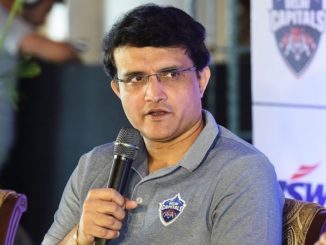
    The nomination of Sourav Ganguly, the former India captain, to be the next president of the Indian cricket board (BCCI) is a welcome development, though the ‘election’ process had several worrying aspects. One, the election was done through negotiations rather than voting — this means that there was a lot of give and take among the politicians, businessmen and powerbrokers who control BCCI. Two top officials were elected on the basis of their blood ties with ministers in the Union Government, not on the basis of their affinity with and services to cricket. Finally, Ganguly’s elevation could end up being ineffectual and merely symbolic because he would be president for less than one year before demitting office and undergoing a compulsory three-year cooling-off period.

    Jay Shah, the son of Union Home Minister Amit Shah, is set to be BCCI secretary, while Arun Singh Dhumal, brother of Minister of State Anurag Thakur, will be the treasurer. These appointments are significant for they show that politicians have not lost interest in running cricket, and that cricketers might well be used as pawns in efforts to keep control of the influential and super-rich BCCI. As in old India, the inheritance of power remains hereditary in new India. The ideal of cricketers running BCCI by hiring professional managers — as is done in international golf or tennis, for instance — remains out of reach.

    Yet, the symbolism of a former top cricketer, who led the Indian team with distinction, becoming BCCI president is very strong indeed. It’s a departure from the past when princes, businessmen and politicians held the position. Another very important development is the formation of a cricketers’ association and election of two of its members to the BCCI’s apex council. Thus, finally, player representatives will sit in BCCI meetings and have a say in how the game is run. If they remain united and committed to cricket rather than power and their personal interests, cricketers might well succeed in edging out politicians and businessmen, who would do well to focus on the much more critical job of running the country and its economy.

    (Tribune, Chandigarh)

  • Congress a divided house: Party in disarray ahead of Haryana elections

    Congress a divided house: Party in disarray ahead of Haryana elections

    Nothing unites Congressmen more than the sight of electoral victory while political wilderness brings to the fore bickering in the rank and file. The five years in opposition in Haryana seem to have done the party little good with factionalism out in the open. Earlier, it was state unit chief Ashok Tanwar who was in the firing line after the party lost all 10 seats in the Lok Sabha elections. The roles have now been reversed with Tanwar training guns at former CM Bhupinder Singh Hooda and state unit president Kumari Selja, accusing them of selling the party ticket. Tanwar took his fight to Delhi protesting outside Sonia Gandhi’s residence and asking to be relieved of all poll panels. The rivalry spilled over after Selja was made the state president and Hooda the chief of the election management committee. A video went viral, allegedly to embarrass the party, a day before Hooda is slated to file his nomination.

    Tanwar is known to be close to Rahul Gandhi and with the latter stepping aside after the loss in the Lok Sabha elections, his replacement was only a matter of time. His fight for tickets for his loyalists is natural. But the party apparently wishes to throw its weight behind the old guard to have a go at the BJP in the Assembly elections.

    The Congress was known for strong regional satraps. Like Virbhadra Singh in HP and Capt Amarinder Singh in Punjab, the party’s decision probably is dictated by the prospect of facing a resurgent BJP. With Selja in the saddle, the Congress has tried to offset the possible loss of Dalit votes by Tanwar’s replacement. A ‘human bomb’ cost Rajiv Gandhi his life and Tanwar should be circumspect in using the term, however innocuous the context might be even as his grievance should be looked into. His next course of action is awaited but the party itself should be seen as fighting the BJP and not amongst itself.

    (Tribune, Chandigarh)

  • Beyond Trumpisms :India must not take its eye off the Afghan ball

    Beyond Trumpisms :India must not take its eye off the Afghan ball

    US PresidentDonald Trump’s endorsement of Prime Minister Modi has been over the top. That he termed Modi the ‘father of India’ could be dismissed as mere Trumpism; but for an American to call anyone Elvis Presley, particularly someone from Trump’s generation, is high praise indeed, for Presley symbolizes mass appeal. To top it all, Trump has underscored Modi’s ability to ‘take care’ of terrorism in the region and solve the Kashmir issue. Read together, all these statements might appear to mean a blanket approval for the abrogation of Article 370 and the lockdown in the Valley. But the Indian establishment, while gloating over the immense success of the ‘Howdy, Modi’ event and the Modi-Trump meeting thereafter, should also closely look at the Trump-Imran Khan meeting on the sidelines of the United Nations General Assembly for further clues to solve the Pak puzzle.

    Later, Imran Khan on Tuesday made a shocking statement at the Centre for Foreign Relations in New York City, becoming the first Pakistan Prime Minister to openly admit that the Pakistan army and the ISI have together trained Al-Qaeda and other terrorist groups to fight in Afghanistan. This is being seen as a diplomatic blunder or a slip-up committed by the old fast bowler, but it is neither. It is a well-timed and well-pitched yorker aimed to break the Indo-US bonhomie by reminding the US of the crucial role Pakistan played in Afghanistan, which triggered the collapse of the Soviet Union. And this assertion is in tune with what Khan said in July on Pakistan still having ‘30,000-40,000 armed people who have trained and fought in some part of Afghanistan or Kashmir’.

    Yet, Trump sidestepped Khan’s comment, and, instead, pointed fingers at Iran as the No.1 terror state because he needs Pakistan for his troop withdrawal from Afghanistan. Unless India decides to play an active role in the Afghan peace process, Pakistan’s leverage over the US cannot be neutralized. Former Prime Minister Vajpayee was right in refusing to send Indian troops to Iraq, but stability in Afghanistan is not merely an American enterprise, it is crucial to Indian interests and we must secure them.

    (Tribune, Chandigarh)

  • On PM Modi’s speech at UNGA

    On PM Modi’s speech at UNGA

    Prime Minister Modi delivered  a great speech at the UNGA.  My English teacher in 8th grade used to say “The proof of pudding is in eating. “ India is a highly developed country with developing country’s problems. Just look at the recent report presented by the Indian Council of Medical Research, Public Health Foundation of India and National Institute of Nutrition. Two of three deaths in children are due to malnutrition . Despite India ‘s 50% increase of GDP since 1991, more than 1/3 of world’s malnourished children live in India. Among these, 1/2 of children are under weight and the 1/3 of wealthiest children in India are overweight or obese. What a paradox!

    Prime Minister Modi in his mega UN address, very succinctly expressed about Vishwa shanti. Mahatma Gandhi once said,  “If we are to teach real peace in the world…….we shall have to begin with the children.”

    I am mindful about the midday meals and the efforts of the government as well as the NGOs. Did you know about the recent scandals about the midday meals? What is the solution?

    The policy makers should revisit the roots of our culture, Manasa- Vacha-Karmana and put into practice.

    May I ask your audience to read a book “ In spite of the Gods, the rise of modern India” by Edward Luce?

    Jai Hind.

    Dr. VK Raju

    Morgan Town, VW

  • Big bank theory: On Public Sector Bank mergers

    Big bank theory: On Public Sector Bank mergers

    For its sheer magnitude, the scale and the ability to disrupt the status quo, the mega bank mergers announced by Finance Minister Nirmala Sitharaman on Friday must go down as the most significant the banking industry has seen in the five decades since nationalization. The bottom line is clear: to create banks of global level that can leverage economies of scale and balance sheet size to serve the needs of a $5-trillion economy by 2025. The jury is, of course, out on whether this strategy will succeed. Mergers are driven by synergies — in products, costs, business, geographies or technology and the most important, cost synergies. While there may be some geographical synergies between the banks being merged, unless they realize cost synergies through branch and staff rationalization, the mergers may not mean much to them or to the economy. This is where the government’s strategy will be tested. It is no secret that public sector banks are overstaffed. There is also bound to be overlap in branch networks such as in the Canara-Syndicate Bank merger, especially in Karnataka and a couple of other southern States. Ditto with Punjab National Bank and Oriental Bank of Commerce, both of which have strong networks in the north and the west. The success of these mergers, therefore, will hinge on how well these banks handle the sensitive issue of staff rationalization. The All India Bank Employees Association has already raised the red flag.

    It was the Narasimham Committee in the late 1990s that recommended consolidation through a process of merging strong banks. The issue has been the proverbial bee in the bonnet of successive governments since then. What the committee also recommended was shutting down the weaker banks and not merging them with the strong ones as is being done now. But this is obviously not an option politically even for a government with a brute majority in Parliament. The biggest plus of the mergers is that they will create banks of scale — there are too many banks in India with sizes that are minuscule by global standards with their growth constricted by their inability to expand. Yet, this advantage of scale cannot be leveraged without adequate reforms in governance and management of these banks. To be sure, Ms. Sitharaman did announce a few measures to make managements better accountable to the board. But the key reforms to be made are at the board level, including in appointments, especially of government nominees. These are often political appointees, with little exposure to banking. Surely, such practices need to be curbed as the definition of global banks is not just about size but also professionalism in governance. The government will also have to manage the fallout of unleashing four mergers simultaneously which is bound to cause upheaval in the industry. Would it have been better if these mergers had been done one by one? The future will color the past.

    (The Hindu)

  • India and Pakistan can be Friends: Give Peace a Chance

    India and Pakistan can be Friends: Give Peace a Chance

    It was the dark period of militancy in Punjab in the 80’s. I happened to be in a meeting of Senior Citizens of Ludhiana District with the then Governor Siddhartha Shankar Ray, I recall having made a suggestion which I sincerely feel I should share with our readers.

    On being asked what India can do to improve relations with the neighboring Pakistan which was often accused of encouraging militancy in Punjab, I pointed out that one way will be to promote people to people contact. People in both Pakistani and Indian Punjab have much in common in respect of language, culture, cuisine , customs. It will be easier for them to strike a chord.

    As a confidence building exercise, I suggested government of India could take initiative in facilitating visits by people from both sides between Amritsar and Lahore. A dawn to dusk visa may be issued to visitors. This beginning may result in promoting amity between people of both sides. And, as the scale of contacts went up, the quantum of goodwill and amity will also grow. But an angry Ray shot down the suggestion.

    Even today, I firmly believe that the only way to promote peace in the region is to promote  people to people contact. Instead of accusing each other of promoting terror or interference in the internal affairs, the leaders of both India and Pakistan will do well  to focus on promoting people to people contact and lifting restrictions on travel between the two countries.

  • AgustaWestland bribery: Can CBI make the rare catch sing?

    Christian Michel fought long and hard to avoid a deportation to India. He was earlier successful in preventing a court appearance in Italy where the case against the chief of AgustaWestland for bribing Indian officials and politicians fell through for want of sufficient proof. Significantly, the then UPA government had moved the Italian court as a civil party. The die was cast for the extradition of Michel from Dubai in July last year when the Enforcement Directorate arrested Shivani Saxena for routing money on his behalf. The claim then, as it is now, was that Saxena will lay out the money trail, especially to politicians, since she herself was a conduit.

    Little has been heard of that case. Even in the first CBI charge-sheet, except for former IAF chief SP Tyagi and his kin, no other bureaucrat felt the heat. Indeed, probe into defense deals worldwide is like entering the Bermuda Triangle. Investigations generally run into lack of response from countries and companies involved in the case. The massive financial muscle of the worldwide military industrial complex is generally successful in ensuring that cases where graft is alleged are brushed under the carpet. Against that backdrop it is gratifying that India has bagged a foreigner middleman, an  elusive species in all past instances of corrupt defense deals.

    The BJP has hoisted Michel’s arrest into a poll issue even though two middlemen remain out of India’s grasp. The CBI also requires considerable legwork to prove that the alleged money trail went to highly placed political beneficiaries. The issue of middlemen infiltrating the IAF, the Defense Ministry and the higher political echelons needs sincerity of purpose rather than political grandstanding. The ball is in now in the legal domain and will be argued on merits. But there is also a gaping lacuna in the Indian defense acquisition process — onerous conditions have caused a paucity of authorized liaison persons to navigate foreign companies through the shoals of Indian babudom. This gives space for shadowy operators to ply their trade.

    (Tribune, India)

  • A divisive statue of unity

    A divisive statue of unity

    Giving Patel his due to appropriate him for political ends

    Nearly seven decades after he passed away, the ‘Iron Man’ of India has received a tribute befitting his status as the unifier of India. The statue of unity is as imposing as the man who ignored advancing age to first battle the British and then set about the exhausting task of cajoling and persuading princely states to accede to the Union of India. A politician from the conservative streak, there was considerable ideological sparring with the progressive lot, right from 1936 when Nehru endorsed socialism as the guiding light of the yet-to-be-born free India.

    Patel-Nehru ideological differences have always encouraged the Hindu right wing to appropriate selectively; opting to pick his post-Independence legacy while overlooking his enormous contribution to the freedom struggle. This spawned a partly-correct narrative about the neglect of Patel’s legacy by the Nehru-Gandhi clan. Patel’s children were given Congress tickets for both Houses of Parliament, but Indira Gandhi was not enamored of either the man or his kin. Narasimha Rao’s conferment of Bharat Ratna was in fact an effort to draw a line with the Gandhi school of keeping his memory at a stand-off distance.

    The Congress’ reaction to the whittling of icons in its neglected gallery of greats is understandable. The other purpose behind the BJP’s highly embellished commemoration of his memory is to show the Nehru-Gandhi as overtly occupied with the promotion of its clan to the studied exclusion of other freedom fighters-cum-nation builders. The BJP, however, may be disinclined to dive deep into Patel’s thought process, for he was an unwavering follower of Gandhi, had no love lost for the RSS and was averse to Subhas Chandra Bose, another icon in the process of appropriation by the BJP. Patel’s homily to the RSS would have particularly hurt: ‘To say one thing and to do another is a game which will not do’. BJP’s fragmented assimilation of Patel may or may not bring electoral dividends to the BJP, but a united India could not have done without both Nehru and Patel.

    (Tribune, India)

  • Time up for Akbar: Step aside or prove the #MeToo charges wrong

    Time up for Akbar: Step aside or prove the #MeToo charges wrong

    As skeletons tumble out of MJ Akbar’s dark closet with alarming frequency in the form of his former women subordinates narrating harrowing tales of sexual harassment, he may well turn out to be the Harvey Weinstein of the Indian media industry. Already, nine of his former colleagues have taken the #MeToo route to call out his sexually predatory behavior as editor. The common thread running through the explicitly hellish stories is one of a powerful boss misusing his position. He would pick on young professionals, lure them with jobs and plum assignments, summon them to posh hotels for interviews and try to force himself on them even as they had little redress to fall back on during the 90s. That being a known writer he was looked up to by wannabes with awe only traumatized them more as his true colors came to the fore.

    Nemesis has finally caught up with him and more such offenders in the media and entertainment fields. Emboldened by the relatively supportive and sympathetic #MeToo movement, India’s victims of sexual misconduct are also baring their old scars to expose the men who had earlier escaped unscathed in the oppressively patriarchal setups they created. It seems to be the beginning of “time up’’ for such predators even as society scrambles to find ways — both legally and socially — to deal with this newfound aggressive non-tolerance by women to the assault of their private space comprising both body and mind. Significantly, in cases of sexual transgression, shame is now being directed at the perpetrators rather than the hapless victims. This is an encouraging trend. It needs to penetrate every section of society for true emancipation of women from regressive social shackles.

    Then there is the added impetus of both the judiciary and the government actively promoting women’s causes. In such circumstances, it is morally incumbent upon the beleaguered ‘Super Editor’, now Minister of State for External Affairs in the NDA government, to take a call on the demand for his resignation as the flood of charges shifts the onus of proving his innocence on him.

    (Tribune, India)

  • The New Deals: U.S.-Mexico-Canada Pact

    The New Deals: U.S.-Mexico-Canada Pact

    After more than a year of intense negotiation, the U.S., Canada and Mexico managed to arrive at a revised trade agreement on Sunday to replace the quarter-century-old North American Free Trade Agreement (NAFTA). Even though the deal does not do anything new to promote the cause of free trade among the North American nations, it achieves the objective of averting any significant damage to the international trade system. Sadly, this is the best anyone could possibly hope for in the midst of the global trade war that began this year. When it comes to the finer details, the U.S.-Mexico-Canada Agreement (USMCA) makes several changes to NAFTA, which U.S. President Donald Trump had promised to scrap. The most prominent changes are the tweaks to production quotas applied to Canada’s dairy industry, which were intended to help protect it by restricting supply. Under the new deal, Canada will have to allow American dairy producers to compete against locals, a move that will favor Canadian consumers. The U.S. agreed to retain Chapter 19 and Chapter 20 dispute-settlement mechanisms as a compromise. This will help Canada and Mexico deal with protectionist duties imposed by the U.S., often under the influence of domestic business lobbies, against their exports.

    Not all the amendments, however, are congenial to the prospects of free trade. Many are simply hard compromises that Canada and Mexico may have made just to defuse trade tensions with the U.S. And not unlike other free trade deals entered into by governments, the present one attempts to micromanage trade in a way that benefits specific interest groups at the cost of the overall economy. The new labor regulations and rules of origin will add to the cost of production of goods such as cars, thus making them uncompetitive in the global market. The USMCA mandates a minimum wage that is above the market wage on labor employed in Mexico, yet another move that will make North America a tough place to do business. Foreign investors may now have fewer protections from unfriendly local laws as the accord does away with resolutions through multilateral dispute panels for certain sectors. But it is its potential to end up as a double-edged sword for the U.S.’s major trading partners that Indian policymakers may find instructive. Announcing the USMCA, Mr. Trump signaled he would now extend his ‘all or nothing’ approach to resetting trade ties with the European Union, China, Japan and India. Terming India “the tariff king”, he said it had sought to start negotiations immediately, a move he reckoned as a bow to the power of tariffs that a protectionist U.S. could wield. In dealing with an emboldened Trump administration, India’s trade negotiators will now have their task cut out if they want to protect exporters’ access to one of the country’s largest markets for its services and merchandise.

    (The Hindu)