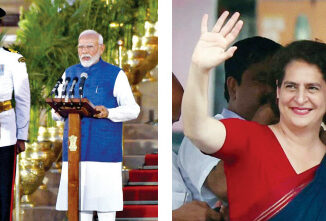
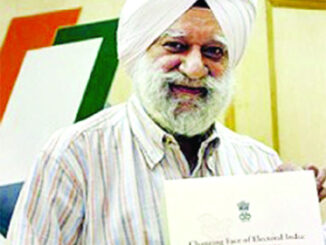
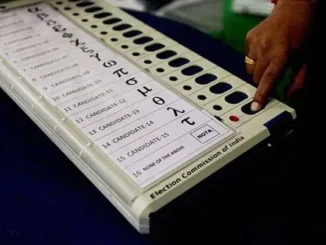
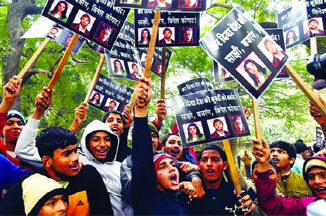
NEW DELHI (TIP): A day after Congress leader Rahul Gandhi levelled allegations of over one lakh “stolen” votes in the Mahadevapura Assembly segment of Bangalore Central Lok Sabha seat — which the opposition narrowly lost to the ruling BJP in 2024 — the Election Commission of India (ECI) hit back on Friday.
In a direct attack on the Leader of Opposition, the poll body asked him to either submit a signed declaration of his charges under oath or apologize to the nation.
ECI sources said that if Gandhi believes his analysis and allegations are true, then he should have no problem in signing a declaration to that effect.
However, if he does not do so, then it will mean that his allegations are absurd and then he should apologize to the nation, they said.
On Thursday, soon after the Congress MP had given a detailed presentation to the media on how “vote theft” was effected at various levels in the assembly segment of Bangalore Central Lok Sabha constituency, the ECI had retaliated by asking him to send a signed declaration under oath to that effect, through the Chief Election Officer (CEO) of Karnataka.
Congress leader Rahul Gandhi alleged that in the 2024 Lok Sabha polls, PM Narendra Modi and BJP leaders made an assault on the Constitution. Gandhi alleged that the Election Commission and the BJP colluded to steal the Lok Sabha election from people.
He said, “In Lok Sabha election our alliance won in Maharashtra; surprisingly after four months the BJP won the assembly polls. In the Maharashtra Assembly polls, one crore (10 million) new voters, who did not vote in the Lok Sabha election, cast their votes. The INDIA bloc votes did not reduce in the Maharashtra Assembly polls; we got the same number of votes as in the Lok Sabha polls.”
Fake voters in bulk are shown as residing in one-bedroom houses owned by BJP leaders, he alleged.
CEOs of Haryana and Maharashtra also later in the day had sought written declarations from him detailing his allegations against the poll body.
Leader of Opposition(LOP) Rahul Gandhi on Friday reacted to Election Commission’s demand for an affidavit about his explosive claims of a “huge criminal fraud” in elections through collusion between the BJP and the poll body, saying he has “already taken the oath of the Constitution in Parliament”.
“The Election Commission demands an affidavit from me. It says that I must take an oath. I have already taken the oath of the Constitution in Parliament,” the Congress leader Rahul Gandhi said in Karnataka’s Bengaluru.
The Lok Sabha LoP’s reaction comes a day after his scathing attack on EC of a “vote theft”.
Following the Congress leader’s claims of electoral fraud, EC officials had demanded a proof, while requesting for a signed declaration detailing specific instances of voter-list manipulation.
Meanwhile, taking a further jibe at Gandhi, ECI sources said that as usual, he might present his claims and objections against special intensive revision (SIR) of electrical rolls in Bihar only after the assembly elections in the state are over.
They went on to add that ever since the draft electoral roll for Bihar was published on August 1, not a single political party has come forward to present its objections on addition or deletion of voters in the rolls.
The Congress-led INDIA bloc has alleged that 65 lakh voters faced the risk of being deleted from the state’s electoral roll following the SIR exercise.
The Supreme Court has sought a detailed response from the ECI to an application seeking the particulars and reason for each of the 65 lakh voters deleted from the Bihar draft electoral roll.
On August 6, a Bench headed by Justice Surya Kant told the poll body to file the particulars by August 9. A hearing has already been scheduled for August 12 on the matter.
Tag: Haryana
-

Rahul’s vote theft charge: Election Commission seeks signed declaration or apology to the nation
-

Adanis, Indigo rule Indian aviation as government agencies are getting elbowed out

By Prabhjot Singh A lot has been said and written about air disasters in general, and the recent crash of AI 171, a flight from Ahmedabad to Gatwick (London), in particular. The flight was carrying 169 Indians, 53 Britons and seven Portuguese nationals in addition to a lone Canadian (a woman dentist).
The plane, a Boeing 787-8 Dreamliner, crashed just minutes after taking off from Ahmedabad International Airport.
Going by the Aviation Safety Network database, it was the first crash of a Boeing 787 aircraft. It is not only Air India, the national flag carrier of India, that has Boeing 787-8 Dreamliners in its fleet; Air Canada has eight Boeing 787-8 aircraft in its fleet and 32 Boeing 787-9 Dreamliners. Another Canadian carrier, WestJet, has seven Boeing 787-9 Dreamliners in its fleet.
Incidentally, the ill-fated Air India Dreamliner took off from Ahmedabad, one of the eight Indian airports maintained by Adani Airport Holdings Ltd (AAHL). Of late, the Indian aviation industry has quickly moved from the public sector to the public-private sector mode. These are not only the airports, but also the airlines that have witnessed a change in management and control. Air India was taken over by the Tata Group in 2022.
Though the civil aviation sector has witnessed phenomenal growth in India, issues related to safety have at times been compromised.
But has the growth of the aviation industry been supplemented by the trained staff, including pilots, cabin crew and ground staff? Both Indigo and Air India have been announcing their ambitious plans to expand their fleet. But are they getting a sufficient number of trained and experienced pilots to operate the new, sophisticated and technologically advanced aircraft?
The issue was highlighted in one of my latest blogs, reproduced below:
“Who is killing civilian pilots?”
The death of a promising Air India pilot earlier this month (April) has set in motion an animated debate about the health and well-being of pilots employed by national and international airlines. Did Captain Arman Singh Chaudhary have his promising career cut short due to the non-implementation of Flight Duty Time Limitations (FDTL)?
Captain Arman Singh Chaudhary, an Air India Express pilot, reportedly died of a cardiac arrest shortly after landing a Srinagar – Delhi flight earlier this month.
His death was not an isolated incident of its kind. There had been instances when pilots had died in distress while on duty. In August 2023, an IndiGo pilot, Manoj Balasubramanian, fell unconscious while on duty at Nagpur airport and passed away soon after. “He took ill at Nagpur airport and was rushed to the hospital where he unfortunately passed away,” Indigo Airlines had said in a statement on August 17, 2023.
A substantial percentage of air disasters are blamed on “human factors” or human failures. “Fatigue” or “overload” on pilots who fly more than the stipulations is equally important causes of air accidents.
“Fatigue” or long hours at the wheel used to be the major factor for devastating accidents on roads, as poorly paid truck and bus drivers would doze off while at the wheel, leading to huge losses of human lives. Now, the same “fatigue” factor has come to worry the aviation sector.
The deaths of pilots have been sending alarming signs for a long time. Intriguingly, little or no serious attention is paid to such “unnatural deaths” of an extremely scarce trained manpower. The question being asked in aviation circles is: How many pilots have lost their lives due to the non-implementation of FDTL rules as per standards of the Federal Aviation Administration (FAA) and the European Union Aviation Safety Agency (EASA)?
Pilot FDTL Rules are designed in favor of corporate airlines so that they can make more money at the expense of pilots. Since the issue has been a subject of judicial adjudication, there is a court direction that the new FDTL rules be implemented in a phased manner from July 1. The airlines, as the reports indicate, are reluctant to implement these directions as they would be forced to employ more and more pilots.
Trained and experienced individuals are an asset for any airline. Though they are highly paid but they always carry a huge responsibility on their shoulders by flying hundreds of passengers across different destinations day in and day out.
Pilots are assets as they are heavily paid. If civil aviation is considered one of the safest modes of travel or communication, it is because of the competence of pilots.
Under the present rules, a commercial pilot is not supposed to travel more than 35 hours a week. But revenue crazy airlines are expanding their operations by flouting the FDTL regulations with impunity.
The Pilots’ associations have been seeking the intervention of the courts. The corporate houses, as major airlines in India are, just want profits and profits. Their appetite for more and more revenue is not getting satiated.
While airlines want their cake to grow bigger, pilots are getting rubbed on the wrong side.. Prima facie, fatigue is killing pilots as they are overworked.
Though the Director-General of Civil Aviation has ordered an investigation into the circumstances leading to the death of a young and bright pilot, Capt. Arman Singh Chaudhary. According to reports, he wanted to report on the fateful flight. But his plea was turned down, and he was made to fly. All these things are expected to come out when the Inquiry Committee set up by the Director-General of Civil Aviation comes out with its report in its stipulated six months.
The aviation industry has its issues and problems. While the managements want more and more revenue, the deserved attention to the well-being and health of the crew and other stakeholders is compromised. This is supported by a statement made at a FAA symposium in 2016.
“It has been estimated that 4-7% of civil aviation incidents and accidents can be attributed to fatigued pilots. “In the last 16 years, fatigue has been associated with 250 fatalities in air carrier accidents.” Robert Sumwalt, NTSB vice chairman, said at an FAA symposium in July 2016.
The ball is now in the court of the Union Ministry of Civil Aviation as well as its front agency, the Director-General of Civil Aviation.
Fingers have also been raised at the growing control of the private sector not only for the operation, management and development of airports but also on sensitive issues like security and safety of air travel. Some big players already have their own security teams in operational mode at important airports that are generally under the operational, management and maintenance control of private players. The role of the state agencies, including paramilitary forces, has been marginalized.
Introduction of multiple layers of security has also been reportedly responsible for the growing incidence of “conflict of interest” between private agencies and the state paramilitary agencies. While the personnel of the State paramilitary forces are deployed at airports with proper training, the same cannot be said of the private agencies engaged by the private players given the mandate to operate, maintain and manage important airports.
Going by its website, the Adani Group (AAHL) claims that it made its maiden venture into the airports sector by emerging as the highest bidder for the operation, management, and development of six airports: Ahmedabad, Lucknow, Mangalore, Jaipur, Guwahati, and Thiruvananthapuram. It signed concession agreements with the Airports Authority of India for all six airports.
AAHL also holds a 73% stake in Mumbai International Airport Ltd, which in turn holds a 74% stake in Navi Mumbai International Airport Ltd. With eight airports in its management and development portfolio, AAHL is India’s largest airport infrastructure company, accounting for 25% of passenger footfalls and 33% of India’s air cargo traffic.
“The Adani Group is committed to offering best-in-class airport infrastructure to passengers, ensuring a seamless and secure airport experience. Through Adani Airports, it envisions redefining the city-airport relationship by building shared facilities that cater to the ever-evolving global travel, lifestyle, and work requirements,” claims the website.
Other than airports, the most important component of the aviation sector is the airlines. The government-run or public sector airlines no longer hold sway. At present, the biggest player is Indigo as it has become one of the fastest-growing low-cost carriers in the world and the largest airline in India. Its success has been attributed to its unique business model, which reduces costs. According to Wikipedia, it operates a single type of aircraft, the Airbus A320 family, in a similar seating configuration, which simplifies crew training and maintenance. The airline strikes bulk deals with Airbus, reducing unit costs. The airline targets a quick, 20-minute turnaround time to prepare the aircraft for the next flight, ensuring planes fly about 12 hours per day. Employees share multiple roles, with a check-in staff doubling as baggage handlers.
In July 2023, the Indian aviation controlling authority Directorate General of Civil Aviation, imposed a fine of ₹30 lakh (US$35,000) on IndiGo for certain systemic deficiencies concerning documentation pertaining to operations, training, and engineering procedures. In March 2025, the Income Tax Department imposed a penalty of ₹944.20 crore (US$110 million) on InterGlobe Aviation, IndiGo’s parent company, for the assessment year 2021-22.
With headquarters in Gurugram, Indigo has become the largest airline in India by passengers carried and fleet size, with a 64.1% domestic market share as of April 2025. It is the second largest Asian airline and one of the largest in the world in terms of passengers carried, with more than 31.9 million passengers carried in the fourth quarter of 2025. As of June 2025, IndiGo operates over 2,200 daily flights to 127 destinations – 91 domestic and 36 international. It operates cargo services under its subsidiary, IndiGo CarGo. Its primary hub is at the Indira Gandhi International Airport, Delhi. Its turnover is now touching 90,000 crore with a net profit after taxes past 8,000 crore.
Established as a private company by Rahul Bhatia of InterGlobe Enterprises—an Indian multinational conglomerate based in Gurugram— and Rakesh Gangwal in 2005. It took delivery of its first aircraft in July 2006 and commenced operations a month later, on August 4, 2006. The airline became the largest Indian carrier by passenger market share in December 2012. The company went public in October 2015.
Air India is the flag carrier of India with its main hub at Indira Gandhi International Airport in Delhi and secondary hubs at Kempe Gowda International Airport in Bengaluru and Chhatrapati Shivaji Maharaj International Airport, alongside several focus cities across India. Headquartered in Gurugram, Haryana, India, the airline is owned by Air India Limited, which is owned by the Tata group (74.9%) and Singapore Airlines (25.1%). As of November 2024, the airline serves 102 domestic and international destinations, operating a variety of Airbus and Boeing aircraft and is the second-largest airline in India in terms of passengers carried after Indigo. Air India became the 27th member of Star Alliance on July 11, 2014.
Of all airlines in India, Air India has one of the worst track records of air and passenger safety.
Some major air crashes involving India
June 12, 2025
Air India Flight 171
A London-bound Air India Boeing 787-8 Dreamliner crashed into a residential area in Meghani Nagar shortly after take-off from Ahmedabad, with 242 people onboard. Several casualties are feared. The flight was piloted by Capt. Sumit Sabharwal and co-pilot Clive Kunder.
August 7, 2020
Air India Express Flight 1344
During the COVID-19 pandemic, Air India Express Flight 1344 crashed while landing in heavy rain at Kozhikode airport. The repatriation flight overshot the tabletop runway, fell into a valley, and broke apart. Of the 190 on board, 21 people, including both pilots, died.
May 22, 2010
Air India Express Flight 812
Air India Express Flight 812 overshot the runway while landing at the Mangalore International Airport in Karnataka. The Boeing 737-800, coming from Dubai, plunged into a gorge beyond the tabletop runway and burst into flames, killing 158 people.
July 17, 2000
Alliance Air Flight 7412
Alliance Air Flight 7412 crashed into a densely populated residential area in Bihar’s Patna while attempting to land. The Boeing 737-200 experienced a stall at low altitude due to the reported improper handling during the final approach. Sixty people were killed, including five on the ground.
November 12, 1996
Charkhi Dadri mid-air collision
India’s deadliest air disaster claimed 349 lives when Saudia Flight 763 and Kazakhstan Airlines Flight 1907 collided mid-air near Charkhi Dadri, Haryana. A communication lapse and the Kazakh aircraft’s descent below its assigned altitude caused the crash. The tragedy led to mandatory Traffic Collision Avoidance Systems (TCAS) installation on all commercial aircraft in India.
February 14, 1990
Indian Airlines Flight 605
An Indian Airlines flight crashed while approaching Bengaluru’s HAL Airport, killing 92 of the 146 people on board. The Airbus A320, a relatively new aircraft in India at the time, descended too low and hit the ground short of the runway, skidding onto a golf course.
October 19, 1988
Indian Airlines Flight 113
An Indian Airlines Flight 113, a Boeing 737-200, crashed on its approach to Ahmedabad Airport. The flight, arriving from Mumbai, struck trees and crashed short of the runway, killing 133 of the 135 people on board.
January 1, 1978
Air India Flight 855
A Dubai-bound Air India flight, a Boeing 747, plunged into the Arabian Sea shortly after taking off from Mumbai, killing all 213 people on board. The crash took place in nighttime conditions over the sea, contributing to the crew’s spatial disorientation.
May 31, 1973
Indian Airlines Flight 440
The Indian Airlines Flight 440 crashed during its approach to Delhi’s Palam Airport. The Boeing 737-200 encountered severe weather and struck high-tension wires just short of the runway. Of the 65 people on board, 48 died. Among the dead was prominent Indian politician Mohan Kumara Mangalam. The crash underscored the need for improved weather radar at Indian airports.
(Prabhjot Singh is a senior journalist who writes with equal aplomb on sports and politics. He can be reached at prabhjot416@gmail.com)
-

Hope For Tomorrow Fundraiser: A World Without Childhood Blindness Campaign Launched
The Eye Foundation of America Raises Over USD 1 Million During Fundraiser to End Childhood Blindness in India
- Ajay Ghosh
NEW DELHI / NEW YORK (TIP): “I was born in a rural village in India, poor and legally blind, with no opportunity to exist,” Sam Maddula, Pharm.D., a distinguished leader, visionary entrepreneur, and dedicated philanthropist, said. Sam went on to add, how his life turned from darkness to light as his parents stumbled upon an Eye Camp that the Eye Foundation of America had set up in 1987 in rural Andhra Pradesh. “It is this organization that rescued me from a life of darkness. The Eye Foundation of America helped me get a visa to the United States. The esteemed Dr. VK Raju himself, performed dual corneal transplant surgery on me two weeks after my second birthday in the United States. He did it, working with the Eye Foundation for free. He cured me just like that, with the magic of his hands. I could see my life went from literal darkness to pure sunlight.”
Sam shared his life story with the audience during a Fund Raiser organized by The Eye Foundation of America, Grant Thornton, the Gautami Institute, The Rotary Club District – 3011 (Delhi) in collaboration with the Young Rotarians, with the theme, “Hope for Tomorrow” at the prestigious India Habitat Centre, New Delhi on Friday, January 31, 2025.
This life-changing miracle is one of the millions of Eye Surgeries that The Eye Foundation of America, led by the legendary Dr. Vadrevu K. Raju, a world-renowned ophthalmologist, philanthropist, and the founder of the Eye Foundation of America (EFA) and the Eye Foundation of UK, Chairman of Goutami Eye Institute has done in the past half a century, transforming the lives of millions of children, who are born every year with vision impairment.
The Fund Raiser, a pan-India Roll-out Program helped raise over $500,000, which was matched by the Eye Foundation of America, totaling over a $ 1 Million US Dollars. In addition, Sam Maddula offered to match two times, the funds that were raised on January 31st, adding the total amount raised at the fundraiser even more.

Dr. Raju promised that the funds raised will be utilized towards establishing 100 ROP screening centers across India, training 500 healthcare professionals in Retinopathy of Prematurity (ROP) screening and treatment, and Treating 10,000 ROP-affected babies annually across India.
Offering an overview of childhood blindness and its impact on children, Dr. Raju told an enthusiastic audience, who had come from across India and the United States to support the noble cause, that childhood blindness has far-reaching consequences. Three-fourths of the children with visual impairment never attend school. Blindness reduces employability by 50%. Blindness increases poverty and social isolation. According to the South Indian Journal of Ophthalmology, of the 3.5 million premature babies born in India, nearly one in six (600,000) babies are born less than 32 weeks gestational age. Estimating that 40% of them receive neonatal care and 80% of them survive, over 200,000 children are at risk for developing Retinopathy of Prematurity (ROP), Dr. Raju pointed out.
Dr. Raju has dedicated his entire life to helping make “the world where every child can see, learn, and thrive without the shadows of blindness.” Describing it as “God’s work” that he and the Eye Foundation are doing, Dr. Raju urged “everyone to join in the mission to eradicate childhood blindness, a tragedy, we can prevent it. Every child deserves to see the world with clarity and purpose. Let’s join hands to eradicate childhood blindness and unlock a brighter future for generations to come. Today, we make a new beginning in our concerted efforts to prevent and eradicate childhood blindness with the resources and the modern technology that are available today,” Dr. Raju said.

Lord Rami Ranger, a well-known philanthropist, and successful businessman from the United Kingdom, while echoing the mission of EFA said, “Childhood blindness is a solvable problem, but it requires our collective action.” According to Lord Ranger, a Board Member of the Eye Foundation of America and Eye Foundation of UK, who has been honored by Her Majesty the Queen on Eight occasions for his business leadership in and for community services, “Together, we can ensure that every child has access to quality eye care and a chance to reach their full potential.”
Dr. Leela Raju, an Organizing Chair of the event, delivered the welcome address. The chief guest at the event was Dr Radhika Tandon, Chairperson of Retinopathy of Prematurity Center, who delivered the keynote address. Richa Jain Kallra, a TV News Anchor & Host eloquently emceed the event.
In her welcome address, Dr. Leela Raju stressed the importance of ensuring that more people know about the causes and the means to reduce childhood blindness and eradicate it. Dr. Leela Raju stated that the discussions today focused on “not just glaucoma, but cornea and pediatric ophthalmology. And of course, regarding retinopathy and prematurity, which is our real push in both Delhi and around India to reduce the burden of childhood blindness.”
Dr. Radhika Tandon, a global thought leader, who continues to inspire innovation and excellence in ophthalmology, shaping the future of visual care with her dedication and brilliance, in her keynote address, said, “A very, very big word of appreciation to the Eye Foundation of America, as well as the Gautami Eye Institute, for taking this initiative, of getting people together on this platform, and also for envisioning a world, where two countries across great continents and opposite sides of the globe can work together, to make a difference.”
“Close your eyes for a moment. Now imagine never being able to open them to the vibrant colors of life, a loved one’s smile, or the pages of a favorite story,” said Sandeep Saxena, the chief organizer, who coordinated the efforts leading up to the fundraiser in India. “For millions of premature babies, this is their reality. Retinopathy of Prematurity (ROP) is a silent thief of sight, making it one of the leading causes of childhood blindness. In India alone, 3.5 million premature babies are at risk. But we refuse to accept this. And we know you won’t either. Your kindness can save a child’s sight, their future, and their dreams.”
A day-long workshop on Empowering Vision Global Advances In Eye Care was organized, offering insights into the many aspects of vision impairment and ways to treat them. Dr. Thomas Johnson, a Specialist in Neuroscience at the Johns Hopkins Wilmer Eye Institute, Dr. Charles Cole, a dedicated educator, who is leading surgical training at the American Academy of Ophthalmology, Dr Karan Bhatia, Vice President of the Young Ophthalmologist Society of India (YOSI) were among those who addressed the audience.
Dr. Mukesh Batra, DG Mahesh Trikha, and PRIP Rtn Shekar Mehta delivered Special addresses during the fundraiser, offering ongoing collaboration and support to the Eye Foundation and its efforts to eradicate childhood blindness. Members of Grant Thornton, while describing their work in analyzing and finding effective ways to measure the outcome of the work being done by the Eye Foundation, offered to collaborate in the noble mission of the Foundation.
The grand finale was a live performance by the Surkriti Orchestra, National Association of the Blind, and a Fashion Show for a Purpose by the talented Shravan Kummar, Designer & Philanthropist, Weaving Magic Through Fabric, Blending Artistry & Purpose.

Earlier, A Mobile Bus was launched with the objective of reaching rural areas across India, offering screening and treatment to eradicate Childhood Blindness. A Memorandum of Understanding was signed between the Eye Foundation, Grant Thornton, and the Rotary Club of Gurugram, Haryana to continue this noble mission and support the initiatives of the Eye Foundation in its efforts to eradicate childhood blindness.
Urging everyone to be part of this noble mission, Dr. Raju said, “Together, Let Us Illuminate Young Lives and Create A World Without Childhood Blindness. Your Support Can: Change Lives, Restore Vision, And Empower Futures. Now, Let’s All Join the Movement; Be Part of Something Extraordinary.”
The organizers promise, “We’re embarking on a bold mission: to create a World Without Childhood Blindness. Starting with Rotary International District 3011, this initiative will expand nationwide, transforming countless young lives. Your help can make this dream come true! Join us at the “Hope for Tomorrow Fundraiser”
Every Rupee/Dollar you support will be matched 100% by the EFA Board.
Our goal?
🌟 Deliver life-saving Retinopathy of Prematurity screenings and treatments to premature infants.
🌟 Fund equipment needed for children’s screenings in ROP prevention and care.
🌟 Train and empower local healthcare heroes to sustain these efforts for years to come.
For more information, please visit: www.eyefoundationofamerica.org/ or, contact: info@eyefoundationofamerica.org -

Modi returns, Rahul finds foothold: Revisiting the grand political tamasha India witnessed this year
The year 2024 was significant for Indian politics as the Election Commission carried out the world’s largest electoral exercise with 642 million people voting to decide who would rule the nation for the next five years.
The elections were carried out in seven phases between April and June with thousands of government functionaries — who were manned by an even greater number of security forces — managing a whopping 10.5 lakh polling booths across the country.
The year also witnessed several states electing their new governments, with all but two retaining those in power. The opposition also got a new lease of life this year despite being on the losing side in the general elections.
Congress leader Rahul Gandhi became the Leader of Opposition in Lok Sabha as his party won 99 seats, nearly double the number it had scrambled to in 2019. The grand old party celebrated the performance like a win against the larger-than-life figure of Narendra Modi, who became the Prime Minister for the third consecutive time, though with figures far below the BJP’s expectations.
In the national capital, the tug of war between the Centre and the elected Aam Aadmi Party government witnessed strong pulls and drags this year. The tension peaked when AAP chief Arvind Kejriwal was jailed in March for his alleged role in the Excise Policy Scam. He functioned as Delhi Chief Minister behind bars for the next seven months until the Supreme Court granted him bail with conditions, following which he quit, paving the way for his party leader Atishi to take over as Delhi CM.
The resignation, arrest, and return of Hemant Soren in Jharkhand, the fall of the Biju Janata Dal government in Odisha after 24 years, the return of Chandrababu Naidu as Andhra Pradesh Chief Minister, the maiden Assembly Elections in the Union Territory of Jammu and Kashmir, and the NDA’s landslide victory in Maharashtra Elections were some of the other major political developments the country witnessed in 2024.
Here is a sneak peek into these and other landmark events in Indian politics this year.
Hemant Soren’s Fall And Rise
Four-time Jharkhand Chief Minister, Hemant Soren dogged it out against the central government in the very first month of 2024 but managed to retain power amid a high-decibel political drama at the fag end of the year.
The gripping political potboiler saw Soren quitting as chief minister hours before he was arrested by the Enforcement Directorate in a land scam case on January 31. Ahead of his arrest, the agency could not confirm his whereabouts for around 24 hours before he showed up in Ranchi. Soren claimed the charges against him were nothing but a vindictive action on the part of the BJP-led central government.
His chosen replacement Champai Soren functioned as Jharkhand CM for barely five months till Hemant was released on bail on June 28. Less than a week later, Champai Soren resigned as CM, making way for Hemant who took oath as CM on July 4. The move did not go down well with Champai Soren who quit JMM and joined the BJP on August 30.
In the November Assembly Elections, Hemant Soren signed off the year with flying colours as the JMM-led alliance won 56 seats, the party’s best performance since inception. Soren was unanimously elected as leader of the legislature party and again took oath as Chief Minister on 28 November.
Delhi CM Arvind Kejriwal Is Jailed
Embroiled in controversies that saw him running the Delhi government from behind bars for several months, Aam Aadmi Party National Convener Arvind Kejriwal was on a political roller-coaster in 2024.
With several of his key party members and ministers in the Delhi government already arrested in the alleged excise policy scam, Kejriwal also was on the Enforcement Directorate’s radar.
He managed to dodge multiple summons by the central agency before he was arrested on March 21 after the Delhi High Court rejected his plea for anticipatory bail. Kejriwal knew his arrest was around the corner and had time and again mentioned it in his prior public speeches.
The BJP were all but sure of him resigning from his post but Kejriwal stayed put and ran the Delhi government from jail for several months. He attempted to get bail from the Delhi High Court however the same was rejected multiple times.
During his jail time, Kejriwal’s legal battles took several twists and turns. He was granted interim bail by the Supreme Court from May 10 to June 1, 2024, to allow him to campaign for the Lok Sabha elections. After his interim bail expired, Kejriwal surrendered at Tihar Jail on June 2.
Delhi Rouse Avenue Court granted him bail on June 20. However, the Enforcement Directorate challenged the trial court order before the Delhi High Court which stayed the bail order on June 21. Five days later, the CBI arrested Kejriwal in a different case linked to the alleged excise policy scam.
The Supreme Court granted Kejriwal interim bail on July 12, but he remained in jail due to the CBI arrest. He was finally granted bail by the Supreme Court on September 13, 2024, after spending over five months in prison.
The bail, however, came with certain conditions including prohibiting him from making public statements about his arrest by the CBI. He was also ordered not to enter the office of the Delhi Chief Minister and sign any official files in his capacity as the Chief Minister.
Just four days later, on September 17, Kejriwal resigned as the Chief Minister of Delhi. He made it clear that he would only consider taking up the role again if he received a public mandate. On September 21, Atishi, the Delhi education minister till then, replaced Kejriwal as the youngest woman CM of Delhi.
2024 General Elections:
A Mammoth Exercise
India witnessed its 18th general elections this year as the entire country voted to choose the next central government. Of the 96.8 crore (968 million) people who were eligible to vote, 64.2 crore exercised the right including 312 million women, the highest-ever participation by female voters.
The 44-day electoral exercise was the second longest in country after the first parliamentary elections of 1951-52, which lasted for more than four months. The polls were conducted in seven phases beginning April 19 and ending June 1. The results were declared on June 4.
The BJP-led NDA alliance won the elections with Narendra Modi returning as Prime Minister for the third consecutive time. The BJP’s performance, however, was below expectations and it had to heavily rely on two main allies—the Telugu Desam Party of Andhra Pradesh and Janata Dal (United) of Bihar—to form a coalition government.
Eyeing 400 of the 543-seat Lok Sabha, BJP managed to win only 240 while its main partners TDP and JD(U) won 16 and 12 seats respectively. Overall, the NDA won 293 seats.
In 2019, the BJP won 303 seats with the NDA’s final tally at 353. In contrast, Congress recorded a turnaround winning 99 seats, nearly double its 2019 tally of 52, thereby coming back as a potent opposition.
Narendra Modi Takes Oath As PM For Third Consecutive Time
On June 9, Narendra Modi took oath as the Prime Minister of India for the third consecutive time after his BJP-led NDA alliance registered a victory in the 2024 Lok Sabha elections.
The ruling party’s rallies ahead of the elections were powered by the ‘Modi ki Guarantee’ campaign, which managed to help it win 240 seats, a lacklustre performance but strong enough to form a coalition government with the BJP as its most powerful constituent.
Three days after the results were declared on June 4, Modi confirmed the support of 293 MPs to President Droupadi Murmu after which he was sworn-in as the Prime Minister for the third time on June 9.
As for his individual performance from the Varanasi Lok Sabha seat, PM Modi had a shocking start on the result day as Congress’ Ajay Rai was seen leading in the first hour of vote counting.
PM Modi raced past in the second half defeating Rai by a margin of 1,52,513 votes. It was the second-lowest-ever victory margin (in percentage points) for a sitting prime minister and a steep fall for Modi compared to his 2019 margin of 4.5 lakh votes.
In his victory speech, Prime Minister Modi pledged to work with all states, regardless of the party in power, to build a developed India. He also laid out his vision for the third term saying it would be a tenure of big decisions and a key emphasis would be on uprooting corruption. He thanked TDP supremo Chandrababu Naidu and Bihar Chief Minister Nitish Kumar, his NDA allies for the electoral successes in Andhra Pradesh and Bihar.
Rahul Gandhi’s Resurgence As LoP, Priyanka’s Debut in Parliament
Ridiculed as ‘Shehzada’ and dismissed as ‘Pappu’, Congress leader Rahul Gandhi had the last laugh in the 2024 Lok Sabha election as he managed to gain big even though his party lost the elections.
Gandhi contested from Kerala’s Wayanad and Uttar Pradesh’s Rae Bareli, winning the southern seat by 3.64 lakh votes against his nearest rival Annie Raja of CPI and the northern one by 3.9 lakh votes against BJP’s Dinesh Pratap Singh. Rahul retained Rae Bareli and his sister Priyanka fought and won from Wayanad by an even greater margin in the by-elections later in the year, making her Parliament debut as she took oath as Lok Sabha MP on November 28.
Congress credited its spirited performance in the general elections to Rahul Gandhi for a campaign that focussed on people’s issues and welfare measures. The party lauded Gandhi for creating a new narrative through his Bharat Jodo Yatras, the on-foot marches he undertook from one end of the nation to another during which he was seen meeting people on the ground and getting to know about the real issues facing mainland India.
Even the harshest of his critics would concede that Gandhi’s 2024 campaign was by far his best one as he focussed on bread-and-butter issues and the party’s welfare guarantees which struck a chord with a section of the voters.
With Congress winning 99 seats in the elections (more than the requisite 55 or 10 per cent of the 543 seats), it meant that for the first time since 2014, it had the opportunity to pick a Leader of Opposition (LoP) in Lok Sabha. As an obvious choice, the party nominated Gandhi who was appointed the LoP on June 24, his maiden constitutional position since his entry into politics in 2004.
As LoP Gandhi was accorded a Cabinet Minister’s rank, enhancing his position in the protocol list. The work of the Leader of the Opposition in the Lok Sabha is opposite to that of the Leader of the House.
TDP Wins Andhra Elections,
Naidu Returns As CM
Andhra Pradesh saw a power transfer in 2024 as the ruling YSR Congress party lost the Assembly Elections to Telugu Desam party-led NDA. The elections were held in a single phase on May 13 with counting of votes on June 4. The polls were held simultaneously with the Lok Sabha elections.
The incumbent Jagan Mohan Reddy’s YSRCP faced a crushing defeat as it won just 11 seats against 151 in 2019. In contrast, the TDP won 135 seats in the 2024 elections against just 23 in 2019.
TDP Chief N Chandrababu Naidu returned as Chief Minister, taking oath on June 12. His last term as CM was from 2014 to 2019. Before the state bifurcation, he served as the CM of United Andhra Pradesh twice – 1995-99 and 1999-2004.
The other highlights of the 2024 Andhra Elections were Naidu’s son Nara Lokesh and Janasena leader Pawan Kalyan entering the Assembly for the first time. The BJP got a much-needed boost with the NDA alliance winning 21 out of the total 25 Lok Sabha seats in the state. YSRCP got just four MP seats.
Analysts said strong anti-incumbency coupled with a united fight by the opposition parties routed the ruling YSRCP. Though the Reddy-led government shelled out Rs 2.60 lakh crore towards doles over the last five years, there was no perceivable development in the state.
BJP Wins Odisha, Naveen
Patnaik’s 24-Year Rule Ends
Odisha crossed a political milestone in the 2024 Assembly Elections as the electors voted for the BJP, ending the 24-year Biju Janata Rule (BJD) rule. Naveen Patnaik’s party could manage only 54 seats in the elections, a huge dip from 113 in the previous elections.
BJP, on the other hand, secured a simple majority, winning 78 seats in the 147-seat Legislative Assembly. Held simultaneously with Lok Sabha elections, the elections were carried out in four phases with the first on May 13 and the last on June 1. The BJP also made significant gains, winning 20 out of 21 Lok Sabha seats in Odisha marking one of the strongest wins for the saffron party in the general elections.
As for Naveen Patnaik, the BJD leader contested from two seats – Hinjili and Kantabanji. He won from Hinjili with 66,459 votes, defeating BJP candidate Sisir Kumar Mishra by a narrow margin of 4,636 votes.
The election campaign by the BJP was intense, with Prime Minister Narendra Modi addressing several rallies and holding two road shows in Bhubaneswar and Puri. The BJP’s high-profile electioneering seemed to overshadow the BJD’s campaign, which was largely led by Patnaik and his aide VK Pandian.
2024 Tripura Peace Accord
On September 4, India’s northeast region witnessed a historic moment when the 35-year-long insurgency in Tripura came to an end following the signing of an agreement between the Centre, the Tripura government and two insurgent outfits of the state–the National Liberation Front of Tripura (NLFT) and All Tripura Tiger Force (ATTF).
The agreement was signed at North Block in the presence of Union Home Minister Amit Shah, Tripura Chief Minister Dr Manik Saha, and top leaders of both NLFT and ATTF. As per the agreement, the Centre sanctioned a special economic development package amounting to Rs 250 crore for a period of four years to be implemented by the state government for the overall development of tribals of Tripura.
“The Government of India and the Government of Tripura have been making concerted efforts to engage the tribal armed groups of Tripura in order to bring peace and harmony in the state, and rehabilitate the cadres so as to enable them to lead a normal life in the society,” the agreement stated.
The agreement stated that NLFT and ATTF would not extend any support to any other militant or armed groups by way of training, supply of arms, providing protection or in other manner.
Jammu And Kashmir UT Gets Maiden Elected Government
The Union Territory of Jammu and Kashmir flipped a page in its political history in 2024 as it witnessed its first assembly elections after the abrogation of Article 370 and downgrading of the state into two federally controlled territories in 2019.
The long-pending elections were finally carried out in three phases from September 18 to October 1 with counting of votes on October 8. They were held in the backdrop of the Supreme Court direction in December 2023 in which it had asked the Election Commission to “restore the democratic process” in the union territory by September 2024.
The opposition bloc led by the National Conference in the Union Territory won the elections bagging 49 of the 90 Assembly seats. NC emerged as the single largest party winning 41 seats followed by BJP (29) and Congress (6). Mehbooba Mufti-led PDP was able to win only three seats, the worst performance by the party since it was founded by Late Mufti Sayeed 25 years ago.
Former CM and National Conference leader Omar Abdullah was sworn in as the first Chief Minister of the J&K UT on October 16. Interestingly, a few months before the election dates were announced, the Ministry of Home Affairs increased the powers of the L-G Manoj Sinha-led administration by amending the Jammu and Kashmir Reorganisation Act, 2019.
The amendment entrusted more powers to the L-G for making decisions on police, all-India services officers and appointment of advocates and other law officers. He was also given powers for sanctioning prosecution in certain cases and taking decisions on anti-corruption bureau-related matters.
BJP’s Hat-Trick In Haryana
Buoyed by its success in Odisha, BJP recorded a hat-trick win in Haryana leaving the opposition stunned while managing to overcome anti-incumbency with ease.
The single-phase elections were held on October 5 and the votes were counted on October 8. The victory in Haryana was a significant milestone for the BJP as, despite predictions of a Congress-led alliance win, the saffron secured a majority with 48 seats in the 90-member Assembly, marking its third consecutive win in the state.
The election saw a high voter turnout of 67.90 per cent, with the BJP winning 39.94 per cent of the popular vote. The Congress, led by Bhupinder Singh Hooda, won 37 seats with 39.09 per cent of the popular vote.
Nayab Singh Saini, the 54-year-old OBC leader who was made CM in March to replace Manohar Lal Khattar in an unexpected appointment, took oath as the new Haryana Chief Minister for the second term on October 17.
The BJP’s victory was attributed to its strong campaign and the popularity of its leaders. The party’s decision to contest the election without a chief ministerial face also seemed to have worked in its favour.
The Congress, on the other hand, faced internal conflicts and was unable to capitalize on the anti-incumbency factor. The party’s alliance with the Communist Party of India (Marxist) also failed to yield the desired results.
The Jannayak Janta Party (JJP), which had allied with the BJP in the previous election, contested the election alone but failed to win any seats. The Indian National Lok Dal (INLD) also failed to make a significant impact, winning only two seats.
Mahayuti’s Landslide Victory In Maharashtra, Fadnavis Returns As CM
The BJP-led Mahayuti alliance registered a landslide victory in Maharashtra as the key western state went to polls on November 20. In the 288-seat Legislative Assembly, the BJP won 132 and its allies Shiv Sena and NCP bagged 57 and 41 seats respectively. The opposition Maha Vikas Aghadi (MVA) was handed one of the worst defeats in recent history as the three main constituents of the alliance could manage wins in just 50 seats–Congress 16, Shiv Sena (UBT) 20, and NCP (SP) 10.
The BJP was at the forefront of this spectacular performance, comprehensively managing to buck the anti-incumbency and emerge as the largest party in the state pocketing 132 of the 149 seats it contested in the politically significant western state. BJP’s success was led by its senior leader and state deputy CM Devendra Fadnavis, who eventually became the Chief Minister for the third time after some hiatus on the part of the Eknath Shinde-led Shiv Sena.
Fadnavis’ name was finalised for the Maharashtra Chief Minister post at a key meeting on December 4. A day later, he took an oath as the Chief Minister for the third time. The swearing-in ceremony was attended by Prime Minister Narendra Modi and other top political figures of the country. The results came as a fillip for the BJP after the unprecedented hat-trick in Haryana and helped the party overcome some of its setbacks in the general elections where it bagged just 240 seats.
Voters in the politically significant western state of Maharashtra, which sends 48 MPs to the Lok Sabha and gave the MVA a decisive 30 seats, clearly decided to go against the trend of that parliamentary victory just five months ago. -

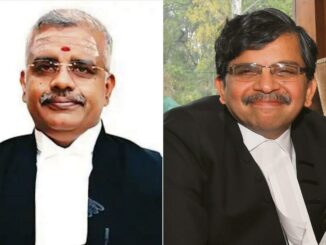
Tributes pour in for Justice Kuldip Singh, Justice Harjit Singh Bedi

Justice Kuldip Singh Justice Harjit Singh Bedi
Tributes poured in for two stalwarts of the Indian judiciary – Justice Kuldip Singh and Justice Harjit Singh Bedi – who passed away in November this year.
Justice Harjit Singh Bedi died on November 21, followed closely by Justice Kuldip Singh on November 25.
“Their passing has created an irreplaceable void, but their contributions and values will continue to inspire us as we move forward,” a resolution, signed by former judges, including Justice S S Sodhi, Justice M S Liberhan, Justice Mehtab Singh Gill, Justice S S Saron, Justice Ranjit Singh Randhawa, Justice Nawab Singh, Justice Rajiv Narain Raina, Justice Nirmaljit Kaur, Justice Jaishree Thakur, and Justice Sabina, expressed deep sorrow at the untimely passing of both luminaries within days of each other, stated.
Justice Kuldip Singh
(1 Jan 1932 – 25 Nov, 2024)
Justice Kuldip Singh was a renowned jurist and former judge of the Supreme Court of India, recognized for his unwavering commitment to environmental protection and human rights. His tenure in the judiciary left a significant impact on Indian jurisprudence, particularly in public interest litigation (PIL) and environmental law. Below is a detailed profile of his illustrious career and contributions.
Early Life and Education
Justice Kuldip Singh was born on January 1, 1932, in Punjab, India. He pursued his education with distinction, earning his degree in law from Panjab University, Chandigarh. After completing his studies, he embarked on a legal career that would see him rise to prominence in the Indian legal system.
Legal Career
Justice Singh began practicing law in the early 1950s, specializing in constitutional, civil, and corporate law. His expertise and dedication earned him widespread respect within the legal fraternity. Over the years, he was involved in several landmark cases, which helped cement his reputation as an advocate of justice and fairness.
He was designated as a Senior Advocate by the Punjab and Haryana High Court, a recognition of his legal acumen and skill. Subsequently, he served as the Advocate General for the state of Punjab, a role in which he provided legal counsel to the state government on critical legal and constitutional matters.
Appointment to the Supreme Court
Justice Kuldip Singh was appointed as a judge of the Supreme Court of India on December 14, 1988. During his tenure, which lasted until December 21, 1996, he delivered several landmark judgments that have had a lasting impact on Indian law and society.
Landmark Contributions
Justice Singh’s judicial philosophy was marked by his emphasis on social justice and environmental sustainability. His notable contributions include:
Environmental Jurisprudence
Justice Singh is often referred to as the “Green Judge” for his landmark rulings in environmental cases. Under his watch, the Supreme Court actively employed the principle of sustainable development to balance environmental protection with economic progress.
In cases like Vellore Citizens Welfare Forum v. Union of India (1996), he emphasized the importance of the “precautionary principle” and the “polluter pays principle” in managing environmental challenges.
He also played a pivotal role in directing measures to control industrial pollution, protect forest cover, and preserve biodiversity.
Public Interest Litigation (PIL)
Justice Singh was a strong proponent of PILs as a tool to address societal inequities. Through his judgments, he expanded the scope of PILs to include issues like environmental degradation, human rights violations, and corruption. His rulings empowered ordinary citizens to approach the judiciary for redressal of public grievances.
Human Rights Advocacy
Justice Singh demonstrated a profound commitment to upholding human rights. He authored judgments that safeguarded the rights of marginalized communities, upheld personal liberties, and strengthened the implementation of constitutional guarantees.
Electoral Reforms
Justice Singh was instrumental in advocating for transparency and fairness in the electoral process. His judgments stressed the need for free and fair elections, ensuring the sanctity of democratic institutions.
Legacy and Recognition
Justice Kuldip Singh’s judicial career left a deep imprint on the Indian legal system. His proactive approach to environmental and social justice earned him widespread recognition, both domestically and internationally. He is celebrated for bringing environmental issues into the mainstream of judicial discourse in India.
Post-retirement, he continued to contribute to legal and social causes. He chaired various committees and commissions, including one on electoral reforms, where he made significant recommendations to enhance transparency and accountability in India’s democratic processes.
Justice Kuldip Singh is known for his humility and dedication to public service. Despite his high-profile career, he remained grounded, focusing on issues that affect the common man.
Justice Kuldip Singh’s legacy as a jurist lies in his progressive judgments and his commitment to the ideals of justice, equality, and environmental sustainability. His contributions continue to inspire legal practitioners, environmentalists, and social activists in India and beyond.Justice Harjit Singh Bedi
(Sept 5, 1946 – Nove 21, 2024)
Justice Harjit Singh Bedi (September 5, 1946 – November 21, 2024) was a distinguished Indian jurist who served as a judge of the Supreme Court of India. His legal career was marked by significant contributions to the Indian judiciary, characterized by fairness, integrity, and a deep commitment to justice.
Early Life and Education
Born in Sahiwal (formerly Montgomery), now in Pakistan, Justice Bedi hailed from a family of agriculturists. Notably, he was a direct descendant of Guru Nanak, the founder of Sikhism, being 17th in the line. Following the partition of India, his family settled in Fazilka, a township near the India-Pakistan border. His father, Tikka Jagjit Singh Bedi, served as a judge on the Punjab and Haryana High Court until his retirement in 1969.
Justice Bedi completed his schooling at Bishop Cotton School in Shimla, obtaining his Senior Cambridge certificate in 1962. He pursued higher education in law, which laid the foundation for his illustrious legal career.
Legal Career
Enrolled as an advocate with the Bar Council of Punjab & Haryana on July 17, 1972, Justice Bedi practiced in civil, criminal, and writ matters. Between 1974 and 1983, he also served as a part-time lecturer in the Department of Laws at Panjab University, Chandigarh, demonstrating his dedication to legal education.
His career in public service began with his appointment as Deputy Advocate General for Punjab in 1983. He was designated as a Senior Advocate in 1987 and subsequently served as Additional Advocate General until 1989. In 1990, he was appointed Advocate General of Punjab, a position he held for about a year.
Judicial Appointments
Justice Bedi’s judicial career commenced with his appointment as an Additional Judge of the Punjab and Haryana High Court on March 15, 1991. He became a permanent judge on July 8, 1992. His judicial acumen led to his elevation as the Chief Justice of the Bombay High Court on October 3, 2006. Shortly thereafter, on January 12, 2007, he was appointed as a judge of the Supreme Court of India, where he served until his retirement in 2011.
Notable Contributions
Beyond his tenure on the bench, Justice Bedi was entrusted with significant responsibilities post-retirement. In 2012, the Supreme Court appointed him as the Chairman of a Special Task Force monitoring committee to oversee investigations into custodial deaths in Gujarat. His report, submitted in 2019, identified misconduct in several cases, underscoring his unwavering commitment to human rights and accountability.
Additionally, he was tasked by the Jammu and Kashmir Government to probe the mysterious death of National Conference activist Mohammad Yousuf Shah, approaching the assignment with the tenacity and care that defined his career.
Justice Bedi’s personal life was deeply rooted in his family’s legal tradition. His son, Justice Jasjit Singh Bedi, continues the legacy, serving as a judge of the Punjab and Haryana High Court.
Colleagues and friends remember Justice Bedi as a gentleman judge, whose judgments were known for their clarity and compassion. His demeanor combined gentle firmness with a profound sense of humanity, leaving an indelible mark on Indian jurisprudence. -

Modi’s claim of 400 plus seats entails 100% EVM-VVPAT
“Free and fair elections are fundamental to a thriving democracy. One of the foremost indications of that effect is citizenship participation in the democratic process. It is every citizen’s right and duty to vote in the electoral process. Through that participation, they help to build a better democratic system that could effectively serve the public. However, intimidation, corruption, and threats to citizens during or before an election are against the principles of democracy, and the same also holds true for manipulating the voter lists or the voting mechanisms. There ought to be transparency in the public square where those in power are genuinely accountable to the people, and the voters should be fully appraised of what decisions are made, by whom, and why.”

By George Abraham Prime Minister Modi claims that their NDA coalition will win 400 plus seats in the upcoming Parliamentary elections that will take place in India starting April 19 of this year. Is it a panacea or a realistic assessment considering nationwide political dynamics? What is the purpose of making such exaggerated claims if they are not based on accurate data? Their history is replete with fraudulent claims and unscrupulous behavior. Why then should the public believe it now? Anyway, this whole public relations campaign may also be aimed at enthusing the cadres.
Responding to their claim, Mr. Sam Pitroda, who is also known as the father of the Telecommunication revolution in India, retorted, “BJP can win more than 400 seats in the 2024 elections if issues associated with EVMs are not fixed “. In further expressing his concerns, Mr. Pitroda cited a report by “The Citizens’ Commission on Elections,” chaired by former Supreme Court judge Madan B Lokur and said that the main recommendations of the report were to modify the current design of the VVPAT System to make it truly “voter-verified.”
It appears that the BJP leaders are engaged in a psychological warfare where people are being conditioned to believe that Modi’s victory is inevitable. It has dual purposes: one is to demoralize the opposition and dispirit their grassroots, and the other is to set up the stage for any illicit operations that would benefit the party before a desensitized electorate. Their strategy is apparently working.
The public generally assumes that Modi’s third term is inevitable, and to them, it is just a numbers game as far as how big a majority his party could achieve. Is the Indian electorate so naïve as to believe a narrative created by the BJP without supporting facts? However, the BJP is confident that a public that believes in the ‘Gujarat Model’ can be swayed time after time and will fall prey to their deception once again.
An entirely different picture might emerge if one looks at the electoral map. Their carefully crafted plans may have little impact in South India. With Karnataka going back to the Congress fold, BJP’s expectations of a repeat performance are quite unlikely. The victory in Telangana by the Congress and the BJP’s lack of an alliance with TRS may also spell trouble for the BJP there. In short, the BJP’s plan of building on the 2019 election results is indeed further complicated by the setbacks in these two southern states. With 130 seats distributed among the five states and the union territory in the south, the BJP’s chances of making any substantial gains in South India will remain as elusive as ever before.
If we look at the poll results in the Northern States, the BJP almost swept them out, creating the current brute majority in the Loka Sabha. They have won all the seats in states like Gujarat, Rajasthan, Haryana, Himachal Pradesh, Uttarakhand, Delhi, and Tripura. In addition, Madhya Pradesh, Bihar, Maharashtra, U.P., Odisha, and Chhattisgarh combined for a whopping 92% of all seats gained by the NDA coalition. It was an incredible win that even the Political pundits have had a hard time explaining since that came at the heel of a disastrous mismanagement of the COVID-19 pandemic that killed more people in India than anywhere else.
For any sane mind, that history will be hard to replicate. At present, the Modi regime is in the throes of a mushrooming corruption scandal involving Electoral bonds. If the current allegations of pay-to-play are proven, this BJP government may be one of the most corrupt administrations in the history of an Independent India. This is the party that came to power, putting the Manmohan Singh government on the defensive as regards a number of alleged scams. Yet, they have far exceeded in excelling in corrupt ways while covering up their misdeeds from the public’s view. Thanks to the Supreme Court, the public is learning much more about the crimes and the exploitation the country has been subjected to.
For the BJP leaders, it is imperative that they stay in power not only to perpetuate their ideology and remake India in its medieval ways but also to be in the unenviable position of power where they will never be held accountable for their misdeeds and misgovernance. It is common knowledge that the economy for the man on the main street is not working that well. Rampant inflation, increasing unemployment among the youth, and persistent poverty at the lower end of the strata have all clouded the high GDP numbers India boasts about. The economy is working for the elites and the super-rich, who already own 40% of India’s wealth. It is crony capitalism at its best, joined at the hip by the governing establishment.
There is a limit to one who can exploit religious sentiment to win votes. The euphoria over the Ram Janmabhoomi Kshetra may be just about dissipated. Patriot games using CAA and NRC may also have found their boundaries. Therefore, despite all the bravado about winning 400 or more seats, the BJP team must be worried, and their internal polls must have indicated the same. Therefore, they dwell on propagating this narrative about the upcoming massive victory, intending to inject inertia into the minds of the opposition while adding fuel to energize their cadre.
Considering these circumstances, one should be overly concerned about whether the country will have free and fair elections. It doesn’t matter whether the electorate is dissatisfied or opposition parties run a well-rounded campaign if the will of the people is not truly reflected in the outcome. Some countries in the world would conduct pre-determined elections, whereas India stood as a champion of democracy, transferring power when people finally spoke through the ballot boxes. The question being raised by Sam Pitroda and others touches on this susceptible issue.
Free and fair elections are fundamental to a thriving democracy. One of the foremost indications of that effect is citizenship participation in the democratic process. It is every citizen’s right and duty to vote in the electoral process. Through that participation, they help to build a better democratic system that could effectively serve the public. However, intimidation, corruption, and threats to citizens during or before an election are against the principles of democracy, and the same also holds true for manipulating the voter lists or the voting mechanisms. There ought to be transparency in the public square where those in power are genuinely accountable to the people, and the voters should be fully appraised of what decisions are made, by whom, and why.
Therefore, the Supreme Court’s query to the Election Commission on adding VVPAT to every EVM is sensible. Voter Verified Paper Audit Trail is a machine that prints a paper slip of a candidate’s name, serial number, and party’s symbol after a voter has cast their vote. It displays a paper slip for seven seconds for the voters to check if their vote is cast for the chosen candidate. The paper slip then drops down to a locked compartment, and it can be used to audit voting data in the EVMs. Whether the handpicked election commissioners by Modi Sarkar would comply with the public sentiment on this issue will be critical in saving democracy for India and its future generations.
(The author is a former Chief Technology Officer at the United Nations. He is Vice Chair of Indian Overseas Congress. He can be reached at gta777@gmail.com)
-

Junior wrestlers protest in Delhi, blaming Vinesh Phogat, Bajrang Punia and Sakshi Malik for halting their careers
New Delhi (TIP)- Holding up banners reading ‘UWW, save our wrestling from these 3 wrestlers,’ young wrestlers from Punjab, Haryana, Uttar Pradesh, and Himachal Pradesh voiced their grievances at Jantar Mantar in New Delhi on Wednesday, January 3. They chanted slogans against Bajrang Punia, Sakshi Malik, and Vinesh Phogat, whom they alleged were hindering their wrestling careers. The junior wrestlers claimed that protests held last year, over accusations of sexual harassment against Ex WFI president Brij Bhushan Sharan Singh have led to the loss of a crucial year in their sporting journeys.
The tumult in the wrestling fraternity stemmed from the suspension of the newly-elected wrestling body by the ministry, citing alleged improprieties linked to Brij Bhushan’s associate, Sanjay Singh. Amidst the turmoil, the Ministry of Sports has established an ad-hoc panel on December 27 to stir the sport.
Since January 2023, the wrestling landscape has been mired in a standstill, with national camps and competitions put on indefinite hold due to the WFI’s dual suspensions, the protestors claimed. Lakshmi from Mathura who has been practising the sport for the last 5 years said, “Senior wrestlers should support and foster promotion of the sport, instead they are discouraging it…No championships have taken place since last one year, do they expect us to reach the Olympics without participating in championships?”
“Wrestling has come to a halt since the protests last year. I was set to compete at the under-15 nationals, and many of us had diligently prepared for it. Why are they denying young wrestlers the opportunity?” asked 15-year-old Anushka Pandit, who joined the protest from Dadri, Uttar Pradesh.
The ad-hoc panel, managing wrestling affairs in the country, on Wednesday announced organisation of U15 and U20 National championships within six weeks, hours after junior wrestlers held a protest.
Source: The Indian Express -

Guiding spirits of the judiciary
It’s important to publicize decisions of judges who cannot be swayed by dangling carrots
The judiciary and the armed forces of Bharat are our last refuge for justice and security. They have not succumbed yet, unlike the police, the civil services and the media. But the onslaught is severe and relentless. We must salute those judges who are true to their conscience.
“If disturbed citizens don’t bemoan this disregard for judicial integrity due to a fear of reprisal in the form of contempt of court proceedings, our country will never be the same. It is the ‘suicide’ of justice that the citizens of Bharat should dilate upon. It is of utmost urgency that concerned citizens shed the fear they now harbor of raising their voices lest they are sent to jail for doing their duty to their motherland. Citizens are constantly told to excise dynasties from the political system. It is much more urgent to excise questionable means that serve political ends and breed dishonesty and corruption. Dynasties will die their natural deaths when more non-dynasts like Modi enter the political arena.”

By Julio Ribeiro The Madras High Court should be proud of Justice Anand Venkatesh, who suo motu ordered the reopening of a corruption case against Tamil Nadu Higher Education Minister K Ponmudy last month. Justice Venkatesh also ordered the reopening of another case of corruption, involving possession of assets disproportionate to known sources of income, against TN Revenue Minister KKSSR Ramachandran and Finance Minister Thangam Thennarasu. All is not lost. The judiciary and the armed forces are our last refuge for justice and security.
The case against Ponmudy was to be heard in a court in Villupuram. It was transferred by the administrative side of the Madras High Court to the court of the principal judge of Vellore for reasons not known to the public. Justice Venkatesh felt that the court in Vellore was “too hurried to be natural” and did not give any cogent reason for the minister’s acquittal.
The cases against Ramachandran and Thennarasu ended in their discharge by the Special Court at Villiputhur in Virudhunagar district. The cases had been adjourned for months and years, during which the two accused ministers were reinstated in the DMK Cabinet. The investigating police officer who had filed the chargesheets was replaced by another, who whitewashed the original findings, established when the AIADMK was in power.
It was apparent that the truth changed according to who was in power. If this is how the rule of law is going to be enforced in Bharat that was India, we, the citizens, will be forced to “cry for our beloved country”. The trend is truly frightening.
Take the case against Congress leader Rahul Gandhi in the Surat district court over a cheap joke he cracked without giving it a thought. The case came up before the Chief Judicial Magistrate. The prosecution obviously found the magistrate uncooperative. It approached the High Court in Ahmedabad and sought a stay on the proceedings, which was granted. When the Chief Judicial Magistrate was transferred, the prosecution got the High Court’s permission to resume the original proceedings.
We all know that for that poor joke, Rahul Gandhi was sentenced to two years in prison. He had to approach the Supreme Court for redress after failing to get it in the Gujarat High Court. The Supreme Court remarked caustically that there was something wrong with the High Court in Gujarat. Rahul, it is hoped, must have learnt a lesson from that episode.
But what are we to conclude about our judicial system from these two cases? A common thread that runs through both cases, one from Tamil Nadu where a government aligned to the Opposition’s INDIA bloc rules, and the other from Gujarat, where a ‘double-engine’ government is in power, is that the ruling party in a state can influence certain decisions. It is disturbing to find that criminal trials can be “derailed by the active design of those at the helm of political power,” as Justice Venkatesh observed in his order.
If disturbed citizens don’t bemoan this disregard for judicial integrity due to a fear of reprisal in the form of contempt of court proceedings, our country will never be the same. It is the ‘suicide’ of justice that the citizens of Bharat should dilate upon. It is of utmost urgency that concerned citizens shed the fear they now harbor of raising their voices lest they are sent to jail for doing their duty to their motherland. Citizens are constantly told to excise dynasties from the political system. It is much more urgent to excise questionable means that serve political ends and breed dishonesty and corruption. Dynasties will die their natural deaths when more non-dynasts like Modi enter the political arena.
All is not lost as yet. There are many upright, honest and conscientious judges like Justice Venkatesh in most states of the Union. We must celebrate them, like we celebrate upright, honest and conscientious civil servants and police officials who are true to their oath of serving the people. It is important that we publicize the decisions of such judges who cannot be swayed by dangling carrots.
When a calculated false propaganda was unleashed on maulvis, many from foreign countries, accusing them of spreading the Covid virus in India after attending a markaz in Delhi, Justices TV Nalawade and MG Sewlikar of the High Court of Bombay, sitting on a Division Bench in Aurangabad, discharged the accused and passed severe strictures against the government agency that brought them to trial unjustly. It required extraordinary courage to go against the ruling party’s propaganda machine. The judgment restored the citizens’ faith in the administration of justice.
Justice S Muralidhar of the Delhi High Court ordered the Delhi Police to register FIRs against a minister in Modi’s government and two other BJP leaders for spewing hate against those who were opposing the CAA and the NRC in Delhi. However, Justice Muralidhar was hurriedly transferred to the Punjab and Haryana High Court. He retired as the Chief Justice of the Orissa High Court. The government did not agree to give him the more important charge of the Madras High Court, which the Supreme Court Collegium had recommended. In 2018, the same judge had sentenced Congress leader Sajjan Kumar to life imprisonment in a 1984 Delhi riots case.
The judiciary and the armed forces of Bharat are our last refuge for justice and security. They have not succumbed yet, unlike the police, the civil services and the media. But the onslaught is severe and relentless. We must salute those judges who are true to their conscience.
(The author is a former ambassador and a highly decorated retired Indian Police Service (IPS) officer) -

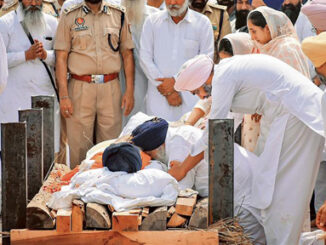
Akali patriarch Badal cremated with state honors, top leaders pay respects
BJP chief Nadda, Union Minister Puri, Pawar visit family
BADAL, PUNJAB (TIP): Cutting across party lines, thousands bid tearful adieu to former Chief Minister Parkash Singh Badal, who was cremated with full state honors at Badal village in Muktsar district today.
Badal, 95, died at a hospital in Mohali on Tuesday, April 25. The last rites of the grand old man of state politics were performed by his son and SAD chief Sukhbir Badal along with his daughters, Harkirat Kaur and Gurleen Kaur, and son Anantveer Singh at their orchard.
Sukhbir’s estranged cousin Manpreet Badal’s son Arjun and daughter Rhea, sister Parneet Kaur Kairon’s son Jai also lit the pyre. The SAD leadership claimed that the family had given a message of women empowerment following the teachings of the Guru Sahibs. A few minutes before lighting the pyre, Sukhbir broke down.
A brigade of policemen gave a gun salute to the former Chief Minister.
Earlier, during the day, the mortal remains of Badal were kept in the courtyard of his house, so that people could have his last ‘darshan’. Senior BJP leadership, including its national president JP Nadda, Union Minister Hardeep Singh Puri and leader Tarun Chugh also visited the residence. Former Maharashtra CM Sharad Pawar too visited the family’s residence.
Among the prominent persons who came to pay tributes to the leader included Union Minister of State Som Parkash, Punjab Governor Banwarilal Purohit, CM Bhagwant Mann, Speaker Kultar Singh Sandhwan, Rajasthan CM Ashok Gehlot, Deputy CM, Haryana, Dushyant Chautala, former CMs of Haryana Om Prakash Chautala and Bhupinder Hooda, J&K former CM Omar Abdullah, former Union Minister Pawan Bansal, Punjab Cabinet Ministers Aman Arora and Dr Baljit Kaur, Haryana Cabinet Minister Ranjit Chautala, Punjab Congress president Amarinder Singh Raja Warring, former minister Sukhjinder Singh Randhawa, former minister of Rajasthan Gurjant Singh Brar, Akal Takht Jathedar Giani Harpreet Singh, SGPC president Harjinder Singh Dhami, SGPC former presidents Hargobind Singh Longowal and Bibi Jagir Kaur, DSGMC chief Harmeet Singh Kalka, DSGMC former presidents Manjinder Singh Sirsa and Paramjit Singh Sarna, BSP state president Jasvir Singh Garhi, several leaders, including Bikram Singh Majithia, Dr Daljeet Singh Cheema, Sikander Singh Maluka, Maheshinder Singh Grewal, Sharanjit Dhillon.
-

India in history this Week-December 31, 2021, to january 6, 2022
31 DECEMBER
1925 Hindi writer Shrilal Shukla, born for satire, was born.
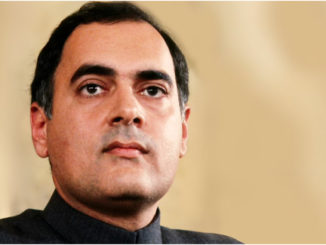
1984 Rajiv Gandhi became Prime Minister and Congress President for the first time.
1802 The Maratha ruler Peshwa Bajirao II came under the protection of the British.
1866 Chief Minister of Bihar and freedom fighter Krishna Ballabh Sahai was born.
1926 Renowned Indian writer, historian, best orator and scholar Vishwanath Kashinath Rajwade died.
1929 Congress workers led by Mahatma Gandhi started the movement for complete self-rule in Lahore.
01 JANUARY
2001 Calcutta was officially named Kolkata.
1971 Broadcasting of cigarette advertisements on television was banned.
1950 Rahat Indouri, famous Urdu poet and lyricist was born.
2020 India’s first Chief of Defense Staff General Bipin Rawat, who took charge (CDS) on 1 January, 2020
02 JANUARY
1978 Air India had a Boeing 747 accident. All 213 people aboard this plane were killed.
1757 British troops captured the city of Calcutta (now Kolkata) in India.
1954 Bharat Ratna Award was started.
03 JANUARY
2009 Rajasthan Chief Minister Ashok Gehlot won the trust vote in the Vidhan Sabha.
2005 USA announces Rs 6.2 crore assistance to provide clean drinking water to tsunami victims in Tamil Nadu.
1995 360 people died in a fierce fire in a school in Dabwali, Haryana.
1968 Launch of ‘Maneka’, the country’s first meteorological rocket.
1943 For the first time, information about missing people was broadcast on television.
1929 Mahatma Gandhi met Lord Irwin.
1901 Brahmacharya Ashram opened in Shanti Niketan.
1984 Ravindra Nath Tagore inaugurated the ‘Pausha Mela’ at Shanti Niketan.
1998 Bangladesh refused to hand over India to ULFA general secretary Anoop Chetia.
04 JANUARY
1994 Rahul Dev Burman (RD Burman) famous music composer of Hindi films passed away.
1972 Institute of Criminology and Forensic Science inaugurated in New Delhi.
1966 India-Pakistan Conference between Prime Minister of India Lal Bahadur Shastri and General Ayub Khan of Pakistan begins.
05 JANUARY
2014 Indian communication satellite GSAT-14 was successfully placed into orbit.
2009 Omar Abdullah, President of National Conference, sworn in as Chief Minister of Jammu and Kashmir.
2006 India and Nepal extend the duration of the transit treaty by 3 months.
1957 Central Sales Tax Act comes into effect.
1955 Birth of West Bengal Chief Minister Mamata Banerjee in Calcutta (now Kolkata).
1941 Birth of cricketer Mansoor Ali Khan Pataudi in Bhopal.
1934 Birth of Bharatiya Janata Party leader Murli Manohar Joshi.
1890 Advocate Gyanendra Mohan Tagore died.
1671 Chhatrapati Shivaji Maharaj captured the Salhar region from the Mughals.
1659 Aurangzegb defeated Shah Shuja in the Battle of Khajwah.
06 JANUARY
1966 Oscar-winning Indian composer AR Rahman was born.
1967 Allah Rakha Rahman, who created a new place in the world of music, was born.
1959 One of the all-rounders of the country, Kapil Dev was born on this day.
1932 Famous Hindi writer Kamleshwar was born.
1928 Indian playwright and theatergoer Vijay Tendulkar was born.
1885 Bharatendu Harishchandra, one of the leading Hindi poets and writers of modern India, died.
1918 Bharata Vyas, the famous lyricist of Bollywood, was born.
-

Sanyukta Kisan Morcha suspends protest aftergovt agrees to most of their demands
Experts call agitation ‘enriching of democracy’, but also term victory as one ‘forced due to political compulsions’
NEW DELHI (TIP): As the leaders of the Samyukta Kisan Morcha on Thursday, December 9, formally announced the ending of their year-long agitation at the Delhi borders in the backdrop of now-repealed farm laws and the Centre’s outreach, according to some agriculture experts the story may be far from over yet. They called the farmers’ victory “reclaiming of democracy” and one that exposed “inability/limitations of RSS-BJP strategy/instrument to counter agitation/movement without any religious tinge”. However, it was also one resulting from “pure political compulsions of the ruling BJP”, they said. “Yes, it is a glorious victory, but forced due to UP/Punjab/Uttarakhand elections. The Narendra Modi Government conceded to farmers’ demands because of the fear of losing in 2022 Assembly elections,” said agriculture expert from Western UP Sudhir Panwar, who is also associated with the Samajwadi Party.
“The compelling reasons for repeal was possibility of novel political alliance in Punjab and the growing support of farmers for political alliance of Akhilesh Yadav and Jayant Chaudhary (in Western UP),” he added.
Also pointing to the words used by the Prime Minister while announcing the decision to rollback, Panwar called it a “clear indication of future”. “The PM said he felt sorry over his failure in convincing a small number of farmers of the benefits of new agriculture laws. It was not an apology on the manner of implementation and implications of laws. In future the BJP government can always claim that farmers are now convinced on benefits of repealed laws,” he said.
Amid speculations of divisions among farmer groups, it seems BKU leader Rakesh Tikait, who infused life into the agitation with his emotional outbreak after the January-26 Republic Day violence, was not in favor of ending the agitation till the time there was a legal guarantee of Minimum Support Price.
Panwar also said “farmers were divided”. While repeal was the main demand of those from Haryana and Punjab, for the rest of the country it was the legal guarantee of the MSP. “Rakesh Tikait was not as happy as farmer leaders of Punjab and Haryana. It also shows the dominant role of farmers from Punjab and Haryana in the agitation and subsidiary role of those from other regions,” he said. While there was “no real gain for farmers even after year-long agitation as issue related with electricity, burning of agriculture waste and legal guarantee of MSP handed over to committee”, the successful agitation exposed the inability/limitations of RSS-BJP strategy/instrument to counter agitation/movement without giving religious hues, Panwar said. “The BJP used all known strategies such as calling farmers anti-national, Khalistani, secessionist, anti-Hindu, etc. January 26 incidents were used to malign the image of farmer leaders and their organizations. The success of the agitation was clear records of its leaders and sustained food supply and shelters at agitation sites,” he said.
(With inputs from Tribune, India)
-

Trumping majoritarianism in the Hindi heartland

By Zoya Hasan While regional parties will continue to be significant in various States of the Union, the principal challenge of overcoming majoritarianism lies in the Hindi heartland, especially in U.P. Oppositional electoral alliances, notably the formation of a federal front, are important strategies in this battle but it is no less important to challenge the ideological foundations of the majoritarian project through progressive and inclusive politics.
The landslide victory of the All India Trinamool Congress in the West Bengal Assembly elections and the pushback of the Bharatiya Janata Party (BJP) in West Bengal, Tamil Nadu and Kerala have given rise to a pervasive belief that right-wing politics can be defeated by regional assertions. Undoubtedly, regional and cultural assertion in these States acted as an effective bulwark against the BJP’s expansionary plans in southern and eastern India. The regional-cultural tropes deployed by Mamata Banerjee, for example, worked so well that at one point, Home Minister and BJP leader Amit Shah was even forced to clarify that if the BJP is elected, someone from Bengal would be the Chief Minister. This underlines the effectiveness of regional culture and politics in trumping communal politics. However, this claim needs to be tempered by the realism that it cannot work in the Hindi heartland, which is dominated by caste and communal politics, and has so far not seen any serious ideological and political challenge to politics based on these identities.
Encompassing nine States whose official language is Hindi, namely Bihar, Chhattisgarh, Haryana, Himachal Pradesh, Jharkhand, Madhya Pradesh, Rajasthan, Uttar Pradesh (U.P.) and Uttarakhand, this region retains a central position in the electoral strategies of the BJP and its larger political imagination. The party’s stunning show in these States propelled it to power in the 2014 and 2019 parliamentary elections. Its continued political dominance in the heartland will neutralize its losses now as well as in future in States where it has been bested by regional players. I will focus here on U.P. to illustrate the limits of the regional assertion.
Dimensions in the heartland
The Hindi heartland is clearly different. There are at least four important dimensions of this difference. First is the absence of regional identity in States such as U.P. This is evident from the debate on States reorganization and the reorganization of Uttar Pradesh in the 1950s. The compulsions of nation-oriented identity emerged very clearly from the discussions in the States Reorganization Commission on suggestions for the division of U.P. for administrative convenience. U.P. leaders argued for a large and powerful State in the Gangetic valley as a guarantee of India’s unity.
In this sense, U.P. was considered the backbone of India and the centerpiece of political identity in modern India. Importantly, it was supposed to provide the chief bulwark against growing regionalization and fragmentation elsewhere. Instilling a sense of regional pride, an essential part of Congress strategy in southern and coastal India, was not followed in U.P. U.P. was seen as the political heartland in contrast to Punjab and Bengal for instance, which were splintered and incorporated into two different nation states. As is well known, the bases of this post-colonial identity varied from its location in the freedom struggle to staking claim as the cultural homeland of Hindi and Hinduism. In both cases, it was centered in the idiom of the nation-state and strong central authority.
Second, although U.P.’s cultural homogeneity remains a matter of disagreement, the idea of the heartland had great resonance among the political elite who opposed the demand for U.P.’s reorganization. The long-standing traditions of composite cultural identity and shared plural cultures began to yield place to a singular homogenized identity. The Hindi-Urdu divide, which mirrored the communal cleavage of U.P. society, played a crucial role in this process. Urdu was excluded as it was seen to symbolize Muslim cultural identity in independent India, while Hindi was boosted to promote the development of a Hindi-Hindu heritage for this region. The project of homogenization of Indian/U.P. culture as Hindu culture was quickened in later decades. Even though it would be hard to assume a direct link between Hindi dominance and communal politics of subsequent decades, it is nevertheless a fact that all political parties in the State used it as an ingredient of social and cultural differentiation and a means to consolidate political dominance.
Role of communal politics
Third, it is clear that communal politics and communal movements have played a key role in U.P.’s modern history which in turn have diluted other identities.
In some respects, this process gained momentum in the wake of Partition which cast its long shadow upon political institutions and culture in U.P. and to a great extent affected the perspectives of Hindus and Muslims alike. Hindu nationalism was marginalized within the Congress party but many of its ideas were accepted in framing party policies. The State leadership was instrumental in forging a conservative consensus in the State under Chief Minister G.B. Pant who steered the affairs of the state for eight years after Independence.
The intensification of communal politics took a new turn with the mass mobilization for the construction of a Ram temple at Ayodhya which was deftly used by the Hindu right to establish a major presence in U.P. and to facilitate the political reconstruction of U.P. through the promotion of a collective Hindu identity. The crusade for the appropriation of disputed shrines is central to the communalization of politics and short circuiting the more complex process of political expansion for the BJP.
Importantly, this has laid the groundwork for building permanent electoral majorities through the deployment of ascriptive symbols in U.P. which, given its huge size, helps it to establish a strong base in the Hindi heartland to offset the appeal of countervailing identities elsewhere in India.
Caste politics too
Finally, caste politics which was expected to counter Hindutva expansion has failed to do so; in fact, caste politics has become a building block for the BJP’s expansion. The party has reached out to Dalits, actively mobilizing them and other backward castes to assimilate them into the Hindutva meta-narrative. Instead of erasing caste from electoral politics, the BJP-Rastriya Swayamsevak Sangh has sought to court fragments of castes as a way of undermining broad-based political movements and opposition to it. It has used the wider appeal of Hindu nationalism to co-opt backward castes and Dalits who are keen to align themselves to the larger narrative of Hindu nationalism.
A reset is needed
While regional parties will continue to be significant in various States of the Union, the principal challenge of overcoming majoritarianism lies in the Hindi heartland, especially in U.P. Oppositional electoral alliances, notably the formation of a federal front, are important strategies in this battle but it is no less important to challenge the ideological foundations of the majoritarian project through progressive and inclusive politics. This requires a reset of the basic political mindset in U.P. which can only be done by reviving the splendid heritage of the national movement in which this region played a central role and in which Gandhiji and Nehru played a heroic part. Invoking the spirit of the Bhakti movement which was the first major challenge to the religious orthodoxy of Hinduism would also help in resetting the cultural clock. This must, however, combine with much greater concern for the fundamental social and economic issues of the State, and making the struggle between communal and secular forces the central issue through public campaigns that address the problems of religious traditionalism and the cultural underpinning that this provides to the push to make India a Hindu state.
(Zoya Hasan is Professor Emerita, Jawaharlal Nehru University)
-

Indian-origin US based Sehgal Foundation shipping oxygen concentrators to 7 Indian states
DES MOINES (TIP): The Des Moines, Iowa, -based Sehgal Foundation said it was shipping out 200 oxygen concentrators to seven Indian states on May 6, 2021. The shipment of the medical equipment was made possible through donations from its individual supporters across the United States, the foundation said in a press release.
“Working in close coordination with local partners and government officials, the Sehgal Foundation team on the ground in India is ensuring that the equipment is directly reaching those who need it the most in public hospitals in villages across 7 states,” the release said. It added, “In the coming week, more oxygen cylinders, ventilators, personal protective equipment, rapid diagnostic tests, and therapeutics will be sent.”
Sehgal Foundation teams are working with district administrators and local partners in Andhra Pradesh, Bihar, Haryana, Maharashtra, Rajasthan, Telangana, and Uttar Pradesh, the release said. “To respond quickly during this catastrophic surge in Covid-19 cases in India, Sehgal Foundation has taken immediate action to reach the people in the greatest need,” the release said.
S.M. Sehgal Foundation, a Gurgaon, India, -based sister organization of the Sehgal Foundation operates in more than 1,000 villages, across 10 states, serving more than 2.5 million people. Areas it focuses on include food and water security, and good rural governance. Since a devastating second wave of Covid-19 surged in India, dozens of US-based organizations have sent medical equipment to India. Last week, the American Association of Physicians of Indian Origin (AAPI), which represents the 80,000-strong Indian American physician community in the US, airlifted the first batch of 1,000 of oxygen concentrators.
On May 3, pharmaceutical giant Pfizer announced it will donate more than $70 million worth of medicines to India.
Indiaspora, a nonprofit, raised $1 million raised through its private donor network of members.
-

Farmers withdraw dharna on rail tracks near Amritsar after 169 days
Amritsar (TIP): A group of farmers squatting on railway tracks near here to protest the Centre’s new farm laws withdrew their agitation on Thursday, March 11, after 169 days, as suspension of trains caused losses to them and traders. Savinder Singh, a leader of the Kissan Mazdoor Sangarsh Committee which had been spearheading the stir, said they decided to withdraw the rail blockade at Devidaspura on the Amritsar-Delhi route after a meeting of all protesting farmer unions. Devidaspur near Jandiala station is about 25 km from Amritsar railway station. “Farmers were blocking only passenger trains, but the Centre decided to stop goods trains as well which caused huge losses to farmers, traders and industrialists. In the light of current circumstances, farmers have unanimously resolved to end the stir here,” he said. Officials said that with the farmers ending their stir here, normal movement of trains will resume within a couple of days. Meanwhile, the ‘Delhi Chalo’ farmers’ protest at border points of New Delhi has entered the 107th day. Thousands of farmers, especially from Punjab and Haryana, are staging a sit-in protest along Delhi borders. The protest started on November 26, 2020. The farmers are demanding a complete rollback of the new farm reform laws and a guarantee on the Minimum Support Price (MSP) system being retained. Multiple rounds of talks between the Centre and the farmers’ union leaders have ended in a stalemate. Protesting farmers fear that the new laws will dismantle the MSP system and corporatise farming.
-

Labor rights activist Shiv Kumar granted bail
SONIPAT, HARYANA (TIP): Labor rights activist Shiv Kumar was on Thursday, March 4, granted bail by Sonipat District and Sessions Judge Y.S. Rathorein an attempt to murder case leading to his release from the jail. He was earlier granted bail in two more cases on Wednesday, March 3. Kumar, the district president of Mazdoor Adhikar Sangathan, a workers’ rights group, was arrested by the Haryana Police on February 2 in connection with three cases registered against him over the past two months. His fellow activist and co-accused in the three cases, Nodeep Kaur, was granted bail this past week and released from the jail. The medical report of Kumar submitted at the Punjab and Haryana High Court had revealed multiple injuries to him.
-

Movement of trains hit as farmers block rail tracks
New Delhi (TIP): The “rail roko” call given by farmers’ bodies impacted rail movement in Punjab, Haryana, western Uttar Pradesh and parts of Rajasthan on Thursday, February 18, with reports of sporadic blockades reported from other parts of the country. Railway officials said there was negligible impact of the strike even as some trains were stopped as a precautionary measure. The Samyukta Kisan Morcha, a group of about 40 farmers’ bodies protesting against three new farm laws, had given a call for a four-hour nationwide rail blockade from noon till 4pm. According to farmers’ bodies, the strike received massive support across the country with trains being stopped. “In many places trains were not stopped for long to prevent inconvenience to passengers,” the All India Kisan Sabha said in a statement.
In Punjab and Haryana, farmers at several places squatted on railway tracks, which led to disruptions. Protests were also staged at some places in Uttar Pradesh, Maharashtra, Madhya Pradesh and Karnataka.
In Punjab, trains passing through rural areas were stopped at several places, especially in agriculture belts of Malwa and Doaba areas. In several places, tea and snacks were offered to stranded passengers. Some trains coming into Punjab were stopped at Jammu, officials said. In Haryana too, hundreds of farmers, including women, peacefully participated in the agitation at multiple locations in Dadri, Bhiwani, Jind, Sonepat, Rohtak, Hisar and Fatehabad, said Dayanand Punia, state secretary of Akhil Bharatiya Kisan Sabha. Due to the blockade, the busy Delhi-Ambala-Amritsar railway track was affected, leading to the diversion of six trains and the stoppage of many others.
The affected trains waiting at various railway stations were allowed to commence their journeys after farmers lifted the blockade at 4pm.
In Rajasthan, officials said the Rewari-Sri Ganganagar special train was the only one cancelled due to the agitation, while a few others were delayed. Most of the protests were in western Rajasthan. “The train movement remained almost unaffected. There were reports of minor blockade on two of our routes. However, it was ensured that the issue is addressed. Hence, train movement remained unaffected,” said Ajit Kumar Singh, chief public relation officer (CPRO), North Central Railways — the zone which covers a large part of Uttar Pradesh.
In Bihar, trains were blocked in Patna-Buxar, Gaya-Patna, Mokama-Barauni, Siwan-Chhapra, Kiul-Gaya, Muzaffarpur-Samastipur, Bhagalpur-Jamalpur and Patna-Darbhanga stretches. Supporters of the CPI (ML), the RJD and the JAP took part in the agitation. Railway officials said that around 20 trains were affected by the agitation.
The protest saw a mixed response in Madhya Pradesh, West Bengal, Karnataka and Tamil Nadu with some sporadic protests by Left organisations. Some members of Left farmers’ bodies were arrested in Madhya Pradesh for trying to disrupt rail traffic. No disruption in rail traffic was reported from Goa, Kerala and north-eastern states.
“Majority of the zones have reported not a single case of any stoppage of train by the agitators. Few trains were stopped in some areas of some railway zones, but now train operation is normal and trains are being operated smoothly,” said a railway spokesperson. The railways deployed 20 additional companies of the Railway Protection Special Force across the country.
Thousands of farmers have been camping at Delhi’s borders since November last year, seeking a repeal of the new farm laws, which they say will erode their bargaining power, weaken a system of assured prices, and leave them vulnerable to exploitation by big agri businesses.
The government has maintained that the laws aim to ease restrictions on farm trade by setting up free markets, allow traders to stockpile large stocks of food for future sales and lay down a framework for contract farming.
Source: HT
-

Farmers not going home, will head to Kolkata soon: Rakesh Tikait
‘Will harvest crops and continue our agitation at the same time’
HISSAR, HARYANA (TIP): Asserting that farmers sitting on the Delhi borders will not go back to their homes till the farm laws are repealed, Bharatiya Kisan Union leader Rakesh Tikait on Thursday, Feb 18, said “our next target is to reach Kolkata on tractors”. “We are out to change the scenario of the country. We need one month to correct the powers-that-be. We will not return until course correction of the ruling party. Farmers of Bengal are also in crisis and we will have to fight for them as well,” Tikait said addressing a “mahapanchayat” at Kharak Poonia village of Hisar.
The new agriculture laws will ruin the economy of the small, marginal as well as big farmers, he said, adding that the private firms will take control of the fields in the guise of contract farming.
Tikait said the government should not be under the impression that the movement against the laws will end as farmers will go to their villages to harvest their crop.
“Even if you have to set your standing crop on fire, you should be prepared for it. The government should not harbor this impression that farmers will return home. We will harvest crops and continue our agitation at the same time,” he said addressing a “mahapanchayat” at Kharak Poonia village of Hisar.
“There will be no ‘ghar wapsi’ till then,” he said. Tikait also asked farmers to be ready for the next call of the unions spearheading the stir. “Keep your tractors filled with fuel and facing towards Delhi’s direction. You can get a call to move at any time, that will be decided by the committee (farmers unions),” he said.Tikait said after Haryana, they will be holding panchayats in other parts of the country, including West Bengal, Karnataka, Tamil Nadu and Gujarat.While earlier farmers had given a call for a “tractor rally” in Delhi, Tikait said the next time, they will go to the national capital with their agricultural implements.
Addressing the gathering, Haryana BKU chief Gurnam Singh Chaduni alleged, “If new agricultural laws are implemented, crops will be purchased at arbitrary prices and farmers will be forced to even sell their land.”
Thousands of farmers have been protesting since late November at the Delhi borders with Haryana and Uttar Pradesh, demanding a rollback of the Farmers’ Produce Trade and Commerce (Promotion and Facilitation) Act, 2020; Farmers’ (Empowerment and Protection) Agreement on Price Assurance and Farm Services Act, 2020; and Essential Commodities (Amendment) Act, 2020.
The protesting farmers have expressed apprehension that these laws will pave the way for the dismantling of the minimum support price (MSP) system, leaving them at the “mercy” of big corporations.
However, the government has maintained that the new laws will bring better opportunities to farmers and introduce new technologies in agriculture.
(Withinputs from TNS and PTI)
-

Polarization of societies

By Shyam Saran “The Right has been able to exploit the existing social, communal and sectarian fault lines to deflect attention from its complicity in the disempowerment and the immiseration of the majority. In the US, it is by deliberately sharpening the racial divide, stoking the fear of immigrants and loss of cultural identity that a figure like Trump was able to continue rewarding the corporate class with large tax cuts at the cost of the very services that could ameliorate the worsening economic status of the less-educated white minority. Recently, historian Rana Dasgupta has drawn attention to a very cynical insight offered by Lyndon Johnson, a former President: ‘If you can convince the lowest white man he’s better than the best-colored man, he won’t notice you’re picking his pocket. Hell, give him somebody to look down upon and he’ll empty his pockets for you.’

Stop the Steal. Trump supporters stormed the capitol on January 6 We see echoes of what Johnson was alluding to in our own country. Those most affected by demonetization were the already poor and those eking out a constantly threatened existence as small and medium enterprises and their unorganized workers. But millions were ready to stand in unending queues to get their paltry sums exchanged, their pain dulled by the belief that fat cats and money bags had been deprived of their ill-gotten gains. Except that they had not and many profited by turning their black money into white. Or if the lowliest Hindu is made to feel superior to the best among the Muslims in the country, perhaps he is ready to accept his dire economic situation and forget who may be really responsible for his deprivation.
There has been a sigh of relief manifest across the world as Joe Biden has succeeded to the US presidency, presaging a more predictable and more ‘normal’ conduct of domestic and external affairs under an experienced and professional administration. Biden has promised to heal a deeply divided country, to promote reconciliation and unity and to restore the democratic and liberal credentials of the US as the world’s oldest democracy. This promises to be a long haul and unlikely to be achieved during one four-year administration. He would be deemed a success if he at least manages to, as he said, ‘lower the temperature.’
The social and political polarization on display in the US is increasingly manifest in other democracies, including our own. A key causal factor is the rising inequalities of wealth and income that undermine the most powerful appeal of democracy which is egalitarianism, the equality of opportunity it promises and the fairness with which the state will treat all its citizens. As economies develop, as technology advances, there will inevitably be winners and losers. A democratic state will have to continually ensure that it is able to redistribute rising incomes and wealth in a manner that helps those left behind to retain hope in a better future, if not for themselves, then at least for their children. It is not that globalizationin itself has spawned huge inequalities, nor that inequality is inherent in increasingly arcane and specialized technological advancement. The fault lies with public policy which has failed to distribute the benefits of globalization more evenly. When the number of losers far outstrips the winners, and this state of affairs persists and even worsens, democracy will be challenged. This is what we witness in the US and in democracies across the world, India included.
There is an intriguing question, however. It is the political Left (in which I broadly include the liberal constituency) which has historically mobilized support among those who are at the lower end of the economic and social scale. In the present case, the Right and nativist forces have captured the imagination of the exploited and deprived. The Left targets the rich and the corporate sector; the Right does not pay a price for associating with this privileged minority and profiting from its generous funding. What explains this oddity? That there is an alliance between the populist and the powerful elements within the corporate sector is more than apparent. But the liberal and the Left have been unable to leverage this to mobilize support among those who are, in fact, at the receiving end of this powerful nexus. The Right has been remarkably successful in co-opting the ranks of the dejected and deprived to buttress its own power. How is this possible?
The Right has been able to exploit the existing social, communal and sectarian fault lines to deflect attention from its complicity in the disempowerment and the immiseration of the majority. In the US, it is by deliberately sharpening the racial divide, stoking the fear of immigrants and loss of cultural identity that a figure like Trump was able to continue rewarding the corporate class with large tax cuts at the cost of the very services that could ameliorate the worsening economic status of the less-educated white minority. Recently, historian Rana Dasgupta has drawn attention to a very cynical insight offered by Lyndon Johnson, a former President: ‘If you can convince the lowest white man he’s better than the best-colored man, he won’t notice you’re picking his pocket. Hell, give him somebody to look down upon and he’ll empty his pockets for you.’ Dasgupta points to an ugly truth: Sometimes people can be persuaded to ‘prize the removal of others’ rights above the preservation of their own.’
And this is what is happening in the US. Can Biden change this?
Why is the Left unable to build its constituency in the ranks of the deprived? Precisely because ideologically, it sees its role as transcending the societal fault lines and uniting around a more inclusive concept of egalitarianism.
We see echoes of what Johnson was alluding to in our own country. Those most affected by demonetization were the already poor and those eking out a constantly threatened existence as small and medium enterprises and their unorganized workers. But millions were ready to stand in unending queues to get their paltry sums exchanged, their pain dulled by the belief that fat cats and money bags had been deprived of their ill-gotten gains. Except that they had not, and many profited by turning their black money into white.
Or if the lowliest Hindu is made to feel superior to the best among the Muslims in the country, perhaps he is ready to accept his dire economic situation and forget who may be really responsible for his deprivation.
There was only one brief occasion when the current political dispensation was threatened and that was when the label of ‘suit-boot kisarkar’ struck home but then it was never built up into an alternative political narrative. The Left in our country has failed precisely because it has become defensive about its core beliefs and started flirting with the narrow inclinations of the Right, for example, by doing its own religious rituals and spouting nationalist slogans. Nor is there stomach to shine the spotlight on the nexus among the politician-bureaucracy and big business that has come to dominate governments in democracies across the world.
There are parallels between the oldest and the largest democracies in the world. Both are at critical junctures in their evolution as enlightened democracies envisaged by their respective constitutions. But I believe that the future of democracy as a political ideal may likely be determined by the trajectory that India takes in the coming years rather than the US, especially when the Chinese model of authoritarian capitalism seems to bewinning admirers across the world.
(The author is Former Foreign Secretary and senior fellow, Centre for Policy Research)
-
India, Singapore commit to further enhance bilateral defence ties
New Delhi (TIP): India and Singapore on Wednesday, Jan 20, signed an implementing agreement on submarine rescue support and cooperation between their navies during the 5th Defence Minister’s Dialogue held over video conference, a joint statement said. The signing of an implementing agreement is very significant between two submarine operating navies, said maritime affairs expert Rear Admiral Sudarshan Shrikhande (retd). “We have had a growing defence relationship with several ASEAN members and naval cooperation between Singapore and India goes back to the early 1990s. Cooperation in submarine rescue enables sharing of resources and expertise and much faster response should an accident happen. It is cost-effective and, importantly, time-effective when time is the most critical factor,” Shrikhande said. In another move to deepen military cooperation, defence minister Rajnath Singh and his Singaporean counterpart Ng Eng Hen expressed their support to the early conclusion of agreements to facilitate live firing drills and to establish reciprocal arrangements for the cross-attendance of military courses.
Punjab, Haryana among 10 most innovative states
Haryana (sixth) and Punjab (10th) find place among the top 10 most innovative states as Karnataka ranks first, the Centre’s policy think tank, NITI Aayog, has said in its report — India Innovation Index 2020. Released by NITI Aayog Vice Chairman Rajiv Kumar in the presence of members VK Paul (Health), Ramesh Chand (Agriculture) and CEO Amitabh Kant, the index places Himachal Pradesh at the top among the hill and north-eastern states. Chandigarh has made a leap forward to rank second among the UTs after Delhi.
The index, launched last year, ranks states based on whether they provide a conducive environment for registering new businesses, applying for patents, human capital and investments, among other measures.In the second edition, Maharashtra has overtaken Tamil Nadu for the second spot. Telangana has claimed the fourth place, with Kerala moving one notch up to fifth slot, pushing Haryana to sixth place on the list of 17 major states. Bihar has featured at the bottom. “There is a very strong correlation between innovation and development. As states become more innovative, their per-capita GDP (gross domestic product) rises,” said Amit Kapoor, chairman of the Institute for Competitiveness, a Gurugram-based organisation that worked with NITI Aayog to develop the index.
-

Centre sounds alert as bird flu cases spread to 6 states
New Delhi (TIP): As a Bhopal-based laboratory confirmed that 437,000 poultry birds in Haryana died because of bird flu, the Centre on Friday, January 8, asked the six states where deaths because of the disease have been confirmed to increase their vigil and act to curb the outbreak. The Centre has confirmed bird flu in Kerala, Rajasthan, Madhya Pradesh, Himachal Pradesh, Gujarat and Haryana, the government said in a statement.
“So far, the disease has been confirmed from six states. It is learnt that culling operations have been completed in both the affected districts of Kerala. The disinfection process is underway,” the statement read.
Following the confirmation of bird flu, Haryana is set to start the biggest culling of birds in any state. Officials said 166,000 birds would be killed in the next few days. Culling of birds is to take place within 1 km of Kheri and Ghanauli villages from where samples tested positive for bird flu, they said. Two of the three samples sent by the Haryana animal husbandry department from poultry farms in Panchkula’s Barwala belt to the National Institute of High Security Animal Diseases (NIHSAD) laboratory in Bhopal tested positive for avian influenza on Friday. “As per the report received, it has been confirmed that birds of two poultry farms were infected with avian influenza (H5N8). Though this bird flu strain is less pathogenic, the state government has issued a notification for the affected poultry farms of Panchkula as a precautionary measure,” Haryana’s animal husbandry and dairying minister JP Dalal said on Friday. Tests done on three batches of samples sent to a Jalandhar lab from Barwala were inconclusive, following which the samples were sent to the Bhopal lab. More than 437,000 poultry birds have died in Panchkula’s Barwala and Raipur Rani areas, considered to be Asia’s second largest poultry belt, over the past 26 days. On Friday, the central team visited the community health centre in both areas. Arrangements have been made at the community health centre in Raipur Rani, and isolation wards set up, while Tamiflu tablets have been procured to check human-to-human transmission of the influenza, said Dr Saroj Aggarwal, deputy civil surgeon, Panchkula. “We are ready to deal with any situation.” (Source: HT)Budget session will be as long as earlier: Speaker
Indicating that the upcoming Budget session of Parliament will have a Question Hour, Lok Sabha Speaker Om Birla on Friday, Jan 8, said questions of Opposition parties will be answered and issues raised by them discussed when the House meets for the next session.Speaking to reporters in Dehradun, Birla said the upcoming Budget session will be of the same duration as it had been in the past and there will be discussions on all issues. The Lok Sabha Speaker was in Dehradun to address an event part of an outreach programme for Panchayati Raj Institutions — ‘Panchayati Raj System: Strengthening the Decentralised Democracy’. The event was aimed at introducing panchayat members to the functioning of Parliament and to provide them with an exposure to democratic principles and ethos.
India-UK flights resume
Weeks after flights between the United Kingdom and India were suspended following the detection of a more infectious strain of the novel coronavirus, air services between the two countries resumed Friday. The first flight carrying 256 passengers from London landed in New Delhi on Jan 8 morning, reported news agency ANI. The government had suspended flights on December 23. As flights resume in a calibrated manner, for the next two weeks, till January 23, only 15 flights will operate between the two countries. The incoming flights will land only in Delhi, Mumbai, Bengaluru, Chennai and Hyderabad. The government has put out the standard operating procedure for travellers entering India. According to the guidelines, all passengers will have to undergo mandatory self-paid RT-PCR tests on arrival.
India, Japan sign pact for 50-bn yen loan
India and Japan on Friday signed an agreement for a loan of up to 50 billion yen (about Rs 3,550 crore) to back New Delhi’s economic support programmes for the poor and vulnerable affected by the Covid-19 crisis. CS Mohapatra, additional secretary in the department of economic affairs and Japanese ambassador Satoshi Suzuki signed the agreement in New Delhi for the loans with an interest rate of 0.65% per annum and a repayment period of 15 years, including a five-year grace period. Japan had earlier provided budget support of 50 billion yen and grant assistance worth one billion yen (about Rs 71 crore) to support the Indian government’s efforts to counter the Covid-19 crisis. -
NARENDRA MODI: FROM TEA SELLER AT TRAIN STATION TO MASTER OF POLITICAL THEATRE
Narendra Modi, who once sold tea at a railway station has become the most influential Indian leader in generations, winning a landslide in election results announced, May 23, 2019. Modi’s own party, BJP won an absolute majority – 302 seats. The BJP combined with its alliance, the NDA, won 351 seats. As votes were tallied early Thursday, May 23 afternoon, Modi’s chief rival, the Indian National Congress, was leading in just 50 races, the second consecutive dismal showing in a national election for what was once India’s most powerful political party.
Modi, 68, was born to a poor family in Gujrat State, where he developed a strong dislike for the ruling Congress Party as a result of hanging around a political office near his father’s tea stall. While still a child, he started attending daily meetings of the RSS (Rashtriya Swayamsevak Sangh), said to be the world’s largest volunteer organization, whose Hindu nationalist ideology envisions the country’s diverse Hindu population as a single nation with a sacred culture that should be given primacy in India.
Hindu nationalists were sidelined by India’s founding Prime Minister, Jawaharlal Nehru, whose vision of India was of a secular nation at ease with its bewildering plurality. Their parties, including Modi’s Bharatiya Janata party (BJP), struggled to win more than 10% of the national vote for decades until the 1990s, when they started to expand on the back of a national campaign to demolish a 16th-century Mughal mosque in Ayodhya, U.P. and replace it with a Hindu temple. That push culminated in the destruction of the mosque by a mob of 150,000 Hindu activists, which triggered rioting across India that killed estimated 2000 people. Still, the BJP’s support was limited to wealthier Hindus in the country’s north and west, with resistance to the party from poor, marginalized Hindus, Muslims, and South Indians thought to be permanent hurdles to Hindu nationalist domination.
Modi’s magnetism, especially his personal branding as a tea boy who climbed to the country’s highest ranks, has changed those calculations, drawing vast support from the country’s emerging middle and lower-middle classes. “He has managed to create this voting bloc—other party’s voters who are voting for the BJP just for Modi,” said Rahul Verma, a fellow at the Delhi-based Center for Policy Research. “The shifts are actually happening among the more aspirational voters, who think Modi can fulfil their economic aspirations…This leader, who has risen from the ranks of a poor family, has become a symbol.” This symbolism was especially potent among young Indians, a vital and growing electorate in a country with a median age younger than 28. “They have grown up seeing the way of life in the West and in places like Singapore and China,” said Vivan Marwana, a journalist who is writing a book on young Indians. “And Modi came on to the scene in 2014 and promised them bullet trains, a million new jobs, the world’s largest statue of Sardar Vallabhbhai Patel, a former Dy. Prime Minister and Minister of Defense. It is all very aspirational.”
Young Indians had grown up being told their country was on the cusp of becoming a superpower. In Modi, they had a leader who spoke as if it already was. Alongside aspiration, the BJP promotes a vision of Hindu cultural supremacy that sidelines the country’s 300 million minority population. As Chief Minister of Gujarat state, Modi was a firebrand Hindutva campaigner. In 2002, anti-Muslim riots in his state killed at least 1,000 people, resulted in the future Prime Minister becoming an international pariah who was banned from entering the U.S. In response, Modi presented himself as an outsider being attacked by elites: a refrain that would become a central part of his political messaging. “He would say he was constantly being targeted by the English-speaking media out of Delhi,” said Nilanjan Mukhopadhyay, author of a biography of the Indian leader. “He made himself the symbol of the underdog, projected himself as somebody who is against the status quo forces. The times came to suit Modi. When the popular disgust at corruption scandals plaguing the previous Congress government boiled over into street protests in 2011, it provided the rightwing populist leader a national springboard.
“Modi was at the forefront of projecting this strong, centralizing leadership,” said Milan Vaishnav, the director of the South Asia program at the Carnegie Endowment for International Peace. “He realized what people are looking for is somebody who gets stuff done.”
HIS MASTERY OF POLITICAL THEATRE, AND FINGER ON THE PULSE OF INDIANS, HAS NOW SECURED HIM THE STRONGEST MANDATE OF ANY LEADER IN DECADES.
But it will do little to create jobs, alleviate financial stress in the country’s vast agriculture sector or grow the economy on the backdrop of a US trade war and a global slowdown.
“Issues of economy will be the focus of his first 100 days,” said Rajat Sethi, a fellow at the influential BJP-aligned India Foundation think-tank. He said Modi could also look to broaden a program of targeted payments to farmers and other struggling groups.
The scale of Thursday’s victory creates room for Modi to ram through reforms, but also the possibility that he may not have to, said Giles Verniers, a political scientist who teaches at Haryana State’s Ashoka University. “It is a peculiar result because there were a multitude of ground realities that were clearly going against the BJP. It won despite jobless growth, rural distress, a tepid economy,” said Verniers. “It’s as if all those adverse factors did not matter at all. “And so the worry is that it could translate into a belief that the BJP can win despite poor performance, and that may not necessarily translate into incentives to address the deeper issues with the economy.”
UNEMPLOYMENT has gone up from 2.2% in 2011 to 6.1% in 2019. It is hoped that Modi will finally build the necessary infrastructure to build large scale factories to manufacture 100 million pieces of varieties of clothing needed by American consumers. The former Reserve Bank of India Governor, Raghuram Rajan, now Professor at the University of Chicago has argued that India needs to create an export-oriented economy. Fortunately, President Trump currently negotiating terms of trade with China is anxious not to depend on China for many of its imports. President Trump will be happy to do business with India provided India has the capacity and capability to deliver the needs of American consumers.
100% TRANSFER OF TECHNOLOGY will allow India to manufacture for several reasons. First, India has a large supply of engineers and professionals. Second, India has a comparative advantage with China and the USA. Third, President Trump must also cope with the skyrocketing prices of drugs manufactured in the U.S.A. Fourth, India has a large supply of biotechnologists, microbiologists, and other health care scientists and professionals. Sixth, making drugs in India will cost a miniscule of what it costs in the USA. The US drug industry can expand its global market share by making drugs in India.
Lockheed Martin, United Technologies, Ratheyon, General Dynamics and other military manufacturers can cut the cost of production if they were to make their products in India. Thus, a confluence of factors such as supply of engineers, scientists and professional managers; comparative advantage in wages and salaries; skyrocketing prices of drugs and military hardware in the US; deterioration of US-China relations in trade; national security and cybersecurity problems; and others look attractive for Prime Minister Modi. He has a huge mandate now and nothing but a Modi economic revolution could solve many problems with one stroke.
Never before, Modi had the good fortune of not facing any major opposition for his initiatives or policies. Modi has almost two thirds majority in the Parliament. Modi must translate the mandate and the extraordinary goodwill from the electors and the global community into Modi economic revolution that will modernize India. The roadmap should call for GDP growth of 10 to 12% for the next decade. Hope Prime Minister Modi comes up with a roadmap for the next 100 days.
(The author, former CEO, First Asian Securities Corporation, NY and Senior Adviser, Imagindia Institute, a New Delhi think tank lives in Scarsdale, NY. He can be reached at vpwaren@gmail.com)
-

Rs 100-cr scam stings Haryana
7 Gurugram ETOs charge sheeted for bogus tax refunds
GURUGRAM, HARYANA, INDIA(TIP): Seven Excise and Taxation Officers (ETOs) posted in Gurugram helped nine firms siphon off funds worth over Rs 100 crore from the state exchequer via bogus tax refund claims. A FIR in this regard was filed in July. Subsequently, ETOs Narendra Dhanda and Shobhini Mala were placed under suspension after a preliminary probe.
Now the government has also suspended ETOs SK Singh, Vijender Dhull, Vikas Prashar, Sanjeev Saluja and Suneela Singh. All seven have been charge sheeted under Rule 7 of the Haryana Civil Services (Punishment and Appeal) Rules, 2016, which can lead to their dismissal and demotion.
As the scam unfolded, investigations into the role of two Gurugram firms further revealed the involvement of 15 firms in Panipat district and two in Kaithal. These firms too submitted bogus claims for tax refund during transition from VAT to GST.
In view of the inter-state ramifications of the scam, CM Manohar Lal Khattar has ordered that the case be handed over to the State Vigilance Bureau (SVB) as recommended by the Additional Chief Secretary, Excise and Taxation, Sanjeev Kaushal.
Modus operandi
Unscrupulous dealers would float a fake firm, procure bills of a commodity, such as cigarettes taxed heavily (21 per cent during VAT regime and 28 per cent under GST now), from within the state. They would show the sale on paper to a firm in another state (also fake) with 2 per cent central sales tax (CST), using Form C. Having thus ‘paid’ 21 per cent VAT and ‘charged’ 2 per cent CST, the trader would fraudulently claim 19 per cent refund from the government. For example, on a sale of Rs 10 crore, a dealer would claim a refund of Rs 1.9 crore.
The ETOs’ role
Form C was issued to bogus firms by ETOs even when they were not entitled to do business for which they were issued the form. Without the form, the firms could not have shown fake sales. “It was found that two Gurugram firms, Vipin Enterprises and Uma Traders, had created a web of seven more bogus firms — 15 in Panipat and two in Kaithal — and duped the government of nearly Rs 50 crore each by fake claims.
“The role of the Excise and Taxation Officers came under the scanner because they helped the bogus firms commit the fraud by issuing Form C. In some cases, even the address mentioned in their registration certificates were non-existent,” Additional Chief Secretary Kaushal explained.
Praising Additional Excise and Taxation Commissioner Vijay Singh, Joint RTC Rajiv Chaudhary and DETC Ashok Panchal, he said that the government had decided to issue commendation certificates to them for unearthing the scam.
REFUND ON FAKE BILLS
1 A fake firm would procure bills of a commodity like cigarettes taxed heavily
2 It would show sales outside state and claim refund for VAT paid & CST charged
3 It would procure bills from distributors, who generally sell stocks to retailers without bill, charging 1% of the bill amount
4 A firm with bills worth Rs 1 cr was presumed to have paid Rs 21 lakh VAT though all it had paid was a mere 1 per cent
5 The bogus firm would show sales to another bogus dealer outside Haryana against Form C and charge 2 per cent CST
6 Sale on CST is permissible only against Form C. The erring ETOs would issue the form knowing well the firm did not exist
7 The firm would then fraudulently claim Rs 19 lakh as refund.
(Source: Tribune, India)
-

Indian American to embark on solo flight around the world
NEW YORK (TIP): On July 4, Ravinder K. Bansal, a retired entrepreneur of Indian origin, will embark on a solo flight around the world in a single-engine Cessna 400 to raise money for a hospital in Haryana. He hopes to raise $750,000 to purchase an MRI machine for a hospital in his hometown Ambala.
The 100-bed hospital Rotary Ambala Cancer and General Hospital has been built with donations from philanthropists both in the US and India. The contribution is also a tribute to his elder brother Subhash Bansal’s wife, Sneh Bansal, who died of cancer in India, in 2005.
“I am excited to start my round the world trip from Buffalo Niagara International Airport on July the 4th. This mission for me is very personal as it not only is an adventure that I have been dreaming about for a while, but will also get the hospital a needed piece of MRI equipment now and help bring awareness about cancer in rural community around Ambala. Above all, it will generate publicity for the hospital that will hopefully continue to bring donations/support from the local and international community and Rotarians to keep the hospital operating and growing in future”, Bansal wrote in his blog.
Ravi Bansal, a resident of Buffalo, New York, is the pilot/owner of Cessna 400. The Cessna 400 is the fastest FAA-certified fixed-gear, single-engine piston aircraft in production today, reaching a speed of 235 knots (435 km/h) true air speed at 25,000 feet (7,600 m). The 19,878-mile trip will have several stops in different countries including England, France, Italy, Greece, Jordan, UAE, Oman, and India while going; and while returning Bansal would come via Thailand, Malaysia, Philippines, Japan, Russia, and Canada.
-

SYL standoff: INLD bid to dig canal foiled; Abhay Chautala, 72 other leaders jailed
PATIALA (TIP): Top leaders of the Indian National Lok Dal (INLD), including Abhay Chautala, 18 other MLAs and two MPs, were arrested by Punjab Police at Shambhu barrier on the Punjab-Haryana border on Thursday after they, along with several supporters, entered the state to undertake digging of the Sutlej-Yamuna Link (SYL) Canal.
They were rounded up for violating prohibitory orders and were sent to Patiala jail in judicial custody till February 27. A case under Section 188 (Disobedience to order duly promulgated by public servant) of the Indian Penal Code (IPC) was registered against Abhay and 72 other party leaders, who courted arrest, after the police refused to allow them to enter the state.
The INLD leaders had threatened to march into Punjab along with their shovel-carrying supporters towards the contentious canal, but heavy force was deployed to thwart their attempt. Punjab Police responded by constructing a 10-feet high wall of iron barricades and deployed about 5,000 armed personnel to stop the protesters from marching into the state.
When the INLD workers reached the Punjab-Haryana border at the Shambhu barrier, they were clearly outnumbered by the police. They first tried to climb up the barricades to cross into Punjab, but failed and symbolically started the digging work of the SYL Canal right there. As slogans of SYL being their legal right rent the air, Abhay delivered a short speech. He accused the Centre of being biased against Haryana, saying that Prime Minister Narendra Modi is not implementing the court decision on the SYL canal.After his speech was over, Abhay and his supporters turned to go back, but suddenly stopped to have a brief consultation with party leaders. He then changed his mind and decided to court arrest by entering Punjab. Police officials held brief parleys with the protesters before making an announcement on loudspeaker that whosoever enters Punjab will be arrested for breaching the prohibitory orders. Abhay and other party leaders did not resist the arrest and were taken to the Shambhu Serai where a temporary control room of Punjab Police had been set up.
After his arrest, Abhay warned that his party would not allow any Punjab leader who is opposed to the SYL Canal to travel through Haryana.
Earlier in the morning, INLD supporters started gathering at the new grain market in Ambala City for the “Jal Yudh Sammelan”. Though the number of workers at the venue was modest at the start, it began to swell rapidly after 12.30pm.
The venue was packed by the time Abhay arrived. After a quick round of speeches, they started marching on National Highway-1 (also known as GT Road) towards the Punjab border, about 2km from the rally spot. The party leaders were ferried in tractor-trailers. Though Haryana Police had made heavy bandobust, they did little to stop protesters from entering Punjab.
No traffic was allowed on the highway from Rajpura onwards and traffic to Ambala was diverted through Sirhind via Landran. They were stopped by Punjab Police which had deployed 10 companies of paramilitary, anti-riot squads at all entry points, besides using a helicopter and drones to keep vigil to avert any untoward situation, director general of police (DGP law and order) Hardeep Dhillon, along with inspector general, Patiala, B Chandra Sekhar, was in command of the operation.
Meanwhile, Punjab Police also didn’t allow All India Sikh Students Federation and Bains brothers’-led Lok Insaaf Party workers to reach the Punjab-Haryana border as they had announced to take the INLD head-on.
-

Now, Punjab wants royalties for its river waters
CHANDIGARH (TIP): The Punjab Assembly on November 16 passed a resolution seeking royalties for river water supplied to its non-riparian neighbours Haryana, Rajasthan and Delhi. It urged the government of Parkash Singh Badal to seek the help of the Union government in extracting the dues.
The demand for royalties for river waters adds another dimension to the Sutlej-Yamuna Link (SYL) canal dispute between Punjab and several of its neighbours. The state has already adopted a hostile stance towards this week’s Supreme Court advice to the President that Punjab had indeed been acting unconstitutionally in scrapping all its previous pledges under the SYL project.
The Assembly’s stance that royalties would have to be paid for the Sutlej river waters it supplied to its neighbours since 1966 is likely to raise the stakes much higher.
Moving the resolution in the special session, Parliamentary Affairs Minister Madan Mohan Mittal said seeking royalties for river waters was not anything new. Punjab has in the past demanded and received them. The erstwhile riyasats of Bikaner, Patiala, Nabha and Jind paid such royalties till 1945-46 for using Sutlej waters. A law mandating such riparian royalties was in place during the British Raj since 1873.
The resolution, passed unanimously, asked the Badal government to seek New Delhi’s help to recover water dues from Rajasthan, Haryana and Delhi since November 11, 1966.
Chief Minister Parkash Singh Badal moved another resolution directing the state government not to do three things: (a) handing over any land to any agency for construction of the SYL canal; (b) allowing any agency to do any work on the project; (c) cooperating with any agency for the construction of the canal.
Speaking during the special session, Badal repeated the same oaths he has been uttering since the Supreme Court verdict, “I would rather shed every drop of my blood than allow even a single drop of water to flow out of my state.”
The resolution reads, “Whereas Punjab has legislative and executive right over the whole land falling under its boundaries as per the entry number 14 and 18 of the state list of the seventh schedule of the Constitution of India.” The house also took notice of the fact that Punjab needs 56 million acre feet (MAF) of water for agriculture, out of which river waters account for only 27 per cent. The Central Ground Water Commission has already declared 105 of the 138 blocks in Punjab as over-exploited.
Cong to Prez: SYL canal issue may trigger violence
CHANDIGARH (TIP): A Punjab Congress delegation, led by state party chief Captain Amarinder Singh, urged President Pranab Mukherjee to direct the central government to consider the ground realities and the availability of water in the state before taking any action on the advice of the Supreme Court on the (SYL canal issue. All Punjab Congress MLAs, along with several central party leaders, called on Mukherjee on Thursday evening, to seek his urgent intervention in the matter. The party leaders warned of the possible outbreak of violence in the state, where the situation was “extremely fluid and tense” following the SC verdict. Later speaking to mediapersons, Amarinder accused the Parkash Singh Badal government in Punjab of further “inflaming passions” and aggravating the situation with its irresponsible actions, including the passage of the two “illogical” resolutions in the state assembly.