[vc_row][vc_column][vc_custom_heading text=”E-Edition” font_container=”tag:h2|text_align:center” google_fonts=”font_family:Istok%20Web%3Aregular%2Citalic%2C700%2C700italic|font_style:700%20bold%20regular%3A700%3Anormal” link=”url:https%3A%2F%2Fwww.theindianpanorama.news%2Fwp-content%2Fuploads%2F2023%2F03%2FTIP-March-17-E-Edition.pdf”][vc_single_image image=”140077″ img_size=”full” alignment=”center” onclick=”custom_link” link=”https://www.theindianpanorama.news/wp-content/uploads/2023/03/TIP-March-17-E-Edition.pdf”][/vc_column][/vc_row][vc_row][vc_column width=”2/3″][vc_custom_heading text=”Lead Stories This Week” google_fonts=”font_family:Istok%20Web%3Aregular%2Citalic%2C700%2C700italic|font_style:700%20bold%20regular%3A700%3Anormal” link=”url:https%3A%2F%2Fwww.theindianpanorama.news%2F”][vc_wp_posts number=”5″ show_date=”1″][/vc_column][vc_column width=”1/3″][vc_single_image image=”82828″ img_size=”medium” alignment=”center” onclick=”custom_link” link=”https://www.theindianpanorama.news/advertising-media-kit-portal-indian-panorama/”][vc_single_image image=”82829″ img_size=”medium” alignment=”center” onclick=”custom_link” link=”https://www.theindianpanorama.news/advertising-media-kit-portal-indian-panorama/”][/vc_column][/vc_row]
Tag: Health
Read the latest health news, diet, fitness, medical news and healthcare tips on theindianpanorama.news/health. Get all the healthcare news, including wellness, fitness, diet and weight loss & more.

-

Joe Biden to urge 25% billionaire tax, levies on rich investors
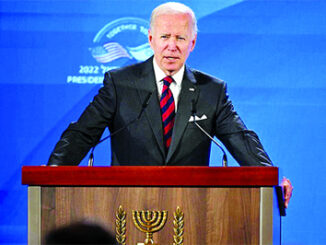
President Joe Biden is proposing a series of new tax increases on billionaires, rich investors and corporations in his latest proposal for how Congress should prioritize taxes and spending.
Biden’s budget request to Congress, which is slated to be released Thursday, calls for a 25% minimum tax on billionaires, according to a White House official familiar with the proposal who declined to be named because the plan is not yet public. The plan would also nearly double the capital gains tax rate for investment to 39.6% from 20% and raise income levies on corporations and wealthy Americans.
The proposal, which is largely a reprise of Biden’s multi-trillion dollar Build Back Better economic package, has little chance of passing Congress, particularly now that Republicans control the House of Representatives. Biden was unable to pass similar tax increases when Democrats enjoyed control of both chambers of Congress, instead settling for slimmed down legislation focusing on energy and health policy known as the Inflation Redution Act.
But the White House’s proposal foreshadows both Democrats’ strategy ahead of high-stakes negotiations over the debt ceiling and government spending later this year, as well as the economic platform underpinning an expected Biden reelection campaign. Administration officials argue that the proposals show a commitment to cutting the deficit — projecting that Biden’s budget would slash $3 trillion largely through increased revenues over the next decade — and represent a politically popular return to tax levels in place before former President Donald Trump’s tax reform legislation. Taxes on the wealthy and large corporations have been a rallying cry for progressives for years and polls repeatedly show they are favored by a majority of Americans.
House Speaker Kevin McCarthy immediately dismissed Biden’s plans to increase levies, telling reporters Wednesday “I do not believe raising taxes is the answer.”
The Biden proposal would require that the richest 0.01% of Americans pay at least a 25% tax rate. It would also increase the top tax rate for Americans making $400,000 to 39.6% from 37%, reversing one of Trump’s tax cuts — though tax rates for those making below that amount would remain untouched. It additionally calls for investors making at least $1 million to pay that 39.6% on their long-term investments, which are currently taxed at a 20% rate. The proposal would increase the corporate tax rate to 28% from 21%, undoing another signature Trump tax change. It would also eliminate a loophole that business owners and higher-earners can exploit to avoid paying levies for the Medicare Hospital Insurance Trust Fund on more of their income. White House officials so far have not indicated that Biden’s budget includes new Social Security payroll taxes on wages above $400,000, which some Democrats have proposed to shore up the program.
Biden is also calling for an end to valuable industry-specific tax breaks for private equity fund managers, oil companies, as well as investors in crypto and real estate, in his upcoming budget proposal, according to a summary of the plan. Eliminating these would upend the economics of many real estate and investment-fund deals — forcing Wall Street to reinvent the way that many transactions have been done for decades — if they were to become law. Source: Bloomberg -

Europe’s wars inseparable from profiteering
As the demand for guns surges, profit too skyrockets with the sale of every weapon or machine. Thus, the enterprise of military hardware production and sale becomes too tempting and lucrative to be eschewed, as after a long gap a ‘real’ war has come to European soil, where big-buck investments and astronomical profits are being made. Shortage of food facilitates profiteering too.
“The prolonged Russia-Ukraine war lays bare the stark reality that even an immoral war is good for the moral and ethical health of the West because through wreckage, blood, sweat and tears of widows, destitute and orphans emerge countless opportunities for wealth creation and open plunder by merchants and middlemen. Shortage of food facilitates profiteering too, the way it happened in the 1943 Great Bengal famine, killing 3 million people amid the World War II inflicted by Europe on the world.”

By Abhijit Bhattacharyya On the eve of the Russian invasion of Ukraine in February last year, UK Defense Secretary Ben Wallace had exclaimed, “The Scots Guards kicked the backside of Tsar Nicholas I in the 1853 Crimea War and we can always do it again,” comparing the 21st-century Russia-Ukraine conflict with the 19th-century war. The Tsar had been pitted against the combined might of England, France and the Ottoman Empire. The Russian defeat of yore and the lack of an international ally were sarcastically invoked to draw a parallel and warn Moscow to watch out for history repeating itself.
What the British Defense Secretary said was neither unsurprising nor unique. War has always had a macabre fascination for Europe. The gory combats and their inglorious consequences have been used to portray the grandeur of the warring West. Most of Europe’s eminent and enlightened scholars, intellectuals and philosophers have been fascinated with, and have spoken eloquently on, the importance of power, war and violence.
Machiavelli pointedly stated, “All armed prophets have conquered and unarmed ones failed.” To him, war, power and hypocrisy are connected. For Thomas Hobbes, conflict emerges from the impulse of self-preservation, thereby making life a “war of all against all” and resulting in it being “solitary, poor, nasty, brutish and short”. The views of Jean-Jacques Rousseau on the power of the state influenced global politics. His ‘Discourse on Inequality’, according to Voltaire, was “against the human race”. Georg Wilhelm Friedrich Hegel unabashedly admired Napoleonic wars and thought that it was a good thing to have wars from time to time. In all these expressions of the European mindset, one thing is clear. There is an element of axiomatic intellectual honesty about justifying, propounding or defending political dishonesty which appears preferable to the hypocrisy of depicting political polemics as an honest and noble enterprise. In this context, the prolonged Russia-Ukraine war lays bare the stark reality that even an immoral war is good for the moral and ethical health of the West because through wreckage, blood, sweat and tears of widows, destitute and orphans emerge countless opportunities for wealth creation and open plunder by merchants and middlemen. Shortage of food facilitates profiteering too, the way it happened in the 1943 Great Bengal famine, killing 3 million people amid the World War II inflicted by Europe on the world.
As the demand for guns surges, profit too skyrockets with the sale of every weapon or machine. Thus, the enterprise of military hardware production and sale becomes too tempting and lucrative to be eschewed, as after a long gap a ‘real’ war has come to European soil, where big-buck investments and astronomical profits are being made.
Further, if the war is between powerful belligerents, soaring profit is guaranteed because both possess the wherewithal to sustain a protracted conflict. In contrast, smaller wars in Third World countries reduce profitability as they are less destructive. Thus, the end of the 20-year-old Afghan war in August 2021 inflicted huge losses on arms and ammunition manufacturers. Undoubtedly, Russia is in the wrong. And the criticism thereof is justified. Nevertheless, Russian wrongs also raise a question. Why is Moscow pursuing this seemingly irreversible, hostile path? Although one-third of the answer was given by the British Defense Secretary with his comment on the 1853 Crimea War, it nevertheless leaves two-thirds unanswered, which lies in what happened in the 1810s and the 1940s.
Russia saved the entire West from being annihilated by two European scourges of mankind (Napoleon and Hitler) in successive centuries. Indeed, it crushed the bloodthirsty Napoleon’s ‘Grand Armee’ in the battles of Borodino (September 1812) and Leipzig (October 1813) much before the Duke of Wellington’s victory over a weakened French army at Waterloo in June 1815. From the Napoleonic wars to the two World Wars and from the Balkanization of the 1990s to the present Ukraine war — all constitute intra-Europe conflicts, like ceaseless continental civil wars. And yet, the non-European world was inexorably dragged into these internecine disputes, thereby giving Europe pole position in world affairs.
So, what’s next for the Russia-Ukraine war? Is a solution possible? Or will it again drag the entire Europe and the rest of the world into another Armageddon? Just hear the Europeans themselves on the “war within”, because “Europe is united” and yet “Europe is not united”. Europe is distressed because war fatigue and economic downturn have already gripped virtually every nook and corner of it. Hence, Deutsch Bank warns of the peril in borrowing from US banks and former German Chancellor Angela Merkel admits that the Cold War never ended. French President Emmanuel Macron is being berated for repeatedly calling for considering Russia’s legitimate security guarantee owing to NATO expansion in Russia’s neighborhood.
The French certainly know best, owing to the post-World War I Versailles Treaty’s monumental folly of humiliating the defeated Germany, thereby sowing the seeds of World War II. Criticism of the US came from top EU diplomat Josep Borrell: “Americans, our friend, take decisions which have economic impact on us.” The EU has also accused Washington of profiting/profiteering from the Ukraine war. A more serious matter, however, is the growing intra-Europe conflict between Serbia and Kosovo. Serbia (former Yugoslavia) was attacked by the NATO and broken into seven pieces in the 1990s. Hence, Serbia, like Russia, is smarting and eyeing revenge.
Indeed, there’s a real possibility of two simultaneous Balkan wars as the region is the ‘tinderbox’ of Europe where issues related to ethnic minorities have repeatedly triggered conflicts. Altogether, the possibility of the Russia-Ukraine conflict raising the stakes higher will only smoothen matters further for the profiteering brigade to make mega bucks from the sale of military merchandise.
( Abhijit Bhattacharya is an author and columnist)
-
Ukraine War, Chinese Protest, Imran Khan’s Ouster; top global Events in 2022
The year 2022 has been a tumultuous one, with many uprisings, new faces coming to prominence and dictators losing hold of power. It has been a year of economic shockers, from the West to the East. Needless to say, it has been a year of clashes and of new alliances.
This year saw a significant rise of leaders like Ukraine President Zelensky, French President Macron and Chinese leader Xi Jinping. On the other hand, prominent international leaders, considered to have clout, including former US President Trump and Brazilian President Bolsonaro lost their power.
There were several prominent events which shaped 2022 in their own ways. To name a few, the Ukraine War, Sri Lankan Economic crisis and the unprecedented protests in China defined the year in their unusual ways.
UKRAINE WAR

The Russian invasion of Ukraine, which began earlier this year in February, has entered its 300th day this month, proving to be a tough challenge for both Russia and Ukraine. Russian President Vladimir Putin, who began a blitzkrieg assault on Kyiv taking over the eastern and southern part of the country, is now facing challenge to keep the war going amid reports of ailing health and internal strife.
So far, over 100,000 Russian and 100,000 Ukrainian soldiers have been killed or injured in the war in Ukraine. For the Ukrainians, this winter is going to be tough with Russian attacks on Ukrainian power plans and consecutive Russian missile attacks. However, the war has shaped the hero out of Ukraine’s President Zelensky, who not only stood against the Russian aggression, but also managed to forge a western unity.
SRI LANKAN CRISIS

The Sri Lanka protests which started in April had led to the ouster of President Gotabaya Rajapaksa and two-time President and former Prime Minister Mahinda Rajapaksa. The Sri Lankan crisis, which started as a protest in Colombo, spread across the country with the people demanding reforms in the government.
Ranil Wickremesinghe was elected President through a parliamentary vote, in which the Rajapaksas’ party backed him in July. The government blamed the Covid pandemic, which badly affected Sri Lanka’s tourist trade, and later led to a shortage of fuel and foreign dollars. However, many experts blame President Rajapaksa’s poor economic mismanagement.
The country continues to remain under crisis with Colombo anticipating the IMF loan to secure the country’s economy.
OUSTER OF IMRAN KHAN

Former Pakistan Prime Minister Imran Khan, who came to power in 2018, is the only Pakistani Prime Minister to be ousted in a no-confidence vote in Parliament earlier this year.
Khan was ousted from power in April after losing a no-confidence vote in his leadership, which he alleged was part of a US-led conspiracy targeting him because of his independent foreign policy decisions on Russia, China, and Afghanistan.
Since he lost the vote in Parliament, Khan has mobilized mass rallies across the country, whipping up crowds with claims that he was a victim of a conspiracy by his successor, Prime Minister Shahbaz Sharif, and the United States.
IRAN PROTESTS


Iran has been rattled by protests over opposition to the mandatory hijab law as thousands of common citizens have taken to the streets.
Iran has been rocked by protests since September 16, with the death of 22-year-old Mahsa Amini, who died after being detained by the morality police. The protests have since morphed into one of the most serious challenges to Iran’s theocracy installed by the 1979 Islamic Revolution.
So far, the country’s police have arrested renowned actresses, footballers, actors and influencers for supporting the protests. It has also executed two protestors for participation in the protests.
RARE PROTEST IN CHINA
China saw two major developments this year- Xi Jinping becoming President for the third time and rare protests weeks after against tough anti-Covid restrictions.
In November, thousands of people took to the streets in several major cities across China, including Beijing and Shanghai, to call for an end to lockdowns and greater political freedoms, in a wave of protests not seen since pro-democracy rallies in 1989 were crushed.
Despite heavy crackdown, surveillance and censorship, the protests expanded into calls for broader political freedom and left a major negative impact on the reputation of Xi and the Party.
US MIDTERM ELECTIONS

The midterm elections in the US, which is usually seen as a mandate against the ruling government, failed to make a Republican sweep as the Democrats gained razor-thin control of the Senate, while the Republicans got a narrow margin against the dems in the House of Representatives.
However, the misterms was special in the sense that it rained down on the ambitions of former President Donald Trump, who was looking forward to run for the second term, his “Make America Great Again” movement and the broader Republican agenda.
A silver lining which came out of the midterm elections for the Republicans has been the victory of Florida Governor Ron DeSantis. DeSantis is seen as the possible challenger to Trump and a possible source of revival for the GOP.
Surging inflation, ongoing strikes, economic crisis and war in Europe: the new UK Prime Minister Rishi Sunak faces these major challenges. Sunak came to Power after his predecessor Truss resigned after just 44 days in power.
After 12 years in power, the Conservative party is more divided than ever. Earlier this year, Boris Johnson had resigned as PM in July after losing the confidence of some 60 ministers.
Sunak has become the fifth Tory prime minister since 2016 — following David Cameron, Theresa May, Johnson and Truss. The challenges continue to mount for Sunak, who hopes to get his country out of the economic and political mess.
BOLSONARO’S EXIT
Brazilian President Jair Bolsonaro, lost election in October in a nail-biting presidential vote count against Luiz Inacio Lula da Silva.
Almost from the start of his controversial mandate in 2019, Bolsonaro racked up accusations and investigations for everything from spreading disinformation to crimes against humanity. He survived more than 150 impeachment bids — a record.
Most of these were over his flawed management of the coronavirus pandemic, which claimed the lives of more than 685,000 people in Brazil — the world’s second-highest toll after the United States.
On January 1, 2023, Bolsonaro’s arch-rival, leftist ex-president Luiz Inacio Lula da Silva will take over the reins once more and Bolsonaro loses his presidential immunity.
COP27 SUMMIT
The UN COP27 climate summit in Egypt had some success and some failures. While the summit achieved a landmark deal on funding to help vulnerable countries cope with devastating climate impacts, the talks stalled on key issues and failed to secure commitments to stop greenhouse gas emissions.
Though the participating nations agreed to contribute to the cost of the harm an overheated planet causes to developing nations, but they concluded the talks without doing anything more to address the burning of fossil fuels, which is the primary cause of these catastrophes.
-
Navinder Oberoi
The year 2022was the year of tiger according to Chinese calendar. Very sharp and aggressive with lots of ups and downs like roller coaster ridesThe circle of 365 (2022)days is just about to complete and very soon we will see the beginning of the first point of another cycle of the year 2023 with great hopes of prosperity and good health around the globe.
How comfortable we all were in 2022 and where do we want to see ourselves in 2023 ?
Expectations and disappointments are the most important characteristics of human nature but how we take this, that’s more important. The economy, stock market, jobs, real estate, banking industry , health sector, education etc.. Were the major issues we been fighting with throughout the year in 2022 because right after the pandemic two year of suspension of our life, almost every public and private sector destroyed and many people lost their job but again life always rotates on our personal predictions and I am not a economist who can predict but based on my personal experience in my opinion I can’t see any major breakthrough in the year 2023 in any sector but like always real estate sector is the biggest shareholder because this sector alone provide jobs to many manufacturing sectors but the success of this sector is dependent upon banking interests rates if the mortgage rates remain same or going up and up in 2023 then I can’t see any difference in 2023. I am not the one who decides the fate of billions of people it is the government who decides every moment of our life that how we are going to live in coming year
We can learn so many lessons from past year failures but can also improve ourselves by not repeating those mistakes in the coming year and I wish all readers a very Happy New Year 2023 .
Navinder Oberoi
(Navinder Oberoi is a businessman based in Abbotsford, Canada)