Tag: Health

Read the latest health news, diet, fitness, medical news and healthcare tips on theindianpanorama.news/health. Get all the healthcare news, including wellness, fitness, diet and weight loss & more.

  • MALE FERTILITY: MEN, AVOID THESE FOODS!

    MALE FERTILITY: MEN, AVOID THESE FOODS!

    Infertility in men is increasing at an alarming rate. Medical reasons aside, even some foods can play havoc with a man’s fertility.We list down some of the foods that men should avoid to improve their sperm quality.

    Carbonated beverages

    Sipping on carbonated beverages, like soft drinks or sports drink can impact your sperm count. A study published in Human Reproduction, regular drinking of carbonated beverages is linked to poor sperm motility.

    Processed meat

    Eating processed meat can compromise your sperm count. According to a Harvard study (2014), men who consumed processed meat in excess had 23 per cent lower sperm quality than guys who ate it in small quantities. In another study of journal of Epidemiology, it was found that processed meat was associated with lower sperm count.

    Alcohol

    This is another reason to ditch your glass of alcohol. The more you drink, the more it impacts your sperm count. In fact, according to some studies, even if you drink in moderation, you are compromising on your sperm quality.

    Cheese and full cream milk

    According to a study done in Human Reproduction in 2013, excess consumption of cheese and full fat milk may impact sperm count. Dairy products do add protein and essential nutrients required by the body but full fat dairy products, especially cheese and full fat milk should be avoided.

    FOODS THAT CAN INCREASE YOUR SPERM COUNT

    Eating healthy and fresh foods are not only beneficial for overall health but also for the health of your sperm. Here are some superfoods that you should include in your diet to improve your sperm count.

    Bananas

    It has been found that bananas improve male libido and regulate sex hormones. As they are rich in vitamin C, A and B1, they boost fertility in men.

    Broccoli

    Broccoli is said to increase sperm count. It is rich in vitamin A, just as carrots, spinach, apricots, sweet potatoes and carrots.

    Walnuts

    Another nutrient important for healthy sperms is omega-3 fatty acids. Walnuts are packed with omega 3 fatty acids that boost blood flow to the genitals, which in turn increases male fertility.

    Garlic

    Garlic does wonders in boosting male fertility. The allicin and selenium present in garlic, protect sperms from damage and improve their quality.

    Source: TOI

  • AAPI is all geared up for 35th annual convention from June 21 to 25, 2017

    AAPI is all geared up for 35th annual convention from June 21 to 25, 2017

    “We look forward to seeing you in Atlantic City, New Jersey: Dr. Ajay Lodha,AAPI President
    Representing the interests of the over 100,000 physicians of Indian origin, leaders of American Association of Physicians of Indian Origin (AAPI), the largest ethnic organization of physicians, for 35 years, AAPI Convention provides a platform to the medical fraternity to discuss issues relating to their profession, including assessing their role in the ever evolving situations – medical, political and social. The annual convention this year, from June 21 to 25 at Harrah’s Resort in Atlantic City, is being organized by AAPI’s New York Chapter. Those responsible for the big event are Convention Chair, Dr. Raj Bhayani, Co-chairs, Drs. Vinod Sanchetti, Kishen Kumar, Jayesh Kanuga, and Kusum Punjabi; Convention Advisory Committee Chair, Shashi Shah; and Drs. Hetal Gor, Jagdish Gupta, and Himanshu Pandya. AAPI’s new executive committee includes Dr. Gautam Samadder President, Dr. Naresh Parikh, Vice President; Dr. Suresh Reddy, Secretary; Dr. Manju Sachdev, Treasurer; Dr. Madhu Agarwal, Chairman of the Board of Trustees; Aditya Desai, YPS president; and Atul Nakhasi, MSRF President. The Indian Panorama is introducing here two of the incoming leaders of the American Association of Physicians of Indian Origin. One is the Presidentelect Dr. Gautam Samadder, and the other, Dr. Ashok Jain Elected Chair, BOT of AAPI.

    Dr. Gautam Samadder, President Elect of AAPI

    “AAPI must be responsive to members, supportive of leadership and a true advocate for our mission”

    “AAPI must be responsive to its members, supportive of the leadership and a true advocate for our mission,” Dr. Gautam Samadder, President of American Association of Physicians of Indian Origin, says. “I am committed to unify AAPI by breaking down the barriers of various regions, languages, medical education within the organization and bringing everyone together as a whole organization rather than separate fragments of the organization,” Dr. Samadder says.

    At AAPI, where he will assume charge as the president of AAPI at the annual convention in Atlantic City on June 25th, Dr. Gautam Samadder rose through the ranks due to his hard work and dedication. He was a Regional Director for the AAPI NE Central-II Region, and had served as the Editor-in-Chief of AAPI Journal, a quarterly published by the American Association of Physicians of Indian origin (AAPI). He was instrumental in reviving the journal and turning it around to a ‘sought-after’ publication.

    “My leadership involvement with the AAPI started during my Global Health Summit trip to India in Rajasthan in the year of 2010 although I have been a patron member of AAPI for more than 20 years. I had the opportunity to know Dr. Ajit Singhvi, who had encouraged me to take on a leadership role at AAPI and here I am seven years later.”

    According to him, “One thing is clear, if you are a team player, hardworking, and willing to serve in the best interests of the organization. There is always a leadership opportunity for you in AAPI.”

    The Incoming President Dr. Gautam Samadder and family L to R: Dr.Samadder, wife, son and
    daughter

    Dr. Samadder was elected as Secretary of AAPI in 2014. Prior to this, he served as the Regional Director in Ohio and Michigan for two consecutive years in 2010 and 2011. “I have been involved in the grass-root level to form all Ohio AAPI chapter which includes (AIPO) local chapters from Columbus Cleveland Cincinnati Dayton, Youngstown, and Toledo and served as the president in 2012. In addition, I have been the president of the local Chapter of AAPI Central Ohio (Columbus) from 2008-2010.

    Working with his dedicated executive committee, Dr. Gautam wants to “establish a strategic plan for AAPI that can sustain change in leadership. “AAPI members should be at the table during planning and implementation stages of the health care reforms,” Dr. Samadder says. “I want to encourage medical students, residents, and fellows and all second-generation Indian American physicians to be actively involved in both local and national level. Efforts go to building a strong association focusing on leader development and strengthening our professional relations.”

    “In my capacity as the President of national AAPI, I want to support the growth of global and Indo-US relationship and to support and promote charitable activities through AAPI both in the US and India,” Dr. Samadder says.

    “As I have shown over the past decades in my roles as a Regional Director, Treasurer, Secretary, Vice President and President Elect of AAPI, and now as the President, I will continue to work to create advocacy and community services, escalating profitability, productivity and popularity of AAPI.

    “I will also promote globalization of education as well as work towards creating awareness and promote the level of involvement of the Indian American Medical Community and to foster the increasing strength and grown of our beloved Nation.

    While working in close cooperation with AAPI at all levels, we will together address the issues affecting the physicians at the state and national level. I envision promoting health care advocacy and community services, escalating profitability, productivity and popularity of AAPI,” he adds.

    Dr. Samadder wants to “amplify participation among young physicians and medical students, strengthen AAPI’s financial security through profitable corporate sponsorships and facilitate collegial cooperation between local and state chapters, as this will increase AAPI’s global stature and eminence, which will ultimately make healthcare more efficient and effective in USA and India.”

    His “work ethic, integrity and self-reliance will help propagate AAPI’s mission and instill renewed energy and participation. My leadership experience demonstrates in the private and nonprofit sectors will be advantageous in increasing participation, chapter cooperation and awareness of exchange programs. I am dedicated to helping chart a course toward AAPI’s true mission.”

    Under his leadership, Dr. Gautam will strive to make AAPI an organization where people feel proud to contribute their time and energy for the greater good of the members and the society. “AAPI is a platform to cherish their achievement and creating a platform to further enhance and provide opportunities to our budding physicians to be successful in academic medicine and to the rest of the world, and to India in particular.Leading a major organization like AAPI and providing a forum to its members to collectively work together to meet their diverse needs is a major challenge.”

    Dr. Samadder’s presidency will start with AAPI’s family trip to South Africa, Zimbabwe and Botswana from August 4-13, 2017, which will provide twelve hours CME credits and include a jungle safari at a world famous resort and extensive site seeing opportunities.

    The AAPI Global Healthcare Summit (GHS) from December 28-31, 2017 in the beautiful city of joy, Kolkata (West Bengal, India), will continue to make progress on AAPI’s past initiatives, including the traumatic brain injury (TBI) guidelines dissemination, training of first responders, and engaging local authorities to help address one of the major causes of road fatalities by pursuing four key aspects which are awareness, free hospital care, in hospital, and rehab.

    According to him, the GHS will serve as a sounding board for many health care leader to freely exchange ideas, and help resolve challenges that are addressed during the very effective CEO forums usually chaired by MOH officials and leading CEOs. This will help in attracting investments, advanced training, and setting up hospitals, medical institutions, etc. AAPI GHS will continue the International Research Competition, EP, Cardiology, Urology, and other workshops that will help in training several India based physicians. Finally, the women’s forum under the banner of women’s leadership forum will serve as an inspiration for aspiring female leaders to see and hear from their role models.

    Gautam spends most of his life in the private sector and is presently the CEO and managing director of Columbus Sleep Consultants, which he has built up from the ground. He was instrumental in the formation of Indian Sleep Society, with the objective of promoting sleep research and publications within Asian Indian communities. He is a speaker for several pharmaceutical companies and the physician advisor to several medical technology companies and recently collaborated with Fisher and Paykel to establish diagnostic centers in several major cities in India.

    Born and growing up in Jabalpur, Madhya Pradesh, young Gautam was always eager to learn and develop the talents and skills, overcoming numerous obstacles and turning them into small town opportunities, he took on the challenge of pursuing his career in Medicine by competing in the medical admission process and graduated from Rani Durgawati Medical College, Jabalpur.

    With his passion for knowledge, determination, perseverance, and success, Dr. Samadder came to the United States in 1985 for higher education. After completing his Residency in Internal Medicine at Mount Sinai affiliate hospital-North General, New York, he did his Pulmonary Fellowship at SUNY affiliate-Brookdale Hospital, New York and Sleep Fellowship at Medical College of Pennsylvania, Philadelphia.

    Subsequently, he moved to Ohio in 1995. “While doing pulmonary fellowship, I was very intrigued with obstructive sleep apnea – a very dangerous medical condition but an easily treatable condition,” recalls Dr. Gautam Samadder, Founder and CEO of Columbus Sleep Consultants. “Also, this is one of the rare specialties, where patient satisfaction is enormous because of the successful outcome of the treatment.”

    With aspirations to develop and become an entrepreneur, he took on the challenge of opening an independent practice of Pulmonary and Sleep medicine in 1997. His hard work and dedication paid off. He was successful in expanding the practice to be one of the biggest networking of independent sleep labs in Ohio, employing more than 50 employees, including three physicians and two physician assistants. Currently, he serves as the Medical Director at a multi-locational and Multispecialty Sleep facility, Columbus Sleep Consultants.

    Dr. Gautam Samadder built his career on hard and dedicated work in the private and public sectors. He spearheaded the formation of Indian Sleep Society (AAPIOS) and is actively involved in promoting Sleep Research and Awareness both nationally and Internationally including India. He recently collaborated with Fisher & Paykel to establish diagnostic centers in major Indian cities.

    Even though working as an entrepreneur, owning a large sub-specialty involving community service, he had a deep desire to give back to the community. Having worked with the local and state medical society, being the regional director and local chapter president of AAPI he has a deep desire to give back to this extra ordinary organization (AAPI).

    He is actively involved with the Indian community and member at large of the Asian Indian Alliance, which actively participates in a bipartisan way to support and fund electoral candidates. He is actively involved with the Bharatiya Hindu Temple and free health clinics.

    Serving as a core member of the Advisory Board of the Ohio State University Gateway Project, which supports Exchange programs between USA and India including student’s scholarships, Dr. Samadder is also an active member of the Ohio State Medical Association and was the first counselor of the International Medical Graduates for the state of Ohio. Dr. Samadder was a Clinical Assistant Professor at Ohio State University.

    “These experiences, along with others, have provided me with a strong foundation from which I can offer fresh ideas and responsible leadership,” he says. For someone who in his own words is “always looking to strengthen AAPI”, a set of more responsibilities would certainly be welcome. “Having worked with Dr.Narendra Kumar on the 9- city tour event, I would like to lead AAPI with my dream team to new heights.” he says. “I am always looking for opportunities to help AAPI in making it powerful so that members get benefit they deserve, and spread awareness at local and state level and unite local chapters.”

    Among the many mentors, who had inspired him, Dr. Samadder has been impressed by Dr. Kumar and Dr. Ajit Singhvi, past Presidents of AAPI. “I have been especially fascinated by the commitment of Dr. Kumar. He is fortunately in the same specialty as me and I have had several interactions with him. When I see him working for AAPI, his unselfish commitment, time and family wise, I am so awestruck. If I can replicate that, I will be blessed,” he says with modesty.

    His wife is a practicing gastroenterologist in Columbus. The couple have been married for about 25 years now. They have a son who is in medical school and their daughter is in high school.

    “AAPI has a mandate to help disseminate our medical knowledge, our expertise and technological advances to the entire world,” Dr. Samadder says. Utilizing AAPI membership, AAPI, Dr. Samadder wants to create and lobby for the legislative agenda at the federal level, supporting the policies and programs benefitting AAPI members. He wants to bring in second generation Indian American members into AAPI leadership roles and positions, and thus “ushering in a new era of cooperation, stability, and sustained growth for AAPI.”

    Years of health care management experience: Dr. Ashok Jain Elected Chair, BOT of AAPI

    Dr. Ashok Jain, Chairman elect of AAPI BOT

    DrAshok Jain, M.D., M.S., FACR, chief medical officer for Beaumont Hospital, Wayne, MI, has been elected Chairman of Board of Trustees, American Association of Physicians of Indian Origin for the year 2017-18.

    Soft spoken, caring, gentle, intelligent, and committed to give back to the society, and gentle in his approach, Dr. Jain has been associated with AAPI since its initial launch over 35 years ago. “I have been involved with AAPI since its inception in 1983 as a young physician who had just started practicing in Michigan.” Ever since, he has been actively associated with AAPI and worked hard to the growth of this organization since its inception.

    As a young physician filled with love and commitment, he had worked with Wayne County Medical Society and Michigan State Society for the establishment of first IMG section at state level in Michigan.

    One of his contributions, Dr. Jain feels very proud of today is that, “I worked for keeping same criteria for IMG’s and AMG’s for state medical licensure.” Dr. Jain was elected as MAPI President in 1994, and had served at the AAPI Executive Committee as the Regional Director in 1995-1996.

    His connections with the political leaders from India and the US made Dr. Jain more popular and much sought after. Dr. Jain served as the Alumni Committee Chair, and AAPI’s prestigious Legislative Affairs Committee Chair in 2004- 2005.

    All along his life, Dr. Jain was filled with passion for giving back to the society. He was elected to serve as the MAPI Board of Trustees Chair and the Foundation of MAPI (FOMAPI) Chair in 2015. His visionary and leadership skills were seen all over as Dr. Jain, helped FOMAPI raise $180,000 for MAPI free clinic, serving the less privileged. In the 1980’s Dr. Jain raised $500,000 in five years benefiting Nargis Dutt Foundation for cancer patients for different charities in India.

    His love for his country of birth was seen in Dr. Jain building and running Girls High School in his village in Rajasthan in 1997, where 650 girls study year until they complete High School. Dr. Ashok Jain had also served as a member of the Board of Trustee of Jain Temple in Detroit.

    Dr. Ashok Jain, who serves as the Senior Vice President at Beaumont Health and as the Chief Medical Officer at Beaumont Hospital in Wayne, MI, has a Master of Science Degree in Medical Practice Management. Dr. Jain has served as a member of Board of Trustee at Oakwood Health Care System and now at the Beaumont Health. Dr. Jain serves as Chief of Medical Staff of Beaumont Hospital, Wayne from 2011 onwards.

    Dr. Jain is married to his beautiful wife, who is also involved with MAPI auxiliary. His son finishing medical school and his daughter has a degree in MHA, Masters in Healthcare Administration, and is Trinity Health in Ann Arbor, MI. Beaumont Hospital, where Dr. Jain serves as the Chief Medical Officer, is a 185?bed teaching hospital that is part of Beaumont Health, Michigan’s largest health care system, based on inpatient admissions and net patient revenue. Dr. Jain was appointed to this role at Beaumont, Wayne in 2015. He closely collaborates with medical and hospital leadership, including its Medical Executive Committee, hospital president and elected chief of staff.

    Dr. Jain is responsible for overall hospital performance and developing the vision and strategic plan for clinical activities. He also serves as the hospital’s patient safety officer and oversees site?related patient safety and quality activities.

    A practicing radiologist, Dr. Jain joined Beaumont Hospital, Wayne in 1982 and was elected chief of staff in 2011. Dr. Jain is a graduate of the M.S. University of Baroda Medical College and completed a residency in radiology and fellowship in ultrasound/CT through the Wayne State University School of Medicine. Ashok Jain, M.D., M.S., FACR Senior Vice President & Chief Medical Officer Beaumont Hospital, Wayne Beaumont Health is a not-for-profit organization formed in 2014 by Beaumont Health System, Botsford Hospital and Oakwood Healthcare to provide patients and families with compassionate, extraordinary care, no matter where they live in Southeast Michigan. It consists of eight hospitals with 3,429 beds, 174 outpatient sites, nearly 5,000 physicians, 36,000 employees and 3,500 volunteers. In 2016, the organization had $4.4 billion in net revenue with nearly 178,000 inpatient discharges, 568,000 emergency visits and more than 17,500 births.

    “I bring years of health care management experience, organized medicine leadership experience to AAPI,” Dr. Jain says the newly elected Chair of AAPI BOT. “My goal as the BOT, AAPI in the coming year is to formalize and create AAPI leadership academy working with American college of physician executives for development of leadership roles for all AAPI membership. I want to work hard to engage young physician and attract them to AAPI. They are the future of AAPI.”

  • NEW BLOOD TEST MAY PREDICT HUNTINGTON’S DISEASE: STUDY

    NEW BLOOD TEST MAY PREDICT HUNTINGTON’S DISEASE: STUDY

    The blood test may help identify new treatments for Huntington’s disease, a genetic brain disorder, which is fatal and currently incurable. Huntington’s disease is an inherited condition in which nerve cells in the brain break down over time. The study showed that measuring the levels of neurofilament — a protein released from damaged brain cells — may help predict the onset of the disease as well as its progression.

    “This is the first time a potential blood biomarker has been identified to track Huntington’s disease so strongly,” said Edward Wild from the University College London. The results showed that the patients who were carriers of the genetic mutation of the disease had neurofilament concentrations that were 2.6 times that of the control participants.

    Further, the level rose throughout the disease course from premanifest to stage 2 disease, the researchers said. “Neurofilament has the potential to serve as a speedometer in Huntington’s disease, since a single blood test reflects how quickly the brain is changing,” Wild added.

    For the study, published in the journal Lancet Neurology, the team measured neurofilament levels in blood samples from 366 volunteers who were followed for three years. In the group who had no symptoms at the start of the study, the level of neurofilament predicted subsequent disease onset, as volunteers with high neurofilament levels in the blood at the start were more likely to develop symptoms in the following three years. Scientists are presently in the process of testing a new generation of socalled ‘gene silencing’ drugs that may put brakes on the disease. “Measuring neurofilament levels could help us figure out whether those brakes are working,” Wild noted.

    Huntington’s disease is an incurable, hereditary brain disorder. It is a devastating disease for which there is no currently “effective” treatment. Nerve cells become damaged, causing various parts of the brain to deteriorate. The disease affects movement, behavior and cognition – the affected individuals’ abilities to walk, think, reason and talk are gradually eroded to such a point that they eventually become entirely reliant on other people for their care.

    Huntington’s disease has a major emotional, mental, social and economic impact on the lives of patients, as well as their families.

  • 100,000 cholera cases, 789 deaths, in Yemen in past month: WHO

    100,000 cholera cases, 789 deaths, in Yemen in past month: WHO

    GENEVA (TIP): A cholera outbreak of more than 100,000 cases has erupted in war-ravaged Yemen, killing nearly 800 people, in just over a month, the World Health Organization (WHO) said on June 8.

    The UN health agency said that since the end of April, 101,820 suspected cholera cases had been registered across 19 of the country’s 21 governorates, including 789 deaths. WHO has warned that a quarter of a million people could fall sick with cholera by the end of the year in Yemen, a country where two-thirds of the population are on the brink of famine.

    British charity Oxfam also voiced alarm on Thursday at what it described as “a runaway cholera epidemic” in Yemen, pointing out that the disease is currently killing nearly one person every hour.

    Cholera is a highly contagious bacterial infection spread through contaminated food or water. Reining in the disease is particularly complicated in Yemen, where two years of devastating war between the Huthis and government forces backed by a Saudi-led Arab military coalition has left more than half the country’s medical facilities out of service.

    Yemen’s conflict has killed more than 8,000 people and wounded around 45,000 since March 2015, according to the WHO. “Yemen is on the edge of an abyss. Lives hang in the balance,” Sajjad Mohammed Sajid, Oxfam’s Yemen country director, said in a statement.

    “Cholera is simple to treat and prevent but while the fighting continues the task is made doubly difficult,” he said, insisting that “a massive aid effort is needed now.” (AP)

  • AAPI’s 35th annual convention at Harrah’s Resort in Atlantic City, June 21-25, 2017

    AAPI’s 35th annual convention at Harrah’s Resort in Atlantic City, June 21-25, 2017

    NEW YORK CITY, NY (TIP): “It’s very great joy that I want to invite you all to be part of the 35th annual American Association of Physicians of Indian Origin (AAPI) Convention 2017 to be held at brand new state of the art Convention Centre, the prestigious Harrah’s Resort in Atlantic City, New Jersey from June 21 – 25, 2017,” Dr. Ajay Lodha, President, AAPI, said here, June 7, 2017.

                                        AAPI leadership and committee members

    Dr. Lodha expressed his gratitude to AAPI’s executive committee members, including Dr. Gautam Samadder President-Elect; Dr. Naresh Parikh, Vice President; Dr. Suresh Reddy, Secretary; Dr. Manju Sachdev, Treasurer; Dr. Madhu Agarwal, Chairman of the Board of Trustees; Aditya Desai, YPS president; and Atul Nakhasi, MSRF President; AAPI’s 2017 Convention committee chairs and members, volunteers and sponsors for their continued dedication and visionary leadership and efforts to make this convention truly a historic one for all.

    The annual convention this year is being organized by AAPI’s New York Chapter. Dr. Lodha expressed his gratitude to the organizers, various committee chairs and members, including Convention Chair, Dr. Raj Bhayani, Co-chairs, Drs. Vinod Sanchetti, Kishen Kumar, Jayesh Kanuga, and Kusum Punjabi; Convention Advisory Committee Chair, Shashi Shah; and Drs. Hetal Gor, Jagdish Gupta, and Himanshu Pandya.

    According to Dr. Lodha, the convention will have Continuing Medical Education, National and India based Health Policy Forums, Youth Seminars, New Physician and Resident Student meetings, Fashion Show, Women’s Forum, and mega Bollywood shows. Physicians attending this convention will benefit not only from cutting edge CMEs, but also the camaraderie of their alumni groups and share in our common heritage. Social events are being planned meticulously so that maximum benefit can be accomplished.

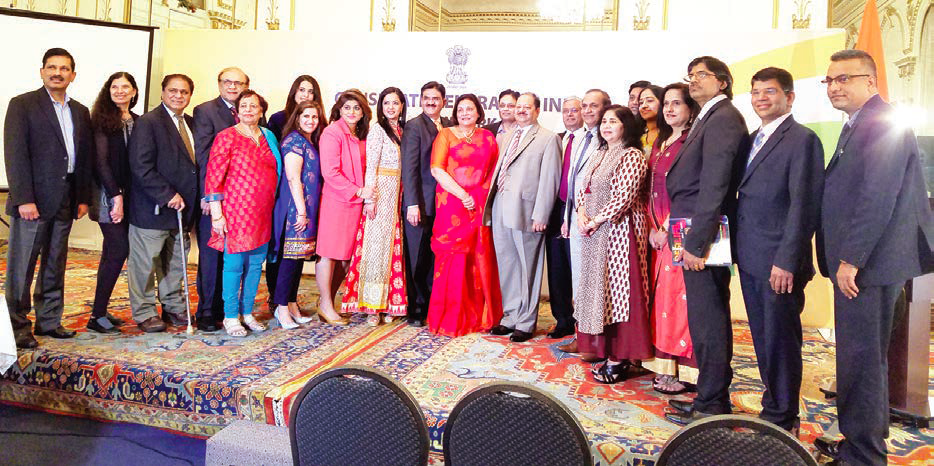
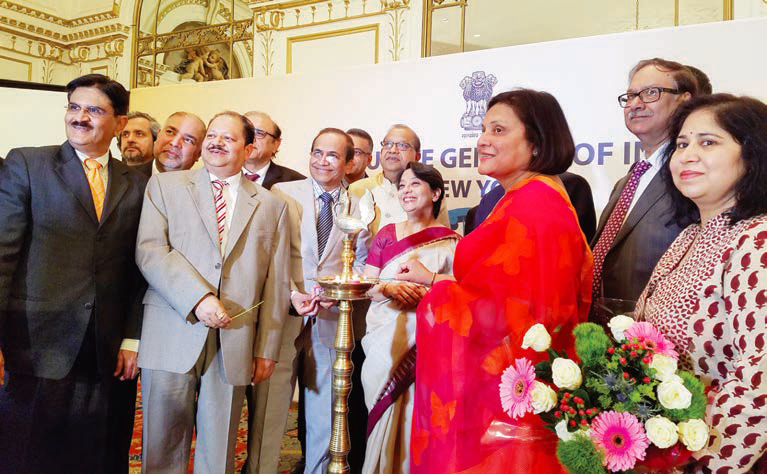
    Attended by AAPI leadership, various committee members, community leaders, and media personnel from across the United States, the kickoff event was inaugurated by lighting of the traditional lamp by Ambassador Riva Ganaguly Das, Consul General of India in New York on Sunday, April 9, 2017. Ganguly Das lauded the achievements of AAPI and the leadership of Dr. Lodha. “We have watched how AAPI has grown over the years and how we want other NRI groups to emulate the success model of AAPI,” Ganguly Das told the cheering audience. Stating that the government of India “values our relationship with AAPI and the many initiatives and contributions you have made for the people in India,” the Indian envoy said.

          Dr. Ajay Lodha, President of AAPI addresses the gathering

    At the kickoff event, Dr. Lodha highlighted the many accomplishments under his leadership, including the Leadership Seminar at Columbia University, the Cruise to Brazil, participation and leading the Independence Day Parade in New York, the successful organization of Global Healthcare Summit in Rajasthan and the many initiatives at the Summit, Crash Courses in India for police officers as first responders in accidents, EPS lab studies, AYUSH, raising AAPI’s voice against hate crimes in the US and against violence against physicians in India and championing AAPI’s role in healthcare policy and agenda through AAPI’s legislative conference in Washington DC in April this year. Dr. Lodha has been successful in bringing in financial stability and carrying forward all the Chapters in a cohesive manner with visits and meetings with members and leaders of several Chapters. Dr. Lodha is ever grateful to the media for its continued support all along.

    Many of the physicians who will attend this convention have excelled in different specialties and subspecialties and occupy high positions as faculty members of medical schools, heads of departments, and executives of hospital staff. The AAPI Convention offers an opportunity to meet directly with these physicians who are leaders in their fields and play an integral part in the decision-making process regarding new products and services.

    Alumni meetings for networking, matchmaking, also an AAPI-India Strategic Engagement Forum to showcase the AAPI initiatives in India like Trauma Brain Injury Guidelines, MoU on TB Eradication in India and recognition of AAPI award winners will make this Convention unique.

    The Convention offers 8-10 credit hours of cutting edge CMEs as per AMA guidelines by well renowned thought leaders in their respective areas, being organized by Drs. Jagat Narula and Atul Prakash. Spiritual session is to be led by renowned Brahmakumari Shivani Didi. The Women’s Forum will feature well renowned women leaders, politicians, academicians, artists, sports women, and is being coordinated by Drs. Purnima Kothari and Udaya Shivangi.

    The CEO Forum, which is by invitation will have CEOs of leading healthcare firms, who will give their thought process on the development of medical science and current changes, especially with the ongoing national discussions on the repairing/repealing of the Healthcare delivery in the nation. Also, for the first time, AAPI is inviting CEOs preferably with their innovative technologies in the field of medicine. The AAPI Research Symposium is an exciting venue to learn about and present new and exciting research as well as case reports and discussions. The Convention 2017 will also offer special emphasis on Integrative Medicine (AYUSH) and Medical innovations.

    The AAPI Research Symposium is an exciting venue to learn about and present new and exciting research as well as case reports and discussions. The Convention will also offer special emphasis on Integrative Medicine (AYUSH) and Medical innovations. AAPI Talent show at the Harrah’s newly built elegant Theatre will provide a perfect setting for our AAPI delegates to display their talents.

    Being put together by Drs. Seema Arora and Amit Chakrabarty, the competitive session for the AAPI members will be judged by well renowned artists and philanthropists, has attractive prizes.

    The dazzling Fashion Show will be one of a kind by famous fashion designers from the nation. The extravaganza mouth-watering ethnic cuisine with every day “Theme Menus” with variety of display of best of the culinary will be a treat for the young and the old.

    AAPI Talent show at the newly built elegant Harrah’s Theatre will provide a perfect setting for our AAPI delegates to display their talents. Being put together by Drs. Seema Arora and Amit Chakrabarty, the competitive session for the AAPI members will be judged by well renowned artists and philanthropists, has attractive prizes.

    In addition, the exhibition hall featuring large exhibit booth spaces in which the healthcare industry will have the opportunity to engage, inform and educate the physicians directly through one on one, hands on product demonstrations and discussions, there will be focused group and specialty Product Theater, Interactive Medical Device Trade Show, and special exhibition area for new innovations by young physicians.

    AAPI members represent a variety of important medical specialties. Sponsors will be able to take advantage of the many sponsorship packages at the 35th annual convention, creating high-powered exposure to the highly coveted demographic of AAPI’s membership.

    Representing the interests of the over 100,000 physicians of Indian origin, leaders of American Association of Physicians of Indian Origin (AAPI), the largest ethnic organization of physicians, for 35 years, AAPI Convention has provided a venue for medical education programs and symposia with world renowned physicians on the cutting edge of medicine.

    “Physicians and healthcare professionals from across the country and internationally will convene and participate in the scholarly exchange of medical advances, to develop health policy agendas, and to encourage legislative priorities in the coming year. We look forward to seeing you in Atlantic City, New Jersey!” said Dr. Ajay Lodha. For more details, and sponsorship opportunities, please visit: www.aapiconvention.org and www.aapiusa.org

  • NIRJALA EKADASHI

    NIRJALA EKADASHI

    Nirjala Ekadashi is the most important and significant Ekadashis. As per Hindu calendar Ekadashi falls on the eleventh day of every lunar fortnight. So, there are 24 Ekadasis in a year. Ekadashi Vrat

    is considered highly pious and is assumed to be one of the ways to attain Moksha. Nirjala Ekadashi falls on the Shukla paksha in the month of Jyestha (On June 5 this year). It is also called “Jyeshtha Shukla Ekadashi” or “Bhimsaini Ekadashi”. It is considered as one of the most rewarding fast.

    Importance of Nirjala Ekadashi

    The greatness of Nirjala Ekadasi was explained by Sage Vyasa. ? It is equal to going on pilgrimage. ? It provides virtue of all 24 Ekadashi.? It washes away all sin. ? Grants happiness, prosperity, longevity and moksha (salvation).? This Ekadasi happens before monsoon season and therefore it is also helps in cleansing the body.

    How to Observe Nirjala Ekadashi Vrat

    Nirjala means without water. Hence, fast is observed without water and food. It is considered as the most strict and hence, most sacred of all Ekadashis. This fast is extremely difficult to follow as it falls in the hot Indian summer. The 24 hours long fast begins from sunrise on Nirjala Ekadashi to sunrise the next day. People fast and offer puja to Lord Vishnu on this day.

    The fast begins with Sandhyavandanam – a prayer. This prayer is performed in the evening before Nirjala Ekadashi, i.e. on 10th lunar day. After prayer devotee takes only one meal, without rice (as rice eating is prohibited). The strict fast continuous throughout Ekadashi. It gets over on next morning. Devotees offer prayer, tulsi, fruits, and sweets to Lord Vishnu and then finish their fast.

    Rituals and celebrations of Nirjala Ekadasi
    • ? Offer Puja to Lord Vishnu and seek his grace.
    • ? Bath the idol of Lord Vishnu with Panchamrit.
    • ? Wash with clean water and then dressed in new clothes.
    • ? Offer flowers, incense, water, lamps and a hand fan.
    • ? In evening, worship Vishnu with Durva grass.
    • ? Visit nearby Vishnu temple and observe Jagran at night.
    • ? Chant bhajans, Vishnu Sahasranama and other slokas dedicated to Lord Vishnu
    • ? Donate clothes, food grains, umbrellas, hand-fans, pitchers filled with water, gold etc.
    Story of Nirjala Ekadashi Vrat

    Bhimsen –the second Pandava brother and big eater wanted to keep Ekadashi Vrat. All his brothers, wife Draupadi and mother Kunti observed Vrat on 24 Ekadasis throughout the year and request him to do the same. But he was unable to perform the ritual due to unbearable hunger pangs. Bhima, was upset due to his weak determination. He was also sacred of dishonouring to Lord Vishnu. So, when Maharishi Vyasa visited them Bhima asked him to find a solution. Sage Vyasa advised him to observe single Nirjala Ekadasi fasting. This fast would compensate for not observing all Ekadashi fasting in a year.

    Bhima performed the fast with an ease but on the morning of very next day he became unconscious. Then he offered Ganga water with Tulsi to end up his day fast. Due to this legend Nirjala Ekadashi is also known as Bhimseni Ekadashi, Bhima Ekadashi or Pandava Ekadashi.

    Nirjala Ekadashi’s Significance

    As per Hindu mythology, Nirjala Ekadashi is a form of God Vishnu and helps in washing away all sins. Also, the devotees are blessed by Lord Vishnu and granted all the happiness, prosperity and a blissful life. It is also believed that by observing Nirjala Ekadashi fast one gains salvation (moksha) as the person at the time of death is not judged by Yama (God of Death). The one who observes fast is taken by the messengers of Vishnu to Vaikuntha, an abode of Vishnu after death.

    How To Observe Ekadashi Vrat

    Legends take one back to the mythological story of Mahabharata as the Nirjala Ekadashi vrat has been mentioned therein. Kunit, mother of the Pandavas, Draupadi, wife of the Pandavas, and all the four Pandava brothers – Yudhisthira, Arjun, Nakula and Sahadeva used to observe Ekadashi vrats without fail.

    However, the second Pandava brother, Bhima resisted from fasting as he was a voracious eater and wasn’t able to control his hunger. On one occasion, Bhima chose to observe the vrat but he also wanted to eat.

    Hence, he went out to Ved Vyasa, the grandfather of the Pandavas, to seek help in observing the fast. While eating and fasting were not possible simultaneously, sage Vyasa suggested that he observe the Nirjala Ekadashi vrat, which includes the benefits of observing 24 Ekadashi vrats.

    Nirjala Ekadashi is regarded as the strictest fast among all the Ekadashis in the Hindu religion as one cannot even drink water while observing it. The literal meaning of Nirjala is without water. Thus, all Vishnu devotees who take up this fast do not drink water nor eat any food during the entire day of fasting. Observing a Nirjala Ekadashi is highly beneficial as it is considered equivalent to going on a pilgrimage. The vrat begins at sunrise on the Ekadahsi and ends on the next day’s sunrise. The entire day of the Nirjala Ekadashi vrat is spent at Vishnu temples. Devotees also prefer spending the day at home by listening to stories from Bhagavad Purana or chanting bhajans dedicated to Lord Vishnu.

    People who are under medications, having a poor health condition or disease, pregnant women and those who have just delivered a baby are relieved from observing this vrat. Therefore, it is advised not to keep this fast as one should not torture their body in the act of following customs and religious traditions. Instead, they can compensate for the fast by donating food and clothes to the poor and needy.

  • TOBACCO CAUSES GENETIC CHANGES

    TOBACCO CAUSES GENETIC CHANGES

    It’s a known fact that tobacco causes cancer. But there are few researches across the globe to explain this link a gap that has been exploited by the industry lobby to argue against a ban on tobacco-related products.

    But in a big breakthrough, Indian scientists have established the genetic changes caused by tobacco consumption that lead to cancer. It is based on a gene study of 383 patients suffering from cancer of the head and neck and undergoing treatment at AIIMS and 383 healthy people.

    Doctors found 93% of the patients were tobacco users, and polymorphism of HLA-G – an immunomodulatory molecule with the ability to inhibit immune cell function -was much higher in them compared to healthy individuals. The team of researchers from AIIMS included Dr Vertica Agnihotri, Dr Sharmishta Dey and Dr Lalit Kumar, among others.

    The study stated that cancer of the head and neck was common among Indian men and it was caused mostly due to tobacco consumption. Dr Agnihotri said tobacco smoke contained more than 50 potent carcinogens, including tobacco-specific nicotine. “These chemicals can affect DNA damage processes by providing a strong free radical generating environment, which could lead to genetic alterations of DNA,” she added.

    On World No Tobacco Day on Wednesday, Union health minister J P Nadda and director general of health services Jagdish Prasad flagged off a ceremony for mass awareness about ill-effects of tobacco consumption.

    The World Health Organisation, on its part, is calling on countries to prioritise and accelerate tobacco control efforts as part of their responses to the 2030 Agenda for Sustainable Development.

    Source: TOI

  • CERVICAL CANCER – NEW TECHNOLOGY MAKES DETECTION EASIER THAN PAP SMEAR

    CERVICAL CANCER – NEW TECHNOLOGY MAKES DETECTION EASIER THAN PAP SMEAR

    A newly-developed handheld device for cervical cancer screening is promising to do away with uncomfortable speculums and high-cost colposcopes.

    Duke University researchers’ “pocket colposcope” is a slender wand that can connect to many devices, including laptops or cell phones.

    If widely adopted, women might even use the device to self-screen, transforming screening and cure rates in low-income countries and regions of the United States, where cervical cancer is most prevalent.

    While the Pap smear can be performed by a non-specialist, colposcopy requires visualization of the cervix, relying on highly trained professionals, and expensive equipment that is not easily accessible to underserved populations. These factors make cervical cancer more prevalent in women living in low socio-economic communities.

    “The mortality rate of cervical cancer should absolutely be zero percent because we have all the tools to see and treat it,” said researcher Nimmi Ramanujam. “But it isn’t. That is in part because women do not receive screening or do not follow up on a positive screening to have colposcopy performed at a referral clinic. We need to bring colposcopy to women so that we can reduce this complicated string of actions into a single touch point.”

    Current standard practices for cervical cancer screening require three things: a speculum, a colposcope and a trained professional to administer the test. The speculum is a metal device designed to spread the vaginal walls apart. The colposcope is a magnified telescopic device and camera designed to allow medical professionals to look through the speculum to see the cervix, which is located three to six inches inside the vagina. Colposcopes and people who know how to use them are difficult to find in many low-income regions, both domestically and internationally.

    Ramanujam believes she can replace at least two of these requirements. Her laboratory has developed an all-in-one device that resembles a pocket-sized tampon with lights and a camera at one end. Health providers or even women themselves are able to capture images of the cervix using the rounded tip of the device to manipulate its position if necessary. The device also includes a channel through which contrast agents used for the cervical cancer screening procedure can be applied.

    Source: ANI

  • International Day of Yoga: Celebrating union of body and Consciousness

    International Day of Yoga: Celebrating union of body and Consciousness

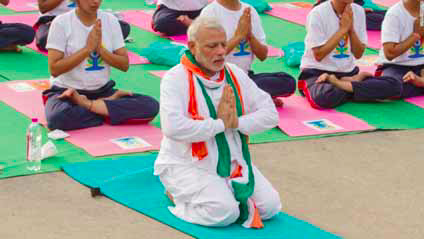
    International Yoga day

    Yoga is an ancient physical, mental and spiritual practice that originated in India. The word ‘yoga’ derives from Sanskrit and means to join or to unite, symbolizing the union of body and consciousness. Today it is practiced in various forms around the world and continues to grow in popularity.

    Recognizing its universal appeal, on 11 December 2014, the United Nations proclaimed 21 June as the International Day of Yoga by resolution 69/131. The International Day of Yoga aims to raise awareness worldwide of the many benefits of practicing yoga.

    Yoga is more than just burning your calories and toning your muscles. It is a mind body workout where you have strengthening and stretching poses along with deep breathing techniques to relax your mind and body There are more than 100 different forms of yoga. Some are fast paced and intense. Others are gentle and relaxing. Yoga is an invaluable gift of ancient Indian tradition. It embodies unity of mind and body; thought and action; restraint and fulfilment; harmony between man and nature and a holistic approach to health and well-being. The word yoga literally means union. Through yoga you can explore profoundly the very mechanics of life.

    International Day of Yoga at Times Square, New York

    The fact is that yoga is a way of life. While all the other exercises take care of your physical conditions, yoga helps you to control your mind and body. There are various yoga postures or asanas that help you to keep your body fit and healthy. Pranayama or breathing exercise helps you to rejuvenate your mind and soul. It is said you should begin your day with pranayama and it helps you to think better and stay calm and peaceful. Sedentary lifestyles, unhealthy diet and stress – all these lead to various diseases. Yoga teaches you to control all these through exercises.

    Launching a particular date for practicing yoga all across the world and celebrating as yoga day was initiated by the Indian Prime Minister, Mr. Narendra Modi. In a yoga day essay for students, it is important to mention that international day of yoga which is also called as the world yoga day is celebrated on the 21st of June. The declaration was done after the call by the Indian Prime Minister to the United Nations General Assembly on 27th of September in 2014 during his address to the UN General Assembly.

    International Day of Yoga at the Queens Museum in 2016.

    The celebration of the event  international day of yoga is supported by various global leaders. More than 170 countries including USA, China, Canada took part in this event which was celebrated for the first time on the 21st of Jan 2015. It was celebrated on international level by organizing the activities like yoga training campus, yoga competitions and so many activities to enhance your awareness about the innumerable benefits that you can derive by practicing yoga on a daily basis. This event is celebrated to create the awareness of the wholesome effects of yoga among the public all over the world.

    Thus it can be concluded as; meditation or ‘dhyana’ teaches you how to discipline your mind. Through a systematic practice of yoga, you can overcome your negative thinking which in turn gives you confidence and enhances your mental power. This increases self-awareness and helps you to increase your attention and concentration; hence yoga is suitable for children also.

    The first International Day of Yoga was observed world over on 21 June 2015. … 35,985 people, including Narendra Modi and a large number of dignitaries from 84 nations, performed 21 yoga asanas (postures) for 35 minutes at Rajpath in New Delhi.

    The declaration of international day of yoga is a great moment for India. It took less than three months to be declared as the world yoga day by the United Nations general assembly. Indian Prime Minister, Narendra Modi had called for it on 27th of September in 2014 which was finally declared on 11th of December in 2014. It was first ever in the history that the initiative of any country has been proposed and implemented in the UN body within 90 days. This resolution has been adopted under the global health and foreign policy by the general assembly in order to provide a holistic approach to you for your health and well-being.

    International Day of Yoga at the United Nations in 2016

    Official name of this day is UN International Yoga Day and also called as Yoga Day. It is a worldwide event celebrated by all countries through practicing yoga, meditation, debates, meetings, discussions, variety of cultural performances, etc.

    Indian Prime Minister, Mr. Narendra Modi has put his views for adopting a day especially for yoga while addressing to the United Nations General Assembly. He asked the world leaders for adopting international yoga day to deal with the declining health because of negative climate changes. Especially, he suggested 21st of June for adopting the international day of yoga as this day is the longest day in northern hemisphere regions as well as of great significance in many parts of the world.

    Yoga is a Hindu spiritual and ascetic discipline, a part of which, including breath control, simple meditation, and the adoption of specific bodily postures, is widely practiced for health and relaxation.

    The Myriad Benefits of Yoga are:

    Yoga is very necessary and beneficial for you if it is practiced on a daily basis in the morning. It is a combined workout of the mind and body which enhances your brain functions, reduces stress and rejuvenates your body and soul.

    Yoga is beneficial for the mental, physical and emotional development of children. In this world of fierce competition, yoga helps to reduce stress and tension.

    It helps you to gain flexibility, manage stress, improves posture, memory and concentration.

    Apart from these benefits, yoga also helps in flexibility of spine, induces relaxation and strengthens lower back.

    Thus on a final note, yoga helps you to achieve the perfect harmony between your mind, body and soul. It drives away all negativity from your system and promotes in the achievement of a healthy and a happy life.

  • South Asian Community Leader Dilip Chauhan honored with Kings of Long Island Award organized by Star Network

    South Asian Community Leader Dilip Chauhan honored with Kings of Long Island Award organized by Star Network

    LONG ISLAND, NY (TIP):It was a great gathering. Nearly 500 people from all walks of life gathered at Leonard’s Palazzo in Great Neck to recognize 45 men from Nassau and Suffolk Counties for their exemplary work in business and the community. Ashley Edwards, who was crowned Miss Long Island 2017, was also in attendance at the event. Nassau County Comptroller George Maragos was in attendance that evening, offering his congratulations to all of the honorees.

    “I would like to congratulate you for your accomplishments,” said Comptroller Maragos. “Each one of you is an incredibly accomplished, and I know you have a lot more to give.”

    Dilip Chauhan was recognized as one of the most prominent and dedicated advocate for the South Asian- American community. Dilip has touched the lives of so many people through his unwavering support for those in his community. Through his “Gateway to South Asian American Community Presentation” Dilip has connected countless corporate, nonprofit, academic, faith-based, and government leaders to the South Asian-American community. He currently serves as a Senior Advisor to the Nassau County Comptroller George Maragos. In his previous role as the Director of Southeast Asian Affairs for the Nassau County Comptroller’s office, he educated small business owners about govt. business opportunity available for MWBE.Dilip currently sits on the Boards of Service Now for Adult Persons (SNAP) and South Asian American Voice. In recognition of his accomplishments in his community, Congresswoman Grace Meng designated November 12th, 2016 as “Dilip Chauhan Day” within the 6th Congressional District.

    More ever, Dilip’s stellar service recently earned him New York State and City Hall’s Political Rising Star “40 under 40” award among other prestigious honors.

    Dilip Chauhan humbly accepted and dedicated his Award to the fast Growing South Asian American community.Said Mahatma Gandhi once said “The best way to find yourself is to lose yourself in the service of others. It is the best advice that I have received, and the best advice that I can give to anyone. Try it! We are Indian Americans, Pakistani Americans, Bangladeshi Americans, Sri Lankans, Nepalese and other South Asian Americans. Just to give you an idea of our impact: Indian American Physicians in United States are 120,000,18,000 Physicians in United States are of Pakistani Origin,90,000 Convenience Store Own and Operated by Indian American, and 22,000 Hotel/Motel Own by Indian Americans.”, Dilip said.

    This event was sponsored by Flushing Bank,Parker Jewish Institute for Health Care and Rehabilitation, Investors Bank, D & F Development, New York Community Bank, Contour Mortgage, AgeWell New York, Forest Hills Financial Group, Stew Leonard’s, Zwanger Pesiri Radiology, Marketing Works, Broadway Stages, EIHAB Human Services, Bethpage Best of Long Island, Georgi Vodka, Neiman Marcus and Godiva.

  • Indian-American high school athletes among 20 Foot Locker scholarship recipients

    Indian-American high school athletes among 20 Foot Locker scholarship recipients

    NEW YORK (TIP): TWO Indian- American high school athletes Malika Jain and Puneet Kaur were among 20 athletes nationwide named as 2016-2017 ‘Foot Locker Scholar Athletes’. Both have earned a USD 20,000 scholarship each.

    Malika Jain

    The 20 winners were selected from among 37,000 applicants. Jain, also the captain of her school’s varsity soccer, golf and tennis teams, placed third this year in her tennis league and went to the tennis division finals. Her leadership skills are apparent in her athletics. She recruited girls to join the tennis team and supported them throughout the season and in her community involvement as student body president, president of the Key Club and a strategy member of the Robotics Club at her high school, Foot Locker said in her bio.

    Jain has received several awards, including the Girl Scouts Gold Award, the President’s Award for Education and Excellence, and the Duke of Edinburgh International Gold Award for Leadership and Service. She held a 4.0 GPA in high school and will attend the University of Southern California in the fall.

    Puneet Kaur

    Kaur is a four-year varsity basketball and track athlete. She was the first in her family to be born in the US, and will be the second in her family to go to college, Foot Locker said.

    After multiple students at her high school committed suicide, Kaur sought to create some type of support for them, starting a school-wide walk to raise awareness about mental health issues, which was featured on many national media platforms, it added. She is also the president and creator of the We’re All Human Club, which helps kids dealing with suicide and aims to decrease the stigma around mental health.

    Kaur earned a 3.75 GPA in high school and plans to attend George Mason University in the fall.

  • NJ Gubernatorial race: South Asians of New Jersey extend support to Phil Murphy

    NJ Gubernatorial race: South Asians of New Jersey extend support to Phil Murphy

    Ashok Ojha

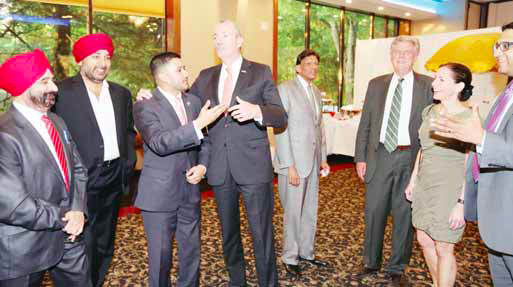
    EDISON, NJ (TIP): Phil Murphy, the democratic candidate for this year’s gubernatorial election in New Jersey, was praised as a friend of South Asian population of the state.

    New jersey’s only Assemblyman of South Asian origin Raj Mukherjee exhorted a gathering of diverse South Asian population for actively participating in the election process of the state. He was speaking at a fund raising event held in support of Murphy at South Brunswick.

    Mukherjee, who represents Jersey City in the state Assembly, regretted that only a small section of South Asian voters were exercising their rights to vote in local elections. “We should be sitting at the table, not remain as part of Menu”, he told the audience metaphorically.

    Mukherjee praised the South Asian community for its remarkable contribution towards improving the US economy and said that Democratic candidate for the post of NJ Governor, Phil Murphy, was a true supporter of diversity in the state. Quoting from a book by JFK, Mukherjee made a point in favor of treating immigrants fairly, and said, “Murphy is the one who could stand up to Trump”, adding that “he will have or back as New Jerseans.”

    Addressing the gathering of supporters Murphy successfully made a case in his favor at the fund raising event. He minced no words criticizing President Trump, for his ‘erratic and negative’ policies on health care, economy, environment, education and immigrants issues the nation.

    The 59-year-old former banking executive told the audience that he cared for diversity. He turned to Congressman Frank Pallone proclaiming him the leader of all New Jersey residents of South Asian descents – and said that he stood for protecting the rights of all immigrants. Making a comparison with the state of Massachusetts, Murphy recounted varieties of similarities and said that New Jersey was a strong contender for a healthier economy and progressive policies. “We have all the resources that makes a state great, except the leadership”, he pointed out.

    Congressman Pallone, a vicious critic of President Trump, told Indian Panorama, that he had no doubt New Jersey will have a Democrat Governor this year. “Phil talks about and believes in diversity”, he pointed out adding that he was seen as the representative of people from all states of India, who are settled in New Jersey.

    Murphy served as the US Ambassador to Germany during President Obama’s tenure. “Murphy cares for nine million people of New Jersey including the working class population”, said Pallone, Jr.

    The previous NJ governor, who belonged to Democratic Party, was Jon S. Corzine, another former Goldman Sachs banker, who didn’t win re-election after one term, and was succeeded by the current Governor, Chris Christie.

    Murphy appears to have established himself as the front-runner to succeed Christie. Elections for Governor’s posts in two states, New Jersey and Virginia, are scheduled to take place on November 7. The Primary elections will take place on June 6, 2017.

    In New Jersey only registered party members may vote in primary elections.

  • TRUMP PULLS US OUT OF PARIS CLIMATE ACCORD

    TRUMP PULLS US OUT OF PARIS CLIMATE ACCORD

    ● Speaks of negotiations to re-enter green pact on terms fair to US
    ● Many States and Cities pledge to abide by Paris climate accord

    Donald Trump on Thursday, June 1, withdrew the US from the landmark Paris climate accord which he said was not tough on India and China, and alleged that the deal was negotiated “poorly” by the Obama administration and signed out of “desperation”.

    “In order to fulfil my solemn duty to protect our citizens, the United States will withdraw from the Paris Climate Accord…We are getting out and we will start to renegotiate,” Trump said at the Rose Garden of the White House.

    Trump said he wants a fair deal for the American businesses to stay in the Paris agreement on climate change. Trump said the Paris agreement on climate change agreed upon by more than 190 countries was “negotiated  poorly by Obama administration and signed out of desperation”. “This agreement is more about climate and more about others getting advantages. This put the US to a very very big economic disadvantage,” he said, adding that as a result of the deal, the US would not be able to compete with other countries in the world.

    Trump made this announcement in front of a battery of reporters when the temperature this afternoon was reported to be around 26 degrees Celsius. By withdrawing the US from the climate deal, he fulfilled his major campaign promise and overturned the major foreign policy accomplishment of his predecessor Barack Obama.

    In addition to the US, only two other countries-Syria and Nicaragua-are not part of the Paris agreement. California Governor Jerry Brown called Trump’s decision possibly “tragic” and a step “backwards” for the US. New York Gov. Andrew Cuomo says his state will continue to abide by the Paris climate accord regardless of President Donald Trump’s decision to pull out of the landmark 190-nation agreement to reduce carbon emissions.

    Cuomo said that the Republican president’s decision is “reckless” and harmful for the nation and the planet. He says he will use executive orders to ensure the state does not abandon its efforts to boost renewable energy while reducing emissions tied to climate change. New York Governor Cuomo, along with California Governor Edmund G. Brown Jr. and Washington State Governor Jay R. Inslee have announced the formation of the United States Climate Alliance, a coalition that will convene U.S. states committed to upholding the Paris Accord and continuing to take action against climate change.

    In the wake of that decision, 61 mayors across the U.S. announced that they would step up their cities’ own efforts to combat climate change, and adopt the Paris climate agreement on a local scale. Mayor Bill de Blasio, unsurprisingly, is among the members of the Climate Mayors, and in a statement, he denounced Trump’s move: “President Trump can turn his back on the world, but the world cannot ignore the very real threat of climate change. This decision is an immoral assault on the public health, safety and security of everyone on this planet. New Yorkers are already experiencing hotter summers, more powerful storms and rising seas, which disproportionately affect already vulnerable communities.

    Democratic lawmakers have said this is retreat of American leadership and gives opportunities to countries like India, China and Germany. The US, however, will not immediately pull out of the Paris Act. He would follow the four-year rule to get out of it. This means that the US will leave the Paris Agreement in 2020.

    Former Obama aide David Axelrod said, “in backing off of climate pact”, Trump “is locking arms with Syria and Nicaragua and matching confidently into the past”.

    INDIA AT ADVANTAGE: US PREZ:

    Trump said the deal gives advantages to countries like India and China. “India makes its participation on receiving billions and billions of dollars from developed countries. Paris accord is very unfair at the highest level to the US. The current India will be allowed to double its coal production and so does China,” Trump alleged. “A sad and weak decision,” tweeted Richard Verma, former US envoy to India.

    ‘HISTORIC MISTAKE’, BUT CLIMATE ACTION WILL GO ON:

    US President Trump’s decision will not derail action to curb one of the most serious problems facing the planet, political leaders, scientists, activists and other experts vowed on Thursday, June 1. But they warned that the decision could slow the pace of a global switch to clean energy, putting more lives and billions of dollars in investment at risk as climate change impacts pick up pace It also is likely to further erode US leadership in the world, with China and the EU expected to take the lead on global climate action, and will cost the US jobs in surging clean energy businesses, they said What remains unclear is how much influence the US will now have on how the Paris pact is put into action, starting in 2018, given that the US exit from the accord cannot be immediate, experts said.

  • THIS IS HOW YOUR BEDROOM WILL HELP YOU SLEEP BETTER

    THIS IS HOW YOUR BEDROOM WILL HELP YOU SLEEP BETTER

    GET A GOOD MATTRESS

    A good mattress is an investment in health. If your mattress is too hard or soft or lumpy, it will keep you up all night. Most people wake up with neck and muscle pain because of a bad mattress. It’s a good idea to try out your mattress before paying the whole amount.

    MAKE YOUR ROOM DARK

    We need a dark, calm environment to sleep better. Most modern devices like digital clocks, televisions, phones, light up your bedroom and interrupt sleep. Remove them from your bedroom or put them away in a drawer.

    CUT OFF THE NOISE

    Is your fan and AC noisy? Is your room too hot or cold? Install a good thermostat to control the air temperature in your room.

    HEALING SOUNDS

    Play soft music – like soft wind chimes, birds chirping or even the sound of falling water in your bedroom. You could keep a small fountain near your bedside.

    GET GREENS INDOORS

    Keep a small plant on your dressing table or bedside to purify the air. This also increases humidity and helps you breathe better.

  • Cannabis extract reduces seizures in epilepsy: Study

    Cannabis extract reduces seizures in epilepsy: Study

    The first large-scale clinical trial of a cannabis derivative known as cannabidiol shows it was able to cut the frequency of severe epileptic seizures by 39%, say researchers.

    Cannabidiol, or CBD, is derived from cannabis plants, but does not cause users to get high. The study in the New England Journal of Medicine comes after years of anecdotal evidence of cannabidiol’s effects. It focused on young patients with Dravet syndrome, a rare form of epilepsy.

    “Cannabidiol should not be viewed as a panacea for epilepsy, but for patients with especially severe forms who have not responded to numerous medications, these results provide hope that we may soon have another treatment option,” said lead investigator Orrin Devinsky, professor of neurology, neurosurgery, and psychiatry at New York University Langone Medical Centre.

    Researchers used an experimental liquid form of CBD, which has not been approved for use by the US Food and Drug Administration. “We still need more research, but this new trial provides more evidence than we have ever had of cannabidiol’s effectiveness as a medication for treatment-resistant epilepsy.”

    A total of 120 children and adolescents, aged two to 18, with Dravet Syndrome were randomised to receive either a placebo or CBD, in addition to their usual treatment. The trial took place at 23 sites in the United States and Europe over the course of 14 weeks. “Seizure frequency dropped in the CBD treated group by 39% from a median of nearly 12 convulsive seizures per month before the study to about six,” said the study. “Three patients’ seizures stopped entirely.”

    The placebo group saw a much smaller 13% reduction in seizures. Most patients reported side effects, most commonly vomiting, fatigue and fever. A total of 93.4% of patients in the CBD group and 74.6% of those treated with placebo experienced side effects, which were generally reported as mild or moderate.

    But eight patients in the CBD group withdrew from the trial because of side effects, compared to one participant in the placebo group.

    Chocolate can lower risks of ‘heart flutter’

    Chocoholics take note: new research shows that eating chocolates can lower risks of developing irregular heartbeats, a condition that affects over 33 million people worldwide. Previous research has linked eating chocolates, especially dark chocolate, to improvements in heart health.

    Scientists, including those from Harvard TH Chan School of Public Health in the US, wanted to see if it may be linked to lower rate of atrial fibrillation, also known as heart flutter. It is not clear exactly what causes the condition, and there is currently no cure or contenders for its prevention.

    The associations seemed to be strongest for 1 weekly serving for women and between 2 and 6 weekly servings for men, according to the research published in the journal Heart.Researchers collected data from 55,502 (26,400 men and 29,100 women) participants, aged between 50 and 64. Participants provided information on their usual weekly chocolate consumption, with one serving classified as 30 grammes.Information on heart disease risk factors, diet, and lifestyle was obtained when the participants were recruited to the study.Their health was then tracked using episodes of hospital treatment and deaths.

    During the monitoring period, which averaged 13.5 years, 3,346 new cases of a trial fibrillation were diagnosed. After accounting for other factors related to heart disease, the newly diagnosed atrial fibrillation rate was 10% lower for 1-3 servings of chocolate a month than it was for less than 1 serving a month.

  • Indian American Congresswoman Pramila Jayapal Terms Trump’s Budget as ‘Cruel’

    Indian American Congresswoman Pramila Jayapal Terms Trump’s Budget as ‘Cruel’

    WASHINGTON (TIP): Indian American Congresswoman Pramila Jayapal, Vice Ranking member of the House Budget Committee, lashed out at Trump administration’s latest budget proposal by calling it ‘Cruel.’

    “There is only one way to describe the Trump budget – cruel. It pulls the rug out from under people who are already struggling to make ends meet. Simply put this is a $54 billion assault on Americans living on the brink. This budget proposal continues the trend of transferring taxpayer dollars into the pockets of the wealthy at the expense of our nation’s working families. It attacks women’s health care by defunding Planned Parenthood, destroys Medicaid, cuts funding for the Children’s Health Insurance Program and guts nutrition assistance programs that help families put food on their tables. This budget continues down the path of tearing apart families by proposing funding for a billion dollar border wall, and it neglects the health and safety of everyone by making a 31 percent cut to EPA funds that keep our air and water clean”, she said.

    “A budget is a statement of our values. My values and the values of the people of Washington’s 7th District could not be more different from those expressed in this proposal. I believe our budget should invest in jobs and opportunities for working families who are desperately in need of support. This budget, in total contradiction to the populist platform that the President campaigned on, does exactly the opposite. It guts investments in working people to give tax cuts to the wealthy. That’s just wrong”, she further added.

    She also vowed that as a member of the House Budget Committee, she is determined to fight against this budget and protect the communities from harm.

  • Under US Republican bill, 23 million would lose health coverage: Watchdog

    Under US Republican bill, 23 million would lose health coverage: Watchdog

    WASHINGTON (TIP): A bill passed by US House Republicans would cause 23 million people to lose healthcare coverage by 2026 while de-stabilizing health insurance markets in some states and making it hard for sick people to buy insurance, a budget watchdog agency said on May 24.

    The Congressional Budget Office, a non-partisan group of experts who analyze US legislation, said the bill would reduce federal deficits by $119 billion between 2017 and 2026.

    The report could give added ammunition to Democrats who have accused President Donald Trump and congressional Republicans of putting sick and low-income people at risk with their effort to roll back former President Barack Obama’s signature 2010 healthcare law, formally known as the Affordable Care Act but often called Obamacare.

    The report also complicates the job of Senate Republicans – some of whom already have doubts about the House bill – as they craft their own healthcare legislation. Republicans have sought to unravel Obamacare since its passage and Trump promised on the campaign trail to repeal it, saying it is too costly and an overreach by government in the healthcare market.

    As Trump and Republican leaders sought to bring wavering lawmakers on board with the House bill, they added a controversial last-minute amendment that would give states leeway to drop an Obamacare requirement that forces insurers to charge sick and healthy people the same insurance rates.

    Another change would allow states to decide whether to require insurers to cover health benefits such as maternity care and prescription drugs that are mandatory under current law.

    But the CBO report said the amendment would make it difficult or impossible for people in poor health to purchase comprehensive coverage in some states. “People who are less healthy (including those with preexisting or newly acquired medical conditions) would ultimately be unable to purchase comprehensive non-group health insurance at premiums comparable to those under current law, if they could purchase it at all,” the CBO report said.

    The CBO said markets for people to buy individual insurance plans could then become “unstable” in states that choose to waive the Obamacare requirements for coverage of pre-existing medical conditions and essential health benefits.

    Even before the report, many Republican senators were wary of the House version of the healthcare bill, saying it unraveled Obamacare too much and too quickly. About 20 million people gained insurance under Obamacare. The House bill would eliminate most Obamacare taxes that help subsidize private health coverage for individuals, roll back the government’s Medicaid health plan for the poor and disabled and replace the law’s income-based tax credits for buying medical coverage with credits based on age.

    A group of 13 Republican senators led by Senate Majority Leader Mitch McConnell is expected to draft its own version of the healthcare bill in the coming months. McConnell, however, told Reuters on Wednesday he does not yet know how Republicans will get the necessary votes. “This is a very challenging undertaking,” McConnell said. Republican opposition After the release of the CBO report, several Republican senators said they could not support the House bill. (Reuters)

  • GOP health care bill nothing short of a disaster, says Kamala Harris

    GOP health care bill nothing short of a disaster, says Kamala Harris

    WASHINGTON (TIP): In response to the Congressional Budget Office’s report on the GOP health care bill, Senator Kamala D. Harris says this bill is nothing short of a disaster as it ‘will raise costs, reduce coverage, or allow discrimination against women.”

    “Access to quality and affordable health care in America should be a right, not a privilege. This nonpartisan report makes clear that if the Republican health care bill becomes law, middle class families will pay more for health care, costs for seniors will increase, 14 million more Americans will be uninsured next year, and 23 million more Americans uninsured over the next decade. This bill is nothing short of a disaster”, said Harris in a statement.

    “Instead of working in a bipartisan, transparent way to lower costs and expand coverage, Senate Republicans have chosen to work in secret behind closed doors, out of view from the American people. A public debate over health care is one the American people need and deserves – doctors, patients, advocates, and stakeholders should all have a seat at the table.”

    “I will continue to urge my Republican colleagues to open up this process, and reject any bill that will raise costs, reduce coverage, or allow discrimination against women, those with pre-existing conditions, and seniors”, said the first Indian-American woman to be elected to the United States Senate.

  • WHY GOP SENATORS ARE SELLING OUT THEIR OWN PUBLIC SCHOOLS TO HELP NYC CHARTERS

    WHY GOP SENATORS ARE SELLING OUT THEIR OWN PUBLIC SCHOOLS TO HELP NYC CHARTERS

    By Andy Pallotta

    Charter schools are rare on Long Island, just like they are in vast stretches of the rest of New York State. In fact, there are no charter schools from just north of Albany all the way to the Canadian border; and they are nearly as rare in much of central New York and the Southern Tier. In fact, of the 38 state Senate districts outside of the New York City metropolitan area, only five have three or more charters. Most have no charters at all.

    So why do the Republican state senators from Long Island and the rest of upstate continue to lobby to provide millions of dollars in state aid every year to the charter sector; money that could benefit their own local schools and constituents but instead ends up in the coffers of charter operators in New York City? It’s a question that is especially pointed for Long Island’s GOP Senate delegation, particularly Majority Leader John Flanagan.

    Charters received a $22 million increase in state funding for the current school year. In the recently enacted state budget, the Senate pushed for – and won – a $70 million increase in charter school funding through a $500 per student tuition bonus, bringing the two-year funding increase for charters to about $92 million in state funds.

    It’s not as if schools in Nassau and Suffolk counties, or any of these senators’ home districts, couldn’t use additional funds. If divided among the Republicans’ districts, that $92 million could mean dozens of new teachers to lower class sizes in local schools, more sports and after-school programs, art and music, guidance and health services, and better career training in areas that have lost manufacturing jobs – and that’s not to mention the impact of tens of millions of additional state dollars on local property taxes.

    What accounts for this devotion Senate Republicans have shown to charter schools outside their districts? Maybe it has something to do with the huge sums that pro charter billionaires have lavished on charter cheerleader operations and on Republican office-holders.

    In the last five years, a group of charter friendly billionaires including the Walton family, heirs to the Wal-Mart fortune; hedge fund operators Daniel Loeb and Paul Singer; and others have poured nearly $13 million in contributions into outfits with names like “New Yorkers for a Balanced Albany” and “New Yorkers for Putting Students First” that function as lobbying forces for the charter industry.

    Republican Party operations in New York State have also been the direct beneficiaries of the billionaires’ largesse. Republican county and state committees, along with their associated housekeeping and campaign accounts, raked in more than $3 million in contributions from this group during the same period, with Singer and notorious rightwing billionaire David Koch leading the list.

    Thanks to changes in federal and state election laws, billionaires can legally use their vast fortunes to magnify their voices on any issue they decide to embrace.

    But Long Island residents – in a chorus with New Yorkers from throughout the state — should be reminding their senators that they don’t have to listen to those voices, particularly when it means short-changing their own public schools. And Long Island’s Senate delegation would be smart to pay attention.

    (The author is president, NY State United Teachers)

  • Iran votes for reform

    Iran votes for reform

    “Mr. Rouhani’s decisive victory is a shot in the arm for the moderates coming after the elections in February last year for the Parliament and the Assembly of Experts where the moderates and the reformists had registered significant gains”, says the author.
    By Rakesh Sood

    After a difficult campaign, President Hassan Rouhani won a crucial second term in Iran’s presidential elections held on May 19. A high turnout of 73% helped him score a convincing victory over his principal challenger Ebrahim Raisi, a conservative cleric, in the first round itself, winning 57% of the votes compared to Mr. Raisi’s 38.5%. More than two-thirds of Iran’s voters are in urban areas and most of them are Rouhani supporters; therefore, as voting hours got extended to midnight indicating a high turnout, the mood in the Rouhani camp turned jubilant.

    A DIFFICULT CAMPAIGN:

    In 2013, Mr. Rouhani had campaigned and won on a platform that focused on bringing sanctions to an end,which he was able to achieve in July 2015 with the Joint Comprehensive Plan of Action (JCPOA), a nuclear agreement concluded with the P-5 + 1. The sanctions relief has had a positive impact on the economy with oil exports up and GDP growth hitting 6% last year though expectations were higher. In a TV debate in the run-up to the election, Mr. Raisi described the JCPOA as ‘a check that Rouhani had failed to cash’. Opinion polls had favored Mr. Rouhani, because Mr. Raisi, though close to the Supreme Leader,Ayatollah Ali Khamenei, was considered a relative newcomer to politics. However, concern grew when Mohammad Bagher Ghalibaf, a former Iranian Revolutionary Guards Corps (IRGC) pilot and the Mayor of Tehran since 2005, withdrew from the race in support of Mr. Raisi, who had spent most of his life in the judiciary before being appointed custodian of the shrine of Imam Reza in Mashhad last year. He also controls Astan-e-Quds Razavi, one of the wealthiest foundations, and is seen a possible successor to the present Supreme Leader who is 77 and in poor health.

    Therefore Mr. Rouhani’s decisive victory is a shot in the arm for the moderates coming after the elections in February last year for the Parliament and the Assembly of Experts where the moderates and the reformists had registered significant gains.

    ROUHANI’S CONSTRAINTS:

    However, given Iran’s complex governance structures, President Rouhani will have to tread carefully as his powers and those of the directly elected 290- member Parliament are constrained by the non-elected authorities. The key power center is the Supreme Leader who is appointed by the Assembly of Experts and in turn appoints the heads of radio and TV, the armed forces and the IRGC, the Supreme National Security Council, the 51-member Expediency Council and the higher judiciary. He also chooses six members of the powerful Guardian Council, with the other six nominated by the judiciary. The Guardian Council in turn vets candidates for all elections, presidential, parliamentary and the 88-member Assembly of Experts. It cleared only six candidates out of the more than 1,600 who filed nominations for the presidential contest; rejections included former President Mahmoud Ahmadinejad’s nomination. In addition, it approves all legislation passed by Parliament to ensure its consistency with Islamic jurisprudence. A dispute between Parliament and the Council is resolved by the Expediency Council. The Assembly of Experts is directly elected and its primary role is to appoint the Supreme Leader, critical during Mr. Rouhani’s second term.

    Mr. Rouhani’s principal challenge will be to sustain economic growth and nudge the reform process forward in order to tackle unemployment, currently running at over 12%, and higher among the youth. He has promised to expand individual and political rights, enlarge women’s role and ensure greater accountability.

    Some of these will be challenged. While his victory margin is a clear endorsement for reform, the Supreme Leader will play a critical balancing role. It is interesting that, in his immediate remarks, he praised the Iranian people for the impressive turnout, but did not congratulate the winner.

    In foreign policy, Mr. Rouhani will present the image of a moderate and more outward-oriented Iran. He is no stranger to Iran’s complex politics. From 1989 to 2005, he was Secretary of the Supreme National Security Council, reporting to the Supreme Leader, and handled the nuclear negotiations during 2003-05.

    During this period, he also served a term each as Deputy Speaker of Parliament and as member of the Expediency Council. Following Mr. Ahmadinejad’s election in 2005, he quit. After being elected in 2013, he persuaded the Supreme Leader to shift responsibility for the nuclear negotiations to the Foreign Ministry and let Foreign Minister Mohammad Javad Zarif take the lead.

    In addition to managing his home front, the other challenge for Mr. Rouhani will be keep the JCPOA going in the face of the U.S. Congress’s and now President Donald Trump’s declared hostility.

    DEALING WITH TRUMP:

    During the election campaign, Mr. Trump had called it the ‘worst deal ever’ and threatened to tear it up as soon as he was elected! Subsequently, he seems to have modified his position, realizing perhaps that it is not just a bilateral agreement with Iran but also includes Russia, China, the U.K., France, Germany and the European Union. In April, the Trump administration certified that Iran was abiding by its obligations but Secretary of State Rex Tillerson added that a 90- day policy review would be undertaken in view of ‘Iran’s alarming ongoing provocations’.

    More recently, on May 17, the Trump administration continued the sanctions waiver (under Section 1245 of the National Defense Authorization Act 2012), needed every 120 days even while imposing sanctions on seven Iranian and Chinese individuals and entities on account of missile proliferation activities.

    In April, a slew of human rights related sanctions were imposed. In mid- June another waiver, this time under the Iran Freedom and Counter-Proliferation Act, will need to be renewed if the JCPOA is to be sustained. These are necessary because in 2015, the Republican-dominated Congress rejected the JCPOA and U.S.

    President Barack Obama used executive authority to waive U.S. sanctions but these waivers need to be renewed periodically. The JCPOA was the outcome of protracted negotiations over more than a decade, during which Iran had steadily built up its nuclear capabilities, especially in the enrichment domain, and in 2015 was estimated to be only months away from acquiring enough Highly Enriched Uranium to produce one device (approximately 25 kg) though Iran consistently maintained that its program was exclusively for peaceful purposes. Given deep suspicions however, the JCPOA with its extensive inspection and reporting obligations was the best way to prevent Iran from developing a military nuclear capability for the next 10-15 years.

    Opponents say that while cheating is unlikely, they fear that Iran will retain its nuclear appetite after abstaining during the 10-15 year period and resume its activity once the inspection obligations expire.

    THE SAUDI FACTOR:

    Perhaps the most troubling problem is the new embrace of Saudi Arabia that was in evidence during Mr. Trump’s visit. It raises the prospects of greater U.S. involvement in the war in Yemen and can push relations with Iran into a confrontation. In 2016, there were 19 ‘incidents at sea’ between U.S. and Iranian vessels in the Persian Gulf. The most serious was in January 2016 when the IRGC held two U.S. vessels and 10 servicemen, accused of trespassing in Iranian waters. The crisis was resolved within hours, thanks to some quick phone conversations between U.S. Secretary of State John Kerry and Mr. Zarif. That link is missing today.

    It is all the more ironic because Iran is the one country that is opposed to the Islamic State. Yet the U.S. is keener to bless the Saudi-created Islamic Military Alliance to Fight Terrorism, a grouping of 41 Sunni nations, under the command of former Pakistani Army Chief, General Raheel Sharif. It remains unclear what the role of this coalition is, to fight the IS or Iran or in Yemen, or to secure the Gulf monarchies!

    For the last quarter century, the U.S. practiced dual containment of Iran and Iraq, a policy that suited both Israel and Saudi Arabia. Mr. Obama’s push for the JCPOA was driven by a desire to extricate U.S. policy from this stranglehold and expand options. If a return to the Saudi embrace creates additional tensions and a collapse of the JCPOA, it could push Iran to cross the nuclear threshold with much wider regional implications.Mr. Rouhani’s challenges are just beginning.

    (The author is a former diplomat and currently Distinguished Fellow at the Observer Research Foundation. He can be reached at rakeshsood2001@yahoo.com)

  • Indian American Neurologist honored with Lifetime Achievement Award

    Indian American Neurologist honored with Lifetime Achievement Award

    AUGUSTA, GA (TIP): The Association of Indian Neurologists in America (AINA) recently honored Dr. Kapil Sethi, an Indian origin neurologist and former director of the Movement Disorders Program at the Medical College of Georgia at Augusta University, with their Lifetime Achievement Award 2017.

    The award recognizes a leader in neurology based on his dedication to advancing the training of North American neurologists of Indian origin and promoting innovation and research in the field of neurology. DR Sethi received the award at the group’s annual meeting last month in Boston.

    An internationally known expert in movement disorders, Dr Sethi is currently a principal investigator on a study to determine whether a constant subcutaneous infusion of apomorphine over 18 hours daily can help “rescue” Parkinson’s patients from bouts of immobility and smooth out their movements. The MCG and AU Movement Disorders Program is among 20 sites across the nation enrolling up to 60 patients in the study. Dr Sethi was appointed director of the Movement Disorders Program in 1985 and served in that capacity until last year. He also was Director of the National Parkinson’s Foundation Center of Excellence at AU Health from 2000-09. He was listed among America’s Top Doctors for 16 consecutive years, from 2001-17, by Castle Connolly.

  • Indian American Sarita Kohli takes over as President and CEO of AACI

    Indian American Sarita Kohli takes over as President and CEO of AACI

    SAN JOSE, CA (TIP): Indian American executive Sarita Kohli assumed the role of President and CEO of Asian Americans for Community Involvement (AACI) on May 16, 2017.Sarita has been a pivotal part of AACI for nearly 14 years and most recently served as the Interim President and CEO for the past 11 months.

    “After an extensive search of qualified candidates, we are excited that Sarita will continue her service to AACI and the community as the new President and CEO. Her dedication and passion to providing health and wellness services to communities in need, coupled with her business acumen makes her ideal person to lead AACI into its next chapter. She has a proven track record at AACI, and we are confident that she will chart a successful path for AACI as they expand their services to more communities,” said Hanley Chew, Chair of AACI’s Board of the Directors.

    Sarita has been extensively involved in AACI and the community. Starting in 2003, she joined AACI as the Program Coordinator for the Center for Survivors of Torture, and quickly ascended to become the Director of Mental Health and Community Programs in 2005. She eventually served as Executive Vice President from 2014 – 2016. During her tenure, she has provided clinical services, created and expanded mental health and community programming, secured funding, and set the business strategy. In 2011, she was appointed by Governor Brown to the California Board of Behavioral Sciences, and is currently serving her second term.

    The Behavioral Sciences Board oversees all regulations, clinical licensing, and consumer protections for behavioral therapists in California. Locally, she has served on the Board of Directors for West Valley Community Services, served as a Commissioner on the Santa Clara County Social Services Advisory Commission, Vice President of the Behavioral Health Contractors of Santa Clara County, and a member of the Intimate Violence Task Force. She was honored in 2015 as a Woman of Influence by the Silicon Valley Business Journal.

    “I joined AACI 14 years ago because I knew I wanted to be part of an organization that would make a difference. The team at AACI is dedicated and passionate to serve and I am honored and excited to have the opportunity to lead in this new capacity. I am looking forward to working with the team to not only continue providing high quality and culturally sensitive care, but to also think strategically as to how we can expand our impact here in Silicon Valley,” said AACI’s new President and CEO, Sarita Kohli.

    AACI was founded in 1973 to meet the health and cultural needs of the incoming immigrants and refugees during the time. Forty-four years later, AACI now has two clinic sites serving the Silicon Valley and is the largest direct service provider for the Asian American community.

  • Ground-Breaking Ceremony of Hare Krishna Temple in Naperville

    Ground-Breaking Ceremony of Hare Krishna Temple in Naperville

    CHICAGO, IL (TIP): Sunday May 21st marked the Bhumipuja or groundbreaking ceremony of ISKCON Naperville. The temple is currently an old building that was acquired by ISKCON about 7 years back. As the popularity of the temple grew in the area, the devotee & visitor base expanded considerably and the existing facilities are stretched to its limit, which led to a plan for a major expansion of the temple. The ground-breaking ceremony marked the beginning of this project.

    The Hare Krishna movement, International Society for Krishna consciousness (ISKCON), is a global community connecting to each other, the world around us, and God through service and the reciprocation of love.

    ISKCON, founded by His Divine Grace Srila Prabhupada, has temples all over the world numbering over 650 temples, 65 eco-friendly farms with 12+ million followers. Naperville temple is one of the latest additions to this global community.

    The event was a huge success attended by approximately 1,000 people including ISKCON leaders, devotees, Greater Chicago residents, and various elected officials including Naperville mayor Steve Cherico. The event included a special vedic ceremony including fire sacrifice, and speeches by prominent personalities followed by lunch. Mayor Steve Cherico has been very supportive of the temple and is excited about this project. “The ISKCON temple brings a great element of diversity to the Naperville community” he said, in his speech at the event. He also said,

    “Programs like ISKCON are what makes Naperville a better place”. ISKCON Naperville temple is currently involved in various community programs. With the expansion of the temple several new programs will be added. One of ISKCON’s popular programs is instruction of the profound messages of the Bhagavad Gita, one of the greatest philosophical and religious dialogues known to man, a holy book of the vedic culture existing for thousands of years.

    Currently the temple offers this spiritual education for children and adults at the temple as well as in smaller personalized settings within the community known as Bhakti Vriksha programs. Other popular program include the vegetarian Prasadam (sanctified food) service which is a free Sunday feast offered to all visitors at the temple and it will be further expanded after the commercial kitchen is built in the new temple. The new temple will offer classes in devotional dance, music and art centered on Krishna. There are also plans to offer sessions in health and well-being, Yoga & meditation. The temple will also have facility to expand our winter and summer programs that are currently offered to children.

    Leadership and management training programs are planned to engage the youth in various services. The addition of all these programs will be a great gift to the Naperville community and to all visitors of the temple.The total cost of the temple expansion is approximately $4 Million of which around $600,000 has been pledged so far.

    This will allow the project to be completed in phases. Donations of any amount are welcome. ISKCON Naperville can be reached at info@IskconNaperville.org. For more information please visit www.IskconNaperville.org

    (Photographs and Press release:

    Asian Media USA)

  • ALIBABA INJECTS $488 MILLION HEALTH FOOD ASSETS INTO ALI HEALTH

    ALIBABA INJECTS $488 MILLION HEALTH FOOD ASSETS INTO ALI HEALTH

    HONG KONG (TIP): Alibaba Health Information Technology Ltd said on Friday controlling shareholder Alibaba Group Holding Ltd would sell HK$3.8 billion ($488.3 million) worth of health food and nutritional products businesses to the company, further developing it into Alibaba’s healthcare flagship platform.

    Alibaba Health will buy Ali JK Nutritional Products Ltd from Alibaba Group in a deal to be settled by the issue of 1.19 billion shares at HK$3.2 a piece, or a 6.16 percent discount to the last close, the company said in a filing to Hong Kong bourse. The deal will bring a broader set of merchants into the online healthcare community, while the company will obtain more stable and sustainable revenue growth, the Hong Kong-listed firm added.

    Alibaba Health saw its adjusted net loss narrowed to 98.3 million yuan ($14.3 million) for the year ended in March, from a 161.5 million yuan loss in the year-ago period amid rapid growth of its pharmaceutical e-commerce business.

  • HYPERTENSION CAN KILL

    HYPERTENSION CAN KILL

    Hypertension kills 8 million people every year and its incidence is expected to go up by 60 per cent in 2025. It is a leading risk factor for heart diseases, pregnancy complications, diabetes, and dementia among other ailments.

    However, it is important to know that hypertension is preventable. Sedentary lifestyle, increased stress, unhealthy eating, smoking and alcohol consumption all contribute to the increased risk of hypertension. The fact that most people do not know about their hypertensive condition is extremely worrisome. Hence, it is extremely important to spread awareness.

    So what’s hypertension? According to World Health Organisation (WHO), hypertension, also known as high or raised blood pressure, is a condition in which the blood vessels have persistently raised pressure. Blood is carried from the heart to all parts of the body in the vessels. The higher the pressure the harder the heart has to pump. Monitoring blood pressure is very important because the higher the blood pressure, the higher the chances of health issues. Since high blood pressure has no symptoms, it is considered a silent condition.

    According to Padma Shri Awardee Dr K K Aggarwal, National President Indian Medical Association (IMA) and President, Heart Care Foundation of India (HCFI), “Blood pressure (BP) should be monitored regularly because it is a barometer of health and there are often no symptoms to alert one to the presence of high BP. It’s a silent killer. By the time symptoms develop, some damage has occurred to the target organs like eye, brain, heart, or kidney. Mostly, BP should be taken at each doctor’s visit. In addition, one should always remember the rule of 20 in hypertension.”

    If the blood pressure is high, it puts an extra strain on the arteries and the heart. Over a period, this strain can cause the arteries to become to become thicker and less flexible or become weaker. As a result, the arteries become narrow, making them more likely to become clogged up, explains Dr Sameer Pagad,

    Interventional Cardiologist, K.J. Somaiya Hospital Super Specialty Centre.

    If an artery gets completely clogged up (known as a clot), the condition can lead to a heart attack, dementia, kidney disease or a stroke or even lead to death.

    Diagnosis

    Dr. Anand M, Cardiologist, Frontier Lifeline Hospital explains, “The diagnosis of hypertension is the tip of iceberg phenomenon. Patients usually do not have any symptom and are diagnosed to have hypertension when they seek medical attention for hypertensive complications such as stroke, heart disease or kidney disease. There are no particular signs or symptoms to suggest patient has hypertension. Patients with other comorbid conditions like diabetes, high cholesterol level and obesity and persons with family history of hypertension in young age (more than 40 years of age) should check their BP regularly with the treating physician. Generally people over 40 years of age should have their BP checked when they come in contact with medical personnel or annually. It is also the duty of the doctor to check BP regularly for all the patients.”

    Risks

    The risk of CAD and heart attack in hypertension is 20 per cent, risk of peripheral vascular disease in hypertension is 20 per cent and risk of paralysis in hypertension is 20 per cent. Hypertension or high blood pressure can silently damage the body for years before any symptoms develop. One may end with a poor quality of life; develop a disability or even a fatal heart attack. Half the people with untreated hypertension die of heart disease due to poor blood flow (ischemic heart disease) and another third die because of stroke.

    Early signs

    High BP is known as hypertension and can cause headaches. However, the symptoms remain silent till there is damage to the blood vessels of a organ. This can further lead to a stroke or a heart attack. There are many reasons why a normal BP reading may fluctuate between high and low. Dr Aggarwal warns, “A difference of more than 20 points in the reading, in either direction, may indicate a serious health issue. Some factors responsible for fluctuating BP are stress, medication, caffeine, food habits, fever, or dehydration.”