Ahealthy meal plan that helps weight loss is incomplete without chickpeas and their healthy weight loss benefits. Add them to salads, curries, vegetables, just about anything can use these wonderful energy powerhouses.
Read on to understand just why chickpeas are good for weight loss. The nutlike taste and buttery texture of chickpeas is not the only reason to eye this humble pea; its amazing weight loss capabilities makes it a dieters favourite. In 2010, a study was conducted to test the ability of chickpea to lower food consumption in 42 participants over a 12 week study.
The same people were later asked to follow their regular diet for weeks. Results showed that people claimed that the level of satiation after eating chickpea was higher. Due to their high fiber content, chickpeas make a great weight loss food by making one feel fuller for longer.The fibre content also takes care of digestive disorders. Studies have revealed that chickpeas being lower in fat levels can lower bad cholesterol and overall cholesterol levels.
Chickpeas for diabetics: Chickpeas provide carbohydrates for people sensitive to insulin and those suffering from diabetes. Interesting fact: Chickpeas equal milk or yogurt in calcium level. Chickpeas contain high quality protein and are a good source of folic acid, manganese, iron, copper, magnesium and molybdenum.
Tag: Health
Read the latest health news, diet, fitness, medical news and healthcare tips on theindianpanorama.news/health. Get all the healthcare news, including wellness, fitness, diet and weight loss & more.

-

DR. SUBHADRA NORI happiness in service of humanity and God
The South Asian and American Women’s Alliance (SAAWA), a Long Island based organization, recently recognized a few ladies at their 2014 annual gala. One of the honorees who drew my attention, in particular, was Dr. Subhadra Nori who was recognized for her “contribution to medicine”.
I felt impelled to speak with her after the formal part of the function was over to know more about her, primarily to satisfy my curiosity as to how a busy physician could train herself in to a motivational speaker and, also because I felt the readers of The Indian Panorama will get to know what made Dr. Subhadra Nori “a successful woman”. Such success stories prove to be very educative and serve as source of inspiration to others.
So, here we go. Dr. Subhadra Nori is a physician in physical medicine and rehabilitation. Working as the Regional Director of the Department of Physical Medicine and Rehabilitation at the Queens health network composed of Elmhurst and Queens Hospitals in New York, she is responsible for 4o Therapists, 10 attending physicians, 28 rotating residents through Mount Sinai School of medicine and hospital. What better way to understand a persona than to know what ideals are dear to him or her.
What vision does he or she have of the variegated life? So, in order to unravel Dr. Nori’s personality, I asked her a couple of questions which she readily answered. Here they are. The first question I asked her related to the most important institution in the life of a personfamily. Asked about her views on family, she said, “Family is the most important part of your life. You need the support and love of your spouse for achieving anything in career, life and happiness. It’s not how many gifts, jewelry or clothes are given but simple things as taking care of you, making sure you are comfortable, is the most important thing.

Judy Bosworth, North Hempstead Town Supervisor gives away the award to Dr. Subhadra Nori for her “contribution to Medicine”. Also seen in the picture, to the left of Bosworth, is Anila Midha, MD, Founder and President of South Asian American Women’s Alliance.
I am lucky and proud to say I have that 100%. To achieve the pinnacle of happiness you need the children’s acceptance and love. The last comment of hers brought me to the subject of children. I asked her what she thought about the upbringing of children, particularly, in a country which has a lot different set of values than Indians normally subscribe to. Dr. Nori said, “I was just like my mother.

Noris at their daughter’s wedding, with son, daughter in law, daughter, son in law and their parents
I didn’t think twice before providing, nurturing or pushing them when needed, to achieve many different aspects as culture, dance, music etc. However, their education was the primary goal for me”. She recalled how her parents also laid a great emphasis on education. “Our family’s emphasis was on education. without any discrimination between a boy or a girl. My parents were hard working, goal oriented, paying close attention to budget. Yet, they never hesitated when needed on education, for example, my medical college”.

Noris have always had political connections though they are not politically involved. Seen here with Hillary Clinton, then a Senator
Asked about the values she cherished most, she counted on her fingers, family, friendship and religious values. Dr. Subhadra Nori said she was proud of her heritage. “I am proud to say that both my parents came from solid families with many teachers and again, with emphasis on education. My paternal grandparents lived in Burma and spoke Burmese”.

Dr. Subhadra Nori with New York Mayor Michael Bloomberg (right).
Asked to give her views on religion, Dr. Nori said, “I believe in one Supreme God, and recently started reading on meanings of Vishnu Sahasranamamas, Aditya Hrudayam etc. I have great respect for the speaker of the pravachans Brahmsree SamavedamShanmukha Sharma. I have great faith in our Guruji Sree Vishwayogi Vishvamji. I believe he is always with me”. Asked if it gave her strength, she was emphatic in her affirmation. I thought it was time to bring her down from the high perch of philosophical reflections to other mundane affairs.
Knowing that most people in America are fitness conscious and Dr. Nori herself looked physical extremely fit, I asked her what she thought of health and fitness. “I am a big fan of exercise and use every possible available time to exercise. I have been a regular attendee of the gym for over 15 years. I do 2 days of circuit training with a personal trainer and attend 2 days of aerobics classes at the gym.
Zumba and kick boxing are my favorites. A little swimming in the summer as well. I am also careful with my diet and still read quite a few books and magazines on health and fitness, using audiobooks while doing dishes or commuting or gardening”. Asked to comment on her attitude to work, she said,” I believe in honesty and dedication towards work and ethics. I am a straight shooter and avoid cunning people.
I despise those who try to take advantage of the weak and the system. ” Dr. Subhadra Nori is a recipient of a number of awards and honors. These include the Best Teacher Award by Albert Einstein College of Medicine, Montefiore and Jacobi Medical Centers, and award for outstanding contribution to the residency program in PM &R 2003- 2005. And then, the SAAWA 2014 Award for her contribution to Medicine.
Asked what she thinks is the satisfying thing for her to do, she said, if human beings could help each other it would be the best thing to do. And she added she and her husband, the renowned Radiation Oncologist, Dr. Dattatreya Nori find real happiness in serving humanity and divinity. She said, “I was the secretary of Indo American Cancer Association which, in association with the Basavatarakam Foundation in Hyderabad was responsible for building a cancer hospital in Hyderabad. “The hospital is exclusively treating cancer patients from all over India, and is well known for its association with world renowned Sloan Kettering cancer center in New York.
10% to 15% patients get free service. We are very proud to be one of the founding members of this hospital. This hospital now has a nursing school, a wellness center and a chowltry for the needy.” Coming to the other source of happiness, the divine, Mrs. Nori said,” Along with my husband, Dr. Dattatreya Nori, myself and my family is fortunate to have established two Shirdi Sai Baba temples and cultural centers in New York and New Jersey. We conduct not only religious services but also run health camps, dance classes, tabla classes, SAT instructional classes and many others”.
It is a large canvass of life, of which any person could be legitimately proud. Kakinada, Andhra Pradesh born Subhadra, in her own words, is “successfully and happily married to Dr. Dattatreya Nori”. The Noris have two childrena son, Sateesh who is a lawyer and a daughter, Priya who is an infectious diseases physician. To the satisfaction of Noris both are successful in their professions and life. A life lived well in the service of humanity and God: that’s the source of happiness and success for Dr. Subhadra Nori and her illustrious husband Dr. Dattatreya Nori. -

New York City’s Economy shows fastest growth in nearly a year
NYC Growth Expected to Top National Rate in 2014, but Unemployment Remains Flat
NEW YORK, NY (TIP):
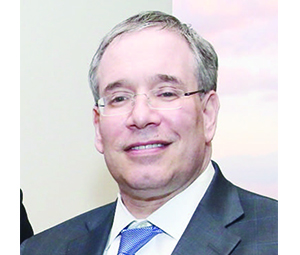
New York City’s economy grew more than three percent in the second quarter because of robust job growth and higher personal income, New York City Comptroller Scott M. Stringer found in his quarterly update on the City’s vital economic stats released today. The City’s Real Gross City Product (GCP) grew an estimated 3.1 percent and represented an estimated four percent of the nation’s total economic output.
“As the weather heated up, so did the City’s economy,” said Comptroller Stringer. “Across the board the City has outperformed previous quarters. While unemployment remains stuck at 7.9 percent, the economy has added tens of thousands of jobs in the private sector, pointing to a firmer labor market, stronger tax revenues and a more stable economy.
The “New York City Quarterly Economic Update” analysis summarizes economic results for the second quarter of 2014, including GCP, job growth, income growth, unemployment rates and inflation, among others. Findings include:● The City’s private sector added 22,400 payroll jobs. Except for two quarters, the City’s private-sector job base has grown faster than the nation’s for the past eight years.
● Both New York City total jobs and private-sector jobs were up by 6.5 percent and 8.4 percent respectively, since August 2008 -the previous peak. The most significant gains this quarter were in leisure and hospitality and education and health services.
● The unemployment rate in the City stayed at 7.9 percent, the same as the previous quarter. This rate is deceiving however, as the City’s labor force increased by 37,100 in the second quarter – the largest increase in over 12 years as a result of more people reentering the labor force.
● Personal income tax withheld rose 6.6 percent in the second quarter to about $1.6 billion indicating positive income trends, job growth, salary increases and late bonuses.
● Shoppers woke up from their winter slumber, with general sales tax collections rising 5.2 percent to $1.7 billion.
● Transit ridership remained steady, with 1.5 percent more straphangers on New York City subways in April and May. Ridership fell 3.3 percent on buses, but the Long Island Railroad saw ridership gains of 4.3 percent.
● Manhattan apartment sales climbed 6.3 percent higher than the same time last year – up to 3,342. The Brooklyn housing market also continued to do well, though the Queens’ median sale price dipped 9 percent, while the number of sales fell 3.6 percent.
● The tourism industry is booming – with Manhattan hotel occupancy at 93.2 percent, the highest quarterly rate since records became available.
● Broadway also continued its showstopping year with ticket sales up 21.7 percent in the second quarter of 2014 and total attendance rising 21.7 percent during that same period. “We must remember these are not the boom-town years of the late 1990s or of the credit bubble years. There is mounting evidence that the national and local economies have settled into a prolonged period of steady but modest growth,” Comptroller Stringer said. -

Basics very much in Indian economy’s favor
INDIA’S JOURNEY TO DEVELOPMENT AND CHALLENGES
The economy of India is the tenthlargest in the world by nominal GDP and the third-largest by purchasing power parity (PPP).The country is one of the G-20 major economies, a member of BRICS and a developing economy that is among the top 20 global traders according to the WTO.
India was the 19th-largest merchandise and the 6th largest services exporter in the world in 2013. India’s economic growth slowed to 4.7% for the 2013-14 fiscal year, in contrast to higher economic growth rates in 2000s. However, India’s decisive election outcome has created the potential for further structural reform that could result in a near 7 per cent GDP growth rate over the coming decade, and bank capital injections could enable banks to facilitate funding for that growth.

This would have meaningful implications for India’s fixed income markets. It is believed that the next decade for India’s foreign exchange (FX) and fixed income markets will be marked by policy-driven reforms driving accelerated growth with increasing market liberalization. Recent figures already appear more encouraging than the dynamics that have been supporting stagflationary recession conditions: The country’s balance of payments has improved, spurred by FX depreciation and the Reserve Bank of India’s (RBI’s) non-conventional measures. The growth outlook has turned moderately positive, helped by a global recovery; and bad loan formation, even at state-owned banks, may now be moderating.

The narrative for Indian markets began to brighten even before the elections. Following the second stage of India’s economic liberalization and the foreign direct investment (FDI) reforms initiated in September 2012, foreign investment will likely be a major contributor to a jump in private investment. However, despite liberal FDI limits, it has remained moderate, constrained, in part, by administrative hurdles. As the obstacles are reduced, we expect FDI to lead an investment boom over the next decade, similar to China’s mid-1990s experience. We project FDI will rise to an average of 2.5 per cent of GDP (FY2014-24) from an average of 1.5 per cent of GDP (FY2008-14). We believe such foreign capital flow will lend significant support to India’s balance of payments trajectory.
Improving public health
Health care services in India have undergone a vast change over the past few decades and encompass the entire nation. The industry is expected to supersede China by 2030 in terms of population expansion. Hence, it becomes one of the essential duties of the state to raise the nutrition level, the standard of living of the people together with improving public health.
Health care Industry of India The rapidly increasing health care industry of India is one of country’s largest sectors, both in terms of revenue and employment. It has been estimated that the healthcare industry of India is will grow by & 40 billion. The continuous increase in the population of India is considered one of the principal reasons for the growth in the healthcare industry of India. The rise in the infectious as well as chronic degenerative diseases has contributed to the rise in the healthcare sector of India. Additionally, because of diseases like AIDS and several lifestyle diseases of India, the healthcare sector of India will have a constant growth.In spite of the fact that the Indian healthcare industry is rapidly expanding, healthcare infrastructure in India is very poor. A noticeable percentage of India suffers from poor standard of healthcare services. Most of the healthcare facilities of India provided by the various healthcare services are limited and of low standard. In order to understand the current status of the healthcare services in India, it is important to know about the different healthcare services found in the country.
Public health services, essential public health services, preventive health services, mental healthcare services, home health services, magellen health service and school health services are some of the healthcare services found in India. Companies providing Health Insurance in India The various companies providing health insurance policies in India can also be put under the healthcare services of India. Some of the companies that provide health insurance coverage in India are Appollo DKV Insurance Company Ltd., Bajaj Alliance General Insurance Co. Ltd., Birla Sun Life Insurance, Aviva Life Insurance and the like.
Points to note
1).It has been found out that while the private health services have been rising for meet the needs of the rich citizens and foreigners, public health services in India are lagging behind and suffering in a major way.
2).It has also been found out that less than 1% of the GDP is spent on the public health care services in India.
3).Surveys made throughout India points out that 65% of the Indian population cannot access to modern medicines.
4).In addition, a number of drugs and even many diagnostic tests are still unavailable in the public health care sector of India.
5).Most of the hospitals, one of the prime healthcare services in India, are located in the urban areas, thereby making it almost impossible for the rural people to access.
Indian industry sees green shoots of manufacturing growth
A green shoots of revival have started to appear in the manufacturing sector, which is critical for job creation, with a majority of segments likely to post higher output, according to industry bodies. The survey conducted by CII-Ascon for the April-June quarter indicates positive growth in important sectors like consumer durables including the vehicle industry and white goods industry, which recorded a growth of 5- 10 per cent, leading to improvement in the overall industry growth.
The FICCI survey found that eleven out of fourteen sectors are likely to show improvement in production during the second quarter (Jul-Sept) of the current fiscal. Over 64 per cent respondents are not likely to hire additional workforce in the next three months, though this proportion is less than that of the previous quarter (75 per cent), indicating improvement in hiring outlook in coming months.
The survey gauges the expectations of manufacturers for Q2 for fourteen major sectors namely textiles, capital goods, metals, chemicals, cement, electronics, automotive, leather and footwear, machine tools, FMCG, tyre, textile machinery and more. Responses have been drawn from 392 manufacturing units from both large and small and medium (SME) segments with a combined annual turnover of over Rs 4 lakh crore.
An upturn in demand condition is also reflected in the improved order books of the manufacturers, said Ficci survey. While only 36 per cent respondents reported higher order books for the April-June quarter in the last survey, 43 per cent respondents reported higher order books for July-September quarter.
Foreign relations
Soon after the 2014 Lok Sabha election results declared a thumping victory for the BJP-led NDA government, Prime Minister Narendra Modi invited the heads of all the SAARC countries including Pakistan, Bangladesh, Sri Lanka, Nepal, Maldives, Bhutan and Afghanistan, for his oath-taking ceremony, sending a major diplomatic signal to the global community.
Credited with being a focused administrator, Modi signalled that his decisive win would reshape India’s foreign relations and leverage the diaspora to increase investments, business opportunities and better relations. Modi went on to choose neighbouring country Bhutan over others for his first foreign visit.
“I will follow the (foreign) policies of the Vajpayee-led NDA government, and that also applies to the relationship with the United States. I don’t think a decision taken by any individual or one event should impact the overall policy,” Modi said in an interview. The winds of change were clearly being felt at home and abroad.

SAARC: A refocus on the neighbourhood
For the first time, leaders of all South Asian Association Regional Corporation (SAARC) countries were invited for the swearing-in ceremony of an Indian Prime Minister. The presence of all seven countries, Pakistan Prime Minister Nawaz Sharif, Afghanistan President Hamid Karzai, Sri Lanka President Mahinda Rajapaksa, Bhutan Prime Minister Tshering Tobgay, Maldives President Abdulla Yameen Abdul Gayoom, Nepal Prime Minister Sushil Koirala, Speaker of Jatiyo Sangshad in Bangladesh Shirin Sharmin Chaudhury, was a welcome step towards strengthening India’s relations with the SAARC countries. However, political parties in Tamil Nadu voiced their displeasure at Sri Lanka’s president Mahinda Rajapaksa attending the ceremony and held demonstrations against him.

Bhutan visit: Asserting influence in South Asia
PM Narendra Modi’s maiden foreign trip to Bhutan was intended to show that in the new scheme of things, the neighbourhood enjoys high priority. Inaugurating Bhutan’s Supreme Court building that was built with India’s assistance, Modi also laid the foundation stone of the 600MW Kholongchu Hydro-electric project, a joint venture between the two countries.
He also proposed to hold a joint sports festival between Bhutan and north-eastern states of India, doubling scholarships for Bhutanese students in India and establishing e-libraries in 20 districts in Bhutan Though his faux pas of referring to Bhutan as Nepal while addressing the Bhutan Parliament caused some embarrassment, Modi went ahead to say that “when Bhutan calculates its happiness quotient, having a friend in India is also a major factor.”
Meet with Pakistan Prime Minister Nawaz Sharif: Picking up the threads
Relations between India and Pakistan have always been tense, but differences between the two countries had escalated after the 26/11 Mumbai terror attack. Modi’s invitation to Pakistan’s Prime minister Nawaz Sharif for his oath ceremony was seen as an attempt at cooperation rather than confrontation, which was reciprocated by his Pakistani counterpart.
In their first meeting, Modi pressed for confidence-building measures, peace and security as well as enhancing bilateral trade, sending a positive message among the people of both the countries. Modi struck a pragmatic note with Sharif, underlining India’s concerns on terrorism and urging his Pakistani counterpart to crack down on militants and speed up trial of the 2008 Mumbai attack suspects.
Sharif also responded to the meeting positively, accepting the fact that the two countries must strive for better cooperation. In the interaction which was widely seen as an “icebreaker”, the leaders also decided that their foreign secretaries would be in touch and discuss a way forward on talks that had been suspended since January 2013.
BRICS Summit: New inroads
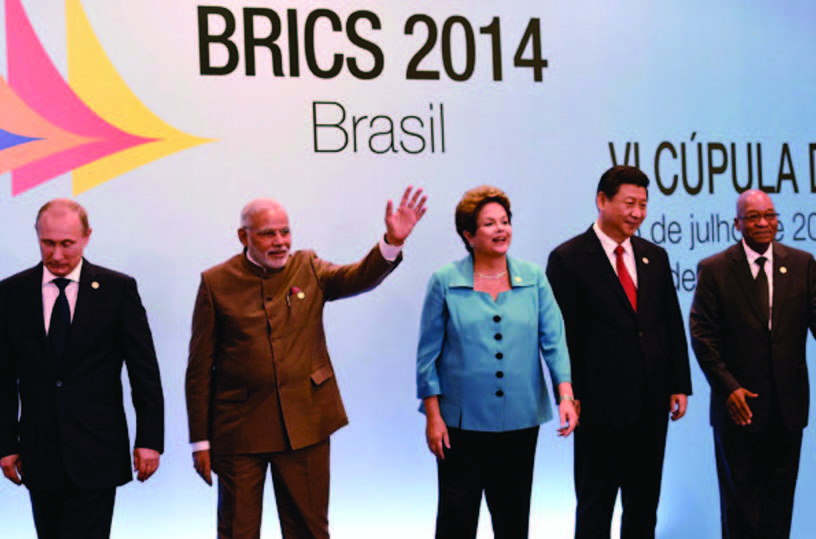
Pushing for better international governance, Narendra Modi said he favoured an open, rule-based, international trading regime which is critical for global economic growth. Modi’s first BRICS summit saw significant inroads towards the establishment of the New Development Bank and though the headquarters of the bank is slated to be in China, its first President will be from India.
Addressing the BRICS leaders, Modi also pressed for zero tolerance towards terrorism. He also met Chinese President Xi Jinping and both addressed the need for a solution to the boundary question. Further, Modi also favoured broadening the strategic partnership with Russia in nuclear, defence and energy sectors and invited President Vladimir Putin to visit the Kudankulam atomic power project during his trip in December.
India poised to make further progress on UN’s development goals
India has made progress on different indicators such as health and nutrition under the UN’s Millennium Development Goals and is expected to improve further upon them. “There has been progress in all the indicators and further progress is expected to be made in the remaining period up to 2015,” Planning Minister Rao Inderjit Singh had said recently.
Challenges
As far as India is concerned, 8 MDGs with 12 targets are relevant which are sought to be achieved during the period 1990 to 2015, the minister said. MDGs are international development goals that UN member states and numerous international organizations, including India, have agreed to achieve by the year 2015.
Eradicating poverty
These include eradicating extreme poverty and hunger; achieving universal primary education; promoting gender equality; reducing the child mortality rate and ensuring environmental sustainability. The minister’s said India had achieved the MDG target regarding poverty eradication. India had to halve the proportion of people whose income is less than one dollar a day between 1990 and 2015.
In 1990, India had 47.8 per cent such poor people and thus the proportion of this population is to be reduced to 23.9 per cent. However, India’s poverty ratio was 21.92 per cent for 2011-12. Similarly, India has to half the proportion of people who suffer from hunger by 2015 to 26 per cent. However, the latest figure for 2004-05 reveal that the percentage of such population was 40 per cent.
Education: Improving enrolment ratio
In the education sector, India has to improve the net enrolment ratio in primary schools to 100 per cent by 2015. The country achieved 99.89 per cent enrolment in primary education in 2011-12. The proportion of pupils starting grade 1 who reach grade 5 was 86.05 per cent in 2011- 12 against the target of 100 per cent. The literacy rate in India was 61 per cent in 1990. It went up to 86 per cent in 2017-08.
The ratio of girls to boys in primary education was 0.73 in 1990 which went up to 1.01 in 2011-12. Similarly the ratio of literate women to men (15-25 years) was 0.67 in 1990, which was 0.88 in 2007-08. MDGs target for both ratios is 1. The mortality ratio among children under the five-year age was 126 per 1,000 live births in 1990 which was brought down to 52 in 2012. The MDGs target is 42 for that.
Infant mortality ratio
The infant mortality ratio was 80 per 1,000 live births in 1990 which was brought down to 42 in 2012 against the MDGs target of 27. The proportion of one year old children immunized against measles was 42.2 per cent in 1990 which was improved to 74.1 per cent against targeted 100 per cent coverage.
Similarly, the maternal mortality ration per 1,00,000 live births was 437 in 1990 which was brought down to 178 by 2011-12 against targeted 109 by 2015. -

SwaasthIndia Web Portal Launched
CHICAGO (TIP):
There are over 100,000 Indian American physicians in the United States and several hundred thousands across the globe. They want to contribute to their Janmabhoomi, India, by sharing their expertise, skills, knowledge and resources with those in need of their services in India. However, they are not familiar, how and where they will begin providing these services to those who would benefit from them. Often without an infrastructure and a method to reach out to the needy, they are unable to be of help to the needy patients back “home.”
Now, under the leadership of American Association of Physicians of Indian Origin (AAPI), a new initiative, SwaasthIndia Portal has been officially launched with the mission to provide a platform to connect Government of India’s health related requirements with medical expertise of physicians of Indian origin globally and to ensure a seamless and easy online interaction for users of SwaasthIndia, ensuring a comfortable, efficient and productive experience.
“SwaasthIndia seeks to achieve a web based two way communication system to help identify and coordinate a two way need based system, for medical educational and service delivery to the people of India,” says Dr. Ravi Jahagirdar, president of AAPI. “This system functions as a “match maker” between various public and private medical and paramedical institutions in India and any healthcare provider from around the globe who are willing and wanting to provide such service for their Janmabhoomi.” Swaasth India is collaboration between the Ministry of Health & Family Welfare (Government of India), the American Association of Physicians of India origin USA (AAPI), Global Association of Physicians of Indian origin (GAPIO), the British Association of Physicians of Indian origin, UK, and the Apollo Hospital.
The Government of India, under the guidance of Prime Minister Narendra Modi, and Dr. Harsh Vardhan, Minister of Health, India, has pledged its full support, Dr. Jahagirdar confirms. On June 28th 2014, the SwaasthIndia Portal was inaugurated by Dr. Harsh Vardhan, during AAPI’s Annual Convention. Describing the many userfriendly features, Dr. Jahagirdar says, “In this system, there, will be an input from both sides, the Central and State Governments, as well as private organizations and hospital systems in India that will identify and upload all forums like meetings and Conferences, medical camps and workshops from the India end.
From the Global side, the healthcare provider currently limited to physicians, will Register onto the website with their individual details. Similarly institutions worldwide can also offer their services through AAPI.” Dr. Seema Jain, president-elect of AAPI, says, “Swaasth India provides an online platform, offering information and requirements of government or NGO run health and wellness programs in India to physicians of India origin from around the world, enabling them to enroll and support healthcare needs in villages, districts and states of your choice in India.” AAPI is the apex body that will manage this portal first for two full years.
AAPI, in its special E – Newsletter to all its Members last week has informed and is urging them its members to register and participate in this well planned and meticulously presented initiative. If you work for the government and are responsible for health related issues, you can post your requirements on the Swaasth India website. These requirements may include health screening camps or capacity building programs. These posted requirements will be made visible to the Indian origin physicians from all around the world, who may apply to offer their services in order to support these programs. Information shared on this website is processed in a highly secure and confidential manner.
Only physicians, with approved profiles, would be able to access government’s health related requirements. This is to prevent misuse of your information and to ensure a seamless, secure interaction between the government and the physicians offering these services. Anwar Feroz, Honorary Advisor to AAPI (USA), who has been associated with it since its inception, considers this to be “a very positive collaboration between various associations representing physicians of Indian origin from several countries, which makes it easier to identify, register and sign up for opportunities to support either training, skills development or clinical programs in various locations throughout India.”
The success of this initiative is up-to every physician of Indian origin residing in any part of the world and has a desire to help and contribute, by effectively utilizing this forum. The genesis of Swaasth India was during the Pravasi Bharitya Diwas (PBD 2010) in Jaipur, India. Most physicians of Indian origin are passionate about doing something meaningful, about contributing towards the continued growth and advancement of India.
Swaasth India is expected to enable physicians of India origin residing globally to support the Government of India’s objectives to improve the standard of living and health status of the Indian population in a coordinated way. “The goal to be achieved is a direct and organized involvement by healthcare providers globally to help provide a highly desired universal high quality and affordable healthcare delivery to all people of India,” Dr. Jahagirdar summarizes. For more information and to register,
please visit: www.swaasthindia.gov.in. -

Weight loss may make you healthier but not happier
LONDON: Losing weight can make you healthier but it may also increase your risk of depression, a new study has found. Weight loss significantly improves physical health but effects on mental health are less straightforward, researchers said. In a study of 1,979 overweight and obese adults in the UK, people who lost 5 per cent or more of their initial body weight over four years showed significant changes in markers of physical health, but were more likely to report depressed mood than those who stayed within 5 per cent of their original weight.
The research by University College London highlights the need to consider mental health alongside physical health when losing weight. Clinical trials of weight loss have been shown to improve participants’ mood, but this could be a result of the supportive environment rather than the weight loss itself, as the effects are seen very early on in treatment and are not related to the extent of weight loss.
The data came from the English Longitudinal Study of Ageing, a UK study of adults aged 50 or older, and excluded participants with a diagnosis of clinical depression or a debilitating illness. Of the 1,979 overweight and obese participants, 278 (14%) lost at least 5 per cent of their initial body weight with a mean weight loss of 6.8kg per person. Before adjusting for serious health issues and major life events such as bereavement, which can cause both weight loss and depressed mood, the people who lost weight were 78% more likely to report depressed mood. -

Indian American physician in Atlanta treating patients with Ebola virus
ATLANTA (TIP): An Indian American infectious diseases specialist, Dr. Jay Varkey, a physician at Emory University Hospital in Atlanta, Georgia, is the one in charge of treating the Ebola virus-infected aid worker Dr. Ken Brantly and missionary Nancy Writebol. Brantly is already admitted to Emory – he walked into the hospital wearing an insulated suit, while Writebol will be brought to the US from West Africa later this week in all probability. Brantly works for the North Carolinabased Christian organization Samaritan’s Purse, and was brought to the US this past Saturday.
There is no known cure for Ebola, and standard procedures are to provide hydration with solutions containing electrolytes or intravenous fluids, according to the World Health Organization. The virus has infected 1,440 people so far, killing 826 of those victims, according to world health statistics. According to NBC, a team of doctors and nurses under Varkey will work around the clock in a special isolation room to treat Brantly of the side-effects of the Ebola Virus.
The room where he’s been kept is one of only four in the country. The room was created 12 years ago. It’s essentially a minihospital, complete with a lab and anything else the medical team will need. “I can’t think of a better place in the world, other than Emory University Hospital to care for this patient,” said Varkey, was quoted as saying by the NBC.
According to Varkey, the team has been training for years for this opportunity, though they have used the isolation room before to treat patients infected with SARS, in 2005. “We are ready.We are looking to trying to help this patient and assist his family in anyway possible,” Varkey said. “The good news is the preparation goes beyond 48 hours. This is something we’ve been practicing for, for the 12 years our unit has been involved.”
According to a report in Today, Varkey said he was “thrilled” to see the patient walk into Emory, which he assured, is built to contain communicable diseases “far more infectious than Ebola.” Varkey said though the isolated patients cannot have direct contact with anybody else, relatives can see him and communicate with him. According to Emory’s website, Varkey attended the Medical College of Wisconsin, Milwaukee, and then did his residency at the Duke University Medical Center, Durham, North Carolina, from where he got a fellowship too. (Source: NBC and agencies) -

FDA lifts hold on experimental Ebola drug
WASHINGTON (TIP) :
US health authorities have eased safety restrictions on an experimental drug to treat Ebola, a move that could clear the way for its use in patients infected with the deadly virus. Canadian drugmaker Tekmira Pharmaceuticals Corp. said the US Food and Drug Administration modified a hold recently placed on the company’s drug after safety issues emerged in human testing.
The company has a $140 million contract with the US government to develop its drug, TKM-Ebola, which targets the genetic material of Ebola. But last month the FDA halted a small study of the injection in adults to request additional safety information. Tekmira said Thursday the agency “verbally confirmed” changes to the hold that may allow the company to make the drug available, although it has yet to be proven as safe and effective. Two Americans diagnosed with Ebola recently received a different experimental drug called ZMapp, made by Mapp Biopharmaceutical Inc. of San Diego.
It is aimed at boosting the immune system’s efforts to fight off Ebola and is made from antibodies produced by lab animals exposed to parts of the virus. The US aid workers were first treated in Liberia. And while the FDA must grant permission to use experimental treatments in the United States, it does not have authority over the use of such a drugs in other countries. The FDA’s move Thursday comes amid an Ebola outbreak in West Africa that health officials warn could sicken more people than all previous outbreaks of the disease combined.
More than 1,700 people have been sickened in the current outbreak, which began in March. Nearly 1,000 have died, according to the World Health Organization. Currently, there are no licensed drugs or vaccines for the deadly disease. Several are in various stages of development, but none have been rigorously tested in humans. The FDA in March granted Tekmira “fast track” status for its Ebola drug, a designation designed to speed up approval of high-priority drugs by granting companies extra meetings with FDA scientists. Early studies of TKM-Ebola in monkeys suggested it could block high doses of the Ebola virus.
But on July 21, the company based in Vancouver, British Columbia, announced the FDA had halted a small dosing study of the drug in 28 healthy adults. The company said regulators had questions about a type of drug reaction that can cause nausea, chills, low blood pressure and shortness of breath. Tekmira’s CEO Mark Murray praised the FDA for modifying the restriction on Thursday. “We have been closely watching the Ebola virus outbreak and its consequences, and we are willing to assist with any responsible use of TKM-Ebola,” Murray said.
“The foresight shown by the FDA removes one potential roadblock to doing so.” FDA spokeswoman Stephanie Yao said she could not confirm the company’s announcement since FDA regulations bar the agency from disclosing information about experimental drugs. She did note that the agency places clinical holds on studies based on the risks and benefits to patients. Patients in the Tekmira study were healthy volunteers. -

New York patient tests negative for Ebola
NEW YORK (TIP): In a statement Wednesday , August 6, Mount Sinai said that the Centers for Disease Control and Protection “determined that the patient kept in isolation since Monday” is not infected with the deadly disease. The man, according to the statement, “is in stable condition, is improving, and remains in the care of our physicians and nurses.”
The male patient had come to the Manhattan hospital’s emergency room early Monday morning with high fever and gastrointestinal problems. He had recently returned from a West African country where Ebola has been reported. Early Monday evening, city health officials announced that the patient was “unlikely to have Ebola,” but that CDC test results were still pending.
The confirmation of a negative test came hours after the World Health Organization announced that the worst Ebola outbreak in history has killed at least 932 people in four West African countries. The WHO also said Wednesday, August 6 that it will convene a panel next week to discuss the use of experimental Ebola drugs to combat the outbreak that is ravaging Sierra Leone, Liberia and Guinea and has now spread into Nigeria, too.