Tag: Health

Read the latest health news, diet, fitness, medical news and healthcare tips on theindianpanorama.news/health. Get all the healthcare news, including wellness, fitness, diet and weight loss & more.

  • WHY YOUR BREAKFAST MUST BE PROTEIN-RICH

    WHY YOUR BREAKFAST MUST BE PROTEIN-RICH

    Anew study has found that a breakfast rich in protein can provide better appetite and glucose control as compared to lower-protein breakfast.

    Researchers found that when comparing common breakfasts with varying amounts of protein, a commercially prepared turkey-sausage and egg bowl, cereal and milk, and pancakes with syrup, choosing the higher-protein commercially prepared turkeysausage and egg bowl provided increased feelings of fullness and lesser calorie intake at lunch, when compared to the lower-protein breakfasts.

    Dr. Kristin Harris, head of nutrition research at Hillshire Brands, said that there is great value in understanding protein’s true power when optimal amounts are consumed. Protein is top of mind, but consumers should be more informed about how much protein they need at each meal occasion so they can maximize benefits, like hunger control, Harris said.

    Melinda Karalus, lead researcher, tested the short-term satiety effects of six breakfast meals similar in calories, fat and fiber and varied in protein; three turkey-sausage and egg-based breakfast bowls containing 40, 23 and 9 grams of protein, respectively, a cereal and milk breakfast containing eight grams of protein, a pancake and syrup breakfast with 3 grams of protein or no breakfast.

    Participants were asked to rate their level of hunger before breakfast and at 30-minute intervals for four hours. After four hours, a pasta lunch was served and test subjects were asked to eat until comfortably full. Participants who ate the higher-protein breakfasts had improved appetite ratings throughout the morning, and they also consumed fewer calories during lunch, compared with the lower-protein cereal and pancake and syrup breakfasts, or no breakfast at all.

  • Drop olive oil on salad to lower BP

    Drop olive oil on salad to lower BP

    You have another reason to put olive oil on your salad – protection from hypertension. Putting olive oil on vegetables may bring health benefits that are not found when the oil is drizzled on other foods, research suggests. “The findings explain why Mediterranean diet supplemented with extra-virgin olive oil or nuts can reduce the incidence of cardiovascular problems like stroke, heart failure and heart attacks,” explained professor Philip Eaton from King’s College London.

    The Mediterranean diet typically includes unsaturated fats found in olive oil, nuts and avocados, along with vegetables like spinach, celery and carrots that are rich in nitrites and nitrates. When these two food groups are combined, the reaction of unsaturated fatty acids with nitrogen compounds in the vegetables results in the formation of nitro fatty acids. The researchers used mice to investigate the process by which these nitro fatty acids lower blood pressure.

    They looked at whether they inhibited an enzyme known as soluble Epoxide Hydrolase which regulates blood pressure. During the study, nitro fatty acids were found to lower the blood pressure of normal mice following the same diets. “The protective effect of the Mediterranean diet comes at least in part from the nitro fatty acids generated which inhibit soluble Epoxide Hydrolase to lower blood pressure,” Eaton maintained. The findings, published in the journal PNAS, help explain why some previous studies have shown that a Mediterranean diet can reduce blood pressure.

  • Progressive Democrat John Liu officially announces Campaign for State Senate

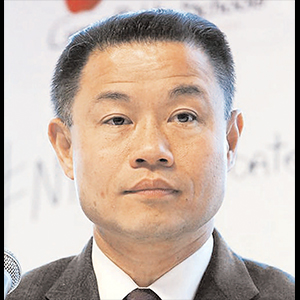
    Progressive Democrat John Liu officially announces Campaign for State Senate

    NEW YORK, NY (TIP): With a broad progressive coalition, and widespread support based on a record of delivering real results, former City Comptroller and Councilman John Liu, May 22, announced the launch of his campaign for the 11th State Senate District in Queens. In recent weeks, Liu has been buoyed by the overwhelming support from local elected officials, Democratic Party leaders and a host of prominent community activists who encouraged him to enter the primary. “I humbly declare my candidacy for the State Senate to represent northeast Queens, where I’ve lived and grown up my whole life and am now raising my own family,” said Liu.

    “This community is bedrock of New York, and the people here rightfully demand and deserve effective results-oriented representation. I offer my legislative experience and fiscal expertise to solve issues, from quality of life concerns to deep economic inequities. In the State Senate, I will tirelessly fight for a real minimum wage, rights for working people, women’s equality and resources for public schools, transportation and healthcare. Over the next several months, I will take my message straight to the voters of Senate District 11 to ask for your support.” There will be major announcements to come, including details on the official campaign kickoff this week.

    About John
    The first Asian American to have been elected to citywide office, John Liu has always been a fighter for the hardworking people of this city, first as a member of the New York City Council, then as City Comptroller. The 43rd Comptroller of New York City, John Liu established an impressive record as the chief financial officer for 8.4 million residents and overseeing municipal government with an annual budget of $70 billion.

    John saved taxpayers $5 billion through rigorous audits of City agencies, detailed scrutiny of contracts with private companies, and refinancing of $20 billion of outstanding City bond debt. During his four-year term of office, he achieved an enviable total investment return, increasing the City’s pension asset portfolio to $150 billion. John created the nationally acclaimed online application “CheckbookNYC.com” providing unprecedented transparency in government spending.

    He facilitated economic development and new job creation with acceleration of City capital projects, capturing low interest rates in the bond markets. Always emphasizing that “it’s not just about numbers, it’s about people,” John Liu championed fairness and equality. An early and staunch opponent of stop-and-frisk tactics, John highlighted the risks to communities and taxpayers alike due to damaged police-community relations.

    John presented daily-updated M/WBE Report Cards for City agencies to monitor and encourage greater government contracting opportunities for minority entrepreneurs. John also proposed sound economic policies to create real economic growth and narrow the ever-widening wealth gap, protected wage standards and recouped back wages and fines on behalf of cheated workers from contractors who just don’t want to play by the rules, and exposed the billions of dollars in publiclysubsidized corporate welfare doled out by the City that failed to deliver on promised new jobs and fair housing.

    As a member of the New York City Council, John Liu represented his hometown of Flushing and northeast Queens. He secured millions of dollars in additional funding for schools, libraries, parks, senior citizen centers, and youth programs. John served as chairperson of the Council’s Transportation Committee overseeing operations of the Metropolitan Transportation Authority, Department of Transportation, and Taxi and Limousine Commission, and enacted legislation boosting efficiency and efficacy of key City agencies.

    John’s significant accomplishments as a legislator include exposing financial irregularities at the MTA, enacting legislation like the Equal Access Bill mandating on-demand language services in health and human services agencies, the School Zone Engine Idling Bill limiting engine idling near schools, and the Dignity for All Schools Act requiring the Department of Education to track bullying and harassment in schools.

    Hailed as a “Trailblazer” and “Pioneer,” John’s historic elections – as the first Asian American to win legislative office in New York and the first to win citywide office – were milestones for Asian Americans in New York and across the nation. Although he wishes Asian Americans had been elected long before, John is honored to be the first and embraces the opportunity to broaden representation and public service.

    John Liu emigrated from Taiwan at the age of five. He was educated in New York public schools, including Hunter College High School, Bronx High School of Science, and Binghamton University, attaining his degree in Mathematical Physics. John lives in Flushing with his wife Jenny and their son Joey.

  • In US, gay men clash over HIV prevention pill

    In US, gay men clash over HIV prevention pill

    WASHINGTON (TIP): A single daily pill may help prevent HIV. And in America, gay men who have lost countless loved ones to AIDS can’t stop fighting about it. Much of the debate has played out on the Internet and social media as tempers flare over promiscuity, erratic condom use and the potential to either eliminate or worsen the stubborn HIV/AIDS epidemic, which has killed 36 million people worldwide in the past three decades.

    The drug in question is Truvada, an oblong blue pill that combines two antiretroviral medications — tenofovir and emtricitabine. “In the medical community, this is more of a controversial, divisive issue than I ever thought it would be,” said Ray Martins, chief medical officer at the Whitman-Walker Clinic. Martins told AFP a month’s supply of pills costs between $1,200 and $2,000, which is usually covered by health insurance.

    Side effects are rare but can include nausea, bloating and diarrhea. Made by Gilead Sciences in California, Truvada was already available as a medication for HIV-positive patients when it was approved by US regulators in 2012 as a prevention strategy for people who are HIV-negative but engage in sex with HIV-positive partners, or who inject drugs.

    On Wednesday, the US Centers for Disease Control and Prevention issued its first formal guidelines for doctors, urging them to recommend the prevention pill for patients at substantial risk of getting HIV. The daily pill should be used in conjunction with condoms as a way to cut back on new HIV infections, which have stayed steady at some 50,000 new annual cases in the United States in recent years, officials said.

    – ‘Truvada whores’ –

    is a position I fear the CDC will come to regret,” said Michael Weinstein, president of the Los Angeles-based AIDS Healthcare Foundation (AHF). Weinstein predicted the guidelines “will likely have catastrophic consequences in the fight against AIDS in this country.”

    He has also described Truvada as a “party drug,” sparking a fresh wave of angst among supporters of pre-exposure prophylaxis, or PrEP, whereby healthy people take antiretrovirals as a way to prevent HIV infection. AHF spokesman Ged Kenslea said Truvada is available in AHF’s pharmacies, and that the group does not oppose PrEP if a doctor and patient agree it could be useful in a given situation.

    “The government’s wholesale endorsement, we believe, is dangerous and will result in needless new infection,” Kenslea explained. Human nature, the inability to take pills daily even among the most responsible adults, and the rise in syphilis among gay men are all reasons cited for concern. The backlash against Truvada — the only pill presently approved for HIV prevention — has led some gay men to speak out in favor of it, even describing themselves online as “Truvada whores” in a tongue-in-cheek gesture.

    One of them is Bradley, 28, a San Francisco technology worker who tweets as @TruvadaWhore and asked that his last name not be published. “I am adamantly against slut shaming and policing of people’s consensual behavior,” he said in an interview. “PrEP may not work for or be accessible to everyone, but I want to celebrate its effectiveness and fight stigma.”

    – Science of ‘risk’ –

    Studies have shown that when taken regularly, Truvada is effective against HIV transmission by up to 92 percent, the CDC said. However, when patients failed to take it daily, its effectiveness dropped steeply. As to whether PrEP encourages riskier sex, Whitman- Walker clinical research director Richard Elion said studies on thousands of people have shown it does not. “The evidence is quite clear.

    There is no documentation of increased risk behavior,” he said.

  • Soon, get HIV tests done at UK supermart

    Soon, get HIV tests done at UK supermart

    LONDON (TIP): Britons can now get a quick HIV test — in 60 seconds flat, when they visit a supermarket. A British sexual health charity has decided to offer HIV tests at a supermarket in Slough from May 19. The charity has teamed up with Tesco Express in central Slough to offer testing in their store. Testing will be held in a private room. “Our Time to Test project now offers the 60 second Insti HIV test, as well as the 20 minutes swab test. When you book you can choose which test you’d prefer,” the charity said. Slough has previously been named as an HIV hot spot by the department of health. The Time to Test project will run on a weekly basis for six weeks.

  • CAN EX-LOVERS BE FRIENDS?

    CAN EX-LOVERS BE FRIENDS?

    Can ex-lovers be friends? Yes, on a different level, if relationship experts are to be believed. At one point of time, he was the one who occupied every waking moment of your life. You shared your darkest and deepest secrets with him and life before meeting him seemed unreal. But then, differences crept in and the very person whom you adored became the bane of your life.

    All you wanted was to get him out of your life and move on. But wait, does that mean he and you have nothing in common anymore? “It depends on the kind of relationship you were in,” says Savitha Mohan, a relationship counsellor. “If the relationship has been the passionate/tempestuous kind or had an ugly breakup at the end, it is indeed very difficult for the couple to be friends.

    You start associating the ex with pain and worry and would be better off to cut them out of your life.” However, in cases such as in those where the couple has known each other for years and have common friends, it would be literally impossible to be completely cut off from each other.

    Says Meghna, who works in an investment firm – “Me and Abhijit were good friends and business partners before we got into a romantic relationship. That aspect of our relationship still continues even after we broke up.” Meghna has started seeing someone else but she and Abhijit don’t discuss their love lives, she says.

    “Neither do I want to know.” Still, problems might arise if your new partner doesn’t approve of your keeping in touch with your exes, according to the counsellor. The thumb rule for those who want to be friends with their ex, she says, is to give it some time in the first place; nobody can be friends from the day after the break-up! Also, you have to be certain that you are over the person and have no issues seeing them with someone else. Well, there seems to be no hard and fast rule when it comes to being friends with your ex. If it doesn’t affect your current relationships and both of you are comfortable with the equation, why not? After all, there is nobody who knows you better than an ex!

  • India rejects WHO report saying New Delhi has worst air pollution

    India rejects WHO report saying New Delhi has worst air pollution

    NEW DELHI (TIP): India on May 8 rejected the findings of a World Health Organisation (WHO) study that ranks New Delhi as the world’s worst city for air pollution, with government scientists saying the U.N. agency had overestimated levels in the capital.

    A WHO study of 1,600 cities released on Wednesday found air pollution had worsened since a smaller survey in 2011, putting city-dwellers at a higher risk of cancer, stroke and heart disease. The study found New Delhi to have the dirtiest air, with an annual average of 153 micrograms of small particulates, known as PM2.5, per cubic metre.

    “Delhi is not the dirtiest … certainly it is not that dangerous as projected,” said A.B. Akolkar, a member secretary of the Central Pollution Control Board of India. One health advocacy group welcomed the WHO study, however, saying it should spur the Indian government to tighten up fuel emission standards. Growing traffic on city streets is a major cause of air pollution.

    The Centre for Science and Environment (CSE) said the government should respond by setting an ambitious agenda to reduce toxic risks in Asia’s third-largest economy. “This database confirms our worst fears about how hazardous air pollution is in our region,” Sunita Narain, director general at the CSE, said in a statement that called for uniform fuel emission standards to be implemented across India in 2015. Thirteen of the dirtiest 20 cities were in India, the WHO said, with New Delhi, Patna, Gwalior and Raipur taking the top four spots.

    Beijing, notorious for the smog that has prompted some Anglophone residents to dub it “Greyjing”, was in 77th place with a PM2.5 reading of 56, little over one third of Delhi’s pollution level. However, Gufran Beig, chief project scientist at the Indian Institute of Tropical Meteorology, said New Delhi’s air quality was better than Beijing’s, at least during the summer and the monsoon season.

    Pollution levels in winter are relatively higher in New Delhi because of extreme weather events, Beig added. “The value which has been given in this (WHO) report is overestimating (pollution levels) for Delhi … the reality is that the yearly average is around 110 (micrograms),” said Beig.

  • ‘SMALLER’ SIZE KEEPS WOMEN LOYAL TO MEN

    ‘SMALLER’ SIZE KEEPS WOMEN LOYAL TO MEN

    Does size of your penis worry you a lot? Stop thinking and get on with the act as a study reveals that women are more loyal to men with ‘smaller’ penises. A team of researchers from the US and Kenya found that there was a strange link between the size of the penis and infidelity in a marriage. Contrary to what many men may assume, they found that men with bigger penises are more likely to have wives who cheat on them.

    “The reason is that women experience more painful sex when their partner is ‘big’. That prompts them to seek another partner whom they may have more pleasurable sex,” the study noted. The study was conducted among the fishermen community in Lake Victoria in Kisumu County, Kenya.

    One of the women said that she had to look for another man with a “smaller one” so that she could “do it in a way” she could enjoy. According to the study, published in the journal PloS One, other possible reasons of a woman’s infidelity in a marriage include denying her a preferred sex position as well as domestic violence.

  • NATURAL CLEANERS YOU DID NOT KNOW

    NATURAL CLEANERS YOU DID NOT KNOW

    Here are some natural food items which are superb cleaners too. We never knew their benefits until now! Here are some food items, which can also be great cleaners –

    Ketchup
    It can be used to remove tarnish from copper utensils. But don’t forget to rinse them with warm water once you have scrubbed them with some ketchup.

    Oatmeal
    It acts as a natural cleanser of dirty hands. Slather some oatmeal with water and rub your hands together to remove all the dirt and germs.

    Club soda
    When was the last time you cleaned your kitchen sink? Take some baking soda and scrub it till it shines.

    Soaked rice
    While cleaning glass bottles and jars, use a cupful of uncooked rice to clean all of them. Fill a little more than half a jar with warm water and add a few grains of rice. Cover it up and shake it vigorously and then clean.

    Black tea
    Do you have a bucket full of tools which are rusty? Brew some black tea and let it cool down. Then immerse the tools for a few hours in the tea and wipe them with a cloth later.

  • Aid rushed to survivors of Afghan landslide

    Aid rushed to survivors of Afghan landslide

    AAB BAREEK (AFGHANISTAN) (TIP): Aid groups on May 4 rushed to help survivors of a landslide in northern Afghanistan that entombed a village, killing hundreds of people and leaving 700 families homeless in the mountains.

    Much of Aab Bareek village in Badakhshan province was swallowed on Friday by a fast-moving tide of mud and rock that swept down the hillside and left almost no trace of 300 homes. Government officials said the current death toll was at least 300 and warned it could rise by hundreds more, after initial reports suggested that as many as 2,500 people may have died.

    Large crowds gathered at the remote disaster site, where rescue efforts were abandoned due to the volume of deep mud covering houses. Only a few bodies have been pulled from the debris. “Around 1,000 families are thought to have been affected with some 300 houses totally destroyed,” the United Nations Office for the Coordination of Humanitarian Affairs said in a statement.

    “Assessments to determine priorities on immediate child protection and water, sanitation, and hygiene needs for (displaced) families are continuing.” It added that 700 families were displaced, with many fleeing their homes in fear the unstable hillside could unleash more deadly landslides. Tents, emergency food supplies, health services and support for children who lost parents were being organised after many survivors spent another night in the open.

    Wailing near her father’s destroyed house, Begum Nisa, a 40-year-old mother of three, described the moment when the wall of mud smashed through the village. “I was eating lunch by the window of my house, then suddenly I heard a huge roar,” she said. “I shouted to my family to save themselves, but it was too late. I have lost my dear father and mother. I also lost my uncle and five members of his family.”

  • MYTHS SURROUNDING VEGETARIAN DIET

    MYTHS SURROUNDING VEGETARIAN DIET

    Misconceptions over the years have surrounded vegetarian diets and those who adopt them. Let’s view the myths and see the actual reality MYTH: Vegetarians do not get enough protein. FACT: Well, there was a time when nutritionists and dietitians even said this, but no longer.

    Now, we know that vegetarians get plenty of protein. What they don’t get is the excessive amount of protein found in the typical modern diet. If you eat a variety of fruits, vegetables, grains and legumes, then getting enough protein is not an issue. MYTH: Vegetarians do not get enough calcium.

    FACT: This myth has been applied, in particular, to vegans who have eliminated milk products from their diets. Somehow, the notion got started that the only good source of calcium is milk and cheese. Granted, milk does have a good supply of calcium, but so do many vegetables — especially green, leafy veggies.

    The truth is, vegetarians suffer less from osteoporosis (a deficiency of calcium that leads to weak bones) because the body assimilates the calcium they eat more easily during digestion. FACT: First of all, a vegetarian diet isn’t out of balance.

    It has a good proportion of all the complex carbohydrates, protein and fat — the three macro nutrients that are the cornerstone of any diet. Plus, vegetarian food sources (plants) tend to be higher sources of most of micro nutrients. Another way to look at it is this: The average meat eater consumes one or fewer servings of vegetables a day and no servings of fruit. If a meat eater does eat a vegetable, chances are it’s a fried potato. “Out of balance” depends on your perspective.

    MYTH: A vegetarian diet is all right for an adult, but kids need meat to develop properly. FACT: This statement makes the assumption that protein from plants isn’t as good as protein from meat. The truth is, protein is protein. It is all made from amino acids.

    Children need 10 essential amino acids to grow and develop properly. These amino acids are as readily available in plants as they are in meat. MYTH: Humans were designed to eat meat. FACT: Although humans are capable of digesting meat, human anatomy clearly favours a diet of plant foods. Our digestive systems are similar to those of the other planteaters and totally unlike those of carnivores.

    The argument that humans are carnivores because we possess “canine” teeth ignores the fact that other plant-eaters have “canine” teeth, and that ONLY planteaters have molar teeth. Finally, if humans were designed to eat meat, we wouldn’t suffer from heart disease, cancer, diabetes, and osteoporosis from doing so.

  • STOP TAKING ASPIRIN TO CUT HEART RISK

    STOP TAKING ASPIRIN TO CUT HEART RISK

    The United States Food and Drug Administration (FDA) has warned the public in a statement that most people shouldn’t take aspirin to prevent heart attacks. According to Bloomberg, the FDA said in a statement that ingesting aspirin on a regular basis isn’t recommended to people who have never experienced a cardiovascular event because the drug raises a person’s risk of experiencing stomach and brain bleeds.

    Even people who are at high risk for cardiovascular disease, but haven’t experienced any symptoms yet, should refrain from taking the drug as a preventative measure, they said. In short, the benefits of the drug only outweigh the risks in cases where people have already experienced a stroke or a heart attack.

    The announcement was prompted by the FDA’s decision last week to block pharmaceutical company Bayer AG from changing the drug’s labeling. The proposed changes would have allowed the company to market aspirin as a heart attack prevention drug for people who don’t have heart problems.

  • JALEBI AMONG WORLD’S MOST FATTENING FOODS

    JALEBI AMONG WORLD’S MOST FATTENING FOODS

    Jalebi is one of the favourite sweets of Indians, but it has featured on an American news website’s list of fattening food items across the globe. Huffingtonpost.com has come out with the following list of unhealthy dishes in the world: JALEBI, INDIA: Jalebi is a deep-fried dough that is soaked in a sugary syrup.

    This plain fried dough is unhealthy on its own. CALZONE, ITALY: A traditional calzone uses the same amount of dough as an entire pizza-which serves four people. The Campania region of Italy gave birth to this version of pizza that is even unhealthier than the original. In a calzone, tomatoes, mozzarella and other traditional pizza toppings are stuffed into an easy-to-eat dough pocket and then served.

    ACARAJE, BRAZIL: A mere tablespoon of palm oil contains seven grams of saturated fat that makes the food taste great but is bad for health. Brazil’s acaraje is a black-eyed peas formed into a ball, deep-fried in palm oil, and then stuffed with spicy pastes made from dried shrimp, ground cashews and more palm oil. CHURROS, SPAIN: A popular way for locals here to start the day is with a meal of churros.

    These are frieddough pastries which are dipped in sugar and cinnamon and then dipped in a thick hot-chocolate drink. KHACHAPURI, GEORGIA: It’s a bread bowl that is stuffed with melted cheese and topped with an egg and a large pad of butter. NUTELLA CREPES, FRANCE: Two tablespoons of sweet chocolaty Nutella spread has 200 calories (110 of which are from fat). Many street carts and restaurants there fry up batter in butter and make thin pancakelike pockets which deliver Nutella.

    The crepes are usually topped with powdered sugar and sometimes even whipped cream. DEEP-FRIED MARS BARS, Scotland: A Mars bar which is deep-fried is a melted chocolate bar. The Mars candy company feels that the deep-fried dessert is not in line with the company’s goal of promoting a ‘healthy and active’ lifestyle. RAMEN, JAPAN: Ramen has exploded in popularity over the last few years. It is a traditional Japanese soup dish consisting of noodles in broth, topped with a variety of meats and vegetables.

    Soup is basically a health food but the broth is made with beef, lard and oil that really packs a fat punch even if the noodles aren’t friedJalebi is one of the favourite sweets of Indians, but it has featured on an American news website’s list of fattening food items across the globe. Huffingtonpost.com has come out with the following list of unhealthy dishes in the world: JALEBI, INDIA: Jalebi is a deep-fried dough that is soaked in a sugary syrup. This plain fried dough is unhealthy on its own.

    CALZONE, ITALY: A traditional calzone uses the same amount of dough as an entire pizza-which serves four people. The Campania region of Italy gave birth to this version of pizza that is even unhealthier than the original. In a calzone, tomatoes, mozzarella and other traditional pizza toppings are stuffed into an easy-to-eat dough pocket and then served. ACARAJE, BRAZIL: A mere tablespoon of palm oil contains seven grams of saturated fat that makes the food taste great but is bad for health. Brazil’s acaraje is a black-eyed peas formed into a ball, deep-fried in palm oil, and then stuffed with spicy pastes made from dried shrimp, ground cashews and more palm oil.

    CHURROS, SPAIN: A popular way for locals here to start the day is with a meal of churros. These are frieddough pastries which are dipped in sugar and cinnamon and then dipped in a thick hot-chocolate drink. KHACHAPURI, GEORGIA: It’s a bread bowl that is stuffed with melted cheese and topped with an egg and a large pad of butter. NUTELLA CREPES, FRANCE: Two tablespoons of sweet chocolaty Nutella spread has 200 calories (110 of which are from fat). Many street carts and restaurants there fry up batter in butter and make thin pancakelike pockets which deliver Nutella. The crepes are usually topped with powdered sugar and sometimes even whipped cream. DEEP-FRIED MARS BARS, Scotland: A Mars bar which is deep-fried is a melted chocolate bar.

    The Mars candy company feels that the deep-fried dessert is not in line with the company’s goal of promoting a ‘healthy and active’ lifestyle. RAMEN, JAPAN: Ramen has exploded in popularity over the last few years. It is a traditional Japanese soup dish consisting of noodles in broth, topped with a variety of meats and vegetables. Soup is basically a health food but the broth is made with beef, lard and oil that really packs a fat punch even if the noodles aren’t fried.

  • DAILY CUP OF COFFEE GOOD FOR EYES

    DAILY CUP OF COFFEE GOOD FOR EYES

    Researchers have said that one cup of coffee could help prevent deteriorating eyesight and possible blindness from retinal degeneration due to glaucoma, aging and diabetes. Raw coffee is, on average, just 1 per cent caffeine, but it contains 7 to 9 per cent chlorogenic acid, a strong antioxidant that prevents retinal degeneration in mice, according to the Cornell study. The retina is a thin tissue layer on the inside, back wall of the eye with millions of light-sensitive cells and other nerve cells that receive and organize visual information.

    It is also one of the most metabolically active tissues, demanding high levels of oxygen and making it prone to oxidative stress. The lack of oxygen and production of free radicals leads to tissue damage and loss of sight. Chang Y. Lee, professor of food science and the study’s senior author, said coffee is the most popular drink in the world, and we are understanding what benefit we can get from that.

  • COCA-COLA, PEPSICO TO REMOVE CONTROVERSIAL INGREDIENT FROM DRINKS

    COCA-COLA, PEPSICO TO REMOVE CONTROVERSIAL INGREDIENT FROM DRINKS

    NEW YORK (TIP): Coca-Cola and PepsiCo said on Monday they’re working to remove a controversial ingredient from all their drinks, including Mountain Dew, Fanta and Powerade. The ingredient, called brominated vegetable oil, had been the target of petitions on Change.org by a Mississippi teenager who wanted it out of PepsiCo’s Gatorade and Coca-Cola’s Powerade.

    In her petitions, Sarah Kavanagh noted that the ingredient has been patented as a flame retardant and isn’t approved for use in Japan and the European Union. Coca-Cola and PepsiCo have stood by the safety of the ingredient, which is used to distribute flavors more evenly in fruit-flavored drinks. But their decisions reflect the pressure companies are facing as people pay closer attention to ingredient labels and try to stick to diets they feel are natural.

    Several major food makers have recently changed their recipes to remove chemicals or dyes that people find objectionable. While food companies stress that the ingredients meet regulatory requirements, their decisions reflect how marketing a product as “natural” has become priority and a competitive advantage. PepsiCo had said last year that it would remove brominated vegetable oil from Gatorade.

    On Monday, the company said it has since been working to remove it from the rest of its products. PepsiCo also uses BVO in its Mountain Dew and Amp energy drinks. The company, based in Purchase, New York, didn’t provide a timeline for when it expects the removal to be complete. Earlier on Monday, Coca-Cola had also said that it’s removing the ingredient from all its drinks to be consistent in the ingredients it uses around the world.

    In addition to Powerade, Coca-Cola uses BVO in some flavors of Fanta, Fresca and several citrus-flavored fountain drinks. The company said BVO should be phased out in the US by the end of the year. Coca-Cola said it would instead use sucrose acetate isobutyrate, which it noted has been used in drinks for more than 14 years, and glycerol ester of rosin, which it said is commonly found in chewing gum and drinks.

    A Coca-Cola spokesman, Josh Gold, noted that BVO isn’t used in many other countries, but said it would be phased out in Canada and Latin America as well. The Center for Science in the Public Interest, a health advocacy group, notes that the Food and Drug Administration permitted the use of BVO on an interim basis in 1970 pending additional study. Decades later, the group notes that BVO is still on the interim list.

    Kavanagh, the Mississippi 17-yearold, had been planning on launching another petition on Change.org asking PepsiCo to remove BVO from all its drinks. She wasn’t immediately available for comment. Earlier in the day, however, she said, “It’s really good to know that companies, especially big companies, are listening to consumers.”

  • Chinese man seeks divorce as smog drives family apart

    Chinese man seeks divorce as smog drives family apart

    BEIJING (TIP): A Beijing man is seeking to divorce his wife after she took their son to a tropical island province to escape the capital’s notorious smog, saying the long-distance relationship had destroyed their marriage, state media said on May 1.

    The man, identified only by his family name of Wang, married his wife in 2008 and had a son two years later, the Beijing Times reported. But their son developed serious health problems because of Beijing’s air pollution and his wife took the son to the southern resort island of Hainan to escape the haze.

    However, Wang’s wife did not like Hainan and nor did she like living apart from him, and whenever the two of them met they fought, the report said. Fed up with this, Wang has filed for divorce in a Beijing court, the newspaper said.

  • Fear and loathing in Washington

    Fear and loathing in Washington

    The known unknowns about Modi are perfect catalysts for a reset of India-US relations

    Over the past three years, Washington has also come to believe it did India too big a favor with the nuclear deal and received little payback. This premise conveniently ignores the many tangibles (Indian purchases of US defense platforms to the tune of $10 billion in less than a decade) and intangibles (India’s decision not to criticize wholesale spying by NSA). A strong government in New Delhi is unlikely to be as patient or as yielding

    The American establishment is registering a measure of fear while the liberal academic-NGO community a sense of loathing at the prospect of Narendra Modi becoming India’s next PM. They are full of questions with no real answers. If elected, how would a state CM play the national and international game? How would he deal with a US administration whose policy lately has been to hit India on multiple fronts to extract concessions? More importantly, how would he look at a country that denied him a visa and had no contact with him for seven years?

    The anti-Modi coalition of Christian evangelists, left-leaning Indian Americans and Muslim activists is gearing up to mount pressure through the US Congress. They will keep the heat on even though the old fervor is gone, especially among Republicans. The uncertainties, the ambiguities and the “known unknowns” about Modi are actually perfect catalysts for a “reset” of India-US relations currently running at a low. They can create the new chemistry necessary for a more balanced equation better suited to the times.

    It cannot be the responsibility of one partner to create equilibrium, constantly ignore provocations and appease. A good relationship bears traffic in both directions. Actually the reset has already begun. Ironically, the button was pushed by the Khobragade affair. Needless provocation sparked a strong Indian response and washed the fuzziness off the relationship. Dialogue has gained in clarity since. The defensive tone has been replaced by a confident articulation of Indian expectations from the relationship. It is neither arrogant nor whiney. Terms of engagement will change further if Indian voters give a clear mandate.

    Unfortunately, the last phase of the UPA government left the impression that India will reverse its policies in the face of pressure and noise from Washington. It did so on preferential market access and transfer pricing. This has emboldened US lobbies out to draw more blood. After all who wouldn’t use a tactic that works? Over the past three years, Washington has also come to believe it did India too big a favor with the nuclear deal and received little payback. This premise conveniently ignores the many tangibles (Indian purchases of US defense platforms to the tune of $10 billion in less than a decade) and intangibles (India’s decision not to criticize wholesale spying by NSA). A strong government in New Delhi is unlikely to be as patient or as yielding. Piling on public pressure is bad strategy for the general health of the relationship.

    It reduces the Indo-US story to one of trade and investment disputes and blurs the original idea for coming together – a geostrategic convergence of interests. The new government will realize soon enough that an inward-looking Obama administration has had only fitful engagement with the world. That it has paid no special homage to strategic vision, and instead allowed a disaggregation of the India-US relationship. Then it has come after New Delhi issue by issue. It has attacked India at the behest of big pharma and other business interests whose maximalist agenda has been repeatedly exposed.

    Their game is to scotch any serious attempt to keep medicine affordable while discrediting India’s generic drugs industry through means both fair and foul. In their calculation, if India bends, it would scare smaller, weaker countries from ever contemplating a compulsory license US pharma’s brutal overreach has even put the much-touted Trans-Pacific Partnership under a cloud as negotiating countries discover the traps set for them under the guise of protecting intellectual property and copyrights. If the US Trade Representative reviewing India’s intellectual property regime downgrades it and puts it on the list of ‘Special 301’ countries, this will add another twist to an already twisting relationship. Such naming and shaming could lead to sanctions.

    Pushing the business agenda of demands drafted by the US Chamber of Commerce at a time when the US is losing international partners faster than it is acquiring them is unwise. Especially when Obama’s signature foreign policy effort – the pivot to Asia – keeps reincarnating in lesser and lesser avatars. Obama had also pledged to strengthen bonds with emerging economies but today all Brics are piled up against America for various reasons. India, Brazil, China and South Africa abstained on a UN resolution condemning the fifth partner Russia’s annexation of Crimea. India also abstained on a US-sponsored resolution against Sri Lanka’s human rights situation.

    This reflects a post-Khobragade realism, a push-back, even a new equilibrium. India will give but also take. For every US demand to open the Indian economy, there would be an equal and opposite demand on completing a “tantalization agreement”. India may find it useful to cross-link and leverage defense contracts for something tangible. Surely $10 billion worth of arms can buy relief on H-1B visas or a more honest policy towards a certain neighbor that remains the hub of terrorism. The truth is if Washington can be transactional, so can others. But this new phase should not obscure the larger logic behind India and the US coming together because the many reasons for convergence remain. Those with a wider window than a four-year election cycle understand that. Equally importantly, those who make national security policy in India know what balance of power is more beneficial.

  • MAKE YOUR HOME LOOK SPACIOUS

    MAKE YOUR HOME LOOK SPACIOUS

    Low furniture really opens up your home and makes it look spacious. People wanting a sleek, modern look for their homes opt for low furniture. Furniture closer to the ground ends up making the room it is placed in much larger than it is. From platform beds to low sofas, home decor just got lower.

    Many sofa sets available in the local markets are just a few inches off the ground, instead of the traditional height of more than a foot away. Most Mumbaiites live in small flats, and that is the reason why even a little space available anywhere is what people crave for. Thanks to these short sofas the ceilings of your homes can appear to be much higher than it is.

    Low furniture can really lend a spacious look to your otherwise cramped dwelling. Yash Tonkk’s duplex home in the western suburbs has a low sofa cum bed that makes his otherwise small living room appear larger. “I liked this low sofa cum bed. Its height and bright colour adds drama to my room, while the low height allows space,” says Gauri Tonkk. Not just sofas there are beds available in the market, which accommodate the mattress, and thereby keep the level much lower than regular beds. Low furniture can actually be housed in any room, and can be mixed with any style. “My wife, Mona and I got this low sofa especially designed for our home.

    I believe low furniture like our coffee table gives an amazing sense of space inside homes,” says Sudhanshu Pandey. Low furniture can work in any room but when it come to just the seating areas, then mixing a low arrangement and a higher one at the same time can be quite disastrous. It looks more aesthetically appealing to have seating arrangements that are of similar heights, if not exactly the same. For example one should ideally avoid a low sofa right next to a very high bar stool!

  • WAYS TO CURE UNDERARM DARKENING

    WAYS TO CURE UNDERARM DARKENING

    Frequent use of razors and deodorants can cause dark, ugly looking underarms that can cause you a lot of embarrassment. Here’s how to get rid of the darkness.

    Milk and flour pack

    Make a thick paste out of milk and white or wheat flour and apply a thick layer of it on your underarms. Let it dry off and rinse. This mixture helps exfoliate the dead skin off and the milk helps lighten the skin.

    Coconut oil

    Massage underarms for a few minutes with some warm coconut oil and leave it on for about half an hour. Go for a steam and then have a warm exfoliating bath with a good quality scrub. Doing this three to four times a week can show effective results.

    Vinegar pack

    IF you’re not allergic to vinegar, mix some rice flour with a few drops of vinegar to form a thick paste. Apply on the affected areas and let it dry for about 20 minutes. Scrub it once it is dry and have a warm bath.

    Home lightening pack

    A pack made with a mix of yogurt, lemon juice, turmeric and besan should be applied and kept for about 20 minutes. Wash it off with some warm water. Repeat the process everyday for several days to see results.

  • TRICKS FOR A TONED STOMACH

    TRICKS FOR A TONED STOMACH

    Crop tops are a must-have fashion trend this season, but before you choose to flaunt them, get rid of your belly fat. Try torso rotations or leg lifts for a toned stomach. Femalefirst.co.uk lists four exercises, along with some cardio and healthy eating tips that can help in getting abs in no time.

    Torso Rotations

    Torso rotations are great for working your whole abdominal area, including your lower back. These are done with your body alone or with a broomstick! Stand with your feet shoulder-width apart, hands on your hips whilst keeping your lower body still, rotate your upper body as far to the left and right as possible. This should be done in steady movements for 15 to 20 repetitions at a time. If using the broomstick, lay it across your shoulders and hold it with a wide grip.

    Lying Twist

    The lying twist also works the oblique muscles and improves flexibility. Lie on the floor with your legs straight out in front of you and your arms are out to the side, with your palms flat on the floor. Lift your legs so that they are at a 90 degree angle to the ceiling, then slowly lower them down to the right as far as possible and then slowly repeat on the left side. Continue to repeat this movement in a slow and controlled movement.

    Leg Lifts

    Leg lifts are achieved by lying on the floor with your legs straight. Raise them five inches from the floor either together or on their own depending on your ability and hold them for about 30 seconds. Your back should be close to the floor. Be careful if you have previous back problems when doing this move.

    The Plank

    This classic exercise is usually performed at the end of a workout. But it can also be done at any time and in front of the TV is ideal! You need to be in a similar position as a press up but rest on your forearms instead. Ensure you have a straight back and neck and hold this position for as long as you can, this is beneficial for your core muscles, especially your inner and outer abs.

  • EASY WAYS TO HEALTHIER EYES

    EASY WAYS TO HEALTHIER EYES

    We tend to ignore the health of our eyes more than any other part of our body. But having healthy eyes is more essential than we imagine and consider, after all it’s your way of looking at the world.

    Regular check ups

    This is the most obvious ways of keeping your eyes in good health. But most of us fail to visit an eye specialist for regular check-ups. Going for a regular check-up once a year can help you keep your eyes in best condition for long, especially as you age.

    Maintain good air quality

    Pollution outside is beyond out control. But we can maintain a clean atmosphere in our houses, and avoid unwanted dust and other pollutants to avoid irritants entering the eyes. Those with pets should take care of their falling hair, they can bring irritation to your eyes.

    Avoid too much of computers

    Staring too much into the computer screen can be dangerous and we all know it. But very few follow the 20-20-20 exercise. After every 20 minutes, look away from your screen at a distance of 20 feet for at least 20 seconds. This will help in relaxing your eyes and also relieve the stress.

    Eat right

    Healthy food takes care of your entire body. Food items like fish, spinach, red onions, and other food items rich in vitamin C are good for your eyes. Staying away from oily and fatty snacks also make a difference.

  • WATERMELON IMPROVES SEX LIFE TOO

    WATERMELON IMPROVES SEX LIFE TOO

    The summer just got hotter. The humble watermelon in your neighbourhood fruit market not only helps you shed weight, improve circulation or lower blood pressure, it can also boost your sex drive! According to a recent study by Italian researchers, citrulline amino acid in watermelons improve blood flow and can alleviate erectile dysfunction.

    Our bodies use citrulline to make yet another amino acid called arginine, which has viagra-like effect. Arginine boosts nitric oxide which relaxes blood vessels – the same basic effect that viagra has. Extra nitric oxide can also help treat angina, high blood pressure and other cardiovascular problems, the study noted.

    The juicy fruit is 92 per cent water, eight percent sugar, a great source of vitamin C and only 71 calories per serving.

  • MUST HAVE VEGETABLES

    MUST HAVE VEGETABLES

    If white coloured clothes have a soothing effect on people, eating white vegetables is beneficial too and you should include more of cauliflower and garlic in your diet. Here’s a list of healthy white vegetables that you should consume more, reports huffingtonpost.com: CAULIFLOWER: It contains sulfur compounds that are associated with fighting cancer, strengthening bone tissue and maintaining healthy blood vessels.

    MUSHROOM: Mushrooms are low in calories, fat-free, cholesterol-free, gluten-free, with barely any sodium, and yet they carry a wealth of selenium, potassium, riboflavin, niacin and vitamin D. Mushrooms are also filling, so they can help you control your weight. GARLIC: It is believed to help in growing hair, cause acne to disappear and keep colds and flu at bay. Its antioxidant properties can help boost your immune system.

    POTATOES: The white potato provides as much fiber as and more potassium than other commonly consumed vegetables or fruit. A medium skin-on baked potato weighs in at just 163 calories, a whopping 941 milligrams of potassium and 3.6 grams of fiber. Potatoes also provide vitamin C, vitamin B6 and magnesium in addition to small amounts of high quality protein.

  • E-cigarette: US to ban sales to minors

    E-cigarette: US to ban sales to minors

    WASHINGTON (TIP): The US Food and Drug Administration (FDA) proposed rules on Thursday that would ban the sale of e-cigarettes to anyone under 18, but would not restrict flavoured products, online sales or advertising, which public health advocates say attract children.

    The long-awaited proposal would subject the $2 billion e-cigarette industry to federal regulation for the first time. FDA commissioner Margaret Hamburg said at a briefing that the proposal represented the first “foundational” step towards broader restrictions if scientific evidence shows they are needed to protect public health.

    Critics of e-cigarette advertising say it risks introducing a new generation of young people to conventional cigarettes when little is known about the long-term health impact of the products.

    “It’s very disappointing because they don’t do anything to rein in the wild-west marketing that is targeting kids,” Stanton Glantz, a professor at the Centre of Tobacco Control Research and Education at the University of California, said. “They should not have been so timid.”

  • The United States and India: Global Partners in the Global Economy

    The United States and India: Global Partners in the Global Economy

    Remarks made by Nisha Desai Biswal, Assistant Secretary, Bureau of South and Central Asian Affairs, at Tampa Convention Center, Tampa, FL on April 25, 2014

    Thank you, Dr. Singh, for your warm welcome. It is a great honor to participate in the 2014 FICCI-IIFA Global Business Forum. Tampa is an ideal location to talk about the important and growing economic ties between the United States and India. Not only is Tampa the seventh-largest port in the United States by volume, it also handles the highest volume of goods headed to India.

    And FICCI is certainly the right partner for this conversation, as they have been such a key player in advancing our economic relationship. And how thrilling it is for the IIFA Awards to be held in the United States for the first time! Indian culture is increasingly influencing popular culture, not just in America but around the globe. I recall a moment some two decades ago,when I was a Red Cross volunteer in Tbilisi, Georgia, and I went to a local theater where Sholay was playing, dubbed in Russian.

    Imagine listening to some of the most iconic dialogues of Hindi cinema in Russian! And I will never forget the time I was in the small mountain town of Kutaisi and was asked to sing a folk song. I started singing “mera joota hai japani,” and the entire room of 200 Georgians started singing with me. They knew all the words! Indian art, culture, and film have global appeal. Every day, ethnic, linguistic, and cultural lines are blurred, because from Kabul to Kinshasa, from Moscow to Mumbai, from Tampa to Trivandrum,we are all under the thrall of Indian popular culture. But it isn’t just pop culture.

    It is the idea of India itself that holds such special appeal to so many around the world. As for the United States, we want to take what three successive presidents and two prime ministers and most importantly our 1.6 billion citizens have built in 15 years, in this defining partnership of the 21st century, and make it even better. Today, I want to discuss the opportunities that lie ahead as the U.S.-India economic relationship expands and matures, and as our two economies become increasingly intertwined and interdependent.We are living in a truly globalized world, brought closer by technology and trade – and yes, even movies! But despite the lightning speed of technological advances that are transforming so many aspects of our life for the better,we’re also contending with one of the most complex moments in world affairs with very real challenges, including conflict, poverty, and climate change.

    Nowhere is this more apparent than in Asia, which boasts nearly two-thirds of the world’s population, squeezed into only a third of its landmass. It is a region with tremendous promise and potential. As President Obama said in Tokyo yesterday,when he reiterated that we are and always will be a Pacific nation, “America’s security and prosperity is inseparable from the future of this region,” and that’s why we’ve made it a priority to renew American leadership in the Asia Pacific. By 2050, Asia may well comprise half of global GDP. But for the region to realize its potential, it must embrace strong, inclusive, and sustainable economic growth, one where the private sector, not government, leads economic development.

    It must defeat terrorism and counter violent extremism,while at the same time advancing human dignity and human rights. And in an age where citizens have more access to information and are demanding more accountability than ever, governments must promote effective and transparent governance. Despite these challenges,we’ve never been more optimistic about the future of Asia – and the role the United States and India will play in advancing prosperity and stability in the region. One reason is India’s growing economic connectivity – eastward with Bangladesh, Burma, and Southeast Asia; and we see promise in links westward with Pakistan, Afghanistan, and Central Asia. These are vital to the prosperity and stability of Asia.We are committed to supporting economic linkages that will cultivate new markets and knit these countries even closer together – and make them more integrated with the global economy. We’re advancing regional initiatives that do just that.

    First, there’s the historic opportunity to connect South and Southeast Asia into an integrated economic landscape. This Indo-Pacific Economic Corridor is a unique geography teeming with opportunity, but traditional northsouth trade still trumps east-west movement of goods and services by a factor of five. And through our New Silk Road initiative,we have been focused on creating regional energy markets that link Central Asia with South Asia; promoting trade and transportation routes and investing in critical infrastructure; improving customs and border procedures; and linking businesses and people. Today, Afghanistan and its neighbors are increasingly championing and owning that New Silk Road vision, creating new transit and trade routes that complement the very vibrant east-towest connections across Eurasia.

    And the region is making concrete efforts to reduce barriers to trade, invest in each other’s economies, and support development and cross-border projects. At the heart of all of that is India, because prosperity in South Asia hinges on dynamic growth of its economic powerhouse. The United States is committed to working with India to fully unlock the true potential of our economic ties. Today, the United States is one of India’s largest trade and investment partners. Our bilateral trade in goods and services has grown to nearly $100 billion. I think India’s excellent envoy in Washington, Ambassador Jaishankar, said it best recently when he noted that the extraordinary growth in our trade relations has “changed the chemistry of our ties.”

    Tectonic shifts in global economics have helped bring us to where we are today. And it didn’t happen overnight. After the Second World War, the creation of a rules-based trading system increased commerce, connectivity, and prosperity across the globe.While India’s economic transformation is more recent, its progress has been swift. Import tariffs on average are more than 30 times lower than they were in 1991,when then-Finance Minister Manmohan Singh began sweeping reforms. And since 2005 we have seen an increase in goods trade by 250%, in services trade by 350%. But we can do even better.

    As Vice President Biden said last July, there is no reason why our bilateral trade shouldn’t quintuple again if our countries work to grow together and remain candid with each other about the obstacles that exist. I believe $500 billion in total trade is entirely possible. Bilateral investment flows have also grown immensely, with foreign direct investment into India from the United States reaching $28.2 billion last year. Cumulative Indian FDI into the United States has also grown remarkably, from a negligible $96 million in 2000 to $5.2 billion by 2012. Even so,we still lack the investment diversity needed to fuel the growth of new and emerging sectors in our respective economies.

    India needs a transparent, straightforward way of attracting foreign investment, offering private capital a way to share in India’s opportunity. There must be a welcoming business environment that allows every dollar of investment to work efficiently. Currently, the United States and India are negotiating a Bilateral Investment Treaty, or BIT, which will be critical to deepening our economic relationship, improving investor confidence, and supporting economic growth in both countries. A BIT will go a long way toward bringing our economies closer and reducing the friction that’s only natural with two complex free-market systems such as ours. It will help us move past the choppiness that comes from not having an over-arching investment framework. And it will open up even more opportunities for American and Indian firms.

    Beyond our BIT, India’s investment and tax policies need to be designed to attract capital flows from across the world. Regulatory requirements need to be transparent and consistently enforced. Contracts must be upheld and honored across jurisdictions, and perhaps most importantly, intellectual property rights – based on international norms – must be recognized. And the future of India’s economy critically depends on the ability of people and goods to move where they are needed – efficiently and affordably. Soon, some sixty-eight Indian cities will have populations of over one million people each. India’s planned trillion-dollar commitment to infrastructure, with its strong emphasis on public-private partnerships, is both ambitious and admirable.

    No doubt infrastructure improvements will help to relieve the congestion on roads, railways, ports, airports, and in the power supply. American businesses are eager to participate – an effort the U.S. government fully supports. India’s future prosperity will also depend on one of our shared strengths – innovation. Increasingly, our two countries are putting our best minds together, to make growth more sustainable and inclusive and address 21stcentury challenges like climate change and energy security. That’s why we are so excited about the U.S.-India Technology Summit and Expo in November of this year in Delhi. The event will showcase our cooperation on science and technology, helping commercialize technology for economic growth and development, and shaping an ecosystem that incentivizes innovation.

    Policy-makers, industry leaders, educators, and scientists will discuss topics including manufacturing; life sciences and healthcare technologies; clean and renewable energy; IT; and earth science – all areas where U.S.-India collaboration can help us seize the opportunities, and respond to the challenges, of the 21st century. The Tech Summit is the idea place to showcase initiatives like the Millennium Alliance with FICCI,where we support Indian innovators and entrepreneurs who are coming up with new technologies to meet India’s development challenges. In March, I saw first-hand some of the most cutting-edge cooperation in science and technology,when I visited the Indian Space Research Organization, ISRO.NASA’s cooperation with ISRO on India’s Mars Orbiter Mission – India’s first inter-planetary space launch – and ongoing discussions about future joint initiatives, show that even the sky is not the limit when it comes to our partnership. And our energy partnership is changing the way our economies are powered.With 400 million people in India lacking reliable access to energy, the stakes for India’s future growth are enormous.

    We’re collaborating on clean and renewable energy, oil and gas, new technologies, energy efficiency, and civil nuclear energy. But real prosperity is only possible if it is also truly inclusive. That’s why ensuring women and girls are part of the conversation is a critical element to all these areas of partnership. Positive linkages between women’s engagement and a country’s economic status have been definitively proven, and the Obama Administration is determined to elevate the status of women and girls as a critical aspect of our foreign policy.We firmly believe that women’s rights are human rights, and women’s security is national security. While India is a leader in supporting women’s leadership across government, civil society and certainly in business, in many ways the potential of women and girls in India remains untapped and underutilized as a force for growth and development.

    This is why we support efforts like the Girl Rising Project to encourage public dialogue on gender and education issues to encourage community level interventions to help improve girls’ education. So I look forward to the next panel as a way to advance this discussion. In this area and in so many others, our relationship is much broader than our government and business ties. As the late Senator Edward Kennedy noted, our relations are not just government to government, but people to people, citizen to citizen, and friend to friend. Nowhere is that more evident than in the deep and rich ties between the people of the United States and India. Nearly 100,000 Indian students are studying at colleges and universities in the United States. Last year, almost 700,000 Indians visited the United States for business or tourism.

    It is these connections, between our entrepreneurs, scientists, scholars, and artists that make this partnership whole. We find that the relationship is also flourishing at the state and city level. And our cities and states are partnering more extensively than ever before, helping plant even deeper and stronger roots for our partnership. A growing number of states and cities are tailoring their international outreach efforts for India, with delegations from Arizona, Iowa, Indianapolis and San Francisco visiting the subcontinent over the last year. And these trips are yielding real results, opening new doors for business, educational exchanges, and workforce skill development.

    A great example is California and Maharashtra, home to the megacities of Los Angeles and Mumbai, sharing ideas on how to improve fuel quality for India’s fast-growing vehicle fleets. These efforts will not only improve the health of urban inhabitants, but help mitigate climate change. So in conclusion, let me say that I am bullish on this relationship because I believe in the strength and vibrancy of our two countries. I know there is no challenge that we can’t address, no problem that we can’t solve when we bring our two societies together. Thank you again for this opportunity. I would be happy to take a few questions.