Tag: Health

Read the latest health news, diet, fitness, medical news and healthcare tips on theindianpanorama.news/health. Get all the healthcare news, including wellness, fitness, diet and weight loss & more.

  • Army general fined, reprimanded in sex case

    Army general fined, reprimanded in sex case

    FORT BRAGG, North Carolina: An Army general who carried on a threeyear affair with a captain and had two other inappropriate relationships with subordinates was reprimanded and docked $20,000 in pay Thursday, avoiding jail time in one of the military’s most closely watched courts-martial.

    Brig. Gen. Jeffrey A Sinclair, the former deputy commander of the storied 82nd Airborne Division, was believed to be the highest-ranking US military officer ever court-martialed on sexual assault charges, but earlier this week those charges were dropped when he pleaded guilty to inappropriate relationships with the three women. Sinclair smiled and hugged his two lawyers in the courtroom. Outside the building, he made a brief statement.

    “The system worked. I’ve always been proud of my Army,” he said. “All I want to do now is go north and hug my kids and my wife.” The case unfolded with the Pentagon under heavy pressure to confront what it has called an epidemic of rape and other sexual misconduct in the ranks. As part of the plea deal, Sinclair’s sentence could not exceed terms in a sealed agreement between defense lawyers and military attorneys.

    The agreement, unsealed Thursday, called for Sinclair to serve no more than 18 months in jail, but the judge’s punishment was much lighter. Prosecutors did not immediately comment. Capt. Cassie L. Fowler, the military lawyer assigned to represent the accuser’s interests, had a grim expression after the sentence was imposed and declined to comment. In closing arguments, prosecutors argued Sinclair should be thrown out of the Army and lose his military benefits, while the defense said that would harm his innocent wife and children the most.

    Defense attorney Richard Scheff said Sinclair will retire from the military. Scheff said the case against Sinclair was one of pure adultery, which is a crime in the military. Prosecutors did not ask the judge to send Sinclair to jail, even though the maximum penalty he faced on the charges to which he pleaded guilty was more than 20 years. The judge could have also dismissed Sinclair from the Army, which would have likely wiped out his veterans administration health care and military retirement benefits.

  • Indian Americans ensure a full house at FICCI FRAMES 2014 in Mumbai

    Indian Americans ensure a full house at FICCI FRAMES 2014 in Mumbai

    The 15th Annual FICCI FRAMES conference on the Media & Entertainment (M&E) industry is back at the Rennaissance Hotel & Convention Centre situated on the picturesque Powai Lake in Mumbai. It’s Wednesday, March 12th 2014; Day 1 of the event, and the Indian American community is here again in full strength; veterans from the media business, aspirants in the field of entertainment, panelists, delegates, you name it, the conference has them all.

    About FICCI FRAMES 2014
    FICCI FRAMES is Asia’s largest global conference on the business of Media and Entertainment. Spanning three days, the conference covers the entire spectrum of the M&E industry, with back-to-back presentation sessions, panel discussions & master-classes focused on microspecializations such as film, television, radio, print, internet/digital media, animation and gaming among others. This highly-anticipated & most-respected industry event currently draws over 2,500 participants from all over the world, with India & USA together accounting for over 80% of the attendees.

    The list of known names at the conference reads like a virtual Who’s Who of the global M&E industry. Attendees get to rub shoulders and interact one-on-one with top achievers in the business; for 2014, the list of presenters & panelists boasts (in alphabetical order of first name) Abhay Deol, Abhishek Bachchan, Anupam Kher, Arnab Goswami, Ajit Pai, Andy Paterson, Collin Burrows, Farhan Akhtar, Guneet Monga, Hiromichi Masuda, Javed Akhtar, Jim Egan, Kajol, Kazutaka Akimoto, Kirron Kher, Lakshmi Praturi, Mark Eyers, Michael Best, Nancy Silberkleit, Priyanka Chopra, Punit Goenka, Rajeev Masand, Rakeysh Omprakash Mehra, Ramesh Sippy, Roger Fisk, Sanjay Gupta, Shanker Tucker, Siddharth Roy Kapur, Sonam Kapoor, Shaan, Sudhanshu Vats, Sudhir Mishra, Stuart Haskayne, Stuart Sender, Uday Shankar and Vikram Chandra, to name a few.

    Day 1 of the event saw the inauguration by actress Sonam Kapoor lighting the ceremonial lamp. This was followed by the welcome address from Harshavardhan Neotia, Vice President, FICCI. Harshvardhan highlighted critical developments within the M&E industry over the past 15 years. He spoke about the digitization of cable television, privatization of FM radio, clarifications in GST, introduction of a single window clearance system and future trends such as FDI in media, the mobile internet and simplification of policies. He ended his address by emphasizing the role of media in corporate governance and social responsibility. This was followed by opening remarks from Uday Shankar, Chairman, FICCI and also CEO, Star India.

    He discussed the role of government in the industry. Uday stated that government and the media needed to work together to sustain the vibrancy of the industry. He stressed that media’s role has evolved from mere reporting to seeking accountability & transparency from elected office-bearers of the nation. He also touched upon obstacles faced by the media when it published or broadcast coverage critical of the government of the day. He ended with the hope that the new government elected in May 2014 would look at media as a partner and not as an adversary. Punit Goenka, CEO, Zee Entertainment delivered the theme address next. He was followed by the vision statement from Bimal Julka, Secretary, Ministry of Information & Broadcasting.

    Bimal dwelt on the importance of censorship in the Indian media. Srivatsa Krishna, Secretary, Government of Karnataka (partner state for FRAMES 2014) was next; he emphasized the various initiatives being undertaken by his government in the field of media & entertainment. Finally, it was the turn of Ajit Pai, the dynamic young Commissioner of the FCC, USA (Federal Communications Commission). A second-generation Indian American, he shared insights about the role of FCC in America and the way in which the American government facilitates innovation within the M&E industry. He provided instances of successful partnerships between the government and key players from within the private sector in USA, which helps in enabling worldclass infrastructure for the industry. His address was very well-received by the audience.

    The FCC is an independent agency of the United States government, created by Congressional statute to regulate interstate and international communications by radio, television, wire, satellite, and cable in all 50 states, DC and US territories. The FICCI-KPMG 2014 report on the Indian Media & Entertainment industry was officially released after Ajit’s address; the highlight of this report is the growth registered by various disciplines within the industry. This inaugural session was followed by a series of presentations, panel discussions & master-classes. Detailed coverage of these sessions along with interviews of key presenters & panelists will be provided at the end of the conference.

    The list of media corporations at this year’s convention includes Archie Comics, BBC, Bloomberg, CNN IBN, Discovery Networks, Disney India, Fox Star Studios, Google, India Today, INK Salon, Microsoft, NBA, NDTV, Reliance Entertainment, Sony, Star India, Shochiku (Japan), Times Now, Turner International, TV France, Viacom18 and Zee Entertainment. The convention also features government bodies or political organizations such as the Australian High Commission (partner country for FRAMES 2014), BJP, CBFC, FCC (USA), INC, Ministry of Information & Broadcasting (India) and Obama’s Presidential Campaign Team for 2008 & 2012. Finally, there are a number of M&Ecentric corporations with booths at the event, looking to showcase a wide range of industry tools & accessories such as filmmaking & broadcasting equipment, studio apparatus, animation tools, software solutions & related technology.

    About FICCI
    Established in 1927, FICCI (Federation of Indian Chambers of Commerce & Industry) is the largest and oldest apex business organization in India. FICCI’s history is closely interwoven with India’s struggle for independence and subsequent emergence as one of the most rapidly growing economies globally. FICCI plays a leading role in policy debates that are at the forefront of social, economic and political change. A non-government, not-for-profit organization, FICCI is viewed as one of the major voices of India’s business and industry.

    It works closely with the government on policy issues, enhancing efficiency, competitiveness and expanding business opportunities for industry through a range of specialized services and global linkages. Partnerships with countries across the world carry forward it’s initiatives in inclusive development, which encompass critical issues such as health, education, livelihood, governance & skill development. Through its dedicated team of over 400 professionals, FICCI is active in 38 sectors of the global economy. FICCI’s stand on policy issues is sought out by think tanks, governments across the world and academia; it has joint business councils with 79 nations.

    Its publications are widely read for their in-depth research and policy prescriptions. FICCI’S Entertainment Division serves as the vital link between the Media & Entertainment industry, the Ministry for Information & Broadcasting (India) and global players. In addition to organizing FICCI FRAMES annually, this division conducts & releases pioneering studies related to the industry, assists in policy decisions and helps in scaling up the industry through various initiatives. The division is currently headed by Uday Shankar (Chairman) and Ramesh Sippy (Co-chairman).

  • Number of Children without Health Insurance Declines, Census Bureau Reports

    Number of Children without Health Insurance Declines, Census Bureau Reports

    WASHINGTON (TIP): Between 2008 and 2012, the number of children under age 19 without health insurance declined in 1,171 counties and rose in 17, with 1,950 not having a statistically significant change, according to estimates released by the U.S. Census Bureau.

    The number of workingage adults without health insurance rose in 494 counties, declined in 269 counties and did not have a statistically significant change in 2,375 counties. These statistics come from the 2012 Small Area Health Insurance Estimates, the only source for single-year estimates of the number of people with health insurance for each of the nation’s roughly 3,140 counties.

    The statistics are provided by broad age and sex groups, and at income levels that reflect thresholds for state and federal assistance programs. Statewide estimates also break out the data by race and Hispanic origin. Nationally, according to the American Community Survey, an essential input to the health insurance estimates, the percentage of children under 19 without health insurance declined from 9.7 percent (7.5 million) in 2008 to 7.5 percent (5.8 million) in 2012, while the percentage for working-age adults rose from 19.4 percent (36.1 million) to 20.8 percent (39.8 million).

    The health insurance statistics are provided for two income categories that are relevant to recent changes in federal law. One category is families with incomes less than or equal to 138 percent of the poverty threshold. Eligibility for Medicaid was expanded earlier this year up to this threshold in participating states, i.e., those that allow Medicaid expansion. The second income category is new to the health insurance estimates this year: families with incomes between 138 percent and 400 percent of the poverty threshold. Under the law, these families can receive tax credits that will help them pay for health coverage contracted through the new health insurance exchanges. “These new statistics on health coverage by income can be used as a baseline for policymakers and researchers studying the impacts of health care policy changes at state and local levels in the future,” said Lucinda Dalzell, chief of the Census Bureau’s Small Area Estimates Branch.

    Other highlights:
    o 68.2 percent of counties in the Northeast and 36.1 percent of counties in the Midwest have uninsured rates below 12.5 percent. Compare this to the South and the West, where only 2.6 percent and 2.5 percent of counties, respectively, have an uninsured rate below 12.5 percent.
    o In every county, the uninsured rate for children under age 19 was lower than working-age adults, ages 18 to 64, except for four counties in Nevada, which saw no statistical difference.
    o For the population younger than 65 living at or below 138 percent of poverty, non-Hispanic blacks had a lower uninsured rate than non- Hispanic whites in 34 states. Hispanics had a higher uninsured rate than non-Hispanic whites for every state but Hawaii, which was not statistically different.

    The release includes a 2012 highlights document that describes demographic and economic differences in health insurance status across states and counties, as well as time trends in health insurance status. Also available is an interactive data and mapping tool. This tool allows users to create and download state and county custom tables and thematic maps for all concepts available annually for 2006 through 2012 and state health insurance coverage time trend charts. The tool is an easy way for states to evaluate their potential program participants.

    Background on the program
    The Small Area Health Insurance Estimates program models coverage by combining survey data with population estimates and administrative records. Specifically, it uses the American Community Survey, demographic population estimates, aggregated federal tax returns, participation records for the Supplemental Nutrition Assistance Program, County Business Patterns, Medicaid and the Children’s Health Insurance Program participation records, and the 2010 Census.

    American Community Survey data are essential to the production of Small Area Health Insurance Estimates. Later this year, the Census Bureau will release American Community Survey health insurance coverage estimates in three stages: first, 2013 data for counties and other areas with a population of 65,000 or more; next, similar estimates for areas with a population of 20,000 or more using data collected from 2011 to 2013; finally, statistics for all areas, regardless of size, based on American Community Survey data collected from 2009 to 2013.

  • HOW TO BEAT INVISIBLE GLAUCOMA

    HOW TO BEAT INVISIBLE GLAUCOMA

    Glaucoma is an emerging leading cause of blindness and it is referred as a thief of vision that steals the beam of life leaving it filled with profound darkness. In view of alarming rise in number of cases of Glaucoma, experts say that regular eye check can detect this deadly disease and early detection and diagnosis can only prevent. Experts say that Glaucoma is an extremely serious eye disorder which can cause blindness if not treated early.

    Dr. Sanjay Dhawan, Director, Ophthalmology, Fortis Healthcare says, “Glaucoma is a disease that damages the optic nerve, the essential part of eye that carries images to the brain. In healthy eyes, a clear liquid circulates in the front portion of the eye. To maintain a constant healthy eye pressure, the eye keeps producing a small amount of fluid. While in glaucoma condition, the fluid does not flow properly through the drainage system, which increases the pressure. This extra force presses on the optic nerve in the back of the eye, causing damage to the nerve fibres.

    There are mainly two types of Glaucoma condition
    CHRONIC GLAUCOMA: The most common is chronic glaucoma in which the aqueous fluid can get to the drainage channels (open angle) but they slowly become blocked over many years. The eye pressure rises very slowly and there is no pain to show there is a problem, but the field of vision gradually becomes impaired. ACUTE GLAUCOMA: Acute glaucoma is much less common, this happens when there is a sudden and more complete blockage to the flow of aqueous fluid to the eye.

    This is because a narrow “angle” closes to prevent fluid ever getting to the drainage channels. This is quite painful and can cause permanent damage to sight if not treated promptly. However, if adequate and appropriate measures are taken early in the course of disease, blindness from glaucoma can be prevented. So the key message to provide is that Glaucoma should be taken seriously. Early diagnosis and regular eye check up can only prevent you from lifelong blindness.

    As the symptoms of Glaucoma are not visible, the most efficient method for detection is regular eye examination. Therefore, as glaucoma becomes common over the age of 40 one should have regular eye tests at least every two years. The only way to protect one from vision loss due to glaucoma is by early detection.

    Treatment of glaucoma
    Glaucoma can be managed if detected early, and that with medical and surgical treatment. Eye drops, pills, laser surgery, traditional surgery or a combination of these methods are used for the treatment. TRABECULECTOMY: It’s a kind of Filteration surgery, a piece of tissue in the drainage angle of the eye is removed creating an opening.

    This new opening allows fluid to drain out of the eye, bypassing the clogged drainage. This is not a major surgery; patient doesn’t need to stay in hospital following surgery. GLAUCOMA DRAINAGE IMPLANT: Glaucoma drainage implants play an important role in the management of refractory glaucoma. It is not used to improve vision, but to preserve vision by lowering the intraocular pressure.

  • Physician Shortage Estimated to be over 130,000 by 2015

    Physician Shortage Estimated to be over 130,000 by 2015

    AAPI to advocate for more Residency slots during Legislative Day on Capitol Hill

    CHICAGO (TIP):With the beginning of the implementation of the Affordable Care Act (ACA), health insurance coverage is expected to expand to an additional 34 million people in the United States. The Association of American Medical Colleges (AAMC) projects that universal coverage will increase the use of physicians by 4%,while the Bureau of Health Professions projects a 5.2% increase.

    According to Census projections, the overall population will increase by 15.2% from 2010 to 2025, and the population aged older than 65 years will grow by 60%,while those aged younger than 18 years will increase by 13%. Accordingly, it’s been estimated that the total number of office visits to primary care physicians alone for the United States will increase from a base of 462 million in 2008 to 565 million in 2025.

    Because of aging, the average number of visits to primary care physicians will increase from 1.60 in 2008 to 1.66 in 2025. By age 65, about two-thirds of senior citizens have at least one chronic disease, and 20 percent of Americans older than 65 see 14 or more physicians and average 40 physician visits each year. In addition to these changes, is the age factor of the currently practicing physicians themselves. Every 1 in 3 practicing physicians in the U.S. is over the age of 55 and is close to retirement.

    The irony, however, is that the number of Medicare-sponsored residency slots has been capped since 1997, and the Medical school graduates may exceed the number of residency positions by 2015. Struggling to meet these higher demands and reduced supply of physicians, the nation is projected to be short by more than 90,000 physicians by 2020 and 130,000 physicians by 2025, according to projections by the Association of American Medical Colleges. Indian-Americans constitute less than one percent of the country’s population, but they account for nine percent of the American doctors and physicians. As Forbes magazine aptly summed up, “The overrepresentation of Indians in these fields (engineering, IT and medicine) is striking – in practical terms, one out of seven doctors is likely to be of Indian Heritage.”

    They provide medical care to over 40 million of US population. The annual Legislative Day & Congressional Reception organized by Association of American Physicians of Indian Origin (AAPI) on Capitol Hill on Wednesday, March 26th and Thursday, March 27th, 2014, with participation from dozens of key US Congressmen and Senators will be a perfect forum to advocate for more Residency Slots. “As you are aware, how important it is for us to be involved in the decision making on Bills that affect not only our patients but also us,” says Dr. Jayesh Shah, President of AAPI. “We’re pleased that bipartisan Members of Congress are joining us on Capitol Hill this month. Some of the important bills including SGR Repeal and increase in Residency Slots will be discussed during this session. Your presence on the Capitol Hill is more needed now than ever before.”


    20
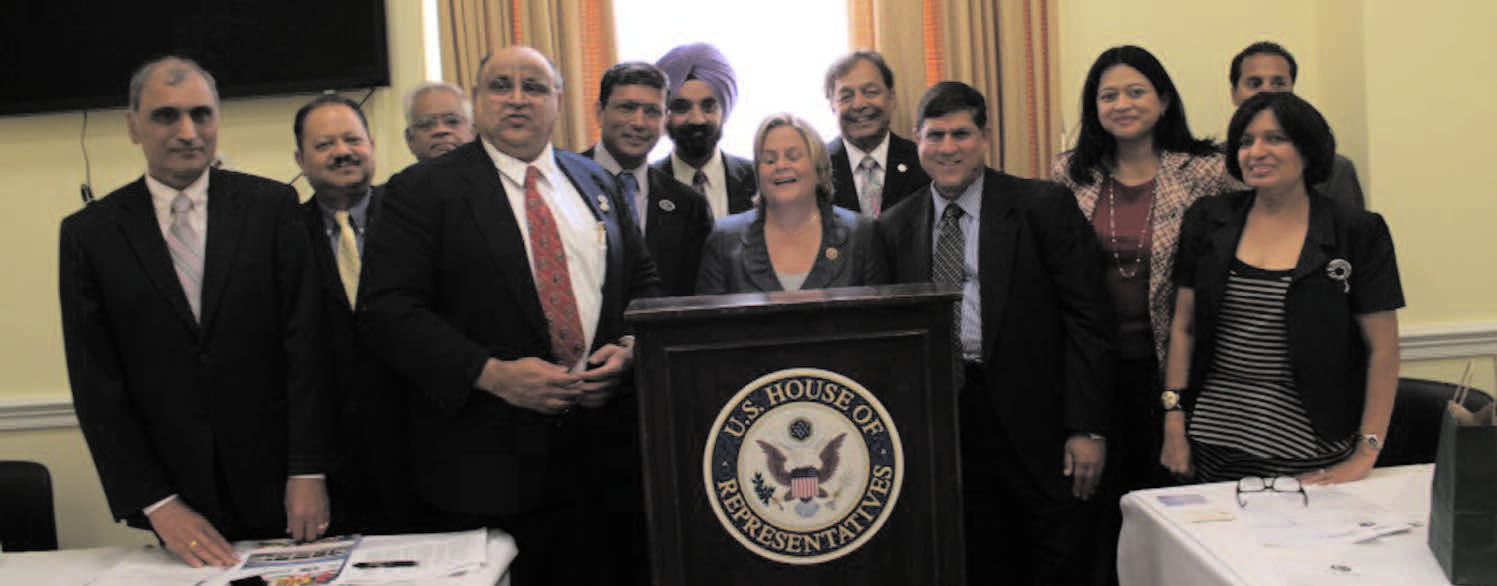
    Dr. Ami Bera addressing AAPI delegates on Capitol Hill

    According to Dr. Shah, AAPI strongly supports the “Resident Physician Shortage Reduction Act of 2013,” introduced by U.S. Congressman Joe Crowley (D-NY) (H.R. 1180) and U.S. Senator Bill Nelson (D-FL) (S. 577),which would provide an additional 15,000 residency positions in Fiscal Years 2015-2019. “Increasing the size of medical school classes is not enough. There must be a simultaneous increase in the size of residency positions to train these future doctors,” he says. Dr. Ravi Jahagirdar, President-Elect of AAPI, says, “AAPI urges members of Congress to include physicians graduating from U.S. residency programs for Green Cards in the comprehensive immigration reform bill.

    “Physicians graduating from accredited U.S. residency programs should also receive similar treatment. Such a proposal would enable more physicians to be eligible for Green Cards and address the ongoing physician shortage,” he adds. As part of comprehensive immigration reform, a proposal may include international students graduating with degrees in science, technology, engineering and mathematics (STEM) being fast-tracked for Green Cards. This proposal enables highly-skilled workers to remain in the United States after receiving their higher education in America. “We are pleased to inform you that a bipartisan legislation was recently introduced in Congress to permanently repeal the Medicare Sustainable Growth Rate (SGR) Formula,” Dr. Harbhajan Ajrawat, Chair of AAPI Legislative Affairs Committee,while referring to “SGR Repeal and Medicare Provider Payment Modernization Act of 2014,” H.R. 4015, says. “AAPI will continue monitoring this vital legislation and will be asking members of Congress tough questions about the SGR during our Legislative Day on Capitol Hill.”

    AAPI supports Congress providing a permanent fix to the Medicare sustainable growth rate (SGR) formula. In January 2013, Congress passed a temporary patch to avert a 26.5 percent cut,which expires in 2014. AAPI urges members of the House to cosponsor H.R. 574 to bring certainty to the Medicare reimbursement system, Dr. Ajrawat adds. Dr. Sampat Shivangi, Co-Chair of AAPI Legislative Affairs Committee, says, “In our continued goals to reach out to US Congress, our annual Legislative Conference will focus on burning issues like Medicare SGR, Immigration reform, Combating Obesity, Implementation Affordable Care and of course on growing USIndia relations in spite of few recent setbacks.” He has urged “the AAPI community to be part of this exciting event and share their enthusiasm and experience on various issues which promises to be very exciting event.”

    In the 112th Congress, AAPI helped secure the introduction of the “Doctors for Underserved Areas in America Act,” (H.R. 2805), by U.S. Rep. Zoe Lofgren (D-CA),which would make the J-1 Visa Waiver Program permanent. The J-1 visa gives international medical graduates the opportunity to perform their medical training and residency in the United States. AAPI wants members of Congress to cosponsor legislation making the J-1 Visa Waiver Program permanent when it is reintroduced in the House and to cosponsor S. 616.In its efforts to maintain a healthy doctor-patient environment by curbing aggressive litigation targeting physicians, AAPI has been advocating for federal and state legislation that places effective caps on noneconomic damages, limits the use of joint-andseveral liability, provides physicians with flexibility to negotiate settlements with medical insurers and limits the statute of limitations for filing medical malpractice claims.

    “AAPI fully supports the nomination of Dr. Vivek H. Murthy as Surgeon General of the United States,” says Dr. Jayesh Shah,who along with his colleagues met with several key US Senators last month, seeking support for his confirmation. “Dr. Murthy has impeccable academic credentials and has been a longtime supporter of advancing health care across the United States. He has also worked tirelessly to support health care initiatives in rural India through his volunteerism and entrepreneurship.” AAPI’s Legislative Day Reception is scheduled on Wednesday, March 26, 2014 from 5 pm to 7 pm at B-340 Rayburn House Office Building. “Our legislative committee met more than six months ago and discussed in detail what type of reception we should host this year,” recalls Dr. Shah.

    “It came to light that in the late 1990’s, AAPI also hosted a well-attended dinner with congressional staff. Based on the feedback from committee members,we decided it would be best to go back to the feature of serving Indian food, as this past model was always well-received by Members of Congress and their staff.” The Indian Buffet Reception on Capitol Hill on March 26th will be addressed by: Rep. Alan Nunnelee (RMS); Rep. Zoe Lofgren (D-CA); Rep. Tom Price, MD (R-GA); Rep. Frank Pallone (D-NJ); Rep. Steny Hoyer (D-MD); Rep. Phil Gingrey, MD (RGA); Rep. Ed Royce (R-CA); Rep. Joe Heck, DO (RNV); Rep. Tammy Duckworth (D-IL); Rep. Gregg Harper (R-MS); and Rep. Mike Honda (D-CA). Ambassador Dr. S. Jaishankar will provide the keynote address during the Congressional reception.

    Among the many US lawmakers who have confirmed their participation addressing the AAPI delegates during the Legislative Conference on March 27th are: U.S. Congressmen Ed Royce (R-CA), Chairman – House Foreign Affairs Committee; Rep. Frank Pallone (D-NJ), Ranking member – Health Subcommittee, House Energy and Commerce Committee; Rep. Joe Crowley (D-NY), Co-chairman – Congressional Caucus on India and Indian Americans; Rep. Peter Roskam (R-IL), Co-chairman – Congressional Caucus on India and Indian Americans; and Rep. Zoe Lofgren (D-CA), Ranking member, Immigration Subcommittee and House Judiciary Committee.

  • Foods that keep you young

    Foods that keep you young

    Looking young is the foremost priority of most people these days. Not just women, even men are wary of ageing. Instead of using the number of anti-ageing creams that have flooded the markets, one can go the natural way and opt for fruits and vegetables to help fight all age-related problems. Here are a few superfoods that can help control ageing and make you look younger – AVOCADO – Apart from being high in Vitamin E, avocados are rich in antioxidants which help protect the skin. Avocados help in regenerating skin cells which makes your skin look fresh, giving a more youthful complexion.

    KIDNEY BEANS – These pulses are full of fibre and potassium which help reduce the cholesterol levels and thus reduce the risk of any heart disease. But their major health benefit is that they are packed with proteins. DARK CHOCOLATE – Any chocolate that contains at least 70% cocoa is full of proteins and Vitamin B. Regular small bites into this chocolate will help burn fat and improve your skin and hair. BROCCOLI – Broccolis are a great source of fibre and Vitamin C which not only help control weight, but also help to fight heart diseases. BLUEBERRIES – Blueberries are rich in Vitamin C, which help in easy circulation of blood. Blueberries also contain certain minerals which help control the anti-ageing process. High in potassium, these berries help fight puffiness.

  • LIFESTYLE CHANGES TO BE CANCER FREE

    LIFESTYLE CHANGES TO BE CANCER FREE

    Recent research on the genetics of cancer may give an impression that some are fated for the disease, but that’s not necessarily true. Healthy behaviours could prevent about half of all cancer deaths. Here are seven dos and don’ts to reduce your risk of the dreaded disease. EXERCISE REGULARLY: Be physically fit. Research shows active people have a lower risk of developing colon and breast cancers than people who don’t exercise.

    You don’t need to be a superathlete to get the benefits of exercise. Any exercise that raises your heartrate and makes you sweat like brisk walking, biking, dancing or aerobics is beneficial. While at it, ensure that your weight is in the normal range for your height. Keep to a body mass index (BMI) of 25 or less. Increases in BMI are linked to endometrial, gall bladder, esophageal, renal, thyroid and colon cancers. Medical experts advise, stay within five to 10 kilos of what you weighed at 18.

    CUT DOWN ON ALCOHOL: Alcohol does not only put a load on your liver and slows vitamin absorption, but is also a contributing factor to oral cancer. According to the American Cancer Society, oral cancer is six times more common in alcohol users than in people who don’t drink. Limit your alcohol consumption. This means no more than two drinks per day for men and one drink per day for women. And steer clear of weekend binge drinking. You tend to consume more alcohol than you would have set out to. NO SMOKING: The graphic packet makes it amply clear that ‘cigarette smoking is injurious to health’.

    Smoking causes a host of cancers, including that of the lung, esophagus, mouth, throat, stomach and pancreas, according to the National Cancer Institute. It’s also the leading cause of premature, preventable death. Is this relevant reason enough for smokers to quit the stub? GET SUN SCREENED: Protect your skin from the sun. Its ultraviolet rays damage the skin’s DNA and can cause genetic mutations that lead to skin cancer. Use sunscreen every time you go outdoors (preferably one with an SPF of 30 or higher that protects against both UVA and UVB rays). Keep covered with a broad hat and sunglasses.

    Also, stay away from radiation. Avoid exposures to cancercausing substances. Radiation exposures and some chemicals are known to cause cancer. For example, ionizing radiation that comes from gamma rays, high-energy UV rays and X-rays is linked to cancers of the lung, skin, thyroid, breast and stomach. NO HRT: Women, as far as you can, avoid taking hormone replacement therapy to treat symptoms of menopause. A number of studies have linked hormone use to an increased risk of uterine cancer. If you need to take hormones, limit the use to less than five years, your gynaecologist would advise.

    FOLLOW A HEALTHY DIET: Eat a colourful diet rich in green leafy vegetables, pink carrots, and red tomatoes. It reduces the risk of cancer. Research suggests that a plant-based diet is associated with reduced risks for several cancers, especially colon cancer. The recommendations include keeping your intake of red meat to no more than four ounces per day. Avoid processed meats, eat at least five servings of a variety of non-starchy vegetables and fruits every day, and minimise your intake of sugary drinks, juices, desserts and candies, refined breads and chips.

    GO FOR SCREENING: Get screened for cancer regularly. Screening tests can detect cancers of the colon, breast, prostate, cervix and skin (ask your doctor how often to get them and at what age you should start). Even if you don’t have any symptoms, finding cancer early greatly increases your chances of treatment and even cure. Screening tests can include physical exams, blood tests, imaging and X-rays and genetic tests.

  • Indian Cinema Megastar Vidya Balan joins the IIFA on a multi-city promotional tour in the US

    Indian Cinema Megastar Vidya Balan joins the IIFA on a multi-city promotional tour in the US

    NEW YORK, NY (TIP): The International Indian Film Academy (IIFA) is visiting the United States for a special multi-city promotional tour of New York, Houston, Tampa and Orlando from the 11th – 14th of March.

    Accompanying them is one of Indian cinema’s biggest names, actress Vidya Balan who will spread the word about the upcoming IIFA Celebrations presented by Freedom Health. The Videocon d2h IIFA Weekend 2015 will be held from the 23rd to the 26th of April in Tampa Bay. IIFA partnered US Bollywood Enterprise on the New York leg of the US promotional tour.

    Actor, Vidya Balan said, “Having traveled to a number of exotic locales the world over, IIFA has made its mark on the map, educating the world about Indian Cinema. Going forward, I am very pleased to be a part of IIFA’s landmark journey, as they venture into the United States, in Tampa Bay. I am excited to be a part of the IIFA Master Class this year and look forward to engaging with my fans in the US.”

  • Vince Chhabria to be the first Indian-American judge in California

    Vince Chhabria to be the first Indian-American judge in California

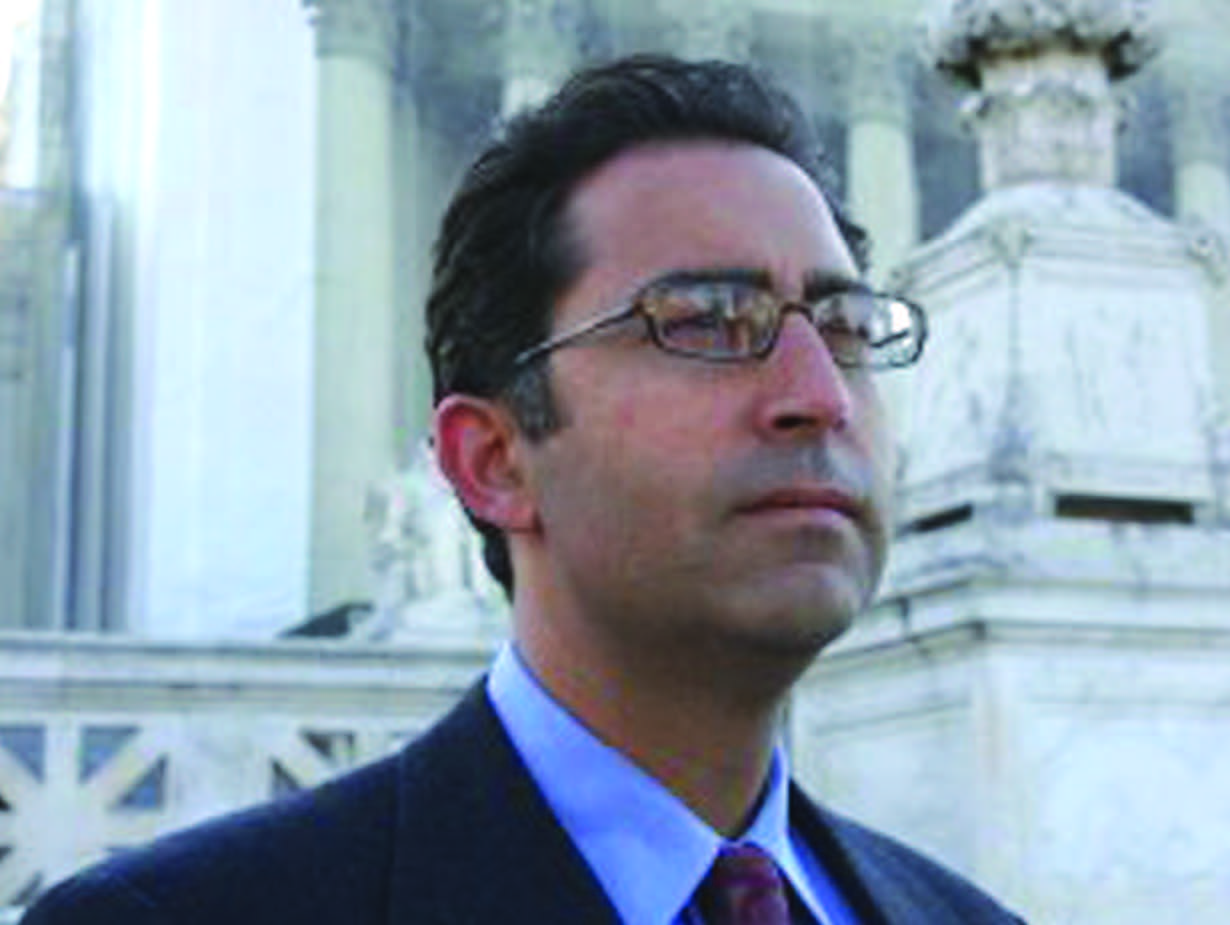
    WASHINGTON (TIP): Indian- American attorney Vince Chhabria, who has represented San Francisco in defense of its health insurance law, adoption rights of same-sex couples and other major cases, has won Senate confirmation for a federal judgeship.

    Chhabria, 44, who presently serves as the deputy attorney of San Francisco City, will become California’s first federal judge of South Asian descent and one of only a few South Asian federal judges across the US. The Senate vote on Wednesday, March 5, was 58-41, with four Republicans joining Democrats in approving President Barack Obama’s nomination of Chhabria.

    A University of California Berkeley Law School graduate, he fills the last of three vacancies on the Bay Area’s 14- member US District Court. Born to Indian parents, who are Mumbai natives, Chhabria is currently visiting family in India. “I am thrilled to begin this new chapter of my career in public service, and to set up shop down the hall from my greatest mentor, Judge Charles Breyer,” he said in a press statement.

    “While I had high expectations when I started here nine years ago, I never dreamed I would be lucky enough to work on so many exciting cases, for so many dynamic clients, with so many dedicated and high-caliber public lawyers.” Chhabria also thanked the members of the South Asian legal community saying: “The fact that I have been confirmed while traveling in India with my family makes this an especially proud moment for me.”

    He began his legal career by clerking for Judge Charles R. Breyer of the US district court for the Northern District of California from 1998 to 1999. The South Asian Bar Association of North America and the South Asian Bar Association of Northern California have applauded Chhabria’s historic confirmation to the US district court.

    The lone Indian-American member of the US House of Representatives, Ami Bera, the Congressional Asian Pacific American Caucus chair, Judy Chu, and CAPAC chair emeritus, Mike Honda, also applauded Chhabria’s confirmation. “Vince Chhabria will make an excellent judge for the US district court. I’m delighted that he was confirmed,” Bera said. “As the first South Asian to serve on the federal bench in California, he has also made California’s Indian-American and South Asian community proud.”

  • Indian-American scientist creates world’s first 3D fingerprint

    Indian-American scientist creates world’s first 3D fingerprint

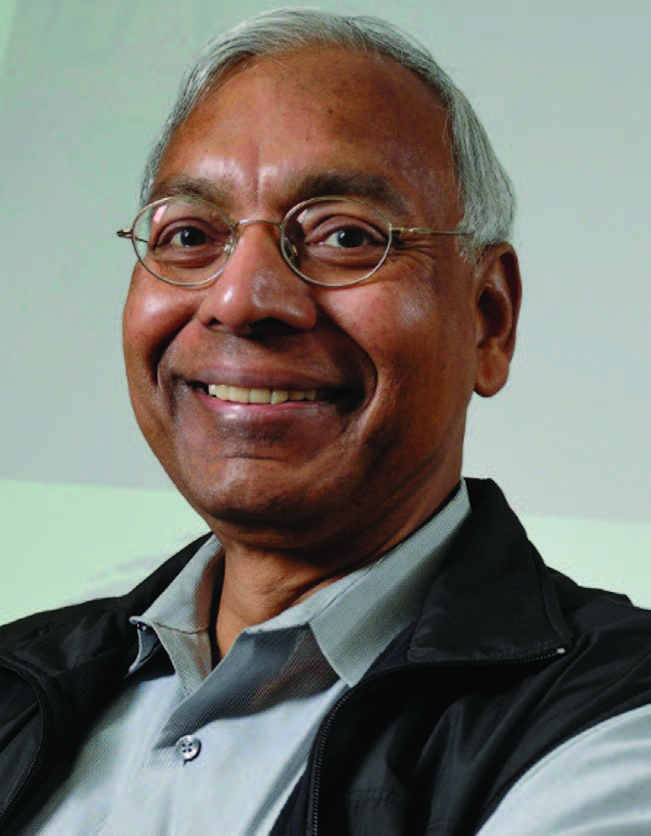
    MICHIGAN (TIP): A team of Michigan State University computer scientists led by Indian Institute of Technology (IIT) Kanpur alum Anil Jain have built the first threedimensional model of a human fingerprint.

    This development will not only help today’s fingerprint-matching technology do its job better, but could eventually lead to improvements in security, according to information posted on MSU website.

    What Jain, a University Distinguished Professor of computer science and engineering, and his team did was develop a method that takes a two-dimensional image of a fingerprint and maps it to a 3-D finger surface. The 3-D finger surface, complete with all the ridges and valleys that make up the human fingerprint, is made using a 3-D printer.

    It creates what Jain’s team called a fingerprint “phantom.” Imaging phantoms are common in the world of medical imaging. For example, to make sure an MRI machine or a CT scanner is working properly, it needs to first image an object of known dimensions and material properties. “In health care, a 3-D heart or kidney can be created,” Jain said.

    “Because the dimensions are known, they can be put into a scanner and the imaging system can be calibrated.” In this case, the ultimate goal is to have a precise fingerprint model with known properties and features that can be used to calibrate existing technology used to match fingerprints.

    “When I have this 3-D fingerprint phantom, I know its precise measurements,” said Jain. “And because I know the true dimensions of the fingerprint features on this phantom, I can better evaluate fingerprint readers.” While the 3-D model doesn’t yet have the exact texture or feel of a real finger, it could advance fingerprint sensing and matching technology.

    “Tools like this would help improve the overall accuracy of fingerprint-matching systems, which eventually leads to better security in applications ranging from law enforcement to mobile phone unlock,” Jain said. Members of Jain’s team include Sunpreet Arora, a computer science doctoral student, Kai Cao, a research associate in computer science and engineering and research collaborator Nick Paulter at the National Institute of Standards and Technology.

    Jain, who has a B.Tech degree from IIT Kanpur and MS and PhD degrees from Ohio State University, has six US patents on fingerprint matching and has written a number of books on biometrics and fingerprint/facial recognition. Additionally, Jain has also received a number of prestigious awards for contributions to pattern recognition and biometrics.

  • Indian-American Physicians to bring Issues before Lawmakers

    Indian-American Physicians to bring Issues before Lawmakers

    WASHINGTON (TIP): An influential body of Indian- American physicians is holding its annual legislative day on Capitol Hill March 26-27 to bring issues facing the community before U.S. lawmakers.

    Association of American Physicians of Indian Origin (AAPI), the largest ethnic organization of physicians, representing over 100,000 physicians of Indian origin, wants to make their voices heard on Capitol Hill and around the nation, it said.

    AAPI’s Annual Legislative Day conference will discuss medicare sustainable growth rate, immigration reform, combating obesity, implementation of affordable care and growing U.S.-India relations, according to a media release.

    Indian-Americans constitute less than one percent of the country’s population, but they account for nine percent of the American doctors and physicians. One out of every seven doctors serving in the U.S. is of Indian heritage, providing medical care to over 40 million of U.S. population.

    Several key lawmakers including Ed Royce Republican chairman of House Foreign Affairs Committee and Joe Crowley and Peter Roskam, Democratic and Republican co-chairman of Congressional Caucus on India and Indian Americans respectively have confirmed their attendance.

    “AAPI has been seeking to collectively shape the best health care for the people of U.S. with the physician at the helm, caring for the medically underserved as we have done for several decades when physicians of Indian origin came to the U.S. in larger numbers,” said Jayesh Shah, president of AAPI. “AAPI is once again in the forefront in bringing many burning health care issues facing the community at large and bringing this to the Capitol and to the U.S. Congress,” said Sampat Shivangi, Co-chair of AAPI Legislative Affairs Committee.

    As part of comprehensive immigration reform, AAPI has urged the Congress to include international medical graduates also along with international students graduating with degrees in science, technology, engineering and mathematics (STEM) for being fasttracked for Green Cards. This proposal would enable highly-skilled workers to remain in the U.S. after receiving their higher education in Am.

  • Equality for Women is Progress for All

    Equality for Women is Progress for All

    Today we join the people of the world in celebration of the progress made for women’s rights, women’s empowerment and gender equality. We also acknowledge that progress has been slow, uneven and in some cases women and girls face new and more complex challenges. International Women’s Day is therefore also a day to recommit ourselves to working harder for gender equality, together as women, men, youth and leaders of nations, communities, religion and commerce.

    If we act decisively, with the knowledge that empowering women and girls and supporting their full participation can help solve the greatest challenges of the 21st century, we will find lasting solutions to many of the problems we face in our world. Major challenges such as poverty, inequality, violence against women and girls, and insecurity will be addressed substantially. Women spend the majority of their income on the well-being of their children and family.

    Raising women’s labor force participation increases economic growth. By ending women’s poverty, we will sustainably and significantly reduce extreme poverty worldwide. By keeping girls in school longer, with quality education we will empower young women to play their full role in society and build stronger families, communities and democracies. By advancing equal opportunity and removing structural barriers to women’s economic empowerment, we will reduce inequality and spur inclusive economic growth. By supporting women’s equal representation in leadership positions in peacemaking, in communities, in politics, in business and in religious institutions, we will build a more just, peaceful and secure world.

    By working with men and boys, and doing it together, we will engage humanity in a task that is a responsibility for all. As we celebrate International Women’s Day, we remember and celebrate the women who, led by women in trade unions on this day more than a century ago, called for better working conditions, peace and bread. Their call is still valid today. Given slow and uneven progress, we continue to call for change. And we pay tribute to the countless women around the world who are making change every day as they go about their daily lives.

    Nearly 20 years after the Beijing Women’s Conference, and 15 years after the Millennium Summit, we look back with pride at the achievements that have been made. More women are working. More girls are in school. Fewer women die in pregnancy and childbirth. And more women are in leadership positions. But no country in the world has achieved equality between women and men and girls and boys, and violations of the rights of women and girls are an outrage. So let us build on the lessons learned and the knowledge that equality for women is progress for all, and make greater and bolder progress as we work to achieve the Millennium Development Goals and chart a new post-2015 development agenda.

    We can no longer afford to hold back half the world’s population. The 21st century has to be different for every woman and girl in the world. She must know that to be born a girl is not the start of a life of hardship and disadvantage. Together we must make sure that: SHE is Safe and Secure from genderbased violence. SHE has Human rights that are respected, including reproductive rights. SHE is Empowered economically and in every way through Education, Equal opportunity, participation and leadership.

    This is the SHE Imperative to which I call on you to commit. Let us all cross the line and stand on the right side of history. Today and every day, UN Women will stand strong for women’s rights, women’s empowerment and gender equality. Equality for women is progress for all.

  • Woman Empowerment…..

    Woman Empowerment…..

    To me, woman is the embodiment of love and spiritual values. All that is beautiful in body, mind and soul is “woman.” On International Women’s Day, we celebrate both women and woman empowerment. We also celebrate all that women have achieved over the years. At the same time we take stock of the changes in the status of women. We find out if women are getting equal opportunities for education and health care. We ask ourselves: Is society giving women honor and dignity? Long ago, I had written, “A woman was created to blossom and bloom, in the colors and fragrance of her choice.

    The way an unwatered plant becomes parched and dies, so does the personality of a woman who is struggling to break through the shackles of social conditioning, to achieve recognition as a separate individual, with a distinct identity. The change will be complete when society recognizes that it cannot benefit from preventing the emergence of the pearl from the oyster.” When I started my career, more than four decades ago, women were stepping out of their homes into the career world. They were looking for jobs that were better suited to women. But, times have changed. Women have made their mark in every field. They are acquiring professional qualifications and are no less than men in ability or intelligence.

    Financial independence is so important for women. It gives confidence and strength. The woman does not have to endure and suffer in silence. But, attitudes need to change too. She has to realize her own potential and strength as an equal member of society. A woman has the strength to bring about change in the society and in her own status. When I represented India at President Obama’s Summit for Entrepreneurs in Washington DC, we had a seminar on women empowerment. Mrs. Hillary Clinton was there and she spoke on the upliftment of women in rural areas and education of the girl child.

    She said the quality of life needs to improve in terms of basic health care too. We discussed that education and health care would help child mortality rates go down. In fact, I feel that special attention should be given to extra-curricular activities for girls and women in rural areas. An exercise and diet regime would help both mental and physical health. Great emphasis should be given to every mother to empower her financially and mentally, so that she can educate her girl child of her rights and also inculcate the values of good health, nutritious diet and education.

    When I lectured at MIT, I also spoke on the relevance of education for woman empowerment and quoted Mahatma Gandhi, who had said, “If you educate a man you educate an individual, but if you educate a woman you educate an entire family.” Today, I feel proud that women have achieved so much. But we still have a long way to go. Woman empowerment is not just about one day in the year. It should be an on-going process, so that each of us can focus on the areas that need change and do our bit. The woman has to realize her own potential and strength as an equal member of society.

    In fact, the educated and self-reliant mothers can also bring about change in the mindset of society and teach their sons to honor and respect women. Empowerment is also about women realizing that they should embrace change. Creating awareness is so important. The work of rural women and women activists, who are working in rural and tribal areas, can be highlighted through awards and functions within the rural community itself. I feel that we need to emphasize the work of rural women who are struggling to better society and their own lives. They should draw public attention to instances of injustices towards women. They should also highlight instances where women have excelled, in order to inspire other women.

    Educated women and professionals can work together to focus on issues – like literacy, learning of skills and opportunities for entrepreneurship, through kitchen and cottage industries. They can also participate in programs on social issues and health care. The “Pulse Polio” program for instance, is a successful example. Father and mother must value the girl child and give her equal opportunities. Changes cannot come from outside and by force. It has to come from within the society.

    The change can be complete when society recognizes that the woman has a separate identity, her own dreams and ambitions and every right to fulfill them. To women, I also want to say – Believe in yourself and your own abilities. Keep learning. Do you dream of being successful? Don’t stop! It is important to dream. Then have the faith and courage to take the first step towards realizing the magic of your dreams. Let each woman also redefine her place in the world, giving it her own color and fragrance and make this world a better place.

  • Fourth RANA International Convention from July 3-6

    Fourth RANA International Convention from July 3-6

    NEW YORK (TIP): The Rajasthan Association of North America, NY (RANA) is hosting its Fourth Rajasthani International Convention from July 3 thru July 6, 2014 at the Islandia Marriott Long Island 3635 Express Dr. N Islandia, NY 11749.

    The President of RANA, Dr. Narendra Hadpawat is the Convener of the Convention along with Co-Conveners – Naveen C Shah, Dr. Shashi Shah, Ravi Lashkery and Animesh Goenka. RANA is an elite Indian organization focused on social & welfare activities in the field of Health & Education in the state of Rajasthan, India.

    It has a Scholarship Fund and has assisted many needy students for higher education. RANA has been the pioneer to establish a Water Harvesting Project in Rajasthan, India to solve the water problem in rain deficit and arid areas. The theme of this year’s Convention is HEALTHY & LITERATE RAJASTHAN – focusing on developing healthcare facilities and promoting literacy in the rural areas of Rajasthan.

    The Convention aims at showcasing the grandeur and glory of Rajasthan, while at the same time presenting seminars in Business development, Education & Health awareness, Travel & Tourism amongst others. Delegates would also be treated to mouth-watering delicacies from the royal kitchens of Rajasthan prepared at the hands of special chefs only for this occasion.

    A gala entertainment evening featuring top Bollywood artistes, folk musicians and dancers and a Hasya Kavi Sammelan has also been planned for the Convention. In addition, there will be trade shows, exhibitions and traditional handicrafts for viewing and purchase. Over 1500 delegates including high ranking officials from the Government of Rajasthan as well as eminent industrialists and luminaries from the fields of education, health care, business and finance from the Indian American Community are expected to attend the Convention.

    The kick-off meeting for the Convention is scheduled to be held on Sunday March 9, 2014 at Bombay Palace Restaurant, NYC from 12.00 noon to 3.00 pm. We would like to extend an invitation to all of you to attend the kick off meeting this Sunday and garner more details about the Convention and the various activities which have been planned. For further information email info@ranausa.org or visit www.ranausa.org.

  • DECORATE YOUR HOME WITH MIRRORS

    DECORATE YOUR HOME WITH MIRRORS

    Different way to use mirrors in home decor to accentuate artefacts, add dimension, give the illusion of space and play with light. Gone are those days when a mirror was used merely for the dressing table; it has now become an essential piece of home decor. According to the space and proportion, mirrors can be aesthetically used to reflect your taste and create drama. Says Subbanshu Jaiin, director of Blackberry Overseas, distributors of luxury mirrors, “Since mirrors are movable, they can be placed and moved around depending on your choice or need. They have the benefit of reflecting and accentuating the colours of artefacts and walls.”

    Mirrors add dimension
    Use mirrors to give a sense of visual expansion in a particular room. The location and placement of mirrors in a given space creates a focal point by avoiding undesirable reflections. For example, mirrors in a dining room can be used to create luminosity and add dimension to the space.

    Pieces of art
    Indian royalty used bold and gorgeous mirrors as a focal point of a room, so that they reflected the light from the outside and illuminated the room further. Mirrors themselves become artworks in this minimal set-up. Says Jaiin, “You can create a dramatic effect by placing a fulllength mirror on the floor and resting on a wall. Long passages and hallways are most suitable for this placement.” Or hang multiple mirrors together on the same wall.

    For the outdoors
    Mirrors can amp up the aesthetics in a private garden or verandah. If you have a hanging garden, place mirrors adjacent to it with a source of light directly opposite so that the mirrors sparkle when the light falls on them.

    In the bedroom
    Using mirrors in the bedroom is crucial. As each bedroom reflects the energy of the space, a large stand up mirror works best. Says Jaiin, “If you want one only for the dressing table, consider a full-scale mirror — from ceiling to floor — with a light framework that reflects your personality.”

  • BURN MORE CALORIES IN LESS TIME

    BURN MORE CALORIES IN LESS TIME

    Follow these gym tricks to help you cut down on the minutes without compromising on results Are you struggling to find time to accommodate a good workout in your busy schedule? Here are six effective time-saver techniques that will help you burn more calories in a short span, and show you the same results as it would in an hour-long regime.

    Cardio on the way
    If you live close enough, walk or jog to the gym to get in the cardio mode on the way, or park your car a few kilometres from the gym. Increase the distance every couple of weeks. This will increase the difficulty as your conditioning improves. The time shouldn’t increase much, but the speed at which you run, should.

    Pan your drill
    Be it for work or workout, planning ahead always saves you time. If you exercise in the morning, the key is to plan your workout the previous night. But try and vary your scehdule. For instance, you could start with warmup exercises, followed by a 15-minute walk on the treadmill or elliptical trainer, and then move on to practising weights. You could also mix cardio with weights. Experts recommend that you start with a few minutes of warm-up on a stationary bike or treadmill. Stop and perform sets of lunges or squats and ab curls. Hop back on the treadmill for a twominute cardio interval (or an intense oneminute interval) and continue alternating cardio and weights until you’ve completed a full-body weight workout.

    Jump your way up
    Research shows, plyometric exercises, such as jumping rope or jumping jacks, are a good way to burn more calories in a short span. This form of exercise also involves working type 2 muscle fibres, which tend to grow and also help you tone faster. Use foot contacts to determine quantity — so every time your foot (feet) lands on the ground. Start with 25 foot contacts and gradually work your way up.

    Raise the path
    So also, upping the incline on the treadmill, even just a little bit, helps cut the flab quickly. When you brisk walk (four miles per hour) for 30 minutes at no incline, you burn 145 calories. If you raise the incline from zero to five per cent, you’ll burn 244 calories within the same time; raise it to 10 per cent and burn even more than 343. But don’t incline that high, or else you’ll hang off the machine, and strain your back.

    Juggle stuff around
    You could also put your daily multitasking skills to use. Fitness experts don’t see the need to come to a stop in-between workouts. They feel, it is better to use that time to work a different muscle group instead. For instance, if you’re performing a set of chest presses on a fitness ball, put the dumbbells down, stay put on the ball and immediately follow up with a set of crunches to keep your heart rate up. This increases your metabolism and keeps the intensity high so you don’t have to do as many sets, as you had set out to do.

    10 out of 30
    If you can’t devote half-an-hour a day for your workout regime, aim for 10 minutes. A recent research suggests, three, 10-minute sessions of treadmill exercise throughout the day was more effective at reducing blood pressure in adults than a single, 30-minute session. So if you’re strapped for time, take off for a 10-minute walk to and from work. Then all you need to do is spare another 10 minutes at lunch, and then in the evening.

  • PARACETAMOL USE IN PREGNANCY HARMFUL

    PARACETAMOL USE IN PREGNANCY HARMFUL

    Researchers have suggested that paracetamol use in pregnancy affect neurodevelopment and cause behavioral dysfunction in tots. The authors studied 64,322 children and mothers in the Danish National Birth Cohort (1996-2002). Parents reported behavioral problems on a questionnaire, and HKD diagnoses and ADHD medication prescriptions were collected from Danish registries.

    More than half of the mothers reported using acetaminophen while pregnant. The use of acetaminophen during pregnancy appeared to be associated with a higher risk of HKD diagnosis, of using ADHD medications or of having ADHD-like behaviors at age 7 years. The risk increased when mothers used acetaminophen in more than one trimester during pregnancy.

  • Tummy fat could signal health risks

    Tummy fat could signal health risks

    Your tummy’s girth could indicate health risks, courtesy a new method developed by scientists to quantify the risk specifically associated with abdominal obesity. In 2012, Nir Krakauer, an assistant professor of civil engineering in City College of New York’s Grove School of Engineering, and his father, Jesse Krakauer, MD, developed a new method to quantify the risk specifically associated with abdominal obesity.

    A follow-up study, published Feb 20 by the online journal PLOS ONE, supports their contention that the technique, known as A Body Shape Index (ABSI) is a more effective predictor of mortality than body mass index, the most common measure used to define obesity. The results tracked closely with the earlier study, which used data from the National Health and Nutrition Examination Survey (NHANES), conducted in the US between 1999 and 2004.This provides stronger evidence that ABSI is a valid indicator of the risk of premature death across different populations. Further, they showed that ABSI outperformed commonly used measures of abdominal obesity, including waist circumference, waisthip and height ratio.

    Also, because the data came from two surveys seven years apart, the researchers were able to assess the effect of change in ABSI on mortality. They found an increase in ABSI correlated with increased risk of death, and that the more recent ABSI measurement was a more reliable predictor. Noting this, the researchers contend that more investigation is warranted into whether lifestyle or other interventions could reduce ABSI and help people live longer.

  • BENEFITS OF BEETROOT

    BENEFITS OF BEETROOT

    Beet roots may have high carbohydrate levels and highest sugar content of all vegetables but it has several nutrients that can improve your health in the following ways

    Lowers blood pressure
    Drinking beet juice may help to lower blood pressure in a matter of hours. One study found that drinking one glass of beet juice lowered systolic blood pressure by an average of 4-5 points. The benefit likely comes from the naturally occurring nitrates in beets, which are converted into nitric oxide in your body. Nitric oxide, in turn, helps to relax and dilate your blood vessels, improving blood flow and lowering blood pressure.

    Boosts stamina
    Those who drank beet juice prior to exercise were able to exercise for over 15 per cent longer. The benefit is thought to also be related to nitrates turning into nitric oxide, which may reduce the oxygen cost of low-intensity exercise as well as enhance tolerance to high-intensity exercise.

  • Number of men facing domestic violence in UK rising

    Number of men facing domestic violence in UK rising

    LONDON: A large number of men in Britain are now becoming victims of domestic violence. Each year, at least 1.2 million women become victims of domestic violence. Around 784,000 men have now been found to experience domestic violence and abuse in England and Wales with one in three women and nearly one in five men experiencing it at some point in their lives.

    Domestic violence and abuse includes physical abuse, threats, emotional abuse, sexual assault or stalking. Domestic violence costs the UK an estimated £15.7bn a year. The latest data comes days after it was shown that men in Britain weren’t safe. As many as 72,000 males are raped and sexually assaulted in UK every year.

    More than one in 10 (12%) rapes in UK was against men. Latest figures also show there were 2,164 rape and sexual assaults against males aged 13 or over recorded by the police in the year ending September 2013. National Institute of Health and Care Excellence (NICE) has now said that health care professionals should receive training so that they can recognize the signs of domestic violence and abuse and ensure that those affected are aware of the help and support available to them.

    “Domestic violence and abuse are far more common than people think,” said Professor Mike Kelly, director of public health at NICE. “It can affect anyone – particularly women and children, but also men, regardless of age, geographical location, income, relationship type, family set-up or ethnic origin,” he added. Despite being a common problem there are currently no basic training requirements for all health professionals in the undergraduate curriculum on how to respond to domestic violence.

    NICE estimates that domestic violence costs the country around £15 billion a year, of which £9.9 billion is in health and social care costs. Gene Feder, professor of primary health care at the University of Bristol and the Chair of the group which developed the guidance said, “We need to wake up to the magnitude of the problem. Women who experience domestic violence and abuse have a three times greater risk of depression, four times greater risk of anxiety and seven times greater risk of posttraumatic stress disorder. We tend to deal with the medical problems but don’t recognize the underlying abuse.”

  • INDIA TO BLOCK US TRADE PROBES, READY FOR FIGHT AT WTO

    INDIA TO BLOCK US TRADE PROBES, READY FOR FIGHT AT WTO

    NEW DELHI (TIP): India has decided to block investigations by the United States into its trade policies and patent laws, and prepare for a battle at the World Trade Organization (WTO), a move that could escalate alreadystrained tension between the two countries.

    New Delhi is furious about a threat of trade sanctions made by the US trade representative’s (USTR) office over its protection of intellectual property rights (IPR), preference for domestic producers and non-trade barriers.

    Ahead of a general election, Prime Minister Manmohan Singh’s government does not want to be seen as bowing to US pressure, amid lingering tension over the recent arrest and strip search of a female diplomat, Devyani Khobragade, in New York suspected of visa fraud. On Wednesday, February 26, the National Association of Manufacturers (NAM) – which represents about 50 US business groups – asked the USTR to designate India a “priority foreign country” in its 2014 report.

    “This designation appropriately would rank India among the very worst violators of intellectual property rights and establish a process leading to concrete solutions,” NAM said in a letter to US trade representative Michael Froman. The USTR is holding public hearings for its annual report due in April.

    The report will provide details on nations denying protection of IP rights or fair market access to US firms. India is widely perceived in Washington as a serial trade offender, with US firms unhappy about imports of everything from shrimp to steel pipes they say threaten jobs, as well as a lack of fair access to the Indian market for its goods. This month, Washington said it was filing its second case at the WTO over domestic content requirements in India’s solar program, which aims to ease energy shortages in Asia’s third-largest economy.

    There are 14 past or current WTO cases between India and the United States, whose bilateral trade in goods measured $63.7 billion last year, not including the latest case. India has since hardened its stance, instructing officials not to entertain any request from the United States international trade commission (USITC) – a quasi-judicial federal agency – to examine its trade practices. India’s trade ministry has also “advised” US deputy trade representative Wendy Cutler to put off a visit to India that had been scheduled for late March due to the parliamentary election due in April or May, a senior official told Reuters.

    The official said India had asked for alternative dates for the visit, possibly after the elections, adding that the decision was not linked with the trade tension. The USTR listed in a February 12 report markets in Delhi, Mumbai and Hyderabad as being among the worst offenders globally for the sale of pirated software and counterfeit goods.

    A visit by the USITC delegation to meet officials from the Indian commerce, industry, health, telecom and finance ministries has also been put on hold. A USITC spokeswoman confirmed the delay, saying they were looking for “other windows” for a visit, but declined to comment on the reasons for the delay. Newly appointed trade secretary Rajeev Kher, who pushed India’s stand on food security issues at a WTO meeting in Bali, as chief WTO negotiator, has told his officials to tackle bilateral trade disputes preferably through multi-lateral forums.

    India has also urged President Barack Obama’s administration not to fall prey to special interest groups and consider trade issues in the context of the wider economic and strategic relationship between the two countries. Officials say any move towards putting India on a priority foreign countries list would hurt bilateral relations. “There are clear stresses in the India-US trade, economic relations,” said another government official who, like others who spoke to Reuters, declined to be identified due to the sensitivity of the matter.

  • Marital cruelty Enable women to fight it

    Marital cruelty Enable women to fight it

    In a country where domestic violence is not only widely prevalent but also underreported, the Supreme Court’s observation on marital cruelty assumes great significance.

    A Bench comprising Chief Justice P Sathasivam and Justices Ranjan Gogoi and SK Singh has rightly held that the complaint of mental and physical cruelty leveled against the husband and parents-in-law cannot be dismissed at the onset. Its ruling that a trial is essential may not by itself translate into relief for scores of battered women.

    Yet armed with the knowledge that their grievances will not be dismissed on frivolous pretexts, it can enable more women to come forward and seek redress. Even though much is said about women’s growing empowerment, instances of domestic abuse continue to find sanction in the patriarchal system.

    According to the National Family and Health Survey 3, almost two in every five married women in India have experienced domestic violence. In states like Punjab and Haryana, it is one of the major crimes against women. While Haryana reported 18 cases everyday, helplines in Punjab were flooded with complaints of domestic abuse by women in distress.

    Ironically, though domestic violence was recognized as a criminal offence way back in 1983 and the path-breaking Protection of Women Against Domestic Violence Act was passed nine years ago, not many recognize the gravity of the problem. While more heinous crimes like rape are looked at with horror, incidents of spousal violence are invariably brushed aside.

    Sadly, though a host of laws have been passed to enable women to fight oppression, gender inequity and violence is a reality women in high positions too have to live with. Answers lie not only in proper implementation of the existing laws but also a change in attitudes that tend to dismiss cases of domestic violence as mere spousal disagreements. It’s time India realized violence against women, be it on the streets or within the four walls of a home, was abhorrent and must be dealt with severely.

  • Asian Indian Chamber of Commerce organizes talk on business loans and affordable care act

    Asian Indian Chamber of Commerce organizes talk on business loans and affordable care act

    NORTH BRUNSWICK, NJ (TIP): The Asian Indian Chamber of Commerce (AICC) along with the Board of Directors held monthly Network Nite at Clarion Inn, North Brunswick NJ, January 29th.

    The Asian Indian Chamber of Commerce – a non-profit organization- evolved in July 1994 to meet the entrepreneurial and business needs of the growing Asian Indian Community. AICC was created to provide a forum for Networking for our community and to build on the strengths of all of its members.

    At each Network Nite discussions are held on topics that are important to the Asian Indian Business Community related to starting a Business, Health and Finance, Business Opportunities in New Jersey and other topics of interest to our burgeoning community in New Jersey. We bring together members to generate business opportunities through the exchange of knowledge and insights.

    At the meeting, the Chamber offered 30 minutes Grand Sponsor Presentation by the Patron Sponsor- Quaterspot Inc. represented by Mike Green- Executive Vice President with Quaterspot who highlighted the Topic- “How to use loan platform and how business owners can easily apply for a short term loan. Quarterspot highlights business lending platform which has no prepayment penalties, fair rates, requires no owner collateral, and can provide cash in a few days”.

    The Guest Speaker Erik Rettig from Small Business Majority gave a quick overview of what the Affordable Care Act means for small businesses in New Jersey. The event ended with a Q&A session and a discussion on the topics discussed. For more information on AICC please visit website at www.aicc.net which provides information on AICC activities. For enquiries please Call at 732 -777-4666 or e-mail at webmaster@aicc.net to Chamber office and learn more benefits that Chamber can offer your business.

  • DESPITE BAN ON INDIAN PRODUCTS, FDA CHIEF CLAIMS US ‘NOT TARGETING’ INDIA

    DESPITE BAN ON INDIAN PRODUCTS, FDA CHIEF CLAIMS US ‘NOT TARGETING’ INDIA

    WASHINGTON (TIP): US regulators are not targeting India, despite a series of import restrictions on drugs from the major US trading partner, the Food and Drug Administration chief said Friday, February 23. FDA Commissioner Margaret Hamburg briefed reporters after her first official trip to India, where she met with government and industry leaders earlier this month.

    India is the second largest US supplier of prescription and over-the-counter drugs, and its big pharma companies Ranbaxy and Wockhardt have been hit with multiple US import suspensions due to safety concerns. “We are not targeting Indian countries. We are undertaking our required regulatory activities,” Hamburg said. “When products are sold in the United States for use by American citizens, then those products have to meet our standards.” Hamburg said the FDA has ramped up inspections at Indian drug plants as part of a global effort to improve safety.

    The agency has 12 staff members in India, and plans to expand to 19, she added, describing the nation as “particularly important” to US food and drug trade. “The fact that we have increased our presence in India is true but it reflects the fact that India is a very significant and growing player in the US marketplace with respect to both pharmaceutical products and food.” While in New Delhi, Hamburg and Indian health secretary Keshav Desiraju signed their first statement of intent to cooperate in the field of medical products.

    Hamburg described as “encouraging” her conversations with senior representatives during her eight-day trip to India, the United States’ third largest trading partner. At the start of Hamburg’s visit, Health Minister Ghulam Nabi Azad said India’s lower-cost medicines should not be viewed as “cheap and spurious.” India’s generics industry is a major supplier of lifesaving drugs, including antiretrovirals for HIV, to the United States and over 200 other nations. Many lower-income countries rely on the generics produced by Indian plants as a key source for affordable medicine.

    But Ranbaxy, one of India’s biggest drugmakers, has been hit repeatedly with FDA import suspensions, most recently in January, when a fourth manufacturing plant was cited for violations from expected “good manufacturing practice.” Roger Bate, an expert at the American Enterprise Institute, said the problem lies with India’s national regulatory body for pharmaceuticals, the Central Drugs Standard Control Organization. “I believe the Indian generics companies can make the products well, but it is the lack of oversight,” Bate told AFP, describing CDSCO as “corrupt.” “India does not take drug regulatory matters seriously.”

    The FDA issued earlier its first-ever ban on tobacco products on four varieties of hand-rolled cigarettes called bidis by an Indian company headquartered in Illinois, Jash International. Just days after FDA commissioner Margaret Hamburg returned from India, agency officials announced that four bidi brands made by Jash International – Sutra Bidis Red, Sutra Bidis Menthol, Sutra Bidis Red Cone and Sutra Bidis Menthol Cone – may no longer be domestically sold, distributed or imported.

    The bidis were banned not because of any imminent danger – although it is well-known that all tobacco products are dangerous – but because Jash failed to provide ingredient information that is mandatory under new rules. In a conference call on Friday, not specifically related to the bidi issue, commissioner Hamburg denied the FDA was targeting Indian companies, but said the United States has a strict quality control regime for all products being imported into America.

    ”When products are sold in the United States for use by American citizens, then those products have to meet our regulatory standards and requirements and we inspect those facilities in other countries as well,” she told reporters after her first official trip to India, where FDA action against Indiabased pharmaceutical companies have been the focus of attention. But US efforts to stamp out bidi imports and smoking in America has a history going back some two decades when the Indian mini-cigarette started to become a fad among youth after hippies had first lit them up in the sixties. A 2002 survey showed close to 3% of American male high school students had tried bidis, which, because they were largely unregulated, were easier for the youth to access – particularly after the US cracked down on sale of cigarettes to the under-aged.

    Over the last decade, bidis also began to appear in various all-American, candy-like flavors: chocolate, vanilla and strawberry, adding newer flavors such as grape, cinnamon, watermelon, menthol, black licorice, wild cherry, and mandarin orange, as the craze caught on. No accurate figures are available about the extent of bidi imports from India but estimates by an international trade group in the 1990s put import from India at 448 million pieces valued at less than $5 million. The Clinton administration tried to ban import of beedis around that time after a CBS 60 Minutes program showed child labor in the industry that employs an estimated 3 million people in India. But it was never fully carried through.

    The health and economic cost of smoking is something that has seized developed countries even as developing countries continue to get sucked into western-inspired tobacco consumption that is far more lethal and pervasive than bidi imports to America. A 2010 WHO study estimated that smoking in developed countries will amount to 29% of world tobacco consumption (down from 34% in 1998), while developing countries’ share, now said to be growing at around 3% every year, will be 71%. Some six million people die every year from tobacco-related illness – 80% of them in low-income countries. Last year, the United States also raised concern about high rates of contaminants, including salmonella, in Indian spices.

  • BRING IT ON! SEX DOES BOOST INTELLIGENCE

    BRING IT ON! SEX DOES BOOST INTELLIGENCE

    Sex not only helps decrease stress levels and burn away calories, but boosts your intelligence too! Love-making proved to greatly increase the creation of new neurons located within the hippocampus – an area of the brain that is responsible for the formation of long-term memory, say researchers.

    “We discovered that even though there had been the production of new neurons, the cognitive abilities acquired during the experiment decreased once the mice were subjected to long periods without sexual activity,” psychologists from the University of Maryland in the US were quoted as saying. Increased sexual activity floods an individual’s brain cells with oxygen, they noted. Another study by Konkuk University in Seoul, South Korea, provided further substantial evidence.

    According to the Korean study, sex increases intellectual functions. Sexual activity buffers the creation of neurons in the hippocampal region of the brain, which acts against detrimental functions caused by extreme stress. Older couples that are more sexually active have less odds of getting dementia which is due to a variation of complicated reasons, said a report.