Tag: Health

Read the latest health news, diet, fitness, medical news and healthcare tips on theindianpanorama.news/health. Get all the healthcare news, including wellness, fitness, diet and weight loss & more.

  • SIGNS YOUR MAN IS CHEATING ON YOU

    SIGNS YOUR MAN IS CHEATING ON YOU

    Approximately 30 to 60 percent of men will cheat on their spouses, according to numerous studies. It has been revealed that for every six men who will cheat, there are four men who will be faithful, the Huffington Post reported. It should come as no surprise that some men cheat. Whether it’s the President of the United Sates, the top golfer in the world or a world class musician, it’s a proven fact that when it comes to cheating on their spouses, some men just can’t keep it in their pants. Guys who cheat are pretty transparent and predictable. In fact, there are three major signs that accurately predict if a guy will cheat on you. Firstly he’s secretive. Guys who cheat often lead double lives, and in order to do so, they have to cover their tracks. A guy who is secretive and doesn’t reveal much about himself or his life is a guy who is a prime candidate to be featured on an upcoming episode of ” Cheaters.”

    Communication and the willingness to be an open book are two of the most important indicators of a happy and successful relationship. And if a guy is keeping secrets in the beginning, look out because you are headed for trouble. Secondly if he’s selfish and selfindulgent. Guys who cheat do so because they are only focused on one thing — themselves. The good news is that guys like these are easy to spot. Guys who are selfish and self-indulgent tend to be like that in all aspects of their lives. If you want to get a good gauge of the moral character and integrity of the man you are dating, look at the way he lives his life and the way he treats others. If you start noticing that he is only out for himself, and he obviously doesn’t care about others (including you) aside from what they can do for him, there is only one thing you should do — run! Lastly if he has a sudden change in behavior. Cheating guys will suddenly change their behavior, and in numerous ways. He might make a sudden change in his appearance or grooming habits, or it could be a sudden change in his work schedule where all of a sudden he’s working late, has to travel and can’t be reached. But the most common sign is when your sex life decreases, and he shows less of an interest in you in the bedroom. There are some guys out there who can’t be trusted and some who can. The key is being able to recognize a potential cheater before the relationship begins.

  • Washington becomes the biggest risk to the US economy

    Washington becomes the biggest risk to the US economy

    WASHINGTON: Consensus may be hard to find in Washington these days, but many corporate executives and economists seem to agree on one point: the biggest risk to the world’s largest economy may be its own elected representatives. Down-to-the-wire budget and debt crises, indiscriminate spending cuts and a 16-day government shutdown may not be enough to push the US economy back into recession. But Washington’s policy blunders in recent years have significantly slowed economic growth and kept roughly 2 million people out of work, according to recent estimates. Steep spending cuts are a big reason. But the governance-by-crisis also may be prompting businesses to sit on their cash rather than building new factories, buying more equipment and hiring more workers, some economists say. “Increasingly I’m of the view that the reason why our economy can’t kick into a higher gear is because of the uncertainty created by Washington,” said Mark Zandi, chief economist of Moody’s Analytics. Congress on Wednesday voted to reopen the government and extend its borrowing authority through February of next year.

    But the deal did nothing to resolve the underlying disputes that led to the crisis in the first place – leading many to fear that the standoff may play out again in a few months. The plan sets up a forum to try to forge a more permanent budget deal, but few expect it to succeed. “We have crisis after crisis after crisis and it has a corrosive impact on the economy,” said Greg Valliere, an analyst with Potomac Research Group. “If you’re a business, how do you make plans in this environment?” Leading chief executives agree. “Most CEOs I speak to in the United States say they’re seeing a slowdown in business because of this,” said Laurence Fink, the CEO of giant asset manager BlackRock Inc, in an interview on Wednesday. “I was on a conference call with many of them, and I heard across the board, a slowdown from the American consumer because of this narrative, so it’s having an impact on our economy already – and it’s going to have an impact on job creation at a time when we need more job creation.” Not all economists agree that the political circus in Washington is hurting the economy in a measurable sense. While worries over the debt ceiling have pushed up the government’s borrowing costs over the past week, those increases are minimal, and the S&P 500 stock index remains near its all-time high.

    SLOW RECOVERY
    But the pace of recovery since the 2008-2009 recession has been unusually slow. While America’s total economic output is now higher than it was before the recession, the level of private investment remains lower than it was in 2007. Employers also continue to hire workers at a slower pace than before the recession. Since the financial crisis eased, Washington has sent out one jolt after another. Democrats passed sweeping reforms of the healthcare system and the financial sector in 2010 which, whatever their merits, imposed wrenching changes on two pillars of the United States’ post-industrial economy. Public unease with the healthcare law helped Republicans win control of the House of Representatives in 2010, ushering in an era of divided government that has led to repeated standoffs over taxes and spending. A near-shutdown in April 2011 led to the debt-ceiling impasse in July and August of that year, which took the country to the edge of default and prompted the country’s first-ever debt downgrade. Like this most recent crisis, Congress averted disaster at the last possible moment. But the brinkmanship pushed consumer confidence to rock-bottom levels, where it remained for months.

    The S&P 500 tumbled 17 percent and took more than six months to recover its gains. That debt-ceiling deal called for steep cuts to national defense, highway construction, scientific research and other forms of discretionary spending that Congress must approve annually. Another budget deal, reached in January of this year after another round of brinkmanship, included tax increases to help narrow budget deficits further. Neither of those deals addressed the health and retirement spending that poses the greatest threat to the country’s long-term fiscal health. A failure to cut back these programs or find savings elsewhere prompted a round of deliberately disruptive acrossthe- board spending cuts – the so-called “sequester” – to take effect in March. Along with an improving economy, those steps helped US budget deficits fall from 8.7 percent of GDP in the 2011 fiscal year to an anticipated 3.9 percent of GDP for the fiscal year that ended on September 30. But this has all come at a steep cost.

    JOBS NOT CREATED
    In a report released on Monday, Macroeconomic Advisers estimated that 1.2 million more Americans would be working today if Congress had kept discretionary spending at the levels that were in place in 2010. The forecasting firm estimated that Washington’s erratic behavior had also driven up unemployment by a further 900,000 jobs. Zandi estimates the fiscal austerity has cost 2.25 million jobs. Without those measures, the unemployment rate would stand at 6.3 percent now rather than 7.7 percent, he says. Even many of those who disagree with the notion that policy uncertainty has hurt the economy agree that the spending cuts and tax increases should have been phased in more gradually. “Fiscal consolidation has been a big drag on the economy,” said Paul Ashworth, an economist with Capital Economics. The International Monetary Fund called the United States’ deficitreduction efforts “excessively rapid and ill-designed” in June and said the sequester cuts would nearly halve US economic growth this year. Meanwhile, Congress has punted on other important legislation like immigration reform that could boost the economy. Construction firms have seen federal work plummet over the past several years.

    With the government shut down, they have been unable to use the federal E-Verify system to check workers’ immigration status or get permits to build in environmentally sensitive areas, said Ken Simonson, chief economist of the Associated General Contractors of America. The delays could be more than an inconvenience for builders trying to line up financing for a new project, he said. “You never know when the market’s going to turn and … for some reason you may have missed the boat,” he said. There’s more turbulence on the horizon. Simonson said lawmakers may not have the stomach to avoid further cuts on transportation spending when they take up the issue next year. Though Washington may be responsible for lackluster business on Main Street, it may not have much of an impact on Wall Street. Many economists had expected the Federal Reserve to begin scaling back its massive monetary stimulus program last month. The chaos in Congress means it now probably won’t begin pulling back its bond purchases until next year. “I think the markets are beginning to learn how to live with Washington dysfunction,” said Valliere.

  • Back from the Brink

    Back from the Brink

    The financial markets worldwide felt relieved after the US Congress reached an agreement shortly before the deadline was to expire on Wednesday. A debt default would have raised the cost of borrowings for the US. The 16-day government shutdown over a budget fight between the Democrats and the Republicans caused losses not just to the domestic economy but to all those countries dependent on US exports for growth. Many such countries were relying on a US demand pick-up to compensate for the sluggish economic conditions at home. There is one positive outcome that should cheer the emerging economies like India and China. There is hope that the US Federal Reserve will not rush to roll back its $85 billion a month bond-buying program, giving more time to the Asian countries to stabilize their economies and currencies, which had been shaken by dollar outflows in recent months.

    The Republicans had brought the US government to a halt, demanding that President Barack Obama’s favorite health care program should be either delayed or defunded and the existing taxes should be cut. Two years ago when there was a similar confrontation over raising the debt ceiling, President Obama had retreated, agreeing to a staggered slashing of domestic spending. This time Obama was firm and assertive, and called the Republicans’ bluff. The deal that was signed at the last minute indicated a complete Republican surrender. There was a minor concession on health care which required the administration to audit incomes of those seeking insurance subsidies. But the damage the Republicans have caused to the US reputation is incalculable. Americans dependent on government programs and Federal employees were the main sufferers. A fringe group in the Republican Party took the entire nation to ransom and ended up hurting its own leadership. The approval ratings of the Republicans are at the rock-bottom. But the relief is for a limited period. “Our drive to stop the train wreck that is the President’s health care law will continue”, said the Republican leader, Speaker John Boehner. Early next year the battle is expected to resume.

  • Indian-American Woman is Running for Seattle City Council

    Indian-American Woman is Running for Seattle City Council

    SEATTLE (TIP): Kshama Sawant, trained as a computer engineer in her native India and now a professor of economics, is running for a seat on the City Council of Seattle under an unambiguously far-left banner. Even in this liberal bastion of the Northwest, Sawant’s political views stand out. Having gained sufficient electoral support in the August primary (44,000 votes, or about 35 percent of the total, finishing second in a threeway race), Sawant is now challenging the entrenched 16-year Democratic incumbent Richard Conlin for a council seat in the November general election. A veteran of the Occupy Wall Street movement, Sawant espouses an explicitly anticapitalist creed that champions the rights of the poor, low-wage workers,women, immigrants, the homeless, the disabled, homosexuals and other marginalized segments of the population. Her current political campaign rests on three principal platforms: a $15-per-hour minimum wage; higher taxes on millionaires to fund mass transit and education; and rent control.

    “A majority of workers and young people face an increasingly unaffordable city,” she told local media. “Most are disgusted by the endless parade of politicians who play with progressive rhetoric at election time, then pander to big corporations and the super-rich while in office.” The Stranger, a Seattle area newspaper that has endorsed Sawant, along with six labor unions, said she is the only element of the campaign season that is providing any excitement or interest. After Sawant performed well in the August primary, John Halle wrote in the North Star, a Socialist newspaper, that her success should not have come as a surprise. “Recent polls have indicated a widespread sympathy to socialism, a sign that the many years of indoctrination equating ‘free markets and free people,’ capitalism and democracy, and of there being ‘no alternative’ to neo-liberal austerity are finally losing their power to convince,” Halle wrote. “Sawant’s candidacy is the first to give a concrete indication that these attitudes are beginning to find expression in terms of real political power.” The Socialist Alternative newspaper called Sawant’s showing in the run-off “stunning” and a “breakthrough.”

    A well-known political commentator in Seattle, Tom Barnard, wrote of Sawant’s campaign: “What happened conceptually was even more revolutionary.… For what Kshama did was to simply overturn the common wisdom of how to succeed in local elections in general and City Council races in particular. She took what were viewed as two immutable political laws [the need for big money and Democratic Party endorsements] and essentially threw them out the window… It’s nothing short of an earthquake… Kshama has shown a new path for independent candidates who directly advance working people’s interests and issues.” Sawant is trying to translate her activism into practical terms – for example, she has vowed that if she wins election, she will not accept the full $120,000 annual salary awarded to City Council members. Instead, she will take the average salary for city workers and hand over the rest to social movements. In an interview with International Business Times, Sawant laid out some of her vision and her disappointment with the administration of President Barack Obama. “I don’t support the Democrats because they are largely financed by corporate interests, [just] like the Republicans,” she said. “After the initial campaign of ‘Hope and Change’ in 2008, disillusion has set in among much of the electorate.

    The hopes of progressive people have been dashed after five years of Obama.” Sawant cited such issues as the government’s treatment of Wikileaks’ source Bradley Manning, the saber-rattling over Syria, the assault on public schools, drone missile attacks in Pakistan and the deportation of thousands of immigrants, among others, for the disillusionment with Obama. “I think in the current environment, the appeal of independent and alternative candidates has greatly increased,” she noted. “And I don’t think my embrace of socialism has much stigma as it might have had in the past.” Sawant is quick to point out that she embodies the principles of democratic socialism, not the repressive, bureaucratic nature of the former Soviet Union. She also suggests that after the devastation of the housing market collapse, the huge government bailouts of banks and large corporations, and the emergence of a whole new generation of debt-strapped college graduates with bleak job prospects, many members of the American public may simply be “sick of capitalism.” “I think many Americans, particularly the youth, feel demoralized, dejected and disenfranchised by corporate-driven politics,” she said. Indeed, with respect to Seattle, the economy is weakening. After driving the bulk (70 percent) of the state of Washington’s job growth since 2010, in August of this year, the Seattle area (which includes Bellevue and Everett) shed 4,300 jobs, including 1,600 manufacturing jobs, pushing up the local jobless rate to 5.2 percent. For the state as a whole, the jobless rate edged up to 7.0 percent.

    Still, these figures represent a much brighter picture than the rest of the country, particularly California (which is suffering under a nearly 9 percent jobless rate). Even if Seattle has a much healthier economy than other parts of the nation, the cost of living is rising and wages are stagnant. Sawant, a professional economist, contends that one of her fundamental campaign proposals – a $15/hour minimum wage – makes sense, citing that if consumers don’t have enough money to buys goods and services, small businesses will collapse. “Some corporate executives make more in one day than their lowest-paid employees make in a whole year,” she said. “Many companies could easily increase employee salaries. And even at $15/hour, that’s hardly an income that one can easily live on.” Sawant’s proposal even has the support of some local capitalists. Nick Hanauer, founder of Second Avenue Partners, a Seattle venture capital fund, wrote in Bloomberg that the widening wealth gap in the U.S. presents some difficult challenges for the economy. Hanauer noted that low-wage jobs are quickly replacing middle-class jobs in the U.S. economy. “Sixty percent of the jobs lost in the last recession were middle-income,while 59 percent of the new positions during the past two years of recovery were in low-wage industries that continue to expand such as retail, food services, cleaning and health care support,” he wrote. “By 2020, 48 percent of jobs will be in those service sectors.”

    Hanauer also indicated that if the federal minimum wage had simply tracked the rate of U.S. productivity gains since 1968, it would now be $21.72 an hour — three times the current wage. He also estimated that raising the minimum wage to $15 an hour would inject about $450 billion into the economy each year. “That would give more purchasing power to millions of poor and lower-middle-class Americans, and would stimulate buying, production and hiring,” he declared. Separately, as an Indian-American, Sawant presents a rather unusual alternative for most voters. Indeed, the two most famous and prominent Indian-American politicians – Govs. Nikki Haley of South Carolina and Bobby Jindal of Louisiana – are both right-wing Republicans, the polar opposite of Sawant’s decidedly leftist ideology. Sawant suggests that Jindal and Haley, as well as Florida Sen. Marco Rubio, represent attempts at window-dressing by the Republican Party in order to appeal to ethnic minorities.”These minority politicians are outliers,” she stated. “Most ethnic minority people in the U.S. do not support the Republican Party.” She also points out that in defiance of the “model minority” image of Indian-Americans earning high salaries, there are many in the Seattle area who receive low wages, including taxi drivers,who support her candidacy. Also, Sawant’s embrace of some social issues, namely abortion, gay rights and marriage equality,might strike observers as rather odd, given the deep conservatism and traditional values inherent in Indian culture. But Sawant counters that many Indians in U.S., particularly among the young, support such issues as gay rights. “It might be more of a problem if I was running for office in India itself,” she conceded. The Seattle election will be held on Nov. 5.

  • Indian American introduces US government reform agenda

    Indian American introduces US government reform agenda

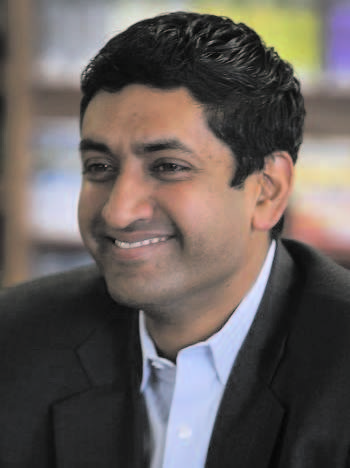
    WASHINGTON (TIP): Amidst widespread frustration surrounding the US shutdown and reckless brinkmanship over the debt limit, an Indian-American leader, seeking his maiden Congressional bid, has introduced a vision of bold government reform agenda. One of the top fund raiser, Rohit Ro Khanna, a former top Obama Administration official unveiled October 17 a five step plan to change the Congress. The proposal includes refusal to donations from political action committees (PACs) and federally registered lobbyists, refusal to Congressional pay raises, end of Congressional pension system, banning legislators from lobbying for five years after leaving office and Members of Congress from taking special interest-funded trips. “These proposals will help turn our Members of Congress back into the representatives of the people that they’re supposed to be,” Khanna said.

    “It will make them more like the voters who send them to office, who have to worry about supporting their families on paychecks that haven’t grown in years. “It will make them think twice about cutting Social Security benefits and blocking health coverage that millions of Americans rely on. It will make them more like you and me,” he said. He said America’s founders invented a government flexible enough that more and more Americans have become full shareholders in it. “Women, African Americans, Latino Americans, and Asian Americans have all obtained the right to vote, and a greater voice in our society. We’re making progress on LGBTQ, too, although we’ve still got a ways to go,” he said. “It’s because of this sometimes unsteady progress toward fairness and equality and freedom and citizenship that our country remains a model for the world. It inspired my grandfather, who joined Mahatma Gandhi’s movement for freedom and democracy in India and spent four years in jail for his activities,” he said. Khanna was addressing a gathering in California from where he is seeking to get elected to the House of Representatives from the Democratic Party. He is pitted against his own party colleague and incumbent Mike Honda and has raised more funds as compared to his rival. Khanna pledged to abide by all the five proposals if elected to the Congress. He said he has refused to accept donations from PACs, special interests, and Washington lobbyists.

  • Bobby Jindal forms group to win ‘war of ideas’

    Bobby Jindal forms group to win ‘war of ideas’

    WASHINGTON (TIP): Louisiana’s Indian-American governor Bobby Jindal, a potential 2016 Republican presidential candidate, plans to create a policy-focused nonprofit group to help Republicans shed their image as “the party of no.” The group called “America Next” would produce detailed proposals for how conservatives would improve health care, education and energy policy if they were in charge again, Jindal told Politico, an influential politics focused Washington news site. Jindal, whose term as chairman of Republican Governors Association ends next month, complained that his party has focused excessively on criticising President Barack Obama without saying what it would do instead. Citing Mitt Romney’s failed effort to make the 2012 election a referendum on the president, Jindal, 42, said his group will bring together big thinkers to “play offense in the war of ideas.”

    “Saying ‘no’ is not enough,” he said. “We’ve got to get beyond the bumper-sticker slogans. We’ve got to get beyond the 30-second attack ads.” When asked about his plans for 2016, Jindal said: “I don’t know if I’m going to run for president or not.” He quoted former British Prime Minister Margaret Thatcher, who said that you need to win the war of ideas before you can win elections. Jindal, whose second term as governor ends at the start of 2016, said “America Next” will not be afraid to take controversial positions that run afoul of Republican orthodoxy. “Everything needs to be on the table,” he said. “This is not a time to be timid.” Jindal said there’s a helpful contrast between the paralysis in Washington and the reforms being pursued by 30 Republican governors in the states. “A rebellion is brewing outside the Washington Beltway,” Jindal was quoted as saying. “The American people know that the policies coming out of Washington are leading us to a dead end.

  • The Government Shutdown is Over President Wants a New Approach

    The Government Shutdown is Over President Wants a New Approach

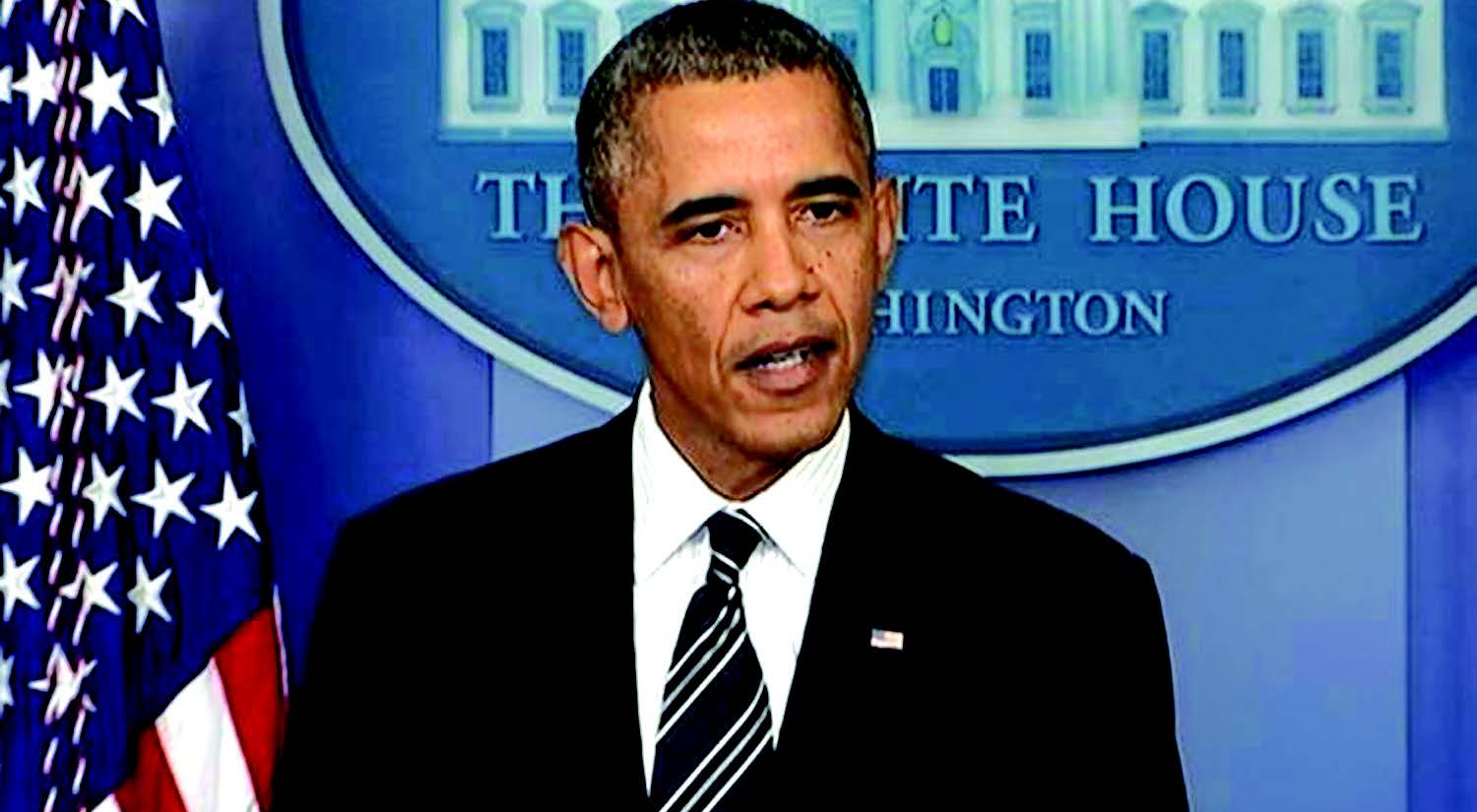
    WASHINGTON (TIP): President Obama signed the legislation to reopen the government October 16 night, soon after the House passed the bill earlier adopted by the Senate. An agreement struck by Senate Majority Leader Harry M. Reid (DNed.) and Minority Leader Mitch McConnell (R-Ky.) ended a stalemate created last month, when hard-line conservatives pushed GOP leaders to use the threat of shutdown to block a landmark expansion of federally funded health coverage. The Senate overwhelmingly ratified the deal the 16th evening, 81 to 18, with more than half of Senate Republicans voting yes. A few hours later, the House followed suit, approving the measure 285 to 144. Eighty-seven Republicans joined a united Democratic caucus in approving the measure, allowing Congress to meet a critical Treasury Department deadline with one day to spare. Speaking on the reopening of the government, Obama said, “Because Democrats and responsible President Wants a New Approach Republicans came together, the first government shutdown in 17 years is now over.

    The first default in more than 200 years will not happen. These twin threats to our economy have been lifted.” There was no economic rationale for all this, President Obama said. “Over the past four years, our economy has been growing, our businesses have been creating jobs, and our deficits have been cut in half,” he said, “but nothing has done more to undermine our economy these past three years than the kind of tactics that create these manufactured crises.” The way business is done in Washington has to change, President Obama said. The standoff “inflicted completely unnecessary damage (to) our economy” by slowing growth and increasing borrowing costs, Obama said, declaring that “there are no winners here.” At the same time, he blamed the brinksmanship that flirted with the first default in U.S. history on no-compromise tactics of the Republican tea party wing in Congress, saying that “the American people are completely fed up with Washington.” “Let’s work together to make government work better instead of treating it like an enemy or purposely making it work worse,” Obama said in a direct jab at tea party conservatives. “You don’t like a particular policy or a particular president? Then argue for your position. Go out there and win an election,” he added. “Push to change it, but don’t break it” because “that’s not being faithful to what this country’s about.” Saying “we can’t degenerate into hatred,” he ended by quoting part of the Pledge of Allegiance that states America is “one nation, under God, indivisible, with liberty and justice for all.”

  • ADD ROMANCE TO YOUR BEDROOM

    ADD ROMANCE TO YOUR BEDROOM

    This is perhaps the most romantic space in the house, where you spend the maximum time at night and lounge during the day. A little creativity and some ingenuity, and viola — a mundane space can translate into a coffee-table book example of dazzling romantic style.

    Private sanctuary
    Making your bedroom into a cave-like cosseted private sanctuary is treating yourself to intimate moments of recharging your tired batteries in an atmosphere of romance, comfort, passion and that inimitable feeling of being loved and protected. Your bedroom can then become that escape retreat where you would unwind from a rushed, traffic-angst day.

    Large, thick mattress
    The most important accoutrement in a bedroom is of course a large king-size bed or a show stopper four-poster antique bed that is grand and luxurious, with an eighteen inch mattress that allows you to sink into the soothing relief of unwinding away from cares. There is a certain romance in a cosseting deep mattress.

    Soft cosetting bed-head
    Dramatic shapes for bed-heads — artistic, novel, creative, extraordinary, transform this highutility area into a statement of soft romantic mood. The padding and fabric make for a romantic feel.

    A cosy boudoir
    Create a private nook by adding furniture usually considered living room pieces. A light armchair, an under-the-bed upholstered seater on castors that can be pulled out, a lazy boy, an interesting ottoman, sofas, rocking chairs, matching overstuffed loveseats can prop this room up to have a passionate lounge feel.

    Window seat
    A bay window or a cantilevered slab of stone out of the window using brackets beneath, creates an additional window seat or a box window where you could spend time ruminating or even reading a book.

    Intimate bistro
    A round breakfast table of 30″ diameter, set with two chairs, invites private conversations, is great for secret breakfast away from the rest of the home. That post passion morning cup of tea with your lover opposite you, is an inimitable moment that you hold within you through the day.

    Moving on
    Dressing tables, accessorised with crystal and porcelain add romance and bed trays suggest the chance of sexy luxurious breakfast in bed, while soft lighting, candles, essential oils in a diffuser effectively complete the decor.

    Chiaroscuro lighting
    Soft lighting, candles, essential oils in a diffuser contrasted with dark passionate colours effectively complete the drama of the romance in the decor. Room-darkening window coverings also encourage relaxing the nerves and aid in the restoration of your soul so that you are more attuned to love and romance.

    Art gallery
    Surround yourself with photos of love and places that conjure passionate memories, things that bring memories of romance to you, take you into a space of inimitable passion, states of euphoria.

    Colours for your sanctuary
    Romantic colours include fuchsia, crimsons, dark foliage greens, deep blues, pinks, sky blues, sea greens and aubergine. Darker colours juxtaposed with light ones create a sanctuary like relaxation and assist in unwinding and passion.

    The study
    Within the bedroom installing a vintage roll top writing desk accompanied by a comfortable chair, induces old world charm and a nook to write a love note.

    Mini bar
    A small refrigerator to chill the champagne or wine will make you feel as if you can enjoy your time in the bedroom without interruption.

    Entertainment and verve
    A television offers the opportunity to watch your favourite movies and shows.

    Light it right
    Chic chandeliers twinkling in crystal help create the feeling of an oasis. Tropical plants and trees, uplit with special lights, cast exciting romantic shadows.

    Mirrors
    Use mirrors in unusual places, such as the tops of dressers or side tables, to reflect dancing candle light.

    Shelving
    Fashionable shelving with good organisers and smart chunky drawers are important to hide the necessities like stationery, mobile phones, and their bulky chargers. Utilitarian racks, rustic baskets, and medicine chests with multifarious compartments that can be pulled out for easy access.

  • KEEP YOUR EYES HEALTHY

    KEEP YOUR EYES HEALTHY

    Protect the eyes from the sun. Sunglasses once thought of fashion accessory have now been proven to be essential for good eyesight . Ultraviolet light rays emitted from the especially UV-B is the most damaging to the crystalline lens and causes cataracts, corneal changes, and macular degeneration. Regrettably all sunglasses cannot protect you unless they specifically stipulate UV protection. Especially at risk are people who spend long hours in the sun, who have had cataract surgery or who are taking certain medications such as tranquilizers, tetracycline and diuretics, are more sensitivity to sunlight. During driving sunglasses reduce glare and bright stray light preventing accidents. Regular eye checkup: It is amazing how people will service the car or motorbike regularly but do not think of servicing the eyes. And eye checkup does not refer only to a spectacle number check done casually in an optical shop. It refers to examination on a slit microscope followed by an eye pressure check for glaucoma, with a detailed retinal examination.

    If there are any symptoms of irritation, poking, visual changes, seeing spots, or even tiredness, it merits a detailed exam. EYE STRAIN DURING READING: The book should be well lighted , but the area surrounding the book should also be well lit . Reading in a dark room leads to eye strain. Ideally the light should come over your left shoulder. When you concentrate hard , the blink rate of the eye drops significantly. This leads to blurring and defused vision. Blink frequently when you study for long periods of time. Computer care: Position the computer screen/ laptop so that you are not looking at the screen straight on. Eyes are designed to work in a position of depressed convergence, ( ie looking down and in. ). The top of the screen should not be higher than your eyes. The brightness of the screen should be the same intensity of the lighting of the surroundings.

    Try and scheduled your study sessions early morning rather than late night it induces far less strain. And remember to take a 5 min break after every 40 min of reading. CONTACT LENS CARE: If you are into contact lenses which is perfectly okay, be sure to select a good manufacturer.Clean lenses twice a day with the advised solutions regularly. Adhere to your lens schedules . A monthly wear disposable is to be “disposed “in a month. If there is any redness or poking see your eye professional immediately AVOID SMOKING It can lead to cataracts , increases risk of macular degeneration. And can , if combined with alcohol, lead to optic nerve disorders,. DIABETES? EXTRA CAUTION: If you have diabetes, if untended can lead to the retina being damged with the chance of a retinal vessels leakage, bleeding and even, if left uncontrolled, retinal detachment and blindness. Irrespective of your age, 4 monthly checkups are mandatory. Eat antioxidant-rich foods Nutrients like Vitamin A, are essential for good retinal health and aid in both color and night vision. Lutein and zeaxanthin, both carotenoid nutrients, help in preventing macular degeneration. Omega-3 fatty acids were shown to help prevent recurrent eye infections and improve dry eye symptoms.

  • YOU SHOULD WALK WHEN YOU TALK

    YOU SHOULD WALK WHEN YOU TALK

    Pacing the room while on your cell can protect you from Metabolic Syndrome & heart disease Not just a group of American researchers, Mumbai’s doctors too are in the mood to junk your fancy gym membership. Short bouts of physical activity that add up to 30 minutes a day are just as effective as half hour on the treadmill to keep blood pressure and cholesterol in check, and prevent Metabolic Syndrome (MS). MS is a complex web of metabolic factors associated with a two-fold risk of cardiovascular disease (CVD) and five-fold risk of diabetes. Epidemiologists have been waving the red flag for CVD, estimating that by 2020 it will be the largest cause of disability and death in India. The sedentary lifestyle and junk eating habits of Mumbaikars makes them a favourite of MS. In a survey of 560 subjects conducted by PD Hinduja National Hospital & Medical Research Centre last year, a high incidence of MS, especially among 41-60 age group (double in males as compared to females) was discovered.

    Experts now advocate the ‘movement lifestyle’ approach over the ‘structured exercise’ one, encouraging people to meet the 30-minute aerobic exercise a day guideline by cycling or walking to the supermarket instead of driving, doing bicep curls while watching TV or pacing the room during a phone conversation. The study conducted by Dr Paul Loprinzi and Brad Cardinal in Oregon revealed that subjects belonging to the ‘short bouts’ exercise group showed positive results in areas of BP, cholesterol, MS, and waist circumference. Dr Shashank Joshi, endocrinologist at Lilavati Hospital and president, Indian Academy of Diabetes, says the study confirms the findings of similar research conducted earlier among Mumbaikars. “We discovered that Mumbaikars had no time to exercise or walk. So we suggested that Non-Exercise Activity Thermogenesis (NEAT) — the energy spent through daily activities — be tapped to keep you fit,” he explains, adding that NEAT is more relevant than ever when desk jobs are the norm and leisure time is defined by long hours of TV viewing or Internet surfing. Nature, say doctors, designed human beings to walk. In the last 200 years, we seem to have grown habituated to sitting.

    Walking more, and moving around is a ‘natural’ way to exercise. Rather than not exercise at all, movement-based physical activity is a realistic option for most urban Indians. Dr Anoop Misra, Chairman of Fortis-C-DOC Centre of Excellence for Diabetes, Metabolic Diseases and Endocrinology, feels the Oregon State University research is interesting for those who may not have a consolidated 45 minutes free to workout but can take out 10 minutes four times a day. If you can, choose the desk farthest from the printer and loo. At home, try skipping rope or on-the-spot jogging (during a TV commercial break), hand flaps (anytime, anywhere), exercising with small weights (1- 2 kg) for five minutes (while perusing news on the laptop). Sitting before a TV for four hours burns 50 kcal. Instead, if you were to groom your terrace garden or turn out all the cupboards, the energy expenditure would be 100-150 kcal/hour (adding up to 500-600 kcal over the evening). Building movement into the day also helps develop core strength, says Dr Misra. “Regular aerobic, musclestrengthening and bonestrengthening physical activity of a moderatelyintense level, like brisk walking, can slow the loss of bone density associated with age, and reduce the risk of falling.”

  • Pakistan rejects allegations about detention of Mullah Baradar

    Pakistan rejects allegations about detention of Mullah Baradar

    ISLAMABAD (TIP): The Afghan Taliban on October 9 claimed their former deputy chief Mullah Abdul Ghani Baradar has not been freed by authorities, prompting a denial from Pakistani officials who said he was free to “meet and contact anyone”. Pakistan had announced on September 21 that Baradar, arrested in Karachi in 2010, had been released to help the peace process in war-torn Afghanistan. However, Afghan Taliban spokesman Zabihullah Mujahid said, “It is very sad that Mullah Abdul Ghani Baradar is still spending days and nights behind bars in Pakistan and we are deeply concerned about his health condition which is deteriorating by the day.” In a statement in Pashto posted on the group’s website, he added, “The Islamic Emirate of Afghanistan, Baradar’s family and his sympathisers consider freedom as Baradar’s right and we want his immediate release on Islamic and humanitarian grounds.” Rejecting the allegations, foreign office spokesman Aizaz Chaudhry told PTI: “Pakistan has released Taliban detainees to facilitate the reconciliation process in Afghanistan. “Mullah Baradar has been similarly freed. As far as we are concerned, he is free to meet and contact anyone to advance the cause of reconciliation.” Afghan leaders are not fully convinced by Pakistan’s announcements about his release. President Hamid Karzai said on Monday that Baradar still does not enjoy complete freedom and expressed hope that Pakistan will give him an opportunity to play a role for peace in Afghanistan. According to media reports, Baradar has been released from Pakistani custody but continues to remain under watch by security agencies.

  • DRINKING RED WINE HELPS KEEP CANCER AT BAY

    DRINKING RED WINE HELPS KEEP CANCER AT BAY

    Anew study has revealed that chemical, resveratrol, which is found in red wine, remains effective at fighting cancer even after the body’s metabolism has converted it into other compounds. This is an important development, as resveratrol is metabolised very quickly and can still be taken into cells after it has been metabolised into resveratrol sulfates. Enzymes within cells are then able to break it down into resveratrol again, meaning that levels of resveratrol in the cells are higher than was previously thought. In fact, the results appeared to show resveratrol may be more effective once it has been generated from resveratrol sulfate than it is if it has never been metabolised because the concentrations achieved are higher. The team, led by University of Leicester translational cancer research expert Professor Karen Brown, administered resveratrol sulfate to mice models and were subsequently able to detect free resveratrol in plasma and a variety of tissues in the mice. This is the first direct sign that resveratrol can be formed from resveratrol sulfate in live animals, and the researchers think it may help to show how resveratrol is able to have beneficial effects in animals. The study also showed that resveratrol generated from resveratrol sulfate is able to slow the growth of cancer cells by causing them to digest their own internal constituents and stopping them from dividing. Professor Karen Brown said their study was the first to show that resveratrol can be regenerated from sulfate metabolites in cells and that this resveratrol can then have biological activity that could be useful in a wide variety of diseases in humans.

  • CARDIO EXERCISE: TOP 20 RUNNING TIPS FOR BEGINNERS

    CARDIO EXERCISE: TOP 20 RUNNING TIPS FOR BEGINNERS

    Running is a common exercise for weight loss and fitness. It is one of the most popular cardio exercises for people of different age groups. But running has negative effects on the body if you do not follow the guidelines for running, especially if you are a beginner. Rajesh Sharma, fitness instructor and personal trainer from Navi Mumbai gives us a list of dos and don’ts for running. Here are running tips for beginners that should not be ignored. Check up with doctor: Patients with heart diseases should consult their doctor before trying any cardio exercises, whether it is running or kickboxing. Besides heart patients, if you have a history of breathing problems, arthritis or other serious problems. Start running small distance: Take it slow and easy instead of going long distances at the beginning. Your body has to be prepared for this heart pulsating cardio exercise. Start running slowly: Tame your body to running to avoid knee or joint wear and tear.

    Slowly increase your heart rate over time. Increase intensity, speed and distance slowly: It is important to slowly increase the intensity, speed and distance while running. Steady weight loss is the key and not rapid weight loss that results in cellulites and weight gain. Run on grass or mud track, don’t run on road: Grass and mud has less impact on the knees while running, unlike running on concrete roads. Wear good running shoes which are flexible as well as absorbs shocks: Besides running on grass or mud, invest in a good pair of running shoes for added health benefits. Do Pranayam to increase your breathing capacity: Most individuals are breathless after a good run; Rajesh Sharma suggests practicing Pranayam Yoga Pose to increase your breathing capacity. Consum a balance diet: Diet also plays an important role for runners. What you eat helps to boost stamina and build muscles. Reduce body fat: Overweight and obese individuals should lose weight before hitting the jogging track. Body weight can wear off the knees too, hence it is recommended to reduce body fat. Drink enough water – be hydrated: Water is important to stay energised and rejuvenated. Running increases your heart rate leading to sweating and burning of calories.

    To keep going, improve blood circulation and remain active for the course of running and prevent muscle cramps or weakness. Take rest for recovery: It is important to rest after running – your body has to return to its normal heart rate, breathing returned to normalcy, and cool down in a correct fashion to prevent muscle soreness. Recover well: After cool down, it is important to have a protein rich diet for muscle growth. There are several protein rich post workout snacks you can try – from chicken sandwich, to eggs, fish, paneer and lentils. Don’t overtrain: Simply because overtraining leads to muscle loss. Do high intensity interval training with light weight: Besides running, it is also important to weight train and exercise different muscle groups. Full body workout is the key to fitness. Run in the area where you are not alone and there is proper light: This is important for personal safety, and it includes men and women.

  • BENEFITS OF GREEN JUICES

    BENEFITS OF GREEN JUICES

    Green juices are power-packed with nutrition. Green vegetables have the ability to transform sunshine into the food that all creatures consume. True to their nature, greens produce chlorophyll, which oxygenate your body. This enables us to release stored toxins in the body. Your hemoglobin (that has a similar molecular structure as that of your red blood cells) will get elevated, improving the blood circulation as a result and giving your body a boost of energy. A green juice will cleanse your digestive system, lungs, liver (which will rev up, if sluggish — causing you to retain weight) and uterus. So if you are a smoker, this is an excellent supplement to your diet.

    Fact file
    Magnesium is essential for efficient calcium utilisation. The chlorophyll molecule has magnesium at its centre and its impact on the body’s magnesium levels is highly significant. When you include green juices in your daily diet, it helps them absorb calcium better. All green plants have Vitamins A and C, which are important co-factors for calcium absorption. Chlorophyll foods also act as a form of ‘stored sunshine’, to regulate calcium and Vitamin D deficiency. So if you get no sunshine, then increase the greens in your diet.

    Methods to follow
    Always rotate your greens, don’t use one green all the time. Plants carry a trace of alkaloids (which in small doses is okay) and you don’t want the same alkaloids to build up in your system.
    If you have a strong digestive system, blend greens in a mixer and if not, juice them.
    Even though you eat a gree vegetable everyday, your body will assimilate many more nutrients from blended greens rather than the ones chewed. It’s always beneficial to add spirulina and wheat grass powder, as it increases the chlorophyll quotient in the juice.
    If taste is important to you, mix dates in your juice. However, watch out if you have yeast, candida, diabetes or hypoglycemia.
    They are best consumed fresh, but you can keep them only for a day at the most in the fridge. Add some lime to preserve them.
    Green juices should be ingested on an empty stomach, so have it first thing in the morning or inbetween meals.

  • GRAPEFRUIT MAY BE HEART’S BEST FRIEND

    GRAPEFRUIT MAY BE HEART’S BEST FRIEND

    Anew research has revealed that grapefruit, which contains health-promoting biomolecules, could help prevent cardiovascular diseases. The study, which was carried out by the researchers from Glasgow University, has found out that biomolecules could be used to reduce the inflammation that is the main cause of various heart problems, the Daily Express reported. This research may give rise to a new generation of anti-inflammatory drugs that are cheaper and less lethal than some existing therapies.

  • CRUEL THINGS WOMEN DO TO MEN

    CRUEL THINGS WOMEN DO TO MEN

    Despite being known as the fairer sex, women can be downright nasty and often do cruel things to men. Now, Fox News has compiled a list of some top cruel things that women do to men and how they play with the guy’s emotions or ego.
    They don’t pick up the phone
    While men feel good as they manage to take the girls’ phone number, the girls often give them a fake number or don’t pick up the call.
    Use men for free drinks
    Some women go out never planning to spend any of their own money on drinks at the bar or club. Instead, they count on their feminine wiles to convince guys to shell out for their libations. While some of them might begin to get to know him, the cruel and heartless ones will take that drink, flirt a little and move on.
    Use men as placeholders
    If she is a decent person, she’ll just get it over with and dump the boy, but if she’s cruel, she’ll hold on to him for a while until somebody new comes along. These girls don’t like to be alone and without a relationship, so instead of putting you out of your misery and ending it, she’ll string you along until she meets someone to replace you.
    Emotionally manipulate men
    Men don’t like to see women cry and some cruel women take advantage of the fact and use it to get what they want. A few tears would make men do anything to get it to stop.
    Use physical violence
    While men hitting girls are often termed nasty, some cruel women feel it’s perfectly acceptable to hit their boyfriends, as he would never hit her back. This type of woman feels like she can inflict any kind physical pain on him without fear of repercussion.
    Criticize their men in public
    Cruel women criticize and humiliate their men in public places. They often poke fun at her man or even soundly debase him.
    They don’t disclose their relationship status
    It’s certainly not the worst thing a woman could do to a man, but it is annoying when she’s already in a relationship and lets you assume that she’s available so that she can enjoy the man’s flirtation and flattery.
    They withhold sex
    This is a time-tested, and frequently used, cruel thing for women to do to men. For most men, sex is as important as breathing, so withholding it in order to get something she wants or simply to punish her man for his transgressions is a pretty awful thing to do, even if it is effective.
    They test their men
    You’re all ready to go for a night out with your friends, when your girlfriend calls and asks you to change your plans to be with her instead. She doesn’t have any particular reason; she just wants to see you. She knows that you had plans to meet up with the guys, but if you really loved her, you’d come over to her place instead. If her request comes with an “if you really loved me,” then it’s a test. If you choose anything other than immediately rushing to her side, you’re going to fail. This kind of testing in a relationship is indeed cruel and petty.
    They flirt to inspire jealousy
    Maybe she’s feeling underappreciated, maybe you’ve just had a big fight or maybe she just enjoys the tortured look on your face. For whatever reason, girls who flirt obviously with other guys in front of their boyfriends are immature and manipulative.

  • Unemployment & Inequality

    Unemployment & Inequality

    Social safety net for jobless and sick needed

    Even if GDP growth rises, there will be growing inequalities unless there are strong policies aimed at the uplift of the vulnerable sections and the rich are taxed in an efficient and judicious manner. There should be some insurance against unemployment and sickness which will enable low income families to live with dignity”, suggests the author.
    The Indian economy is faltering even though there are some rays of hope. Exports are rising again due to the weakened rupee and agricultural growth is poised to be higher after a good monsoon. But one bad news is that unemployment has risen in the last one year from 3.8 per cent to 4.7 per cent, according to the Labor Bureau’s survey. This is hardly surprising because there has been a slackening of manufacturing growth to unprecedented levels and it is the manufacturing sector which creates jobs for the semi-skilled labor force. Agricultural growth has not been high either and it is the paucity of nonagricultural jobs that is causing an increase in unemployment in the villages. India’s unemployment rate, however, is lower than some of the member countries of the EU, such as Spain, Portugal, Greece and France. In India, even part-time workers call themselves ’employed’, so there is always an underestimation involved. Even if unemployment has risen to 4.7 per cent, it is still much lower than the unemployment in European countries, the US or UK. But unlike in the EU, the Indian unemployed do not get any dole.

    The unemployed youth in India pose a big problem for the future. There are going to be 423 million jobseekers by 2030. Only rigorous skill training of youth will enable them to get jobs. Unemployment, especially in the lower income groups, is a personal disaster and people with meager savings recede into debt rapidly. One illness in the family can reduce the family to penury and push it below the poverty line. The lack of any kind of social insurance or security is what is lacking in India and has to be corrected. We are wasting millions of rupees on unnecessary expenditure like foreign travel of ministers and dignitaries but we still do not have in place a social safety net that may provide a minimum income to the poorest families to tide over their education and health expenditure. Families with low incomes, and who are without job guarantee or pension, are most vulnerable today, yet no one is talking of a universal social safety net. On the other hand, an increase in unemployment will only widen the income inequalities in the country. Already the inequalities are rising as is evident from an increase in the Gini coefficient (a number between 0 and 1) which has risen in recent years from 0.34 to 0.38 (at perfect equality of incomes, Gini is 0). But according to experts, India’s Gini coefficient is not a proper indicator of rising inequalities because it takes into account the expenditure data rather than income data.

    According to them, the Gini coefficient is much higher at 0.54 when it is measured by income levels. Inequalities are rising because in every sector there is wide disparity between the big players and the small ones. In agriculture, 80 per cent are small and marginal farmers and the disparity of income between the big farmers and the small ones is huge. This disparity is increasing further with fall in agricultural incomes and inflation. Also as has been pointed out, the agricultural subsidies like free power and low priced fertilizers are cornered by big farmers rather than the small and marginal. In manufacturing sector too, most units are small or medium scale. There is a profusion of micro units and the small-scale sector contributes to 45 per cent of exports and employs 60 million people. Their productivity and incomes are low. Around 40 per cent of the employees in the manufacturing sector are in the lowpaying food, beverages, textiles, leather, and garment units. The large industrialists have big incomes and capability to invest and earn high profits. Their deep pockets enable them to undersell their products and wean away competitors. In the service sector, too, only 2 per cent are high earners, who are in the finance, insurance or real estate sectors.

    Most of the service sector employees are in the informal or unorganized sector and are low-income earners. All domestic servants, guards, cleaners, street vendors, construction workers are in the service sector, but the difference in income between the top earners and the bottom ones is huge. This widening income disparity is evident everywhere – in towns, villages and big cities. The ultra-high net worth Indians are growing at the fastest rate among BRICS. They are worth $30 million and their number is at 7,850 in India. Counting in dollars, there are 69 billionaires and 2 lakh millionaires in India who can afford the lifestyle of the richest in the world. There is inequality in every country and Joseph Stiglitz in his book “The Price of Inequality” describes the growing inequality in the US. But in India, the contrast is glaring and unpalatable. People living without basic needs and human dignity are within a stone’s throw of big mansions of the rich. The fatalistic nature of Indians enables them to tolerate such contrasts with stoic silence. There are few protests in India, considering the way the poor live and how they are treated. In the past, Indian industrialists were known for their simple living and philanthropic acts. Unfortunately, that era is gone and today only 19 per cent of the rich engage in philanthropic deeds. If we go deeper we find that government policies have been somewhat pro poor since Independence but have been diluted over the years.

    With the latest food security Bill as an example of equitable distribution, the UPA government can earn kudos for thinking about the poor. But on the whole, the government has not been able to eradicate corruption or establish better governance so that expenditure meant for the poor reaches them. All we hear of is how the middle men have pocketed the food grain meant for the poor or the money meant for the welfare of the downtrodden. Every country has had problems after the global financial crisis but many have tried to provide for the low income population in a humane and efficient manner. Hopefully with the news of rising unemployment there will be some action taken for the benefit of those in the lowest income bracket. Even if GDP growth rises, there will be growing inequalities unless there are strong policies aimed at the uplift of the vulnerable sections and the rich are taxed in an efficient and judicious manner. There should be some insurance against unemployment and sickness which will enable low income families to live with dignity.

  • A Government shutdown in the United States

    A Government shutdown in the United States

    In U.S. politics, a government shutdown is a situation in which Congress fails to pass authorization for sufficient funds for government operations. Typically, the government stops providing all but “essential” services at first, but since Congress must authorize all expenditures, there is no law protecting any government service from stoppage. Federal services that may continue for a time after a shutdown include the National Weather Service and its parent agencies, medical services at federal facilities, armed forces, air traffic management, and corrections (the penal system). During the Ford and Carter administrations, there were 6 partial government shutdowns that affected only the departments of Labor and Health, Education, and Welfare. These partial shutdowns lasted from 8 to 18 days and the primary issue of dispute was federal funding for abortion. During the Reagan administration, there were 8 full government shutdowns that lasted only 1 to 3 days each, primarily over the issue of the United States budget deficit. There was a similar 4-day shutdown during the first Bush administration. During the Clinton administration, after conservatives made massive congressional gains in the 1994 Republican Revolution, there were two full government shutdowns lasting 5 and 21 days respectively, the second of which was by far the longest of its kind to that date. The primary issue was again the United States budget deficit. The United States federal government shutdown of 2013 is ongoing, having begun on 1 October 2013. The primary issue of dispute between the Republican-controlled House of Representatives and the Democratcontrolled Senate (the latter supported by President Obama) is the Republicans’ desire to oppose the Affordable Care Act, signed into law in 2010.

    Mechanism of a Shutdown
    Under the separation of powers created by the United States Constitution, both the Senate and House of Representatives must approve an agreed budget, which then goes to the President of the United States for signature. If the President vetoes the budget, it goes back to Congress, where the veto can be overridden by a two-thirds vote. Government shutdowns tend to occur when the President and one or both of the chambers of Congress are unable to resolve disagreements over budget allocations before the existing budget cycle ends. Shutdowns of the type experienced by the United States are nearly impossible in other democracies. Under the parliamentary system used in most European nations, the executive and legislative branch are not separate, with the parliament designating all executive officials, typically called “ministers”. In non-parliamentary democracies, a strong executive branch typically has the authority to keep the government functioning even without an approved budget. This was the case in the United States up until 1980, when the administration of Jimmy Carter interpreted the 1884 Antideficiency Act to limit the power of federal agencies in the lack of congressional approval.

    What’s Affected by a Government Shutdown?
    Below, find an overview of some of the government services and operations that will be impacted until Congress passes a budget to fund them again. * Vital services that ensure seniors and young children have access to healthy food and meals may not have sufficient Federal funds to serve all beneficiaries in an extended lapse. * Call centers, hotlines and regional offices that help veterans understand their benefits will close to the public. * Veterans’ compensation, pension, education, and other benefits could be cut off in the case of an extended shutdown. * Every one of America’s national parks and monuments, from Yosemite to the Smithsonian to the Statue of Liberty, will be immediately closed. * New applications for small business loans and loan guarantees will be immediately halted. * Research into life-threatening diseases and other areas will stop, and new patients won’t be accepted into clinical trials at the National Institutes of Health. * Work to protect consumers, ranging from child product safety to financial security to the safety of hazardous waste facilities, will cease.

    The EPA will halt non-essential inspections of chemical facilities and drinking water systems. * Permits and reviews for planned energy and transportations projects will stop, preventing companies from working on these projects. Loans to rural communities will be halted. * Hundreds of thousands of Federal employees including many charged with protecting us from terrorist threats, defending our borders, inspecting our food, and keeping our skies safe will work without pay until the shutdown ends. * Hundreds of thousands of additional federal workers will be immediately and indefinitely furloughed without pay. Shutdowns in the past have also affected the Washington, D.C., municipal government, closing schools and suspending utilities such as garbage collection. Starting in 1976, the United States Federal Government has shut down on 18 occasions. The highest number of shutdowns-8- was in the Presidency of Reagan, followed by 5 in the presidency of Carter.

  • PROGRESS BLOW TO GUJARAT

    PROGRESS BLOW TO GUJARAT

    Human indicators put state that brags about growth behind Tripura and Sikkim

    NEW DELHI (TIP): A new development index has identified Gujarat as a less developed state, while ranking Odisha and Bihar along with eight others as “least developed” and Goa and Kerala among the seven “relatively developed” states. A panel headed by Raghuram Rajan, now the RBI governor, which submitted its report to finance minister P Chidambaram, also recommended a fresh approach to devolution of funds to states and moved away from the special category classification to devise three categories – least developed, less developed and relatively developed. According to the index, there are 10 least developed states, 11 less developed and seven relatively developed states in the country. The slotting of Gujarat, which has attracted attention due to its development model, in the “less developed” category is likely to escalate the already bitter political debate on the ‘Gujarat model of development’.

    The other states in this category are Manipur, West Bengal, Nagaland, Andhra Pradesh, Jammu and Kashmir, Mizoram, Tripura, Karnataka, Sikkim and Himachal Pradesh. The least developed states include, apart from Odisha and Bihar, Madhya Pradesh, Chhattisgarh, Jharkhand, Arunachal Pradesh, Assam, Meghalaya, Uttar Pradesh and Rajasthan. The relatively developed states according to the index are Haryana, Uttarakhand, Maharashtra, Punjab, Tamil Nadu, Kerala and Goa. The panel has developed a multidimensional index of backwardness based on monthly per capita consumption expenditure, education, health, household amenities, poverty rate, female literacy, percent of SC-ST population, urbanisation rate, financial inclusion and connectivity.

    The panel said less developed states rank higher on the index and would get larger allocations based on the need criteria. “The committee has proposed a general method for allocating funds from the Centre to the states based on both a state’s development needs as well as its development performance,” Chidambaram told reporters. “The committee has recommended that each state may get a fixed basic allocation of 0.3% of overall funds, to which will be added its share stemming from need and performance to get its overall share,” Chidambaram said. The panel was set up after persistent demand from Bihar CM Nitish Kumar who insisted a the special category status to help access more funds for its development. This sparked off a demand from several other states such Odisha for the special category state status. While the new index will ensure more funds for Bihar from the central kitty, it has stopped short of conferring the “special category” tag on the state, Shaibal Gupta, seen as Nitish’s nominee on the panel to submit a 10-page dissent note.

    However on Thursday, Nitish concealed his disappointment, if any, to celebrate the recommendation as a triumph even as BJP taunted him for failing to have his way despite cozying up to Congress. “It is a very decent report. For example under this index Odisha is at the bottom of the list and then Bihar. Therefore it recognizes that Odisha, Bihar, Madhya Pradesh are among the most backward states of India. That is I think the demand,” Chidambaram said. “The demand of these states is please recognize the fact that for a variety of reasons we are the most backward states. I think this index captures the degree of backwardness and acknowledges that Bihar is among the most backward states of India. Special category is the present categorisation. Now they are moving away from that,” finance minister said while detailing the recommendations of the panel.

    “This is not an answer to all the demands of the states. This is meant only to be a way forward on how to devolve funds to the more backwards states and areas of India. He said the index better captures the stage of development in a state, how backward it is or how relatively less backward it is and is a good measure for planning and devolution of funds. “Because some states are small very limited resources it is necessary to have a threshold below which the devolution of funds does not fall. So the committee has recommended that each one of the states will get a basic allocation of 0.3%,” Chidambaram said. The finance minister said that the report will be examined by various stakeholders before being implemented. “It will not be in the current year. It has to go through the examination process and will be implemented in an appropriate time in the next financial year.

    To which funds this should be applied a decision will be taken,” Chidambaram said. The report said that the National Development Council had accorded the status of special category state to eleven out of 28 states. They were based on a number of characteristics such as hilly and difficult terrain, low population density and or sizeable share of tribal population, strategic location along the borders with neighbouring countries, economic and infrastructural backwardness and non-viable nature of state finances. State under this category have a low resource base and are not in a position to mobilise resources for their developmental needs even though the per capita income of some of these states is relatively high, the report said.

  • ‘AGGRESSIVE’ RAHUL RALLIES TRIBALS, TAUNTS GUJARAT CM

    ‘AGGRESSIVE’ RAHUL RALLIES TRIBALS, TAUNTS GUJARAT CM

    JAGDALPUR (TIP): Congress general secretary Rahul Gandhi on September 26 addressed a rally a mere 43km from the spot where the Maoists wiped out the entire party brass little more than three months ago, and said the leaders were killed to silence the voice of the common people. Showing rare aggression, he said the BJP government’s failure led to their slaughter. “Thirty-two people were killed in the Maoist attack. Where was the government? The tallest Opposition leader was killed, where was the government? When the leaders of tribals are not safe, what about masses?” he asked. Attacking the BJP and its prime ministerial candidate Narendra Modi, Rahul said just one man can’t run the nation. “The BJP thinks just one man can run the nation,” Rahul said, in a barb at Modi. He also took on the Raman Singh government for poor infrastructure and acquisition of tribal land. “Have you seen any doctor in hospitals and health centres in Bastar?” he asked. The crowd roared in the negative.

    “Our aim is to empower tribals by vesting power in their hands. We believe the nation is run by the people,” Rahul said. Criticising the BJP government for Chhattisgarh’s dilapidated health infrastructure, Rahul said hundreds of people die of gastroenteritis every year, but hospitals are in a shambles. “The land belonging to tribals is taken away. If they want land of the rich, they will buy it. If it’s of the poor, it’s acquired,” he said. The event brought leaders of warring factions of the state Congress on a common platform for the first time in more than three months in Rahul’s presence. How long will the warring groups led by former CM Ajit Jogi and Pradesh Congress chief Charandas Mahant remain on the same page is open to question. Criticising the Raman Singh government, Rahul said he had stopped at a village with a population of 2,000. “I tried to find out how many people have passed the 12th standard. There was one. What kind of government you have?” he said. The Centre has pumped in more than Rs 10,000 crore for development, but the government changed its names to take credit of Central schemes, he said.

  • MAKE SOY WAX CANDLES AT HOME

    MAKE SOY WAX CANDLES AT HOME

    You can get the required products from your local craft store, or you can order them from online retailers. If you are making candles for the first time, purchase a small amount of each item on the list. You can always order for more supplies if you like them. Soy candles are said to last longer than wax candles and burn with a cleaner scent. Try your hand at making them.

    Things you’ll need
    Mason jars or small earthen pots Ready-made wicks Soy wax for candles

    Method
    To melt the wax, you need to create a double boiler. Place a glass or pyrex or a metal bowl on top of a pan of simmering water. Add the wax to the bowl, and let it begin to melt. While the wax melts, add the wax dye and aroma oil to the wax. (Note: wax is always darker before it cools, so you may need to add dye depending how you want your candle to turn out.) When adding fragrance, use the amount suggested on the bottle. Using too much can cause your candle to burn improperly. Place the wick in the bottom of jar or a small earthen pot and pour the liquid wax. Allow it to set for several hours. If you are placing a lid on the container let the wax cool completely before covering the candle. In most cases the candle will need to set overnight before it can be lit. Before lighting trim the wick to ½ inch above the top of the candle.

    Get it right
    If you have purchased a wick with a metal piece on the end you can secure it in place with a touch of superglue. Use the end of a pencil to get the metal piece centered in the bottom of the container. There are many types of fragrance but fragrance oils work the best with soy candles. These fragrances can be purchased in containers as small as 2 oz.

  • MAKE YOUR HOME LOOK SPACIOUS

    MAKE YOUR HOME LOOK SPACIOUS

    Low furniture really opens up your home and makes it look spacious. People wanting a sleek, modern look for their homes opt for low furniture. Furniture closer to the ground ends up making the room it is placed in much larger than it is. From platform beds to low sofas, home decor just got lower. Many sofa sets available in the local markets are just a few inches off the ground, instead of the traditional height of more than a foot away. Most Mumbaiites live in small flats, and that is the reason why even a little space available anywhere is what people crave for.

    Thanks to these short sofas the ceilings of your homes can appear to be much higher than it is. Low furniture can really lend a spacious look to your otherwise cramped dwelling. Yash Tonkk’s duplex home in the western suburbs has a low sofa cum bed that makes his otherwise small living room appear larger. “I liked this low sofa cum bed. Its height and bright colour adds drama to my room, while the low height allows space,” says Gauri Tonkk. Not just sofas there are beds available in the market, which accommodate the mattress, and thereby keep the level much lower than regular beds. Low furniture can actually be housed in any room, and can be mixed with any style.

    “My wife, Mona and I got this low sofa especially designed for our home. I believe low furniture like our coffee table gives an amazing sense of space inside homes,” says Sudhanshu Pandey. Low furniture can work in any room but when it come to just the seating areas, then mixing a low arrangement and a higher one at the same time can be quite disastrous. It looks more aesthetically appealing to have seating arrangements that are of similar heights, if not exactly the same. For example one should ideally avoid a low sofa right next to a very high bar stool!

  • NEVER SKIP YOUR BREAKFAST

    NEVER SKIP YOUR BREAKFAST

    In spite of health experts going blue in the face trying to get people to understand the importance of having breakfast, there are thousands who skip the first (and most crucial) meal of the day citing a motley of reasons. Dietician Dr Sunita Dube says that having a hearty breakfast helps control excess hunger throughout the day. “Since we technically fast overnight while sleeping, forgoing breakfast adds to this fasting period and may disrupt blood sugar balance and insulin output. Skipping breakfast also triggers bad eating habits during the day, as cravings ensue and quick-fix fast foods are often eaten. Having breakfast boosts metabolism and increases your energy levels throughout the day. When you miss it, your energy is reduced and physical activity levels decline,” reckons Dr Dube. An ideal, healthy breakfast A healthy breakfast provides 25 per cent of the total energy and nutrients required by the body.

    “Ideally, your first meal of the day should comprise a perfect combination of carbohydrates, protein and fibre. Make sure you include fruits, whole grains, berries and and good fats. Opt for light and soft idlis with sambhar, plain dosas with green chutney, milk with cornflakes or wheatflakes, vegetable poha or upma with a milkshake and sprouts. Also, include high fibre fruits like apples, papayas, muskmelons, oranges or watermelons,” says dietician and sports nutritionist, Deepshikha Agarwal. What to avoid in the morning l Processed, deep fried or oily food, preserved meat, left over or junk food, cakes, pastries, and only juices are a no-no.

    l Avoid refined foods like white rice and white bread. Instead opt for whole wheat bread and cereals. Stay away from deep fried pakodas, puris, samosas, doughnuts, cookies, potato chips, candy bars and sodas. l Food items like vada pav, bhajias, wafers, pizzas and French fries are loaded with fat, salt and calories and have very little fibre – keep them at an arm’s length. Disadvantages of skipping breakfast Experts say that skipping breakfast may put you on the fast track to weight gain, heart disease, osteoporosis, irritability or mood swings, menstrual irregularity, low energy levels, low memory and hormonal stress.

    “A study shows that people who skipped breakfast developed higher bad LDL cholesterol levels, and were less sensitive to insulin than people who ate breakfast every day,” says Dr Dube. And for those who skip breakfast in a bid to lose weight, you ought to read this. “People who miss breakfast tend to feel fatigued early on in the day and have low concentration levels, affecting their efficiency. Skipping breakfast also decreases metabolic rate making weight loss difficult. Research proves that people who skip breakfast tend to be heavier than people who eat a healthy breakfast.

    So, if you’re looking forward to losing weight, have a nutritious breakfast to get a healthy start to the day,” suggests Dr Agarwal. Importance of a healthy breakfast in children and teens The amount of food that a child needs varies according to height, built, gender, and activity levels. “Most kids will usually eat the amount of food that’s right for them, however, it is up to the parents to ensure that their children have the right foods available to choose from. Eating a meal should be both a healthy and an enjoyable occasion – a fact that many parents overlook when planning a meal for growing children. Good eating habits start from home so be a good role model. Make sure that no one in the house skips breakfast. A glass of milk along with a boiled egg, idli, dosa, a grilled vegetable sandwich, porridge, fresh fruit or a paneer sandwich is good for tweens and teens, says Clinical Nutritionist Dr Nupur Krishnan.

  • The Republican Intransigence

    The Republican Intransigence

    With just four days remaining to avert the government shutdown, it is certainly turning out to be a high wire act and a deal might be reached just in time to prevent the shutdown. But there is also a possibility that the looming Monday night deadline might pass without any agreement thus forcing the default. In the meantime, the country is facing a big uncertainty: will the government shutdown or it won’t? Recent CBS/New York Times poll confirms the even split among American people. And, the blame for this surely can be laid at the doorsteps of the Republican Party. Back in 2011, Republicans tried to do the same thing, harping on the really worn out playbook of reduction in spending and reduction in debt etc. The end result was Standard and Poor’s downgrading the credit rating of the USA. To be clear, this was not due to massive debt or spending but the total dysfunction of the government. And, the players who brought that about are the ones driving the current fake crisis.

    This time they have added Obamacare to their playbook. The last time shutdown occurred was in 1995-1996. The effects were not felt severely as the economy was booming. But this time the situation is different. Economy is still very weak; large numbers of people are unemployed and are depending on the government assistance for survival. Many of the government agencies would also shut down thereby crippling day-to-day life. The effect of shutdown, thus, could be severe. What are the issues that are causing this so-called fake crisis? They simply are raising the current debt ceiling, in the form of Continuing Resolution, to keep government funded to meet all its obligations and the funding of Affordable Care Act, which Republicans “passionately” call as Obamacare. These two issues are not at all related. The House has already passed the funding bill to keep the government running but has stripped the funding of Obamacare and sent it to Senate for their vote. But Senate has already made it clear that that any House bill that de-funds the Obamacare is not going to pass. In addition, it will restore the funding to Obamacare that has been stripped out in the House bill. The President has also made it clear that he will veto any bill that defunds the Obamacare. Under such circumstances one can’t help but wonder why a few Republicans are indulging in brinkmanship which was best illustrated by the fake filibuster carried out by Ted Cruz (R), a Tea Party member from Texas.

    To be clear, majority of the Republican caucus in the Senate were not interested in filibustering the bill but a handful of Senators elected in 2010 on a Tea Party wave to which Ted Cruz belongs thought otherwise. The Senate leadership was not on board with Ted Cruz’s plan and wanted nothing to do with him. This was made clear by Senator Mitch McConnell, Senate Minority leader. But make no mistake; it is not that McConnell and his colleagues are against the House bill. They would love to block anything that Democrats, especially President Obama, propose. In the end Republican leadership, after surveying the political scene, has figured that it would get egg on its face if shutdown occurs and hence their opposition to Sen. Cruz’s plan. So what was the point of Ted Cruz,’s talkathon? First, it seems he was just grandstanding, scoring political points with his extremist base called Tea Party, which is nothing but a freak wing of the Republican Party with members like Sarah Palin, whom Steve Schmidt, Senator John McCain’s 2008 campaign manager now regrets having pushed to the forefront on the national stage. Second, and this one is completely crazy, Ted was filibustering the House bill that had already stripped off funding for Obamacare and which was sent to Senate for their vote. By preventing it from coming up for vote, he was, in effect, restoring funding to Obamacare. Talk about idiocy. By filibustering the bill, he was also disrespecting his House colleagues who had passed the bill exactly as Ted Cruz wanted and whom he had harangued over the past few months for not having the spine to de-fund Obamacare. Third, based on first and second above-mentioned interpretations and the follow-up developments, the point of his idiotic exercise seemed to be complete fakery.

    This was amply made clear on Wednesday, September 25, when he voted along with 99 other Senators to keep the government funded beyond Sept. 30, shortly after he ended his talkathon. In effect, he voted against himself. In the first place he tried to prevent the bill from coming to vote and then turned around and voted for the same bill to proceed in the Senate. Isn’t that crazy? As Sen. John McCain has pointed out Tea Party members are “wacko birds”. Their shenanigans in the House and Senate prove it. But with this bamboozling act, they have soared to new heights. And, these are the people who are setting and driving the agenda of Republican Party, lampooning moderates, and running roughshod over seasoned old hands by calling them names like RINO – Republican in Name only. It is absolutely frightening. But why is there so much republican opposition to Obamacare? Why are Republicans so intransigent? One and only reason is that Republicans are afraid it will become hugely successful and hence their virulent opposition. A report released on Wednesday by Department of Health and Human Services, attests to facts of the benefits that will be afforded by the Obamacare. The report states that most Americans will be able to choose from multiple insurance carriers and pay lower coverage on the Obamacare Healthcare Insurance Marketplaces, though there will be variations from state to state. All other reasons put forward by the Republicans for defunding Obamacare are pure scare tactics. As Sen. Barbara Mikulski (DMaryland) put it eloquently on the senate floor on Wednesday- “Republicans are not only throwing sand in the gears of Obama administration, they are throwing concrete”. Which is so true