Tag: Iraq

  • Presidential debates: Hillary has an edge but irrationality rules

    Presidential debates: Hillary has an edge but irrationality rules

    The US democratic machinery entered the home stretch for the Presidential elections slated for November 8 with the two leading candidates ending the three-phase debate on Wednesday, October 19.

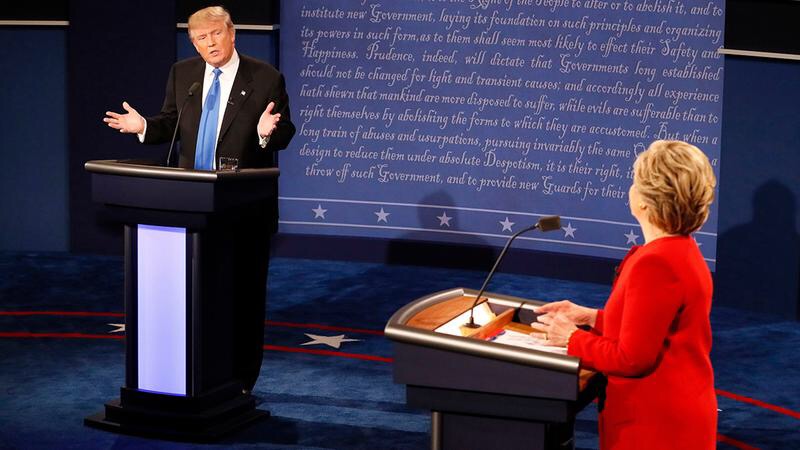
    The third debate was also replete with the by-now-familiar routine of name calling, innuendoes and interruptions. The experienced Hillary Clinton has emerged as more rationale and logical but in the universe of wisecracks and smart comebacks, Donald Trump kept his supporters interested in his prospects with a series of non-sequiturs laced with caustic personal comments. Opinion polls give Hillary a decisive lead but given his numerous comebacks despite being repeatedly cornered, Trump remains in the hunt.

    The three general Presidential debates have failed to throw up a winner. The saving grace of the third debate held in the fun city of Los Angeles was its intermittent focus on substantive policy issues. For once, both candidates engaged with each other on immigration, gun control, national debt and abortion. The unpredictable, spontaneous and boorish Trump along with the suave, rehearsed, hard-as-nails Hillary have ensured an audience comeback for the Presidential debates. In the earlier two debates, the audience was none the wiser about the candidates’ ability to govern. Los Angeles was no exception though the New York and Washington debates left an even more bitter after-taste.

    The third debate will be remembered for Trump’s “nasty woman” broadside against Hillary and his use of the term “bad Hombres”. This was a continuation of the previous two contests. All that remained in the end was bitter name calling. These have been poor advertisements for Brand US Democracy. Washington’s attempts to foist their version of democracy on Afghanistan, Iraq or Libya have spectacularly failed. The preponderance of personal showdowns in the debates suggests it is not much to talk about at home as well. The level is unlikely to get better as three weeks of take-no-prisoners style of campaigning lies ahead. More bitterness is in store as debates have exposed skeletons in the closet of both candidates. A cherished tradition since 1960, the debates have now become part of the US TV’s entertainment fixtures. It now needs a recast.

  • Forces moving ‘faster than expected’ on Mosul: Iraq PM

    Forces moving ‘faster than expected’ on Mosul: Iraq PM

    PARIS (TI): Iraqi forces are “advancing faster than expected” in a major offensive to recapture Mosul from Islamic State jihadists, Iraqi Prime Minister Haider al-Abadi said on Oct 20.

    “We are advancing faster than we had expected and planned,” Abadi said, speaking on a videoconference link to an international meeting cohosted by France and Iraq on the future of Mosul following the start of the offensive this week.

    French Defence Minister Jean-Yves Le Drian had warned on Tuesday that the battle to retake Iraq’s second-biggest city could take “months”.

    French President Francois Hollande told today’s meeting that the jihadists were already fleeing to Raqa, their stronghold in neighbouring Syria.

    “We can’t afford mistakes in the pursuit of the terrorists who are already leaving Mosul for Raqa,” Hollande said, adding: “We cannot allow those who were in Mosul to evaporate.”

    The long-awaited offensive on Mosul was launched on Monday, with some 30,000 troops involved in Iraq’s largest military operation since the pullout of US troops in 2011.

    Representatives from around 20 countries including the US, Turkey, Gulf states and EU member states are attending the Paris meeting co-chaired by French Foreign Minister Jean-Marc Ayrault and his Iraqi counterpart Ibrahim al-Jaafari.

    Today’s talks come ahead of a meeting in Paris next Tuesday of the coalition’s defence ministers to assess progress in the Mosul offensive. US Defence Secretary Ashton Carter will be among 13 ministers at the talks, an aide to Le Drian said. (AFP)

  • Russia extends Aleppo truce by 24 hours: Defence minister

    Russia extends Aleppo truce by 24 hours: Defence minister

    MOSCOW (TIP): Russia’s defence minister said Oct 20 that Moscow was extending a “humanitarian pause” in Aleppo scheduled to end at 1600 GMT by a further day.

    On the order of President Vladimir Putin, “a decision was made to extend the ‘humanitarian pause’ by 24 hours,” minister Sergei Shoigu said in a statement, adding that Syrian authorities had agreed to the extension.

    Shoigu did not specify when the extended truce would end. The UN said earlier it had received a pledge from Moscow to extend it until Saturday.

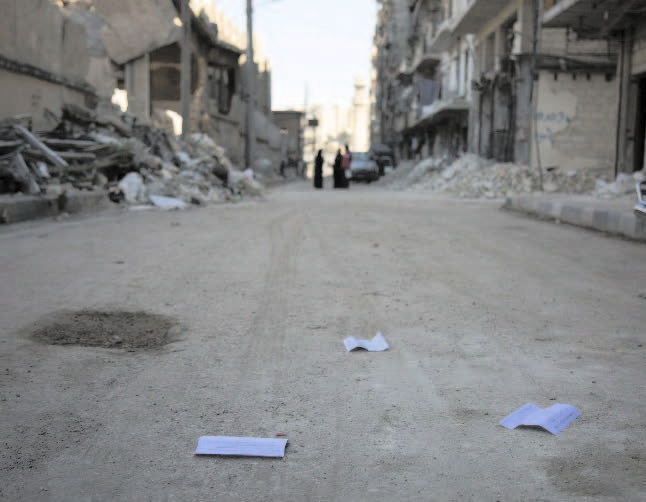
    Russia, facing growing criticism of the brutal Moscow-backed assault on the city, said this week that its forces and Syrian regime troops would briefly halt fire in Aleppo on Thursday.

    Moscow said Tuesday that Russian and Syrian warplanes had stopped bombing Aleppo to pave the way for the humanitarian truce.

    The Russian defence ministry has said the ceasefire would enable civilians and armed rebels to leave the city’s rebel-held east through six corridors.

    After Syria talks with the French and German leaders, Putin said Thursday that Russia intended to extend the halt in its air strikes against Aleppo “as far as possible.”

    The UN said it hoped to carry out the first medical evacuations from Aleppo on Friday, after having received clearance from all warring parties and a pledge from Russia to extend the truce until Saturday.

    The West has accused Moscow of perpetrating potential war crimes in Aleppo through indiscriminate bombing to support Syrian government efforts to retake total control over the city. (PTI)

  • Iraqi special forces join Mosul offensive against IS

    Iraqi special forces join Mosul offensive against IS

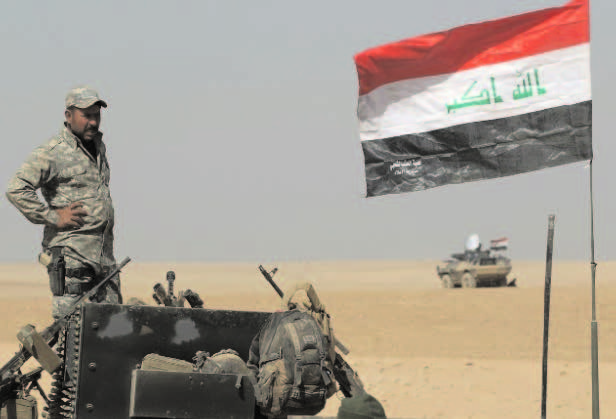
    KHAZER (TIP): Iraqi special forces joined the Mosul offensive on Oct 20 with a pre-dawn advance on a nearby town held by the Islamic State group, encountering heavy fire.

    Major general Maan al-Saadi said the elite Counterterrorism Forces advanced on the town of Bartalla with the aid of US-led coalition airstrikes and heavy artillery on the fourth day of a massive operation to retake Iraq’s second-largest city.

    The special forces are expected to lead the way into Mosul, where they will face fierce resistance in an urban landscape where IS militants are preparing for a climactic battle.

    The offensive is the largest operation launched by Iraqi forces since the 2003 US-led invasion. It is expected to take weeks, if not months.

  • Pentagon confronts a new threat from ISIS: Exploding drones

    Pentagon confronts a new threat from ISIS: Exploding drones

    WASHINGTON (TIP): Kurdish forces fighting the Islamic State in northern Iraq last week shot down a small drone the size of a model airplane. They believed it was like the dozens of drones the terrorist organization had been flying for reconnaissance in the area, and they transported it back to their outpost to examine it.

    But as they were taking it apart, it blew up, killing two Kurdish fighters in what is believed to be one of the first times the Islamic State has successfully used a drone with explosives to kill troops on the battlefield.

    In the past month, the Islamic State has tried to use small drones to launch attacks at least two other times, prompting US commanders in Iraq to issue a warning to forces fighting the group to treat any type of small flying aircraft as a potential explosive device.

    The Islamic State has used surveillance drones on the battlefield for some time, but the attacks — all targeting Iraqi troops — have highlighted its success in adapting readily accessible technology into a potentially effective new weapon. US advisers say drones could be deployed against coalition forces by the terrorist group in the battle in Mosul. For some US military analysts and drone experts, the episodes confirmed their view that the Pentagon — which is still struggling to come up with ways to bring down drones — was slow to anticipate that militants would turn drones into weapons.

    “We should have been ready for this, and we weren’t,” said PW Singer, a specialist on robotic weaponry at New America, a think tank in Washington.

    Military officials said that the Pentagon has dedicated significant resources to stopping drones but that few Iraqi and Kurdish units have been provided with the sophisticated devices that US troops have to disarm them. The officials said they have ordered the Pentagon agency in charge of dealing with explosive devices — known as the Joint Improvised-Threat Defeat Organization — to study ways to thwart hostile drones. This summer, the Pentagon requested an additional $20 million from Congress to help address the problem.

    In recent months, the CIA and the Defense Intelligence Agency both rushed to complete classified assessments about the Islamic State’s drone use. And the secretary of the Army, Eric Fanning, recently assigned a special office he had created to respond to emerging threats and to study how to stop drones. Unlike the US military, which flies drones as large as small passenger planes that need to take off and land on a runway, the Islamic State is using simpler, commercially available drones such as the DJI Phantom, which can be purchased on Amazon. The group attaches small explosive devices to them, essentially making them remotely piloted bombs.

    “This is an enemy that learns as it goes along,” said Lt. Gen. Sean MacFarland, the top US military commander in Iraq until August. Of the three known drone attacks in Iraq, only the one involving the Kurdish soldiers caused casualties. “The explosive device inside was disguised as a battery — there was a very small amount of explosives in it, but it was enough to go off and kill them,” said a senior US official who had been provided with a detailed report on the episode.

  • Defense secretary: US will sharpen ‘military edge’ in Asia

    Defense secretary: US will sharpen ‘military edge’ in Asia

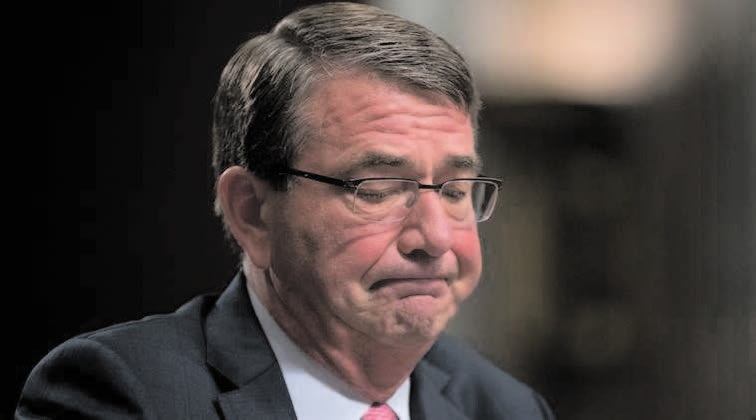
    SAN DIEGO (TIP): Defence secretary Ash Carter said on sept 29 the US will “sharpen our military edge” in Asia and the Pacific in order to remain a dominant power in a region feeling the effects of China’s rising military might.

    Carter made the pledge in a speech aboard the aircraft carrier USS Carl Vinson in port in San Diego.

    The Pentagon chief described what he called the next phase of a US pivot to Asia — a rebalancing of American security commitments after years of heavy focus on the Middle East.

    His speech, aimed at reassuring allies unsettled by China’s behavior in the South China Sea, came three days after he made remarks at a nuclear missile base in North Dakota about rebuilding the nuclear force. Those comments prompted a strong reaction from the Russian foreign ministry, which issued a statement saying it had interpreted Carter’s statement as a declared intention to lower the threshold for using nuclear weapons.

    Carter said the Pentagon will make its attack submarines more lethal and spend more to build undersea drones that can operate in shallower waters where submarines cannot.

    “The United States will continue to sharpen our military edge so we remain the most powerful military in the region and the security partner of choice,” he said. He added, “We’re going to have a few surprises as well,” describing them only as “leap-ahead investments.”

    With a broad complaint that China is “sometimes behaving aggressively,” Carter alluded to Beijing’s building of artificial islands in disputed areas of the South China Sea.

    “Beijing sometimes appears to want to pick and choose which principles it wants to benefit from and which it prefers to try to undercut,” he said. “For example, the universal right to freedom of navigation that allows China’s ships and aircraft to transit safely and peacefully is the same right that Beijing criticizes other countries for exercising in the region. But principles are not like that. They apply to everyone, and every nation, equally.”

    Carter’s speech was meant to set the scene for a meeting on Friday in Hawaii with his counterparts from the 10 member countries of the Association of Southeast Asian Nations, or ASEAN. The association focuses mainly on trade issues, but in recent years, with US encouragement, has sought to engage in a range of defence and military issues. The US is not a member of the organization but has sought to use it as a forum for further developing security partnerships amid regional concern about China’s military buildup.

    On Carter’s flight from San Diego to Hawaii later on Sept 29, a senior defence official aboard the plane told reporters that Carter expects to hear concerns from some Southeast Asian ministers, including those from Singapore, Indonesia and the Philippines, about the threat they perceive from an expected return of extremists who have been fighting for the Islamic State group in Syria and Iraq.

    The official, who spoke on condition of anonymity under ground rules set by the Pentagon, said “hundreds” of IS fighters already have returned to Southeast Asia from Syria and Iraq and said up to 1,000 more may return as the Islamic State group faces increased military pressure.

    Carter has described Pentagon efforts to execute a “pivot” to Asia by shifting, or rebalancing, US forces and attention toward the Asia-Pacific region after a decade and a half of Mideast-focused strategies and operations.

    In April, he said he was putting “the best people and platforms forward to the Asia-Pacific” by increasing the number of US military personnel in the region and by sending and stationing advanced weapons system there. He said that includes F-22 and F-35 stealth fighter jets, P-8 Poseidon maritime surveillance aircraft, continuous deployments of B-2 and B-52 strategic bombers and the newest surface warfare ships like the amphibious assault ship USS America.

    Among the Asia problems that have arisen for the Pentagon since Carter last met with the region’s defence ministers is a sudden and steep deterioration in relations with the Philippines.

    When Carter visited the Philippines in April, he praised the strength of the partnership. He said his visit had inaugurated “a major new era in a longstanding alliance.” He was referring to the US-Philippines Enhanced defence Cooperation Agreement. “I’m proud to say this alliance is as close as it’s been in years.”

  • First Presidential Debate turns #Trump into a Lying Machine

    First Presidential Debate turns #Trump into a Lying Machine

    Readers: This is a strange Election where one has to vote for the lesser of two evils; this being said who would you vote for – someone who makes a mistake and admits it or the one who lies and lies more to cover the previous lie.

    November 8 will go down in history as the day “The World Stood Still”.

    By any equation, Hillary Clinton crushed Donald Trump in the first presidential debate.

    Trump was erratic, inconsistent and incoherent. He did not make a memorable case on any issue except perhaps his temperament (lol).

    Below are some of the things our good candidate Lied about in front of over 100 million viewers.

    • He lied about the loan his father once gave him.
    • He lied about his company’s bankruptcies.
    • He lied about his federal financial-disclosure forms.
    • He lied about his endorsements.
    • He lied about “stop and frisk.”
    • He lied about “birtherism.”
    • He lied about New York.
    • He lied about Michigan and Ohio.  
    • He lied about Palm Beach, Fla.
    • He lied about Janet Yellen and the Federal Reserve.
    • He lied about the trade deficit.
    • He lied about Hillary Clinton’s tax plan.
    • He lied about her child-care plan.
    • He lied about China devaluing its currency.
    • He lied about Mexico having the world’s largest factories.
    • He lied about the United States’s nuclear arsenal. 
    • He lied about NATO’s budget.
    • He lied about NATO’s terrorism policy.
    • He lied about ISIS.
    • He lied about his past position on the Iraq War.
    • He lied about his past position on the national debt.
    • He lied about his past position on climate change.
    • He lied about calling pregnancy an “inconvenience” for employers.
    • He lied about calling women “pigs.”
    • He lied about calling women “dogs.”
    • He lied about calling women “slobs.”

    So… who won the debate?

  • SAUDI SIGNALS AT RAISING OIL OUTPUT AHEAD OF FREEZE TALKS

    SAUDI SIGNALS AT RAISING OIL OUTPUT AHEAD OF FREEZE TALKS

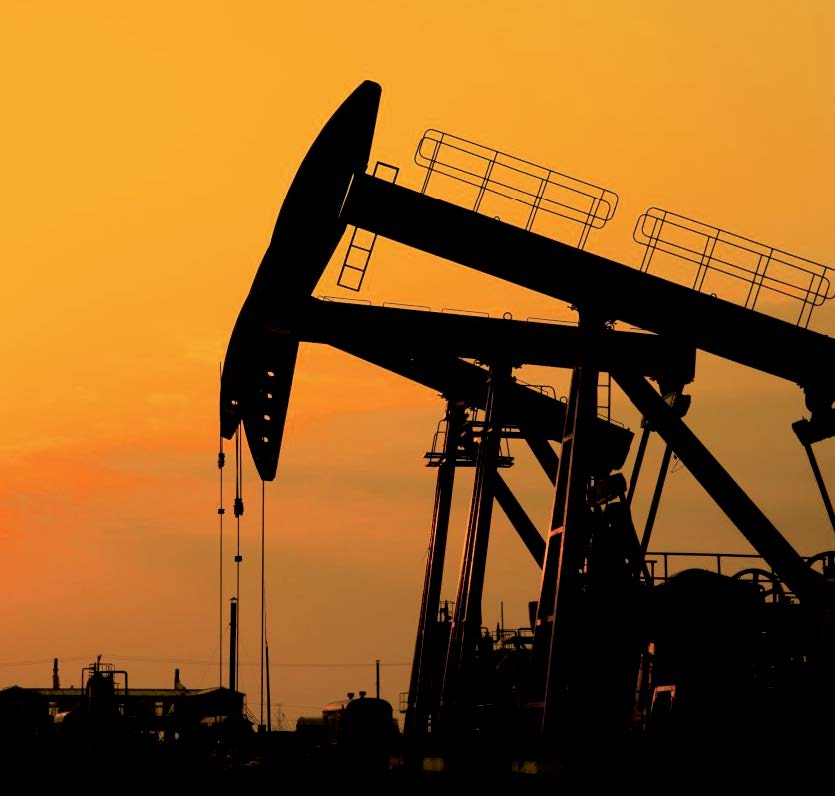
    MOSCOW/DUBAI (TIP): Saudi Arabia is sending signals that it could boost its crude oil supplies in August to a new record level, overtaking Russia, the world’s top oil producer, as it gets ready for tough talks next month for a global output freeze pact.

    Industry sources say the kingdom, already the world’s largest oil exporter, started to raise production from June, after holding it steady for the first half of the year, to meet rising seasonal domestic demand as well as higher export requirements.

    Higher production could give it more leverage during talks in September when both OPEC and non-OPEC producers are expected to revive a freeze deal to support oil prices, the sources say.

    Saudi Arabia appears to want higher prices, but agreeing a level to freeze supplies will be the main obstacle to a deal.

    Some analysts, however, said using hard negotiating tactics could backfire on Riyadh.

    “It would therefore be a very hard sell for Saudi Arabia to have other countries join a collective action plan, while it is the main source of supply increase – outside of Iran post sanctions,” Olivier Jakob at Petromatrix said in a note.

    In June, Saudi Arabia pumped 10.55 million barrels of oil per day, and lifted production to 10.67 million bpd in July, the highest in its history.

    Now the sources expect the OPEC heavyweight to raise its crude supplies to another record this month as demand inside and outside the kingdom looks healthy.

    One source from outside OPEC said the Saudis were quietly telling the market that output could rise further in August to as high as 10.8-10.9 million bpd.

    Last week, Saudi Energy Minister Khalid al-Falih sought to clarify why the kingdom hiked its production in July in an oversupplied market. In a statement, Falih explained the rise was due to rising seasonal domestic demand and customers asking for more oil worldwide.

    “Despite the bearish sentiment engulfing the market, we still see strong demand for our crude in most parts of the world, especially as supply outside OPEC has been declining fast, supply outages increasing, and global demand still showing signs of strength,” he told state news agency SPA.

    The amount of crude supplied to the market in July was 10.75 million bpd, above actual output as Saudi drew down the additional barrels from its huge inventories, SPA reported.

    Oil prices dropped to $27 per barrel in January from as high as $115 in mid-2014, hitting the budgets of oil exporters worldwide, including Saudi Arabia, and resulting in a record fiscal deficit for Riyadh.

    A previous attempt to freeze output at January levels to support prices collapsed in April after Saudi Arabia said it wanted all producers, including Iran, to join the initiative.

    But since the appointment of Falih in April, Saudi Arabia has taken a softer tone towards Iran at OPEC.

    OPEC sources say the group will probably revive talks on freezing output when it meets non-OPEC nations next month in Algeria as Riyadh appears to want higher prices.

    In January when the freeze idea first emerged, Saudi Arabia was producing 10.2 million bpd.

    The Saudis are not alone in raising production.

    Iranian oil minister Bijan Zanganeh said in parliament last week he wanted to take the country’s output to 4.6 million bpd within five years – well above the current 3.6 million bpd and pre-sanction levels of 3.8 million-4 million bpd.

    Iraq, OPEC’s second largest producer, which said in April it would support the freeze deal, has since agreed new contract terms with oil majors to develop its massive fields, which will allow output to rise further next year by up to 350,000 bpd.

    Russia, which back in April was ready to freeze production in the first coordinated action with OPEC since 2001, has also signalled it is no longer very keen on a dialogue to freeze output and would continue boosting production.

    Its output currently hovers near an all-time high of 10.85 bpd and Russian officials expect it to edge up further next year.

  • Slain Sikh Marine’s Family Hurt by Donald Trump’s Remarks About Khans

    Slain Sikh Marine’s Family Hurt by Donald Trump’s Remarks About Khans

    LOS ANGELES (TIP): Voicing support for a fallen Pakistani-origin American soldier’s parents who had come under attack from Donald Trump, the family of a slain Sikh Marine has said they were “hurt” by his remarks and it amounted to playing “political games.”

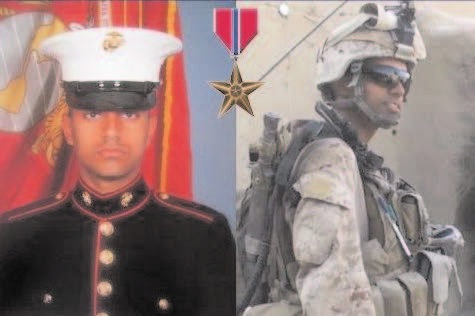
    Five years after he was shot to death by enemy fighters in Afghanistan, Marine Cpl. Gurpreet Singh’s bedroom is still decorated in red, white and blue and his dress uniform hangs in his closet with medals pinned to it.

    His father, Nirmal Singh, keeps a poster on a wall in his home in Antelope, Calif., calling the corporal an American hero. Singh and his family have spent much of the past week watching the immigrant parents of another fallen military service member spar with Republican presidential candidate Trump.

    “It hurts. I don’t know why. It’s like they’re playing political games with a Gold Star family,” Nirmal told The Sacramento Bee.

    Gold Star families are immediate relatives of U.S. Armed Forces members who died in battle or in support of certain military activities.

    Many military families around the country have been surprised by Trump’s criticism of the parents of the late Army Captain Humayun Khan after they endorsed Democratic presidential hopeful Hillary Clinton and rebuked the Republican presidential candidate at the Democratic National Convention in Philadelphia last month.

    Trump’s tactics drew condemnation from leaders of the groups Veterans of Foreign Wars and Iraq and Afghanistan Veterans of America. Gold Star Wives and the grief-counseling nonprofit Tragedy Assistance Program for Survivors also stepped in to criticize the business tycoon.

    The Singhs identify with the Khans, a Muslim family of Pakistani descent, who, like them, lost a proud son to their adopted nation’s long wars.

    Nirmal Singh noted that he has often met other immigrants when he gets in touch with Marines.

    “Religion does not matter. They love their country. That’s why they go and they should be respected,” Nirmal said.

    Unlike Trump, the Singhs did not question why Captain Khan’s mother stood silent at the convention next to her husband, Khizr.

    Cpl. Gurpreet Singh’s mother, Satnam Kaur, likely would do the same.

    “When (Trump) said something about (Capt. Khan’s) mother, that insulted my mother,” Cpl. Singh’s 28-year-old sister, Manpreet Kaur, was quoted as saying.

    However, the election has also resulted in military families turning against each other.

    “It’s like they’re trying to divide even Gold Star families. We should be united,” Manpreet said.

  • INDIAN MUSLIM GROUPS SAY #ISIS IS ‘UN-ISLAMIC’; TOOL OF #ISLAM’S ENEMIES

    INDIAN MUSLIM GROUPS SAY #ISIS IS ‘UN-ISLAMIC’; TOOL OF #ISLAM’S ENEMIES

    HYDERABAD (TIP): Terming IS as a tool in the hands of anti-Islam forces, Muslim organizations representing all schools of Islamic thought, July 8, condemned the terror attack in the holy city of Madinah, resenting it as an attack on Islam and all Muslims of the world.

    Addressing a massive public meeting organized by Majlis-e-Ittehadul Muslimeen, leaders and religious scholars said the attack by the so-called Islamic State near the Prophet’s mosque was the handiwork of enemies of Islam.

    A resolution passed unanimously at the meet strongly condemned attacks in Saudi Arabia and other parts of the world, during the holy month of Ramadan.

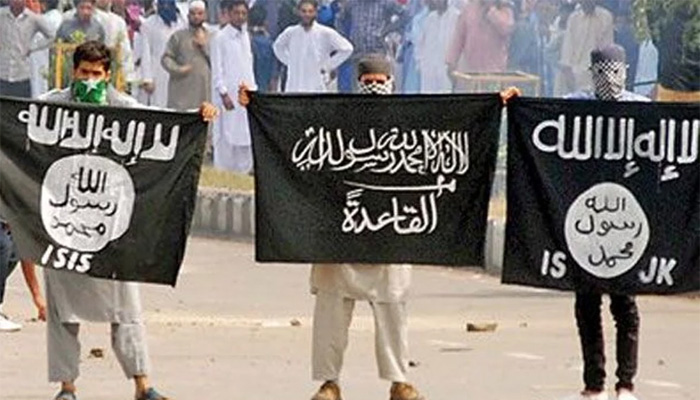
    “The ISIS has nothing to do with Islam and its principles and tenets, and, in fact, all its activities and terror attacks are meant to strike at the very roots of Islam. The ISIS is not only un-Islamic but acts as a tool in the hands of Western forces who are enemies of Islam. In the garb of Muslims, they are defaming Islam,” said the resolution.

    “This band of ‘neo-Kharijis’ had the audacity to proclaim itself to be a so-called world-wide caliphate and appointing a self-styled caliph in 2014. These armed thugs have been letting loose a reign of terror in some parts of Iraq and Syria and spreading their subversive activities to other countries in the Gulf and North Africa, as well as to other Muslim nations and European, Asian and African countries,” it added.

    It said during Ramadan, ISIS killed innocent Muslims and non-Muslims in terror attacks in Baghdad, Istanbul and Dhaka, killing 300 persons and injuring scores of others. “They sought to disturb the peace and tranquility of one of Islam’s holiest sites -the Prophet’s mosque at Madinah. The suicide bomber was stopped in his tracks outside the mosque complex and four Saudi security men were martyred and five were injured.”

    “The perpetrators of this violence at the holy city have incurred the wrath of Almighty Allah and the world will soon witness the destruction of these unholy men who are making attempts to harm Islam and demonize the Muslims,” the resolution said.

    It noted that through its sustained but distorted propaganda on the social media, the IS has been making attempts to spread its nefarious designs and tentacles to various Muslim and non-Muslim countries, by seeking to recruit youth and enlist the support of fringe terror groups operating in those countries.

    “This massive gathering of Indian Muslims appeals to their co-religionists, especially the youth, to be wary of the propaganda and activities of the ISIS, and do their utmost to foil the nefarious attempts of this anti-Islamic group to disturb peace and tranquility and create ill-will and hatred against the Muslims among their compatriots in this great country,” it added.

    Prominent among those who addressed the meeting were MIM chief Asaduddin Owaisi, Mufti Khaleel Ahmed of Jamia-e-Nizamia, Syed Mohammed Qubool Pasha of Majlis-e-Ulema-e-Deccan, Hafiz Peer Shabbir Ahmed of Jamiat-ul-Ulema, Maulana Khaled Saifullah Rahmani, secretary, All India Muslim Personal Law Board; Hamed Mohammed Khan of Jamaat-e-Islami, Raheemuddin Ansari of A United Muslim Forum, Safi Ahmed Madani of Jamiat-ul-Ahle-Hadees, Shia cleric Moulana Syed Nisar Hussain Hyder Aga, and Shaikh Mansoor Bhai of the Dawoodi Bohra community.

  • Pentagon confirms striking IS chemical weapons capabilities

    Pentagon confirms striking IS chemical weapons capabilities

    WASHINGTON (TIP): The Pentagon confirmed on March 10 that intelligence from a captured Islamic State chemical weapons expert had led to US-led coalition airstrikes against the group’s chemical weapons production facilities.

    Calling Sulayman Dawud al-Bakkar, also known as Abu Dawud, as IS’s “emir of chemical and traditional weapons manufacturing”, Pentagon spokesman Peter Cook said at a briefing that his capture by US special forces in Iraq in February offered information that yielded almost immediate results, Xinhua reported.

    “The information has resulted in multiple coalition airstrikes that have disrupted and degraded Isis’ ability to produce chemical weapons, and will continue to inform our operations into the future,” said Cook.

    Dawud was transferred on Thursday into Iraqi custody after interrogation, added Cook.

    The spokesman refused to elaborate on the airstrikes. He acknowledged that at this point the US-led coalition was unable to curtail IS’s chemical weapons capability entirely, and additional operations would be carried out.

  • OIL PRICES CLIMB AS IRAN ENDORSES OIL OUTPUT CAP

    OIL PRICES CLIMB AS IRAN ENDORSES OIL OUTPUT CAP

    SINGAPORE(TIP) : Crude futures rose in Asian trade on Thursday after Iran welcomed plans by Russia and Saudi Arabia to cap production, although analysts said the move would not lead to any output cuts and Tehran offered no action of its own.

    After oil prices rose in the previous session as much 8 percent, commentators suggested markets had overreacted to Iran’s support for the caps and said the Russian-Saudi move would not likely reduce the global surplus.

    “I share the consensus view that producers are unlikely to reach an agreement (on cuts), the rationale being the need to satisfy two conditions,” said Ric Spooner, chief market analyst with Sydney’s CMC Markets.

    “First, any price gains must offset losses achieved from volume cuts – production cuts must be meaningful -sufficiently large to achieve a substantial price increase. And they will have to involve everybody – all the major (producer) players. That will be difficult to achieve,” he said.

    Brent futures rose 42 cents to $34.92 a barrel by 0555 GMT, having closed 7.2% higher in the previous session after hitting an intraday high of $34.99.

    US crude gained 50 cents to $31.16 a barrel, having finished 5.6% higher in the previous session after touching a high of $31.49.

    Oil prices would likely remain volatile, Spooner said, as traders and investors reacted to news and rumours about curbs on output growth and possible cuts in production.

    Iranian Oil Minister Bijan Zanganeh met counterparts from Venezuela, Iraq and Qatar on Wednesday but did not say if Iran would cap its output in keeping with the move by Russia, Saudi Arabia and Iraq.

    Source: Reuters

  • Oil Prices may rise as Top oil producers agree to freeze output

    Oil Prices may rise as Top oil producers agree to freeze output

    Russia, Saudi Arabia, Qatar and Venezuela are ready to freeze oil production at January’s level if other producers do the same.

    The agreement came after a meeting in Doha on Tuesday.

    Oil prices have dropped below $30 a barrel in recent months, a fall of 70 percent since 2014.

    The challenge would be to get other producing countries, including Iran, to freeze production as well.

    Iran’s IRNA news agency said on Sunday the country had exported its first crude shipment to Europe since it reached a landmark deal last year with world powers.

    IRNA quoted Rokneddin Javadi, Iran’s deputy oil minister, as saying the shipment, the first in five years, marked “a new chapter” in Iran’s oil industry.

    Javadi said Iran had already reached an agreement to export oil to France, Russia and Spain.

    Iran said in January that it planned to add to its production, which stands at 3.1 million barrels per day (bpd) despite the drop in price, and should not be blamed for further price falls.

    Saadallah al Fathi, a former adviser to Iraq’s Ministry of Oil and former head of the Energy Studies Department, OPEC Secretariat, told Al Jazeera that freezing output at January’s levels was not going to immediately cut supplies.

    “There is already too much oil on the market,” Fathi said.

    “I don’t think freezing production is going to mean anything, unless other producers come into the picture. Within the next few weeks or few months I think there will be a flurry of activity to get other producers on board.”

    Source: Al Jazeera and agencies

  • New US intelligence report says Islamic State weaker

    New US intelligence report says Islamic State weaker

    WASHINGTON (TIP): Islamic State has as many as 25,000 fighters in Syria and Iraq, down from a previous estimate of up to 31,000, according to a US intelligence report revealed by the White House on February 4.

    US officials cited factors such as battlefield casualties and desertions to explain the roughly 20 percent decrease in fighters, and said the report showed a US-led campaign to crush Islamic State was making progress.

    The new intelligence estimate “means they continue to be a substantial threat, but the potential numbers have declined,” said White House spokesman Josh Earnest.

    “ISIS has sustained significant casualties,” Earnst said.

    Ground fighting efforts by coalition partners of the United States are having an effect in the conflict against Islamic State, also known as ISIS or ISIL, he said.

    U.S.-backed Iraqi security forces and tribal militias and moderate opposition groups in Syria have contributed. So too has a U.S.-led air campaign that has launched more than 10,000 strikes against the Islamist extremists, Earnest said.

    Finally, international efforts are beginning to stem the flow of foreigners seeking to join the movement.

    “ISIL is having more difficulty than they’ve had before in replenishing their ranks, and we have long been aware of the need of the international community to cooperate to stop the flow of foreign fighters to the region,” said Earnest.

    The new intelligence report of 19,000-25,000 Islamic State fighters in Iraq and Syria compares to 2014 estimates of 20,000-31,000 fighters.

    “The decrease reflects the combined effects of battlefield deaths, desertions, internal disciplinary actions, recruiting shortfalls, and difficulties that foreign fighters face traveling to Syria,” said Emily Horne, a spokeswoman for the National Security Council.

    Some North African jihadists who might otherwise have traveled to Syria to join Islamic State may instead have heeded calls by the movement’s leadership to head to Libya, where the Islamists are fighting to expand their grip on territory on the Mediterranean coast.

    The intelligence report did not account for the Islamic State’s affiliates in South Asia, other parts of the Middle East and North Africa, where its Libyan branch is expanding.

    There appear to be conflicting U.S. estimates of the strength of the movement’s Libyan affiliate. Defense officials put the number at some 3,000, while other U.S. officials put it at 5,000-6,000.

    (PTI)

  • 4 Indian Americans Nominated To Democratic Convention Standing Committees

    4 Indian Americans Nominated To Democratic Convention Standing Committees

    Four eminent Indian-Americans, including two women, have been nominated to the Democratic Party’s 2016 Convention Standing Committees which would formally announce its candidate for the presidential polls.

    Smita Shah
    Smita Shah

    Topping the list of Indian-Americans is Smita Shah, president and CEO of Chicago-based Spaan Tech, who has been nominated as vice chair of the Rules Committee.

    Shefali Razdan Duggal
    Shefali Razdan Duggal

    One of the top fund raisers for President Barack Obama and now Hillary Clinton, California-based Shefali Razdan Duggal has been nominated a member of the Rules Committee.

    Dr Sreedhar Potarazu
    Dr Sreedhar Potarazu

    Renowned ophthalmologist and entrepreneur, Dr Sreedhar Potarazu has been nominated to the Credentials Committee, according to the list released by the Democratic National Committee (DNC) Chairwoman Debbie Wasserman Schultz.

    Saif Khan
    Saif Khan

    Saif Khan, an Iraq war veteran who had served as a Combat Engineer in the Iraqi city of Mosul as part of Operation Iraqi Freedom, was nominated to the Rules Committee. He hails from Mysore and currently lives in Washington, DC.

    DNC rules provide for the Chair to appoint 75 Party Leader and Elected Official Members to the three Convention Standing Committees to be held in Philadelphia in July, which would formally announce party’s presidential candidate.

    These Party Leader and Members serve in addition to and together with the over 160 members that are elected in every state to those same committees.

    “This slate represents the great variety of perspectives, backgrounds, and experiences that make up our party. We wanted to make sure that the diversity of our party was reflected at the highest levels in terms of race, gender, age and geography,” Ms Schultz said.

    A Clinton White House staffer, Ms Shah was a delegate at the 1996 and 2004 Democratic National Conventions and was on the DNC’s Rules Committee in 2000 and 2004.

    In 2012, she become the first Indian-American to serve as a Democratic National Convention parliamentarian.

    Ms Duggal is a presidential appointee to the US Holocaust Memorial Council, which supervises the United States Holocaust Memorial Museum, for a term expiring in January 2018.

    She is one of the top fund raiser for the Clinton campaign and also serves on the National Finance Committee for Hillary for America, Clinton’s 2016 presidential campaign.

    Dr Potarazu is the founder of VitalSpring Technologies Inc., a privately held enterprise software company focusing on providing employers with applications to empower them to become more sophisticated purchasers of health care.

    Saif Khan is the Founder & Managing Director of Khanections. He is one of the founders of American Veterans Committee and a member of the American Legion, Iraq and Afghanistan Veterans of America and a life member of the Veterans of Foreign Wars.


    (CORRECTION: An earlier version of this article incorrectly referred to Mr. Saif Khan, as a Pakistani-American appointment to one of the Democratic Convention Standing Committees. This version has been corrected – 01/27/2016 – 12:09:30 PM EST.)

  • 14,000 Indians Overstayed In US In 2015

    14,000 Indians Overstayed In US In 2015

    WASHINGTON:  Over 14,000 of the 8.8 lakh Indians who travelled to the US on visitor or business visa in 2015 overstayed in the country, according to official figures.

    The data provided by the Department of Homeland Security (DHS) said that 14,348 Indians overstayed in the US in 2015.

    In 2014, of the 7.6 lakhs Indians who were supposed to leave the country before the expiry of their B1-B-2 visas, 11,653 of them overstayed in the US, it said.

    Overstaying means a non-immigrant who was lawfully admitted to the US for an authorised period but stayed or remains in the country beyond his or her lawful admission period.

    According to the “Entry/Exit Overstay Report” released by the DHS, in fiscal 2015, of the nearly 45 million non-immigrant visitor admissions through air or sea ports of entry that were expected to depart last year, 527,127 individuals overstayed their admission, for a total overstay rate of 1.17 per cent.

    In other words, 98.83 per cent had left the US on time and abided by the terms of their admission, the report said.

    The report does not include student on F-1 visa or those who arrived on work visas like H-1B.

    In FY 2015, of the nearly 45 million nonimmigrant visitor admissions through air or sea ports of entry that were expected to depart in FY 2015, DHS determined that 527,127 individuals overstayed their admission, for a total overstay rate of 1.17 per cent.

    In other words, 98.83 per cent had left the US on time and abided by the terms of their admission.

    The report breaks the overstay rates down further to provide a better picture of those overstays that remain in the US beyond their period of admission and for whom CBP has no evidence of a departure or transition to another immigration status, DHS said in a statement.

    At the end of FY 2015, the overall Suspected In-Country Overstay number was 482,781 individuals, or 1.07 per cent.

    Due to further continuing departures by individuals in this population, by January 4, 2016, the number of Suspected In-Country overstays for FY 2015 had dropped to 416,500, rendering the Suspected In-Country Overstay rate as 0.9 per cent, it said.

    In its report, DHS said a number of countries with ties to terrorism had significant numbers of nationals still in the US accounted for by the federal government: 1,435 from Pakistan, 681 from Iraq, 564 from Iran, 440 from Syria, 219 from Yemen, 219 from Afghanistan, and 56 from Libya.

  • United States begins Implementation of Changes to the Visa Waiver Program

    United States begins Implementation of Changes to the Visa Waiver Program

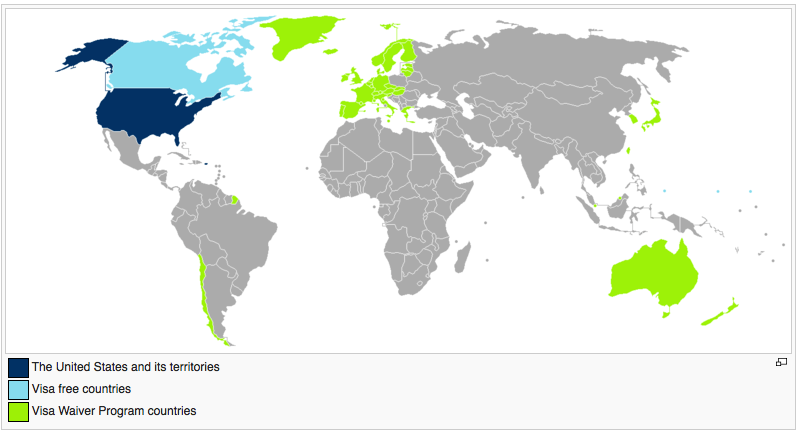
    WASHINGTON (TIP): The United States began, January 21, implementing changes under the Visa Waiver Program Improvement and Terrorist Travel Prevention Act of 2015 (the Act). U.S. Customs and Border Protection (CBP) welcomes more than a million passengers arriving to the United States every day and is committed to facilitating legitimate travel while maintaining the highest standards of security and border protection. Under the Act, travelers in the following categories are no longer eligible to travel or be admitted to the United States under the Visa Waiver Program (VWP):

    Nationals of VWP countries who have traveled to or been present in Iran, Iraq, Sudan, or Syria on or after March 1, 2011 (with limited exceptions for travel for diplomatic or military purposes in the service of a VWP country).

    Nationals of VWP countries who are also nationals of Iran, Iraq, Sudan, or Syria.

    These individuals will still be able to apply for a visa using the regular immigration process at our embassies or consulates. For those who need a U.S. visa for urgent business, medical, or humanitarian travel to the United States, U.S. embassies and consulates stand ready to process applications on an expedited basis.

    Beginning January 21, 2016, travelers who currently have valid Electronic System for Travel Authorizations (ESTAs) and who have previously indicated holding dual nationality with one of the four countries listed above on their ESTA applications will have their current ESTAs revoked.

    Under the new law, the Secretary of Homeland Security may waive these restrictions if he determines that such a waiver is in the law enforcement or national security interests of the United States. Such waivers will be granted only on a case-by-case basis. As a general matter, categories of travelers who may be eligible for a waiver include:

    Screen Shot 2016-01-22 at 6.59.34 PMIndividuals who traveled to Iran, Iraq, Sudan or Syria on behalf of international organizations, regional organizations, and sub-national governments on official duty:

    • Individuals who traveled to Iran, Iraq, Sudan or Syria on behalf of a humanitarian NGO on official duty;
    • Individuals who traveled to Iran, Iraq, Sudan or Syria as a journalist for reporting purposes;
    • Individuals who traveled to Iran for legitimate business-related purposes following the conclusion of the Joint Comprehensive Plan of Action (July 14, 2015); and
    • Individuals who have traveled to Iraq for legitimate business-related purposes.

    Again, whether ESTA applicants will receive a waiver will be determined on a case-by-case basis, consistent with the terms of the law. In addition, we will continue to explore whether and how the waivers can be used for dual nationals of Iraq, Syria, Iran and Sudan.

    Any traveler who receives notification that they are no longer eligible to travel under the VWP are still eligible to travel to the United States with a valid nonimmigrant visa issued by a U.S. embassy or consulate. Such travelers will be required to appear for an interview and obtain a visa in their passports at a U.S. embassy or consulate before traveling to the United States.

    The new law does not ban travel to the United States, or admission into the United States, and the great majority of VWP travelers will not be affected by the legislation.

    An updated ESTA application with additional questions is scheduled to be released in late February 2016 to address exceptions for diplomatic- and military-related travel provided for in the Act.

    Information on visa applications can be found at travel.state.gov.

    Current ESTA holders are encouraged to check their ESTA status prior to travel on CBP’s website at esta.cbp.dhs.gov.

  • Sarah Palin endorses Donald Trump

    Sarah Palin endorses Donald Trump

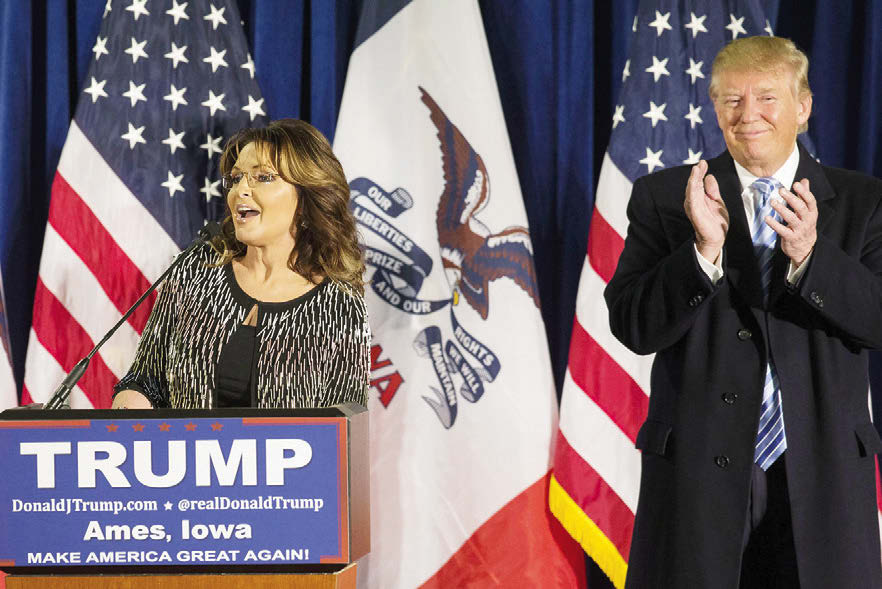
    AMES, IOWA (TIP): Republican presidential front-runner Donald Trump received a key endorsement Tuesday, January 19, from Tea Party darling and conservative heavy weight Sarah Palin, potentially giving the billionaire business-man a boost with some voters less than two weeks before voting begins with the Iowa caucuses.

    “Media heads are spinning,” she said after taking the stage at a Trump rally at Iowa State University in Ames. “This is going to be so much fun.”

    Palin is a former Alaska governor and was the running mate of Arizona Sen. John McCain in his 2008 bid for the White House. She said that with Trump as president, America would no longer apologize.

    “No more pussy-footing around,” she said, adding that Trump would allow the military to do its job and destroy the Islamic State in Iraq and the Levant (ISIL). “He’s going rogue left and right. That’s why he’s doing so well.” Her memoir was titled “Going Rogue” after a remark made by a McCain staffer who said she was off-message during the campaign.

    “I am greatly honored to receive Sarah’s endorsement,” Trump said in a statement announcing her support. “She is a friend and a high-quality person whom I have great respect for. I am proud to have her support.”

    He is in a tight contest with Sen. Ted Cruz of Texas for the support of Iowa Republicans, who lean conservative and whose evangelical Christians make up a major voting bloc.

    Joe Brettell, a Republican strategist in Texas, said he thought Palin would not help Trump much “beyond a jolt in the news cycle.”

    Lindsey Graham – a Republican senator from South Carolina said, “Sarah Palin can’t save Donald Trump from being crazy,” referring to some of Trump’s proclamations, such as a plan to bar Muslims from entering the U.S., which Graham said made Trump unelectable.

    Trump also received an endorsement from Aissa Wayne, the daughter of movie star John Wayne. Standing in front of a life-size rifle-toting model of the actor in full cowboy gear, Trump accepted her endorsement at the John Wayne Birthplace Museum in Winterset, Iowa.

    “America needs help, and we need a strong leader, and we need someone like Mr. Trump with leadership qualities, someone with courage, someone that’s strong, like John Wayne,” she said.

  • Saudi mission reopens after 25 years in Iraq

    Saudi mission reopens after 25 years in Iraq

    BAGHDAD (TIP): Saudi Arabia has reopened its embassy in Baghdad, with its ambassador submitting his credentials at the foreign ministry, after a closure that lasted 25 years.

    The kingdom had closed the embassy in 1990, after Saddam Hussein ordered an invasion of Saudi ally Kuwait.

    Iraqi foreign minister Ibrahim al-Jaafari on Thursday accepted the credentials of ambassador Thamir al-Sabhan. Both diplomats underlined the necessity for their countries to boost bilateral relations in all fields. Iraq has been balancing delicately amid the latest regional turmoil between Saudi and its regional rival Iran in the wake of the kingdom’s execution of a prominent Shia cleric.

    (AP)

  • Battle vs ISIS, battle for the Middle East

    Battle vs ISIS, battle for the Middle East

    ISIS or the Islamic State, also known as IS, ISIL or its Arab acronym, Da’esch, dominated the headlines for 2015. The year saw the terror group spread its hateful and vitriolic ideology beyond the borders of its “caliphate,” which encompasses large swathes of Iraq and Syria, as well as “provinces” in several Mideast and African countries.

    With millions of dollars in their pockets, and the Internet as their main channel to propagate evil, ISIS went “global” – with trained militants as well as radicalized individuals and groups carrying out the group’s mission to spread terror. Their targets ranged from a newspaper office, to a museum, from a concert hall to mosques, from military convoys to civilian planes. The toll: nearly a thousand people, from Paris to Beirut to San Bernardino.

    The spread of ISIS has further complicated the already twisted state of affairs in strife-torn Syria, already entering its fifth year in a civil war. World powers, in their attempt to untangle the mess and to gain influence in the region, bicker over which to tackle first: Bashar al-Assad, the iron-fisted dictator whose violent regime in many ways ignited the current conflict, or the terror group. Assad’s allies (namely Russia and Iran) are trying to have him stay put, while the US-led coalition wants him out.

    The year saw military movements from every side, with airstrikes targeting ISIS strongholds – and some say legitimate Syrian opposition groups. Countries around Syria and Iraq are also on their toes, with some nations such as Turkey serving as launch areas for military operations.

    Amid the mess, the peace process is still in the cards, despite several attempts to convene all sides in the past few months that yielded little results. Thanks to a landmark 18-month plan endorsed by the United Nations Security Council, the UN is preparing for another round of talks starting January 25, 2016.

  • THE RISE AND RISE OF ISIS

    THE RISE AND RISE OF ISIS

    ISIS ushered in 2015 with the terrifyingly typical displays of brutality which initially put the group in the international community’s crosshairs. They beheaded Japanese hostages, burned a Jordanian pilot alive in a cage and announced the death of American captive Kayla Mueller.

    The Sunni militants seized Ramadi in May and later the ancient city of Palmyra.

    David Phillips, a former senior adviser to the State Department on Iraq, said ISIS was “on a roll” at the beginning of the year.

    “They started off at a gallop,” explained Phillips, now director of the program on peace-building and human rights at Columbia University.

    But something was shifting as the year progressed.

    If 2014 was all taking and consolidating territory – Mosul, Tikrit and more – the seizures of Palmyra and Ramadi this year were overshadowed by losses on the ground. Key leaders were killed and territory slipped away.

    “In 2015, they’ve consistently had to abandon territory,” Phillips said.

    ISIS has been prevented from expanding operations in Iraq and Syria because of resistance they’ve encountered on the battlefield from Kurdish fighters backed by Western airstrikes, and Iran-backed militias, according to Phillips.

    “The caliphate has been restricted, hemmed in and is under more pressure now than it ever has been particularly with the start of the Russian airstrikes,” echoed Matthew Henman, head of IHS Jane’s Terrorism and Insurgency Center.

    But he and other analysts warned not to count ISIS out just yet: It’s important to note that the caliphate has survived another full year.

    “They remain hanging on,” Henman said. “They’re still in the game.”

    ISIS is still controlling “priority areas” in Syria and Iraq, Henman noted. The key cities of Fallujah, Ramadi, Mosul, Raqqa and Palmyra are still in ISIS hands despite billions of dollars worth of airstrikes against ISIS.

    “The group doesn’t need territory,” Henman added. “If it loses control of those cities it reverts back to insurgent operations – the threat doesn’t go away.”

    That’s also because ISIS in 2015 has experienced a great deal of international expansion, with operations in Libya, Yemen, Saudi Arabia, Pakistan, Egypt and Afghanistan. Even if ISIS is wiped out in Iraq and Syria, Henman warned it’s still got its hooks into other places.

    “That ideology now is something which can’t just be bombed away,” he said.

    ISIS appears to be driving that point home by increasing its attacks internationally and outside of their strongholds in Iraq and Syria, showing that it can strike out and hit its adversaries on their home turf.

    The group claimed responsibility for massive terror attacks in Tunisia, France, Yemen and the downing of a Russian passenger plane.

    “They’ve shown a consistent ability to project their terrorist goals,” Phillips said. “It’s a stark reminder that you’re not safe anywhere.”

    Those attacks outside Iraq and Syria serve several purposes, analysts said.

    First, it’s direct retribution for Western airstrikes. It also serves as a distraction from whatever losses ISIS may be suffering, according to Henman.

    “It’s that show of strength to inspire fear into the heart of their enemies but also to buoy up their supporters at a time when they’re coming under pressure,” Henman said. “It’s all about distracting away from their losses and reinforcing that narrative of continued expansion and momentum and winning victories.”

    It’s also partially about pulling the West further into the fight, Henman and other experts said.

    Analysts note that the first thing France did in response to the Paris attacks was to intensify airstrikes – which might play right into the ISIS-driven narrative.

    “They’re targeting farther abroad because they’re trying to draw the West into a major conflict and use that as a basis for a third world war,” Phillips said. “Their ideology is about the end of days and civilization as we know it being destroyed.”

    Whatever the goal – baited or otherwise -external actors have gotten more directly involved in the battle against ISIS this year.

    The killing of the Jordanian pilot drew Amman into the fight against ISIS. Moscow intensified airstrikes against ISIS following the downing of the Russian passenger plane. The U.S. said it was sending special operations forces into Syria and the Paris attacks provoked further action, confirming longstanding fears about the potential of returned foreign fighters to carry out mass-casualty attacks in the West.

    “It underlined that that threat is very real… It has catalyzed nations into acting,” Henman said.

    It also looks like the end of the year could hit ISIS particularly hard: an offensive against ISIS to retake Ramadi got under way on Tuesday and Iraqi forces have continued to advance in the days since.

    Still, ISIS released a new audio message purportedly from its leader on Saturday mocking the U.S. for not putting boots on the ground. Abu Bakr al-Baghdadi said in the clip that airstrikes against ISIS were failing and the group was thriving.

    It’s become increasingly difficult to ascertain how ISIS really is faring in terms of financing and fighter strength, analysts said. The group is particularly good at managing its image and keeping their propaganda tightly controlled.

    But while the various coalitions against ISIS have been criticized for a lack of cohesion or strategy, analysts note their impact can’t be discounted.

    “There’s a lot going on in terms of the lack of unity by the international community but nevertheless ISIS has been hit quite severely,” said Dr. Nelly Lahoud, a senior fellow for political Islamism at the London-based International Institute for Strategic Studies.

    She said some of that is clear from ISIS’ own propaganda releases. For example, ISIS has released several videos denouncing the recently-announced Saudi Arabian coalition against terrorism.

    “If you read what ISIS is saying they are very annoyed. They are alarmed,” Lahoud said. “It’s more preoccupied with attacking others on the rhetorical level and on the ideological level more so than showing the territorial victories because they don’t have any.”

    That level of alarm could bode worse for the West and the territories under ISIS control, she warned.

    “One has to be scared and concerned about what the group might decide to do when it is losing,” Lahoud said. “Mercy is not something that ISIS has shown to be part of its vocabulary … It is perhaps even more dangerous when it is losing.”

  • Saudi Arabia omitted from UK’s death penalty strategy ‘to safeguard defence contracts’

    Saudi Arabia omitted from UK’s death penalty strategy ‘to safeguard defence contracts’

    LONDON (TIP): The British Government left Saudi Arabia off a list of thirty countries to be challenged by diplomats over their continued use of the death penalty – despite executing over 90 people a year.

    The Kingdom is the only major death penalty state to be omitted from a 20-page Foreign Office document setting out the UK’s five-year strategy to reduce the use of executions around the world.

    Among the countries given a greater priority were Barbados Singapore and Jordan that between them passed less than ten death sentences in 2014.

    Human rights groups and opposition politicians have expressed concern that ministers left the notoriously sensitive Saudi regime off the list to safeguard billions of pounds of defence contracts and security co-operation.

    The Liberal Democrat leader Tim Farron said the time had come to “shine a light” into the “shady corners” of the UK relationship with the Saudi regime.

    The Foreign Office minister Tobias Ellwood would only express the UK’s “disappointment” at the 47 executions carried out by Saudi Arabia at the end of last week.

    The UK strategy, which was written in 2011, sets out what it describes as a list of “priority countries” where British diplomats would be “encouraged” to “proactively drive forward” and “make progress” towards the UK’s ultimate goal of abolishing the death penalty over five years.

    It lists China, Iran, Belarus, the US and the Caribbean as the countries where most effort should be focused but goes on to list another 25 countries that have “been identified where posts should also be working towards” reducing the use of the death penalty.

    But Saudi Arabia does not appear on either list despite having one of the worst human rights records in the Middle East.

    Maya Foa, Director of the death penalty team at international human rights organisation Reprieve said it was a “shocking” omission.

    “Saudi Arabia has consistently ranked in the world’s top five executioners, and a large proportion of beheadings carried out in the country have been for non-violent offences, including protest,” she said.

    “It is shocking that the Kingdom was absent from the countries targeted by the UK’s death penalty strategy over the past five years, when every other major executioner in the world – China, Iran, Iraq, the US and Pakistan – was included.”

    Amnesty International’s Head of Policy Allan Hogarth said it was “astonishing” omission.

    “We’ve become increasingly alarmed that the UK government has been bending over backwards to avoid criticising Saudi Arabia’s appalling human rights record,” he said.

    “Ministers are always harping on about how their ‘engaged’ relationship with Riyadh means they can talk ‘frankly’ on issues like human rights, but what do these conversations actually consist of and what have they ever achieved? Apparently very little.

    “It’s time the government reviewed its approach to human rights in the Kingdom and adopted a far more robust stance.” Tim Farron, leader of the Liberal Democrats added: “Saudi Arabia is a barbaric regime and the UK government must do more to stand up to them. The Government must not just write reports and accidentally miss them out due to worrying about diplomatic nicety, it should hold them to account.

    “The Liberal Democrats have called for a debate into the UK – Saudi Arabia relations to try and shine a light into the shady corners of this relationship.”

    But former foreign secretary Sir Malcolm Rifkind said that there were “a number of advantages” to Britain’s relationship with Riyadh, including the provision of Saudi intelligence which had helped prevent terrorist plots.

    “There are a number of circumstances where Saudi Arabia and the West have co-operated effectively on counter-terrorism,” he said.

    “That has to be by far the single most important priority at this moment in time.” (The Independent)

  • EXODUS: EUROPE, ASIA, AND BEYOND

    EXODUS: EUROPE, ASIA, AND BEYOND

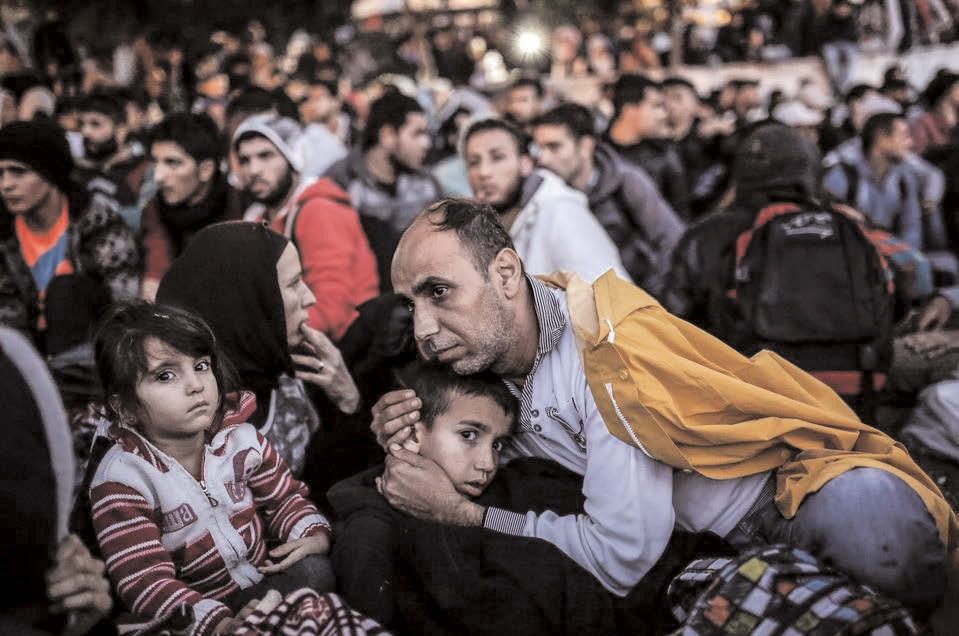
    As the battles raged in Syria and Iraq, millions of innocent civilians have sought refuge elsewhere to escape the dire straits in their home countries. Their prime destination: Europe. They came via planes, trains, ships, boats, cars, and for many, on foot: hundreds of thousands of displaced people fleeing a war no one asked for, leaving behind everything – their careers, property, families, their lives.

    Most of the world, at first, did not seem to notice the crisis. Not until the photo of a boy in a red shirt, lying lifeless, face down on the sands of a Turkish beach, came up in newspapers, websites, and social media.

    Three-year-old Syrian refugee Aylan Kurdi’s death shocked the world into consciousness, and spurred western governments to act on the worsening humanitarian crisis.

    By the end of 2015, more than one million migrants and refugees reached the continent, nearly 970,000 of which made the journey crossing the waters of the Mediterranean. It wasn’t only Syrians and Iraqis fleeing the mess in their home countries; there were also thousands escaping poverty and persecution, mainly from other Mideast and African states.

    Europe and other western countries scrambled to address the exodus, as the crisis became another test for the EU. Following a slew of emergency summits this year, EU leaders have acknowledged they were too slow to carry out a joint strategy to tackle Europe’s worst refugee crisis since World War II. Other countries have also stepped up, like Canada, which has already welcomed its first batch of Syrian refugees.

    Asia, in particular Southeast Asia, also had its own refugee crisis. Impoverished, persecuted, and with nowhere to go, Rohingya took to rickety boats in their bid to escape the quagmire they were in. The crisis came to a head around May, when thousands of these refugees, mainly from Myanmar’s Rakhine state, were left abandoned at sea, setting off a regional crisis. Horror stories of kidnap, coercion, and hunger emerged from the hundreds who staggered ashore or were eventually rescued by Thai, Indonesian, and Malaysian authorities after weeks at sea.

    Refugee exodus is seen as logical outcome of Syrian president's survival strategy.
    Refugee exodus is seen as logical outcome of Syrian president’s survival strategy.

    The crisis has ebbed somehow in the past few months, thanks to some action of regional governments involved, as well as due to the monsoon season. But with the monsoon ending, the crisis might again surge forward into the headlines – and a solution still seems far away.

    Tensions defused? The Iran nuclear deal

    The odds were stacked against it, but on July 14, weary foreign ministers from the US, Britain, France, China, Russia, Germany, the EU, and Iran announced to the world that a deal to curb Iran’s nuclear ambitions had been forged. It was a diplomatic victory for the parties involved, especially for Iran, which has been trying to shake off its long-time image as a pariah state.

    The ministers of foreign affairs of France, Germany, the European Union, Iran, the United Kingdom and the United States as well as Chinese and Russian diplomats announcing the framework for a Comprehensive agreement on the Iranian nuclear programme (Lausanne, 2 April 2015).
    The ministers of foreign affairs of France, Germany, the European Union, Iran, the United Kingdom and the United States as well as Chinese and Russian diplomats announcing the framework for a Comprehensive agreement on the Iranian nuclear programme (Lausanne, 2 April 2015).

    Under the deal, Iran pledged to slash the number of centrifuges – which enrich uranium – from around 19,000 to 6,104, of which 5,060 will still enrich. It also has to change the design of a new nuclear reactor being built and shrink its stock of low-enriched uranium, shipping it to Russia. In return, outside powers will end some of the international sanctions that have severely squeezed the Iranian economy.

    The road to the deal, however, wasn’t an easy one. For years, Iran has maintained that its nuclear program was for peaceful, civilian purposes, but a weary West always eyed it with suspicion. In the past few years, the two sides have see-sawed between coming close to a deal and coming close to conflict. The relative success of the deal was a result of months of non-stop negotiations, as well as the presence of a more moderate government in Tehran, led by President Hassan Rouhani.

    The question now: Will both sides honor the deal?

    Greek tragedyA country teetering on the brink of bankruptcy due to years of financial mismanagement. A hardline, leftist government. An economic bloc avoiding a region-wide collapse. These were the elements of a Greek tragedy that unfolded throughout the better part of 2015, as Greece and the European Union negotiated to save the Balkan nation from crashing out of the eurozone.

    Greek Meltdown Fed up with the hated “troika” – the European Commission, European Central Bank, and the International Monetary Fund -Greeks in January voted into power their first leftist government, led by Alexis Tsipras’ SYRIZA party. Tsipras came into power with the promise to lead the country out of the debt crisis. However, after months of intense, pressure-filled negotiations and despite voters saying “no” to a new deal, Greece caved in to its creditors’ demands and signed its latest bailout deal. The deal, worth 86 billion euros ($93 billion) to be spread out over a 3-year period, ultimately saved the country from crashing out of the eurozone, but it came with strict conditions.

    The fallout: Tsipras resigned August 20 after accepting the deal, reneging on a promise to stand its ground against the country’s creditors. A snap poll in September, however, saw Tsipras and his SYRIZA party hold on to power. Adding to Greece’s economic woes is the refugee crisis, with the country acting as migrants’ main gateway to the EU, straining the already burdened nation.

    Russia and China: Show of force

    From ISIS to Iran, Russia – long overshadowed by richer and more influential countries in the West – continued to assert itself as it seeks to revive its power and influence. From Ukraine to Syria, it has made its presence felt, mostly through its military. It has been steadily fortifying its army, building and expanding bases in the Arctic, growing its defense budget, and taunting its neighbors with its planes, submarines, and ships with clandestine – and in one case, deadly – side trips outside its territory.

    China: Show of force.
    China: Show of force.

    Russia has also been making inroads on the political front, participating in some of the year’s major diplomatic issues, such as the Iran nuclear deal. But the centerpiece in the past 12 months has been Syria, as President Vladimir Putin’s government seeks to keep and gain more influence in the Middle East.

    Meanwhile, China has also made aggressive moves economically, diplomatically, and militarily. As other world powers became stuck in other issues, bogged down by economic and political matters, the Middle Kingdom continued to expand its reach, primarily through billions of dollars in economic aid and infrastructure projects.

    Despite winning a lot of new friends, China has one major thorn on its side: its long-simmering maritime and territorial disputes with its Asian neighbors. The East and South China Seas have become sensitive spots in the region – particularly the Spratlys, where Beijing has been building artificial islands in its attempt to bolster its claims in the area. The waters are now being tested by militaries from other countries, including the US and Australia, with an increasing number of confrontations near the disputed “islands.” China also lost in round one of an arbitration case lodged by the Philippines at the global maritime tribunal.

  • Two men arrested in US on terrorism charges

    Two men arrested in US on terrorism charges

    SACRAMENTO (TIP): US authorities said on Thursday that two people have been arrested on terrorism-related charges in California and Texas, including a refugee from Iraq who is charged with lying to federal investigators about his travels to Syria. A criminal complaint unsealed on January 7 accused Aws Mohammed Younis Al-Jayab, 23, of traveling to Syria to fight alongside terrorist organizations and lying to investigators about it.

    The complaint said Al-Jayab, a Palestinian born in Iraq who came to the United States as an Iraqi refugee in October 2012, communicated on social media about his intent to return to Syria to fight for terrorist organizations, discussing his previous experience fighting against the regime in Syria. When he was interviewed by citizenship officials, he lied about his travels and ties, the complaint alleges. Ben Galloway of the federal defender’s office is the suspect’s attorney. He did not immediately return telephone and emailed messages Thursday. The US Attorney’s Office in Sacramento said Al-Jayab was arrested on Thursday morning in Sacramento. Meanwhile, the governor and lieutenant governor of Texas praised the arrest in Houston of what Lt Gov Dan Patrick called a terror suspect.

    “Based on the facts, as we know them, today’s action may have prevented a catastrophic terror related event in the making and saved countless lives,” Patrick said in a statement. Federal officials in Houston did not immediately provide more details. Federal officials say a separate arrest in Milwaukee that grew out of the Sacramento investigation is not related to national security.

    (AP)

  • Iran and Saudi Arabia: Islamic Intolerance or Oil Intolerance | In-depth Coverage & Analysis

    Iran and Saudi Arabia: Islamic Intolerance or Oil Intolerance | In-depth Coverage & Analysis

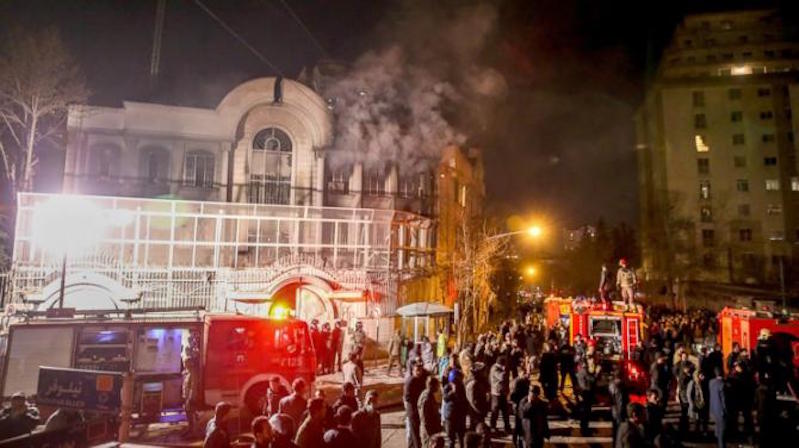
    Saudi Arabia has announced it is severing diplomatic ties with Iran following Saturday’s (January 2) attack on its embassy in Tehran during protests against executions in the kingdom.

    Adel al-Jubeir, the Saudi foreign minister, made the announcement on Sunday while the foreign ministry said it was asking Iranian diplomatic mission to leave the kingdom within 48 hours.

    The Saudi foreign ministry also announced that the staff of its diplomatic mission had been evacuated and were on their way back to the kingdom.

    Later reports said the flight carrying the Saudi embassy staff had landed in Dubai in the UAE.

    Saudi Arabia’s interior ministry announced on Saturday the execution of 47 people on terrorism charges, including a convicted al-Qaeda leader and a Shia religious leader.

    Many of the men executed had been linked to attacks in Saudi Arabia between 2003 and 2006, blamed on al-Qaeda.

    Four of those executed were said to be Shia.

    Nimr al-Nimr, the Shia leader, was accused of inciting violence and leading anti-government protests in the country’s east in 2011. He was convicted of sedition, disobedience and bearing arms.

    He did not deny the political charges against him, but said he never carried weapons or called for violence.

    Nimr spent more than a decade studying theology in predominantly Shia Iran.

    His execution prompted demonstrations in a number of countries, with protesters breaking into the Saudi embassy in Tehran late on Saturday night and starting fires.

    At Sunday’s press conference in Riyadh, Jubeir said the Saudi diplomatic representative had sought help from the Iranian foreign ministry when the building was stormed, but the requests were ignored three times.

    He accused the Iranian authorities of being complicit in the attack, saying that documents and computers were taken from the embassy building.

    Calling the incident an act of “aggression”, he said Iran had a history of “violating diplomatic missions”, citing the attacks on the US embassy in Tehran in 1979 and the British embassy in 2011.

    “These ongoing aggressions against diplomatic missions are a violation of all agreements and international conventions,” he said, calling them part of an effort by Iran to “destabilise” the region.

    – With Inputs from Al Jazeera

    IRANIAN ACTION

    Earlier on Sunday, Iranian President Hassan Rouhani ordered the arrest and prosecution of individuals involved in the embassy attack, while also condemning the execution of Nimr.

    Asked at the press conference what other steps the Saudis would take against Iran, Jubeir said “we will cross each bridge when we will get to it”.

    “We are determined not to allow Iran to undermine our security,” he said.

    Ellie Geranmayeh, an Iran expert at the European Council on Foreign Relations, said the Saudi decision was likely to have repercussions for the region, particularly concerning the Syrian negotiations.

    “Western powers must increase efforts to safeguard this process and encourage the Saudis and Iran to continue their participation [in the Syria peace talks],” she told Al Jazeera from London.

    “These events further set back the urgently needed rapprochement between Tehran and Riyadh, and spell further trouble for an already fragile region.”

    BAHRAIN, UAE AND SUDAN RALLY TO SAUDI SIDE IN IRAN ROW

    Saudi Arabia’s regional allies have stepped up diplomatic pressure on Iran, breaking or downgrading relations with the country following an attack on the Saudi embassy in Tehran, which followed executions in the kingdom.

    Bahrain announced on Monday that it was closing its embassy in Iran, and called upon Iranian diplomats to leave the country within 48 hours.

    Bahrain frequently accuses Iran of being behind protests among its majority Shia population.

    Within hours of the announcement, Sudan also said it was cutting off diplomatic relations with Iran “in solidarity with Saudi Arabia”.

    For its part, the UAE said it was downgrading its ties with Iran, replacing its ambassador with an embassy officer-in-charge.

    Saudi Arabia announced on Sunday it was severing diplomatic relations with Iran and urged its allies to follow its move.

    The decision came after Iranian protesters attacked its embassy in Tehran, following the kingdom’s decision to execute Shia religious figure Nimr al-Nimr along with 46 other mostly Sunni convicts on terrorism charges.

    Shia minorities across the Middle East have been demonstrating after Nimr’s execution.

    Saudi Arabia is adamant Nimr got a fair trial. Many of the men executed had been linked to attacks in Saudi Arabia between 2003 and 2006, blamed on al-Qaeda.

    Saudi Arabia further announced on Monday that it was cutting commercial ties with Iran and cancelling all flights to and from Iran, according to Reuters.

    In an interview with the news agency, Adel al-Jubeir, Saudi foreign minister, said the kindom was banning all its citizens from travelling to Iran.

    However, Iranian pilgrims are still welcome to visit Saudi Arabia and Mecca, Islam’s holiest site, he said.

    Earlier, Abdul Latif bin Rashid al-Zayani, secretary-general of the Gulf Cooperation Council, condemned the attack in Tehran and held Iranian authorities fully responsible for failing to protect the Saudi diplomatic mission.

    IRANIAN PERSPECTIVE

    It is not the first time diplomatic relations have been cut between Saudi Arabia and Iran. However, there are fears it could lead to more violence.

    Iran’s foreign ministry said Saudi Arabia was using the attack on its embassy in Tehran as a pretext to fuel tensions..

    The statement came after Iran was given a 48-hour deadline to remove its diplomatic mission from Riyadh.

    “Iran … is committed to providing diplomatic security based on international conventions. But Saudi Arabia, which thrives on tensions, has used this incident as an excuse to fuel the tensions,” Hossein Jaberi Ansari, Iran’s foreign ministry spokesman, said in televised remarks on Monday.

    On the other hand, Jubeir has accused Iranian authorities of being complicit in the attack, saying that documents and computers were taken from the embassy building.

    He said the Saudi diplomatic representative had sought help from the Iranian foreign ministry when the building was stormed, but the requests were ignored three times.

    Hamid Soorghali, a UK-based Iran observer said, the attack of the Saudi embassy “only works to damage and affect the image of Iran”.

    He said while the leadership in Iran is unified in condemning the execution of Nimr, it is divided in terms of the reaction.

    “We get different responses from different institutions and leaders in Iran. We get a harsher message from Iran’s supreme leader, which very much reverberates in the mood and scenes of protesters in front of the embassy,” he told Al Jazeera.

    ‘NO LOVE LOST’

    Ghanbar Naderi, a journalist with Kayhan, a publication closely linked to Ayatollah Ali Khamenei, Iran’s supreme leader, said the breaking of diplomatic relations between Saudi Arabia and Iran was inevitable.

    “It was going to happen today or tomorrow. This is a natural outcome of what has been going on for the past four or five years in Syria, Iraq and Yemen,” he told Al Jazeera.

    “Make no mistake about it, there is no love lost between the Iranians and the Saudis.”

    Al Jazeera’s James Bays, reporting from New York, said diplomats at the UN have expressed worries over the escalating war of words.

    “What we are seeing is the fallout across the Gulf countries,” he said. “In terms of the relationship between Saudi Arabia and Iran, I think most people think that this is probably as bad as you can get.”

    On Sunday, Ban Ki-moon, UN secretary-general, issued a statement saying he was “concerned” about both sides of the diplomatic dispute, while criticising both the executions and the attack on the Saudi embassy in Tehran.

    Ban was to send Staffan de Mistura, the UN special representative for Syria, to Riyadh and Tehran on Monday, a UN official told Al Jazeera.

    In a call on Monday, Ban conveyed his concerns to the foreign ministers of Saudi Arabia and Iran, a UN statement said.

    The statement said he urged the two countries “to avoid any actions that could further exacerbate the situation between two countries and in the region as a whole”.

    THE OIL PRICE, IRAN AND SAUDI’S ECONOMY

    Analysis: How Iran’s return to global oil markets may impact Saudi Arabia’s 2016 budget.

    During last month’s OPEC meeting, Saudi Arabia again declined to cut oil production despite the world being awash with oil.

    The great unanswered question for Saudi Arabia is: How low can prices go, and for how long?

    Saudi Arabia’s refusal to reduce oil output shows no sign of abating, but its determination to drive out US shale producers is taking a toll on the kingdom’s economy, recent data suggests. And with the expectation of Iran’s return to global oil markets already undermining fragile prices, Riyadh’s strategy looks increasingly like it might be a gamble with declining odds.

    Although the kingdom has substantial reserves, it appears to be burning through its financial war chest at an alarming rate. According to the Saudi Arabian Monetary Agency, foreign exchange reserves fell to $648bn at the end of October from $742bn a year earlier.

    OIL PRICES AND OPEC

    If OPEC does not compensate for the increase in Iran’s oil exports by cutting oil production, the International Monetary Fund says oil prices could fall between five and 10 percent in the medium term. Energy giant BP estimates that Iran has the fourth-largest proven oil reserves in the world after Venezuela, Saudi Arabia and Canada, as well as the second-largest gas reserves, according to the IMF.

    How quickly Iran can ramp up production is up for debate, but a consensus appears to be emerging. Industry Think Tanks believe that Iran will add between 0.5 to one million barrels a day within a year, while the IMF forecasts an increase of around 0.6 million barrels a day in 2016.

    Bijan Zangeneh, Iran’s oil minister, is considerably more bullish about the country’s ability to bolster output but, whatever the figure, it is expected to increase pressure on Saudi’s economy, in which about 90 percent of government revenues are derived from hydrocarbons.

    At the same time, there are signs that the Saudi campaign against US shale is having an impact. There is mounting evidence that shale production in the United States is beginning to wane, while energy consumption in advanced economies is rising. Elsewhere in the world, major energy companies have shelved a number of projects – a move that will support of prices in the medium term.

    SAUDI ECONOMY

    Even so, the IMF predicts that the gross domestic product in Saudi Arabia will grow by only 2.2 percent in 2016, compared with 4.4 percent in Iran.

    Eduard Gracia, a principal at the AT Kearney consulting firm, says Saudi Arabia’s decision not to cut production is due in part to the supply-demand dynamics of the global market.

    “It only makes sense ‎to cut production if the supply situation is such that a small output reduction results in a substantial price increase,” Gracia told Al Jazeera. “In a situation of global oversupply this may not be the case, so the appeal of a production-cutting strategy is not clear.”

    By the end of this year, Saudi Arabia’s budget deficit will reach 20 percent of GDP, according to a December report from Capital Economics. The situation has prompted the IMF to warn that Saudi could exhaust its reserves within five years if policies remain unchanged. Riyadh has responded with cutbacks in spending, and is under intense pressure to reduce expensive energy subsidies.

    The IMF estimates that these implicit subsidies cost the government $83bn in 2014, one of the highest totals in the Gulf Cooperation Council countries, second only to Bahrain. Attention is now turning to Saudi’s 2016 budget. It is expected to be one of mostly heavily scrutinised budgets in years, as investors seek reassurance that the kingdom’s finances are under control.

    According to press reports, leaked memos from King Salman to the Ministry of Finance in October ordered government entities to stop new infrastructure projects and to postpone purchases of new cars and furniture. Mounting economic uncertainty led Standard & Poor’s to downgrade Saudi’s rating from AA-/A-1+ to A /A-1 in October, with a warning of a possible further downgrades.

    The downgrade pushes up the costs of borrowing at a time when government revenues have fallen sharply. There has also been speculation in financial markets about how this could affect the Saudi riyal, with the spread between forward and spot rates recently widening to the highest level since 2003.

    However, according to Capital Economics, that scenario would be the last resort, and Saudi has other options that could include tapping into the international bond markets early in 2016 – something it has never done before. Authorities are currently issuing around SAR 20bn ($5bn) of debt per month to local banks, reducing the amount local banks have left to lend to the private sector, according to an estimate from Capital Economics.