
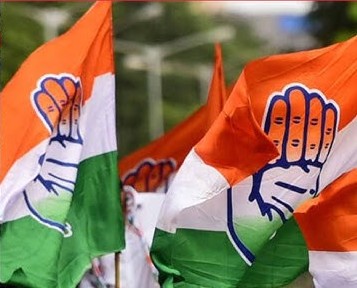

After years of decline, the party gets a chance to rebuild itself, unite the opposition, and reclaim its democratic relevance

The return of the Congress-led United Democratic Front in Kerala after a decade in the political wilderness is far more than a regional electoral victory. It is, for the Indian National Congress, something close to political oxygen — a moment of revival for a party that once stood like a giant banyan tree over the Indian political landscape but, in recent years, appeared reduced to a shadow of its former self.
For a party that ruled India for nearly five decades after Independence and shaped the architecture of modern India under leaders such as Jawaharlal Nehru, Indira Gandhi, and Rajiv Gandhi, the journey since 2014 has been painful, humiliating, and politically destabilizing. The Congress, once synonymous with governance itself, increasingly acquired the reputation of a “loser party” — unable to inspire confidence, unable to organize effectively, and unable to challenge the formidable electoral machine of the Bharatiya Janata Party.
That is why the Kerala verdict matters.
Kerala has historically alternated between the Congress-led UDF and the Left Democratic Front. Yet this victory is politically significant because it arrives at a time when the Congress desperately needed evidence that it can still win elections, inspire cadres, and remain relevant in the national conversation. The morale of a political party matters enormously. Defeat breeds desertion; victory breeds confidence. The Congress today is fighting not merely electoral opponents but also the dangerous psychology of decline.
For over a decade, the party has appeared internally exhausted. Factionalism has eaten away at its organizational vitality. Leaders have publicly contradicted one another. Regional satraps have often functioned like isolated power centers rather than members of a disciplined national movement. Younger leaders complain of stagnation; older leaders resist change. Many ambitious politicians have abandoned the Congress for regional parties or the BJP because they sensed a shrinking future within the organization.
History teaches us that no political party collapses merely because of external attacks. Great parties decline first from internal weakness. The Congress itself is a classic example.
After Independence, the Congress was not merely a political party; it was a national movement transformed into a governing institution. It accommodated ideological diversity — liberals, socialists, conservatives, Gandhians, secularists, trade unionists, and regional leaders all coexisted within its broad tent. That inclusiveness gave it unmatched reach across India.
But over time, centralized leadership weakened internal democracy. Regional aspirations grew stronger. The Emergency imposed by Indira Gandhi in 1975 damaged the Congress morally and politically. Later came corruption allegations, organizational decay, dynastic criticisms, and the rise of caste-based and regional political formations. By the late 1980s and 1990s, Indian politics had fundamentally changed.
The emergence of regional parties transformed the political map of India forever.
Parties such as the Dravida Munnetra Kazhagam in Tamil Nadu, Telugu Desam Party in Andhra Pradesh, Samajwadi Party in Uttar Pradesh, Rashtriya Janata Dal in Bihar, and later the Trinamool Congress in West Bengal occupied political spaces once dominated by the Congress. These parties spoke the language of regional identity, caste empowerment, linguistic pride, and local aspirations with greater intensity and authenticity than the Congress could manage from Delhi.
The Congress failed to adapt quickly enough to this new reality.
Gone are the days when Congress could dream of absolute power at the Centre on its own strength. Indian politics today is coalition politics, alliance politics, negotiation politics. The Congress must accept this reality not as a humiliation but as a democratic evolution of India’s federal structure.
Wisdom now lies not in arrogance but in accommodation.
If the Congress hopes to revive nationally, it must learn how to work with regional parties respectfully and intelligently. It cannot treat allies merely as temporary electoral conveniences while simultaneously attempting to undermine them politically. The party must balance cooperation with self-preservation — strengthening its own organization without alienating partners essential for national opposition unity.
The Kerala victory offers a chance to rethink strategy.
The Congress still governs or shares power in important states. These states can become laboratories of political renewal. Good governance, efficient administration, social harmony, welfare delivery, employment generation, and corruption-free administration can restore public trust far more effectively than slogans or press conferences.
The people of India are politically sophisticated. They reward performance. They punish arrogance. They observe carefully. And increasingly, many Indians are beginning to feel uneasy about the concentration of power in the hands of the BJP and the central leadership around Narendra Modi. The BJP remains electorally dominant, organizationally disciplined, and politically formidable. Yet long years in power often create tendencies toward centralization, intolerance of dissent, and institutional overreach. History repeatedly demonstrates that excessive concentration of power eventually generates democratic resistance.
India’s Constitution was not drafted merely as a legal document. It was conceived as a moral covenant for a deeply diverse civilization. The vision articulated by leaders like B. R. Ambedkar, Nehru, and others emphasized secularism, pluralism, equality, liberty, and justice. The constitutional idea of India rejects majoritarian domination and insists that every citizen, regardless of religion, caste, language, or region, must feel equally protected within the Republic.
That constitutional spirit today requires vigorous democratic defense.
This responsibility cannot be fulfilled by the Congress alone. It demands cooperation among all opposition parties committed to democratic values. The opposition in India must rise above ego clashes, leadership rivalries, and regional insecurities to evolve a coherent national agenda. Such an agenda need not erase ideological differences; democracy thrives on differences. But it must unite around certain foundational principles: protection of constitutional institutions, federal balance, civil liberties, press freedom, judicial independence, and equal opportunities for all citizens.
The Congress, because of its history and national footprint, still has a special role to play in this effort. But history alone cannot guarantee the future. Nostalgia wins no elections. Emotional attachment to the freedom movement cannot substitute organizational strength, visionary leadership, and grassroots mobilization.
The Congress today stands at a crossroads.
One path leads toward continued drift — internal quarrels, weak leadership, confusion of purpose, and gradual irrelevance. The other path leads toward renewal — organizational discipline, ideological clarity, alliance-building, energetic leadership, and sincere engagement with the people.
Kerala may well become the first signpost on that second journey.
Political resurrection is never impossible in a democracy. Indian politics has repeatedly produced astonishing comebacks. After the Emergency debacle of 1977, Indira Gandhi returned to power in 1980. The BJP itself was reduced to just two Lok Sabha seats in 1984 before rising spectacularly in later decades. Politics remains the art of reinvention.
The Congress has received from Kerala not merely a victory but a warning and an opportunity. A warning that survival can no longer be taken for granted. And an opportunity to rebuild itself before history finally closes the chapter on a party that once led India’s freedom struggle and governed the Republic for most of its independent existence. Whether the Congress can seize that opportunity remains one of the defining political questions of contemporary India.

Be the first to comment