Tag: LeadStory3

  • Indian American Congressman Condemns Vandalization Of Gandhi Statue

    Indian American Congressman Condemns Vandalization Of Gandhi Statue

    WASHINGTON (TIP): Indian American Congressman Ro Khanna on Monday, Feb 1, strongly condemned the vandalization of a statue of Mahatma Gandhi in the US state of California, calling it as a shameful act.

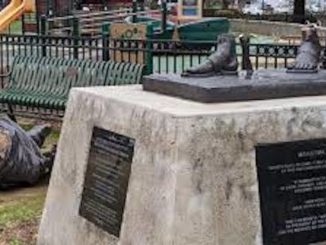
    The 6-ft tall, 650-pound (294 kg) bronze statue of Gandhi in the Central Park of the City of Davis in Northern California was vandalized, broken and ripped from the base by unknown criminals early this week.

    “Nonviolent, respectful protest was the essence of Gandhi’s life mission. To see the desecration of this magnificent statue only underscores the need for more people to study Gandhi’s teachings, not unilaterally erase him from the public discourse,” Khanna said.

    “This was a shameful act. At a moment in our history when disagreement needs to be managed with tolerance and patience, I urge everyone involved to take the time to listen and talk instead of resorting to acts of public vandalism,” he said.

    As the Democratic Vice Chair of the India Caucus, Khanna said he will continue to work with his colleagues to build bridges across these divisions.

    “I encourage everyone to join me in working through disagreement with dialogue and discussion, rather than resorting to violence that tears at the fabric of our society,” he said.

    Meanwhile, two groups gathered at the park in Davis on Sunday where the statue was vandalized, local media reported. While one group demanded that the statue be restored, the other opposed such a move.

    The City of Davis has launched an investigation into the incident.

    “The City of Davis condemns the vandalism that destroyed the statue of Mahatma Mohandas Gandhi in Central Park. We do not support any actions that include the destruction of property,” the city said in a statement on Sunday.

    “We understand that our community reflects a diversity of views and values, but we expect that everyone will extend respect to each other and to shared spaces,” it said.

    But we reiterate our belief that the solution to solving such differences is never in violent acts but through compromise and dialogue. It is our sincere desire that our community move forward with peaceful and positive discourse and reconciliation,” the city said in its statement.

  • India now has fifth highest COVID-19 fatality count in the world

    India now has fifth highest COVID-19 fatality count in the world

    Health Ministry flags high human cost of herd immunity


    NEW DELHI (TIP): In a densely populated country like India, herd immunity cannot be a strategic option because this will come at a very high cost in terms of human lives lost and will cripple the health care system, the Union Health Ministry said on Thursday, July 30th.

    “Herd immunity can only be achieved through immunization and till then COVID-19 appropriate behavior is the only way forward,” said Rajesh Bhushan, Officer on Special Duty, Health Ministry, at a press conference.

    With 786 deaths registered on Thursday, July 30, India’s death toll reached 35,800. Maharashtra (266 deaths), Tamil Nadu (100), Karnataka (83), Andhra Pradesh (68) and Uttar Pradesh (57) contributed to the bulk of the fatalities.

    India now has the fifth-highest death toll in the world, surpassing Italy with 35,132 deaths, according to Johns Hopkins University’s COVID-19 tracker. The seven-day rolling average for deaths in India is now 735, next only to the U.S. (1,075) and Brazil (1,052).

    The case fatality rate in the country is now 2.18%, which is “among the lowest in the world… 24 States and Union Territories have a lesser fatality rate than that of the country,” according to Mr. Bhushan.

    As many as 54,660 confirmed cases were registered across the country, marking yet another high in daily cases (data from Tripura and Arunachal Pradesh were not available when this report went to press). The seven-day rolling average for cases also crossed the 50,000 mark. The total confirmed cases went up to 16,38,951 with a 64.58% recovery rate (10,58,464 people have recovered while 5,44,687 people are actively infected).

    “16 States have a recovery rate more than the national average,” Mr. Bhushan said.

    Maharashtra and Andhra Pradesh registered 11,147 and 10,167 cases each, both daily highs. The latter had also tested 70,068 samples on July 29, among the highest in States. Karnataka with 6,128 cases and Uttar Pradesh (3,705) also had daily highs, while Tamil Nadu’s daily case load dropped marginally from its seven-day average to 5,864.

    To a question on vaccine development and how the government plans to make this available to the general public, he said, the world over, there were three vaccine candidates which were currently in phase III clinical trials.

    “These three vaccines are being developed by the U.S., the U.K. and China. In India, two indigenously developed vaccine candidates are in phase I and II clinical trials. The first is being tested on 11,050 subjects at eight sites, and the second on 1,000 subjects at five sites. India has not signed any agreement with any vaccine manufacturing company so far but we are in discussions on vaccine distribution and the Ministry is in talks with stakeholders,” the official said. He added that there were multiple stakeholders within and outside the government and the Ministry of Health has started actively engaging with them.

    He added that there were multiple stakeholders within and outside the government and the Ministry of Health had started actively engaging with such stakeholders.

    “There has been discussion on prioritizing how a vaccine would be distributed or administered if and when it becomes available. A COVID vaccine, whenever it comes, will have to be administered on a much larger scale compared to the existing vaccines. This is something on which there is near unanimity,” he noted.

    Ayodhya safeguards

    Responding to a question on the proposed religious gathering at Ayodhya at a time when there was a ban on religious gatherings, Joint Secretary in the Ministry Lav Agarwal noted that “SOPs issued for social gatherings during Unlock 2.0 would be applicable for the event”.

    Mr. Bhushan said so far the Central government has received 131 claims under the ₹50 lakh insurance scheme that the Central government announced in March for COVID-19 healthcare workers. “Among them 20 have been cleared; in 64 cases the payments are being processed while 47 claims are still being looked into by various State governments. Maximum claims have come in from Maharashtra, Delhi and Telangana,” he said.

    The Health Ministry added that so far 1,81,90,000 tests for COVID had been conducted, including RT-PCR and rapid antigen tests.

    “There has been a week-on-week increase in average tests per day. India is conducting 324 tests per 10 lakhs population per day,” said Mr. Bhushan.

    (Source: The Hindu)

  • Indian American SAP Vet Abdul Razack Hired by Google Cloud for New Tech Solutions Role

    Indian American SAP Vet Abdul Razack Hired by Google Cloud for New Tech Solutions Role

    NEW YORK (TIP): Former SAP chief product officer Abdul Razack has been hired by Google Cloud for a senior executive role with its solutions engineering team. He is named vice president of technology solutions, a newly created position.

    Razack is a technology leader known for his strategic vision and engineering expertise, with more than 25 years of experience in enterprise technology. In his new role, Razack will be responsible for Google Cloud’s solution strategy across its seven solution pillars, from infrastructure, to application modernization, to data analytics and cloud artificial intelligence (AI). He also will drive the application of the solutions among sellers and customer engineers helping customers digitally transform.

    “My goal is to help Google Cloud customers unlock significant value from our solutions, bringing resiliency and scale to businesses in these uncertain times, and also helping them build a technology foundation for their future,” Razack said in a statement. “I’m truly excited about the opportunity to leverage Google’s technology to develop open, flexible solutions that serve our customers’ most critical needs.”

    A 15-year SAP veteran, Razack served as chief product officer at SAP since March 2019, leading its cloud technology vision and efforts to build enterprise resource planning products.


  • Indian American Qazi Javed Appointed to Texas Pediatric Acute-Onset Neuropsychiatric Syndrome Advisory Council

    Indian American Qazi Javed Appointed to Texas Pediatric Acute-Onset Neuropsychiatric Syndrome Advisory Council

    HOUSTON (TIP): Texas Governor Greg Abbott last month has appointed Indian American psychiatrist Qazi Javed to the Pediatric Acute-Onset Neuropsychiatric Syndrome Advisory Council for terms set to expire on August 31, 2021. The council advises the commission and the legislature on research, diagnosis, treatment, and education related to pediatric acute-onset neuropsychiatric syndrome.

    Qazi Javed, M.D. of Austin is a psychiatrist at Integrated Psychiatry- Austin. He is a member of the American Psychiatric Association, Texas Society of Psychiatric Physicians, Texas Medical Association, Integrative Providers of Austin, and Austin Wellness Collaborative. Javed received a Bachelor of Medicine at King Edward Medical College and a Bachelor of Science at Panjab University.


  • Indian Origin Texas Man Admits Role in Nearly $5 Million Health Care Fraud Scheme

    Indian Origin Texas Man Admits Role in Nearly $5 Million Health Care Fraud Scheme

    HOUSTON (TIP): A 57-year-old Houston man has entered a guilty plea in Corpus Christi federal court for conspiring to commit health care fraud, announced U.S. Attorney Ryan Patrick.

    Ravinder Syal admitted he engaged in a scheme that resulted in the false billing of $4,878,530.92 for services never provided to patients. From Feb. 1, 2018, until March 1, 2020, he acquired physicians’ practices throughout Texas and assumed control of their billing department. He then brought in a company located in India to bill false claims to Medicare, Medicaid and various insurance providers.

    Syal would submit false claims for services that were never performed, for nutritional servicers that were never provided and even for office visits that occurred over holidays when the clinics were actually closed. He would also bill for services that could not even be performed at the clinics he acquired due to lack of equipment.

    Syal altered the billing information and added these fraudulent services without the knowledge of the physicians at the respective practices.

    As a result of his scheme, Medicare, Medicaid and various insurance providers were billed $4,878,530.92 for services never performed. Syal was overpaid $553,068.65 on the fraudulent claims.

    Sentencing has been set for Aug. 10 before U.S. District Judge David S. Morales.  At that time, Syal faces up to 10 years in federal prison and a possible $250,000 maximum fine.

    Syal was permitted to remain on bond pending that hearing.


  • Alvida Irrfan!!

    Alvida Irrfan!!

    By Jaskiran Saluja

    In 1986, when  director Mira Nair was scouting for her film Salaam Bombay! at the National School of Drama in New Delhi, she fixed her gaze on a young man from Jaipur. “I noticed his focus, his intensity, his very remarkable look—his hooded eyes,” she later recalled of seeing Irrfan Khan. Though she cast him, she soon decided that he was too towering at more than six feet, that he seemed too well fed to convincingly play a malnourished child. To Khan’s dismay, Nair pared his role down to scraps. “I remember sobbing all night when Mira told me that my part was reduced to merely nothing,” the actor told the Indian magazine Open in 2015. “But it changed something within me. I was prepared for anything after that.”

    The actor died Wednesday in Mumbai, two years after being diagnosed with neuroendocrine cancer. On Wednesday when Irrfan breathed his last, his last words reflected how much he missed his mother. “See, amma has come. She is sitting next to me. Amma has come to take me,” was Irrfan Khan’s last words. He then adds, “But what is the choice apart from being positive in tough situations. We have made this film with the same positivity. And I hope this film will teach you, make you laugh, make you cry and then make you laugh again. Enjoy the trailer and be kind to each other…And yes wait for me”.

    Khan’s final movie, Angrezi Medium, was the last Bollywood film released in theaters before the COVID-19 pandemic resulted in a nationwide lockdown. Irrfan recorded an audio message for his fans during the trailer release of Angrezi Medium. His last message played along with a promotional clip of his film. “There is a saying… ‘When life gives you lemons, you make lemonades out of it. It sounds good. But when life actually puts lemon in your hands, it becomes really tough to make lemonade,” Irrfan says.

    Irrfan with friend and wife Sutapa. “If I get to live, I want to live for her. She is the reason for me to keep at it still,” he said towards the dusk of his life.

    The film ended up being the bookend to a singular body of work that had begun in 1988 with Salaam Bombay! After that movie, Khan spent more than a decade appearing in television serials and supporting roles on film, before breaking through with his dynamic lead performance as a feudal soldier in Asif Kapadia’s The Warrior (2001). That performance kick-started a career that has no precedent in Indian film history.

    Khan’s featherlight touch made the job look simple, distracting you from the fact that acting is, at its core, work. He could play the romantic lead with flushed ardor, as he did in Shoojit Sircar’s Piku (2015), but he knew how to cede the spotlight as a supporting player too. His style was free of the vanity or self-consciousness that could’ve made him seem larger than life. As his fame grew, he retained the essential quality that endeared him to viewers: a sense of relatability. Khan was an everyman who, improbably, became a star.

    He was born Sahabzade Irfan Ali Khan—just one R—to a middle-class Muslim family in the city of Jaipur, Rajasthan, in 1967. A shy and gentle kid, he’d wanted to be an actor since he was small, according to a recent biography by the writer Aseem Chhabra. Khan’s immediate family didn’t watch many movies, though, forcing him to nurture his dreams in secret. He understood that his physical attributes, including his darker complexion, could be professional limitations, but he went on to attend the National School of Drama, where he arrived as a bundle of raw potential.

    On-screen, Khan’s most vital instrument may have been that pair of soulful eyes that captured Nair’s imagination three decades ago. They could exude menace or innocence, depending on the role. His eyes helped him bring sensual urgency to his early performance as Rahul, a young musician who has an affair with a married woman named Sandhya (played by Dimple Kapadia) in Govind Nihalani’s Drishti (1990). When the two lovers lock gazes, whatever’s transpiring between them feels electric. The film offers Khan just a few short scenes before he more or less evaporates from the narrative, yet the memory of his character lingers long after he’s gone. That role was just a preview of the great work Khan would deliver after the turn of the millennium. Trying to pick highlights from this era is a fool’s errand. He shone in bigger releases such as Vishal Bhardwaj’s Maqbool (2003), a riff on Macbeth set in the Mumbai underworld, and Anurag Basu’s Life in a Metro (2007), a collage of intersecting tales.

    “An incredible talent, a gracious colleague, a prolific contributor to the World of Cinema … left us too soon,” Bachchan tweeted.

     When it comes to independent cinema, Ritesh Batra’s The Lunchbox (2013) features one of his most moving performances. The film, which documents an epistolary bond between two lonely souls, gives Khan a role that bears amusing parallels to his Salaam Bombay! character. He plays a widower named Saajan who marches through each day listlessly. Yet he forges a connection with a stranger, an equally forlorn housewife named Ila (Nimrat Kaur), when they begin exchanging letters by accident. The correspondence seems to awaken Saajan, and Khan makes the character’s decision to gradually let his guard down feel organic. Much of the performance depends on voice-over, and Khan was blessed with a honeyed voice that recalls the tired maxim about an actor being able to recite the phone book without sacrificing a viewer’s attention.

    His talents would ferry him to American and British cinema in the late aughts. These films mostly cast Khan in supporting roles, such as his wordless cameo as a villager in Wes Anderson’s The Darjeeling Limited (2007) or his part as a scientist in The Amazing Spider-Man (2012), that only suggested the depth of his talent. (Television, in contrast, gave him a rich showcase in Season 3 of HBO’s In Treatment, where he once again played a widower, this time an immigrant from Kolkata.) These movies didn’t deserve him, but Khan dignified them with his presence, refusing to sink with the flimsy material he was given.

    Unlike those works, Nair’s The Namesake, a 2006 film adaptation of Jhumpa Lahiri’s novel of the same name, gave his skills more breathing room. As the professor Ashoke Ganguli, Khan embodies an ideal of the Bengali immigrant father in the eyes of his son, Gogol (Kal Penn). He is at once a figment of memory and a person whose struggles and desires feel achingly real. Ashoke is a specific kind of person, a Bengali intellectual who adapts to life in America after a rough period of adjustment. The eventual tragedy at the heart of the narrative—Ashoke’s sudden death—is piercing because of how vividly Khan portrays this man.

    Who could’ve predicted that Khan would, like his character in that film, leave us young and without much warning? It’s tempting to wonder what characters Khan would’ve introduced us to as he eased into old age, as his hair began to gray. That viewers are deprived of knowing feels like theft. Among The Namesake’s most arresting moments is a scene in which Ashoke narrates the story of how he named his son. The sequence plays on Khan’s strongest devices: You see those eyes glimmer with pain and pride, and Khan’s voice shepherds you through this man’s past. His is a love you recognize as human, but Khan expresses the sentiment with restraint. It’s a kind of beauty, in other words, that you only see in movies.

    The Bollywood superstar wrote this open letter that was published by Times of India before starting his treatment for cancer in 2018.

    It’s been quite some time now since I have been diagnosed with a high-grade neuroendocrine cancer. This new name in my vocabulary, I got to know, was rare, and due to fewer study cases, and less information comparatively, the unpredictability of the treatment was more. I was part of a trial-and-error game.

    I had been in a different game, I was travelling on a speedy train ride, had dreams, plans, aspirations, goals, was fully engaged in them. And suddenly someone taps on my shoulder and I turn to see. It’s the TC: “Your destination is about to come. Please get down.” I am confused: No, no. My destination hasn’t come. No, this is it. This is how it is sometimes.

    The suddenness made me realise how you are just a cork floating in the ocean with unpredictable currents! And you are desperately trying to control it.

    In this chaos, shocked, afraid and in panic, while on one of the terrifying hospital visits, I blabber to my son, ‘The only thing I expect from ME is not to face this crisis in this present state. I desperately need my feet. Fear and panic should not overrule me and make me miserable’.

    That was my intention. And then the pain hit. As if all this while, you were just getting to know pain, and now you know his nature and his intensity. Nothing was working; no consolation, no motivation.”

    Irrfan also wrote about finding peace during  this painful time and said the only thing certain is the uncertainty.

    “The charisma you brought to everything you did was pure magic,” tweeted Indian actor and model Priyanka Chopra Jonas.

    “As I was entering the hospital, drained, exhausted, listless, I hardly realised my hospital was on the opposite side of Lord’s, the stadium. The Mecca of my childhood dream. Amidst the pain, I saw a poster of a smiling Vivian Richards. Nothing happened, as if that world didn’t ever belong to me.

    This hospital also had a coma ward right above me. Once, while standing on the balcony of my hospital room, the peculiarity jolted me. Between the game of life and the game of death, there is just a road. On one side, a hospital, on the other, a stadium. As if one isn’t part of anything which might claim certainty – neither the hospital, nor the stadium. That hit me hard.

    I was left with this immense effect of the enormous power and intelligence of the cosmos. The peculiarity of MY hospital’s location – it HIT me. The only thing certain was the uncertainty. All I could do was to realise my strength and play my game better.

    This realisation made me submit, surrender and trust, irrespective of the outcome, irrespective of where this takes me, eight months from now, or four months from now, or two years. The concerns took a back seat and started to fade and kind of went out of my mind space.

    For the first time, I felt what ‘freedom’ truly means. It felt like an accomplishment. As if I was tasting life for the first time, the magical side of it. My confidence in the intelligence of the cosmos became absolute. I feel as if it has entered every cell of mine.

    Time will tell if it stays, but that is how I feel as of now.

    Irrfan also talked about his well-wishers and those praying for him across the world.

    Throughout my journey, people have been wishing me well, praying for me, from all over the world. People I know, people I don’t even know. They were praying from different places, different time zones, and I feel all their prayers become ONE. One big force, like a force of current, which got inside me through the end of my spine and has germinated through the crown of my head.

    It’s germinating – sometimes a bud, a leaf, a twig, a shoot. I keep relishing and looking at it. Each flower, each twig, each leaf which has come from the cumulative prayers, each fills me with wonder, happiness and curiosity. A realisation that the cork doesn’t need to control the current. That you are being gently rocked in the cradle of nature.

    In his recent interview to Mumbai Mirror, Irrfan said “It’s been a roller-coaster ride, a memorable one. Happy moments were underlined because of the inherent uncertainty. We cried a little and laughed a lot. We became one huge body,” he said.

    Khan went on to talk about how crucial it was for him keep his thoughts from wandering. “You screen out noises. You are selective about what you want to filter in. I have gone through tremendous anxiety but have somehow managed to control it, then, let go. You are playing hopscotch all the time,” he said.

    On the subject of his wife Sutapa, Khan called her “the reason” he’s still able to power through. “What to say about Sutapa (wife)? She is there 24/7. She has evolved in care-giving and if I get to live, I want to live for her. She is the reason for me to keep at it still,” he said.

    Sutapa had previously written a post on Facebook where she discussed the family’s year long struggle with Khan’s cancer.  “Longest year of our life . Time was never measured with pain and hope at the same time ever. While we take our baby steps back to work, to life I am submerged in prayers wishes and faith from friends ,relatives,  strangers and a connection with universe which gives us a small chance for this new start.”

    She added, “It seems unbelievable never ever I realized the meaning of the word unpredictable so well never ever I could feel peoples wishes on my bones my breath my heartbeat which helped me to stay focused and kicking.. I can’t take names because there are names and there are names I don’t even know who played angels. Sorry for not been able to answer individually but I know what you mean to us.”

    He leaves behind a wife and two children.

    “You fought and fought and fought. I will always be proud of you.. we shall meet again” Tweeted Award-winning filmmaker Shoojit Sircar

    The whole world, it appears, is mourning the loss of Irrfan Khan. In New York, many, already cooped  in their homes because of lockdown, watched Irrfan’s movies over and over again, as if they wanted neve to be separated from the man.

    “Irrfan Khan’s demise is a loss to the world of cinema and theatre,” tweeted Indian Prime Minister Narendra Modi. “He will be remembered for his versatile performances across different mediums. My thoughts are with his family, friends and admirers.”

    Other prominent politicians, like Home Minister Amit Shah and former Maharashtra Chief Minister Devendra Fadnavis, also shared their condolences online.

    “The charisma you brought to everything you did was pure magic,” tweeted Indian actor and model Priyanka Chopra Jonas.

     Award-winning filmmaker Shoojit Sircar also posted a tribute on Twitter, writing, “You fought and fought and fought. I will always be proud of you.. we shall meet again.”

    Amitabh Bachchan, another Bollywood  icon, said in a tweet that Khan’s death created “a huge vacuum.” 

    “An incredible talent, a gracious colleague, a prolific contributor to the World of Cinema … left us too soon,” Bachchan tweeted.

    “Irrfan Khan’s demise is a loss to the world of cinema and theatre,” tweeted Indian Prime Minister Narendra Modi. “He will be remembered for his versatile performances across different mediums. My thoughts are with his family, friends and admirers.”


    Alvida Irrfan!! Cinema won’t be the same without you!

  • IDP USA Parade Revived after  a Gap of Three Years ; Extreme Heat Prevents Large Attendance

    IDP USA Parade Revived after a Gap of Three Years ; Extreme Heat Prevents Large Attendance

    HICKSVILLE, NY(TIP): The organizers hoped there will be equally great enthusiasm among people as they had shown in organizing the parade which was revived  after a gap of three years. However, their hopes were belied. Extreme heat and absence of shade of trees along the route prevented many who wanted to join the parade, to stay indoors. The absence of large crowds was offset by the large presence of lawmakers and  elected officials. The entire brigade of Nassau County officials led by the County Executive Laura Curran  seemed to have descended as also the Indian Consulate headed by Ambassador Sandeep Chakravorty, the Consul General of India in New York.

    The Indian Panorama received from the organizers a press release which we are publishing here as received. We take no responsibility for any claims made and  mistakes therein.

    “Under the banner of India Day Parade USA the entire community of South Asian Indians gathered to celebrate the 73rd Anniversary of India’s Independence Day in Hicksville New York. Parade’s slogan this year was Jai Jawan- Jai Kisan to salute our soldiers and farmers and to celebrate the community, unity, heritage and cultural diversity of South Asian Indians.

    IDP USA organized the 7th Parade in Hicksville NY on August 4th, 2019 starting from Patel Brothers on Broadway and ending with festivities at E Barclays Street.

    They had celebrity Grand Marshalls, Honorable Consul General of India in New York Mr. Sandeep Chakravorty, Bollywood Actor Raj Kummar Rao, Mr. Naveen Shah – Navika Capital, Businessman Mr. Chintu Patel, distinguished Elected Officials Congressman Tom Suozzi and from Nassau and Suffolk  NY State Senators Kevin Thomas and Senator Anna Kaplan, Nassau County Executive Laura Curran, Supervisor of North Hempstead Judy Bosworth, Supervisor of Oyster Bay Joseph Saladino, Supervisor of Hempstead Laura Gillen, Legislators Laura Schaefer and Rose Marie Walker, Minority Affairs E D Farrah Mozawalla, Suffolk County Human Rights Commissioner and 3 times Past President of IDP  Beena Kothari, Nassau Human Rights Commissioner Zahid Syed and others along with the President of the parade Mr. Jasbir (Jay) Singh, Mr. Kamlesh C Mehta, and several community leaders and invited guest Ms. Arti Patel, Co-Chief Executive Officer at Vass Pipe & Steel Co. Mr. Sunil Jain, Mrs. Chanchal Shah, who is the mother of Navika Group chief Naveen Shah, Advisors on stage, Indu Jaiswal, Sir Peter Bheddah, Beena Kothari, Mukesh Modi and other Committee members Mohinder Taneja,  Bina Sabapathy, Shashi Malik, Gautam Sanghvi to name a few for the inauguration and initiation of the parade at Patel Brothers. Satbir Bedi was the MC for the day. Breakfast was hosted by Patel Brothers and HAB Bank before the flag off.

    The South Asian Community has become an integral part and changed the face of Long island and made Hicksville a prominent, ever developing multicultural home for all Indians sharing pride, passion, presence and social bond as patriotic American Indians.

    A beautiful warm day with the whole crowd holding India’s Flag tricolor umbrellas sponsored by Mohinder Singh Miglani of Aero World marked Patel Brothers parking grounds. It was a sight to see as the parade later got flagged off with countless organizations from long island displaying pride and honor with marching groups and tricolor decorated festive floats sponsored by local organizations. The parade was led by IDP USA Indian National Flag bearers, Grand Marshalls and the IDP USA Committee in the biggest float in the parade as lead. The flowers were showered by helicopter on the full parade which mesmerized the local community and all Indian Community.

    At festivity grounds cultural dances by children and students of local dance schools performed at the beginning and other celebrities were invited to perform on stage after the parade reached E Barclays Street. Bollywood singer Mr. Deepak Kumar of Satellite India and Punjabi stage artist and singer Ms. Pooja had the crowd cheering, taking videos and pictures and joining the mood. A fashion Show by Nishi Behl and sponsored by Bhavna Sharma of Sarashiva gave a special romantic touch to the stage with upbeat music and beautiful clothes and glamourous ladies.

    BMW SUV sponsored by Mr. Naveen Shah of Navika Capital was the super prize of the raffle which had several other prizes including two 50” LG smart TVs made sure the crowd kept going back to the three IDP raffle booths. All prizes were drawn right there on stage and the BMW was won by an especially abled individual. The recipients of part proceeds were ‘Akshay Patra’ and ‘CRY’, two organizations that have led by example and changed the lives of thousands with their selfless mission for providing school lunch to poor children and for restoring children’s rights.

    IDP USA was started in 2012 and founded by Bobby Kumar Kalotee, Kamlesh Mehta and prominent community leaders. IDP USA 2019 was supported by a 108-member team, countless volunteers, Grand Sponsors like Food Universe, Posh Group Corp., Bolla Markets Group, Patel Bros, Omega Storage, Omni Mortgage, STI Consultants, food / retail / business vendors, advertisers, the media and the entire community.

    The success of the 2019 IDP USA Parade was celebrated by the community with a grand Gala at The Standard at North Shore in Muttontown and the Honor of Jewel of India was awarded to Mr. Naveen Shah and Mr. Chintu Patel and Lifetime achievement awards to Mr. Ravi Batra and Ms. Ranju Narang.

  • “It is essential that the pressure is kept on to defeat the terror groups and support the host nations”:  General Petraeus

    “It is essential that the pressure is kept on to defeat the terror groups and support the host nations”: General Petraeus

    NEW YORK(TIP): A day after Pakistan Prime Minister Imran Khan claimed his country’s spy agency ISI provided information that helped the US track down and kill Osama bin Laden, former Director of the Central Intelligence Agency (CIA) General David Petraeus said he is “convinced” that the Pakistani intelligence did not know the Al-Qaeda chief was in Pakistan, even as he asserted that terror groups such as the Tehrik-e-Taliban Pakistan and other “internal extremists” are the real “existential threat” for Pakistan and are a “very diabolically difficult problem to deal with”.

    “The challenge for Pakistan, of course, is that the existential threat is not the country to its east, it is not India. It is the internal extremists. It is a very diabolically difficult problem to deal with,” Petraeus said Tuesday during an interactive session at the Indian Consulate, following his address on the topic of the Indo-Pacific.

    Petraeus, a partner in the international investment firm KKR and Chairman of the KKR Global Institute, was the special guest for the ‘New India Lecture’ series organized by the Consulate General of India, New York in partnership with the US India Strategic Partnership Forum.

    General (Ret) David Howell Petraeus (Left), former Director of CIA and Ambassador Sandeep Chakravorty, India’s Consul General in New York at the Consulate General of India in New York
    Photo / Jay Mandal-On Assignment

    Responding to a question on US-Pakistan relationship, Petraeus said he has experienced the bilateral ties “on a very first hand basis” as the Commander of the US Central Command around the year 2009 and there have been some “positive” as well as “disappointing and frustrating periods” in ties between Washington and Islamabad. He added that the US has always provided “enormous” support to Pakistan, recalling that he and former special adviser on Pakistan and Afghanistan Richard Holbrooke went to the US Congress and got 7.5 billion dollars for economic assistance for Pakistan over a five year period, which was in addition to the two billion dollars already extended in various categories of defense assistance and counter-terrorism support. “At the end of the day, of course there was a degree of disappointment,” he said.

    On a question  from Prof. Indrajit S Saluja, editor of The Indian Panorama, about slain Al Qaeda leader Osama bin Laden living in Pakistan before he was killed, Petraeus asserted the US is convinced that the Pakistani intelligence was not aware that the terrorist leader was hiding in their country.

    “We are quite convinced that the ISI, Pakistani intelligence, no one else knew that he (bin Laden) was there (in Pakistan). They were not harboring him or hiding him or anything like that. We have very good insights on that. We probably differ with those who said that the Pakistanis were allowing him to live in that particular compound” in Abbottabad.

    Petraeus’s assertion runs counter to claims made by Pakistan’s Prime Minister Imran Khan that Pakistan’s powerful spy agency ISI provided information to the CIA which helped the US track down and kill the al-Qaeda chief. Khan’s comments are a significant revelation as Islamabad had so far denied having any knowledge of the terror chief until he was shot dead in 2011. Khan, who is visiting Washington on his maiden official trip, revealed this during an interview with Fox News when he was asked whether his country would release jailed Pakistani surgeon Shakeel Afridi who helped the CIA track down Osama. The Al Qaeda leader was killed in a covert raid by a US Navy SEAL team in Abbottabad, a garrison town north of Islamabad, on May 2, 2011.

    “It was ISI that gave the information which led to the location of Osama bin Laden. If you ask CIA it was ISI which gave the initial location through the phone connection,” Khan has said.

    A view of the audience
    Photo / Jay Mandal-On Assignment

    Petraeus said that during counter-insurgency campaigns, Pakistani authorities could never close in on North Waziristan where terror outfits such as the Haqqani network, Al Qaeda and others had their headquarters and some of their forces. He added that the US learnt later on that bin Laden was not in that area but near the Pakistan Military Academy in Abbottabad. “I figured out later that I had probably flown right over his compound in a helicopter as I went to address the cadets at the military academy one time,” he said referring to the Pakistan Military Academy.

    Petraeus said he hopes Khan will be able to deal with the challenges of his country, where the economy is “very distorted” and where the “realities of the situation are really quite difficult.”

    On Afghanistan, the veteran and decorated US military officer said while the Afghans are fighting and dying for their country, “sadly the momentum of recent years has been against Afghanistan rather than for it. It’s why I have some reservations about the prospects for a peace agreement that we would all support. What adds to my concern is the fact that the Taliban has not even been willing to allow the democratically elected government of Afghanistan to sit at the same negotiating table with them.”

    He however expressed hope that President Donald Trump’s special adviser to Afghanistan Zalmay Khalilzad “can produce magic here and can produce an agreement that would allow us to draw down further, still achieve our objectives and ensure that our Afghan partners are taken care of as well.

    “But yet I think it is a very challenging situation,” he said recalling that the US was not able to get a negotiated agreement at a time when he commanded 150,000 coalition forces and “when we had the momentum on the battlefield… so it is a little difficult to see why the Taliban would agree to much more than our departure.”

    Petraeus also highlighted that what is more challenging is that the Taliban is just one group of many insurgent and extremist elements operating on Afghan soil. “You also have the Haqqani group. I am not at all confident that they are reconcilable , if some of the elements of the Taliban are. By the way, not all of them would necessarily agree to a peace agreement.” He added that among the other groups operating in the region are the Islamic Movement of Uzbekistan, remnants of Al Qaeda, Islamic State. “And you even have the other Taliban – the Tehrik-e-Taliban Pakistan, the Pakistani Taliban which along with some other groups, I want to contend is the true existential threat to Pakistan, not Pakistan’s neighbor to the east,” again a reference to India.

    Further, the challenge has always been putting pressure on an enemy whose senior leaders are “beyond our reach in sanctuaries either in the Federally Administered Tribal Areas or in Balochistan.”

    Petraeus said that the biggest lesson that the US has taken from the fight against the Islamic extremists since 9/11 is that “this is a generational struggle. This is not the fight of a decade or a few years. You can defeat this enemy, but you have to keep your eye on it. If you take your eyes off, what happens is that Al Qaeda in Iraq rises back up into the Islamic State, goes into Syria and takes advantage of the Syrian civil war and roars back into Iraq with an army.”

    He added that just as the Taliban regrouped in Pakistan after it was destroyed in Afghanistan,it is essential that the pressure is kept on to defeat the terror groups and support the host nations,enabling them to do the frontline fighting, political reconciliation and reconstruction.

    “I always remind folks that we went to Afghanistan for a reason and we have stayed for a reason. We went there because the 9/11 attacks were planned in eastern Afghanistan when Al Qaeda had a sanctuary there. We went in to eliminate that sanctuary and we have stayed to ensure that it is not re-established,” he said adding that the challenge now is that it’s not just the Al Qaeda trying to reestablish, it is the Islamic State that also has a “fascination” with this area (eastern Afghanistan).

     He noted that the US has been helping the Afghan government and forces, who are fighting very hard and sustaining casualties. “India has helped Afghanistan considerably as well.”

    The US is successfully drawing down its forces in Afghanistan, he said adding that another core interest for the US in Afghanistan is that the nation provides a platform from where Washington conducts counter-terrorism campaign in the region. “It is well known that the launch of the operation that killed Osama bin Laden was from a base in eastern Afghanistan.”

    (With inputs from PTI)

  • Mueller could submit report to Attorney-General next week

    Mueller could submit report to Attorney-General next week

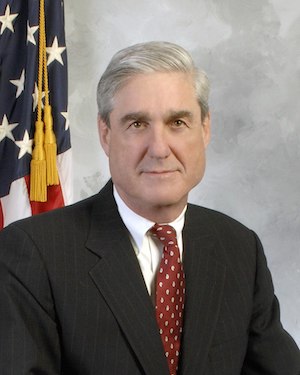
    WASHINGTON (TIP): The U.S. Department of Justice may announce as early as next week that Special Counsel Robert Mueller has given the Attorney-General his report on the federal Russia investigation, CNN said on Wednesday, February 20, citing unnamed sources.

    After the expected announcement, U.S. Attorney General William Barr will review Mr. Mueller’s findings and submit his own summary to Congress, CNN reported. Democrats have been concerned that Mr. Barr, who has discretion over what is ultimately made public, will choose to limit disclosure.

    Under Special Counsel regulations, Mr. Mueller must submit a confidential report to the Attorney-General. Mr. Barr, in turn, is required to provide information on the report to  the judiciary committees of Congress.

  • Parker Jewish Institute for Health Care and Rehabilitation

    Parker Jewish Institute for Health Care and Rehabilitation

    Parker is well positioned to continue its leadership in patient care, teaching and research, on the wings of compassion, excellence and innovation.

    Parker Jewish Institute for Health Care and Rehabilitation in September 2018 held a grand opening ceremony for a new Indian cultural unit, dedicated to enhancing quality of life for patients, residents and families of Indian origin. The dedicated unit was recently treated to a complete makeover, featuring culturally sensitive art, interior design and décor.

    “Parker’s newly renovated space is designed to meet the needs of Queens and Nassau’s growing Indian population,” said president and CEO of Parker, Michael N. Rosenblut. “There is Indian-inspired décor and artwork, celebrating India’s cultural heritage, scheduled Indian recreational activities and entertainment, Indian newspapers and movies and of course, traditional Indian meals made fresh daily, prepared by our chefs.”

    In addition, the unit is staffed by clinical and front-line staff fluent in Indian languages, delivering the excellent care every day that Parker is known for in the community.
    Several team members at Parker coordinated the efforts to implement this new cultural unit.

    “It was such an uplifting experience to be involved in selecting colors and artifacts for the unit, and to know that it represents so much to our Indian families,” said Tara Buonocore-Rut, the executive vice president for corporate strategy.

    The unit features Indian-inspired décor and artwork, celebrating India’s cultural heritage

    Buonocore-Rut commended Saroj Shah, a retired OBGYN, along with her husband Indravadan Shah, a retired surgeon, who together led a committee of local Indian doctors and professionals who worked on the development and planning for Parker’s Indian cultural unit.

    Parker Jewish Institute, which is located at the Queens-Nassau County border in New Hyde Park, is a leading provider of short-term rehabilitation and long-term care. At the forefront of innovation in patient-centred health care and new technology, the institute is also a leader in teaching and geriatric research. Parker Jewish Institute features round-the-clock clinical teams, and is nationally renowned as a skilled nursing facility, as well as a provider of community-based health care, encompassing social adult day care, home health care and a hospice program.

    Indian doctors at the institute – The unit is staffed by clinical and frontline staff fluent in Indian languages

    Since its inception in 1907 as a shelter for 25 indigent men and women, the Parker Jewish Institute has evolved into a nationally recognized 527-bed, non-profit centre for the health care and rehabilitation of adults, and a comprehensive network of community health care programs for adults. It is also a leading academic campus for the training of health care professionals, and an important research centre for studies related to aging. The Parker Jewish Institute is a teaching affiliate of Albert Einstein College of Medicine and Long Island Jewish Medical Centre.

    The Institute was established by a group of benefactors as a shelter for homeless older people. From a single room in a private house in East Harlem, the group, incorporated as the Harlem House of the Daughters of Israel in 1914, moved to a three-story brownstone at 32 East 119th Street, and then, in 1925, to an eight-story building at 1260 Fifth Avenue in Manhattan. Enlarged facilities enabled Parker’s forerunner to care for increasing numbers of immigrants and other New Yorkers who sought assistance.

    The Home gradually expanded its services to include health care. With the influx of refugees in the 1930s and 1940s, the Home accepted older and more infirm residents, and made provisions for more intensive care. Reflecting these trends, the Home changed its name in 1943 to the Home and Hospital of the Daughters of Israel. It was supported completely by private contributions. Like its predecessor, the Home and Hospital outgrew its facilities and mission. The medical problems of its residents were too complex for the staff and equipment to handle properly, a more sophisticated care and a modern facility were needed.

    Indian Nurses. L-R: Satvir Kaur, RN; Kathleen Keegan, Director of Recreation Therapy; Rita Ramsahai, Therapeutic Recreation Leader; Kirandeep Kaur, RN; Prasanna Nair, RN, Nurse Manager.

    Planning began for a facility that could implement a new concept in health care for the aged. The Trustees envisioned a prototype institution, the first of its kind in the United States that would provide total care for the geriatric patient. Its orientation would be unique: rehabilitation, restoration, and return to the community. This geriatric facility would not be the “last stop” for its patients. To the contrary, it would be an inspiration to continued life. It would treat patients with physical disabilities as well as mental and behavioural disorders. And, it would conduct research and educational programs.

    The Board’s vision was realized with the purchase of a 5-acre parcel of land adjacent to the Long Island Jewish-Hillside Medical Centre at the Queens/Nassau border, the construction of an eight-story geriatric centre, and the opening of the Jewish Institute for Geriatric Care in March 1972. In 1988, the name was once again changed, this time to recognize the many contributions of the Parker family, and the facility was renamed “Parker Jewish Geriatric Institute.” Its current name was chosen in 1997 to reflect the wide range of rehabilitation services provided. Thus, they are now known as the Parker Jewish Institute for Health Care and Rehabilitation.

    In 2010, Parker expanded services to include on-site dialysisand medical ambulette transportation. The Queens-Long Island Renal Institute, Inc.opened its doors on the lobby level of Parker, providing chronic haemodialysis in an award-winning, state-of-the-art environment, for both inpatients and residents of the community. In addition, Lakeville Ambulette Transportation, LLCoffers the patients and residents of Parker Jewish Institute, as well as adults in the communities, nursing homes and health care facilities of New York City and Long Island, professional transportation to medical appointments, nursing homes and related destinations.

    Continuing its leadership in the introduction of new technology to long-term care, the Parker Jewish Institute for Health Care and Rehabilitation and Long Island Jewish Medical Centre implemented the first electronic medical transfer.

    The Nerken Center for Research, a division of the Parker Jewish Institute for Health Care and Rehabilitation, is devoted specifically to the study of emerging issues of aging.  Through a professionally organized and administered program of scientific research, the Center actively confronts the many challenges resulting from a longer span. The work of the center focuses on research development activities that facilitate the realization of both new and existing research opportunities and scholarly activities that address important needs and the acquisition of information that will contribute to a greater understanding of the variables and complexities of the aging process. The Nerken Center was established in 1982 through an endowment by the late Jean and Albert Nerken. The Center exemplifies Parker’s advocacy of geriatric research, offering an expanded capability to mount a broad spectrum of studies.

    As a non-profit organization, the Institute is governed by a voluntary Board of Trustees comprised of community, business and professional leaders from throughout the greater New York metropolitan area. Representing a broad spectrum of industries and experience, Parker’s Trustees actively lend their expertise by working in partnership with Administration on task forces and committees. Each Trustee brings his/her unique talents to strengthen the Institute, while sharing a steadfast commitment to the Institute’s mission and vision – providing the highest quality, most compassionate health care and rehabilitation to older adults.

    Today’s Parker is well positioned to continue its leadership in patient care, teaching and research, on the wings of compassion, excellence and innovation.


  • Body of seven-year-old girl who died at US border completes final journey home to Guatemala

    Body of seven-year-old girl who died at US border completes final journey home to Guatemala

    Guatemalan Foreign Ministry sent a diplomatic note to the US State Department asking to monitor the case and determine cause of death.

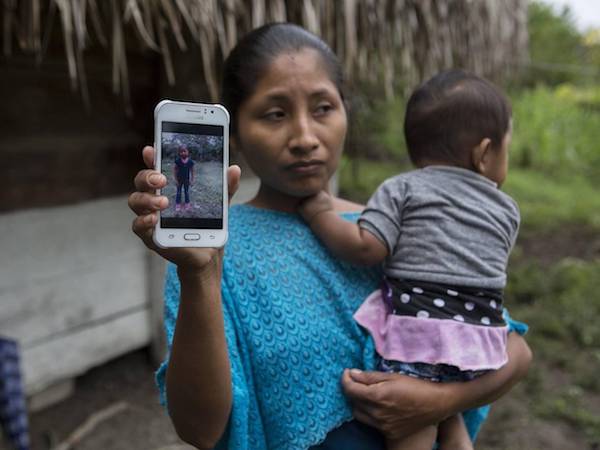
    RAXRUHA, GUATEMALA(TIP): The body of a seven-year-old girl who died while in custody of the US Border Patrol arrived in her native Guatemala on Sunday, December 23 and was being driven hours into the countryside to be handed over to family members for a last goodbye.

    A white coffin containing Jakelin Caal was received in the afternoon at Guatemala City’s international airport by representatives of the country’s Foreign Ministry and then loaded into the back of a black hearse by workers in orange vests.

    No family members were on hand. Domingo Caal, the girl’s grandfather, told The Associated Press that the family didn’t have enough money to travel from their poor hamlet to Guatemala’s capital.

    At Domingo Caal’s home in the village of San Antonio Secortez, in the department of Alta Verapaz, relatives set up a small wooden altar flanked by vases overflowing with flowers, with photographs of Jakelin and the hand-lettered message, “We miss you.” Behind the house, dozens of women prepared tamales and beans to feed mourners.

    Relatives expected the body to arrive in the pre-dawn hours Monday in the hamlet of about 420 people who mostly live off growing corn and beans. The village has no paved streets, running water or electricity, and residents say declining crop yields and a lack of work have pushed many in the community to emigrate in recent years.

    (Source: The Independent)


  • Dow falls below 23,000 for first time in 14 months

    Dow falls below 23,000 for first time in 14 months

    NEW YORK(TIP): Stocks tumbled Wednesday, December19, as investors fretted over a growing list of concerns, including slowing economic growth, trade policy and the threat of a U.S. government shutdown.

    The Dow lost 464 points, or 2 percent, to close at 22,860, the first time the blue-chip index has closed below 23,000 points since October of 2017. The Dow has lost nearly 1,700 points, or 7 percent, over the last six trading sessions.

    The selling in the last two days came after the Federal Reserve raised interest rates for the fourth time this year and signaled it was likely to continue raising rates next year, although at a slower rate than it previously forecast.

    Markets are also concerned about the ongoing trade dispute between the U.S. and China, which has lasted most of this year and shows few signs of easing, and forecasts for a dip in economic activity next year.

    The broader S&P 500 closed at a 15-month low, while Nasdaq also lost ground – the tech-heavy index is now down 20 percent from its peak in August.

  • Brigadier Kuldip Singh Chandpuri, hero of 1971 Battle of Longewala, dies at 78

    Brigadier Kuldip Singh Chandpuri, hero of 1971 Battle of Longewala, dies at 78

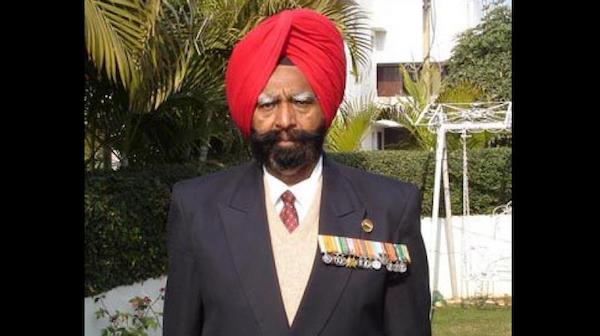
    CHANDIGARH(TIP): Brigadier Kuldip Singh Chandpuri (retd), who is known as the hero of the historic 1971 Battle of Longewala, died on Saturday, November 17,  in a private hospital in Mohali, his family said. He was 78.

    Brig Chandpuri was suffering from cancer, his family said.

    He is survived by his wife and three sons.

    Kuldip Singh Chandpuri was a major in 23 Punjab when the Pakistan Army attacked the Longewala post in Rajasthan, India, early in the Indo-Pakistani War of 1971. Chandpuri and his company of 120 soldiers defended the post, in spite of considerable odds, against the 2000-3000 strong assault force of the Pakistani 51st Infantry Brigade, backed by the 22nd Armored Regiment. Chandpuri and his company held the Pakistanis at bay for a full night until the Indian Air Force arrived to provide air support in the morning.

    Chandpuri inspired his men, moving from bunker to bunker, encouraging them to beat back the enemy until reinforcements arrived. Chandpuri and his men inflicted heavy casualties on the enemy and forced them to retreat, leaving behind twelve tanks. For his conspicuous gallantry and leadership, Chandpuri was awarded the Maha Vir Chakra (MVC) by the government of India.

    A Bollywood film on the Battle of Longewala, made in 1997, with Sunny Deol playing Major Kuldip Singh Chandpuri, has immortalized the real hero in celluloid.


  • US to allow 8 countries to continue buying Iran oil after sanctions on Nov 5: Pompeo

    US to allow 8 countries to continue buying Iran oil after sanctions on Nov 5: Pompeo

    India may be one of the countries to get exemption

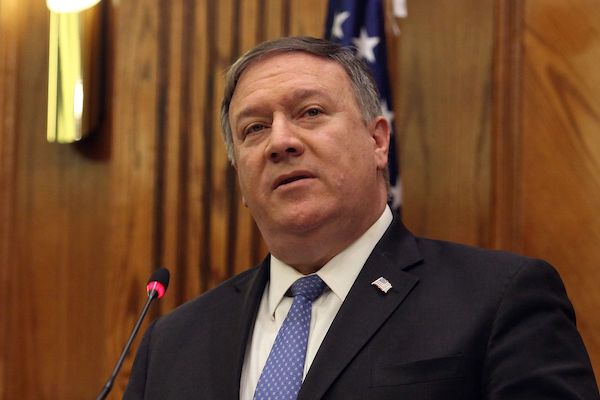
    WASHINGTON(TIP): The US has agreed to temporarily allow eight countries to continue buying Iranian oil after it re-imposes crippling sanctions on Tehran on November 5, Secretary of State Mike Pompeo said on Friday, citing “significant reductions” in imports of oil from the Persian Gulf nation.

    India is one of the countries expected to get the exemptions. But senior administration officials refused to spell out the names on Friday.

    The list of these exemptions would be announced on Monday, November 5,  Pompeo told reporters during a  conference call on Iranian sanctions, with US Treasury Secretary Steven Mnuchin.

    While the US had previously wanted countries including India to completely halt oil purchases from Iran by November 4 when its full sanctions against Tehran come into force, it seems to have relented considering the havoc the move to completely take out Iranian supplies from the market would have had on prices.

    Pompeo said that countries like India, if it gets the exemption, would be asked to bring down their oil imports from Iran to zero in six months’ time.

    Negotiations are still ongoing, he said explaining the reasons for not revealing the names of the countries that are expected to get exemptions from the US from this latest and so far the toughest American sanctions on Iran.

    “We expect to issue some temporary allotments to eight jurisdictions, but only because they have demonstrated significant reductions in their crude oil and cooperation on many other fronts and have made important moves towards getting to zero crude oil importation. These negotiations are still ongoing. Two of the jurisdictions will completely end imports as part of their agreements. The other six will import at greatly reduced levels,” Pompeo said.

    These economic sanctions are just a part of the US government’s total effort to change the behavior of the Iranian regime, he said.

    “On November 5th, the United States will re-impose sanctions that were lifted as part of the nuclear deal on Iran’s energy, shipbuilding, shipping and banking sectors. These sanctions hit at core areas of Iran’s economy. They are necessary to spur changes we seek on the part of the regime,” he said.

    “In order to maximize the effect of the president’s pressure campaign, we have worked closely with other countries to cut off Iranian oil exports as much as possible,” Pompeo said.

    The expected list of exemptions to eight jurisdictions, that too temporary, is far less than the 20 countries, including India, which were exempted from Iranian sanctions during the previous Obama administration, he said.

    “We will have issued, if our negotiations are completed, eight and have made it clear that they are temporary,” he said.

    “Not only did we decide to grant many fewer exemptions, but we demanded much more serious concessions from these jurisdictions before agreeing to allow them to temporarily continue to import Iranian crude oil. These concessions are critical to ensure that we increase our maximum pressure campaign and accelerate towards zero,” Pompeo said.

    As a result of the latest sanctions, he said the US expects to have reduced Iranian crude oil exports by more than 1 million barrels even before these sanctions go into effect. “This massive reduction since May of last year is three to five times more than what many analysts were projecting when President Trump announced our withdrawal from the deal back in May,” he said.

    “Starting today, Iran will have zero oil revenue to spend on any of these things. Let me say that again: Zero. 100 percent of the revenue that Iran receives from the sale of crude oil will be held in foreign accounts and can be used by Iran only for humanitarian trade or bilateral trade in non-sanctioned goods and services,” he said.

    Pompeo said the latest US sanctions are targeted at the regime, not the people of Iran who have suffered grievously under this regime.

    “It’s why we have and will maintain many humanitarian exemptions to our sanctions, including food, agriculture commodities, medicine and medical devices,” he said.

    India, which is the second biggest purchaser of Iranian oil after China, is willing to restrict its monthly purchase to 1.25 million tons or 15 million tons in a year (300,000 barrels per day), down from 22.6 million tons (452,000 barrels per day) bought in 2017-18 financial year, sources in New Delhi said.

    The US will also demand the Society for Worldwide Interbank Financial Telecommunication (SWIFT) global financial network stop supporting Iranian banks as part of enforcing sanctions over Tehran’s nuclear program and alleged support for terrorism.

    In May, President Donald Trump pulled the US out of the 2015 landmark Joint Comprehensive Plan of Action (JCPOA) terming it “disastrous”. Under the Obama-era deal, involving five permanent members of the UN Security Council and Germany, Iran agreed to stop its nuclear program in exchange for relief from economic sanctions.

    After the US’ withdrawal from the deal, Trump signed fresh sanctions against Iran and warned countries against any cooperation with Tehran over its controversial nuclear weapons program.

    Iran has dismissed these charges and maintains that its nuclear program is for peaceful purposes.

    (Source: PTI)

  • Union Minister  Piyush Goyal to Receive University of Pennsylvania’s Top Prize in Energy Policy

    Union Minister Piyush Goyal to Receive University of Pennsylvania’s Top Prize in Energy Policy

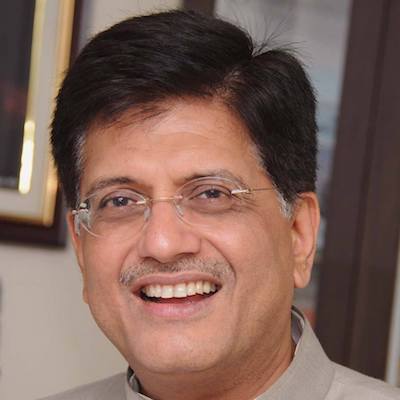
    NEW YORK(TIP): On October 19, 2018, the Kleinman Center for Energy Policy at the University of Pennsylvania will award Energy Policy’s 2018 Carnot Prize to Mr. Piyush Goyal, Minister of Railways and Coal, Government of India. The award ceremony will be held at Kleinman Center Forum, 220 S. 34th St., Philadelphia, PA 19104.

    The award is being given to Mr. Goyal for his leadership in fostering conditions for policy innovation that support a just and efficient transition to sustainable energy. The award also recognizes Mr. Goyal’s contributions to reforming India’s power sector, expanding renewable energy and fast tracking electrification of 18,000 remote villages in India.

    While at Penn, Mr. Goyal will also have a recorded podcast conversation with Energy Policy Now host Andy Stone, meet with Penn students with interests in energy and India, and be a featured guest on the radio talk show Knowledge@Wharton.

    On October 20, 2018, Mr. Goyal will interact with members of Indian Diaspora at 05:30 pm at TV Asia Auditorium, 76 National Rd, Edison, NJ 08817. On October 22, 2018, he will speak on growth and economic reforms in India at Columbia University, Room 1501, 420 West 118th Street, New York, NY 10027.

    (Based on a Press Release)

  • Automaker Ford plans layoffs blames Trump tariffs for $1 billion loss: report

    Automaker Ford plans layoffs blames Trump tariffs for $1 billion loss: report

    NEW YORK(TIP): Ford’s reorganization could include upwards of 24,000 job cuts, NBC News reported Monday, Oct 8. The automaker has not provided hard figures on the number of employees it will let go, but its leaders have said President Donald Trump’s tariff war with China could impact the company’s overhaul.

    The NBC report cited a Morgan Stanley analysis that estimates a 12 percent reduction in Ford’s global workforce, resulting in the loss of roughly 24,000 workers. Bob Shanks, Ford’s chief financial officer, described the cutbacks as a “redesign” that would include its 70,000 white-collar employees.

    With sales lagging well behind its domestic competitor General Motors, Ford has launched a $25.5 billion reorganization plan. It began in earnest in May 2017 when then-CEO Mark Fields was removed.

    The company has previously announced it would drop production of its sedan, wagon and coupe models — save for the popular Mustang — and concentrate on SUVs and trucks.

    Meanwhile, Ford has found itself regularly at odds with the president. As a candidate, Trump threatened Ford with tariffs when it proposed building a plant in Mexico. The company backed out of those plans and opted to expand in China instead.

    The main blow from the Trump tariffs have delivered to automakers has been in the cost they have added to many of the parts they import from China.

    (Source: NOLA.com)

  • The voice that is great within us

    The voice that is great within us

    By Ananya Vajpeyi

    The crises in Indian democracy and in global politics send one immediately to consult Gandhi.

    Truth, Satya, was the central axis of the Gandhian system of thought and practice. For Mohandas Karamchand Gandhi, everything turned on Truth — satyagraha, swaraj, ahimsa, ashram, brahmacharya, yajna, charkha, khadi, and finally, moksha itself. In a fine introduction to a new critical edition of the Mahatma’s An Autobiography or The Story of My Experiments with Truth, Tridip Suhrud, closest to Gandhi among all contemporary scholars, lays out the intricate web of ideas arranged around the axial principle of Truth: “Truth is not merely that which we are expected to speak and follow. It is that which alone is, it is that of which all things are made, it is that which subsists by its own power, which alone is eternal.”

    In a recent interview, Mr. Suhrud points out that Indians today continue to have “the need that he should always be available to us. When there is a crisis in our collective life, we expect Gandhi to provide an answer.” Both of Mr. Suhrud’s insights — that Truth is the key to Gandhi’s philosophy, and that we rely on Gandhi even decades after his death and long after his supposed lapse into political irrelevance — are essentially correct. I started making a note of the crises in Indian democracy and in global politics that sent one immediately to consult Gandhi.

    For Mohandas Karamchand Gandhi, everything turned on Truth — satyagraha, swaraj, ahimsa, ashram, brahmacharya, yajna, charkha, khadi, and finally, moksha itself.

    Truth alone triumphs?

    The ongoing controversy in the United States about the proposed appointment of Federal Judge Brett Kavanaugh to the U.S. Supreme Court as the nominee of the Republican Party, even as he stands accused of sexually assaulting Christine Blasey Ford, in 1982, when they were both teenagers, hinges exactly on the truth of her testimony versus his defense. Only one can be true. As became clear in the Senate hearings on September 27, the palpable veracity of Professor Ford’s account over Judge Kavanaugh’s denial would likely still not change the Republican Party’s nomination of him (the outcome of the proceedings, including an FBI investigation, is pending as this article goes to press).

    Effectively, the U.S. appears on the verge of replacing Truth with perjury as an acceptable value, even in the apex court of the criminal-justice system, shaking the very bedrock of American constitutionalism. When Truth is rendered negotiable and dispensable, the balance of justice — in this case, between genders and between political parties — is disastrously upset. The scales tip wildly without any kind of mechanism to orient men and women or Democrats and Republicans back into an equitable relationship with one another within a shared political context that ought to be egalitarian and fair.

    Like other democratic institutions in the Donald Trump presidency, the U.S. Supreme Court seems poised on the verge of destruction. Arguably Americans, too, could have recourse to Gandhi, though perhaps not in the way that we in India might. Mr. Suhrud describes how Gandhi strained to hear the “small, still voice” within himself, the voice belonging to one he called “antaryami”, “atma” or “God” — an inner prompt, the self as a guide and a compass – so that he could keep moving ever closer to Truth.

    It was this voice that he followed, sometimes to the bafflement of others who could not hear it. This was the voice that made him undertake life-threatening fasts his health wouldn’t permit; withdraw from active politics at the most crucial junctures of India’s anti-colonial struggle; leave factual errors and narrative inconsistencies in texts he wrote after readers had pointed out obvious mistakes; and, most difficult to understand, embark on life-long ordeals of a sexual nature, involving not just his own celibacy and asceticism, but also that of his wife Kasturba, his fellow Ashramites, and his sons and their families.

    Even close and loyal associates like Jawaharlal Nehru and Vallabhbhai Patel were often confounded by Gandhi’s actions and decisions; more skeptical and antagonistic peers like M.A. Jinnah and B.R. Ambedkar couldn’t make sense of his motivations at all. In his monumental new history, Gandhi: The Years that Changed the World, 1914-1948, Ramachandra Guha delves deep into these knotty episodes, where the voice of the Mahatma’s interior conscience and the compulsions of nationalist politics pull in opposite directions, and no power on earth is able to steer Gandhi away from his self-charted path towards Truth.

    Mr. Guha calls Gandhi’s move to have his young grand-niece Manu sleep next to him, as he travelled through ravaged Hindu and Muslim settlements in Bihar and Bengal during the height of communal violence on the eve of Partition, “the strangest experiment”. No matter what the reactions of his colleagues, for Gandhi it was not strange, precisely because it was one of his ‘experiments with truth’ (in Gujarati, satya na prayogo).

    Home and the world

    Of late, many musicians in south India have faced vicious attacks from rightwing Hindutva groups for singing hymns and psalms, thereby allegedly hijacking “Hindu” Carnatic music for “Christian” evangelical aims. This despite the fact that the violin, central to the Carnatic system in modern times, is a European gift to Indian music, and both Christian and Muslim religious lyrics and poetry have been a constitutive part of the Carnatic repertoire throughout the 20th century, if not before.

    Gandhi made great use of the Bible in his prayers, teachings, writings and Ashram liturgies. He was often accused of being a crypto-Christian. However, he flatly refused to give preference to the Vedas over the Bible. Mr. Suhrud quotes from Vol. 31 of the Collected Works: “He is no Sanatani Hindu who is narrow, bigoted and considers evil to be good if it has the sanction of antiquity and is to be found supported in any Sanskrit book.”

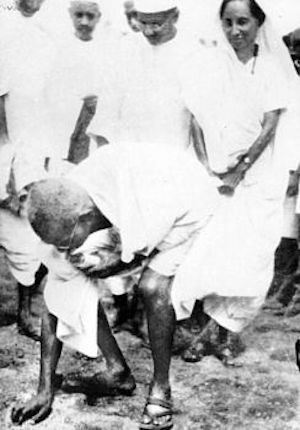
    Outside India but not far from it, Indologist David Shulman has been reporting consistently on the brutal violence of hardline Zionist settlers as well as the Israeli army against unarmed Arab shepherds and villagers in the Jordan Valley. Mr. Guha delves into Gandhi’s difficult correspondence with philosopher Martin Buber and the intellectual J.L. Magnes in 1938-1939, just before the Kristallnacht. Gandhi advised European Jews to relocate to Palestine and make it their homeland only with the cooperation and goodwill of native Arabs, and not otherwise. This appalled even sympathetic Jews like Buber and Magnes, who had admired and supported Gandhi at the time of the Salt March in 1930, before the Nazi takeover of Germany.

    How could Gandhi oppose the Zionist project, with Jews being sent to death camps in Hitler’s murderous regime? But now the tables are turned, and a rightwing Israeli state under Benjamin Netanyahu seems hell-bent on exterminating the Palestinians. Gandhi’s counter-intuitive Truth informs the civil disobedience, passive resistance and non-violent protest of both Arab and Jewish activists who oppose the continuing occupation and takeover of dwindling and defenseless Palestinian territories by bellicose Israeli forces.

    The multilingual translator, editor and interpreter Suhrud (who works in all three of Gandhi’s languages, Gujarati, English and Hindustani, and has earlier produced a critical edition of Hind Swaraj), and the historian and biographer Guha (who has already written two other massive books in the past decade, about Gandhi in the first phase of his life, and about postcolonial India, “after Gandhi”), have together provided ample materials this year — leading up to the 150th anniversary of Gandhi’s birth in October 1869, and the 70th anniversary of his assassination in January 1948 — that we can continue to consult Gandhi on all manner of issues that may trouble our individual or collective conscience. It might have been “small” and “still” in his own perception, but even today, Gandhi’s is the voice that is great within us.

    (The author is a Fellow at the Centre for the Study of Developing Societies, New Delhi).


  • One dead, two arrested after shooting behind Fort Worth shopping center

    One dead, two arrested after shooting behind Fort Worth shopping center

    FORTWORTH, TX(TIP): Fort Worth police arrested two shooting suspects after they ran and attempted to hide inside Hulen Mall.

    The shooting happened behind a shopping center at Hulen Street and South Drive, but the two were captured inside of the mall midday Thursday, October 4, after witnesses saw them and called police.

    The two men were found in the bathroom of a clothing store near the food court and were trying to disguise themselves by changing clothes, police said. The men didn’t resist and were arrested. One of them had a handgun.

    Police say the person the suspects shot at died at the hospital. Witnesses saw him stumble and collapse near the intersection of Hulen and South.

    People who tried to help him at the scene saw at least one gunshot wound on his neck.

    “He had been shot in the neck and bleeding from his neck so bad it covered his whole abdomen,” said witness Chris Lawson. “Plain white t-shirt covered in blood, everybody ran over to help him.”

    Police are investigating witness reports that the victim may have been shot twice.

    Crime scene investigators could be seen Thursday afternoon looking over a car not far from where the victim was found. Detectives are examining how the car is connected to the shooting.

    The names of the two people arrested have not been released.

    (Source: FOX 4)


  • Peace, security in S Asia essential for progress: Swaraj at SAARC meet; Pakistan says India obstructing

    Peace, security in S Asia essential for progress: Swaraj at SAARC meet; Pakistan says India obstructing

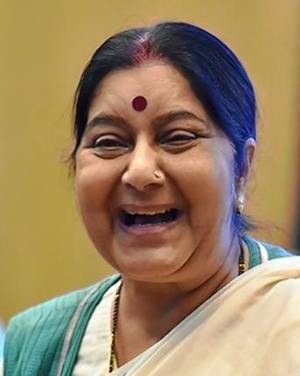
    NEW YORK(TIP): External Affairs Minister Sushma Swaraj emphasized to SAARC countries that an environment of peace and security in South Asia is essential for cooperation and economic development, but Pakistan accused India of obstructing the region’s progress and prosperity.

    Ms. Swaraj’s statement on Thursday, September 27, came at a meeting of South Asian Association for Regional Cooperation on the sidelines of the ongoing United Nations General Assembly session in New York.

    The SAARC grouping includes India, Pakistan and six other regional countries. It was established in December 1985 with an aim to promote the welfare of the peoples of South Asia.

    “An environment of peace and security is essential for regional cooperation to progress and achieve economic development and prosperity of our people,” Ms. Swaraj said at the SAARC Ministers Meeting.

    She said the number of incidents endangering South Asia are on the rise and terrorism remains the single-largest threat to peace and stability in the geopolitical region, and the world.

    “It is necessary that we eliminate the scourge of terrorism in all its forms, without any discrimination, and end the ecosystem of its support,” she said according to sources.

    Shortly after her statement, Pakistan Foreign Minister Shah Mehmood Qureshi told reporters that Pakistan wants to see SAARC become result-oriented.

    “We have to decide the next step. I have no hesitation in saying that in the way of SAARC’s progress and in the way of the region’s connectivity and prosperity, there is only one obstruction and one attitude. The attitude of one nation is making the spirit of SAARC and the spirit of the founding fathers of SAARC unfulfilled,” he said, without naming India.

    Asked if he had talks with Ms. Swaraj at the meeting, Mr. Qureshi denied. “She left the meeting mid-way, maybe she was not feeling well,” he said.

    He said Ms. Swaraj talked about regional cooperation, but “my question is how will regional cooperation be possible when the regional nations are ready to sit together, and you are the obstruction in that dialogue and discussion.”

    Mr. Qureshi said a majority of the members present in the meeting understands the significance of SAARC. “They want to move on. I can’t speak for them, but I can deduce from their body language, disappointment; because if you do not move on and if you do not sit and convene meetings how do you move on,” he said.

    He cited other regional groupings such as ASEAN and the EU and said “look at this (SAARC) atmosphere”

    He called Ms. Swaraj’s statement at the meeting “very vague”.

    He said “you said the next summit will not happen until there is conducive environment. How do you define what conducive environment is? It can vary from country to country.”

    Mr. Qureshi’s remarks came days after New Delhi cancelled a proposed meeting between foreign ministers of India and Pakistan in New York.

    India cited attacks by Islamabad-backed groups in Jammu and Kashmir and stamps released by Pakistan glorifying Kashmiri terrorists as reasons for cancellation of the proposed talks.

    SAARC member-states have previously said they view the strained relations between India and Pakistan as one of the reasons for the little progress achieved by the geopolitical grouping in recent years.

    Nepal And Sri Lanka have expressed interest in reviving the summit postponed in 2016 after New Delhi pulled out over Islamabad’s unrelenting support to terrorist activities in India and after Pakistan-based terrorists attack an Indian Army base in Uri.

    Bhutan, Bangladesh and Afghanistan had also joined India in boycotting the summit.

    SAARC summits are usually held biennially. The member-state hosting the summit assumes the Chair of the association. The last SAARC Summit in 2014 was held in Kathmandu, which was attended by Prime Minister Narendra Modi.

    (Source: PTI)

  • In 41 trips to 52 countries in 4 years, PM Narendra Modi spent Rs 355 crore: RTI

    In 41 trips to 52 countries in 4 years, PM Narendra Modi spent Rs 355 crore: RTI

    NEW YORK(TIP): Of the 41 trips by Modi to 52 countries, the highest amount was spent on his nine-day tri-nation visit to France, Germany and Canada.

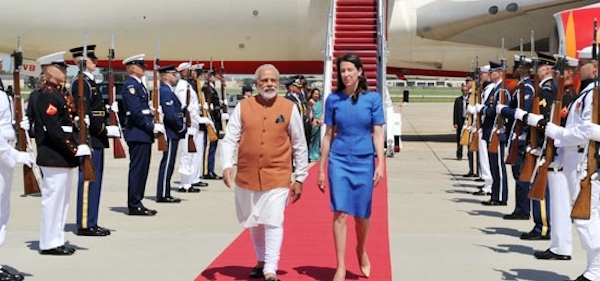
    In his 48 months as Prime Minister, Narendra Modi made 41 trips to over 50 countries, at a total cost of Rs 355 crore.  He was abroad for a cumulative 165 days. The figures are up to Mid-June 2018.

    This was revealed through replies to Right to Information (RTI) queries submitted to the Prime Minister’s Office (PMO) by RTI activist Bhimappa Gadad, who shared these replies with the media.

    Of these 41 trips by PM Modi to 52 countries, the highest amount was spent on his nine-day tri-nation visit to France, Germany and Canada between April 9 and 15, 2015, which incurred expenses to the tune of Rs 31,25,78,000; and the least expensive trip was his very first one as Prime Minister, to Bhutan on June 15-16, 2014 at a cost of Rs 2,45,27,465.

    Gadad, who filed the RTI petition seeking details about expenses on PM’s foreign trips, said he filed it out of curiosity. “A few years ago, I had applied for details of foreign visits by chief ministers of Karnataka. Recently, I was going through news reports wherein Prime Minister’s foreign visits were heavily criticized. Then I applied under RTI seeking details of PM’s foreign visits and I was really shocked to know the details,” he said.

    He is bitter about the PMO not providing information on domestic travels of the Prime Minister. “They have not furnished details of domestic visits and expenses for security provided during the visits. I did not ask for details of security measures. I just asked for the expenses, but they refused, saying the SPG security organization, which takes care of PM security, is exempted from the purview of RTI,” he said.

    “Though I got the information out of curiosity, I want it to reach the public. Everyone should know about it,” he said, adding that the Centre should also release reports on the benefits to the country emerging from these visits.

  • Anupam Kher Enlivens Janmashtami Celebrations in Houston

    Anupam Kher Enlivens Janmashtami Celebrations in Houston

    Manu Shah

    HOUSTON(TIP): Bollywood actor Anupam Kher treated Houstonians to the entire array of his onscreen avatars – serious, comic, patriotic, profound, candid, strong  and yet vulnerable in his address at the  28thJanmashtami celebrations held at George Brown Convention Center on 25 April  Considered one of the finest actors in Bollywood with a soon-to-be-seen debut in Hollywood, the actor who was the Chief Guest of the evening, lived up to every bit of his reputation and spoke for a full hour only broken by applause and appreciative laughter.

    The well attended event which brings all the communities of Houston under one roof to celebrate Lord Krishna’s birth, honors outstanding achievements by members of the community and has a lively session of dandiya to round up the evening is organized by the Hindus of Greater Houston.

    Kher, who arrived on the dot, took seconds to connect with the gathering. With self- deprecating humor, he explained why he came to the event in a formal suit and tie. The kurta he had ordered was three sizes too big! After taking off his jacket and tie and looking visibly more comfortable, he launched into a one hour “conversation” with the gathering using his brilliant storytelling skills, snippets of poetry, anecdotes and rich wit to deliver his serious message – that “failure is an event, not a person.”

    This invaluable lesson was driven home when his parents and grandfather celebrated his academic failures instead of putting him down. Raised in a family that was poor in monetary terms but rich in affection and encouragement, he stated that life’s experiences are the best teachers and his many “encounters with failure” took away the fear of failure.

    He advised the parents in the gathering to teach their children to be strong, to have the “hunger” to succeed, and challenge them without overprotecting them from the realities of life. He added that India’s Prime Minister Narendra Modi has the same “hunger” to take the country forward which is why he has always espoused the Prime Minister’s cause.

    Participants in costume competition

    While dispensing some inspirational advice for the youth he said “Mera gyan meri zindagi keanubhavo se juda hai.(My wisdom comes from life’s experiences). Judging from the audience’s reaction to his speech, the message of learning from our failures and “living life” clearly touched a chord.

    When the applause died down, prominent industrialist Jugal Malani draped a shawl around Anupam Kher while Sushma Pallod tied a rakhi to him to mark Raksha Bandhan. In a gesture that was touching, Anupam Kher reciprocated by giving her the traditional offering of money a brother gives his sister.

    Sanjay Jajoo served as a lively Emcee while HGH President Partha Krishnaswamy appealed for funds for Kerala flood relief. Sewa International has collected $250,000 from generous Houstonians for relief work.

    Two Houstonians were recognized with the Lifetime Achievement Award – CEO of Star Pipes Ramesh Bhutada and Beth Kulkarni.  Well-known philanthropist, Ramesh Bhutada who has served the community unstintingly with his time, effort and resources stated that he was humbled to receive the award and reiterated Anupam Kher’s words on encouraging and “recognizing our children for trying.” In her acceptance speech, Beth, who has served many area organizations in leadership and advisory roles, hoped that the award would inspire other Hindus to serve the community in any way they can. The Akhil Chopra Unsung Heroes Award was presented to Richa Dixit, Manish Khatri and Nisha Bhatia.

    Other highlights of the celebrations included the children’s costume contest where little children dressed as little Krishnas and Radhas, a cultural dance segment, food, apparel and organization booths. A 25 feet in diameter vibrant Rangoli by Sangita Bhutada with the theme of “makhan chor” welcomed visitors to the center.

    First time attendee and IMAGH Secretary Saeed Pathan said that the Janmashtami celebrations and the atmosphere brought back wonderful childhood memories of the festival in India.

    Members of the Young Hindus of Greater Houston (YHGH) also contributed substantially to the smooth execution of the event. YHGH President Raj Salhotra stated “The 2018 Janmashtami celebration showcased Houston’s wonderful tradition of diversity. It was wonderful to witness the outpouring of support from Houston’s youth. We are excited to work with youth from across the city to build an organization that represents Hindus from all backgrounds.”


  • A Sterling Punjabi

    A Sterling Punjabi

    By BRP Bhaskar

    Kuldip Nayar was one of the young millions whose life was disrupted by Partition but rebuilt it and went on to make brilliant contributions in his chosen fields, starting with journalism. Devotion to the fine traditions of Punjab’s composite culture enabled him to overcome the bitterness of the early experience and become a lifelong advocate of India-Pakistan friendship and Hindu-Muslim amity.

    Journalism was Nayar’s first love. He had studied law before landing in Delhi as a refugee but started life as a reporter of an Urdu daily. One of the events he covered at that time was Mahatma Gandhi’s assassination.

    After spending some years in the government’s public relations outfit, during which period he served as information officer to Home Minister Lal Bahadur Shastri, he returned to active journalism as chief of the fledgling United News of India which big newspapers had launched to provide for competition in agency journalism.

    Once out of the government set-up, Kuldip Nayar was keen to follow the path of independent journalism. Since the colonial days, news agencies had limited political reporting to the coverage of briefings and speeches. He broke the self-imposed barrier and pioneered reporting of political developments based on information gathered informally, himself leading the effort.

    Morarji Desai believed that his chances of succeeding Jawaharlal Nehru were botched by Kuldip Nayar’s UNI report which said he had “thrown his hat in the ring”. Desai came under heavy criticism as Nehru’s body was lying in state at the time.

    Nayar, who was in Tashkent to cover for UNI the Indo-Pakistan summit hosted by Soviet Prime Minister Alexei Kosygin after the 1965 war and reported Shastri’s sudden death at midnight there just in time for the morning editions in India.

    After leaving UNI, he began a long innings in English print journalism, first as Resident Editor of The Statesman in Delhi and then as Editor of the Express News Service. He invited Indira Gandhi’s wrath by trying to mobilize public opinion against the Emergency, particularly the restrictions on the media, and was arrested and detained.

    After the Emergency there was a shift in gear which took him briefly into diplomacy and into Parliament.

    Matthew Arnold famously said journalism is literature in a hurry. To Kuldip Nayar, it was instant history. He took the earliest opportunity to put in book form many of the events to which he was a witness as a journalist. The title of his highly successful first book “Between the Lines” was also the title of a column with which he broke new ground. It was syndicated to a large number of newspapers in India and abroad, giving him a reach none of his contemporaries could claim. Many foreign publications turned to him for insights on Indian and South Asian developments.

    Human rights were one of Kuldip Nayar’s primary concerns. He often went beyond the confines of journalism and articulated them as an activist. He regularly led peace activists to the Wagah border to light candles on August 14 and 15 as Pakistan and India celebrated their Independence anniversaries.

    A staunch secularist, in the last four years, Kuldip Nayar repeatedly raised his voice against the organized attempts at communal polarization.

    Born in Sialkot in 1923. Began his career in journalism in Urdu press.

    Nayar was in Tashkent when Lal Bahadur Shastri died. Soon after midnight on January 11, 1966 when most newspapers in India had gone to bed, Nayar phoned in the flash to the United News of India.

    High Commissioner of India to the United Kingdom in 1990 and Member of the Rajya Sabha in 1997

    Honored with ‘Lifetime Achievement Award’ at the eighth edition of the Ramnath Goenka Excellence awards for his contribution to the field of journalism in 2015

    Opposed the Defamation Bill introduced by the Centre in the late 1980s, seen as an attempt to contain free speech in India. It was later withdrawn by the Union government.

    Article titled ‘Immigrants or vote banks?’ was published in the Nagpur edition of the Lokmat Times on Thursday morning, hours after his death.

    (The author is a Senior journalist and Nayar’s former colleague)

  • US Attorney General Jeff Sessions hits back at Trump criticism

    US Attorney General Jeff Sessions hits back at Trump criticism

    WASHINGTON(TIP): Stung by US President Donald Trump’s criticism of him as being unable to take control of the Justice Department, attorney general Jeff Sessions came out with a strong rebuttal.

    Sessions, in a rare rebuttal to Trump, issued a statement defending the integrity of his department.

    “I took control of the Department of Justice the day I was sworn in,” he said. “While I am attorney general, the actions of the Department of Justice will not be improperly influenced by political considerations.”

    Sessions, a longtime US senator and early supporter of Trump’s presidential bid, drew Trump’s ire when he recused himself in March 2017 from issues involving the 2016 White House race.

    That removed him from oversight of the federal special counsel’s investigation of Russia’s role in the election and whether Trump’s campaign worked with Moscow to influence the vote. Trump has repeatedly called the investigation a witch-hunt and maintained there was no collusion.

    Trump told Fox that Sessions should not have recused himself from Russia-related matters.

    “He took the job and then he said, ‘I’m going to recuse myself,’” Trump said. “I said, ‘What kind of a man is this?’”

    However, Trump told “Fox & Friends” he would “stay uninvolved” in department matters.

    Trump intensified his criticism of the Justice Department in a Fox News interview broadcast on Thursday, August 23, as the White House grappled to respond to the conviction of former Paul Manafort, Trump’s former campaign chairman, on multiple fraud counts and a plea deal struck by Michael Cohen, Trump’s former personal lawyer, that implicated the president.

    Trump reprised a litany of complaints about the Justice Department and the FBI, attacking both without providing evidence they had treated him and his supporters unfairly.


  • Russia faces US sanctions over poisoning of Skripal in UK

    Russia faces US sanctions over poisoning of Skripal in UK

    WASHINGTON(TIP): The US has said it will impose fresh sanctions on Russia after determining it used nerve agent against a former Russian double agent living in the UK.

    Sergei Skripal and his daughter Yulia were left seriously ill after being poisoned with Novichok in Salisbury in March, though they have now recovered.

    A UK investigation blamed Russia for the attack, but the Kremlin has strongly denied any involvement.

    Russia has criticized the new sanctions as “draconian”.

    In a statement released on Wednesday, August 8, the US State Department confirmed it was implementing measures against Russia over the incident.

    Spokeswoman Heather Nauert said it had been determined that the country “has used chemical or biological weapons in violation of international law or has used lethal chemical or biological weapons against its own nationals”.

    “The strong international response to the use of a chemical weapon on the streets of Salisbury sends an unequivocal message to Russia that its provocative, reckless behavior will not go unchallenged,” a UK Foreign Office statement said.

    The Russian embassy in the US hit back on Thursday morning, criticizing what it called “far-fetched accusations” from the US that Russia was behind the attack.

    Russia had become “accustomed to not hearing any facts or evidence”, it said, adding: “We continue to strongly stand for an open and transparent investigation of the crime committed in Salisbury.”

    The new sanctions will take effect on or around 22 August and relate to the exports of sensitive electronic components and other technologies.

    The State Department said “more draconian” sanctions will follow within 90 days if Russia fails to give reliable assurances it will no longer use chemical weapons and allow on-site inspections by the United Nations.

    An official said it was only the third time that the US had determined a country had used chemical or biological weapons against its own nationals.

    Previous occasions were against Syria and against North Korea for the assassination of Kim Jong-nam, the half-brother of leader Kim Jong-un, who died when highly toxic VX nerve agent was rubbed on his face at Kuala Lumpur airport.

    Are these the only US sanctions against Russia?

    No. In June the US imposed sanctions on five Russian companies and three Russian individuals in response to alleged Russian cyber-attacks on the US.

    All are prohibited from any transactions involving the US financial system.

    Treasury Secretary Steven Mnuchin said the measures were to counter “malicious actors” working to “increase Russia’s offensive cyber-capabilities”.

    After pressure from Republican members of Congress, the State Department has determined Moscow broke international law by using a military grade chemical weapon on the Skripals.

    While the US expelled some five dozen diplomats shortly after the poisoning, the administration stopped short of making a formal determination that Russia had broken international law.

    But Congress has been pushing for such a decision and now the state department has confirmed Russia’s actions contravened 1991 US legislation on the use of chemical weapons. That breach automatically triggers the imposition of sanctions and places requirements on Russia to avert further restrictions in three months’ time.

    Those requirements could include opening up sites in Russia for inspection – a move Moscow would probably resist.

    So far President Donald Trump has been silent on this latest move – which could well derail his attempts to develop a new, warmer relationship with Vladimir Putin.

    Following the incident, the British government said the military-grade nerve agent Novichok, of a type developed by Russia, had been used in the attack.

    Relations between Russia and the West hit a new low. More than 20 countries expelled Russian envoys in solidarity with the UK, including the US. Washington ordered 60 diplomats to leave and closed the Russian consulate general in Seattle.

    Three months after the Salisbury attack, two other people fell ill at a house in Amesbury, about eight miles from the city. Dawn Sturgess later died while her partner, Charlie Rowley, spent three weeks recovering in hospital.

    After tests, scientists at the UK’s military research lab, Porton Down, found the couple had also been exposed to Novichok.

    Mr Rowley told ITV News he had earlier found a sealed bottle of perfume and given it to Ms Sturgess, who sprayed the substance on her wrists.

  • 3 Fort Worth bank employees shot during attempted robbery

    3 Fort Worth bank employees shot during attempted robbery

    FORT WORTH, TEXAS(TIP): Three employees were shot during an attempted bank robbery in the Arlington Heights neighborhood of Fort Worth Thursday, July 19 morning.

    Fort Worth Police Department’s Officer Chris Britt said it happened around 9:20 a.m. at the Veritex Community Bank on Merrick Street.

    According to preliminary reports, at least two men walked into the bank with weapons and fired shots.

    Three of the bank’s female employees were shot. All were taken to area hospitals in serious condition. Their injuries appear to be non-life-threatening, according to MedStar officials.

    The president and CEO of Veritex Community Bank said “we ask for a healthy and positive outcome for our three teammates which we believe is the best medicine. We will provide the Fort Worth Police Dept. With any assistance and cooperation they request of us. “

    Officers are still searching for the gunmen in the area. Britt did not have a description of them and said it’s not yet clear if they got away on foot or in a car.

    A home on Blackmore Avenue was surrounded by heavily armed police for nearly four hours. Investigators are gathering evidence at the scene where three people were detained in the area of this home.

    Just after 11 a.m., officers swarmed around the home in the 5700 block of Blackmore Avenue. A woman that was inside the home walked out frantically as guns were aimed at her.

    SWAT team members arrived on the scene and secured the perimeter of the home and nearby residents were evacuated just as a precaution.

    Police and Federal agents on the scene told FOX 4 News this white vehicle in the driveway next door was the suspect’s vehicle from the bank shooting.

    Two Fort Worth PD armored vehicles moved into the front of the home to provide officers with cover. From Sky 4, a huge police presence could be seen and SWAT officers strategically placed all around the home.

    For several hours, police worked patiently to try to make contact with who might be inside. Once a search warrant was obtained SWAT members moved into the home.

    Police say they have three people detained, but it’s still not clear if they are connected to the attempted bank robbery.

    “If anybody in the area saw anything unusual, vehicles leaving the scene quickly that now hearing about this seems odd, if they were any people running from the area that seems odd… if you saw anything that might seem unusual, please give us a call,” he said.

    One resident who lives in Arlington Heights described it as a very old and quiet neighborhood.

    “There are a lot of businesses and a lot of residences mixed together so as far as I know, this is very unusual for there to be a shooting here. But there is a lot of petty crime in the area as there is all over the city and the county,” said Brent Hyder, who lives in Arlington Heights.

    He called the shooting appalling.

    “I’m really sad for those ladies. That’s just unconscionable,” he said.

    Veritex’s Merrick Street branch is closed for the day, the bank said on its website.

    The FBI has the lead role on the investigation as authorities continue their effort to ID the suspects from evidence in the bank and any possible surveillance video.

    (Source: FOX 4)