
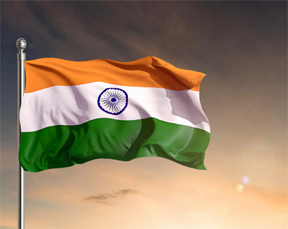

For Indians abroad, patriotism should mean more than flags, parades and memories of Mother India
There was something deeply moving about watching Indians across the world celebrate India’s 80th Independence Day.
In New York, the Tricolor flew in Times Square. Madison Avenue became a river of saffron, white and green. The Empire State Building wore India’s colors. Elsewhere across America and around the world, Indian communities organized flag-hoistings, parades, cultural programs and elaborate celebrations.
One cannot but feel pleased.
Here are people who left India years, sometimes decades, ago. Many are now citizens of other countries. Their children and grandchildren may know India largely through family, occasional visits, food, music, language and stories.
And yet, when August 15 arrives, something stirs.
They bring out the Tricolor, sing Jana Gana Mana and remember the generations whose sacrifices gave India freedom.
There is beauty in that remembrance.
Indeed, one sometimes encounters larger community celebrations of India’s Independence Day abroad than in many Indian cities and towns, outside official ceremonies.
There are understandable reasons.
The immigrant needs community. Away from home, national and cultural occasions become instruments of belonging. They bring scattered people together and help transmit identity to the next generation.
Prosperity plays its part too. Many overseas Indians have achieved financial comfort. They can organize magnificent parades, hire celebrated venues, invite movie stars and political leaders, build elaborate floats and illuminate famous landmarks.
There is nothing wrong with that.
Celebrate India. Celebrate magnificently. Be proud of where you came from.
But perhaps Independence Day should ask something more of us.
DO WE LOVE INDIA—OR ONLY OUR MEMORY OF INDIA?
For Indians abroad, there is a danger that India gradually becomes an abstraction—Mother India: ancient, spiritual, colorful, magnificent and remembered with affection.
But Mother India is made of people.
She is the mother outside a government hospital wondering whether her child will receive treatment.
She is the farmer uncertain whether another difficult season will push his family deeper into debt.
She is the educated young person carrying degrees but unable to find meaningful employment.
She is the worker whose labor keeps cities functioning while economic security remains distant.
She is also the citizen belonging to a minority who fears discrimination and looks to India’s Constitution for its promise of equal citizenship.
If we love Mother India, can we remain indifferent to her children?
India’s achievements are undeniable. Its economy has grown enormously. It has built formidable scientific and technological capabilities and produced extraordinary entrepreneurs, physicians, engineers, scientists and academics. Hundreds of millions have experienced material improvements unimaginable at Independence.
The diaspora is entitled to celebrate those achievements.
But patriotism should not permit only applause.
India continues to face poverty and inequality, unemployment and underemployment, agricultural distress, uneven access to quality education and healthcare, allegations of corruption and continuing concerns about minority rights and institutional fairness.
The anxieties expressed by India’s young people deserve particular attention. A nation possessing one of the world’s largest young populations has an extraordinary demographic opportunity—but only if education leads to skills, skills to employment, and hard work to reasonable hope of advancement.
A demographic dividend can become a source of frustration if millions of young people see no road ahead.
Surely their India deserves a place in our Independence Day conversations too.
PATRIOTISM MUST HAVE CONSCIENCE
This is not an invitation to Indians abroad to become permanent critics of India. Nor should someone living comfortably in New York, London, Toronto or Sydney presume to understand every complexity confronting 1.4 billion people.
But there is a difference between criticism and concern.
Love that cannot tolerate a question is not patriotism. It is adulation.
If overseas Indians can mobilize enormous resources for parades and banquets, they can mobilize resources for scholarships.
If they can sponsor celebrity appearances, they can help a rural school.
If they can finance magnificent floats, they can help equip a clinic.
And if they can gather thousands to celebrate India for a day, they can devote some time to understanding the India that does not appear on the parade float.
Philanthropy cannot substitute for good government. India’s political future must be determined by its citizens, and its institutions must solve the country’s structural problems.
But the diaspora can care. It can listen. It can help.
And when conscience requires it, it can speak.
AND WHAT OF THE COUNTRY THAT GAVE US A NEW HOME?
There is another question Indians abroad should confront.
We display extraordinary enthusiasm for August 15. Do we show comparable enthusiasm for the national days of the countries we have chosen to make our homes?
For Indian Americans, July 4 is not somebody else’s Independence Day. It is ours.
America educated many of us, employed us and gave us opportunities to establish businesses, buy homes and raise families. It allowed us to build temples, gurdwaras, mosques and cultural institutions; publish newspapers; enter public life; and rise to the highest levels of medicine, science, technology, academia and enterprise.
America did not ask us to stop loving India before allowing us to love America.
That generosity deserves reciprocity.
An American citizen of Indian origin does not diminish India by enthusiastically celebrating July 4. Nor does an Indian Canadian betray India by embracing Canada Day.
Gratitude to the country that gave you opportunity is not betrayal of the country that gave you birth.
One can love both.
Indeed, this year’s coincidence carries special meaning: India at 80 and America at 250. What better moment for Indian Americans to acknowledge the two countries that have shaped their lives?
FROM DISPLAY TO RESPONSIBILITY
So let Madison Avenue fill with Tricolors.
Let Times Square celebrate India. Let children dance, bands play and families rejoice. Let Vande Mataram be sung proudly.
But when the music ends and the flags are folded away, remember the India beyond the celebration—the unemployed graduate, the indebted farmer, the poor mother struggling to educate her children, the marginalized citizen asking whether the Republic sees everyone equally.
They too are India.
And when July 4 comes, do not leave the Stars and Stripes to somebody else.
Bring out that flag too.
Tell your children about the country in which they are building their future. Teach them that preserving their Indian inheritance and embracing their American citizenship are not contradictory obligations.
Our identities need not compete.
We can honor the land of our ancestors while loving the land our children call home.
And we can love Mother India without turning our eyes away from the mothers of India who still struggle.
That is the patriotism worthy of Indians abroad:
Celebrate India’s achievements. Care about India’s shortcomings. Help India’s people. And honor wholeheartedly the nation that welcomed you and gave you the opportunity to prosper.
The Tricolor should remind us not only where we came from, but also of those we left behind.
And the flag of our adopted country should remind us, with gratitude, where we now belong.
There is room in an honorable heart for both.
Long Live India! God Bless America!


Be the first to comment