
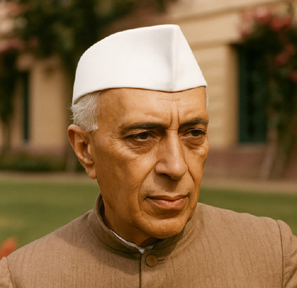

The very institutions that Jawaharlal Nehru and Dr. B.R. Ambedkar envisioned as the backbone of Indian democracy are facing unprecedented pressures. Even Nehru’s own legacy is under sustained attack by those determined to erase his contributions from history.
Now more than ever, we need Nehru’s legacy to inspire us to carry forward the valuable ideals that have transformed the lives of millions. Today, authoritarian tendencies are springing up all over the world, threatening democratic institutions and individual freedoms. India is no exception. The freedom to speak one’s mind, criticize those in power, and question government policies is increasingly being challenged. The very institutions that Jawaharlal Nehru and Dr. B.R. Ambedkar envisioned as the backbone of Indian democracy are facing unprecedented pressures. Even Nehru’s own legacy is under sustained attack by those determined to erase his contributions from history.
As we commemorate the 137th birth anniversary of India’s first Prime Minister on November 14, 2026, it is worth reflecting on what Nehru stood for and why his ideals are more relevant today than ever before.
For nearly 12 years, the BJP government under Narendra Modi has waged a relentless campaign to diminish Nehru’s achievements. Every failure seems to find an explanation in something Nehru did decades ago. His name has become a convenient target for those who would rather rewrite history than acknowledge the extraordinary contributions of a leader who helped transform an impoverished, deeply divided society into a modern democratic nation.
However, Nehru’s greatest legacy was not merely the dams, steel plants, scientific laboratories, or educational institutions he helped establish. It was his unwavering commitment to democracy, individual liberty, secularism, and the freedom to disagree. He understood something that many of today’s leaders appear to have forgotten: democracy cannot survive without dissent.
An extraordinary example of Nehru’s attitude toward criticism was highlighted in Dr. Neeraj Gupta’s article, The Tryst with Dissent. In 1937, when Nehru was enjoying enormous popularity as President of the Indian National Congress, he wrote an anonymous article criticizing himself. Published under the pseudonym “Chanakya” in The Modern Review, the article warned Indians against placing too much power in the hands of a single individual, even one as popular as Jawaharlal Nehru. He cautioned against the dangers of hero worship and the possibility that he might become an authoritarian leader. His warning was unmistakable: “We want no Caesars.”
Imagine that for a moment. Here was a leader who enjoyed extraordinary popularity among the masses, yet he was warning people not to surrender their judgment to him. He feared that excessive adulation could corrupt even a well-intentioned leader. How many political leaders today would have the courage or humility to warn the public against their own concentration of power? At a time when personality cults dominate politics and leaders are projected as infallible, Nehru’s example stands out as a remarkable demonstration of democratic maturity.
Nehru’s tolerance for criticism was not confined to words. When the legendary cartoonist K. Shankar Pillai launched Shankar’s Weekly in 1948, Nehru encouraged him with the now-famous words, “Don’t spare me, Shankar.” Shankar went on to draw cartoons ridiculing Nehru’s policies and political decisions. Yet Nehru understood that satire was part of a healthy democracy, not an attack on the nation.
Compare that attitude with the political climate today, when journalists, cartoonists, students, and ordinary citizens can face police complaints, legal proceedings, or harassment simply for criticizing those in authority. The recent handling of student protests in New Delhi, where young people demanding accountability over examination irregularities, unemployment, and corruption reportedly faced police force and arrests, raises serious concerns about freedom of expression. These young people were raising legitimate concerns about their future, yet their voices were met with force rather than meaningful dialogue. Is this how the world’s largest democracy should treat its younger generation? Nehru believed that dissent strengthened democracy, not weakened it. When criticism is treated as disloyalty and peaceful protest as a threat to authority, democracy itself is in danger.
Nehru also respected Parliament as the central institution of democratic accountability. Even when Congress commanded an overwhelming majority, he listened to opposition members and recognized their right to challenge his government. Parliamentary democracy, he understood, was not merely about winning elections. It was about respecting those who disagreed with you. There is an important lesson here for today’s India. A government may command a majority in Parliament, but it cannot claim ownership of the nation or its institutions.
Consider what is happening to the Election Commission of India, whose independence is essential to the survival of our democracy. The 2023 legislation governing the appointment of Election Commissioners removed the Chief Justice of India from the selection committee and replaced him with a Union Cabinet Minister nominated by the Prime Minister. This effectively gave the government two representatives on a three-member panel.
How can such an arrangement inspire public confidence in the impartiality of an institution entrusted with conducting free and fair elections? The Election Commission was meant to be an independent constitutional authority, not an extension of the executive. The same principle applies to the judiciary, Parliament, investigative agencies, and other institutions that safeguard individual freedoms. These institutions belong to the people of India, not to any Prime Minister or political party.
Instead of demonstrating the independence expected of a constitutional authority, the Election Commission’s handling of the Special Intensive Revision (SIR) has created widespread apprehension that it is becoming increasingly subservient to the government of the day. Millions of names were excluded from draft electoral rolls, raising serious questions about the protection of voting rights. While the Commission maintains that the exercise was intended to remove ineligible entries, it must demonstrate that legitimate voters have not been disenfranchised. The Chief Election Commissioner has a constitutional responsibility to protect the integrity of elections, not merely defend administrative decisions. The right to vote is the lifeblood of democracy, and any action that undermines public confidence in that right threatens the very foundation of our democratic structure.
Nehru understood the importance of independent institutions. He inherited a country devastated by colonial exploitation, poverty, illiteracy, communal violence, and Partition. Life expectancy was barely 32 years, and millions struggled simply to survive. Yet he dreamed of building a modern India grounded in scientific knowledge, industrial development, education, and social justice.
He encouraged the establishment of the Indian Institutes of Technology, the Indian Institutes of Management, the All India Institute of Medical Sciences, and major scientific research institutions. Under his leadership, India built steel plants at Bhilai, Rourkela, and Durgapur, developed the Bhakra Nangal project, and expanded its industrial infrastructure. He promoted atomic energy research under Dr. Homi Bhabha and supported the scientific foundations from which India’s space program later emerged.
As someone who has spent much of my professional life in technology, I consider Nehru’s emphasis on scientific education and technological advancement among his greatest contributions. He recognized that a nation cannot rise from poverty merely by celebrating its glorious past. It must invest in knowledge, innovation, and the skills of its people. The technological achievements that make Indians proud today did not appear out of nowhere. They were built upon foundations laid decades earlier.
Nehru was certainly not without faults. His handling of China and the disastrous war of 1962 deserves criticism. Some of his economic policies also proved inadequate over time. But acknowledging his mistakes is one thing; denying his extraordinary contributions to modern India is quite another.
Equally important was Nehru’s commitment to secularism. He believed that India belonged equally to all its citizens, regardless of religion, caste, language, or ethnicity. In a nation of extraordinary diversity, he understood that religious freedom and equal citizenship were essential for national unity. Today, when religious polarization has become a political instrument, his vision deserves renewed attention.
To generations of Indian children, Nehru was affectionately known as “Chacha Nehru.” His birthday became Children’s Day because he believed children represented India’s future. His emphasis on education was intended to give ordinary children opportunities denied to previous generations. That commitment remains one of his most enduring contributions.
The campaign to diminish Nehru’s legacy has extended even to public institutions, including the renaming of the Nehru Memorial Museum and Library. Similarly, attempts to portray Sardar Patel as Nehru’s political adversary overlook their shared contributions to nation-building. Gandhi, Nehru, Patel, and Ambedkar all played indispensable roles in creating modern India. We honor none of them by diminishing the others.
Many countries that gained independence during the same period eventually succumbed to military dictatorships or authoritarian rule. India maintained its parliamentary democracy despite enormous challenges. That achievement was no accident. It reflected the constitutional vision and democratic commitment of its founding leaders. Nehru did not build institutions for Congress supporters alone. He built them for India. Millions of Indians, including those of us who have built successful careers abroad, have benefited directly or indirectly from that vision.
As we remember his 137th birth anniversary, the question is not whether we agree with every policy Nehru pursued. No historical leader should be beyond criticism. Indeed, Nehru himself demonstrated that even the most popular leader must remain accountable to the people. Prime Ministers will come and go. Political parties will rise and fall. History will ultimately judge each of them by what they contributed to the welfare and freedom of the people.
Nehru’s place in history cannot be erased by changing names, rewriting textbooks, or indulging in political propaganda. His legacy lives in the institutions he helped nurture, the scientific and technological achievements of the nation, and above all, the democratic aspirations of millions of Indians. Now more than ever, India needs Nehru’s ideals. Not merely to remember a great leader of the past, but to protect the freedoms of the present and secure the future of generations yet to come.
That would be the most fitting tribute we can pay to Jawaharlal Nehru on his 137th birth anniversary.
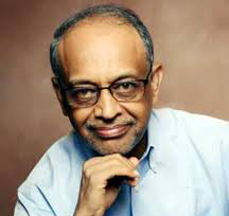
(George Abraham is a former Chief Technology Officer of the United Nations and Vice-Chairman of the Indian Overseas Congress, USA)

Be the first to comment