Tag: Pakistan

  • Prime Minister Imran Khan

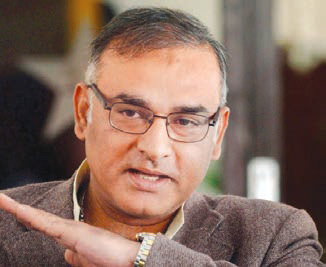
    Prime Minister Imran Khan

    Can he mature fast enough for the requirements of his new office or will he need guidance?

    By S. Akbar Zaidi

    Mr. Khan, till now the vitriolic candidate and opposition leader, will have to mature to be a more sobering influence on government and on his many first-time, overly enthusiastic Ministers who are inexperienced in governance, much like himself. Probably the considerable influence of the military and the judiciary on him will go a long way in helping this. Or, perhaps, the current Mrs. Khan’s visions will now guide his and the country’s future”,says the author.

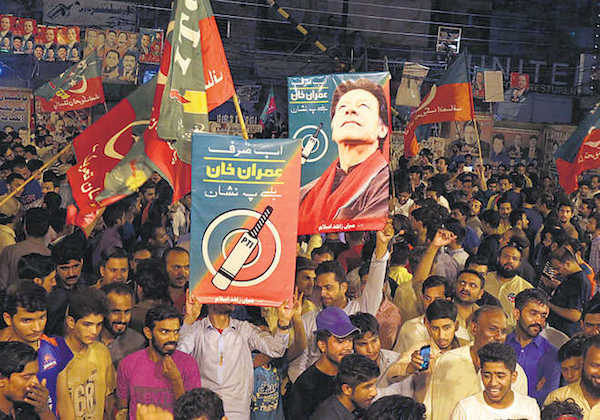
    While Imran Khan and his Pakistan Tehreek-e-Insaf (PTI) were fairly confident that they would emerge as the largest party in July 25 elections, they could not have imagined that they would make such a strong showing, resulting in Mr. Khan becoming Pakistan’s next Prime Minister. Even some academics, supposedly looking at empirical data, got it very wrong. Although all the results have been neither verified nor notified, and many seats will have to be given up since many contenders, including Mr. Khan who had been leading in all his five constituencies, contested and won from more than one seat, no one is going to dare stand in the way of his greatest, crowning moment.

    In many cases, the victory margins of the PTI are huge and impressive. The party has even made considerable inroads into former Prime Minister and Pakistan Muslim League (Nawaz) leader Nawaz Sharif’s fortress of the Punjab, coming a near second. It will probably form government there as well, with many of the Independents and breakaway members. Many key members of the PML(N), including former national and provincial ministers, have been defeated, including in the party’s core constituencies such as Lahore and Faisalabad. The PTI is the first party to be re-elected in Khyber Pakhtunkhwa, increasing its seats. Perhaps the biggest shock has been the rout of the Muttahida Qaumi Movement (MQM) in its perceived stronghold, Karachi, where again the PTI has made significant gains.

    The establishment’s man

    There are a number of reasons why the PTI has won. Some of these are part of Pakistan’s perpetual political economy and are more standard, and there is one possible explanation which is particularly bizarre. It has been clear for many months now that Pakistan’s military establishment, with support from the superior judiciary, did not under any circumstances want Mr. Sharif’s party to win. This establishment went out of its way to ensure that he was disqualified and imprisoned, and that many of his former allies and comrades either joined the PTI or contested as Independents. In southern Punjab, several of Mr. Sharif’s allies abandoned him en masse. Furthermore, the MQM in Karachi was broken up into many groups. There was much prepoll rigging by the military. Independent commentary in the media was controlled and censored and many journalists and media houses were threatened and shut down. Open discussion and those dissenting were threatened in unprecedented ways, reminiscent of Pakistan’s many martial laws.

    Despite being the military’s favorite representative, Mr. Khan must also be given credit for a forceful campaign. He could not have won without believing that he would. He traversed the country, speaking at multiple events on the same day in different cities. While the leaders of other parties did the same, he was more visible on electronic media and had a huge presence on social media. He was also told that it was important to have winnable candidates and advised to take many dubious candidates into his party who were considered electable. Pakistan’s demography — with a large proportion of young and first-time voters, called ‘youthias’, supporting the PTI — is also likely to have worked in Mr. Khan’s favor this time more than in 2013, given a considerably mauled PML(N).

    Another explanation?

    There is yet another reason being given for why Mr. Khan won so convincingly. Many months ago, a married woman and a mother of five, Bushra Riaz Wattoo, had a dream. A resident of Pakpattan in the Punjab, Ms. Wattoo was considered to be a pirni (female spiritual guide). She was believed to have been a ‘modern’ woman once who then turned to Sufism. She told her husband that Prophet Muhammad appeared in her dream one day and asked her to get married to Mr. Khan. This would not only remove all the hurdles in Mr. Khan’s way to become Prime Minister but would also eventually usher in a golden era for Pakistan, she said. It was reported in different newspapers at the beginning of this year that Ms. Wattoo met and told Mr. Khan that he would become Prime Minister only if he got married before January 5. It was later disclosed that having divorced her husband, she married Mr. Khan on or around January 1 this year, and by all accounts her prophecy has come through.

    Mr. Khan has shown himself to be abusive, derogatory, misogynistic, arrogant and dictatorial, all within a few weeks. He has said that feminism degrades motherhood and that liberals ‘seek blood’ and are the most dangerous constituency in Pakistan. At the same time, he has been soft on the Taliban. During his campaign, he stated that he would have a nationalist, anti-U.S. and anti-India foreign policy. He is a born-again Muslim now with a Tasbeeh (rosary) in his hands, a conservative Muslim nationalist who believes in neoliberal economic policies. Since his party has not won a complete majority, he will have to be conciliatory and show a far more inclusive attitude towards other groups in Parliament than he has during his vile campaign.

    On the day after the elections, seven losing parties called the elections rigged. One senior leader called them “the dirtiest polls in the history of Pakistan”, and the PML(N) rejected the results outright. An all-party conference to discuss the results as well as the next step has been called for Friday. It is possible that the opposition parties may have learnt from the tactics of Mr. Khan in the previous Parliament. First, he did not accept the results, and as the enfant terrible, made much of the claim that the 2013 elections were completely rigged. He took his case to the streets in his famous dharna of 2014, and to the Election Commission of Pakistan (ECP). The ECP found almost no rigging during the 2013 elections, and he had to reluctantly accept the results.

    In Naya Pakistan

    The elections might be over — sordid, controversial and rigged as they have been. It is also very clear that Imran Khan is Pakistan’s next Prime Minister. Whether his wife’s prophecy of Pakistan entering a golden era will come true or not in Naya Pakistan will depend, to start with, on how the Prime Minister-designate handles the immediate expected backlash from the political parties which have lost. Mr. Khan, till now the vitriolic candidate and opposition leader, will have to mature to be a more sobering influence on government and on his many first-time, overly enthusiastic Ministers who are inexperienced in governance, much like himself. Probably the considerable influence of the military and the judiciary on him will go a long way in helping this. Or, perhaps, the current Mrs. Khan’s visions will now guide his and the country’s future.

    (The author is a political economist based in Karachi. He teaches at Columbia University in New York, and at the IBA in Karachi)

  • Prime Minister Imran Khan

    Prime Minister Imran Khan

    Can he mature fast enough for the requirements of his new office or will he need guidance?

    By S. Akbar Zaidi
    Mr. Khan, till now the vitriolic candidate and opposition leader, will have to mature to be a more sobering influence on government and on his many first-time, overly enthusiastic Ministers who are inexperienced in governance, much like himself. Probably the considerable influence of the military and the judiciary on him will go a long way in helping this. Or, perhaps, the current Mrs. Khan’s visions will now guide his and the country’s future”,says the author.

    While Imran Khan and his Pakistan Tehreek-e-Insaf (PTI) were fairly confident that they would emerge as the largest party in July 25 elections, they could not have imagined that they would make such a strong showing, resulting in Mr. Khan becoming Pakistan’s next Prime Minister. Even some academics, supposedly looking at empirical data, got it very wrong. Although all the results have been neither verified nor notified, and many seats will have to be given up since many contenders, including Mr. Khan who had been leading in all his five constituencies, contested and won from more than one seat, no one is going to dare stand in the way of his greatest, crowning moment.

    In many cases, the victory margins of the PTI are huge and impressive. The party has even made considerable inroads into former Prime Minister and Pakistan Muslim League (Nawaz) leader Nawaz Sharif’s fortress of the Punjab, coming a near second. It will probably form government there as well, with many of the Independents and breakaway members. Many key members of the PML(N), including former national and provincial ministers, have been defeated, including in the party’s core constituencies such as Lahore and Faisalabad. The PTI is the first party to be re-elected in Khyber Pakhtunkhwa, increasing its seats. Perhaps the biggest shock has been the rout of the Muttahida Qaumi Movement (MQM) in its perceived stronghold, Karachi, where again the PTI has made significant gains.

    The establishment’s man

    There are a number of reasons why the PTI has won. Some of these are part of Pakistan’s perpetual political economy and are more standard, and there is one possible explanation which is particularly bizarre. It has been clear for many months now that Pakistan’s military establishment, with support from the superior judiciary, did not under any circumstances want Mr. Sharif’s party to win. This establishment went out of its way to ensure that he was disqualified and imprisoned, and that many of his former allies and comrades either joined the PTI or contested as Independents. In southern Punjab, several of Mr. Sharif’s allies abandoned him en masse. Furthermore, the MQM in Karachi was broken up into many groups. There was much prepoll rigging by the military. Independent commentary in the media was controlled and censored and many journalists and media houses were threatened and shut down. Open discussion and those dissenting were threatened in unprecedented ways, reminiscent of Pakistan’s many martial laws.

    Despite being the military’s favorite representative, Mr. Khan must also be given credit for a forceful campaign. He could not have won without believing that he would. He traversed the country, speaking at multiple events on the same day in different cities. While the leaders of other parties did the same, he was more visible on electronic media and had a huge presence on social media. He was also told that it was important to have winnable candidates and advised to take many dubious candidates into his party who were considered electable. Pakistan’s demography — with a large proportion of young and first-time voters, called ‘youthias’, supporting the PTI — is also likely to have worked in Mr. Khan’s favor this time more than in 2013, given a considerably mauled PML(N).

    Another explanation?

    There is yet another reason being given for why Mr. Khan won so convincingly. Many months ago, a married woman and a mother of five, Bushra Riaz Wattoo, had a dream. A resident of Pakpattan in the Punjab, Ms. Wattoo was considered to be a pirni (female spiritual guide). She was believed to have been a ‘modern’ woman once who then turned to Sufism. She told her husband that Prophet Muhammad appeared in her dream one day and asked her to get married to Mr. Khan. This would not only remove all the hurdles in Mr. Khan’s way to become Prime Minister but would also eventually usher in a golden era for Pakistan, she said. It was reported in different newspapers at the beginning of this year that Ms. Wattoo met and told Mr. Khan that he would become Prime Minister only if he got married before January 5. It was later disclosed that having divorced her husband, she married Mr. Khan on or around January 1 this year, and by all accounts her prophecy has come through.

    Mr. Khan has shown himself to be abusive, derogatory, misogynistic, arrogant and dictatorial, all within a few weeks. He has said that feminism degrades motherhood and that liberals ‘seek blood’ and are the most dangerous constituency in Pakistan. At the same time, he has been soft on the Taliban. During his campaign, he stated that he would have a nationalist, anti-U.S. and anti-India foreign policy. He is a born-again Muslim now with a Tasbeeh (rosary) in his hands, a conservative Muslim nationalist who believes in neoliberal economic policies. Since his party has not won a complete majority, he will have to be conciliatory and show a far more inclusive attitude towards other groups in Parliament than he has during his vile campaign.

    On the day after the elections, seven losing parties called the elections rigged. One senior leader called them “the dirtiest polls in the history of Pakistan”, and the PML(N) rejected the results outright. An all-party conference to discuss the results as well as the next step has been called for Friday. It is possible that the opposition parties may have learnt from the tactics of Mr. Khan in the previous Parliament. First, he did not accept the results, and as the enfant terrible, made much of the claim that the 2013 elections were completely rigged. He took his case to the streets in his famous dharna of 2014, and to the Election Commission of Pakistan (ECP). The ECP found almost no rigging during the 2013 elections, and he had to reluctantly accept the results.

    In Naya Pakistan

    The elections might be over — sordid, controversial and rigged as they have been. It is also very clear that Imran Khan is Pakistan’s next Prime Minister. Whether his wife’s prophecy of Pakistan entering a golden era will come true or not in Naya Pakistan will depend, to start with, on how the Prime Minister-designate handles the immediate expected backlash from the political parties which have lost. Mr. Khan, till now the vitriolic candidate and opposition leader, will have to mature to be a more sobering influence on government and on his many first-time, overly enthusiastic Ministers who are inexperienced in governance, much like himself. Probably the considerable influence of the military and the judiciary on him will go a long way in helping this. Or, perhaps, the current Mrs. Khan’s visions will now guide his and the country’s future.

    (The author is a political economist based in Karachi. He teaches at Columbia University in New York, and at the IBA in Karachi)


  • Set to be Pakistan’s PM, Imran Khan pitches for peace; says “Blame game hurting both nations”

    Set to be Pakistan’s PM, Imran Khan pitches for peace; says “Blame game hurting both nations”

    Ready to resolve all issues with India, including J&K

    ISLAMABAD(TIP): Pakistan is ready to improve its ties with India and his government would like the leaders of the two sides to resolve all disputes, including the “core issue” of Kashmir, through talks, Pakistan Tehreek-e-Insaf chief Imran Khan said on Thursday, July 26, asserting that the blame game between the two neighbors, detrimental to the sub-continent, should stop.

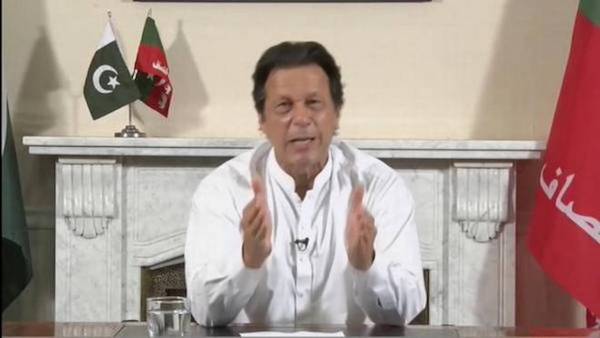
    “If they take one step towards us, we will take two, but at least (we) need a start,” 65-year-old Khan said at his first public address after leading his party to victory in the general elections held on Wednesday. His party emerged as the single largest party in the National Assembly elections, amid rival parties’ claim of “blatant” rigging by the army in Khan’s favor.

    Khan, who is set to be the next Pakistan PM, said Kashmir was the “core” issue between the two countries and it should be resolved through talks.

    “I am a person who arguably knows most people in India because of my days in cricket. We can resolve the poverty crisis in S-E Asia. The biggest problem is Kashmir,” he said, suggesting that the two sides should come to the table.

    “We want to improve our ties with India, if their leadership wants it too. This blame game that whatever goes wrong in Pakistan’s Balochistan is because of India and vice versa brings us back to square one,” he said. He said good India-Pakistan relations would be beneficial for the entire region and suggested increased trade ties between the two neighbors.  Ties deteriorated after the terror attacks by Pakistan-based groups in 2016 and India’s surgical strikes in PoK.

  • Demarche to UK over ‘anti-India’ meet

    Demarche to UK over ‘anti-India’ meet

    NEW DELHI(TIP): India has issued a demarche to the UK protesting a meeting convened on August 12 in London by separatist organization Sikhs For Justice (SFJ).

    The SFJ that claims to be an international advocacy group has offered to sponsor youth and political activists from Punjab to travel to London for the August meeting.

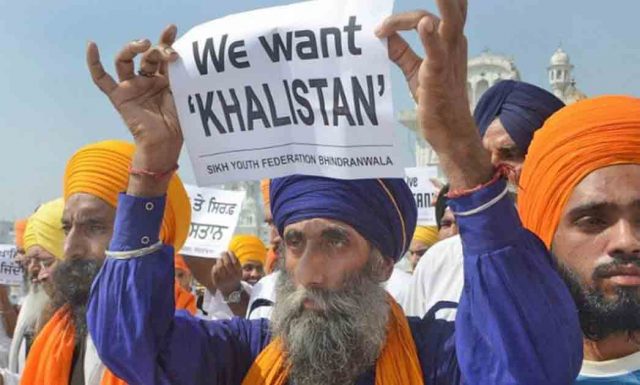
    The meeting at Trafalgar Square is aimed at shaping up the “London Declaration on Referendum 2020” campaign seeking a separate Khalistan.

    India has lodged its protest through diplomatic channels against the proposed “anti-India activity”. “We have taken it up with UK and have issued a demarche. We expect UK will not allow such anti-India activities to be carried out in UK,” said MEA spokesperson Raveesh Kumar.

    India’s official response comes a day after the British High Commission spokesperson in Delhi defended the right of people in the UK “to gather together and to demonstrate their views, provided that they do so within the law”.

    “However, will not tolerate any groups who spread hate or deliberately raise community fears and tensions by bringing disorder and violence to our towns and cities and the police have comprehensive powers to deal with such activities,” the British High Commission spokesperson told The Tribune in a cautious statement.

     Khalistan remains a sensitive issue in bilateral ties between the two countries. In April, India had lodged a protest with the UK after the Tricolour was burnt by Khalistani elements at Parliament Square, while PM Narendra Modi was addressing a diaspora event in Westminster.

    “Majority of the Sikh community have good relations with India and with the country where they stay. The rest are fringe elements,” underlined Raveesh Kumar on Thursday.

     According to its legal adviser based in New York, the SFJ plans to provide sponsorship letters to participants from Punjab and also arrange free stay for them from August 10 to 14. It plans to unveil a declaration advocating for “Sikhs’ right to self-determination for the independence of Punjab” at the Trafalgar meeting.

    Separatist group Sikhs For Justice plans to sponsor Punjab youth and political activists to travel to London for August 12 meet aimed at shaping up the “London Declaration on Referendum 2020” campaign seeking Khalistan

  • The bilateral limits of hype: on India-U.S. relations

    The bilateral limits of hype: on India-U.S. relations

    By Varghese K. George

    But India-U.S. relations will be better off without hype and grand theories, often encouraged by the government. Otherwise, every rescheduling of a meeting will be interpreted as the collapse of ties. Similarly, avoiding the hyperbole could help manage India’s troubles with Pakistan and China better. The U.S. has overlapping interests with China, and India has overlapping interests with both. The trouble with big-chest, small-heart hyper-nationalism in foreign policy is that it also causes short sightedness. The audacity of hype has its limits.”

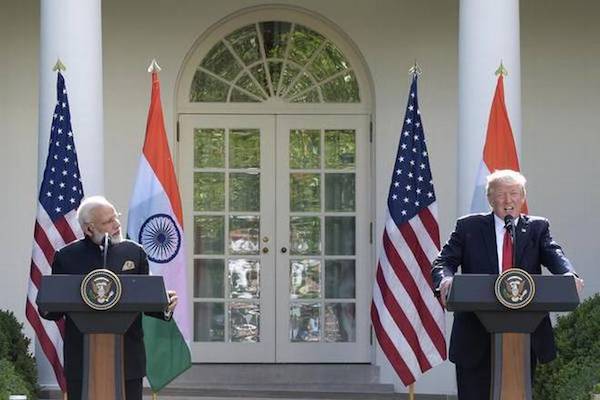
    Prime Minister Narendra Modi and U.S. President Donald Trump have both built their politics on the promise of making their countries great again. Placing India and the U.S., respectively, as leaders on the world stage is the stated objective of their foreign policy. The project of regaining national glory is based on another assumption that they inherited a mess from their respective predecessors. Yet another shared trait is their love for spectacle over meticulous, prolonged and often frustrating pursuit of strategic goals.

    Theatre as strategy

    The postponement of the India-U.S. 2+2 dialogue between the Foreign and Defense Ministers of both countries, that had been scheduled for this week, has to be understood in the context of the similar personality traits of Mr. Trump and Mr. Modi. Hugging Mr. Trump may be a good spectacle for Mr. Modi, but the same may not be true for the former. Mr. Trump has set his eyes on spectacles that suit him. Mr. Trump, still basking in the denuclearization deal that he’s said to have struck with North Korea’s Kim Jong-un, is now looking forward to the next big event: a summit meeting with Russian President Vladimir Putin. His every move on the global stage enrages his domestic political opponents and the professional strategic community alike and he is happy, as this keeps his political base constantly on the boil.

    North Korea, Syria, Afghanistan, trade deficit, and all global challenges before America are the faults of his predecessors, he repeatedly tells supporters. Most recently, at the G7 summit in Canada in June, he declared: “I blame our past leaders for allowing this to happen (trade deficits) …You can go back 50 years, frankly.” Such rhetoric may sound familiar to Indians. In Mr. Trump’s war on the legacy of all Presidents before him, India is on the wrong side. The remarkable growth in India-U.S. relations since the turn of the century had been nurtured by three U.S. Presidents, Bill Clinton, George W. Bush and Barack Obama, two Democrats and one Republican who have all been the target of Mr. Trump’s ire. India neither promises him the opportunity of a spectacle nor offers the grounds for destructing the legacy of a predecessor. So, he told Secretary of State Mike Pompeo to deal with North Korea and Russia, and 2+2 with India could wait. “Nobody wakes up in DC daily thinking of India,” says a former U.S. ambassador to India, pointing out that 16 months into the new administration, there is no Assistant Secretary of State for South and Central Asia in the State Department.

    Impact on ties

    To buttress one’s own claim to be a trailblazer by denying the achievements of predecessors may be good political tactics for these leaders but trying to wish away history itself is not a sustainable strategy. Against the backdrop of a programmatic negation of history in both countries, Mr. Trump’s bursts of unhinged rhetoric against China and Pakistan lend themselves to easy and convenient interpretations by supporters of improved U.S.-India ties as moments of enlightenment for the U.S., even as turning points.

    But Mr. Trump cannot undo all the legacy with a magic tweet. U.S. relations with Pakistan and China took shape during the Cold War. Pakistan might be the longest ally of the U.S. after the U.K., first in the fight against communism, and then in the fight against terror that was created in the first fight. China used the Cold War to its own advantage in its ties with the U.S.

    China today threatens the dominance of the U.S., but the America’s security establishment and political elite are obsessed with Russia. India gets caught in that internal American fight too, such as in the case of an American law that now requires the President to impose sanctions on any country that has significant security relations with Russia.

    Mr. Trump sees the challenges posed by China, but not in a manner helpful for India. For, India and China are in the same basket for Mr. Trump on many issues that agitate him. He has repeatedly mentioned India and China in the same breath as countries that duped his predecessors on climate and trade deals. His administration considers India and China as violators of intellectual property laws, as countries that put barriers to trade and subsidize exports and use state power to control markets. The nationalists in the Trump administration, including U.S. Trade Representative Robert Lighthizer, Commerce Secretary Wilbur Ross and White House National Trade Council Director Peter Navarro are all gunning for China, and India is in the same firing line. Many Americans who think that China took the U.S. for a ride — many Democrats among them — suspect that India is trying to do the same thing.

    But there are two constituencies in the U.S. that promote India against China: the Pentagon and the U.S. arms industry. This works to India’s favor. While the Obama administration could not overcome State Department objections to offer India even unarmed drones, the Trump administration has done so, offering armed drones. Here, Mr. Trump is not guided by any grand theories of ‘rule-based order’, etc. that professional strategists talk about, but by the opportunity to sell.

    Given Mr. Trump’s views on trade, American companies that used to argue China’s case are now guarded in their approach. Still, companies such as General Motors and Ford have come out against a trade war with China. This has implications for India too. American companies that eye the Indian market are allies in the pushback against Mr. Trump’s nationalist trade policies. Mr. Modi has realized this dynamic that puts India and China in the same corner in Mr. Trump’s perspective — and that significantly explains his Wuhan summit with Chinese President Xi Jinping, the third big leader who is gaming for the glory of his country.

    War against legacy

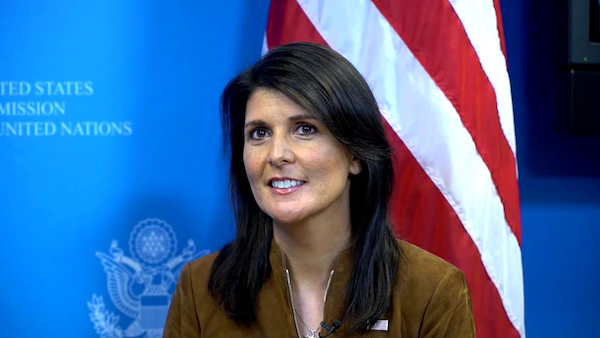
    The enlightenment that Mr. Trump purportedly brought on America’s Af-Pak policy also appears to have been short-lived. If one looks at the tough messages from Nikki Haley, U.S. Ambassador to the UN, in New Delhi recently on Pakistan and Iran, it is clear where the political priorities of the Trump administration lies. Here again, Mr. Trump is determined to gut his predecessor’s legacy, a key component of which was rapprochement with Iran. The war in Afghanistan is the worst optics for Mr. Trump’s showman politics, and his administration’s approach has been to sweep it under the carpet. The Pentagon has restricted release of data on the war, but a report last month paints a picture of a deteriorating situation. The U.S.’s ability to arm-twist Pakistan has been limited anyway, and Mr. Trump’s determination to turn the screws on Iran makes it tougher. National Security Adviser John Bolton, who had advocated bombing Iran, believes that a hardline policy against Pakistan is not desirable.

    All told, Mr. Trump might accept Mr. Modi’s invitation to be the chief guest at the 2019 Republic Day parade just ahead of the Lok Sabha campaign, triggering another round of commentary on their ‘body language’ and ‘chemistry’. A series of significant defense purchases and agreements could be concluded in coming months. But India-U.S. relations will be better off without hype and grand theories, often encouraged by the government. Otherwise, every rescheduling of a meeting will be interpreted as the collapse of ties. Similarly, avoiding the hyperbole could help manage India’s troubles with Pakistan and China better. The U.S. has overlapping interests with China, and India has overlapping interests with both. The trouble with big-chest, small-heart hyper-nationalism in foreign policy is that it also causes short sightedness. The audacity of hype has its limits.

    (The author is an assistant editor with The Hindu. He can be reached at varghese.g@thehindu.co.in)

    (Source: The Hindu)


  • Taking the UNHCR report in stride

    Taking the UNHCR report in stride

    The killings of Bukhari and Aurangzeb were meant to provoke New Delhi, which decided to be seen as tough

    By KC Singh
    If India and the US let domestic politics color their approach to the protection of human rights in the 70th year of the Universal Declaration of Human Rights, it would prove that terrorism and illegal immigration have succeeded in making the two major democracies less liberal, says the author.

    The 47-member Geneva-based UN Human Right Council and the UN High Commissioner for Refugees (UNHCR) have been in focus the past week. First came an unprecedented report by the UNHCR Zeid al-Hussein on Jammu and Kashmir (J&K), Pakistan Occupied Kashmir and Gilgit Baltistan. While Pakistani knuckles were rapped mildly, the report, as conceded in its executive summary, is really about “widespread and serious human rights violations’’ in J&K from the death of militant Burhan Wani in July 2016 to April 2018.

    Under separate headings it holds India guilty on account of lack of access to justice and impunity; military courts and tribunals blocking this access, excessive use of force and pellet-guns, arbitrary arrests, including of minors, torture and enforced disappearances, and sexual violence, etc. All through, even UN-listed terror outfits are referred to as “armed groups”. A former Indian diplomat writing elsewhere calls it more akin to a report by Organisation of Islamic Conference than a UN high official. India strongly rebutted it and could have probably ignored it, except that Zeid is on record saying he would recommend to the UN Human Rights Council (UNHRC), which convened on June 18 for one of its three annual sessions, an investigation.

    Two events impinge on this development. One, Jammu and Kashmir has been placed under Governor’s rule with the BJP withdrawing from the coalition government. Two, US Ambassador to UN Nikki Haley announced, at the State Department, US withdrawal from the UNHRC, alleging lack of reform and it having become a “protector of human rights abusers and cesspool of political bias”. Both need closer examination.

    The Trump administration has been threatening to withdraw from the UNHRC for some time, but the decision came a day after Zeid slammed the US for separating children from parents on border with Mexico when apprehending illegal immigrants. The media is also reporting illegal immigrants from India, many from Punjab, held in detention centers under sub-human conditions.

    Republican Senator John McCain, terminally ill with brain cancer but combative as always, tweeted that the “administration’s current family separation policy is an affront to the decency of the American people, and contrary to the principles and values upon which our nation was founded’’. He later went on to oppose Trump’s nomination of Ronald Mortensen to lead the US refugee and migration policy, alleging he lacked empathy for people fleeing oppression. Thus, while the US is right that election to the UNHCR of nations like Venezuela and Congo (though the US omitted mentioning China) hardly makes it the custodian of global conscience on human rights, but neither does the US by its xenophobic immigration control creating gulags for apprehended illegal immigrants qualify it to lecture the council.

    The J&K imbroglio raises many similar questions about India’s trajectory in dealing with terrorism at home. The PDP-BJP alliance raised hope that their Agenda of Alliance would provide a template for resolution of the Kashmir issue. The death of Mufti Sayeed at the beginning of 2016 and a long hiatus before his daughter Mehbooba effectively took charge probably doomed the experiment, if at all had any chance to succeed.

    At the root of the problem was the Modi government’s Pakistan policy of “no dialogue” unless terror ends. On the contrary, the PDP had got elected promising dialogue with Pakistan, more political space even for separatists and improved trade and people-to-people links with Kashmiris across the Line of Control (LoC). The Pakistan army exacerbated these fault lines by keeping up support to militancy, provocatively killing Indian soldiers and turning the LoC into free-fire zone. The Governor’s rule now denies India the argument that J&K has a popularly elected government which is a guardian of people’s rights scrutinizing, if not overseeing, counter-terror operations of security forces. Pakistan, currently a member of the UNHRC, shall use the High Commissioner’s tendentious report and collapse of the alliance to pillory India in coming weeks.

    The Modi government must surely have assessed the profit-loss outcome of its decision. The domestic implications would dominate New Delhi’s thinking as the government heads into literally the last six months of effective rule before the Lok Sabha election process kicks-in. It needs to ensure that no major breakdown of security order in Kashmir occurs till election, particularly during the Amarnath pilgrimage.

    There may be information that leading to parliamentary election in Pakistan in July its army, having a freer hand than normal with a caretaker government in position, is planning to fling every last terror asset across the LoC in a make-or-break gambit. The targeted killing of moderate journalist Shujaat Bukhari and the taped torture and execution of soldier Aurangzeb were intended to provoke New Delhi. A big attack on pilgrims, as has happened in the past, could make the Union Government look extremely ineffective. Governor’s rule is the counter-move to ensure that despite the debate in Geneva on India’s human rights record the Modi government is seen as strong at home.

    If India and the US let domestic politics color their approach to the protection of human rights in the 70th year of the Universal Declaration of Human Rights, it would prove that terrorism and illegal immigration have succeeded in making the two major democracies less liberal. The latest survey by Freedom House, a US think-tank, is called “Democracy in Crisis”. Last year was the 12th consecutive year when nations suffering democratic setbacks outnumbered those gaining. According to Democracy Index of The Economist Intelligence Unit, 89 countries regressed in 2017 and only 27 improved. Globalization and technology in the West and Pakistan-sponsored terror in South Asia are derailing the quest for liberal, law-based democratic rule. If a four-year political alliance between the PDP and BJP, representing disparate views on Kashmir, cannot develop a consensus for bridging the divide, the future is indeed bleak. A fresh attempt at reconciliation seems unlikely until after parliamentary elections in Pakistan and India. Till then, geopolitical haze in South Asia will be thick as the dust that enveloped northern India a week ago.

    (The author is a former Secretary, Ministry of External Affairs, India)

  • Reviving ‘Neighborhood First’

    Reviving ‘Neighborhood First’

    India’s regional reset won’t be complete without a change in its Pakistan policy

    By Rakesh Sood
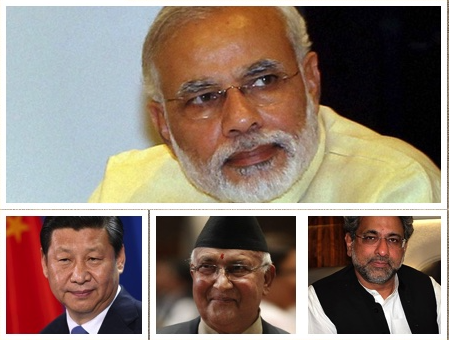
    Even Prime Minister Narendra Modi’s critics acknowledge his uncanny ability to take bold decisions and this reflects in his foreign policy initiatives. Interestingly, he is also demonstrating an ability to undertake course corrections. The informal summit at Wuhan, China, last month and a visit to Nepal this month reflect a change aimed at reviving the ‘neighborhood first’ policy, announced in 2014. The big challenge, however, will be providing a sense of direction to the policy on Pakistan which has oscillated between ‘jhappi’ and ‘katti’.”

    Mr. Modi had received Chinese President Xi Jinping in September 2014 in Gujarat reflecting his personalized diplomacy even though the ongoing stand-off in Chumar in eastern Ladakh cast a shadow on the visit. The personalized diplomacy was reciprocated the following year when Mr. Modi visited China and Mr. Xi received him in Xian, but its limits soon became apparent.

    In mid-2016, China blocked India’s bit to join the Nuclear Suppliers Group (NSG) despite a meeting between the two leaders in Tashkent on the margins of the Shanghai Cooperation Organisation (SCO) summit. This was followed by China vetoing Masood Azhar’s listing as a terrorist in the UN Security Council even though the Jaish-e-Mohammed (JeM) is a banned entity. China’s veto continued even after the Uri Army camp attack by JeM cadres later that year, adding to India’s growing annoyance. Hydrological data sharing stopped amid reports of diversion of Brahmaputra river waters. The 73-day stand-off at Doklam last year and accompanying rhetoric reflected a marked downturn. India responded through all this by voicing skepticism regarding Mr. Xi’s Belt and Road Initiative (BRI), stepping up maritime engagement with the U.S. and Japan and reviving the Quad (with Australia) in Manila last year.

    Both leaders soon realized the risks of the downward spiral of confrontation and were pragmatic enough to understand the need to restore a degree of balance to the relationship. Mr. Xi had emerged stronger after the 19th Communist Party Congress and the decision by the Central Committee to remove the restriction of two terms for a President made it clear that he would continue beyond 2023.

    Significant messages were carried by Foreign Minister Wang Yi and Politburo member Yang Jiechi last December during their visits to Delhi. Follow-up visits to Beijing by Foreign Secretary Vijay Gokhale, National Security Adviser Ajit Doval, Foreign Minister Sushma Swaraj and Defense Minister Nirmala Sitharaman earlier this year prepared the ground for the informal summit meeting in Wuhan last month. The leak of the government circular advising officials to stay away from events commemorating 60 years of Dalai Lama’s exile in India and declining Australia’s suggestion to participate in Malabar naval exercises indicated Indian interest in a reset.

    The Wuhan summit was projected as ‘informal’ (something the Chinese have engaged in with U.S. Presidents Barack Obama and Donald Trump), without an agenda. Over two days, the two leaders met for 10 hours, four times one-on-one and twice with their delegations. Instead of a customary Joint Statement, there were separate briefings by Mr. Gokhale and Chinese Vice Foreign Minister Kong Xuanyou indicating the key takeaways. It is clear that messages have gone out to the Army to improve communications and understanding and prevent the stand-offs that were becoming frequent. Both sides have agreed to undertake a joint project in Afghanistan. No softening of Chinese position on the NSG or India’s reservations on the BRI was visible though these issues would have figured in the discussions. However, with three more meetings likely during the SCO, G-20 and BRICS summits later this year, it is clear that there is an effort to bring the relationship on track.

    Rebuilding trust with Nepal

    A similar exercise appears to be under way with Nepal. Mr. Modi’s visit in 2014 had generated considerable goodwill but subsequent decisions queered the pitch. India’s public display of unhappiness with Nepal’s new Constitution and support for the Madhesi cause created ill-will. The economic impact caused by the disruption of supplies of essential items such as liquefied petroleum gas, petroleum products and medicines fed the anti-Indian sentiment which K.P. Oli effectively exploited to score a decisive electoral victory late last year. Clearly, Delhi was disappointed with the election outcome but decided that the relationship with Nepal was too important to let past misunderstandings fester. A new beginning was necessary.

    A couple of phone calls between Mr. Modi and Mr. Oli followed in December-January and Foreign Minister Sushma Swaraj was in Kathmandu even before Mr. Oli was sworn in as Prime Minister to convey congratulations and an invitation from Mr. Modi to visit India. Mr. Oli responded positively, and much was made of the fact that in keeping with tradition, he made Delhi his first foreign destination last month. A surprise one-on-one meeting with Mr. Modi on the first day provided the two leaders an opportunity to clear the air about the past and rebuild a degree of trust.

    A return visit by Mr. Modi to Nepal within a month (on May 11-12) indicates that both sides are keen to show positive movement. Expectations are being kept low key, but the optics of positive messaging are evident. Included in the itinerary are a visit to Janakpur to offer prayers at Janaki Mandir and a public address which will announce the inauguration of the Ramayana pilgrimage circuit linking Ayodhya and Janakpur. The same idea had been shot down earlier when the Nepali authorities had cited ‘security issues’. In addition, Mr. Modi will visit Muktinath and the pension paying office at Pokhara, highlighting the historical, cultural and religious ties between the peoples of the two countries. Undoubtedly, the fact that he begins his visit to Nepal by landing in Janakpur, capital of the sole Madhes-ruled province will give comfort to the Madhesi community, but Mr. Modi realizes that his challenge is to repair ties with the wider Nepali community.

    The Pakistan challenge

    With Pakistan, after the opening when the then Prime Minister, Nawaz Sharif, visited Delhi in 2014 and Mr. Modi dropped in to have tea with him in Lahore in December 2015, relations stalled in 2016 following the Pathankot and Uri attacks. Firing across the Line of Control (LoC) has intensified leading to higher casualties on both sides, both civilian and military. In September 2016, India launched ‘surgical strikes’ as retaliation for the Uri attack but this has not reduced infiltration. Since Burhan Wani’s death, local recruitment by radical groups is also on the rise. India has successfully stalled the South Asian Association for Regional Cooperation (SAARC) summit since 2016 and Mr. Trump’s tweets criticizing Pakistan have given Delhi satisfaction. But limits to the policy of isolating Pakistan are also apparent.

    Elections are likely in July and the Army would prefer to keep Mr. Sharif’s PML(N) out of power. Mr. Sharif’s dismissal and disqualification for life from politics by the Supreme Court makes it clear that the Army is determined to control the political transition. Pakistan Army Chief Qamar Javed Bajwa has, on more than one occasion, emphasized the need for improving relations with both India and Afghanistan.

    The resumption of the stalled Track II Neemrana Dialogue last month in Islamabad indicates that a shift may be likely. Pakistan realizes that the time frame for a shift is limited before India goes into election mode. The question is whether Gen. Bajwa can make good on his suggestion by showing forward movement on the issues flagged by India — curbing the Lashkar-e-Toiba and JeM, the Kulbushan Jadhav and 26/11 trials, etc. Faced with a similar situation, Gen. Pervez Musharraf had gone in for a unilateral ceasefire on the LoC in 2003. The guns fell silent, tensions were defused, and Pakistan hosted the SAARC summit in 2004.

    A change in the Pakistan policy may well be the reset to enable Mr. Modi to reclaim his ‘neighborhood first’ policy.

    (The author is a former diplomat and is presently Distinguished Fellow at the Observer Research Foundation. E-mail: rakeshsood2001@yahoo.com)


  • Can the 3 Ms save Iran deal?

    Can the 3 Ms save Iran deal?

    By Arun Kumar

    The Macron-Merkel-May trio hopes to bear upon Trump to keep pact

    Besides the Europeans, the looming May 12 deadline also has India worried, as since the end of sanctions, it has greatly strengthened its bilateral relations and economic partnership with Iran. During Rouhani’s visit, the two countries signed nine agreements, including a crucial one on connectivity via the strategic Chabahar Port. India has also committed itself to completing the Chabahar- Zahedan rail link to provide an alternative route to Afghanistan, completely bypassing Pakistan, say the author.

    French President Emmanuel Macron has just ended a glitzy visit with President Donald Trump. German Chancellor Angela Merkel came calling today and British Prime Minister Theresa May has been burning the phone across the Atlantic. Their mission: to persuade the mercurial occupant of the White House not to tear up the Obama era 2015 landmark Iran nuclear deal as he threatened on the campaign trail.

    The wily Donald is not telling anyone what he would do on May 12 when he must either sign a fresh waiver on Western sanctions against Iran or walk away from what Trump has decried as an “insane” and “ridiculous” deal signed by P5+1 — the US, Russia, China, UK, France and Germany — world powers with Tehran to end its nuclear weapons program.

    But swept off his feet by what the American media called “Le Bromance” unleashed by Trump at the first State dinner of his presidency, Macron ended up calling for a new “big deal” with the old one limiting Iran’s uranium enrichment for 15 years serving as one of its four pillars.

    Or did the suave Frenchman charm the Manhattan mogul into buying these side deals he Merkel and May have been working on to convince Trump to stay on in the Iran deal? European leaders are also said to be crafting a “Plan B” to continue without the US. But Iran is unlikely on come on board without the US.

    The three new pillars that Macron suggested in Washington would rework the sunset clause in the accord to ensure there is no nuclear activity by Iran in the long run, as feared by the critics who have accused Europeans, particularly Germany, of putting business before security.

    The Macron proposal would also seek to limit Tehran’s ballistic missile program and curb its “regional influence” by ceasing support for militant groups across the Middle East, particularly Yemen and Syria.

    Even as he declined to show his hand, Trump suggested: “I think we will have a great shot at doing a much bigger maybe deal, maybe not deal” built on solid foundations. In an escalating war of words, he also cautioned Iran against restarting its nuclear program, warning it may “have bigger problems than they have ever had before.”

    Iranian President Hassan Rouhani, who during his February visit to India — the first by an Iranian head of state in 10 years — had dismissed Trump as a “haggler”, was quick to heap fresh insults on “a tradesman” with no understanding of diplomacy. Western powers, he asserted, had no right to make changes in the deal now.

    Earlier in February, Iranian deputy foreign minister Abbas Araqchi had assured that Iran’s commitment to not seek nuclear weapons is permanent and that there was no sunset clause in the deal.

    Besides the Europeans, the looming May 12 deadline also has India worried, as since the end of sanctions, it has greatly strengthened its bilateral relations and economic partnership with Iran. During Rouhani’s visit, the two countries signed nine agreements, including a crucial one on connectivity via the strategic Chabahar Port. India has also committed itself to completing the Chabahar- Zahedan rail link to provide an alternative route to Afghanistan, completely bypassing Pakistan.

    Chabahar Port, Rouhani declared, can serve as a bridge connecting India to Afghanistan, Central Asia and Eastern Europe.

    India, which backs “full and effective implementation” of the Iran nuclear deal, could use Afghanistan as a bargaining chip at the next India-US two plus two dialogue between Trump’s incoming Secretary of State Mike Pompeo and Defense Secretary James Mattis and their Indian counterparts, Sushma Swaraj and Nirmala Sitharaman. The dialogue earlier set for April 18-19 in New Delhi was postponed with the unceremonious dismissal of Trump’s previous chief diplomat Rex Tillerson.

    Pompeo, currently CIA Director, who is set to join Trump’s equally hawkish new National Security Adviser John Bolton, assured the Congress during his confirmation hearings that he would work to fix the “terrible flaws” in the Iran nuclear deal even if Trump walks away from it.

    Unlike Tillerson, who favored a somewhat softer approach towards Pakistan, Pompeo, Bolton and Mattis are all for ramping up US pressure on Pakistan to roll up its terrorism infrastructure to allow India to engage in institution building in Afghanistan.

    Trump’s declaration of a virtual trade war against friends and foes alike has sent diplomats across the world scrambling for new options. India and China, too, are coming closer with Chinese foreign minister Wang Yi declaring that the upcoming informal summit between Indian PM Narendra Modi and Chinese President Xi Jinping would be a “new starting point in relationship.” The two have, for long, put their vexed boundary dispute on the back burner to let their trade relations bloom. China has emerged as India’s largest trading partner with an 18 per cent growth, taking bilateral trade to $84 billion.

    The fate of the Iran deal would certainly cast a shadow on the upcoming nuclear summit between Trump and North Korean leader Kim Jong-un. If Trump tears up the Iran accord, can Kim trust him to keep his word on a peace pact with Pyongyang?

    Would the author of “The Art of the Deal”, who looks at every issue as a transaction, risk a legacy building landmark accord with Kim after bringing him to the negotiating table with threats of “fire and fury”?

    Not likely, as after a secret preparatory visit by Pompeo, a la Henry Kissinger, the legendary architect of Richard Nixon’s opening to China, he now sees Kim whom he once dismissed as the “Little Rocket Man” as “very open and very honorable.”

    At their joint presser, Macron declared that “together US and France would defeat terrorism, curtail weapons of mass destruction in North Korea and Iran and act together on behalf of the planet.” The last bit was seen as a hint that Trump may be open to revisiting the Paris Climate accord too.

    Earlier in January, Trump declared that he would reconsider joining the “terrible” Trans Pacific Partnership if the US got a “substantially better deal.”

    At his presser with Macron, Trump declared in a conspiratorial tone: “Nobody knows what I am going to do on the 12th (of May), although Mr President, you have a pretty good idea.” Macron responded with just a wink.

    It would, indeed, be hazardous to guess what Trump would or would not do. But given that he is open to revisiting every “terrible” deal in search for a “better” one, it may be safe to presume that the Iran accord will live another day.

    (The author is an expert on international affairs)

  • Religious freedom in India, Pakistan, Bangladesh, Nepal and Sri Lanka:  A Summary of Religious Freedom concerns in South Asia.

    Religious freedom in India, Pakistan, Bangladesh, Nepal and Sri Lanka: A Summary of Religious Freedom concerns in South Asia.

    The South Asia working group’s initial report to the International Religious Freedom Round-table

    By Dr. Mike Ghouse
    “The many millennia old caste systems and the ‘unparalleled social abuse of untouchability (A.J. Toynbee)’ are based on religious doctrines of Brahminical Hinduism. Thus, caste-based violations of human rights in India are expressions of the utter lack of religious freedom.
    “In Pakistan, the Hindu population is steadily declining as a percentage of the overall population with forced conversions. Christians are targeted with blasphemy and apostasy laws.
     “In Bangladesh, Atheists, Buddhists, Hindus, and Ahmadiyya Muslims live in apprehension; the Atheist bloggers have been killed.  There is a deficiency of law and order.
    “In Sri Lanka, the ethnic violence continues between the Buddhists and Hindus and Buddhists and Muslims.

    There is a dire need to address the violations of religious and political freedoms in South Asia comprising the nations of India, Pakistan, Bangladesh, Nepal, and Sri Lanka.

    A critical note – when a reference is made to the Hindus, Buddhists, Muslims, Christians, India, Russia or others, it is not “all” people of that faith or country.  It is usually a small percent of disaffected people from among the majority who feel threatened about their future and their way of life.

    The Center for Pluralism offers a solution to counter that – We need to reassure each other in conflict, particularly those who may be troubled by the changing paradigms and demographics of the society that we are committed to safeguarding the way of life for everyone.  As Citizens of a given nation, we uphold, protect, defend and celebrate the values of liberty and freedom enshrined in the Constitution. We acknowledge that not all constitutions have the element of freedom embedded in it – an example would be the rights of Ahmadiyya Muslims in Pakistan and rights of Arab Israelis.

    There are pending issues that are simmering and may boil over one day. We hope to understand these issues and do our share of reporting them to the International Religious Freedom Round Table, an informal group.

    This group will identify problems and offer recommendations and possible solutions, and they are;

    Monitoring to ensure the individual rights of people are protected.

    Facilitate democratic values and hoping for stable political and economic climate

    Secure our long-term interests of the safety of Americans and their investments

    Governor Sam Brownback, the newly appointed Ambassador for religious freedom, said in the inaugural reception.  The essence of which was -if you want a nation to have peace, give the people their freedom, but if you push them to the corner, their anger will morph into extremism, and everyone will lose in the end.

    Here is a summary; a detailed report is in the making and will be produced upon a request.

    There is no doubt a lot of good things are happening, but our focus is how to identify exceptional violations of human rights and religious freedom.

    India

    The commissioners of USCRIF have been the denied visa to India to investigate, among other things; Sikh Genocide, Massacre of Muslims in Gujarat, the plight of Hindu Pundits and the caster system that mistreats the Dalits who are shamefully called untouchables. Most of the Hindu American organizations have an affiliation with the ruling party in India; we need them to stand up for the religious rights of the people and work on getting the Visas to the commissioners for an honest evaluation of the situation.

    The policies of the government will lead to mass suicides by the farmers. The Farmers raise the cattle to sell and eke out a living.  Now, they are afraid to sell the cattle for fear of being killed by the vigilantes and the Government does nothing.  The Cows have gone astray and are eating the farmer’s crops and eating trash on the streets – the cows are treated with disrespect and left on their own, its gross violation of animal rights.

    In India currently, you do not have the freedom to eat, drink, wear or believe in the pursuit of your happiness.

    A Dalit groom rode a horse on his wedding Baraat (Procession) in the state of Uttar Pradesh last month; the upper caste Hindus could not stomach the “neech –i.e., the low caste untouchable” ride above them and they ended beat him up. Last week an Adivasi (Tribal) Girl was burnt alive. The upper caste Hindus feel entitled to the Dalit women for their pleasures.  It is an endless agony for the Dalits. They cannot even convert to other faiths to escape these attitudes due to enforced anti-conversion laws.

    Here is a report from the Dalit Leaders in India.

    “The many millennia old caste systems and the ‘unparalleled social abuse of untouchability (A.J. Toynbee)’ are based on religious doctrines of Brahminical Hinduism. Thus, caste-based violations of human rights in India are expressions of the utter lack of religious freedom.

    This perilous situation is aggravated by anti-conversion laws that have been passed in many states of India. Their purpose is to prevent Dalits from converting to other religions where they would not be considered untouchable’. https://www.loc.gov/law/help/anti-conversion-laws/india.php

    The inferior status that Hinduism accords to Dalits, in spite of the equalities guaranteed by the constitution of the country, reflects in severe social, economic, and educational inequalities.

    Dalits continue to suffer extreme prejudice and deprivation, apart from institutional harassment. Violence against Dalits – public shaming, beatings, rape, murder – is a daily occurrence. The law enforcement agencies, police and the judiciary, largely remain mute spectators, if not actively conniving in the violence.

    Statistics show that violence against Dalits has only increased in recent years. Religious freedom and equality thus remain a mirage for 200 million Dalits in India.”

    The Muslims are lynched and killed for doubt of possessing beef; fake encounters are common practice to trap the young Muslim boys; RSS (political Hindus in the guise of culture) set the bomb blasts in Mumbai and other places and blamed Muslims.  Muzaffarnagar and other riots were created to pit Hindus against Indians.

    Christian Nuns are raped; pastors are chased and beat up in the public. The Christians Churches are burned, and the couples are constantly harassed on Valentine’s Day and Christmas Day. The Dalits are forced to convert back to Hinduism.

    Justice to Sikhs is not done yet; mothers are still waiting for their unaccounted children from the Sikh Genocide of 84 where in three days, the extremists among Hindus butchered about 3000 Sikhs.

    Blatant discrimination births frustration leading to violent expressions, when that happens the foreign investors will pull out, who wants to invest in a place where their investments are not secure.  It’s happened in India in the mid-60’s, mid 70’s and it has happened in South Africa. The consequences do not bring goodwill.

    There is a significant crisis brewing in India, and the Supreme Court will render a judgment about the disputed land and authority to build or not build a Hindu temple, where a 500-year-old Muslim Mosque was razed to the ground.

    The Supreme Court of India would review the documents if that Mosque were built razing a temple.  The internationally famed Guru of Art of Living, Sri Sri Ravi Shankar has sowed the seeds of discontentment.  Instead of suggesting the public to respect the Supreme Court’s decision, he has predicted civil war if the Court decides one way or the other. He has shown disrespect to the average Hindu and average Muslim who have demonstrated respect to the decisions of the Apex Court, several times in the recent past.

    We pray that the Modi government and the State Government will offer strong safety protections to the public at least for a few months after December 5, 2018, the new date of the verdict.

    Pakistan

    Harassment of all minorities continues unabated. Ahmadiyya Muslims are denied their right to call themselves Muslims. There are numerous billboards that proclaim that it is legitimate to kill Ahmadiyya. The Hindu population is steadily declining as a percentage of the overall population with forced conversions. Christians are targeted with blasphemy and apostasy laws; these are the fake encounters. The Apostasy and Blasphemy laws were created to appease the tyrant kings and have no basis in the religion of Islam, and both are tools of oppression.

    Bangladesh

    The Atheists, Buddhists, Hindus, and Ahmadiyya Muslims live in apprehension; the Atheist bloggers have been killed.  There is a deficiency of law and order.

    Sri Lanka

    The ethnic violence continues between the Buddhists and Hindus and Buddhists and Muslims. Sri Lanka’s president declared a state of emergency Tuesday amid fears that anti-Muslim attacks in several central hill towns could spread. The emergency announcement came after Buddhist mobs swept through the cities outside Kandy, burning at least 11 Muslim-owned shops and homes. The attacks followed reports that a group of Muslims had killed a Buddhist man. Police fired tear gas into the crowds, and later announced a curfew in the town. The government will “act sternly against groups that are inciting religious hatred,” Cabinet minister Rauff Hakeem said after a meeting with the president.

    Nepal

    It seems this nation is free from religious strife at this time, as it has undergone tumultuous political conflicts including a change in the form of Government from Monarchy to a democratic Republic.

    A full report is available upon request to Mike Ghouse.

     (The author is Chair, South Asia working group – IRF Roundtable. He can be reached at Mike@CenterforPluralism.com / Phone no. (214) 325-1916

  • Mohajirs welcome India’s statement in UN Human rights session: Nadeem Nusrat

    Mohajirs welcome India’s statement in UN Human rights session: Nadeem Nusrat

    WASHINGTON DC (TIP): Mohajirs have welcomed India’s statement in United Nations human rights session on state atrocities committed by Pakistan in Sindh, Baluchistan and KPK.

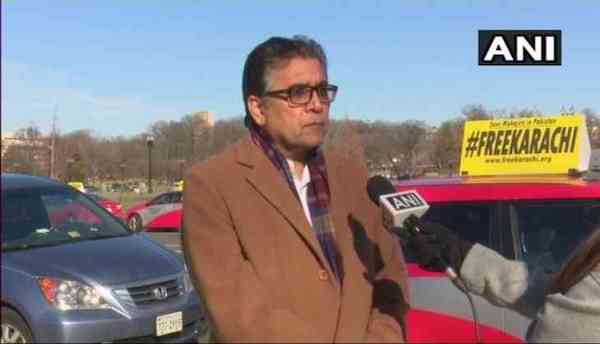
    This was said in a statement sent to The Indian Panorama on March by Nadeem Nusrat, Spokesperson of ‘ Free Karachi ‘ Campaign and former Convener of MQM.

    Nadeem Nusrat said that the inclusion of the name of Sindh in India’s statement on human rights violations is an important and encouraging development for 70 million Mohajirs.

    The people of Karachi and Urban Sindh are grateful to Indian government for raising voice on the plight of Mohajirs in Pakistan.

    Nusrat further said that Sindh, especially Karachi and Urban centers of Sindh province had been neglected previously by world community while highlighting persecution of ethnic groups in Pakistan. More than 25,000 innocent Mohajirs have been brutally killed in Army and para military operations in Karachi since 1992. Enforced disappearances, abductions and extra judicial killings are on the rise in Pakistan’s port city of Karachi since the latest phase of operation in 2013.

    Highlighting the issue of terrorism, Mr. Nusrat said that religious extremism, fanaticism and terrorism is being nourished by the state of Pakistan which has put peace and security of the region at stake. Pakistani soil has been used to plan and launch major terror attacks in the region. The providers and facilitators of terror sanctuaries in Pakistan must be hold accountable by United Nations and all peace-loving Nations.

    He further added that ‘ Free Karachi ‘ Campaign has been drawing world’s attention towards the state atrocities of Pakistan on Mohajirs, Balochs, Pashtuns and other religious minorities.

    Nusrat said that ‘ Free Karachi ‘ team is approaching international community, lawmakers, decision making bodies, human rights groups and is getting tremendous support from all quarters.

    Nadeem Nusrat urged all the major regional powers of South Asia and international powers to put pressure on Pakistan to end crimes against humanity in Karachi and urban centers of Sindh along with Balochistan, KPK and FATA.

    ‘ Free Karachi ‘ Campaign was launched on January 15th on the eve of Martin Luther King Day to raise global awareness on human rights violations in Karachi and Urban Sindh.

  • Deja vu in Pakistan

    Deja vu in Pakistan

    By Sharat Sabharwal
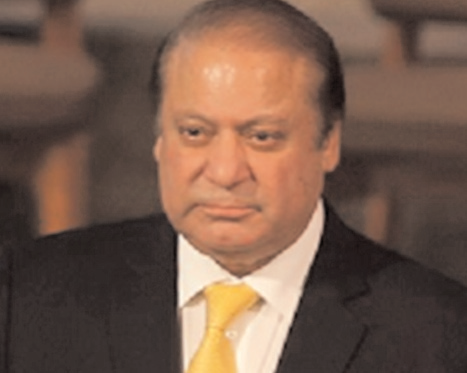
    The run-up to the 2018 election bears an eerie similarity to the events preceding the 2013 poll. The actors seeking to destroy Nawaz Sharif’s political future are the same, with the addition of the SC and Hafiz Saeed.
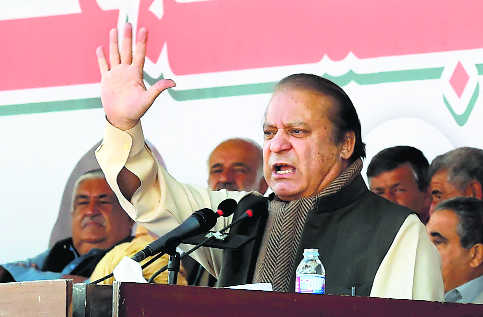
    Disqualified from holding the office of Prime Minister last year by the Supreme Court, Nawaz Sharif has now been barred by the same court from being the head of his party, PML (N). Ostensibly a matter of corruption in high places, his disqualification has a strong subtext of civil-military tussle in Pakistan.

    As the 2013 Pakistan election approached, the security establishment was concerned at the prospect of a Nawaz victory because of his popularity in Punjab that carries more than 50 per cent seats in the National Assembly. The anxiety stemmed from Nawaz’s tense relationship with his army chiefs during two tenures as Prime Minister, his bitterness against the army at his treatment after the 1999 coup and repeatedly professed desire to promote better relations with India. In 2011, Imran Khan, whose Pakistan Tehreek-e-Insaf had failed to make a mark since its founding in 1996, appeared on the scene out of nowhere to relaunch his political career by opposing American drone strikes in Pakistani territory and corruption in the ruling parties. The then DG, ISI, was reported to be the architect of his sudden rise, a move that subsequent events would prove to be farsighted in filling the gap left by the reluctance of the two major parties — PPP and PML (N) — wiser with the experience of the past, to collaborate with the army against each other. Closer to the election, Tahir ul Qadri, a Canada based cleric of Pakistan origin, landed up to push for its postponement. However, these machinations failed, and Nawaz won a third term with a comfortable majority in the election held in May, 2013.

    In this backdrop, the civil-military equation under Nawaz was expected to be anything but smooth. Differences emerged quickly on Musharraf’s trial, policy on terrorism and relations with India. The army managed to secure Musharraf’s exit from Pakistan, prevailed against Nawaz’s misplaced policy of dialogue with the anti-Pak terror groups and systematically undermined his agenda to improve relations with India.

    Imran’s agitation against the alleged rigging of the 2013 election, which kept Nawaz on the back foot vis a vis the army, came a cropper when a judicial commission ruled against him in July 2015. However, the linkage of some offshore companies to the Prime Minister’s family, revealed in the Panama papers, gave Imran and his mentors another opportunity to target Nawaz. In July 2017, the Supreme Court disqualified Nawaz from holding public office. Significantly, the decision was based on the report of a six-member joint investigation team, constituted by the court that included a representative each of the ISI and Military Intelligence. Since these highly disciplined individuals would not have approved the report without a nod from the army leadership, the damning report, combined with the track record of the Pakistan judiciary kowtowing to military dictators, had left little doubt about the fate of the Prime Minister and was an indicator of provenance of the decision to oust him.

    The run-up to the 2018 election bears an eerie similarity to the events preceding the 2013 election. The actors seeking to destroy Nawaz’s political future are the same, with the addition of the Supreme Court and Pakistan’s terror brand ambassador, Hafiz Saeed. The army would be loath to see his return to power. The PPP has sought to exploit Nawaz’s misfortunes for political gains in Punjab, but being an experienced party, would not go the extent of playing the security establishment’s game. That is not true of Imran. Egged on by his ambition, he is blind to the army’s design. Tahir ul Qadri is again around. The security establishment aims to deprive Nawaz of another victory by undermining him in Punjab. Hafiz Saeed’s services have also been enlisted for good measure by releasing him from preventive detention. Though the Election Commission has not recognized his party, Milli Muslim League, because of opposition of the PML (N) government, he could be expected to put up independent candidates to erode Nawaz’s vote.

    Nawaz and his children face charges in an accountability court, with the sword of conviction and imprisonment hanging over their head. Besides depriving him of the presidency of his party, all decisions taken by him in that capacity since July 2017 have also been declared null and void. However, counting on his popularity in Punjab, which he hopes to boost by playing the victim card, Nawaz refuses to desert the field. Attempts to cause any major fissures in his party and wean away his brother, Shahbaz Sharif, have failed so far. Nawaz, being the vote getter, is indispensable to the party. An efficient technocrat, Shahbaz complements Nawaz, but cannot replace him. Deprived of the presidency of PML (N), Nawaz threatens to lead it in the election in his individual capacity in the hope of ruling through a proxy, as he is doing now. If jailed, his loyalists could fight in his name. He thus dares the army to either go the whole hog and stage a coup, inviting international opprobrium, or face the prospect of seeing him rule, even if by proxy.

    The selective accountability that has claimed Nawaz’s head not only implies the departure of an individual from office, but can also target every politician, capable of winning popular mandate and consequently inclined to chart out a course independent of the worldview of the army. Nawaz, after all, was disqualified as per a Zia era constitutional amendment requiring elected representatives to be ‘sadiq’ (truthful) and ‘ameen’ (righteous), subjective criteria that can be used by the Deep State to throw out anyone not in agreement with them. The civil-military imbalance and the resulting dysfunctionality of the state that have become a curse for Pakistan and the region will get redressed essentially by opposition within Pakistan to the stranglehold of their army, with external pressure at best playing a supportive role. Therefore, though a matter internal to Pakistan, the ongoing tussle and its outcome should be of interest to us.

    (The author is India’s former High Commissioner to Pakistan)

  • 4 arrested for firing in Srinagar hospital, helping Pak terrorist escape

    4 arrested for firing in Srinagar hospital, helping Pak terrorist escape

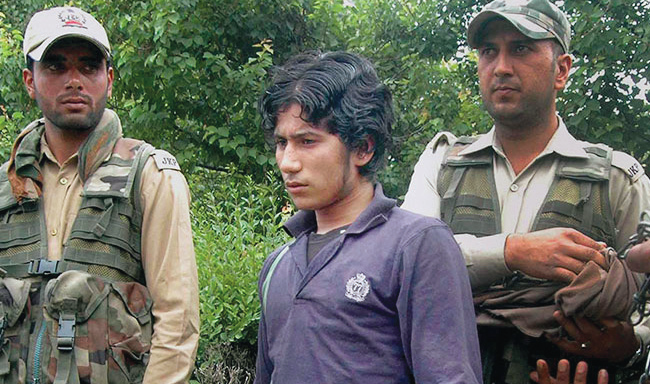
    SRINAGAR (TIP): Four men have been arrested for yesterday’s firing in a Srinagar hospital that enabled Pakistani terrorist Naveed Jutt to escape from police custody. The police said they have tracked down on the motorcycle and the vehicle they had used for the getaway.

    The escape of 22-year-old Jutt when he was taken to the hospital for a routine check-up with five other prisoners, has been put down to a detailed conspiracy.

    The superintendent of Rainawari Central Jail has been suspended, Jammu and Kashmir home secretary said.

    Gunshots rang out in the Shri Maharaja Hari Singh Hospital yesterday, when the prisoners were brought into the Out Patients’ Department. Two policemen accompanying the prisoners collapsed. One died on the spot, the other in the hospital. In the confusion, Jutt managed to escape with the pheran-clad men, who had come on a motorbike.

    Naveed Jutt, 22, has been at the jail since 2016, since his arrest two years before. Senior police officers said he managed to get a court order to stay in a Srinagar jail even though all Pakistani terrorists are lodged outside Kashmir.

    His escape, said state police chief SP Vaid, had been carefully planned with active collaboration from inside the jail.

    The police had prior information about Lashkar activities inside the jail.

    Naveed Jutt was known to be close to Abu Qasim, who headed Lashkar-e-Taiba in Kashmir and was killed by security forces in 2015. He is also close to Zaki ur Rehman Lakhvi, one of the masterminds of 26/11 terror attack in Mumbai.

    The police said Naveed Jutt was involved in several terror attacks in Kashmir, including one in which a teacher on election duty was killed. He is also believed to be behind the killing of at least seven policemen. Source: NDTV

  • Cease fire: on India-Pakistan LoC tensions

    Cease fire: on India-Pakistan LoC tensions

    India and Pakistan must restore calm along the LoC and International Boundary

    The 2003 ceasefire agreement between India and Pakistan is now alive only in the breach, with violations intensifying in number and much damage to life and livelihood along the border. The drift can only be arrested through high-level political intervention to save this very significant bilateral agreement between the two nuclear-armed neighbors. In the latest incident, four Indian soldiers, including an Army Captain, were killed in the Bhimber Gali sector in cross-border firing that went on through most of Sunday. These casualties are a natural extension of what has been unfolding along the International Boundary as well as the Line of Control for the past several months. As a result, 2017 has turned out to be the worst year since the agreement brought calm to the border 15 years ago. The ceasefire agreement had resulted in a dramatic drop in military casualties, and thousands of border residents had been able to return home from temporary shelters on both sides. It is important to see the 2003 agreement in the immediate context of the time. It came just four years after the Kargil war, and soon after India and Pakistan almost went to war following the December 13, 2001 terrorist attack on the Indian Parliament. The agreement was historic, and a triumph of diplomacy — Pakistan Prime Minister Mir Zafarullah Khan Jamali announced a unilateral ceasefire on the Line of Control on Id; India suggested including the Siachen heights, and the ceasefire was eventually extended to the International Boundary. It was the high point of Atal Bihari Vajpayee’s premiership, and his successor, Manmohan Singh, heeded the legacy.

    Now, as the two countries are caught in a spiral of almost daily exchanges of fire along the border, there is a danger of political rhetoric acquiring its own momentum. Already, 2017 has been the worst year along the border since the ceasefire came into force, with at least 860 incidents of ceasefire violations recorded on the LoC alone. By way of comparison, in 2015 there had been 152 incidents, and in 2016 there were 228. January 2018 recorded the highest number of ceasefire violations in a month since 2003, according to estimates. According to data mentioned in the Jammu and Kashmir Assembly, between January 18 and 22, 14 people including seven civilians were killed and over 70 were injured in firing from the Pakistan side along the International Boundary in Jammu, Kathua and Samba districts as well as along the LoC in Poonch and Rajouri districts. Thousands of civilians have been forced to flee their border homes. Peace on the border is difficult to achieve at the tactical level by military leaders. Restoring the ceasefire requires real statesmanship, not brinkmanship.

    (The Hindu)

  • Free Karachi Campaign Launches its Next Phase in the USA

    Free Karachi Campaign Launches its Next Phase in the USA

    #FreeKarachi Ads Appear on Massive Digital Billboards in Los Angeles

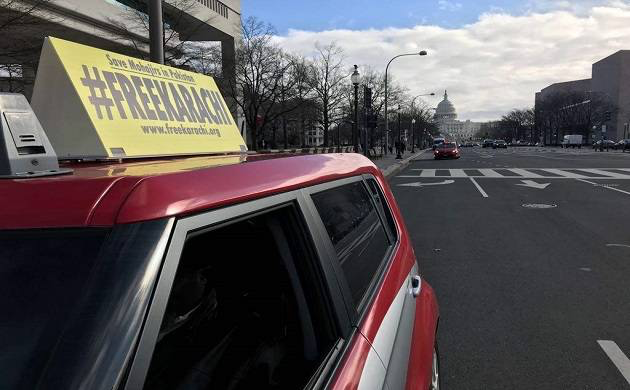
    WASHINGTON DC (TIP):  The Free Karachi Campaign has launched its next phase in the U.S.A. with billboards advertisements. As part of the campaign, “#FreeKarachi and Urban Sindh from State Atrocities in Pakistan” advertisements have appeared on several highway billboards in the U.S. West Coast city of Los Angeles.

    The Free Karachi Campaign had started on 15 January in the U.S. capital Washington, D.C. when a number of taxis and cars with #FreeKarachi banners participated in the city’s annual Dr. Martin Luther King Jr. Day parade.

    The Washington Post, one of the most prominent newspapers of the U.S., had also published a special supplement that had carried details of the injustices that Sindh Province’s people, Urdu-speaking Mohajirs in particular, have been facing in Pakistan. A digital advertisement of Free Karachi is still running on the official website of the Washington Times.

    Commenting on the latest phase of the campaign, Free Karachi spokesperson Nadeem Nusrat said that “Karachi is Pakistan’s most secular city where religious extremists have always failed to develop a stronghold. Pakistan’s Punjabi-dominated deep-state, however, is trying to change this great, tolerant trait of this city by promoting forces of religious extremism.”

    “While Dr. Shakil Afridi languishes in prison and thousands of Mohajirs and Balochs gone missing after being taken into custody by Pakistani security forces, the UNO and U.S.-designated terrorists are allowed to hold rallies in Karachi. This clearly proves why Free Karachi is necessary”, added Mr. Nusrat.

    “The taxes paid by Karachi and other areas of urban Sindh run Pakistan’s economy. Karachi alone pays over 90 percent taxes for the treasury of Sindh Province, but it has no representation in the federal as well as the provincial governments. Karachi is ranked by most independent organizations as the second most populace city in the world, but its population is always reduced in the official census figures by both Larkana-based Sindh and Islamabad-based federal government,’ said Mr. Nusrat.

    Criticizing Pakistani judiciary, Mr. Nusrat said that “while Pakistani supreme courts are known for taking suo-moto action over petty issues, they have failed to take notice of the brutal murder of Harvard-educated, elderly Professor Hasan-Zafar Arif who was abducted and killed recently in Karachi.”

    “Mohajirs –those whose ancestors had migrated from India to Pakistan in 1947 – are the ones whose forefathers not only made Pakistan a reality but also played a key role in sustaining Pakistan in its most turbulent times. These Mohajirs have now been barred from governments jobs and security institutions. Their young generation is blatantly admission in public-funded professional educational institutions and government jobs. As recently as last week, over one thousand Karachi students were denied admission at Karachi University and the seats were instead given to students from rural Sindh.” Mr. Nusrat continued.

    “It is not possible for Mohajirs to raise their voice against state-sponsored injustices in Pakistan. Political offices of Mohajirs’ mainstream political party, MQM, have been illegally demolished in Pakistan and the party is facing an illegal, unannounced ban. The Mohajirs living overseas now have to highlight the brutal and undemocratic policies of Pakistani State at every possible international forum,” Mr. Nusrat added.

    (Press Release)

  • US will carry on with Pak military training

    US will carry on with Pak military training

    ISLAMABAD (TIP): The US has conveyed to Pakistan that the military training component of the aid will continue despite suspension of the security assistance package, media reports said on Thursday, January 18.

    Foreign Secretary Tehmina Janjua informed the Senate’s foreign affairs committee on Wednesday that the US will continue funding the aid components that support their national interest, including the International Military Education and Training (IMET) part, Dawn reported.

    The IMET program, which focuses on military education, is meant to establish a rapport between the US military and the recipient country’s military for building alliances for the future.

    Under this program, Pakistan Army officers have been trained in the US at a cost of $52 million over the past 15 years and an allocation of another $4 million has been made for the current year.

    While the IMET would continue, the US has frozen the aid provided under the programs that are more important to Pakistan, particularly the Foreign Military Financing (FMF).

    The recipients of FMF can use the funds under this program for procurement of defense hardware produced by the US.

    Foreign Minister Khawaja Asif, while briefing the lawmakers on the current state of Pak-US relations, said the relationship was not going “very smooth” and problems were persisting. “We have to stand up to those who accuse us of harboring terrorists,” Asif remarked.

    Early this month, Trump accused Pakistan of giving nothing to the US but “lies and deceit” in return for USD 33 billion aid and said Islamabad has provided “safe haven” to terrorists.

    Lies and deceit

    Pakistan army officers have been trained in the US at a cost of $52 million over the past 15 years

    An allocation of another $4 million has been made to train Pakistan military officers for the current year

    The US will continue funding the aid components that support their national interest, including the International Military Education and Training (IMET) part.

    (With inputs from IANS)


  • Pakistani youth booked for treason for writing ‘Hindustan Zindabad’

    Pakistani youth booked for treason for writing ‘Hindustan Zindabad’

    PESHAWAR (TIP): A Pakistani youth, who wrote ‘Hindustan Zindabad’ on the wall of his house in Khyber- Pakhtunkhwa province, has been booked for treason, a media report said on Monday.

    Sajid Shah had written ‘Hindustan Zindabad’ on the outer wall of his home in Nara Amazi area of the province, the Daily Express quoted police as saying.

    He has subsequently been booked for treason, they said. Some local people told him to erase the slogan from the wall as it hurt their national pride, the police said.

    Some people took pictures of the wall on their smartphones and emailed them to senior police officials. “We have booked the young man on orders from the high-ups”, the officer said. (PTI)

  • Arms sale to Pakistan has strings

    Arms sale to Pakistan has strings

    WASHINGTON (TIP): The Trump administration notified Congress on August 30 that it was putting $255 million in military assistance to Pakistan into the equivalent of an escrow account that Islamabad can only access if it does more to crack down on internal terror networks launching attacks on neighboring Afghanistan.

    The dueling messages sent to Pakistan — promising aid but attaching strings if the country’s counter terror efforts fall short — are part of an increasingly confrontational turn in an alliance that has long been strained.

    The United States has provided Pakistan more than $33 billion in aid since 2002. But the annual funding has declined in recent years as Washington became increasingly disenchanted with Pakistan’s quiet support for the Haqqani network and the Taliban, whose attacks have been responsible for the deaths of US troops in Afghanistan.

    Still, US officials have long recognized that Pakistan has tried to crack down on terror groups, and plays an important role in facilitating supply shipments to the US military in Afghanistan.

    Last week, in announcing his new strategy for the war in Afghanistan, President Donald Trump excoriated Pakistan.

    “We can no longer be silent about Pakistan’s safe havens for terrorist organizations, the Taliban, and other groups that pose a threat to the region and beyond,” Trump said.

    He added: “We have been paying Pakistan billions and billions of dollars at the same time they are housing the very terrorists that we are fighting. But that will have to change, and that will change immediately.”

    State Department officials said that Trump’s promised changes would bring explicit conditions on military aid. Once Pakistan more aggressively pursues the Taliban and Haqqani network, the aid will be released — a determination to be made by Secretary of State Rex W Tillerson, officials said.

    Last week, Tillerson suggested that the United States’ patience with Pakistan was nearing a breaking point.

    “We’re going to be conditioning our support for Pakistan and our relationship with them on them delivering results in this area,” Tillerson said. Critics of US aid to Pakistan said the administration was still not being tough enough. “I would have preferred that the money just disappeared,” said C Christine Fair, an associate professor at Georgetown University. “But if they’re going to do this, they should have said Pakistan can’t buy strategic weapons that could be used to attack India, such as F-16s.”

    The $255 million in military assistance was the largest portion of $1.1 billion in aid authorized by Congress in 2016 that also included money for counternarcotics operations and health initiatives. If the State Department had failed to notify Congress in the next few weeks of its intention to spend the money, it would have been returned to the US Treasury.

    Rather than lose such a carrot, Trump administration officials said they wanted to use the money as incentive for Pakistan to change its behavior. By effectively putting the funds into escrow, the Trump administration also allows its own ongoing review of its policy toward Pakistan to continue unaffected by aid concerns, officials said Wednesday. (AP)

  • Pervez Musharraf declared fugitive in ex-Pakistan PM Benazir Bhutto’s murder trial

    Pervez Musharraf declared fugitive in ex-Pakistan PM Benazir Bhutto’s murder trial

    ISLAMABAD (TIP): Pakistan’s former military ruler Pervez Musharraf was on August 31 declared a proclaimed offender by a special anti-terrorism court which sentenced two senior police officers to 17 years in jail in the Benazir Bhutto murder case, nearly 10 years after her assassination.

    Bhutto, a two-time prime minister, was killed in a gun and bomb attack in Rawalpindi’s Liaquat Bagh during an election campaign rally on December 27, 2007. She was 54.

    The case was registered soon after the assassination and the trial went through many ups and down until concluded yesterday in Rawalpindi.

    Judge Asghar Khan announced the verdict in court, where former Rawalpindi CPO Saud Aziz and former Rawal Town SP Khurram Shahzad — suspects out on bail — were also present.

    Aziz and Shahzad were sentenced to 17 years in prison and ordered to pay a fine of Rs 5 lakh each.

    While five other accused have been acquitted, former president Musharraf has been declared a proclaimed offender, with an order to seize his property. (PTI)

  • Enforced disappearances and extra judicial killings of workers in Pakistan

    Enforced disappearances and extra judicial killings of workers in Pakistan

    • MQM Holds Large Demonstration in front of White House

    • MQM Leader Altaf Hussain vows to continue the struggle for justice and rights for Muhajirs

    WASHINGTON (TIP): MQM held a large demonstration, on July 30, in front of White House against para military operation to suppress Mohajirs, enforced disappearances and extra judicial killings of MQM workers in Karachi. The demonstration was attended by MQM Convener Nadeem Nusrat, members of Coordination Committee; office bearers along with large numbers of workers, supporters and members of Pakistani Diaspora from all walks of life, including ladies, elders and youth.

    The demonstrators demanded that the Pakistani establishment should stop these cruel tactics of “unlawful kidnapping” of Mr. Hussain’s relatives in order to cause him to bow his head down, a wish of their which will never fulfill. They held banners and placards demanding US government to take notice of worst form of human rights Violations, Enforced Disappearances, Extra Judicial Killings, Inhumane Torture, Ban on Political and Social activities of MQM, Media Blackout of MQM’s Founder and Leader Altaf Hussain.

    MQM’s Founder Altaf Hussain joined the participants via tele-conferencing and addressed the participants in a brief speech. In this address, he went on to condemn the role of Pakistan Army and ISI in Karachi, particularly against the Muhajir community. In his speech, he urged US government to play its role in stopping the genocide of Mohajirs and Baloch in Pakistan. Mr. Hussain said that US and international aid which Pakistan gets is being spent to nourish jihadi infrastructure in the country. The military and civilian aid to Pakistan should be made conditional on the human rights record of the country. He said that Mohajirs are looking towards US administration and Congress to help them in their struggle for an autonomous province in Pakistan. If the demand of a separate Mohajir province is not met by Pakistan then Mohajirs will decide their future line of action. Mr. Hussain said that Pakistan has become the epicenter of global terrorism. Supreme court took action against elected prime minister but can they take action against those who provided refuge to Osama bin Laden and other most wanted terrorists.

    On this occasion, MQM’s Convener Nadeem Nusrat addressed the participants. In his address, he denounced the state oppression upon most liberal political force of Pakistan in strongest words possible, and went on to term is a Genocide upon innocent Muhajirs in Pakistan. He stated, that our Political Offices have been razed to the ground, dozens killed extra-judicially by the state, hundreds are missing, thousands are behind bars awaiting justice for crimes they didn’t even dare to commit. If this wasn’t enough, family of our Founder and Leader Mr. Altaf Hussain and Coordination Committee member Mustafa Azizabadi have been targeted. He went on to question, how long will the world allow Pakistan to carry-out such heinous acts against Mohajirs?

    Furthermore, he elaborated that Nawaz Sharif has been convicted for his corruption, when will the army generals be convicted for their corruption, human rights violations, and for fostering and harboring jihadi terrorists.

    The demonstrators vowed to continue raising their voices till justice is sought in Pakistan, and perpetrators of such deliberate Human Rights Violations are brought to justice.

    (Based on a press release)


  • Pentagon blocks $350 million military aid to Pakistan

    Pentagon blocks $350 million military aid to Pakistan

    WASHINGTON DC (TIP): The US Department of Defense withheld military payments to Pakistan, after Secretary of Defense Jim Mattis told Congressional defense committees that he was unable to certify that Pakistan took sufficient action against the Haqqani network to permit full reimbursement of the fiscal year 2016 Coalition support funds (CSF). The Pakistan-based Haqqani network has been accused for carrying out many high-profile terror acts against US and Indian interests in Afghanistan, including the 2008 bombing of the Indian mission in Kabul that killed 58 people. This is the second year in a row that the Defense Secretary has refused to certify to Congress, as mandated under National Defense Authorization Act (NDAA), that Pakistan has taken satisfactory action against the Haqqani network.

    Pakistan had been allotted $900m in military aid to through the special fund. The country has already received $550m of that, but Mattis’ decision means $50m will be withheld. The remaining $300m was rescinded by Congress as part of a broader appropriations act, earlier this year. The Coalition Support Fund (CSF) authority reimburses key cooperating nations for logistical, military and other support provided to US combat operations. Pakistan is the largest recipient of CSF reimbursements, having received more than USD 14 billion since 2002.

    The US is in the process of reviewing its policy on Afghanistan and Pakistan. Last week, the State Department in a report to the Congress had listed Pakistan as one of the countries having terrorist safe havens. Sanjay Puri, Chairman, US India Political Action Committee, welcomed the announcement adding, “USINPAC has been advocating for years to reevaluate military aid to Pakistan. We cannot have US taxpayer money going towards terror attacks against US and Indian interests from groups in Pakistan.”


  • Pakistan SC warns Sharif’s children of 7yr jail if papers found forged

    Pakistan SC warns Sharif’s children of 7yr jail if papers found forged

    ISLAMABAD (TIP): The children of Pakistan Prime Minister Nawaz Sharif could face up to seven years in jail if it was proved that they had submitted fake documents to the Panama panel probing the money laundering allegations against the family, the Supreme Court warned on July 20.

    The apex court heard the Panamagate scandal case for the fourth consecutive day since the hearing began on Monday, following submission of a report by the Joint Investigation Team (JIT) on July 10, which was tasked by the court to probe allegation of corruption against Sharif and his family.

    “The punishment for submitting forged documents in the court is seven years in jail,” warned the three-member panel of judges.

    The JIT among other things has observed that some of the documents submitted by the children of Sharif, 67, were tampered with.

    A trust deed provided by the prime minister’s daughter Maryam Nawaz and executed in 2006 was written in Calibri font which was not commercially available till 2007. It was also notarised from an office in London on Saturday which is officially an off day, raising concern about the authenticity of the document.

    Similarly, Government of Dubai has revealed that the documents of Gulf Steel Mills provided by the prime minister’s son Hussian Nawaz were forged as there was no record of those documents.

    Justice Ejaz Afzal is heading the probe panel comprising Justice Sheikh Azmat Saeed and Justice Ijazul Ahsan. They also warned Salman Akram Raja, the lawyer of Sharif’s children, against a media trial in the case after some of the documents presented by him were leaked to media and were discussed in talk shows yesterday.

    “You have been conducting a trial in the media and the documents (submitted to the court) have already been discussed in the media,” said Justice Saeed. “There is a media dais outside, you should give your arguments there as well,” he told Raja, who assured the court that he had not released any documents to media.

    Meanwhile, Raja presented his arguments in details. The arguments were still going on when the court adjourned the proceedings till tomorrow.

    The judges today again asked the Sharif family to provide the money trail of its various businesses in the UAE, Saudi Arabia, Qatar and the UK. “The main question is where did the money for these businesses came,” asked the panel.

    Later, Fawad Chaudhry, member of a legal team representing Imran Khan of Pakistan Tehreek-e-Insaf (PTI), told media outside the court after the hearing that the hearing might be completed by tomorrow.

    “For us the case is over. Sharif would have to go home and then jail for corruption. His children would also land in jail for forgery,” he said.

    Minister of State for Information Marriyam Aurangzeb said that the prime minister has been vindicated as there is no proof of any corruption against him.

    “The prime minister was accused of money laundering and corruption but none of the allegations have been proved,” she said.

    The scandal surfaced when the Panama Papers leaks last year revealed that Sharif’s sons — Hassan Nawaz and Hussain Nawaz — and his daughter Maryam — owned offshore companies which managed their family’s properties. The assets in question include four expensive flats in Park Lane, London.

    Opposition parties allege that the London flats were purchased through illegal money which Sharif and his family have rejected. However, they have been unable to satisfy the court about the source of money used to purchase these properties.(PTI)

  • Sohail accuses Pakistan of fixing their way into final

    Sohail accuses Pakistan of fixing their way into final

    “Sarfraz needs to be told that you have not done anything great. Someone has helped you to win these matches…There is no reason for you (Sarfraz) to rejoice.”

    KARACHI (TIP): Just two days ahead of the high-octane Champions Trophy final against arch-rivals India, former Pakistan skipper Aamer Sohail has indirectly accused his national side of fixing matches in the ongoing eight team marquee event. While speaking on a Pakistani news channel, Sohail created a storm by saying that skipper Sarfraz Ahmed and his boys have no reason to rejoice as they have made it to the finals with the help of “external factors”, not by genuine performance.

    “Sarfraz needs to be told that you have not done anything great. Someone has helped you to win these matches,” said Sohail. “There is no reason for you (Sarfraz) to rejoice. We all know what happens behind the scenes. I can’t tell you who have won them the games. If asked, I will say that the prayers of the fans and God have won them the games. They have been brought to the final due to external factors and not on the basis of their performances.”

    The former opener warned the players to concentrate on their game and remain level-headed if they wanted to survive. “The boys now need to be level-headed and focussed on playing good cricket. We all are well aware of everyone’s calibre. If you do something wrong, then we will tell you about the same. If you do something correct, we will appreciate you. So, they should keep themselves level-headed, otherwise they would not be able to go much ahead.”

    U-Turn

    After hinting that the side had made the final by fixing matches, Sohail issued a clarification wherein he said that he had lost his cool after learning that Sarfraz had refused to dedicate the victory against Sri Lanka to former captain Javed Miandad, who was celebrating his 60th birthday on that day.

    “My comments were made after I heard of Sarfraz’s refusal to dedicate the win to Miandad, and him saying that Miandad criticises the team too much,” Sohail said. “The other thing I said was that the facilitators of the win cannot be named; however, I said nothing about match-fixing or any other foul play, my statement was misunderstood.”

    Source: Agencies

  • Cut Pakistan aid for supporting terror: 2 US lawmakers to Trump administration

    Cut Pakistan aid for supporting terror: 2 US lawmakers to Trump administration

    WASHINGTON (TIP): Two top lawmakers have accused Pakistan of supporting terrorism and urged the Trump administration to cut military aid to the country, saying the US should make it more difficult for Islamabad to get its hands on American weapons.

    During a Congressional hearing this week, Congressman Dana Rohrabacher and Ted Poe, alleged that Pakistan is engaged in terrorism and asserted that the US needs to cut its military assistance to it.

    “We need to go on the record here, on this part of our government, to say that we’re not going to be providing weapons to countries like Pakistan that we’re afraid will shoot down our own people and afraid we know they’re engaged in terrorism,” Rohrabacher said during a House Foreign Affairs Subcommittee on Terrorism, Non-proliferation and Trade hearing on Foreign Military Sales.

    “We know what they’ve done now. They still hold Dr. Afridi (who helped locate Osama bin Laden)…in a dungeon,” he said. “We should be facilitating our support and our weapons systems to countries like Egypt that are fighting this threat to Western civilisation, to all of civilisation. And we should make it more difficult not less difficult for countries like Pakistan to get their hands on American weapons,” Rohrabacher asserted.

    Congressman Ted Poe, Chairman of the House Foreign Affairs Subcommittee on Terrorism, Non-proliferation and Trade, said that the US is having the issue with Pakistan whether “they’re loyal or playing us for years on the issue of aid” to Pakistan and sales to Pakistan. “We were concerned about the Pakistanis scrambling F-16s that we made and sold to the Pakistanis so that they wouldn’t shoot down Americans who were doing the job of taking out this terrorist. I personally think Pakistan plays the United States because they turn to China if we don’t help them,” Poe said.

    “I understand all that. They have nuclear weapons and we want to have a relationship with them so that they don’t look to China. I get all that. But are we doing anything different on sales to Pakistan to make sure those sales of whatever it is aren’t used against us directly or used against us indirectly because of the military helping the Taliban in Afghanistan where were have our troops and those weapons could be used against the United States?” he asked. “Are we doing anything different to make sure that doesn’t happen or are we still using the same formula,” Poe questioned.

    Tina Kaidanow, Acting Assistant Secretary of State, Political-Military Affairs, told lawmakers that with Pakistan the United States has a robust end use monitoring programme, to ensure that the items that it provides to them are used appropriately and within the boundaries of what the US has asked them to accomplish.

    “We regard Pakistan as an important partner on counter- terrorism issues. They will be essential in bringing the Afghan Taliban to the table for peace talks. There are a number of things where we need their cooperation and their assistance,” Kaidanow said. “We do want to help them on the counter-terrorism front. But on the other hand, again, we have very big concerns that we continuously front with them on support for Haqqani, on support for other things. This has been made clear to the Pakistani government at the highest levels,” the senior State Department official said. (PTI)

  • Panama Papers leaks: Pakistan PM Sharif says he and his family have done nothing wrong

    Panama Papers leaks: Pakistan PM Sharif says he and his family have done nothing wrong

    ISLAMABAD (TIP): Embattled Pakistan Prime Minister Nawaz Sharif today said he and his family have done nothing wrong as he lashed out at “some unseen elements” for hatching conspiracies against his democratically elected government.

    “Today, I have just presented my stance before the JIT,” Sharif told reporters after appearing before the Joint Investigation Team (JIT) probing his family’s alleged corruption as was reported by the Panama Papers leaks.

    The 67-year-old PML-N leader, who became Pakistan’s first sitting premier to depose before such a panel, said that these allegations have nothing to do with his tenure as the prime minister and are not charges of corruption.

    “It should be noted that these allegations have nothing to do with my tenure as the prime minister and are not charges of corruption. They are charges against me and my family on a personal level about the family business,” Sharif said after nearly three hours of questioning by the six-member team.

    He said as former chief minister and now third time prime minister, he approved projects worth trillions of rupees but “my opponents could not accuse me of any wrongdoing.”

    Sharif said he and his family have repeatedly been subjected to merciless accountability but no allegation of corruption had ever been proved. “My opponents have levied charges of corruption against me, however, neither in the past, nor in the present, have any charges of corruption been proved against me and my family.”

    He expressed confidence that the outcome of the ongoing inquiry would not be different as he and his family have done nothing wrong. He also accused that “some unseen elements were hatching conspiracies against him and the democracy which would damage” the country.

    “All conspiracies of our political opponents will fail,” he said. The JIT chief Wajid Zia had summoned the prime minister to appear before the probe team on June 15 with all documents relevant to the case.

    The summons was issued to Sharif, 67, after he returned last Saturday from Kazakhstan where he had attended the Shanghai Cooperation Organisation (SCO) Summit. (PTI)

  • Nawaz Sharif retains billionaire status despite decline in fortune

    Nawaz Sharif retains billionaire status despite decline in fortune

    ISLAMABAD (TIP): Pakistan Prime Minister Nawaz Sharif has retained his billionaire status with his declared assets standing at Rs 1.72 billion in 2016 despite decline in his fortune, making him one of the richest lawmakers in the country.

    Sharif continues to receive substantial amounts from his son Hussain who is doing business in Saudi Arabia despite a controversy surrounding the Panama Papers Leaks that dragged the ruling family to the courts.

    According to the statements of assets of lawmakers, released by the Election Commission of Pakistan (ECP) yesterday, the prime minister owned assets worth Rs 261.6 million in 2012, but that saw a six-fold increase and reached Rs 1.82 billion in 2013 — the first year of his third stint as the country’s chief executive, making him a declared billionaire for the first time.

    In 2014, his assets crossed the two billion-mark, but in 2015 declined slightly to Rs 1.96 billion. Earlier in 2011, he owned assets worth Rs 166 million, the Dawn reported. The value of his assets has further declined to Rs 1.72 billion in the year that ended on June 30, 2016. Sharif owns a Toyota Land Cruiser, gifted to him by an unspecified individual, as well as two Mercedes cars.

    The house he lives in is owned by his mother and he has multiple foreign and local currency accounts, huge swathes of agricultural land and investments in industrial units such as sugar, textile and paper mills. Sharif declared in 2015 for the first time ownership of birds and animals worth Rs 2 million, which are valued at Rs 5 million, the daily said.

    The Sharif family’s estate in Raiwind is priced at Rs 4 million, while his property in Lahore’s Upper Mall area is said to be worth over Rs 250 million. The prime minister is one of the richest lawmakers of the country. (PTI)