
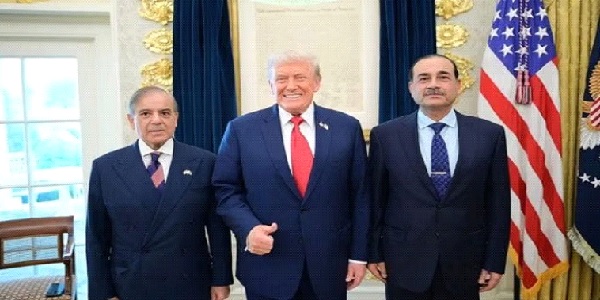

Islamabad (TIP): {akistan Army chief Field Marshal Asim Munir was confident that his multiple backchannel visits to Iran would soon pay rich dividends as both Washington and Tehran were desperate to sign a long-awaited deal to formally terminate the conflict. Munir appeared determined to deliver what the US President Donald Trump expected from his “favourite field marshal”.
The wider architecture of US-Iran engagement remains driven by forces far beyond Islamabad’s direct control. But Pakistan’s military establishment was eager for the deal announcement to project it as Munir’s personalised statecraft and Pakistan’s geopolitical indispensability. However, the regional chessboard has shifted abruptly, and Pakistan might just have lost its moment to bask in the sun.
Trump’s latest desire for Pakistan and other Muslim countries to align themselves with the Abraham Accords under a bigger scheme of things has put Islamabad in an unusually fraught position. Having garnered international attention and visibility through his mediation efforts in evolving US-Iran engagement, Munir is in danger of being stuck between ultimately irreconcilable pressures of Trumpian expectations, the domestic Islamist outlook and Pakistan’s historical stance towards the Palestinian cause.
What at first seemed an opportunity for diplomatic advancement appears to be quickly coming to mirror a familiar case of use and discard, reinforcing Defence Minister Khawaja Asif’s remark that the US had treated Pakistan like “toilet paper”.
No country can be “used” in this shabby manner by any external manipulator unless, through its own strategic choices, it has placed itself in such a position. It’s possible that even Munir himself, somewhere deep down inside, may begin to wonder whether Trump merely “used” him.
Yet this pattern is hardly new in Pakistan’s strategic experience. Pakistan’s early history makes its reliance on external patronage almost inevitable. Formed in haste, with its frontiers undefined, its political system still in infancy, and its armed forces already powerful, Pakistan needed a degree of stability which could only come from external ballast.
In the 1950s, such ballast came in the form of a partnership with the US. Joining organisations such as CENTO and SEATO meant having access to arms and support. However, this alliance was driven by short-term tactical calculations rather than a shared ideological vision or a “common destiny.”
In the anti-Soviet jihad in Afghanistan, Pakistan became indispensable. It served as a useful channel for money, weapons and backroom dealings. Its intelligence capabilities were enhanced, and its strategic value was heightened. But with the end of the war came the realisation of the provisional nature of all this inflated significance. With the withdrawal of the Soviets came the flight of the Americans — sanctions were imposed, aid was withheld, and the former ally was increasingly viewed as the problem.
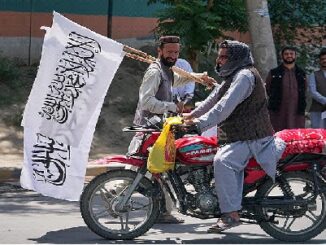
The trend persisted after 9/11 with near mechanical regularity. Pakistan once again found itself being labelled indispensable. It was once again designated a “major non-NATO ally” and received huge amounts of aid. The same old dilemma of competing allegiances once again marred the relationship. When the US finally retreated from Afghanistan in 2021, Pakistan found itself dealing with the consequences of an unfinished war.
This phenomenon cannot be viewed purely in external terms. There is an internal logic to it. Pakistan’s ruling elite, especially the military and bureaucracy, has always considered alignment as a strategic asset. External patronage has reinforced internal power, offset economic weakness and offered a perception of strategic advantage against India. But affection is not the name of the game in these alignments. Only calculations are.

Be the first to comment