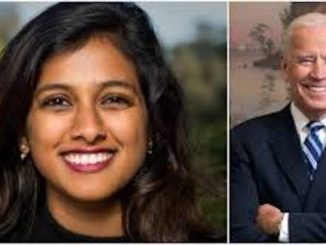
MILWAUKEE (TIP): Presumptive Democratic presidential nominee Joe Biden has tapped Medha Raj’s talent for his digital campaign.
“Excited to share that I’ve joined Joe Biden’s campaign as the Digital Chief of Staff,” said Raj in a LinkedIn Post. “One hundred and thirty days to the election and we’re not going to waste a minute!”
It was earlier reported that as the Digital Chief of Staff, Raj will “work across all facets of the digital department to streamline and coordinate how to maximize the impact of its digital outputs”.
With the coronavirus pandemic sweeping America shifting the battle for the White House to online platforms, Raj is expected to play a key role in the Biden campaign.
According to latest polls, former Vice President Biden is leading Republican incumbent President Donald Trump by eight points. Trump rules the Twitter world, but loves campaign rallies.
Raj, a graduate in international politics from Georgetown University, and an MBA from Stanford University, was once part of the former South Bend Mayor Pete Buttigieg’s presidential campaign. He dropped out of the race on March 1 and has endorsed Biden.
According to media reports, as part of its efforts to ramp up its digital operations, Biden campaign has also appointed Clarke Humphrey to act as deputy digital director for grassroots fundraising.
Humphrey previously worked on Hillary Clinton’s 2016 campaign. Christian Tom was named as the new director of digital partnerships.
They will be joined as the new digital organizing director by Jose Nunez, who comes from the presidential campaign of Indian-American senator Kamala Harris, who too has dropped out of the presidential race.
Biden, 77, secured the Democratic presidential nomination on June 5 by securing a majority of delegates to challenge Trump in the Nov 3 election.
He would formally accept his Democratic presidential nomination at the party’s scaled back convention in Milwaukee, Wisconsin on Aug 20 due to corona pandemic.
The convention will be broadcast live from Milwaukee, the Democratic National Convention Committee (DNCC) has announced.
The reality of imposing a national order of things, through a CAB and an NRC, in non-national spaces will unfold in future but Assam has given us adequate evidence of the risks involved. It can only be hoped that the judiciary and civil society are able to restore constitutional and democratic politics through an exercise of counter-majoritarian power in a context where electoral gains have determined political choices.
The Citizenship (Amendment) Bill (CAB), passed in both Houses this week, promises to give the protection of citizenship to non-Muslims who fled to India to escape religious persecution in Pakistan, Bangladesh and Afghanistan. While religious persecution is a reasonable ground for protection, the problem with the CAB is that it does not include all communities that suffered religious persecution, and explicitly excludes Muslims who suffered persecution in the specified countries and other non-Muslim majority countries like Myanmar.
This majoritarian notion of religion-based citizenship, although intrinsic to the Bharatiya Janata Party (BJP)’s idea of India, is not shared by the majority of people in this country. In addition, such a view is alien to the constitutional consensus which emerged in 1950, embodying the idea of a people who committed themselves — and those governing on their behalf — to a constitutional order. Those in support of the CAB have rallied around the argument that it is non-discriminatory and its objectives are justifiable. In doing so, they have often invoked the moral imperative of correcting a perceived past wrong — in this case the Partition. In the process, the CAB changes completely the idea of equal and inclusive citizenship promised in the Constitution.
Changes in citizenship law
The CAB cannot, however, be seen in isolation. It must be seen in tandem with the National Register of Citizens (NRC) and other changes in the citizenship law, which have preceded it. The Home Minister and the Law Minister have clarified that the CAB and the NRC are distinct — the NRC protects the country against illegal migrants and the CAB protects refugees. This, however, is incommensurate with the election speeches made by BJP leaders. For instance, speaking in Kolkata earlier this year, Amit Shah had promised an NRC in West Bengal, but only after the passage of the CAB to ensure that no Hindu, Buddhist, Sikh, Jain and Christian refugee is denied citizenship for being an illegal immigrant. In a triumphal note after the passage of the CAB in Lok Sabha, Mr. Shah declared that a nationwide NRC would follow soon.
Despite their seemingly disparate and adversarial political imperatives, the CAB and the NRC have become conjoined in their articulation of citizenship. Indeed, the two represent the tendency towards jus sanguinis in the citizenship law in India, which commenced in 1986, became definitive in 2003, and has reached its culmination in the contemporary moment. In 2003, the insertion of the category ‘illegal migrants’ in the provision of citizenship by birth became the hinge from which the NRC and the CAB later emerged.
The Citizenship (Registration of Citizens and issue of National Identity Cards) Rules of 2003 made the registration of all citizens of India, issue of national identity cards, the maintenance of a national population register, and the establishment of an NRC by the Central government compulsory. Under these rules, the Registrar General of Citizen Registration is to collect particulars of individuals and families, including their citizenship status, through a ‘house-to-house enumeration’. In an exception to the general rule, Assam has followed a different procedure of ‘inviting applications’ with particulars of each family and individual and their citizenship status based on the NRC 1951 and electoral rolls up to the midnight of March 24, 1971. The purpose of the NRC is to sift out ‘foreigners’ and ‘illegal migrants’, who were referred to at different points as ‘infiltrators’ and ‘aggressors’, and a threat to the territory and people of India.
Exempting minority groups
The second strand emerging from the 2003 amendment has taken the form of the CAB, which exempts ‘minority communities’, Hindus, Sikhs, Buddhists, Jains, and Christians, from three countries — Bangladesh, Pakistan and Afghanistan — from the category of ‘illegal migrants’. The CAB brings the citizenship law in line with exemptions already made in the Passport Act 1920 and Foreigners Act 1946 through executive orders in September 2015 and July 2016. It sets a cut-off date of December 31, 2014 as the date of eligibility of illegal migrants for exemption.
It must be noted that a PIL filed by the Assam Sanmilita Mahasangha pending before the Supreme Court has contested the deviation in the cut-off date set for Assam by the Citizenship Amendment Act 1986, March 24, 1971, from the date specified in Article 6 of the Constitution, i.e., July 19, 1948, which applies to the rest of the country. The CAB is applicable to entire India and takes the cut-off date forward by several years.
The claim that the CAB does not violate the Constitution is reflective of the recommendations of the Joint Parliamentary Committee (JPC). The JPC was advised by constitutional experts to use a broader category, ‘persecuted minorities’, to protect the Bill from the charge of violating the right to equality in Article 14. The CAB uses the category ‘minority communities’ and goes on to identify them on the ground of religion. The notifications of September 2015 and July 2016, which changed the Passport and Foreigners Acts, had mentioned the term ‘religious persecution’. The consideration of religious persecution for making a distinction among persons, the JPC argued, could not be discriminatory, because the distinction was both intelligible and reasonable — satisfying the standards laid down in the Supreme Court judgment in State of West Bengal vs. Anwar Ali Sarkarhabib (1952) to affirm adherence to Article 14.
Test of reasonableness
The JPC appears, however, to have overlooked the substantive conditions that the Supreme Court laid down in the same verdict. These require that the criteria of intelligibility of the differentia and the reasonableness of classification, must satisfy both grounds of protection guaranteed by Article 14, i.e., protection against discrimination and protection against the arbitrary exercise of state power. In 2009, the Delhi High Court judgement in Naz Foundation vs. Government of NCT of Delhi referred to “a catena of decisions” to lay down a further test of reasonableness, requiring that the objective for such classification in any law must also be subjected to judicial scrutiny. The restraint on state arbitrariness, according to the judgment, was to come from constitutional morality, which as B.R. Ambedkar declared in the Constituent Assembly, was the responsibility of the state to protect.
It remains a puzzle as to why the government wishes to change the citizenship law to address the problem of refugees. The JPC refers to standard operating procedures for addressing the concerns of refugees from neighboring countries. In the case of refugees from the erstwhile West Pakistan who deposed before the JPC in favor of a CAB, the standard operating procedure was the grant of long-term visas leading to citizenship. One wonders how these refugees will benefit from a law which will put them through an arduous process of proving religious persecution. Immediately after Partition, ‘displaced persons’ constituted an administrative category, and citizenship files of 1950s tell us how district officials expedited their citizenship in the process of preparation of electoral rolls.
The focus in the recent parliamentary debates, for various reasons, was the eastern borders. States in the region have resisted the CAB, and simultaneously asked for an NRC. West Bengal has been an exception. The reality of imposing a national order of things, through a CAB and an NRC, in non-national spaces will unfold in future but Assam has given us adequate evidence of the risks involved. It can only be hoped that the judiciary and civil society are able to restore constitutional and democratic politics through an exercise of counter-majoritarian power in a context where electoral gains have determined political choices.
Anupama Roy teaches at the Centre for Political Studies, Jawaharlal Nehru University)
The decisive victory the Conservative Party clinched in Thursday’s elections to Parliament gives British Prime Minister Boris Johnson, who built his campaign around the promise to “get Brexit done”, a clear mandate to take the U.K. out of the European Union without further delay. Initial results show that his party is set to win 364 seats in the 650-member House of Commons, the greatest performance of the Conservatives in over three decades. The Labour, led by veteran socialist Jeremy Corbyn, is expected to win 203 seats, its worst performance in decades. It is Mr. Johnson’s victory. He is the one who called for an early election after reaching a new divorce deal with the EU. He turned the poll into a de facto Brexit referendum, arguing that only a stable Conservative government could take the U.K. out of the EU quickly and end the lingering political standoff. His strategy was to consolidate the pro-Brexit vote, get a fresh mandate in Parliament and then quicken the divorce process. The Labour Party, on the other side, has been ambivalent on the question of Brexit. Mr. Corbyn promised another referendum and declined to state what his position would be during that vote. His focus was on the economy. He promised a radical expansion of the state, with plans to tax the rich, increase public spending and nationalize utilities. The Labour leader may have hoped that his radical economic agenda would cut through the Brexit narrative. But it did not. In the end, Labour fought a Brexit election without articulating a clear position on Brexit. Unsurprisingly, it lost even its traditional working class districts in the Midlands and north of England that had overwhelmingly voted to leave in the 2016 referendum.
Mr. Johnson is now confident that he could push his withdrawal agreement through Parliament at the earliest so that Britain could leave the union before the January 31 deadline. But a big victory or a timely exit does not mean that the road ahead is smooth. His Brexit agreement itself is controversial; once implemented, it could erect an effective customs border between Britain and the island of Ireland. The question is what impact Mr. Johnson’s deal will have on the Good Friday agreement that brought peace to Northern Ireland and to the unity of the Kingdom in general. Second, a more difficult part of the Brexit process is negotiating an agreement on the U.K.’s future relationship with the EU. Mr. Johnson has promised to finish the negotiations during the 11-month transition period, but it could take years. Lastly, more than Brexit, the poll results pose administrative and constitutional challenges to the Prime Minister. In Scotland, the Scottish National Party’s landslide victory — it is poised to win 48 out of the 59 Westminster seats — has already rekindled calls for a second referendum on Scottish independence. This will put the SNP on a warpath with the Tories who are opposed to a new referendum. Mr. Johnson might go down in history as the Prime Minister who took the U.K. out of the EU. But at what cost is the question. The answer will be known in bits and pieces in the coming days.
Thomas Jefferson’s June 28, 1776 draft Declaration of Independence – had sequentiality built into what’s more important as in – “life, liberty and the pursuit of happiness” – in that order. That is what I testified to on October 22, 2019 in the Sub-Committee, and thereafter, timely supplemented. Sequential rights is the key to good and proper governance, as defined by Lincoln’s Gettysburg recipe, which I paraphrase with affection: “of, by and for” the people.
After 9/11, there is a 24/7/365 days-a-year blackout – a freeze of communication, cell and internet, including, the instruction not to use the phone – in the immigration area so as to enhance public safety and thwart Terror. Since communication is a necessary “trigger” for Terror, it’s interruption in necessary to enhance public safety. While all good people want normalcy returned to Kashmir ASAP, and I’m a strong proponent of same, I don’t second guess the decisions made on the ground in real time that affect life and death, to prevent the avoidable and unfortunate swap between them. While I welcome a CoDel to Kashmir since my testimony, and hope India will accept my urging, it ill-serves to willy nilly beat up one of the most important and vibrant bilateral relationships that will not only define the 21st Century, but extend more American Freedoms to more of humanity.
As such, Rep. Jayapal’s Resolution is ill-advised at best, and misguided at best. That she is unfamiliar with Terror, as all New Yorkers and Indians are after serial Terror attacks, or she is unfamiliar with, and has never had the duty to provide public safety is visible in her utopia-based resolution. Terror is real; utopia, a book written by Sir Thomas More in 1516, is still a dream. I attach a copy of an article, citing Thomas Jefferson, that reports my urgent concerns to avoid a bilateral mishap.
I urge in lieu of such misguided action, that we, the United States, as an honest friend of the Sub-Continent use our good offices, and you, Mr. Chairman, have global reach and impact as a result of your principled and deliberative action, enriched with infinite calibration, help change the cross-border ground reality to aid in fastest return to normalcy. The internal matters of foreign sovereigns are always helped by genuine well-wishers, rather than opportunistic interlopers.
As a patriotic American, proud of my ancestry, India’s several-millennia history of religious freedoms – not just to pray, but for new faiths to be born, and secular, and India’s vital role in the American Revolution, I urge bipartisan restraint on a bilateral relationship important on a bipartisan level. If needed, I am happy to come testify and add knowledge and nuances that wisdom requires.
Unlike a jury, creating policy – especially foreign policy – requires expertise and nuance – and hence, being non-sequestered helps. Two weeks ago I was in Delhi, and had a conversation with our Amb. Ken Juster at a dear friend’s event; I’ve spoken to good folks, with a Pakistan-centric or India-centric view. I applaud State SCA’s A/S Alice Wells’ efforts to keep things “normal,” even as prompting an early return to a new normal, that is Terror-Free. A CoDel will do more good than an intrusive and ill-advised resolution.
MUMBAI(TIP): The beleaguered Devendra Fadnavis announced at a press conference here on November 26 that he will submit his resignation to the Governor.
Fadnavis in his statement said that the people of Maharashtra had given a clear mandate to BJP- Shiv Sena combine to form a government. But Shiv Sena claimed chief minister’s position with BJP on a rotational basis, something BJP had never agreed to. BJP made all efforts to have its old alliance partner to drop the demand but was stonewalled. Shiv Sena chose the parties it had always opposed.
NCP offered BJP support to form a government and a claim of majority was submitted to the governor who invited Fadnavis to form the government.
However, situation has changed. “We do not have majority. We will sit in the opposition”, said Fadnavis.
All eyes are now on Maharashtra Governor who is expected to accept the resignation of Fadnavis and invite the leader of the legislature party of Shiv Sena-NCP-Congress alliance to form a government.
Dilip Patil replaces rebel Ajit Pawar as leader of NCP legislature party
I.S. Saluja
MUMBAI/NEW DELHI (TIP): Maharashtra government formation is presenting swift and interesting scenes. After the Maharashtra Governor Bhagat Singh Koshyari swore in Devendra Fadnavis as the chief minister on November 23morning,the ShivSena challenged the Governor’s “arbitrary and malafide actions and decisions” in the Supreme Court.
The party has filed a writ petition in the apex court against the state governor, a Sena functionary said here.
Meanwhile, NCP leader Sharad Pawar held a meeting of NCP legislators in Mumbai.At the meeting, Dilip Patil was elected leader of the legislature party in place of the rebel Ajit Pawar who claimed support of 22 MLAs and was sworn in as Deputy Chief Minister in Phadnavis government.
Addressing a press conference, Sharad Pawar, who was accompanied by Shiv Sena chief Uddhav Thackeray, said Chief Minister Devendra Fadnavis did not have the numbers to win the vote of confidence in the Maharashtra Assembly.
Pawar also produced three MLAs of the NCP, who accused Ajit of luring them to the Raj Bhavan where they were paraded before Maharashtra Governor Bhagat Singh Koshiyari.
“Ten to 11 MLAs had gone with Ajit Pawar to the Raj Bhavan this morning. Of them three are with me here and the others will soon follow,” Sharad Pawar said.
He added that the MLAs who were still with Ajit Pawar knew that they stood to lose their membership of the state Assembly under the anti-defection law. “All the MLAs who went with Ajit Pawar are in touch with us,” Sharad Pawar said.
The Maratha chieftain pointed out that as leader of the NCP legislature party, Ajit Pawar had a list of signatures of all the party MLAs. “I assume he has submitted the same list to the Governor. I will have to speak to the Governor and find out,” Pawar said.
Three MLAs, who were taken to the Raj Bhavan by Ajit Pawar, showed up at Sharad Pawar’s press conference where they alleged that they were duped by the younger leader. “Ajit Pawar had called me to discuss something where I found some other MLAs. We were all suddenly taken to Raj Bhavan and before we could understand what was happening, the oath-taking ceremony was completed,” NCP MLA Rajendra Shingane told reporters. His testimony was backed by two other NCP MLAs, Sandip Kshirsagar and Sunil Bhusara, who said they were unwittingly taken to the Raj Bhavan for the oath-taking ceremony.
The three leaders said they immediately came to Sharad Pawar as soon as they got out of Raj Bhavan.
Addressing the media, Uddhav Thackeray said the BJP is practicing horse-trading. “Let them try luring any Shiv Sena MLA and they know what awaits them,” Thackeray said.
Hitting out at Fadnavis, Thackeray said the CM did not respect democratic values. “…..from now on there is no need for election. Instead of saying ‘I will return’ some people should simply apply Fevicol to their chair and sit on it,” Thackeray said.
Later in the day, senior BJP leader Sudhir Mungantiwar said Ajit Pawar gave the letter of support on behalf of all 54 NCP MLAs. “There is no need for a separate letter from each legislator. The letter from the leader of the Legislature Party is sufficient,” Mungantiwar told reporters.
The month-long political impasse, after the October 24election results,ended dramatically with Devendra Fadnavis returning as the chief minister, backed by the Sharad Pawar-led NCP.
NCP leader Ajit Pawar was sworn in as Deputy Chief Minister.
Governor Bhagat Singh Koshyari administered the oath to the two in the morning ceremony, where only official media was present.
“People had given us a clear mandate, but Shiv Sena tried to ally with other parties after results, after which President’s rule was imposed. Maharashtra needed a stable government, not a ‘khichadi’ govt,” Fadnavis said.
Ajit Pawar, after taking oath as Deputy Chief Minister, said: “From result day on October 24, no party was able to form the government. Maharashtra was facing many problems, including farmer issues. So, we decided to form a stable government.”
Sharad Pawar on Thursday, November 21 night had said there was a consensus among the NCP, Congress and Shiv Sena that Uddhav Thackeray should lead the new government.
The political situation in Maharashtra is fluid and nobody can possibly predict the next scenario. However, one thing appears to be certain that given the fact that BJP is determined to have control of Maharashtra, it will go to any extent to remain in power now that Phadnavis is sworn in as chief minister. It may well be the repeat of Karnataka. Thanks to availability of huge funds andno accountability on sources of funding and spending, political parties will freely goin for horsetrading, something which is an integral part of the political culture of India, as widespread corruption from top to bottom is. Reports are that each political party is securing its MLAs, keeping them in hiding, to prevent crossovers.
The event was also marked by an exhibition on the life and teachings of the founder of Sikhism along with two panel discussions.
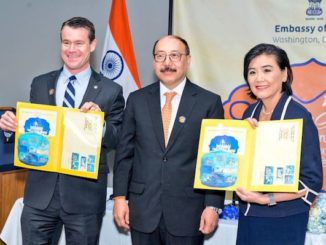
WASHINGTON(TIP): The philosophy and teachings of Guru Nanak echoed the corridors of the US Capitol, November 12, as powerful American lawmakers and eminent Indian Americans celebrated the 550th birth anniversary of the founder of Sikhism and underscored that his principles were more relevant today than ever before.
Republican Senator from Indiana Todd Young, who has introduced a resolution in the Senate on the occasion, said the Sikh-Americans had succeeded in making a profound impact across the US because they followed the teachings of the first Sikh guru.
“While radical for his day some 500 years ago, the teachings of the first Sikh guru who we celebrate today were consistent with our nation’s founding principles and teaching that everyone, regardless of gender, regardless of class, regardless of creed, everyone has been created equal,” Young said.
In his address to a Capitol Hill event organized by the Indian embassy to celebrate the anniversary, Senator Young said his neighborhood is full of Sikh-American families.
“I’m also glad that your commitment to equality and inclusion has led to the historic agreement which allowed the border corridor between India and Pakistan to be thrown open for Sikhs to visit Guru Nanak’s shrine just in time for the 550th birthday,” Young said.
Ambassador Shringla (third from left) felicitated Panelists on the first discussion Dr Paul Taylor, Head of the Asian Cultural History Program at the Smithsonian, Sonia Dhami, Executive Director, The Sikh Foundation International, Palo Alto, California and Dr. Nikky-Guninder Kaur Singh, Chair of the Department & Crawford Family Professor Religious Studies, Colby College, Maine
Congresswoman Judy Chu, founding member of the Congressional Sikh Caucus and chair of Congressional Asian Pacific American Caucus, said the life of Guru Nanak “was a true example to all of us and one whose lessons we would do well to heed today”.
Noting that Guru Nanak was a true humanitarian champion in the face of entrenched discrimination, she said he preached against prejudices based on race, cast and status.
He called for the equality of all individuals no matter what religion they practiced or caste they belonged to.
“He promoted the equality of all women during a time when women had low status and little respect in society. There is so much as a country that we should take away from the teachings of Guru Nanak. His legacy is a legacy of peace and equality,” Chu said.
Republican Congressman Greg Pence from Indiana referred to his speech on the House floor earlier in the day.
“Mr Speaker, I rise today to recognize a very special day for the Hoosier Sikh community and the 550th birthday of Guru Nanak, the founder of Sikhism,” he said.
This occasion is being celebrated by more than 25 million Sikhs worldwide on November 12, 2019, he said.
Indiana is proud to be home of over 10,000 Sikhs that enrich our communities, embody the meaning of Hoosier values. Hoosier Sikhs are one of the fastest growing business communities in Indiana and there are contributions to our economy and cultural value,” he said.
“On this day, I am proud to stand with our friends in the Sikh community by offering legislation to celebrate this momentous occasion and honor their contributions to Indiana and to our great nation,” Pence said.
A view of the gathering
New Jersey Attorney General Gurbir Singh Grewal said there was a need to raise awareness about the Sikh faith more today than ever before and highlight the Sikhs’ contributions to society.
“We also need to address how our teachings remain relevant in the modern era,” said the first-ever Sikh Attorney General of any US State.
Indian Ambassador to the US Harsh Vardhan Shringla said the opening of the Kartarpur corridor between India and Pakistan was a historic day.
The Indian government had taken several actions to commemorate the 550th birth anniversary of Guru Nanak, he said.
“We are very happy, of course, that on this particular day we have at the Capitol Hill such an important event that involves not only discourse on Sikh religion and history, but also the contribution of Sikh-American community to your country of citizenship,” he said.
The event was also marked by an exhibition on the life and teachings of the founder of Sikhism along with two panel discussions.
JAMMU(TIP): Lieutenant Governor of the newly formed Union Territory of Jammu & Kashmir, Girish Chandra Murmu, announced on Thursday, November 14 that the legislative polls in the UT will be held at the earliest. The Centre does not intend to govern J&K without an elected legislature, he said, adding that the electorate would soon be voting to elect their representatives.
“There will be elections in this Union Territory (UT) soon, as it is a UT with legislature,” Murmu said, falling short of specifying when the polls will be scheduled. The electoral process, however, is expected to take time to initiate as new constituencies are likely to be drawn.
Lt. Governor was speaking at the passing-out parade of the 14th BRTC batch of constables at the Subsidiary Training Centre, Talwara, Reasi district.
The legislative assembly of the erstwhile state of Jammu & Kashmir (which included Kargil and Ladakh) was suspended by the Governor in August, citing attempts of horse-trading being made by the regional parties to come to power. The last elected government was headed by PDP chief Mehbooba Mufti — who had to resign as the Chief Minister after the BJP had withdrawn support from the coalition government in June 2018.
On August 5 this year, the Centre announced the unprecedented measure of abrogating Article 370 – which granted J&K semi-autonomy – and converted the state into a Union Territory. The UT-status of J&K came into effect from October 31.
Attempts to re-initiate the electoral process gained an impetus after the Centre recorded an unprecedented 98 percent turnout in the J&K Block Development Council elections held on October 24.
WASHINGTON (TIP): Representative Elijah E. Cummings, a son of sharecroppers who rose to become one of the most powerful Democrats in Congress and a central figure in the impeachment investigation of President Trump, died on Thursday, October 17 in Baltimore, New York Times reported. . He was 68.
His death was confirmed by a spokeswoman, Trudy Perkins, in a statement that said he died of “complications concerning longstanding health challenges.” No other details were given.
As chairman of the House Committee on Oversight and Reform, Mr. Cummings, of Maryland, had sweeping power to investigate Mr. Trump and his administration — and he used it.
A critical ally of Speaker Nancy Pelosi, Mr. Cummings spent his final months in Congress sparring with the president, calling Mr. Trump’s effort to block congressional lines of inquiry “far worse than Watergate.”
Mr. Cummings called the president’s stonewalling “far worse than Watergate.”
He was sued by Mr. Trump as the president tried to keep his business records secret.
Mr. Cummings was in his 13th term serving as a representative for Maryland. He had been absent from Capitol Hill in recent weeks because of his illness. But before that, he could often be found in the Speaker’s Lobby fielding reporter’s questions or quietly reading in the motorized wheelchair he used.
Senator Benjamin L. Cardin, Democrat of Maryland, who served with Mr. Cummings in the House, said his death left an “irreplaceable void.”
Hakeem Jeffries
✔
@RepJeffries
Deeply saddened by the passing of Chairman Elijah Cummings.
He spoke truth to power, defended the disenfranchised and represented West Baltimore with strength and dignity.
Congress has lost a Champion. Heaven has gained an Angel of Justice. May he forever #RestInPower.
WASHINGTON(TIP): President Donald Trump on Thursday, October 3 called on China to probe former Vice President Joe Biden, further escalating the impeachment fight.
“China should start an investigation into the Bidens,” Trump said in remarks to reporters outside the White House. Trump said he hadn’t directly asked Chinese President Xi Jinping to investigate Biden and his son Hunter but said it’s “certainly something we could start thinking about.”
Trump’s requests for Ukrainian President Volodymyr Zelenskiy to dig up dirt on Biden, as well as Giuliani’s conduct, are at the center of an intelligence community whistleblower complaint that sparked the House Democratic impeachment probe last week.
The president’s reference to China came unprompted in an unrelated question about the July 25 Ukraine call and moments after he was asked about trade negotiations with China to end a year-long trade war that has been a drag on both nation’s economies.
“I have a lot of options on China, but if they don’t do what we want, we have tremendous, tremendous power,” Trump said.
He later alleged without evidence that China had a “sweetheart deal” on trade with the US because of the Bidens.
“You know what they call that,” Trump said. “They call that a payoff.” Trump’s comments came as he publicly acknowledged that his message to Ukrainian President Volodymyr Zelenskiy and other officials was to investigate the 2020 Democratic presidential contender. Trump’s accusations of impropriety are unsupported by evidence.
“It’s a very simple answer,” Trump said of his call with Zelensky. “They should investigate the Bidens.”
Trump has sought to implicate Biden and his son in the kind of corruption that has long plagued Ukraine. Hunter Biden served on the board of a Ukrainian gas company at the same time his father was leading the Obama administration’s diplomatic dealings with Kyiv.
Though the timing raised concerns among anti-corruption advocates, there has been no evidence of wrongdoing by either the former vice president or his son.
Adam Schiff, the Democrat leading the impeachment probe, said there was a “real sense of urgency” to press forward. Trump fought back with language that would once have been inconceivable for a president, including his claim late Tuesday, October 1 on Twitter that this is “not an impeachment, it is a COUP”. Trump insists that he did nothing wrong in a phone call with Ukrainian leader Volodymyr Zelensky and got support from Russia’s President Vladimir Putin, who said he saw “nothing compromising” in the conversation.
Nothing unites Congressmen more than the sight of electoral victory while political wilderness brings to the fore bickering in the rank and file. The five years in opposition in Haryana seem to have done the party little good with factionalism out in the open. Earlier, it was state unit chief Ashok Tanwar who was in the firing line after the party lost all 10 seats in the Lok Sabha elections. The roles have now been reversed with Tanwar training guns at former CM Bhupinder Singh Hooda and state unit president Kumari Selja, accusing them of selling the party ticket. Tanwar took his fight to Delhi protesting outside Sonia Gandhi’s residence and asking to be relieved of all poll panels. The rivalry spilled over after Selja was made the state president and Hooda the chief of the election management committee. A video went viral, allegedly to embarrass the party, a day before Hooda is slated to file his nomination.
Tanwar is known to be close to Rahul Gandhi and with the latter stepping aside after the loss in the Lok Sabha elections, his replacement was only a matter of time. His fight for tickets for his loyalists is natural. But the party apparently wishes to throw its weight behind the old guard to have a go at the BJP in the Assembly elections.
The Congress was known for strong regional satraps. Like Virbhadra Singh in HP and Capt Amarinder Singh in Punjab, the party’s decision probably is dictated by the prospect of facing a resurgent BJP. With Selja in the saddle, the Congress has tried to offset the possible loss of Dalit votes by Tanwar’s replacement. A ‘human bomb’ cost Rajiv Gandhi his life and Tanwar should be circumspect in using the term, however innocuous the context might be even as his grievance should be looked into. His next course of action is awaited but the party itself should be seen as fighting the BJP and not amongst itself.
WASHINGTON(TIP): US President Donald Trump on Wednesday, Sept 18, named his chief hostage negotiator Robert O’Brien as the new National Security Adviser to replace John Bolton, who was fired last week.
O’Brien, who has been serving as the special envoy for hostage affairs at the Department of State, has been chosen for the role, Trump tweeted.
“I am pleased to announce that I will name Robert C O’Brien, currently serving as the very successful Special Presidential Envoy for Hostage Affairs at the State Department, as our new National Security Adviser. I have worked long and hard with Robert. He will do a great job!” he said.
In his role as special presidential envoy for hostage affairs, O’Brien works with families of American hostages and advises on related issues, including recovery policies. O’Brien would be Trump’s fourth national security adviser of his presidency.
JERUSALEM (TIP): Israeli Prime Minister Benjamin Netanyahu failed to win a ruling majority in an election that produced a virtual tie between his right-wing bloc and a center-left grouping that would be led by former military chief Benny Gantz.
Netanyahu’s Likud party trailed its main rival Blue and White by 31 to 32 seats on Wednesday, September 18, putting the country’s longest serving premier on a shaky ground and raising the possibility of a unity government.
Israelis voted on Tuesday, September 17, in their country’s second general election in five months after 69-year-old Netanyahu failed to form a governing coalition with a viable majority following April’s vote.
The Central Election Committee (CEC) said Blue and White party seemed to be taking a lead over Likud after 91 per cent votes were counted.
As per figures shared by the CEC, the center-left bloc now has 56 seats compared to Netanyahu-led bloc, comprised of right-wing and ultra-Orthodox parties, which is at 55 seats in the 120-member Parliament. The Joint List, an alliance of mostly Arab Israeli parties, also has gained a seat standing at 13. These numbers may change slightly when the votes of soldiers are counted later on Thursday.
The secular Yisrael Beitenu party won nine seats, making its leader and former defense minister Avigdor Lieberman the kingmaker in the elections.
Meanwhile, the Netanyahu’s office said the prime minister will not travel to New York next week for the UN General Assembly in the wake of the election results.
Lieberman, an ally-turned-rival of Netanyahu, said, “The picture is clear…There is only one option and it’s a broad liberal unity government, comprising of Likud, Blue and White and his own Yisrael Beitenu.”
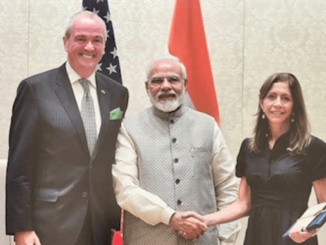
NEW JERSEY / NEW DELHI(TIP): New Jersey Governor Phil Murphy and the New Jersey delegation had action-packed days on their economic development mission to India. Governor Murphy, First Lady Tammy Murphy, Deputy Chief of Mission Edgard Kagan and NJEDA’s Wesley Mathews met with Prime Minister Narendra Modi. They discussed Indian-New Jersey relations and their economic vision for the future. Working together, they can build a stronger and fairer future for both the people of New Jersey and India.
On Sept 17, Murphy met with External Affairs Minister Dr. S. Jaishankar
On Sept 17, he met with External Affairs Minister Dr. S. Jaishankar. “Proud to meet External Affairs Minister Dr. S. Jaishankar today to talk about the India-New Jersey relationship, based on our shared values of inclusivity, progress, and growth for all”, Governor Murphy tweeted.
The opening of the New Jersey India Center in Gurugram kicked off Governor Murphy’s seven-day, six-city economic mission trip to India. Governor Murphy is the first Governor in New Jersey history to visit India on official business. “Today’s historic announcement charts a new course and effort to increase economic opportunities and build relationships between New Jersey and India,”said Governor Murphy. “Expanding operations into India will further Choose New Jersey’s goal to attract global businesses to New Jersey. With this new office, we will be able to bring our state’s message of economic prosperity directly to India.”
During his visit to the Southern State of Telangana, Governor Murphy signed first-ever sister state partnership
Governor Murphy, along with Edgard D. Kagan, Deputy Chief of Mission of the U.S. Embassy in New Delhi and Jose Lozano of Choose New Jersey, announced the opening of the Choose New Jersey India Centre with T&A Consulting. “My number one priority has been to foster an unrivalled economic ecosystem where innovative and game-changing companies – including Indian companies – can find a home and succeed,”said Governor Murphy. “India can be one of our leading partners in New Jersey’s re-emerging dominance in the global innovation economy, and New Jersey can be a leading partner in India’s continued economic rise.”
Choose New Jersey and VentureLink at NJIT signed an MOU with the National Association of Software and Services Companies (NASSCOM) to promote cross-border trade through innovation, investments and technology partnerships between New Jersey and India. Through this partnership, NASSCOM member companies considering expansion into New Jersey will be provided 90 days of complimentary space at VentureLink@NJIT’s International Business Center while they explore opportunities to do business in New Jersey.
Governor Murphy and First Lady Tammy Murphy witnessed the signing of two MOUs with Princeton University to help promote the development of renewable energy, bringing us closer to a sustainable future. “Sustainability and fostering the transition away from fossil fuel-based energy and toward renewable sources is a future which all of us are committed to, and a future the actions taken today will help create,” said Governor Murphy. One MOU will induct two Princeton University post-graduate/doctoral students to work on-site on clean energy research with ReNew Power – India’s largest independent producer of renewable energy. The second MOU, between Princeton University’s Andlinger Center for Energy and the IIT Delhi Centre of Excellence, will establish a collaboration on renewable energy and sustainability-related research.
Governor Murphy addressed the U.S.-India Business Council and the Federation of Indian Chambers of Commerce & Industry and made the case that India can be one of New Jersey’s leading partners in the re-emergence of the state’s dominance in the global innovation economy. New Jersey Economic Development Authority’s Tim Sullivan highlighted opportunities for growth and partnership, including New Jersey’s pharma, tech, and advanced manufacturing sectors – along with India’s growing clean energy and film and media sectors.
First Lady Tammy Murphy met with the deputy head of UNICEF India and had a thought-provoking conversation on women and children’s health issues and discussion of best practices. The First Lady learned about UNICEF India programs, which cover areas such as child protection, child marriage, adolescents, education, empowerment, and maternal health services. UNICEF India plays a critical role in supporting children and families, especially mothers. “I hope that our growing partnership between New Jersey and India helps us both learn how to better protect our children,” said First Lady Tammy Murphy.
Governor Murphy and the First Lady paid homage to Mahatma Gandhi
Governor Murphy and the New Jersey delegation toured historic and holy sites, including the Taj Mahal in Agra. Governor Murphy and the First Lady paid homage to Mahatma Gandhi, India’s foremost freedom fighter. During a visit to Gandhi Smriti, they also penned a message in the visitor book. They were given a tour of the Jama Masjid. Located in central Delhi. Governor Murphy toured the Swaminarayan Akshardham Temple and expressed his deepest gratitude to His Holiness Mahant Swami Maharaj for his gracious welcome.
Governor Murphy toured the Swaminarayan Akshardham Temple
During his visit to the Southern State of Telangana, Governor Murphy signed first-ever sister state partnership.
Governor Murphy and wife Tammy Murphy were given a tour of the Jama Masjid in central Delhi
“Great to be with @KTRofficethis morning as we signed our first-ever sister state partnership in India with the State of Telangana, creating and expanding partnerships in our IT, pharma, clean energy, education, and film sectors” he tweeted.
“By furthering clean energy cooperation between New Jersey and Telangana, we can build economies fit for the 21st century while protecting the best interests of our people and our environment. Grateful to@indianchamber15for convening this important discussion. #NJIndiaMission.”
“Thrilled to announce an MOU between @THubHydand @NJITand to hear pitches from startups increasing their presence in NJ. We all win when we forge new partnerships and take a chance on new and world-changing ideas”, Governor Murphy further tweeted.
In return, India’s Consul General in New York Ambassador Sandeep Chakravorty thanked him. “Thanks @GovMurphyfor your personal commitment to strong relations with India. I am confident that the New Delhi office of @ChooseNJwill be its best”, Amb Chakravorty tweeted.
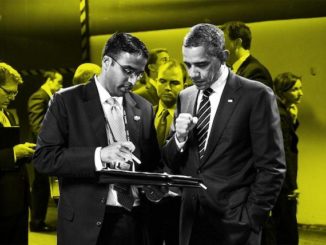
WASHINGTON (TIP): Team Biden has hired Maju Varghese, a top Obama White House aide to help run the operational side of the Biden campaign. Varghese has been hired by former Vice President Joe Biden’s presidential campaign as its Chief Operating Officer and Senior Advisor.
Varghese served as an assistant to former President Barack Obama for management and administration and as deputy director of advance at the White House, where he managed day-to-day operations.
“Nice to see the field come around and support @BarackObamaagain. Thing is, @JoeBidenhas been there all along. We need to build on the Obama legacy, not tear it down. That’s why I stand with Joe Biden”, he tweeted.
Canada Elections 2019: Record number (50) of candidates of Indian origin in the fray
By Prabhjot Singh
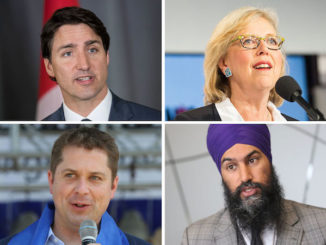
Canada is all set to go for the Federal Elections 2019. On September 11, Prime Minister Justin Trudeau will go to the Governor-General’s office to recommend dissolution of the House of Commons. It will mark the start of campaign for the 2019 Elections that are mandated by law to be held on October 21. To form the next government, a party will need 170 seats in the new House of Commons. As of today the Liberals have 177 MPs in the 338-seat House of Commons, followed by the Conservatives with 95 MPs and the NDP with 39 MPs. Besides, there are 10 Bloc Québécois MPs, two Green MPs, one People’s Party of Canada MP, one Co-operative Commonwealth Federation MP, eight independents and five vacant seats. After meeting the Governor-General, the Prime Minister, Mr. Justin Trudeau will hold a rally shortly after the campaign launch and then take off on the Liberal plane. Conservative Leader Andrew Scheer will address party supporters in Trois-Rivières in Quebec on Wednesday morning before coming to the Ontario where he is expected to join meet and greet programme of party workers at a Woodbridge park. The NDP was first to launch its campaign last Sunday when the party leader Jagmeet Singh addressed a rally in Toronto before starting an aggressive campaign in the Greater Toronto Area and southwestern Ontario in his newly revealed campaign bus.The Green Party leader Elizabeth May too has her campaign plans ready that may take her more to Quebec expecting good response there.
Indo-Canadians
Canadian politicians of Indian origin are, as usual, in the limelight as campaigning for the 2019 Federal Elections gets under way.This time a record number of 50-odd candidates of Indian origin in general and Punjabi origin in particular, are in the fray. As of today, there are 18 candidates of Indian origin in the Liberal party’s list. They include Navdeep Bains, Harjit Singh Sajjan, Amarjeet Sohi, and Bardish Chagger. There are 17 candidates of Indian origin in the Conservatives list. NDP has nine candidates of Indian origin in ts list. Green Party, too, five candidates of Indian origin. There may be a couple of Independent candidates as well as two of original Liberal MPs – Darshan Singh Kang and Raj Grewal – had to leave the Caucus to stand clear of the charges made against them. Of the candidates of Indian origin, there are 12 women candidates, including Bardish Chagger, who became one of the the youngest leader of the Government in the House.
At the time of dissolution of the present House of Commons, there are 20 MPs of Indian origin. One of the oldest sitting MPs of the Indian origin, Deepak Obhrai, died on August 2.
The 2019 Federal Election will be unique in more than one ways. This time the campaigning time will be just six weeks compared to 11 weeks in the 2015 elections.
Also, this is also for the first time that one of the three major political parties – Liberal, Conservatives and NDP – will be led into elections by a leader of Indian origin. Jagmeet Singh is heading the NDP. Though before his election as the NDP President, Jagmeet Singh was a Member of Ontario Assembly and later sought an election to House of Commons from Burnaby in British Columbia.
Only other leader of Indian origin to have led a national party in Canada had been Mr Hardial Singh Bains, one of pioneers of the Communist movement in Canada.
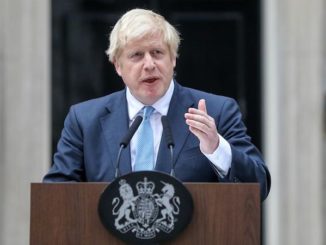
LONDON(TIP): British Prime Minister Boris Johnson was on Thursday, September 5, kicking off what is in effect an election campaign, casting an alliance of opposition parties trying to block a ‘no-deal’ Brexit as defeatists surrendering to the European Union.
As the United Kingdom spins towards an election, Brexit remains up in the air more than three years after Britons voted to leave the bloc in a 2016 referendum. Options range from a turbulent ‘no-deal’ exit to abandoning the whole endeavor.
After wresting control of the Lower House of Parliament on Wednesday, an alliance of opposition parties and rebels expelled from Johnson’s Conservative party voted to force him to seek a three-month delay to Brexit rather than leaving without a deal on October 31, the date now set in law.
Behind the sound and the fury of the Brexit crisis, an election now beckons for a polarized country.
The main choices on offer are Johnson’s radical insistence on leaving the EU on October 31, come what may, and Labour leader Jeremy Corbyn’s hard-left socialist vision, coupled with a promise of a fresh referendum with an option to stay in the EU.
“Boris will argue that it is now time for the people to decide after parliament has failed them, so we can resolve this once and for all,” a spokesman for the prime minister said.
“Jeremy Corbyn continues not only to block Brexit but is now also stopping the people having their say by refusing a General Election.”
The opposition Labour Party cast Johnson’s language – including calling Corbyn a “chicken” — as pathetic, said he was trying to act like US President Donald Trump, and compared him to a 3-year-old toddler having a tantrum.
An election adds a new twist to a Brexit crisis that has for three years overshadowed European Union affairs, eroded Britain’s reputation as a stable pillar of the West and seen sterling twitch in tune to the probability of a ‘no-deal’ exit.
Johnson, the face of the 2016 Vote Leave campaign, has pushed for an election on October 15, two weeks before the United Kingdom is due to leave the EU, though opposition parties are debating which date they would accept.
“We are saying, yeah, bring on a General Election, of course,” said John McDonnell, the Labour Party’s second most powerful man.
“We will ensure that happens after we have got the legislation to protect against a ‘no-deal’ Brexit. But we will consult and do it on at the date on which we will think will have maximum advantage against a ‘no-deal’,” he said.
While sterling rose on Parliament’s bid to block a no-deal exit, an election before Brexit would allow him, if he won, to repeal the blocking bill, which was passed by 329-300 and then 327-299 in the House of Commons on Wednesday. The law will pass the upper house, the Lords, by Friday evening.
Johnson’s finance minister, Sajid Javid, opened up the possibility of a change to the Oct. 15 date but said the government could strike a renegotiated Brexit deal with Brussels and get it through parliament before October 31.
But the EU, and Germany and France in particular, have repeatedly called on Britain to make specific proposals on how it wants to change the agreement struck by Johnson’s predecessor, Theresa May, in November.
Diplomats said an election campaign would halt any Brexit talks with the EU and expressed frustration with the turmoil of British politics at such an important juncture in European history.
“The UK side continues to produce chaos and it is very hard to predict anything,” said one EU diplomat.
What we have witnessed following the strike , from the Government and the BJP leaders would not only sully the image of India but also the nation’s credibility through overt politicization of this conflict, as the country is preparing itself for a critical election.
By George Abraham
Ever since the attack in Pulwama by a suicide bomber killing 42 of India’s security personnel, the country has been on the edge, fearing an all-out war with Pakistan. Any civilized person could view the barbarity of this dastardly terrorist act only with disgust and rage. However, a confrontation between these two nuclear powers is neither in the interest of these two nations nor does it bode well for the future of this turbulent region. Pakistan has been waging a proxy war with India over the Kashmir issue from the time of Independence, and a final solution to this crisis is not within sight.
Some would argue that this is the time of war and everyone should keep their apprehensions about its conduct or any other questions they may have close to their chest. However, a massive intelligence failure of this magnitude over the Pulwama tragedy should not be missed. How did a young man in his twenties, who was already on the radar of the Security personnel, come to possess, pack & conceal, and then drive 300KG explosives towards a military convoy undetected? Reports from the region suggest that a police advisory was already in effect a week before this, stating that the Central Reserve Police Force deployment would be targeted. Where is the accountability on these massive security lapses?
A recent New York Times report paints a scathing image of India’s vintage military equipment and its impact on military readiness. “India’s armed forces are in alarming shape. If intense warfare broke out tomorrow, India could supply its troops with only 10 days of ammunition, according to government estimates. And 68 percent of the army’s equipment is deplorably old. It is officially considered ‘vintage’”. A swollen bureaucracy together with lack of funding obviously rendered these procurement and training processes anything but cumbersome.
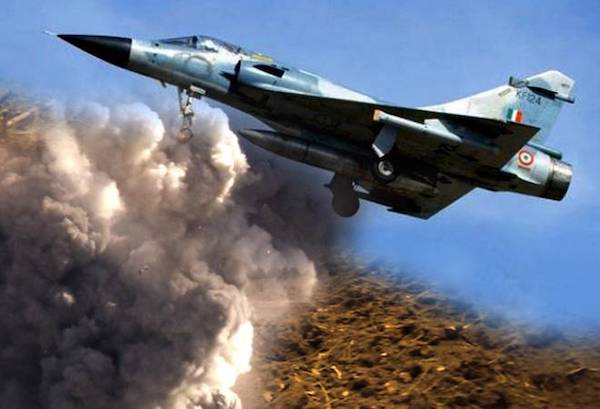
Nevertheless, India was left with no choice but to retaliate. Pakistan has been aiding and abetting Jaish-e-Mohammed and its leader Masood Azhar for long despite the pressure from the U.N. and other international bodies. The Air Force was tasked to strike the terror targets in Balakot region: an order that was carried out despite bad weather conditions. The Indian Military has been known for its professionalism and respect for civilian leadership in a democratic setup. Air Chief Marshal B.S. Dhanoa refused to give a casualty count saying “IAF doesn’t count the number of dead” and the “casualty figure in an air strike on Balakot camp will be given by the government,” referring to the air strike it had carried out on February 26, 2019.
Another shameful spectacle that is unfolding in India today is the blatant display of jingoism by the media and their networks to propel a wider war. Instead of bringing together the nation at a time of crisis, some of these news channels are creating divisions, promoting hate and sowing discord.
However, what we have witnessed following the strike , from the Government and the BJP leaders would not only sully the image of India but also the nation’s credibility through overt politicization of this conflict, as the country is preparing itself for a critical election. First, the leaked information from sources to the media put the casualty count at 300 to 350. Western intelligence sources and the International press immediately cast severe doubt on these numbers, and some reports directly from the ground characterized the damages as minimal.
However, in public speeches, Amit Shah, the President of the ruling party BJP, talked about 250 terrorists being wiped out. Other BJP leaders like BS Yeddyurappa said that his party would win 22 seats in Karnataka after the strike. It is as if BJP leaders are relishing these moments of war and salivating about the prospects of riding to victory in the fog of a protracted fight between the two nations. It boggles one’s mind to believe that after the Pulwama attack, the terrorists associated with Jaish-e-Mohammed just gathered together to sleep in one place, making an easy target of themselves for the IAF!
Anyone who questioned the veracity of the BJP leaders’ claims is called an anti-national and accused of doing Pakistan’s bidding. “At a time when our army is engaged in crushing terrorism, inside the country and outside, some people within the country are trying to break their morale, which is cheering our enemy,” Modi said at an election rally. “I want to know from Congress and its partners why they are making statements that are benefiting the enemies”, he added. Modi is apparently absent from the capital in managing the conflict. Instead, he is entirely taking advantage of the ongoing battle on his campaign trail, vilifying the opposition and questioning their patriotism for political advantage.
Another shameful spectacle that is unfolding in India today is the blatant display of jingoism by the media and their networks to propel a wider war. Instead of bringing together the nation at a time of crisis, some of these news channels are creating divisions, promoting hate and sowing discord. They broadcast manufactured news; shamelessly appropriate nationalism; and designate a segment as enemy’s allies. Many of them have become vassals of special interests mostly controlled by crony capitalists aligned with the ruling party.
It is also sad to hear that there is an atmosphere of fear and intimidation created for Kashmiri students across the country, as Sangh Parivar forces target them for revenge attacks. “It is no secret that the Bajrang Dal and the student wing of the Sangh were foremost in fomenting trouble against Kashmiri students in various parts of India. This was done keeping in mind the upcoming general election”, Omar Abdulla, former Chief Minister of Kashmir said. “It is obvious that BJP sees an advantage in such environments. It helps them paper over Modi’s mistakes like demonetization, joblessness, India’s poor economic growth and the distress faced by the country’s agricultural sector” he added.
We collectively admire the bravery and sacrifice of our armed forces. They are fighting to keep all Indians safe and protect the sovereignty of the nation from terrorists and a country that provides haven to them. Moreover, they are fighting to safeguard our democratic traditions and way of life. As Sashi Kumar, a commentator eloquently put it recently, “they are not fighting for this or that political party; they are not fighting for the electoral gains of the ruling party or of the opposition. However, they are, if anything, fighting the religious fundamentalism of one kind but not to replace it with the rampant religious fundamentalism of another kind, even of the majoritarian variety”.
The BJP’s strategy appears to be clear and straightforward: playing up Hindu nationalism; linking Kashmiri youth and Jihadi terrorists supported by an enemy, Pakistan; and providing ‘red meat’ to a large segment of the voting public, who are so disappointed with Modi’s failure to deliver his campaign promises. However, this is all at the risk of endangering India’s democratic and pluralistic values, and accelerating animosity between two armed nuclear neighbors, which may even put them on a path to potential disaster!
(The author is a former Chief Technology Officer of the United Nations and current Vice-Chairman of the Indian Overseas Congress, USA)
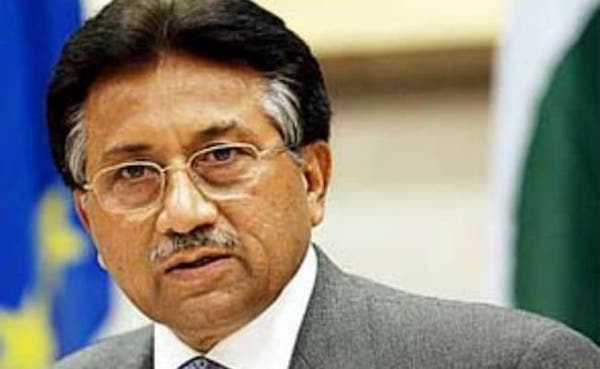
ISLAMABAD (TIP): Former Pakistan President Gen. Pervez Musharraf (retd) on Wednesday, March 7, said the Masood Azhar-led Jaish-e-Mohammed (JeM) was a terror outfit but indicated that his country’s intelligence had used it to carry out attacks in India during his tenure.
In a telephonic interview to Pakistani journalist Nadeem Malik of Hum News in his talk show, Gen. Musharraf, 75, who is currently in Dubai, welcomed the action against the JeM. He said it had tried to assassinate him twice in December 2003, as per a video clip shared on the journalist’s Facebook and Twitter page.
The JeM has claimed responsibility for the February 14 Pulwama attack that left 40 CRPF personnel dead.
Last month, Foreign Minister Shah Mahmood Qureshi in an interview with CNN said Azhar was in Pakistan, but the government could act against him only if India presented “solid” and “inalienable” evidence that could stand in a court of law.
The Pakistan military, however, has denied the terror group’s presence in the country.
Amid mounting international pressure after the Pulwama attack, Pakistan on March 5 detained 44 members of the banned militant outfits, including Azhar’s son and brother.
Gen. Musharraf said, “This is a good move. I have always said that the JeM is a terrorist organization and they only had carried out a suicide attack in an attempt to assassinate me. Action should be taken against them.”
Gen. Musharraf, who also served as Pakistan’s army chief, said action against the JeM should have been taken earlier.
“Those times were different”
When asked why he had not taken action against the organization during his stint in power, he claimed those times were “different”. Both India and Pakistan were involved in a clandestine struggle, “carrying out bombings in each other’s territory”, he said, adding his country’s intelligence agencies were engaged in it.
Amid all this, not much action was taken against the Jaish, he said, adding that he had also not insisted.
Gen. Musharraf, who ruled Pakistan from 1999 to 2008, is facing the treason case for suspending the Constitution in 2007, a punishable offence for which he was indicted in 2014. He has been living in Dubai since March 2016.
EDISON, NJ(TIP): Pramod Attarde from Edison, NJ was recently awarded as a Global Leva Icon by Speaker of Maharashtra Vidhan Sabha at NESCO, Mumbai. Ex- Revenue Minister Eknathrao Kadase of Maharashtra was also present at the event.
Global Leva Patidar Foundation gave away this award to 100 Global Leva Icons who worked in various segments. Attarde was awarded as a Philanthropist and Businessman. He is providing services for people in need in India, including Aadivasis, the blind, the orphans and the economically backward.
Attarde is a Serial Entrepreneur, Blockchain Evangelist, and Data Scientist in NJ.
During India visit, Attarde delivered lectures at various Engineering colleges, Chamber of Commerce and Social events. He spoke on various subjects as “New Technologies – New Opportunities”, “Entrepreneurship Development”, and “Career Guidance” etc.
(Based on a press release issued by H.S. Panaser , NJ)
The Rafale tender stole the political thunder in the Comptroller and Auditor General of India’s (CAG) assessment of 11 capital acquisitions by the Indian Air Force over a time period that spanned both the UPA and Modi governments. Considering that previous CAG reports on coal and 2G had irrevocably damaged the credibility of the UPA government, the Modi government can consider itself fortunate to have escaped unscathed because of the inventiveness of the auditors. The CAG used a never-used formula (called alignment pricing) to declare the Modi tender cheaper than the UPA era’s now-cancelled 126 aircraft bid. An audit basically evaluates four criteria in a defense platform: quality, cost-effectiveness, delivery and objectivity. The CAG report gives conditional thumbs up on only two: cost-effectiveness and the delivery schedule. Even these are up for debate.
But the benchmark of objectivity, which includes intangibles such as transparency, fair play and integrity, stands in a grey zone. For instance, the comparison of UPA and NDA-era prices on the basis of a French index is debatable when payments are made in dollars. A dissent note alleging parallel negotiations (dismissed by then Defence Minister Parrikar as an overreaction) went unchallenged, while there was just a mild rap for not signing an integrity pact and succumbing to French refusal on opening an Escrow account. The Modi government was also easily let off the hook for failing to respond to a 20 per cent price cut by a Rafale competitor. Who knows whether Rafale would have still played tough if it had not been the single vendor?
Rafale was one of the 11 purchases studied by CAG and the common tale that emerges is of overambitious services whose requirements are frequently changed, leading to several vendors dropping out; the contract negotiations committee that rarely establishes the benchmark price, which, in turn, makes it difficult to establish the reasonability of the price. Complex and multi-level approval processes further add to the delays. Overall, the existing capital acquisition system is unlikely to effectively support the IAF in its war preparedness and modernization.
Looks like the halcyon days of Supreme Court justices like William J. Brennan Jr., Thurgood Marshall, Earl Warren, Potter Stewart, William O Douglas, Felix Frankfurter are permanently over, or at least for a very long time.
This is what happens when economic prosperity heads full speed towards a brick wall as is increasingly happening to the US as it begins its irreversible long slide down.
This is the court of Brett Kavanaugh, John Roberts, of late Antonin Scalia disguised but intensely opinionated, conservative, fundamentalist, (bigoted?) Catholic / Christian judges.
It’s why as NYT wrote in a long and thoughtful piece about 10 years ago that the world has now stopped reading or giving credence to the opinions of SCOTUS. It is too right wing, too biased, (Christian parochialism?) to be worthy of universal respect as in past eras. It is the Supreme Courts of Canada, New Zealand, South Africa and India (alas, now increasingly of slavishly westernized and deracinated from Indic cultural ethos and pandering to western sensibilities) which are respected and regarded.
SCOTUS on narrow technical grounds just denied an American Muslim the right to last rites by a Mullah / Maulvi in the judgment on Dunn v. Ray. Domineque Ray, was executed Thursday evening by the State of Alabama. Mr. Ray did not contest the state’s power to kill him, he simply asked that Alabama permit his spiritual adviser to be in the execution chamber to comfort him as the state extinguished his life. Ray is a Muslim, and the prison’s policy allowed him to be attended by a Christian chaplain but not by a Muslim imam.
“Religious liberty for me, but not for thee”.
The word “empathy,” it should be noted, does not mean “sympathy.” Sympathy implies a kind of partisanship — to be sympathetic to a party is to be favorable to their claims. Empathy means something else. It is the ability to place yourself in someone else’s shoes and to understand their perspective even if you have not shared their experiences. It is a white Christian man’s ability to see that the world sometimes operates differently for an African-American Muslim.
It should have been an open-and-shut case. As Justice Elena Kagan noted in a dissenting opinion, “the clearest command of the Establishment Clause is that one religious denomination cannot be officially preferred over another.” If Alabama allows Christian inmates to be attended by a clergy member of their faith, then it must offer the same accommodation to people of other faiths.
Neal Katyal, a former acting Solicitor General of the United States who, by virtue of the fact that he practices before the Supreme Court, must be careful about criticizing its judges too harshly, compared the Ray decision to notorious decisions such as “Dred Scott, Plessy v. Ferguson, Korematsu, and the Chinese Exclusion Act cases.” The National Review’s David French labeled Ray “a grave violation of the First Amendment.”
Nearly a hundred years ago the Ramakrishna Mission Vedanta Society in California was gifted a huge property by a wealthy devotee in her will. Her family filed suit. The openly and blatantly racist and religiously bigoted judge (there are scads of them even in federal courts of the Confederate South) set aside the bequest on totally specious grounds and awarded the property to the family. It looks like SCOTUS under Trump is rapidly returning to the Dred Scott days of viewing slaves as property.
Failed foreign policy, Mounting Unemployment, Economic Woes for many Sections, and Hindutva pose a challenge to Modi
By Ven Parmeswaran
Prime Minister Modi has failed to capitalize on US-India closest ally relationship. Modi must display and reciprocate friendship to the USA thru developing systematic communications through diplomatic channels and also thru regular Press Conferences. New Delhi has failed to make international headlines because Prime Minister does not speak to the international media.
President Trump is the first President to make India its “closest ally” on a par with the U.K. By this policy decision, the U.S. has agreed to the 100% transfer of US sophisticated technology to India. The “closest ally” status also enabled India to access U.S. strategic and defense intelligence, especially on China. Any military moves by China will be closely monitored by the U.S Intelligence and shared with India. President Trump is also the first President critical of Pakistan and he has been applying pressure on Pakistan to get rid of all terrorist organizations including Lashkar-e-Taiba responsible for attacks on Mumbai, that killed 165 people. He has also allowed Lockheed Martin to manufacture in India sophisticated defense aircrafts.
Prime Minister Modi has not embraced “closest ally” status with enthusiastic support. He was more concerned with concluding defense deals with Russia and buying aircrafts from France. He also wanted to be able to import oil from Iran, sanctioned by the US. President Trump cooperated with Modi and allowed him to finalize the deal with Russia and France. He also agreed to exempt sanction so that Iran could export to India.
President Trump has visited all major countries in the world except India. Prime Minister Modi should have invited President Trump and given him an enthusiastic reception. He invited Trump for the Republic Day event knowing fully well January is the busiest month for any U.S. President. He could have used the U.S. support to negotiate with Pakistan to mete out justice to the leaders of Lashkar-e-Taiba, responsible for attacks on Mumbai. Modi failed to apply diplomatic pressure on Pakistan. He has no roadmap.
Prime Minister Modi has failed to liberalize India’s economy and create favorable environment for foreign investment. He has failed to privatize several public sector corporations, most of them are inefficient and running at a loss such as Air India and others. With 100% transfer of U.S. technology, India does not still have a blueprint of industrial and military products it intends to manufacture.
U.S. WARNS MODI AGAINST PANDERING TO HINDU NATIONALISTS
Dan Coats, Director of National Intelligence in his written testimony of the intelligent community’s assessment of worldwide threats in 2019 to the Senate Select Committee on Intelligence on January 29, said:
“Parliamentary elections in India increase the possibility of communal violence if Indian Prime Minister Modi’s BJP stresses Hindu nationalist themes. BJP policies during Modi’s first term have deepened communal tensions in some BJP governed states, and Hindu nationalist state leaders might view a Hindu-nationalist campaign as a signal to incite low level violence to animate their supporters,” he said.
Coats predicted, “increasing communal clashes could alienate Indian Muslims and allow Islamist terrorists groups in India to expand their influence,” ahead of general election. In his written statement, Coats also said it was unlikely that there would be any modus vivendi between India and Pakistan before India’s election in May and the strained relations between India and Pakistan would persist.
“We judge that cross-border terrorism, firing across the Line of Control (LoC), divisive national elections in India, and Islamabad’s perception of its position with the U.S. relative to India will contribute to strained India-Pakistan relations at least through May 2019, the deadline for the Indian election, and probably beyond,” Coats said.
Coats also said militant groups supported by Pakistan would continue to conduct terrorist attacks in both India and Afghanistan and contended that Islamabad’s “narrow approach to counterterrorism cooperation-using some groups as policy tools and confronting only the militant groups that directly threaten Pakistan—almost will frustrate US counterterrorism efforts against Taliban.
Prime Minister Modi has thus failed to capitalize on US-India closest ally relationship. Modi must display and reciprocate friendship to the USA thru developing systematic communications through diplomatic channels and also thru regular Press Conferences. New Delhi has failed to make international headlines because Prime Minister does not speak to the international media.
CORRUPTION IN INDIA
Ram, Chairman of The Hindu wrote a column that was published in The Washington Post recently. He wrote, “Corruption in India is pervasive, omnipresent and multifarious, especially in the nexus between politics and business. As India heads toward its general elections, expected to be held in April and May, the Prime Minister Narendra Modi finds himself embroiled in controversy around one of the country’s largest arms purchase contracts: a murky 7.8 billion Euro weapons deal to purchase 36 Rafale fighter planes from France.”
Modi’s arbitrary decision to reduce the number of Rafale planes purchased to 36 from 126 raised the price by 41%. Rafale planes are manufactured by Dassault Aviation. Dassault Aviation agreed to invest 50% of the 7.8 billion euro Rafale contract in India to manufacture airplane components with offset partners, chief among whom would be the Indian billionaire Anil Ambani’s Reliance Defence. The deal is expected to help generate up to 1.9 billion euros in new revenues for Ambani – the younger and much less successful brother of Mukesh Ambani, India’s richest man – who has no experience in manufacturing fighter jets.
Ram concludes: “The devastating effects of Modi’s demonetization on the working poor and small and medium businesses and widespread distress in rural India could do more damage to his electoral prospects, but a credible corruption narrative, backed even with incomplete evidence, can bring focus and emotional power to the electoral campaign. It can be a catalyst for change. The election is coming.”
(Ven Parameswaran, MBA, Columbia University Business School, was President and CEO, First Asian Securities Corporation, New York; Senior Advisor to Imagindia Institute, a think tank in New Delhi. He can be reached at vpwaren@gmail.com)
Addressing House, heaps praise on govt on triple talaq, surgical strikes
NEW DELHI(TIP): Ahead of the Lok Sabha elections, President Ram Nath Kovind, on January 31, defended the BJP government’s controversial decisions, from Rafale jet purchase and demonetization to GST implementation, saying the government had commenced its journey towards building a “New India”.
His hour-long Address to the joint sitting of Parliament marked the start of Budget Session with PM Narendra Modi, former PM Manmohan Singh, BJP chief Amit Shah and Congress president Rahul Gandhi in attendance. Gandhi debuted in the front rows.
The President used the occasion to hail demonetization as “a defining moment in the government’s war on corruption and black money”; term the GST a “means to establish an honest system of trade”; call surgical strikes India’s “new policy and strategy”; and laud Rafale jets as ultra-modern aircraft that will strengthen India’s strike capability.
The speech also lavished praises on government’s recent legislative moves, including the controversial Citizenship Amendment Bill that the Opposition is questioning, Triple Talaq Bill, death penalty for aggravated child sexual assault and the new law on 10 per cent quota for General Category poor in education and public jobs. The Address drew thunderous applause from the ruling MPs when the President mentioned Rafale jet induction into the IAF and surgical strikes by the Army.
On both occasions Opposition leaders Rahul Gandhi, Manmohan Singh and Ghulam Nabi Azad sat unamused as the Congress continues to question the government over Rafale fighter jets deal, demonetization and GST.
The President said: “The (demonetization) decision struck at the very root of parallel economy thriving on black money and the money outside the formal system was brought within the ambit of nation’s economy… and broke the back of the forces destabilizing the country and the systems sustaining the flow of black money.”
Listing other achievements of the government, including women-centric schemes like Mudra loan, Swachh Bharat and Pradhan Mantri Ujjwala Yojana besides Ayushman Bharat for cashless medical care, Kovind said the “new India” vowed by the BJP-led NDA government had no place for “imperfect, corrupt and inertia-ridden systems”.
On Rafale fighter jets purchase, he said, “My government believes that neglecting the country’s defense needs even for a moment is detrimental to the present and future of the country… after a gap of many decades, the Indian Air Force is preparing to welcome, in the coming months, its new generation ultra-modern fighter aircraft Rafale and strengthen its strike capability.”
Hailing surgical strikes, the President said, “Through the surgical strike on cross-border terror posts, India has shown its new policy and strategy.” The President also listed the Central Government’s flagship plans, including doubling farmers’ incomes and housing for all by 2022 as he wished the best to first time voters of the 2019 General Election before delineating contours of government’s “New India”.
The country was once the heartbeat of leftist assertion. But with change in the Americas, matters are now complex
By Vijay Prashad
Thus far, the government of Mr. Maduro remains in power, and the military has pledged its fealty to the re-elected president. It is unlikely that the Venezuelan Opposition — controlled by the old oligarchy — will be able to engineer a coup from within the country. It tried such a political maneuver in 2002, which failed. This time it has failed again.
The fulcrum of geopolitical tension sits on Caracas, the capital of Venezuela. An attempted coup on January 23 has failed. The U.S. decided to recognize a member of the Opposition, Juan Guaidó, as the President of Venezuela. U.S. officials called upon the military to rise up against the government of President Nicolás Maduro. This was against the charters of the United Nations and of the Organisation of American States (OAS). None of that mattered. The drumbeats sounded from Washington to Caracas. There was a minor drum playing from many Latin American capitals, those whose governments had joined the Lima Group — set up in Peru in 2017 to overthrow the government of Venezuela.
There is little respite for the country, where tension sits heavily from one end to another. Thus far, the government of Mr. Maduro remains in power, and the military has pledged its fealty to the re-elected president. It is unlikely that the Venezuelan Opposition — controlled by the old oligarchy — will be able to engineer a coup from within the country. It tried such a political maneuver in 2002, which failed. This time it has failed again.
Venezuela’s Foreign Minister Jorge Arreaza, 45, has been understandably busy on the day after the attempted coup. The U.S. tried to isolate the Maduro government. The OAS met in Washington DC, where the U.S. government tried to get it to unanimously vote against Mr. Maduro. Even that meeting could not go as scripted. A veteran activist from Code Pink, Medea Benjamin, sneaked into the room and chanted slogans against the attempted coup. Many Latin American states, despite intense pressure from the U.S. government, either voted against the OAS motion or abstained. Mr. Arreaza watched these
When I asked him about the coup, he went back to 2017, the last time that the oligarchy tried to wrest control of the government from the socialists. The socialists, led by Hugo Chávez, came to power in 1999. After the U.S. attempted to overthrow Chávez and the socialists in 2002, things calmed down. Oil prices rose and the U.S. was distracted by events in Iraq and Afghanistan. For a decade, Venezuela was able to lead a regional process of integration on an anti-imperialist foundation. But, when Chávez died in 2013, the experiment began to unravel. Oil prices fell dramatically, and the U.S. had already turned its attention to Latin America. A coup in 2009 overthrew the democratically elected government of Honduras. The gunsights turned toward Venezuela. The oligarchy, backed fully by the U.S., attempted to foment trouble in 2017.
Mr. Arreaza recalled one man, Orlando Figuera, 21, who was going through an Opposition stronghold in May 2017. “He was accused of being a government supporter and brutally beaten by masked protesters who then soaked him in gasoline and set him on fire,” Mr. Arreaza told me. He brought up this story to offer an illustration of the character of the Opposition. Mr. Arreaza called this a ‘violent fascist movement’. He wanted to make it clear that the coup attempt was a part of that movement — one that is less interested in democracy and more interested in power and wealth.
Venezuela is in trouble. No one doubts that. Oil prices have fallen to half of what they were at the highpoint of Chávez’s government. Since the treasury of Venezuela is almost entirely replenished by the incomes from oil sales, the collapse of oil prices means the collapse of Venezuela’s public finances. Unable to borrow easily, the country faces serious economic difficulties. Sanctions by the U.S. and the seizure of refining sites in the Caribbean put the country into a situation of great crisis. No wonder that people are leaving the country, fleeing their homeland as it is suffocated for political purposes by the U.S. and its Latin American allies in the Lima Group.
Colombia’s Iván Duque and Brazil’s Jair Bolsonaro are both right-wing politicians who control the governments of Venezuela’s neighbors. They have committed themselves to the overthrow of the Venezuelan government. Mr. Arreaza and others in Venezuela told me that Mr. Duque, Mr. Bolsonaro and U.S. President Donald Trump have overplayed their hands. After the attempted overthrow in 2017, the Venezuelan government tried to deepen public participation by the formation of a Constituent Assembly. It is true that the oligarchy hated this idea and that the western press amplified its views about this being anti-democratic. But, as many Venezuelans say, the Constituent Assembly and the many elections for candidates and referendums that came before 2017 have sharpened their political consciousness. It will be hard to befuddle them with talk of dictatorship.
The isolation of Venezuela is remarkable. Not long ago, the country was the heartbeat of the leftist assertion in the hemisphere. Now, with the emergence of right-of-center governments in Latin America and with an explosive energy for regime change in Washington, matters are more complex. Mr. Arreaza said that Mr. Maduro had invited the UN High Commissioner for Human Rights, Michelle Bachelet, to visit Venezuela. She has not yet come. Mr. Maduro, he said, wanted the UN to host a dialogue with the Opposition to restore some balance to the politics in the country. No such assistance has been provided. A hand is outstretched from Caracas, Mr. Arreaza said. It is waiting for someone to take hold of it.
(The author is Executive Director, Tricontinental: Institute for Social Research)
Signup to our Newsletter!
Don’t miss out on all the happenings around the world