

“The United States may reasonably ask whether the openness it extends to visiting religious leaders is being reciprocated elsewhere. More importantly, India itself may benefit from reflecting on whether such restrictions enhance or diminish the democratic values it seeks to uphold. The Indian diaspora, too, would serve both itself and its homeland well by taking a principled stand in favor of religious freedom and equal treatment for all not only in their adopted countries, but also in the motherland. Such consistency would lend greater moral credibility to their advocacy and reinforce the universal values they seek to defend. A confident democracy does not fear peaceful religious discourse; it protects individuals’ right to express their beliefs, even when those beliefs may be unpopular or controversial.”

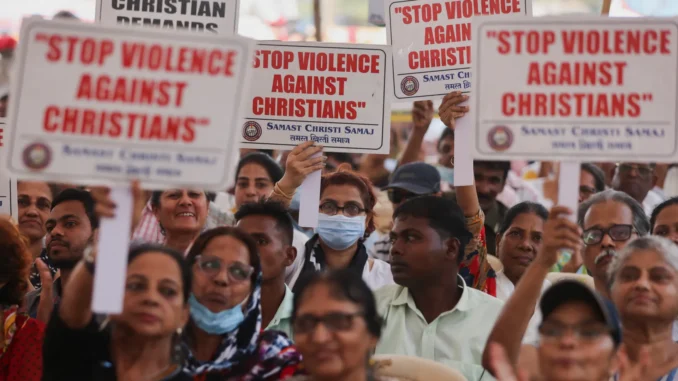
There have been persistent reports of attacks on religious minorities in various parts of India, with many human rights organizations, church groups, and civil society activists expressing concern over what they describe as the growing influence of Hindutva organizations and the perceived inadequacy of official responses. These concerns extend beyond isolated incidents of violence and raise broader questions about the protection of constitutional rights, particularly the freedoms of religion, expression, and association guaranteed to all citizens since India became a republic.
In recent years, Christians have increasingly found themselves among the communities most affected by these developments. Reports from numerous states have documented incidents of harassment, intimidation, disruption of worship services, vandalism of churches and Christian institutions, arrests and detention of pastors and church leaders under various legal provisions, and social and economic discrimination. In some cases, Christian families have reportedly faced exclusion from their villages, denial of employment opportunities, restrictions on access to community resources, and pressure to abandon their faith. There have also been allegations of violent assaults and even killings linked to religious tensions, although the circumstances and motivations behind such incidents often remain contested.
Moreover, another development has deeply concerned several Christian organizations, particularly within the Christian diaspora in the United States. Authorities in Kerala reportedly prevented a few distinguished religious leaders of Indian origin from addressing religious conferences in the state. These individuals were born in India, later became naturalized U.S. citizens, and hold Overseas Citizen of India (OCI) status.
For many observers, the incident raises broader questions about the state of democratic freedoms and religious liberty in India. Particularly troubling is the perception that such actions may run counter to the spirit of religious pluralism that has long been one of the nation’s defining strengths. The Indian Constitution guarantees the right to freely profess, practice, and propagate one’s faith. When members of any religious community feel restricted or marginalized because of their beliefs, concerns naturally arise about the functioning of democratic institutions and the equal application of the law.
However, it is equally important to examine the other side of the equation when discussing the treatment of religious leaders across national boundaries. The United States has historically maintained a broad commitment to religious freedom and has generally welcomed religious leaders from around the world, including India, regardless of their faith tradition. Through mechanisms such as R-1 religious worker visas, Hindu priests, spiritual leaders, and religious workers are regularly permitted to serve in temples and related institutions throughout the United States. In addition, numerous religious figures from India routinely travel to America on visitor visas to address public gatherings, conferences, and religious events.
Notably, even individuals whose public statements have generated significant controversy and have been criticized for promoting divisive rhetoric have, at various times, been granted entry into the United States. Figures such as Sadhvi Ritambhara and Sasikala Teacher have been able to travel, speak, and publicly advocate their controversial views before American audiences. Whether one agrees with their message or not, the fact remains that they were afforded the opportunity to express their beliefs under the protections guaranteed by a democratic society committed to freedom of speech and religious expression.
It is against this backdrop that many members of the Indian diaspora are evaluating recent developments in India. They ask a simple but important question: Is it fair that individuals born in India who continue to maintain Overseas Citizen of India (OCI) status and retain deep cultural and familial ties to their homeland be denied the opportunity to address religious gatherings in the country of their birth? Is there a consistent principle being applied, or are different standards being imposed depending on the religious affiliation of the speaker?
These questions become even more pressing when viewed through the broader lens of reciprocity and international engagement. India rightly seeks greater global mobility for its citizens, advocates for easier travel arrangements, and consistently presses for expanded opportunities such as H-1B visas and other pathways for Indians to live and work abroad. Such aspirations are understandable and legitimate in an increasingly interconnected world. Yet many observers argue that a nation seeking openness and accommodation from others must also demonstrate a comparable commitment to openness within its own borders.
The concern expressed by many in the diaspora is not merely about visa policy or administrative discretion. Rather, it is about the principles that underpin a democratic society. When religious leaders are prevented from speaking solely because of their religious identity, institutional affiliation, or perceived viewpoints, it raises broader concerns about freedom of expression, religious liberty, and equal treatment under the law. These concerns are amplified when the individuals involved are not foreign strangers, but persons born in India who maintain a continuing legal and emotional connection to the country through OCI status.
India’s Constitution enshrines the principles of religious freedom, equality before the law, and secular governance. The nation’s global reputation has long rested on its pluralistic traditions and its remarkable ability to accommodate people of diverse faiths, cultures, and viewpoints. It is therefore reasonable to ask whether actions that restrict religious speech or selectively limit participation in public religious life are fully consistent with those constitutional ideals.
Perhaps the time has come for a thoughtful reassessment. The United States may reasonably ask whether the openness it extends to visiting religious leaders is being reciprocated elsewhere. More importantly, India itself may benefit from reflecting on whether such restrictions enhance or diminish the democratic values it seeks to uphold. The Indian diaspora, too, would serve both itself and its homeland well by taking a principled stand in favor of religious freedom and equal treatment for all not only in their adopted countries, but also in the motherland. Such consistency would lend greater moral credibility to their advocacy and reinforce the universal values they seek to defend. A confident democracy does not fear peaceful religious discourse; it protects individuals’ right to express their beliefs, even when those beliefs may be unpopular or controversial.
At its core, this debate is not about privilege or special treatment. It is about fidelity to constitutional principles and the equal protection of fundamental rights. The ability of an individual to speak peacefully in the land of his or her birth should not depend upon religious affiliation, political considerations, or ideological preference. Ultimately, the strength of a democracy is measured not by how it treats the majority, but by how faithfully it safeguards the rights, freedoms, and dignity of all its people. The preservation of India’s democratic character and pluralistic heritage depends upon that commitment.
(George Abraham is a former Chief Technical Officer with the United Nations. He is the Vice Chair of IOCUSA. He can be reached at gta777@gmail.com)

Be the first to comment