Tag: Russia

  • NSA Spy Edward Snowden Granted Temporary Asylum In Russia

    NSA Spy Edward Snowden Granted Temporary Asylum In Russia

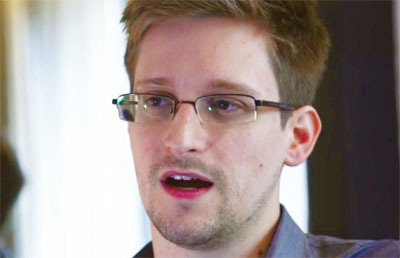
    MOSCOW (TIP): A long wait for US intelligence leaker Edward Snowden at Moscow’s Sheremetyevo Airport’s transit zone ended with Russia granting him temporary asylum, July 31. Snowden has been staying in the transit zone of the airport since June 23 after having arrived from Hong Kong. Snowden’s lawyer said Snowden had left the airport’s transit zone after receiving the papers he needed to enter Russian territory. The US has charged Snowden with leaking details of its electronic surveillance programs. Russia’s decision is likely to further strain its ties with the US.

    Snowden later issued a statement via the website of the whistleblowing organization Wikileaks thanking Russia for granting him asylum and accusing the US government of showing “no respect” for international law. “Over the past eight weeks we have seen the Obama administration show no respect for international or domestic law, but in the end the law is winning,” he said. US Senator Robert Menendez, chairman of the powerful Senate Foreign Relations Committee, described Thursday’s development as “a setback to US-Russia relations”.

    “Edward Snowden is a fugitive who belongs in a United States courtroom, not a free man deserving of asylum in Russia,” he said. Republican Senator John McCain also issued a stinging rebuke, saying Russia’s actions were “a disgrace and a deliberate effort to embarrass the United States”. “It is a slap in the face of all Americans. Now is the time to fundamentally rethink our relationship with [President] Putin’s Russia. We need to deal with the Russia that is, not the Russia we might wish for,” he said.

    Snowden arrived in Moscow on 23 June from Hong Kong, after making his revelations. The affair has caused diplomatic ructions around the world. His lawyer, Anatoly Kucherena, said: “His location is not being made public for security reasons, since he is the most pursued man on the planet. “He himself will decide where he will go.” Wikileaks, which has been helping him since he made his revelations, said in a tweet that he had been given asylum.

    “Edward Snowden was granted temporary asylum in Russia for a year and has now left Moscow airport under the care of Wikileaks’ Sarah Harrison,” it said. Ms Harrison is a member of the Wikileaks legal team and has been helping Snowden. Kucherena also said he had been awarded temporary asylum and showed a photocopy of the document issued to his client. The document, which resembles a Russian ID card and features a fingerprint, shows an issue date of 31 July and expiry date of 31 July 2014.

    US Attorney General Eric Holder has given Moscow an assurance that Snowden will not face the death penalty if extradited. But the Russians say they do not intend to hand him over. Russian President Vladimir Putin said previously that Snowden could receive asylum in Russia on condition he stopped leaking US secrets. Putin’s foreign policy adviser Yury Ushakov said the situation was “rather insignificant” and should not influence relations with the US.

    “We know what sort of noise surrounds this [situation] in America, but we have not received any signals from the United States,” he said. US President Barack Obama is due to visit Moscow next month. Among the information leaked by Snowden, which first surfaced in the UK’s Guardian newspaper in early June, was the revelation that the NSA was collecting the telephone records of tens of millions of Americans.

    The systems analyst also disclosed that the NSA had tapped directly into the servers of nine internet firms including Facebook, Google, Microsoft and Yahoo to track online communication in a surveillance program known as Prism. Prism was allegedly also used by Britain’s electronic eavesdropping agency, GCHQ. The agency was further accused of sharing vast amounts of data with the NSA. Allegations that the NSA had spied on its EU allies caused indignation in Europe.

    Snowden leaks timeline
    ● 5 June: First leak published in the Guardian saying the NSA is collecting the telephone records of millions of Americans
    ● 6 June: Details of the published by Guardian and Washington Post
    ● 9 June: Guardian identifies Edward Snowden as source of the leaks, at his own request
    ● 14 June: US files criminal charges against Snowden
    ● 23 June: Snowden leaves Hong Kong for Moscow, applies for asylum in Ecuador
    ● 2 July: Bolivian leader Evo Morales’ plane apparently searched for Snowden
    ● 6 July: Bolivia, Venezuela and Nicaragua say they would offer Snowden asylum
    ● 12 July Snowden gives news conference saying he is seeking asylum in Russia

  • OFBJP Organizes Public Reception For BJP President Rajnath Singh

    OFBJP Organizes Public Reception For BJP President Rajnath Singh

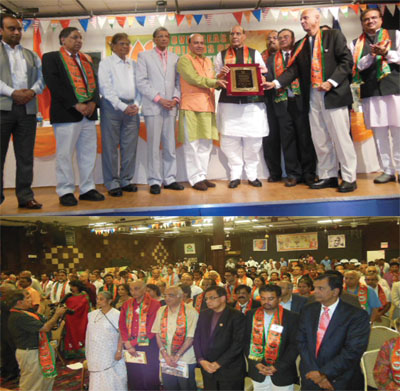
    EDISON, NJ (TIP): Indian American community of tri-state area (New Jersey, New York, and Connecticut) gave a rousing welcome to Rajnath Singh, President of Bharatiya Janata Party (BJP) and his BJP delegation Ananth Kumar, General Secretary; Sudhanshu Trivedi, National Spokesperson; and Vijay Jolly, Convener of Overseas Affairs and Overseas Friends of BJP (OFBJP) in TV Asia Studio Auditorium at Edison, NJ on Sunday July 21, 2013. The program was organized by OFBJP-USA as part of its community global outreach program.

    The program was broadcasted live on TV Asia across US reaching out to 1.5 million viewers. The program was also relayed live in India, Canada, UK, Europe and Middle East thru various channels. Addressing the jam-packed auditorium, Rajnath Singh said that he was elated by the warm welcome that had been accorded to him by the Indian Americans here in US. He said that trust and credibility have become a big problem in India and BJP is the only option. No party in India has grown bigger than Congress except the BJP.

    BJP is the only party that has not suffered a vertical split. Communists have lost relevance and Congress has no policy on any of the issues nor has any ideology. Since its inception in 1951 as Bharatiya Jan Sangh and later on as BJP, the party has been pursuing a policy of Nation first. He continued that Atal Behari Vajpayee led a 24 party coalition for 6 years and the NDA rule was far better than 55 years of Congress rule in every aspect.

    Corruption, Inflation and price rise are the signature of congress rule whereas NDA government controlled the inflation and price rise in spite of the prevailing severe drought and economic sanctions imposed by the entire West after Pokhran nuclear tests. NDA inherited a GDP growth of 4.8% and 10% inflation whereas BJP handed UPA a GDP of 8.4% and inflation 3.5% in 2004. Amidst applause from the audience he said that Pokhran test was a big step wherein the BJP led govt made India a nuclear power even though we knew economic sanctions were staring at us.

    Countries that are much smaller have become developed countries but India is still a backward country and not sure why 55 years of Congress rule did not change much. Congress has to answer as to how much time they need to make India better, to remove poverty. BJP invited FDI in telecom sector but encouraged Indian investors whereas Congress has opened up the telecom sector 100%, increased in the LIC sector from 26% to 49%. Foreign investors have pulled out $7.5 billion from India and no one is ready to invest.

    Even after 60 years of Independence we still have 67% of people who don’t get food and we need a food security bill. We need leaders with firm conviction and leaders with vision and when we come in power we will make India a super economic power in 10-15 years. National Highway development has seen tremendous growth during NDA rule. 50% of the highways that were built during 1980-2012 happened during 6 years of NDA rule and the other 50% were built during 26 years of non-BJP rule.

    Gujarat development has become a role model across the world. Madhya Pradesh agricultural growth (19%) is the highest in the world and very soon will be providing 24hrs of power supply. Chhattisgarh PDS system serves 90% of the population without any corruption and is a model for other states to emulate. Goa is the only state in India where Petrol is cheaper than Diesel. India has a GDP growth of 4.8% whereas BJP ruled states have 10% GDP growth. UPA government has no plan to tackle Naxalism or terrorism.

    Appeasement has become the state policy whereas BJP never links terrorism to any religion, caste or region. After Mumbai terror attack, Prime Minister made a statement that he will not talk to Pakistan until it gives an assurance that they will control terror activities and not support any groups that work against India but changed all that in a matter of few months. Our foreign policy is at its worst with no friendly neighbors around us. During NDA rule we maintained good relations with Russia and development excellent relations with US.

    We made US our strategic partner. He appealed to the US govt to lift the ban on visa to Narendra Modi, he said on one side US agencies rate Gujarat as the best state and Modiji as an excellent administrator and on the other hand they deny visa to him. It will be better if US takes a decision soon as they will be forced to take a decision anyway later. When BJP comes to power we will make India a power of Rishi and Krishi (knowledge and Prosperity), he said. Indian culture influenced the world for thousands of years.

    We never planned to dominate the world and even Swami Vivekananda came to Chicago on his own and had great influence on the world by his teachings. Citing the example of Newsweek columnist Lisa Miller who stated that by imbibing Yoga, Pranayam, Ayurveda and Organic farming people in the West are becoming Hindus whereas it is a crime in India if you say you are a Hindu.Talking on the recent controversy related to Narendra Modi statement that he is a Hindu and Nationalist, media created and pseudo secularists made a big fuss.

    Professing your Hindu culture became a communal word in India. He said that as per the Supreme Court, Hindutva is a way of a life. Hindutva teaches love not only for human beings but even for animals, plants, rivers, mountains etc. It is Hindutva that teaches us to serve milk to a snake and take care of animals like ants and birds. He called on the Indian American Community to support BJP to build a strong India.

    Shri Rajnath Singh was accorded standing ovation. Shri Rajnath Singh was honored by the OFBJP executive committee with a plaque for his contributions to the party and the country. Earlier, Ram Rakshpal Sood (Sr.Advisor, OFBJP) acting as the Emcee welcomed the audience, chief guests and the sponsors of the event. After the traditional lamp lighting ceremony amidst the chanting of Vedic mantras by Pandit Pravin Shastri and Chandrakant Trivedi and blowing of conch shell by Pravin Shashtri. Mrs. Vidya Labroo led the rendition of Vandemataram.

    Jayesh Patel (President, OFBJP) welcomed the distinguished guests and said that entire India is chanting Narendra Modi (NaMo) mantra and expressed hope that BJP will be able to get majority on its own merit in the next election. Ram Kamath (General Secretary, OFBJP) introduced Dr. Mahesh Mehta, National Coordinator of OFBJP-USA. Speaking on the occasion, Dr. Mehta said that mission 2014 is about transforming India into a global leader and Global Indians should contribute to be the part of this great movement that will eventually contribute to the development of India.

    Dr. Adapa Prasad (Immediate Past President) introduced Vijay Jolly, Convener of BJP Overseas Affairs and OFBJP, as a dynamic leader and former MLA who took on Delhi Chief Minister during the last election.

    In his electrifying speech, Vijay Jolly urged the audience to applaud for Rajnath Singh for honoring the feelings of the people by making NaMo as the chairman of the campaign committee. Stressing the fact the OFBJP is on a mission to develop leaders by inducting youth into the organization to dethrone the corrupt Congress regime in India. Stating that NRI’s have always made India proud, he said that OFBJP has setup its chapters in UK, Norway, Nepal, Kenya and other countries to work for the welfare of Indian diaspora.

    He got the past Presidents of OFBJP-USA honored by Rajnath Singh Introducing SudhanshuTrivedi, BJP National Spokesperson, Dr. Dinesh Agrawal (Former- President, OFBJP) said that as the national spokesperson, he is very active effective on TV channels spreading the message and its ideology of BJP. SudhanshuTrivedi reminded that July 21st the day of the program is a historical day when US astronauts landed on the moon. Edison town, the venue of the program, is also a historical town, named after the inventor of light bulb.

    Hence, he said that word Bharat stands for light and inspires us to take India to the pinnacle of glory. Stating that BJP is all set to form the next government is not based on hope but on facts. He concluded reciting a poem by A.B. Vajpayee. R.P. Singh (Org. Secretary, OFBJP) introduced Ananth Kumar, BJP general Secretary. Amidst thunderous applaud from the audience, Shri Ananth Kumar introduced himself as the Hanuman of South as Kishkinda, the birth place of Lord Hanuman is in Karnataka whereas Rajnath Singh is from U.P, the land of Ram. For Ram’s team to win we need Hanuman and he is there to lend services for the party and the country.

    India, he said is going through turbulent times and like A.B. Vajpayee model, we have Gujarat model of development under NaMo leadership and we will soon have NaMo model of governance. He said that BJP is already in battle mode, under NaMo and Rajnath Singh’s leadership we are all set to take on the corrupt congress government. Once in power, BJP will make India a global player not only in spirituality but in culture, strategic matters and will be a decisive player in the world. He urged the NRI’s to connect with their districts back home and work for BJP’s victory in 2014.

    Chandrakanth Patel introduced Rajnath Singh as a man of impeccable image in spite of being in political life for 40+ years. Born in a farmer’s family in Varanasi, he rose to be the president of BJYM. He was part of the J.P movement and became the Agricultural minister in A.B. Vajpayee’s government. He was the President of BJP between 2007-2009 and again became the President in January, 2013.

    Currently, he is a Member of Parliament from Ghaziabad, U.P. Earlier, the President of TV Asia and a well known community leader, Shri H.R.Shah addressed the gathering and said that TV Asia always supported India causes and he has been an admirer of Mahatma Gnadhi and Sardar Patel. He said he felt close to BJP principles and supported BJP. He wished that Narendra Modi would be elected as the Prime Minister. Krishna Reddy (Treasurer, OFBJP) presented the vote of Thanks.

  • Largest US Hacking And Data Breach Scheme: Russians, Ukrainian Charged

    Largest US Hacking And Data Breach Scheme: Russians, Ukrainian Charged

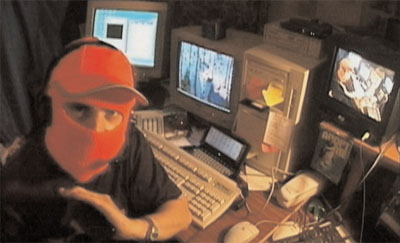
    NEWARK (New Jersey) (TIP): Four Russian nationals and a Ukrainian have been charged in what’s being called the largest hacking and data breach scheme ever prosecuted in the United States. They’re accused of running a hacking organization that penetrated computer networks of more than a dozen major US and international corporations over seven years, stealing and selling at least 160 million credit and debit card numbers, resulting in losses of hundreds of millions of dollars.

    Indictments were announced on July 25. US attorney Paul Fishman called the case the largest hacking and data breach scheme ever prosecuted in the country. Heartland Payment Systems Inc, which processes credit and debit cards for businesses, was identified as taking the biggest hit in a scheme starting in 2007 — the theft of more than 130 million card numbers at a loss of about $200 million. Global Payment Systems, another major payment processing company, had nearly 1 million card numbers stolen, with losses of nearly $93 million, prosecutors said.

    The indictment did not put a loss figure on the thefts at some other major corporations, including Commidea Ltd., a European provider of electronic payment processing for retailers. The government said hackers in 2008 covertly removed about 30 million card numbers from its computer network. About 800,000 card numbers were stolen in an attack on the Visa network, but the indictment did not cite any loss figure. Not all the companies the hackers infected over the years with malicious computer software suffered financial losses.

    Customer log-in credentials were stolen from Nasdaq and Dow Jones Inc., the indictment said, though prosecutors said Nasdaq’s trading platform was not affected. The defendants were identified as Vladimir Drinkman, 32, of Russia; Aleksander Kalinin, 26, of Russia; Roman Kotov, 32, of Russia; Dmitriy Smilianets, 29, of Russia; and Mikhail Rytikov, 26, of the Ukraine. Smilianets was in US custody and was expected to appear in federal court next week. His lawyer, Bruce Provda, said Smilianets was in the US “sightseeing” when he was arrested.

    “It’s a rather complex international charge of hacking,” Provda said. “If it goes to trial, it’s going to be a lengthy trial.” Drinkman was being held in the Netherlands pending extradition, prosecutors said. His lawyer there, Bart Stapert, did not immediately return a message. The other three defendants remained at large. The prosecution builds on the 2009 case that resulted in a 20-year prison sentence for Albert Gonzalez of Miami, who was identified in the new complaint as an unindicted co-conspirator.

    Prosecutors identified Kalinin and Drinkman as sophisticated hackers who specialized in penetrating the computer networks of multinational corporations, financial institutions and payment processors. Kotov’s specialty was harvesting data from the networks after they had been penetrated, and Rytikov provided anonymous web-hosting services that were used to hack into computer networks and covertly remove data, the indictment said. Smilianets was the information salesman, the government said.

    All five are charged with taking part in a computer hacking conspiracy and conspiracy to commit wire fraud. The four Russian nationals are also charged with multiple counts of unauthorized computer access and wire fraud. The individuals who purchased the credit and debit card numbers and associated data from the hacking organization resold them through online forums or directly to others known as “cashers,” the indictment said. According to the indictment, US credit card numbers sold for about $10 each; Canadian numbers were $15 and better-encrypted European ones $50.

    The data was stored on computer servers all over the world, including in Latvia, the Netherlands, Bahamas, Ukraine, Panama and Germany. The cashers would encode the information onto the magnetic strips of blank plastic cards and cash out the value, by either withdrawing money from ATMs in the case of debit cards, or running up charges and purchasing goods in the case of credit cards.

    Kalinin was also charged, along with another Russian man, in a separate indictment unsealed Thursday. The men are accused of hacking into computer systems at Citibank and PNC Bank and giving co-conspirators information who encrypted blank ATM cards that were used to withdraw $4.2 million from customer accounts in 2006 and 2007.

  • G20 Seeks To Chart Recovery Course Amid Choppy Markets

    G20 Seeks To Chart Recovery Course Amid Choppy Markets

    MOSCOW (TIP): The world’s economic crisis response team will grapple with the prospect of more market volatility as finance ministers and central bankers gather in Moscow to chart a course towards recovery. The Group of 20, a forum that took the lead in the 2008- 09 financial crisis, now faces a multi-speed global economy in which only the United States appears to be nearing a self-sustaining recovery.

    China, for years the engine of global growth, is suffering a slowdown amid doubts over the stability of its financial system, Japan has only recently embarked on a radical fiscal and monetary experiment, and Europe’s economy is more stop than go. Collective efforts to balance the prospect of a withdrawal of US monetary stimulus against expansionary policies elsewhere evoke visions of passengers rushing from port to starboard to stabilise a listing ship.

    “We used to believe that as soon as the economic situation stabilises … we will have less volatility in financial markets and currency markets,” Russia’s G20 summit coordinator, or ‘sherpa’, Ksenia Yudayeva, told Reuters. “The events we just saw have proved that we will not necessarily have less volatility – we will probably have quite a lot,” she added.

    Chairman Ben Bernanke’s guidance in May that the Fed may start to wind down its $85 billion in monthly bond purchases – intended to ease the flow of credit to the economy – triggered a steep sell-off in stocks and bonds, and a flight to the dollar. Investors were calmed by dovish testimony to Congress this week by Bernanke, who is not coming to Moscow. Yet emerging markets – especially those that depend on commodities or that have external deficits – have underperformed.

  • Russian Opposition Leader Navalny Released

    Russian Opposition Leader Navalny Released

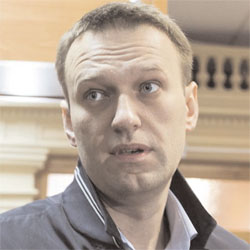
    KIROV, Russia (TIP): A Russian court on Friday released opposition leader Alexei Navalny from custody less than 24 hours after he was convicted of embezzlement and sentenced to five years in prison. The release came after a surprise request by prosecutors, who said that because Navalny is a candidate in this fall’s Moscow mayoral race keeping him in custody would deny him his right to seek election.

    The release, under the condition that he not travel outside Moscow, will extend until appeals of his conviction are completed. After the Friday decision, a smiling Navalny emerged from the caged-off defendants’ section of the courtroom and thanked supporters who held protest rallies on Thursday after his conviction. Presentation of the appeal and the decision by the court for the Kirov region took little more than an hour, a sharp contrast to the droning 3 {-hour verdict reading and sentencing in a lower court the previous day.

    Navalny, a popular blogger and corruption-fighting lawyer, rose to prominence among the opposition during a series of massive protests in Moscow against President Vladimir Putin’s reelection to a third presidential term in March 2012. The conviction prompted criticism from the United States and the European Union. Navalny began his rise to prominence by blogging about his investigations into corruption at state-owned companies where he owned shares, reaching hundreds of thousands of people.

    He and his team of lawyers and activists have plumbed property registers abroad to identify top officials and lawmakers who own undeclared foreign assets and hold foreign citizenship. Navalny’s blog quickly became an Internet sensation not only because of his exposures but because of its engaging illustrations, funny images and witty catchphrases. It was Navalny who first called the dominant United Russia party “the party of crooks and thieves,” a phrase that still dogs Kremlin loyalists.

  • Vivek Wadhwa named to Time’s List of Top Tech Thinkers

    Vivek Wadhwa named to Time’s List of Top Tech Thinkers

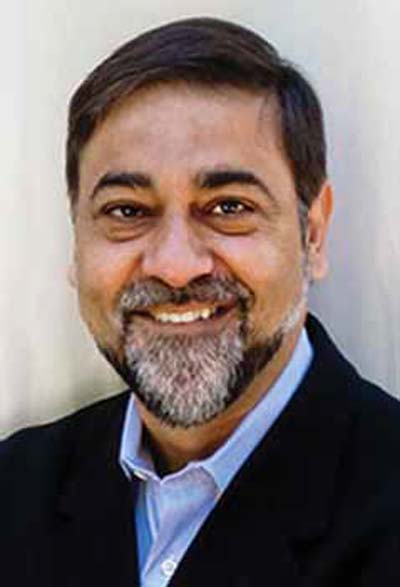
    NEW YORK (TIP): Vivek Wadhwa, who holds academic appointments at Singularity University, Stanford University and Duke University, and last year was named to Foreign Policy magazine’s list of the Top 100 Global Thinkers, was named by Time magazine recently to its list of the 40 “Most Influential Minds in Tech.” Wadhwa, the magazine said, “has become a leading voice in debates over technology policy, particularly with respect to entrepreneurship, innovation and immigration.” “In his recent book, ‘The Immigrant Exodus: Why America Is Losing the Global Race to Capture Entrepreneurial Talent,’ Wadhwa describes how the U.S. is now telling the best immigrants to go home, due to a lack of immigration visas,” Time said. “As a result of this ‘reverse brain drain,’ as Wadhwa and his colleagues call it, highly skilled workers and professionals are increasingly looking to other global markets to locate their businesses.” “We’re seeing a boom in technology entrepreneurship in India, China, and even Russia, because the U.S. won’t let people stay here,” Wadhwa told Time. Early in his career, Wadhwa worked at Credit Suisse First Boston, where he helped develop technology for creating computeraided software-writing systems. The Indian American entrepreneur later founded software firm Relativity Technologies. Wadhwa is a columnist at Bloomberg Business Week and a contributor to various other publications, including The Indian Panorama.

  • Pew Survey On Attitudes Towards Homosexuality Released

    Pew Survey On Attitudes Towards Homosexuality Released

    UNITED NATIONS (TIP): “Should Society Accept Homosexuality?” A global Pew Research Centre survey was released June 4, finding a wide variety of regional opinion on the question. Pew found that generally more positive attitudes were observed amongst younger people, and that in countries where a gender gap was observed, women tended to be more accepting than men. The survey polled nearly forty thousand people in 39 countries, asking questions about religion, age and gender.

    Senior Researcher at Pew Global Attitudes Juliana Menasce Horowitz observed, “What is surprising is the level of global polarization that we see on this subject. We have been collecting public opinion data all over the world on various issues, and I can’t think of any questions or subjects where we see such large percentages on one side in a group of countries and equally high percentages on the other side in other parts of the world.” The most tolerant responses to the question were predominantly secular and affluent, and either Latin American and Western.

    The least tolerant were found to be the 13 Middle Eastern and African nations polled. The strongest support came from Spain where 88 per cent of respondents answered “Yes” to the question. The study found a strong relationship between a country’s religiosity and its opinion on homosexuality. In countries where religiosity was low, attitudes were mostly positive. This was measured by three factors; whether they believe faith in god to be a necessity for morality; whether or not they say that religion is important in their lives; and whether they pray every day.

    This trend excluded Russia and China where religiosity was found to be low, but only around 20 percent answered “Yes” on the question of whether homosexuality should be accepted in society. In 2012, Russia’s top court upheld a ban on gay pride marches for the next 100 years in Moscow. On the other hand religiosity was measured to be high in the Philippines and attitudes were positive, with 73 per cent of respondents answering “Yes.”

    The results of the survey have been published at a time when many countries are debating same-sex marriage, France in particular having conducted its first official ceremony last week, and the UK preparing to pass a law soon. There are currently fifteen countries worldwide in which there is legal recognition of same-sex marriages.

  • India fourth biggest market for Sony with Rs 8,000 crore sales

    India fourth biggest market for Sony with Rs 8,000 crore sales

    NEW DELHI (TIP): Despite weak demand in the industry, Sony India has managed to break into the top five markets in the Japanese giant’s global operations, riding on healthy sales of televisions. The upsurge — to the fourth position — has been quick for the Indian subsidiary that till two years ago was a distant ninth in Sony’s global markets. Sony India finished last fiscal (2012-13) with a 27% growth at overall revenue of Rs 8,000 crore.

    With this, India is ahead of many of Sony’s key markets like Brazil, Russia, Germany and Britain. India now trails US (top market for the company), China and Japan. Kenichiro Hibi, MD of Sony India, said that televisions and mobile phones (under the Xperia range) remain among the fastest-growing segments for the company. Hibi, however, expressed concern over weakening demand in line with the slowdown of the Indian economy. “The market situation is difficult and there are pressures,” Hibi told TOI after launching the premium ‘4K’ Bravia TV range that is priced upwards of Rs 3 lakh.

    Hibi said that the retail end was under stress and things at the ground are “not easy”. However, new launches as well as expectations of a turnaround towards the latter part of the year make the company confident as it expects to maintain the previous year’s growth in this fiscal as well. But despite witnessing growth in India, Sony India does not have any immediate plans to start manufacturing operations here.

    The company currently imports its product line-up from a clutch of countries like China, Malaysia, Japan and Thailand. Hibi said TV sales will continue to lead the charge for the company and it expects to sell 13 lakh units this fiscal against 11 lakh units in the previous year. Televisions contribute around 35% to Sony India’s revenues.

  • India Outpaces Major Steel Producers With 5.8% Growth In Fy’13

    India Outpaces Major Steel Producers With 5.8% Growth In Fy’13

    NEW DELHI (TIP): India, the world’s fourth largest steel maker, logged 5.86 per cent growth in production in 2012-13 – the highest among major global producers, World Steel Association has said. According to WSA, India produced 78.12 million tonne (MT) steel during the fiscal as against 73.39 MT in 2011-12. China had produced the maximum steel during the fiscal at 726.33 MT, almost half of the world’s total output of 1,521 MT; but India outpaced the neighbour in the rate of growth.

    Production in China grew by 5.39 per cent during 2012-13 over 689.192 MT in 2011-12. Global production grew by 1.59 per cent during the fiscal. World’s second largest steel maker Japan produced 107.30 MT in 2012-13, clocking 0.78 per cent growth over 106.46 MT produced in the previous fiscal.

    The US, the world’s third largest steel producing nation, clocked a negative rate, down 1.61 per cent, during the fiscal at 86.94 MT compared to 88.36 MT a year ago. Russia produced 69.56 MT steel in 2012-13, recording just 0.17 per cent growth over the previous fiscal. South Korea has also clocked a de-growth of 1.62 per cent to produce 68.15 MT steel during the year.

  • Russian President Putin, Wife Announce Divorce

    Russian President Putin, Wife Announce Divorce

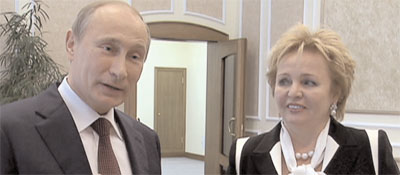
    MOSCOW (TIP): Russian President Vladimir Putin and his wife Lyudmila announced on Thursday they are divorcing after nearly 30 years of marriage. The Putins made the statement on state television after attending a ballet performance at the Kremlin. “It was our joint decision,” Putin said. Lyudmila Putin was rarely seen in public during her husband’s long tenure at the top of Russian politics and implied that she didn’t like to travel with him on his frequent trips.

    “I don’t like publicity and flying is difficult for me,” she said. The Putins married on July 28, 1983, and have two daughters, Maria and Yekaterina. In the televised announcement of their divorce, Putin appeared reserved and Lyudmila smiled tentatively. “We practically never saw each other. To each his own life,” Putin said. Lyudmila Putin said, “We will eternally be very close people. I’m thankful … that he supports me.” There were no immediate indications of how the move would be perceived by the public.

    Divorce is common in Russia, and nearly 700,000 pairs dissolved their marriages in 2009, according to UNICEF. Russian leaders, unlike their counterparts in the West, generally keep their personal lives well out of public view. Mikhail Gorbachev’s wife Raisa raised many Russians’ hackles by her visibility, flair for fashionable dress and forthright comments.

    But Putin also has made a point of supporting traditional social values and appearing at holiday masses of the Orthodox Church. The church permits divorce under some circumstances; it is not clear if the Putins sought pastoral advice or permission before the split.

  • No First Use Nuclear Doctrine with ‘Chinese Characteristics’

    No First Use Nuclear Doctrine with ‘Chinese Characteristics’

    The writing is on the wall as China does not have good track record of strategic comfort and reliability vis-a-vis India. The current incidence of Chinese incursion into Indian territory in Daulat Beg Oldie region in the Ladakh sector should be an eye-opener. While India must focus on its economic, infrastructure and social development and must not waste her meager fiscal resources in a costly nuclear race, she needs to be prepared for all strategic options. Given the aggressive behavior of China in recent years appropriate and credible policies need to be adopted including having a re-look at evolving nuclear posture of China”, says the author.

    Major-General Yao Yunzhu, Director of the Center on China-America Defense Relations of the Chinese Academy of Military Sciences, Beijing in a session on Deterrence, Disarmament and Non-proliferation during the Carnegie International Nuclear Policy Conference, held in Washington, DC on April 8-9th 2013, artfully deflected all the questions on China’s growing number of nuclear arsenals with a cute smile, stating again that the onus for nuclear warhead reduction lies on both US and Russia because China has very limited, small number of nuclear weapons.

    General Yao while doing routine lipservice to the NFU doctrine explicitly admitted that, “A certain amount of opaqueness is an integral part of China’s nofirst- use policy”. She persistently refused to quantify the number of warheads China needed for a credible and effective nuclear deterrence. She officially expressed Chinese Government’s serious concern at the US shifting its ballistic missiles interceptors in the Pacific island of Guam to deal with DPRK nuclear threat, thereby degrading the quality of the Chinese nuclear deterrent.

    She enumerated three essential characteristics for the Chinese nuclear deterrent: it has to be survivable against first strike; it has to be credible enough in numbers and in delivery system, and lastly it has to have an effective and punitive second strike retaliatory capability. She was asked about recent BMD tests by China on January 22nd 2013 and she categorically confirmed that China will, from now on, indeed develop its own BMD system as the US is not willing to commit to cease its BMD system.

    Professor Li Bin from the Department of International Relations, Tsinghua University, Beijing and also a Senior Associate at Carnegie Endowment for International Peace in Washington, DC admits formally in his writings that China’s non-proliferation posture has evolved over a period of time and now is an important and essential part of its nuclear theology.

    However, in private discussions he passionately justified Chinese horizontal proliferation activities outside the scope of the Nuclear Suppliers Group by providing Chashma-3 and Chashma-4 nuclear plants to Pakistan on grounds that China had helped India also with nuclear fuel supplies for the Tarapore Atomic Reactor when India was under the US nuclear embargo. He assertively implied that China will continue to provide nuclear materials and technology to its all-weather friend Pakistan analogous to US-India civil nuclear deal though the latter deal was approved by the NSG.

    Interestingly a younger researcher Zhu Jianyu from the Center for Strategic Studies of the China Academy of Engineering Physics during the Carnegie International Nuclear Policy Conference, held in Washington, DC on April 8-9th 2013 candidly admitted that Chinese press and academicians usually toe the government line because the government controls their funding and hence independent viewpoints are not possible.

    In private discussions with Major General Yao, it became quite clear that China will now vigorously pursue development of its national ballistic missile defense system; something which China had vociferously denounced earlier. She also stated that China will continue to develop its ASAT weapons till a legally binding multi-lateral treaty banning weaponization of the space is signed and ratified.

    Major General Yao attributed to and categorically linked this shift in Chinese strategic thinking to the recent US decision to deploy 14 long-range ballistic missile interceptor batteries in the Pacific Island of Guam ostensibly in response to threats posed by the DPRK thereby potentially degrading the Chinese nuclear deterrent. Changes in the Chinese nuclear posture are also linked to the US development and deployment of advanced precision guided conventional warheads in the Asian theatre capable of destroying Chinese multiple independently targetable reentry vehicles (MIRV) ballistic missile silos thereby degrading the Chinese minimum nuclear deterrent.

    China is focused on modernizing and its strategic survivability and beefing up its effective second strike capability and therefore will continue to develop more nuclear warheads and will keep its nuclear capabilities fully opaque. China’s 2013 Defense White Paper For the first time, the 2013 edition of China’s defense white paper entitled: “Diversified Employment of China’s Armed Forces” conspicuously fails to mention readherence to and re-affirmation of China’s often-stated “No first use pledge”.

    This is significant departure from the 2011 version of China’s Defense White Paper. The absolutely deafening silence in the 2013 version on NFU is deliberate and is very significant for its reverberating eloquence. The new white paper introduces ambiguity as it endorses the use of nuclear weapons in response to a nuclear attack but does not rule out other uses. In the last few years, Chinese analysts and officials have done an excellent job of qualifying the original Chinese “NFU” pledge with myriads of qualitative exceptions so as to render it effectively meaningless.

    This carefully contrived departure is strategically significant for the international community. Following a vigorous international debate on China’s departure from the NFU policy, Major General Yao floated a trial balloon in an op-ed piece in Asia Times Online on April 24th 2013 when she called for a legally binding multi-lateral NFU agreement. She wrote a point by point rejoinder while still defending the reasons as to why China should depart from the often stated NFU policy and acknowledged that domestic discussions happening in China regarding junking the NFU policy.

    She has tried to invoke new exceptions to China’s so-called NFU commitment linking it to a new US law (2013 National Defense Authorization Act) that seeks a report from the Commander of the US Strategic Command by August 15th 2013 to describe the Chinese underground tunnel networks and to review the US capability to neutralize such networks with conventional and nuclear forces. Ostensibly, with a view to creating more confusion and more opaqueness about China’s intentions, she explicitly states: “To alleviate China’s concerns, a constructive approach would be to assure the policy through nuclear policy dialogues, to establish a multilateral NFU agreement among all the nuclear weapon states, and to consider limiting or even prohibiting the use of nuclear weapons in a legally binding international agreement.”

    Li Bin, in bilateral context, has previously suggested that India and China should begin their nuclear engagement with mutual reassurance of NFU and should work together in advocating NFU in global nuclear disarmament and non-proliferation efforts. China very well knows such a legally binding international agreement will not be negotiated for several decades owing to US dogmatic postures. The US is already spending $10 billion to upgrade its nuclear weapons despite Obama’s initial call for a global zero goal.

    This gives a window of opportunity for China to increase its nuclear warheads exponentially while keeping its socalled NFU pledge under suspended animation and even junk it de facto. Interestingly, China refuses to enter into an official government to government nuclear weapons dialogue with India on the grounds that India is non-signatory to the NPT. At the same time, China has shrewdly refused to engage in bilateral dialogue with the US on nuclear arms reductions on grounds of asymmetry of nuclear forces of respective countries.

    China does complain of discrimination and nuclear asymmetry while discussing US-China relations but fails to address genuine Indian concerns on similar grounds. Implications for India Western debate on the perceptible change in Chinese nuclear posture has focused only on its narrow impact on the strategic environment of the US and its allies including Japan.

    India should not behave like an ostrich burying its head in the sand. Perhaps, time has come for India to review her own strategic nuclear doctrine revising the no-first use pledge. Robust evidence has come cumulatively over a period of time from multiple sources reflecting the new nuclear reality in our neighborhood. Totality of the evidence available convinces this analyst that China has indeed changed its nuclear posture from defensive to offensive and is on a largescale nuclear build-up.

    China is indeed willing to consider first strike capability to preserve its core national issues though vehemently denying such intentions at the moment. Predictably, China will continue to obfuscate this change in nuclear posture using ambiguous, turgid and opaque language while simultaneously blaming the US for failing to negotiate a legally binding multi-lateral agreement on NFU.

    Indeed, this gives the dragon a fig-leaf of deniability. Certainly, India should not countenance being the only nuclear weapon state pledging “no first use” while the global nuclear posturing has become indeed hardened. One has to take into factor Pakistan’s accelerated development of tactical nuclear weapons and its stringent refusal to negotiate and sign a multi-lateral Fissile Materials Cut-Off Treaty (FMCT) and continued Chinese help to Pakistan in and outside the NSG.While Pakistan has never subscribed to an NFU commitment and its nuclear arsenal is specifically India-centric; the recent change in China’s nuclear posture is definitely of concern to India.

    The writing is on the wall as China does not have good track record of strategic comfort and reliability vis-a-vis India. The current incidence of Chinese incursion into Indian territory in Daulat Beg Oldie region in the Ladakh sector should be an eye-opener.While India must focus on its economic, infrastructure and social development and must not waste her meager fiscal resources in a costly nuclear race, she needs to be prepared for all strategic options.

    Given the aggressive behavior of China in recent years appropriate and credible policies need to be adopted including having a re-look at evolving nuclear posture of China.

  • India’s economic growth falls to a decade low of 5%

    India’s economic growth falls to a decade low of 5%

    NEW DELHI (TIP): India announced growth figures for its full financial year on Friday showing the once-booming South Asian economy expanded by 5.0% in 2012/13, its slowest pace in a decade. Low business confidence, slumping investment, high inflation and weak export demand from Western countries were blamed for the bleak performance which comes ahead of national elections scheduled for next year. In the fourth quarter to the end of March, gross domestic product grew by 4.8% year-on-year, slightly higher than the previous quarter when it expanded by 4.5%, according to the data from the statistics ministry. Despite government efforts to talk up the economy after a burst of promarket reforms at the end of last year, most independent analysts see continuing slack demand and few quick fixes. “Business activity is still sluggish,” Rupa Rege Nitsure, chief economist with state-run Bank of Baroda said ahead of the release of the data. The economy grew by 6.2 percent in 2011/12.

    Global ratings agency Standard and Poor’s warned earlier this month that India faces at least “a one-in-three” chance of losing its prized sovereign grade rating amid new threats to economic growth and reforms. India’s BBB-minus investment rating is already the lowest among its BRICS peers Brazil, Russia, China and South Africa and cutting it to “junk status” would raise the country’s hefty borrowing costs.

    The Organisation for Economic Cooperation and Development (OECD) this week lowered its projection of India’s GDP to 5.3% in 2013, from 5.9% earlier. “The government needs to go all-out to turn around investment sentiment,” said Yes Bank chief economist Shubhada Rao. The government led by Prime Minister Manmohan Singh and the Congress party has been dogged by corruption scandals during its second term in office and has struggled to push through promised pro-business legislation.

    It is scheduled to face the electorate next year having been unable to sustain the scorching growth rates of the last decade which were frequently near 10%. In a brief reforming period last year, the government opened up the retail and aviation sectors to wider foreign investment and partly freed fuel prices to reduce its burgeoning subsidy bill. But faced with a hostile parliament and a shaky ruling coalition, it has since failed to pass mooted legislation to open up the insurance and pension sectors or a longdelayed law to simplify land acquisition.

    Government pressure has mounted on the central bank to ease borrowing costs after it raised interest rates aggressively in 2010 and 2011 to combat double-digit inflation last year. It has obliged by cutting interest rates three times in 2013, but Reserve Bank of India governor Duvvuri Subbarao has said the bank has “limited space” to ease monetary policy further due to the risk of inflation flaring up again.

    India’s wholesale inflation, its most widely watched measure, cooled last month to a surprise 41-month low of 4.89%. But the consumer price index is at 9.39%, led mainly by high food and beverage prices.

  • No First Use Nuclear Doctrine with ‘Chinese Characteristics’

    No First Use Nuclear Doctrine with ‘Chinese Characteristics’

    The writing is on the wall as China does not have good track record of strategic comfort and reliability vis-a-vis India. The current incidence of Chinese incursion into Indian territory in Daulat Beg Oldie region in the Ladakh sector should be an eye-opener. While India must focus on its economic, infrastructure and social development and must not waste her meager fiscal resources in a costly nuclear race, she needs to be prepared for all strategic options. Given the aggressive behavior of China in recent years appropriate and credible policies need to be adopted including having a re-look at evolving nuclear posture of China”, says the author.

    Like a chameleon, the dragon, very predictably is changing its colors with regards to its often stated nuclear doctrine of “no first use” (NFU). Since 1964 when China conducted its first nuclear weapon test, China has repeatedly and vociferously insisted that it would not be the first nuclear power to use a tactical or strategic nuclear weapon in pursuit of its strategic objectives. This NFU pledge was explicitly and unconditionally included in each of China’s defense white papers from the first in 1998 through the seventh one in 2011.

    Recently, there is some international debate about possible changes in China’s NFU doctrine following publication of China’s biannual 2013 Defense White Paper. However, it appears that China may have moved beyond its socalled NFU doctrine and its duplicitous pledges do not hold any sincere meaning. Strategic deception has been an important part of China’s military DNA since the times of Sun Tzu who wrote in his treatise the Art of War: “All warfare is based on deception. Hence, when we are able to attack, we must seem unable; when using our forces, we must seem inactive; when we are near, we must make the enemy believe we are far away.

    Since achieving a great economic success and flush with $ 3.4 trillion foreign exchange reserves, China has increased its list of core national issues and has adopted a more belligerent strategic posture and hegemonic attitude towards international community in general and its neighbors in particular. Disregarding the Deng’s advice of lying low and bidding your time, the current (5th) generation of China’s leaders are adopting aggressive postures militarily though the transformation into visibly hardened strategic claims started really during the reign of the 4th generation leaders (Hu Jintao, Wen Jiabao and Wu Bangguo).

    The last time a Chinese paramount leader reaffirmed the so-called NFU pledge was on March 27th 2012 in Seoul Nuclear Conference when Hu Jintao mentioned it in his address. However, in December 2012, the new 5th generation Chinese paramount leader Xi Jinping failed to mention about the so-called no first use pledge in a speech given to Second Artillery Force of the PLA which manages China’s land-based nuclear weapons. Apparently, he also stated that nuclear weapons create strategic support for China’s status as a major world power.

    This is a significant departure from the previously stated public positions citing Mao Zedong’s ideas about the use of nuclear weapons as a taboo and labeling the nuclear weapons essentially as “paper tigers”.

    Fundamentals of NFU Commitment
    Out of the nine countries that possess nuclear weapons currently, only two, China and India had explicitly stated “No First Use” as the guiding principle of their strategic nuclear doctrine.

    An absolute and unconditional NFU commitment would have four following components:
    1. Not to use nuclear weapons first against countries that possess nuclear weapons
    2. Not to threaten use nuclear weapons first against countries that possess nuclear weapons
    3. Not to use nuclear weapons first against countries that do not possess nuclear weapons
    4. Not to threaten to use nuclear weapons first against countries that do not possess nuclear weapons
    NFU policy has been a core feature of the Chinese defense policy having been decided apparently by Chairman Mao himself in 1964. Critics of the Chinese NFU commitment claim that it is completely unverifiable and is mere rhetoric. Selfdescribed “China hawks” in the West have derisively dismissed the Chinese NFU pledge as pure propaganda for the last five decades. Chinese strategists have debated the merits of dropping or altering the NFU policy. This debate was reportedly very intense from mid to late 2000s.

    There are assertions from Chinese officials that Chinese NFU commitment is not applicable to perceived claims on territories. China has territorial disputes with multiple neighbors including India. Presumably since China continues to claim that Arunachal Pradesh is its own territory, in a hypothetical scenario, it may use tactical nuclear weapons in a war with India in eastern sector because China will consider this use not against any other country but in its own perceived territory. Similarly, China will not be bound by its

    NFU if the US were to intervene in Taiwan in case of a Sino-Taiwanese war as it considers Taiwan as a renegade province. Chinese NFU is not applicable if it apprehends annihilation of its top leadership by conventional means. Similarly, a conventional attack on strategic target like the Three Gorges Dam would be an exception to the NFU pledge. More recently, Chinese have discussed other possible exceptions from their NFU commitment including a massive precision guided conventional attack on their intercontinental ballistic missile silos or their strategic facilities. As China moves away from minimal credible deterrence to “limited deterrence”, a more sophisticated delivery mechanism and an exponential increase in its nuclear stockpile, it has also moved towards greater flexibility and continued opacity in its nuclear operational doctrine. It is pertinent to say that the socalled Chinese NFU commitment has never been taken seriously by both the US and Russia at any time in their policy matrix.

    Chinese Nuclear Arsenal
    China can be considered the largest nuclear power after the US and Russia. China’s nuclear capability is apparently stronger than those of the next six nuclear states combined. According to Russian estimates, since early 1960s China has generated 40 tons of enriched weapons grade uranium and 10 tons of plutonium which would be enough to produce 3,600 nuclear war-heads. It is probable that half of this fissile material is kept in stocks whereas the rest half has been used up to produce 1500-1800 warheads, half of which may be in storage. This would leave 800-900 warheads that could be available for operational deployment on various types of delivery vehicles. Therefore, the real motives for China’s complete secrecy about its nuclear forces lie not in their “weakness” and “small size” but in much larger strength of China’s actual nuclear arsenal that is much higher than the commonly cited number of 300-400 warheads by the western analysts. There is also a great degree of international uncertainty about the hundreds of tunnels being built in China as their purpose has not yet been officially explained.

    Chinese Nuclear Posture and Track II Interactions

    Personal interactions with various Chinese academicians and officials during policy conferences suggest that China will continue to add to its nuclear arsenal and will not participate in any nuclear disarmament program till it reaches a certain level. This analyst has interacted with Professor Shen Dingli, Associate Dean of the Institute of International Studies from Fudan University, Shanghai over the last four years with very consistent and candid answers regarding Chinese national nuclear posture.

    Professor Shen Dingli claims to have independent (but sometimes more hawkish views) from those of the Chinese Government. In 2009 Carnegie Nuclear Policy Conference in Washington, DC, he expressed absolute ignorance about Chinese proliferation activities and the fact that Chinese weapons designs were turned in by Libya to the International Atomic energy Agency (IAEA) when Libya folded up their clandestine nuclear program.

    He was totally unaware of China’s both vertical and horizontal proliferation activities as late as April 2009. During the 2009 Carnegie International Nonproliferation Conference, Washington, DC, he agreed that Chinese government will continue to increase its number of nuclear war-heads.

    In a more recent Carnegie Endowment meeting on India-China dialogue in Washington DC on January 10th 2013, he again reiterated that China will continue to modernize its nuclear arsenals and the delivery systems till a perceived parity is achieved with the two great powers (US and Russia). China will certainly not agree to cut the number of nuclear arsenals as it wants both the US and Russia to implement further reductions in their respective nuclear arsenals.

    Interactions with another Chinese academician Dr. Shulong Chu, Professor of Political Science and International Relations at the School of Public Policy and Management and the Deputy Director of the Institute of International Strategic and Development Studies at Tsinghua University in Beijing, China in a session on China-US Strategic Stability on 4/6/2009 during the Carnegie International Nonproliferation Conference, Washington DC revealed very interesting Chinese perspectives.

    Chu explicitly stated that since China has accepted US supremacy, analogously both India and Japan should accept Chinese supremacy in the Asiapacific region. China is a bigger country than Japan and India. It has bigger military requirements. Japan, India and other Asian countries should understand that and should be willing to accept China’s ongoing modernization of its military and strategic (read nuclear) assets. Chu further went on saying: “Russia and the US have too many nuclear war-heads. They can afford to have deep cuts. China cannot do that because China has too few. China wants more and its agenda is to have more nuclear weapons”.

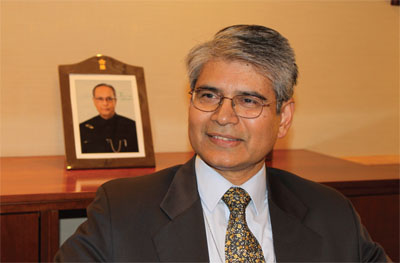
  • India’s Ability To Articulate Has Always Been Very High ASOKE K. MUKERJI

    India’s Ability To Articulate Has Always Been Very High ASOKE K. MUKERJI

    Q. Can you tell us a few high and low points of your career in Foreign Service so far?

    I joined the Indian Foreign Service 35 years ago. We were young then. We didn’t realize how the would changed right after the Cold War. Whatever we have achieved after that was a collective effort. The Indian Foreign Service was a small team during those years. For me personally dealing with a part of the consequences of the Cold War was when I was posted in Russia. This was right after Russia broke into 15 independent countries. Five of those countries were directly in my charge. I was the only English-speaking diplomat in Central Asia. I had to establish the foundations of political and economic relations with each of these countries. This meant we had to pave way to negotiating treaties from the scratch. This was rather unusual for us because India inherited most of the treaties during 1947. But doing that part of my job was one of the most satisfying phases of my career. It was a real learning experience. Another moment of satisfaction was when I got the opportunity to work with the World Trade Organization (WTO). This was a body that not only negotiated our trade relations legally but also protected the economic and commercial interest of each participating region. WTO had a body within which was called the Dispute Settlement body. I represented India in 11 disputes that were heard by the court. This was an equally satisfying experience. We won some cases, we did lose my cases but that is how it goes in the court of law. When I was working in UAE as the Consul General, we pioneered the set up of a mechanism, which involved the community, the public sector and the government. This was called the Indian Community Welfare. I chaired the committee. We were able to reach out to 1 million Indian passport holders who live and work in those parts of UAE. Today, our government has taken that model and established it many missions across the world. Also in 2005, I was sent to Kazakhstan as Ambassador. Our main purpose was to get oil for ONGC. Even recently the President of Kazakhstan reiterated that to be able to draw a negotiation without any hassles of tenders or disputes is surely an achievement. This was possible only due to a transparent government-to-government dialogue. Each assignment has rewards. Of course, there are shortcomings too. But it is the reward that stays with you and you remember when you look back.

    Q. Can you also tell us a bit about the challenges that you faced during your service?

    Well, there have been many weak points but the one sole challenge for any diplomat is the way the world is changing. It is not only changing to something entirely new but it is also fast paced. So you need to keep up with it. You can never say that I know everything. You have to keep educating yourself. Yet, this kind of education does not come through books and periodicals. You get educated these days by meeting people, participating in events and attending informative seminars. I do all of them and I am very fond of learning in this manner. One of the challenges for us in the Foreign Service is how the world is adept at technology. The technological advancement is ever changing and cannot be contained. Everything is pursued through technology, be it communicating with your elected representatives, banking on mobiles or communication in general. For any Foreign Service or a diplomat technological advancement plays an important role. This can also affect diplomacy. Before coming here, I was involved in India’s cyber dialogue with many other countries. Each of these dialogues was about education as it is a completely new sector.

    Q. Do you see such similar challenges in your time as the Permanent Representative of India to the UN?

    Certainly. We have always felt that the changes that take place in the world must be reflected in the United Nations. Whether it was disarmament in 1950s or terrorism right now, we need to as a mission in the UN participate in a way that the international community responds to these challenges. All of us know about our views on the Security Council reforms. We are hopeful that the process that has been initiated and has faced 9 rounds of discussion, it will lead to reforms in Security Council. It is very difficult to implement reforms, if you do not have the tools to implement them. Tools are as important as the objective that is put forward. Implementation requires carrying the consensus of all member states towards a common objective. So if you have a common consensus among all participating countries, the chances are that implementing the objective will be easy. If you have objectives that are set outside the international community and are forced to be carried through UN, then chances of implementing these objectives are lower.

    Q. Where are we as far as Security Council reforms are concerned?

    I think we are significantly further down the road to reforming the SC. Initially even the idea of reforming the SC was not accepted. We have moved from that to a process of discussing groups. Within the groups and participating countries that have discussed this matter, there is now a larger consensus about reforms in SC. The next stage is how we put all these reforms into a document. Then we need to discuss this document and then how to execute the suggested reforms. We are currently at that stage. It has taken us 9 rounds of discussions to reach here. Of course, there are still several groups that have not consented to reforms maybe because they have not analyzed the benefits of these reforms in their own regions.

    Q. Can you hypothesize a time frame within which these reforms could be executed?

    Apart from the political will for reforms, we have to also keep in mind of the procedures of the UN through which the reforms are implemented. We have to focus on the reforms of the UN procedures as well. These were created at the end of World War Two. They have evolved in their own way. The time frame cannot be set in only one process.

    Q. Can you shed some light on how diplomacy can work in today’s age of spiraling conflicts around the world?

    Diplomacy is one side of the coin. The other side has traditionally been war. In the last 20 to 30 years there has not been wars but instabilities. Instability may not have been caused by states, but even non-state influencers like viruses, pandemics, etc. The way we achieve diplomacy cannot be conventional methods of stopping war anymore, but also in understanding that our issues of instabilities are not conventional and thereby our methods can’t be the same either. Today we are dealing with issues like poverty, terrorism, gender, cyber attacks and such issues. These are newer issues for diplomacy. That is why we must take a wider approach on how to do our job. Our biggest strength in Indian Foreign Service today is that we have large number of technically proficient members. This is certainly an advantage that we did not have during our time of Foreign Service. So we need to adopt newer means to combat today’s instabilities.

    Q. Diplomacy is straightjacket post. How would you like to win more admiration for India? How would you be able to take other nations along and meet the agenda that India has manifested and make it successful?

    I start from a very strong foundation. When we were elected to Security Council elections we had 187 votes out of 190. That itself is a manifestation of the regard in which India is held in the International community. How do we carry forward this momentum? I think the answer is in conveying the message and in emphasizing in the substance of your message. If we show that the challenges to the international community are challenges to everybody and that there is no one who is immune from it, then you make sure that there are more friends than foes. India’s ability to articulate has always been very high. We are a knowledge-based society. If we maintain this tradition, I don’t see why we cannot carry everyone along with us.

  • Fire in Russian psychiatric hospital kills 38

    Fire in Russian psychiatric hospital kills 38

    MOSCOW (TIP): Thirty-eight people, mostly psychiatric patients, were killed on April 26 in a fire that ravaged a hospital in the Moscow region, suffocating the victims as they slept behind barred windows. The deadly blaze raised new questions about security standards at Russia’s medical institutions, in particular psychiatric hospitals, after a string of fires in the last years.

    The fire broke out on the roof and spread rapidly throughout the hospital wing in the small town of Ramensky around 40 kilometres (25 miles) outside Moscow, the health ministry said. Officials said the residents of the hospital wing suffocated to death while they slept as the fire spread rapidly through the wooden building, although three managed to escape in the early stages of the blaze. “There were 41 people in the hospital. We now know for sure that three are alive, that is a nurse and two patients,” the regional health minister Nina Suslonova, told the Interfax news agency. The emergency situations ministry in a statement listed those missing as two female members of staff and 36 patients. Several patients were in their 70s. However, in conflicting reports, acting regional governor Andrei Vorobyov, told Rossiya 24 from the scene that 36 were missing.

    Thirteen bodies have been found so far, Russian television reported as firefighters searched through the rubble after more than 100 battled to extinguish the blaze. The institution’s chief doctor, who was not named by Russian media, described the patients as a “very tough group of people — psychiatric patients with chronic illnesses and frequent attacks” who suffered from alcohol and drug addiction.

    Russia’s Investigative Committee said in a statement it had opened a criminal probe into failure to observe fire security regulations, causing multiple deaths. The main possible causes were careless handling of fire or a short circuit in the electric wiring, a spokeswoman for the regional Investigative Committee, Irina Gumennaya, told Rossiya 24 television. Two patients and one member of medical staff escaped the fire. The chief doctor was quoted as saying the one-storey building was entirely wooden and dated from 1952.

    Most of the patients apparently died in their sleep from inhaling fumes, but they would have been unable to escape from the fire which raged through the building with bars on the windows. “There were bars on all the windows of the hospital. Most of those killed died in their beds and it appears that they were not even able to save themselves,” a security source told the Interfax news agency. Acting regional governor Vorobyov told Rossiya 24 television that “the investigation must decide whether the bars were the reason or not” for the tragedy. Russian media complained that the emergency services had been slow to react, with the fire brigade taking an hour to get there. “This is a really long time,” Vorobyov admitted. Firefighters struggled to reach the clinic because a road crossing over the nearby canal was closed, a spokesman for the emergency situations ministry told the Interfax news agency.

    The patients slept soundly as they had taken medication in the evening, the ITAR-TASS news agency reported, citing a spokesman for the rescue operation. The smoke alarms did activate in the hospital and woke a nurse who managed to save two patients, the rescue operation spokesman said. “When the nurse came out into the corridor, the fire was burning and the flames were spreading quickly. She managed to bring out only two patients: a woman and a young man,” the spokesman said. The Moscow region announced a day of mourning to be held on Saturday.

    The fire was the latest tragedy to hit a medical institution in Russia, which still suffers from outdated Soviet-era infrastructure and lax security procedures. In 2009, 23 people died in a fire in the wooden building of an old people’s home in Komi republic in northern Russia while in 2007, 63 died in a fire at an old people’s home in the southern Krasnodar region. In December 2006, a fire in a Moscow drug rehabilitation clinic killed 45 women. Many of the victims were trapped by metal bars on the windows that staff could not open and an emergency exit was boarded up, officials said.

  • Toy-car remote used in Boston bombings

    Toy-car remote used in Boston bombings

    BOSTON (TIP): The Chechen-origin Boston bombings suspects used a remote-control device from a toy car to set off explosives and apparently learnt to build a bomb from an al-Qaida online magazine, a top American lawmaker has said. Maryland representative Dutch Ruppersberger, the top Democrat on the House Intelligence Committee, confirmed the details after a closed-door briefing with three senior national security officials on Capitol Hill.

    Two Chechen-origin brothers Tamerlan Tsarnaev, 26, and Dzhokhar Tsarvaev, 19, have been accused of carrying out the deadly Boston Marathon bombings at the finish line that claimed three lives and injured over 250. Ruppersberger said based on information from Dzhokhar it appears the brothers learned how to build the bomb from Inspire magazine, a publication founded by Anwar al-Awlaki, the now-deceased al-Qaida leader. “That has always been a concern of ours,” Ruppersberger said. “That magazine was put out to recruit more people for jihad.”Ruppersberger also gave more details on Russia’s contact with the United States regarding Tamerlan.Following Russia’s request to FBI regarding Tamerlan, Ruppersberger said US officials asked Russian authorities three times for more information, but never got a response.

  • Goa bans drinking in public – where will the Russians and the Brits go now?

    Goa bans drinking in public – where will the Russians and the Brits go now?

    PANAJI, GOA (TIP): Tourists drinking in public or littering on beaches and tourist spots will face trouble soon, as the government of Goa has decided to crack the whip against offenders. If caught flinging liquor bottles on the beach or any tourist spot or even drinking in public, they may end up behind bars for a term of not less than three months. This may be extend up to three years and they may be slapped with an additional fine, which may go up to Rs 5000 ($100.00 roughly). “Anyone one found drinking, breaking bottles or littering the tourists place with broken bottles or liquor cans and pouches will be penalized under Goa Tourist Places protection and maintenance Act, 2001,” a tourism official said. Goa tourism department issued directives on April 24, 2013 to curb drunken behavior and nuisance at tourists places, especially the beaches .

    Many cases of injuries to swimmers have been reported due to shards of liquor bottles in the Candolim-Calangute beach belt in north Goa. The IRB tourists police, IRB police sub inspector and flying squads of the tourism department have been given strict orders to keep watch at tourist places, he said.

  • Confusion over charges on Italian marines; case may be given to CBI

    Confusion over charges on Italian marines; case may be given to CBI

    NEW DELHI (TIP): Confusion prevails over the laws under which the Italian marine duo, accused of killing two Kerala fishermen, are to be prosecuted amid indications that the high-profile case may be handed over to CBI from NIA. Government sources said as per the assurance given by India to Italy, the marines will not be given death sentence and hence the stringent Suppression of Unlawful Acts Against Safety of Maritime Navigation and Fixed Platforms on Continental Shelf Act, 2002 slapped against the duo will be dropped.

    Under this Act, offence of murder is punishable only with death sentence. However, if Massimiliano Lattore and Salvatore Girone are not prosecuted under this law, the National Investigation Agency, which has been assigned to investigate the case, cannot probe it as the agency is mandated to investigate only scheduled offences.

    Therefore, sources said, if the stringent law is dropped, the NIA will have to give away the case and the case has to be handed over to another federal investigating agency – most probably CBI – for prosecuting the duo under IPC and CrPC. Sources said no decision has been taken on it yet as both Home Minister Sushilkumar Shinde and Home Secretary R K Singh are away in Russia on a bilateral visit.

    A decision on the issue is expected only after April 16 when the Centre will give its submission on the case before Supreme Court. On March 22, after the return of the marines from Italy, External Affairs Minister Salman Khurshid had told Parliament that India has given an assurance to that country that the two will not face death penalty nor will they be liable for arrest if they return by the deadline set by the Supreme Court.

  • DRDO working on getting MIRV capability

    DRDO working on getting MIRV capability

    NEW DELHI (TIP): India’s premier Defence Research and Development Organisation (DRDO) is firing on in several directions with the work on hand involving MIRVs (multiple independently-targetable re-entry vehicles) and improvements in missiles, aircraft, tanks and artillery. DRDO director general and scientific adviser to the defence minister V.K. Saraswat told India Strategic (www.indiastrategic.in) magazine that in terms of missile range, Indian scientists had achieved whatever was assigned by the government (about 5000 km) but the effort was now to develop MIRV capability. “The building blocks, from boosters to radars, seekers and sophisticated mission control centres are there,” he added.

    Saraswat, who has just been awarded the country’s third highest civilian award, the Padma Bhushan, said that DRDO had been able to develop key RF (radio frequency) seeker technologies for missiles in cooperation with Russia, and that in the last missile test, the seeker used was made in India. Digital processing in any case is based on DRDO’s own software. Without the seekers, a missile would be an aimless vehicle. The RF and IR (infra red) seekers are meant for proximity and precision engagement of targets, and both these technologies are required for the anti-ballistic missile (ABM) capability as well as all kinds of missiles. Saraswat did not give details but said that India also was working on seeker technologies with other countries. ‘Today, we are able to design and develop RF seekers, and in about a year or so, we will be independent in this key technology,’ Saraswat added.

    As for an ABM shield, he said that DRDO had conducted four endo-atmospheric (within the atmosphere) and two exo-atmosphere (outside the atmosphere) missile interception tests and that all six had been successful. ‘We certainly need more tests but we can say we have been successful in developing this capability.’ The last one, designated Advanced Air Defence (AAD) interceptor missile, and fired on November 23, was in fact a hit-to-kill test. So far, DRDO has mostly been working on proximity, near-miss or zero-miss acquisition of targets. With these systems, an ABM missile blows itself up some nine metres from its targets. From now on, the effort will be to develop the hit-to-kill capability by directly impacting hostile targets.

  • The Dragon Covets the Arctic

    The Dragon Covets the Arctic

    China’s lust for oil, minerals, rare earths, fish and desire for an alternative northern sea route boils the Arctic Geopolitics!
    Iceland is a small, sparsely populated island nation with a population of only 320,000 and area of 40,000 square miles. It is the only member of the NATO that does not have an army of its own. Icelandic banks were part of the 2008 global financial crisis and meltdown when they exposed the Icelandic government of huge financial risks by indulging in risky loans and speculative foreign currency transactions without having enough liquidity and capital reserves. The fiscal crisis led to a former Icelandic prime minister losing his job and being hauled to court of law for not supervising the banks enough. In an international capitalistic, mercantile system, if Iceland were a company, it was “sitting duck” for outright purchase and acquisition. Fortunately, foreigners are not allowed to buy any property or real estate in Iceland and need a special permit. And here comes the Peoples’ Republic of China, rich with $ 3.4 trillion in foreign exchange reserves in its kitty.

    It has built a palatial embassy in Reykjavik, Iceland worth $250 million with only 7 accredited diplomats. China is negotiating a free trade area with Iceland, the first with any European nation. Former Chinese Prime Minister Wen Jiabao even paid a state visit to Iceland for two full days in 2012. Other Chinese ministers and officials have also been very active in Iceland with bilateral visits and cultural events. In 2010, Huang Nubo, a “poetry loving” Chinese billionaire and former communist party official visited Iceland to meet his former classmate Hjorleifur Sveinbjornsson, a Chinese translator with whom he had shared a room in 1970s in the Peking University. He expressed his intense love for poetry and put up $ one million to finance Iceland-China Cultural Fund and organized two poetry summits, the first one in Reykjavik in 2010 and the second one in Beijing in 2011.

    Last year (2012), Huang Nubo and his Beijing based company, the Zhongkun group offered to buy 300 sq km of Icelandic land ostensibly to develop a holiday resort with a golf course. This Chinese billionaire wanted to pay $7million to an Icelandic sheep farmer to take over the land and build a $100 million 100-room five star resort hotel, luxury villas, an eco-golf course and an airstrip with 10 aircrafts.

    A state owned Chinese bank reportedly offered the Zhongkun group a soft loan of $ 800 million for this project. The deal was blocked by the Icelandic Interior Minister who asked many pertinent questions but reportedly got no answers. Huang would not take no for an answer and has submitted a revised bid for leasing the land for $ one million instead of outright purchase. He makes an unbelievable assertion that there is a market demand for peace and solitude: “Rich Chinese people are so fed up of pollution that they would like to enjoy the fresh air and solitude of the snowy Iceland”. The current Icelandic government, a leftof- center coalition has given this proposal a cold shoulder.

    But, with elections due in April 2013 in Iceland, China is hoping for a more sympathetic government to approve the project. Iceland looks like an easy bird of prey for the wily red Dragon with insatiable appetite. China is showing generosity to another poor and sparsely populated, self-governing island of Greenland by offering investments in mining industry with proposal to import Chinese crews for construction and mining operations. Greenland is rich in mineral deposits and rare earth metals. China wants Greenland to provide exclusive rights to its rare earth metals in lieu of the fiscal investments. Under one such proposal, China would invest $2.5 billion in an iron mine and would bring 5000 Chinese construction and mining workers whereas the population of the capital of Greenland, Nuuk is only 15000.

    Arctic Council Membership:
    There are eight members of the Arctic Council that includes Canada, Denmark (including Greenland), Finland, Iceland, Norway, Russia, Sweden and the USA. All these eight countries have geographic territories within the Arctic Circle. It was constituted in 1996 as an intergovernmental body but has evolved gradually from a dialogue forum to a geo-political club and a decision making body. There are continuing territorial disputes in Arctic Circle. Ownership of the Arctic is governed by the United Nations Convention of the Law of the Sea, which gives the Arctic nations an exclusive economic zone that extends 200 nautical miles from the land. Member countries signed their first treaty on joint search and rescue missions in 2011. A second treaty on cleaning up oil spills is being negotiated. The group established its permanent secretariat at Tromso, Norway in January 2013.

    Arctic Melting and Opening of Newer Sea Lanes:
    With global warming becoming a reality, the Arctic ice has started to melt rapidly opening the northern sea-lanes that were frozen earlier. In summer of 2012, 46 ships sailed through the Arctic Waters carrying 1.2 million tonnes of cargo. There are legal questions about the international status of the northern sea lanes.

    China’s Lust for Arctic Resources:
    The Arctic has 13% of the world’s undiscovered oil and 30% of gas according to the US Geological Survey. Greenland alone contains approximately one tenth of the world’s deposits of rare earth minerals. China which already has a monopoly on world’s rare earth metal trade wants to continue controlling this global trade. China piously claims that the Arctic resources are the heritage of the entire mankind while insisting that the South China sea is its exclusive sovereign territory. In 2004, China set up its first and the only Arctic scientific research station, curiously named “Yellow River Station” on the Svalbard Island of Norway.

    China, so far, has sent 6 arctic expeditions. China plans to build more research bases. In 2012, the 170- meters long ice-breaker “Snow Dragon” (MV Xue Long) became the first Chinese Arctic expedition to sail along the Northern Sea Route into the Barente Sea. Incidentally, as early as 1999, this 21000 metric ton research ice-breaker Xue Long had docked in the Canadian North-Western territory unexpectedly. China is building another 120-meter long ice-breaker with the help of Finland while the Polar Research institute in Shanghai trains scientists and other personnel for Arctic expeditions.

    China’s Previous Use of Deception:
    There is no mandarin character for word transparency. China has been known to use duplicity and deception since the Art of War was written by Sun Tzu. China’s rhetoric of “peaceful and harmonious rise” and hegemonic behavior are predictably diametrically opposite to each other. China’s use of deception to camouflage its intentions in geopolitical matters is not surprising. While China joined the NPT in 1991, it provided 50 kg of highly enriched uranium to Pakistan, provided that country with a nuclear weapon design and supervised Pakistan’s first nuclear test at the Chinese nuclear testing site of Lop Nur.

    China purchased in 1998 an unfinished aircraft carrier from Ukraine after the break-up of Soviet Union ostensibly for developing a floating casino. The same “floating casino” is now China’s first aircraft carrier projecting Chinese naval and maritime power in the South China Sea. China’s Application in Arctic Council Membership: China currently has an ad hoc observer status with Arctic Council. China’s application for permanent observer-ship was denied by Norway in 2012 owing to bilateral dispute over awarding of Nobel peace prize to China’s Liu Xiabo in 2010. China still has a pending application to be decided in May 2013 Arctic Council summit in Sweden when Canada takes over the chair for the next two years. With a permanent observer status, China would get full access to all Arctic Council meetings. Permanent observers do not have voting rights in the council but can participate in deliberations.

    China is trying to distinguish itself from the rest of the applicants as a “Near Arctic State” on the perniciously clever but fallacious grounds that the northernmost part of China in the province of Manchuria (the Amur river) is only one thousand miles south to the Arctic circle. The fallacy is that Manchuria was a separate, independent country that was annexed by China after the Communist take-over. Manchus had ruled over China for centuries during the reign of Manchu dynasty and last Chinese Emperor Pu Yi was actually the last Manchu emperor. Chinese ownership and annexation of Manchuria (Manchu-Kuo) is still not settled. A disputed territory cannot be used by China to make a geo-political claim for being a “Near Arctic State”.

    Other Pending Applications:
    Other countries or non-state actors with pending applications for permanent observer-ship status include Japan, South Korea, India, Singapore, European Union, and non-state actors like Greenpeace and the International Association of Oil and Gas Producers. All these applications will be decided one way or the other in May 2013. The vote has to be unanimous for acceptance and how the US and Russia will vote is the crucial issue. In the past, Norway had vetoed China’s membership application. Some of the Arctic Council members may not approve European Union’s application because of EU’s penchant for restrictive and narrow rulings. Whereas Sweden, Canada, Iceland and Denmark may support China’s application, there are doubts about Norway, Russia and the US. Russia is currently the most vociferous member of Arctic Council that has serious reservations in expanding the Arctic club.

    Strategic Issues:
    China has voracious appetite for new territories and has been seeking new frontiers for the last three hundred years with Inner Mongolia, Manchuria, Xinjiang and Tibet. China’s list of “core issues” is ever-expanding, starting with Taiwan and Tibet. China has included the whole the South China Sea and its islands as a core issue. China is aggressively claiming sovereignty on these islands based on historical maps and manufactured mythological evidence. China has now a license from the UN for deep sea bed mining for minerals in the Indian Ocean and has developed naval bases in Indian Ocean and Arabian Sea ports. If China manages to get a toehold in Arctic Circle, its behavior will become as belligerent in Arctic as it is in the South China Sea. It might claim sovereignty over the whole of the Northern route sea lanes based on “historical evidence”. If in 22nd century, China decides that the Arctic Circle is its core national issue, one would be seeing Chinese aircraft carriers in the Arctic Sea and Chinese nuclear powered submarines in the Barente Sea along with military bases with “Chinese characteristics” in the Iceland and Greenland.

  • India, Egypt trade may double in next  few years, says Morsi

    India, Egypt trade may double in next few years, says Morsi

    NEW DELHI (TIP): Bilateral trade between India and Egypt may double to $10 billion in the next few years, said Egypt president Mohammed Morsi. President Morsi who is heading a high-level delegation of ministers and business leaders, is on a four-day visit to India which started on March 18. “Currently, the bilateral trade between both countries is around $5 billion. We are looking to double this exchange trade volume in the next few years. The trade surge between India and Egypt pushes us to set up more ambitious goal of doubling this volume within the coming few years,” president Morsi said at an interaction jointly organized by industry chambers. “One of our main focus is on attracting foreign direct investment.

    Both countries can co-operate in areas like trade, energy, technology and space science. I would like to invite Indian companies, businessmen and investors to take advantage of the promising opportunities Egypt offers and to assure that we will provide all required facilities and create the most inducting atmosphere for investment and business practices,” he added.

    Prior to visiting India, Morsi also visited Pakistan. “Egypt needs more grains, which could be exported by India,” he said. Anand Sharma, commerce and industry minister said, “I will urge Indian companies to look at Egypt more seriously and invest in various sectors. Indian companies can also partner with Egyptian firms in sectors like infrastructure, biotechnology, energy and pharmaceuticals.” Morsi said that due to Egypt’s location, it could act as bridge between Asia and Africa, and as a major global trade route, makes it an attractive business destination for India. He added that Egypt would ensure that there wouldn’t be any obstacles for investors while setting up businesses there. Egypt is also looking into setting up free economic zones by Indian companies to trade with third countries.

    Morsi also said that Brics nations like Brazil, India, China, Russia and South Africa have a major role to play in the development of the country in a democratic set up. He indicated that Egypt is looking forward to a time when it also becomes part of Brics, forming E-Brics. Meanwhile, Egypt, Small Industries Development Bank of India (SIDBI) and World Bank also signed a tripartite memorandum of understanding (MoU) wherein, SIDBI would help in income generation and employment creation in Egypt and provide boost to strengthen the ties between India and Egypt.

  • India Sixth Most Favourable Nation For Americans: Poll

    India Sixth Most Favourable Nation For Americans: Poll

    WASHINGTON (TIP): India is the sixth most favourable nation for Americans, while at least eight out of 10 do not like Pakistan, making it the third most unfavourable nation after Iran and Korea, according to a latest poll.

    According to the Gallup Polls, nearly seven (68 per cent) out of every 10 persons interviewed for the poll favoured India, thus ranking it sixth after Canada (91 per cent), Great Britain (88 per cent), Germany (85 per cent), Japan (81 per cent) and France (73 per cent).

    In fact Israel, the traditional American ally ranks seventh after India with 66 per cent while Mexico get only 47 per cent favourable votes. Opinion about Russia is equally divided among favourable and unfavourable rating while 52 per cent of the Americans put China in the unfavourable category. Nine out of 10 Americans have an unfavourable view of Iran, making it the worst rated country out of 22 surveyed. Seven other countries – Libya (72 per cent), Iraq (76 per cent), Afghanistan (80 per cent), the Palestinian Authority (77 per cent), Syria (75 per cent), Pakistan (81 per cent) and North Korea (84 per cent)– also receive unfavourable ratings of 70 per cent or more. “Eight countries with the most negative ratings are currently or over the past decade were involved in wars, disputes, or turmoil — in a number of instances, in ways that are hostile to the US,” Gallup said. It said the currently “hostile” category includes Iran and North Korea.

    Libya was hostile toward the US under the government of Muammar Gaddafi and more recently Ambassador Christopher Stevens and three other Americans were killed there. “The US-Pakistani relationship is beset with rockiness despite the strained cooperation between the two on military matters. Americans also strongly favour Israel’s enduring conflict with Palestinian Authority,” the survey said.

  • Russia Accuses Us Over Un Statement On Syria Attack

    Russia Accuses Us Over Un Statement On Syria Attack

    UNITED NATIONS (TIP): Russia hasaccused US diplomats of blocking a UNSecurity Council condemnation of a bombattack in the Syrian capital that left at least59 dead.Russia’s UN mission said the United States”encourages” militant attacks by blockingthe council’s statements on attacks in Syria.Diplomats said however that Russia had inturn refused to include language criticizingally President Bashar al-Assad.The bomb near the offices of Assad’sruling party in Damascus also badlydamaged the Russian embassy. Syrianactivists said at least 59 people were killed.The 15-member council held talks on astatement proposed by Russia but the UnitedStates and other western nations had wantedto include criticism of Assad’s forces forattacking civilians, UN diplomats said.Russia refused this, they added.

    “The text confirmed the unshakableprinciples that terrorism in all its forms andmanifestations constitutes one of the mostserious threats to international peace andsecurity and has no justification,” said AntonUspensky, spokesman for Russia’s UNmission.”Unfortunately, such an indispensablereaction by the Security Council to thisterrorist attack has been once again blockedby the US delegation linking it with otherquestions,” he added.”We consider unacceptable this search forjustifications for terrorist actions. It isobvious that by doing so the US delegationencourages those who have been repeatedlytargeting American interests, including USdiplomatic missions,” he said.US mission spokeswoman Erin Peltin said:”We strongly condemn all indiscriminateterrorist attacks against civilians or againstdiplomatic facilities.

    “We agreed with the Russian draft of astatement from the Security Council andonly sought to add similar language on theregime’s brutal attacks against the Syrianpeople. Unfortunately, Russia refused toengage on a credible text,” she added.The council normally condemns attackson diplomatic missions. But it has beenbadly divided by the 23-month Syrian conflictwhich has left more than 70,000 dead,according to the UN.Russia and China have blocked threecouncil resolutions which would haveincreased pressure on Assad to endhostilities.UN leader Ban Ki-moon condemned theattack and others in the Syrian capital.”The secretary general reiterates his firmconviction that resorting to violence andmilitary means will only lead to moresuffering and destruction, and that apolitical solution is the only way out,” saidhis spokesman Martin Nesirky.

  • Car Bomb Hits Heart Of Damascus, 53 Killed

    Car Bomb Hits Heart Of Damascus, 53 Killed

    BEIRUT (TIP): A car bomb killed 53people and wounded 200 in centralDamascus on Thursday when it blewup on a busy highway close to rulingBaath Party offices and the Russianembassy, Syrian TV said.Television footage showed charredand bloodied bodies strewn across thestreet after the blast, which state mediasaid was the result of a suicidebombing by “terrorists” battlingPresident Bashar al-Assad’s forces.Central Damascus has beenrelatively insulated from almost twoyears of unrest and civil war in whicharound 70,000 people have been killedacross the country, but the bloodshedhas shattered suburbs around thecapital.

    Rebels who control districts to thesouth and east of the capital haveattacked Assad’s power base for nearlya month and struck with devastatingbombs in the last year.The al-Qaida-linked rebel groupJabhat al-Nusra, which claimedresponsibility for several of thosebombs, says it carried out 17 attacksaround Damascus in the first half ofFebruary, including at least sevenbombings.Activists said most of the victims ofThursday’s attack in the city’s Mazraadistrict were civilians, includingchildren, possibly from a school behindthe Baath building.

    Opposition activists reported furtherexplosions elsewhere in the city afterthe explosion which struck shortlybefore 11 am (0900 GMT).One resident in the heart of thecapital heard three or four projectileswhistling through the sky, followed byexplosions. At least one of them landedin a public garden in the AbuRummaneh district, but no one washurt.The Britain-based SyrianObservatory for Human Rights, whichmonitors violence via a network ofsources inside Syria, said the bombdetonated at a checkpoint locatedabout 200 metres from the Russianembassy. Russia’s Itar-Tass newsagency quoted a diplomat as sayingthe blast blew out windows at theembassy but no employees werewounded. “The building has reallybeen damaged … The windows areshattered.”The vehicle was carrying between 1and 1.5 tonnes of explosives, Damascusgovernor Bishr Sabban said.

  • Meteor Shower Sows Panic In Central Russia

    Meteor Shower Sows Panic In Central Russia

    MOSCOW (TIP) — A meteor shower rained down oncentral Russia, sowing panic as the hurtling spacedebris exploded in the air, blew out windows and leftseveral people injured, officials and agencies reported.”A meteorite disintegrated above the Urals (mountainrange in central Russia), partially burning up in thelower atmosphere,” the local office of the nationalemergencies ministry said in a satement, releasedFriday.

    “Fragments of the meteorite reached Earth, falling insparsely populated areas in the Chelyabinsk region,” itsaid.”According to preliminary information, four peoplehave been injured by flying glass,” it said.”At 11:00 am local time (0500 GMT) we receivednumerous calls of panic, power cuts and contusions,”Interfax cited the local government as saying.