
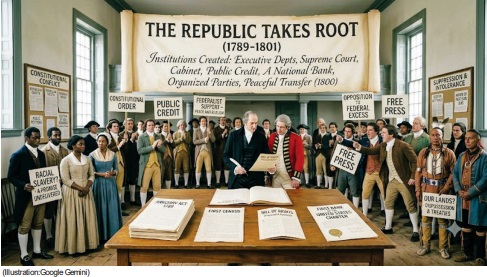

Between 1789 and 1801, Americans created institutions the Constitution had only sketched: departments, courts, a cabinet, public credit, a national bank, organized parties, constitutional opposition and norms of presidential retirement and transfer. They also revealed dangers that would persist: partisan intolerance, suppression of dissent, expansive executive claims, racial slavery and dispossession of Indigenous nations. The early republic succeeded not because its leaders agreed or behaved flawlessly, but because conflict increasingly took constitutional formselections, legislation, newspapers, courts, petitions and public argument. Even the bitter election of 1800 ended in a transfer rather than a collapse.
“Self-government was not proven by the absence of disagreement. It was proven when disagreement did not destroy the government.



Be the first to comment