
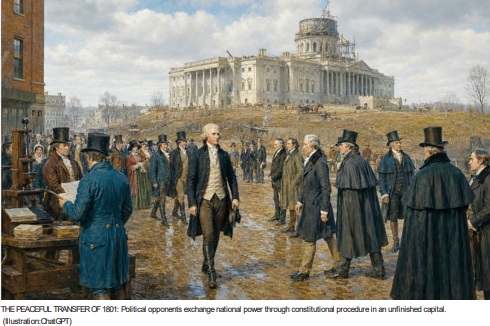

The election of 1800 pitted Adams against Jefferson amid fierce newspaper warfare, accusations of tyranny and warnings that either religion or republican government would perish. Because electors cast two undifferentiated votes, Jefferson tied with his running mate Aaron Burr. The decision went to the House of Representatives, where repeated ballots finally gave Jefferson the presidency. The Twelfth Amendment later required separate electoral votes for president and vice president. Jefferson called the result the “Revolution of 1800.” Its deepest significance was not that one party defeated another, but that control of the executive passed peacefully between bitter rivals. Federalists accepted the constitutional outcome; DemocraticRepublicans assumed office without purging the government by force. The transfer was imperfect. Voting remained restricted; slavery enlarged southern influence in the Electoral College; women and most Black Americans possessed no national political voice. Yet in an age when transfers of power often followed dynastic succession, coup or civil war, the American precedent mattered profoundly.
“The republic passed its first great electoral test: power changed hands, but the constitutional order remained.



Be the first to comment