India has unquestionable credentials to seek a place on the global high table: Second largest population, third largest economy in PPP terms, leading IT power and largest troop contributor to UN Peace Keeping operations. Add to that the moral dimension and image of a peace loving nation which produced the likes of Buddha and Gandhi, which Prime Minister Narendra Modi invoked recently on an overseas tour
For India, one of the biggest diplomatic challenges is to secure a permanent seat on the UN Security Council. It would be an ultimate recognition of our stature and emergence on the world scene although one could argue whether any tangible benefit would accrue to us from that development.
Nations,too, behave emotionally. A very senior Indian Government official told me some 25 years ago that the real reason for India not signing the Nuclear Non-Proliferation Treaty (NPT) was that we did not want to be consigned forever to the B league and that if the nuclear weapons were to be regarded as a benchmark of big power status we too would produce nuclear weapons.
India has unquestionable credentials to seek a place on the global high table: Second largest population, third largest economy in PPP terms, leading IT power and largest troop contributor for UN Peace Keeping operations. Add to that the moral dimension and image of a peace loving nation which produced the likes of Buddha and Gandhi, which Prime Minister Narendra Modi invoked recently on an overseas tour. While this may not weigh in much with those who call the shots in international affairs, its appeal is sure to find resonance in many African and Latin American capitals. But would India get its legitimate due soon?
While membership of the UN has increased nearly fourfold since its birth in 1945, the UNSC has been expanded only once in 1965 by increasing the number of non-permanent seats from 6 to 10. There is thus an imperative need to undertake further expansion of this body to reflect the current global dynamics and to give equitable representation to different geographical regions in the world.
The United Nations was set up by Second World War victors. Global peace and security architecture cannot continue to remain based on the supremacy of those allied powers.
For years, the process of UNSC reforms has remained stalled. New emergent powers who have joined hands as G-4 (India, Brazil, Japan and Germany) have been pressing for permanent seats on the Council. All of them deserve permanent seats based on the size of their economies and other objective criteria. Their candidature, however, is actively opposed by their regional rivals and those countries (known as ‘Coffee Club’ countries such as Italy, Spain, Turkey, Argentina, Mexico, Pakistan, South Korea and Indonesia). They have lobbied hard to block any progress in the matter.
UNSC expansion would require charter amendment which cannot go through if opposed by any P-5 country. Securing the support of two thirds of UN membership should be relatively easier since developing countries are generally supportive of the reform process even though Africa’s position could prove to be an obstacle. Ezulwini consensus adopted by the African Union in 2005 demands two permanent seats for Africa but the finalization of specific candidates would be contentious since there are many claimants.
Chances of that happening soon appear remote and that could well be used by the Coffee Club members to stall the reform process in the name of building consensus. These circumstances could also lead to increased clamor for creating a new category of semi-permanent members, not just in Africa but globally, comprising 10-15 middling/emerging powers to serve on the Security Council on a rotational basis. Quite frankly, this rotational formula, which has been on the table for quite some time, is a red herring and is being pursued by detractors only with an intent to stall the reform process.
Let us examine the position of P-5 countries on this important question. The USA appears quite content to see opposing factions continuing to quibble. It is against any hasty move on the expansion of the UNSC and wants more urgent reforms relating to management and accountability addressed first.
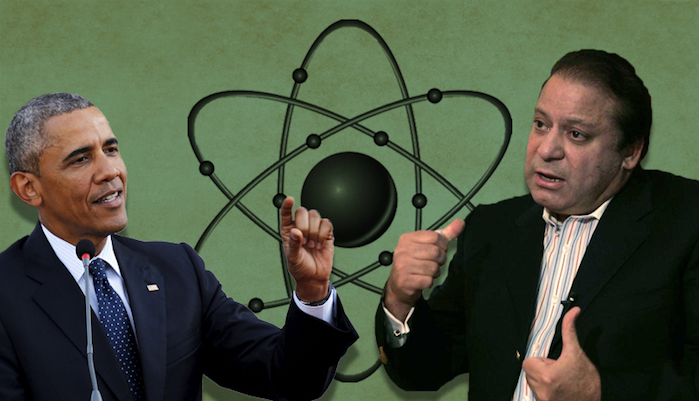
In any case, it does not favor any large-scale expansion of the UNSC. As regards specific countries, it initially supported the candidature of Japan and Germany but President Obama has also explicitly endorsed India’s candidature by declaring in his address to the joint session of our Parliament in November 2010 that he looked forward “to a reformed UNSC that includes India as a permanent member.”
The UK and France have shown greater flexibility and publicly support the candidature of all G-4 countries as well as permanent representation for Africa. But they have also suggested an interim solution by creating a new category of seats for these countries with a term longer than two years which would be renewable with a provision for a review of the arrangements after an initial phase whereby it “could be decided to turn these new types of seats into permanent ones.”
It has been argued by several commentators that their support is only on the surface and that they do not find any need to actively oppose the reform process as long as the negotiations remain stalled.
Russian stated position favors the Coffee Club countries. It is against any “artificial deadline” and wants final decision to be supported by a “broad majority” comprising most of the countries, not just two thirds as legally required. Russian Foreign Minister Lavrov has himself noted that in the eyes of several “well-established countries of medium size” opposing the G-4 demand “the UNSC will be much less legitimate than it is now if it is reformed by voting against their desire for consensus.”
In the light of irreconcilable differences between opposing groups it has advocated search for a compromise solution. Notably, Russia, along with the USA and China, has also not provided any inputs for the negotiating text.
China has also rejected imposition of any time limit and wants consensus to be achieved through consultation to accommodate the interests of all parties, especially small and medium-sized countries. It is firmly opposed to any permanent seat for Japan and, in all likelihood, would also be reluctant to support India. In fact, rather than induction of any specific countries as permanent members it favors the principle of regional rotation. China is actively lobbying at the UN and in African and Latin American capitals to prevent any concrete progress in the UNSC reform process.
We seem to have drawn much satisfaction from the resolution adopted last year on the initiation of text-based negotiations. It is no doubt a significant step but it would be naive to expect any early breakthrough given the continuing indifference and even opposition from permanent members. I have followed this process closely since 1988 when I was posted to our Mission to United Nations in New York. Ironically, I was told by a senior then that a deal was about to be stitched up. Nearly thirty years down and we are still waiting!!Personally, therefore, I am very skeptical about India getting a permanent seat in UNSC anytime soon. Let us face the truth; existing permanent members are just not interested in their primacy and power getting diluted by addition of new countries in their group. We have seen them holding progress for the sake of consensus which they otherwise hardly bother about and lending their support for alternative proposals which do not at all meet our expectations.
What options do G-4 countries and India in particular have if the international community continues to ignore our genuine aspirations? How long are we willing to wait – 5 or 10 or maybe 20 years? Surely we cannot wait indefinitely. PM Modi in his speech in France last April ‘demanded’ a permanent seat on the UNSC as India’s right, noting that days for India to beg for the seat were long gone. Are we willing to logically follow up on this assertion and what are our choices?
It would be imperative for G-4 countries to remain united. There are attempts to divide us and individual countries are being told in private that abandoning one or two members would strengthen their chances. But those temptations might prove elusive. Collectively, G-4 enjoys considerable weight and clout and that is the biggest advantage in its favor.
One option for the G-4 countries would be to increasingly utilize G-20 for playing their legitimate role in international affairs. Although conceived primarily to deliberate on global economic and financial issues, the G-20 summits have occasionally taken up political and security issues. In fact, at the last summit in Turkey these issues dominated the discussions in the backdrop of Paris terrorist attack. During their presidency, the French had tried to broadbase the G-20 agenda but we ourselves were undecided and somewhat suspicious of the French motives. We should have rather welcomed those efforts since our desire to be involved in global peace and security issues through UNSC was not gathering much traction. Set up in 1999 and with regular summits since 2008, G-20 comprises 19 countries and EU with the presence of all the top world economies and representing 85% of the world GDP. These attributes make G-20 eminently qualified to deal with world issues particularly since economic power has replaced military power as the touchstone of a country’s place in the world power structure.
Other option for at least India and Brazil would be to work for enhancing the role of BRICS. New development bank is a commendable initiative in that context. We should perhaps seek expansion of the group with the inclusion of a couple of emerging economies in order to dilute the influence of China.
If these strategies do not work, we would be left with no option but to think in terms of threatening to leave UN or in the very least reducing our exposure to that organization by downscaling our participation in peace keeping and other UN activities. In order for this to be effective, it would need to be carefully coordinated with other G-4 countries. This may sound too radical but then no organization can really survive if it fails to adjust itself to the changing global dynamics. History bears testimony to how the League of Nations founded in 1920 had to be wound up when it failed to prevent Second World War. It was perceived as a ‘league of victors’ created by Allied Powers which had remained slow in decision making. Most of this probably holds true for UN as well.
Our objective should be to ensure that India gets its rightful and equitable place on the world stage. If UN fails to provide us the desired role, we should have no hesitation in seeking to work through other organizations which are capable of enabling us to play our legitimate role.
(The author retired from the Indian Foreign Service recently. His last assignment was as Indian High Commissioner to South Africa. He also served at the Indian Mission to the United Nations in New York)
There is a big debate about global warming and carbon foot prints in the Group of Twenty (also known as the G-20 or G20) and other forums and India listens to western lectures on dangers of coal and emissions etc.
So far the discussion is only on fossil fuels and items like concrete constructions but not on eating habits of people. The latter contributes much more to global warming and Ecological destruction. We often do not bring that to the top of the table since all discussion is essentially West determined.
An interesting report in Scientific American says:
Most of us are aware that our cars, our coal-generated electric power and even our cement factories adversely affect the environment. Until recently, however, the foods we eat had gotten a pass in the discussion. Yet according to a 2006 report by the United Nations Food and Agriculture Organization (FAO), our diets and, specifically, the meat in them cause more greenhouse gases carbon dioxide (CO2), methane, nitrous oxide, and the like to spew into the atmosphere than either transportation or industry.(Greenhouse gases trap solar energy, thereby warming the earth’s surface. Because gases vary in greenhouse potency, every greenhouse gas is usually expressed as an amount of CO2 with the same global-warming potential.)
Curbing the world’s huge and increasing appetite for meat is essential to avoid devastating climate change, according to a new report. But governments and green campaigners are doing nothing to tackle the issue due to fears of a consumer backlash, warns the analysis from the think-tank Chatham House.
The global livestock industry produces more greenhouse gas emissions than all cars, planes, trains and ships combined, but a worldwide survey by Ipsos MORI in the report finds twice as many people think transport is the bigger contributor to global warming.
More importantly it is to be noted that the study shows red meat or beef dwarfs others for environmental impact, using 28 times more land and 11 times water for pork or chicken.
Beef’s environmental impact dwarfs that of other meat including chicken and pork, new research reveals, with one expert saying that eating less red meat would be a better way for people to cut carbon emissions than giving up their cars.
The heavy impact on the environment of meat production was known but the research shows a new scale and scope of damage, particularly for beef. The popular red meat requires 28 times more land to produce than pork or chicken, 11 times more water and results in five times more climate-warming emissions. When compared to staples like potatoes, wheat, and rice, the impact of beef per calorie is even more extreme, requiring 160 times more land and producing 11 times more greenhouse gases.
“The biggest intervention people could make towards reducing their carbon footprints would not be to abandon cars, but to eat significantly less red meat,” Benton said. “Another recent study implies the single biggest intervention to free up calories that could be used to feed people would be not to use grains for beef production in the US.” However, he said the subject was always controversial: “This opens a real can of worms.”
Prof Mark Sutton, at the UK’s Centre for Ecology and Hydrology, said: “Governments should consider these messages carefully if they want to improve overall production efficiency and reduce the environmental impacts. But the message for the consumer is even stronger. Avoiding excessive meat consumption, especially beef, is good for the environment.”
Livestock production accounts for 14.5 per cent of global greenhouse emissions, the same amount produced by all the cars, planes, boats and trains in the world. “A single cow can belch up to 500 liters of methane every day”, writes the BBC’s Dry Michael Mosley, a gas that is 25 times more potent than a carbon dioxide. “Multiply that by the 1.5 billion cattle we have on our planet and that’s a lot of gas.”
It is inefficient. It takes, on average, 3kg of grain to produce 1kg of meat and two thirds of all agricultural land is used to grow feed for livestock, whereas only eight per cent is used to grow food directly for human consumption. These are “basic laws of biophysics that we cannot evade,” says the study’s lead researcher, Bojana Bajzelj from the University of Cambridge.
It places pressure on dwindling freshwater supplies and destroys forest and grasslands, which are turned over for grazing. Soil erosion, soil and water pollution from fertilizers and animal waste are other ways the meat industry impacts the environment.
Scientists also argue that we need to stop wasting so much food, as on average, 7.2 million tons of food is wasted in the UK each year.
In conclusion, we should put forward arguments and turn the debate on its head by asking the West to close down steak houses and consume less red-meat/ beef rather than meekly accepting their arm twisting.
(The author is a professor of Finance at Indian Institute of Management, Bangalore. He can be reached atvaidya@iimb.ernet.in)
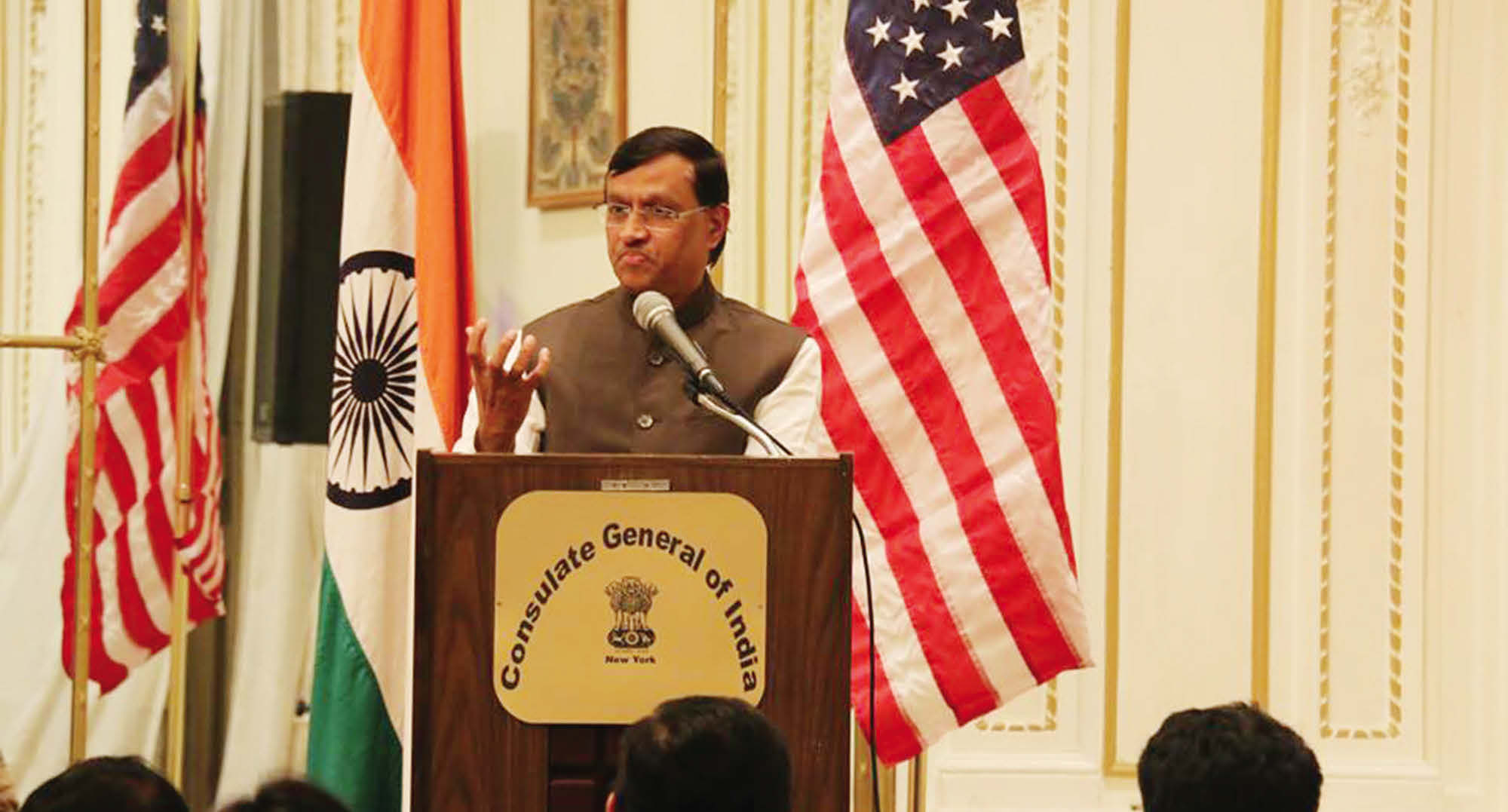
The Permanent Mission of India to the United Nations congratulates the team of Indian Panorama for publishing this special issue on the occasion of the 67th Republic Day of India. On the occasion of the 67th celebration of Republic Day, I extend my warmest greetings to all Indian origin community in America.
66 years ago, the people of India adopted our Constitution with a dream of building a nation on the fundamental principles of equality, justice, liberty and fraternity. In this short span of time, India has established itself as a rising global power, deriving strength from its over one billion people, ancient wisdom, values, traditions, scientific outlook, robust economic growth and rich natural resources. We are also proud that India is counted among the few nations that have robust space and nuclear programmes.
As one of the founding members, India has enriched United Nations and the goals of UN Charter with its political and civilizational ethos. We have selflessly shared with the world our vision of vasudeve kutmbhkam and Om Sarve Bhavantu Sukhinah, bringing valuable contributions to the three pillars of the United Nations’ work: international peace and security, development and human rights. The proclamation of June 21 as the International Day of Yoga last year is the most recent example of India’s quest for healthy living.
We have also played a key role in the evolution of the UN’s specialized programmes and agencies, and UN global initiatives including peacekeeping, global disarmament, fight against apartheid and decolonization. India respects foremost the sovereignty of nations, rule of law, pluralism, peaceful coexistence and non-interference.
As a responsible nuclear power, India desires a peaceful, secure and stable environment for development. We are an important partner in UN Peacekeeping operations, and have contributed nearly 180,000 troops, the largest number from any country, participating in more than 44 UN-Peacekeeping Missions.
India is the founding member of NAM and G77 and has acquired the leading role of pursuing the aspirations of developing countries and the creation of a more equitable international economic and political order. Similarly, as a long standing member of the Human Rights Council, India is committed to work tirelessly for the promotion and protection of human rights.
Despite all progress, the 21st century remains fraught with existing and newly emerging challenges including terrorism, violent extremism, armed conflict, epidemics, natural disasters, poverty eradication, climate change and inequality. India is a strong advocate of the policy of “zero tolerance” on terrorism. India is a committed partner in the spirit of multilateralism to achieve comprehensive and equitable solutions to these challenges.
The year 2015 was a historic milestone in the history of multilateral cooperation culminating in the adoption of the “transformative” Agenda 2030 for Sustainable Development, Addis Ababa Action Agenda on Financing for Development and the UNFCCC Paris Agreement on Climate change. There is no doubt that the ‘transformation’ desired to be achieved by 2030 can become a reality only if we uphold the inalienable right of every person to development and create an equitable and just international order for its full realization.
It is our strong belief that the way forward is to address the much needed UN reforms, including the expansion of the Security Council in both permanent and non-permanent categories. This is an imperative for the collective efforts of the international community to realise the objectives of internationally agreed goals.
Our Government is committed to transform India as a global power. Though the journey is long and arduous, our resolve is stronger.
I wish the team of Indian Panorama and the Indian origin community a very happy new year and congratulate them for making India proud of their valuable contributions to society.
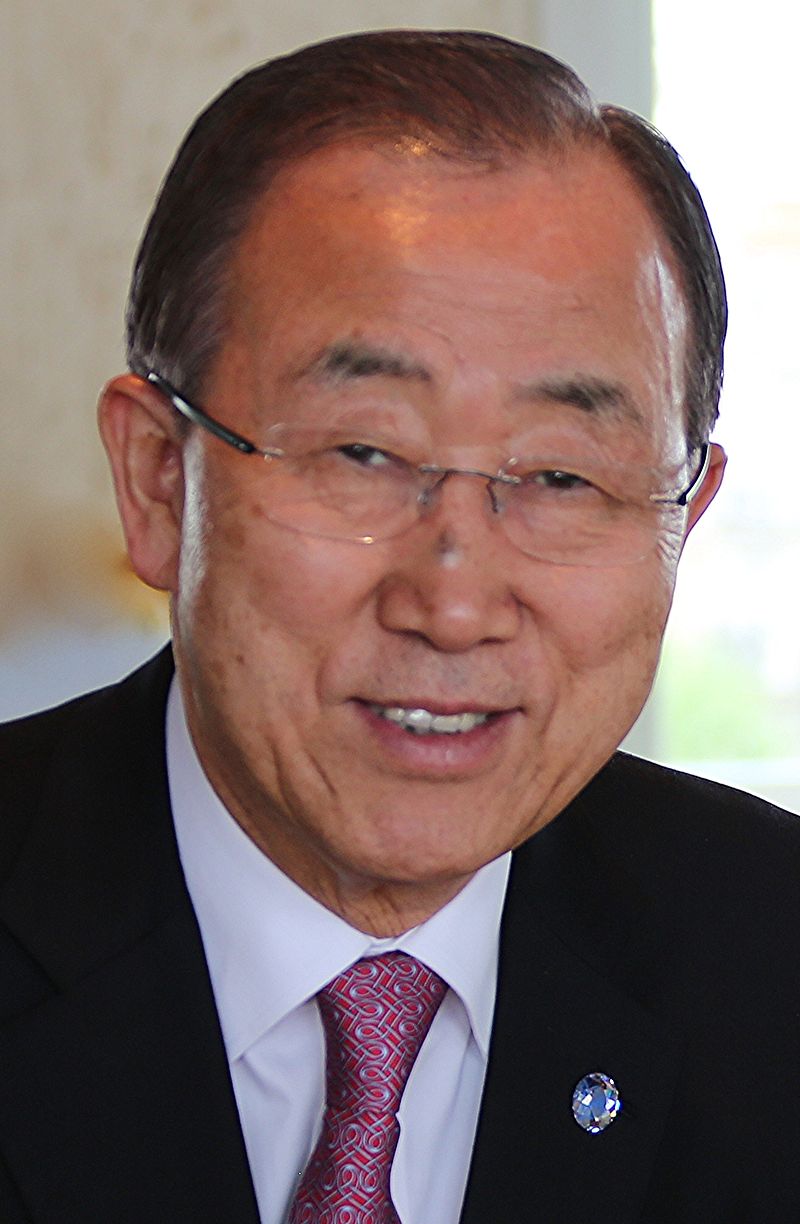
Davos 21 January – UN Secretary-General Ban Ki-moon has announced the first-ever High-Level Panel on Women’s Economic Empowerment to provide thought leadership and mobilize concrete actions aimed at closing economic gender gaps that persist around the world.
The Panel will provide recommendations for the implementation of the 2030 Agenda for Sustainable Development to improve economic outcomes for women and promote women’s leadership in driving sustainable and inclusive, environmentally sensitive economic growth. It will provide recommendations for key actions that can be taken by governments, the private sector, the UN system and other stakeholders, as well as policy directives needed to achieve the new targets and indicators in the Sustainable Development Goals which call for the economic empowerment of women. The panel is backed by the United Kingdom, the World Bank Group and UN Women.
“The empowerment of the world’s women is a global imperative,” said UN Secretary-General Ban Ki-moon. “Yet despite important progress in promoting gender equality, there remains an urgent need to address structural barriers to women’s economic empowerment and full inclusion in economic activity. If the world is to achieve the Sustainable Development Goals, we need a quantum leap in women’s economic empowerment.”
The Co-Chairs of the Panel are Luis Guillermo Solis, President of Costa Rica, and Simona Scarpaleggia, CEO of IKEA Switzerland. They will be joined by the leaders of the International Monetary Fund, World Bank Group, UN Women and a diverse range of eminent gender and equality actors, economics experts, academics, trade union leaders, business and government representatives from all regions. The Panel will be supported by an independent Secretariat, hosted by UN Women with backing from the UK Government.
UK International Development Secretary Justine Greening, a founding member of the Panel, welcomed its launch. She said: “I am hugely proud to be a part of this Panel. Investing in girls and women isn’t just about basic human rights, it’s about fully unlocking the potential of half the world’s population. The UK is already at the forefront of this effort. At the Department for International Development I have put improving the lives of girls and women at the very heart of our work and Britain is successfully leading the fight against FGM and child marriage, as well as getting girls into school and women into jobs. Strong economies need the contribution of everyone—including women—and this panel will spearhead a movement to put women’s economic empowerment on the global agenda like never before.”
Jim Yong Kim, World Bank Group President, also a founding member of the Panel, stated: “The World Bank Group is strongly committed to gender equality, which is integral to ending poverty and boosting shared prosperity. Our new Gender Equality Strategy puts a much sharper focus on economic empowerment.” He added: “No society, community or economy can achieve its full potential—or meet the escalating challenges of the 21st century—until all its people can achieve theirs. We are pleased to partner with the UK’s Department for International Development and the United Nations in convening this important panel, whose work will accelerate progress towards the goals we share.”
The High-Level Panel will help tackle gender gaps in economic opportunities and outcomes which persist around the world, building on the growing evidence and recognition by governments and the private sector that women’s economic empowerment has a multiplier effect and boosts whole economies. Research shows that women invest their income back into their families and communities, including in health and education. McKinsey Global Institute estimates that if women in every country were to play an identical role to men in markets, as much as US$28 trillion would be added to the global economy by 2025.
Yet women continue to earn less, have fewer assets, bear the burden of unpaid work and care and be largely concentrated in vulnerable and low-paying activities. Women spend more than twice as much time on unpaid care and domestic work as men and women on average are paid 24 per cent less than men globally for the same work. Moreover, 75 per cent of women’s employment in developing regions is informal and unprotected. These gaps constrain women’s rights and hinder economic growth and productivity. Significantly scaled up actions and political will are required to ensure that governments, development organizations and others invest in the economic empowerment of women for the benefit of whole societies.
The High-Level Panel will have its inaugural meeting during the 60th session of the Commission on the Status of Women at the United Nations in March 2016. A series of regional consultative meetings will also take place, and the Panel’s first report with action-oriented recommendations will be issued in September 2016.
UN Women is the UN organization dedicated to gender equality and the empowerment of women. A global champion for women and girls, UN Women was established to accelerate progress on meeting their needs worldwide. For more information, visit www.unwomen.org
JAKARTA, Indonesia: The secretary general of the United Nations Ban Ki-moon has condemned the bombings and gun attacks in Jakarta and expressed “his solidarity with the government and people of Indonesia.”
A statement released by Ban Ki-moon’s spokesman said the secretary general “reaffirms that there is absolutely no justification for such acts of terrorism. He hopes the perpetrators of today’s attacks will be swiftly brought to justice.” January 14 attack in central Jakarta left seven dead, five were the attackers and two were civilians – and Indonesian and a Canadian.
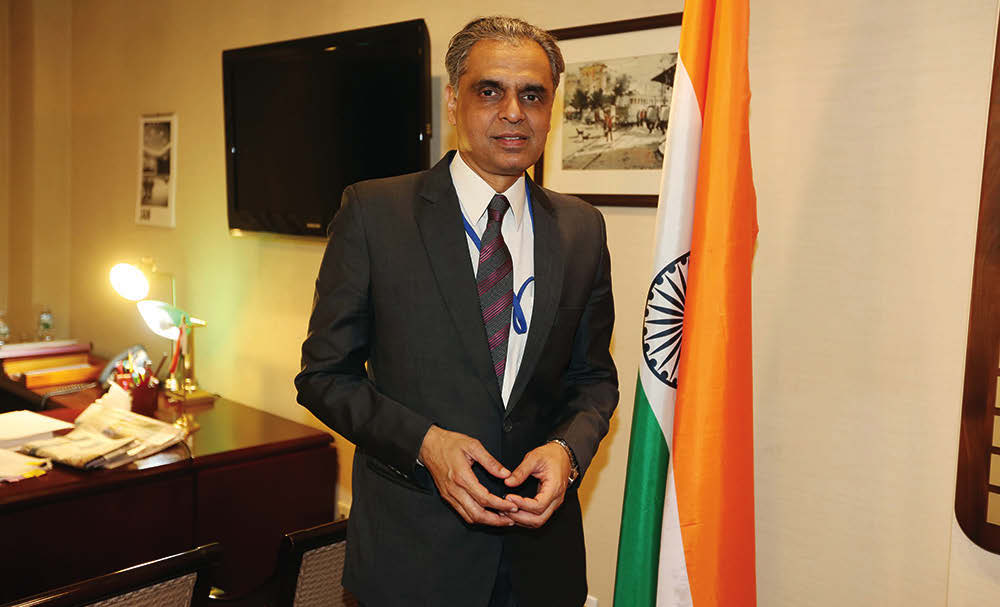
Ambassador Asoke K Mukerji has been the Permanent Representative of India at the United Nations from early 2013 to December 31, 2015.
Ambassador Mukerji who has served with distinction the MEA for almost 38 years was widely regarded as a “diplomat with spine”.
Ambassador Mukerji greets the Prime Minister of India, Narendra Modi. Seen from L to R: The then Ambassador to the US Jai Shankar, Mrs. Shankar, Ambassador Asoke Mukerji, Mrs. Mukerji, Consul General Dnyaneshwar Mulay and Mrs. Sadhna Mulay
In this interview which he had given to Prof. Indrajit S Saluja, Chief Editor of The Indian Panorama just a few days before relinquishing office, Ambassador Mukerji speaks about how well India was articulated at the United Nations during his tenure as Permanent Representative and what have been the significant achievements for India. He also speaks frankly about the need for the United Nations to go forward with reforms to the Security Council.
However, he was appreciative of the role the United Nations has played over the years and taken effective measures to resolve conflicts, even though there are many unresolved ones, and to bring about empowerment of women, just to mention a few.
Here are excerpts from the interview
Prof. Saluja: Remember Sir, in an earlier interview which you had very kindly given to The Indian Panorama on 30 April 2013 you had said that India’s ability to articulate has always been very high. How good has been the articulation at the UN. during the 3 years that you have been at the UN as India’s Permanent representative.?Do you think India has articulated well through you at the UN?
Ambassador Mukerji: I think we have articulated the perspective that we have as a country on the issues which are the major issues facing the world today.And if you look at it in the broad areas, then you can see, for example, in the area of peace & security, we have consistently articulated the need for resolving problems, resolving disputes through negotiations and peaceful means and today even disputes that 3 years ago seemed to be open for military solutions are now moving towards peacefully negotiated solutions. The latest being the Syria dispute after the talks in Vienna. So I think the view that India has consistently articulated in the United Nations which is based on the provisions of the United Nations charter which is to resolve disputes peacefully is a view that enjoys a very vast degree of support.
And including among the permanent members of the UNSC .
In matter of peace and security dealing with peacekeeping we have been among the most articulate of voices.
I think that the views that we have actuated have a resonance within the UN System and as we complete the review of the peace building activities of the United Nations in the coming few months we should be able to see the combining of the pools available to the United Nations for creating conditions for the reconstruction… peaceful reconstruction of conflict regions and societies.
I think that’s a very important point that we have made that it has to be a holistic exercise, that you cannot expect any society or country or region to be able to sustain peace without having the institutions
And in our own country and the reason we articulate this in our own country we have invested in building and nurturing institutions which are there to help the society to reach solutions through peaceful institutional methods
And I think that this is something that has been appreciated .
And the 3rd area of peace and security unfortunately where we have not probably succeeded but where India’s articulation has been consistent is in the need to investigate & prosecute terrorism .We are a country who have been confronting terrorism nationally for a very long time over 30 years… but in the international context… the main tool available to UN is the legal tool – the rule of law to counter and prosecute terrorism . It’s a pity that so far we have not been able to see the effective utilization of these legal tools by the United Nations
The one example we have been putting forward for many years now is the comprehensive convention on International Terrorism (CCIT)
Now the important role that this convention will play is to require member countries of the united nations to either prosecute a terrorist or if they cannot prosecute a terrorist, to extradite the terrorist for prosecution…. So prosecute or extradite .
This is a very well established legal principle but unfortunately there has been no agreement so far on adopting this convention… so this is…..
Prof Saluja: Have all the countries yet agreed for such a convention?
Ambassador Mukerji: You see… all countries have participated in the discussions on the convention and right now the main issue on which the convention is still deadlocked is on the definition of terrorism
There are some countries who are asking for the definition of terrorism to exclude freedom fighters…. this is not acceptable to many countries .So we need to find a way to bridge this issue because while we discuss the definition of terrorism the world is facing the impact of terrorism and when we face the impact of terrorism then we understand what the definition of terrorism is…
So we would argue therefore that this is an area in which initiatives like this convention should be given priority and this is something we are articulating at the United Nations but this is an area where I think more needs to be done. So this is on the peace and security areas.
Now on the second big area of the UN which is economic & social area
I think …our articulation in the last 3 years has been very successful… if you remember in 2013 we started this process of discussing and then developing the goals which would replace the millennium development goals…. And in July last year , 2014… we were able to agree and adopt 17 goals which are known as the sustainable development goals -that was in 2014 July.
So this is to illustrate that all 193 countries can actually work together if they are helped to accommodate each other… and I think India’s role has been really constructive in that context… that we have not tried to polarize this exercise… we have tried to play a constructive role of also building bridges and the fact that we have these 17 goals and… and the 17 goals are now at the heart of this agenda for the next 15 years also known as Agenda 2030 which was adopted when Prime Minister Modi was here in September .…So for the next 15 years what is the economic and social agenda of the world is now set in the UN.. in this document called the Agenda 2030… at the heart of which are these 17 goals.
So this has been a tremendous success and I think recognition of India’s articulation of its experience and perspective as a country which is transitioning… we are in some senses… we have reached the status of an advanced country of putting space crafts into space and going to mars and so on…
But on the other hand we have 300 million who live below $1.25 a day; so we are among the poorest societies in the world… so I think that this diversity -this enables us to actually articulate issues in a more credible manner… because we know both the sides…we know the side of the developed and advanced and cutting edge … as well as the side of the poorest of the poor… so this has been a major achievement & outcome and we are just finishing this week review of the way in which technology can help development and the United Nations General Assembly is adopting this review day after tomorrow in which an area where India is really focused a lot on is how to use technology to accelerate development and this review of what is called the ‘Tunis Agenda’ focuses on the use of Information & communication technology – ICT. Information & communication technology for development and this is an important area. In India we have an initiative called the digital India in which we are trying to use technology for accelerating development, for creating empowerment, for generating information, right to information for example, or empowerment of women. So these issues we are now bringing to the global stage and I think that this area for the next 10 years is going to be an area of immense importance and priority for India so that by the time the next review takes place in 2025 we should be able to demonstrate how important it is for the International community to agree on using this technology for development in an affordable and global manner because the problem with all these issues is of affordability and unless it becomes affordable and accessible it cannot have the full impact that it otherwise contains the potential of having.
This is the second big area of our work in United Nations.
The third area of our work in the United Nations is related to human rights and the rule of law. And here again this year we are beginning the 70th anniversary commemoration of the universal declaration of human rights now for a long time probably because so many years have passed , people have forgotten what were the contributions which India has made in this area and which we are building on for the future so if you look back in time, in 1946 we brought in the issue of racial discrimination when we talked about apartheid and that concluded in 1994 with the emergence of independent South Africa.
In 1948 we co-sponsored the resolution on genocide and today the United Nations has a very vibrant anti-genocide convention on which people are building new ideas such as responsibility to protect.
In 1948 we brought in the idea of gender equality into the universal declaration of human rights where the Indian delegate Hansa Mehta proposed the phrase “all human beings are created equal” . So that was agreed to in 1948 and since then the role that has been played in empowering women has been something that we have been at the forefront of and now we have our own program in India called Beti Bachao Beti Padhao .
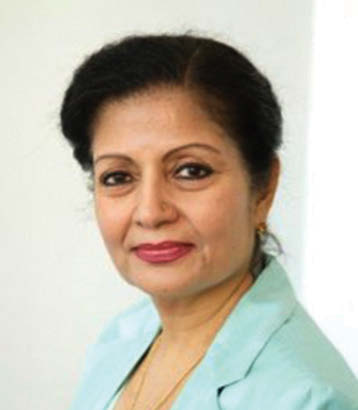
So this program is based on the principle that it is through education that you can empower women and also safeguard their rights . So, this is something that we have been advocating and we are one of the strongest and earliest supporters of the UN Womenwhere you will be happy that an eminent Indian diplomat ambassador Lakshmi Puri is the number 2 person in the UN Women.
So in the area of women’s rights we are very much out there.
This year earlier in 2015 we inaugurated and contributed to the memorial in the united nations against slavery… and the reason why apart from being completely involved with the issues relating to slavery… the reason why India is also prominent in this area is because we feel that attention has to be paid to the phenomenon of indentured labor.
If you remember when slavery was abolished in 1832 by the United Kingdom that in a legal way removed the issue of slavery or made slavery illegal but in 1834 the British parliament passed the Indentured Labor Act. Under that act millions of people including from India were transported to various countries around the world and made to work in plantations. Now, the whole issue of indentured labor.. and Mahatma Gandhi himself wrote about it -that indentured labor was another form of slavery and I think this is an issue with the Indian diaspora being so vibrant today and more than 25 million people living in countries across the world… that a lot of this diaspora originally- the older diaspora went as indentured labor whether it was to Fiji, whether it was to South Africa , Canada, the Caribbean . So we need to provide a focus so that if we say never again to slavery then we also do something to recognize the tremendous suffering that was endured by our population when they were transported as indentured labor.
So this is something that we are focusing on but I think in the area of human rights and human dignity one of the most important contributions that we have made in this period is our contribution on yoga… because while yoga is linked with health, and without health you cannot enjoy human dignity and human rights. I think that there is a synergy between the physical activity of yoga and the impact it has on the human character and I think that the fact the 177 countries were able to join us and take ownership on this idea shows that this is an idea which brings people together and as I have kept saying in these 3 years – India’s voice is one of inclusion. We do not believe in exceptionalism. We do not ever say that we are a unique country and that we have an experience which is not relevant or not applicable to other parts of the world. What ever we have experienced we have shared with others and that is something that we have tried to do with the two international days that we celebrate in the United Nations – the day of Yoga which is on June 21st and the day of non-violence which is on October 2nd.
And in these 3 years what we have tried to do with the day of Non-violence is like with the day of yoga which is to bring the message beyond the meeting rooms of the United Nations out into the wider public space. So for Yoga it was easy to see that we were able to reach out to 192 countries. Even in Times Square in NY there were 30000 people but for day of non-violence our involvement is now with the school children and with university students because we have to carry forward this message of non-violence to the next generation and it is only by bringing them into the celebrations that we organize in the United Nations that they are able to appreciate the discussion on the importance of non-violence and apply this discussion to their own lives as school children or university students.. If you teach your child and a conscious child… secondary school or university student the virtues of non-violence and that there are people who have spent their lives weather it is Mahatma Gandhi on whose birthday we celebrate it or Martin Luther King, Nelson Mandela, Ramos- you know these are the people who through their own lives are able to show that you can achieve things through non-violent means and I am being very fortunate that for these 3 years that we have done this event in the United Nations we have always had speakers who have talked about how they have applied non-violence in their own lives and this I believe since 1/3rd of the audience is of children and young people… I think that in our own way we have tried to carry forward this important contribution that we make to work in United Nations. So, in all their areas whether it is peace & security whether it is economic & social or whether it is human rights we have been articulate and effective.
Prof Saluja: In-fact you know when you said that the charter of UN says that we have to resolve all the issues peacefully so the very idea of promoting peace comes through non-violence and again through yoga because there you learn to control yourself, discipline yourself… so both the ideas I think they come together; they come together to promote the vision of the UN… can I put it that way?
Ambassador Mukerji: I Think so . I think that is the right way to put it and you yourself- when you practice yoga … I saw you on that yoga day… you can see that eventually there was a harmony between the inner self and the outer world and it is this harmony which we need to focus on because it exists. But I think there are too many pressures on individuals and on countries probably which make them distracted from recognizing that there is a harmony and equilibrium between the inner self and the external world and I think that is something we need to do. It is sometimes a challenge but if you keep going and if you keep collecting more and more people to join you… I think that is something and that’s been one of the biggest and most enjoyable part of the job here — to collect people and bring them together. So, I think this is something that India stands for that . We always try and bring people together… and then together you are stronger.
Prof Saluja: Do you think you have made any progress with regard to the easing of procedures so that the decisions of the UN body are taken a little earlier than they have been taken in the past?
Ambassador Mukerji: I think that when we spoke in 2013, we were the first country to start looking at it in terms of a roadmap and a realistic roadmap which in 2013 we had said 70th anniversary of the United Nations. In April that year I was probably the first delegate to use this idea of 70th anniversary.
Today, the 70th anniversary idea has been endorsed by more than a hundred heads of states and governments in their speeches to the United Nations. So it is an expectation that something will happen in the 70th anniversary year of the United Nations.
Now this 70th anniversary year started in September this year (2015) and concludes on the 14th of September 2016. So how are we able to use this historic opportunity to enable us to achieve this objective that we have of reforming the Security Council?
I think what we saw was the difficulty that the United Nations membership faced with the top down approach. I don’t think people like the idea that somewhere, some people will decide behind closed doors and outside the public domain,. Who are these people /countries who they will bring into the Security Council and do a package solution.?So, the first thing that we started from 2013 was to address this issue and convince people that it is better to do a bottom – up approach and not a drop down approach.
To that extent we have succeeded because after 23 years of discussing this top down approach, in September this year, we adopted the historic decision in the UN General Assembly. We have now got a 121 countries’ views in favor of reforms in a document. So the document is now a negotiating document. We have to negotiate the give and take of positions of different countries on the issues of the how the United Nations Security Council will be reformed. There are 5 sets of issues which you know, so, on each of these 5 sets of issues there are different views but all 121 countries agree that these are the areas which we have to address to reform.
One issue of which I thought we could make progress on was to create a permanent memorial for our UN peace keepers. This has been an area in which I have personally got more involved than probably any other predecessor of mine.
I feel that we need to focus on the human dimensions of the peace keepers. They are not statistics. Each soldier, each troop has a personality, a family a village or a city from where he or she comes. So we need to look at the human dimensions of UN peace keepers and as the numbers of the peace keepers who are dying in UN operations is growing every year, I think apart from looking into the reasons why they are dying which is for the Security Council to look at, we also need to honor the bravery and sacrifice of these peace keepers and for me this issue comes very vividly in that month I came in April 2013, when we lost 5 peace keepers in South Sudan. So One thing that I wanted to do and, I am happy that the General Assembly has agreed with this proposal to build a permanent wall, a memorial wall, which will have the names of all the more than 3000 soldiers from all the countries who have died in peace keeping.
It is the UN peace keepers Memorial wall and this idea was, I thought, we would be able to do it by this year (2015) but it is the only regret I have that the process is so slow in the UN.
Prof Saluja : I remember, something was done there, I was there.
Ambassador Mukerji: We launched a virtual wall, that is the reason I launched a virtual wall. So I could do it for our peace keepers . So, all 161 peace keepers who have died from India -their names are on a virtual wall which is on a website.
The idea was to build a wall like the Vietnam Wall in Washington which will have the names of peacekeepers of all the countries not only Indians but all countries -more than 3300 soldiers who have died and this number goes up every year by 100/150.
So, this proposal moved by India was approved by the United Nations General Assembly and the reason why I am not completely unhappy is that our Prime Minister had in his speech at the Peace Keeping Summit said that India stands ready to contribute to this memorial including financially. So, I think this is something I would very much like to see happen because unless we recognize the value of human life being given for the principles of the UN Charter we do not connect to the real world outside and some of the conditions in which the soldiers have to work are really very , very challenging; very, very difficult; and this is something that like I said is an obsession with me.
Prof. Saluja : How far is the idea to its fruition?
Ambassador Mukerji: Given our previous experience, I would say 5 to 7 years, because, the slavery memorial project took 7 years from the day it was approved by the UNGA. So, I would say 5 years. By the 75th anniversary of the United Nations this wall should be there.
All 193 countries are supporting this.
Prof. Saluja: Give me briefly your view on Diplomacy as it has evolved; there was a time when diplomacy only meant talking about conflicts, talking about peace and now diplomacy involves a very important economic aspect to it.
What is your world view would be my last question.
Ambassador Mukerji:You know the essence of diplomacy has not changed and I don’t think it will change because essentially diplomacy relates to human nature and human beings. It is only the tools that keep changing but without an understanding of human nature and human beings it would not be possible to practice the profession of diplomacy. Now there are different aspects of human behavior which have thrown up challenges. You mentioned the economic activity. The world is today economically globalized and that throws its own challenges. But I think at the heart of even those challenges is the issue of the nature of human beings; what do human beings want from a globalized world? I think this is the key question that any diplomat will have to understand and answer before he or she practices diplomacy. The tools have changed and I think as you rightly said there is a tremendous focus therefore on what is called soft power. Professor Joseph coined the word soft power. India is one of the countries which is fortunate in having a large population, a population which is also focused on the acquisition of knowledge. it is probably a civilizational characterization of India and as a knowledge based society we therefore are well placed to not only understand human nature but also to use various tools (if I may call it that) for the pursuit of our diplomacy in relating with other countries and other negotiators. And, I think this shows in the way we are able to build bridges; this is something which is very important even in economic diplomacy. There is no black and white solution to anything. It is always a give and take.
My worldview is that we are in a multilateral institution like the United Nations. We have managed to avoid a world war – a 3rd world war but we need to be conscious that unless we invest in strengthening these multilateral impulses and these multilateral institutions, we run the risk of fragmenting the world into regional and sub regional units which, in a holistic way , does not contribute to world peace.
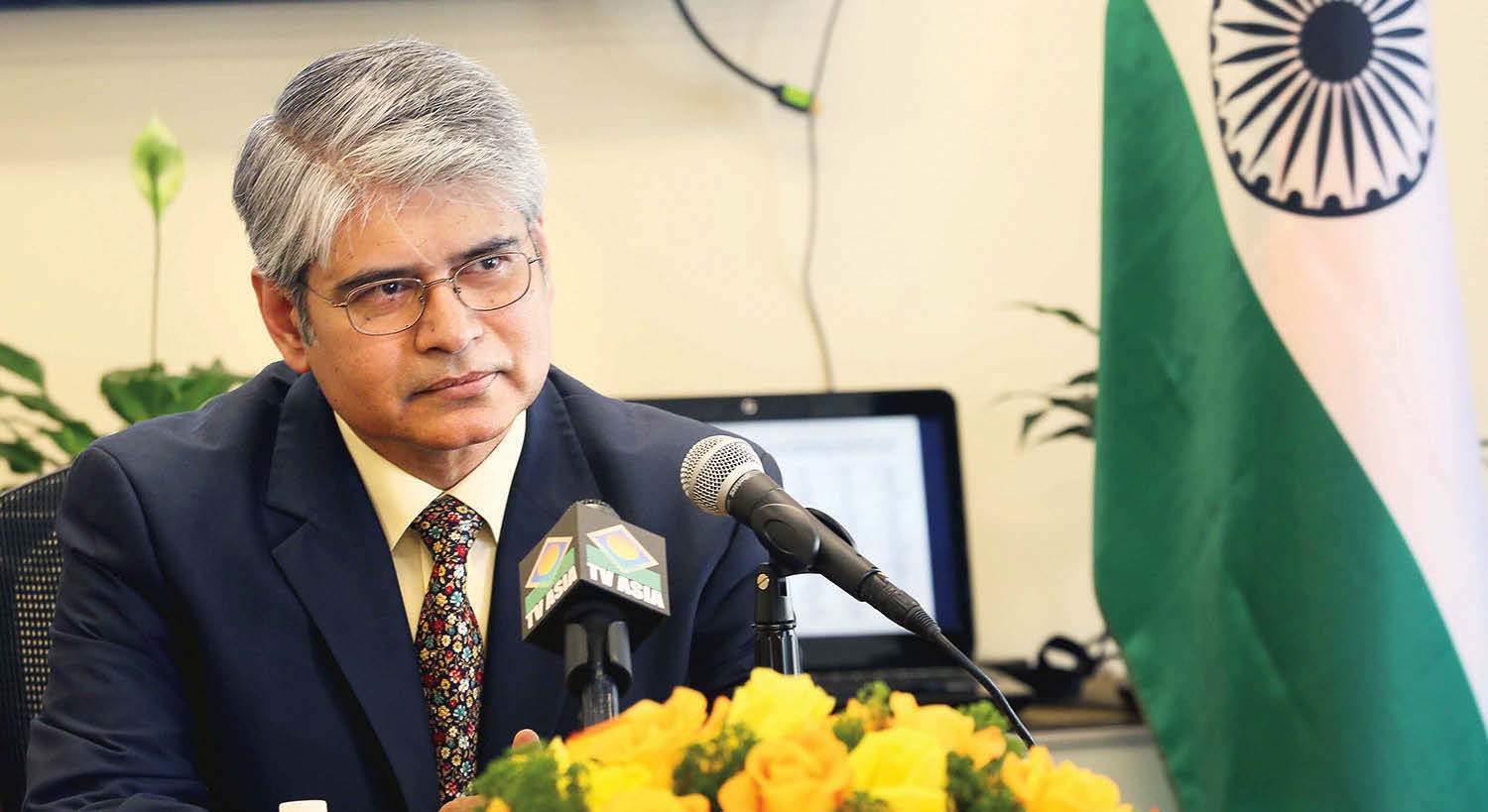
Ambassador Asoke Mukerji at a press conference
Ambassador Mukerji greets the Prime Minister of India, Narendra Modi. Seen from L to R: The then Ambassador to the US Jai Shankar, Mrs. Shankar, Ambassador Asoke Mukerji, Mrs. Mukerji, Consul General Dnyaneshwar Mulay and Mrs. Sadhna Mulay
Ambassador Mukerji and Mrs. Mukerji with Ambassador Hardeep Puri, Ambassador Manjeev Puri and Mrs. Puri, and Sant Chatwal
Speaking with the media on the preparations of International Day of Yoga
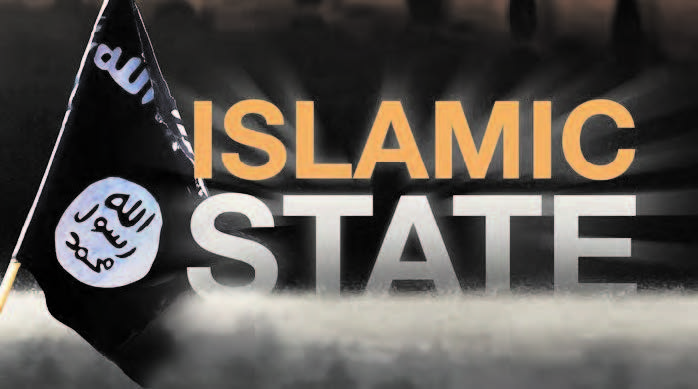
ISIS or the Islamic State, also known as IS, ISIL or its Arab acronym, Da’esch, dominated the headlines for 2015. The year saw the terror group spread its hateful and vitriolic ideology beyond the borders of its “caliphate,” which encompasses large swathes of Iraq and Syria, as well as “provinces” in several Mideast and African countries.
With millions of dollars in their pockets, and the Internet as their main channel to propagate evil, ISIS went “global” – with trained militants as well as radicalized individuals and groups carrying out the group’s mission to spread terror. Their targets ranged from a newspaper office, to a museum, from a concert hall to mosques, from military convoys to civilian planes. The toll: nearly a thousand people, from Paris to Beirut to San Bernardino.
The spread of ISIS has further complicated the already twisted state of affairs in strife-torn Syria, already entering its fifth year in a civil war. World powers, in their attempt to untangle the mess and to gain influence in the region, bicker over which to tackle first: Bashar al-Assad, the iron-fisted dictator whose violent regime in many ways ignited the current conflict, or the terror group. Assad’s allies (namely Russia and Iran) are trying to have him stay put, while the US-led coalition wants him out.
The year saw military movements from every side, with airstrikes targeting ISIS strongholds – and some say legitimate Syrian opposition groups. Countries around Syria and Iraq are also on their toes, with some nations such as Turkey serving as launch areas for military operations.
Amid the mess, the peace process is still in the cards, despite several attempts to convene all sides in the past few months that yielded little results. Thanks to a landmark 18-month plan endorsed by the United Nations Security Council, the UN is preparing for another round of talks starting January 25, 2016.
In which all governments, businesses and institutions provide for equal voice participation and leadership of women
In which women and girls of all ages and in all circumstances are valued ,empowered and claim their human rights in the household , communities, society ,economy and in governance.
In which all citizens , especially the youth , join and drive a global solidarity movement to end inequality , discrimination and violence ,against women everywhere and work for UNWOMEN’s Planet 50/50 by 2030 : Step it up For Gender Equality Campaign .
In which all men and boys join the He For She Campaign and lead the way in dispelling gender stereotypes and discriminatory cultural and social norms and notions of masculinity and usher in a mutually respectful ,gender equal world ( they would be following Secretary General of the UN Ban Ki Moon , President of the USA Obama and PM Modi and President Mukherjee of India )
in which everyone Unites to End the “global epidemic” of violence against women in all spaces through sustained prevention, protection, prosecution of perpetrators and provision of response services efforts.
In which governments and citizens in all countries sincerely set out to realize the United Nations Sustainable Development Goals especially SDG 5 to ” Achieve Gender Equality and to empower all Women and Girls “
As the global champion for the rights of women and girls, UN Women will continue to work with all and I firmly believe that together we can transform our world so no woman or girl is left behind in poverty, deprivation and violence and has equal access to education, health, nutrition, productive and natural resources and assets, infrastructure and services, decent jobs and positions of power and decision making !
Author: Lakshmi Puri
Assistant Secretary General , United Nations , Deputy Executive Director , UNWOMEN , New York
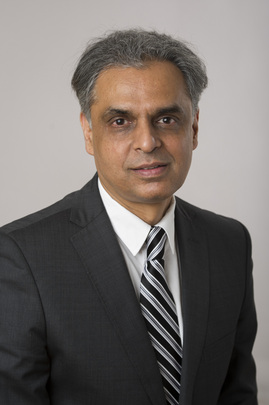
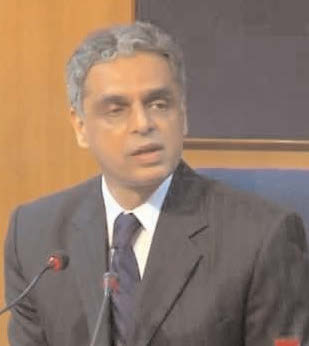
NEW YORK (TIP) Syed Akbaruddin, a 1985 batch Indian Foreign Service (IFS) officer, has assumed charge as Permanent Representative to the United Nations. He succeeds Asoke K Mukerji who has retired. This is his first-ever ambassadorial appointment.
Currently an Additional Secretary in MEA, Akbaruddin was given charge of Indo-Africa Summit that was held in October. Akbaruddin is credited with bringing a whiff of fresh air into the Ministry’s External Publicity division during his three-and-half year tenure as the spokesperson. He had also brought an effective mix of social and digital media into the External Publicity division.
New York: The Indian Panorama’s Publisher & Editor Prof. Indrajit S Saluja in conversation with Ambassador Asoke K. Mukerji – Permanent Representative of India to the United Nations – December 2015
Good morning, good evening or good night! Based on the time, when you are reading this piece. Greeting you as per your time to prove my tolerance of your point of view. Considering the consideration with lots of intellectuals gave to the awards. The awards were just sitting at their homes and taking away precious space, they came up with a brilliant idea to get some space on the newspapers as well as get rid of these awards.
“What lies in a name?” The great literary giant William Shakespeare raised this question in the 16th Century through one of his character Juliet, “What’s in a name? That which we call a rose by any other name would smell as sweet.” He was born in 1564 and lived on this earth till 1616 and to match his caliber; intellectuals of independent India came up with their original version in 2015. They went many steps further, Shakespeare was only writing and actors were enacting and that too on the stage. Indian intellectuals wrote a new and powerful phrase through their actions, ‘What lies in an award, award is not as sweet as it once was, if the political climate of the country has changed.”
The saga of saintly creative beings of Bharat continued with full force, they came up with ideas. The looked at ideas, which was used by Mahatma Gandhi against British regime. Gandhiji lead a march to make salt. When the awards started loosing their sweetness, it was a natural progression that these salty awards should be returned. India respects traditions, once an intellectual always an intellectual, so these intelligent beings were assured of the fact that nobody can snatch their claim to sanity and their balanced way of understanding, appreciating, analyzing and letting the society know about the state of society.
You know what, in one way, these doctors of society found the root of all evils in one word, ‘intolerance’, who is increasing it, the obvious answer, the government because democratic government is elected to measure and monitor intolerance.
There is nothing more important than this study, so said, award returning group of intellectual beings.
They chose not to work for reducing intolerance but to raise the voice against it. Some of them were busy in their own world. They didn’t have enough time to keep up with the everyday happenings of the nation. They were smart enough to go by the opinions expressed by their intellectual friends. This generous support for other intellectuals helped them in assuring themselves about their own intellectual acumen. Yes!Let us kill many birds by one stone. Their eyes told each other.
One fine day, finally, they got a call from the prime minister himself. Some of them went with full display of their ego and statements that showed their concerns for the nation and their distrust with the Prime Minister.
To their surprise, PM appeared calm and unruffled by their remarks. He participated with them in the brainstorming aimed at reducing intolerance. Ideas with top intellectuals over Gujarati delicacies lead to innovative thinking. He encouraged them to think out of the box. One senior intellectual came up with a brilliant idea, he thought about creating a new ministry. This would be known as ‘Ministry to monitor intolerance. This was like
‘aha’ moment for the whole group. Prime minister was also happy with this exercise. At last, a potential solution was in sight.
Now the big question, who would head this ministry? This question was discussed and debated, most of the intellectuals felt, they were in a position to serve the nation as minister. Their love for the nation was so deep that they didn’t bother about becoming minister, yet they were ready to take this responsibility. The greatness of intellectuals lead to talk about the financial provisions for the ministry. Prime minister agreed to allocate big budget for this important ministry. Intellectuals could visualize how it would help in traveling, staying connected with the media, organizing seminars and obliging other intellectuals who would have stayed away from the government patronage without this ministry.
Now the question was, what should be the criterion for choosing the minister?
One thing was clear, he has to be from the minority and he should be the one, who was first to return his award, well, this caused problem. At least 3 people claimed to be the forerunner in adopting this creative means for raising their voice against growing intolerance. Here was another angle, whose statements got printed in the newspaper first?
They wanted to reach a consensus, but it was not happening. In order to buy time, they said, a delegate would visit United Nations head quarter in New York and another delegate would go to China for coming up with a cost effective plan to implement various schemes about monitoring and reducing intolerance.
All of them agreed, the efficient and cheap way of providing goods and services is really very important.
This trip of intellectuals was seen as a victory of those, who want the nation to be tolerant. Media wrote about it, praised the sacrifice of intellectuals but soon media became restless. The masala of negative statements from intellectuals was missing from the headlines.
The idea of forming new ministry was kept a secret but the plans to formulate a new ministry related to intolerance got leaked. The journalists felt cheated and betrayed by intellectuals. In their minds, the whole issue of this ministry emerged due to their hard work and constantly bombarded ‘intolerance weather report’ on people. Here is the thing, one journalist talked to her colleague in the press club. ” We need to do something?” Sure, her colleague called the potential minister and shared her grudge. The future minister himself joined them after 23 minutes.
Some people overheard their conversation. ” As a minister, we will start a national award for people, who have worked hard for sharing the measurements of intolerance in the nation. You see, this shows their commitment for peace. We would call it ‘Intolerance monitoring national media award’ the award money would be huge. I guess, she would be the first awardee.
In next few weeks, the ministry was formed, the reporter heaped praise after praise on the minister. She was talking to international media about how India is celebrating its own measures against intolerance by recognizing the whistle blowers. She also talked about honesty, integrity and love for the nation amongst all minority Indians.
One day the minister got a call from PMO. Prime minister appreciated the efforts of the Intolerance monitoring ministry. He also said, there has been no negative news, there has been no ‘award return’ ceremony after the formation of this ministry.
Minister thanked the officer for his compliments and expressed happiness at the reduced level of intolerance.
Intellectuals were happy, they were getting awards and they could get awards, they were traveling abroad and they were designing new studies, they were meeting foreign dignitaries and there were plenty of opportunities to demonstrate their progressiveness by criticizing traditions and gradually the world around them started becoming familiar again. The ministry for monitoring intolerance in India is being considered for special noble
(Nobel?) peace prize this year.
The author is a Program director at ITV, New York. He can be reached at itvprogram@yahoo.com
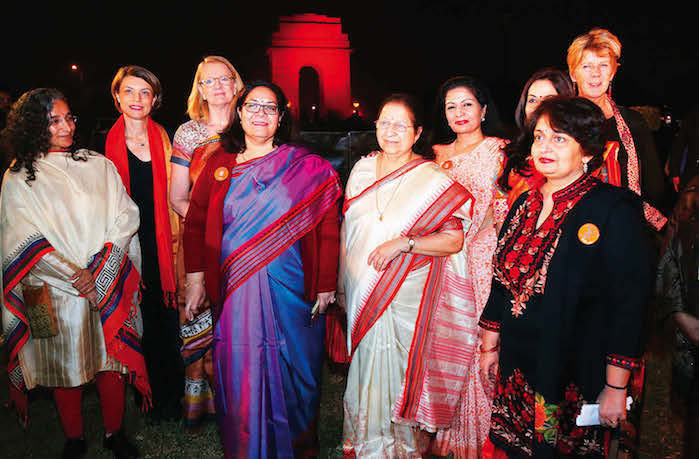
NEW YORK (TIP): New Delhi’s iconic landmark, India Gate, turned orange on 25 November to commemorate the International Day for the Elimination of Violence Against Women and the UN Secretary-General’s UNiTE to End Violence against Women campaign, led by UN Women.
The illumination of the monument also marked the launch of UN Women’s annual 16 Days of Activism against gender based violence. The campaign concluded on 10 December, Human Rights Day. UN Women called on governments, civil society, media and all stakeholders to say ‘NO’ to violence against women every day and always.
The color orange has been a unifying theme for all advocacy activities relating to ending violence against women across the world. It has attracted global attention, lending momentum to the UN’s efforts to rally government and citizens to the cause. This year’s ‘Orange the World’ campaign focused on the theme of preventing violence against women and girls, in the specific context of the adoption of the 2030 Sustainable Development Agenda, which includes targets on ending violence against women and girls.
“We look forward to a world and a future where all women and their rights will be respected,” said Speaker of the Lok Sabha (lower house of the Indian Parliament) Sumitra Mahajan, who was Chief Guest at the commemoration at India Gate.
“Today the lighting up of India Gate in the color orange signifies freedom from violence for all women and girls in India and across the world,” UN Assistant Secretary-General and UN Women Deputy Executive Director Lakshmi Puri said during the commemoration.
“A staggering one in three women have experienced physical or sexual violence in their lifetime-a pandemic of global proportions. Stopping the violence from happening in the first place is the key and this has to be in all spaces: private, public and all work spaces, both organized and unorganized,” Ms. Puri added.
“Violence is not inevitable. It can be prevented.”
The event was also attended by Lalita Kumaramangalam of the National Commission for Women, Preeti Sudan from the Ministry of Women and Child Development, film producer and director Aishwaryaa R. Dhanush, all of whom emphasized the need to raise awareness among all sections of society and especially men and boys.
“The time for action is now,” said UNFPA Representative Frederika Meijer. “We must achieve Planet 50-50 by 2030.”
In addition to the illumination of India Gate, during the 16 Days of Activism, UN Women displayed Ending Violence Against Women messages in the Delhi Metro, on two high traffic lines (Yellow and Blue lines). Delhi Metro Rail Corporation is amongst the top three metro systems in Asia. Classified by gender, approximately 76% of Delhi Metro commuters are male and 24 % are female. The messages will be seen by more than 2,52,000 commuters during the entire month.
UN Women also displayed stickers with themes related to Gender Based Violence on 5000 Delhi Transport Corporation (DTC) buses plying in the city. These stickers will remain on the buses even after the conclusion of the 16 Days of Activism. The messages are expected to reach out more than .5 million commuters each day.
A social media campaign with the hashtag #OrangetheWorld called on individuals, neighborhoods, NGOs, the private sector, educational institutions and others to “orange the world” and become part of the global campaign to end violence against women and girls.
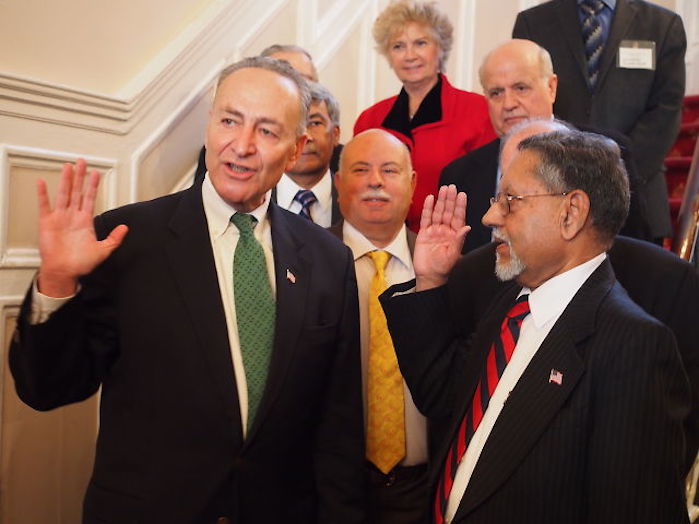
NEW YORK (TIP): Harbachan Singh was sworn in for his second term as president of Queens Civic Congress (QCC) at the annual QCC Legislative Reception on December 6, 2015 at the Douglaston Club in Queens. It was another successful QCC event which was well attended by its many organization members and several prominent legislators from federal, state and city levels. Highlighting the event was the swearing in of the newly elected QCC team by US Senator Charles Schumer who commended QCC for its representation and advocacy.
Harbachan Singh, born in Malaysia, is a Barrister-at-Law from U.K He is a former Chairman of the Headquarters Committee on Contracts of the United Nations. Currently, he is Secretary-General of the Indian National Overseas Congress, USA. and President of the Advisory Board of the Holocaust Center at the Queens Borough Community College. He is a past president of the Saul Weprin Democratic Club, Vice President of the Community Advisory Board of the Queens Hospital Center and a delegate of the Queens Borough President’s’ General Assembly. Singh is also a life member of Global Organization of People of Indian Origin (GOPIO.
Ashook Ramsaran, formerly of Guyana, was sworn in as the newest vice president of QCC. Ramsaran emigrated from Guyana in 1968 and currently president of Global Organization of People of Indian Origin (GOPIO International). He is a board member of the Fresh Meadows Civic Association and Secretary of New York Presbyterian/Queens Hospital Community Advisory Council, among several other notable positions in prominent organizations and institutions.
New York State Senator Tony Avella (third from left, front row) with members of the newly sworn in QCC team.
The growing impact of the activities of Queens Civic Congress has certainly drawn attention recently as evidenced from the significant number officials attending the event. Legislators who participated in the Legislative Reception included: U.S. Congresswoman Grace Meng; Queens Borough President Ms. Melinda Katz; New York City Comptroller Scott Stringer; Public Advocate Letitia James; State Senators Tony Avella and Toby Ann Stavisky; State Assemblymen David Weprin and Edward Braunstein; State Assemblywoman Nily Rozic; NYC Council Members Rory Lancman, Alicia Hyndman, Karen Koslowitz and Barry Grodenchik; NYC Design & Construction Commissioner Dr. Feniosky Peña-Mora representing Mayor Bill di Blasio; and others.
QCC second term president Mr. Harbachan Singh spoke after the swearing in ceremony of the many challenges Queens residents were facing on issues such as those relating to public transport system, airplane noise at vicinities of Queens two major airports, congestion pricing, shelters for the homeless, zoning for quality and affordability housing, use of parks and the parkland, business development districts and Long Island Rail Road line activation proposals. Singh reasoned with the legislators that “while we invariably find ourselves on the same side of the table at City Council or State Assembly hearings, we both serve the common interests of the residents and the county; we also appreciate your listening ears to our opposing positions when necessary”. Singh recognized their overall collaboration, support and cooperation.”
Queens Civic Congress, formed in 1997, is a registered New York State non-profit organization representing more than 100 civic and other community organizations throughout the Borough of Queens in New York City, is committed to the protection and advancement of the “Quality of Life”, to provide a forum for the civic associations and neighborhood organizations, to develop and present common policies and positions, and to furnish effective leadership and advocacy for the advancement of the welfare and interests of Queens’ neighborhoods.
WASHINGTON (TIP): The world’s richest 10 percent of people are responsible for producing about half of all carbon emissions, and the average carbon footprint of the richest 1 percent is about 175 times that of the poorest 10 percent, according to a latest report.
The paper, “Extreme Carbon Inequality,” released by the global charity Oxfam, comes as world leaders are gathered in Paris for COP21 – a United Nations conference aimed at agreeing a new global climate treaty to mitigate the worst effects of climate change.
“While the COP21 in Paris will see a deal negotiated between governments on the basis of the total emissions produced in their territories, the real winners and losers will be their citizens,” the report reads. “The litmus test of the deal will be whether it delivers something for the poorest people who are both the least responsible for and the most vulnerable to climate change, wherever they live.”
The 3.5 billion people that make up the poorest half of the globe produced just 10 percent of emissions – yet they live in places that are particularly vulnerable to the effects of global warming, including from catastrophic storms, severe droughts, and rising seas and flooding, the report said. Their governments are also less likely to have the resources to adapt to and mitigate those effects, the report added.
The reported cited a recent study by the World Bank that found the poorest people in any country are most exposed to disasters including heat waves, flooding, and droughts -especially in countries in Africa and South East Asia.
For example, when Typhoon Haiyan devastated the Philippines in 2013, killing over 7,000 people, it left the country with a humanitarian crisis so extensive it had to borrow money from other countries to rebuild – leaving the country with at least $1 billion to pay back.
The same inequalities can also be seen in wealthy countries, including the United States, where its poorest residents in Louisiana, Mississippi and Alabama are disproportionately threatened by rising seas and coastal flooding, the report said. When Superstorm Sandy hit New York City in 2012, over a third of the people in the storm surge area lived in government-assisted housing, and half of the city’s public housing residents were displaced, it added.
“Climate change and economic inequality are inextricably linked and together pose one of the greatest challenges of the 21st century,” Tim Gore, Oxfam’s head of food and climate policy and author of the report, said.
The report shows that the richest 10 percent of the U.S., about 30 million people, produces three times as many emissions as the 600 million people that constitute China’s poorest half; while the poorest half of the U.S. produces five times the amount of emissions as the poorest half of India.
By the end of COP21, each country is expected to submit final plans for cutting emissions and transitioning to green economies. Those actions will aim to help keep the global temperature increase since preindustrial times below 2 degrees Celsius (3.6 Fahrenheit). At the current pace of carbon emissions, the world is on track for a nearly 3 C rise by 2100, the U.N. has said. The earth has already passed the 1 C hotter mark, according to U.K. researchers who released new data last month.
“Paris must be the start of building a more human economy for all – not just for the ‘haves,’ the richest and highest emitters, but also the ‘have-nots,’ the poorest people who are the least responsible for and most vulnerable to climate change,” Gore said in the release.
NEWYORK (TIP): Syed Akbaruddin has been named as the new permanent representative of India to the United Nations in New York. He succeeds Asoke Kumar Mukherjee who will be retiring at the end of December, 2015
Syed Akbaruddin (left) willl succeed Ambassador Asoke K Mukerji as India’s Permanent Representative to the United Nations. Ambassador Mukerji is retiring on 31st December
The current reshuffle in the Ministry of External Affairs has facilitated the biggest career jump for Syed Akbaruddin, who stands promoted from the rank of Additional Secretary to a Secretary-level post.
Asoke K Mukerji
Mr. Akbaruddin, former MEA spokesperson, was the chief coordinator of the India-Africa Forum Summit (IAFS) held in New Delhi in October 2015. Prime Minister Narendra Modi had handpicked Mr. Akbaruddin to be the chief coordinator of the IAFS, a mega event that was attended by all the 54 countries of Africa.
Mr. Syed Akbaruddin is the son of late Prof. S Bashiruddin, former Head of the Dept of Journalism and Communication, OsmaniaUniversity, Hyderabad. Bashiruddin also served as India’s Ambassador to Qatar.
An alumnus of HyderabadPublic School, Akbaruddin is a 1985 batch civil servant and considered an “expert” on the West Asia issues.
In the course of one week in November 2015, militants from Abu Bakr Al-Baghdadi’s self-proclaimed Islamic Caliphate – also called ISIS, ISIL and Daesh – struck multiple targets in Beirut, Paris and Mali. Earlier, on October 31, ISIS claimed to have brought down a Russian civilian aircraft flying from Sharm al-Sheikh to St. Petersburg.
The ISIS militia, numbering between 20,000 and 30,000, now controls approximately 300,000 square kilometre of territory straddling the Syria-Iraq border. Its brand of fundamentalist terrorism is gradually spreading beyond West Asia and the militia is slowly but surely gaining ground. In Africa, ISIS fighters and their associates have been active in Algeria, Lebanon, Libya, Mali, South Sudan and Tunisia in recent months. Boko Haram, the militant Islamist group in Nigeria, has pledged allegiance to ISIS.
Fighting Back
Recent acts of terrorism have steeled the resolve of the international community. Significant help is being provided to the government of Iraq by the US and its allies. The Peshmerga, forces of the Kurdistan Regional Government (KRG) which had captured oil-rich Kirkuk, have joined the fight against the ISIS and recaptured the Syrian (Kurdish) border town of Kobani.
The US began launching air strikes against the ISIS militia about a year ago, while simultaneously arming anti-Assad forces like the Free Syrian Army with a view to bringing about a regime change in Syria. The US has been joined in this endeavour by Australia, Britain, Canada, Denmark, France and Netherlands as well as five Arab countries (Bahrain, Jordan, Saudi Arabia, Qatar and the United Arab Emirates). The air strikes have resulted in substantial collateral damage. It is being gradually realised that the ISIS militia cannot be defeated from the air alone.
Putin’s Russia joined the fight on September 30, 2015 with the twin aims of defeating the ISIS and destroying anti-Assad forces. However, the initial air strikes launched by the Russian Air Force were directed mainly against the forces opposed to President Assad of Syria. Russian ground troops are also expected to join the fight soon. The Russians have also descended on Baghdad to establish a military intelligence coordination cell jointly with Iran, Iraq and Syria – a move that has not been appreciated by the Americans.
In a rare show of unity after the Paris attacks, the United Nations Security Council passed a unanimous resolution stating that “The Islamic State in Iraq and the Levant constitutes a global and unprecedented threat to international peace and security,” and called upon all member states to join the fight against the ISIS.
Diplomatic moves have been initiated to coordinate operations and work together for peace and stability in the region. The US and Russia agree that the objective of their interventions should be to end the civil war in Syria through a political deal and that both Iraq and Syria should retain their territorial integrity. They also agree that the ISIS extremists must be completely eliminated. Iran has agreed to join the negotiations to resolve the conflict in Syria. However, while the political objectives are similar, the methods being used to achieve them are different and are designed to extend the influence of each of the protagonists in the region.
Implications for South Asia
Al-Baghdadi has openly proclaimed the intention of ISIS to expand eastwards to establish the Islamic state of Khorasan that would include Afghanistan, the Central Asian Republics, eastern Iran and Pakistan. The final battle, Ghazwa-e-Hind – a term from Islamic mythology – will be fought to extend the caliphate to India. An ISIS branch has already been established in the Subcontinent. It is led by Muhsin al Fadhli and is based somewhere in Pakistan. Some factions of the Tehrik-i-Taliban Pakistan have declared their allegiance to al-Baghdadi. Afghanistan’s new National Security Adviser, Mohammad Hanif Atmar, has said that the presence of Daesh or the ISIS is growing and that the group poses a threat to Afghan security. And, some ISIS flags have been seen sporadically in Srinagar.
Instability and major power rivalry in West Asia do not augur well for India’s national security and economic interests. Combined with the increase in force levels in the Indian Ocean, the heightened tensions in West Asia may ultimately lead to a spill-over of the conflict to adjacent areas. India now imports almost 75 per cent of the oil required to fuel its growing economy and most of it comes from the Gulf. The long-drawn conflicts of the last two decades of the 20th century had forced India to buy oil at far greater cost from distant markets, with no assurance of guaranteed supplies. The 1991 oil shock had almost completely wrecked India’s foreign exchange reserves. The situation could again become critical. Oil prices had shot up to USD 115 per barrel in June 2014, soon after the Caliphate was proclaimed, but have since stabilised around USD 50 to 60 per barrel.
Since the early 1970s, Indian companies have been winning a large number of contracts to execute turnkey projects in West Asia. The conflict in the region has virtually sealed the prospects of any new contracts being agreed to. Also, payments for ongoing projects are not being made on schedule, leading to un-absorbable losses for Indian firms involved, and a dwindling foreign exchange income from the region.
India also has a large Diaspora in West Asia. A large number of Indian workers continue to be employed in West Asia and their security is a major concern for the government. Some Indian nurses had been taken hostage by ISIS fighters, but were released unharmed. All of these together constitute important national interests, but cannot be classified as ‘vital’ interests. By definition, vital national interests must be defended by employing military force if necessary.
US officials have been dropping broad hints to the effect that India should join the US and its allies in fighting ISIS as it poses a long-term threat to India as well. India had been invited to send an infantry division to fight alongside the US-led Coalition in Iraq in 2003. The Vajpayee government had wisely declined to get involved at that time as it was not a vital interest.
It must also be noted that India has the world’s third largest Muslim population. Indian Muslims have remained detached from the ultra-radical ISIS and its aims and objectives, except for a handful of misguided youth who are reported to have signed up to fight. This could change if India sends armed forces to join the US-led coalition to fight the ISIS militia.
Prime Minister Narendra Modi proposed at the G-20 summit in Antalya last week that the war against terrorism must isolate and contain the sponsors and supporters of terrorism. He clearly implied that India is willing to join the international coalition against the ISIS and other non-state actors. Besides contributing to the global war against terrorism, India’s participation would help to isolate the Pakistan Army and the ISI – the foremost state sponsors of terrorism.
Direct Indian military intervention against the ISIS militia would depend on the manner in which the situation unfolds over the next one year. It could become necessary if ISIS is able to extend the area controlled by it to the Persian Gulf as that would affect the supply of oil and gas from the Persian Gulf to India – clearly a vital national interest. For the time being, India should cooperate closely with the international community by way of sharing information and intelligence and providing logistics support like port facilities if asked for. India should also provide full diplomatic support and work with the United Nations for evolving a consensual approach in the fight against the ISIS.
A concerted international effort is needed to first contain and then comprehensively defeat the ISIS and stabilise Iraq and Syria, failing which the consequences will be disastrous not only for the region, but also for most of the rest of Asia and Europe. Helping the regional players to gradually eliminate the root causes of instability will not be an easy challenge for the international community to address. As an emerging power sharing a littoral with the region, India has an important role to play in acting as a catalyst for West Asian stability.
ISIS/ISIL/IS is a fundamentalist group, made of delusional individuals, who claim to be religious, and who want to create a nation state of Sunni Salafist Muslims. Their ultimate aim to wield their power over such vast and rich land is laughable and disturbing to every Indian who has heard of them (yes, not every Indian has heard of them).
ISIS is growing at the pace of rabbits.
The United Nations has recognized ISIS to be a terrorist group by passing a resolution to that effect. If ISIS flexes its forces to come to India, one can speculate that the UN’s stand against ISIS will become more sharp and decisive (with Obama saying “I told you so” in the background).
Likewise, India has banned the terror group. India, however, is confused for the most part about how to go about labeling this fundamentalist group. We have hostages under the ISIS, and we would really like to have our people back in India, away from the brutal captors, before doing anything too loud against the ISIS. Thus, one can go so far as to say that this hostage situation is already a mark of the threat that India is facing, from the group.
Is there a risk of the ISIS coming to India?
They can reach India through land or sea routes. Land routes, funnily enough, are not going to be welcoming to them. Our neighbours, all said and done, are not going to harbor terrorists who threaten even their own cultural ethos (ISIS has shown no mercy to non-Sunni muslims; in fact, they were the first to be affected in the emergence of the Islamic State in Syria and Libya). In any case, providing shelter to ISIS amounts to the ire of Uncle Sam. We know no one like to tick Uncle Sam off. Sea routes are probably their most hassle-free means of getting to India. India, since 26/11 has strengthened and secured her coastal fronts sufficiently (although there is much more to be desired still). ISIS will have a tougher time reaching India than waging any kind of attack against us.
What if ISIS do get to India?
India’s armed forces are dynamic and are trained to fight in different types of terrain, over years – something that the ISIS cannot have done, and will not be able to do. There lies our advantage. Over the last couple of decades, our defense strategy has been hinged on deterrence. Nuclear power has deterred direct war on India. But irrational parties such as the stateless (wannabe nation state) ISIS are hardly going to be deterred by atomic bombs. In the unlikely event that the ISIS unleashes terror at our frontiers, rest assured that our armed forces, and paramilitary forces (if need be), shall be deployed, they will ensure we sleep soundly.
To not seem too complacent, let me add that we do need to be in a position to deploy the necessary amount of forces at the time of need, which can be anytime. For this, we should either equip them sufficiently or relieve them of their domestic duty, by settling domestic problems as soon as possible (for example, the recent deplorable massacre of Adivasis in Assam which needed the Indian Army’s presence to be quelled).
In the periphery, people have to be made aware of the foolishness of the ideological beliefs that ISIS espouses. There have been worrisome reports of Indians joining the fundamentalist groups. This has to be prevented at all costs – a stitch in time saves nine.
We have tried the Bush way and Obama way of handling terrorism, neither has worked, the first one created more of it, and second one has not mitigated it either. Mike Ghouse, a moderate Muslim offers the Islamic way of handling terrorism.
Here is the plan
After due preparations and consultations, President Obama is requested to deliver a three days notice in behalf of the United Nations to Mr. Baghdadi and his deputies.
“Mr. Baghdadi, you have three days to stop killing innocent people and destroying Allah’s creation; life and environment. If you do not heed the warning, we will hunt down and ambush you wherever you hide. If not, we will gas you guys, few square miles at a time, not to hurt you, but to capture and put you on trial and ask you to give up the false claims you are making about your religion. Mind you, the Muslims soldiers from around the world will be in the front line.
We will give you copies of the Quran and make you read and understand until you get that right – not what is dished out to you by the Ulema (Scholars) of the past, but what God tells you in the Quran.
Quran tells you in 5:32, “If anyone slays a person, it would be as if he slew the whole people: and if any one saved a life, it would be as if he saved the life of the whole people.” And “Enjoin doing what is right and forbid what is wrong,” Quran 9:71. The wisdom is simple – God created everything in harmony (55:06-55:10) and you have messed it up big time. And it is our responsibility to forbid you from doing that, and restore harmony and cohesiveness of Allah’s creation.
Allah advises us to be kinder and gentler towards you if you reconsider and surrender. If you repent and bow down toward Allah’s guidance to preserve the balance and harmony of the world around you, we will be lenient. He promises glad tidings to “all” believers (9:112), and we hope you would become a believer in the Quran that you claim to be.
By the way, you don’t own Allah, the Prophet, Islam or the Quran. It is the book of wisdom for the whole humanity and you cannot claim exclusive ownership of it.
Insha Allah, we will be restoring peace and sanity to the planet.
Blaming the religion is the dumbest thing to do, because you cannot beat, kick, hack, shoot, hang, kill or bury a religion, it’s an intangible thing my friend! You can blame the individuals and restore trust and harmony back in the society.
ISLAMABAD / UNITED NATIONS (TIP): Pakistan failed to win a re-election to the top UN human rights body, garnering just 105 votes in the 193-member General Assembly.
The General Assembly on Oct 27 elected 18 members of the UN Human Rights Council through a secret ballot.
Pakistan’s current term at the council is set to expire on December 31 and it was seeking re-election to the 47-member Human Rights Council.
Sources said the loss came as a setback to the Pakistani delegation that had appeared confident of winning the seat.
The sources attributed the loss to the way the Pakistani delegation fought the election, adding that it could not lobby effectively for the vote.
The new members, who will start their three-year terms beginning January 1 next year, are Belgium, Burundi, Cote d’Ivoire, Ecuador, Ethiopia, Georgia, Germany, Kenya, Panama, Kyrgyzstan, Mongolia, Philippines, Republic of Korea, Togo, Slovenia, Switzerland, United Arab Emirates and Venezuela.
Pakistan lost the seat in the Asia-Pacific category in which five seats were vacant.
India is also a member of the council and its term will end in 2017.
Members of the council are elected directly and individually by secret ballot by the majority of the members of the General Assembly.
Geneva-based non-governmental human rights group UN Watch welcomed the defeat of Pakistan, terming it as a “major surprise.”
Days before the vote, several human rights bodies had opposed the re-election of Venezuela, Pakistan and UAE to the UN Human Rights Council due to widespread criticism of these governments for egregious human rights violations.
According to a report by UN Watch, Human Rights Foundations, and the Lantos Foundation, Pakistan, UAE, Burundi and Ecuador were cited by human rights groups for having committed serious violations of numerous articles of the Universal Declaration of Human Rights, including curbs on the freedoms of speech, press, religion, and assembly, along with disregard for fundamental due process.
The candidate countries were also found to have voted against UN resolutions taking action for victims of human rights abuses in various hotspots, UN watch said.
Sources in the Indian mission to the UN here welcomed the election of Mongolia and Kyrgyzstan against the backdrop of historical visits undertaken by Prime Minister Narendra Modi to these nations earlier this year.
WASHINGTON (TIP): Pakistan Prime Minister must be a disappointed man. His bilateral with US President Barack Obama is being viewed as a diplomatic failure. India has watched the Sharif-Obama summit in Washington keenly, and while it is clear that Prime Minister Nawaz Sharif returns to Islamabad without any big announcement to show for the bilateral, and no progress on US-Pakistan civil nuclear negotiations, there are many parts to the 2015 joint statement issued by the two that could be worrisome for India.
Here are the key statements in the US-Pakistan joint statement which may cause concern to India.
1. Hydroelectric projects in PoK/Gilgit-Baltistan
President Obama expressed support for Pakistan’s efforts to secure funding for the Diamer Bhasha and Dasu dams to help meet Pakistan’s energy and water needs.
India has opposed the construction of hydro-electric projects in the disputed region of Kashmir that includes PoK and Gilgit-Baltistan. Most recently, External Affairs Minister Sushma Swaraj had called the China-Pakistan Economic Corridor (CPEC) unacceptable because it includes these projects, while India had told the UNGA that “India’s reservations about the proposed China-Pakistan Economic Corridor stem from the fact that it passes through Indian territory illegally occupied by Pakistan for many years.”
In recent years, the 4,500 m W Diamer Bhasha dam (DBD) project, that the Pakistan government says will halve its electricity shortfall when constructed, had come to a standstill over funding. In 2013, prospective investors – the ADB, China and Russia – had asked Pakistan to obtain an NOC (No objection certificate) from India before they could proceed on loans. Even after the announcement of the China-Pakistan Economic Corridor by President Xi Jinping for projects including dams in PoK in April 2015, China has shown a preference for the $1.6 billion Karot project, rather than DBD, which would now cost an estimated $14 billion. It is significant that the US wants to play ‘White Knight’ on these two dams, and for India, the construction of major projects like these endorsed by the US would be a blow to its claim on PoK. Earlier this month, reports suggested India had protested over a USAID event aimed raising funding for DBD, where US firm Mott McDonald has been contracted to perform a technical engineering review.
2. Talks with the Taliban
President Obama commended Pakistan for hosting and facilitating the first public talks between the Afghan government and the Taliban in July 2015 and highlighted the opportunity presented by Pakistan’s willingness to facilitate a reconciliation process that would help end insurgent violence in Afghanistan.
India has felt cut out of the Taliban peace process, and relations with President Ghani’s government underwent a strain when New Delhi learned that Pakistan would be allowed to host the talks in Murree. “This is an open acknowledgement that Pakistan controls the Taliban,” a senior official had told The Hindu at the time, “And rather than castigate Pakistan for not curbing the Taliban’s violence, these talks will legitimize its actions.”
When the talks collapsed over the announcement of Mullah Omar’s death, it was felt Pakistan’s claim of being a ‘peacemaker’ rather than a sponsor of Taliban-terror would end. However, despite a surge in violence by the Taliban, including the brutal siege of Kunduz that was overthrown by Afghan and US special forces last month, the Joint statement seems to indicate the US is prepared to let Pakistan host the talks again.
3. Resume India-Pakistan talks
President Obama and Prime Minister Sharif stressed that improvement in Pakistan-India bilateral relations would greatly enhance prospects for lasting peace, stability, and prosperity in the region. The two leaders expressed concern over violence along the Line of Control, and noted their support for confidence-building measures and effective mechanisms that are acceptable to both parties. The leaders emphasized the importance of a sustained and resilient dialogue process between the two neighbors aimed at resolving all outstanding territorial and other disputes, including Kashmir, through peaceful means and working together to address mutual concerns of India and Pakistan regarding terrorism.
For over a decade, the US has stayed away from openly pushing India towards talks with Pakistan. In the period between 2003-2008, this was because India and Pakistan were engaging each other, and both the composite dialogue and back-channel diplomacy yielded many important confidence building measures between them. After the Mumbai 26/11 attacks, the US recognized India’s legitimate anger over the attacks being planned and funded in Pakistan, and abstained from making any comments on the resumption of India-Pakistan dialogue, restricting itself only to “welcoming” talks between their leaders in Thimphu, Delhi, New York and Ufa. The US-Pakistan joint statement doesn’t just put the importance of “sustained and resilient dialogue process” (codeword for comprehensive dialogue) back in focus, it makes a new mention of “violence along the LoC” which India squarely blames Pakistan for initiating. India believes ceasefire violations are aimed at “infiltrating terrorists”, a charge the government repeated when the NSA talks were cancelled. Of particular worry for India will be the US-Pakistan joint statement’s reference to “mutual concerns of terrorism”, as it comes in the wake of Pakistan’s latest claims of Indian support to terrorism inside Pakistan. Pakistan NSA Sartaj Aziz had told the press that Indian agency “involvement” in Balochistan and FATA would be taken up during the summit.
4. Action on LeT?
In this context, the Prime Minister apprised the President about Pakistan’s resolve to take effective action against United Nations-designated terrorist individuals and entities, including Lashkar-e-Tayyiba and its affiliates, as per its international commitments and obligations under UN Security Council resolutions and the Financial Action Task Force.
Action against the LeT has been India’s most sustained demand from Pakistan, especially after the 26/11 attacks, when the LeT’s top leadership was charged with planning and executing the carnage in Mumbai. Yet years later, chief Hafiz Saeed is free, LeT operations chief Zaki Ur Rahman Lakhvi is out on bail, and there seems little evidence that Pakistani forces have conducted any sort of crackdown on the Lashkar e Toiba, especially when compared to action against other groups after the Peshawar school attack of December 2014. While the US-Pakistan joint statement doesn’t note President Obama’s acceptance of Pakistan’s claims of keeping its “international commitments and obligations”, it is significant that the US has not raised the obvious violation of the UNSC and FATF requirements earlier this year during the bail process of Lakhvi. Despite Indian representations to the US and UN, there has been little pressure on Pakistan how Lakhvi raised the funds when according to the UNSC 1267 Committee rules, a designated terrorist cannot be allowed recourse to finances.
5. Nuclear talks
The leaders noted Pakistan’s efforts to improve its strategic trade controls and enhance its engagement with multilateral export control regimes. Recognizing the importance of bilateral engagement in the Security, Strategic Stability and Non-Proliferation Working Group, the two leaders noted that both sides will continue to stay engaged to further build on the ongoing discussions in the working group.
Both, the US and Pakistan, have denied a report in the Washington Post that they had planned what it called a “diplomatic blockbuster”: negotiations over a civil nuclear deal on the lines the US and India signed in 2005. Pakistan’s foreign secretary reacted to the report with a detailed account of Pakistan’s “low-yield tactical nuclear weapons” aimed at India, to calm fears in Pakistan that the government was giving up its weapons program. Even so the details in the Post have left lingering doubts over what the US intends, including pushing for a possible NSG waiver for Pakistan in exchange for limiting Pakistan’s missile capability. The report goaded the MEA into counseling the US on taking a closer look at Pakistan’s past on supplying nuclear weapons to North Korea and Iran, “Whosoever is examining that particular dossier should be well aware of Pakistan’s track record in proliferation. And when India got this particular deal, it was on the basis of our own impeccable non-proliferation track record,” the MEA spokesperson said on October 9, given that India will watch this space closely, particularly the phrase on “engagement with multilateral export regimes” mentioned in the US-Pakistan joint statement.
UNITED NATIONS (TIP): The top United Nations aid official has called for a swift investigation of a suspected Saudi-led air strike that killed dozens of people at a wedding in Yemen.
Stephen O’Brien, the UN under-secretary-general for humanitarian affairs, yesterday said he was “deeply disturbed” by the news that civilians had been killed in Wednesday evening’s bombing.
“I call for a swift, transparent and impartial investigation into this incident,” O’Brien said in a statement.
“Real accountability for parties to conflict, whether they are states or non-state groups, is urgently needed, to ensure that the commitment under international law to protect civilians is meaningful,” he added.
O’Brien quoted Yemen’s ministry of public health as saying that at least 47 people were killed and 35 were injured, among them many women and children, in the strike.
Medical sources confirmed at least 28 deaths to AFP.
The raid hit a house where dozens of people were celebrating in the town of Sanban in Dhamar province, 100 kilometers south of the capital Sanaa, residents said.
It was the second alleged air strike by the Saudi-led coalition on a Yemeni wedding party in just over a week.
But the coalition, under mounting criticism over the civilian death toll of its bombing campaign against Iran-backed Shiite rebels, denied any involvement in the latest attack.
O’Brien noted that 4,500 civilians have been killed or injured since the Saudi-led coalition began air strikes against rebels in Yemen in March.
“That is more than in any country or crisis in the world during the same period,” he noted.
The strongly-worded statement underscored that the sides have a responsibility under international law to avoid damage to homes and other civilian structures.
On Sept. 28, in a village less than 60 miles from New Delhi, a Hindu priest announced in a local temple (under threat by some hot heads, he claims) that a Muslim family was consuming beef.
Shortly afterward, a frenzied (Hindu) mob, wielding sticks, swords and cheap pistols barged into the family’s house and pulled out Akhlaq & his 22-year-old son, Danish, accusing the family of having slaughtered a cow and consuming it. They beat the men with such rapturous fury that within minutes the father was dead and his son in a coma.
Times cannot be treated as normal if the President of India feels the need to issue a public advisory. What can explain the inexplicable silence of the otherwise hyper-expressive Narendra Modi.
While, leaders of the political parties have left no stone unturned in trivializing the issue. PM Modi did not issue a single tweet, nor posted a Facebook statement expressing regret or offering condolence for this dead citizen.
The Prime Minister finds himself unable to condemn utterances of his own party leaders & ministers. Isn’t this what happened in Godhra, when Modi was the Chief Minister.
PM Speaks – Only too little too late
Less than 24 hours after the President’s subtle reprimand, India’s Prime Minister did speak – Not against the murderers of Akhlaq. Not even on the provocative comments by his party men/women in Dadri. No, not even on the urgent need to put an end to beef politics. All this can wait. After all, elections in Bihar happen just once in five years.
Its all Politics for Narendra Modi – Why else would he choose an election rally to indirectly mention the incident. What are the compulsions of Narendra Modi who has brought to his party 284 seats in the Lok Sabha?
Why Laloo alone comes to his mind; and people like Mahesh Sharma, Sanjeev Balyan, Sakshi Maharaj, Yogi Adityanath, Sangeet Som, Azam Khan and AIMIM leader Assaduddin Owaisi are allowed to get away with their shameless statements?
Akhlaq’s family members can wait. And the President of India should learn to wait. Prime Minister of India is busy consolidating his position. And for this he must win Bihar. India’s core civilizational values can wait too
While only hinting on the raging row over the Dadri lynching incident, Prime Minister Narendra Modi said Hindus and Muslims should decide whether to fight each other or together overcome poverty while asking the people to ignore “irresponsible” statements of politicians.
Its to be noted that the above statement comes at his 4th Bihar election rally this week and that too after blowing all the jibes on the beef row towards BJP opponents like Laloo.
“The country has to stay united,” Modi asserted. “I have said it earlier also. We have to decide whether Hindus should fight Muslims or poverty. Muslims should decide whether to fight Hindus or poverty,” he added.
The silence does not douse flames, it fans conspiracy theories
Adding Fuel to the Fire – Our Politicians whom ‘WE’ elected
Why are these shallow leaders not expelled? Every time a party has been questioned, their answer has been simple -point fingers at the other parties.
Outrageous Things Leaders Have Said – For the record, BJP leads here.
Mahesh Sharma
Modi’s Culture Minister & BJP Leader Mahesh Sharma, a moral idiot recently opined that India’s late President Abdul Kalam was patriotic “despite being a Muslim,” and dubbed the vicious beating an “accident.” He consoled the family by noting that at least the 17-year-old daughter of the slain man was untouched!
Azam Khan Uttar Pradesh minister Azam Khan took one step further and wrote to United Nations on the condition of Muslims in India.
He goes on further to hint on a new partition of India, “There should be a round table conference on what will be the new map of India and how people will live in the country” and “Aaj poori duniya dekh rahi hai ki Babri se le ke Dadri tak ka mansooba kya tha”.
He clubs the incident with the demolition of Babri Masjid to harness the power of hatred.
Sangeet Som
BJP MLA Sangeet Som, infamous for making controversial speeches during the 2013 Muzaffarnagar riots & one of the accused, declared, “Agar nirdoshon ke khilaf karyawahi ki gayi, to munh-tod jawab hamne pehle bhi diya hai aur abh bhi dena jante hain (If action is taken against innocent, we have given a befitting reply earlier and can do so again). We can give a reply whenever we want.” He made this statement at a temple on the outskirts of Bisara, near where the incident occurred.
Asaduddin Owaisi
“This murder was premeditated. He has been killed in the name of religion. It is an attack on our community. It cannot be an accident. All of this is being propagated by the state and central governments,” Owaisi says. The Hyderabad MP also questioned Prime Minister Narendra Modi’s silence on the killing. “This mother has seen her son getting beaten to death in front of her. Where are his condolences?”
Owaisi also slammed Union Minister Mahesh Sharma for describing the killing in the Dadri village as “an accident”. “He is the country’s Culture Minister. It is unfortunate that a minister who has taken an oath on the Constitution does not have the courage and intellectual honesty to condemn the incident unconditionally.”
Tarun Vijay
BJP MP Tarun Vijay said, it wasn’t the Hindu community’s responsibility to maintain peace and the Muslim community should remain mute.
“Why responsibility to keep peace and maintain calm is always put on the Hindus alone? Be a victim and maintain silence in face of assaults!!” tweeted the former editor the Rashtriya Swayamsevak Sangh (RSS) weekly in Hindi, Panchajanya.
Muslims & Minorities in India – whatever the politicians may think – have a right to live with their heads held high as anyone else. They cannot & must not be ‘dumped’ or ‘subdued’.
As Indians we need to fix our dysfunctional democracy. The idea of democracy cannot begin and end with elections alone. Until then we will continue to lose lives like Mohammad Akhlaq’s because of let’s call it “the politics of food “.
China is emerging as a peer and partner of the United States in international affairs. India’s response should be to work with China in the Asia Infrastructure Investment Bank and in China’s ‘Road and belt’ initiative to make the ‘Asian Century’ a reality as well as in the G20, which China will chair in 2016 (and India in 2018), to begin shaping the future global agenda, ‘global goods’ and institutions, including reform of the United Nations, while maintaining strategic autonomy to safeguard its maritime trade routes.
New partners in climate change
In the US-China Joint Statement on Climate Change, President Obama has met the criticism of the US Senate that unilateral emissions reductions should not give China a competitive advantage while President Xi has achieved for developing countries what the G77 collectively was finding difficult to attain.
On 25 September, Xi and Obama outlined their “Vision for the Paris Climate Conference”,(re) defining the principle of common but differentiated responsibilities as a system that provides flexibility to developing countries “in light of their capacities” and “that differentiation should be reflected in relevant elements of the agreement in an appropriate manner”.
They also agreed on joint support for a “global transition to a low carbon economy, renewed focus on adaptation “as a key component of the long-term response” to build resilience and reduce vulnerability and the “crucial role of major technological advancement in the transition”.
The Statement recognizes that transparency provisions have to include both ‘action’ as well as ‘support’ provided to developing countries – a long standing demand of developing countries. Also, transparency provisions are expected to “provide flexibility to those developing countries that need it in light of their capacities”, emphasizing differentiation.
The Joint Statement moves beyond the post-colonial North-South dichotomy and welcomes the provision of resources from countries “willing to do so;” it is no longer seen as a commitment based on notions of historical responsibility. Both countries will provide USD 3 billion each to help poor countries, with China announcing the establishment of a China South-South Climate Cooperation Fund. This puts pressure on all developed countries to enhance contributions towards the USD 100 billion to be provided by 2020. The need for bilateral investments to encourage low-carbon technologies and climate resilience, equating mitigation and adaptation (even though these terms are not mentioned) provides an opening to discuss the role of public finance in the transition.
By endorsing a global goal of “low-carbon transformation” within the 21st century -convergence on an overarching meta-global goal is a significant development which the Sustainable Development Goals (SDGs) were not able to achieve – the statement also serves to define the ‘Objective’ of the Convention; something which has eluded the multilateral process since 1992.
New forms of international co-operation
Xi used his address to the United Nations General Assembly to reiterate China’s call for a “new type of international relations based on win-win cooperation.” He added: “We should resolve disputes and difficulties through dialogue and consultation,” as “the law of the jungle leaves the weak at the mercy of the strong.”
Xi emphasized that China represents less powerful nations through its seat on the Security Council (“China’s vote at the U.N. will always belong to developing countries”) and projected China as a champion of the developing countries.
The trip was planned so there would be major funding announcements on each of the three days Xi was at the UN General Assembly in New York, as that is what concerns the G77 the most. He pledged establishment of an assistance fund for South-South cooperation to implement the SDGs with USD 2 billion dollars; increasing investment in LDCs to USD 12 billion by 2030; and the exemption of debt owed by LDCs, LLDCs, and SIDS on interest-free loans; a USD 10 million contribution to the UN women’s agency, a USD 1 billion ‘peace and development’ fund and USD 100 million in military aid for the African Union. He also co-hosted a women’s summit at the UN.
China already contributes more peacekeepers than other permanent members of the Security Council. Xi promised to send the first Chinese helicopter squad to join peacekeeping in Africa, train 2,000 peacekeepers from other countries in China over the next five years, and build a peacekeeping standby force of 8,000 troops. Xi’s largesse portrays China as a contributor to global growth and security amid international concerns about China’s economic stability and military ambitions.
Global rules for the new services and knowledge economy
Over time, Xi’s success in implementing sweeping market reforms aimed at changing China’s economic model from an investment and export-driven one to an innovative consumer-driven and service-oriented one may be the critical factor in shaping Beijing’s economic and foreign policies in the future, as the economic relationship with the US will remain key.
Cyber issues are now among larger concerns in the economic relationship, with bilateral trade totaling USD 590 billion in 2014 and China holding USD 1.2 trillion in US Treasury bonds. On cyber-security it was agreed that “neither country’s government will conduct or knowingly support cyber-enabled theft of intellectual property, including trade secrets or other confidential business information, with the intent of providing competitive advantages to companies or commercial sectors.” In addition, Xi and Obama agreed to create a cabinet-level mechanism and a hotline to address concerns. Both pledged to cooperate in creating a global code of conduct for cyber security. The Bilateral investment treaty Talks stalled as each side offered “negative lists” of items to be excluded and these lists can wall off industries considered strategic such as energy, aviation, telecommunications or access to state-owned industry procurement.
New co-operative multilateralism
The United States and China will remain the key global actors in developing a multilateral consensus on global issues as long as they successfully represent the concerns of the others. In an inter-connected world, the outcome will be a new model of co-operative multilateralism supplemented by bilateral understandings between national stakeholders that do not require the mediation of the United Nations Secretariat and prolonged negotiations over obscure texts.
The post-world war multilateralism involved agenda setting by the G7 balanced by the G77 laying out their interests, or positions, at the start of a multilateral negotiation. Subsequent rounds of negotiations were designed to narrow the differences with secretariat documents suggesting consensus language and calls to capitals. Last minute compromises and trade-offs are very much part of the process, leaving most developing countries unhappy. The result has been continuing tension and the need for a United Nations secretariat to help mediate between the groups, siding more with the funders in achieving their goals. This arrangement has, at least for climate change, now lost its relevance.
The 21st century, characterized by the majority of the middle class living in cities, a post-industrial knowledge economy and global trade dominated by services rather than goods, needs to respond effectively to global concerns through means for agenda-setting and securing a global consensus very different to those adopted for a fractured world emerging from colonialism and world war. With the two largest economies and most powerful countries that cut across the political divide emerging as peers and partners, agenda setting will require wider consultation in the G20, which China will chair next year. India, too, must shape the contours of the new multilateralism by working with China.
New military and strategic balance in Asia
The Dongfeng (East wind) 21D “carrier-killer” missile, which made a public appearance in a military parade on 3 September 2015, with a range of 1,550 km and a projected 10 times the speed of sound (faster than anything that could intercept it) after re-entering the atmosphere can manoeuvre on to a target, making it theoretically capable of landing a large warhead on or near a moving ship. Some analysts say such missiles reduce the threat from aircraft carriers – which form the basis of current US naval strategy – just what aircraft carriers themselves did to battleships with Japan’s 1941 attack on Pearl Harbor. While the potency of the DF-21D is debated in the defense community, these capabilities are changing the balance of power in Asia against the United States requiring it to strengthen its alliance system.
The geopolitical world order established by the United States after World War II is unraveling because of the geo-economic shift to Asia. China’s Asian Infrastructure Investment Bank has served to focus minds in Europe and East Asia. The new Bank will be a rival to the IMF and World Bank and the US risks losing its ability to shape international economic rules, and global influence that goes with it. The UK described the decision as an “irresistible opportunity” and brought accusations from Washington about London’s “constant accommodation” of China, reflecting the two world-views on the emerging global order.
For India, the lesson from the failed US attempt to obstruct the new bank is that, as Asia’s urbanization will require more than USD 8 trillion to be spent on infrastructure in this decade, countries in the region will welcome all the support they can get. Rather than be suspicious of China’s motives and seek to prevent the ‘Belt and road’ initiative, it should deal with the strategic concerns by joining in the development projects, for example, by providing the software packages required in the management of the ports. A mutual recognition of special interests of each other in the South China Sea and the Indian Ocean should be a strategic objective, and will be a strategic win-win for both.
The ‘Asian Century’ provides an integrating theme to focus minds on shaping the economic integration of Asia, where two-thirds of future global growth is going to come from, and the alignment of the rail, road, sea routes and gas pipelines from Iran, for example, can position India as a node for South and Western Asia. Including a services component in the projects will add to their productivity and support cooperation between the Asian giants; trade is a win-win proposition.
Conclusion
The global trend is that countries are gaining in influence more because of the strength of their economy than the might of their military. India can either drift into the future remaining in its periphery or it can shape the future jointly with China to become one of the two engines of the Asian economy. China is likely to remain the world’s largest producer of goods and India has the potential to be the largest producer of services in the largest consumer market. According to McKinsey and Company, the services sector will be the real driver of growth in Asia as affluence will be concentrated in cities. The ability to design, finance, build and implement the big data-technology systems will be the defining comparative advantage in the future, and India and China can work together to make this happen sharing their respective expertise. The complex interdependencies will be a strong stabilizing force.
According to Prime Minister Modi, China and India are “two bodies, one spirit” and President Xi has emphasized the “need to become global partners having strategic coordination”. The G20 meeting in 2016 provides the opportunity for the Asian giants to work together to define a global agenda, ‘global public goods’ and institutions to respond to the global middle class and the Asian Century with two centers of gravity, with India seeking to achieve this joint agenda when it chairs the G20 in 2018.
(The author is an Ex civil servant and diplomat) – IDSA
UNITED NATIONS (TIP): Speaking at the High Level LGBT Core Group Event, the secretary general of the UN Ban ki-Moon pushed for equal rights for the community and urged government to end discrimination -something India has been struggling to do so.
Echoing the motto of the sustainable development goal ‘Leaving No One Behind’, Ban ki-Moon said this guiding vision could be reached only if everyone regardless of their sexual orientation or gender entity is reached out to. “In too many countries, lesbian, gay, bisexual, transgender and intersex people are among the poorest, most marginalized members of society,” he said. Activists would agree that India is one of these countries. “Studies show that gay and lesbian people suffer disproportionate discrimination and abuse. They are rejected by their families… kicked out of their homes … and pushed out of school. Too many of our LGBT brothers and sisters are jobless, homeless and struggling to survive,” he added.
The situation of transgender people is even worse overall, Ban ki-Moon said. “They have higher rates of homelessness, poverty and hunger. For individuals and their families, this is a personal tragedy. And for society, it is a shameful waste of human talent, ingenuity and economic potential,” he added.
While India did not mention anything about LGBT rights at the UN, the situation in the country is dire. Homosexual relationships are considered criminal even after the Delhi high court decriminalized. The Supreme Court overturned the order and made it a crime again for people to have consensual relationships with the same gender. India is, however, one of the very country that legally recognizes transgender as a separate gender identity. However, the social stigma attached is strong and they face discrimination at every level of life.
Urging governments to change their stance and be more proactive in protecting their rights, Ban ki-Moon said: “the human rights of LGBT people are abused, all of us are diminished. Every human life is precious – none is worth more than another”.
The president of Zimbabwe Robert Mugabe created a furore when exclaimed “Zimbabwe is not gay!” at the UN General Assembly on Monday. “We equally reject attempts to prescribe new rights that are contrary to our norms, values, traditions and beliefs. We are not gays. Cooperation and respect for each other will advance the cause of human rights worldwide. Confrontation, vilification and double standards will not,” he said at the general assembly.
UNITED NATIONS (TIP): Israel’s prime minister went to the United Nations on Oct 1 to call for an immediate resumption of peace talks with the Palestinians and to savage the international community’s nuclear deal with Iran.
“I am prepared to immediately, immediately resume direct peace negotiations with the Palestinians without any conditions whatsoever,” Benjamin Netanyahu told the general assembly.
Addressing Palestinian leader Mahmud Abbas directly, he said:
“President Abbas, I know it’s not easy. I know it’s hard.”But we owe it to our peoples to try. To continue to try. Because together … if we actually sit down and try to resolve this conflict between us … we can do remarkable things for our people,” Netanyahu added.His remarks come with Netanyahu scheduled to speak with US President Barack Obama at the White House in November — their first meeting after a deep row about the Iranian nuclear row.Their frosty relations plummeted further during Netanyahu’s re-election campaign when he rejected a two-state solution for peace with the Palestinians.
With the peace process in deep freeze, there are growing fears that tensions like those flaring at Jerusalem’s flashpoint Al-Aqsa mosque compound could spark a broader Palestinian uprising.Abbas told the United Nations on Wednesday that Israel’s refusal to release Palestinian prisoners and stop settlement activity, meant that Palestinians could no longer feel bound by past agreements.
“They leave us no choice but to insist that we will not remain the only ones committed to the implementation of these agreements, while Israel continuously violates them,” he said.
“We cannot continue to be bound by these signed agreements with Israel and Israel must assume fully all its responsibilities as an occupying power,” Abbas added, saying Palestinian patience “has come to an end.”
Netanyahu used the first part of his speech to criticize the international community for reaching the nuclear deal with Iran.
During his speech, he fell silent for 45 seconds after slamming the UN general assembly’s “deafening silence” in the face of repeated calls from Iran for the destruction of the Jewish state.
“The response from this body,” he said, “has been absolutely nothing. Utter silence. Deafening silence.”
Israel will do whatever it takes to defend itself and will not allow Iran to develop nuclear weapons, Netanyahu said.
“Israel will not permit any force on earth to threaten its future,” he said. “Israel will do whatever it must do to defend our state and to defend our people.”
Signup to our Newsletter!
Don’t miss out on all the happenings around the world