

Islamabad/New Delhi (TIP): Pakistan, a state sponsor of terror, seems to have found a new way to deflect attention from its record on terrorism. It has turned to a new rallying cry – water, or Indus water to be precise. As a punishing heatwave grips the country, leading to fears of a water shortage, a desperate Pakistan hosted an “international conference”. The centrepiece of this campaign was Pakistan’s claim that India was “stopping water” by suspending the Indus Waters Treaty (IWT). However, in reality, Pakistan’s growing water crisis is of its own making.
Pakistan’s water crisis did not begin with India’s decision on the Indus Treaty, which was taken following the 2025 Pahalgam attack. The roots, in fact, lie in decades of neglect, a lack of storage capacity, poor water management, and internal disputes among its provinces. In short, Pakistan has never worked towards securing its own water future.
Instead of tackling it, Pakistan, being Pakistan, has chosen to do what it has been doing for decades: build a warped narrative blaming India. Over the past year, Pakistan sent its ministers to Western countries to put pressure on India to restore the Indus Treaty.
Interestingly, the country founded on the two-nation theory also started to tom-tom its pre-Islamic Indus Valley Civilisation heritage to push forward its case. It has also sought to shape its narrative through think-tanks such as London’s Chatham House.
However, the efforts have fallen flat. Even the World Bank, which helped broker the IWT, has declined to intervene.
Pushed into a corner, Pakistan came up with an “international conference”, which featured no major prominent foreign leaders. People like a Chinese academic Victor Gao or some unknown US official didn’t really add much.
What, however, was unmistakable was the empty rhetoric coming from some Pakistani leaders, including threats of nuclear Armageddon by Bilawal Bhutto. Pakistan’s climate change minister Musadik Malik also threatened to “cut off those hands” that seek to control the Indus water.
India, however, has made it amply clear that the Indus treaty won’t be back unless Pakistan reined in terror organisations. “Blood and water cannot flow together,” Prime Minister Narendra Modi has said repeatedly.
The Pahalgam carnage, which left 25 tourists dead, was the tipping point for India suspending the IWT. For more than six decades, India honoured the treaty through wars and terror attacks like the 26/11 Mumbai carnage or the Pulwama tragedy.
As per the 1960 treaty, the three eastern rivers – Ravi, Sutlej, and Beas – were allocated entirely to India. Pakistan received exclusive rights over the western rivers – Indus, Jhelum, and Chenab.
India, however, was permitted to build “run-of-the-river” hydroelectric projects on the western rivers.
Over the years, India has built substantial storage infrastructure on the eastern rivers. This has prevented flooding in downstream Pakistan, especially in areas like Lahore. Thus, if India had to “weaponise” water, as Pakistan has claimed, it could have done so long ago.
In fact, a substantial amount of water allocated to India under the IWT continues to flow into Pakistan because of a lack of storage facilities and canal networks on the Indian side to divert it to irrigation fields in Jammu and Kashmir. For decades, Pakistan continued to benefit from it.
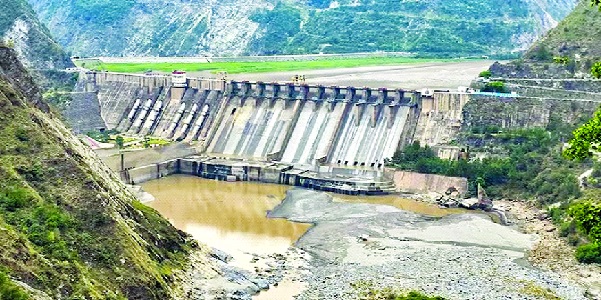
However, India has now accelerated efforts to utilise this untapped water. The long-delayed Shahpur Kandi Dam project on the Punjab-J&K border is nearing completion. This will end the routine flow of surplus water from the Ravi to Pakistan, and divert it to drought-hit Kathua and Samba districts.
Projects linked to the Chenab basin and the proposed Chenab-Beas canal system. The Rs 2,532 crore project will help divert surplus Chenab water to the Beas river system.
But all these projects are not designed to divert Pakistan’s share of water, but to make greater use of water previously unused by India. As to Pakistan’s allegation of India stopping the flow of western Indus rivers, Delhi presently doesn’t have the infrastructure to turn off the tap or divert a substantial amount of water. Most are run-of-the-river hydropower projects on the tributaries and have capacities of less than 5 MW. Source: India Today



Be the first to comment