

Scientists have developed a new method for measuring and predicting how negatively charged particles interact with other materials, a breakthrough that could eventually help in the development of longer-lasting batteries and speed up the search for new chemical materials.
Researchers from the University of East London have co-developed the approach, which focuses on anions – negatively charged particles that play an important role in batteries and a wide range of chemical reactions. Understanding how these particles interact with other substances can help scientists determine how materials will behave and which combinations may offer useful properties.
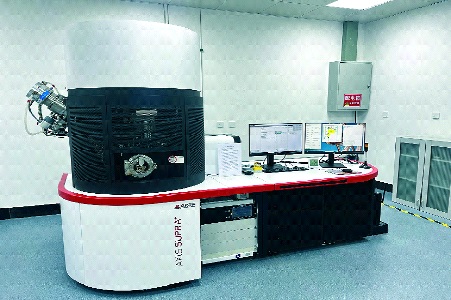
The study, published in the Journal of the American Chemical Society, uses X-ray photoelectron spectroscopy (XPS) to examine materials at the atomic level. In the technique, X-rays are directed at a material, allowing researchers to determine which elements are present and how they are chemically bonded.
The researchers used XPS to measure how tightly particular atoms within anions hold their electrons. These measurements provide a way of quantifying how readily the anions can interact with other substances – information that is important for understanding chemical reactions and material performance.
The team then combined the experimental measurements with computer modelling. This allowed them to recreate the observed behaviour virtually and use the resulting information to predict how promising battery materials might interact without having to test every possibility through extensive laboratory experiments.
The approach could potentially make materials research faster and more efficient. Instead of testing a large number of chemical combinations individually, researchers could use measurements and modelling to narrow down the candidates most likely to show useful properties.
The implications could extend well beyond batteries. According to the researchers, the data could eventually contribute to a large database covering the behaviour of different chemical elements and compounds. Such a database could provide valuable training material for machine-learning and artificial-intelligence systems designed to assist chemical discovery.



Be the first to comment