Year: 2017

  • Computer Programmer not a specialty occupation? – USCIS will Investigate, Call for RFE’s

    Computer Programmer not a specialty occupation? – USCIS will Investigate, Call for RFE’s

    USCIS released a policy memorandum on March 31, 2017, Recession of the December 22, 2000 “Guidance Memo on H-1B computer related positions” to clarify its approach on computer programmer position and whether it qualifies as a specialty occupation, with an immediate effect.

    The memo brings the position of computer programmers on the spot and cruises on the eligibility criteria. It specifies that a person may be employed as a computer programmer and may use information technology skills and knowledge to help an enterprise achieve its goal in the course of his/her job but it is not sufficient to establish the position as a specialty occupation. Hence, the petitioner now has an additional burden to establish that a particular position is one of the specialty occupation as defined by 8 CFR 214.2(h)(4)(ii).

    Entry or senior level position: The 2000-01 edition described all programmers as sharing a fundamental job duty, i.e. writing and testing computer code and any individual with only an associate degree may enter these occupations. But the Memo now settles that it is improper to conclude on the above information that an individual will qualify for a specialty occupation.

    Hence the memo concludes that a person may be employed as a computer programmer and may use information technology skills and knowledge to help an enterprise achieve its goals in the course of his/her job, but an additional evidence is required to establish the position of computer programmer is a specialty occupation.

    Impact of the memo: The memo came out with an immediate effect and hence will have a substantial impact on petitioners filing as computer programmer for the H-1B CAP FY2018. There will be more scrutiny and request for evidence for this category.

    U.S. Citizenship and Immigration Services (USCIS) also announced multiple measures to further deter and detect H-1B visa fraud and abuse on April 03, 2017.

    Beginning April 3rd, USCIS will take a more targeted approach when making site visits across the country to H-1B petitioners and the worksites of H-1B employees. USCIS will focus on:

    · Cases where USCIS cannot validate the employer’s basic business information through commercially available data;

    · H-1B-dependent employers (those who have a high ratio of H-1B workers as compared to U.S. workers, as defined by statute); and

    · Employers petitioning for H-1B workers who work off-site at another company or organization’s location.

    Targeted site visits will allow USCIS to focus resources where fraud and abuse of the H-1B program may be more likely to occur, and determine whether H-1B dependent employers are evading their obligation to make a good faith effort to recruit U.S. workers.

    USCIS will continue random and unannounced visits nationwide. These site visits are not meant to target nonimmigrant employees for any kind of criminal or administrative action but rather to identify employers who are abusing the system.

    Employers who abuse the H-1B visa program negatively affect U.S. workers, decreasing wages and job opportunities as they import more foreign workers. To further deter and detect abuse, USCIS has established an email address which will allow individuals (including both American workers and H-1B workers who suspect they or others may be the victim of H-1B fraud or abuse) to submit tips, alleged violations and other relevant information about potential H-1B fraud or abuse. Information submitted to the email address will be used for investigations and referrals to law enforcement agencies for potential prosecution.


  • Foreign Tech Workers On Edge As Donald Trump Cracks Down On H-1B Visa Program That Feeds Silicon Valley

    Foreign Tech Workers On Edge As Donald Trump Cracks Down On H-1B Visa Program That Feeds Silicon Valley

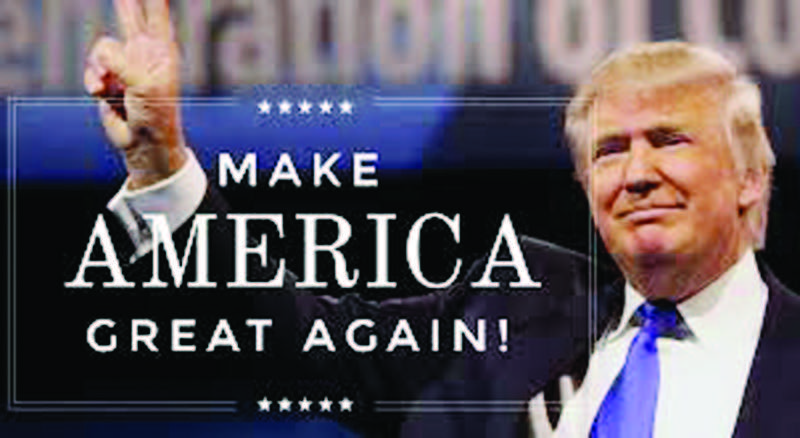
    The U.S. administration began to deliver on President Donald Trump’s campaign promise to crack down on a work visa program that channels thousands of skilled overseas workers to companies across the technology industry.

    Fed up with a program it says favors foreign workers at the expense of Americans, the Trump administration rolled out a trio of policy shifts. The U.S. Citizenship and Immigration Services agency on Friday made it harder for companies to bring overseas tech workers to the U.S. using the H-1B work visa.

    Lottery Opens For High Skilled H-1B Visas

    On Monday, April 3, as the H1-B lottery program for “high-skilled” worker visas opened with the 85,000 slots, the USCIS agency issued a memo laying out new measures to combat what it called “fraud and abuse” in the Program. The Justice Department further warned employers applying for the visas not to discriminate against U.S. workers.

    Nearly three-quarters of the visas are expected to go to Indian workers, as they have in recent years.

    “The Justice Department will not tolerate employers misusing the H-1B visa process to discriminate against U.S. workers,” said Acting Assistant Attorney General Tom Wheeler in a prepared statement. “U.S. workers should not be placed in a disfavored status, and the department is wholeheartedly committed to investigating and vigorously prosecuting these claims.”

    The department’s U.S. Citizenship and Immigration Services will make unannounced site visits to companies that have a high ratio of workers on H-1B visas, and those whose foreign workers are outsourced to another company.

    Seventy one percent of H-1B visa recipients came from India in 2015, according to a 2016 report by the U.S. Department of Homeland Security. China comes in second, accounting for nearly 10 percent of H-1B visa recipients.

    India’s dominance of the H-1B visa system is cemented by the country’s giant outsourcing firms that submit tens of thousands of applications, increasing their chances of winning the coveted temporary work visas.

    Among the top H-1B visa sponsors are Infosys, Tata Consultancy Services, Wipro, and Tech Mahindra Americas — Indian multinational corporations providing information technology and outsourcing services, according to Myvisajobs.com.

    The outsourcing firms are controversial because they are exempt from the federal requirement that they not displace American workers if they pay H-1B visa holders at least $60,000 a year. That threshold still falls below the market rate for American tech workers.

    American tech companies who use workers hired by these firms benefit from the cheaper labor, as well as the automatic loyalty engendered among workers who would otherwise lose their legal status.

    The H-1B visas last for three years, and can be renewed once. But workers applying for green cards can renew their visas indefinitely. There is currently a decade-long backlog of Indian green card applicants. Given the tremendous delay, companies have an incentive to hire workers from India, who critics say end up in a system of de facto “indentured servitude.”

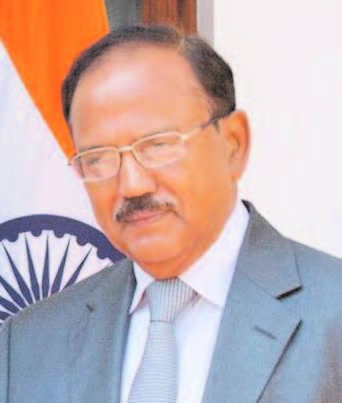
  • Attacks On Indians In United States Taken Up At Highest Level: Ajit Doval

    Attacks On Indians In United States Taken Up At Highest Level: Ajit Doval

    New Delhi:  Attacks against Indians in the US were taken up by National Security Advisor Ajit Doval with senior American officials during his visit to Washington last month, the government said today.

    The government has taken up the issue of incidents of attack on Indian nationals and persons of Indian origin with the US government at very high levels, including during the visits of the foreign secretary and national security advisor, Minister of State V K Singh said in a written reply in Lok Sabha.

    “We have conveyed our deep concern, and called for necessary measures to ensure the safety and security of Indian diaspora as well as expeditious investigation into these incidents,” the minister said.

    Mr Doval, who visited the US from March 23 to 24, held a series of meetings with the top Trump administration officials, including US Defense Secretary James Mattis and National Security Advisor Lt Gen H R McMaster.

    This year has seen many incidents of hate crimes against Indian nationals including killing of an engineer in Kansas by a US navy veteran.

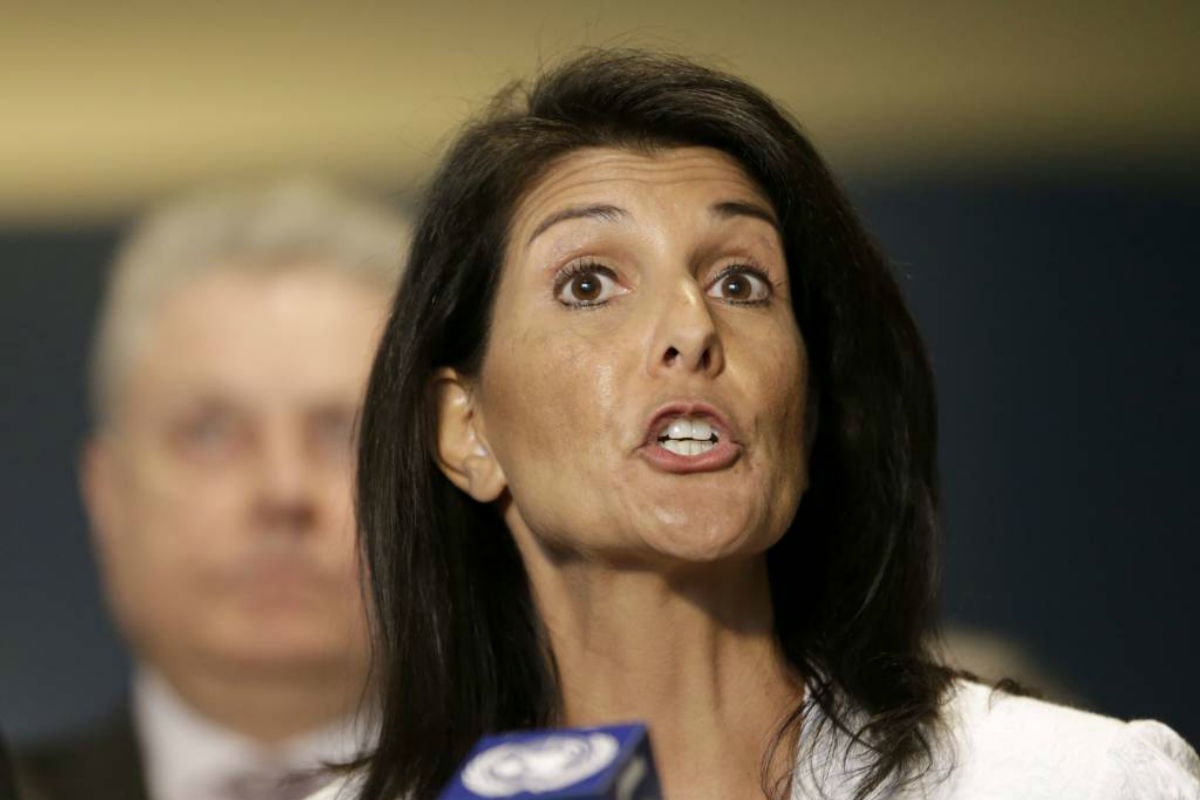
  • Nikki Haley Confirms Russian Involvement in 2016 elections

    Nikki Haley Confirms Russian Involvement in 2016 elections

    WASHINGTON — The U.S. ambassador to the United Nations says there’s no question Russia was involved in the U.S. presidential election and insists President Donald Trump would fully support strong action against the Kremlin once investigations are complete.

    Speaking in television interviews broadcast April 2, Nikki Haley contended there is no contradiction between her tough stance and Trump’s repeated public statements seeking to minimize Russia’s role. She said Trump “has not once” told her to stop “beating up on Russia.”

    “Certainly, I think Russia was involved in the election. There’s no question about that,” Haley told ABC News’ Martha Raddatz in an interview on ‘This Week. “And I think when they finish with all of this process, yes, they need to address Russia. They need to act.”

    The Indian American envoy joins Defense Secretary James Mattis as Trump administration officials who have forcefully called out Russia for its actions during the 2016 U.S. campaign.

    “We don’t want any country involved in our elections, ever,” Haley said. “We need to be very strong on that.”

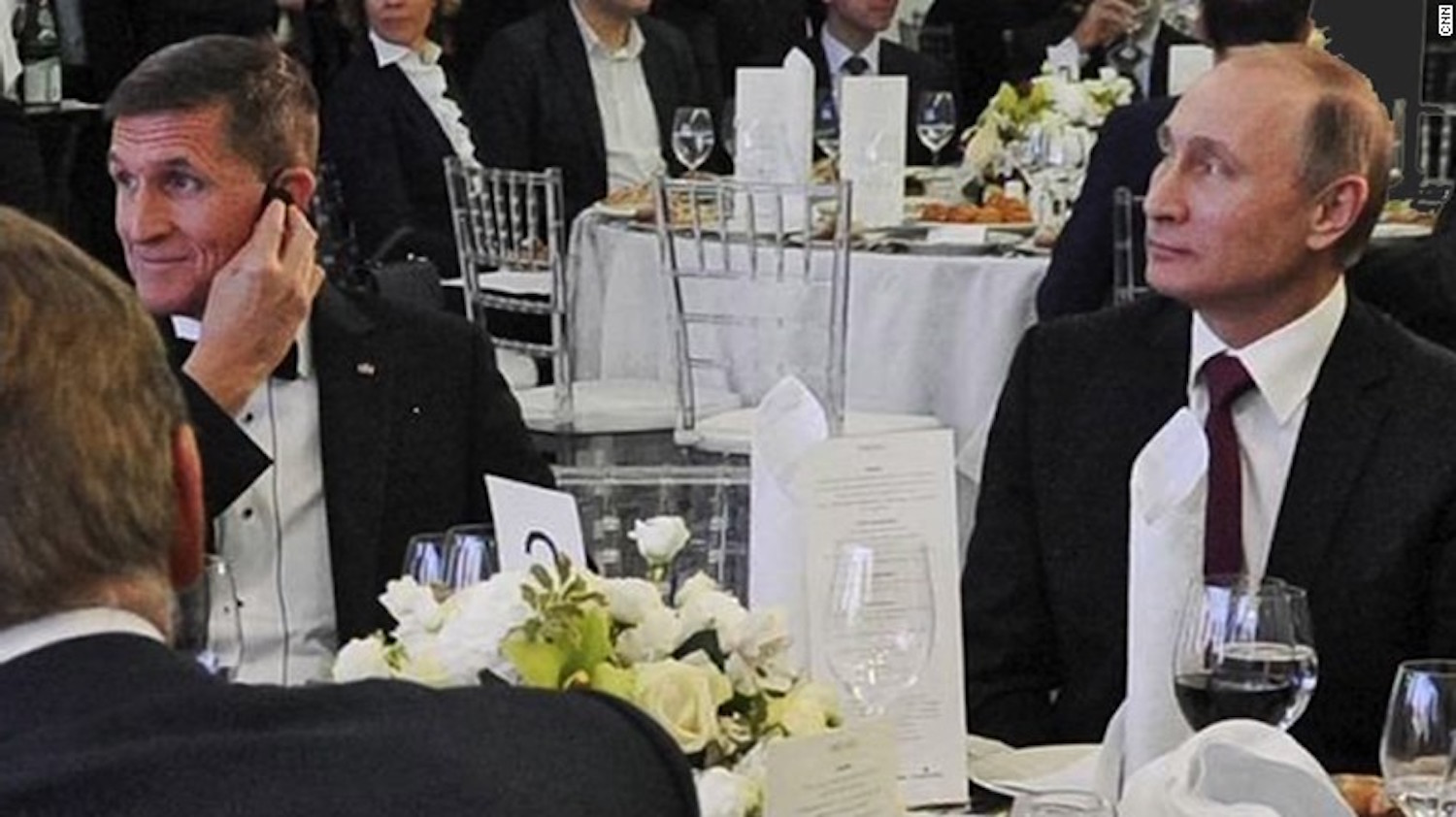
    Russian President Vladimir Putin has denied his country meddled in the 2016 contest between Trump and Democrat Hillary Clinton. While Trump himself has said he believes Russian operatives hacked Democratic Party emails during the election, he has repeatedly lambasted as “fake news” any suggestion that he or his staff had connections to Russia.

    Trump continued his attacks over the weekend, tweeting: “It is the same Fake News Media that said there is ‘no path to victory for Trump’ that is now pushing the phony Russia story. A total scam!”

    He added on April 2: “The real story turns out to be SURVEILLANCE and LEAKING! Find the leakers.”

    U.S. intelligence agencies report that Russia tried to help Trump’s campaign effort. The FBI as well as congressional committees are investigating whether the Russian government coordinated with Trump associates during the campaign. The White House is also trying to quell a firestorm over its behind-the-scenes role in helping the Republican chairman of the House intelligence committee, Rep. Devin Nunes, view secret intelligence reports that he says pointed to inappropriate leaking.

    Rep. Adam Schiff, the top Democrat on the panel, went to the White House March 31 to view materials that he said were “precisely the same.” He declined on April 2 to describe the contents, but criticized the unorthodox disclosure to Nunes, suggesting that the material was more likely an “effort to deflect attention” and “create a cloud through which the public cannot see.”

    “Whenever they see the president use the word ‘fake,’ it should set off alarm bells,” Schiff said. “I think that’s really what going on here.”

    Trump as president persuaded Haley to leave the governorship of South Carolina to represent the U.S. at the United Nations. She said she was “beating up on Russia” over issues such as its actions in Crimea and its dispute with Ukraine.

    When asked if she believes Trump should publicly take a harder Russia stance, she said: “Of course, he’s got a lot of things he’s doing.”

    “There’s no love or anything going on with Russia right now,” Haley said. “They get that we’re getting our strength back, that we’re getting our voice back and that we’re starting to lead again, and, honestly, at the United Nations, that’s the No. 1 comment I get is that they’re just so happy to see the United States lead again.”

    Sen. John McCain, R-Ariz., who chairs the Armed Services Committee, said it was indisputable that Russia attempted to influence the U.S. election, reiterating his call for a special select committee.

    But Senate Majority Leader Mitch McConnell said he didn’t think another review was necessary, citing the bipartisan work from the Senate Intelligence Committee.

    “I think they clearly laid out that they’re going wherever the facts take them,” McConnell said, referring to Republican chairman Richard Burr of North Carolina and Mark Warner of Virginia, the top Democrat on the panel. “We don’t need yet another investigation. We know the FBI is looking at it from their perspective.”

    Dmitry Peskov, Putin’s press secretary, said Russia was not worried about what any U.S. investigation might reveal. “We insist that any blaming that Russia could have been interfering in domestic affairs of the United States is slander,” he said.

    Haley, Peskov and McCain appeared on ABC’s “This Week,” Haley also was on CBS’ “Face the Nation,” Schiff spoke on CNN’s “State of the Union,” and McConnell appeared on “Fox News Sunday” and NBC’s “Meet The Press.”


    • OUTSTANDING WOMEN HONORED FOR THEIR ACHIEVEMENTS AT THE SIXTH IAF GALA

      OUTSTANDING WOMEN HONORED FOR THEIR ACHIEVEMENTS AT THE SIXTH IAF GALA

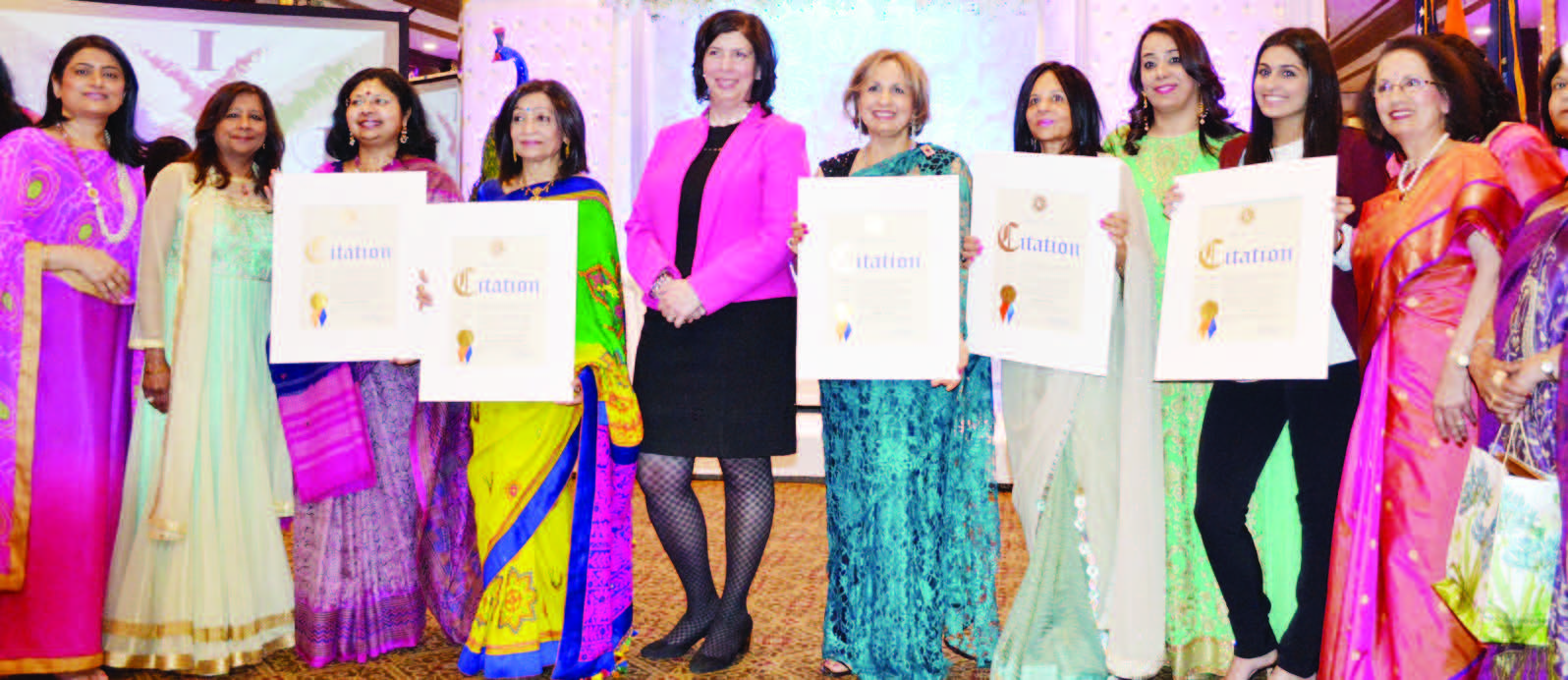
      HICKSVILLE, NY (TIP): As Nassau County District Attorney Madeline Singas, Town of Hempstead Councilwoman Dorothy Goosby, Town of Hempstead Clerk Nasreen Ahmed (Among many other VIP’s) walked into Antun’s of Hicksville on Friday March 24, they all very well felt the pride and achievement in the air. The Grand ball room was full of so many accomplished and elite, who’s who of the society gathered for one singular purpose, to be the part of and celebrate 6th Outstanding Women’s Achievements Gala, part of Women’s History Month and International Women’s Day Celebrations

      IAF (Indian American Forum) led by Indu Jaiswal, known for her strong commitment and dedication to the community cause was the organizing force behind the gala. This year well known business woman Vandana Govil was the Chairperson of the Gala. And of course, the hall was beautifully decorated with Peacocks, and spring flowers theme courtesy Sunita Sadhnani of Glamorous Event Planners. Evening started with lighting of the lamp. Indu Jaiswal Chairperson of IAF in her remarks welcomed all the guests congratulated all the honorees and praised their efforts in achieving such success.

      American National Anthem sung by Inesha Singh and Indian National Anthem sung by Roopam Maini… Master of Ceremonies Mr Anuj Rihal and Chanbir Kaur Sethi made the evening enjoyable. Chanbir Kaur, Roopam Maini and Inesha Singh coordinated a brief Q&A session with the honorees discussing and emphasizing their accomplishments

      In addition to Madeline Singas who was also Chief Guest and Keynote speaker was presented with an award, 4 other distinguished women who had excelled in their profession and community services were presented with Outstanding Women’s achievements Awards

      Kalpana Patel is President and Chief Executive officer of Unique Comp Inc (UCI) an award-winning information technology services company providing IT Solutions and services to Federal, NY State and NY City agencies. Kalpana Patel has received many National and International award and recognition for her performance. Kalpana attributes her success to her parents’ upbringing, Bansi Shah and UCI Team which is with her since inception is really Unique in her opinion which has put UCI on runway to succeed

      Ranju Batra is a woman driven to success and serving him public good by working harder and always paying attention to details. Her successful and historic 7 years journey towards Diwali Stamp is a matter of Pride for generations to come. It was officially dedicated on October 5, 2016 at The India Consulate. She is a loving wife, and a devoted mother of two, one of whom is a special needs miracle daughter Angela. And another capable lawyer son. Ranju has excelled in the public arena and made a difference with her excellence-with-humility approach at all things. She also served as Past President of AIA NY… Ranju’s diligence and goal oriented “grassroots philosophy has made her a strong and worthy bridge between United States and India, bringing both national both peoples closer and together.

      Dr Binita R Shah has bestowed upon the highest academic rank of distinguished Teaching Professor of Emergency Medicine and Pediatrician 2013 the State of University of New York Trustees Albany honoring her mastery of teaching. Binita R Shah has earned a national and international reputation through her highly acclaimed pediatric books 5 so far. Dr Shah’s quest for improving the quality of care delivered to critically ill and injured children globally has led her to travel all over the world. Binita also has passion for performing arts. She also started organizing cultural programs in Herricks Community center. Binita considers herself fortunate as her children and their spouses are practicing in the field of medicine

      Mrs. Vandana Sharma Air India Regional Manager- Americas, has been with Air India for more than 22 years. She hails from Allahabad, and most recently from Mumbai. She came to New York as Regional manager -Americas 2015. So far during her tenure here she has inaugurated two new flights from the USA between Fan Francisco and Delhi and between Newark and London.

      This Year IAF also introduced Awards from Young Achievers and Future Leaders Jiya Singh a senior at Jericho high School. Jiya is very active in community projects such as Project Dignity aims to building bathrooms in India, Jiya has was placed third in the Nassau County for Tennis and qualified to the New York State tournament. Jiya also received Future Business Leaders of America Scholarships and formed E Commerce Website for ecofriendly banquet halls. Jiya is also a successful Golfer.

      Setu Mehta is a is fun loving, caring and kind with a talent for making others around her smile. She is a senior at Herricks High Scholl and is the Valedictorian of her class. Her passion includes playing viola. She has played her t Carnegie Hall, Lincoln center, Adelphi School of performing arts. In addition, she loves Indian Classical dances, Setu has been named toas a National merit Commended Scholar and a member of the National honors Society. She is known by her friends as someone who is approachable and ready to help out. She loves the outdoors, cooking and reading and is always having fun…

      NASSAU County DA Madeline Singas was all in praises for the efforts of Indian American Forum and Indian American Community. She congratulated all honorees and stressed the importance of role women are playing in this world. Citations of behalf of Nassau County Executive Edward P Mangano were presented by Zahid Syed, Chairman of Human right Commission Nassau County to all honorees. Syed praised their efforts and congratulated them for their achievements. Citations were presented from the town of Hempstead Supervisor Anthony Santino by Councilwoman Goosby and town Clerk Nasrin Ahmed. Town of Oyster Bay Supervisor Saladino and Councilman Imbroto and Town of North Hempstead Supervisor Judi Bosworth presented Citations to the honorees

      Among those present during the event were Bobby Kalotee Founder of IAF, Nassau County Human right Commissioner Sharanjit Singh Thind, Bina Sabapathy, President of India Association of Long Island, Sher Madra , Shammi Singh and Peter Bheddah, Board of Directors of Nargis Dutt Foundation, Shashi Anand well known business woman, Haseena Mooppan and Jasia  from Domestic Harmony Foundation, Rizwan Qureshi from HAB Bank, Roopam Maini from Indus American Bank, Sangeeta Bahl, Past  President of Rotary Club, Shiv Dass and Subhash Kapadia, Kamal Dandona, Bharat Jotwani, T S Anand, Peter Bheddah , Smiti Khanna   and several other dignitaries were present

      Dance performances presented by students of well-known Choreographers Swati Vaishnav and Dr Ari Datta. Mr Mohinder Taneja and Animesh Goenka gave special thanks for all of our sponsors and media partners.

      Board of Trustees Dr Azad Anand, Surinder Rametra, and Bobby Kalotee, a, Animesh Goenka, Volunteers Nirmala Rametra, Jaya Bahadkar, Anu Gulati, Dr Meena Jaiswal, Vijay Goswamy, Tejal Kamath, Sunny Thakkar and Many other helped in making the event a grand success. It was indeed a very successful evening, showcasing and honoring outstanding women achievers, who are successful in business, cultural, professional, education, and medical. Community and social services.

      (Press Release)

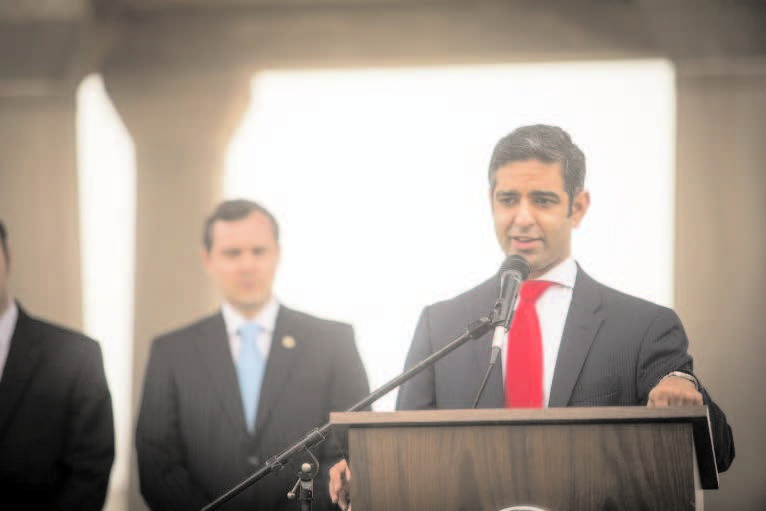
    • Indian American enters New Jersey Gubernatorial Race

      Indian American enters New Jersey Gubernatorial Race

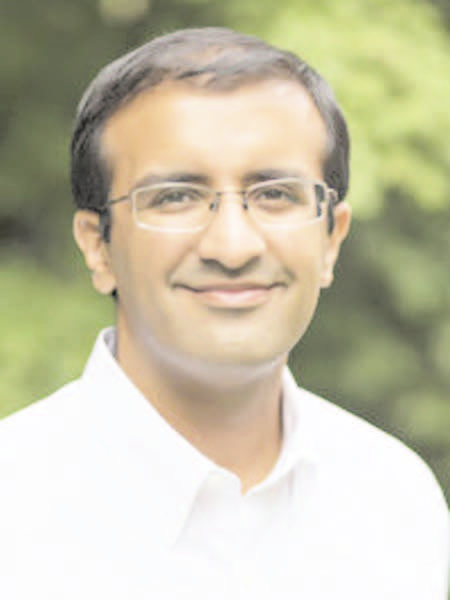
      EDISON, NJ (TIP): Hirsh Vardhan Singh, a 31-year-old Indian-American entrepreneur has entered the governor’s race in New Jersey. The Republican announced his run for the top elected position in the State earlier this month and urged people of New Jersey to give fresh ideas a chance. He also unveiled several points of his plan including: cutting property taxes and fixing the school funding formula to bring back prosperity to the residents of New Jersey, fix transportation infrastructure, and make New Jersey a national leader in technological innovation.

      Announcing his candidacy for the New Jersey Governor’s seat, Singh emphasized his goal to bring back jobs to New Jersey. “We need to fix our economy, we need to get going in the right direction”, Singh said. During his speech, he mentioned the need for fresh and innovative ideas “we’ve tried bankers from Goldman Sachs before and we’ve tried lawyers”; “Now if you give me the support I bring my engineering background as a problem solver”.

      But Singh will face a tough Republican primary on June 6, 2017, battling with least four popular Republican candidates in the race – Assemblyman Jack Ciattarelli, Lt Governor and Secretary of State Kim Guadagno, Nutley Commissioner of Public Affairs Steven Rogers and businessman Joseph Rudy Rullo.

      If elected in the November gubernatorial elections, Singh would succeed outgoing Republican Governor Chris Christie and would be the third Indian-American ever elected as a Governor of a State after Bobby Jindal and Nikki Haley.

      Born in Atlantic City as the middle of three children, Hirsh attended a public high school in Egg Harbor Township. Through high school, Hirsh got involved in many extracurricular activities, which encouraged him to take on many leadership roles during his time in college at the New Jersey Institute of Technology. Hirsh went on to receive a Bachelor of Science from NJIT in Engineering.

    • AAPI condemns violence against physicians in India: Appeals to Govt. of India to put an end to violence against physicians

      AAPI condemns violence against physicians in India: Appeals to Govt. of India to put an end to violence against physicians

      NEW YORK (TIP): Physicians in India feel threatened and their lives are in danger. Some hospital administrators have begun to hire muscular looking bouncers, whose imposing presence deters patients’ relatives from aggressive behavior. The medical fraternity in several states is on strike, due to the recent incidents of violence against doctors. This is not good for the people we are committed to care and also is not benefiting the Doctors.

      In a letter sent to the Prime Minister of India and several high ranking officials at the Government of India, Dr. Ajay Lodha, President of AAPI, condemned the ongoing violence against physicians across several states in India.

      “We at AAPI, the largest ethnic medical organization in the nation, urge the government of India to make all the efforts possible and put an end to this ongoing violence against medical professionals and enable them to continue to serve the country with dignity, pride and security,” Dr. Lodha said in the letter sent to the Prime Minister, Home Minister, Health Minister, India’s ambassador to the US and the Ambassador of the US to India.

      Recalling that from ancient times, physicians across India and around the world have been revered for dedicating their lives for the noble mission of preventing people from getting and saving millions of lives of people from illnesses, Dr. Lodha told the Indian government that “we as a community of physicians and individual members of this fraternity have decided to go into the medical profession with the best of intentions. We as physicians want to help people, ease suffering and save lives. Physicians of Indian origin are well known around the world for their compassion, passion for patient care, medical skills, research, and leadership.”

      Expressing shock that despite these noble intentions, many doctors and nurses put their own lives on the line in the course of their jobs, facing attacks from the very people they are trying to help. “Violence against doctors has reached such an extreme in India that the medical staff is afraid to come to work and they need a police presence in the hospitals where they work,” Dr. Lodha said.

      For instance, 49 doctors have been attacked in the state of Maharashtra alone since 2015. “The violence against physicians in India, will put a dent in these area, where we have been growing rapidly as world leaders and will cause irrevocable damage to the health industry in India and our image will be tarnished forever, Dr. Lodha pointed out.

      Pointing to reports by the Indian Medical Association (IMA), he said, more than 75% of the population of doctors have had to deal with some degree of violence or aggression directed at them, according to. Shockingly, a large proportion of doctors don’t report such incidents, believing them to be a part of the job so the true figures are likely to be higher. Incidents vary from minor verbal abuse all the way through to the murder or attempted murder of staff, Dr. Lodha said.

      While security needs to be strengthened, enhancing the doctor-patient relationship is undoubtedly the most important factor in reducing violence. Improving the quality of medical facilities and reducing the financial burden on patient’s families is also important as large payments may be catastrophic for poorer people and if they then encounter poor facilities too, this may engender a feeling of corruption. There is even an online petition in change.org seeking safe work environment for doctors.

      According to Lodha, this recent rapid increase in violence has the potential to tarnish India’s image globally as a rising super power. One of the world’s fastest growing economics, India is a dynamic market with immense opportunities in healthcare. With pioneering Indian companies offering a global work culture, India is becoming a preferred career destination for professionals looking for exceptional individual learning and unique growth opportunities. And, in recent decades, India is turning medical tourism hub, attracting millions of people from abroad.

      The members of the American Association of Physicians of Indian Origin (AAPI), an umbrella organization which has nearly 90 local chapters, specialty societies and alumni organizations, with over 35 years of history of dedicated services to their motherland and the adopted land, are appalled at the growing violence against our fellow physicians in India, Dr. Lodha said. “We strongly condemn this ongoing violence. And we want immediate action against the culprits, who have been carrying on these criminal acts. We are shocked by the lack of coherent action against such violence and protect members of this noble fraternity.”

    • INOC, USA deplores mob attack on Nigerian Students in Greater Noida, India

      INOC, USA deplores mob attack on Nigerian Students in Greater Noida, India

      NEW YORK (TIP): ‘It is a sad day for a nation when foreign nationals are targeted, harassed and beaten up. What kind of a country India wants to be?’ asked George Abraham, Chairman of the Indian National Overseas Congress, USA. ‘We strongly condemn the alleged racist and brutal attack on Nigerian students by a mob in Greater Noida, U.P and call upon the Ministry of External Affairs and the Chief Minister of Uttar Pradesh to take prompt action to identify and to bring the perpetrators to justice. Undoubtedly, these are hate crimes and should be dealt with seriously’ the statement added.

      Indians are one of the largest Emigrant groups to anywhere and demand freedom and opportunities wherever they seem to settle down. Those opportunities have enabled the NRIs to contribute substantially to the development of modern India. Therefore, it is incumbent on the Government of India as well its citizens to reciprocate and extend the same courtesies to foreigners who come to India whether it is for further studies or conducting business.

      We all had felt the pain when one of our own, an Indian Techie Srinivas Kuchibhotla was killed in Kansas. It is only fair that we express the same outrage when an injustice is done to foreigners who reside in India.

      However, we have serious doubts about the willingness and fortitude of the current BJP Government to seriously deal with racism and bigotry as they thrive on polarization and division. It should be noted that even students from Northeast are allegedly facing harassment and discrimination in their daily lives at the nation’s capital and only the strict enforcement of law and order and upholding of constitutional values may bring about any relief.

      As for NRIs, it is a moral imperative to voice their serious concern in this regard to the government of India. Demanding fairness elsewhere while remaining silent in the face of injustice towards the treatment of foreigners in India would tantamount to just plain hypocrisy, the statement added.

    • SAREGAMA MUSIC CARDS – The perfect gift for your loved ones

      SAREGAMA MUSIC CARDS – The perfect gift for your loved ones

      There are soulful lyrics that console you during a heartbreak, beautiful voices that describe your love for someone special. Songs that lift you up or bring you down with a particular memory or a moment in time. Music is eternal and this is why it is the perfect gift for friends, family and employees.

      Saregama India has been working on innovative ideas to make Indian music easily accessible to the Indian American audience. In itslatest offering to the Indian American community, Saregama India – India’s largest owner of timeless collection of music, launchedSaregama Music Cards in March, 2017 in its US market. Each music card comes with 200 HD songs pre-loaded on a 4GB USB memory card, making it convenient to use on TVs, laptops, computers, car music systems and any other USB port.

      The music cards are currently available on Amazon.com and will soon be available at an Indian grocery store near you.

      Saregama hasover 20 different types of music cards in Bollywood, Sufi, &Classical among other categories. Legendary singers like Mohammad Rafi, Kishore Kumar, Asha Bhosle and Lata Mangeshkar are the usual favourite artistes that feature in these music cards. Given Saregama’s extensive repertoire of regional languages, music cards are also available with Tamil songs by Ilayaraja& T.M Soundarajan, Malayalam songs by Yesudas, and Rabindra Sangeet in Bengali.

      Announcing the launch, Vikram Mehra, Managing Director, Saregama has said, “With CDs slowly dying as a form factor, music lovers were finding extremely difficult to get their favourite music in high quality. Music cards are the perfect choice for personal listening and gifting”

      Available on ww.saregama.com/musiccardand www.amazon.com 200 HD quality songs: $14.99

      About Saregama India: Formerly known as The Gramophone Company of India Ltd, Saregama owns the largest music archives in India, one of the biggest in the world. The ownership of nearly 50 per cent of all the music ever recorded in India also makes Saregama the most authoritative repository of the country’s musical heritage. Saregama has now expanded into other branches of entertainment – it is involved in publishing, television software and digital content. It also runs studio facilities in Dum Dum, Kolkata making it one of the best end-to-end entertainment houses in the country. (Press Release)

    • Rise of the anti-liberal order

      Rise of the anti-liberal order

      “The issue confronting India, as indeed the entire Western world, is the rise of populist leaders challenging liberal, pro-globalisation post World War II order, mixing xenophobia, religion and voodoo economics. Steve Bannon, President Trump’s closest adviser and former head of Breitbart News, apocalyptically senses the coming confrontation of the Christian world with ‘jihadist Islamic fascism’.

      KC Singh
      Author – KC Singh

      He spelt this out in a 2014 Rome interview. Capitalism’s crisis, he argued, is loss of its Judea-Christian roots as evidenced by ‘secularisation’ of the West. Yogi Adityanath and his sponsors would concur”, says the author – KC Singh.

      Two weeks after the counting of votes, with a controversial Yogi ensconced as UP Chief Minister, and the surprising lackluster performance of the AAP in Punjab, analysts and politicians continue to mull over the outcome.

      The AAP questioned the sanctity of EVMs, arguing that sworn affidavits by party loyalists exceed actual ballots in some booths. They may be underestimating the guile of ‘simple’ village folk, although Election Commission’s hesitation to double-check the paper trail in some constituencies raises questions. While the Supreme Court examines this aspect, trends from abroad may hold an explanation.

      Like the AAP, European Pirate parties rose from issue-based politics as an alternative to traditional parties in Sweden in 2006. They grew rapidly there and in Germany and Iceland, winning two seats even in the European parliament in 2009. The 2009 Upsala Declaration spelt out their platform encompassing greater government transparency, privacy and civil rights reform, open data access and direct democracy by co-opting citizenry in decision-making via the Internet. In Germany, additionally, the rights of the LGBT community and basic income guarantee were added.

      Their growth, however, has been disappointing except in Iceland. Germany saw the bickering which is a daily fare in New Delhi. In Iceland, the Panama Papers scandal, compelling the prime minister to resign, gave them an impetus. The real problem has been that public opinion has moved past their issues to existential dilemmas like terrorism, immigration, economic stagnation due to perceived impact of globalisation and the consequent ethno-religious resurgence. The AAP needs to recalibrate its message and broaden the leadership bench-strength to tap contemporary India’s aspirations that go beyond corruption. That issue too, usurped by Modi’s demonetisation juggernaut at present, needs to be redefined.

      In Punjab, the principal reason for the AAP’s fading at the finish line was lack of experienced and credible faces. The Hindu minority and Sikh elite thus gravitated towards the Congress as the only viable alternative to the detested Akali Dal. Punjab wanted change, but also feared chaos, as did people in Europe when assessing Pirate parties. As a result, Punjab may have missed its chance for radical governance reform. Though still early days but an education minister who knows no Punjabi, a culture minister fixated on television earnings and an industrialist as power minister are hardly symbols of accountability and governance change. The battle was for more than red beacons on cars.

      In Italy, new politics shaped differently, albeit with motives shared with Pirate Parties. Five Star Party (M5S) founded by popular comedian Beppo Grillo, a European Bhagwant Mann, and Gianoroberto Casaleggio, aimed to marginalise traditional parties seen as responsible for constant stagnation and impasse. They won mayors of Rome and Turin, like the AAP, but unlike it, are leading in the 2018 national election race. In his defence, while Arvind Kejriwal contends with an ascendant national leader, Narendra Modi, Grillo and associates step into a vacuum.

      #YogiAdityanath
      #YogiAdityanath

      The BJP sweeping UP and nominating Yogi Adiyanath as Chief Minister is replete with danger. For Gorakhnath math’s head to be so elevated raises questions about mixing religion and politics. The math, which allows non-Brahmin leadership, has a chequered past. Its head, Yogi Digvijay Nath joined the Congress in 1921. However, his suspected role in the Chauri Chaura incident involving police firing and in revenge burning alive of the entire police post personnel forced Gandhiji to withdraw the Non-Cooperation Movement. Yogi and the math thereafter parted ways with the Congress.

      Yogi Adityanath’s rise invited adverse editorial comment from the New York Times, which the Modi government has slammed. President Donald Trump, a fellow victim of the same paper, promptly telephoned to congratulate Modi on his electoral success. This would be a first for the US President as state elections are a domestic issue best left alone by foreign leaders.

      The separation of religion and state began the post-1648 Treaty of Westphalia, ending 30 years of religious wars in Europe. French Cardinal Richelieu’s concept of ‘raison d’etat’ or interests of state as the determinant of all actions, instead of religion or dynasty, brought secular thinking into inter-state affairs. Papal desire to control the Holy Roman Empire ended with its decline and ultimate demise by start of the 19th century.

      Arthur Koestler in Yogi and the Commissar argues there is little common ground between the two as one concerns man’s relations to the universe and the other to society. While Sikh Gurus did espouse the concept of ‘Miri-Piri’, implying the dual role as temporal and spiritual guides, in reality, the Badal trio – father, son and the bahu – were above the dictates of the Sikh clergy. The secularisation of the Akali Dal has been complete, but the BJP’s UP experiment defies history.

      In Shia Islam, the debate is still unsettled. Traditionally, the Shia clergy considered all governance as profane and thus beyond their pale. Ayatollah Khomeini of Iran, in exile in Iraq, developed the concept of Velayat-e-Faqih, or the rule of the most jurisprudent. He reasoned that till the return of the 12th Imam, who was in occultation, the wisest among the clergy must guide the ruler to stymie misrule. The revered living Iraqi cleric, Ayatollah Sistani, contests this thesis, subscribing instead to the quietist school requiring clerics to remain in the background.

      The issue confronting India, as indeed the entire Western world, is the rise of populist leaders challenging liberal, pro-globalisation post World War II order, mixing xenophobia, religion and voodoo economics. Steve Bannon, President Trump’s closest adviser and former head of Breitbart News, apocalyptically senses the coming confrontation of the Christian world with ‘jihadist Islamic fascism’. He spelt this out in a 2014 Rome interview. Capitalism’s crisis, he argued, is loss of its Judea-Christian roots as evidenced by ‘secularisation’ of the West. Yogi Adityanath and his sponsors would concur.

      How then can the demonised and beleaguered forces of liberalism respond? The recent defeat of Dutch nativist Geert Wilders provides a clue. D66, a collection of earnest pro-European liberals, improved seats by 50 per cent and Green Left tripled its strength by contesting and not dodging the narrative of Wilders with a counter-vision, as The Economist notes, centred on tolerance, openness and internationalism. The question is, who shall bell the Indian cat? Hopefully, Aristotle was right when he said ‘nature abhors a vacuum’.

      (The author is a former Secretary,

      Ministry of External Affairs, government of India)

    • It’s time airlines took a tough line against unruly VIP behavior

      It’s time airlines took a tough line against unruly VIP behavior

      “Air rage” – or sudden and violent behavior by a passenger affecting those who work on flights or associated people – is a menace that has led to civil aviation authorities issuing strict guidelines on deterrence and punishment for those responsible for such acts.

      In India, while the laws on unruly and disruptive behavior in an airliner are clear, they are difficult to enforce when the perpetrators take the cover of their positions of power.

      The outrageous conduct of Ravindra Gaikwad, the Member of Parliament from Osmanabad who belongs to the Shiv Sena, with Air India staff after seeking a business class seat in an all-economy flight from Pune to Delhi, required more than just a legal response by the airline.

      The Air India cabin crew had its task cut out but handled the incident well as can be gleaned from raw video images of what transpired on March 23.

      The consequent steps taken by the national carrier and members of the Federation of Indian Airlines to put him on a “no-fly list” is a welcome one.

      While the Aircraft Rules of 1937 have outlined a course of actions to be taken after such disruptive behavior, the application of a “no-fly list” is a new development and is in line with similar practices adopted in many countries. This practice should deter such outrageous actions by anyone, irrespective of whether the malefactor is in a position of power or not.

      Such behavior is, unfortunately, not uncommon among legislators. In 2015, a Jet Airways woman cabin crew member complained about alleged misbehavior by Bihar MLA Pappu Yadav during a Patna-Delhi flight.

      In November 2015, a case was registered against YSR Congress Party MP P. Mithun Reddy and others for allegedly assaulting an Air India station manager at Tirupati airport. These incidents are symptomatic of a culture of entitlement that pervades many in power today and, sadly, gives credence to the flawed notion that political representatives are a law unto themselves. Mr. Gaikwad’s actions were compounded by the fact that he brazenly justified his behavior – of hitting an airline employee with his slippers after the latter said that he would complain to the Prime Minister.

      While the Shiv Sena has said it does not condone his actions, its leader and MP, Sanjay Raut, has in bizarre fashion put the onus on Air India, asking it to think over “what would happen if the public decides to blacklist the airline”. The Shiv Sena has a history of high-handedness and use of political muscle. Party president Uddhav Thackeray had sought to move away from the rough-arm tactics of the past and to align his party to a new form of provincial politics. Mr. Gaikwad’s behavior suggests that the party is no closer to that goal.

    • An expansive Hindutva agenda?

      An expansive Hindutva agenda?

      The Hindutva project has succeeded in projecting itself as speaking to the deep diversities that crowd U.P

      “The invocation of Shiva and Shakti in this project that hitherto held firmly to a graded order and paternalism would have implications for Indian democracy that have been little envisaged so far”, says the author.

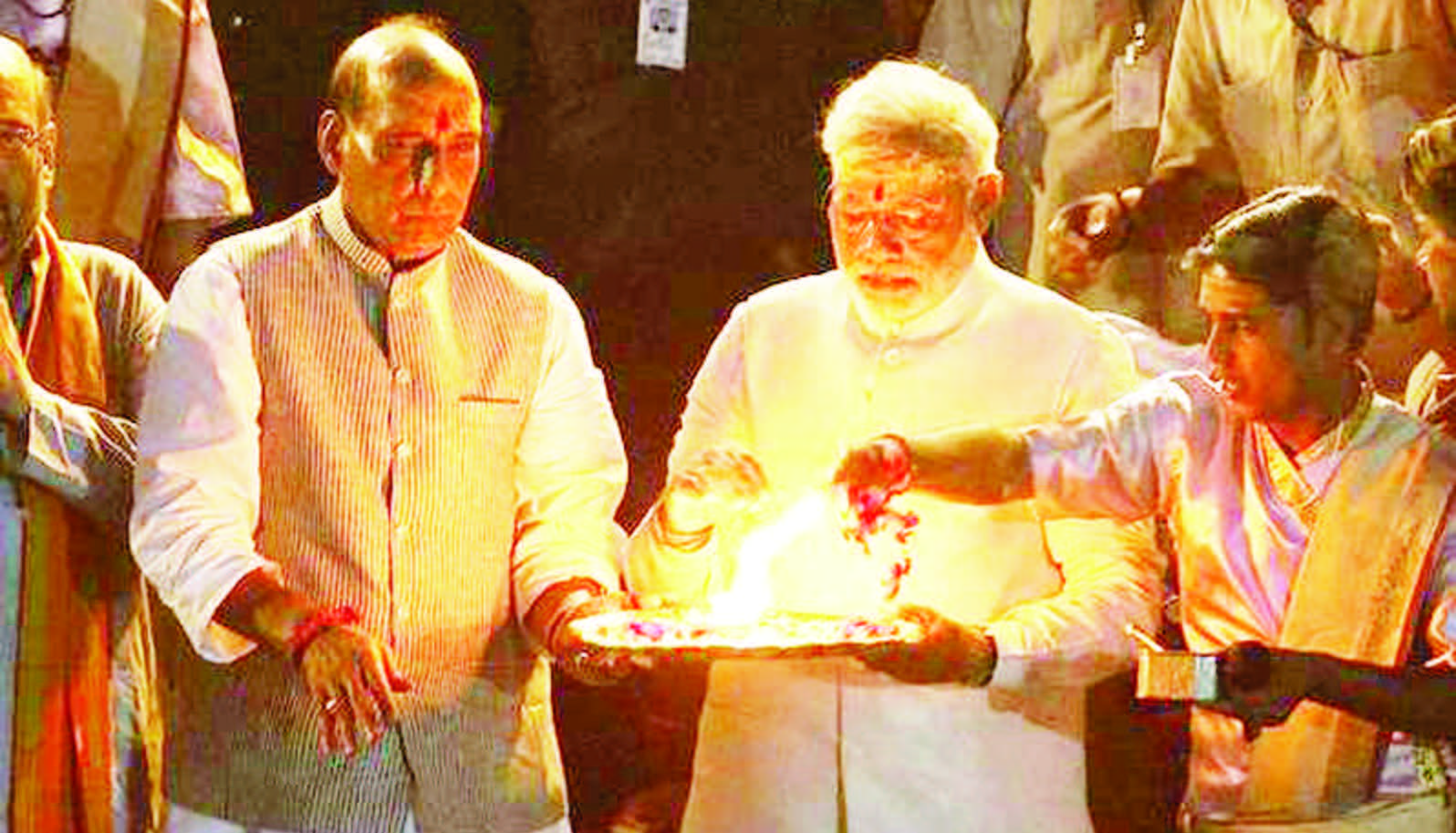
      If symbols speak, and in the layered culture deposits of the Gangetic plain they do speak loud, one of the most memorable spectacles was Prime Minister Narendra Modi’s visit to Kashi Vishwanath Temple on March 4, 2017.

      It was preceded by a roadshow in the narrow, winding streets of Varanasi all decked up for the grand effect, following the garlanding of the statue of Pandit Madan Mohan Malaviya at the Benares Hindu University. Within the temple precincts itself Mr. Modi appeared the great performer, oozing a burst of energy, while the archakas were transfixed in the archaic layout of the ancient temple complex. Place this spectacle alongside Mr. Modi’s salutation to ‘Ganga Ma’ at the Dashashwamedh Ghat of the river on May 17, 2014, a day after his victory from Varanasi Lok Sabha constituency, three years ago: and you have before you one of the most powerful symbols to reach out to the length and breadth of India, Shiva and Parvathi, alongside Ganga, and their complex personifications in myriad forms, the principles of dynamism and recreation, galore across India, in much more vivid forms than Ram lalan of Ayodhya.

      Yogi Adityanath, the new Chief Minister of Uttar Pradesh, himself heads a temple, the Gorakhnath temple, named after a representation of Lord Shiva, a representation that gathers in its fold elements of Buddhism, the tantra practices, the Nathpanthi traditions, and renouncer cults.

      Shiva in political pantheon

      While the Hindutva project is unlikely to shed Ram from its political pantheon, it would be worth watching the deployment of Shiva and Shakti sites spread across the length and breadth of the country, particularly in its peripheral regions. Lord Shiva is the lord of the dissenter, the renouncer, the wayward, the very captive of his devotee, the great patron of arts and crafts, the yogi par excellence, while he is at the same time the great destroyer, angry and disdainful of the social order. He inhabits the peripheries of the Brahmanical dispensation that stipulates a tightly ordered social universe. He is primarily the lord of the lower social orders, of the margins. He is the presiding deity across the vast expanses of the Himalayas, most of the southern part of India, and the hills and ghats where the Brahmanical order is precariously present.

      For the Hindutva ideologues, at least those who walk hand in hand with Mr. Modi, the conquest of Lord Ram’s place of birth at Ayodhya is over; what is important is to bind India together, its myriad differences and diversities through new bonds. Was the Prime Minister, who said little on the Ram Janmabhoomi issue during his numerous public meetings across the length and breadth of Uttar Pradesh, opening a new front for Hindutva? Are we, therefore, stepping into a religio-political project that was little seen as integral to Hindutva so far?

      Finger on the U.P. pulse

      The socio-political space that constitutes Uttar Pradesh today has always nurtured a complex internal debate with regard to the idea of India from the later part of 19th century. The great debate with regard to the future of Muslims in the subcontinent following the demise of the Mughal Empire was centred around this region in which the ulema of Deoband and Barelvi madrasas and later the Aligarh Movement played a decisive role.

      One always found in this region informal groupings of religious adherents, be they Hindus or Muslims, who did not toe the line of any one political party. Besides, after the abolition of the zamindari system this region, as a whole, was not much shaken up by the powerful agrarian and anti-caste movements that have had such powerful impact in the neighbouring region of Bihar.

      However, recent evidence suggests that a large number of traditional upper caste religious groupings in the region have been veering round to the Hindutva project, and orthodoxy has spread its appeal much wider among Muslims. The egalitarian social imaginary of the lower rungs among Hindus has thrown up new modes of religious gatherings, revitalised marginal deities, and much social effort has gone into the construction of shrines and temples and writing caste histories. The Hindutva expressions in this region have reached out to this imaginary while the other political formations in the region have had little say on it.

      The cryptic comment that Samajwadi Party leader Mulayam Singh Yadav made, that Chief Minister Akhilesh Yadav’s defeat is on account of his departure from Lohiawad, has a ring of truth about it, although the former himself reached out to this social imaginary very little. The secular hat that the Congress wears is totally disconnected from this groundswell. The Bahujan Samaj Party did little to disabuse the charge that the Prime Minister made in his election rallies that it serves the good of one against its claims to represent the many. Besides, the impermeable walls that the dominant discourse within this party erects across castes and communities makes it difficult for it to access complex modes of oppression and cultural nuances that play a decisive role in an electorally surcharged arena such as Uttar Pradesh.

      The strategy

      In sum, over the years there has been little attempt to make the deep diversities that crowd Uttar Pradesh speak to one another. The Hindutva project has succeeded in projecting itself as speaking to this diversity through a phalanx of organisations. Mr. Modi was only the presiding deity, the organising centre of this process. The Uttar Pradesh strategy also demonstrates that the Bharatiya Janata Party (BJP) will adopt very distinct strategies in different regions of India, with a few slogans such as ‘Sabka sath, sabka vikas’ as common.

      It is a pity to watch the plight of the Muslims in Uttar Pradesh if we ignore the local bravado on display in some places. The Hindutva project has been surreptitiously redefining the Muslim world in this region that has global ramifications. It has selectively extended support to the Sufi heritage, and Mr. Modi even addressed the World Sufi Forum in Delhi in March 2016. It has tried to win over a section of the Shias with an eye on Pakistan, Iran and West Asia, but also tapped the historic Shia-Sunni rivalry in the State to its advantage. It has not been sympathetic to the demand of Aligarh Muslim University for minority status and has expressed strong resentment against the relatively doctrinaire strand of Islam upheld by the Deoband madrasa. Organised Muslim political opinion has largely concentrated in carving out electoral strategies rather than propose ways by which people who subscribe to deep differences in beliefs and values but share much of everyday life in common can live together. The coexistence and toleration argument does not apply here because everyday life is deeply caught in conflicts and the language of sterile secularism does not offer a line of advance.

      The language of vikas that the BJP spoke during the electioneering, therefore, may have to be seen through the lens of this expansive Hindutva project. Everyone is welcome to participate in the common economic endeavour, but the normative and cultural codes of such an endeavour will be governed by this project. The invocation of Shiva and Shakti in this project that hitherto held firmly to a graded order and paternalism would have implications for Indian democracy that have been little envisaged so far.

      (The author is a former professor at the Centre for Political Studies, Jawaharlal Nehru University, and currently National Fellow, Indian Council of Social Science Research)

    • Google’s case against Uber just took an unexpected turn

      Google’s case against Uber just took an unexpected turn

      SAN JOSE, CA (TIP): In an unexpected twist to the Uber vs Google case, lawyers for Anthony Levandowski, the star engineer at the center of the trade-secret dispute, have advised him to exercise his fifth amendment right to not incriminate himself in a criminal proceeding, according to a court transcript.

      In February, Waymo, the self-driving company owned by Google’s parent company Alphabet, sued Uber , claiming that Levandowski had stolen vital Lidar technology shortly before starting his own self-driving company (which Uber later acquired).

      The trade secrets case is shaping up to be one of the most significant and closely-watched battles in Silicon Valley in years, pitting two of the world’s most powerful companies, and former partners, against each other.

      Levandowski isn’t named in the civil suit between the technology giants, but his lawyers met with Judge William Alsup in a hastily arranged conference on Wednesday, March 29.

      According to a transcript seen by Business Insider of the court proceedings, Levandowski’s lawyers say he plans to assert his fifth amendment rights because there is a “potential for criminal action” against the engineer at the heart of the case. The New York Times first reported the court proceedings.

      Part of Waymo’s argument against Uber is that Levandowski allegedly stole 14,000 files and took them to Uber to advance its competing self-driving car efforts. It was separately revealed on Wednesday that Google had previously filed demands against Levandowski in arbitration for allegedly using confidential information to poach employees.

      In the transcript, it was disclosed that a second employee was also a part of the arbitration proceedings. This person was not identified in the transcript. A Waymo person declined comment.

      For the time being, Levandowski’s lawyers said that they’re “broadly asserting” his Fifth Amendment rights to “any documents he may possess and control” that are relevant. This could include pleading the fifth should Google try to depose him.

      However, one of his lawyers stressed that he could change his mind as the case progresses and that they’re simply protecting his constitutional rights upfront.

      Uber’s associate general counsel, Angela Padilla, said in a statement provided to Business Insider that it plans to respond in court on April 7.

      “We look forward to our first public response laying out our case on Friday, April 7. We are very confident that Waymo’s claims against Uber are baseless and that Anthony Levandowski has not used any files from Google in his work with Otto or Uber,” she said.


      (Source: Business Insider)

    • ‘Best of Bollywood’ coming to U.S. movie theaters

      ‘Best of Bollywood’ coming to U.S. movie theaters

      NEW YORK (TIP): ‘Best of Bollywood’ is coming to U.S. movie theaters beginning in July. The initiative is taken by Fathom Events who are planning to screen at least two Bollywood films this year and as many as six next year as part of what it’s touting as the first-ever Bollywood classic film series presented in North American cinemas. The event will kick off with the 2002 romantic drama “Devdas” and include titles from prominent Indian film studios Eros International and Yash Raj Films.

      “Devdas,” from Eros International, stars Shah Rukh Khan, Madhuri Dixit, and Aishwarya Rai Bachchan. Fathom will also show Yash Raj Films’ “Veer-Zaara,” starring Shah Rukh Khan, Preity Zinta, and Rani Mukerji, as a part of this year’s series.

      The Bollywood series will be shown at several hundred sites for one night and include exclusive bonus content.


    • Indian American Vanita Gupta named President and CEO of Leadership Conference

      Indian American Vanita Gupta named President and CEO of Leadership Conference

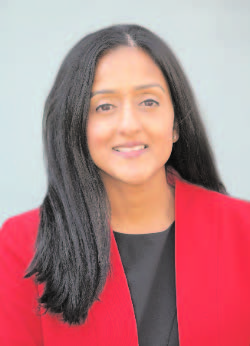
      WASHINGTON (TIP): The Leadership Conference on Civil and Human Rights on March 23 announced that it and its sister organization, The Leadership Conference Education Fund, had selected civil rights litigator and advocate Vanita Gupta to assume the leadership of both organizations. The chairs of the two organizations’ boards made the announcement after a joint board meeting to ratify the consensus recommendation of a 16-member joint board search committee. Gupta, who most recently served in President Obama’s administration as the head of the Civil Rights Division at the U.S. Department of Justice, will officially begin on June 1.Wade Henderson, who announced his retirement in November 2015, has led the organizations for nearly 21 years.

      “At a time when our nation’s ideals and progress are being threatened in such fundamental ways, The Leadership Conference is a vital nerve center of the broad swath of civil and human rights organizations that are fighting for justice, fairness, and equality around the country,” Gupta said. “Civil and human rights work has never been easy, and these unprecedented times demand a clarity of vision, strategy, and solidarity that the Leadership Conference coalition is uniquely positioned to champion. I am honored and humbled to take on this essential work to guarantee that justice and equality apply to every individual as we struggle to be a more perfect union and remain a beacon for hope in the world.”

      “Wade Henderson will go down as one of the all-time great civil and human rights leaders. A true visionary and a brilliant leader, Wade has fundamentally transformed both The Leadership Conference and The Education Fund into the indispensable organizations they are today. It is my privilege to follow in his footsteps and build on his legacy in these challenging times.”

      Obama appointed Gupta as principal deputy assistant attorney general and head of the U.S. Department of Justice’s Civil Rights Division in October 2014, where she served until January. As the nation’s chief civil rights prosecutor during one of the division’s highest profile and most productive eras, Gupta oversaw a wide range of criminal and civil enforcement efforts to ensure equal justice and protect equal opportunity for all.

    • Liberian Indian American Dr Raj Panjabi to receive Skoll Award for Social Entrepreneurship

      Liberian Indian American Dr Raj Panjabi to receive Skoll Award for Social Entrepreneurship

      NEW YORK (TIP): Dr Raj Panjabi, a Liberian Indian American physician and social entrepreneur, is among four recipients of the 2017 Skoll Award for Social Entrepreneurship. The other recipients are Kola Masha, Bradley Myles and Dr. Elizabeth Hausler.

      The Skoll Awards distinguish transformative leaders whose organizations disrupt the status quo, drive sustainable large-scale change, and are poised to create even greater impact on the world. Awardees’ organizations receive $1.25 million core support investments to scale their work and increase their impact. Four social entrepreneurs will accept their awards at the Skoll World Forum’s Awards Ceremony on Wednesday, April 5, 2017.

      “Social entrepreneurs share several important characteristics: concern for the vulnerable, optimism about our future, an ability to think and do, and most importantly, an unfailing belief in solutions,” said Jeff Skoll, Founder and Chairman of the Skoll Foundation. “These four remarkable people give us great hope that a more peaceful, prosperous, and sustainable future is within reach.”

      Dr Panjabi is CEO of Last Mile Health and Associate Physician in the Division of Global Health Equity at Brigham and Women’s Hospital and Harvard Medical School. Last Mile Health saves lives in the world’s most remote communities by partnering with governments to design, scale, and advocate for national networks of community health professionals.

      In 2016, TIME Magazine named Dr. Panjabi to its annual list of the “100 Most Influential People in the World”, with a tribute from President Bill Clinton. In 2015, Fortune Magazine named Dr. Panjabi one of the “World’s 50 Greatest Leaders,” recognizing Last Mile Health’s work to support the Liberian Government to build a national community health workforce. Dr. Panjabi is a Forbes 400 Philanthropy Fellow, a Draper Richards Kaplan Foundation Social Entrepreneur, and an Echoing Green Fellow. He is a recipient of the Clinton Global Citizen Award, Outstanding Recent Alumni Award from Johns Hopkins, the Distinguished Young Alumni Award from the University of North Carolina, and the Global Citizen Movement Award.

    • Indian-American Killed in  Hit-and-Run in Indiana, Wife Critically Injured

      Indian-American Killed in Hit-and-Run in Indiana, Wife Critically Injured

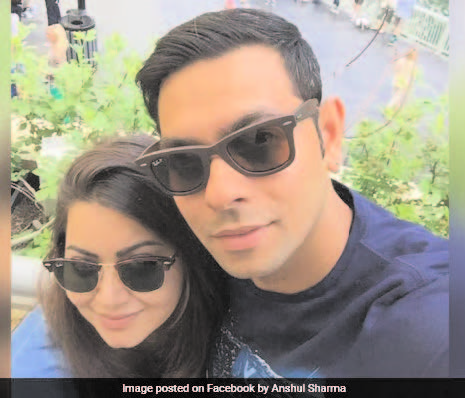
      COLUMBUS, INDIANA (TIP): An Indian American was killed and his wife was critically injured in a hit-and-run crash in Columbus, Indiana, on Sunday, March 26 evening.

      Anshul Sharma, 30, died on the spot while his wife Samira Bharadwaj, 28, was critically injured in the accident. The police said witnesses at the scene told the officers that a man was driving a red Chrysler minivan and hit the couple from behind near Four Seasons Retirement Centre in Columbus and the accused later fled the scene. Later police arrested 36-year-old Columbus resident Michael Demaio who was driving the car.

      The accused, who is in now in a county jail, faces a number of preliminary charges, including “failure to stop after an accident resulting in death,” “failure to stop after an accident resulting in injury,” “operating while intoxicated resulting in death,” and “operating while intoxicated resulting in injury.”

    • Congressional briefing aims to address uptick in hate violence

      Congressional briefing aims to address uptick in hate violence

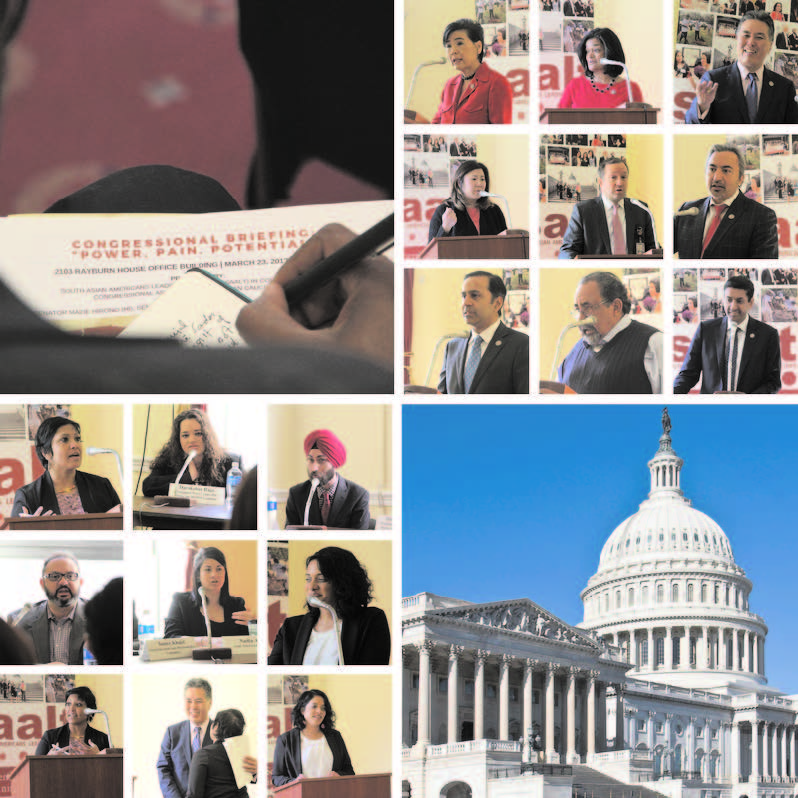
      WASHINGTON (TIP): On March 23, 2017, South Asian Americans Leading Together (SAALT), a national South Asian civil rights organization, held a Congressional briefing to address the uptick in hate violence nationwide and highlight recommendations for change, as outlined in their recent report, “Power, Pain, Potential.”  SAALT was joined by eight members of Congressional leadership and community partners in an urgent discussion on combating the surge in hate violence aimed at South Asian, Muslim, Sikh, Hindu, Arab, and Middle Eastern Americans across the country.

      Indian American lawmakers who joined the discussion include Congressman Ami Bera, Congresswoman Pramila Jayapal , Congressman Raja Krishnamoorthi , and Congressman Ro Khanna.

      “As President Trump continues to test fire Muslim bans, this administration appears intent on intensifying efforts to ignore and provoke hate violence,” stated Suman Raghunathan, Executive Director of SAALT. “The President has a sworn duty to protect the rights and safety of all Americans. Today’s briefing with Congressional leaders is an important step in making sure President Trump doesn’t escape his responsibilities.”

      “As a nation, we must come together to stand up to these disturbing acts of hate violence – starting with the President. I am saddened and outraged when I hear about any American being warned not to speak their language or wear traditional clothing in public out of safety concerns. These hateful attacks do not reflect who we are as a nation of immigrants, but such violence could do irreparable damage to our reputation around the world”, said Ami Bera.

      “We will continue to be resilient to counter the fearful, hateful people who think they can control us-they cannot. The resolution that Congressman Crowley and I introduced, along with the work of SAALT are steps in the direction of ending this vitriol, but every single person in this country has a stake in ending hate. This falls on all of us, I would encourage the current administration to remember that”, said Pramila Jayapal.

      “The hate-motivated crimes we have witnessed these past months have been an attack on the very spirit of America. As we confront this wave of hate, it is heartening to see so many Americans -from the South Asian community and others – coming together for essential meetings, like this briefing, to speak out and stand up for the values of our country”, said Raja Krishnamoorthi.

      “I have full confidence that our country will stand together, on a bipartisan basis, against hateful words and actions, and we must prosecute any hate crimes to the full extent of the law”, said Ro Khanna.

    • Indian American Congressman Ami Bera welcomes annulment of Health Care Repeal Bill

      Indian American Congressman Ami Bera welcomes annulment of Health Care Repeal Bill

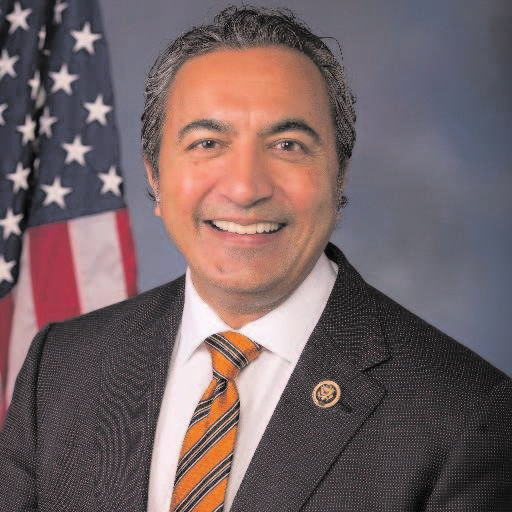
      WASHINGTON (TIP): After the House majority cancelled a vote to repeal the Affordable Care Act, popularly known as ObamaCare, Indian American Congressman Ami Bera welcomed the move noting that ‘Affordable Care Act Repeal Bill would have Kicked 100,000 in Sacramento County off Health Care.’

      “This bill would have kicked millions of hardworking Americans off their health care, raised the cost of coverage for families, and imposed an age tax on our parents and grandparents. I hope that after cancelling this vote, the Speaker and the majority will hear loud and clear that playing politics with peoples’ health care is not going to work. Now is the time for Democrats and Republicans to come together, because the job isn’t over until every American has affordable and accessible healthcare. Real lives are at stake here and I’m ready to get to work”, said Berawhois one of just two Democratic doctors in Congress, and practiced internal medicine, taught at the UC Davis School of medicine, and served Sacramento County as Chief Medical Officer before being elected to Congress.

      It’s estimated that more than 100,000 hardworking Americans in Sacramento County would have lost their health care under the proposed legislation.

    • US lawmakers reintroduce Bipartisan Bill to Stop Outsourcing of American Jobs

      US lawmakers reintroduce Bipartisan Bill to Stop Outsourcing of American Jobs

      WASHINGTON (TIP): On March 23, Representatives Derek Kilmer (D-WA) and Doug Collins (R-GA) reintroduced a bill to prevent employers from sending jobs overseas by abusing a temporary visa program. The legislation would stop employers that are awarded temporary visas through the H-1B program from using them to train workers in the United States then move those jobs to another country.

      H-1B visas allow American businesses to hire foreign professionals if skilled American workers are unavailable to fill job openings. The employees must have expertise in fields like science and technology and generally have college degrees. This month, 60 Minutes reported that unscrupulous employers have utilized the program to bring foreign workers in and displace American jobs. This follows reports last year that American workers were forced to train H1B visa holders to do their job so that the jobs could be permanently outsourced to foreign workers.

      “Our policies should promote jobs in America,”said Kilmer. “They shouldn’t be about sending jobs done by hard working Americans overseas. That’s why I’m continuing my push with Representative Collins to keep H-1B visas from ever being used to send any job to another country.”

      “Protecting American jobs is crucial in order for our economy to continue to gain strength and momentum,” said Collins. “Companies have the opportunity to bring workers from overseas on an H-1B visa in the event that qualified Americans aren’t available, but we can’t allow the law to be exploited to displace American workers and send their jobs abroad. The Keeping American Jobs Act protects American workers by preventing bad actors from abusing the system in order to offshore jobs.”

    • India’s NSA Ajit Doval discussescounter-terrorism cooperation with top US officials

      India’s NSA Ajit Doval discussescounter-terrorism cooperation with top US officials

      WASHINGTON (TIP): During his recent US trip, India’s National Security Adviser Ajit K Doval reviewed security situations in South Asia as well counter-terrorism cooperation between two countries when he held discussions with top US officials.

      Doval met US Defense Secretary, Gen (retired) James Mattis on March 23. The Mattis-Doval meeting was one of the highest-level meetings between the two countries after Donald Trump assumed presidency on January 20.

      According to a readout of their meeting by Pentagon Spokesman Capt. Jeff Davis, Mattis hosted Doval at the Pentagon to discuss the importance of the US-India relationship, and the role of both nations in cooperating to uphold international laws and principles.

      “Mattis specifically applauded India’s efforts to promote stability in the South Asia region. Both leaders reaffirmed building upon the significant defense cooperation progress made in recent years,” Davis said in the read out, adding that the two leaders discussed their role in cooperating to uphold international laws and principles.

      “Secretary Mattis and NSA Doval further discussed collaboration on a wide range of regional security matters including maritime security and counter terrorism. The two pledged to continue the strong defense partnership between both nations,” Davis said.

      Indian Ambassador to US Navtej Sarna was also present at the meeting.

      During his four-day visit, Doval also held discussions with Secretary of Homeland Security Gen (retired) John Kelly, and National Security Advisor Lt Gen H R McMaster. He also met Senator John McCain, Chairman of Senate Armed Services Committee, and Senator Richard Burr, Chairman of Senate Select Committee on Intelligence.


    • ICE makes 84 arrests in three-day operation targeting Pacific Northwest

      ICE makes 84 arrests in three-day operation targeting Pacific Northwest

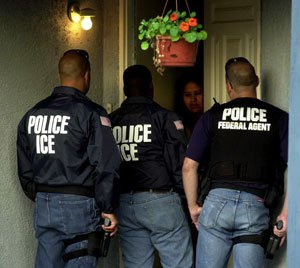
      PORTLAND, ORE (TIP): A U.S. Immigration and Customs Enforcement operation in the Pacific Northwest resulted in 84 arrests, according to a Fox News report, March 30, 2017.

      The operation targeted “at-large criminal aliens, illegal re-entrants and immigration fugitives” over a three-day period in Oregon, Washington and Alaska, according to ICE.

      Seven women and 77 men from 12 countries were arrested, including 64 from Mexico.

      The most arrests were made in King County, where 19 suspects were arrested. In Oregon, 13 were arrested in Washington County, seven in Multnomah County and four in Lane County, among others. ICE arrested three people in Clark County.

      Of those arrested, 19 had criminal convictions for driving under the influence, according to ICE. Seven were convicted of assault, four of larceny, three of domestic violence and two of sexual assault, among other offenses.

      “The operation, conducted by ICE Enforcement and Removal Operations (ERO), targeted criminal aliens who pose a public safety threat and individuals who have violated our nation’s immigration laws, including those who re-entered the country after being deported and immigration fugitives ordered deported by federal immigration judges,” according to an ICE statement.

    • ASHOKA THE GREAT & PRINCIPLES OF CO-EXISTENCE

      ASHOKA THE GREAT & PRINCIPLES OF CO-EXISTENCE

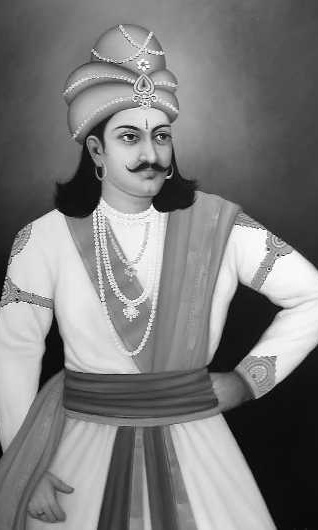
      HG Wells, the British author, a contemporary of Bernard Shaw and GK Chesterton, wrote in his, Outline of History: “Amid tens of thousands of names of monarchs that crowd the columns of history – their majesties, and graciousness, and serenities and royal highnesses and the like – the name of Ashoka shines and shines almost alone, a star…”

      He was Ashoka Devanampiya (beloved of the gods); ‘Piyadasi’ (pleasant to behold). He is the greatest ruler India has produced. He lived from 273 BC to 232 BC.

      Ashoka was the grandson of Chandragupta Maurya and the son of Bindusara. Ashoka’s empire extended from present-day Afghanistan to Madurai. The Dharama Chakra, incorporated into the flag of India, is taken from the Ashokan pillar at Sarnath.

      For almost two thousand years, Ashoka the Buddhist was all but forgotten. He himself left a detailed account of his reign on many pillars and edicts he built. Two pillars have survived in Delhi.

      Romila Thapar in her preface to her book, Ashoka and the Decline of the Mauryas writes: “The reign of Ashoka began to attract attention of historians well over a century ago. In 1837 James Prinsep came out with his work on Ashoka inscriptions in a series of papers. According to KM Panikkar, Ashok’s name was restored to honour as a “result not of Indian researchers but the work of European scholars.”

      I conclude this piece with two quotations from his edicts: “All sects deserve reverence for one reason or another. By thus acting a man exalts his own sect and at the same time does service to the sects of other people.” The second is: “All men are my children, and just as I desire my children that they should obtain welfare and happiness both in this world and the next, so do I desire the same for all men.”

      I have written this as I am reading Romila Thapar’s wonderful book, Ashoka and the Fall of the Mauryas.

      It gave me much pleasure when I read that the Nobel Prize citation and medallion (pure gold) which had been stolen by miscreants was recovered and returned to Kailash Satyarthi. I have so far not met him, but doubtlessly he is a noble and public spirited individual.

      It was in the early years of this century that Rabindranath Tagore’s Nobel medal was stolen from a room in which the poet lived. I was then External Affairs Minister. The Swedish government was gracious enough to send a replacement. This was handed over to me by the Swedish ambassador in New Delhi. I decided to take the medal to Shantiniketan to give it to the Vice Chancellor. From Kolkata Pranab Mukerjee and I flew by helicopter to Bolpur and then by car to Gurudev’s creation. There we were joined by Governor of West Bengal Gopal Krishna Gandhi, Lok Sabha Speaker Somnath Chatterjee and economist Amartya Sen. The ceremony was short and simple.

      I had first been to Santiniketan in December 1954 escorting a Chinese cultural delegation, led by Chen Tho, a great Tagore scholar. I remember his name because I saw much of him when I was posted in China 1956-58.

      One more significant memory of Santiniketan has stayed with me. The great Nandlal Bose (a pioneer of modern Indian art) showed me around Kala Bhawan, his creation.

      Here’s my list of the famous and the infamous politicians of the 20th century: Mahatma Gandhi (1869-1948), V. Lenin (1870-1924), Winston Churchill (1874-1965), M.A. Jinnah (1876-1948), Joseph Stalin (1879-1953), Franklin D Roosevelt (1883-1945), Adolf Hitler (1889-1945), Jawaharlal Nehru (1889-1964), Charles de Gaulle (1890-1970), Mao Tse Tung (1893-1976) & Nelson Mandela (1918-2013).

      Mahatma Gandhi is a class by himself. Lenin was a revolutionary, intellectual, founder of the Soviet Union, was ruthless. Winston Churchill arch-imperialist, racist, greatest Englishman and Nobel laureate. MA Jinnah was a brilliant lawyer, a clear-headed politician who knew what he wanted and got it (Pakistan). Joseph Stalin, founder of the USSR, killed millions of his own people. He led the Soviet Union to victory in 1945 World War-II.

      Franklin D Roosevelt was a great US President (four terms) except Lincoln. Adolf Hitler was a charismatic German leader and a brutal killer of millions of Jews. His autobiography Mein Kampf was a bestseller. He committed suicide. Jawaharlal Nehru was a noble humanist, a founder of modern India. Charles de Gaulle is the greatest Frenchman after Napoleon. He was an excellent writer in French and was President of France during 1958-1969.

      Mao Tse Tung was a revolutionary intellectual and the founder of the People’s Republic of China. He killed seventy millions of his people. Nelson Mandela is one of the great moral and political leaders of our time. He spent 27 years (1964-1991) in prison. A Nobel laureate, he was President of South Africa during 1994-1999. He died at the age of 95.

      (The author is an Indian politician, a former senior bureaucrat, a former Union cabinet minister, and a writer)

    • PREJUDICE MAKES NO DISTINCTION

      PREJUDICE MAKES NO DISTINCTION

      It’s time Indian-Americans in the U.S. involved themselves deeply in civic issues. Srinivas Kuchibhotla in Kansas, Harnish Patel in South Carolina, and Deep Rai in Washington, all well settled Indians in America, were shot at in a span of three weeks resulting in two deaths. The words repeatedly used by their assailants were, “go back where you came from.” While these are the most visible cases of attacks against Indian-Americans, the harassment of the community is far more pervasive since Donald Trump took office as U.S President.

      In my own family, spread throughout the U.S., we are hearing stories of insults and innuendoes. A niece in Maryland being told by a co-worker that she will have to go back where she came from, if she was not a citizen (she is); a friend in the DC suburb detained by the local police for ‘suspicious appearance’ and for not carrying an identification (she was simply taking a walk in her neighborhood as she has done for years). In our family WhatsApp group, we are constantly sharing stories we hear in our communities, reminding each other about carrying identification, staying away from bars in the Midwest, worrying that hate speeches about our ‘foreignness’ could easily end up in gunshots as it happened to the three victims of the crime. Needless to say, it has shaken the Indian-American community to its core.

      Faulty terms of engagement?

      For the longest time, we were proud to declare that Indian Americans were the true success story in the U.S. After all, even as a relatively young immigrant group (87.2%being foreign born) at 1% of the population (around 3 million), we could claim to have the highest per capita income ($88,000 median household income compared to all U.S. median at $49,800) and highest levels of education (70% of those age 25 and older with college degrees, two-and-a-half times the figure for overall population) of any ethnic group.

      We could boast that Indians had truly arrived in America, as prominent writers, business leaders, academics, and even policymakers. We lived and breathed the so-called American dream; we bought expensive homes in American suburbs, sent our children to the best universities and reaped the benefits of the American system. But, by and large, we didn’t engage in the messy issues of civil rights, political participation, or racism. We thought these were not our issues.

      We remained attached to our country of origin, going back and forth frequently, contributing to local causes (after all, our dollars could go much further in India, and India surely needed help). Some of us also got very active in the politics of our homeland, especially when it came to right-wing Hindu causes. Like other immigrants, we nostalgically longed to hold on to our sense of belonging in the old country while moving forward with our lives in our adopted country. Secure in our successful American experience, we took the American part of our hyphenated identity for granted.

      From my perch as a leader of an international organization, I often criticized my fellow Indian-Americans for not strengthening their roots in America, not getting involved enough in the civic organizations in America, and not engaging enough in the American issues of the day. In the age of Trump, this is no longer just a good idea. Now the stakes have become dangerously high and the need visibly urgent. While the White House, including the President, continues to deny any relationship between the rhetoric and policies of the new government and the unprecedented spike in hate speech and hate crimes against South Asian, Arab, Muslim and Jewish communities, the truth is that the Trump presidency has emboldened latent racist and ultra-right nativist elements to come out in the open. This has to be the real wake-up call for the Indian-American community.

      During the election, a group of Indians, calling themselves “Hindus for Trump,” tried to make a distinction between themselves and other Indians, especially Muslim Indian-Americans, and other brown-skinned people, suggesting that they were different, that they should not be confused with Muslims and, therefore, should not be targeted. As political scientist Sanjay Mishra has pointed out, such an approach shows real ignorance about the fundamental dynamics of racism – treating all people of a particular color or ethnicity as an undifferentiated mass, “erasing individuality, distinctiveness and humanity.”

      Now, it is time for this well-to-do community to recognize that criminals who commit hate crimes are indiscriminate. As we know from the assailants of the three Indian victims, they confused their target for Iranians and Arab Americans, or Muslims. It didn’t matter that all three of them were well-to-do, living in comfortably prosperous communities.

      It’s time Indian-Americans joined hands with all Americans who suffer from racial, ethnic or social prejudice, Muslims, Arabs, African-Americans, Latinos or the LGBT community, to fight for what makes America the great country that it is, welcoming new immigrants eager to make a new life here, and in the process, constantly renewing the very idea of America, always in the process of becoming, not so much looking in the rear view mirror as moving forward.

      (The author is president emerita of the Asia Society and a senior adviser to the President of Columbia University)

    • Trump’s discredited NSA Michael Flynn offers to testify in exchange for immunity

      Trump’s discredited NSA Michael Flynn offers to testify in exchange for immunity

      Flynn resigned in February, barely a month after he was appointed NSA, after it was reported that he misled White House staff on his interactions with Russia

      Not entirely unexpectedly,President Trump’s former National Security Adviser Michael Flynn has reportedly told the FBI that he is willing to testify about the Trump campaign’s potential ties to Russia, in exchange for immunity from prosecution, the Wall Street Journal reported.

      Flynn resigned in February, after it was reported that he misled White House staff on his interactions with Russia and had discussed sanctions with Russian ambassador Sergey Kislyak ahead of President Trump’s inauguration.

      The Journal reported, citing officials familiar with the matter, that the FBI and the House and Senate Intelligence committees that are investigating Russia’s attempts to interfere in the U.S. election have not taken Flynn’s lawyers up on the offer.

      Flynn’s lawyer said in a statement that “General Flynn certainly has a story to tell, and he very much wants to tell it, should the circumstances permit.”

      “Notwithstanding his life of national service, the media are awash with unfounded allegations, outrageous claims of treason, and vicious innuendo directed against him. He is now the target of unsubstantiated public demands by Members of Congress and other political critics that he be criminally investigated,” Flynn’s lawyer Robert Kelner said in a statement.

      “No reasonable person, who has the benefit of advice from counsel, would submit to questioning in such a highly politicized, witch hunt environment without assurances against unfair prosecution,” he added.

      Kelner said there have been discussions with the House and Senate Intelligence panels.

      Flynn spoke with Kislyak multiple times during the transition, including on Dec. 29, the day then-President Obama retaliated against Moscow for its hacking of Democratic political groups and individuals, which intelligence agencies say was done to aid Trump’s campaign.

      Trump’s former campaign chairman Paul Manafort, whose ties to Russia have been under scrutiny, and son-in-law Jared Kushner earlier this week volunteered to be interviewed by the House Intelligence Committee. Former aides Roger Stone and Carter Page, who have also been in the spotlight in the Russian investigations, have also offered to talk with the committees -but none with any conditions of immunity.