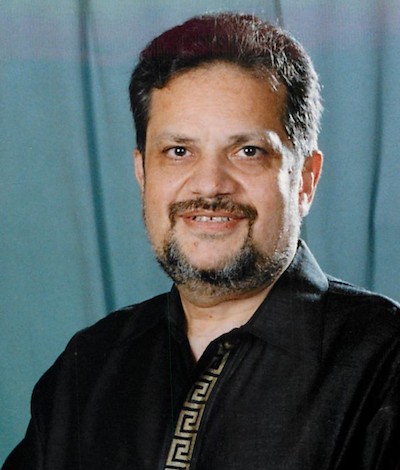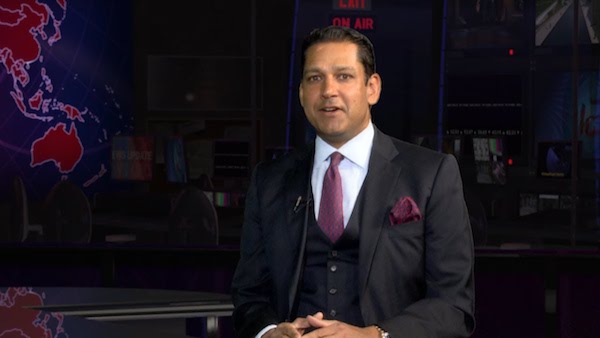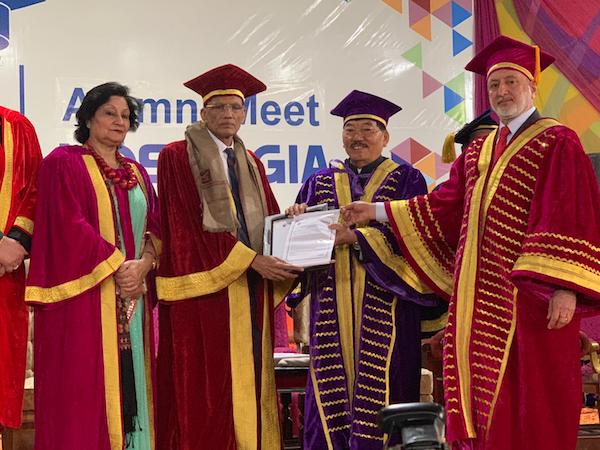
EDISON, NJ(TIP): Padma Shri H R Shah, chairman and CEO of leading South Asian American channel TV Asia, has been awarded an honorary doctorate by Desh Bhagat University in Punjab, India on Feb 14.
Mr Shah was recognized for his services as an Indian American entrepreneur, a turnaround specialist, philanthropist and an endearing community leader. He was the chief guest at the university’s annual event, along with Pawan Kumar Chamling, Chief Minister of Sikkim, who also received an honorary doctorate and was the keynote speaker.
Dressed in ceremonial robes, Mr Shah accepted the honorary degree from Chancellor Dr Zora Singh, Pro Chancellor Tajinder Kaur and Vice Chancellor Dr Virinder Singh. The award was presented by Sikkim Chief Minister Pawan Kumar Chamling.
In receiving the honorary doctorate, Mr Shah was cited for his selfless services for the cause of humanity. “It is your multi-faceted personality, exceptional vison, deep commitment toward culture, literature, political philosophy and educational activities that are an inspiration to the young generation,” the university said.
Among others who also received the honorary doctorate at the event, included Bharat Ratna and former President of India Pranab Mukherjee (In absentia); Dr Huzaifa Khorakiwala, CEO of Wockhardt Foundation; V R Shankara, president and general counsel of Hindalco Industries; conservationist Sant Balbir Singh Seechewal; actress Priti Sapru; Lov Verma, former health minister; and Lt Gen. Shokin Chauhan. The Chancellor’s Distinguished Leadership Award were given to: R S Basnet, principal secretary of Assam; Shrabani Patnaik; Mata Jarnail Kaur; Dr Vikas Jindal; Dr Naresh Mittal of Dhanwantry Ayurvedic College; Dr S P Singh, chairman of Apex Group, Dubai; Prof R P Kaushik and Binay Kumar.
As chairman & CEO of TV Asia Group, Mr Shah heads a veritable powerhouse of several business verticals spanning the media and entertainment landscape in North America, with presence in the television, OTT, IPTV, radio, print, digital, ecommerce and events marketplace.
Mr Shah is the first NRI to own and operate a 24/7 TV station, TV Asia, launched in 1993 by legendary actor Amitabh Bachchan, in the United States, Canada and the Caribbean. He is credited with pioneering Indian television and entertainment in the Western hemisphere. Using mass media as his tool of influence and with 38 news bureaus in North America currently, his vision is to expand to 60 news bureaus across the world. This, he believes, will serve his mission to preserve, support and promote Indian heritage for present and future generations of the Indian Diaspora settled across the globe, making TV Asia the “voice and mirror of the community.” TV Asia has long been known as the Indian community’s “Home Away from Home.” The channel works closely with Indian Consulates in the US in their outreach programs for the Indian American community.
For over 35 years, Mr Shah has generously given his time, energy and resources as a pillar of the Indian American community, always supporting various social work, cultural, educational and related activities in the US and India. He has been a major supporter and has given strong backing to many worthy causes.
He is the chairman and trustee of Bharatiya Vidya Bhawan USA, the world famous institute of Indian culture, literature, education, music and the arts. The Bhawan has dedicated an auditorium, “Romanti Auditorium,” in memory of his late daughter.
In 2017, Mr Shah received the Padma Shri, one of Indian government’s highest civilian awards.
He also received the prestigious Ellis Island Medal of Honor in 2005. The award is bestowed only on those who display significant contributions to their own communities and to the United States at large. The US House of Representatives and the Senate both unanimously passed resolutions sanctioning the Ellis Island Medals of Honor. Each honoree is listed in the Congressional Record.
Additionally, Mr Shah is the recipient of numerous community and business awards in the US as well as India.
During the 4-hour long convocation at Desh Bhagat University, around 1,200 students received degrees, diplomas and medals in various courses, including, Agriculture Sciences, Animation, Applied Sciences, Art & Craft and Fashion Technology, Ayurveda, Commerce, Computer Sciences, Education, Engineering, Hospitality and Tourism, Hotel Management, Languages, Management, Media, Nursing, Performing Arts, Physical Education and Social Sciences. The university offers more than 150 graduate and undergraduate courses and has an enrollment of over 8,000 students.
In his acceptance speech, Mr Shah extended his sincere appreciation for Chancellor Dr Zora Singh and his staff and the meaningful work the university was pursuing. “I commend Dr Zora Singh for his vision and leadership in steering the university with new ideas while being socially responsible and giving the students a great educational platform,” he noted.
Mr Shah touched upon how India’s economic development and transformation was intrinsically linked to education, skilling, entrepreneurship, research and innovation. “I am very happy to read the vision of the university which is in line with the same,” he said.
He underlined the pivotal role educational institutions played in imparting socially responsible perspective to the students.
“I appreciate the role of the University and its faculty for imparting the ‘Education for Life’ and not education for living only,” he said to a thundering applause.
He noted the graduating students will always remain “stars” with their contributions to their families, society and the nation. He also underscored the importance of families and parents who have always sacrificed for their children’s education.
In a heart-to-heart with the graduating students, Mr Shah said that while convocation signified the culmination of the phase of formal education, it also symbolized the beginning of a new journey. “Today’s ceremony is also called ‘Commencement’ and I take it as a Commencement of lifelong learning,” he concluded.
On the sidelines of the convocation, Mr Shah discussed with Chief Minister Chamling about the need to promote Sikkim tourism to the Indian Diaspora in the US as well as across the world. Mr Shah also spoke with Dr. Jagannath Patnaik, Vice Chancellor of ICFAI University, Sikkim, about collaborating with American universities for exchange of programs, research and faculty development.
In his meeting with Desh Bhagat University Chancellor Dr Zora Singh, Mr Shah discussed how the university should look into transfer of courses and credits for students from US educational institutions.
About Desh Bhagat University.
Desh Bhagat University (DBU) located at Amloh, Punjab has been established under Punjab Governments’ Desh Bhagat University Act, 2012. DBU has its four campuses in India – at Amloh, Shri Muktsar Sahib, Moga and Chandigarh and an international campus in Kenya.
Desh Bhagat University, Amloh came into existence under the guidance of Sardar Lal Singh, a freedom fighter.
The university offers more than 350 courses in almost 50 various streams at undergraduate, graduate, post-graduate and doctorate level. It is affiliated with UGC, AIU, NCTE, PCI, COA, and BCI.
As for ranking, it stands 2nd amongst all State Private Universities of Punjab.
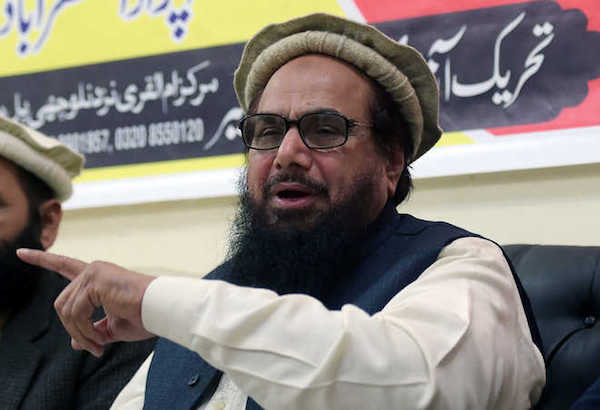
ISLAMABAD(TIP): Pakistan on Thursday, February 21, banned the 2008 Mumbai attack mastermind Hafiz Saeed-led Jamat-ud-Dawa and its charity wing Falah-e-Insaniat Foundation, amid intense global pressure to rein in the militant groups following the Pulwama terror attack that killed 40 CRPF jawans.
A spokesman of the Interior Ministry said the decision to ban these groups was taken during a meeting of the National Security Committee (NSC) chaired by Prime Minister Imran Khan at his office on Thursday.
“It was decided during the meeting to accelerate action against proscribed organizations,” the spokesperson said in a statement.
“It was further decided that Jamat-ud-Dawa and Falah-e-Insaniat Foundation be notified as proscribed organizations by the Ministry of Interior,” he added.
Earlier, the two outfits were kept on the watchlist of the interior ministry.
According to officials, JuD’s network includes 300 seminaries and schools, hospitals, a publishing house and ambulance service. The two groups have about 50,000 volunteers and hundreds of other paid workers.
The JuD is believed to be the front organization for the LeT which is responsible for carrying out the Mumbai attack that killed 166 people. It has been declared as a foreign terrorist organization by the US in June 2014.
The US Department of the Treasury has designated its chief Saeed as a Specially Designated Global Terrorist, and the US, since 2012, has offered a USD 10 million reward for information that brings Saeed to justice.
Saeed was listed under UN Security Council Resolution 1267 in December 2008. He was released from house arrest in Pakistan in November 2017.
The NSC meeting also reviewed the National Action Plan against terrorism in detail. Services chiefs and key ministers were in attendance.
“We need to move to ensure that militancy and extremism are rooted from the society and the State never becomes hostage to extremists,” Khan said as he directed both the interior ministry and the security institutions to immediately accelerate actions on ground.
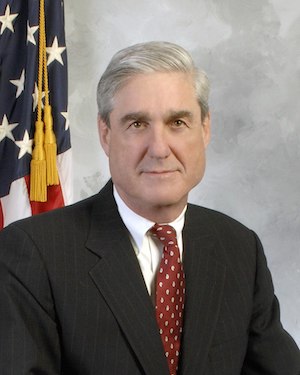
WASHINGTON (TIP): The U.S. Department of Justice may announce as early as next week that Special Counsel Robert Mueller has given the Attorney-General his report on the federal Russia investigation, CNN said on Wednesday, February 20, citing unnamed sources.
After the expected announcement, U.S. Attorney General William Barr will review Mr. Mueller’s findings and submit his own summary to Congress, CNN reported. Democrats have been concerned that Mr. Barr, who has discretion over what is ultimately made public, will choose to limit disclosure.
Under Special Counsel regulations, Mr. Mueller must submit a confidential report to the Attorney-General. Mr. Barr, in turn, is required to provide information on the report to the judiciary committees of Congress.
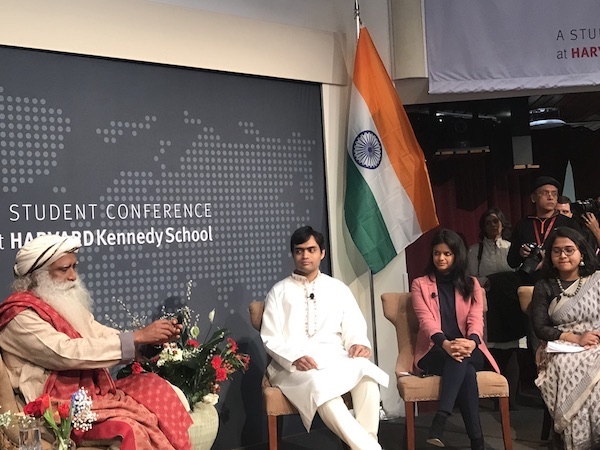
BOSTON(TIP): “One of the biggest problems in the world is migration. It’s estimated nearly 1.5 billion people will migrate in next 5 to 10 years’ time. What is the solution for this? The problem is – nearly 80% of the world’s investment goes to cities. We have to create business friendly environment for all. We have to invest in various areas and create livelihood”, said Sadhguru on February 17, at the 16thedition of India Conference, one of the largest student-run conferences focusing on India in the USA. It is jointly organized by students of Harvard Business School and Harvard Kennedy School.
One of the most enlightened persons of our time, Sadhguru said population growth and inequal distribution of wealth must lead to migration, and no walls or barriers could stop the influx.
Sadhguru answered questions from panelists and the audience on a number of issues at the session “Youth and Truth with Sadhguru.
Asked to comment on the subject of rape, Sadhguru said, “We have to deal with it in a sensible way. This is not a social issue – it’s a human issue. This debate has to come”.
On democracy in America, Sadhguru said he believed there is no democracy in the United States. “It’s feudalism”, he said. “My father was a Republican so am I. Same for the Democrats. How is it democracy? Every citizen has the right to express own opinion. I don’t want to take any political side. If one individual can move million votes – that means we are going back to feudalism not democracy. The idea of democracy and secret ballot is that every person will decide on his/her own and cast the vote. Political party membership should be taken away. Political parties should not enroll members because people are voting for you without looking at what you have done. Every five years we must evaluate what politicians have done – should I give them another chance or not. I support this party and I will vote for them without judging their work – this is feudalism. This destroys fundamental democratic fabric”.
On the issue of marriage and relationship between man and woman, husband and wife, Sadhguru quipped; “Be it marketplace or marriage – for any relationship to sustain it has to be beneficial for both parties. Unless it benefits both, the business won’t last long”.
The India Conference is one of the largest student-run conferences focusing on India in the USA. It is jointly organized by students of Harvard Business School and Harvard Kennedy School. The 16th edition of the Conference was organized on February 16th and February 17th, 2019 in Boston. The theme was ‘India at an inflection point’.
A statement on the conference said, “At the 16th edition of India Conference at Harvard, we aim to bring together India’s thought leaders for a weekend of discussions and brainstorming sessions to unravel the exciting opportunities that lay ahead for our country. The conference has a strong legacy of bringing together politicians, business leaders, entertainment professionals, public intellectuals, spiritual leaders, government officials, philanthropists, and many other leaders to meaningfully discuss key issues, solutions and opportunities in the context of India’s path to global leadership.
“This conference will bring together great business leaders, entertainment professionals, government officials, philanthropists and many other leaders to engage in conversation about India’s path to global leadership. In the past, we have been fortunate to host Amartya Sen, Omar Abdullah, Azim Premji, Kamal Hassan, Ravish Kumar, Karan Johar, and Sabyasachi Mukherjee among many other influential speakers. Our 2018 conference had over 1000 attendees and was a resounding success”.
The 2019 conference was no less star-studded and was very well attended. The 2 -day conference witnessed the presence of dozens of intellectuals and social activists from India and the US who dealt with dozens of issues. The young students deserve highest appreciation for organizing a great India conference, with the theme “India at an inflection point”.
The Rafale tender stole the political thunder in the Comptroller and Auditor General of India’s (CAG) assessment of 11 capital acquisitions by the Indian Air Force over a time period that spanned both the UPA and Modi governments. Considering that previous CAG reports on coal and 2G had irrevocably damaged the credibility of the UPA government, the Modi government can consider itself fortunate to have escaped unscathed because of the inventiveness of the auditors. The CAG used a never-used formula (called alignment pricing) to declare the Modi tender cheaper than the UPA era’s now-cancelled 126 aircraft bid. An audit basically evaluates four criteria in a defense platform: quality, cost-effectiveness, delivery and objectivity. The CAG report gives conditional thumbs up on only two: cost-effectiveness and the delivery schedule. Even these are up for debate.
But the benchmark of objectivity, which includes intangibles such as transparency, fair play and integrity, stands in a grey zone. For instance, the comparison of UPA and NDA-era prices on the basis of a French index is debatable when payments are made in dollars. A dissent note alleging parallel negotiations (dismissed by then Defence Minister Parrikar as an overreaction) went unchallenged, while there was just a mild rap for not signing an integrity pact and succumbing to French refusal on opening an Escrow account. The Modi government was also easily let off the hook for failing to respond to a 20 per cent price cut by a Rafale competitor. Who knows whether Rafale would have still played tough if it had not been the single vendor?
Rafale was one of the 11 purchases studied by CAG and the common tale that emerges is of overambitious services whose requirements are frequently changed, leading to several vendors dropping out; the contract negotiations committee that rarely establishes the benchmark price, which, in turn, makes it difficult to establish the reasonability of the price. Complex and multi-level approval processes further add to the delays. Overall, the existing capital acquisition system is unlikely to effectively support the IAF in its war preparedness and modernization.
It is with deepest sorrow that we inform you of the untimely and sad passing of our beloved Vinod Kotahwala on February 11th in Tucson Arizona.
He was a wonderful man who was loved, is missed, and will always be cherished. His kindness and generosity were inspiration to all.
He immigrated from Jaipur, India and opened the doors to his business in 1971. His wife, Sushma Kotahwala, and he built a home for their three children in New York City. He achieved the “American Dream”. However, he did not stop there. He supported and helped families emigrate and setup offices and businesses within the United States and around the world.
He loved to travel. He learned and spoke multiple languages, including Portuguese fluently. Never will you meet a man who more faithfully lived by his values. His word was his bond and everyone knew it. He was a hardworking, dynamic, patient, honest, generous, and caring man. He always stood up for what was right and fair even though at times it was the harder choice. He helped everyone whenever he could. They don’t’ make men like him. The best quality about Vinod was he always saw the good in people when no one else could. He was known as a gentleman and has now become a guardian angel.
His funeral service will take place as per program below:-
Date: Feb 16th
Time: 11AM – 1PM
Location:
Moloney’s Lake Funeral Home & Cremation Center
132 Ronkonkoma Avenue · Lake Ronkonkoma, New York 11779
Just days ago, Gurduara Glencove held not one but two meetings of the general body on the same day, Sunday; the second meeting immediately followed the first.
Believe me, this incredible matter is not a typographical oversight or slip. It is absolutely true. It is important to note that despite Constitutional requirements for periodic meetings no general meeting had been held for many years.
It is not that people did not want any meetings but their earlier requests – and there were several — were summarily ignored or rebuffed. And now there were two, on the same day, one directly on the heels of the other.
Clearly, the state of the Gurduara at Glencove is not as it ought to be, and that’s the most charitable way that I can put it. The divisions are sharp and hard edged.
Of the two meetings, the first was run and controlled by the existing management of the gurduara and reluctantly held in response to the continuous wish of a sizeable segment of the community. The second meeting held by members of the sangat followed minutes after the first concluded was by members of sangat. It is important to note that no member of the management attended the second meeting.
This short note today is not to castigate or scold either side but to focus a lens on fundamental premises and logic that were pushed and highlighted by the existing management to justify their atrocious reasoning and decision making.
Now for my two cents worth on the mess:
Via a letter the current management dismissed the sangat’s right to a meeting as both irrelevant and contrary to any legal requirements. Their rationale almost took my breath away. They attached a letter framed by their lawyers. It appeared to assert that since no general body meeting had been held for several years, the sangat had obviously abrogated its rights, if any, to a meeting. Hence none was necessary, and none may be held.
With me others, too, will find such reasoning absolutely untenable, if not atrocious. Why?
Think a moment: The British ruled India for about 200 years (and Punjab for about one century). Could one argue that since, for much of the time, Indians did not unceasingly and single mindedly ask for independence, they had lost their right to demand it any further? Or look at our new home – The United States: For centuries racial discrimination was legal and widely practiced. Women’s rights were severely curtailed. For instance, women did not have the right to vote until 1920, 150 years after the country was founded. Should they have been told that since they accepted the reality for so long, they no longer had the option to protest or demand a change? Every day now, discriminatory practices that existed for centuries are giving way to changing realities and new attitudes and much still needs attention. For example, until about 40 years ago women were accepted into medical schools in the United States with great difficulty, if at all. Now that’s no reason to continue to curtail their rights.
I also offer you a potent example of what I would term atrocious reasoning that surfaced at the meeting by the current management that I am alluding to. The Chairman, Maninder Singh Sethi, offered that he would embrace the idea of retiring from his position at the gurduara’s helm but was determined to stay in command until he could identify a suitable person to whom he would hand the reins and control.
I confess that I am absolutely shocked and flabbergasted. Words almost fail me. The gurduara is an institution, not private property for which any one individual, no matter, how brave, honest, wise, dedicated, capable or respected can appoint or anoint a successor. Good institutions are governed by procedures, principles, priorities, practices and the shareholders that live and die for them.
The sangat and the membership constitute the shareholders of a gurduara. A respected leader deserves reverence, and respect, but never absolute dictatorial control.
Mr. Chairman: This is absolutely not your prerogative, nor that of any one person. The least you can do is to assure the people that this was never your intent and that you misspoke. The decision rests with the sangat.
A gurduara is not to be used to divide the world into friends and foes but to see if we can transform them into allies and collaborators.
Looks like the halcyon days of Supreme Court justices like William J. Brennan Jr., Thurgood Marshall, Earl Warren, Potter Stewart, William O Douglas, Felix Frankfurter are permanently over, or at least for a very long time.
This is what happens when economic prosperity heads full speed towards a brick wall as is increasingly happening to the US as it begins its irreversible long slide down.
This is the court of Brett Kavanaugh, John Roberts, of late Antonin Scalia disguised but intensely opinionated, conservative, fundamentalist, (bigoted?) Catholic / Christian judges.
It’s why as NYT wrote in a long and thoughtful piece about 10 years ago that the world has now stopped reading or giving credence to the opinions of SCOTUS. It is too right wing, too biased, (Christian parochialism?) to be worthy of universal respect as in past eras. It is the Supreme Courts of Canada, New Zealand, South Africa and India (alas, now increasingly of slavishly westernized and deracinated from Indic cultural ethos and pandering to western sensibilities) which are respected and regarded.
SCOTUS on narrow technical grounds just denied an American Muslim the right to last rites by a Mullah / Maulvi in the judgment on Dunn v. Ray. Domineque Ray, was executed Thursday evening by the State of Alabama. Mr. Ray did not contest the state’s power to kill him, he simply asked that Alabama permit his spiritual adviser to be in the execution chamber to comfort him as the state extinguished his life. Ray is a Muslim, and the prison’s policy allowed him to be attended by a Christian chaplain but not by a Muslim imam.
“Religious liberty for me, but not for thee”.
The word “empathy,” it should be noted, does not mean “sympathy.” Sympathy implies a kind of partisanship — to be sympathetic to a party is to be favorable to their claims. Empathy means something else. It is the ability to place yourself in someone else’s shoes and to understand their perspective even if you have not shared their experiences. It is a white Christian man’s ability to see that the world sometimes operates differently for an African-American Muslim.
It should have been an open-and-shut case. As Justice Elena Kagan noted in a dissenting opinion, “the clearest command of the Establishment Clause is that one religious denomination cannot be officially preferred over another.” If Alabama allows Christian inmates to be attended by a clergy member of their faith, then it must offer the same accommodation to people of other faiths.
Neal Katyal, a former acting Solicitor General of the United States who, by virtue of the fact that he practices before the Supreme Court, must be careful about criticizing its judges too harshly, compared the Ray decision to notorious decisions such as “Dred Scott, Plessy v. Ferguson, Korematsu, and the Chinese Exclusion Act cases.” The National Review’s David French labeled Ray “a grave violation of the First Amendment.”
Nearly a hundred years ago the Ramakrishna Mission Vedanta Society in California was gifted a huge property by a wealthy devotee in her will. Her family filed suit. The openly and blatantly racist and religiously bigoted judge (there are scads of them even in federal courts of the Confederate South) set aside the bequest on totally specious grounds and awarded the property to the family. It looks like SCOTUS under Trump is rapidly returning to the Dred Scott days of viewing slaves as property.
Failed foreign policy, Mounting Unemployment, Economic Woes for many Sections, and Hindutva pose a challenge to Modi
By Ven Parmeswaran
Prime Minister Modi has failed to capitalize on US-India closest ally relationship. Modi must display and reciprocate friendship to the USA thru developing systematic communications through diplomatic channels and also thru regular Press Conferences. New Delhi has failed to make international headlines because Prime Minister does not speak to the international media.
President Trump is the first President to make India its “closest ally” on a par with the U.K. By this policy decision, the U.S. has agreed to the 100% transfer of US sophisticated technology to India. The “closest ally” status also enabled India to access U.S. strategic and defense intelligence, especially on China. Any military moves by China will be closely monitored by the U.S Intelligence and shared with India. President Trump is also the first President critical of Pakistan and he has been applying pressure on Pakistan to get rid of all terrorist organizations including Lashkar-e-Taiba responsible for attacks on Mumbai, that killed 165 people. He has also allowed Lockheed Martin to manufacture in India sophisticated defense aircrafts.
Prime Minister Modi has not embraced “closest ally” status with enthusiastic support. He was more concerned with concluding defense deals with Russia and buying aircrafts from France. He also wanted to be able to import oil from Iran, sanctioned by the US. President Trump cooperated with Modi and allowed him to finalize the deal with Russia and France. He also agreed to exempt sanction so that Iran could export to India.
President Trump has visited all major countries in the world except India. Prime Minister Modi should have invited President Trump and given him an enthusiastic reception. He invited Trump for the Republic Day event knowing fully well January is the busiest month for any U.S. President. He could have used the U.S. support to negotiate with Pakistan to mete out justice to the leaders of Lashkar-e-Taiba, responsible for attacks on Mumbai. Modi failed to apply diplomatic pressure on Pakistan. He has no roadmap.
Prime Minister Modi has failed to liberalize India’s economy and create favorable environment for foreign investment. He has failed to privatize several public sector corporations, most of them are inefficient and running at a loss such as Air India and others. With 100% transfer of U.S. technology, India does not still have a blueprint of industrial and military products it intends to manufacture.
U.S. WARNS MODI AGAINST PANDERING TO HINDU NATIONALISTS
Dan Coats, Director of National Intelligence in his written testimony of the intelligent community’s assessment of worldwide threats in 2019 to the Senate Select Committee on Intelligence on January 29, said:
“Parliamentary elections in India increase the possibility of communal violence if Indian Prime Minister Modi’s BJP stresses Hindu nationalist themes. BJP policies during Modi’s first term have deepened communal tensions in some BJP governed states, and Hindu nationalist state leaders might view a Hindu-nationalist campaign as a signal to incite low level violence to animate their supporters,” he said.
Coats predicted, “increasing communal clashes could alienate Indian Muslims and allow Islamist terrorists groups in India to expand their influence,” ahead of general election. In his written statement, Coats also said it was unlikely that there would be any modus vivendi between India and Pakistan before India’s election in May and the strained relations between India and Pakistan would persist.
“We judge that cross-border terrorism, firing across the Line of Control (LoC), divisive national elections in India, and Islamabad’s perception of its position with the U.S. relative to India will contribute to strained India-Pakistan relations at least through May 2019, the deadline for the Indian election, and probably beyond,” Coats said.
Coats also said militant groups supported by Pakistan would continue to conduct terrorist attacks in both India and Afghanistan and contended that Islamabad’s “narrow approach to counterterrorism cooperation-using some groups as policy tools and confronting only the militant groups that directly threaten Pakistan—almost will frustrate US counterterrorism efforts against Taliban.
Prime Minister Modi has thus failed to capitalize on US-India closest ally relationship. Modi must display and reciprocate friendship to the USA thru developing systematic communications through diplomatic channels and also thru regular Press Conferences. New Delhi has failed to make international headlines because Prime Minister does not speak to the international media.
CORRUPTION IN INDIA
Ram, Chairman of The Hindu wrote a column that was published in The Washington Post recently. He wrote, “Corruption in India is pervasive, omnipresent and multifarious, especially in the nexus between politics and business. As India heads toward its general elections, expected to be held in April and May, the Prime Minister Narendra Modi finds himself embroiled in controversy around one of the country’s largest arms purchase contracts: a murky 7.8 billion Euro weapons deal to purchase 36 Rafale fighter planes from France.”
Modi’s arbitrary decision to reduce the number of Rafale planes purchased to 36 from 126 raised the price by 41%. Rafale planes are manufactured by Dassault Aviation. Dassault Aviation agreed to invest 50% of the 7.8 billion euro Rafale contract in India to manufacture airplane components with offset partners, chief among whom would be the Indian billionaire Anil Ambani’s Reliance Defence. The deal is expected to help generate up to 1.9 billion euros in new revenues for Ambani – the younger and much less successful brother of Mukesh Ambani, India’s richest man – who has no experience in manufacturing fighter jets.
Ram concludes: “The devastating effects of Modi’s demonetization on the working poor and small and medium businesses and widespread distress in rural India could do more damage to his electoral prospects, but a credible corruption narrative, backed even with incomplete evidence, can bring focus and emotional power to the electoral campaign. It can be a catalyst for change. The election is coming.”
(Ven Parameswaran, MBA, Columbia University Business School, was President and CEO, First Asian Securities Corporation, New York; Senior Advisor to Imagindia Institute, a think tank in New Delhi. He can be reached at vpwaren@gmail.com)
India withdraws Most Favored Nation status given to Pakistan
United Nations and US condemn the attack
Police say the 21-year-old suicide bomber driving the explosive-laden vehicle was Adil Ahmad from Kakapora in Pulwama who joined the JeM in 2018
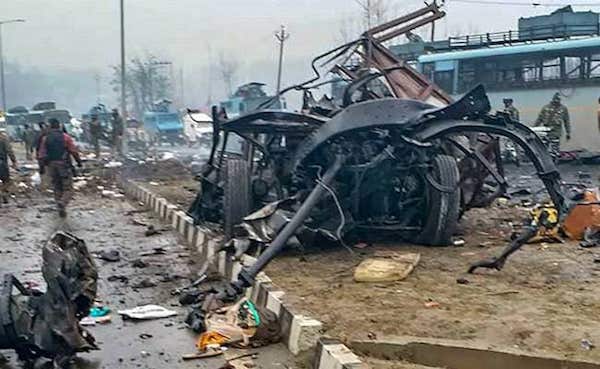
SRINAGAR(TIP): At least 40 CRPF personnel were killed in Jammu and Kashmir’s Pulwama district on February 14 (Thursday) when a Jaish-e-Mohammed terrorist rammed an explosives-laden vehicle into the bus they were travelling in, one of the worst terror strikes in the state in recent years, officials said.
More than 2,500 Central Reserve Police Force personnel, many of them returning from leave to rejoin duty in the Valley, were travelling in the convoy of 78 vehicles when they were ambushed on the Srinagar-Jammu highway at Latoomode in Awantipora.
Police said the terrorist driving the suicide vehicle was Adil Ahmad from Kakapora in Pulwama who joined the JeM in 2018.
The terror group has claimed responsibility for the attack that took place about 30 km from Srinagar, they said.
Over 20 people were injured in the terror attack, which reduced the bus to a mangled heap of iron. Body parts could be seen strewn around the area.
“It was a large convoy and about 2,500 personnel were travelling in multiple vehicles. Some shots were also fired at the convoy,” CRPF DG R R Bhatnagar told PTI.
National Security Advisor (NSA) Ajit Doval is monitoring the situation in Kashmir, said sources. Senior CRPF officials are also briefing him about the developments.
The convoy started from Jammu around 3.30 am and was supposed to reach Srinagar before sunset, officials said.
The number of personnel travelling back to the Valley was high as there was no movement on the highway for the last two to three days because of bad weather and other administrative reasons, they said.
Usually, about 1,000 personnel are part of a convoy. A road opening party was deployed, and the convoy had armored counter-terror vehicles, officials said. Forensic and bomb analysis teams are on the spot.
The bus that was the focus of the attack belongs to the 54th battalion of the force and had 44 personnel on board, officials said.
CRPF Inspector General (Operations) in the Kashmir Valley Zulfiqar Hasan described it as a “vehicle-bound attack” and said Jammu and Kashmir Police has taken up the investigation.
“Governor Satyapal Malik observed forces responsible for the insurgency in J&K are desperate & frustrated and just want to prove presence. Visibly it seems to be guided from across the border as Jaish-e-Mohammad has claimed responsibility,” said J&K Raj Bhawan PRO on the terror attack.
Rajnath, who will visit Srinagar on Friday, has also spoken to Satyapal Malik. Home Minister Rajnath Singh has already spoken to DG CRPF RR Bhatnagar over the terror attack.
“Senior officers at the spot, the investigation is underway. Injured being taken care of. There were 2500 personnel in the convoy,” said Bhatnagar.
Condemning the attack, Union Minister Arun Jaitley said, “attack on CRPF in Pulwama is cowardice & a condemnable act of terrorists. Nation salutes martyrs & we stand united with families of martyrs. We pray for the speedy recovery of the injured. Terrorists will be given an unforgettable lesson for their heinous act.”
In the attack on the Uri military base in September 2016, JeM militants killed 18 Army jawans and injured dozens of others.
Experts of the anti-terror commando force National Security Guard (NSG) and investigators of the National Investigation Agency (NIA) are being sent to Jammu and Kashmir to join the probe into the terror attack in Pulwama in which at least 39 CRPF personnel were killed, officials said Thursday, Feb 14.
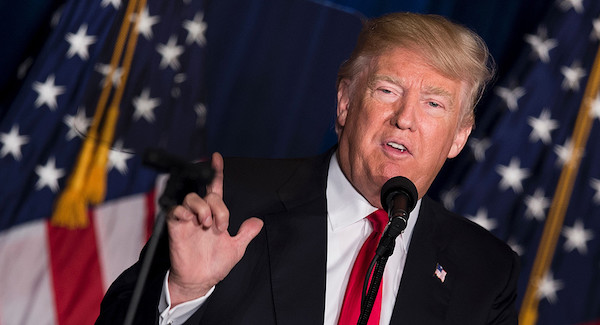
WASHINGTON, DC(TIP): US President Donald Trump will sign an executive order declaring a national emergency, which will empower him to fund the construction of a massive wall along the US-Mexico border to prevent illegal immigrants from entering the country and curb drug smuggling.
The move would help Mr. Trump get $5.6 billion for the construction of the wall that, he has asserted, is essential for national security.
President Trump will sign the government funding bill, and as he has stated before, he will also take other executive action – including a national emergency – to ensure we stop the national security and humanitarian crisis at the border, White House Press Secretary Sarah Sanders said in a statement.
The President is once again delivering on his promise to build the wall, protect the border, and secure our great country, she said.
The White House statement came soon after Senate Majority leader Mitch McConnell made the move public.
“I had an opportunity to speak with President Trump and he, I would say to all my colleagues, has indicated he’s prepared to sign the bill. He also (will) be issuing a national emergency declaration at the same time. I indicated I’m going to support the national emergency declaration,” Mr. McConnell said.
On the Democrats saying they will challenge the move in the Supreme Court, Sanders said, “We’re very prepared, but there shouldn’t be [legal challenges]. The president’s doing his job. The Congress should do theirs.”
Senate Minority Leader Chuck Schumer and House Speaker Nancy Pelosi said that declaring a national emergency would be a lawless act, a gross abuse of the power of the presidency and a desperate attempt to distract from the fact that Trump broke his core promise to have Mexico pay for his wall”.
It is yet another demonstration of President Trump’s naked contempt for the rule of law. This is not an emergency, and the president’s fearmongering doesn’t make it one, they said in a joint statement.
He couldn’t convince Mexico, the American people or their elected representatives to pay for his ineffective and expensive wall, so now he’s trying an end-run around Congress in a desperate attempt to put taxpayers on the hook for it. The Congress will defend our constitutional authorities, they said.
Opposing the proposed move, American Civil Liberties Union (ACLU) said that Mr. Trump’s hankering for a wall at the southern border cannot be justified by calling a national emergency.
This would be a clear abuse of presidential power — one that sidesteps the role of Congress in the appropriation of funds. Shame on any member of Congress who doesn’t clearly and vigorously speak out on this illegitimate invocation of emergency authorities, ACLU said.
Senator James Inhofe said Mr. Trump had no choice but to declare a national emergency.
I want to make sure this declaration has minimal, if any, impact on our military and reimburse all the necessary accounts affected by the decision. As I heard in a hearing yesterday, military housing and all military installations are facing disrepair and poor conditions. We cannot afford to allow them to be further impacted, he said.
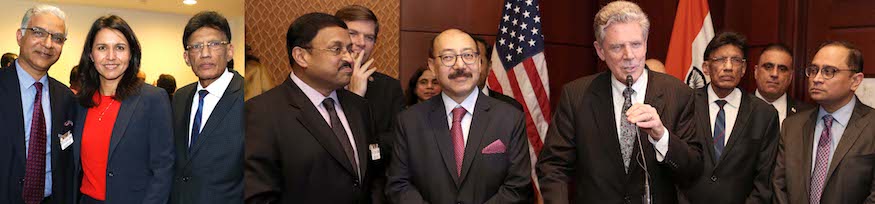
WASHINGTON(TIP): In a show of unprecedented bipartisan support, 67 lawmakers from both chambers of the US Congress attended a Congressional reception on Capitol Hill Feb 7 for new Indian Ambassador Harsh Shringla. Among the attendees at the invitation-only reception were TV Asia chairman and CEO, Padma Shri H R Shah, several business associations and members of the media.
The Congressional reception was hosted by the Co-Chairs of the Senate India Caucus and Congressional Caucus on India and Indian Americans, Senator John Cornyn (R-TX), Senator Mark Warner (D-VA), Congressman Brad Sherman (D-CA) and Congressman George Holding (R-NC).
The event was attended by lawmakers from both the Senate and the House. In addition, prominent members of the Indian American community from across the US.
In their welcome remarks, Senator Warner, Senator Cornyn, Congressman Sherman and Congressman Holding, underlined the importance of the India-US strategic partnership and the critical role played by Congress, in particular, the India Caucus in strengthening relations.
They extended a warm welcome to Ambassador Shringla and committed to working together in building closer ties between the two countries.
The lawmakers also appreciated the significant role played by the Indian American community in building bridges of understanding across the two cultures and nations. They called upon the new members of Congress to join the India Caucus. Conspicuous by attendance were: Congressmen Frank Pallone (D-NJ), one of the co-founders of the Congressional Caucus on India and Indian Americans; Congresswomen Pramila Jayapal (D-WA) and Tulsi Gabbard (D-HI) as well as Raja Krishnamoorthi (D-IL) and Ro Khanna (D-CA).
Congresswoman Carolyn Maloney (D-NY), in her remarks mentioned she will be introducing a bill in the 116th Congress to award a Congressional Gold Medal to Mahatma Gandhi in this 150th Birth Anniversary year.
Congressman Gregory Meeks (D-NY) said in his remarks that Mahatma Gandhi had been an inspiration for him. Congresswoman Grace Meng (D-NY) mentioned her support for India’s permanent membership of the UN Security Council. House Majority Leader Steny Hoyer (D-MD) also attended and spoke about the great contributions of the Indian American community across all fields in the US.
Ambassador Shringla thanked the Caucus Co-Chairs for their warm welcome. The Ambassador noted that the bipartisan support for the India-US strategic partnership was reflected in the turnout of the Members of Congress across the aisle for the event.
Further, the overwhelming support for the relationship with India is attested by the fact that the India Caucus is the largest country-specific Caucus on the Hill.
He thanked the Indian American Diaspora for serving as cultural Ambassadors of India and contributing to a strong foundation for the strategic partnership between the world’s oldest and largest democracies.
The Ambassador also spoke briefly about the progress made in bilateral ties over the past year across all domains – defense, economic and trade, energy cooperation, culture and people-to-people exchanges.
Following the Congressional reception, Ambassador Shringla hosted a meet and greet and dinner event at his residence.
Losing a dear friend is heartbreaking. Though life is uncertain, we all know, yet we do not expect a tragedy to befall so suddenly. We live in hope for the best. And here is the sudden shock.
My dear friend for the last 15 years here in the US , Mr. Vinod Kotahwala , a diamond merchant of New York and a well known person in the community had reportedly gone out of New York for a professional exhibition. According to his elder brother Haridass Kotahwala who I spoke with this morning , Vinod had a heart attack on Sunday night, followed by brain haemorrhage on Monday morning, to which he succumbed , after having been kept on life support, on Tuesday, Feb 12 morning.
I don’t know how his wife Sushma will bear this terrible life shattering loss. His lovely children who doted on their father must be in terrible pain. His friends, like me, must be in a state of shock, just as I am. Life will never be the same again for his family and friends.
I will miss his cheerful disposition, his cherubic smile, warmth of his affection, his concern for me , and for others like me. He was a spring of encouragement, hope and love. I don’t think the void his sudden and untimely demise has created can ever be filled. There can never be another like him.
I recall nostalgically my many meetings and sittings with him and the pleasure each encounter with him brought me, and feel a nerve shattering sense of loss at his sudden departure.
Like all others, I do understand we cannot prevent Death from plundering life at Will. I also know we cannot do anything but accept the Will of God. What is left to us is pray for eternal rest to the departed soul. So I do in all love for Vinod, and in all humility to the Almighty to grant eternal rest to my dear departed friend. I pray to God Almighty to give strength to the family to bear the terrible loss.
Vinod will for ever live in the heart of his family and friends. Amen!
It is really sad that scores of Indian students studying in the US have been detained by ICE on charges of violating Visa laws. One wished it did not happen. But now that they have been detained, and reports suggest ICE is looking for around 600 students for similar offence, the issue has drawn the attention of the Indian Americans here and of government of India.
Whatever the government of India is doing is appreciable. Contacting students in detention, contacting their parents back home to pledge government’s support are all part of the job of the Indian diplomats here , and of the EAM mandarins in New Delhi.
But, can anyone ask a sovereign government to bend rules for a chosen few? If your answer is “NO”, you know what is going to happen. Particularly now that the Trump administration has taken a stand that America will not welcome “illegals”. See the stand of Trump administration on DREAMERS. More recently, pronouncements about illegal stay and , of course, illegal entry.
it is not a humanitarian issue like we had in Middle East when we evacuated Indians from South Sudan or from Kuwait. It is purely an internal law and order issue of America. India, or for that matter, any country, cannot even make a suggestion to a sovereign nation on this issue. Clearly, law of the land has been knowingly violated by our Indian brethren . Nobody can defend what they have done. It is better not to try to defend what is indefensible. India had better not .
Let me say here. India has denied consular services, passports and visas to a number of Sikhs from Punjab branding them as Khalistanis and separatists, hand in glove with Pakistan and other interest groups against India, bent upon wrecking the Indian nation. Do you think America or Canada, or Britain can make a suggestion to India to lift the “ban”?
In this election year, Modi government will not like to be criticized for not taking care of Indian citizens abroad. They will not like the opposition to make it an issue in elections, howsoever little the issue may be. So, there may be an extra effort on the part of the government of India to play up its efforts to seek relief for the students facing the difficult situation.
America is not India, where a Prime Minister , or a lesser person, too can bend rules. India is still living in a feudal order. I will rather have my Indian brethren suffer for whatever they did, wittingly or unwittingly, rather than imagine America following Indian style of governance.
The January 2019 MOTN predicts that if an election were held now, the NDA tally would drop by 100 seats from the 336 seats it got in the 2014 election. The BJP would be the single largest loser in the alliance with the number of seats dropping as much as 80 from 282 in 2014 to 202 now.
By Ven Parmeswaran
I wrote on December 19, 2018 that the next general election in India may result in a hung parliament. As things stand today, one can predict no party will be able to win a majority. A hung Parliament looks imminent as both the ruling NDA and challenger UPA fail to reach the majority mark of 272 by a distance. The NDA remains the biggest political alliance, with the BJP emerging as the single largest party. This is the stunning conclusion of the India Today Group-Karvy Insights biannual Mood of the Nation (MOTN) survey conducted between December 28, 2018, and January 8, 2019. This MOTN is significant as it comes barely four months before the general election.
It must be pointed out that it is the first time since Modi came to power in May 2014 that an MOTN poll is predicting that the NDA will not cross the majority mark. It confirms the declining trend in its fortunes that these surveys have recorded in the past two years with the NDA and the BJP progressively losing ground.
The January 2019 MOTN predicts that if an election were held now, the NDA tally would drop by 100 seats from the 336 seats it got in the 2014 election. The BJP would be the single largest loser in the alliance with the number of seats dropping as much as 80 from 282 in 2014 to 202 now. In such an eventuality, the NDA would have to scout for other partners to garner a majority and there could also be doubts about Modi emerging as the consensus candidate to head the coalition government.
While the opposition may rejoice at having put the NDA and Modi on the mat, the survey also reveals that neither the Congress-led UPA nor any other Opposition alliance will be in a position to form the government on their own. The UPA is likely to multiply its tally by three times, according to this survey, from 59 in 2014 to 166. That is still 106 shy of a majority. And the rest of the opposition, that includes the Samajwadi Party, Bahujan Samaj Party, the AIDMK (Tamil Nadu) and dozen others, will get the remaining.
For many voters, such a fractured mandate and the political uncertainty it spells is a disconcerting scenario. That is why Modi and the BJP have been hammering home the need for voters to give them a full majority or, as they warn, the country could be plunged into chaos.
THE SINGLE BIGGEST FAILURE OF MODI IS HIS INABILITY TO CREATE ADEQUATE NUMBER OF JOBS.
Lack of jobs rank 34%; Rising prices 20%; Demonetization 14%; Farm Subsidies 7%; Ineffective Implementation of GST 7%; Agrarian distress 5%; and Crisis in the CBI 2%.
THE VOTERS WILL BE ASKING: “Is India better off today than 5 years ago?”
Failure of Prime Minister Modi to create 10 million new jobs per year has changed the public opinion against his government.Modi could have done what the Congress failed to do, that is to emulate China. Modi failed to liberalize India’s economy to attract sizeable foreign private investment. Modi could have built modern infrastructure and built large scale factories to produce consumer and industrial goods for export. President Trump, after winning the election offered India “closest ally” status on a par with the U.K. India has a comparative advantage over China and if India had the capability and the capacity to produce consumer goods, the US was ready to replace China. Failure of Modi to embrace President Trump’s offer may cost him in the coming election.
Modi by overemphasizing Hindutva and not being fair to the minorities,has invited severe opposition of Christians, Muslims, Sikhs. In addition, 300 million Dalits are unhappy , giving a great political opportunity to the leader of BSP, Mayavati. Killing of cows and serving beef in restaurants were banned, but India is the largest exporter of beef meat in the world to the tune of $5 billion.
The Demonetization created severe hardships to the vast majority of Indians living from hand to mouth with cash economy.
Modi failed to privatize public sector corporations.He has failed even to sell the most inefficient Air India which is running at a heavy loss.
On his inauguration, Modi invited the heads of all neighbors, signaling development of better relations. That was just a photo opportunity. His foreign policy towards India’s neighbors failed miserably. China capitalized on the opportunity. China has almost taken over Nepal, and its influence in Sri Lanka, Maldives, Bangladesh, Sikkim, and Bhutan is a huge setback for India. Modi also failed to deal with Pakistan, which has refused to mete out justice to the terror organizations Lashkar-e-Taiba and its leaders. Though President Trump requested India to influence and help Afghanistan, Modi has nothing new to show.
Today, the public opinion is against Modi’s government on the administration of coming elections. There have been reports of computer tampering, manipulating computers to suit the goals of BJP and other irregular methods. The public has lost confidence in Modi government in running a fair and just election.
The Achilles’ heel of Modi and the NDA, though, lies in the widespread farmer unrest, rural distress and the perceptible lack of jobs.
The UPA and the other opposition partners, especially BSP (Mayavati) are bound to push the knife deeper in o these three big issues. Large sections of people have been pushed to the margins by a series of blows dealt to the economy, including demonetization and GST. This will determine the course of the coming election.
If Rahul Gandhi and his party have surged ahead in the ratings, it is because he has successfully mobilized public opinion on these issues. The recent wins of Congress in the Hindi heartland states of Rajasthan, Madhya Pradesh and Chhattisgarh are an indication of the traction Rahul has been able to get. But the Congress President will not be able to win by just running down Modi’s performance. He will also need to come out with a convincing enough vision of how he plans to put the nation on a high grown path, apart from maintaining peace and harmony.
U.P. being the largest State with 80 parliamentary seats, is surely more important than other States. Mayavati has already formed coalition with Samajwadi Party. Thus, this coalition should be able to challenge Modi’s B.J.P. The Congress and the Muslims are also challenging Modi. The result may be shocking on for . BJP which may have to to accept a very small number of seats from U.P.
I am getting the impression that almost all parties are opposed to Modi except BJP ruled states. West Bengal with the leadership of Mamata Banerjee; Tamil Nadu; Karnataka; Kerala; Andhra Pradesh and other States could mount a formidable opposition to Modi.
In a hung Parliament, the President will be forced to accept any leader who can attract enough coalitions to create a majority. Although Modi may try, he has severe competition from Mayavati and other non-Congress leaders. The big question between now and the general election is : can Modi do anything to turnaround the precarious situation he is in?
(The author is a Senior Adviser to Imaagindia Institute, a think tank in New Delhi. He lives in Scarsdale, New York. He can be reached at vpwaren@gmail.com)
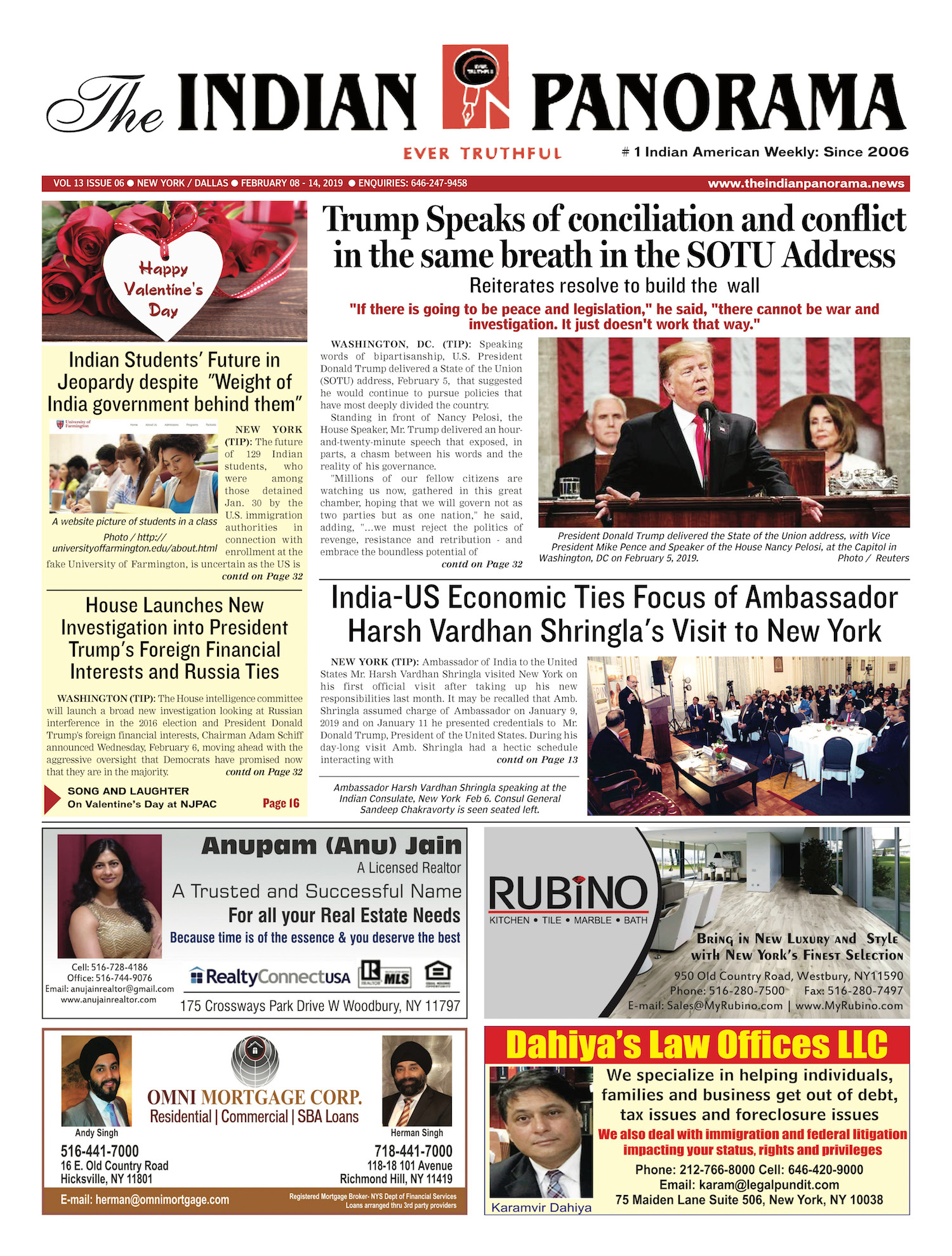
WASHINGTON(TIP): The House intelligence committee will launch a broad new investigation looking at Russian interference in the 2016 election and President Donald Trump’s foreign financial interests, Chairman Adam Schiff announced Wednesday, February 6, moving ahead with the aggressive oversight that Democrats have promised now that they are in the majority.
Schiff said the investigation will include “the scope and scale” of Russian intervention in the 2016 presidential election, the “extent of any links and/or coordination” between Russians and Trump’s associates, whether foreign actors have sought to hold leverage over Trump or his family and associates, and whether anyone has sought to obstruct any of the relevant investigations.
The announcement came one day after Trump criticized “ridiculous partisan investigations” in his State of the Union speech. Schiff dismissed those comments Wednesday.
“We’re going to do our jobs and the president needs to do his,” Schiff said. “Our job involves making sure that the policy of the United States is being driven by the national interest, not by any financial entanglement, financial leverage or other form of compromise.”
The California Democrat also announced a delay in an upcoming closed-door interview with Trump’s former fixer and personal lawyer, Michael Cohen, “in the interests of the investigation.” The interview was originally scheduled for Friday. It will now be held on Feb. 28, Schiff said.
Schiff said he could not speak about the reason for the delay. Hours after the meeting was pushed back, a document was filed under seal in the criminal case against Cohen brought by special counsel Robert Mueller’s office. The court’s docket did not contain any details about the nature of the document.
Special counsel spokesman Peter Carr declined comment, as did Lanny Davis, an attorney for Cohen.
The intelligence committee also voted Wednesday to send Mueller the transcripts from the panel’s earlier Russia investigation. Republicans ended that probe in March, concluding there was no evidence of conspiracy or collusion between Russia and Trump’s presidential campaign. Democrats strongly objected at the time, saying the move was premature.
Since then, both Cohen and Trump’s longtime adviser Roger Stone have been charged with lying to the panel. Cohen pleaded guilty in November to lying to the House and Senate intelligence committees about his role in a Trump business proposal in Moscow. He acknowledged that he misled lawmakers by saying he had abandoned the project in January 2016 when he actually continued pursuing it for months after that.
Stone pleaded not guilty to charges last month that he lied to the House panel about his discussions during the 2016 election about WikiLeaks, the anti-secrecy group that released thousands of emails stolen from Democrats. Stone is also charged with obstructing the House probe by encouraging one of his associates, New York radio host Randy Credico, to refuse to testify before the House panel in an effort to conceal Stone’s false statements.
Schiff has said Mueller should consider whether additional perjury charges are warranted.
The committee had already voted to release most of the transcripts to the public, but they are still being reviewed by the intelligence community for classified information.
Mueller requested Stone’s interview transcript last year and the panel voted to release it in December. Schiff wouldn’t say whether Mueller had requested other transcripts but noted that the committee had voted to withhold a small number of transcripts from the public and also that some witnesses had been interviewed since then. The transmission of the transcripts to Mueller, expected immediately, will give him full access to all of the committee’s interviews.
Among the transcripts are interviews with Trump’s eldest son, Donald Trump Jr.; his son-in-law, Jared Kushner; his longtime spokeswoman, Hope Hicks; and his former bodyguard Keith Schiller. There are dozens of other transcripts of interviews with former Obama administration officials and Trump associates.
Democrats also opposed a Republican motion at the meeting Wednesday to subpoena several witnesses. Republicans said they were witnesses who Democrats had previously wanted to come before the panel.
A Republican aide said that witness list included FBI and Justice Department officials involved in the Russia investigation and others who could shed more light on research by former British spy Christopher Steele. The aide spoke on condition of anonymity because the committee’s business is confidential.
Steele’s research was funded by Democrats and later compiled into an anti-Trump dossier that became public.
Addressing House, heaps praise on govt on triple talaq, surgical strikes
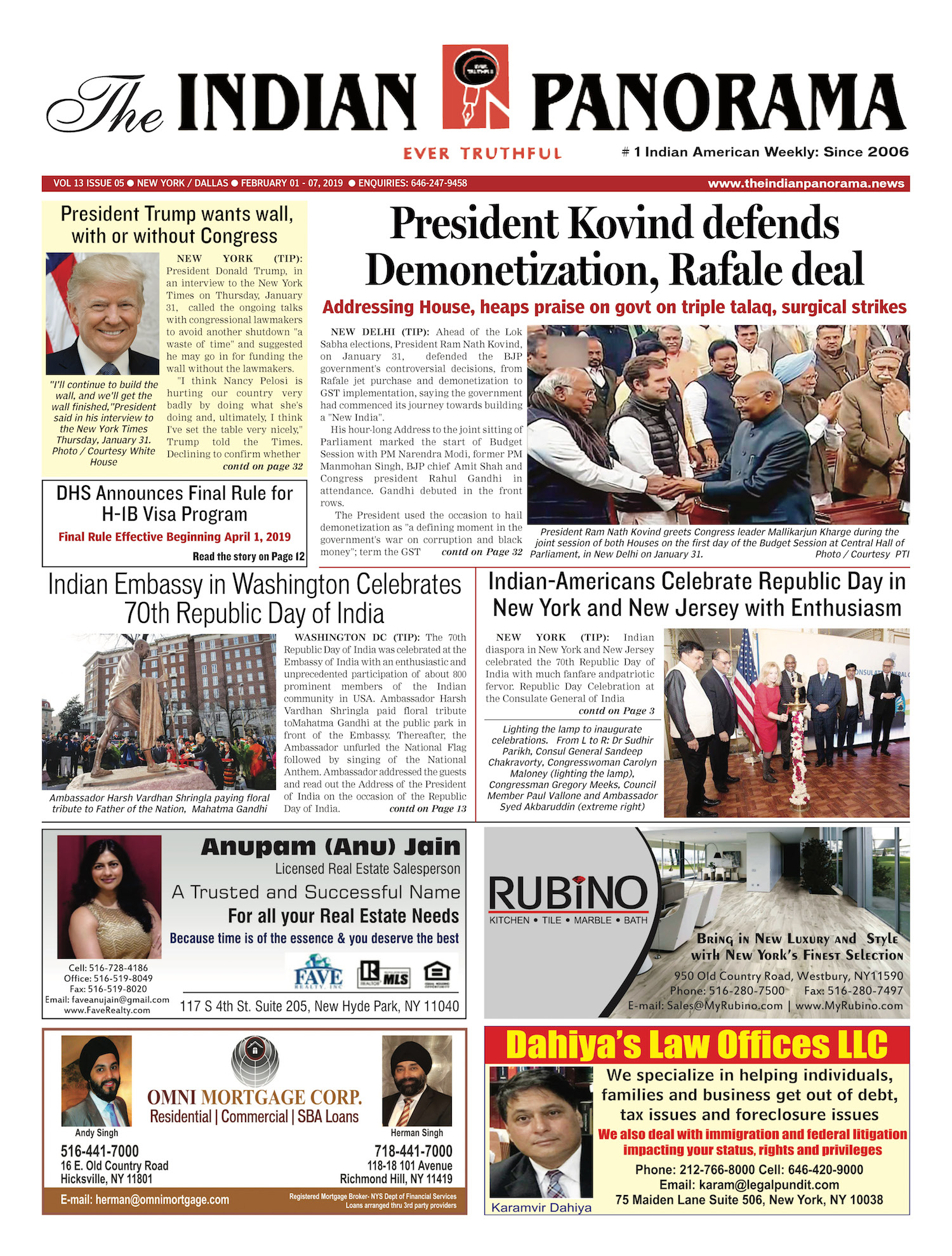
NEW DELHI(TIP): Ahead of the Lok Sabha elections, President Ram Nath Kovind, on January 31, defended the BJP government’s controversial decisions, from Rafale jet purchase and demonetization to GST implementation, saying the government had commenced its journey towards building a “New India”.
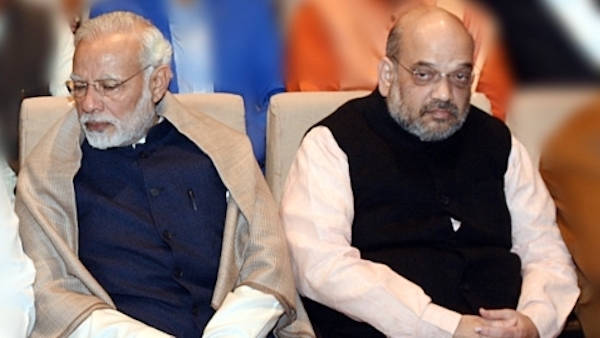
His hour-long Address to the joint sitting of Parliament marked the start of Budget Session with PM Narendra Modi, former PM Manmohan Singh, BJP chief Amit Shah and Congress president Rahul Gandhi in attendance. Gandhi debuted in the front rows.
The President used the occasion to hail demonetization as “a defining moment in the government’s war on corruption and black money”; term the GST a “means to establish an honest system of trade”; call surgical strikes India’s “new policy and strategy”; and laud Rafale jets as ultra-modern aircraft that will strengthen India’s strike capability.
The speech also lavished praises on government’s recent legislative moves, including the controversial Citizenship Amendment Bill that the Opposition is questioning, Triple Talaq Bill, death penalty for aggravated child sexual assault and the new law on 10 per cent quota for General Category poor in education and public jobs. The Address drew thunderous applause from the ruling MPs when the President mentioned Rafale jet induction into the IAF and surgical strikes by the Army.
On both occasions Opposition leaders Rahul Gandhi, Manmohan Singh and Ghulam Nabi Azad sat unamused as the Congress continues to question the government over Rafale fighter jets deal, demonetization and GST.
The President said: “The (demonetization) decision struck at the very root of parallel economy thriving on black money and the money outside the formal system was brought within the ambit of nation’s economy… and broke the back of the forces destabilizing the country and the systems sustaining the flow of black money.”
Listing other achievements of the government, including women-centric schemes like Mudra loan, Swachh Bharat and Pradhan Mantri Ujjwala Yojana besides Ayushman Bharat for cashless medical care, Kovind said the “new India” vowed by the BJP-led NDA government had no place for “imperfect, corrupt and inertia-ridden systems”.
On Rafale fighter jets purchase, he said, “My government believes that neglecting the country’s defense needs even for a moment is detrimental to the present and future of the country… after a gap of many decades, the Indian Air Force is preparing to welcome, in the coming months, its new generation ultra-modern fighter aircraft Rafale and strengthen its strike capability.”
Hailing surgical strikes, the President said, “Through the surgical strike on cross-border terror posts, India has shown its new policy and strategy.” The President also listed the Central Government’s flagship plans, including doubling farmers’ incomes and housing for all by 2022 as he wished the best to first time voters of the 2019 General Election before delineating contours of government’s “New India”.
The country was once the heartbeat of leftist assertion. But with change in the Americas, matters are now complex
By Vijay Prashad
Thus far, the government of Mr. Maduro remains in power, and the military has pledged its fealty to the re-elected president. It is unlikely that the Venezuelan Opposition — controlled by the old oligarchy — will be able to engineer a coup from within the country. It tried such a political maneuver in 2002, which failed. This time it has failed again.
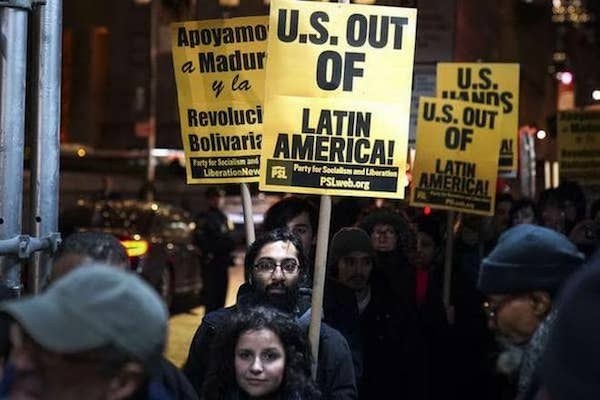
The fulcrum of geopolitical tension sits on Caracas, the capital of Venezuela. An attempted coup on January 23 has failed. The U.S. decided to recognize a member of the Opposition, Juan Guaidó, as the President of Venezuela. U.S. officials called upon the military to rise up against the government of President Nicolás Maduro. This was against the charters of the United Nations and of the Organisation of American States (OAS). None of that mattered. The drumbeats sounded from Washington to Caracas. There was a minor drum playing from many Latin American capitals, those whose governments had joined the Lima Group — set up in Peru in 2017 to overthrow the government of Venezuela.
There is little respite for the country, where tension sits heavily from one end to another. Thus far, the government of Mr. Maduro remains in power, and the military has pledged its fealty to the re-elected president. It is unlikely that the Venezuelan Opposition — controlled by the old oligarchy — will be able to engineer a coup from within the country. It tried such a political maneuver in 2002, which failed. This time it has failed again.
Venezuela’s Foreign Minister Jorge Arreaza, 45, has been understandably busy on the day after the attempted coup. The U.S. tried to isolate the Maduro government. The OAS met in Washington DC, where the U.S. government tried to get it to unanimously vote against Mr. Maduro. Even that meeting could not go as scripted. A veteran activist from Code Pink, Medea Benjamin, sneaked into the room and chanted slogans against the attempted coup. Many Latin American states, despite intense pressure from the U.S. government, either voted against the OAS motion or abstained. Mr. Arreaza watched these
When I asked him about the coup, he went back to 2017, the last time that the oligarchy tried to wrest control of the government from the socialists. The socialists, led by Hugo Chávez, came to power in 1999. After the U.S. attempted to overthrow Chávez and the socialists in 2002, things calmed down. Oil prices rose and the U.S. was distracted by events in Iraq and Afghanistan. For a decade, Venezuela was able to lead a regional process of integration on an anti-imperialist foundation. But, when Chávez died in 2013, the experiment began to unravel. Oil prices fell dramatically, and the U.S. had already turned its attention to Latin America. A coup in 2009 overthrew the democratically elected government of Honduras. The gunsights turned toward Venezuela. The oligarchy, backed fully by the U.S., attempted to foment trouble in 2017.
Mr. Arreaza recalled one man, Orlando Figuera, 21, who was going through an Opposition stronghold in May 2017. “He was accused of being a government supporter and brutally beaten by masked protesters who then soaked him in gasoline and set him on fire,” Mr. Arreaza told me. He brought up this story to offer an illustration of the character of the Opposition. Mr. Arreaza called this a ‘violent fascist movement’. He wanted to make it clear that the coup attempt was a part of that movement — one that is less interested in democracy and more interested in power and wealth.
Venezuela is in trouble. No one doubts that. Oil prices have fallen to half of what they were at the highpoint of Chávez’s government. Since the treasury of Venezuela is almost entirely replenished by the incomes from oil sales, the collapse of oil prices means the collapse of Venezuela’s public finances. Unable to borrow easily, the country faces serious economic difficulties. Sanctions by the U.S. and the seizure of refining sites in the Caribbean put the country into a situation of great crisis. No wonder that people are leaving the country, fleeing their homeland as it is suffocated for political purposes by the U.S. and its Latin American allies in the Lima Group.
Colombia’s Iván Duque and Brazil’s Jair Bolsonaro are both right-wing politicians who control the governments of Venezuela’s neighbors. They have committed themselves to the overthrow of the Venezuelan government. Mr. Arreaza and others in Venezuela told me that Mr. Duque, Mr. Bolsonaro and U.S. President Donald Trump have overplayed their hands. After the attempted overthrow in 2017, the Venezuelan government tried to deepen public participation by the formation of a Constituent Assembly. It is true that the oligarchy hated this idea and that the western press amplified its views about this being anti-democratic. But, as many Venezuelans say, the Constituent Assembly and the many elections for candidates and referendums that came before 2017 have sharpened their political consciousness. It will be hard to befuddle them with talk of dictatorship.
The isolation of Venezuela is remarkable. Not long ago, the country was the heartbeat of the leftist assertion in the hemisphere. Now, with the emergence of right-of-center governments in Latin America and with an explosive energy for regime change in Washington, matters are more complex. Mr. Arreaza said that Mr. Maduro had invited the UN High Commissioner for Human Rights, Michelle Bachelet, to visit Venezuela. She has not yet come. Mr. Maduro, he said, wanted the UN to host a dialogue with the Opposition to restore some balance to the politics in the country. No such assistance has been provided. A hand is outstretched from Caracas, Mr. Arreaza said. It is waiting for someone to take hold of it.
(The author is Executive Director, Tricontinental: Institute for Social Research)
“We are beating Netflix in India. We spent more money on content in India than Netflix does in India. And we have already 13 million monthly paying subscribers as of Sep 30. I don’t believe Netflix even has 1 million in India today. So that shows we are pre-eminent.”
Prem Parameswaran is an institution in himself. A financial wizard, Prem achieved phenomenal success as investment banker. In his 23 -year career in Investment Banking, Prem became one of the top Media and Telecom bankers on Wall Street. He advised clients and many Fortune 10 companies on mergers and acquisitions, as well as both public and private equity and debt financings.
In 2015, after a long and successful career as an investment banker in the Global Media and Telecom sector Prem Parameswaran joined Eros as the Group Chief Financial Officer (CFO) and President of Eros International’s North America Operations. A new feather was added to his crown when on December 20, 2018 Eros announced that Prem has been appointed to the Company’s Board of Directors.
Established in 1977, Eros is a respected global brand name in the Indian cinema world, which focuses on distributing films and other content through various mediums. Its relatively new OTT (Over-the-Top Service) platform, Eros Now, has over 128 million registered users globally with over 13 million monthly subscribers as of September 30, 2018. People term Eros Now as the “Netflix” of India, which owns rights for about 11, 000 films from Bollywood and regional languages of India spanning several decades. No other company in the world has such a rich and vast Indian content to offer to its viewers globally.
Prem with US President Trump
Obviously, Mr. Parameswaran is a subject of interest for the media and anybody attempting to analyze what contributes to success of a person or an institution. The Indian Panorama Chief Editor Prof. Indrajit S Saluja caught up with Mr. Parameswaran two days before the end of 2018 to interview him at his residence in Purchase, New York.
Here are excerpts from the interview.
TIP: I am told you were born in USA.
Yes, I was born on October 4th,1968 in New York. My parents, who were both immigrants who came to US as students in pursuit of the American dream, were the first Indian family to move to Scarsdale in 1970.There were no other Indians in Scarsdale at this time. Scarsdale was predominantly a Jewish Community at that time. Today, Scarsdale has approximately 20% Asians and is one of the most affluent areas in all of New York. It also has one of the best school systems in the country and that is sole reason why my dad wanted the family to move to Scarsdale to give me the best education.
TIP:And you went to which College and University?
First, I went to Scarsdale public school system and graduated from Scarsdale High School. Then I went to Columbia University and then I went to also Columbia Business School. So I have a BA from Columbia University and MBA Finance Honors from Columbia Business School.
TIP:Do you also have a Ph.D.?
No, I don’t. I thought about it and even now I think about it, to perhaps do a Ph.D. in Finance after my business career, but you know family and work come first. So, I haven’t thought about it recently ,but as you grow older one thinks perhaps why not. I enjoy teaching just like when I was working, I would like to go back to Columbia Business School and sometimes teach a case study in the one of the Advanced Corporate Finance classes about a deal or a transaction and how it works and how you value companies. So it is always nice to be able to teach business school students how to apply theory to practice because in Finance there is a lot of theory but in practice you have to think about other variables in valuations. For example, you see valuations of companies like Amazon or Facebook, Netflix or even us at different value levels and different multiples and as a result you have to apply different kind of theories whether it is a discounted cash analysis or an applied public value multiple analysis or a comparable transaction analysis and any of these methods could yield different results. Teaching how to apply these valuation methods with respect to both public and private companies is an art not a science.
TIP:So is it because of your deep understanding of finance and the practices involved that the companies trusted you with taking your advice on mergers and acquisitions which you specialized in?
After college and business school, I worked in Investment banking. I started my career in 1991 with Salomon Brothers which was one of the pre-eminent Wall Street Investment banking firms and from there I went to the prestigious Goldman Sachs and I spent many years with them as a Vice President; and from Goldman Sachs to Deutsche Bank in 2003 where I eventually became a Managing Director and Head of Americas for media, telecom investment banking. I worked on mergers and acquisitions as well as public and private financings for large multinational companies.
TIP: I think for that you were given an award also?
Yes, there were some awards over time. It is always nice to receive something for your accomplishments. There was Deal of the Year, Businessman of the Year, there was a whole bunch of different and nice awards and that was from advising different clients but eventually I finished my investment banking career at Jefferies where I was the Global Head of Media, Telecom investment banking. After an investment banking career of over 23 years of my career , I had executed over 300 transactions and those transactions for some of the world’s best companies including AT&T, Comcast, T-Mobile, Reliance, The Boston Red Sox, Windstream, Level 3 and Eros International to name a few.
In fact the company now that I work for, Eros International is a company that I helped take public in November 2013. We also did a follow on equity offering for that company. So, over the course of a 23 -year career you can do a lot of deals , I really enjoyed doing those deals , I enjoyed working with very talented smart people who would challenge you every day. The people we hire whether it was Salomon or a Goldman or a Deutsche are the top of the top -you have to be a top student, top GMAT, top SAT and then once you are working you are working 80 to 100 hours a week. These people are really committed, and you have to enjoy what you are doing . If you are not enjoying what you are doing , working 80 to 100 hours of a week is tedious and you are not going to do it well. I loved it and especially the fast pace nature of the business. I worked very hard and that’s how you succeed, and I think I really have enjoyed a great career in investment banking and now I am enjoying the best career as a CFO.
Prem with Priyanka Chopra at the Bajirao Mastani Press Conference
TIP: By the way, you said hard work, but having a vision to create something or to take a company to a higher level that is a different thing. You may be very hard working but if you have lack of vision you may not be able to achieve as much as you want to. So, you have a vision, what kind of a vision you had when you moved over the present company you are working for?
Eros International is the preeminent Bollywood content, Indian content company, in the world. We have largest library of films from a theatrical perspective, we have the largest Indian OTT platform-Eros Now, OTT is Over The Top, which is similar to Netflix. We are bigger actually than the Netflix in terms of number of Indian Films and Original Series. So, we are like the Netflix of India except bigger and we are publicly listed on the New York Stock Exchange ticker symbol EROS. I joined the company 2015, Kishore Lulla , the chairman of the company who I originally worked with on listing Eros on the NYSE came to me in December of 2014 regarding joining Eros and building a global digital company. We were at the Montage Hotel at the Beverly Hills and we were both there doing business. We sat down and literally on a napkin he said this is what I want to do, and I want this digital piece, EROS NOW our OTT platform to be a $10 billion dollar market capitalization company. Here’s where the growth is going to come from. Here’s where the subscribers will come from as there are over a billion people in India, billion people on cellphones. I said, can we start with $1 billion, so we joked around but what was interesting was the vision was there, the vision to build a preeminent digital platform was there and all of the groundwork and infrastructure was already laid down, so I thought this was a huge opportunity and he came to me and said he wants somebody with M& A experience and public capital market experience to help drive the company with him and the current management team. I got excited, after 23 years of banking you usually get excited about deals, this was the first time I got excited about the company and I have been approached before to join other public companies but none of them really appealed to me. This appealed to me cause this you have the opportunity to build the next Netflix, the next Facebook, the next Amazon right now and getting in on the ground floor with the infrastructure in place. Two, I get to work with my Indian heritage in Bollywood. So, it was nice to deal with all of the aspects of films. You know in India there are three things, there is religion, there is Cricket and there is Bollywood may be not in that order. You know it was such a big opportunity and I thought this is perfect .
TIP:So 2015 to 2018, what has been the growth trajectory?
The growth trajectory has been tremendous in the sense that we went from a 3000 film library to an 11,000 film library for Eros Now. From basically the time I joined we had less than 10 million registered users and today we have 128 million registered users and over 13 million monthly paying subscribers. Our revenue growth on the top line is roughly 15 % and our EBITDA margins are over 30 %, last quarter we did 39.2% EBITDA margins earnings before interest and taxes depreciation and amortization. Tremendous growth continues as we have premium content on Eros Now including original series like Side Hero and Smoke that have been highly rated by IMDB.
TIP:So, what would be the net worth of the company now?
Our market cap is roughly around on an enterprise value of about $900 million and a market capitalization of about $750 million today. Actually, it fluctuates with the market. If you asked me two weeks ago, we were closer to a billion. We had a little bit of a global sell off in the market in December. So, that happens; that’s ok as we believe in the long term growth of our business and our stock price will be a by product of our success.
TIP: But then it will bounce back, too?
I am not worried about the small blips in the stock market here and there. Right now our stock price is 9.50, we believe this could be $100 stock if we continue to operate and execute on our business strategy with premium content.
TIP:So, the flop doesn’t bother you?
No, given our business fundamentals are strong, I believe we will achieve new heights.
TIP: So, ultimately it does affect your net worth or what would you call it your net capital or whatever you may like to call it?
Yes, of course our market cap today as I told you is roughly just over $750 million and yes, the stock price goes up and down , but we have close to $100 million cash on our balance sheet, we are fully financed, and poised for growth. We have a very conservative balance sheet as well. And it’s part of being a CFO is making sure that one: our capital structure is correct and poised for a growth and two: that we have cash on our balance sheet to sustain the growth.
TIP:And from here as you said about the growth until now what are your plans, where do you go from here?
Sure, so we are in the process of doing 40 to 50 films each year as well as over 100 new Originals on Eros Now. This similar to what Netflix does except we have the Studio business as well so more like a combination of Warner and Netflix equals Eros. We also just launched Eros Now Quickie which is short form content that is great for the millennials. Quicke premiered First Dates Gone Wrong this month which was well viewed because this content transcends globally. We also released Smoke which is a drama based on the underworld in Goa , drugs, violence, very similar to Narcose but I think I am a little biased and I think Smoke is better and its in HINGLISH (Hindi & English) with subtitles. So anybody can view it, you don’t have to know the language of Hindi. Anyone around the world can view it. You can just download our app from EROS NOW.COM.
TIP:So, this is one way where you want to head on at the moment but is there anything revolutionary, exceptional and doesn’t exist anywhere else, but you can think of introducing to promote your business?
Yeah what’s interesting about us is that we have been on the cutting edge of Bollywood cinema and Indian content since 1977. The company was formed in 1977 in an International distribution house by Arjan Lulla, God Rest his Soul , he just passed away. Kishore Lulla, the chairman , his son has built it up to make it a global phenomenon, a global company. Again, similar to Netflix except better from an Indian content perspective there is no one that even comes close. So much so that Reliance industries, Mukesh Ambani’s company bought a 5% stake in our company at $15 a share this past February 2018. Ironically our stock is at $9.50 but it is good that the 19thrichest man in the world bought 5 % stake in our company at $15 a share. It shows you that he believes in the growth potential of our company. He is a smart businessman and knows the principals of value investing.
TIP: Did Ambanis have anything to do with you probably when they bought some theatres here?
No, that was Anil Ambani, his brother not Mukesh. Anil had invested in DreamWorks and unfortunately, I don’t think that turned out well for him because I think he bought it at the top. Ours is a different story because Mukesh Ambani is populating his telecom company and his data offering with content and he knows that we can be one of the preeminent content providers not only in India but globally. .
TIP:What challenges do you face from may be your competitors or from the other advancing technology?
Netflix has gone into India. Amazon has gone into India. Then you have others like Voot and Hotstar but having said that we look at ourselves in a different light because the EROS brand is so strong in India and globally amongst the Indians. We have the deepest and the richest library than any of our competitors. Of the last 10 years and the last 110 highest box office grossing films, over 36 of them are ours which I think is a strong testament to our preeminent content. EROS NOW or OTT App which is being driven by Rishika Lulla is phenomenal. We are beating Netflix in India. We spent more money on content in India than Netflix does in India. And we have already 13 million monthly paying subscribers as of Sep 30. I don’t believe Netflix even has 1 million in India today. So that shows we are pre-eminent.
The Parameswarans with President Donald Trump at the White House. Ven Parameswaran is on left, Priscilla Parameswaran is second from left and Prem stands next to President Trump (Official White House Photo by D. Myles Cullen)
“…you are looking at Indians now who have conquered Wall Street, you see Indian CEOs on Wall Street. There are Indian CEOs at some of the top companies in the world like Google, Microsoft, Pepsi, Mastercard and Adobe and they all exemplify the strength of Indians. In addition, most people are not threatened by Indians, we are smart, but we are good people with a lot of intellectual horsepower.”
TIP:EROS is focusing solely on Indian content?
Today we are into India content and that may change too. But the price point is also different. Our price point is lower, we want to get people in and we want to get them hooked because we love our content and we think that people will love the creative content that we have whether it is Smoke or Side Hero, Bajirao Mastani or a Bajrangi Bhaijaan, and they will get hooked. As our business grows and viewers get a hooked we can start thinking about different pricing scenarios.
Close friends. Tennis player Mahesh Bhupathi (left) and Prem Parameswaran
TIP:So while you are ahead of the rest in the Indian market be it Netflix or Amazon, so one is that you have a very strong subscriber base and then your price point , and then your library and content. So you don’t see any competitor near you now?
Well we have the best library of over 11,000 films and theatrically we have many new productions. There is always competition but just like here the competition that you see is Disney, Fox, Warner and MGM, you see competition but of you bring a brand and having good content. Premium content wins. I know it sound cliché, if you put out good content, you will win. We truly believe that, so that’s what we lead with, First is the best content, and we have the best infrastructure whether through our theatrical distribution or through EROS NOW our digital platform which we think is the best in the world for Indian content.
TIP: And how about the scenario in the US?
In US you have 4.3 million Indians that’s not including the 3rdand 4thgeneration. You have another almost 1 million in Canada. So there is a big opportunity. Here I want to drive this our business and market penetration. I want EROS NOW to be preeminent in the United States and North America. And in order for that to happen again it leads with premium content. If we give the best content, then people want to watch it. So EROS NOW is priced at $7.99 a month in US. Indians in the United States are the highest ethnic group by income than any ethnic group in the country. We have the highest per capita income than any ethnic group including Chinese, or other Asians which is again very strong so $7.99 is not very expensive for an Indian to get the best Indian content offering. How do we get subscribers – we are focused on our tearing strategy of marketing. One is through theatrical distribution to the theaters. The goal is to use social media correctly as we are a digital company so we want to use Instagram, we want to use Twitter , we want to use Facebook, we want to digitally advertise our EROS NOW product because the millennial average age is 27 and here also people are becoming more and more digitally oriented including my parents, my 88 year old dad is now learning how to text and tweet. So you have to adapt. So the old school of putting up posters is not how you get the eye balls so for example. Whether it is Priyanka Chopra: she has over 50 million Instagram followers , Donald Trump has 75 million social media followers , we know that we need to get eye balls to view our content. We could do partnerships with some of these folks like a Priyanka Chopra for example. And then we get right there 50 million eye balls. So there are opportunities that we see from a visionary perspective that we think there are going to be new things , new techniques and how to get more subscribers into our system,
TIP:You will be able to attract the subscribers as you say because of the content?
Yes.
Time for kids. Prem with daughters Trinity (13), Kayla (10), and son Hudson (8)
“So you have to believe in yourself, you have to believe in your employees, you have to have goals and that’s what you strive to achieve. We will do it with integrity because that is the most important thing. Finally it is important to spend time with your family because that’s what gives you soul, that’s the infrastructure that you need to achieve anything outside.”
TIP:So content is the most important thing?
Yes content is the most important thing because if you have good content then people always want to watch it . Be it Indian, American or other , if it is good content people are going to watch it. If it’s a good play you are going to watch it like Hamilton on Broadway was one of the top plays and everyone wanted to watch it and they could raise their ticket prices . Springsteen on Broadway was sold out for a year. You could not get a ticket; the second-hand market was charging you had
$1500 to $4000 for a ticket. So that shows you just that if the content is great people will want it.
TIP: You said merge Hollywood with Bollywood Merge in what sense?
Slumdog Millionaire was a good test so that did well, but it didn’t do well originally at the box office until it won an Academy award. Million Dollar arm which was done by Disney and that was film about 2 cricketers that were trying to find if they could pitch in major league baseball in the US. That didn’t do too well. So again you have got to find the right mix between Hollywood and Bollywood- western content and Indian content that makes sense because culturally it’s a difference. In India only 8-10 % of the box office today is western that’s Hollywood. 88 to 90 % is pure Indian regional content. Indians are in globally, with healthy and tasty Indian food, Yoga and Bollywood dance studios, so we want to capture viewers globally.
TIP: What I look at when I look at the movies made in India or here, I find here in Hollywood there are very few movies which have Indian content/ story as theme or background , In India the stories which are being made on some American or Canadian or British background , they deal mostly with Indians abroad like you know people living in UK but of Indian origin , Indians living in US, Indians living in Canada. So they are doing really well. So I see your point there that this merger does exist somewhere at some point. And the movies have been doing well.
Yes 100%. You know Aziz Ansari, the Indian comedian did a show for Netflix called Master of None. Very good show and I commend Netflix for the good job done on it and I commend him he did a good job on it. I saw him the other day doing his show in the Atlantic City and he did a great job. I can see that we can do those what they are doing but perhaps even better. And it’s a show about an Indian American who has come here, immigrant parents and he wants to become an actor and it is almost like Seinfeld and I think more of that can pertain because India is very popular in US now and I have said this many times Indians are in , when we look at EROS or EROS NOW Indians are in whether its Yoga , whether its Indian Food , whether its Bollywood dance which they have studios all over the country now, and there are competitions all over the country whether it’s even Zumba which is again a take off of Bollywood dance, in all of these things we see Indian culture and Indians also I know we are the most affluent ethnic group here one, Two you are looking at Indians now who have conquered Wall Street, you see Indian CEOs on Wall Street. you There are Indian CEOs at some of the top companies in the world like Google, Microsoft, Pepsi, Mastercard and Adobe and they all exemplify the strength of Indians. In addition, most people are not threatened by Indians, we are smart, but we are good people with a lot of intellectual horsepower
TIP:What kind of values are we talking about, the work culture or something more?
So when we talk about values, one is that it is shown by Lead by example. One, it comes from hard work. Two, it comes from treating everyone with respect. We have close to 500 employees and we treat everyone whether it is the tiffin person in Mumbai to my Executive Assistant to high end professionals, sales & marketing with the same level of respect as that is important. Three , Integrity. I believe everyone needs to have integrity in this company and ethics are important. I will tolerate mistakes, but I won’t tolerate anyone who does not have integrity. That’s where we draw the line. And then finally Team work, it’s important to be a team player and a lot of companies use that as a cliché, but we mean it. In our company its stressed everyone has a goal, and everyone has to do their bit . But I can’t emphasize enough integrity. To me that’s the most important. It takes many years to build a company and to build a reputation and it can take 15 seconds to blow it all up.
TIP: So you were born here so how come you connect so well with the Indian movies, Bollywood or regional movies without being there or living in that country?
So that’s a great question. I grew up here in US. I did not grow up watching Bollywood films or regional or Indian movies. In fact, my, when we first moved to the affluent community of Scarsdale, NY , my Mom and Dad would only speak English in the house. No Malayalam, no Tamil no Hindi , Only English. They wanted me to assimilate and grow up like a true American. You know I was the only Indian American in grammar school in the first few years. I never felt discriminated even though the color of my skin was brown . At times I would look around and say how come I am brown, and they are white, but I never felt discrimination. Two you learn the American Ideals , good and bad . But that was something my parents wanted for me, to grow up as a true American. Now, I joined an Indian company and one of the things growing up I missed was the culture. So there was always Indian culture in the house but at the same time I didn’t watch the traditional Bollywood films. I wanted to go see Star Wars. Those are the things I might have missed growing up, but I am glad that I now get to know and understand more of my Indian heritage. I watch all of our top films and Originals. Most of them are excellent. Bajirao Mastani was one of the greatest films that was produced. . I loved it. Bajrangi as well. So while I did not grow up watching Indian movies, today I really enjoy them and love all of our Originals that I usually binge watch as well.
TIP: And how about the language barrier?
Again there are subtitles for everything. If you are in South India and you speak Malayalam, you may not necessarily speak Hindi but subtitles and dubbing solve this problem. We are over 135 countries.
Prem is with Bruce Springsteen
TIP: So I am looking at summing up from you that at the end of the day you may be an accomplished and a brilliant student , you may be an accomplished sportsperson, you may be a successful professional in your career but what counts most is the goodness in you. Being good transcends everything else. Is there anything that you would like to tell our readers. You may conclude with a message.
I think when I think about life in general, I think about all these things. For kids, you want to teach them hard work and good values, strong infrastructure , same with work, EROS International and EROS NOW we want to build the company to new heights. I would like to help Eros to grow to over $10 billion market capitalization company. Today, we are a $750 million market capitalization company, listed on the New York Stock Exchange ticker symbol EROS and we have big growth ahead. I am very excited. I mean there is a big opportunity and I believe we will do it. So you have to believe in yourself, you have to believe in your employees, you have to have goals and that’s what you strive to achieve. We will do it with integrity because that is the most important thing. Finally it is important to spend time with your family because that’s what gives you soul, that’s the infrastructure that you need to achieve anything outside. I want to be known as a great father sometimes that means disciplining my kids. They may not like it now but later on they will appreciate it. That also means teaching them the right values so that they treat others with respect, be good to people and work hard. Finally when this all comes together, whether family or business success, it really all comes down to being a good person. If you are good to others and work hard, God will do the rest. Thank you for your time and God Bless Eros and God Bless America.
Parker is well positioned to continue its leadership in patient care, teaching and research, on the wings of compassion, excellence and innovation.
Parker Jewish Institute for Health Care and Rehabilitation in September 2018 held a grand opening ceremony for a new Indian cultural unit, dedicated to enhancing quality of life for patients, residents and families of Indian origin. The dedicated unit was recently treated to a complete makeover, featuring culturally sensitive art, interior design and décor.
“Parker’s newly renovated space is designed to meet the needs of Queens and Nassau’s growing Indian population,” said president and CEO of Parker, Michael N. Rosenblut. “There is Indian-inspired décor and artwork, celebrating India’s cultural heritage, scheduled Indian recreational activities and entertainment, Indian newspapers and movies and of course, traditional Indian meals made fresh daily, prepared by our chefs.”
In addition, the unit is staffed by clinical and front-line staff fluent in Indian languages, delivering the excellent care every day that Parker is known for in the community.
Several team members at Parker coordinated the efforts to implement this new cultural unit.
“It was such an uplifting experience to be involved in selecting colors and artifacts for the unit, and to know that it represents so much to our Indian families,” said Tara Buonocore-Rut, the executive vice president for corporate strategy.
The unit features Indian-inspired décor and artwork, celebrating India’s cultural heritage
Buonocore-Rut commended Saroj Shah, a retired OBGYN, along with her husband Indravadan Shah, a retired surgeon, who together led a committee of local Indian doctors and professionals who worked on the development and planning for Parker’s Indian cultural unit.
Parker Jewish Institute, which is located at the Queens-Nassau County border in New Hyde Park, is a leading provider of short-term rehabilitation and long-term care. At the forefront of innovation in patient-centred health care and new technology, the institute is also a leader in teaching and geriatric research. Parker Jewish Institute features round-the-clock clinical teams, and is nationally renowned as a skilled nursing facility, as well as a provider of community-based health care, encompassing social adult day care, home health care and a hospice program.
Indian doctors at the institute – The unit is staffed by clinical and frontline staff fluent in Indian languages
Since its inception in 1907 as a shelter for 25 indigent men and women, the Parker Jewish Institute has evolved into a nationally recognized 527-bed, non-profit centre for the health care and rehabilitation of adults, and a comprehensive network of community health care programs for adults. It is also a leading academic campus for the training of health care professionals, and an important research centre for studies related to aging. The Parker Jewish Institute is a teaching affiliate of Albert Einstein College of Medicine and Long Island Jewish Medical Centre.
The Institute was established by a group of benefactors as a shelter for homeless older people. From a single room in a private house in East Harlem, the group, incorporated as the Harlem House of the Daughters of Israel in 1914, moved to a three-story brownstone at 32 East 119th Street, and then, in 1925, to an eight-story building at 1260 Fifth Avenue in Manhattan. Enlarged facilities enabled Parker’s forerunner to care for increasing numbers of immigrants and other New Yorkers who sought assistance.
The Home gradually expanded its services to include health care. With the influx of refugees in the 1930s and 1940s, the Home accepted older and more infirm residents, and made provisions for more intensive care. Reflecting these trends, the Home changed its name in 1943 to the Home and Hospital of the Daughters of Israel. It was supported completely by private contributions. Like its predecessor, the Home and Hospital outgrew its facilities and mission. The medical problems of its residents were too complex for the staff and equipment to handle properly, a more sophisticated care and a modern facility were needed.
Indian Nurses. L-R: Satvir Kaur, RN; Kathleen Keegan, Director of Recreation Therapy; Rita Ramsahai, Therapeutic Recreation Leader; Kirandeep Kaur, RN; Prasanna Nair, RN, Nurse Manager.
Planning began for a facility that could implement a new concept in health care for the aged. The Trustees envisioned a prototype institution, the first of its kind in the United States that would provide total care for the geriatric patient. Its orientation would be unique: rehabilitation, restoration, and return to the community. This geriatric facility would not be the “last stop” for its patients. To the contrary, it would be an inspiration to continued life. It would treat patients with physical disabilities as well as mental and behavioural disorders. And, it would conduct research and educational programs.
The Board’s vision was realized with the purchase of a 5-acre parcel of land adjacent to the Long Island Jewish-Hillside Medical Centre at the Queens/Nassau border, the construction of an eight-story geriatric centre, and the opening of the Jewish Institute for Geriatric Care in March 1972. In 1988, the name was once again changed, this time to recognize the many contributions of the Parker family, and the facility was renamed “Parker Jewish Geriatric Institute.” Its current name was chosen in 1997 to reflect the wide range of rehabilitation services provided. Thus, they are now known as the Parker Jewish Institute for Health Care and Rehabilitation.
In 2010, Parker expanded services to include on-site dialysisand medical ambulette transportation. The Queens-Long Island Renal Institute, Inc.opened its doors on the lobby level of Parker, providing chronic haemodialysis in an award-winning, state-of-the-art environment, for both inpatients and residents of the community. In addition, Lakeville Ambulette Transportation, LLCoffers the patients and residents of Parker Jewish Institute, as well as adults in the communities, nursing homes and health care facilities of New York City and Long Island, professional transportation to medical appointments, nursing homes and related destinations.
Continuing its leadership in the introduction of new technology to long-term care, the Parker Jewish Institute for Health Care and Rehabilitation and Long Island Jewish Medical Centre implemented the first electronic medical transfer.
The Nerken Center for Research, a division of the Parker Jewish Institute for Health Care and Rehabilitation, is devoted specifically to the study of emerging issues of aging. Through a professionally organized and administered program of scientific research, the Center actively confronts the many challenges resulting from a longer span. The work of the center focuses on research development activities that facilitate the realization of both new and existing research opportunities and scholarly activities that address important needs and the acquisition of information that will contribute to a greater understanding of the variables and complexities of the aging process. The Nerken Center was established in 1982 through an endowment by the late Jean and Albert Nerken. The Center exemplifies Parker’s advocacy of geriatric research, offering an expanded capability to mount a broad spectrum of studies.
As a non-profit organization, the Institute is governed by a voluntary Board of Trustees comprised of community, business and professional leaders from throughout the greater New York metropolitan area. Representing a broad spectrum of industries and experience, Parker’s Trustees actively lend their expertise by working in partnership with Administration on task forces and committees. Each Trustee brings his/her unique talents to strengthen the Institute, while sharing a steadfast commitment to the Institute’s mission and vision – providing the highest quality, most compassionate health care and rehabilitation to older adults.
Today’s Parker is well positioned to continue its leadership in patient care, teaching and research, on the wings of compassion, excellence and innovation.
“In America, given our cherished Bill of Rights, “Flag burning” by an American is both emotionally offensive and legally protected political speech. Desecration, when devoid of political speech, however, is a crime. Indeed, being upon one’s knee in NFL games is in the same genre, albeit, less offensive.
What SFJ – an American-born & accredited entity is seeking to do, however – is to burn the flag of another nation – and here is the critical part – as part of a campaign, allegedly, as an unregistered foreign agent engaging in terrorist activities in India. The First Amendment has limits, and India’s laws, no less implicated, about flag-desecration, let alone terror and foreign agency, are the calculus of this calculated act to evoke, provoke and injure the sovereignty of a core American ally, India.”
Ravi Batra
ravi@ravibatralaw.com
Signup to our Newsletter!
Don’t miss out on all the happenings around the world