“WE THE PEOPLE” – AND WHO COUNTED
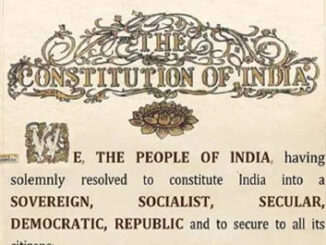
“We the People of the United States, in Order to form a more perfect Union… The Preamble begins not “We the States” but “We the People of the United States.” The words locate authority in […]
The Constitution avoided the words slave and slavery, but it protected the institution through structure and compromise. This was not an incidental imperfection. It was part of the price paid to secure agreement among states […]
The framers sought a national government strong enough to tax, regulate commerce, conduct foreign affairs, provide defense and enforce law. They also feared that power-even republican power-could be abused. Their solution divided authority horizontally among […]
Fifty-five delegates attended at various times; thirty-nine ultimately signed. They were lawyers, merchants, planters, physicians, soldiers and public officials-experienced and generally affluent men. Women, Native Americans, Black Americans and most ordinary laborers were absent from […]
The assertion that all men are created equal was revolutionary in scope and radically incomplete in application. The political community of 1776 largely excluded women. Slavery existed in every state and formed the economic and […]
The Declaration was read publicly in Philadelphia on July 8 and soon in towns, military camps, churches and meetinghouses across the states. Crowds cheered; bells rang; royal symbols were removed. In New York, troops and […]
1. THE RIGHT TO DECLARE The opening states that when one people separates from another, respect for the “opinions of mankind” requires an explanation. Independence would not be presented as a secret act or a […]
The Idea That Gave Birth to a Nation “The war won a nation. The Declaration gave the nation its soul.” By the spring of 1776, war had continued for a year, yet independence remained deeply […]
I n 1781, British General Charles Cornwallis established a base at Yorktown, Virginia. Washington and the French commander Rochambeau moved their armies south from New York. A French fleet under Admiral de Grasse defeated a […]
After failing to crush the Revolution in the North, Britain shifted its main effort southward, expecting substantial Loyalist support. Savannah fell in 1778 and Charleston in 1780, producing one of the worst American defeats. The […]
WOMEN Women managed farms and businesses, produced military supplies, raised funds, carried messages and cared for the sick. Camp followers performed essential labor. Deborah Sampson served disguised as a man; Margaret Corbin was wounded while […]
In 1777, Britain pursued a plan to isolate New England by advancing from Canada down the Hudson corridor. American forces slowed General John Burgoyne’s army and compelled its surrender at Saratoga in October. The victory […]
Britain returned in overwhelming strength to New York during the summer of 1776. Washington’s army suffered defeat on Long Island and narrowly escaped destruction. The Americans retreated through Manhattan, across New Jersey and into Pennsylvania. […]
“Independence was declared in words. It had to be sustained by sacrifice, endurance, alliance and war.” AN ARMY BEFORE A NATION After Lexington and Concord, thousands of New England militia surrounded British forces in Boston. […]
By early 1775, Massachusetts resistance had become organized and armed. Provincial leaders gathered military supplies at Concord; militia companies trained as minutemen. General Thomas Gage, the royal governor, received orders to enforce imperial authority and […]
In 1773, Parliament passed the Tea Act. It allowed the financially troubled East India Company to sell tea directly in the colonies, making legal tea cheaper even with the remaining duty. British officials expected consumers […]
The Townshend duties of 1767 taxed imported glass, lead, paper, paint and tea. Colonists renewed boycotts, while customs enforcement intensified. British troops arrived in Boston in 1768. Their presence angered residents who viewed a standing […]
The Stamp Act Congress brought delegates from nine colonies to New York, where they declared that only colonial representatives could tax the colonists. Groups calling themselves Sons of Liberty organized protests, sometimes using intimidation and […]
From Protest to Rebellion, 1763-1775 “The Revolution began before independence-with an argument over power, consent and the rights of British subjects.” VICTORY CREATES A CRISIS Britain emerged from the French and Indian War in 1763 […]
The French and Indian War began in 1754 as a struggle over the Ohio Valley and became part of a global contest known as the Seven Years’ War. Britain and its colonies fought France and […]
In the 1730s and 1740s, the Great Awakening swept through the colonies. Itinerant preachers spoke to large outdoor crowds, stressing personal conversion over established hierarchy. The movement divided congregations but crossed colonial boundaries, encouraged new […]
Distance from Britain required colonists to manage much of their daily public life. Royal governors represented imperial authority, but elected assemblies controlled local taxation and spending in many colonies. County courts, town meetings, juries and […]
NEW ENGLAND Rocky soil and a short growing season encouraged small farms, fishing, shipbuilding, lumbering and maritime trade. Compact towns gathered around meetinghouses. Congregational traditions shaped Massachusetts and Connecticut, though Rhode Island became an important […]
From Settlements to a New Society, 1620-1763 “Separate colonies became neighboring societiesand slowly discovered what they shared.” THIRTEEN COLONIES, MANY BEGINNINGS The thirteen colonies did not begin as a single national project. They were established […]
Thirteen years after Jamestown, the Mayflower arrived in present-day Massachusetts. Its passengers included religious Separatists seeking the freedom to build a community according to their beliefs, as well as other migrants pursuing opportunity. Before going […]
© The Indian Panorama