


- BY INDRAJIT SINGH SALUJA
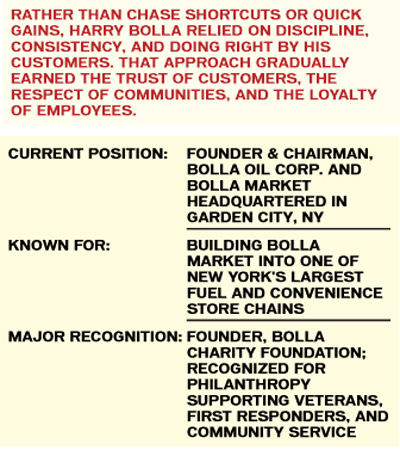 Some people build companies. Others build wealth. A rare few build institutions that outlive quarterly profits and become woven into the fabric of a community. Harvinder “Harry” Singh Bolla, founder of Bolla Oil Corporation, belongs to that rare category. Today, his company operates nearly 300 fuel and convenience retail locations, employs close to two thousand people, dominates New York’s retail fuel market, and has grown into one of the largest convenience store chains in the northeastern United States. Yet, when Harry Bolla reflects on success, he seldom talks about revenue, market share, or expansion plans.
Instead, he talks about opportunity. “I never had a plan to be where I am,” he says. “I take it one day at a time. If you work hard, discipline yourself, and do the right things, opportunities will always be there. I don’t know what opportunity it would be. All I dreamed of was owning something of my own,” says Bolla, who started his business modestly in the US over four decades ago. That philosophy-simple, practical, and deeply rooted in gratitude-has shaped every chapter of his remarkable journey. From a small village in Punjab to becoming one of New York’s most respected entrepreneurs and philanthropists, Harry Bolla’s story is about the confluence of a relentless work ethic, integrity, and spiritual belief. At the heart of his journey are values that trace back to the teachings of Guru Nanak, the founder of Sikhism. Two principles, in particular, have quietly shaped Harry Bolla’s philosophy of life and business: Kirat Karni (earning one’s livelihood through honest labor) and Vand Chhakna (sharing one’s earnings with others).
These teachings find expression not only in Bolla’s entrepreneurial success but also in his lifelong commitment to giving back.
FROM A PUNJAB VILLAGE TO NEW YORK
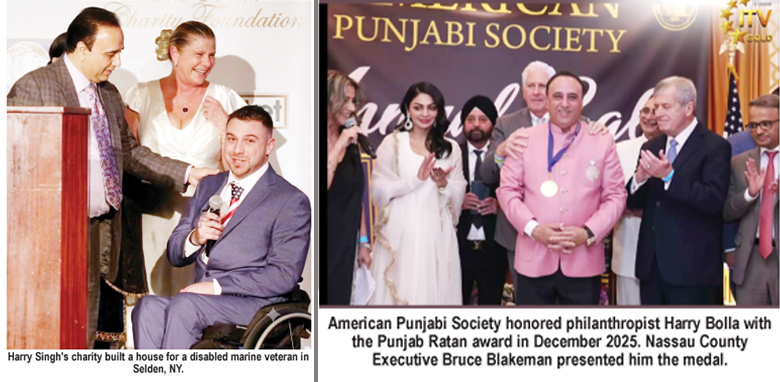
Bolla Singh Bolla was born on January 1, 1961, in Surapur village near Jalandhar in Punjab, to Nirmal Singh and Gurdev Kaur. His childhood was rooted in rural values-hard work, humility, and service. Those values came largely from his father. “My father was involved in charitable work all his life,” Bolla recalls. “He built schools and hospitals for poor people. I was born in a family that believed giving back is the best way to live life,” he says Long before philanthropy became part of his own identity, he watched it practiced at home. His father’s generosity was never about recognition. It was simply a responsibility. Years later, Bolla would often say that helping others gives “a lot of satisfaction in life.” “You feel good about yourself, especially when God makes you capable of giving back.” Growing up in Punjab also gave him something elsehe has never abandoned his roots despite building a life and business far from home, in a vastly different cultural landscape.
“I always think about being a Punjabi, being a Sikh, being a villager, coming here representing India,” he says. “You have to tell your story with honesty, with integrity.” That identity would remain central to his life even as his professional world expanded dramatically.
CHASING OPPORTUNITY
 Bolla immigrated to the United States in 1983, like countless immigrants carrying more determination than resources. America was unfamiliar, and the future was uncertain. But unlike many who arrive with detailed business plans, Bolla had only one ambition. “I wanted to own something myself,” says Bolla, who materialized his ambition within six years by owning his first gasoline station in Brooklyn in 1989. It was hardly the beginning of an empire. It was simply one small business requiring long hours, constant attention, and countless roadblocks and risks. “There were multiple times I could have been out of business,” Bolla admits. “But I stood my ground and fought for everything I knew how to, and we sustained.” That willingness to endure difficult years would become one of the defining characteristics of his entrepreneurial journey. Business, Bolla says, has never been easy. “There are tough times. You go through bumps.” But rather than chase shortcuts or quick gains, he relied on discipline, consistency, and doing right by his customers. That approach gradually earned the trust of customers, the respect of communities, and the loyalty of employees. One gas station became several, several became dozens, and over time, the business grew into several locations-built not through overnight success, but through years of steady perseverance.
BUILDING BOLLA BRAND
Few businesses in the highly competitive fuel retail industry survive for decades. Fewer still become market leaders. Under Harry Bolla’s leadership, Bolla evolved from a neighborhood gas station into a vertically integrated enterprise encompassing retail fuel, convenience stores, food service, wholesale fuel distribution, construction, and real estate development. Bolla markets operates under major fuel brands – Exxon, Mobil, Sunoco, Bolla, Gulf, Valero, and Shell.
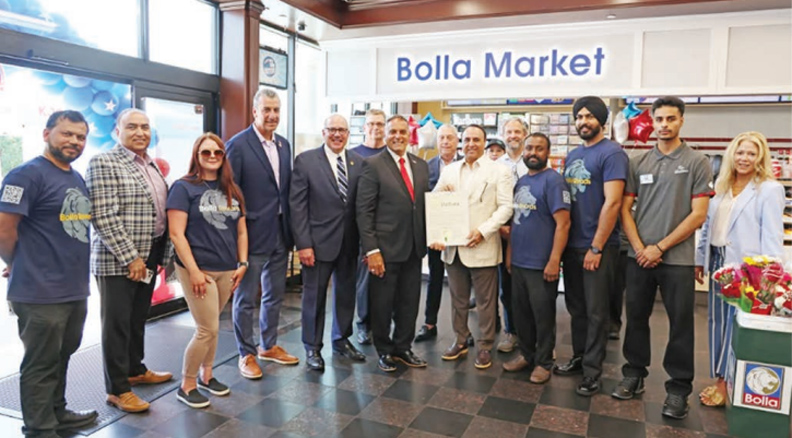
Bolla operates co-branded food offerings, including Burger King, Tim Hortons’s, Pizza Hut, Moe’s Southwest Grill and Red Mango. The company’s strategy has always been different. Rather than depending on a single revenue stream, Bolla developed expertise across every aspect of its business. “There are five divisions in the company-real estate, construction, wholesale, retail, and operations,” Bolla explains. “Because of all these divisions, we can maintain profitability even when we compete on very small margins.” That diversified model allowed Bolla to weather economic downturns that forced many competitors to disappear. The steady expansion of Bolla Oil transformed the company into the dominant player in New York’s retail fuel market. “We own the market share in New York City,” Bolla says. “We lead the whole pack.” Bolla attributes his staying power to a simple but unwavering principle: “There is only one way to do that. Run your business efficiently.” Equally important was his emphasis on the customer experience. Bolla stations became known not just for fuel, but for spotless facilities, premium convenience stores, and consistently high service standards. Those principles helped establish Bolla Market as one of the most recognizable convenience retail brands in the region. Today, the company operates under several major fuel brands while continuing to expand its upscale Bolla Market concept. Yet, Harry Bolla remains remarkably understated about the scale of that achievement. Asked how he grew from a single gas station to hundreds of locations, his answer is characteristically brief: “I worked hard.”
LEADERSHIP BEYOND PROFIT
Bolla rarely describes entrepreneurship in financial terms; instead, he views business as a platform for responsibility. “To me, it’s about becoming a person who cares for others, who cares for the community, who represents India and Indians as hardworking, honest people with integrity.” That philosophy extends beyond customers. It shapes how he thinks about employees. During difficult moments in their lives, he says, helping them is simply part of being a leader. “It’s not just about one thing,” he explains. “When you become generous enough, and you enjoy giving, there are so many ways you can help.” For Bolla, generosity is not confined to organized philanthropy Sometimes it means helping an employee pay funeral expenses for a loved one. Sometimes it means supporting a family through hardship. Sometimes it simply means being present. “I think it’s just being a good person.” His philosophy also rejects publicity-driven charity. “Giving is not an art for publicity,” he says. “People may give money for publicity stunts, but you don’t do that for a very long time.” Instead, he believes genuine generosity becomes a way of life. “If God has given you blessings enough that you can help someone, you should do that.” The American Dream Ask Bolla why America made his journey possible, and his answer comes quickly.
“THE AMERICAN DREAM.”
He believes the country’s greatest strength lies not merely in economic opportunity but in fairness. “I stand for fair opportunities, education for everyone, and treating everybody equally. You work hard; you get paid for it. You want to move forward? Work harder. There are opportunities here for everyone.” He feels that America gives immigrants something invaluable and adds that you get “the opportunity to expose yourself to the best opportunities of life.” That gratitude has shaped how he approaches citizenship. He encourages immigrants not merely to live in America but to participate fully. “We should become part of civil society. 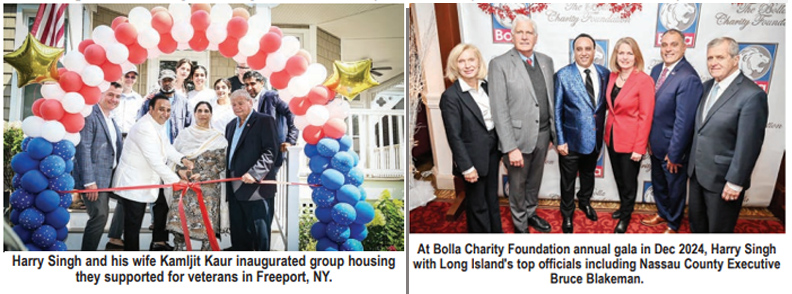
We should create a voice as Indians, but as Americans.” He worries that many immigrant communities focus solely on economic success while neglecting civic participation. “If you want to be treated like every American, then you have to act like an American,” he says, explaining that it does not mean abandoning one’s heritage. It means enriching American society with it. “We maintain our culture, stay with our culture, and help people understand our culture instead of separating ourselves.” Talking about younger generations, he says that they should think beyond traditional professions. “Not only become entrepreneurs, doctors, engineers, and scientists,” he says. “Some should step into politics.” Representation, he argues, matters. Communities become stronger when they engage rather than isolate themselves.
WHEN SUCCESS FOUND A GREATER PURPOSE
If entrepreneurship gave Harry Bolla a platform, tragedy gave it purpose. On September 11, 2001, as terrorist attacks brought down the World Trade Center, New York City descended into chaos. Thousands fled lower Manhattan while first responders rushed toward danger. One of Bolla’s gas stations stood just five blocks from Ground Zero. Within hours, business ceased to matter. The station became something far more important. “We were shut down for 60 days,” Bolla recalls. “During those 60 days, we had two people around the clock serving coffee, water, and food free of charge.” The station became an informal relief center for firefighters, police officers, emergency workers, and volunteers digging through the ruins in search of survivors. Watching those scenes changed him forever. “We realized how many people ran toward the World Trade Center trying to save others. The people who ran toward it didn’t think about their own lives.” That image never left him. “Those firefighters and police officers died trying to save other people.” For Bolla, who had arrived in America less than two decades earlier, the experience transformed his understanding of service. “You made your success here. You lived in this country. You’ve done well. What do you do now?” The answer became the defining mission of the next chapter of his life. “The best way to give something back was to help those who died for others.”
A FOUNDATION BUILT ON GRATITUDE
In 2013, Bolla and his wife, Kamljit Kaur, established the Bolla Charity Foundation. Unlike many charitable organizations that spread resources across dozens of causes, the Foundation adopted a clear missionsupporting veterans, first responders, and families who had sacrificed in service to the United States. Bolla believes that those who protect society often receive the least attention after their service ends.
“I believe those veterans who come back after serving this country don’t always get the help they deserve. So many become alcoholics. They go on drugs. They become homeless. They end up on the streets.” To him, those sad facts represent a moral responsibility. “Those people actually served this country.” The Foundation’s response has been practical rather than symbolic. Instead of writing occasional checks, it began constructing and renovating homes for wounded veterans. One of its landmark projects was the construction in 2020 of a custom-built, mortgage-free home for a disabled Marine veteran in Selden, in Suffolk County of New York. Later, the Foundation renovated housing for veterans in Levittown and restored a century-old Victorian home in Freeport to provide housing for former service members. Bolla’s motivation remains deeply personal. “The little participation that I can provide to help those veterans who have no place to go, no place to live, so they can be in a place they can call home.” The Foundation has also supported numerous organizations, including first responder memorials, scholarship initiatives, Toys for Tots, and police memorial events. But Harry Bolla rarely dwells on numbers. Instead, he returns to one simple principle. “I think it’s about caring for another soul.”
SERVICE WITHOUT BORDERS
Although Bolla’s philanthropy in America receives considerable public attention, an equally significant part of his charitable work quietly continues in Punjab. Importantly, he keeps the two entirely separate. “I don’t mix American charity money with Indian foundations,” he says. “My personal earnings fund the work back home.” The projects mirror the values he inherited from his father decades ago. Families who lose their primary breadwinner are adopted and supported until the children become financially independent. Patients unable to afford cancer treatment or lifesaving medicines receive complete financial assistance. Employment is created for widows, while books, tuition, and higher education are provided to children. “We adopt orphan families around the villages. If someone gets cancer… if medication is too expensive… we pay for all that.” The family’s longstanding association with Guru Nanak Mission Hospital near his native village continues through support for cancer treatment and medical care. Following devastating floods in Punjab some years ago, Bolla committed several million toward relief and rehabilitation. The assistance extended far beyond emergency aid. “We’re picking up one or two homes at a time. We adopt people affected by life. The whole credit goes to my wife. Yes, I help fund it, but my wife leads that.”
BUILDING COMMUNITIES, NOT DIVISIONS
Despite his business success, Bolla speaks just as passionately about strengthening communities. He often argues that immigrant success should not be measured only by personal prosperity. “If you want to represent the Indian community, you’ve got to find a way to get together without religion, race, region, or caste,” says Bolla, who worries that many organizations lose sight of their larger purpose. “I love meeting people, but I love meeting people for meaningful reasons.
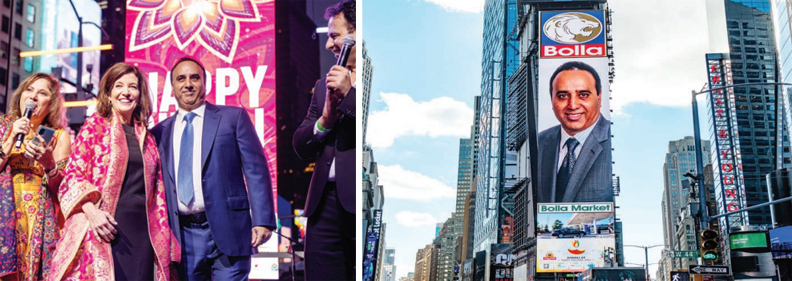
If there’s time I want to invest, I’m going to invest it where meaningful things get done.” One of his long-held dreams is creating a community center that would preserve heritage while serving future generations. Rather than building more places of worship, he envisions an institution where culture, education and civic engagement intersect. “We don’t need more gurdwaras,” he says. “We need a common place for people to meet.” His vision includes educational facilities, museums, cultural programs and spaces where young Indian Americans can better understand their roots. “How do we teach our children where we come from?” he asks rhetorically. For Bolla, preserving culture means much more than language or religion. It means passing on values as he is keen that younger generations should understand village life, family traditions, sacrifice, and resilience. Only then, he believes, can they appreciate both their heritage and their future.
CRISIS REVEALS CHARACTER
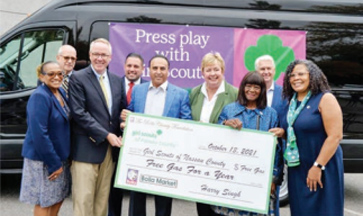
Harry Bolla often says that a leader’s real character appears during difficult times. His own company experienced several defining crises. During Superstorm Sandy in 2012, Bolla employees continued operating around the clock despite fuel shortages. During the COVID-19 pandemic, while many businesses closed, Bolla remained open as an essential service. “We worked every single day during COVID. I didn’t stay home.” Recognizing that fuel stations were critical to doctors, nurses, police officers, and emergency responders, Bolla urged city officials to keep gas stations operational. “If we stay home,” he warned, “there will be no one there to serve you.” During the crisis, fuel deliveries often required police escorts, and employees transporting gasoline faced threats as anxious residents scrambled for access to fuel. Despite the risks and the chaos, Bolla insisted that operations continue, believing that the communities they served depended on them. “You don’t understand the importance of energy until you can’t get it.”
Those experiences reinforced a lesson he first learned during 9/11. Business exists to serve people. Not the other way around.
SUCCESS MEASURED DIFFERENTLY
For someone who oversees an enterprise worth perhaps a billion, Bolla speaks remarkably little about wealth or financial success. Instead, he returns time and again to the values that have guided both his life and his business: integrity, discipline, hard work, and kindness. In his view, these principles-not money-are the true foundation of lasting success. “I speak very clearly about how I feel, what I believe, and what I think is the right thing to do.” He rejects the idea that generosity requires extraordinary resources, saying, “You don’t have to know someone to help someone. If you see someone lying on the street, you help them. I’m not trying to be a saint. I think it’s just being a good human being.” His philosophy echoes Sikh teachings of service while embracing the opportunities America provided him. Prosperity carries responsibility. “If God has given you blessings enough that you can help someone, you should.”
A LEGACY BEYOND BUSINESS
Today, Harry Bolla stands at the helm of one of the region’s most successful privately owned fuel and convenience retail companies-a business built through perseverance, discipline, and steady growth. Yet if asked what defines his life’s work, the answer extends beyond the size of his business. Throughout his journey, Bolla has viewed success as a responsibility to give back. For him, business and service have always gone hand in hand. “I never planned to be where I am,” he reflects. Perhaps that is precisely what makes his journey remarkable. To know more about his empire, visit his website https://www.bollamarket.com/
Project Sponsored by Group of Companies



Be the first to comment