
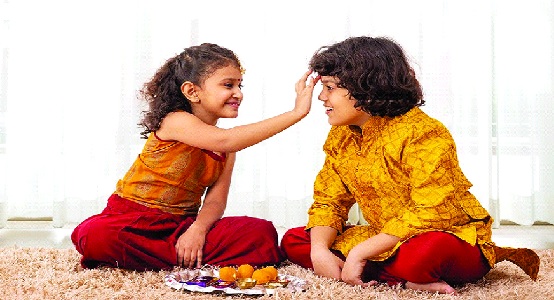

As the glow of Diwali lamps slowly fades and the fragrance of festive sweets lingers in Indian homes, the celebrations culminate in Bhai Dooj, one of the most heartwarming festivals dedicated to family relationships. Celebrated on the fifth and final day of the traditional Diwali festivities, Bhai Dooj honors the enduring bond between brothers and sisters through prayers, blessings, gifts and cherished rituals.
Also known as Bhaiya Dooj, Bhau Beej, Bhai Phonta and Yama Dwitiya, the festival falls on the second day of the Shukla Paksha in the Hindu month of Kartik. While Raksha Bandhan celebrates sibling affection through the tying of a sacred thread, Bhai Dooj reaffirms this relationship through the ceremonial tilak and prayers for each other’s happiness and well-being.
Sisters welcome their brothers with beautifully decorated puja thalis, perform aarti and pray for their long lives and prosperity. Brothers, in return, express their affection through gifts and promises of love and support. Beyond the rituals, the occasion celebrates childhood memories, shared laughter and the unconditional companionship that defines sibling relationships.
The Mythological Origins: The
Tale of Yamuna and Yama
The origins of Bhai Dooj are associated with a touching legend involving Yamuna, the sacred river, and her brother Yama, the Hindu deity of death and justice.
According to popular mythology, Yama had been away for a long time, occupied with his divine responsibilities. His sister Yamuna missed him dearly and repeatedly invited him to visit her home. Eventually, on the auspicious second day of Kartik Shukla Paksha, Yama accepted her invitation.
Overjoyed by his arrival, Yamuna welcomed her brother warmly, prepared a special feast, applied a ceremonial tilak to his forehead and performed aarti. She also prayed for his happiness and well-being.
Moved by her affection and devotion, Yama offered her a boon. He declared that any brother who visited his sister on this auspicious day and received her blessings would be blessed with happiness, prosperity and longevity.
This divine encounter gave rise to Yama Dwitiya, popularly celebrated as Bhai Dooj. The legend beautifully illustrates how the affection between siblings transcends worldly responsibilities and remains one of life’s most treasured relationships.
The Rituals: Expressions
of Love and Protection
The rituals of Bhai Dooj are simple yet deeply meaningful, with every gesture symbolising affection, gratitude and prayers for well-being.
n The Tilak Ceremony: The most important ritual involves sisters applying a tilak, usually made of kumkum, sandalwood or vermilion, to their brothers’ foreheads. Rice grains may also be applied as a symbol of auspiciousness and prosperity. The ceremony represents a sister’s heartfelt prayers for her brother’s happiness and protection.
n The Aarti: Sisters perform aarti using a decorated thali containing a lit diya, flowers, sweets and other traditional offerings. The ritual invokes divine blessings and symbolizes the wish for a bright and prosperous life.
n The Festive Feast: Following the ceremony, brothers are welcomed with homemade delicacies and traditional sweets. Food plays an important role in the celebration, bringing families together over lovingly prepared meals.
n The Exchange of Gifts: Brothers traditionally present gifts, clothes, jewellery or money to their sisters as tokens of affection and appreciation. The exchange reflects mutual love rather than material obligation.
Celebrations Across India: Different Names, Shared Emotions
Although the sentiment behind Bhai Dooj remains universal, its customs and culinary traditions vary across regions.
n North India: Widely known as Bhai Dooj or Bhaiya Dooj, the festival is celebrated with great enthusiasm in Uttar Pradesh, Delhi, Punjab, Haryana and Rajasthan. Sisters perform tilak and aarti, prepare festive meals and pray for their brothers’ well-being. Brothers visit their sisters and exchange gifts, making the occasion a joyful family gathering.
n Maharashtra, Goa and Karnataka: Known as Bhau Beej or Bhai Beej, the festival features distinctive regional customs. In some Maharashtrian households, sisters draw a sacred square on the floor where their brothers sit during the ceremony. Special delicacies are prepared, and families celebrate the occasion with traditional warmth.
n Bengal: In West Bengal, the festival is celebrated as Bhai Phonta. Sisters traditionally observe a fast until they apply the ceremonial phonta to their brothers’ foreheads. The ritual is followed by prayers, blessings and an elaborate feast featuring Bengali favourites such as sandesh and mishti doi.
n Nepal: Celebrated as Bhai Tika during Tihar, the festival is one of the most important occasions honoring sibling relationships. Sisters apply colorful, multi-hued tikas to their brothers’ foreheads and adorn them with marigold garlands, praying for their long lives, happiness and protection.
Despite the differences in names and rituals, the underlying emotion remains the same: love, gratitude and lifelong companionship.
The Modern Meaning: Love
Beyond Distance
In today’s fast-paced world, families are often separated by geographical boundaries, professional commitments and changing lifestyles. Yet, Bhai Dooj continues to provide a meaningful opportunity for siblings to reconnect and celebrate their relationship.
Those living in different cities or countries mark the occasion through video calls, online gifts and heartfelt messages. Although physical distance may prevent them from performing traditional rituals together, the emotions behind the celebration remain unchanged.
The spirit of Bhai Dooj has also expanded beyond biological relationships. Cousins, close friends and individuals who share sibling-like affection increasingly embrace the occasion as an opportunity to celebrate chosen family.
At its heart, the festival reminds us that relationships thrive through care, understanding, mutual respect and the willingness to stand by one another through life’s challenges.



Be the first to comment