
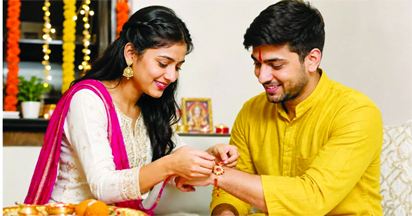

Every year, as the full moon of the Hindu month of Shravan rises in the sky, homes across India come alive with color, sweets, laughter and family gatherings. At the heart of the celebration is a simple yet deeply meaningful ritual: a sister tying a rakhi, or sacred thread, around her brother’s wrist. Known as Raksha Bandhan, the festival is among India’s most cherished celebrations of familial affection. The words themselves carry a powerful meaning-raksha, or protection, and bandhan, or bond. Together, they represent a relationship built on love, care, trust and the promise of standing by one another.
Yet Raksha Bandhan is much more than a festival between brothers and sisters. Its history, legends and cultural traditions reveal a much wider idea: the sacred bond between people, the responsibility to protect those we love and the enduring belief that a simple thread can carry emotions stronger than words.
A Thread with Ancient Roots
The practice of tying a sacred thread is deeply rooted in the religious and cultural traditions of the Indian subcontinent. In ancient times, threads were tied during rituals as symbols of protection, blessings and good fortune.
The idea of a protective thread appears in several Hindu traditions. Sacred threads were tied around the wrist during religious ceremonies, prayers and important occasions. Such threads were believed to invoke divine protection and strengthen the bond between the person who tied the thread and the person who received it.
Over time, these traditions evolved into the Raksha Bandhan celebration recognised today.
The festival has therefore travelled through centuries, absorbing different legends, customs and regional practices. What began as a ritual associated with protection and sacred bonds gradually became closely identified with the affectionate relationship between brothers and sisters.
The Legend of Krishna and Draupadi
One of the most popular stories associated with Raksha Bandhan comes from the Mahabharata and tells of the bond between Lord Krishna and Draupadi. According to a widely told tradition, Krishna once injured his finger, causing it to bleed. Draupadi immediately tore a piece of cloth from her garment and tied it around his finger to stop the bleeding.
Krishna was deeply touched by her gesture of concern and affection. He is said to have promised that he would always protect her.
The story is often remembered in connection with the episode of Draupadi’s humiliation in the Kaurava court, when Krishna came to her aid.
Although versions of the story vary across traditions and later retellings, the tale has become a powerful symbol of the spirit associated with Raksha Bandhan: an act of love and care creating a lifelong bond of protection.
Yama and Yamuna: A Bond Beyond Time
Another ancient legend associated with the festival tells the story of Yama, the god of death, and his sister Yamuna.
According to the legend, Yamuna repeatedly invited her brother to visit her, but Yama did not come for many years. When he finally visited, Yamuna welcomed him warmly and tied a sacred thread around his wrist.
Touched by her affection, Yama offered her a blessing. Yamuna wished that any brother who received a rakhi from his sister and promised to protect her would be blessed with a long and prosperous life. The story emphasises the affection between siblings and the belief that the sacred thread represents wishes for well-being, happiness and longevity.
Indra and Indrani: The Protective Thread
Another story traces the symbolism of a protective thread to ancient Hindu mythology. According to a tradition mentioned in religious accounts, when the gods faced a difficult battle against powerful forces, Indrani, the wife of Lord Indra, prepared a sacred thread after performing prayers and tied it around Indra’s wrist for protection and victory.
The story reflects an older understanding of the sacred thread as a symbol of spiritual strength and divine protection. It also shows that the concept behind Raksha Bandhan was not originally limited to the relationship between a brother and sister. The protective thread could represent a blessing, a prayer and a promise shared between different individuals.
From Ritual to Family Celebration
Today, Raksha Bandhan is primarily celebrated as a festival honouring the relationship between siblings.
The preparations often begin with the purchase of colourful rakhis, sweets and gifts. Markets are decorated with threads of every possible design-from traditional silk and cotton rakhis to elaborate creations decorated with beads, stones and personalised messages.
On the day of the festival, families gather for the ceremony. A sister prepares a thali, usually containing a rakhi, a small lamp or diya, rice grains, sweets and other items used according to family tradition. She performs an aarti, applies a tilak on her brother’s forehead and ties the rakhi around his wrist.
The brother then offers a gift and traditionally makes a promise to care for and support his sister.
Sweets are shared, photographs are taken and families gather for festive meals. But the most meaningful part of the ceremony is often the simplest: siblings pausing, even briefly, to acknowledge a bond that may otherwise remain unspoken in the rush of everyday life.
A Festival That Has Evolved with Time
Like every living tradition, Raksha Bandhan has changed with society.
The festival is no longer understood only as a promise by a brother to protect a sister. Increasingly, it is celebrated as a relationship of mutual care and responsibility.
Sisters tie rakhis to sisters. Brothers exchange rakhis. Friends celebrate the occasion by tying friendship bands, while children participate in school celebrations that promote affection and unity. The festival has also expanded beyond biological relationships. Cousins, close friends, mentors and even neighbours may participate in the tradition. In some communities, people tie rakhis to soldiers, police personnel and others serving the country as a gesture of gratitude and respect.
Environmental awareness has also influenced modern celebrations, with some people tying symbolic rakhis to trees and using the occasion to promote the protection of nature.
The thread, therefore, continues to acquire new meanings while remaining connected to its central message.
Celebrations Across India
Raksha Bandhan is celebrated in different forms across India, often blending with regional traditions.
In many parts of northern and western India, the brother-sister ritual remains the centre of the celebration. Families travel long distances to be together, while those living abroad send rakhis and gifts across countries.
In Maharashtra and several coastal regions, the day coincides with Narali Purnima, when fishing communities offer coconuts to the sea and mark the beginning of a new season of activity.
In parts of South India, the Shravan full moon is associated with sacred thread ceremonies and religious observances. Brahmins may observe Upakarma, a ritual involving the changing of the sacred thread.
In some regions, the festival also overlaps with local traditions connected to worship, harvest cycles and seasonal changes.
This diversity reflects the richness of Indian festivals: one date on the calendar can hold different meanings for different communities.

Be the first to comment