
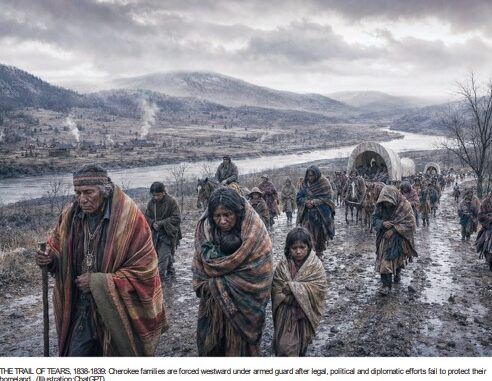

White settlement and cotton cultivation intensified pressure upon the homelands of the Cherokee, Muscogee (Creek), Choctaw, Chickasaw and Seminole peoples. These nations had adopted varied strategiesdiplomacy, written constitutions, schools, farming, print culture and legal action-to defend sovereignty. Their adaptation did not protect lands coveted by states and settlers. The Indian Removal Act of 1830 authorized negotiation of land exchanges west of the Mississippi. Jackson described removal as benevolent, but negotiations occurred under coercion and amid the threat of state intrusion and military force. Many Native leaders and communities rejected the cessions.
THE CHEROKEE CASES
In Worcester v. Georgia (1832), the Supreme Court held that Georgia law had no force within Cherokee territory. The federal executive did not protect Cherokee sovereignty against state pressure. A small minority signed the disputed Treaty of New Echota in 1835 without authorization from the Cherokee government; the Senate ratified it by a single vote above the required threshold. Under President Martin Van Buren, federal troops and state militia rounded up Cherokee people. Approximately 16,000 were forced west, and thousands died from disease, exposure and inadequate supplies. Other southeastern nations endured their own removals; Seminole resistance produced prolonged war in Florida.
“The nation celebrated government by consent while expelling Native nations whose consent it did not possess.”


Be the first to comment