Tag: United Nations

  • Annihilate the Monster of Coronavirus

    Annihilate the Monster of Coronavirus

    Prof. Indrajit S. Saluja

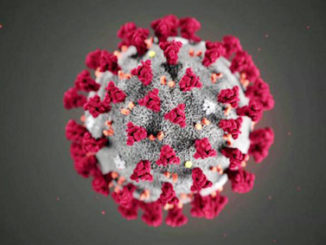
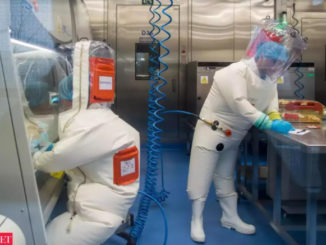
    As we transition to 2021, my mind takes a bird’s -eyeview of the world . 2020 has  not been a kind year. Besides the usual natural calamities that hit many parts of the world,, including USA where we have regular storm season which causes huge destruction inmany parts of the country, the one catastrophe that befell the world is the COVID-19- a virus which by the end of the year 2020 had snuffed out 1,833,437  lives  and infected 84,281,678.Worse, it still is raging, and threatening to appear in different avatars. The world shook and is stillshaking before this monster of a virus which nobody appears to be certain,  when it will withdraw or get decimated. The number one country of the world, the most powerful nation in the world USA has the distinction of being the weakest  before the might of Coronavirus, with      lives lost 355,935  and  20,672,813 persons infected. People living in fear. People living under lockdown. No travel, No outings, No parties.   Schools closed. Entertainment centers closed . Life came to a standstill. Consider the health implications of a forced confinement, and long periods of quarantine for those infected and even for those not infected, because they had come in contact with those infected. Most believe life will never again be the same for them.

    There is a ray of hope in the vaccines which have been developed. It should go to the credit of scientist and pharmaceutical companies which came up with the vaccines in record time of less than a year.  In the U.S.  Pfizer-BioNTech COVID-19 Vaccine and Moderna’s COVID-19 vaccine are  already being administered. In Britain , University of Oxford- Astrazeneca’s vaccine has been approved, and Britons are getting the shots. Russia and China have also come up with their indigenous vaccines. So has India where an indigenous vaccine “Covishield” is on the threshold of getting approval of the government of India and will soon be available. The question is,  though we have now close to half a dozen vaccine brands  available , will there be enough for the whole world, a population of 7.8 billion?. Another is, how long will it take to vaccinate each of the inhabitants of the planet?

    The very question of distribution of vaccine in various countries is causing worries. There is bound to be  a scramble for getting vaccinated. Who wants to die? Nobody, I believe. I hope we all remember when in the initial days of the pandemic hitting the world, here in USA where we are proud of our ethical standards, we had seen PPE disappearing from shelves in the stores. Even paper towels and sanitizers, the basic protections needed against Coronavirus disappeared from stores.  We submitted to price gouging. Only those who had resources could buy even the basic stuff like paper towels and sanitizers. I was personally aware of the many  stores run by the  self-proclaimed“charitable”  Indian community  which were unashamedly exploiting the hapless situation of people. It should go to the credit of the administration that many were disciplined.

    However, my concern is , based on what happened at the beginning of the outbreak of the virus with regard to PPE, the same may not happen now with regard to the vaccine. It will have to be ensured that , one, all get it; and two, all get it without having to pay a high price. I am afraid, when the present talk of vaccinating the whole population gets a little old, and the vaccine is available on stores, the usual greed of pharmaceutical companies and pharmaceutical dealers will come into play, jacking up the price of the vaccine, and making the vaccine  beyond the reach of the people at the lower step of economic ladder. Added to it, price gouging may also come in to play. We cannot change the basic nature of the businesses  who never miss an opportunity to make money, however loud their claims of high ethical standards. .

    I may be a little assured of a seemingly just deal for the people  in America, but to be thinking of a “seemingly just deal” in India is beyond my imagination. India may be a democracy, but it has a feudal system and a feudal mindset.  A country which believes in “might is right”; a country which believes in caste supremacy; a country which is known to have an exploitative society, one cannot imagine the vaccine to be reaching the poorest of the poor. To a vast number (close to 60%) , one meal a day is a luxury. A vast number of India’s population does not know what a doctor is, what medicines are. It is a country at the mercy of gods, and the lesser gods that people themselves chose to serve them, who, took no time to become their feudal masters. I am worried for the people of India.

    The enemy is still there. We have to continue to fight until the enemy is vanquished. It will need the united strength of the whole world to annihilate the demon of Coronavirus. It will also need a willing suspension of our greed for the sake of the need of the suffering masses.

    My heart goes out to the families who lost their loved ones to Covid. I bow my head to our heroes- doctors, nurses , frontline workers who lost  their lives in the line of duty.

    Let me take this opportunity to express my gratitude to the loyal readers and patrons of The Indian Panorama who have been a great support for the last 15 years. I must thank my family who have been my best counselors and advisers , guiding and supporting me at each step. I am obliged to every single person with whom I ever came into contact for the very opportunity to know them.

    Let us welcome 2021 with an attitude of hope and faith. Happy New Year!

  • Vandalized Pakistan Hindu temple to be reconstructed

    Vandalized Pakistan Hindu temple to be reconstructed

    Peshawar (Pakistan) (TIP): After angry mob in Pakistan’s Khyber Pukhtunkhwa province’s Karak district, attacked and vandalized the shrine of a Hindu saint in Terri area of Karak; Khyber Pukhtunkhwa (KP) government has announced reconstruction of the Hindu temple, along with launching a crackdown against the attackers.

    Chief Minister Khyber Pukhtunkhwa (KP) Mahmood Khan has issued instructions to relevant authorities to ensure reconstruction of the Hindu temple, while police authorities have arrested at least 45 people, including three notable clerics, who were nominated. Among the nominated religious clerics, a local leader of religious political party Jamiat Ulema-e-Islam-Fazl (JUI-F) Rehman Salam Khattak, has also been arrested. Angry and violent protesters attacked and set a blaze in the Samadhi of Shri Paramhansji Maharaj on Wednesday over dispute over its expansion.

    As per the police authorities, Rehman Salam Khattak of JUI-F had participated in a meeting before the attack on the shrine. However, the plan to attack the shrine was decided and ordered by local clerics Maulana Mohammad Sharif and Maulana Faizullah. Police officials have been searching dozens of houses to arrest the people involved in the attack. The shrine holds critical importance as in 2015, the Supreme Court of Pakistan ordered the KP government to restore and rebuild the shrine, while hearing a petition by Ramesh Vankwani, member of national assembly and patron of Pakistan Hindu Council (PHC). The court’s decision came after it became a dispute and confrontational contention between the Muslim and the Hindu community. As per the latest details, police authorities have been directed to ensure security of the places of worship of minorities and protect their constitutional right, enshrined in the country’s constitution. KP Inspector General of Police Sanaullah Abbasi confirmed that “the first information report (FIR) has been lodged in the case and a probe was underway”.

    “At least 350 persons had been named in the FIR,” he said.

    Abbasi also confirmed that more arrests will be made in the coming days after the accused are identified through video clips and still images. The local leadership of Pakistan Tehreek-e-Insaf (PTI) condemned the incident, insisting that an act of a few individuals should not be attributed to the entire Khattak tribe that inhabits Karak. Moreover, Chief Justice of Pakistan (CJP) took suo moto notice of the incident, fixing the case for hearing on January 5.  Mohammad Tahir Mahmood Ashrafi, representative of Religious Harmony and Middle East, strongly condemned the incident, assuring zero tolerance towards the culprits. “Attack on Hindu temple in Karak is very sorrowful and regrettable. The Constitution assures complete protection to the minorities and the elements involved in the attack on the temple have damaged the image of Islam and Pakistan,” he said. — IANS

  • Massive protest over Nepal Parl dissolution

    Kathmandu (TIP): Madhav Kumar Nepal, Chairman of the ruling Nepal Communist Party’s rival faction, said on Tuesday that the party could still be united if PM KP Sharma Oli was willing to accept his mistakes, as thousands of protesters held a march in Kathmandu against the dissolution of Parliament.

    Ex-PM Pushpa Kamal Dahal Prachanda was also present. He said Oli’s move was aimed at killing federalism and republicanism. Prachanda, who claims control over the ruling party, has already removed Oli from the posts of the party’s parliamentary leader and chair. Meanwhile, a Chinese delegation met Nepali Congress chief Sher Bahadur Deuba and discussed the political developments. — PTI

  • Gandhi Brothers Launch Second Annual Holiday Charity Drive

    Gandhi Brothers Launch Second Annual Holiday Charity Drive

    JAMAICA, NEW YORK (TIP);  Partnering with local non-profits, New York City’s Gandhi brothers are once again bringing their philanthropy to local communities in need, particularly in Brooklyn and Queens. The Gandhi brothers have been active in New York City’s philanthropic circles for decades now but are proud to have launched their second-annual direct giving initiative for the 2020 holiday season. Last year’s holiday charity drive placed a heavy emphasis on coat collection and homeless shelters, both of which continue this year.In the midst of the ongoing COVID-19 pandemic, local non-profit organizations are finding it difficult to carry out their missions. For instance, the Vaisakhi 5K Run, an annual charity race New Yorkers look forward to every April, had to be cancelled abruptly because of the shutdown. Through their efforts, brothers Navraj, 39, and Kamaldeep, 38, have supported the logistical and volunteer networks of these organizations in pooling together their collective resources toward this holiday giving drive. The brothers said the second-annual drive encapsulates what their charitable goals represent at their core. “Charity is in our blood. Whether it is in support of the ongoing Indian farmers’ protests or in providing relief to those hurt by social iniquities, we have always felt a responsibility toward philanthropy,” said Navraj. “New York City has so many communities in need. We grew up on these streets ourselves, and they are very much a part of us. It’s more important to give back now than ever before. When it’s cold outside, the vulnerabilities of our city’s most needy become most apparent. Especially during the pandemic, my brothers and sisters on New York’s streets feel the hurt, and that hurts me,” Kamaldeep added. Like last year’s drive, this year’s will focus on delivering much-needed food, water, and supplies to New York City’s homeless—both inside and outside the shelter system. The charity drive’s debut last year drew hundreds of donors and supporters, and the expectation is certainly to keep pace this year. The drive began this Christmas with the participation of area shelters and will continue through the month of January. Navraj implores his fellow New Yorkers to see charity drives like this as the start—not the end—of the spirit of giving. “We are reminded during the holidays how important it is to support those who are less fortunate, but these communities need our help year-round. Please join us in reflecting and giving back. Your neighbors count on you.”

  • RECOVERY AGENDA: MAYOR DE BLASIO ANNOUNCES EXTENSION OF OPEN STOREFRONTS PROGRAM

    RECOVERY AGENDA: MAYOR DE BLASIO ANNOUNCES EXTENSION OF OPEN STOREFRONTS PROGRAM

    NEW YORK (TIP) Mayor Bill de Blasio  announced, December 29,  the Open Storefronts program, which permits storefront businesses to use a portion of their sidewalk to display merchandise, sell goods, complete transactions, and provide queuing areas, will be extended through September 30, 2021. The mayor announced the program will also allow businesses to sell pre-packaged food on sidewalks and allow restaurants to use sidewalks for take-out orders. This program is a part of an effort to make New York City the world’s capital for healthy outdoor living and to advance the Mayor’s recovery agenda, which is centered on public health and social justice.

    “Open Storefronts has given business owners an easy way to maximize their space and keep customers safe as they shop. And by introducing restaurants into the program, we’re giving local eateries more ways than ever to keep their communities vibrant,” said Mayor Bill de Blasio. “We remain committed to giving small businesses more chances to thrive, and we’re excited to give them more opportunities to participate in this program throughout the winter and warmer months.””There’s no question our small businesses have taken a tremendous hit because of this pandemic and we will continue to find new and creative ways to help them,” said Laura Anglin, Deputy Mayor for Operations . “Continuing and expanding Open Storefronts will not only give businesses valuable space outside of their building but continues to transform the streetscape of this city for the better.”

    “The City is committed to finding innovative ways to support small businesses during this pandemic, especially those in our hardest hit neighborhoods,” said J. Philip Thompson, Deputy Mayor for Strategic Policy Initiatives. “The extension of the Open Storefronts program, combined with our efforts to urge New Yorkers to shop local, will help our small businesses come back stronger than ever.”

    An eight-foot clear path of sidewalk from the curb must be maintained for Open Storefronts to operate. Retailers cannot use the space of adjacent businesses, and they must bring all furniture and goods indoors when closed. For existing Open Streets: Restaurants locations, the Open Storefronts program will also permit businesses to use the curb lane directly fronting their storefront to conduct business activities during operating hours. Businesses can visit www.nyc.gov/openstorefronts to review eligibility requirements and to complete a brief online application.

    “The pandemic has caused the City to reimagine the way we use our public spaces to help our small business economy, while adhering to health and safety regulations,” said Jonnel Doris, Commissioner of NYC Department of Small Business Services. “Extending the Open Storefronts program will help both retail and restaurant businesses stay resilient and provide a much-needed boost during these unprecedented times.”

    “Open Storefronts is an essential part of the effort to help small businesses survive as the City continues its work to recover from the impacts of the COVID crisis, and we thank Mayor de Blasio for extending this initiative,” said Margaret Forgione, Acting Commissioner of the New York City Department of Transportation. “We have seen how the ability to use a portion of the sidewalk as sales space has given merchants a much-needed boost, and we hope more store owners will take advantage of this program in the new year.” “We are extremely happy to hear about the storefront program extension,” said Bobby Sansarran, SHAKTI Saree & Spiritual.

  • Nassau Announces Rent Relief Program for Struggling Tenants

    Nassau Announces Rent Relief Program for Struggling Tenants

    The program will give up to $2,500 a month for three months to people who can’t pay their rent because of the pandemic.

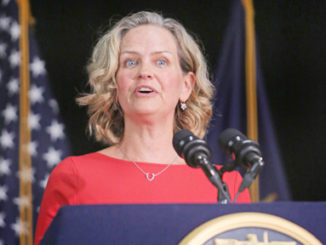
    MINEOLA, NY (TIP)  Nassau County Executive Laura Curran announced a new program  that will give assistance to hundreds of people in the county struggling to pay their rent due to the coronavirus pandemic. The program will use $6 million in federal Community Development Block Grants to give 900 renters up to $2,500 a month for three months to help them pay their rent if they’ve been unable to make payments due to the coronavirus.

    “We all are reading about the new federal stimulus deal. I think it’s a good start,” said Curran. “But as it relates to housing, there’s a lot to sort out. We at the counties are closer to the ground, and we don’t want to waste time getting help to the folks who need it.” The program will be overseen by the Community Development Corporation of Long Island (CDCLI), which is aiming to create “as streamlined a process as possible,” according to Gwen O’Shea, president and CEO of CDCLI.

    Starting this week, applicants will be able to fill out a form online or call a 1-800 number to speak to CDCLI staff. There will be staff to help people speaking English, Spanish and Creole.

    “We’ll have that available for a few weeks,” said O’Shea. “We want to give everyone a chance to learn about the program, to feel comfortable with the program, and then to submit some preliminary information.”

    Once applications are submitted, CDCLI will be holding a lottery to pick the 900 people to receive the aid. They will then have to finish the application process to get the money. “We recognize the need in Nassau County far exceeds the resources currently available,” O’Shea said. “We recognize that Nassau County is one of the most expensive places to live in the country. And that while many households are struggling, this program does, as the county executive noted, strive to support working households that were maybe struggling before, and their issues have been compounded by the pandemic.” Nassau County has used the CDBG throughout the pandemic to support groups. Curran said the county has helped feed more than 30,000 families, given financial relief to restaurants, loans to small businesses and distributed PPE as well. “It is our hope that this rent relief significantly minimizes the financial burden, and the stress, that so many of our families and our landlords are facing right now,” Curran said.

  • Commission for Human Rights and Religious Freedom Appeals for Funds

    NEW YORK (TIP): Dr. Adityanjee , President , ICHRRF in an open letter, has appealed for funds for Commission for Human Rights and Religious Freedom Appeals for Funds .“Over the past few months,  a team of concerned citizens of the world has been working to build a long-term institution to research and advocate for the rights of under-represented communities across the world and build a coalition of such communities. This is the International Commission for Human Rights and Religious Freedom (ICHRRF).

    The field of human rights and religious freedom is usurped by vested interests against the interests of unorganized religions and weaker communities. The lens through which ‘religion’, ‘justice’ and ‘equality’ are understood is also biased in favor of certain religio-philosophical entrenched systems that are unable to look at the issues through an objective prism. As a result, these under-represented and marginalized communities are constantly harassed and shamed about their value systems, or when their tribulations are addressed, it is with some condescension at their ‘primitive’ beliefs or society. In addition to the shaming and bullying, they face oppression, constant usurpation of their rights, property and livelihood, and outright genocide in some cases.

    Moreover, when such marginalized communities do speak up for their rights, they do so without forming coalitions with other communities in a similar position. Their cause remains siloed and disconnected from other causes that they should ideally form common cause with. This is a prime focus of ICHRRF.

     The medium-term goals of ICHRRF are to publish surveys, narratives, data-driven research and policy papers, and then achieve ECOSOC approval for UN-accreditation. We will also be hosting seminars, panel discussions and presentations on such communities and field workers. For the past 3 months we have been conducting such talks only for our internal purposes, to build relationships, but soon these will be open to the public.

    We seek your support in:

    1.. Spreading the word about the organization

    1. Helping us network with researchers, academics, activists and community leaders sharing similar viewpoints in different parts of the world.
    2. Monetarily donating to us on a 1-time or recurring basis and or purchasing memberships.

    Please visit our website (www.ichrrf.org) today to make online donations.

    Thank you!

  • Trump signs $900 Billion Covid Relief Bill

    Trump signs $900 Billion Covid Relief Bill

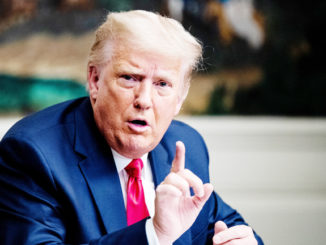
    WASHINGTON (TIP): President Donald Trump signed a $900 billion pandemic relief package on Sunday, December 27,  ending days of drama over his refusal to accept the bipartisan deal, which will deliver long-sought cash to businesses and individuals and avert a federal government shutdown.

    Trump announced the signing in a statement on Sunday night where he conveyed his displeasure over the fact that the Covid-19 relief package included only $600 checks to most Americans.

    “I am signing this bill to restore unemployment benefits, stop evictions, provide rental assistance, add money for PPP, return our airline workers back to work, add substantially more money for vaccine distribution, and much more,” Trump said in a statement from his Christmas vacation at his Mar-a-Lago resort in Florida.

    For days, Trump had refused to put his signature on the relief package approved overwhelmingly by Congress following months of negotiation, calling it a “disgrace”.

    He also complained about what he considered unnecessary spending by the government at large. But Trump’s eleventh-hour objections created turmoil because lawmakers had thought he was supportive of the bill, which had been negotiated for months with White House input. “I will sign the Omnibus and Covid package with a strong message that makes clear to Congress that wasteful items need to be removed,” Trump said in his statement.

  • Protests around the world

    Protests around the world

    Black Friday Amazon protests

    In anticipation of Black Friday, the day-after-Thanksgiving shopping event that was largely moved online this year, a coalition of Amazon warehouse workers and climate activists organized a day of action called #MakeAmazonPay.

    At the crux of the protest actions were Amazon’s working conditions and climate impact, both of which, depending on who you ask, range from notably subpar to dismal.

    Protest actions were organized in Brazil, Germany, India, Mexico, the U.S., France, and other countries. Actual actions varied: In Germany, thousands of warehouse workers went on strike, while some locales staged protests outside of Amazon’s headquarters.

    Election results protests

    Spontaneous celebrations for the Biden and Harris win weren’t the only gatherings spurred by the election results. Throughout the election and afterward, Trump routinely claimed that the election was seeped with fraud, despite election officials finding no evidence to back his claims.

    Emboldened by the soon-to-be former president’s inflammatory remarks and baseless fraud accusations, hundreds of right-wing activists, including members of the hate group Proud Boys, took to Washington, D.C., a week after the election was called for Biden. The protests eventually escalated to violence as counterprotesters got involved, with 20 people arrested, according to the mayor’s office in D.C.

    End SARS protests

    In Nigeria, a police unit called the Special Anti-Robbery Squad (SARS) was formed in 1984 to fight crimes like robberies and carjacking. Since its formation, the unit developed a deep track record of violent abuses, including at least 82 instances of torture, ill treatment, and extra-judicial execution reported by human rights watchdog Amnesty International.

    Despite the unit’s well-established pattern of violence and abuse, SARS officers received virtually no accountability. End SARS protests started back in 2016, but it was October of 2020 when the movement gained full momentum, after a video of a man’s unprovoked killing by SARS officers was shared widely on social media.

    Demonstrations in opposition to SARS in October were held in Lagos and throughout the country. In response to the protests, President Muhammadu Buhari agreed to disband SARS. Yet protests continued on, and reports of people being shot at protests led to curfews enacted throughout Nigeria.

    Outside of Nigeria, the hashtag #EndSARS, which protest organizers used in Nigeria, spread as well. Prominent celebrities and politicians, including Beyoncé and John Boyega, voiced support for protesters on social media.

    September climate strikes

    Back in 2019, youth-led climate strikes staged around the world in September of that year marked the ushering in of a new era of climate activism.

    Those September strikes vaulted climate activist Greta Thunberg, who was 16 at the time, to an even larger stage, inspiring countless other young people to get involved in protesting for climate action. Though much of the youth-led climate movement moved online in response to the coronavirus pandemic (more on that in a bit), on the one-year anniversary of the September strikes, at least 3,500 strikes were scheduled around the world.

    Unlike the massive crowds that gathered in September 2019, 2020’s strikes met social distancing requirements to curb the spread of the virus. Thunberg’s strike in Sweden, for instance, was adapted to meet the country’s limitation of gatherings of over 50 people.

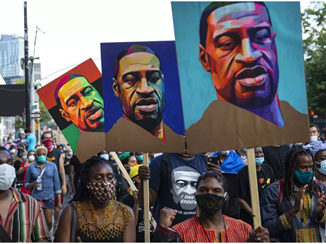
    Minneapolis protests for George Floyd

    Though underpinned by years of organizing, the momentous wave of Black Lives Matter protests seen in 2020 started in Minneapolis.

    On May 25, a Minneapolis police officer named Derek Chauvin kneeled on George Floyd’s neck for nearly nine minutes, killing Floyd while he cried out for help and said he couldn’t breathe. The four officers involved in Floyd’s death were not charged until days later, after video of the killing was released and the protests began. Chauvin was eventually charged with second-degree murder, despite the Floyd family’s demand for a first-degree murder charge.

    The horrific killing led to waves of protest against racial injustice, with many in Minneapolis taking to the streets to demand justice for Floyd and to call for defunding the Minneapolis Police Department to expand investment in community-led safety strategies.

    On June 26, the Minneapolis City Council voted unanimously to dismantle the police department, a first step in a complicated, bureaucratic process. Additionally, the Minneapolis Board of Education voted unanimously to end its contract with the police department in the city.

    Cities across the country were staging similar protests soon after Floyd’s death. These rallies also brought attention to the recent police killings of other Black Americans, like Breonna Taylor, Rayshard Brooks, Elijah McClain, and Tony McDade. In just a few weeks, it seemed, a civil rights movement had been reignited for a new generation.

    Black Trans lives matter protests

    The rate at which Black trans women are killed in the U.S. has been dubbed an “epidemic” by the Human Rights Campaign Foundation. HRC’s 2019 report found that all but one of the 22 trans or gender non-conforming people killed in the U.S. that year were Black. As protests spread across the country, organizers worked to center the stories of Black women, specifically Black trans women.

    In response to killings of Black trans women like Dominique “Rem’mie” Fells and Riah Milton, a visually striking protest arose in Brooklyn, New York, as a sea of protesters dressed in white converged on the Brooklyn Museum on June 14.

    Global protests for racial justice

    Protests in support of the U.S. Black Lives Matter movement spread swiftly around the world, with people taking to the streets in Sydney, Rio de Janeiro, London, and Seoul, among other cities. Many incorporated their country’s specific needs for progress, particularly in the context of colonial legacies.

    In Brussels, Belgium, for instance, protesters defaced and set fire to a statue of King Leopold II, who oversaw the violent colonization of the Congo. Similarly, protesters in Bristol, England, toppled a statue of Edward Colston, a 17th-century slave trader, and threw it in the harbor.

    Juneteenth protests

    Juneteenth, an annual holiday marking the day in 1865 when news that slavery had been abolished finally reached enslaved people in Galveston, Texas, has been marked with celebrations for over a century. This year, though, awareness of the holiday was especially high, as people across the country participated in protests and rallies on Juneteenth in support of the Black Lives Matter movement.

    There were Juneteenth protests in major cities like New York, D.C., Los Angeles, and Atlanta. In Washington, D.C., protesters gathered at iconic American landmarks like the Lincoln Memorial, Freedom Plaza, and the White House. Later that day, protesters in D.C. toppled a statue of Albert Pike, a Confederate general, ultimately setting it on fire.

    #IRunWithMaud

    On May 8, runners organized a unique demonstration to honor the life of Ahmaud Arbery. Protesters around the country ran 2.23 miles, marking the date of Arbery’s killing. On Feb. 23, Arbery, who was Black, was stalked and fatally shot by white men in a truck while on a run in Georgia. Those who participated used the hashtag #IRunWithMaud to raise awareness of Arbery’s case, while also calling attention to a petition demanding justice for Arbery, which currently calls for charges to be brought against Glynn County Police Officer Robert Rash, as new evidence about his communications related to one of Arbery’s killers came to light.

    In Georgia, where Arbery lived, protests were staged at courthouses on May 8, which would have been his 26th birthday. Hundreds gathered outside the Glynn County Courthouse to protest inaction in Arbery’s case. His killers were not indicted until June 25, nearly four months after Arbery’s death, after recorded video was released and sparked outrage.

    Anti-lockdown protests

    In late April and early May, after cities across the U.S. adopted social distancing measures, small protests emerged in Wisconsin, Minnesota, Virginia, and Michigan. Groups of conservative activists gathered at their respective state capitols to protest stay-at-home orders, and called for businesses to re-open. The protesters eschewed guidance from medical experts recommending social distancing and face coverings, and demanded businesses be allowed to open despite the public health emergency and experts’ recommendations.

    The small gatherings were notable, though, for the lack of police response. In Madison, Wisconsin, for instance, some of the (primarily white) protesters were armed as they stormed Wisconsin’s capitol building. Yet Wisconsin Capitol Police said no arrests or citations were issued. This stood in stark contrast to the Black Lives Matter protests sparked by Floyd’s killing, in which police aggression and violence gravely endangered (and in some cases permanently harmed) many unarmed protesters. At Black Lives Matter protests in Los Angeles and Atlanta in late May and early June, for instance, police fired tear gas and rubber bullets at protesters, using extreme force on protests which were primarily peaceful.

    Virtual Day of Silence

    With schools closed due to the coronavirus, the Day of Silence, an annual student-led demonstration for LGBTQ representation, had to move online. Typically, LGBTQ students and allies vow not to speak for the entirety of a school day to demonstrate the erasure of LGBTQ students in school curricula. (Some states, such as Texas and Alabama, restrict or prohibit the discussion of LGBTQ issues in the classroom.) Though difficult to replicate online, GLSEN, the LGBTQ advocacy organization that has organized the demonstration since the 1990s, encouraged supporters to post on social media using graphics and templates that outline statistics about LGBTQ erasure in schools, in order to continue to raise awareness even while socially distant.

    Virtual climate strikes

    Youth climate activists like Greta Thunberg called for school climate strikes, which have gained momentum and widespread exposure in the last few years, to be moved online amid the pandemic starting in early March.

    Typically, students participating in the strikes skip school on Fridays in their respective cities. These strikes have continued regularly throughout the period of social distancing, however, with youth around the world posting pictures of their protest signs on social media on designated days. The virtual protests are an effort to keep their longstanding demands in the spotlight.

  • When the Trump Card didn’t work in US

    When the Trump Card didn’t work in US

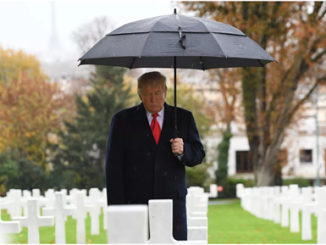
    Here is how 2020 — a year that would see Donald Trump not becoming the commander-in-chief for a second term in a row – unfolded:

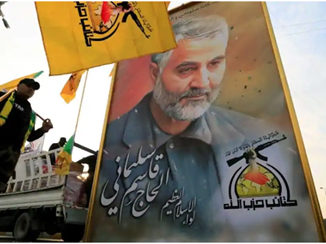
    January 3: The US carried out a strike near Baghdad’s international airport killing Soleimani, a US-designated terrorist, along with six others on the direction of President Trump.

    January 8: Trump said that he would never allow Iran to have a nuclear weapon. In his address to the nation after Iran’s strike on US military installations in Iraq, Trump said, “As long as I am the President, Iran will never be allowed to have the nuclear weapon.”

    January 9: The US House of Representative on Thursday (local times) adopted a war powers resolution that limits President Donald Trump’s ability to carry out military actions against Iran without the prior approval of Congress.

    January 15: The US House of Representatives voted to send the articles of impeachment against President Donald Trump to the Senate and approved seven Democrats to serve as prosecutors in the trial of a third United States president.

    January 22: Trump complained that his country has not been “treated fairly” by the World Trade Organisation (WTO), stating that the United States is not considered a “developing nation” while China and India are, by the global trade body.

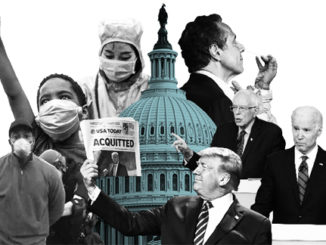
    February 5: Trump was acquitted of all charges by the US Senate in the impeachment trial. First, in a 52-48 vote, the US president was found not guilty of the charge of abuse of power. Then again, he was acquitted of the second impeachment article: obstruction of Congress with 53-47 vote.

    February 28: Trump accused the Democratic Party of politicising COVID-19 and said that the virus is their ‘new hoax’.

    March 1: Trump confirmed the first death from coronavirus in the United States, saying a woman, who has other medical issues besides the virus, passed away overnight in Washington.

    March 17: Six days after the World Health Organization declared COVID-19 a pandemic, Trump called COVID-19 the ‘Chinese Virus’. The president tweeted, “The United States will be powerfully supporting those industries, like Airlines and others, that are particularly affected by the Chinese Virus. We will be stronger than ever before!”

    March 19: Taking a direct aim at China for the spread of coronavirus, Trump said that the lethal virus which has claimed the lives of over 10,000 people globally could have been stopped at Wuhan, the place of its origin.

    March 21: Trump has called for an anti-malaria drug to be used to treat the coronavirus, despite being cautioned by his health expert Dr. Anthony S. Fauci saying that evidence for its effectiveness was so far “anecdotal”.

    April 7: Dubbing the World Health Organisation (WHO) as being “very China-centric,” the US President Donald Trump has accused the global agency of giving “faulty” advice during the early-stage of coronavirus outbreak.

    April 19: Trump, using social media platform to send ‘liberation’ messages over the COVID-19 lockdown, seems to have encouraged thousands of protestors who hit the streets of state capitols across the country last week to express their frustrations with the stay-at-home orders that are meant to stem the coronavirus spread.

    April 23: Citing a US Department of Homeland Security (DHS) report, President Donald Trump on Thursday (local time) said that coronavirus has a less chance of surviving in a warm and humid environment as opposed to cold and dry weather where it stays put.

    June 1: Trump termed the ongoing violent protests on America’s streets as unacceptable and said that any form of anarchy and lawlessness will not be tolerated, according to White House Press Secretary Kayleigh McEnany.

    Demonstrators across the United States have been protesting since May 25, when George Floyd, a 46-years-old African American man, died under the police custody in the city of Minneapolis.

    July 12: In a first since the coronavirus pandemic began, US President Donald Trump, who had for months declined to wear a face mask in public.

    July 30: In the backdrop of announcement of the withdrawal of over 11,000 US soldiers from Germany, President Donald Trump  wondered as to why the US should protect the European country from Russia.

    August 10: Trump asserted that no other country comes close to the United States with regard to COVID-19 testing while stating that India stands second.

    August 11: After Joe Biden picked Kamala Harris to be his vice-presidential running mate, President Donald Trump on Tuesday said he was surprised by the announcement as she was “nasty” and “disrespectful” to Biden during the primary.

    August 27: Trump accepted the Presidential candidate nomination by the Republican Party for the presidential elections in November.

    September 9/10: With few days prior to Bob Woodward’s release of his book ‘Rage’ that includes the handling of trump’s handling of the pandemic, Trump on the record admitted that he liked ‘playing it down’ to COVID-19.

    September 16: Trump presided over the signing ceremony at the White House to establish the foundation of the peace agreements between Israel, Bahrain and the United Arab Emirates.

    September 17: Despite Robert Redfield, the director of the US Centers for Disease Control and Prevention, saying that wearing a mask would be more effective than a vaccine against the coronavirus, President Donald Trump said that the mask is “not more effective” than the vaccine “by any means”.

    September 22: Trump, at the United Nations General Assembly, renewed his attack on China accusing it of spreading Covid-19 in the world. He urged the United Nations to hold Beijing accountable for “unleashing this plague onto the world.”

    October 2: Trump and First Lady Melania Trump tested positive for corona virus.

    October 8: Trump said that he will ensure that Americans soon receive the same experimental medication from Regeneron which he received as a part of the COVID-19 treatment at Walter Reed National Military Medical Center and that too free of cost.

    October 13: Trump tested negative for COVID-19.

    October 16: Terming the COVID-19 outbreak as a ‘horrible situation’, President Trump hit out at China for allowing COVID-19 to spread outside Beijing while preventing the spread in its own country. He also said that the lockdowns imposed by various states across the country to curb the coronavirus cases were “unconstitutional”.

    October 23: Trump during the third and final presidential debate called China and India’s air as filthy. “Look at China, how filthy it is. Look at Russia, look at India — it’s filthy. The air is filthy,” he said.

    November 4: Claiming ‘false’ victory in the 2020 presidential elections, the president thanked the American people for their tremendous support and said the results of polls have been “phenomenal”.

    November 8: Moments after Democratic candidate Joe Biden was projected to be the winner of the US presidential elections, President Donald Trump stated that the election was “far from over”, and promised legal challenges by his re-election campaign.

    November 15: Trump appeared to acknowledge in public for the first time that President-elect Joe Biden had “won” the election but kept up his assertion that the election was “rigged.”

    November 18: The President fired Christopher Krebs, the cyber chief of the Department of Homeland Security, who has publicly rejected Trump’s claims of widespread election fraud.

    November 22: Trump said that the Paris Accord was made to “kill the economy” of the US. Speaking at the G-20 Summit held via video conference, Trump said that his decision to withdraw from the Paris Climate Agreement was “to protect American workers”

    November 26: Trump on Thursday said that he would leave the White House if the Electoral College declares President-elect Joe Biden the winner of the election.

    December 8: The US Supreme Court rejected a bid by the Pennsylvania Republicans to nullify President-elect Joe Biden’s victory in the state.

    December 11: US Supreme Court rejected a bid by Texas’ attorney general to block the ballot of voters in battleground states that favoured President-elect Joe Biden.

    December 15: President-elect Joe Biden has bagged 302 votes, clinching the Electoral College victory. President Donald Trump has secured 232 votes.

    December 22: Thousands of President Donald Trump supporters are planning a virtual “second inauguration” for the outgoing US President, the same day as President-elect Joe Biden’s inauguration.

    Biden is set to take office starting January 20 after the US Congress would certify the votes by the Electoral College on January 6. Trump is, however, yet to concede the election to the former Vice President. (Source: ANI)

  • Major armed conflicts between countries in 2020

    Major armed conflicts between countries in 2020

    Iranian commander’s killing & US-Iran tension

    The beginning of the year 2020 saw a dramatic escalation in hostilities between the US and Iran, after a US drone strike killed Iran’s Revolutionary Guards Corps commander Qassem Soleimani.  Soleimani was killed on January 3 in a US drone strike near Baghdad International Airport. Irani media outlets described Soleimani’s killing as an ‘’assassination’’.

    Soleimani had disembarked from a plane at Baghdad airport when he was killed in a US drone airstrike. The killing of Iranian commander resulted in Iran’s military “unintentionally” shooting down the Ukrainian jetliner that crashed killing all 176 aboard. The plane was shot down hours after Iran launched a ballistic missile attack on two military bases housing US troops in Iraq in retaliation for the killing of Soleimani. Iranian President Hassan Rouhani, while regretting the mistake committed by Irani’s military, offered his condolences and promised investigations to identify and prosecute this “great tragedy & unforgivable mistake.”

    India-China border tension, Galwan Valley clashes

    The ties between India and China reached its lowest level due to border dispute in the Himalayan region. The tension between the two world powers aggravated following skirmishes between the two militaries at the border near Pangong Lake in Galwan Valley in eastern Ladakh in May this year. Later, on the intervening night of June 15-16, around 20 Indian soldiers (including an officer) and an undisclosed number of Chinese soldiers died in overnight clashes.

    The Galwan Valley clashes – fought with sticks and clubs, not guns – was the first fatal confrontation between the two sides since 1975. In August, India accused China of provoking military tensions at the border twice within a week. Both charges were denied by China, which said the stand-off was “entirely” India’s fault. In early September, China accused India of firing shots at its troops. India accused China of firing into the air. The military tension at the border is mirrored by growing political tension, which has strained ties between Prime Minister Narendra Modi and Chinese President Xi Jinping. As a result of the economic fallout of growing tension, India banned more than 200 Chinese mobile applications, including the hugely popular TikTok, citing security concerns.

    Saudi Arabia-Yemen conflict

    The unceremonious ouster of pro-Saudi president Abdrabbuh Mansur Hadi had triggered a bitter war between Saudi Arabia and the Houthi rebels in Yemen in 2015. The brutal civil war going on in Yemen has so far claimed more than 16,000 lives and left millions of people on the brink of starvation. The conflict has been dubbed as a “proxy war” among major powers for control in the Middle East as a Saudi-led coalition forces fight rebels backed by Iran.

    In a bid to end the conflict, the United Nations intervened in April 2020 and urged both sides to pursue peace talks amid the COVID-19 pandemic. The Saudi-led coalition called a unilateral ceasefire in April, but it carried out dozens of airstrikes within a week. On July 2, the coalition fighter jets launched scores of airstrikes on several Yemeni provinces. The operation was a response to ballistic missile and drone attacks by the Houthi rebels against Saudi Arabia. Both sides have attacked each other since September. The UN had verified the deaths of at least 7,500 civilians by September 2019, with most caused by Saudi-led coalition airstrikes. However, monitoring groups believe the death toll is far higher.

    Kurdish forces’ battle Against ISIS

    Despite the terror organisation’s defeat in Iraq and Syria, ISIS fighters continue to carry out attacks in border areas. The UN recently said that over 10,000 fighters of the terror outfit are active in both countries and they had stepped up attacks amid the coronavirus pandemic. The US-led coalition’s military assistance to Kurdish forces against the Islamic State (IS) has inadvertently accelerated intra-Kurdish fragmentation.

    The present situation requires the US-led coalition must coordinate its aid better, build upon Iraqi Kurdistan’s past efforts in transforming its peshmergas into a professional military, and encourage Kurdish coordination with Iraq’s central government in the fight against IS.

    Syrian civil war

    The internal fight in Syria began in March 2011 when President Bashar al-Assad faced an unprecedented challenge to his authority after pro-democracy protests erupted throughout the country. The protesters demanded the ouster of the authoritarian Assad regime, which has been in place since Assad’s father, afiz al-Assad, became president in 1971. The Syrian government used violence to suppress demonstrations, making extensive use of police, military, and paramilitary forces. Opposition militias began to form in 2011, and by 2012 the conflict expanded into a full-fledged civil war.

    The Syrian civil war that has decimated the country for over nine years, provoking a regional humanitarian crisis, appears to be drawing inexorably to a conclusion. President Bashar al-Assad, with the backing of Iran and Russia, seems to have emerged militarily victorious from the conflict. However, fighting in the country decreased in 2020 following a ceasefire in northwest Syria and the coronavirus pandemic.

    The israeli-Palestinian conflict

    Despite numerous attempts to resolve the five-decade-old tension between Israel and Palestine, the armed conflict between the two sides continues. According to Human Rights Watch 2020 report, the Israeli government continues to enforce severe and discriminatory restrictions on Palestinians’ human rights, restricting the movement of people and goods in and out of the Gaza Strip. It also facilitates the transfer of Israeli citizens to settlements in occupied West Bank – a practice considered illegal under international humanitarian laws.

    Israel’s twelve-year closure of Gaza, exacerbated by Egyptian restrictions on its border with Gaza, limits access to educational, economic and other opportunities, medical care, clean water and electricity for the nearly 2 million Palestinians who live there. Eighty percent of Gaza’s population depend on humanitarian aid.

    Armenia-Azerbaijan clashes

    In July 2020, armed forces of Armenian and Azerbaijani clashed near Movses in Tavush Province of Armenia, and Agdam in Tovuz District of Azerbaijan at the Armenian-Azerbaijani state border. Both sides accused each other of reigniting the conflict, which erupted at the Ganja gap, which is a strategic route transport corridor for Azerbaijan.

    The major reason for the war between Armenia and Azerbaijan is the Nagorno-Karabakh region. Azerbaijan claims this mountainous region as its own, while Armenia has occupied it. The area has been under Armenia’s occupation since the fighting ended in 1994. In 2016 too, there was a bloody war between the two countries over this area, in which 200 people were killed. Now once again both countries are face to face. Both countries were part of the USSR. Both sides have suffered huge casualties and losses due to the ongoing war.

    Ukraine crisis

    According to Global Conflict Tracker, the crisis in Ukraine began with protests in the capital city of Kiev in November 2013 against Ukrainian President Viktor Yanukovych’s decision to reject a deal for greater economic integration with the European Union. After a violent crackdown by state security forces unintentionally drew an even greater number of protesters and escalated the conflict, President Yanukovych fled the country in February 2014.

    In March 2014, Russian troops took control of Ukraine’s Crimean region, before formally annexing the peninsula after residents of Crimea voted to join the Russian Federation in a disputed local referendum. Russian President Vladimir Putin cited the need to protect the rights of Russian citizens and Russian speakers in Crimea and southeast Ukraine. The crisis heightened ethnic divisions, and two months later pro-Russian separatists in the Donetsk and Luhansk regions of eastern Ukraine held a referendum to declare independence from Ukraine.

     Violence in eastern Ukraine between Russian-backed separatist forces and the Ukrainian military has by conservative estimates killed more than 10,300 people and injured nearly 24,000 since April 2014. Although Moscow has denied its involvement, Ukraine and NATO have reported the build-up of Russian troops and military equipment near Donetsk and Russian cross-border shelling.

    Conflict in Ethiopia’s Tigray

    The ongoing armed conflict in Ethiopia’s Tigray began in November 2020. The tensions between Prime Minister Abiy Ahmed’s government in Addis Ababa and leaders from the country’s northern Tigray region came out in the open after the Tigrayan forces clashed with the national military. In early November, Abiy said that Tigrayans had attacked a national military base. He responded by sending troops to the region, which is governed by the Tigray People’s Liberation Front (TPLF) — a political party that once held major influence across the country.

    In a televised address days later, Abiy announced that the Ethiopian military had bombed Tigray, destroying weaponry near the regional capital of Mekele. Several days later, hundreds of people were reportedly killed in a knife-and-machete attack in the town of Mai-Kadra, according to Amnesty International. The United Nations human rights office has warned that “there is a risk this situation will spiral totally out of control.

  • Scams and frauds bleed India in 2020

    Scams and frauds bleed India in 2020

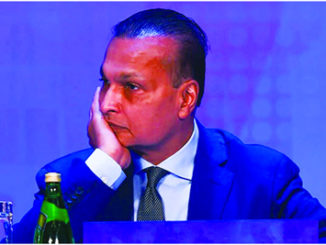
    India’s infamous fallen billionaire, Anil Ambani, may have claimed that his ‘net worth is zero’ but Indian banks aren’t buying it.In the midst of Reliance Communications’ bankruptcy resolution process, three Indian banks — the State Bank of India (SBI), Union Bank of India (UBI) and the Indian Overseas Bank (IOB) — are classifying the company’s accounts and the accounts of its units as fraudulent.

    Sources told the Economic Times that the three banks, which includes India’s largest lender, are looking to launch a deeper probe into the transactions from the account of three Anil Ambani-led Reliance Group entities — Reliance Communications, Reliance Infratel and Reliance Telecom.

    However, the Delhi High Court has directed Union Bank of India and Indian Overseas Bank to maintain the status quo in a matter pertaining to the classification of accounts as fraudulent until the next hearing on January 13.

    SBI and the Reliance Anil Dhirubhai Ambani Group declined to comment on the issue. The accusation of fraud puts Reliance Communications’ resolution plan at risk. According to the company’s official website, it owes Rs 49,193 crore in dues. In addition to that, Reliance Telecom owes Rs24,306.27 crore and Reliance Infratel owes Rs 12,687.65 crore.

    Cumulatively, this adds up to Rs 86,188 crore — while still excluding the Rs 28,837 that’s owed in spectrum dues.

    This is ten times more than what another fallen billionaire, Vijay Mallya, owed Indian banks, with debt amounting to Rs 9,000 crore. Compared to Nirav Modi, who owes at Rs 7,409.07 crore, Reliance Communications’ debt is even more than a ten-fold hike.

    Bankruptcy resolution hangs in the balance

    These allegations come nearly a year after a forensic audit unearthed questionable transactions worth Rs 5,500 crore in the three Anil Ambani-led Reliance Group entities.

    At the time, the probe found three suspicious large entries buried between hundreds of thousands of other transactions between May 2017 and March 2018, which indicated fund diversion.

    However, the reclassification of Reliance Communication and affiliated companies’ accounts comes at a time when the bankruptcy resolution was finally moving along. The National Company Law Tribunal (NCLT) gave its approval to the resolution plan on December 5 after at least 11 months of negotiations.

    This opens up the path for Anil Ambani’s brother, Mukesh Ambani, to pick the company’s tower and fibre assets for his own telecom enterprise, Reliance Jio. The total consideration is pegged at around Rs 20,000 to Rs 23,000 crore to be paid over the next seven years. Meanwhile, Reliance Communications and Reliance Telecom Infrastructure will go to the UV Asset Reconstruction Company.

    Other scams that rocked India

    TRP scam

    Television Rating Points (TRPs) are the basis on which television channels rake in the moolah. Advertisers put their campaigns on a channel with high TRPs, programmes are shut or extended while weighing in these ratings.

    The Broadcast  Audience Research Council (BARC) has installed “Bar-O-meters” in over 45,000 empanelled households. While watching a show, members of the household register their presence by pressing their viewer ID button — every person in household has a separate ID — thus capturing the duration for which the channel was watched and by whom, and providing data on viewership habits across age and socio-economic groups.

    In October, the Mumbai Police said they unearthed a “major racket” of gaming TRPs, by at least three channels, including Republic TV, and arrested four people, contending that the manipulated audience numbers were crucial because they directly translated into advertising revenue. The police filed a 1,400 page chargesheet in the fake TRP case. The crime branch has so far arrested 14 accused, including distribution head of Republic TV Ghanshayam Singh, in the case.

    Kerala gold smuggling case

    On July 5, 2020, 30 kg of gold worth around Rs 15 crore was seized by the customs department at Thiruvananthapuram airport in Kerala. The gold was found in a diplomatic luggage meant for delivery to the United Arab Emirates (UAE) consulate at Kerala’s capital.

    A former PRO of the consulate, Sarith Kumar, had come to claim the bag. When the consulate was asked, they said they had not authorized Kumar to make any claims on their behalf. Kumar was arrested and he pointed fingers at Swapna Prabha aka Swapna Mohammed, a former consulate employee who was fired in 2019.

    The can of worms opened, Swapna was recommended for the job by M Sivasankar, the principal secretary for the Chief Minister Pinarayi Vijayan. Sivasankar was suspended. The BJP and the Congress trained its guns towards Vijayan and demanded his resignation and questioning by the Enforcement Directorate. The CM dismissed the charge saying, “The Opposition is trying to foist the doings of officials on the government.”Uttar Pradesh Chief Minister Yogi Adityanath

    J&K’S ROSHNI LAND SCAM

    Before the year ended, a major scam broke out in Jammu and Kashmir. It related to a decision by the Jammu and Kashmir government in 2001 to regularise the unauthorised occupation of the government land. The ownership of the land was to be transferred for payment of a fee.

    The money collected from this scheme was to be used for the power project in Jammu and Kashmir. Hence, the enabling law was called the Roshni Act. The government set a target of Rs 25,000 crore to earn from the fees against title ownership to the beneficiaries.

    In 2014, the CAG found that the Roshni Act proved to be a tool for land grab by several powerful people in Jammu and Kashmir. In November this year, the CBI registered a case in the Roshni land scam.

  • India’s stock market in 2020

    India’s stock market in 2020

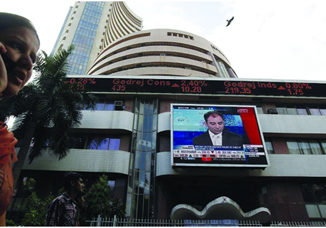
    2020 was indeed one of the most unpredictable years in the history of mankind. Coronavirus pandemic, floods, cyclones and several other man-made or natural disaster kept coming one after the other in 2020, making lives difficult for humanity. The year impacted nearly everything, including the stock market. From historic lows to eye-popping gains, the Indian stock market witnessed gut-churning fluctuations in 2020 as Sensex and Nifty kept fluctuating throughout the year.

    The year had started on a bad note for the market due to the coronavirus pandemic, tensions between the US and Iran and falling crude oil prices. In March, it plunged to a historic low after the Centre imposed a nationwide lockdown. However, the Sensex and Nifty made a remarkable recovery immediately and soar to all-time highs by the end of the year.

    However, the Reserve Bank of India’s (RBI) emergency liquidity support helped Sensex recover. April saw a quick recovery of the market as Sensex zoomed 2,476.26 points as investors wagered on more stimulus measures from the government to battle the economic fallout of the pandemic.

    By November, the Sensex erased its 2020 losses due to various measures announced by the government and the RBI. From November 9 to December 18, the Sensex hit fresh record highs in 22 out of the 29 sessions.

    For the calendar year (till December 24), the Sensex has gained 13.86 per cent, while the Nifty has delivered returns of 12.99 per cent.

    Compared to the March lows, both the indices are up by a hefty 80 per cent.

    Benchmarks had another engine propelling them higher this year Reliance Industries (RIL), which became the first Indian company to reach a market capitalisation of Rs 15 lakh crore (USD 200 billion) in September.

    Beginning April, the Mukesh Ambani-led conglomerate announced a slew of deals to sell minority stakes in its telecom and retail arms to marquee investors like Facebook, Google, Silver Lake, KKR, Mubadala, and Public Investment Fund of Saudi Arabia.

    The company has raised around USD 25 billion so far this year as it seeks to ramp up its consumer-facing businesses. For a good part of the year, RIL almost single-handedly drove the domestic benchmarks higher in the absence of any buying triggers.

    The COVID-19 crisis also forced investors to take a relook at their sectoral allocations.

    “From the lows, markets started stabilising and pandemic sectors like FMCG, IT, pharma and chemicals benefitted. As the economy further opened up, growth and cyclical sectors reversed positively,” said Vinod Nair, Head of Research at Geojit Financial Services.

    However, while stocks seem to have found their animal spirits back, there are also some murmurs of discontent.

    Analysts say world stock markets have developed a dangerous addiction to endless money printing by central banks, and show withdrawal symptoms of a junkie at the slightest indication of a moderation in monetary stimulus.

    Back home too, around half of the government’s Rs 20.97 lakh crore economic stimulus package comprised RBI’s liquidity measures.

    This glut of global liquidity has pushed markets so far ahead of economic fundamentals that some are beginning to question whether the real economy matters in equity investing at all.

    For example, no one would be able to tell looking at the Sensex chart that the Indian economy shrank 23.9 per cent in the first three months of FY21, and 7.5 per cent the next quarter.

    Globally too, markets have been on a manic upswing even as millions have lost their jobs, small businesses are battling for survival and entire industries have been decimated.

    While the real economy has been ravaged by the pandemic, most financial market indicators are ruling at stratospheric levels.

    The BSE Sensex is currently trading at a price-to-earnings (PE) ratio of 32.89, the highest on record.

    To put it differently, investors are paying Rs 32.89 for every rupee of future earnings of the 30 Sensex firms, compared to the previous 20-year average of around Rs 19.

    Global market capitalisation — the value of all the listed stocks in the world topped USD 100 trillion for the first time ever in December.

    And in a classic sign of market mania, there’s a rush of first-time investors eager to make a quick buck.

    A record 68 lakh new dematerialised (or Demat) accounts were opened in India between April and October 2020, compared to nearly 49 lakh in the entire FY20, which was the highest in a decade.

    Experts attribute this trend to factors like increased time at home due to the lockdown, efforts to make up for lost jobs or incomes, and also FOMO, or the fear of missing out on this rally.

    This is also reflected in the growing popularity of discount broking apps like Zerodha and Upstox, which have dislodged traditional broking houses in terms of active clients.

    Like the Robinhood app in the US, such platforms have attracted the tech-savvy crowd with their slick interface and mobile-first approach which has ‘gamified’ the once-stodgy field of stock market investing.

    With Fed and FOMO playing in tandem, many questioned technicalities like PE and PB ratios. But, some analysts also maintain that 2020 was an outlier in terms of corporate earnings and hence valuation metrics like PE ratios this year are not strictly comparable to historical averages.

    However, even they agree that every segment of the economy would have to stage a synchronous and sensational comeback to catch up with the market projections.

    And if that comes to pass, 2021 would be an even more incredible year for the bourses.

  • Greatest sports personalities the world lost

    Greatest sports personalities the world lost

    The sports fraternity grieved the loss of some of its greatest stars in 2020, including football legend Diego Maradona and American basketball player Kobe Bryant. The news of their untimely demise sent shockwaves across their fanbases and brought outpour of condolences from all quarters.

    As a tumultuous year — marked by a pandemic, social unrest, and economic crisis — draws to a close, let’s remember some of the greatest sports personalities we lost in 2020.

    Kobe Bryant

    American Basketball legend Kobe Bryant and his 13-year-old daughter died on January 26, 2020 in a helicopter crash in Calabasas, about 48 kilometres northwest of downtown Los Angeles. The cause of the crash still remains unknown as the helicopter was not equipped with a black box. Bryant is a five-time NBA champion and two-time Olympic gold medalist and is widely regarded as one of the greatest basketball players in history. He is also a two-time Olympic gold medalist and had helped the US won gold medals in the 2008 Beijing Olympics and the 2012 London Olympics.

    Diego Maradona

    Maradona passed away on November 25, 2020 at the age of 60 after suffering a heart attack at his home in the outskirts of Buenos Aires. He had undergone brain surgery days before his death, and was being treated by doctors at his home. Maradona was renowned for his ability to control the ball and create scoring opportunities for his team. He had lead his team to the 1986 World Cup title on the back of an impressive performance that won him the Golden Ball.

    Chetan Chauhan

    Chauhan, a former Indian cricketer and a BJP minister, died on August 16 from COVID-19-related complications. Known for his grit and calm demeanour, Chauhan proved to be an able administrator in his various roles in the sport, as manager of the team as well as an administrator with the DDCA.

    Dean Jones

    Former Australian cricketer Dean Jones passed away on September 24 at the age of 59 after suffering a massive cardiac arrest in Mumbai. Through 1980s and early 1990s, Jones was regarded among the best One Day International batsmen in the world and had been inducted into the Australian Cricket Hall of Fame last year. His batting was characterised by his nimble footwork and his willingness to take risks made him a trendsetter in the limited overs cricket.

    Paolo Rossi

    Rossi is a national hero in Italy for firing the Azzurri to a World Cup triumph in 1982.

    He finished the tournament as top scorer after netting six goals, including a hat-trick in a 3-2 win over flamboyant Brazil, both goals against Poland in the semifinals and the opener in the final victory over West Germany.

    At club level, ‘Pablito’ enjoyed success with Juventus, despite being banned for two years over a betting scandal.

    Chuni Goswami

    Goswami died on April 30, 2020 at the age of 82 in Kolkata after battling underlying ailments with diabetes, prostrate infection and neurological problems. Goswami represented Indian national team at the 1960 Summer Olympics and led the lead the team to achieve a gold medal at the 1962 Asian Games.

  • 2020’s biggest headlines

    2020’s biggest headlines

    The year 2020 will go down in history as the year that saw more misery than cheer. Lives were lost, disrupted and brought to a standstill as the world grappled with a deadly pandemic. Millions lost their jobs, countries shut down their borders and restricted citizens to their homes, billions were pushed into poverty, businesses were hit and millions died. As we wrap up a rather grim year, here’s a look at the  biggest headlines of 2020:

    Kamala Harris: US’ first female Vice President

    In a historic mandate, Kamala Harris became America’s first female vice president. Democratic candidate Joe Biden won the US Presidential election with Kamala Harris as his deputy. Kamala Harris is also the first black person and the first person of South Asian descent to hold the post.

    Joe Biden creates history

    US President-elect Joe Biden became the first person in America’s history to surpass 80 million votes in a US presidential election. With this, Biden has also shattered a previous record for the most votes cast for a president set by Democrat Barack Obama in 2008. Notably, Obama had received 69,498,516 votes when he beat John McCain, the late Republican senator.

    Killing Of George Floyd

    George Floyd, 46-year-old African-American man, died as a white policeman pressed his knee on his neck for over nine minutes. His death triggered global anti-race protests that spanned across over 60 countries. Political leaders, actors, sportsmen and activists “took the knee” as the cries of Black Lives Matter echoed the world over. Companies like Hindustan Unilever renamed their skin lightening creams while JP Morgan dropped the terms “master” and “slave” from internal tech code following the anti-race protests.


    Coronavirus, Lockdown And Migrants Exodus

    As the coronavirus pandemic infected billions worldwide, countries struggled to keep their citizens safe. Borders were closed down, curfews were imposed and nations were put under lockdown. As millions lost their lives and livelihoods to the deadly pandemic, efforts to stop its spread in India saw the biggest migrant movement in decades. Labourers across the country began their journey home even as buses, trains and flights were grounded. While some walked, some cycled and some hitch-hiked their way home, the less fortunate ones died on their arduous journey back home.

    Namaste Trump

    India hosted outgoing US President Donald Trump, who was accompanied by his wife Melania, daughter Ivanka and her husband Jared Kushner, during his two-day visit even as the country erupted in bloody violence over the controversial Citizenship Amendment Act. Greeted by PM Modi with a hug as he landed in Ahmedabad, Donald Trump and his family were welcomed by a waving crowd. The outgoing US President and PM Modi addressed a packed stadium, teeming with millions who had shown up for the event, amid growing coronavirus scare.

    India-China Galwan Face-Off

    20 Indian soldiers were killed in a “violent face-off” with Chinese troops in Ladakh in June that led to months of border escalation between the two countries. In the months following the border violence, China and India have held multiple talks at all levels to resolve the conflict but with very little success. China has also carried out massive constructions along the Line of Actual Control in eastern Ladakh. India has since banned 59 Chinese Apps, including TikTok.

    Delhi Anti-CAA Protests

    Supporters and protesters of the controversial Citizenship Amendment Act clashed in Delhi killing 53 people and injuring over 200. Homes were set on fire, schools were vandalised and public property was destroyed in the communal violence that jolted the national capital. Protesters resorted to throwing stones at the security personnel who responded with lathicharge and tear gas shelling.

    Prince Harry, Wife Meghan Step Down As Royals

    The Duke and Duchess of Sussex announced this year they will step back as “senior” royals and work to become financially independent. Prince Harry and his wife Meghan Markle officially transitioned out of their roles as “senior members” of Britain’s royal family on March 31.

    Ram Mandir Bhoomipujan

    PM Modi, UP Chief Minister Yogi Adityanath and senior BJP leaders attended the groundbreaking ceremony of the Ram Temple in Ayodhya on August 5 – exactly a year after the abrogation of Article 370 in Jammu and Kashmir. The ceremony was held with all Covid protocols in place – barring relaxation of the restrictions on gathering of more than 50 people – as 175 people attended the groundbreaking ceremony amid the pandemic.

    Hong Kong Security Law Passed

    China passed a sweeping national security law for Hong Kong in June – a historic move that critics and many western governments fear will smother the finance hub’s freedoms and hollow out its autonomy. Beijing and Hong Kong’s government said the laws will only target a minority of people, will not harm political freedoms in the city and will restore business confidence after a year of historic pro-democracy protests. Millions had taken to the streets in 2019 while a smaller hardcore of protesters frequently battled police in often violent confrontations that saw more than 9,000 arrests.

    Farmers’ Protest

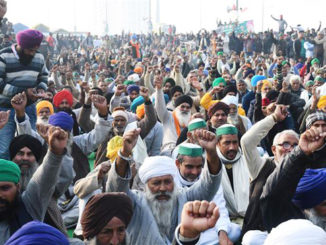
    For nearly three weeks, lakhs of farmers are camping at the entry points to Delhi, protesting the three new farm laws. Farmers, braving the cold Delhi winters, lathicharge and tear gas shelling by the security forces, have refused to budge until the laws are repealed. Talks have been held between the Centre and farmers but with no success.

    Tania Shergill: 1st woman Republic Day parade adjutant

    On January 26, 2020, Captain Tania Shergill became first Indian woman parade adjutant for the Republic Day parade. She led an all-man contingent during the ceremonial Republic Day parade at Rajpath, New Delhi. An officer with Army’s Corps of Signals, she was the first woman parade adjutant for the Republic Day parade. A parade adjutant is responsible for the parade. Shergill is the first woman army officer to become parade adjutant for Republic Day.

    Parasite wins best picture

    Parasite became the first non-English language film to win best picture in the 92-year history of the Academy Awards. Bong Joon Ho’s masterfully devious class satire also won best director, best international film and best screenplay.

    Bong Joon Ho’s masterfully devious class satire took Hollywood’s top prize at the Oscars on Sunday night, along with awards for best director, best international film and best screenplay. In a year dominated by period epics — “1917,” “Once Upon a Time … In Hollywood,” “The Irishman” — the film academy instead went overseas, to South Korea, to reward a contemporary and unsettling portrait of social inequality in “Parasite.”

    True to its name, “Parasite” simply got under the skin of Oscar voters, attaching itself to the American awards season and, ultimately, to history. The win was a watershed moment for the Academy Awards, which has long been content to relegate international films to their own category.

    UN Security Council

    The UN Security Council on March 24 met for the first time in its history via videoconference due to the coronavirus crisis — but diplomats said the meeting was not without technical difficulties. On March 31, the UN Security Council unanimously adopted four resolutions, voting for the first time remotely as diplomats and United Nations staff work from home due to the coronavirus outbreak in New York. For the first time, it adopted resolutions without the UNSC members being present in the Council chamber at the UN headquarters and voting or casting a veto by raising their hands.

    Katerina Sakellaropoulou: Germany’s 1st female prez

    Greece elected its first-ever female president, Katerina Sakellaropoulou. The swearing-in ceremony for Sakellaropoulou, a former high court judge, took place in a nearly empty parliament as a preventative measure to try to stop the spread of the coronvirus. Prior to her election as President of Greece, she served as President of the Council of State, the highest administrative court of Greece. Sakellaropoulou is the first female president of Greece.

    Emmanuelle Charpentier and Jennifer A Doudna

    Emmanuelle Charpentier and Jennifer A. Doudna became the first two women to ever jointly win the Nobel Prize in Chemistry. Charpentier, who is French, and Doudna, an American, were awarded the prize for developing the CRISPR-cas9 genetic scissors.

    Gitanjali Rao: Kid of the year

    Inventor and scientist Gitanjali Rao was named Time magazine’s first-ever “Kid of the Year”. Time Magazine in its cover of December 14, 2020 issue, featured a 15-year-old Colorado high school student and young scientist who has been named the magazine’s first-ever “Kid of the Year.” Gitanjali Rao has used artificial intelligence and created apps.

    Selected from more than 5,000 nominees as Time’s first-ever ‘Kid of the Year’, 15-year-old Gitanjali Rao was chosen for her “astonishing work” and using technology to tackle issues from contaminated drinking water to opioid addiction and cyberbullying. Time said Rao, a sophomore at STEM School Highlands Ranch in Colorado’s Denver, stood out for creating a global community of young innovators and inspiring them to pursue their goals. Rao told The Associated Press in a Zoom interview from her home that the prize is “nothing that I could have ever imagined. And I’m so grateful and just so excited that we’re really taking a look at the upcoming generation and our generation since the future is in our hands.”

    Margaret Keenan

    Margaret Keenan became the first person to receive a COVID-19 vaccine approved for the general public. The grandmother who was 90 when she got the shot, received it at University Hospital Coventry in the U.K. on December 8.

  • Indian – Origin , UAE Based 12-Year-Old Sets World Record for Identifying Most Airplane Tails in Record Time

    Indian – Origin , UAE Based 12-Year-Old Sets World Record for Identifying Most Airplane Tails in Record Time

    DUBAI  (TIP): A 12-year-old Indian boy in the UAE has entered into the Guinness Book of World Records by identifying the most aero plane tails in a minute, media reports said on Thursday.

    Siddhant Gumber, an Abu Dhabi-based homeschooled boy who identified 39 aeroplane tails in 60 seconds, is also the youngest Indian to identify top 100 tallest buildings, Gulf News reported.

    Gumber, who hails from Haryana, was earlier recognized by the “India Book of World Records”. He achieved the Guinness world record last month, the report said.

    His name also features in the “India Book” for being the youngest to identify the top 100 tallest buildings of the world with their respective heights and locations, it said.

    “I have been a Lego buff since I was a toddler, and my father and I spent a lot of time creating a variety of models – rockets, airplanes, buildings and vehicles. I was able to recognize a lot of the airplane tails, and my mother helped me compile them in PowerPoint slides so I could identify them (very quickly),” Siddhant Gumber told Gulf News.

    His mother Monisha said that her son has always been interested in signs, symbols and logos. “He has an exceptional picture memory and usually never forgets an image once he has seen it. He does have a variety of interests and likes to know about things into detail, just like airplanes. Although he loves country flags, we focused on aero plane tails for the Guinness record because they too are unique,” she said.

    He took about 1.5 seconds per airline tail, she added

  • GENERAL DOUGLAS MacARTHUR & CHURCHILL ARE NEEDED IN 2021

    GENERAL DOUGLAS MacARTHUR & CHURCHILL ARE NEEDED IN 2021

    By Ravi Batra

    The world has not seen a weapon that without a bomb launched or a bullet fired could devastate economies of all nations on earth in one fell swoop, and render their citizenry dead or fearing for life itself.

    2020, to paraphrase FDR, is a year that will live in infamy, and it is also the year when Neville Chamberlain reigned supreme. Indeed, no less than President Trump – who has stood taller than any before him, including, Richard M. Nixon, when he was a Communism-buster up until prior to his 1967 abdication in Foreign Affairs’ pages with a quid pro quo op-ed entitled “Asia After Viet Nam” – called the Virus the “China Virus,” yet, then incredulously declared: that we are fighting “an invisible enemy.” No, we are not Mr. President.

    The Virus isn’t our enemy, just as on December 7, 1941 the Japanese bombs and bullets weren’t the enemy; Imperial Japan was, by attacking us at Pearl Harbor, in Hawaii. Then, FDR, after sentencing that day “to live in infamy,” unleashed the indominatable General Douglas MacArthur. The same General, who when first expelled from Philippines, left written messages for the people of Philippines:  “I shall return.” And, return he did. Promise made; promise kept. Indeed, a short few years later on September 2, 1945 there was a Surrender Ceremony. A visit to the USS Missouri website proudly shows that the infamous history started at Peral Harbor was in-fact stopped, and a new history of American Freedoms, for all, was made to wit:

    “On the teak decks of USS Missouri, WWII finally came to an end on 2 September 1945. The Surrender Ceremony, which formally brought an end to the bloodiest conflict in human history, lasted a mere 23 minutes. It began at 0902 with a brief opening speech by General Douglas MacArthur. In his speech, the General called for justice, tolerance, and rebuilding. After MacArthur’s speech, Foreign Minister Mamoru Shigemitsu, representing the Emperor of Japan, signed the Instrument of Surrender. He was followed by the Chief of the Army General Staff, General Yoshijirō Umezu, who signed for the Japanese Army. After this, General MacArthur signed the Instrument of Surrender as the Supreme Allied Commander with 6 pens. Of these pens, he gave two to former POWs Lt. General Jonathan Wainwright and Lt. General Lt. General Arthur E. Percival. Following MacArthur, other allied representatives followed in this order:

    Fleet Admiral Chester W. Nimitz signed for the United States; General Xu Yongchang for the Republic of China; Admiral Sir Bruce Fraser for the United Kingdom; Lt. General Kuzma Derevyanko for the Union of Soviet Socialist Republics (USSR); General Sir Thomas A. Blamey for the Commonwealth of Australia; Colonel Lawrence Moore Cosgrave for the Dominion of Canada; General Philippe Le Clerc for the Provisional Government of the French Republic; Lt. Admiral Conrad E. L. Helfrich for the Kingdom of the Netherlands;Air Vice Marshal Leonard M. Isitt for the Dominion of New Zealand.

    5-Star General MacArthur’s Remarks – that day – on the deck of the USS Missouri are illuminating, and hence, worthy of reproduction so we may escape, even belatedly, History’s “curse of repetition” upon those who forget the past, while cuddling up to happy-amnesia:

    “We are gathered here, representatives of the major warring powers, to conclude a solemn agreement whereby peace may be restored.

    The issues involving divergent ideals and ideologies have been determined on the battlefields of the world, and hence are not for our discussion or debate. Nor is it for us here to meet, representing as we do a majority of the peoples of the earth, in a spirit of distrust, malice, or hatred. But rather it is for us, both victors and vanquished, to rise to that higher dignity which alone befits the sacred purposes we are about to serve, committing all of our peoples unreservedly to faithful compliance with the undertakings they are here formally to assume.

    It is my earnest hope, and indeed the hope of all mankind, that from this solemn occasion a better world shall emerge out of the blood and carnage of the past — a world founded upon faith and understanding, a world dedicated to the dignity of man and the fulfillment of his most cherished wish for freedom, tolerance, and justice. The terms and conditions upon which surrender of the Japanese Imperial Forces is here to be given and accepted are contained in the Instrument of Surrender now before you.

    As Supreme Commander for the Allied Powers, I announce it my firm purpose, in the tradition of the countries I represent, to proceed in the discharge of my responsibilities with justice and tolerance, while taking all necessary dispositions to insure that the terms of surrender are fully, promptly, and faithfully complied with. I now invite the representatives of the Emperor of Japan and the Japanese government and the Japanese Imperial General Headquarters to sign the Instrument of Surrender at the places indicated.”

    [After the Instrument of Surrender was executed by all, he concluded with:]

    “Let us pray that peace be now restored to the world, and that God will preserve it always.

    These proceedings are closed.” (Emphasis added)

    InWWII – we were united with USSR and China (not today’s Chinese Communist Party’s (CCP’s) People Republic of China (PRC)), but the Republic of China (ROC) – today, known as Taiwan, when General Chiang Kai-shek was head of ROC. I cite the above snippet of history to document the gross geopolitical malpractice of leaders, here at home and abroad, since 1945. Indeed, CCP’s brilliant Chairman Mao, who had originally joined under the leadership of General Chiang, revolted, caused a civil war, and finally expelled him in 1949 from Mainland China to a mere island, Formosa, aka Taiwan.

    CCP’s China is a new world order – different from feudalism, communism, socialism, corporate-capitalism and our cherished Bill of Rights embedded in our Separated Powers regime – as it is an amalgam of all. Indeed, there are 99 million members of CCP – think corporate governance and the now-disappeared “Avon Lady.” Everybody in China is directly and intimately known by a CCP Member.

    From Chiang Kai-shek, to Harry Truman, to Pandit Nehru, and above all others, to Richard Nixon who rolled out the red carpet for CCP’s China and gifted the critical multi-polar Permanent Seat on the United Nations Security Council – after unilaterally amending History and taking it away from ROC – the world could not, and sadly did not, see the slowly moving tortoise of CCP-China as a threat greater than the fast-moving Adolf Hitler.

    We are at the Third Act of CCP’s “rejuvenation” of the Ming Dynasty’s Tribute System. Indeed, President Xi has honestly stated his China Policy to be “rejuvenation” – almost with as much delight as Edgar Allen Poe had in writing the Purloined Letter.  What former National Security Advisor H.R. McMaster warned about in The Atlantic on May 19, 2020 – “What China Wants” – but left off at, I have continued – as I must warn as Paul Revere did – that our “Emperor wears no clothes,” to metaphorically assert without doubt, that our China Policy – created and effectuated by our Deep State and Executive and Legislative Leaders – is both a misdiagnosis, and a mistreatment that embraces de facto, if not de jure, impotent Chamberlain while rejecting the necessary Churchill, who to them is truly “invisible,” let alone “necessary.” Giving us governmental malpractice that is both decrypt, as it is impotent.

    The world has not seen a weapon that without a bomb launched or a bullet fired could devastate economies of all nations on earth in one fell swoop, and render their citizenry dead or fearing for life itself. Coronavirus, with its transplanted from Bats’ “Spike Glycoprotein (S)” – which I wrote about in my Open Letter to President Trump on April 14, 2020, and the next day United States opened its then-Preliminary Investigation of China – is now the very piece of protein that Pfizer and Moderna’s mRNA-based vaccines now – in error – implant in every patient, and after the initial 2-shots, require a booster shot every 3 months, for life. Result: the enemy get refreshed, while our body’s “T cell” get exhausted or run out. Indeed, Merck’s CEO Kenneth C. Fraizer has correctly said: we don’t even understand the Virus yet, let alone treat it. How right he is. This vaccine frenzy is nothing short of a global clinical trial – worse than if you signed up for one – for now, as a patient, you don’t get paid, and if you suffer a severe reaction, you can’t sue as they have a liability shield, courtesy of Operation Warp Speed that didn’t have to do 10 years of public health studies to identify its efficacy, but its side effects. Risks vs Benefits. A patient with a migraine headache would never accept decapitation as a solution; yet, now, we are to accept this vaccine with a public health study over 10-years of time. Yes, we need a vaccine; but, we need the raw truth about the creation of SARS-CoV2, its escape from the Wuhan lab, its variations, etc., before we can figure out the correct cure.


    Kompromat – is a term used to suggest Russia’s ability to control another person or nation through some act or knowledge that the target would not like exposed. Blackmail. In our social media-connected world, with data that documents one’s hallucinations as if “fact,” our exceptional separated powers regime is sadly checkmated.

    As 2021 is the Year of Hope, like never before, I end with a wish that just as the Ming Dynasty voluntarily gave up its Tribute system, so does President Xi Jinping; and, instead, he joins in transparent disarming of SARS-CoV2 and dismantles his Jaws of War (which I have previously described). Otherwise, let Churchill be re-born as an American – worthy of everyday hardworking Americans who toil to achieve the American Dream, as merit alone can – and uphold our Flag high and free, as those who died doing so in 1814 at Fort McHenry and caused lawyer-poet Francis Scott Keys to be so moved by their undying courage and national pride to write “The Star-Spangled Banner.”

    (Ravi Batrais a senior attorney and  advisor to many governments. Twitter @RaviBatra)

  • Microsoft building new password manager for Edge, Chrome

    Microsoft building new password manager for Edge, Chrome

    Microsoft is building a new passcode manager that will work across a slew of products like Edge, Chrome and mobile devices – Android and iOS. According to a report in The Verge, the tech giant is in the process of creating a full password manager for its Microsoft 365 consumer service.
    The new password manager will sync credentials across its Edge browser, Google Chrome, and mobile iOS or Android devices.
    “A preview version of the password manager is now built into Microsoft Authenticator, a free mobile app that’s used for multi-factor authentication,” the report mentioned.
    Autofill only works with consumer Microsoft Accounts and is disabled for enterprise users who are using the app for phone sign-in or multi-factor authentication.
    “Passwords are synced from the Microsoft Edge browser, and can be shared across multiple devices using a Microsoft Account. You can also sync these passwords to Google Chrome, using a new Microsoft Autofill extension,” the report mentioned.
    Japan space agency confirms asteroid soil inside capsule
    Japan’s space agency said Monday it has confirmed the presence of black soil samples inside a capsule that the spacecraft Hayabusa2 brought back from a distant asteroid last week. The pan-shaped capsule, 40 cm in diameter, was dropped by Hayabusa2 from space onto a spot in a sparsely populated Australian desert on December 6. It arrived in Japan last Tuesday for research that will hopefully provide insights into the origins of the solar system and life on Earth. The Japan Aerospace Exploration Agency said its scientists opened the capsule and found an unspecified amount of sandy black particles.
    Samsung to release 4 folding smartphones in 2021: Report
    Samsung is reportedly planning to launch four folding smartphone devices in 2021 with 5G support.
    According to the South Korean news outlet ETNews, the smartphone manufacturer Samsung will release two variants of Galaxy Z Fold 3 and two variants of Galaxy Z Flip 2 and both these models will have support for 5G.
    The report also stated that all four foldable phones are only planned to be launched in the second half of 2021. Therefore, do not expect these devices to be unveiled with the Galaxy S21 series.

    Apple TV app is coming to new Chromecast with Google TV
    Google has announced a sweet surprise for Chromecast users. The company announced the availability of the Apple TV app on Chromecast. The announcement follows the availability of Apple Music on Google’s Nest smart speakers.
    Up until now, the Apple TV app could only be accessed only on Apple devices. That is about to change as now new Chromecast with Google TV users will be able to access the Apple TV on their devices.
    On the Apple TV app, users can access their entire library of movie and TV show purchases from Apple. They can also enjoy personalised and curated recommendations on Apple TV channels. Additionally, users will also be able to save their favourite shows and movies on their Watchlist. Google says that through Family Sharing, up to six family members can share subscriptions to Apple TV channels using the new Chromecast with Google TV.
    With Google TV, you’ll be able to see Apple Originals in your personalized recommendations and search results, making it even easier to find your favorite shows and movies. And, you’ll be able to save them to your Watchlist to catch up on later.
    In addition to this, Google announced that Chromecast with Google TV users will also be able to access Apple TV+ on the connected devices. Of course, users will have to first download the app and get a paid subscription to use the service on the supported devices.
    The catch, however, is that this feature will be rolled out to Chromecast with Google TV early next year. Other devices powered by Android TV OS will get this update in the future.

  • Bitcoin surpasses $21,000 for first time amid dizzying rally

    Bitcoin surpasses $21,000 for first time amid dizzying rally

    Bitcoin surpassed $21,000 for the first time, another milestone in what’s been an eye-popping rally for the controversial digital asset this year.
    The world’s largest cryptocurrency surged as much as 10% to $21,293 in New York on Wednesday, vindicating forecasts that were scoffed at months ago and leading to even higher prognostications. Bitcoin has almost tripled this year, with the rally accelerating Wednesday after breaching $20,000 earlier for the first time.
    “We have a new line in the sand and the focus shifts to the next round number of $30,000,” said Antoni Trenchev, co-founder and managing partner of Nexo, a crypto lender. This “is the start of a new chapter for Bitcoin. It’s a narrative the media and retail crowd can properly latch onto because they’ve been noticeably absent from this rally.”
    Bitcoin has surged despite a severe crash in March that saw it lose 25% amid the coronavirus pandemic. Proponents have seized on the narrative that the coin could act as a store of wealth amid supposed rampant central-bank money printing, even as inflation remains mostly muted.
    In addition, some Wall Street firms have taken a greater interest, with many seeking to capitalize on its gains in a world of rock-bottom interest rates. Guggenheim Partners LLC, for instance, recently said it might invest up to 10% of its $5.3 billion Macro Opportunities Fund in a Bitcoin trust.
    Bitcoin’s cross above the $20,000 and $21,000 levels were its latest milestones in recent weeks — the coin at the end of November reached a new high three years after setting a prior peak. It had traded at a few cents for several years after its late 2008 launch by an unknown software developer in the wake of the global financial crash.
    “People tend to pile into momentum trades, so Bitcoin could have more upside from here,” said Ed Campbell, portfolio manager and managing director at QMA.
    Peer coins also rose on Wednesday, with the Bloomberg Galaxy Crypto Index — which tracks some of the major cryptocurrencies — gaining as much as 7.2%. Dash and Litecoin each advanced at least 6%.

  • Russia banned from using its name, flag at next two Olympics

    Russia banned from using its name, flag at next two Olympics

    Russia was banned Thursday from using its name, flag and anthem at the next two Olympics or at any world championships for the next two years.
    The Court of Arbitration for Sport’s ruling also blocked Russia from bidding to host major sporting events for two years.
    Russian athletes and teams will still be allowed to compete at next year’s Tokyo Olympics and the 2022 Winter Games in Beijing, as well as world championships including the 2022 World Cup in Qatar, if they are not implicated in doping or covering up positive tests.
    The punishments are less than the four-year ban the World Anti-Doping Agency had proposed.
    The case centered on accusations that Russian state authorities tampered with a database from the Moscow testing laboratory before handing it over to WADA investigators last year.

  • Mohammad Amir retires from international cricket claiming ‘mental torture’

    Pakistan fast bowler Mohammad Amir has retired from international cricket, the PCB has confirmed. Amir represented Pakistan in 36 Tests, 61 ODIs and 50 T20Is, and recently played in the inaugural Lanka Premier League for runners-up Galle Gladiators.
    “Pakistan Cricket Board chief executive Wasim Khan spoke with Mohammad Amir this afternoon following reports that the fast bowler had announced his retirement from international cricket. The 28-year-old confirmed to the PCB chief executive that he has no desires or intensions of playing international cricket and as such, he should not be considered for future international matches,” a PCB statement said. “This is a personal decision of Mohammad Amir, which the PCB respects, and as such, will not make any further comment on this matter at this stage.”
    The statement serves as another reminder of the extent to which relations between Amir and the current team management have broken down.

  • Lewandowski beats Messi, Ronaldo to win FIFA best men’s player award

    Geneva (TIP): Robert Lewandowski won the biggest individual prize of his career Thursday, Dec 17, showing that a forward not named Messi or Ronaldo can be voted the world’s best soccer player.
    The Poland captain was named the FIFA Best Men’s Player for 2020 after his 55-goal season lifted Bayern Munich to a sweep of international and domestic trophies.
    Lewandowski topped a three-player shortlist that included Lionel Messi and Cristiano Ronaldo. Voting was by a global jury of national team captains and coaches, plus selected journalists and fans. Lewandowski received 52 voting points, with Ronaldo second on 38 Messi third with 35.
    Though FIFA hosted the virtual ceremony in Zurich, its president Gianni Infantino went to Munich to present the trophy in person.
    “It’s an incredible feeling” said Lewandowski, who at age 32 made the shortlist for the first time.
    Lewandowski joined Luka Modric, the Croatia and Real Madrid midfielder who won in 2018, as the only players in the past 13 years to deny both Messi and Ronaldo the victory.
    “Today I am among them,” Lewandowski said in comments translated from German. “It means I’ve always done the right things in my life.”
    Lucy Bronze was voted the best women’s player to give England its first individual victory at the FIFA awards. A Champions League winner with Lyon, she has since joined Manchester City.

  • Disha Patani Takes a Trip to Dubai with Tiger & His Family

    It is fairly evident that Disha Patani is quite close to rumoured boyfriend Tiger Shroff’s family. She is often seen hanging with his family members, including Tiger’s mom Ayesha and sister Krishna.
    Now, Disha has reportedly accompanied Tiger, his sister Krishna as well as mother Ayesha Shroff on a trip to Dubai. Though none of them have posted a picture together, they shared individual photos and videos from the same hotel on their Instagram stories.
    They are in Dubai for an event of Krishna and Tiger’s venture Matrix Fight Night (MFN), reported India Today.
    Disha posted a picture of a cake designed in the form of a purse. The Bharat actress tagged the hotel and wrote, “Thanks for the cutest cake (sic).”
    Krishna posted several videos on her Instagram stories giving a glimpse from her hotel in Dubai. In the videos, she is seen wearing a black dress for an event. She also shared videos from the event of MFN.
    Tiger Shroff posted a video on his Instagram stories informing his fans that he would be going live for MFN.
    Disha finished shooting for Salman Khan’s Radhe last month. Directed by Prabhudheva, Radhe also stars Randeep Hooda, Jackie Shroff, Megha Akash and Zarina Wahab in important roles. Disha will also feature in Ekta Kapoor’s film KTina. She also has Ek Villain 2 coming up with Tara Sutaria and John Abraham. Tiger and Disha will soon be seen in a cold drink commercial.

  • Jacqueline flaunts washboard abs with pop philosophy

    Jacqueline flaunts washboard abs with pop philosophy

    Bollywood actress Jacqueline Fernandez flaunts a toned midriff in a new picture she shared on social media, and fans are thrilled. Along with the picture, she has shared some quick pop philosophy about human nature, too.
    Jacqueline posted the picture on Instagram, where she is seen dressed in black gym wear. A huge mirror catches her reflection.
    “They tell you to be yourself and then they judge you,” she wrote alongside the image.
    Jacqueline will be seen in in films such as Bhoot Police, Bachchan Pandey and Kick 2.
    She recently completed a long outdoor schedule for the horror comedy Bhoot Comedy in locations across Himachal Pradesh, along with the rest of the cast including co-stars Saif Ali Khan, Yami Gautam and Arjun Kapoor.

  • ‘Time being wasted in discussing uniform’: Rahul walks out from defense panel meeting

    ‘Time being wasted in discussing uniform’: Rahul walks out from defense panel meeting

    New Delhi (TIP): Members of the Congress party led by former chief Rahul Gandhi on Wednesday, Dec 16,  walked out of a meeting of the parliamentary panel on defence.
    The Congress MPs walked out with Rahul Gandhi alleging that the Parliamentary Committee on Defence’s time was being wasted in discussing armed forces’ uniform instead of crucial issues concerning national security like how to better equip the soldiers, PTI quoted sources as saying.
    According to sources, during the panel’s meeting today, Gandhi wanted to bring up the matter of Chinese aggression and better equipping soldiers deployed along the border in Ladakh. However, panel chairman Jual Oram (BJP) disallowed the Congress MP.
    Gandhi had made his wish to speak on the issues known when the panel was discussing uniforms of the Army, Navy and Air Force in the presence of Chief of Defence Staff Gen Bipin Rawat. The Congress MP said that instead of discussing the armed forces’ uniforms, the political leadership ought to take up the issues of national security and discuss how to strengthen the forces who are fighting the Chinese in Ladakh.
    With the panel chairman denying an opportunity to Gandhi to speak, the Congress leader chose to walk out of the meeting. Congress members Rajeev Satav and Revanth Reddy decided to follow their leader.
    It may be noted here that the Congress leader has been vocal in his criticism of the Narendra Modi government over the alleged mishandling of the now-months-long border standoff, during which India lost 20 soldiers in the June 15-16 Galwan Valley clash.
    He has alleged that China has taken control of Indian territory in Ladakh with the Modi government choosing to close its eyes to the development.