
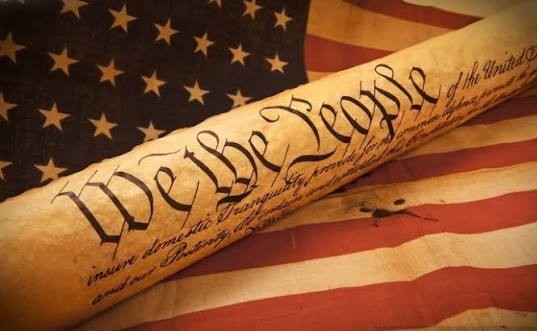


The Constitution of the United States begins with three immortal words: “We the People.” They are neither a ceremonial flourish nor a historical ornament. They constitute a declaration of sovereignty. Governments derive their authority from the people, exercise it on their behalf, and remain answerable to them. As Americans approach the November 3 midterm elections, those three words deserve renewed attention.
The elections will determine the composition of Congress and influence the remaining years of President Donald Trump’s administration. But their significance extends beyond the fortunes of Republicans and Democrats. They provide an opportunity to examine whether government is fulfilling its fundamental obligation: improving the lives of the governed while safeguarding the institutions that protect their liberties.
Winning an election confers authority. Governing responsibly earns the people’s trust.
That distinction is particularly important in a country where political campaigns increasingly resemble contests of personalities, accusations and promises, while the practical concerns of ordinary citizens struggle for sustained attention.
The People Have Their Own Agenda
Americans are concerned about matters considerably more immediate than partisan triumphs.
A Pew Research Center survey released October 8 found that 84 percent of registered voters considered the economy very important to their congressional vote. The future of democracy concerned 73 percent, healthcare 68 percent, education 62 percent, and immigration 59 percent.
An AP-NORC survey released October 15 presented an equally revealing picture. Eight in ten voters wanted substantial or fundamental change in how the country is governed.
These findings should command the attention of every candidate seeking public office.
The American household is not an abstraction. It is a family calculating grocery expenses, a senior citizen worrying about medical bills, a young graduate struggling with educational debt, and a small business owner confronting rising costs.
Economic statistics may indicate growth, but growth acquires meaning for ordinary Americans when wages, opportunities and purchasing power permit them to live with security and dignity.
The Trump administration emphasizes economic growth, tax policy, deregulation, domestic production and energy development. Its critics question whether tariffs, fiscal decisions and other policies have adequately addressed household costs.
The responsibility of government is to examine such competing claims against measurable outcomes, acknowledge difficulties and adjust policies when necessary.
The responsibility of the opposition is equally demanding. Criticism, however justified, cannot substitute for workable alternatives.
The Administration’s Responsibilities
President Trump entered his second term with a mandate to pursue the policies on which he campaigned. That mandate deserves recognition within the constitutional framework.
But no electoral mandate is unlimited.
The presidency carries enormous responsibilities, particularly in economic management, immigration enforcement, foreign affairs and national security. Its authority must operate alongside Congress, the judiciary and the constitutional rights of citizens.
On immigration, Americans can reasonably expect secure borders, enforcement of lawful procedures and an orderly system. They can also expect that enforcement will respect due process, human dignity and the distinction between criminal conduct and immigration status.
On healthcare, the challenge is to reconcile affordability, access and fiscal sustainability. Americans should be able to examine not merely promises of reform but credible explanations of how proposed changes would affect patients, providers and taxpayers.
On energy, increased domestic production may contribute to supply security, but international conflicts, refinery capacity and global markets also influence prices. Government must distinguish what it can control from what it cannot.
On the economy, promises of prosperity must be accompanied by an accounting of costs, benefits and consequences.
The true measure of government is not the grandeur of its announcements but the difference its decisions make in people’s lives.
America and Its Responsibilities Abroad
Foreign policy has acquired unusual importance in these midterms.
The continuing conflict involving Iran has raised questions about military objectives, expenditure, regional stability and the economic consequences of prolonged hostilities. The war between Russia and Ukraine presents another difficult challenge: how to encourage negotiations without disregarding sovereignty and durable security arrangements.
Americans have legitimate reasons to question the costs of foreign engagements. They also have legitimate interests in international stability, reliable alliances and the prevention of wider conflicts.
The administration must explain what American involvement is intended to achieve, what resources it requires, and how success or failure should be evaluated.
Congress, entrusted with significant constitutional responsibilities concerning war, appropriations and oversight, cannot remain a spectator.
A great nation’s influence is measured not only by military strength but also by the credibility of its commitments and the prudence with which it exercises power.
The Opposition Must Offer More Than Opposition
The Democratic Party has an important responsibility in the approaching elections.
It must examine the administration’s record, identify policies it considers harmful, and propose alternatives that voters can assess.
But opposition becomes constructive only when it offers a credible program of governance.
If Democrats criticize rising living costs, they must explain how their proposals would address them. If they oppose particular immigration measures, they must articulate an enforceable and humane alternative. If they challenge foreign policy decisions, they must explain how their approach would protect American interests.
The same standards apply to Republican candidates. Defending the administration cannot replace independent judgment, and party loyalty cannot relieve a legislator of responsibility to constituents.
A healthy democracy requires more than two parties competing for office. It requires representatives capable of examining evidence, questioning their own leadership and cooperating when the public interest demands it.
People before politics must be more than a pleasing expression. It must become a governing discipline.
Democracy Does Not End on Election Night
The Constitution establishes a system of limited and divided powers precisely because its framers understood the dangers of concentrated authority.
The president does not own the executive branch as a personal possession. Congress does not exist merely to approve presidential decisions. Courts are not instruments of political convenience.
Each institution has responsibilities, and each must remain accountable within the constitutional order.
Elections are essential to that accountability, but they are not its only expression.
A free press, independent courts, transparent administration, legislative scrutiny and the right of peaceful dissent all contribute to the continuing relationship between government and governed.
Citizens must be free to question those in authority without being regarded as enemies of the nation. Equally, public disagreement must not become an excuse to deny the legitimacy or dignity of fellow Americans.
The people who vote for a losing candidate do not lose their citizenship, their rights or their claim upon government.
A president governs an entire nation, not merely the constituency that elected him.
This principle applies equally to every political party and every administration.
The Future Beyond November
Whatever the composition of Congress after November 3, America will continue to face challenges that cannot be resolved through electoral victories alone.
Public debt, educational opportunity, technological disruption, healthcare costs, infrastructure, climate risks and international competition will demand sustained attention.
The country will also need to confront a deeper problem: declining confidence in political institutions and the growing difficulty of finding common ground.
Compromise is not necessarily surrender. It can be the means through which a diverse democracy reconciles legitimate differences while preserving shared institutions.
Nor does accountability require perpetual confrontation. It requires that elected officials explain their decisions, accept scrutiny and remain willing to correct mistakes.
As America commemorates 250 years of independence, its greatest responsibility is not simply to celebrate the ideals proclaimed in 1776 and embodied in its constitutional tradition. It is to ensure that those ideals continue to guide public life.
The American experiment was never founded upon the infallibility of rulers. It was founded upon the conviction that legitimate government rests upon the consent of the governed.
That conviction remains as relevant today as it was at the nation’s founding.
The midterms will produce winners and losers. They will redistribute political authority and influence the course of legislation. But they will not alter the fundamental ownership of the Republic.
Elections belong to political parties for a season. The Republic belongs to the people forever.
And when the celebrations and disappointments of November have passed, the responsibility of governing will remain.
For the future of America will not be secured merely by winning elections, but by governing in a manner that justifies the people’s trust.



Be the first to comment