Month: May 2014

  • All you need to know about OPERATION BLUE STAR

    All you need to know about OPERATION BLUE STAR

    “Operation Blue Star” in the Government’s view was a necessary military operation to flush out the terrorists and recover arms from the Golden Temple whereas “Ghallughara” is how the Sikhs of Punjab remember this episode.

    Operation Blue Star” and “Ghallughara”. Two different terms for the same episode – the Army action on the Golden Temple in June 1984. Two different meanings given to the same unprecedented event.

    The history leading to the massacre at the Golden Temple complex:

    Gurbachan Singh , the head of Nirankaris, led a procession in Amritsar in 1977. Singh had declared that “If Guru Gobind Singh can make five beloved one’s, he will make seven stars”. The Nirankaris wanted to reform Hinduism. They were of the opinion that the Sikhs should shave off their beards, doff their turbans and doubtless shear their long hair, losing many of their ties to Guru Gobind Singh’s 5 Kakars, and assimilate into Hinduism.

    So on the occasion of Vasakhi, the day that the Khalsa was born , also the same day of the Jallianwala Bagh massacre– Gurbachan Singh lead an armed mob of Nirankaris right through Amritsar, Jarnail Singh Bhindrenwale, a little known preacher at that time, would visit villages and preach to the youngsters to reaffirm the essential credos of their Gurus and return to Sikhi.


    24

    The Akhand Kirtani Jatha (an Akali group with a totally opposing viewpoint, to say the least), set out from the Akal Takht to stop Gurbachan Singh for his disgraceful procession, However, Gurbachan and his armed accomplices opened fire on the Akalis and, one by one, a total of 13 Akalis were killed. After this incident, Bhindranwale’s reputation as the next powerful Sikh leader, rose tremendously in the Sikh community and in Sikh political circles.

    From 1977 until 1983, Bhindrenwale led his agitation against the Arya Samajis and other fanatic Hindu organisations who were working against the Sikhs. Although many Sikh leaders did not accept his views, young rural Sikhs, who had been disappointed with both the state and central government due to unemployment, poverty and other problems, supported Bhindranwale. Bhindranwale openly spoke against the government for not doing anything against Gurbachan Singh.

    He united the individuals in Punjab to come together for the rights of the sikhs. The messages that Bhindranwale gave influenced the people very much.

    Operation Bluestar commences:

    In 1982, Bhindranwale and around 600 armed followers moved into a guest-house called the Akal Takht, in the precinct of Harmandir Sahib. It was a known fact that by 1983, that the Akal Takht had become a fort for a large number of separatists.

    On 23 April 1983, the Punjab Police Deputy Inspector General AS Atwal was shot dead as he left the Harmandir Sahib compound. The following day, after the murder, it was hinted that Bhindranwale was involved in the murder. Bhindranwale was also accused of amassing weapons in the premise in order to start a major armed uprising. However, keeping weapons in Akal Takhat is well within the precincts of Sikhism.

    According to the Indian government, Operation Blue Star was only launched to eliminate Jarnail Singh Bhindranwale and his armed followers who had sought refugee in the Amritsar Harmandir Sahib Complex. The armed Sikhs were led by Jarnail Singh Bhindranwale and former Maj. Gen.Shabeg Singh, who was expelled from the Indian army for being a Khalistan sympathiser, while Lt. Gen. Kuldip Singh Brar had command of the action, operating under Gen. Sunderji.

    On June 1, 1984:

    The CRPF started firing at ‘Guru Ram Das Langar’ building. The Border Security Force and the CRPF, under orders of the Army, started firing upon the Complex, in which at least 8 people died.

    On June 2, 1984:

    The Indian Army had sealed the international border from Kashmir to Ganga Nagar, Rajasthan. As many as seven divisions of army were deployed in villages of Punjab. By the nightfall media and the press were removed from the area and the transport route in Punjab was suspended. Entry to Foreigners’ and NRIs’ was also banned . The water and electricity supply was also cut off by the army in order to flush out the insurgents from the temple premise.

    On June 3, 1984:

    A complete curfew was ordered by the army and para-military was patrolling the whole of Punjab. The army had sealed off all the routes of entry and exit around the temple complex

    On June 4, 1984:

    The army started bombarding the historic Ramgarhia Bungas and other fortified positions. The army achieved in destroying the outer defences laid by General Shabeg Singh. The army then placed tanks and Armoured Personnel Carrier’s (APC) on the road separating the Guru Nanak niwas building, thus forming a wall of iron. More than 100 people died in pitched battles from both sides.

    Nearly fifty thousand Sikhs had gathered in the Golewal village about 25 km from Amritsar to fight the Indian army. Thirty thousand converged from the side of Batala in Gurdaspur district and about twenty thousand Sikhs gathered at Chauk Mehta, the headquarters of Damdami Taksal. Another formation of about twenty thousand were marching from the side of Harik Patan at confluence of the rivers Sutlej and Beas.

    The army helicopters spotted the massive movements. General K Sunderji sent tanks and APCs. Hundreds/thousands of Sikhs were killed at this rendezvous. The artillery and small arms firing stopped for a while, and Gurcharan Singh Tohra, former head of SGPC was sent to negotiate with Bindrawale; however, he was unsuccessful and returned with empty hands. The firing was resumed again.

    On June 5, 1984:

    On June 5, 1984:The generals decided to launch a simultaneous attack from three sides. 10 Guards, 1 Para Commandos and Special Frontier Force (SFF) would attack from the main entrance of the Golden Temple complex, and 26 Madras and 9 Kumaon battalions from the hostel complex side entrance from the south.

    The objective of the 10 Guards was to secure the northern wing of the Temple complex and draw attention away from SFF who were to secure the western wing of the complex and 1 Para Commandos who were to gain a foothold in Akal Takht, and in Harmandir Sahab with the help of divers. 26 Madras was tasked with securing the southern and the eastern complexes, and the 9 Kumaon regiment with SGPC building and Guru Ramdas Serai. 12 Bihar was charged with providing a cordon and fire support to the other regiments by neutralising enemy positions under their observance.

    On June 6, 1984:

    Due to shelling by Vijayanta tanks, the Akal Takhat was destroyed. People trying to escape were mowed down by machine gun fire. The resistance continued from the neighbouring structures of the Akal Takhat.

    On June 7, 1984:

    The Indian army gained effective control of the Harmandir Sahib complex.

    On June 8, 1984:

    The Army fought about four militant Sikhs holed up in basement of a tower. By the afternoon of 10 June, the entire operation was completed by the army and Jarnail Singh Bhindranwale and former Maj. Gen.Shabeg Singh were killed.

  • Top guns are on the way out, but not yet, says Nadal

    Top guns are on the way out, but not yet, says Nadal

    PARIS (TIP): Rafael Nadal and the other members of the “big four” know that a new band of brash youngsters are on the horizon, but the Spaniard showed on May 29 they will not be handing over the keys to the game’s trophy cabinet just yet.

    The Spaniard was up against Austrian wunderkind Dominic Thiem in the second round of the French Open and while the 6-2, 6-2, 6-3 scoreline did not do his opponent justice, Nadal was clearly the master as he took another step towards a record-extending ninth title at the claycourt slam. World number one Nadal raised his game significantly to snuff out any chance of an upset, fending off a mini crisis in the third set when 20-year-old Thiem began to threaten.

    At nearly 28, 13-time Grand Slam champion Nadal knows his career is probably entering the final chapters, but says any takeover at the top is not imminent. “Our generation is now on the way out, you know, like Murray, Djokovic, Ferrer, and Berdych and others, and Tsonga, as well, we have been here for a long while,” Nadal told reporters. generation is walking away and others will replace us. It will not come overnight, but it will come. “I am almost 28.

    Djokovic and Andy are 27. Federer is, I don’t know, 32. The new generation, new players, have to come. We’re not gonna be here for 10 more years.” That is for the future though and for now Nadal only has eyes on adding another Roland Garros title to his CV. After a patchy, but his own high standards, claycourt season he was pleased to move up a notch against Thiem.

    “I played the way I wanted to play. I resisted when he was going for his shots, very powerful forehand and a good backhand, ” Nadal, who will face Argentine Leonardo Mayer next, said. “When I had to play long points I did well. When I had to attack and move him, I think I did well. “I went to the net a few times. I’m happy that the way I returned today.” It was indeed more like the Nadal that has been virtually unbeatable for a decade.

    BRICKWALL DEFENCE His forehand was spinning cruelly, his defence was brickwall and his determination unquenchable. Thiem’s booming groundstrokes, particulaly his inside-out forehand, caused Nadal trouble but Nadal too often had the extra shot and after recovering from a break down in the third set he sealed the win on his second match point.

    “He lost one match here in 10 years or something, so I knew that it was going be the biggest challenge in my tennis career,” said Thiem. “I will be learning a lot from today’s match, for sure. It’s really important to play against these guys a lot, against these top guys, because it’s more important than every practice, I think.

    I hope I can take a lot with me from this match.” Thiem, who stunned Australian Open champion Stanislas Wawrinka in the second round of the Madrid Masters this month, looks on his way to the top and Nadal was impressed. “The normal thing is Dominic will be there in a short period of time, and he will have his chances to become a top star and fight for these tournaments,” he said.

  • CSK aim to minimize Maxwell effect

    CSK aim to minimize Maxwell effect

    Chennai Super Kings and wine have one thing in common. Both get better with the passage of time. After having suffered a three-match losing streak just before the play-offs, CSK have upped the tempo at the right time. With a good performance against Mumbai Indians, CSK are looking good to enter their fifth consecutive final. Kings XI Punjab, for long the dominating team in the league stages, are suddenly suffering a dip in momentum. Their loss to Kolkata Knight Riders would have dented their confidence but they will be aware that they can bounce back against a team that they have defeated twice earlier.

    Venue: Wankhede stadium, Mumbai
    Date: May 30
    Time: 20:00 IST
    Weather: Mostly clear conditions

    Kings XI Punjab After a wonderful start in the tournament, Glenn Maxwell has experienced a slight dip in his form. KXIP will be hoping that he lives up to his nickname of the ‘Big Show’ and delivers on the big stage.

    The bowling may need a bit of tweaking with Parwinder Awana proving to be ineffective. Sandeep Sharma might come in and Karanveer Singh could be replaced by L Balaji. 1 Virender Sehwag, 2 Manan Vohra, 3 Wriddhiman Saha (wk), 4 Glenn Maxwell, 5 David Miller, 6 George Bailey (c), 7 Rishi Dhawan, 8 Akshar Patel, 9 Mitchell Johnson, 10 Karanveer Singh/L Balaji, 11 Parwinder Awana/Sandeep Sharma

    Watch out for Virender Sehwag has had some attractive starts and just one fifty to his credit in this IPL. However, on the big stage, Sehwag will go all out to ensure that he chips in with a big score. His attacking style of play can take the game away from the opposition in the blink of an eye and CSK will be aware of this threat.

    Chennai Super Kings All departments are ticking and this unit seems settled. In an important game, they may not make any changes. 1. Dwayne Smith, 2 Faf du Plessis, 3 Suresh Raina, 4 Brendon McCullum, 5 David Hussey, 6 MS Dhoni (C and wk), 7 Ravindra Jadeja, 8 R Ashwin, 9 Ishwar Pandey, 10 Mohit Sharma, 11 Ashish Nehra

    Watch out for:
    Ashish Nehra

    Ever since his return to the side in the game against Royal Challengers Bangalore, Ashish Nehra has boosted CSK’s bowling department. The death bowling, which had been a cause for concern earlier, has finally improved thanks to Nehra’s intelligent bowling.

    Once considered the best death bowler for India, Nehra has been clever with his length and has bowled the yorkers accurately. He might prove to be expensive at times but Nehra is still a vital member in the CSK bowling line-up.

    Key match-ups: Dwayne Smith v Glenn Maxwell Both batsmen follow this mode of operation: Attack or perish. Maxwell is currently in the midst of a lean patch but he can turn it around against CSK.

    He has scored 95 and 90 against them and on both occasions, it was a tour-de-force performance. He will look for a hat-trick of big scores against them. Smith, on the other hand, has been in consistent form and he will look to continue the good work.

    Suresh Raina v Mitchell Johnson Raina is the master of contributing in the play-off stages. Following his fifty in the eliminator against MI, Raina is looking in ominous form ahead of this clash. However, it is a well known fact that Raina struggles against the short ball.

    He claims that he has worked out the problem but Johnson’s pace could be a challenge. In the series against Australia in October 2013, Johnson snapped up Raina twice with the short ball. Raina will be desperate to blunt KXIP’s main weapon.

  • Cristiano Ronaldo joins Portugal training camp

    Cristiano Ronaldo joins Portugal training camp

    LISBON (TIP): Real Madrid trio Cristiano Ronaldo, Pepe and Fabio Coentrao joined Portugal’s World Cup training camp in Obidos on Thursday, bringing the squad up to its full contingent of 23 players. The three players had been granted a few extra days to recover before linking up with the national team following Saturday’s Champions League final in Lisbon where Real defeated city rivals Atletico 4-1. Ronaldo, who was still feeling the effects of a thigh injury sustained late in the season, was not expected to take part in a late afternoon training session and remains a doubt for Saturday’s friendly against Greece in Lisbon. The Portugal captain instead carried out rehab work at the team’s hotel, the Portuguese Football Federation (FPF) said in its daily medical report. Having played 120 minutes in Saturday’s Champions League final, Ronaldo had admitted he “wasn’t at 100 percent” having struggled with muscle problems towards the end of the La Liga season.

  • Judge me by my work: Smriti Irani

    Judge me by my work: Smriti Irani

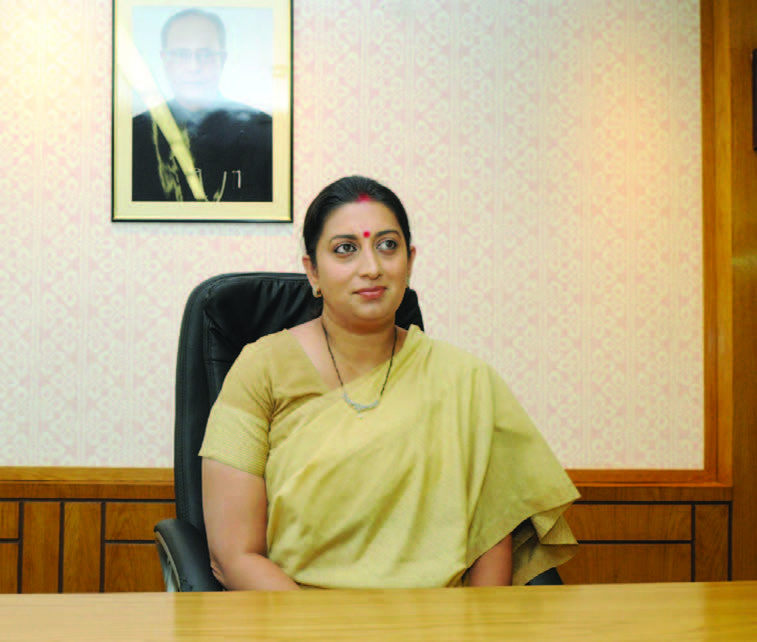
    NEW DELHI (TIP): Breaking her silence over her educational qualification controversy, HRD Minister Smriti Irani on May 29 said “extraneous circumstances” were created to deviate her attention from work and asked the people to judge her by her work. Irani reacted two days after the Congress launched a broadside against her, questioning her ability to deliver as HRD minister as she was “not even a graduate”. The 38-year-old television actor-turned politician told reporters that, “Extraneous circumstances have been created to ensure that my attention is deviated from the body of work I have been entrusted with.

    ” Irani said that she has been judged by her organisation with regard to her capacity to deliver on assignments. “I will humbly request all of you that judge be my work and I will not add anything to the statement that I have made,” the Minister said. Irani is at the centre of a raging controversy over her educational qualification after it emerged that she had made contradictory declarations when she contested Lok Sabha elections in 2004 and 2014.

    Ever since, Madhu Kishwar, a women’s rights activist, raked up a controversy over the fact that Irani, just a 12th Pass, has been made HRD Minister the issue has only snowballed. Congress leader Ajay Maken had also taken a jibe at Irani’s educational qualification. “What a Cabinet of Modi? HRD Minister (looking after education) Smriti Irani is not even a graduate! Look at her affidavit at ECI site pg 11,” he had tweeted.

  • Murray storms into French Open third round

    Murray storms into French Open third round

    PARIS (TIP): Seventh seed Andy Murray outclassed Australia’s Marinko Matosevic 6-3, 6-1, 6-3 to reach the French Open third round on Thursday, conceding only seven games in a two-hour masterclass. The pattern was set in the first game as Wimbledon champion Murray broke serve and he went on to dominate a player appearing in the second round of a Grand Slam for the first time.

    Matosevic hung on grimly in the opening set and did have a chance to level when he was 0- 40 ahead on Murray’s serve in the eighth game but he failed to take his chance and was never close to his opponent again. Briton Murray, who missed last year’s French Open with a back injury, was broken for the first time when he served at 5-2 in the third set but hit back immediately with a love game to set up a clash with Germany’s Philipp Kohlschreiber. Bosnia-born Matosevic had defeated Dustin Brown in the first round to end a 12-match losing streak at the majors.

  • Centre Promises Support to Naidu’s Seemandhra Wish List

    Centre Promises Support to Naidu’s Seemandhra Wish List

    NEW DELHI (TIP): When Telugu Desam Party chief N Chandrababu Naidu met Finance Minister Arun Jaitley in the capital on May 30, he was promised full support on his wish list for the Seemandhra regions, which will form the residual Andhra Pradesh when the state of Telangana is born next week. The Planning Commission, Jaitley assured the 64-year-old TDP leader, is already looking into the proposal to grant the special category status to Seemandhra.

    “After the division, there is a resource constraint which the successor state of Andhra Pradesh will suffer from, primarily because Hyderabad will be a part of Telangana. When the bifurcation bill was being passed in parliament in February, we had raised the issue of financially supporting Seemandhra,” Mr Jaitley told reporters after meeting the TDP chief.

  • RBI’S “007” RAJAN FACES PRO-GROWTH BOSS IN MODI

    RBI’S “007” RAJAN FACES PRO-GROWTH BOSS IN MODI

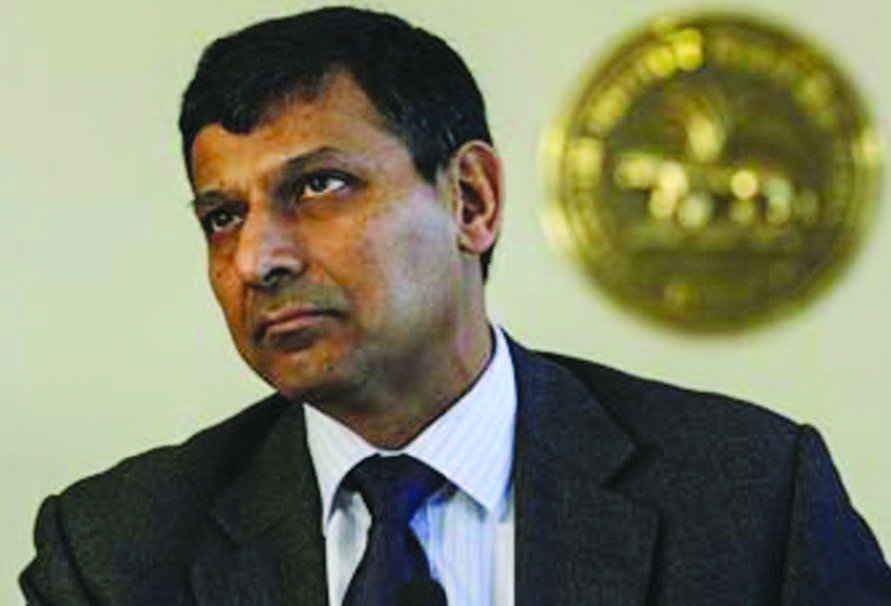
    MUMBAI (TIP): Hailed as a troubleshooting “James Bond” of central bankers amid India’s currency crisis last year, Raghuram Rajan was given a licence to kill inflation with higher interest rates and drive a programme of monetary policy reforms. Now, the governor of the Reserve Bank of India (RBI) may need all the suave charm of the fictional British spy to sell that same hard-nosed agenda to a powerful new prime minister who is determined to revive economic growth and create jobs. Rajan, who calls high inflation a “dangerous disease”, won plaudits after he took office in September for arresting a rupee freefall and helping restore investor confidence that had all but evaporated under a lame-duck government led by the Congress party.

    This month’s decisive election win by the pro-growth Bharatiya Janata Party (BJP) shifts the power dynamics. Now, investors and voters are looking to Prime Minister Narendra Modi to stir India’s economy from its prolonged torpor, putting Rajan and Modi on a collision course if inflation stays high. In his first months on the job, Rajan overcame push-back from within the central bank as well as the finance ministry to shift the benchmark inflation measure from wholesale to consumer prices.

    The consumer price index (CPI) is the global standard, but in India the higher level of CPI meant Rajan was likely to keep rates tighter for longer. High interest rates make credit more expensive and create a difficult environment to re-ignite growth. But if, as many expect under Modi, the investment climate improves and government expenses are managed better, Rajan might get some relief on the inflation front. Investors expect Modi to bring down inflation by cutting subsidies, improving food distribution and promoting investment in infrastructure.

    “The Modi-Rajan equation reminds us of that between Volcker and Reagan, where it was a combination of the central banker’s inflation-fighting cred and the latter’s charismatic image,” said Philippe Jauer, chief investment officer at fund manager Amundi Singapore. Paul Volcker was head of the U.S. Federal Reserve when Ronald Reagan was president in the 1980s. For now, the RBI is expected to leave interest rates on hold at its policy review on Tuesday, but investors will be scouring Rajan’s accompanying statement for clues to whether the new government’s strong electoral mandate has changed his rate outlook. Investors expect the next policy move will be a rate cut, but perhaps not before early next year

    TIES AT THE TOP
    A professor at the University of Chicago and former chief economist at the International Monetary Fund, Rajan was brought back to India in 2012 to be chief adviser to then-finance minister P. Chidambaram of the Congress party, which meant the two already had a working relationship when Rajan took over at the RBI. After stunning the markets with a series of bold measures on his first day, he was dubbed variously by the Indian media as “The Guv” and “a rock star banker”.

    The “Name’s Rajan, game’s Bond,” the Economic Times daily gushed on its front page, with a photo-edited picture of Rajan in an action pose and brandishing James Bond’s trademark Beretta pistol, albeit one made of rupee notes. Rajan, 51, has proven to be a pragmatic – if not swashbuckling – operator at the RBI, pushing to streamline a staid institution, deepen markets, and reform policymaking to control the country’s grinding inflation. Rajan and the new finance minister, Arun Jaitley, 62, a prominent corporate lawyer, held a meeting in New Delhi on Tuesday, but have not previously worked together.

    Jaitley is not seen to be as hawkish as Rajan on inflation – a dynamic that is typical between central bankers and governments around the world and often leads to tension. One senior finance ministry official who worked with Rajan and was part of the team that made a presentation this week to Jaitley said Rajan’s initiative to set an inflation target based on CPI could create conflict if, as many expect, CPI rises in coming months. “Rajan is … making things difficult for the government by publicly speaking about RBI’s stance on the CPI inflation.

    He would not find it easy to backtrack even if he wants to adjust with the new government,” the official said. The shift would give the central bank a clear price-stability mandate and make fighting inflation its chief objective. Previously, the RBI was charged with promoting growth and financial stability as well as controlling inflation.

    FAR FROM DONE
    Getting the new government’s support for inflation targeting is far from a done deal. Rajan has done what he can to set an informal target by establishing a “glide path” to get CPI inflation down to an annual 6 percent by January 2016 and 4 percent, plus or minus 2 percentage points, a year later. CPI inflation was at 8.59 percent in April year-on-year after running near or above 10 percent for almost two years through the end of 2013. “Inflation targeting will require trying to convince the government, and I think it won’t necessarily be a bed of roses.

    But I think it is a right step,” said Rajeev Malik, senior economist at CLSA in Singapore. Inflation targeting and setting up a monetary policy committee – as Rajan proposes – both require legislative changes. Agreeing on the make-up of a committee, including whether the government would appoint members and who they might be, could prove contentious. Rajan recently softened his tone, noting that inflation targets are for the medium term and are flexible, and that the proposal does not aim to turn the RBI into “inflation nutters”.

    However, he was uncharacteristically blunt on the subject of RBI independence in other recent remarks. “I am happy to talk to the government, I am happy to listen to the government, but ultimately the interest rate that is set is set by me,” he said at an event in St. Gallen, Switzerland. “The government can fire me, but the government does not set monetary policy.” On Tuesday, after his first meeting with Jaitley as finance minister, he said fighting inflation would continue to be a priority, although the RBI will also aim to strike a balance between spurring economic growth and containing prices. “RBI has always maintained the balance between growth and inflation,” he told reporters.

  • WILL MEET YOU, YOUR SECRETARIES ONE-ON-ONE: MODI TO MINISTERS

    WILL MEET YOU, YOUR SECRETARIES ONE-ON-ONE: MODI TO MINISTERS

    NEW DELHI (TIP): Stressing on “sushasan” or good governance as the cornerstone of his government, Prime Minister Narendra Modi on May 29 gave “advice” to Cabinet colleagues — from asking them to frame priority areas for the first 100 days, to giving adequate work to Ministers of State and responding promptly to communication from the states. The PM, who chaired the second meeting of the Cabinet since the government was sworn in on May 26, told his ministers that he would meet one-on-one with all of them, as well as with their secretaries, in the coming days.

    “The PM stressed on efficient overall governance, delivery systems and implementation of programmes,” Parliamentary Affairs Minister M Venkaiah Naidu said after the Cabinet meeting. “He asked the ministers to frame their priority lists for the first 100 days. He also asked them to give priority to issues that were pending, or were nearing resolution,” Naidu said. Modi asked Cabinet colleagues to take their Ministers of State “into confidence”, and “give them adequate work”.

    “It has to be worked out in a way that Ministers of State feel they are a part of decision-making. The PM has asked Cabinet ministers to take their Ministers of State along,” Naidu said. He explained that although a Cabinet minister could not leave decision making entirely to an MoS, it was important to “take them along and give them proper work” to make them feel involved in governance.

    Ministers of State in past governments have often remained without enough work to do. While the 10 Ministers of State with Independent Charge are likely to be busy, Modi is keen to ensure that the 12 Ministers of State attached to Cabinet ministers too have some say in his government. The PM also asked Cabinet colleagues to be sensitive in dealing with issues raised by states, and to be prompt in replying to them. “He has worked as a chief minister and believes in maintaining the federal structure of the country,” Naidu said.

  • Don’t Include Me in Textbooks, Tweets Prime Minister Narendra Modi

    Don’t Include Me in Textbooks, Tweets Prime Minister Narendra Modi

    NEW DELHI (TIP): Prime Minister Narendra Modi has urged states not to include him in school curriculum, in a series of May 30 morning tweets. “Am reading in the news that some states want to include Narendra Modi’s life struggles as a part of their school curriculum…I firmly believe that the life story of living individuals should not be included as a part of the school curriculum,” Mr Modi said in tweets that were in minutes retweeted several hundred times. He also said, “India has a rich history of several stalwarts who made India what it is today.

    Young minds should read about these greats & emulate them.” The PM’s suggestion comes amid reports that the BJP government in Madhya Pradesh has been considering proposals to include a chapter on Modi in school textbooks. “School textbooks already have chapters on biographies of freedom fighters and even Prime Ministers who have done well. So a biography of Mr Modi in textbooks will inspire students, as he has had a humble beginning as a tea vendor and now he has become the Prime Minister,” Madhya Pradesh school education minister Paras Jain had told NDTV earlier this week.

    He said he would discuss this soon with Chief Minister Shivraj Singh Chouhan and officials, to initiate a Modi chapter in textbooks for students from classes III to VI in state Government-run schools from next year. (Shivraj Singh Chouhan, Ministers to Meet Prime Minister to Discuss Issues in Madhya Pradesh). The Congress in the state has criticised the proposed move, suggesting that including former PM Atal Bihari Vajpayee in school textbooks will be more appropriate. “The BJP government, by doing this, is hoping to score some brownie points with the new Prime Minister,” a state Congress leader said.

  • PM moves to official Race Course Road residence

    PM moves to official Race Course Road residence

    being sworn-in, Narendra Modi on May 30 moved to the Prime Minister’s official residence at the Race Course Road. Modi, who was staying temporarily at the nearby Gujarat Bhawan, went to the 5, Race Course Road this morning and a small pooja was performed there.

    Most of his belongings have been shifted to the 5, Race Course Road– a bungalow which he will occupy as residence instead of bungalow number 7, which has been the residence of his predecessors. Manmohan Singh vacated the Race Course Road residence after Modi’s swearing-in on May 26 but the new Prime Minister did not shift as it was being refurbished. Modi will use the bungalow number 7, Race Course Road as his office

  • Harsimrat says will act on Nanavati report, AAP disagrees

    Harsimrat says will act on Nanavati report, AAP disagrees

    NEW DELHI (TIP): Lawyer H S Phoolka wrote to Law Minister Ravi Shankar Prasad on May 29 asking him to make operational an SIT, which had been recommended by Arvind Kejriwal during his term as Delhi’s Chief Minister, to probe the 1984 anti-Sikh riots cases. Phoolka also expressed disappointment at the suggestion that the NDA government would implement the Nanavati Commission report, as the “commission had failed to do justice with the 1984 riots victims.”

    A statement issued by the AAP said, “The latest statement of Union Cabinet minister Harsimrat Kaur Badal that the Narendra Modi-led NDA government would implement the Nanavati Commission report on the 1984 anti-Sikh riots is highly surprising and the Aam Aadmi Party totally disagrees with her suggestion. This commission had failed to do justice with the 1984 riots victims and it is regrettable that the BJP-led NDA government, which has been consistently talking about providing justice to the families of nearly 3,000 innocent people who had lost their lives in those riots, is once again looking backwards and is not ready to heal the wounds of the victims’ families.” Phoolka said, “In this Report, Nanavati Commission had recommended registration of only four cases against Sajjan Kumar and Jagdish Tytler.

    All these four cases were registered and investigated by the CBI. Justice Nanavati mentioned in his report that 241 cases were closed by the Delhi Police and were never sent for trial to courts. But, unfortunately, it recommended reopening of only four cases. Justice Nanavati never recommended reopening of the other 237 cases. Riot victims can only get justice and the guilty would be punished only if these 237 cases are reopened.” In his letter to Ravi Shankar Prasad, Phoolka wrote, “When Mr Kejriwal’s government came to power in Delhi, it decided to constitute an SIT to reopen and reinvestigate these cases and also met Lt Governor for this purpose…

    The issue is still pending with the Lt- Governor because the previous Congress government was interested in shielding the guilty and not bringing them to the book. Sir, now you have taken over the very important portfolio of law and justice… therefore, I request you to get the SIT constituted and make it operational.” Phoolka also suggested that the Narendra Modi government “completely implement” a rehabilitation package that former prime minister Manmohan Singh had declared in 2006, which included jobs for the family of each victim.

  • NEW GOVT MAY STRIP ROBERT VADRA OF SPECIAL STATUS

    NEW GOVT MAY STRIP ROBERT VADRA OF SPECIAL STATUS

    NEW DELHI (TIP): With the Gandhi family out of power, son-in-law Robert Vadra may lose his exalted exemptfrom- frisking-at-airports status. After taking over as aviation minister of May 30 , Ashok Gajapathi Raju Pusapati said that “security should be meaningful not ornamental” in reference to Vadra who is the only individual named in the list of dignitaries exempt from security checks at airports.

    All others on that list are high constitutional positions with Vadra being the only individual. “It is for the home ministry to see the threat perception of individuals. But generally, by and large, Indians should go through security checks,” Raju said. The Bureau of Civil Aviation Security has 30 positions on the exempt list which begins with the President of India and goes upto special protection group protectees. The only individual listed in that list (on number 31) is Robert Vadra, Sonia Gandhi’s son-in-law.

    Last week, the Air Passengers’ Association of India had written to aviation secretary Ashok Lavasa why was Vadra getting this special privilege that is reserved for Constitutional authorities only. The list of exempt people is displayed prominently at all airports and the inclusion of Vadra’s name in it led to many people writing to the Association, asking it to take up the matter with the government.

  • PANCHAMUKHA HANUMAN

    PANCHAMUKHA HANUMAN

    Both of Keshari’s wives welcomed the unexpected guest and served him whole heartedly. Agastya was highly satisfied and told the wives to ask for any boon they wished. “I want the mightiest son, who will be highly bold and strong in the world. Totally devoted to universe welfare,” Anjana requested. “So be it,” Maharishi Agastya approved the wish for both of them, and in due course of time, Anjana gave birth to Sri Hanuman Ji who became all powerful and Adrika gave birth to a son, Adri by name, who became governor of all the goblins. Soon after Maharishi granted the boon, Maharishi Agastya realized that Lord Shiva himself was going to be born as the son of Anjana. He ordered her to go to meditate on the hill Venkatadri in Vrishabhachal on the bank of Akashaganga. This was the most appropriate place to materialize her desire.

    Thus, one day, she was absorbed in a long meditation, the wind God appeared and said, “Adorable devi, I am pleased with you. You will attain a mighty son, one who will not be affected by any weapons whatsoever. I shall become your son myself. He will be equal to me in power and speed. Thus saying, the wind God infused his light into mother Anjana. Great souls seldom move from their celestial abodes unless there is a mission for them to fulfill. Then the whole creation awaits their advent.

    In the same way, there were do many reasons for the advent of Sri Hanuman ji. The natural instinct of Keshari was to wander around to different holy places, and when ever found a scenic garden he used to sit in long meditation. Once, while he was residing in Gokarna (a holy place of Lord Shiva near Goa), he found a great monster, Shambasadana, continuously persecuting the holy saints who were residing there. Keshari confronted this monster and hit him forcefully with his fist.

    There was a great wrestling match and at last Keshari was successful in slaying him. All of the rishis were extremely happy with Keshari’s feat and blessed him so that he might attain an almighty, enlightened son, who would become very hot tempered to any unjust act. They then offered a very powerful mantra of Lord Shiva. After Keshari had been repeating this powerful mantra, Lord Shiva appeared and blessed him, and Lord Shiva’s light entered into Keshari’s body. Keshari felt as if he was no longer a mortal. When the rishis saw him full of effulgence they suggested that he return to his home.

    At the same moment, Anjana returned home after receiving her boon from the wind God. When she saw her husband after such a long time she was filled with rapturous joy and fell down at his feet. Keshari was overwhelmed with love. He raised her u with his two arms and embraced her, and for some time they became one in that universal silence. Keshari did not remain Keshari and Anjana was no longer Anjana, they became one in love trance and in that love trance Shiva’s light, which was abiding in Keshari was transmitted to Anjana. She felt as if bathed in effulgent bliss, light, and grace.

    Now Keshari became as he was before the visit of Lord Shiva. All of Lord Siva’s effulgence was transmitted to Anjana. Anjana abandoned that special simple dress which she had adopted in the time of separation from her dear husband. She wore instead a gorgeous silk sari, golden necklaces, a crown earrings embedded with gems and jewels. She was adorned beautifully! The husband and wife began to enjoy in the groves on the top of the mountain. On the planet Bramha, which is situated about one hundred and sixteen million miles above polestar, there was a nymph whose name was Suvarchala.

    She was very fond of blossoming, fragrant flowers. Once she rushed to some flowers in the assembly of Bramha. The creator, Brahma, is found of good manners and certain formalities and was not pleased with Suvarchal’s impulsive action he cursed her saying. “You, being born into the race of gods, possess no patience, so you will become a crow”, Suvarchala repented and, falling at his feet, asked for a pardon from Lord Brahma, He mercifully forgave her and said, “In the silver age, on planer Earth, king Dasjaratha will receive a bowl of diving rice pudding after his ceremony of putreshthi yajna.

    He will then distribute it among his three queens. You woll take away queen Sumitra’s share, and then by the touch of that divine, blesses rice pudding you will attain your original form and come to my planet again.” The time described by Brahma arrived and king Dashatatha was performing his fire sacrifices festivity on the bank of the holy Sarayu river. It was definitely an interplanetary festivity.

    King Dasharatha fed millions of guests. He offered almost all of his property and empire to enlightened rishis, which they, in turn, gave back to him after accepting a small exchange. A huge masculine form then arose from the sacrificial fire with a bowl of celestial rice pudding in his hand. His body was red like ultraviolet rays. He had long golden hair, a long beard, and large eyes. He spoke like a rumbling cloud, saying, “My dear king Dasharatha, the gods of higher planets are highly satisfied with you because of your sacrificial festivity, and they have sent you this rice pudding, let the queens respectfully eat it and then they will give birth to four incomparable babies who will redeem the earth from all the evil forces.”

    The whole assembly of saints, kings, and rishis were all silent while the king was distributing the rice pudding among his queens. As soon as the king placed a protion in the open palms of Sumitra, Suvarchala, in her form as a crow, jumped as it. She held it fast with her legs and beak and flew away high into the sky. Kousalya ans Kaikeyi, the other two queens, shared their porting of pudding with Sumitra. Thus Sumitra gave birth to two babies. As soon as the crow rushed to the open sky there arose a heavy wind and hurricane.

    The bird stumbled and the rice pudding was touched by her body. Immediately she regained her celestial form and the body of the crow fell down to earth. The wind god then took the bowl pudding and appeared on the hill top groves where the couple, Anjana and Keshari, was wandering. The wind told Keshari and Anjana that he had come there to offer them with celestial rice pudding, “Allow Anjana to eat it and she will give birth to the mightiest child, a boon I was granted her some time ago.”

    After receiving the order from her dear husband, Anjana accepted the bowl of rice pudding. Feeling much joy she put it against her heart and head and then wind God disappeared. Anjana ate the pudding and became pregnant. Soon after, as demigod races do not require the full nine months in womb, she gave birth to Sri Hanuman ji on Tuesday, in the month of October. This is why all great devotees of Sri Hanuman ji observe a fast on Tuesdays.

  • WHEELING YOUR WAY TO GOOD HEALTH

    WHEELING YOUR WAY TO GOOD HEALTH

    Regarded as a great form of aerobic exercise, cycling is an activity any one can take up. It’s also the best way to take in the countryside… When it comes to your fitness, it’s time to reinvent the wheel, pun intended! More people are finding cycling a way to boost stamina levels, with some even cycling to work every day. Today, more folks are pedal pushing their way on offbeat tracks and scenic routes around the city. Here’s more on the sport…

    It can save the environment
    For cycling enthusiasts in the country, the going isn’t easy because of chaotic streets, the poor condition of roads and a lack of dedicated cycling tracks. They hope cycling will become a dedicated sport so that things change. “So often we see a hike in petrol levels, so a cycle is a transport option. We have a lovely sea coast and if they can make a track right from Nariman Point to Borivali, about 100 kms up and down, it might save the environment.

    We are actually breathing poison today, owing to the crazy carbon levels and we can reduce the carbon footprint this way,” says Vishal Sharma, of a cycling club in Mumbai. Adds cyclist Dhawal Shah, “Being on wheels is also a nice way to take in the sights. I think more people are opening up to cycling and we must move toward it in an effort for a clean and green environment.”

    Warm up before starting
    Always do an initial bike check for brakes and check for tire air pressure. Also, clean the reflectors.

    Always ride on the correct side of the road
    Make sure you always ride on the correct side (left for India/UK and right for US) of the road. Also, do not listen to music while cycling. Do not overtake other cyclists unnecessarily.

    Health benefits of cycling
    A fun exercise, cycling is said to improves cardiovascular fitness, so there is a lower risk of heart attack and stroke. Since pedalling is a lowimpact activity, you can improve muscle tone without stressing your knee and ankle joints. Says orthopaedic surgeon, Dr Vivek Shetty, “Cycling helps build cardiac stamina and strengthens lower limbs.

    However, someone with an osteoarthritis knee should get an evaluation done by a doctor before starting to cycle. Also, someone with an injured tissue should not cycle for more than half an hour a day,” he says. Adds orthopaedic specialist and joint replacement surgeon, Dr Nilen Shah, “One can strengthen the muscles of legs through it, tackle osteoarthritis of the knees in the early sages as well as fight obesity.”

    Diet dos and don’ts

    • Eating before a ride is advisable, but try to take in food at least two hours prior to setting off. Avoid greasy or fatty food.
    • Remember to eat 10-15 minutes after your ride as well, as this will carry energy to your tired muscles where it is needed the most and can help prevent soreness later on.
    • Longer rides should be followed by a high carbohydrate meal in the late evenings so as to replace the calories burned during the day.

    Safety tips
    Keep in mind basic techniques and skills while on the road. Here are safety measures to follow… Wear a helmet: One important rule is to wear a helmet while in motion. These can reduce head and face injuries. Ensure that: The reflectors are provided on spokes of wheels, on the pedals and on the front/rear mudguard.

    Make sure that both the brakes are working properly. Tire pressure: Always check your tire pressure. Cycling in the rain: On wet roads, there will be friction, so don’t slam on the brakes and expect to halt. Dress brightly: Always don brightcoloured clothing, especially at night or in wet weather.

  • Ways to drink more water

    Ways to drink more water

    While we all know water is essential to our basic wellbeing, not many of us can manage to gulp down more than a daily dose of one or two litres. Water, after all, is plain and can tend to get boring beyond a point. But with a little imagination and initiative, you can easily increase your daily water consumption. Here are some tips…

    1. First things first. So, as soon you wake up in the morning, down a glass of water. Coffee, tea, milk — whichever you prefer — can follow a little later. Apart from making you feel good about sticking to your resolution, it also kickstarts your metabolism.

    2. Make that water bottle your constant companion. No matter where you are — at home or office — keep taking small sips. Go for a water bottle in your favourite colour. That will make the idea of drinking from it more appealing. Fancy glasses will also do the trick.

    3. Water can be made interesting and healthier. Add a flavour of your choice and relish the taste. Squeeze half a lemon, crush some berries, add a few mint leaves or fruit slices — the options are many.

    4. Try to have some fun while drinking water. For example, lay a bet with a colleague, friend or spouse on who will drink more. You can also compete with yourself, increasing the quantity each day. Also, keep taking small water breaks with friends and colleagues while at work. It’s called ‘healthy’ bonding.

  • FOODS TO AVOID IF YOU WANT SIX PACK ABS

    FOODS TO AVOID IF YOU WANT SIX PACK ABS

    There are some foods that you must avoid if you want six pack abs. Generally, we tend to consume these foods out of laziness and availability, but you can’t be careless when you’re working on your six pack. We have listed the foods that you should avoid if you want a toned defined midsection.

    Whole milk:
    To build abs you need to cut down on calories. So consume low fat milk and avoid whole milk due to its high calories.

    Commercial peanut butter:
    Peanut butter is one of the best foods you can consume if you want to build muscle, due to its high protein content. Peanut butter is also a great post workout snack. But try and avoid consuming commercial peanut butter. The packaged and ready-to-eat peanut butter is rich in fats, calories and additives.

    Diet foods:
    In order to build muscle, it is important to have a balanced diet which includes carbohydrates, proteins and fats. Diet foods and diet meal plans prevent you from consuming a balanced diet. Plus there is an urge to consume far more calories when you are on a diet.

    Crackers:
    Crackers are recommended for good digestion, but they are prepared with refined flour and sugar, both of which are not good for building muscle.

    High fructose corn syrup:
    This is the main ingredient in several processed foods, but this sugar has a different method of processing in the body compared to regular sugar. It doesn’t have nutritional benefits and does nothing for building muscle.

    Processed cheese:
    There is a different between fresh organic cheese and processed cheese. The worst enemy for building abs is processed cheese – it lacks nutritional value, contains fats, salts and excess calories.

    Processed starch food:
    Potatoes are rich in starch, which is healthy. But processed starch has no nutritional value and loads of calories. Avoid processed starchy food to build abs without gaining weight.

    Sausage:
    This again is a processed food and rich in calories and fats. Stay away from processed meats like bacon, sausages and salami if you want toned and defined abs.

    Artificial sweetener:
    Artificial sweeteners have no nutritional value and get you addicted to sugar and junk food. These sweeteners make you gain weight and prevent you from developing abs.

    High sugar breakfast cereals:
    Breakfast cereals that have additional flavours and artificial sweeteners only increase weight. Instead, buy wholegrain healthy cereals.

    Ice cream:
    It may be a tempting way to cool off, but it can prevent you from building abs. Ice cream is rich in calories, artificial sweeteners and flavours.

    Refined flour:
    Unlike flour sourced from wholegrain, refined flour lacks nutritional value. Refined flour increases your sugar levels and increases the storage of fat in the body.

  • Somasundaran appointed by US/ EPA to its Board of Scientific Conselors

    Somasundaran appointed by US/ EPA to its Board of Scientific Conselors

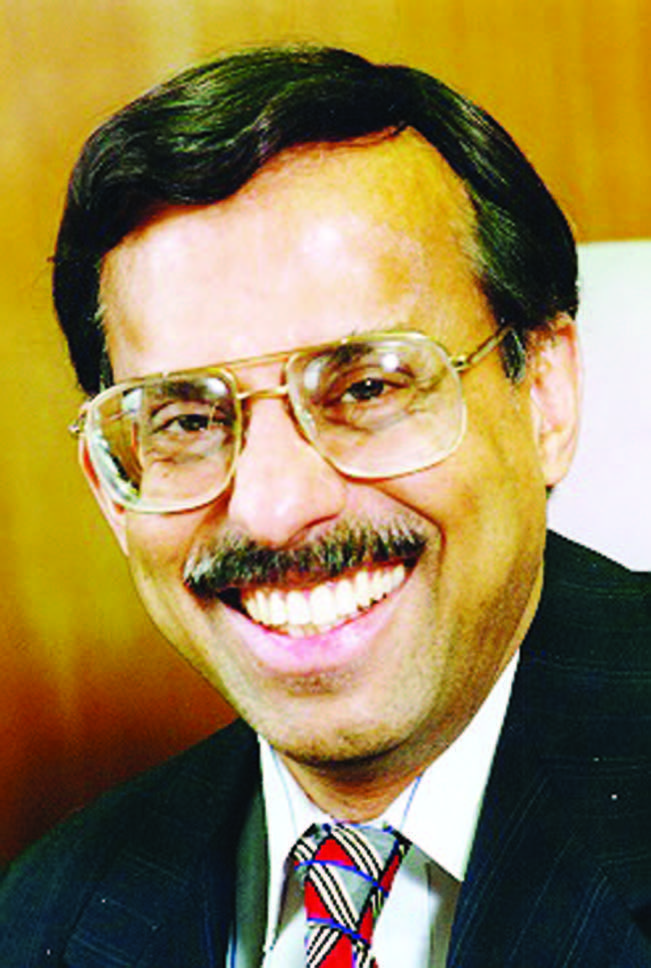
    NEW YORK (TIP): Professor P. Somasundaran has been appointed by the U.S. Environmental Protection Agency. to serve as a member of its Board of Scientific Counselors and to chair the ‘combined BOSC Subcommittees for Chemical Safety for Sustainability and Human Health Risk Assessment research program” and as such to the Board’s Executive Committee effective April l 28, 2014.

    Board members of this committee must have shown extraordinary accomplishments in the field to be invited to serve The committee’s mission is to provide advice and recommendations on science and engineering research programs, plans, labs, and research management practices; the use of peer review to promote sound science; the development and progress of plans of the EPA’s R&D office; the quality of technical products; and human resources planning. Somasundaran is an expert in surface and colloid science, enhanced oil and coal recovery, nanoparticles, biosurfaces, and biosensors.

    He is the author of 15 books and more than 700 scientific publications and patents.. Somasundaran, La von Duddleson Krumb Professor at Columbia University, is the founding Director of Langmuir Center for Colloids & Interfaces, and director of the National Science Foundation Industry/University Cooperative Research Center for Particulate and Surfactant Systems.

    His work strives toward designing greener surfactant systems for an environmentally conscious market. Author and editor of 22 books and 700 scientific publications, Somasundaran is a 1985 inductee of the National Academy of Engineering, highest honor for an engineer at that time, and subsequently of the corresponding academies of China, India, Russia, and the Balkan Academy of Sciences/MT and the sole 2012 foreign member of the Royal Society of Canada,.

    Somasundaran has been honored with many awards, including the Ellis Island Medal of Honor (1990), Gaudin Award (1982), Mill Man of Distinction Award (1983), Publication Board Award (l980), Richards Award(l987), Taggart Award for best paper (1987), Henry Krumb Lecturer of the Year (1989), Distinguished Member of SME (1983), “Most Distinguished Achievement in Engineering” award from AINA (1980), Distinguished Alumnus (1989 sole award) and the first Brahm Prakash Chair from the Indian Institute of Science (1990), Engineering Foundation’s Aplan award (1992), AIME Mineral Industry Education Award (2006), Columbia Alumni Association and the ACAA Distinguished Achievement Award (2007), MEANA Engineer of the Year Award (2007), Fellowship of theAmerican Institute of Chemical Engineers (2009), the Leadership Citation from the New Jersey Senate in 1991, and the title of Pan American Advisor for Mines, Metallurgy and Materials.

    He was awarded Padma Shri(among the highest civil award by the Government of India) by the President of India 2010. He is the author/editor of 15 books and close to 700 scientific publications and patents the Honorary Editor-inchief of the international journal “Colloids and Surfaces,” the Editor-in- Chief of “The Encyclopedia of Surface and Colloid Science” and has served on many international, national and professional committees and National Research Council Panels, NSF research and advisory panels, DOI Advisory Panel and university research advisory panels.

    He served in the Congress’ 28th Environmental Advisory Committee. He was the Chairman of the Board of the Engineering Foundation (1993-95) and has served on the board of the SME/AIME (1982-85). In the community, he served as member of the Piermont Planning Board and Citizen Advisory Committee and currently as a member of the Zoning Board of Appeals and Board of the Volunteers in Service to Education in India.

  • New York seniors celebrate Mother’s Day

    New York seniors celebrate Mother’s Day

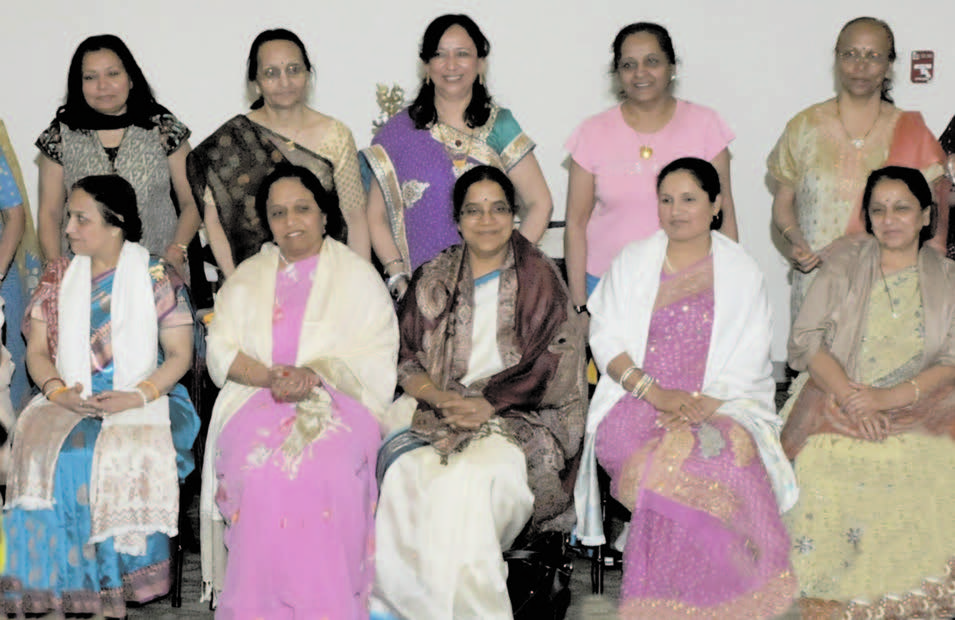
    NEW YORK (TIP): Shashikant Patel and Gopi Udeshi with the cooperation and voluntary participation from the community members, organized Mother’s Day celebrations at the local Shri Saneeswara Temple in Bellerose Terrace on May 7.

    Those who spoke on the occasion included Gopi Udeshi, Dr Vasundharaji, ,Prafulba Vaghela, Asha Dharawat, Sudha Kapadia, Purnima Desai, Jyotika Pandhya, and Sonal Shah. Seven ladies received a gift of shawl. Satnam Singh Parhar, President of India Association of Long Island was the chief guest.

  • Queens Borough President Melinda Katz mourns the death of author and poet Maya Angelou

    Queens Borough President Melinda Katz mourns the death of author and poet Maya Angelou

    QUEENS, NY (TIP): Mourning the death of legendary Maya Angelou, author and poet, May 28, at 86, Queens Borough President Melinda Katz said, “Maya Angelou was a brilliant memoirist and poet whose work allowed readers from around the world to better understand the unique struggles that came with being an African American woman who grew up in the Jim Crow South.

    She was one of the most important literary and cultural figures our nation has produced and her immense legacy will live on through her prolific body of work, which will be read, studied and appreciated for generations to come. I am truly saddened by her loss and express my condolences to her family and friends and to the millions of readers who admired her so much.”

  • MANGANO AND O’CONNELL HONOR CLAIRE MILLMAN AS NASSAU COUNTY’S WOMAN OF THE YEAR

    MANGANO AND O’CONNELL HONOR CLAIRE MILLMAN AS NASSAU COUNTY’S WOMAN OF THE YEAR

    MINEOLA, NY (TIP): Nassau County Executive Edward P. Mangano and Nassau County Clerk Maureen O’Connell announced , May 28, that Claire Millman is Nassau County’s 2014 Senior Woman of the Year. Mrs. Claire Millman was presented an award at the 40th Annual May Luncheon/Conference in Observance of Older Americans Month on May 20th.

    Mrs. Millman represented Nassau County in Albany at the 2014 Senior Citizens Day Celebration and Awards Ceremony on May 6th. Mrs. Millman is a Phi-Beta Kappa graduate of Brooklyn College. She has been a Plainview resident for over 54 years, where she currently resides with her husband, Stan, of 59 years. They have two daughters and four grandchildren.

    Mrs. Millman has been a Smoke Free Environment Activist for 40 years who has fought tirelessly to achieve smoke free air in all public places and workplaces by educating officials and the public about the hazards of active and passive smoking, and establishing laws for the health protection of all. Her efforts have been successful, and she has earned many awards including Woman of Distinction 2003, Town of Oyster Bay; and Honoree, N.Y. State Council of the Aging 2001.

    She recently received Lifetime Achievement Awards from Brooklyn College and the Association of Generational Experts for Seniors. She was featured in Newsday’s Act 2 cover story, Pioneer Smoke Free Environment Activist, on March 29th.

    Mrs. Millman is also an officer and performer of New York Senior America. In 1995, she was a Pageant Finalist and has been on the Board of Directors since 1998. She was the President for six years and is the Communications Director and coproducer of the website.

    She performs at nursing homes, veteran’s hospitals, senior groups, and patriotic events. Her greatest rewards are bringing joy to the disabled and being called an inspiration by young and senior audiences. She motivates seniors to be active and to try something new at any age. Mrs. Millman clearly celebrates life everyday by her positive philosophy of life.

    She values every day and has a passion and joy for everything she does. She is truly an inspiration.

  • South Asian Community meets with Police Chiefs of Stamford, Norwalk and Darien on Burglaries in the Community

    South Asian Community meets with Police Chiefs of Stamford, Norwalk and Darien on Burglaries in the Community

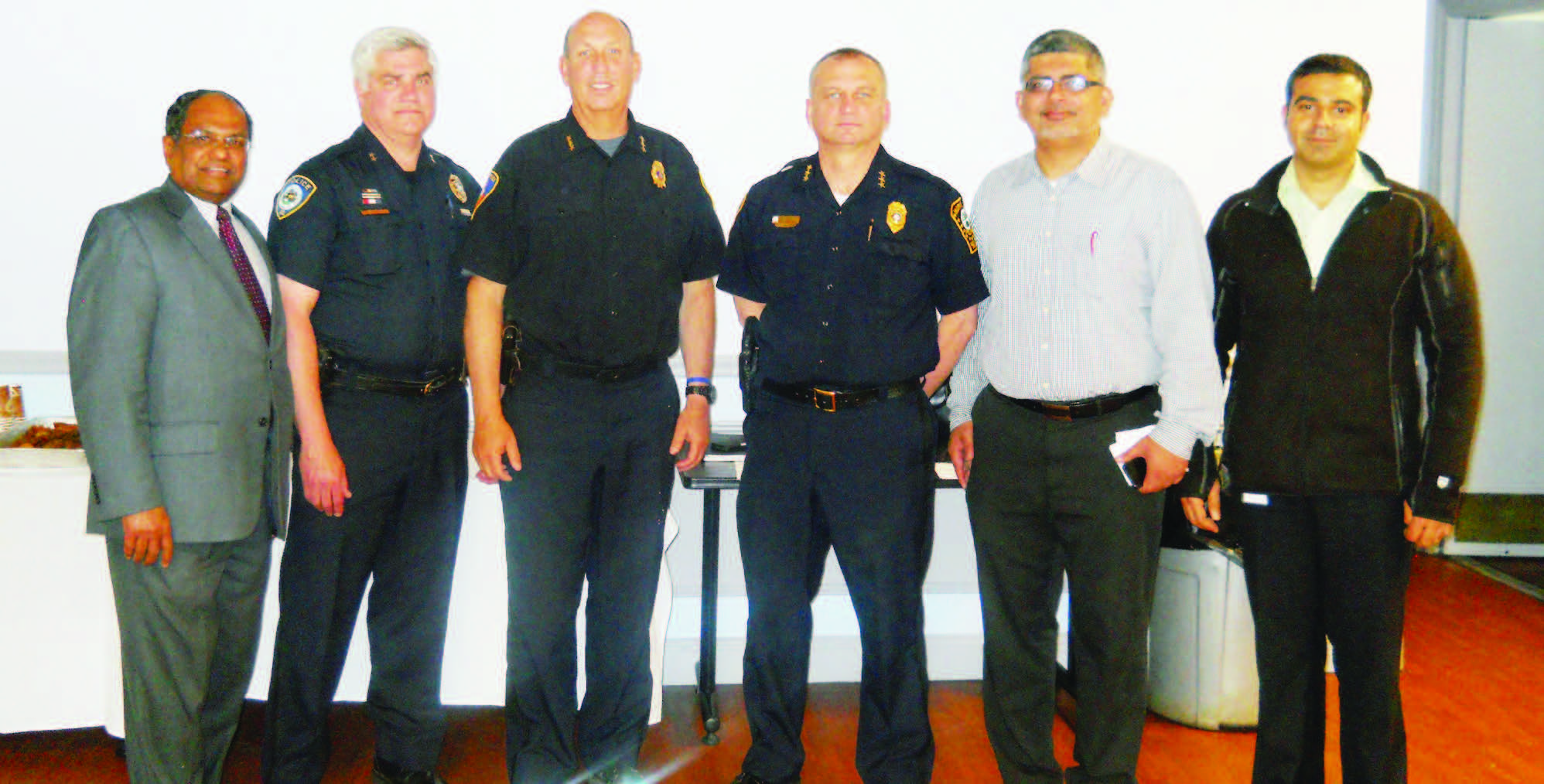
    STAMFORD, CT (TIP): The Police Chiefs of Stamford, Norwalk and Darien, May 1, met with the South Asian Community in the lower Fairfield County to address community’s concerns of increased burglaries along with other issues of security and safety.

    It was organized by the Stamford Cricket Club, the Connecticut Chapter of the Global Organization of People of Indian Origin (GOPIO-CT) and Shaheen Cricket Club at Belltown Fire Station in Stamford on May 1st. Stamford Police Chief Jonathan Fontneau, Norwalk Police Chief Thomas Kulhawik and Darien Police Chief Duane Lovello along their detectives addressed many of the concerns pertaining to the South Asian community.

  • NATURAL WAYS FOR GREAT HAIR

    NATURAL WAYS FOR GREAT HAIR

    Spending too much on expensive shampoos, but not getting the desired results that you see in TV ads? It is mostly possible and very common, because we see overly exaggerated results on TV, since these ads are designed to attract customers. But, reality speaks a different story. Instead of spending on those branded shampoos and conditioners, Dr. Sandeep Suttar – Hair Restoration and Skin Rejuvenation surgeon at Hairrevive, Mumbai, shares some natural ways to get great hair. Follow these easy and simple steps to give that luster and shine to your hair, and flaunt your hair like the models do…

    Egg treatment
    Use the entire egg to condition your hair. If you have dry or brittle hair, use egg whites to moisturize your hair. Use ½ cup of any egg mixture (egg white, entire egg) and apply to clean, damp hair. Leave it for 20 minutes and rinse with cool water.

    Cleanliness is important
    The most important reason for hair fall is dandruff and itchy scalp. Therefore, maintain good cleanliness for beautiful and healthy hair.

    Avoid hot water
    Skip hot water showers, because hot water will make your hair dry and brittle as it strips protective oils from your hair – says Dr. Suttar. Thus, prefer a temperature which is just a bit warmer than your body temperature.

    Bottle gourd treatment
    Extract some bottle gourd juice and apply it into your hair. Keep this solution for half an hour and wash it off thoroughly.

    For that shiny soft hair
    Prepare a mixture of 1 cup of your daily conditioner and 2-3 tablespoons of honey. Apply this mixture evenly on your wet hair. Leave it for 30 minutes and wash it off thoroughly. This mixture will close down your hair’s cuticle and give your hair that amazing shine.

    Baking soda therapy
    Make a mixture of 3 tbsp. of baking soda and some water. Rinse your hair with this solution after shampooing. Let it set in for at least 5 minutes before the final rinse. This therapy will help to remove the excess shampoo and styling product from your hair.

    For bouncy hair
    Apply a one to one mixture of warm water and apple cider vinegar to your hair. Rinse it thoroughly after 5 minutes to get rid of the apple cider smell.

    Don’t wash your hair frequently
    Wash your hair every 2-3 days, for proper regulation of natural hair oils. Washing your hair less often will also help regain your hair’s natural body and luster.

    Make your conditioner
    For a protein packed conditioner, mix eggs and yogurt and rub it into your scalp. Leave on for five or 10 minutes, and then wash it off completely.

    For strong hair
    Use almond oil to treat dry and damaged hair. It is a very simple procedure, pour some almond oil in a bowl and heat it for 40 seconds. Then evenly distribute on your hair. Leave it for 30 minutes and then rinse normally with shampoo and conditioner using cold water.

    Say bye-bye to dull hair with lemon juice
    After the final rinse, apply 1 tsbp lemon juice to your hair. Simply towel dry your hair and style as normal to get rid of dry hair.

    Use protection before you jump into the pool
    Pools can do great damage to your hair as it contains harsh chemicals – says Dr Suttar. He says; prevent your hair from the pool damage by simply applying a little conditioner to your hair before you swim. This will protect your hair before it comes in contact with the pool water

    Treat sun damaged hair
    Make a mixture of ½ cup honey, 1-2 tbsp olive oil and 1-2 tbsp of egg yolk. Apply this mixture on your hair for 20 minutes and then rinse with warm water. This treatment will help to replenish keratin protein bonds – says Dr. Suttar.

    Tight is NO-NO
    To prevent breakage due to brittle hair avoid using bands and do not tie your hair too tightly.

    The proper brushing technique
    Avoid using a comb with plastic bristles to prevent hair breakage from static electricity. The best way to brush your hair is by first brushing the ends to remove tangles and then take the long stokes from the roots of the hair to the ends. This technique will help proper spreading of natural hair oil and thus prevent breakage.

    Moisturize your hair
    Pour a little beer in your wet hair. Distribute evenly and massage your scalp with your fingers for 20 minutes. Then rinse it thoroughly to get rid of the beer smell. Do this procedure once a week for salon smooth hair. Dr. Suttar says- it is recommended that people with sinus and cold should avoid using this treatment.

    Trim your hair regularly
    Get your hair trimmed at least every six weeks to eliminate dry, split ends.

    Do not brush wet hair
    Wet hair is three times weaker and thus more likely to break – says Dr. Suttar. He recommends, towel dry your hair first and then gently detangle your hair using a wide tooth comb.

    Let your hair air-dry
    Allow your hair to dry by itself instead of using a blow-dryer or hot rollers. Using this artificial mode of drying technique will make your hair more brittle and dry. If you have no time to let your hair air dry, then use blow-dryer sparingly and make sure you use a warm setting instead of a hot setting.

  • Hussain Baqueri is the new President of Nargis Dutt Memorial Foundation

    Hussain Baqueri is the new President of Nargis Dutt Memorial Foundation

    NEW YORK (TIP): The Nargis Dutt Memorial Cancer Foundation (NDMF), a pre-eminent non-profit that strives to improve and upgrade cancer treatment and care in India, has a new President.

    The election of Hussain Baqueri as NDMF President has been announced by outgoing President Sher Singh Madra and the Election Chair and Past President, Peter Bheddah. Baqueri, hitherto NDMF’s General Secretary, has been actively associated with NDMF for the past 7 years, including as a donor.

    Taking over the New York based charitable organization, Hussain said in a statement that as President he looks forward to working towards fulfilling the dreams and aims of the foundation which was launched in 1981.

    To accomplish that, he sought the continued support of the NDMF board and the community at large. The outgoing President Sher Singh Madra congratulated Baqueri on his election and wished him the best in taking forward the laudable work of the foundation.

    Madra also thanked the NDMF board and the community for support extended to him during his tenure. Hyderabad born Baqueri began his career as a commercial pilot. Immigrating to the US in 1977 he acquired an MBA in Finance & International Business. Currently, he is the Vice President of Client Services for North and South America at Jet Aviation, a General Dynamics company which manages aviation assets globally.

    Baqueri also runs several minority?owned small businesses including Sir Speedy Printing & Marketing Services in Plainview, NY, and is affiliated with several charities and networking groups across the Tri?State area. NDMF was established in 1981 in the memory of cine star Nargis Dutt who died of cancer, by her husband Sunil Dutt, actordirector- turned-politician.

    Over the last 33 years, NDMF has completed 56 projects in India valued at more than $5 million. As a policy, the foundation gives financial assistance to only charitable hospitals in India, that too in the form of equipment.

  • Permanent Mission of India to the UN hosts International Day of UN Peacekeepers

    Permanent Mission of India to the UN hosts International Day of UN Peacekeepers

    NEW YORK (TIP): To commemorate the International Day of United Nations Peacekeepers on 29 May, the Permanent Mission of India to the United Nations hosted a somber function for all the recipients of the 106 Dag Hammarskjold Medals awarded this year by the United Nations.

    The function was held in the Dag Hammarskjold Library Building of the United Nations Headquarters in New York. The eight Indian peacekeepers, who laid down their lives while serving on United Nations Peacekeeping Operations, were specially remembered on this occasion.


    14
    Ambassador Asoke Kumar Mukerji, Permanent Representative of India to the UN speaking to the UN Peace Keepers to commemorate the International Day of United Nations Peacekeepers on 29 May

    In April 2013, five Indian peacekeepers, Lt- Col Mahipal Singh, Naik Subedar Shiv Kumar Pal, Havildars Hira Lal and Bharat Sasmal, and Lance Naik Nand Kishore Joshi laid down their lives in protecting the mandate of the United Nations Mission in South Sudan (UNMISS). They were part of a 32-member Indian troop contingent escorting five UN vehicles from Gumruk to Bor in the volatile state of Jonglei of South Sudan.

    The convoy was ambushed by 200 members of an armed militia, who used rocket propelled grenades and small arms to attack the convoy. Led by Lt-Col Mahipal Singh, the Indian peacekeepers engaged in a fierce battle which lasted for over an hour while protecting the convoy.

    Five injured Indian soldiers, including a Captain, were subsequently evacuated to the capital city of Juba in three UN helicopters for medical treatment. A UN spokesman said that the fierce resistance put up by Indian peacekeepers forced the rebels to withdraw and saved the lives of many of the civilians. In July 2013, UN Security Council Resolution 2109 called on the Government of South Sudan to complete its investigations in a swift and thorough manner and bring the perpetrators to justice.

    In December 2013, former Indian rower Subedar Dharmesh Sangwan, an Asian Games silver medallist, Asian Championship gold medal winner, and rated among the best rowers India has ever produced, along with Subedar Kumar Pal Singh, were the two Indian peacekeepers killed in cross-fire while protecting civilians sheltering in a United Nations compound in Akobo, South Sudan.

    A third Indian peacekeeper, who received a chest wound, was evacuated to the UNMISS facility in Malakal. 43 Indian peacekeepers, six UN police advisers and two UN civilian staffers were present at the base when an estimated 2,000 heavily armed youth surrounded the UN base in Akobo, and opened fire on the civilians seeking refuge inside.

    In December 2013, UN Security Council Resolution 2132 condemned the attack on the Indian peacekeepers, and stressed that efforts to undermine UNMISS’ ability to implement its mandate and attacks on United Nations personnel would not be tolerated. Sepoy Rameshwar Singh died in February 2013, while on escort duty in North Kivu as part of the Indian peacekeeping contingent of MONUSCO, the United Nations Peacekeeping Mission in the Democratic Republic of Congo.

    At India’s initiative, and in a symbolic tribute to those who have collectively given their lives in pursuit of international peace and security, the photographs of the 8 Indian peacekeepers were placed alongside a goldframed board, listing all the 106 peacekeepers from Member States of the United Nations who had lost their lives during the past year.

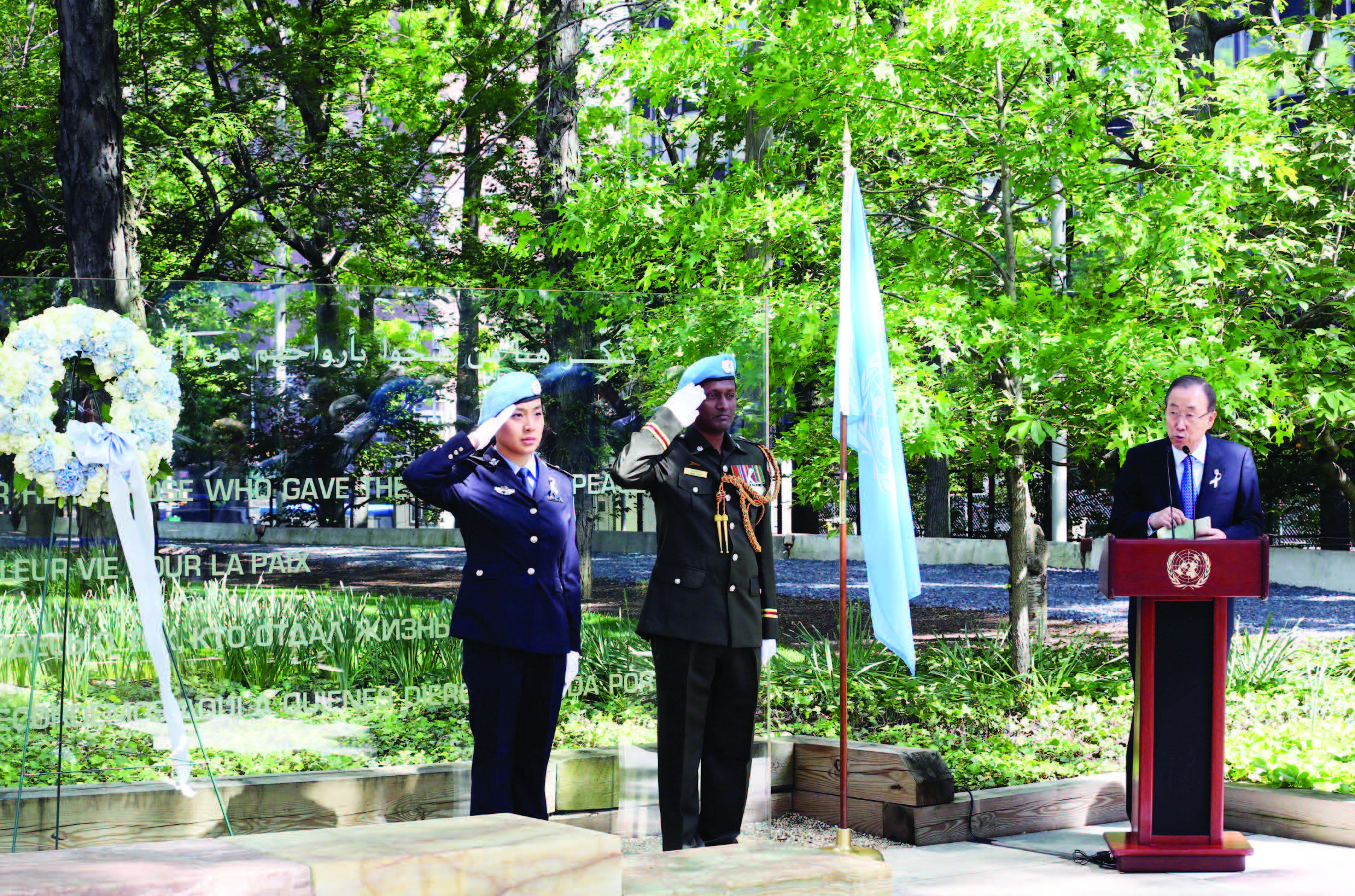
    Candles were lit in their memory on the occasion to demonstrate the solidarity of the United Nations peacekeeping community, and the collective debt owed by the international community to these brave souls. Earlier in the day, India’s Permanent Representative to the United Nations, Ambassador Asoke Kumar Mukerji, joined other Permanent Representatives and Military Attaches of Member States at a commemorative ceremony at the UN Peacekeepers Memorial on the North Lawn in the precincts of the United Nations Headquarters in New York.

    The UN Secretary General oversaw the wreath-laying at the Memorial for the first time. The proposal for this commemoration had been made by India, supported by several other Member States of the United Nations, in the C34 Peacekeeping Committee meeting, and endorsed by the 5th (Budget) Committee of the United Nations and the UN General Assembly last year.